Cast-iron cookware
.jpg "Ustensiles de cuisson en fonte")
Cast iron is a material that has been used in the kitchen for many years, thanks to its many advantages! This timeless material is used by many chefs and is also very useful at home for slow cooking. With your cast-iron cook ware, you can create a wide variety of recipes for exquisitely flavored dishes!
Cast iron, enamelled cast iron and cast aluminium: what are the differences?
When it comes to cooking, there are many different types of cast iron, so it's important to know how to distinguish between them to choose the one that best suits your needs.
To begin with, natural cast iron is a raw material production process in which no chemicals are used. Like iron cookware, cast iron needs to be tumbled to make it non-stick.
Enamelled cast iron, on the other hand, is produced in an additional step: an enamel coating is added to create non-stick properties without the need for culleting before use.
Finally, cast aluminum is a "false friend", since it is much closer to aluminum than to cast iron! In fact, the term "cast iron" is used here to refer to a cast alloy, and your cast aluminum utensil has nothing to do with a natural cast iron casserole. Find out more about aluminum!
The different properties of cast iron
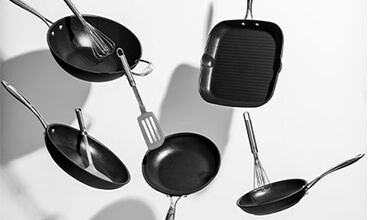 Thermal conductivity : Cast iron excels in heat conductivity. A cast-iron pan heats evenly, with heat perfectly distributed across its surface. This means your food cooks evenly thanks to heat that is retained for a long time, making it an ideal choice for culinary preparations requiring a constant, precise temperature.
Durability: One of the advantages of cast-iron cook ware is its long service life. Unlike many other materials, cast iron does not wear out easily and can withstand decades of use. Cast-iron pots and pans are renowned for their ability to look like new, even after many years of use!
A natural, healthy material: Natural cast-iron pans also offer health benefits! Unlike some non-stick coatings, which can release potentially harmful substances, cast iron is a natural material that does not release chemical compounds when heated. Non-stick coating is achieved by basting, and we explain everything you need to know about basting a pan!
Compatibility: A cast-iron casserole is remarkably versatile. It is compatible with most heat sources such as gas, electric, vitroceramic and, generally, induction stoves. Natural cast-iron utensils are also oven-compatible, making them indispensable for roasting, grilling or simmering.
Easy maintenance: Cast-iron casseroles are easy to maintain: simply clean with hot water and a non-abrasive sponge, without using harsh detergents. If any food sticks to the sides, soak your cookware for a few minutes in hot water before washing.
How do I use cast-iron utensils? 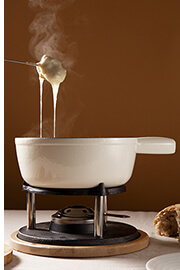
As mentioned above, cast-iron utensils are versatile in terms of both cooking and oven compatibility!
First and foremost, cast iron is the ideal material for slow cooking or simmering. A cast-iron pot is ideal for preparing stews or soups, as it retains heat very well. You can also use the oven to reheat your dishes in a traditional cast-iron casserole or to cook a delicious roast in a cast-iron dish.
You can also use a cast-iron frying pan to sear your meat or caramelize your vegetables. Because it distributes heat evenly, a high temperature means that your meat is grilled, but still tender inside.
Last but not least, there are many cast-iron utensils available for very specific types of cooking. Opt for a cast-iron fondue set for a convivial evening, or choose a cast-iron tagine dish for delicious Oriental flavors!
In conclusion, cast-iron cookware enables you to prepare quality dishes with versatile cooking methods, always good for your health. They're high-quality, durable and easy-to-maintain utensils that you can keep for a long time!
KnifeLeader.eu offers you a wide range of cookware for the fire!


Induction

25 years
Induction

5 years

Endless
Induction


