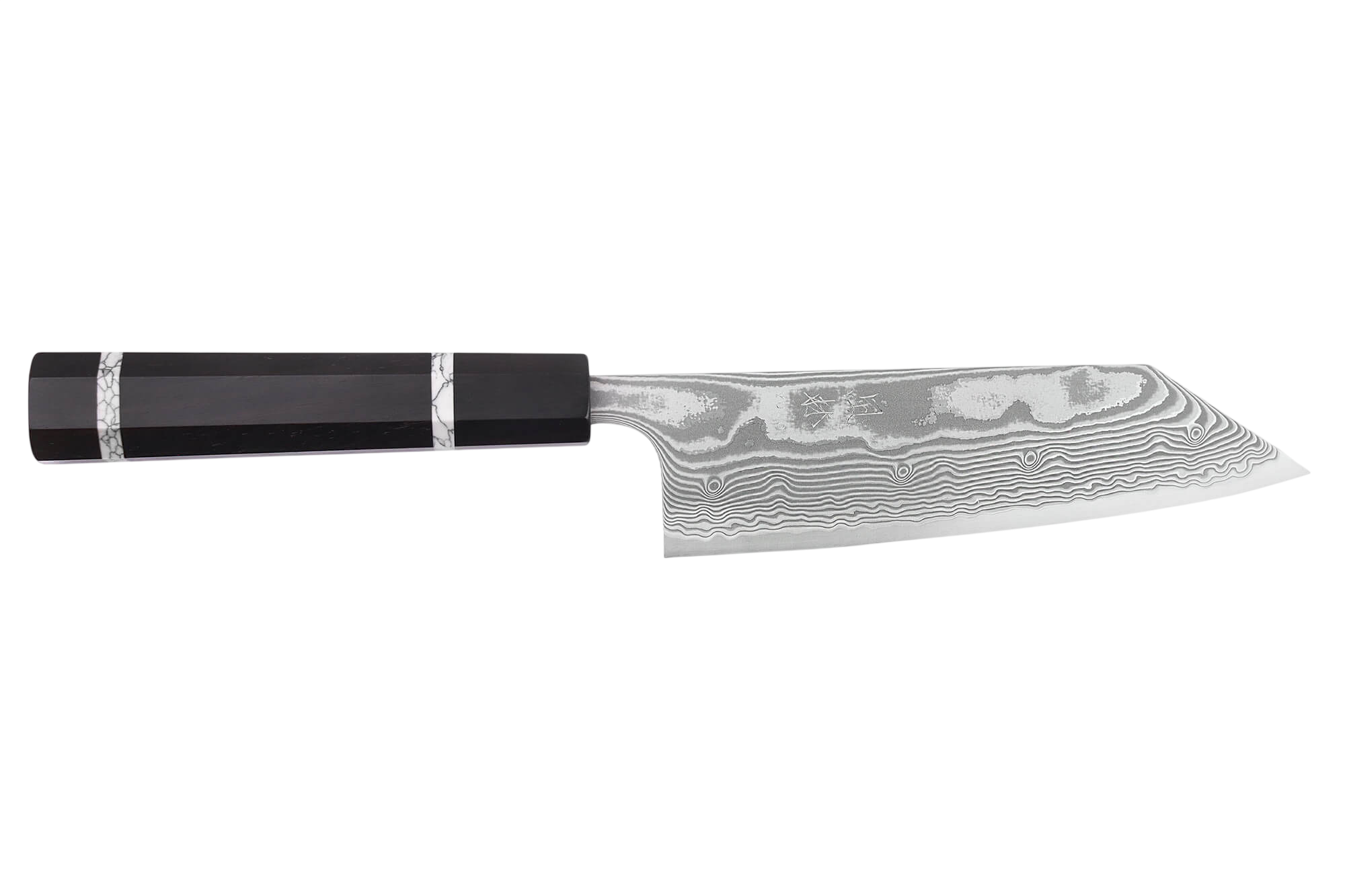
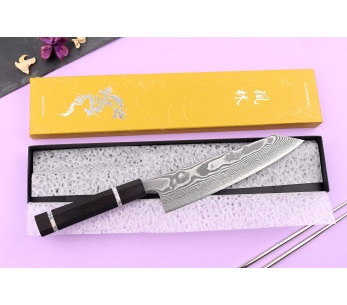
Yuzo Knives: Authentic Japanese craftsmanship shaped by generations of knife-making expertise

Yuzo Knives: Authentic Japanese craftsmanship shaped by generations of knife-making expertise

Yuzo knives are made in Japan by renowned workshops, combining traditional blade-making techniques, carefully selected steels and meticulous finishing for precise, durable cutting performance.

Yuzo knives are made in Japan by renowned workshops, combining traditional blade-making techniques, carefully selected steels and meticulous finishing for precise, durable cutting performance.

WHY CHOOSE yuzo KNIVES?

MADE IN JAPAN

Each Yuzo knife is made in Japan by experienced knife-making workshops, combining local expertise, traditional techniques and meticulous attention to detail.
PREMIUM
JAPANESE STEELS

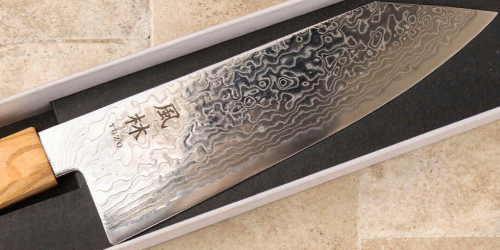
From VG10 to SG2, SLD, Aogami and Shirogami, Yuzo selects renowned Japanese steels known for their sharpness, hardness and excellent edge retention.
TRADITIONAL BLADE CONSTRUCTIONS

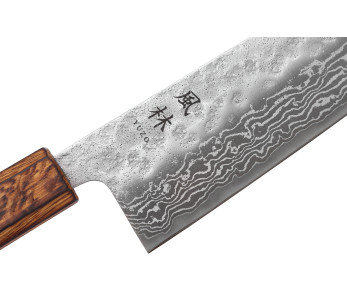
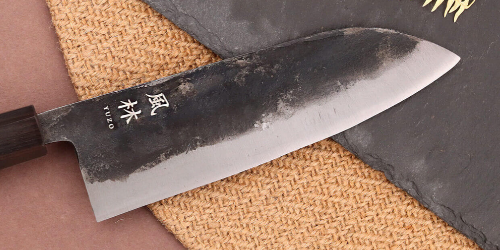
San Maï, Damascus, Tsuchime or Nashiji finishes: Yuzo explores emblematic Japanese blade constructions and surface treatments, each offering its own character and performance.

UP TO 65 HRC : LONG-LASTING SHARPNESS

Some Yuzo blades reach up to 65 HRC, allowing for a very fine cutting edge, outstanding precision and long-lasting sharpness.
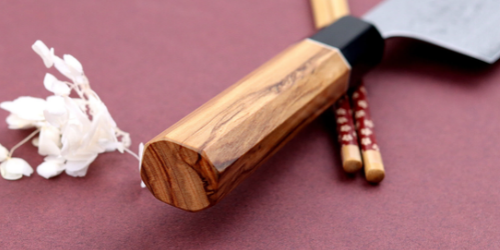
NATURAL
JAPANESE HANDLES

Ebony, olive wood, burnt oak or magnolia give Yuzo knives a refined, natural look while providing comfortable handling and a distinctly Japanese identity.
MADE IN JAPAN

Each Yuzo knife is made in Japan by experienced knife-making workshops, combining local expertise, traditional techniques and meticulous attention to detail.

PREMIUM JAPANESE STEELS

From VG10 to SG2, SLD, Aogami and Shirogami, Yuzo selects renowned Japanese steels known for their sharpness, hardness and excellent edge retention.

TRADITIONAL BLADE CONSTRUCTIONS

San Maï, Damascus, Tsuchime or Nashiji finishes: Yuzo explores emblematic Japanese blade constructions and surface treatments, each offering its own character and performance.

UP TO 65 HRC : LONG-LASTING SHARPNESS

Some Yuzo blades reach up to 65 HRC, allowing for a very fine cutting edge, outstanding precision and long-lasting sharpness.

NATURAL JAPANESE HANDLES

Ebony, olive wood, burnt oak or magnolia give Yuzo knives a refined, natural look while providing comfortable handling and a distinctly Japanese identity.
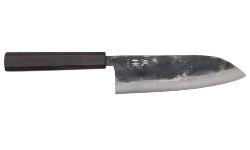
All our yuzo knife ranges

All our yuzo knife models

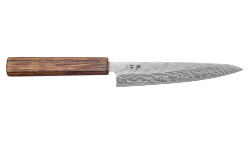
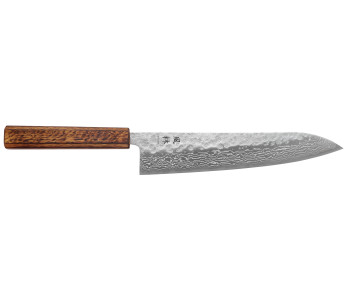
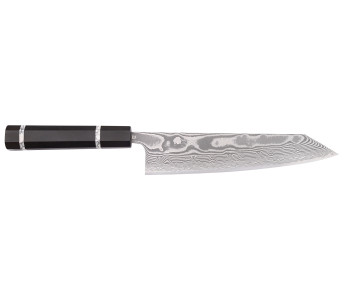
Yuzo Tsuchime VG10 – Japanese precision with a hammered finish

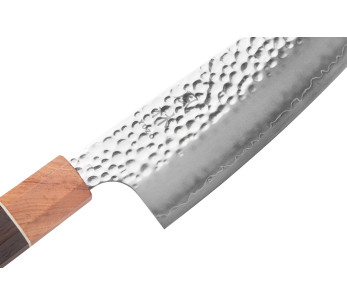
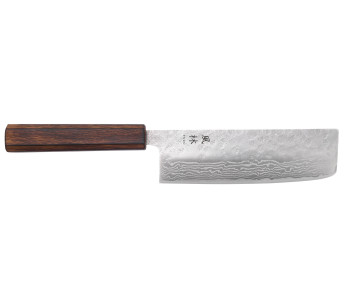
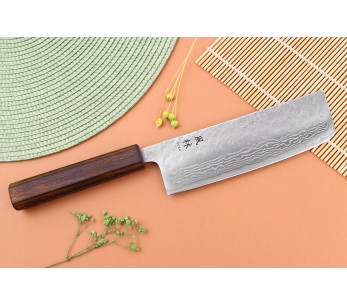
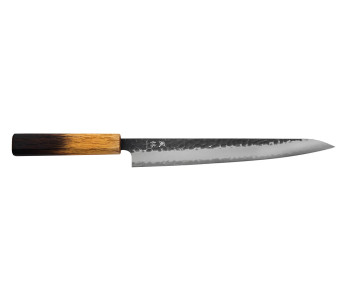
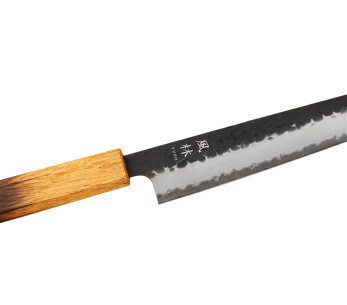
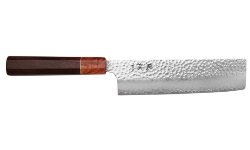
The Yuzo Tsuchime VG10 range combines traditional Japanese construction with a refined, modern finish. Each blade features a San Maï structure with a VG10 Japanese steel core containing around 1% carbon, protected by softer stainless-steel outer layers. With a hardness of approximately 60 HRC, these knives offer a fine, durable cutting edge and excellent everyday performance. The polished Tsuchime hammered finish adds character while helping reduce food adhesion during cutting. The range is completed with octagonal rosewood handles, designed for a comfortable ambidextrous grip. 

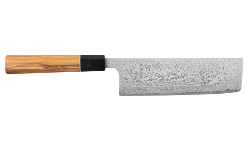
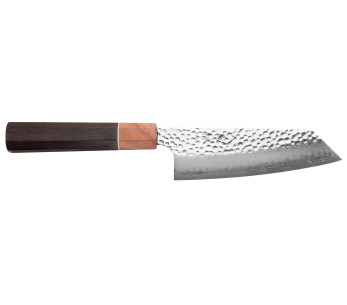
Yuzo SLD – High-carbon performance and long-lasting sharpness

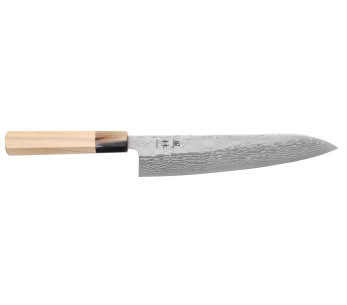
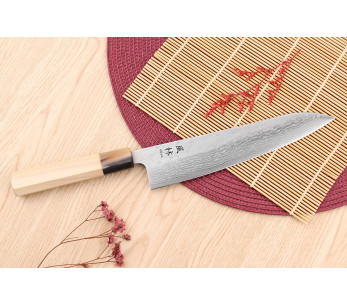
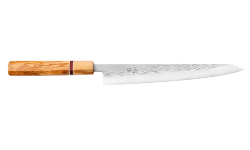
The Yuzo SLD range is designed for cooks looking for higher hardness and outstanding edge retention. Its San Maï blades feature a core made from Japanese SLD steel with approximately 1.6% carbon, reaching around 63 HRC on the Rockwell scale. This high hardness allows the blade to maintain a very fine cutting edge over time while delivering precise, controlled cuts. The polished and hammered blade surface gives the range a distinctive finish, while the octagonal olive wood handles add natural elegance and a comfortable Japanese-style grip. 

Discover the other Yuzo Japanese knife ranges

Yuzo also offers a wide selection of Japanese knives designed around different steels, blade constructions and finishes. Explore high-performance SG2 powder-steel Damascus blades, Aogami Super and Shirogami carbon steels, VG10 Damascus constructions, rustic Nashiji finishes, black forged surfaces and modern DLC coatings. From traditional carbon-steel knives to highly refined Damascus creations, each Yuzo range expresses a different side of Japanese cutlery while maintaining the brand’s focus on precision, sharpness and authentic craftsmanship.

Yuzo Japanese KNIVES - FAQ

Any question regarding the Japanese Yuzo Knives ? Here are answers to the most common questions.

Where are Yuzo knives made?

Yuzo knives are made in Japan by experienced Japanese knife-making workshops. Depending on the range, production may involve renowned manufacturers and craftsmen based in traditional cutlery regions such as Seki and Sanjo. Each collection reflects a different approach to Japanese knife making, from refined VG10 blades to more technical SLD, SG2 or carbon-steel constructions.

Which Fukito knife range should I choose?

The right Yuzo range depends mainly on the steel, hardness and level of maintenance you are looking for. Tsuchime VG10 is an excellent choice for everyday use, combining stainless steel, easy maintenance and a hardness of around 60 HRC. The SLD range reaches around 63 HRC and offers longer edge retention for cooks looking for greater performance. Shinju BS2 uses Aogami #2 carbon steel at around 62 HRC and is ideal for users who appreciate traditional Japanese steels and do not mind giving their knife a little more care.

What steels are used in Yuzo knives?

Yuzo uses a wide variety of steels commonly found in high-quality Japanese cutlery, including VG10, SLD, SG2 powder steel, Aogami Super, Aogami #2 and Shirogami #2. Their characteristics differ in terms of hardness, corrosion resistance, ease of sharpening and edge retention. Some Yuzo blades reach up to 65 HRC, allowing them to take and retain a particularly fine cutting edge.

What is the difference between Yuzo San Mai, Damascus and mono-steel blade constructions?

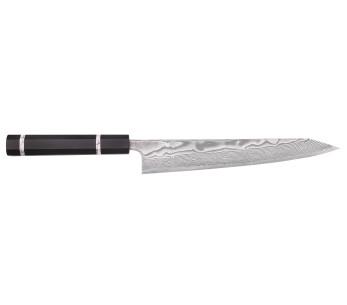
Yuzo uses several blade constructions depending on the range. San Mai blades are built around a hard cutting core, such as SLD, Aogami #2 or VG10, with softer outer layers laminated on each side to protect and support the core. Damascus blades also use a hard central cutting steel, but this core is clad with multiple alternating layers that create the characteristic wavy pattern visible on the blade. Some Yuzo ranges may also use simpler laminated or mono-steel constructions, where performance comes primarily from the properties of the steel itself rather than a decorative multi-layer cladding. The construction therefore influences the blade’s appearance, maintenance and overall feel, while cutting performance depends above all on the core steel, heat treatment, hardness and blade geometry.

How should I clean and care for a Yuzo knife?

Yuzo knives should always be washed by hand with warm water, a mild detergent and a soft sponge, then dried immediately after cleaning. Avoid the dishwasher, prolonged soaking and abrasive cleaning products. Carbon-steel models such as Aogami or Shirogami require even more attention, as moisture left on the blade can lead to oxidation. Keeping the blade clean and dry after each use will help preserve both its performance and finish.

How should I sharpen a Yuzo Japanese knife?

For Yuzo knives, whetstone sharpening is generally the most suitable method, especially for hard Japanese steels such as VG10, SLD, SG2, Aogami or Shirogami. A fine and controlled sharpening angle helps preserve the thin cutting geometry of the blade. Avoid aggressive pull-through sharpeners, which can remove too much material or damage a fine Japanese edge. For regular maintenance, a fine ceramic honing rod can be used on suitable stainless-steel models, while whetstones remain the preferred option for restoring a precise edge.

Product added to wishlist