Choosing a Japanese kitchen knife means looking for more than a sharp blade. The right knife should feel natural in the hand, remain precise through repeated use and match the type of ingredients you prepare most often. Blade shape, steel, balance and handle design all influence the cutting experience.
The Wusaki Hikari SLD range brings these elements together in a collection of handcrafted Japanese knives designed for both enthusiastic home cooks and demanding professionals. The Japanese word “Hikari” means “light”, an appropriate name for knives distinguished by their elegant appearance, fluid handling and remarkably precise cutting action.
From the compact utility knife to the long gyuto and specialised kiritsuke sujihiki, the collection includes seven complementary models. Each one shares the same technical foundation: a high-performance SLD steel core, a traditional San Mai construction, a fine flat grind and an octagonal bubinga wood handle.
Wusaki Hikari SLD: Japanese craftsmanship designed for modern kitchens
The Wusaki Hikari SLD knives are handcrafted in Japan using techniques rooted in the country’s long cutlery-making tradition. Their construction combines the precision associated with Japanese blades and modern materials selected for durability, edge retention and everyday usability.
The blades are thin, balanced and designed to pass cleanly through ingredients without crushing their fibres. This makes them particularly pleasant when working with delicate vegetables, boneless meat, fish or fresh herbs. The light and controlled feel of the knives also helps reduce unnecessary effort during repeated preparation tasks.
Despite their refined appearance, these are not decorative knives intended to remain in a display case. The Hikari SLD models are practical cutting tools made for regular use. Their coherent design also allows cooks to build a complete matching collection without changing their grip or cutting habits from one knife to another.
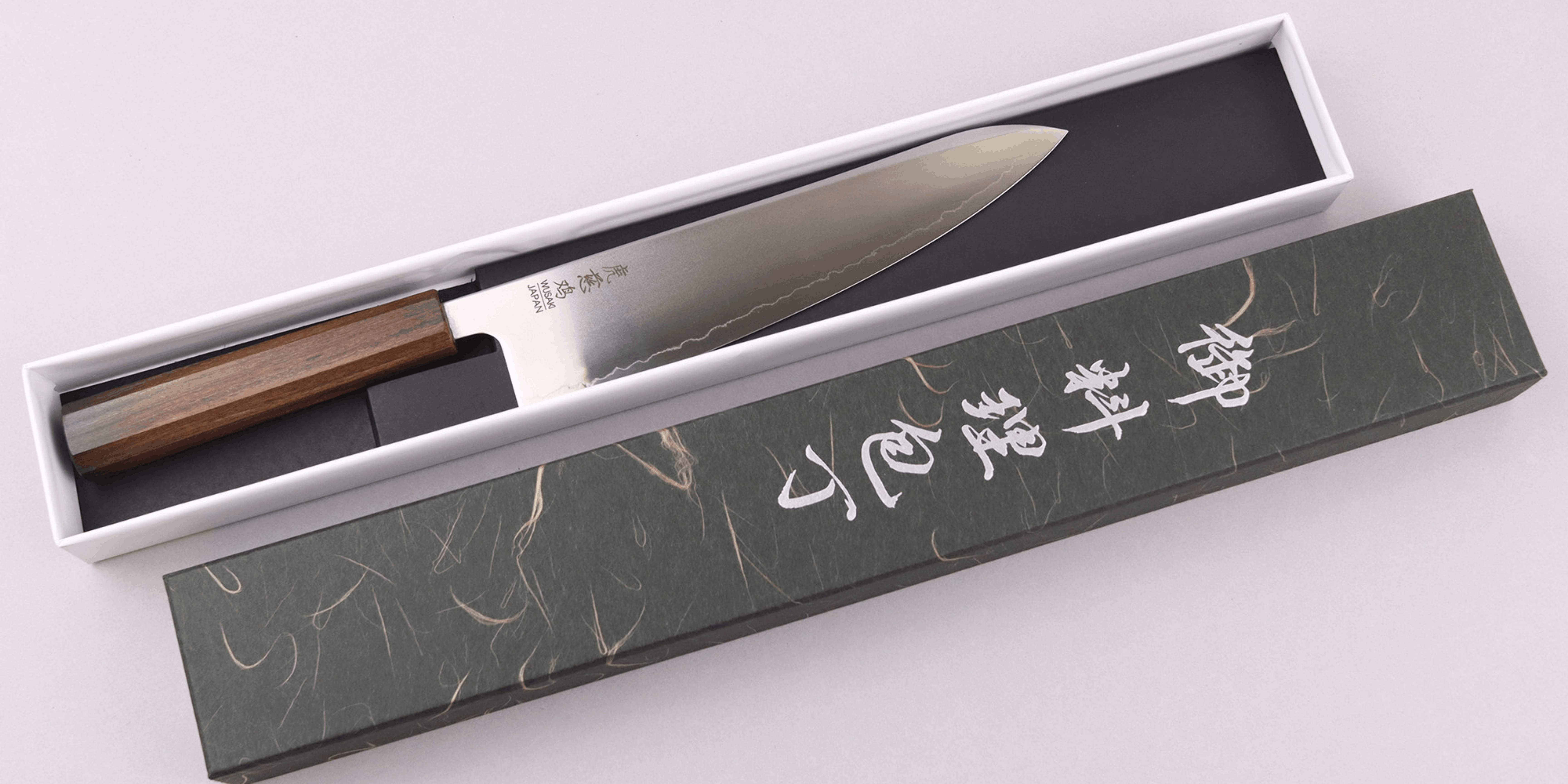
A high-performance SLD steel core for a long-lasting cutting edge
At the centre of every Wusaki Hikari blade is a core made from SLD steel. This Japanese alloy contains approximately 1.6% carbon, allowing it to reach a high level of hardness and produce a particularly fine cutting edge. The blades are hardened to approximately 63 HRC on the Rockwell scale.
This high hardness provides excellent edge retention. A properly maintained Hikari SLD knife can remain sharp through numerous preparation sessions, limiting the need for frequent sharpening. The steel also offers very good resistance to abrasion and wear, making it suitable for cooks who want a precise knife that maintains its cutting performance over time.
The main advantage can be felt from the first few cuts. Instead of forcing the blade through an ingredient, the fine edge penetrates smoothly and allows controlled movements. Tomatoes can be sliced without crushing their flesh, herbs can be cut cleanly and meat portions can be prepared with greater accuracy.
SLD is considered a semi-stainless or hybrid steel. Its chromium content gives it better corrosion resistance than traditional reactive carbon steels, but it still deserves careful maintenance. The knife should be washed by hand, wiped clean after use and dried immediately. It must not be placed in the dishwasher or left soaking in water.
San Mai construction: hardness at the centre, flexibility on the outside
The Hikari SLD blades feature a traditional San Mai construction. The term refers to a structure composed of three layers: a hard central core responsible for the cutting edge, surrounded by two softer outer layers.
This construction makes it possible to take advantage of the hardness of SLD steel without producing an unnecessarily rigid blade. The outer layers reinforce and protect the central core while providing the blade with a more balanced level of flexibility. The result is a knife that combines a durable edge with greater overall strength.
The transition between the central core and the outer layers remains visible near the cutting edge. This subtle line highlights the layered construction and gives each blade an authentic Japanese character. As these knives are handcrafted, slight variations in the surface, polishing or engraved kanji may appear from one piece to another. These details are part of the identity of an artisanal knife rather than imperfections.
A fine flat grind for clean and precise cuts
Each knife in the range features a flat grind. The sides of the blade narrow progressively towards the cutting edge, creating a fine and regular geometry. This limits resistance when the knife passes through food and encourages smooth, straight cuts.
The symmetrical edge makes the knives suitable for both right-handed and left-handed cooks. It also makes the range accessible to users discovering Japanese cutlery, as they do not need to adapt to a traditional single-bevel blade.
The polished finish gives the blades a bright appearance that reflects the meaning of the Hikari name. The engraved Japanese kanji add a distinctive finishing touch, while the visible craftsmanship prevents the knives from looking excessively uniform or industrial. The combination of polished steel, clean lines and natural wood creates a style that is both contemporary and unmistakably Japanese.
An octagonal bubinga handle combining comfort and character
The blades are fitted with handles made from bubinga wood, a dense hardwood appreciated for its durability, deep colour and expressive natural grain. Its shades can vary from reddish brown to darker brown, meaning that every handle has its own individual appearance.
Bubinga brings warmth to the highly polished steel blade while remaining strong enough for regular kitchen use. As with any natural wooden handle, it should not be left in water or exposed to the dishwasher. Occasional application of a suitable food-safe oil can help preserve the wood’s appearance over time.
The handle has a traditional octagonal shape. Its flat surfaces provide clear reference points for the fingers and prevent the knife from rotating unexpectedly in the hand. The shape remains comfortable for different grip styles and is naturally suitable for both right-handed and left-handed use.
The relatively light wooden handle also contributes to the balance of the knife. The user can guide the blade accurately without feeling that the rear of the knife is excessively heavy. This is particularly useful for precise cuts, repetitive movements and long preparation sessions.
Seven blade profiles for every type of preparation
The Hikari SLD collection includes seven knives, ranging from compact everyday models to more specialised Japanese blade shapes. Choosing between them mainly depends on the size of ingredients you usually prepare and the cutting motions you prefer.
The 13cm utility knife is the smallest model in the range. It is ideal for precise work on fruit, vegetables, herbs, small pieces of meat and other ingredients that do not require a large blade. It offers greater reach than a classic paring knife while remaining compact and easy to control.
The 15cm ko-santoku knife is a compact multipurpose knife. Its shorter blade makes it particularly manageable for cooks with smaller hands, limited worktop space or a preference for light knives. It can handle vegetables, boneless meat, fish and most daily preparation tasks.
The 17cm santoku knife is the most versatile Japanese profile in the collection. Its name refers to the “three virtues” traditionally associated with cutting meat, fish and vegetables. Its wide blade provides good stability and can also be used to transfer chopped ingredients from the board to a pan.
The 17.5cm santoku kiritsuke knife offers the versatility of a santoku with a more angular and precise tip. This pointed profile is useful for detailed work, scoring ingredients, making fine incisions and reaching areas that would be less accessible with a rounded santoku tip. It is an excellent choice for cooks looking for an original and highly versatile Japanese knife.
The 21cm gyuto knife is the Japanese equivalent of the Western chef’s knife. Its longer blade provides greater efficiency when preparing large vegetables, portions of meat or a high volume of ingredients. Its curved cutting edge also works well with a rocking motion, making it a natural choice for cooks accustomed to European chef’s knives.
The 16cm nakiri knife is dedicated primarily to vegetables. Its tall, rectangular blade and relatively straight cutting edge are designed for vertical chopping movements on the cutting board. It excels when slicing, chopping or finely cutting cabbage, carrots, onions, courgettes and leafy vegetables. The broad blade is also practical for collecting and transferring prepared ingredients.
The 20cm kiritsuke sujihiki knife is the most specialised model in the range. Its long and narrow blade is designed for clean slicing movements through meat and fish. It is particularly suitable for carving cooked meat, portioning boneless proteins, preparing raw fish or producing thin, regular slices. Its kiritsuke-style tip adds precision for finishing work.
Which Wusaki Hikari SLD knife should you choose?
For a first Japanese knife capable of handling almost every everyday preparation, the 17cm santoku is the safest and most versatile choice. Cooks who prefer a shorter, lighter knife can select the 15cm ko-santoku, while those accustomed to a traditional chef’s knife will appreciate the reach and curved profile of the 21cm gyuto.
The 17.5cm santoku kiritsuke knife is ideal for anyone looking for a multipurpose knife with a finer and more distinctive tip. Vegetable lovers should turn to the 16cm nakiri, while the 20cm kiritsuke sujihiki knife is the best option for slicing meat and fish. Finally, the 13cm utility knife is a valuable complementary tool for smaller and more precise tasks.
Whichever profile you choose, every model offers the same essential qualities: a durable SLD steel edge, a protective San Mai construction, a precise flat grind and the natural comfort of an octagonal bubinga handle. Explore the complete Wusaki Hikari SLD Japanese knife collection and select the blade that best matches the way you cook.


