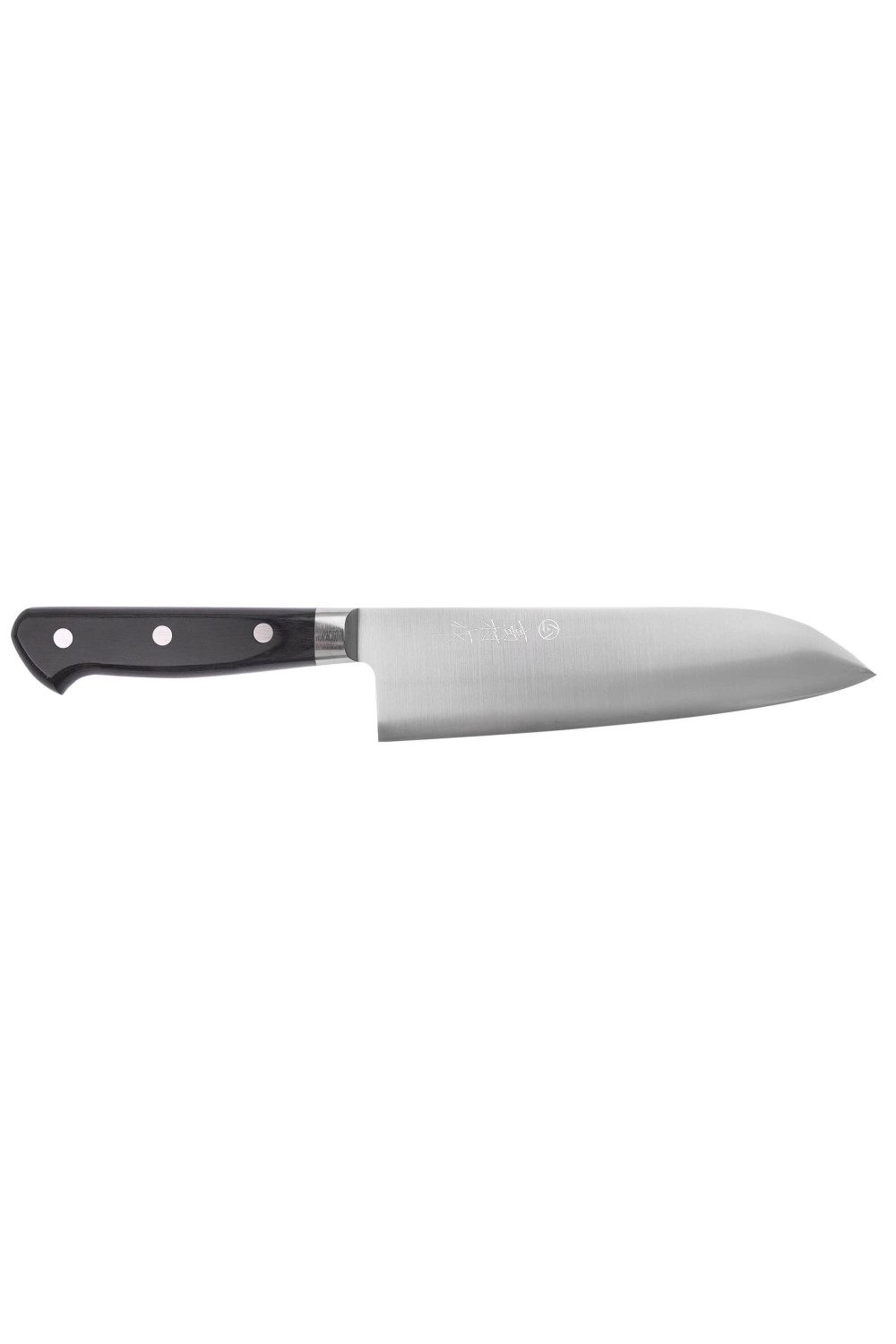
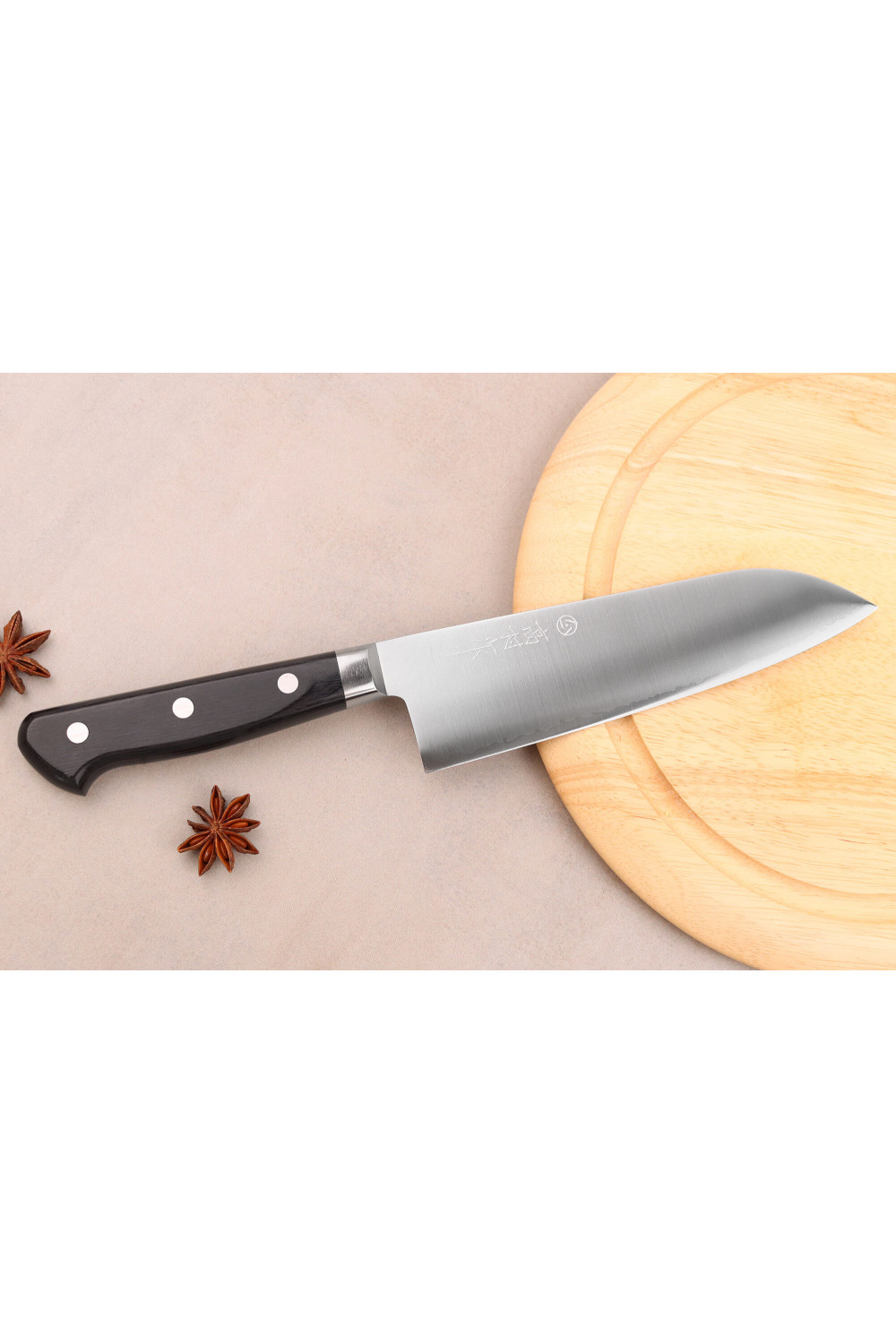
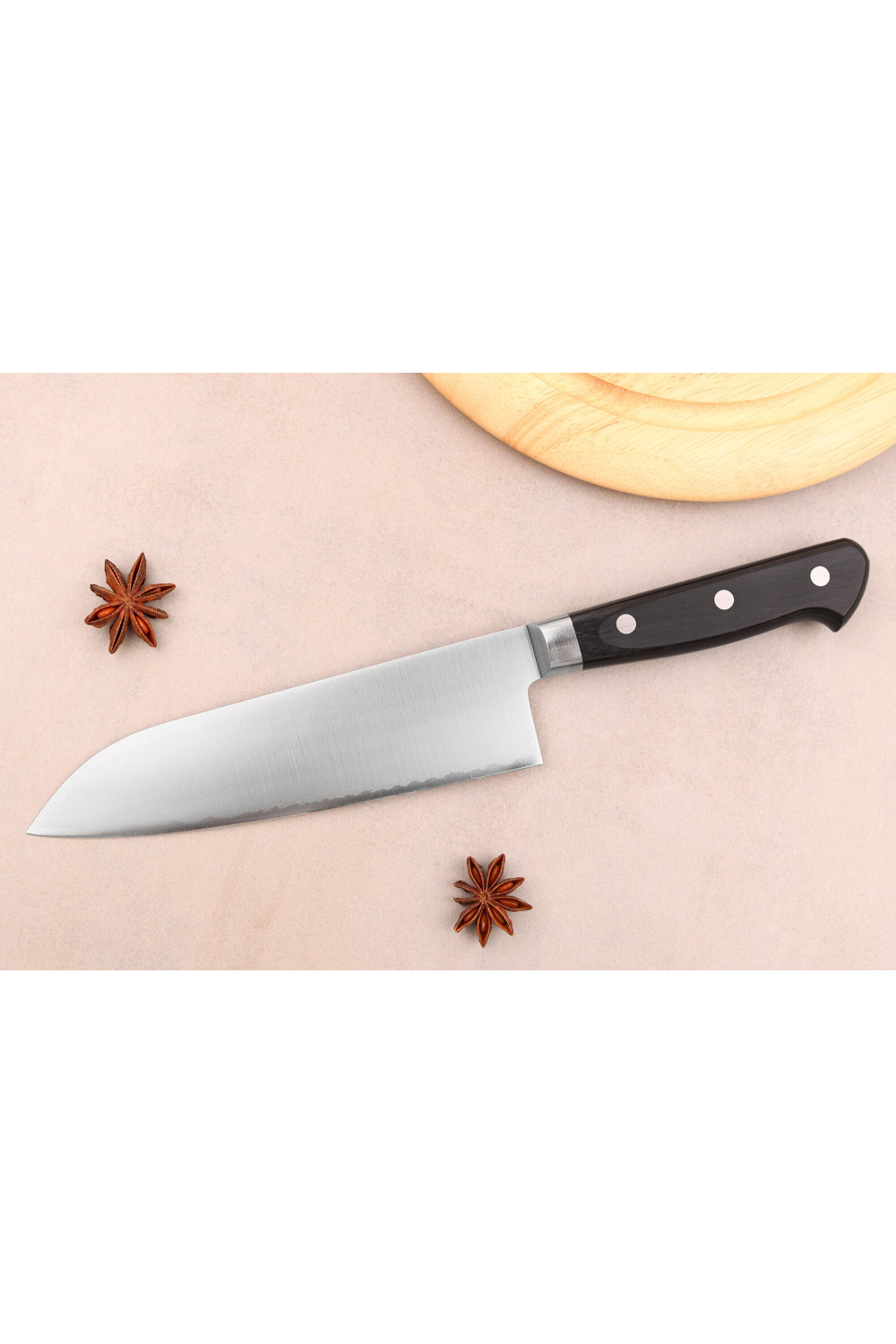
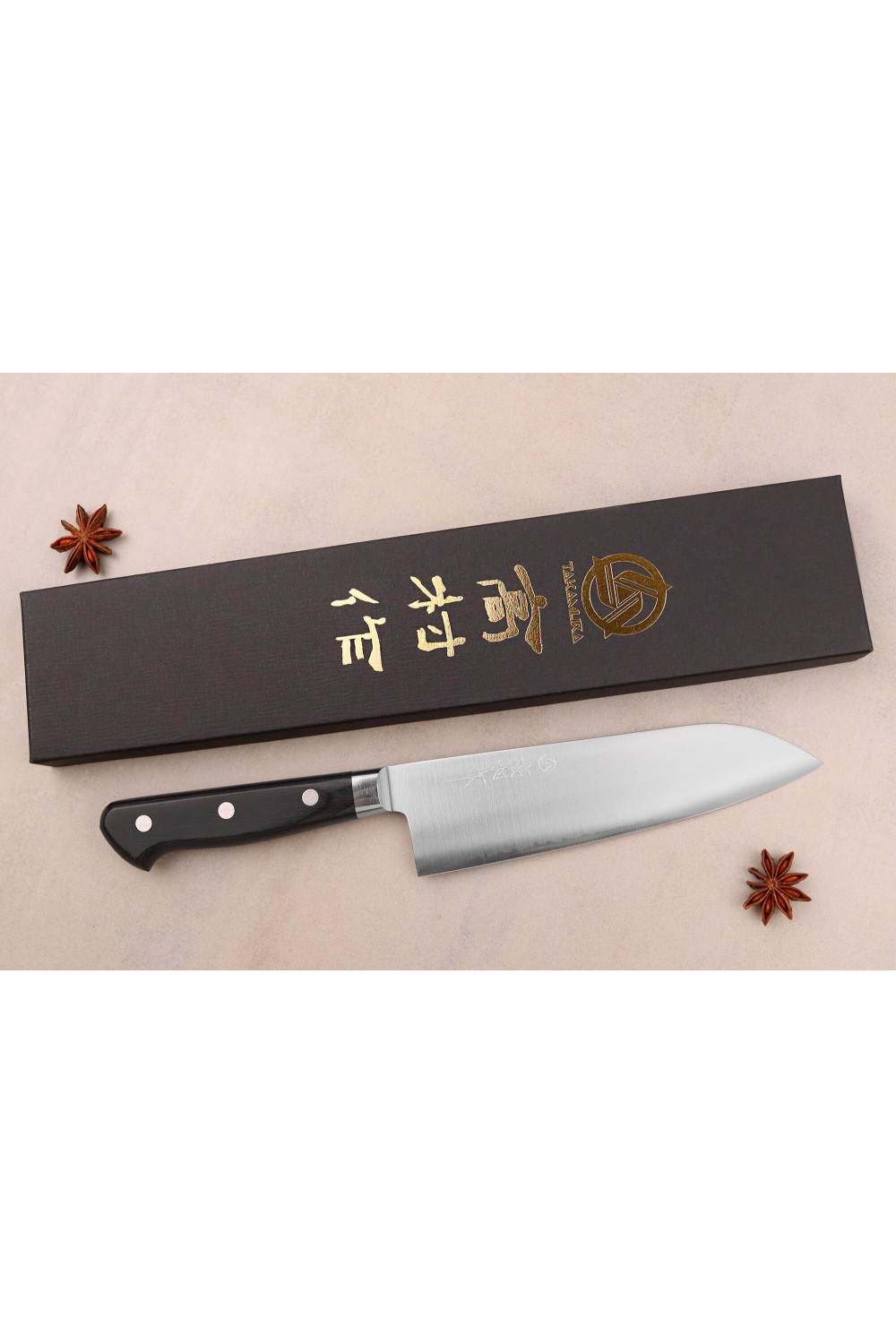
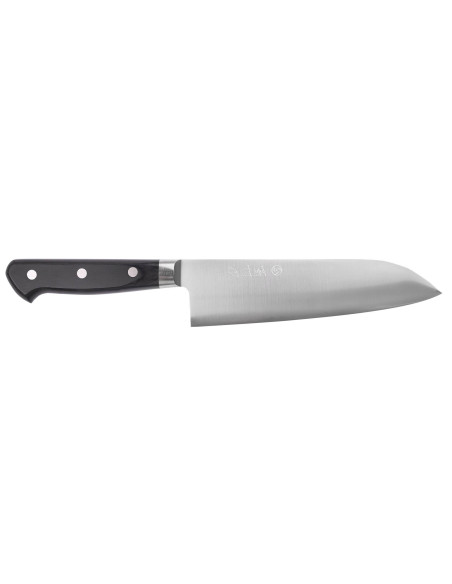
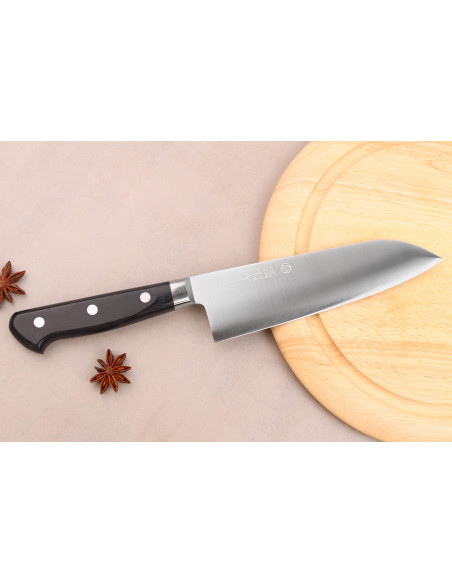
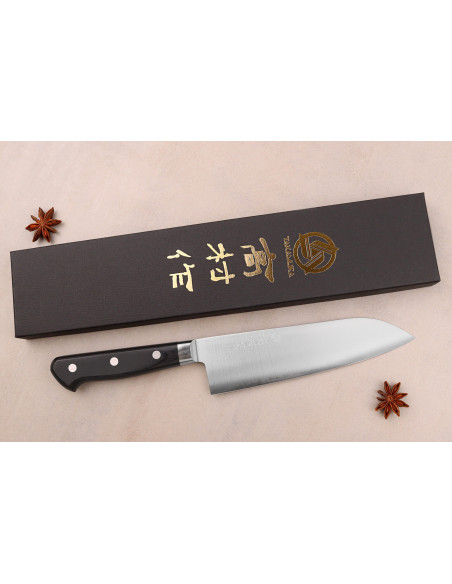
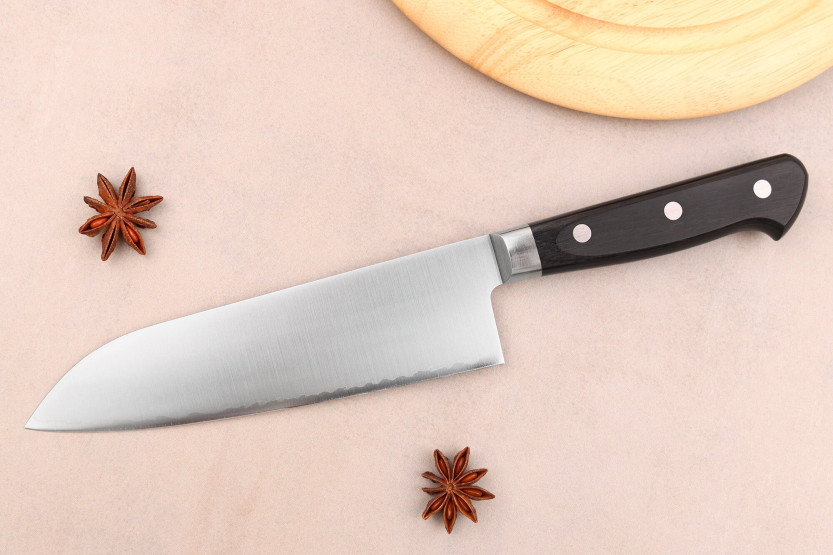
This santoku knife is a truly versatile tool, ready to become a kitchen essential! If you had to choose just one, this model would be an excellent choice, as it allows you to execute a wide range of cuts with ease. It adapts perfectly to vegetables, boneless meats and aromatic herbs, giving you great flexibility on a daily basis.
A high-performance Japanese blade for this santoku knife
The heart of this blade is made of VG10 steel, a renowned Japanese alloy produced by the renowned Takefu Special Steel. With a carbon content of 1%, considerably higher than that of Western knives (generally around 0.5%), this blade is stiffer, enabling it to retain its sharpness for longer. With a hardness of 60HRC on the Rockwell scale, it requires less sharpening, for a pleasant, prolonged cutting experience. Although highly enriched in carbon, this steel also contains a significant amount of chromium, which improves its resistance to corrosion.
A softer stainless steel coating envelops this core, protecting it while providing a slight suppleness. This process reduces the risk of breakage during use, while maintaining ideal rigidity.
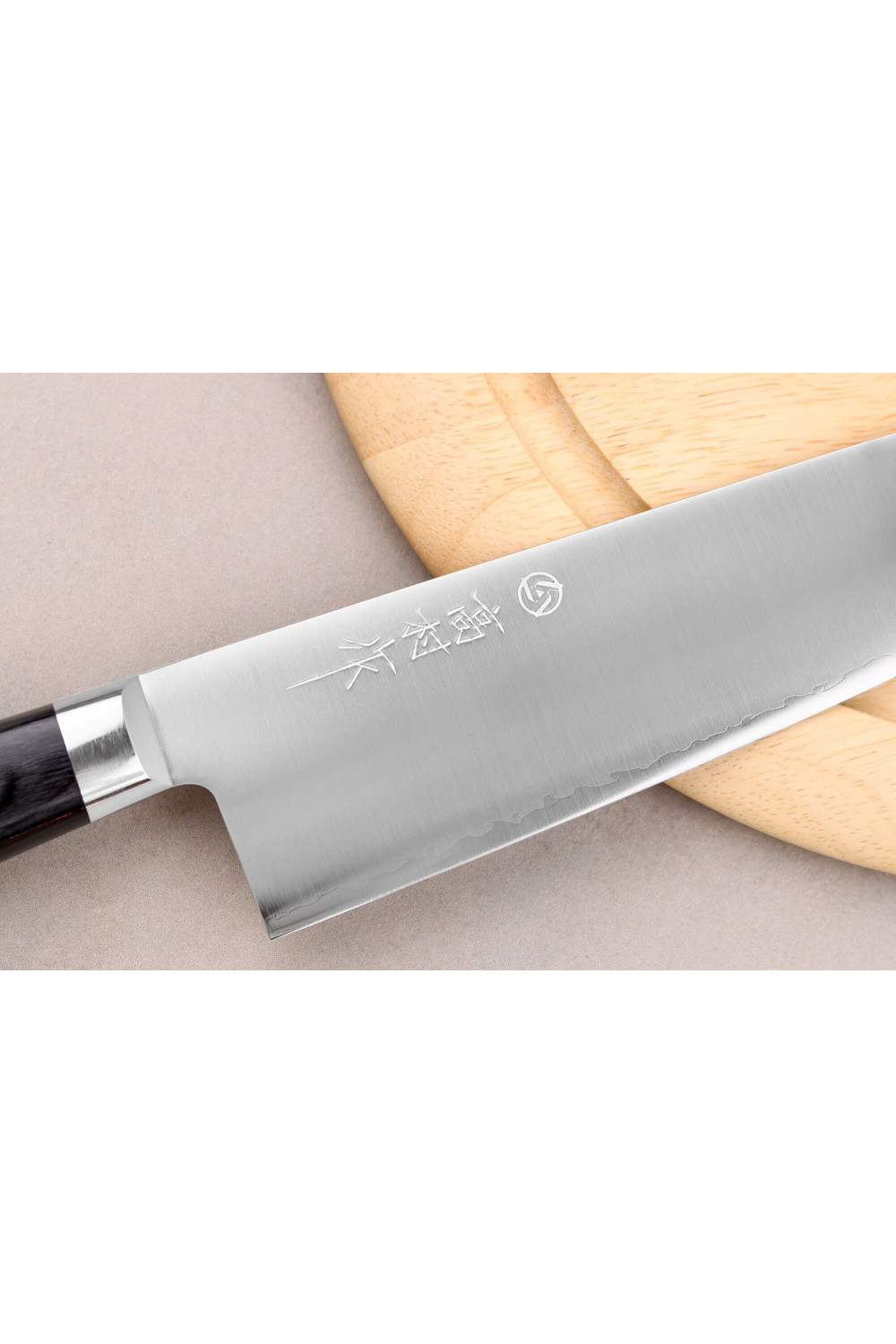
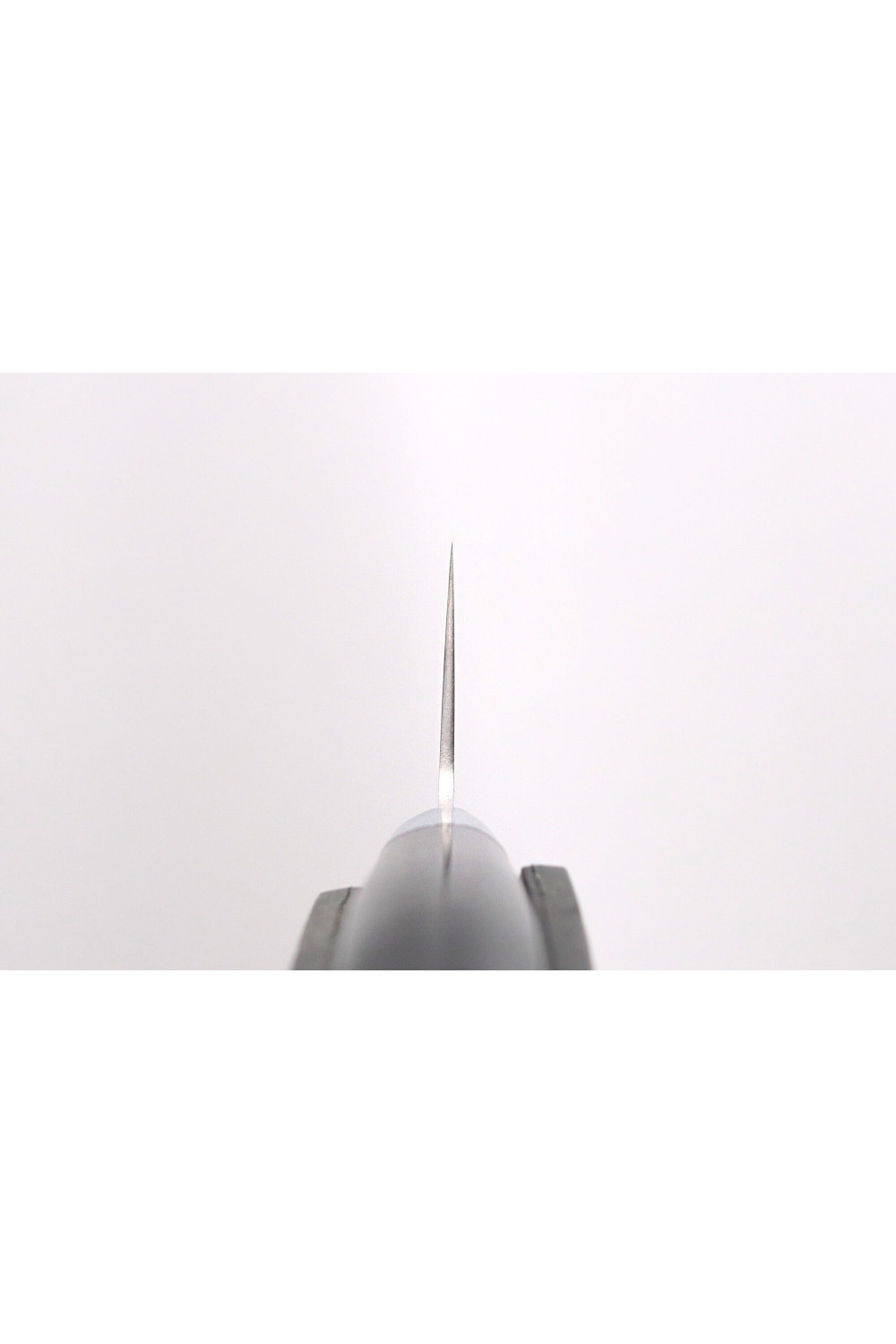
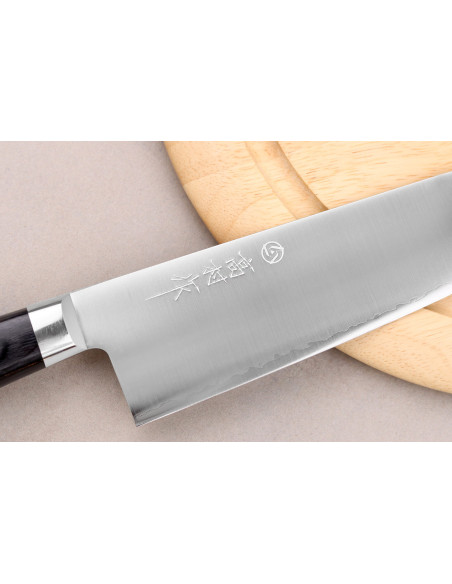
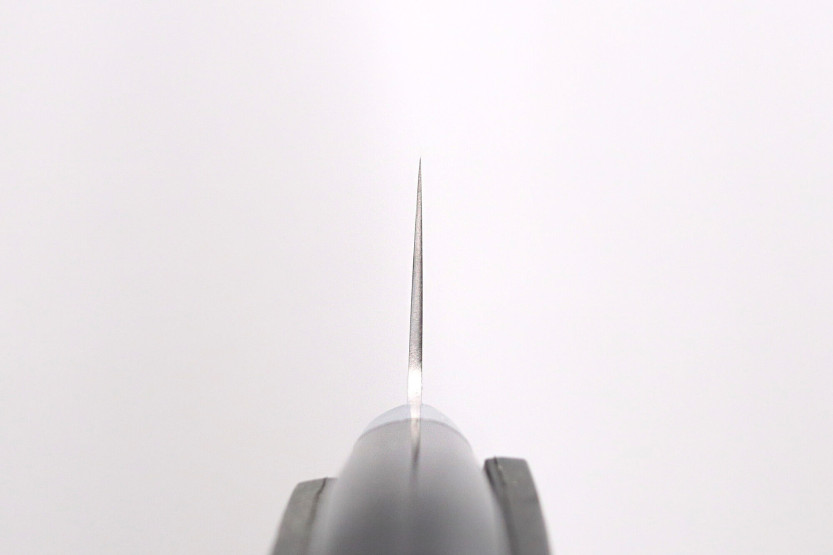
The blade is made of three layers of steel, using the San Maï technique inspired by damascus. You can see the different superimpositions along the cutting edge, where a characteristic wavy line appears.
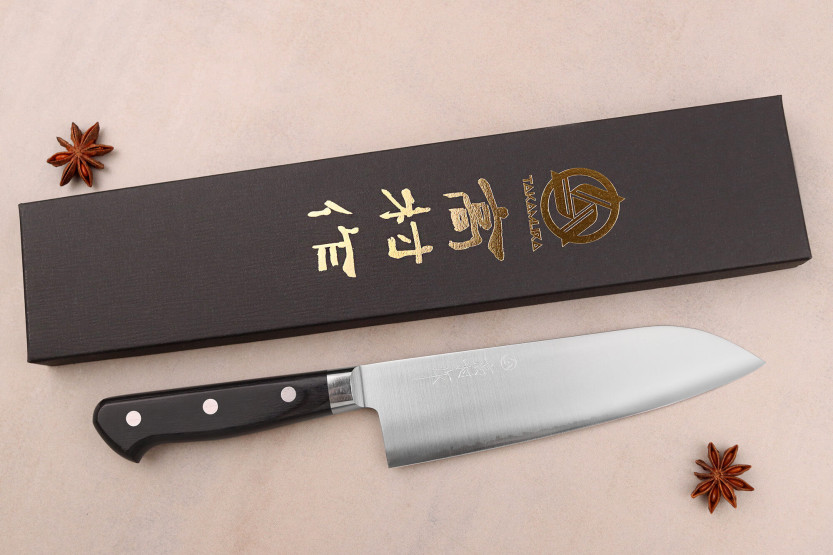
Its polished finish, achieved through meticulous craftsmanship, lends this blade a singular elegance. What's more, kanjis have been engraved on its surface, reinforcing its authenticity and Japanese heritage!
Takamura craftsmen pay particular attention to sharpening. Their philosophy is clear: if an ingredient cracks before it even reaches the cutting board, then the knife has not done its job properly. A good knife should slice cleanly without crushing food fibers, and it's this cutting precision that characterizes Takamura knives!
The Japanese knife with an ergonomic handle designed for comfort
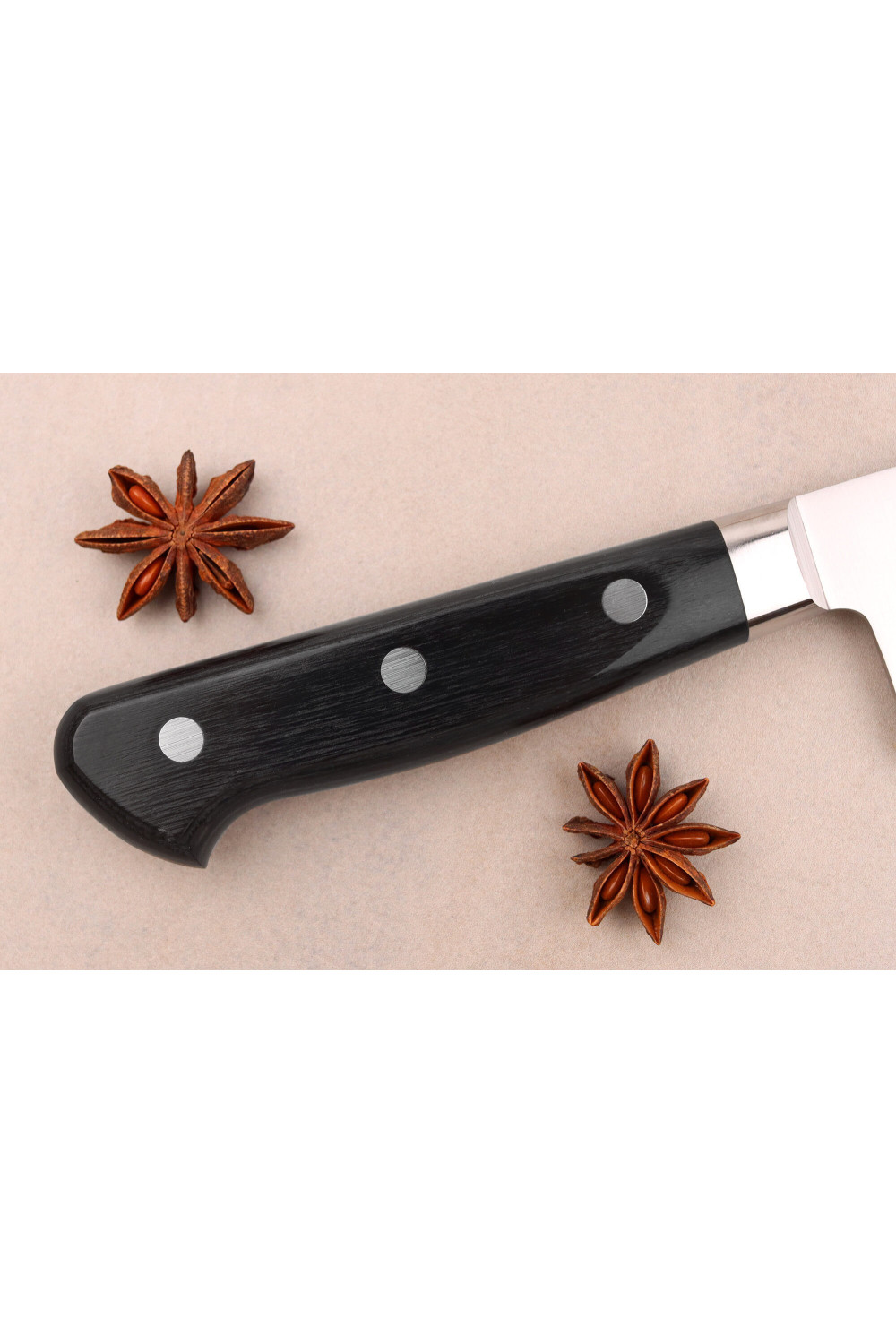
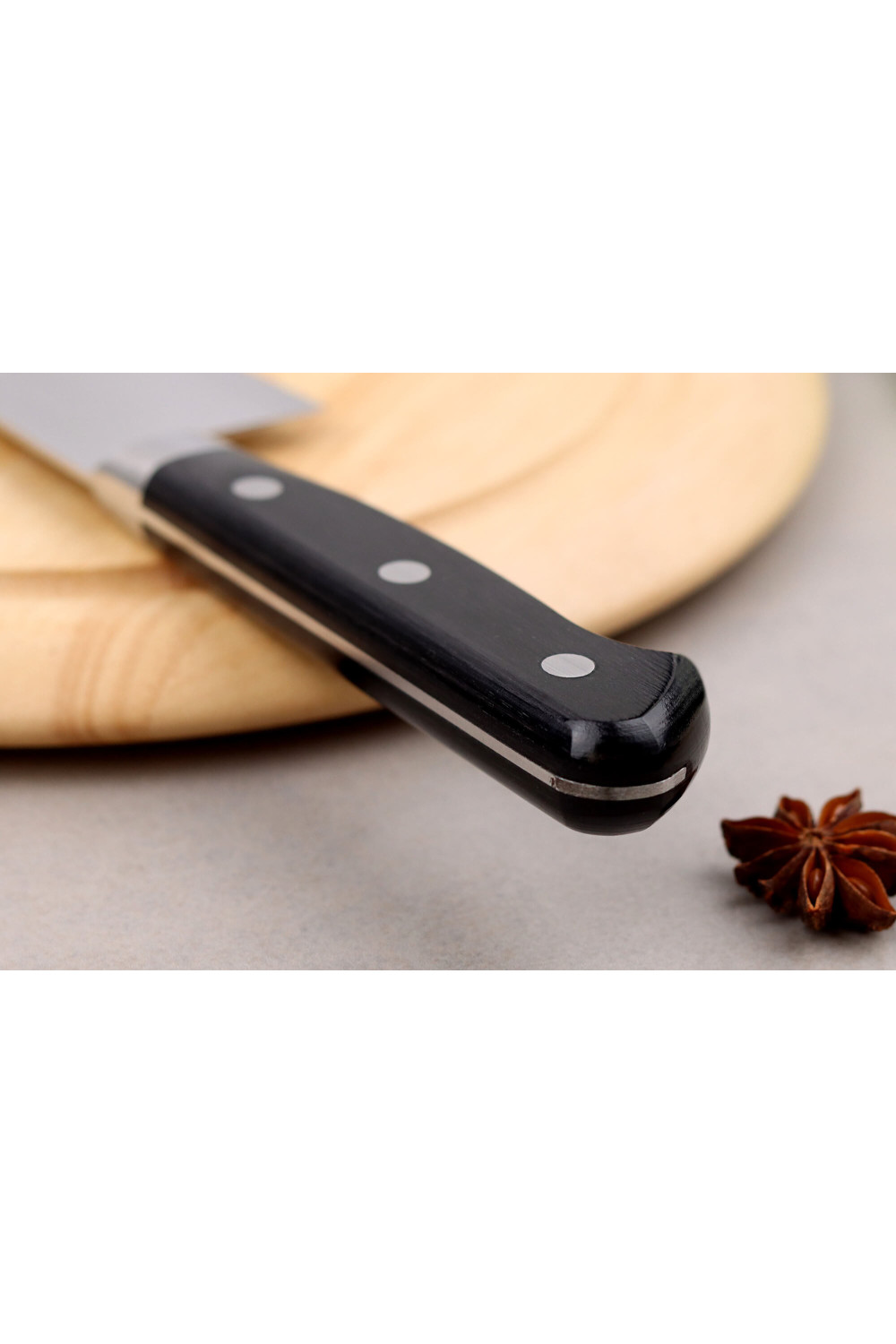
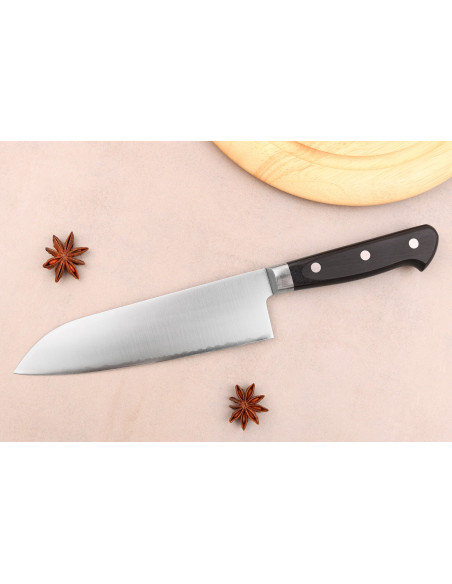
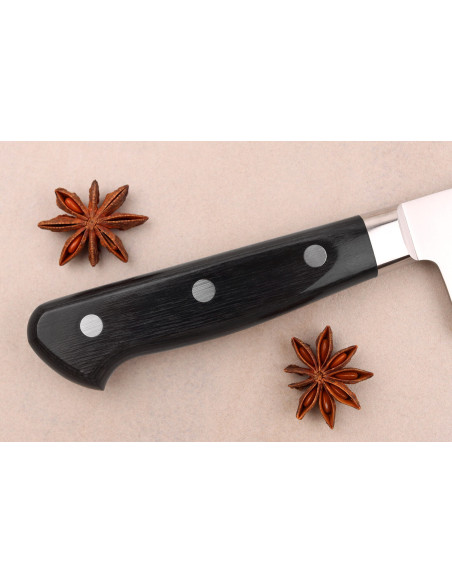
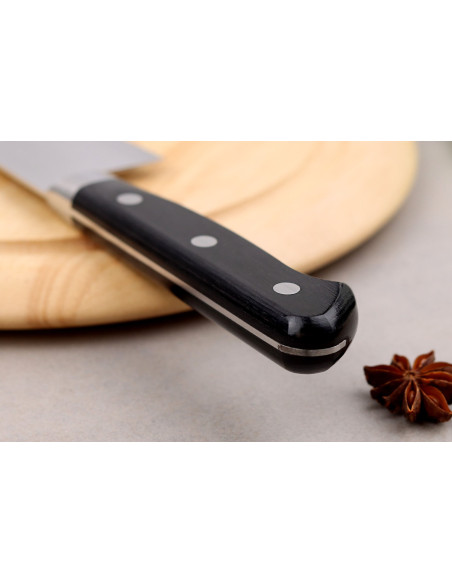
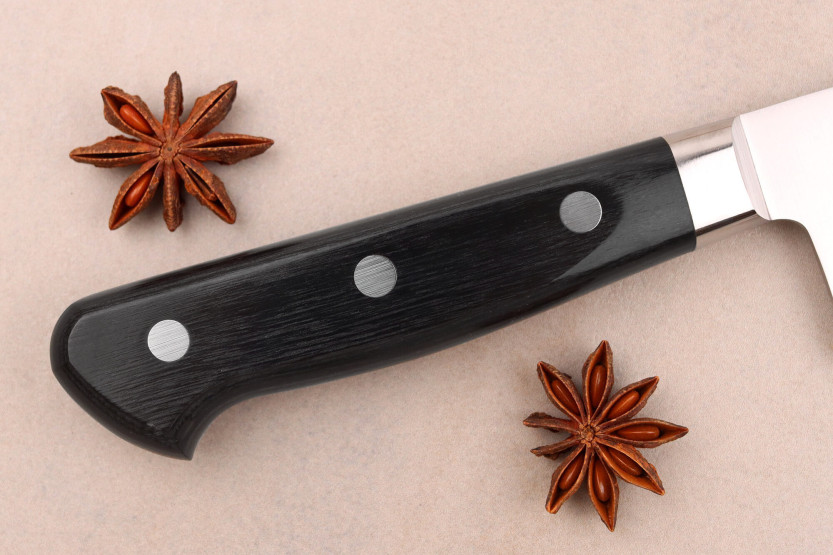
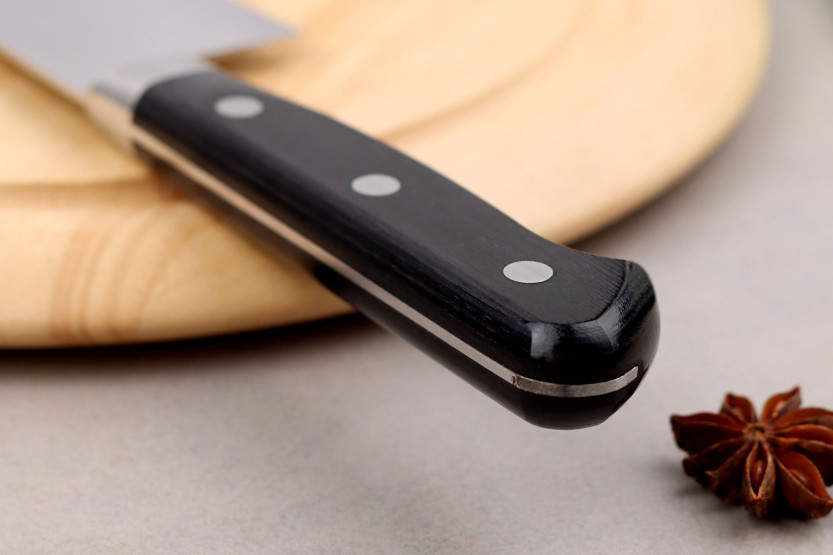
This handle is made from black pakkawood, a composite material derived from a mixture of laminated wood and resin compressed under heat. This process gives it several advantages: it is antibacterial, and resistant to temperature variations and humidity. As a result, your Japanese kitchen knife combines the strength of composite with the aesthetic appeal of natural grain.
Its Western shape ensures a comfortable grip, whether you're left- or right-handed! It's a pleasure to use, even during long cooking sessions.
The sturdiness of your Japanese kitchen knife is reinforced by three stainless steel rivets that hold the blade tang firmly to the handle. A stainless steel bolster completes the package for optimum balance.
To preserve your Japanese knife, we recommend washing it by hand only, wiping it immediately with a soft cloth and storing it in a dry place. Avoid the dishwasher and do not soak the blade in the sink to prolong its life.
Takamura knives: ancestral know-how
Takamura knives are hand-forged in Japan, in the town of Echizen, cradle of Japanese cutlery for over 700 years. This town is world-renowned for its expertise in the art of forging.
For generations, Takamura has been perfecting the design of stainless steel knives, striving to match the performance of the carbon steel blades for which Japan is renowned. Today, this mission is fully accomplished, and you can experience it for yourself by choosing a Takamura knife, the fruit of the meticulous work of the family's third generation of craftsmen.
Toshiyuki Takamura, representing the second generation, believes that three elements are essential to making an exceptional knife: quality materials, a rigorous forging process and an impeccable edge finish. These principles are applied with the utmost rigor to every Takamura blade.
To discover other models forged with passion, browse our selection of Japanese knives!



 By buying this product you can collect up to