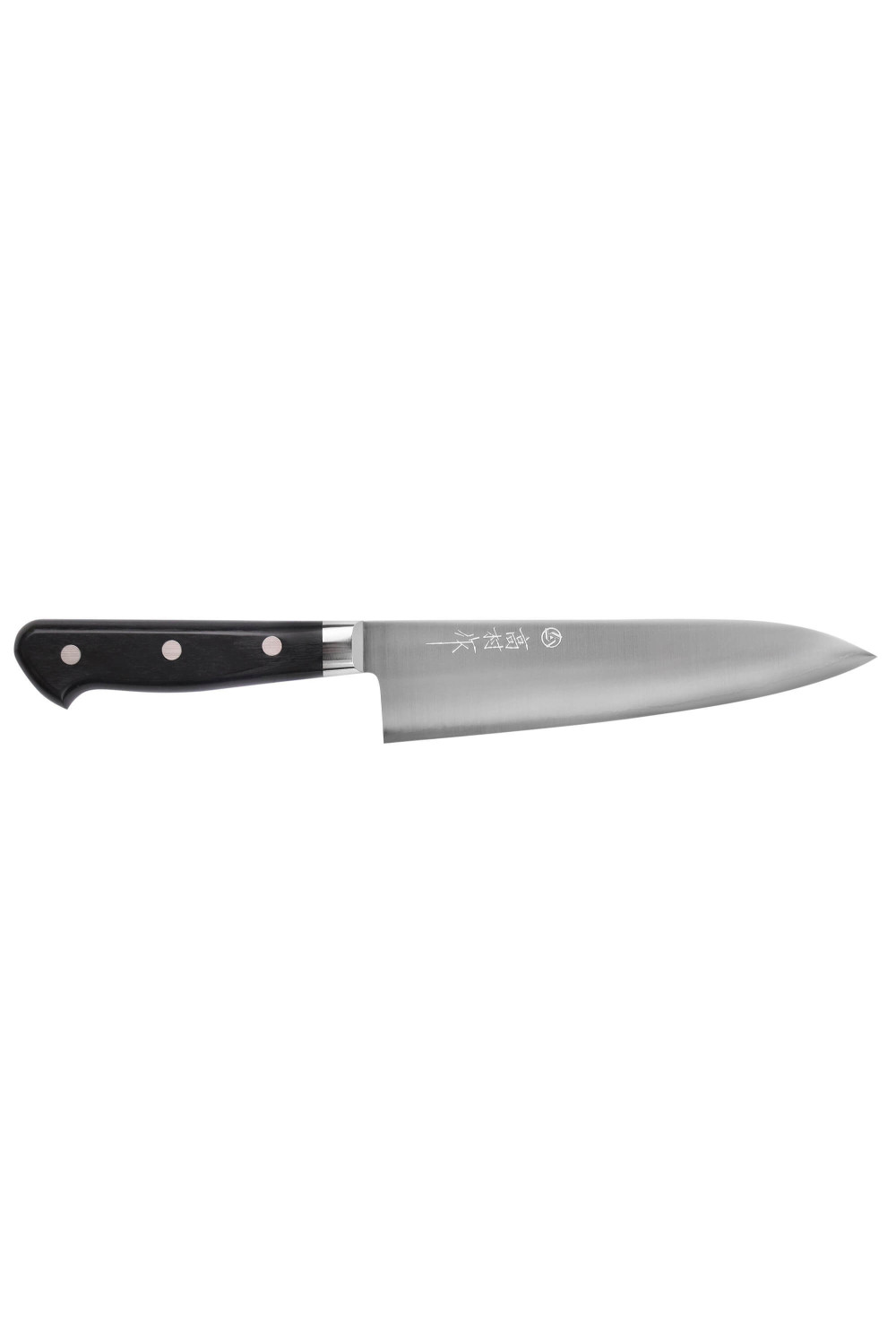
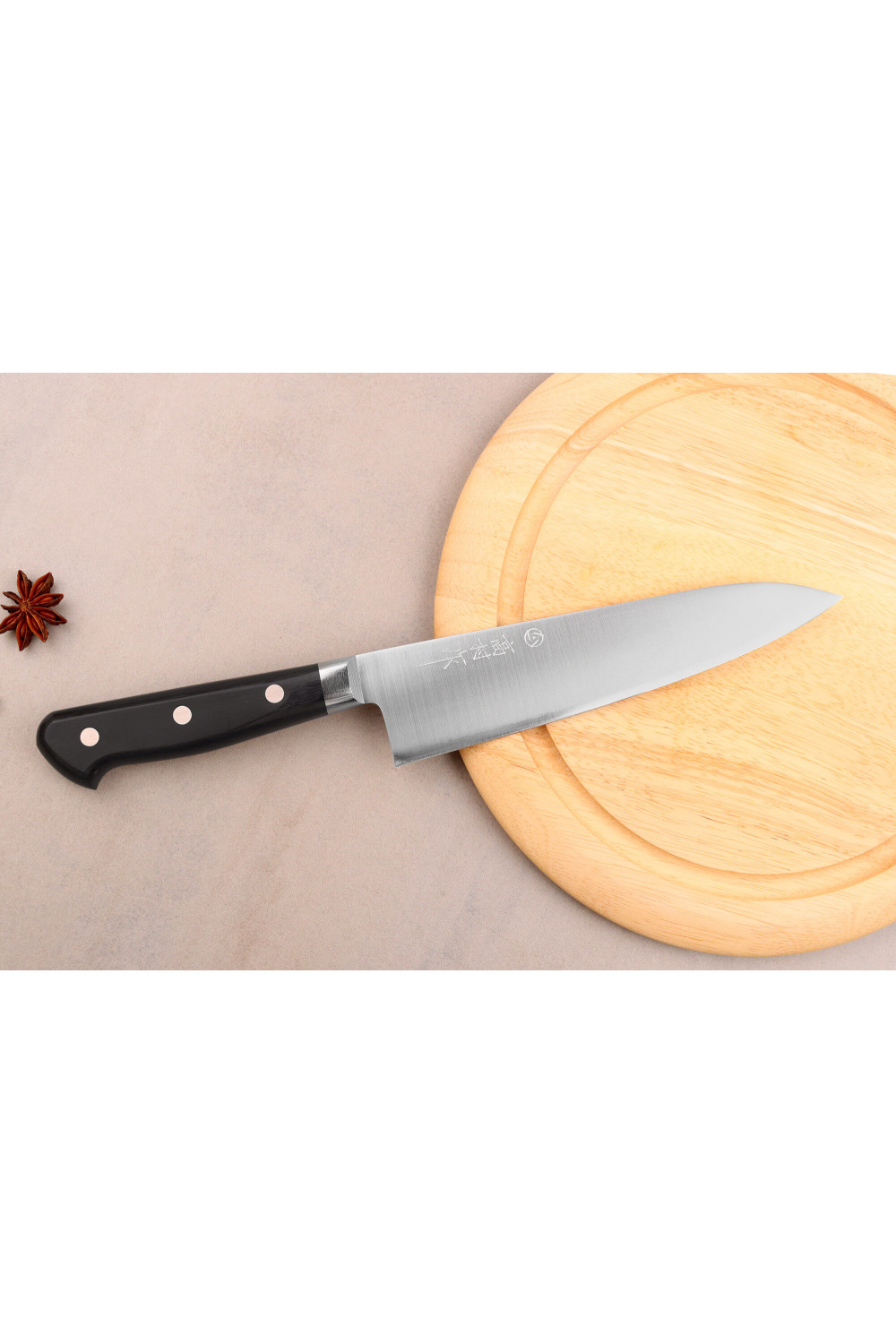
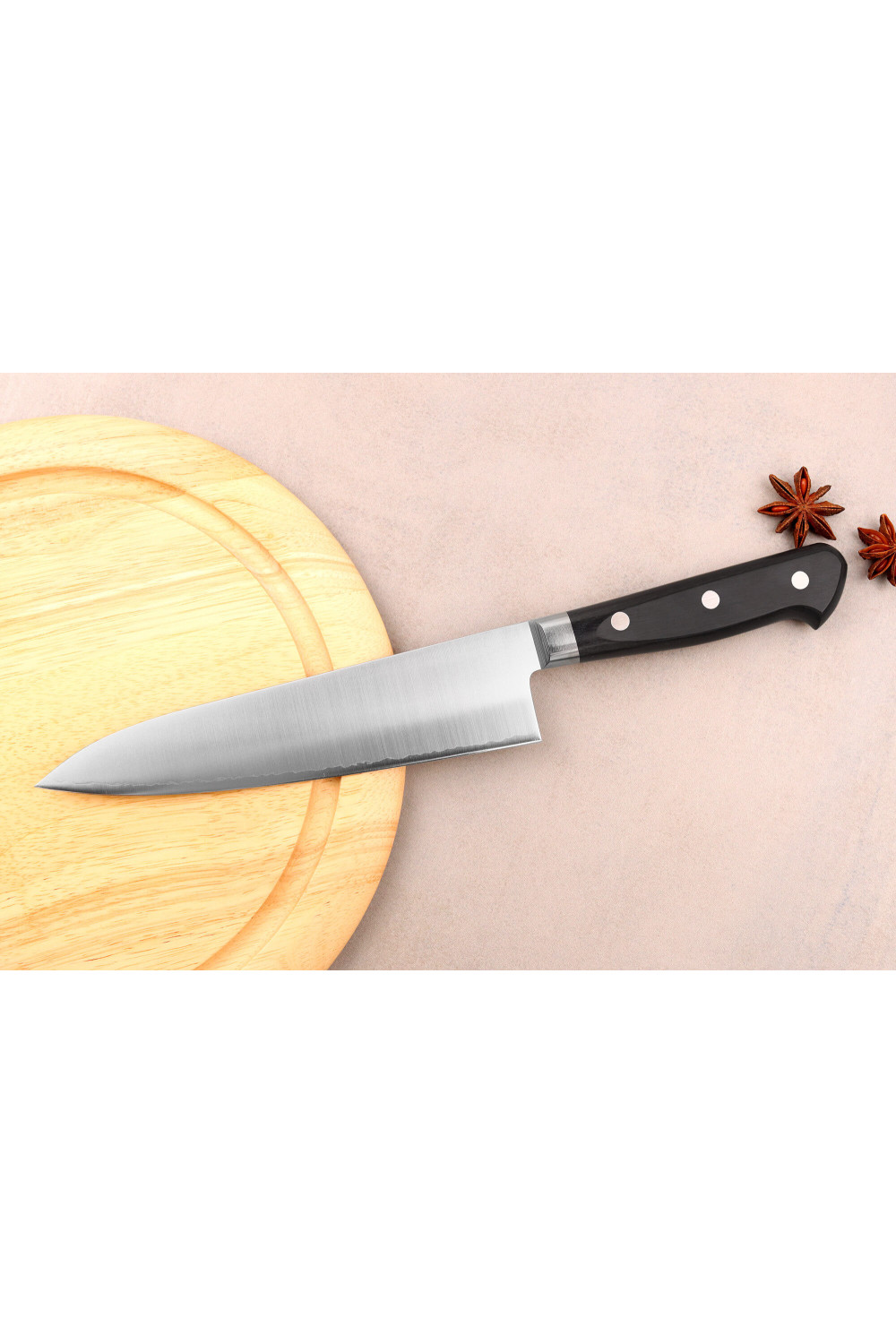
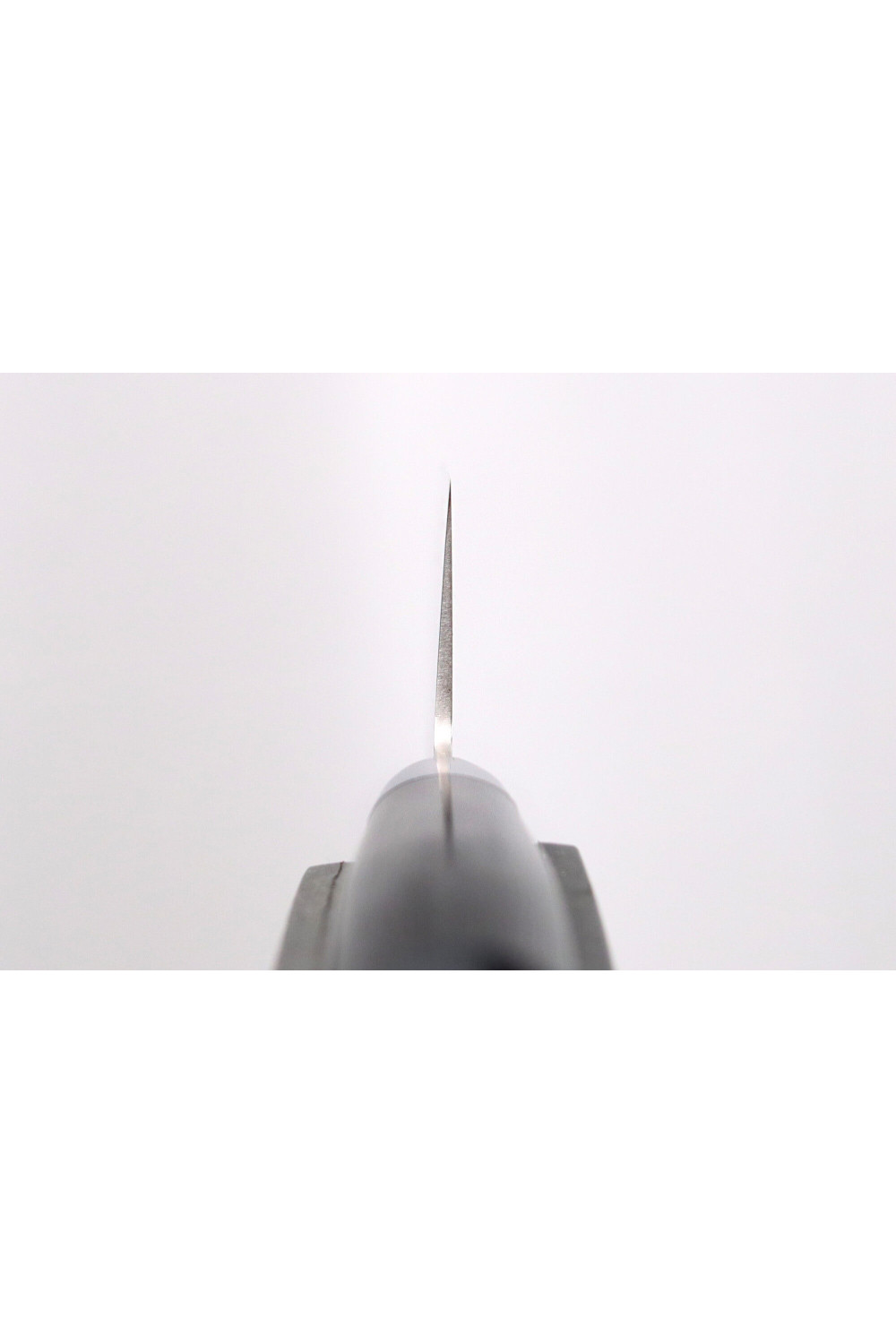
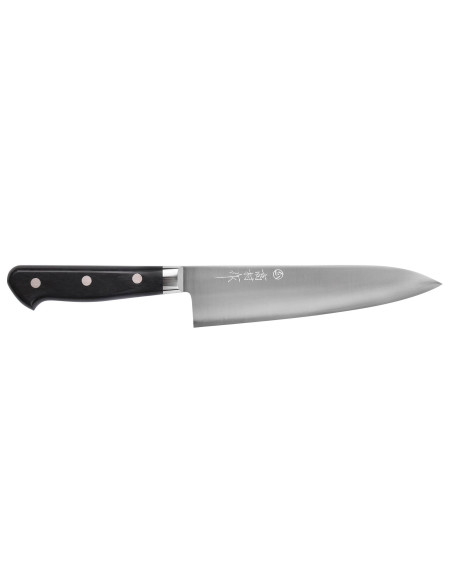
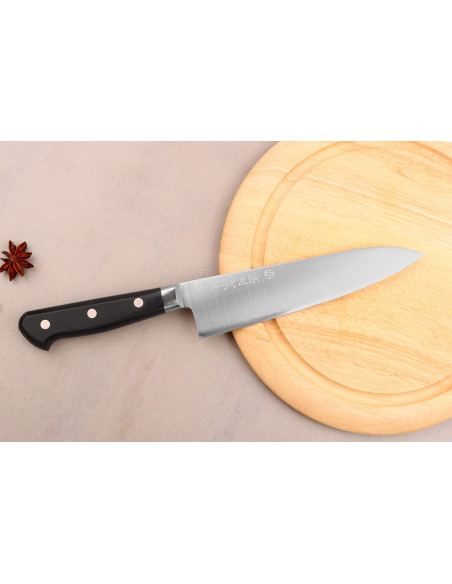
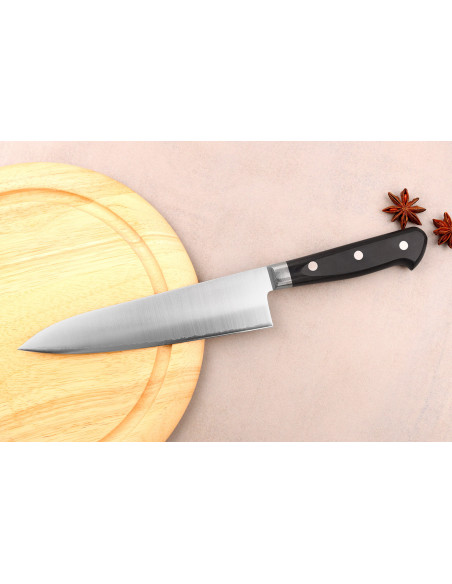
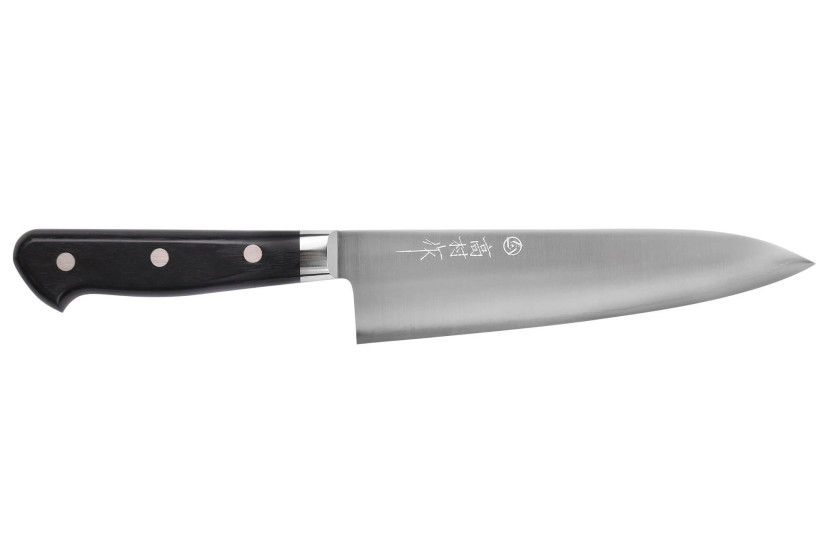
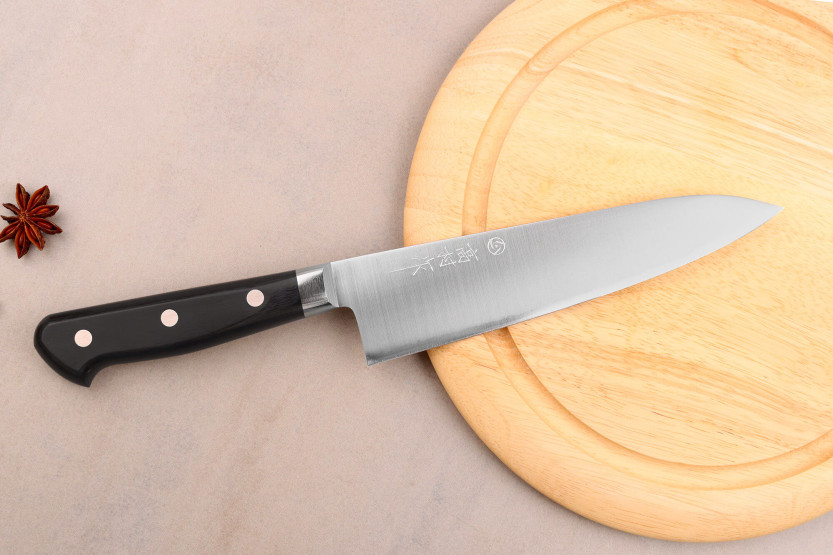
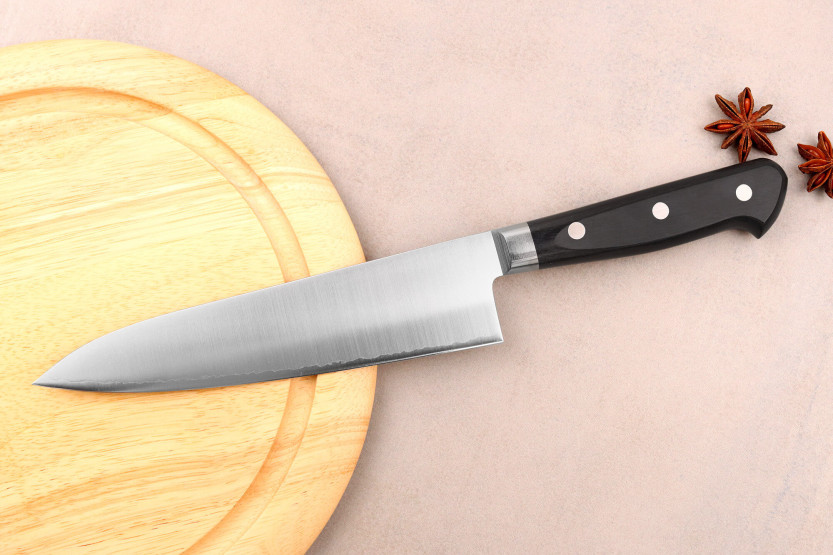
This 18cm chef knife, also known as a gyuto knife, is a truly versatile knife, designed to be your everyday kitchen ally! If you had to choose just one, this model would be an excellent candidate, as it allows you to make a wide variety of cuts. It's equally at home with vegetables, meat (off the bone) and herbs, giving you great freedom of use.
A Japanese knife with an efficient blade
The blade is made from a core of VG10 steel, a renowned Japanese alloy. Its carbon content of 1% is considerably higher than that of Western knives, which are generally around 0.5%. This high carbon content gives the blade great rigidity, ensuring that the cutting edge remains sharp for a long time. With a hardness of 60HRC Rockwell, sharpening will be less frequent, for greater ease of use. What's more, despite its high carbon content, VG10 steel also contains a significant amount of chromium, improving its resistance to corrosion.
A softer stainless steel coating wraps around the core to protect it. This structure also adds a slight suppleness to the blade, reducing the risk of breakage while preserving optimum rigidity.
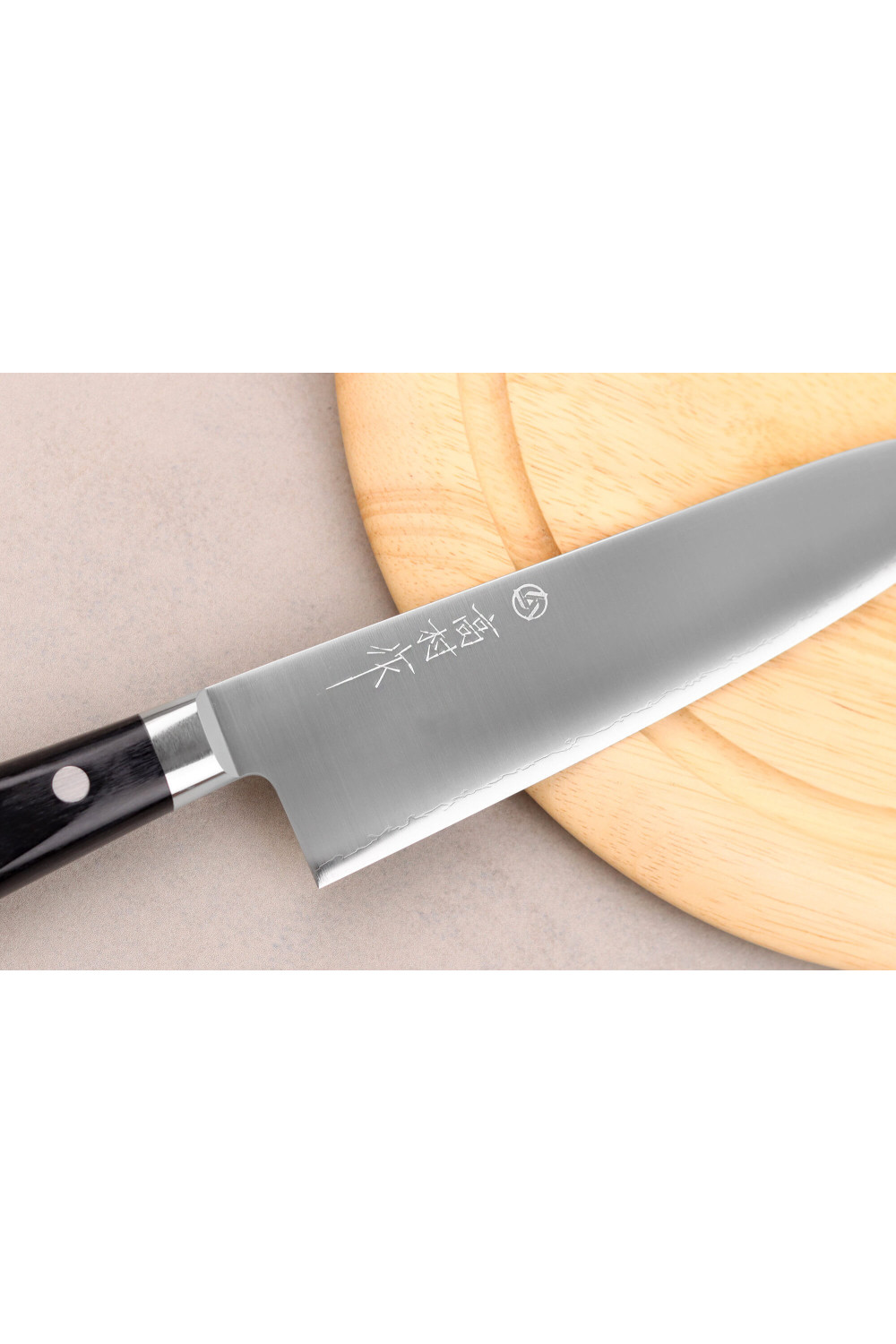
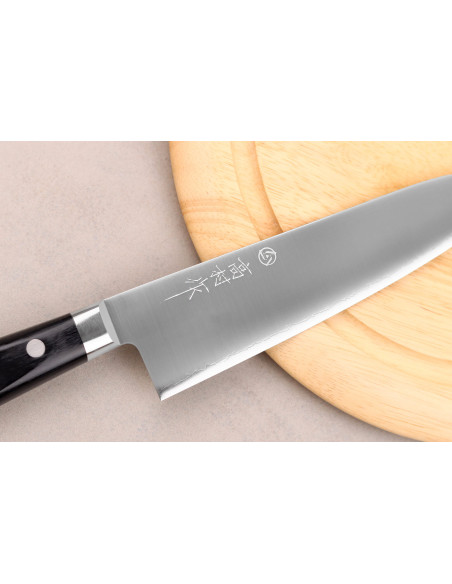
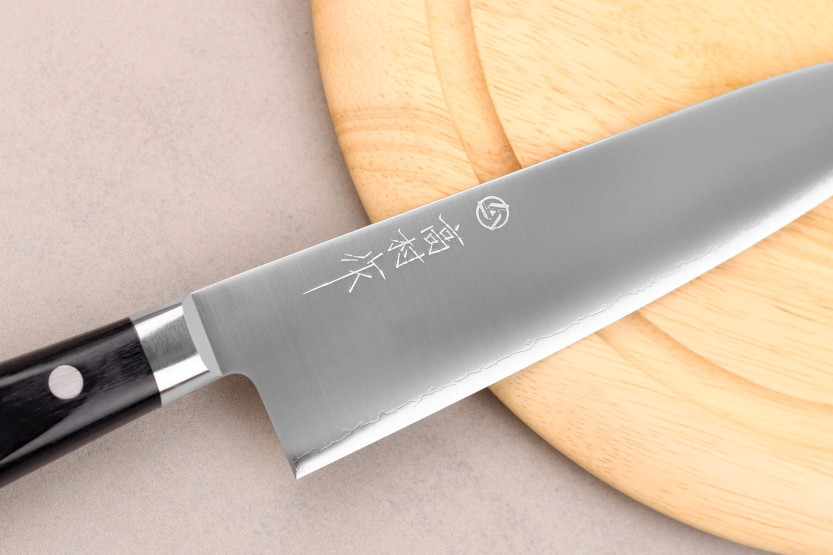
Thanks to these three layers of steel, the blade qualifies as San Maï, a forging method inspired by damascus. The superimposition of these different layers of steel can be seen all along the cutting edge, where a fine wavy line can be seen.
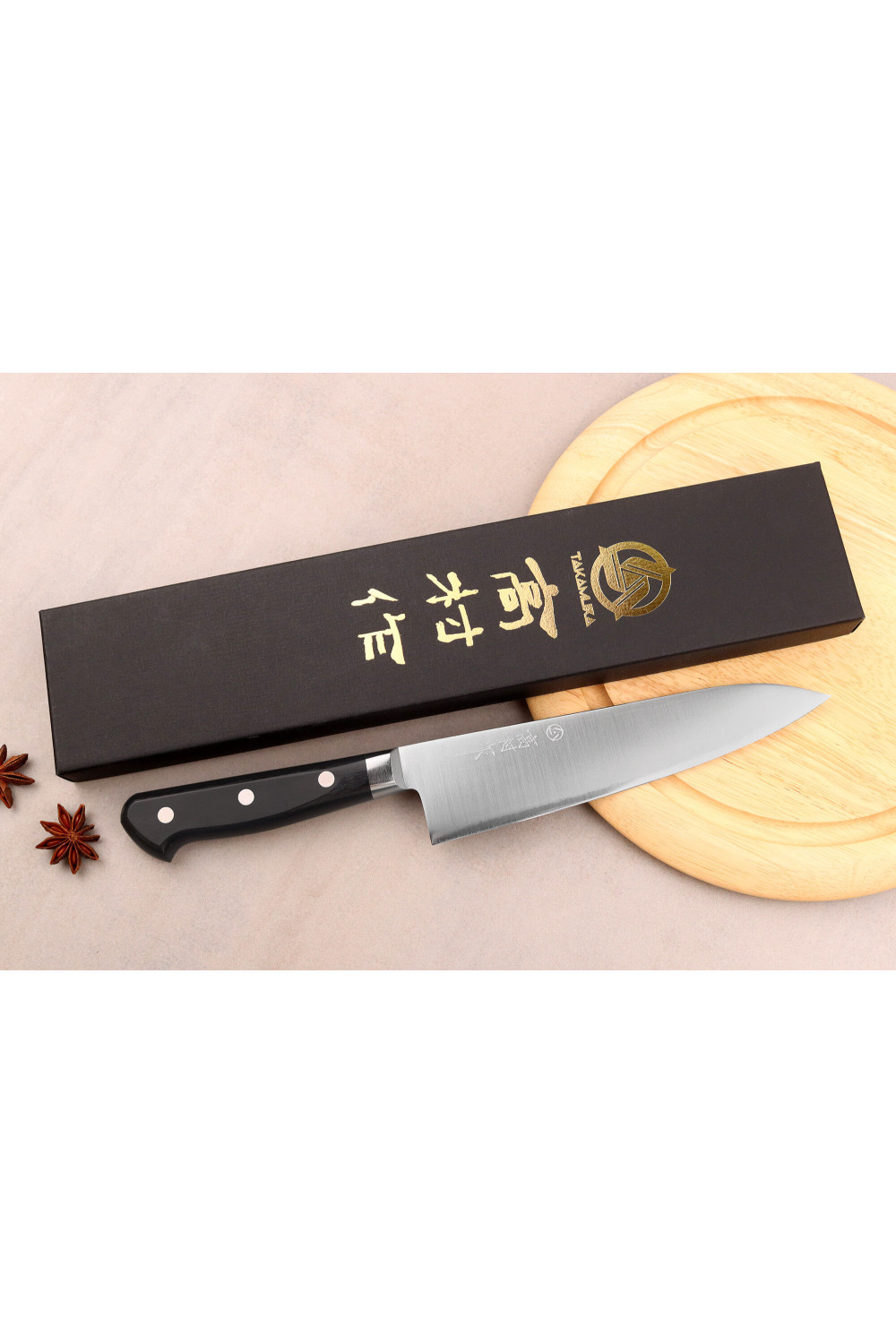
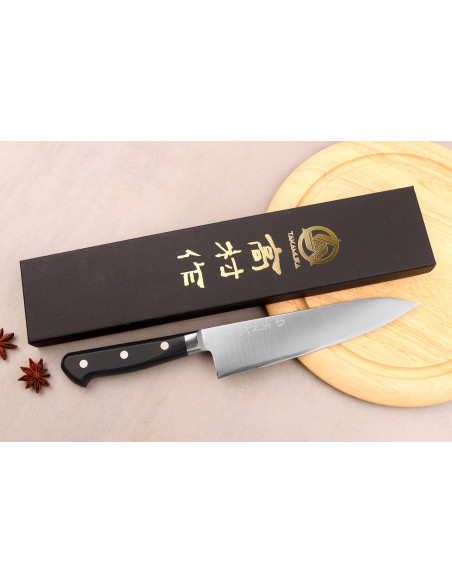
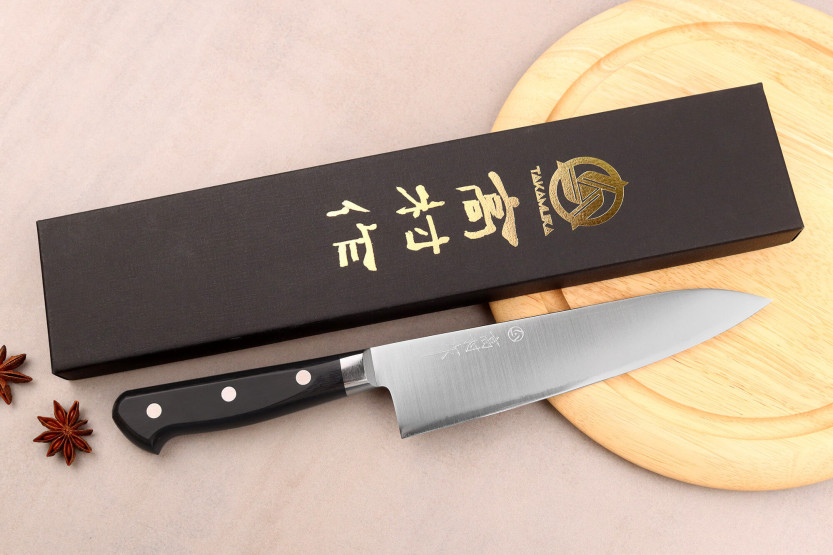
The surface of your blade is delicately polished, a craftsmanship that lends a touch of elegance to every handcrafted Japanese knife. Your Japanese kitchen knife has also been engraved with kanji to give it a more authentic character!
Takamura craftsmen pay particular attention to the finish of the cutting edge. Their philosophy is simple: if an ingredient breaks before the blade even touches the cutting board, the knife has not done its job properly. A good knife should slice cleanly without crushing food fibers, and that's what the precision sharpening of Takamura knives guarantees!
Ergonomic handle for this Japanese chef's knife
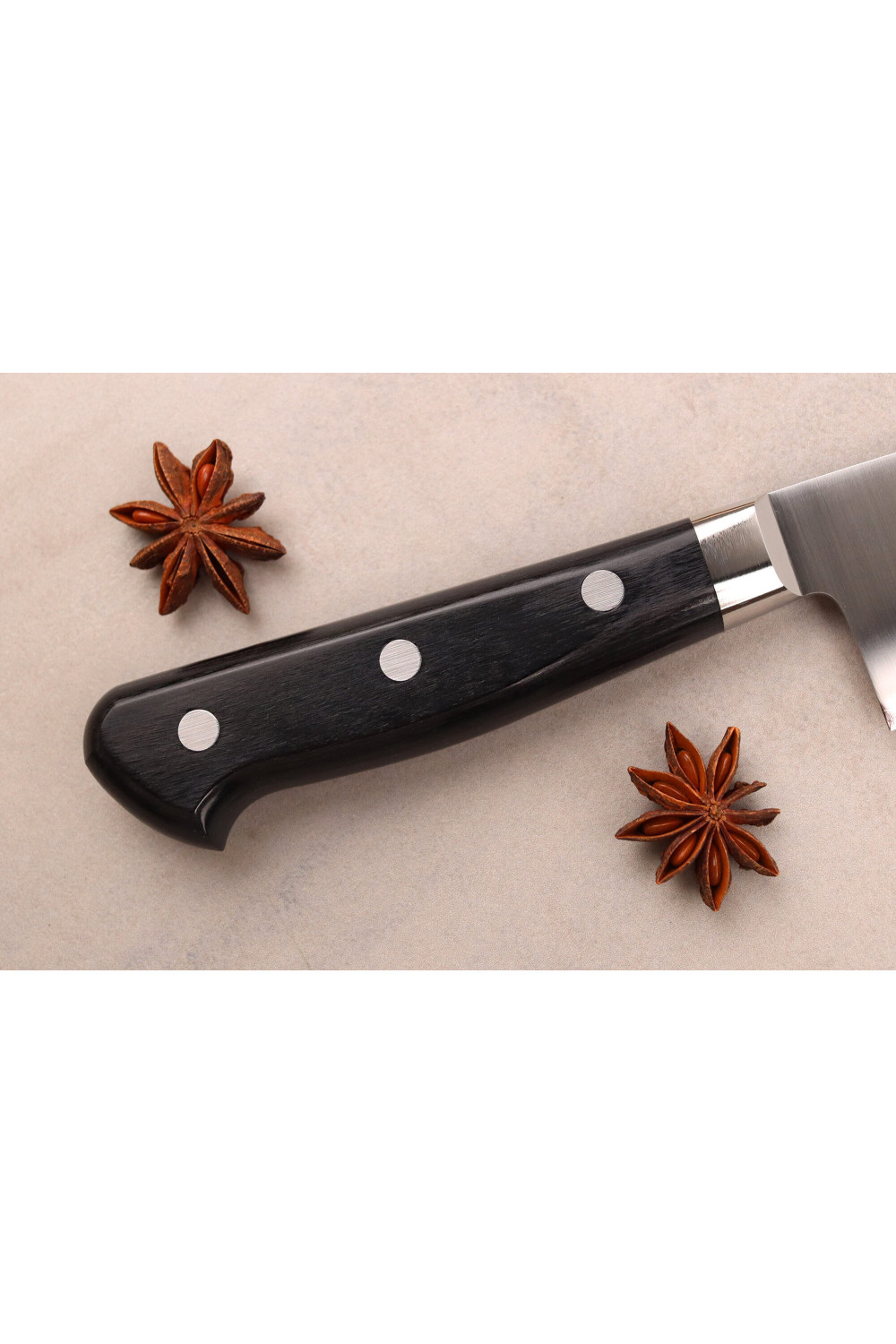
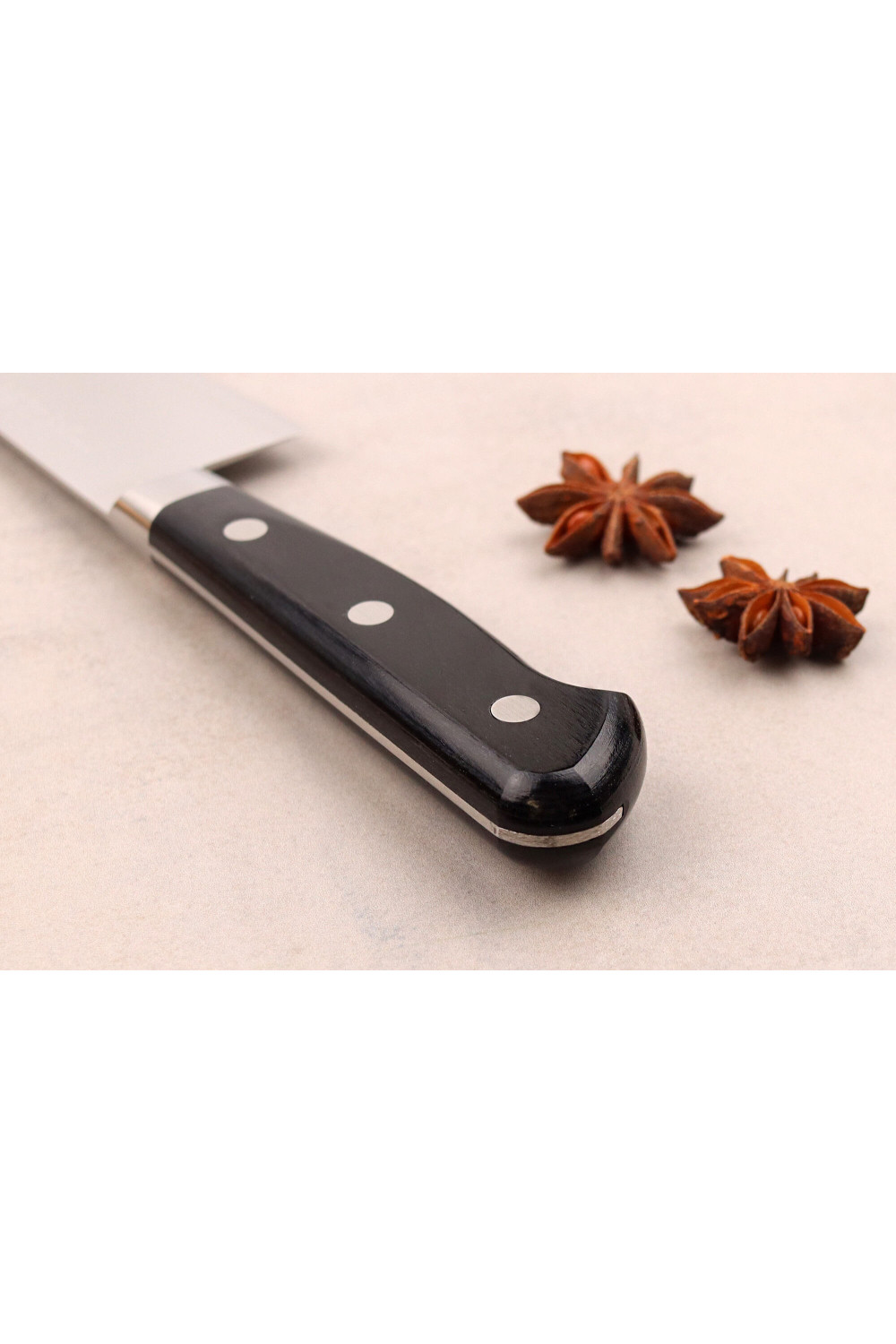
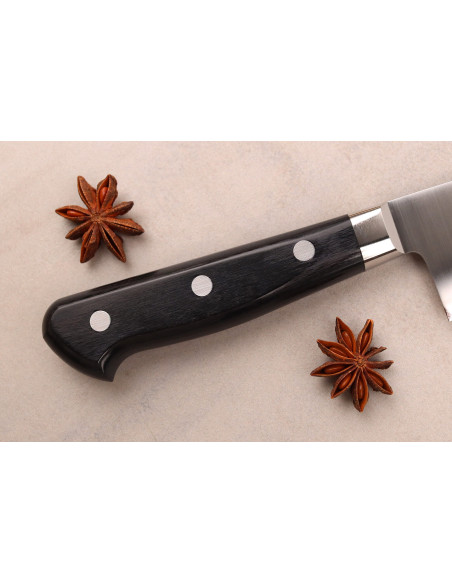
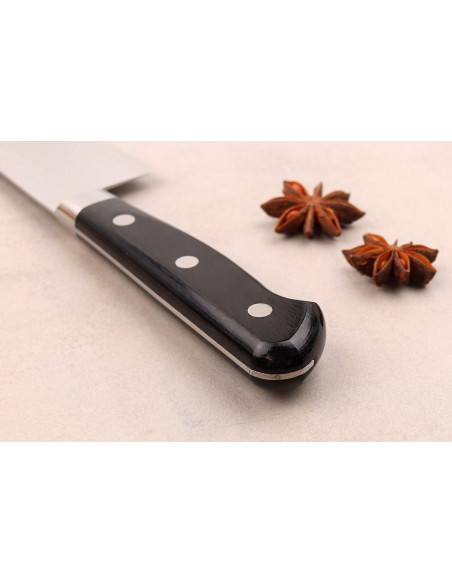
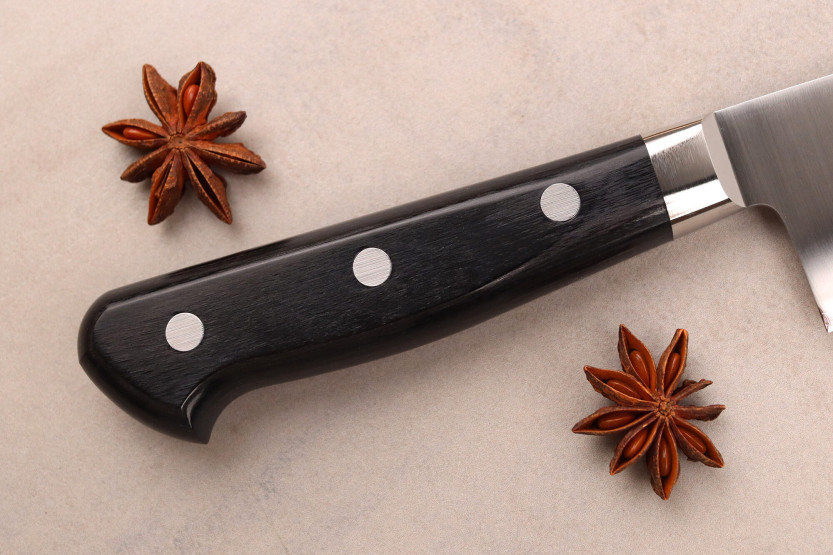
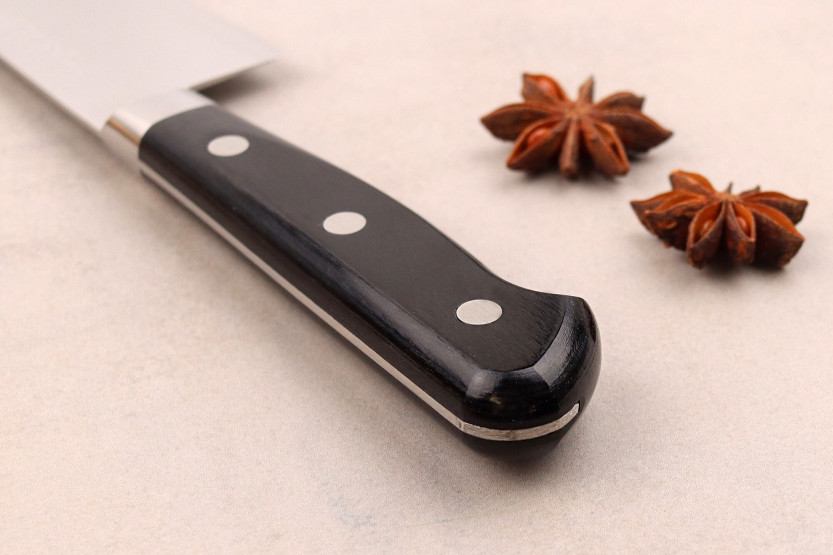
The handle is made of black pakkawood, a composite material combining wood and resin compressed under heat. This process gives the handle several advantages: it is antibacterial, resistant to temperature variations and humidity. As a result, your Japanese kitchen knife benefits from the strength of the composite material, while at the same time featuring a natural grain pattern on the handle.
The handle is Western-shaped to ensure an excellent grip, whether you're left- or right-handed! It offers optimum comfort of use, especially during long kitchen sessions!
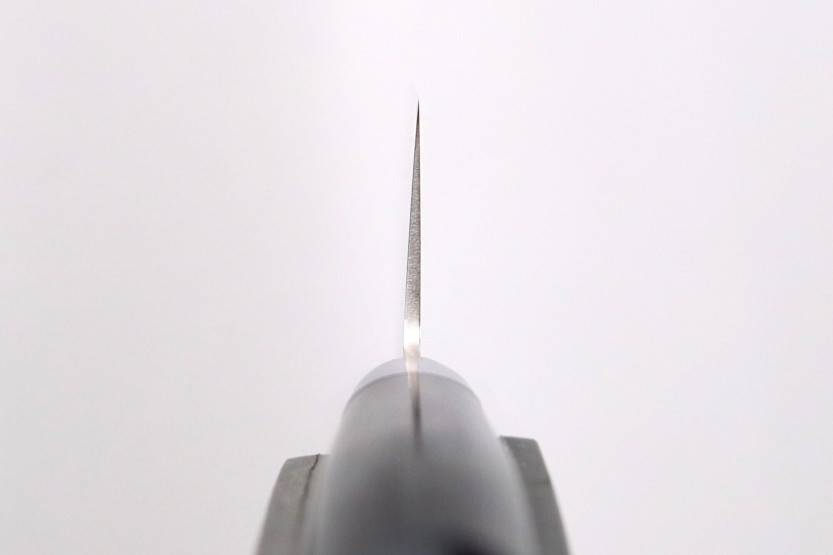
The blade is held firmly to the handle by three stainless steel rivets, securing the blade tang for added strength. A stainless steel bolster is added between the blade and the handle to give your Japanese knife greater balance.
To care for your Japanese chef's knife, wash by hand only, dry immediately with a soft cloth and store in a dry place to avoid prolonged contact with moisture. Do not use the dishwasher or leave your knife to soak in the sink.
Takamura and their craftsmanship
Takamura knives are hand-forged in Japan, in the town of Echizen, a hotbed of Japanese cutlery-making for over 700 years. The town is world-renowned for its excellence in the art of forging.
For decades, Takamura has been perfecting the manufacture of stainless steel knives, striving to match the performance of the carbon steel blades that are the pride of Japan. Today, this mission has been brilliantly accomplished, and you can experience it for yourself by adopting a Takamura knife, the fruit of the work of the family's third generation of craftsmen.
Toshiyuki Takamura, representative of the second generation, believes that three elements are essential to the design of an excellent knife: first-rate materials, a meticulous forging process and an impeccable edge finish. These principles are rigorously applied to every blade produced by Takamura.
To discover even more handcrafted models, explore our selection of Japanese knives!




 By buying this product you can collect up to