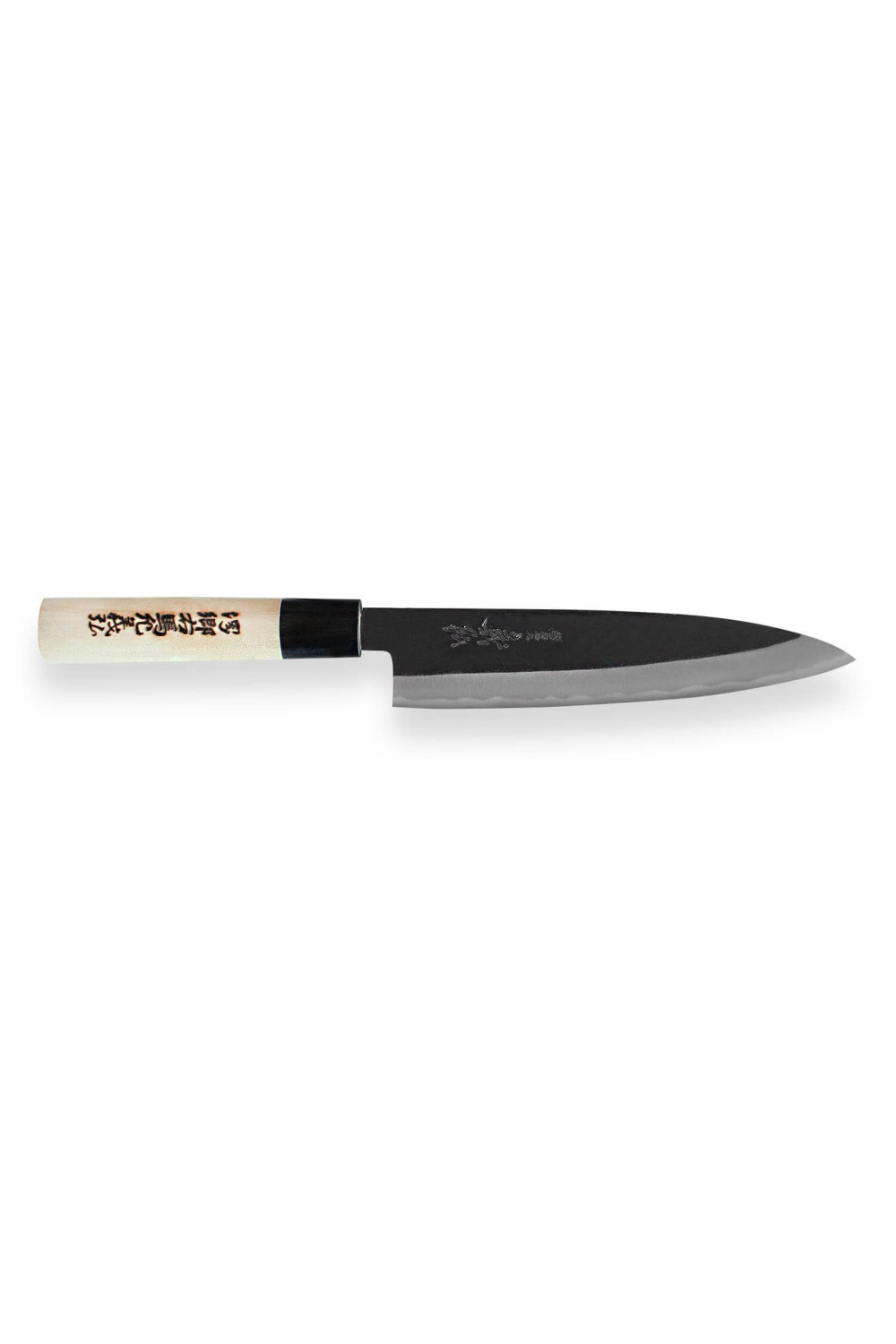
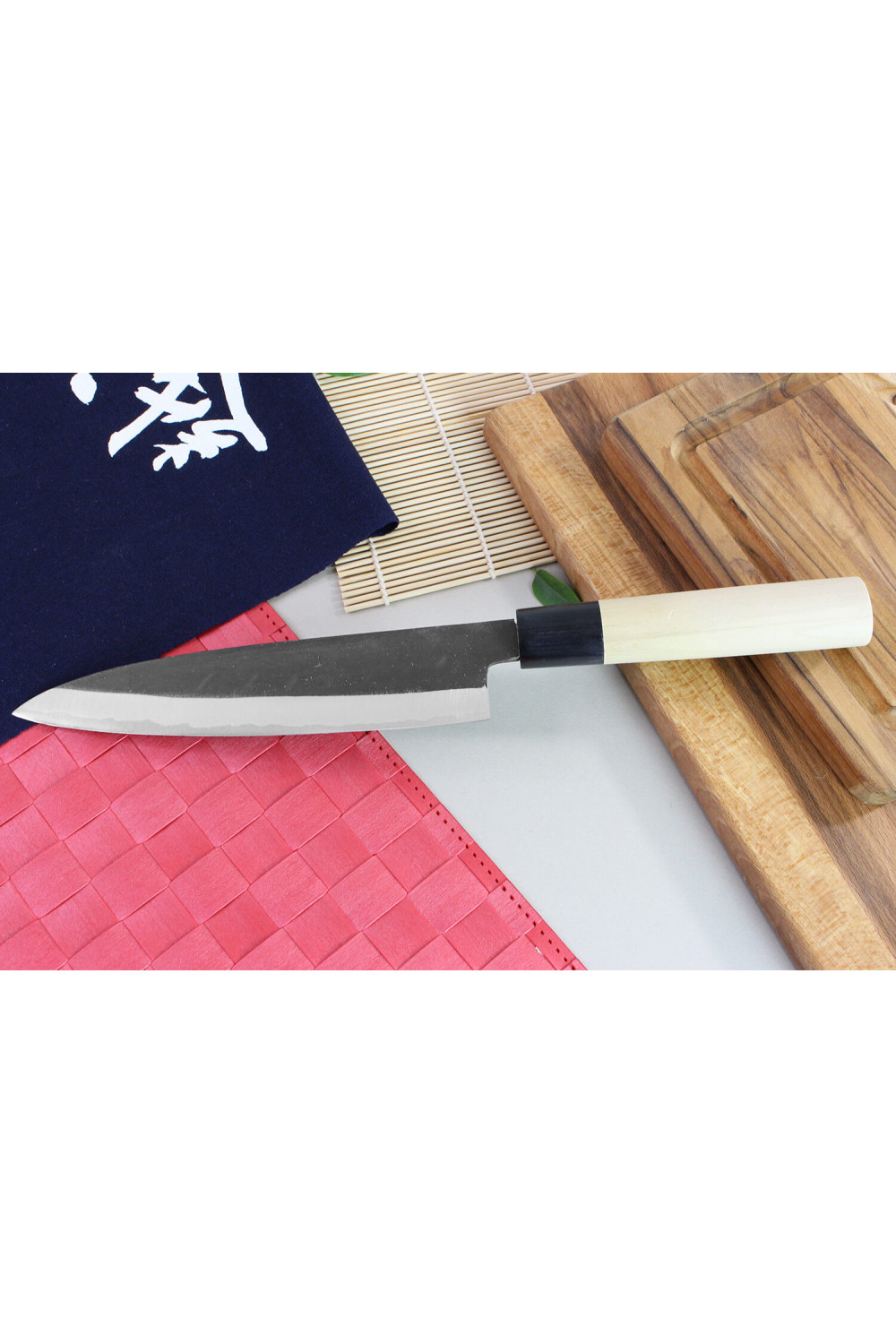
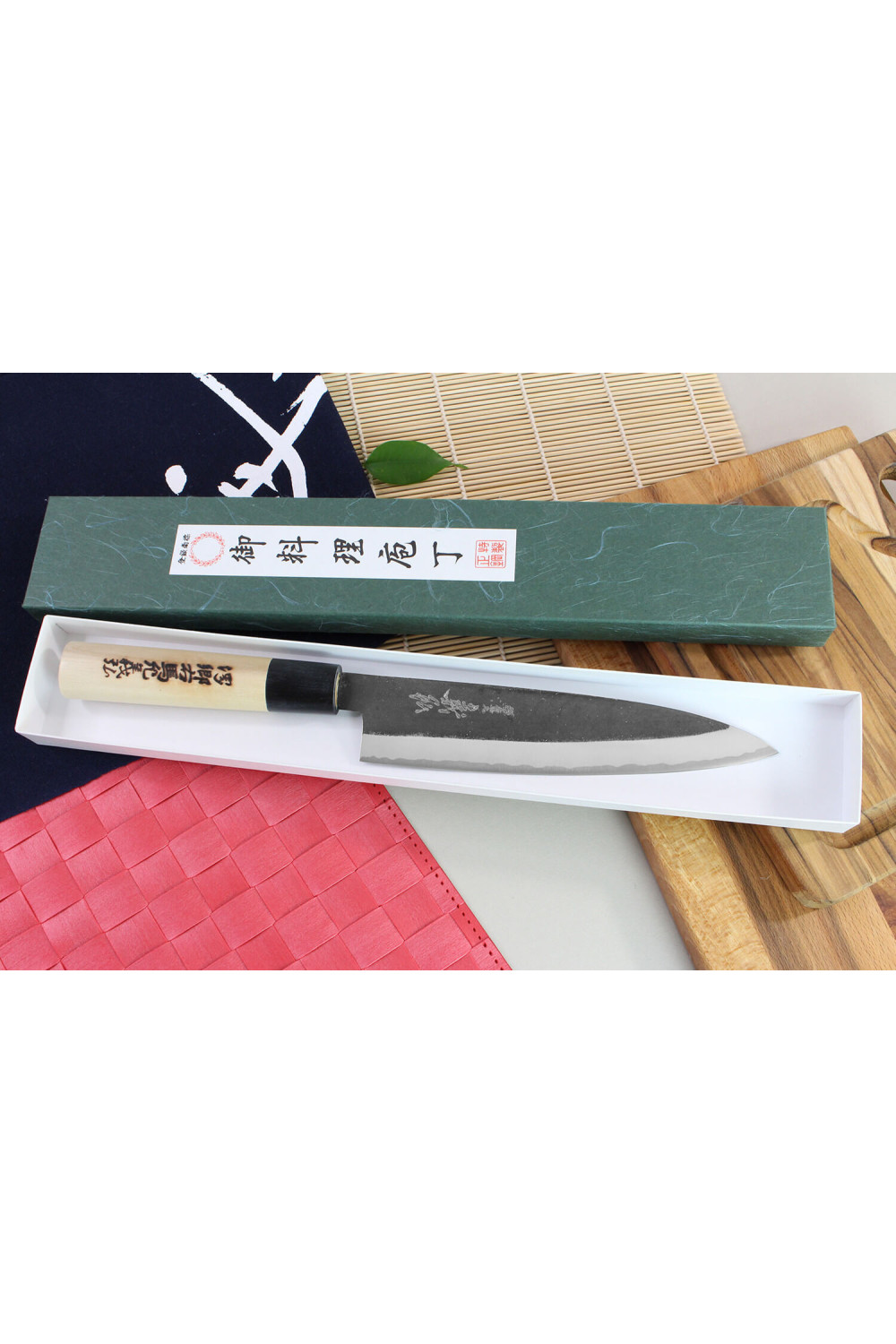
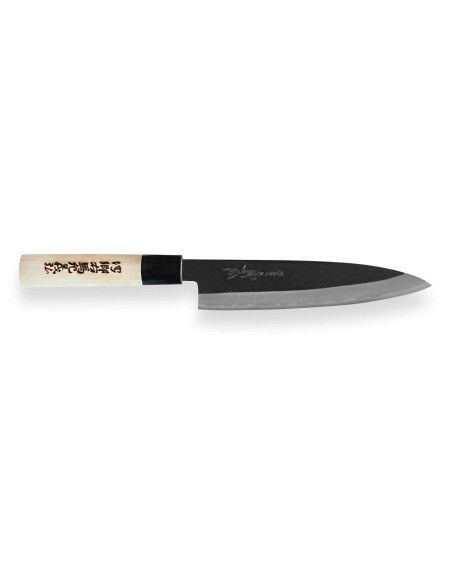
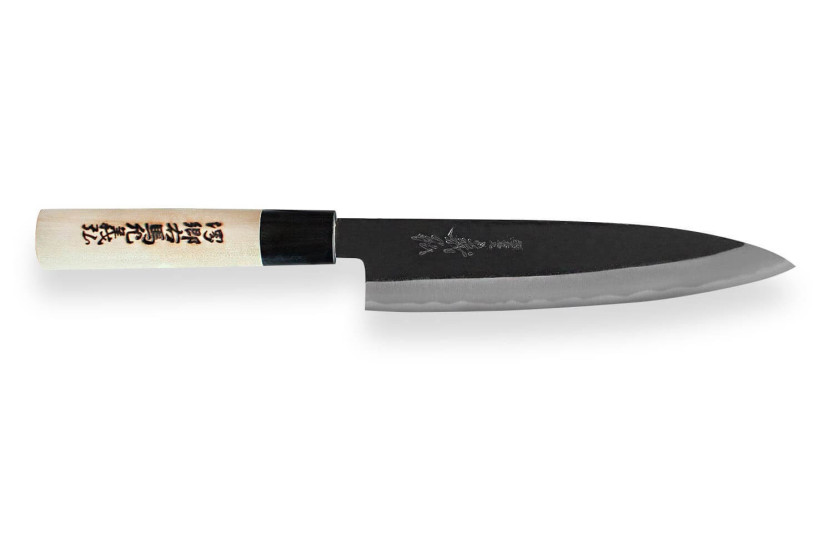
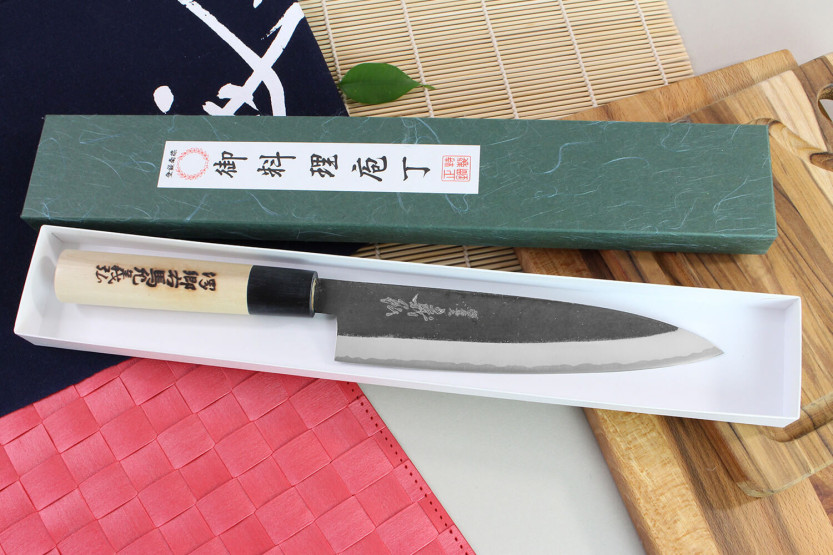
This chef knife is a versatile model. It can be used for mincing meat (boneless), slicing vegetables, chopping coriander, chives... In short, it's efficient in many areas! We offer it in two different blade sizes:
- Chef's knife 21cm (blade: 21cm; handle: 14cm; total length: 35.4cm; blade height: 4.3cm; blade thickness: 2.2mm; weight: 154g)
- Chef's knife 24cm (blade: 24cm; handle: 14,8cm; total length: 39,2cm; blade height: 4,9cm; blade thickness: 2,5mm; weight: 196g)
Knife specifications :
- The blade is built according to the typical Japanese San Maï structure. This is the superimposition of 3 alternating layers of different alloys.
To begin with, the core is a carbon steel, White #2 Steel. It comes from the Hitachi steel mills (supplier of steel to many renowned Japanese manufacturers), and has a carbon content of 1.05%. This type of steel is widely used in high-end Japanese knives. This level of carbon makes the steel stiffer, which in turn enables it to be sharpened more thoroughly (since the alloy is capable of withstanding such a finish). The result is an ultra-efficient cutting edge, for clean, precise cuts over time.
This alloy is "purer" than stainless steel. This makes its structure more homogeneous, and the knife more resistant to wear (there's less risk of chipping). It also holds its edge for a long time, but is easy to sharpen when the need arises. So, you space out sharpening sessions, but they don't last long when you need them.
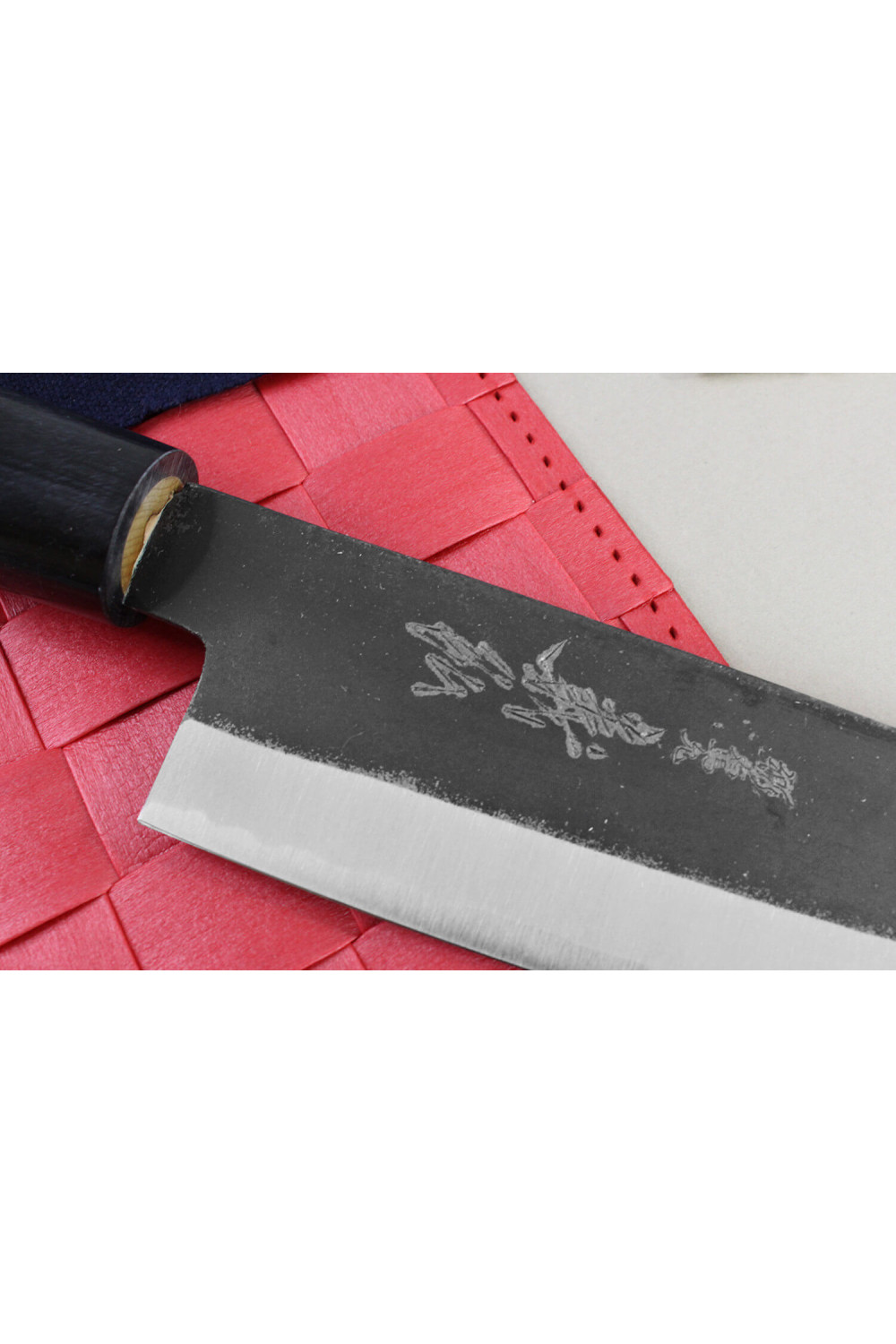
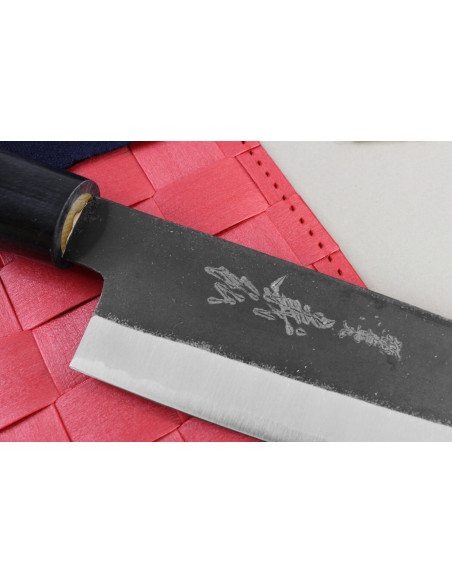
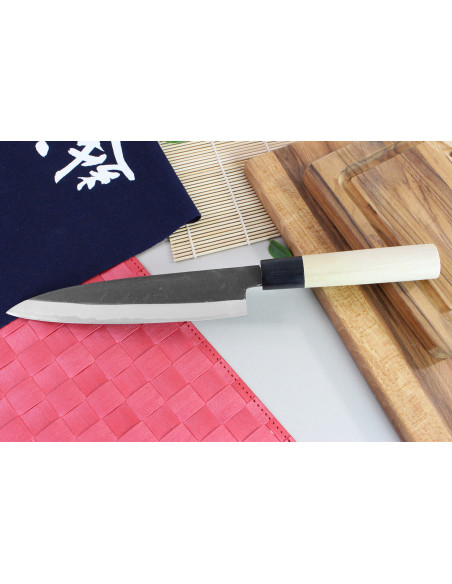
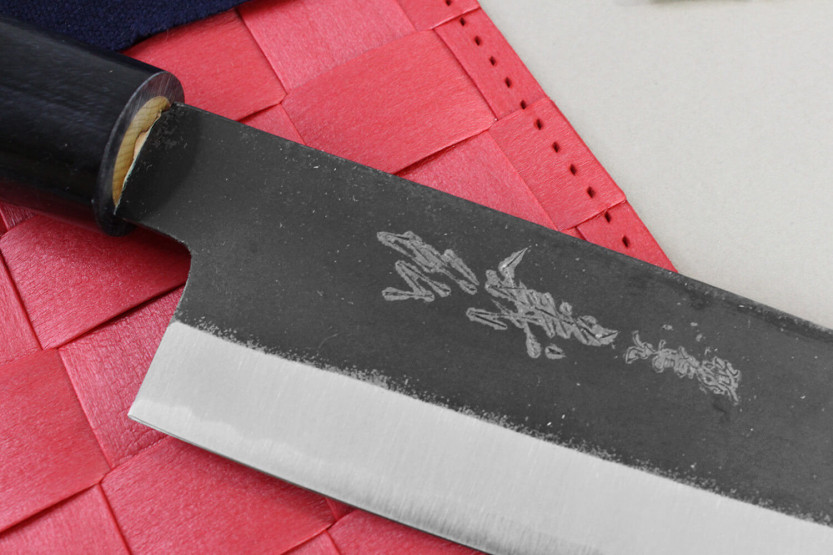
This core is then surrounded by a layer of soft iron, as you can see from the color differences on the bottom of the blade.
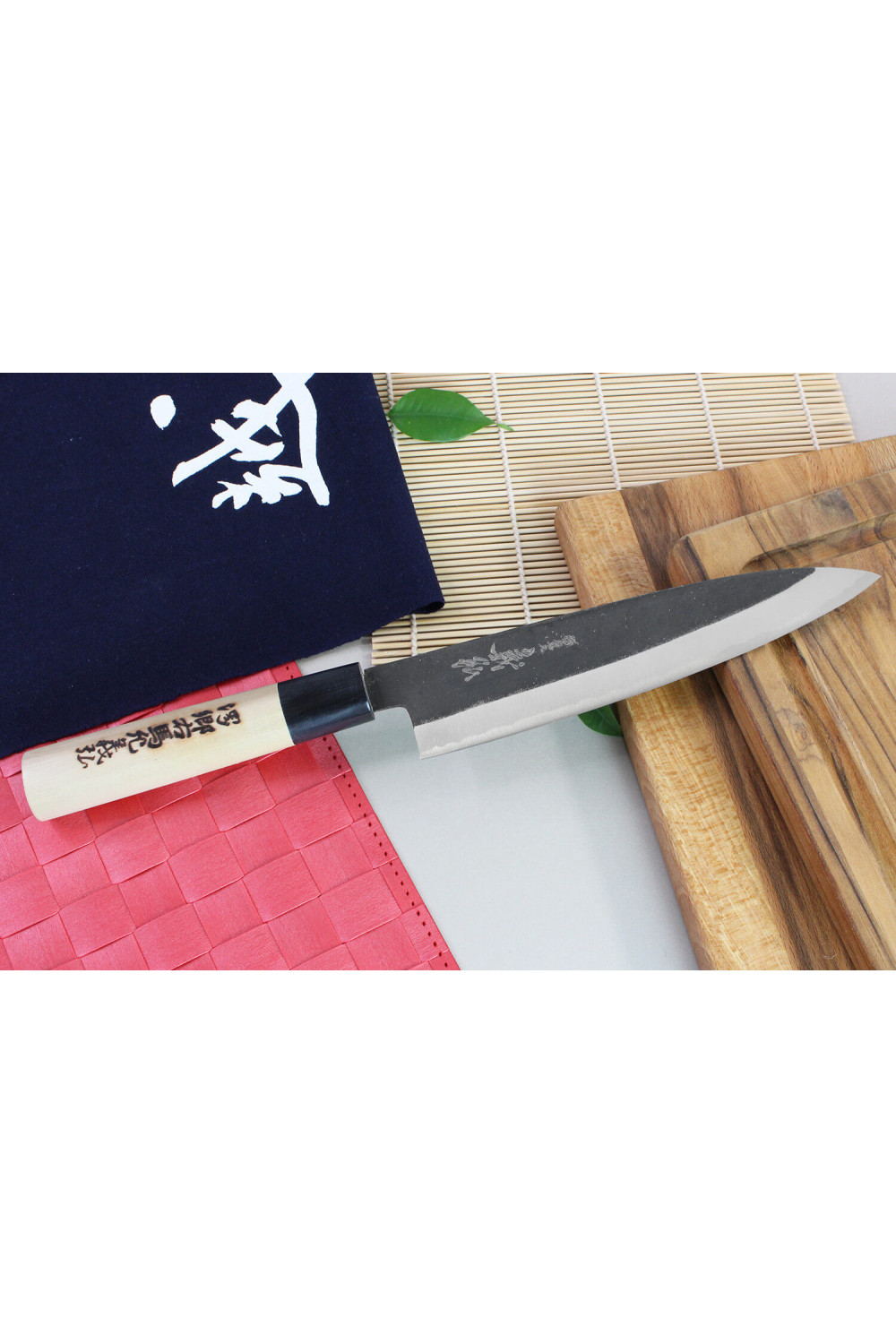
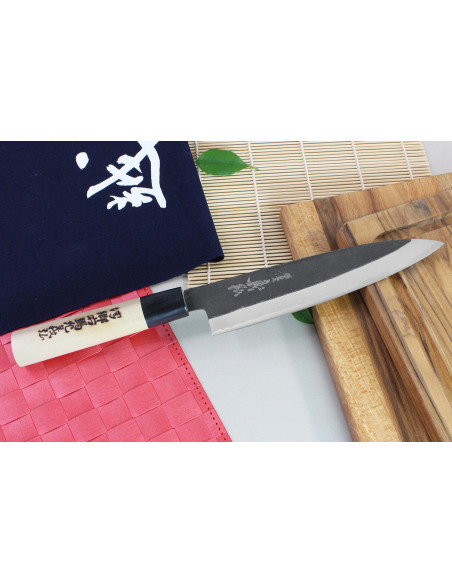
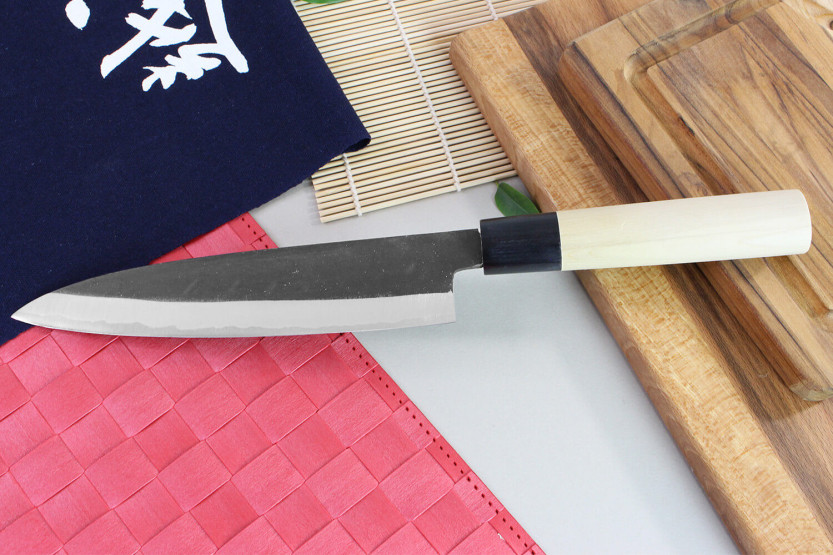
- The Yoshihiro knife has a rough forged blade finish. It is not polished, which is what gives it its original dark appearance. Japanese chefs love this type of finish, which feels more authentic. Also, the logo visible on the blade has been directly engraved by an expert craftsman. A further proof of authenticity.
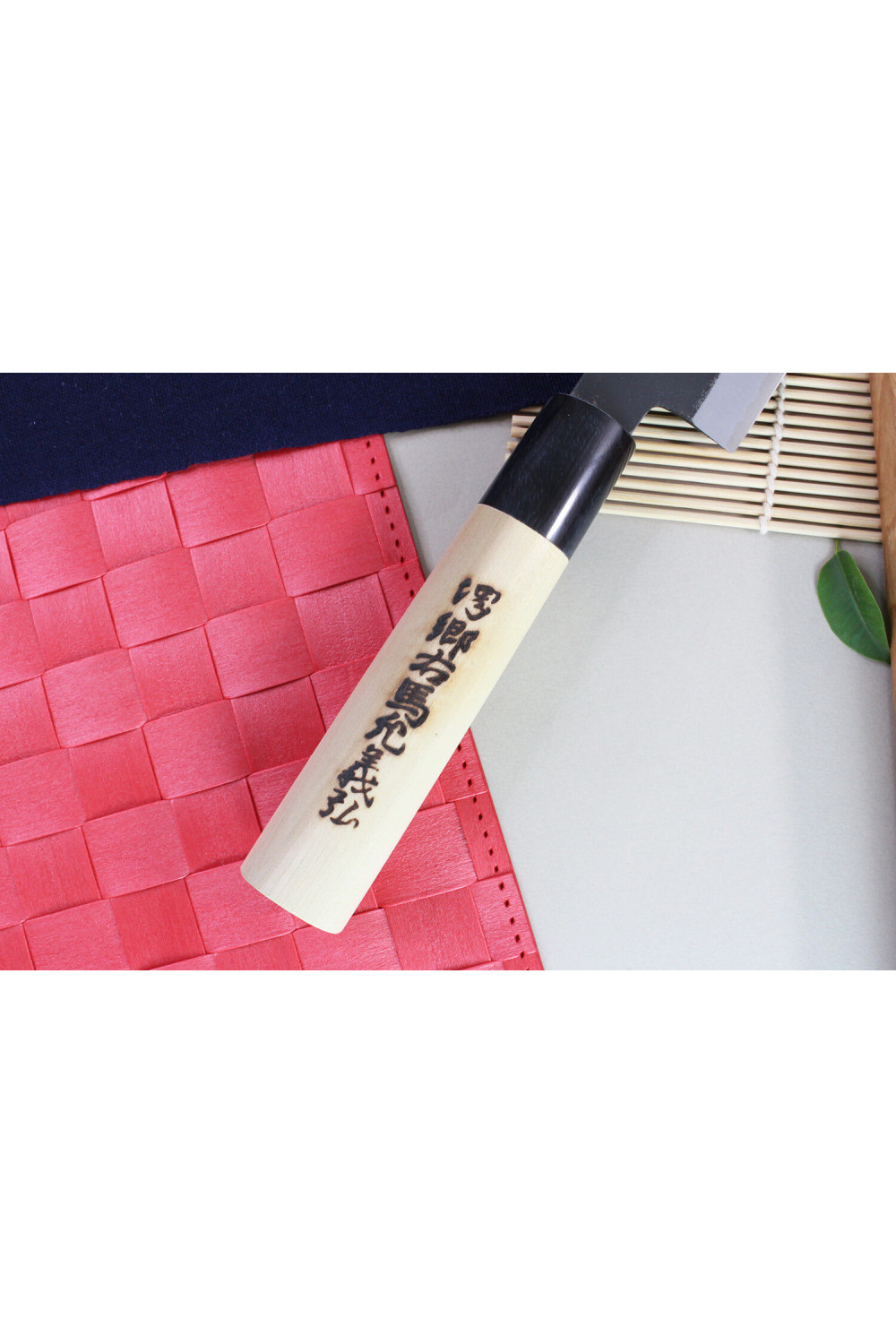
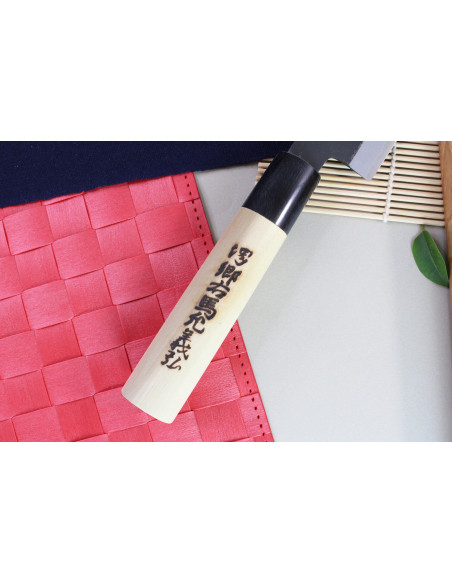
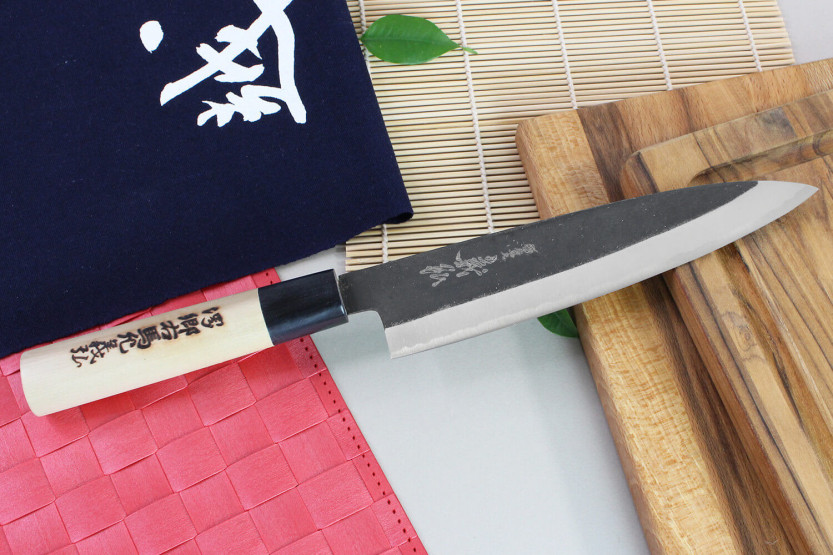
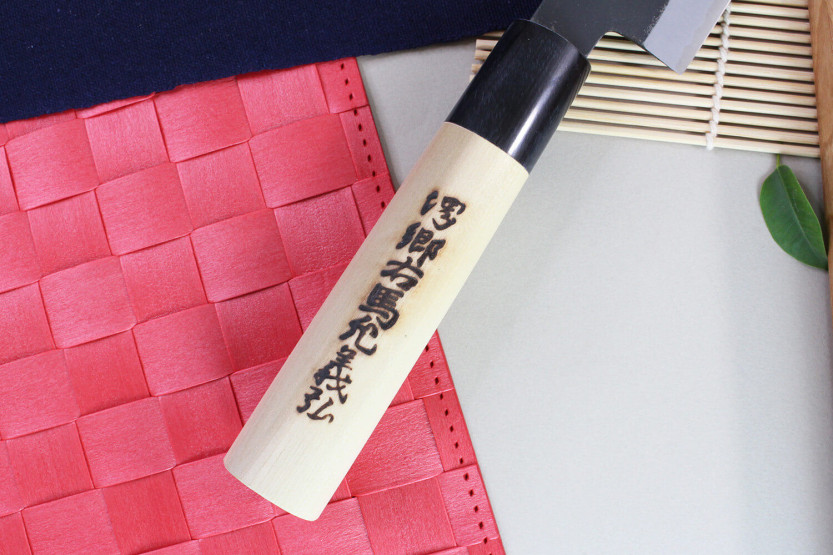
- A black ferrule links the blade to the handle. It is made of buffalo horn. This natural material can show random white streaks, which will of course be different on every knife. The handle is made of light magnolia wood. Its oval shape is suitable for both right- and left-handed cooks. The special feature of the Kogeta series lies in the handle: kanji have been engraved on its surface. They are inscribed with a hot iron, hence the slightly "burnt" appearance visible all around. In fact, "kogeta" means "burnt" in Japanese. Then, the junction between the blade and the bolster is filled with a wood paste that makes the whole thing watertight, and prevents small scraps and water (when cleaning) from penetrating the wood.
Find out more about the brand :
Yoshihiro offers you high-performance knives made to last for years. The brand has been established for around a century in the Land of the Rising Sun, and these craftsmen are the descendants of highly-skilled blacksmiths who produced the katanas of the time (know-how can be traced back to the 14th century). Little by little, the techniques used to create these katanas were transferred to the cutlery industry, which is why Japanese knives are so sharp!
Each knife created by the brand is unique. Manufacturer Yoshihiro's motto is: 一期一会. This could be translated as "every moment is a once-in-a-lifetime opportunity". That's why the brand strives to offer long-lasting knives whose performance will delight you for years to come, so you can enjoy every moment in the kitchen.
Care :
It's important to note that carbon and iron are sensitive to oxidation. The knife should therefore be washed by hand, without soaking (blade and handle included, the latter being made of wood). After washing, wipe with a soft cloth to remove all traces of moisture. Please note, however, that a carbon blade will tend to vary in color over time, even if you are very careful. This is normal (the knife is in constant contact with moist food, and moisture is also found in the ambient air...). You can apply mineral oil to the steel from time to time, for maintenance purposes. Do not use a dishwasher.
Find other Kogeta knife models on our site!




 No reward points for this product.