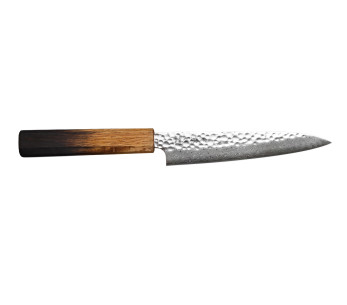
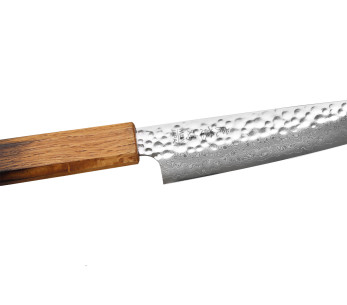
Small in size but incredibly versatile, the Petty knife is an essential tool in Japanese cuisine. Its name comes from the French word "petit", meaning small, and refers to a compact utility knife inspired by Western blade designs and refined through Japanese knife-making expertise.
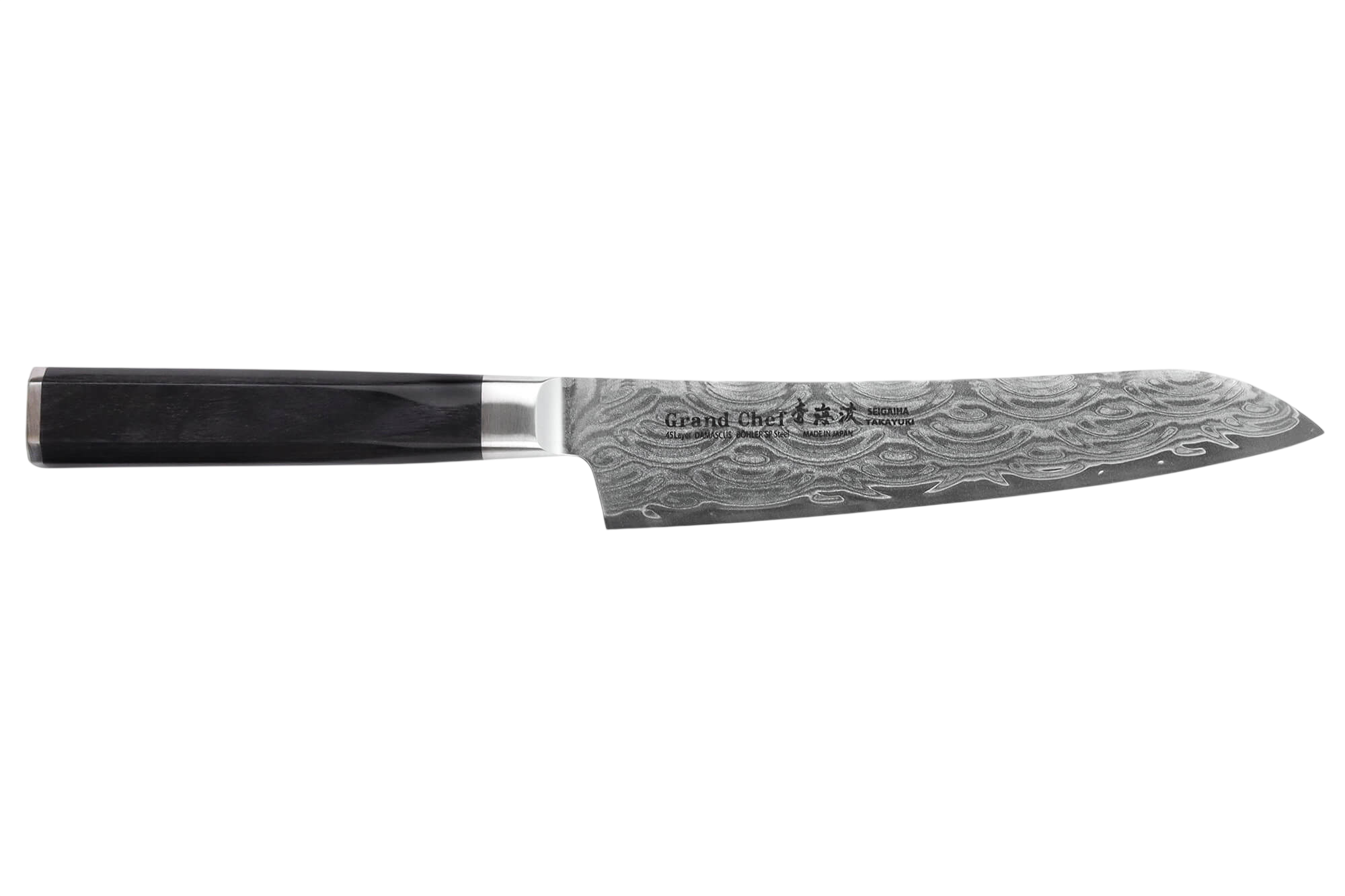
Usually measuring between 12 and 15cm, the Petty knife features a slim, lightweight blade, a fine cutting edge and a pointed tip. Its compact shape provides excellent manoeuvrability, making it particularly suitable for delicate and precise kitchen tasks.
Halfway between a traditional paring knife and a Japanese chef's knife, the Petty is perfect for preparing small ingredients, trimming meat, slicing fruit and performing detailed cutting work. But to make the most of its precision, knowing the right techniques is essential!
Discover how to use a Petty knife like a chef, which ingredients it handles best, the cutting techniques to master and the essential habits to keep your blade in excellent condition.
Which Foods Can You Prepare with a Petty Knife?
Thanks to its thin blade and precise pointed tip, the Petty knife excels at preparing small and delicate ingredients. It offers greater control than a large chef's knife, particularly when working with foods that require accuracy rather than force.
Fruit: Peeling, Slicing and Decorative Cuts
The Petty knife is an excellent choice for preparing fruit. Its sharp edge makes it easy to slice strawberries, apples, pears, kiwis and citrus fruit while preserving their delicate texture.
Its fine tip is especially useful for removing strawberry stems, trimming blemishes and cutting citrus segments cleanly. With a shorter blade, you can also peel certain fruits with great precision, provided you maintain a controlled and safe grip.
Chef's tip: Use the tip of your Petty knife to remove the white pith from citrus segments for an elegant fruit salad or dessert presentation.
Vegetables: Precise Cuts and Fine Slices
From cherry tomatoes to radishes, mushrooms and small carrots, the Petty knife is particularly effective for cutting small vegetables.
Its narrow blade allows you to produce thin slices, regular strips and small, even cubes with excellent control. It is also ideal for removing stems, trimming imperfections and preparing vegetables for garnishes.
For larger vegetables such as pumpkins or hard squash, a larger and more suitable kitchen knife is recommended.
Chef's tip: When slicing cherry tomatoes, use a gentle forward or backward slicing motion rather than pressing straight down. A sharp blade will pass through the skin without crushing the flesh.
Garlic, Shallots and Fresh Herbs: Fine and Delicate Preparation
Preparing small aromatic ingredients requires precision, and this is where the Petty knife truly shines!
Its fine point makes it easy to trim garlic cloves, finely chop shallots, slice spring onions and prepare small quantities of fresh herbs.
For herbs such as basil, parsley or chives, use smooth, controlled movements to avoid bruising the leaves and preserve their aromas.
Chef's tip: Stack a few basil leaves, gently roll them together and cut them into thin ribbons with your Petty knife. This technique, known as chiffonade, creates an elegant garnish.
Meat and Poultry: Trimming and Precise Cuts
Although the Petty knife is not designed for heavy-duty butchery, its pointed tip and slim profile make it extremely useful for preparing small pieces of boneless meat.
It can help you remove excess fat, trim sinew, clean up chicken breasts and cut small portions of meat with precision.
The key is to guide the blade smoothly without twisting it or applying excessive force.
Chef's tip: To remove a thin membrane from a boneless piece of meat, gently slide the tip underneath it, then use a controlled slicing movement to separate it from the flesh.
Fish and Seafood: Delicate and Accurate Preparation
The Petty knife is also a valuable tool when preparing fish and seafood. Its compact blade allows you to perform delicate tasks that can be difficult with a larger knife.
Use it to trim small boneless fish portions, remove membranes or devein prawns with precision.
However, a Petty knife should not be used to cut through fish bones, shells or frozen seafood. For those tasks, choose a knife specifically designed for the job.
Chef's tip: When deveining prawns, make a shallow incision along the back using the knife tip. This allows you to remove the digestive tract without damaging the flesh.
Mastering the Essential Petty Knife Cutting Techniques
A sharp blade is only part of the equation! To use a Petty knife efficiently, it is important to adopt the correct grip, hand position and cutting movements. These techniques improve precision, comfort and safety when preparing your ingredients.
The Pinch Grip: Holding Your Knife Correctly
For precise cutting work on a board, the pinch grip is one of the most effective ways to control your Petty knife.
Place your thumb and index finger on opposite sides of the blade, just in front of the handle, keeping them well away from the cutting edge. Wrap your remaining three fingers naturally around the handle.
This grip provides greater stability, reduces unnecessary wrist movement and allows you to guide the blade accurately.
Chef's tip: Avoid squeezing the handle too tightly. A relaxed but secure grip helps maintain fluid movements and reduces hand fatigue.
The Claw Grip: Protecting Your Fingers
The hand holding your ingredient is just as important as the hand holding your knife.
To protect your fingertips, curl your fingers inward, keeping your fingertips tucked safely behind your knuckles. Your thumb should remain behind your guiding fingers.
The side of the blade can then move alongside your knuckles, helping you maintain a consistent cutting thickness while keeping your fingertips away from the sharp edge.
Move your guiding hand backwards gradually as you continue slicing.
Chef's tip: Start slowly with a stable ingredient, such as a small cucumber. Focus on correct finger placement before increasing your cutting speed.
The Push Cut: For Clean and Regular Slices
The push cut is one of the most useful movements for a Japanese Petty knife.
Position the blade over your ingredient and move it gently forwards and downwards in one smooth motion. Once the cut is complete, lift the blade and repeat.
This technique is particularly effective for slicing vegetables, shallots and small fruits. It produces clean, regular cuts without unnecessary pressure.
Chef's tip: Let the sharpness of the blade do the work. If you need to force the knife through a suitable ingredient, your blade may need sharpening.
The Pull Cut: For Delicate Ingredients
The pull cut works in the opposite direction. Instead of pushing the knife forwards, gently draw the blade backwards through the ingredient while applying slight downward pressure.
This slicing motion is particularly useful for soft tomatoes, delicate fruits, boneless meat and small fish portions.
Whenever possible, make one smooth, continuous cut rather than using repeated sawing movements.
Chef's tip: When cutting soft ingredients, use as much of the available blade length as practical. This creates a cleaner surface and helps preserve the food's texture.
The Rocking Motion: When and How to Use It
The rocking motion is commonly associated with Western chef's knives. It involves keeping the tip of the blade in contact with the cutting board while gently raising and lowering the heel.
Some Petty knives have a slightly curved cutting edge that allows a small, controlled rocking movement, particularly when chopping small quantities of fresh herbs.
However, not every Petty knife is suitable for this technique. Models with a relatively straight edge perform better with push cuts or pull cuts.
Chef's tip: Never force a rocking movement or twist the blade against the cutting board. Japanese cutting edges can be particularly fine and sensitive to lateral pressure.
Using the Tip: Precision Work and Fine Details
One of the Petty knife's greatest advantages is its fine, pointed tip.
Use it for removing stems, creating shallow incisions, trimming delicate ingredients and performing small decorative cuts.
Keep your movements short and controlled. For better stability, rest the ingredient on a cutting board whenever possible.
Chef's tip: The knife tip is designed for precision, not leverage. Never use it to pry, twist or separate hard ingredients, as this could damage the blade.
How to Clean, Maintain and Store Your Petty Knife
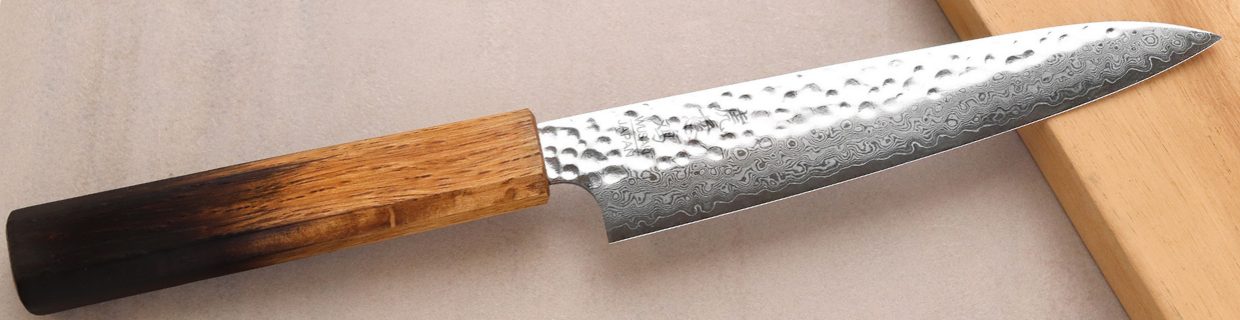
Proper maintenance is essential to preserve the sharpness and performance of your Petty knife. Whether your blade is made from stainless steel or high-carbon steel, a few simple habits will help protect it over time.
Cleaning Your Petty Knife After Every Use
Always wash your Petty knife by hand using lukewarm water, a little mild washing-up liquid and a soft sponge.
Clean each side of the blade carefully, keeping your fingers away from the cutting edge. Never leave the knife soaking in a sink or submerged among other utensils.
After rinsing, dry the blade and handle thoroughly with a clean cloth before putting the knife away.
Important: Avoid the dishwasher! High temperatures, detergents and contact with other utensils can damage the blade, cutting edge and handle.
Preventing Corrosion and Protecting the Blade
Even stainless steel knives can develop stains or corrosion if they are not properly maintained.
After cutting acidic ingredients such as lemons or tomatoes, rinse and dry your knife promptly. This is especially important for carbon steel blades, which are more sensitive to moisture and oxidation.
Never leave food residue or water on the blade for extended periods.
Chef's tip: If your Petty knife has a wooden handle, avoid prolonged exposure to water and allow it to dry completely after cleaning.
Maintaining a Sharp and Precise Cutting Edge
A sharp Petty knife provides better cutting precision and requires less force during use.
When the blade begins to lose its cutting performance, sharpen it using a suitable Japanese whetstone or another sharpening system compatible with the knife's steel and edge geometry.
Always follow the manufacturer's recommended sharpening angle and avoid overly aggressive sharpening methods, especially on hard Japanese steels.
To preserve your edge between sharpening sessions, use a wooden or suitable synthetic cutting board. Avoid cutting on glass, stone, ceramic or metal surfaces.
Storing Your Petty Knife Safely
Good storage is just as important as proper cleaning.
Avoid placing your Petty knife loose in a drawer, where the blade may knock against other utensils and become damaged.
Instead, choose a protective blade guard, a suitable knife block or a securely installed magnetic knife holder.
These storage solutions help protect the cutting edge while keeping your knife safely organised and ready for use.
Chef's tip: Always make sure your knife is completely dry before placing it inside a protective sheath or blade guard.
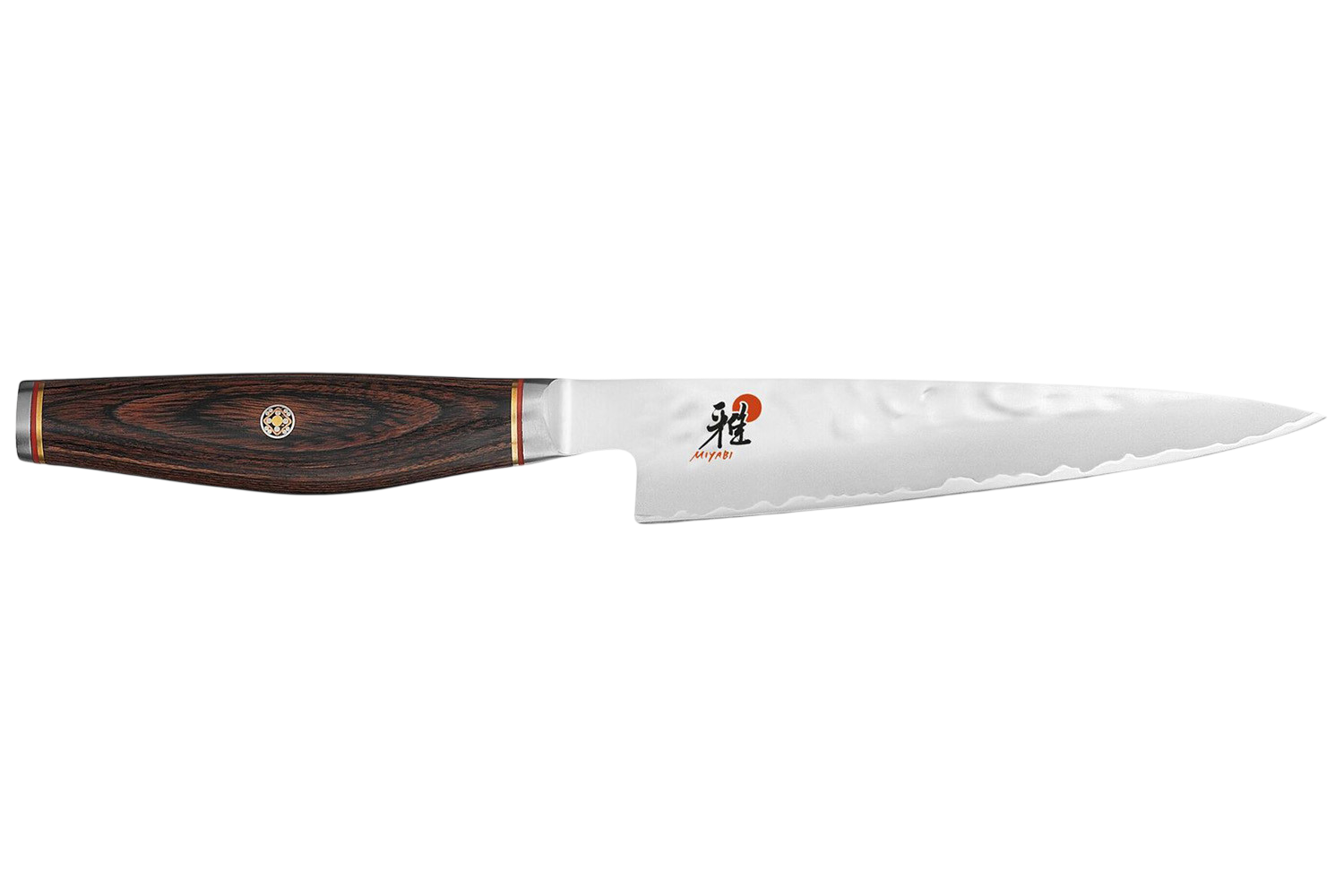
Which Petty Knife Should You Choose? Discover Our Top 10!
Now that you know how to use a Petty knife, it's time to find the perfect one for your kitchen! From compact 10cm blades designed for delicate tasks to versatile 15cm models, each Petty knife offers its own advantages in terms of steel, blade geometry, handle design and cutting performance.
Whether you're a beginner looking for your first Japanese utility knife or an experienced cook searching for a high-performance blade, discover our Top 10 best Petty knives! Explore our selection, compare their technical features and find the ideal companion for all your precision cutting tasks.
Petty Knife FAQ: Your Questions Answered
What Is the Difference Between a Petty Knife and a Paring Knife?
A traditional paring knife generally has a shorter blade, often measuring between 7 and 10cm, and is mainly designed for peeling and small precision tasks. A Japanese Petty knife usually measures between 12 and 15cm, offering greater versatility for slicing, trimming and preparing ingredients on a cutting board. It combines the precision of a paring knife with some of the versatility of a chef's knife.
Should You Choose a 12cm or 15cm Petty Knife?
A 12cm Petty knife is ideal for delicate preparation, peeling and detailed work on small ingredients. A 15cm Petty knife offers additional cutting length, making it more comfortable for slicing vegetables, preparing small boneless meat portions and everyday cutting tasks. The best choice depends on your preferred techniques and the ingredients you prepare most frequently.
Can a Petty Knife Replace a Chef's Knife?
A Petty knife can handle many everyday kitchen tasks, particularly when working with smaller ingredients. However, its short blade makes it less suitable for large vegetables, bulky ingredients and demanding cutting work. For maximum versatility, it is best used alongside a larger Japanese Gyuto or Santoku knife.
What Should You Avoid Cutting with a Petty Knife?
A Petty knife should not be used to cut through bones, frozen foods, hard shells or particularly tough ingredients. Its thin blade is designed for precision rather than heavy-duty cutting. Applying excessive force or twisting the blade can damage the fine cutting edge or delicate tip.
How Often Should You Sharpen a Petty Knife?
There is no fixed sharpening schedule. The frequency depends on the blade's steel, how often you use the knife and your cutting habits. If your Petty knife begins to crush tomatoes instead of slicing them cleanly, or requires more pressure than usual, it may be time to sharpen it. Regular maintenance with a suitable whetstone helps restore cutting performance while preserving the blade's geometry.