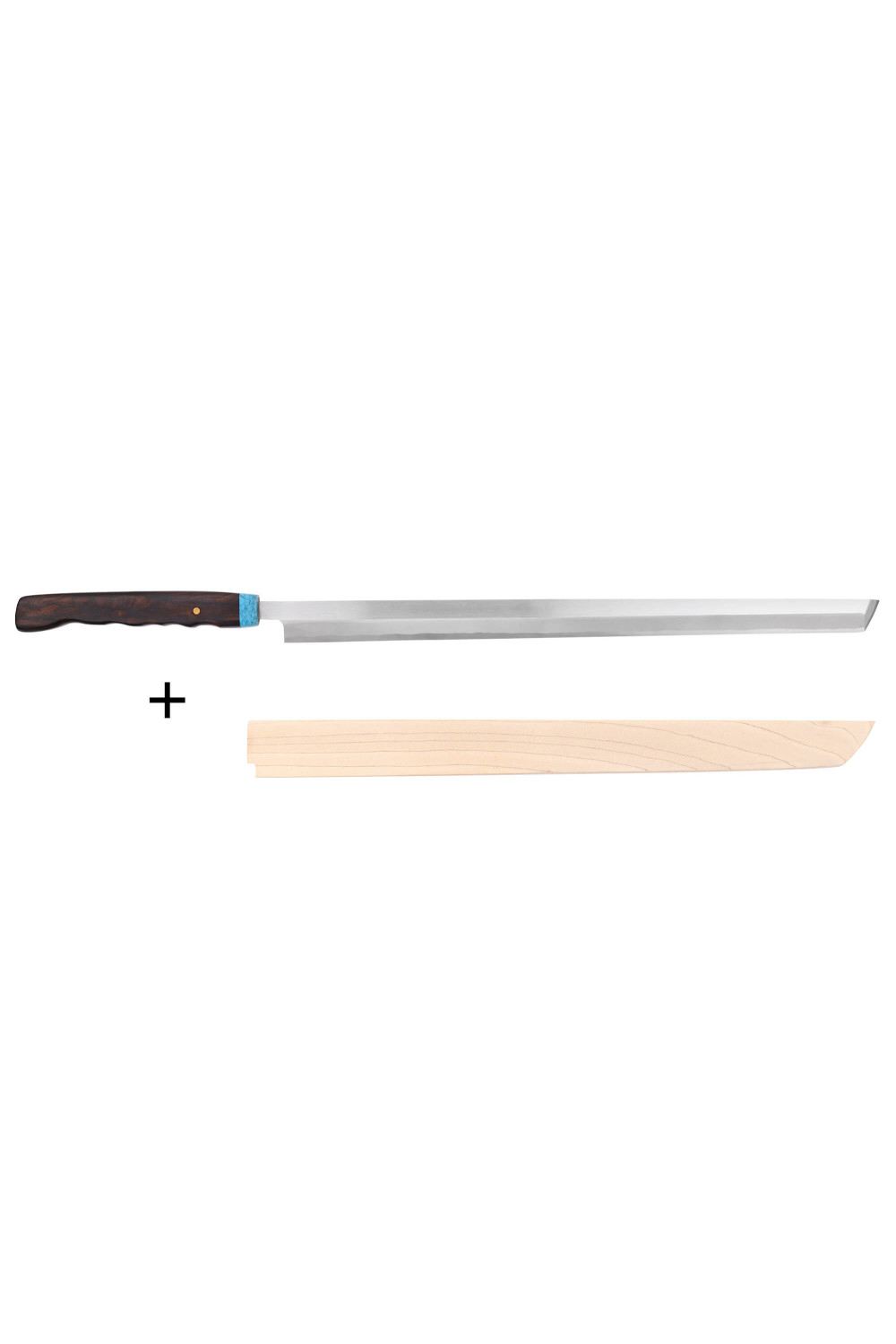
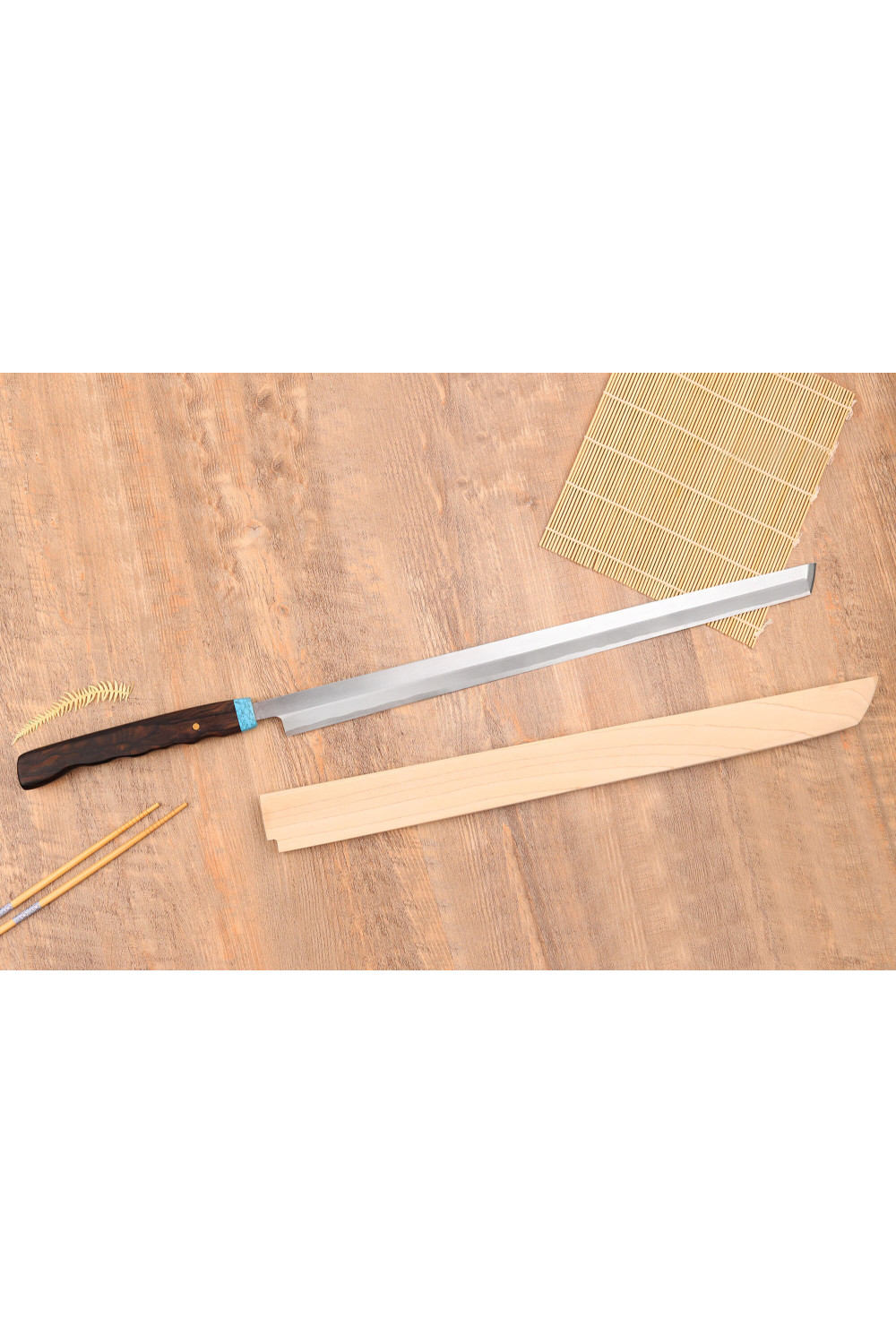
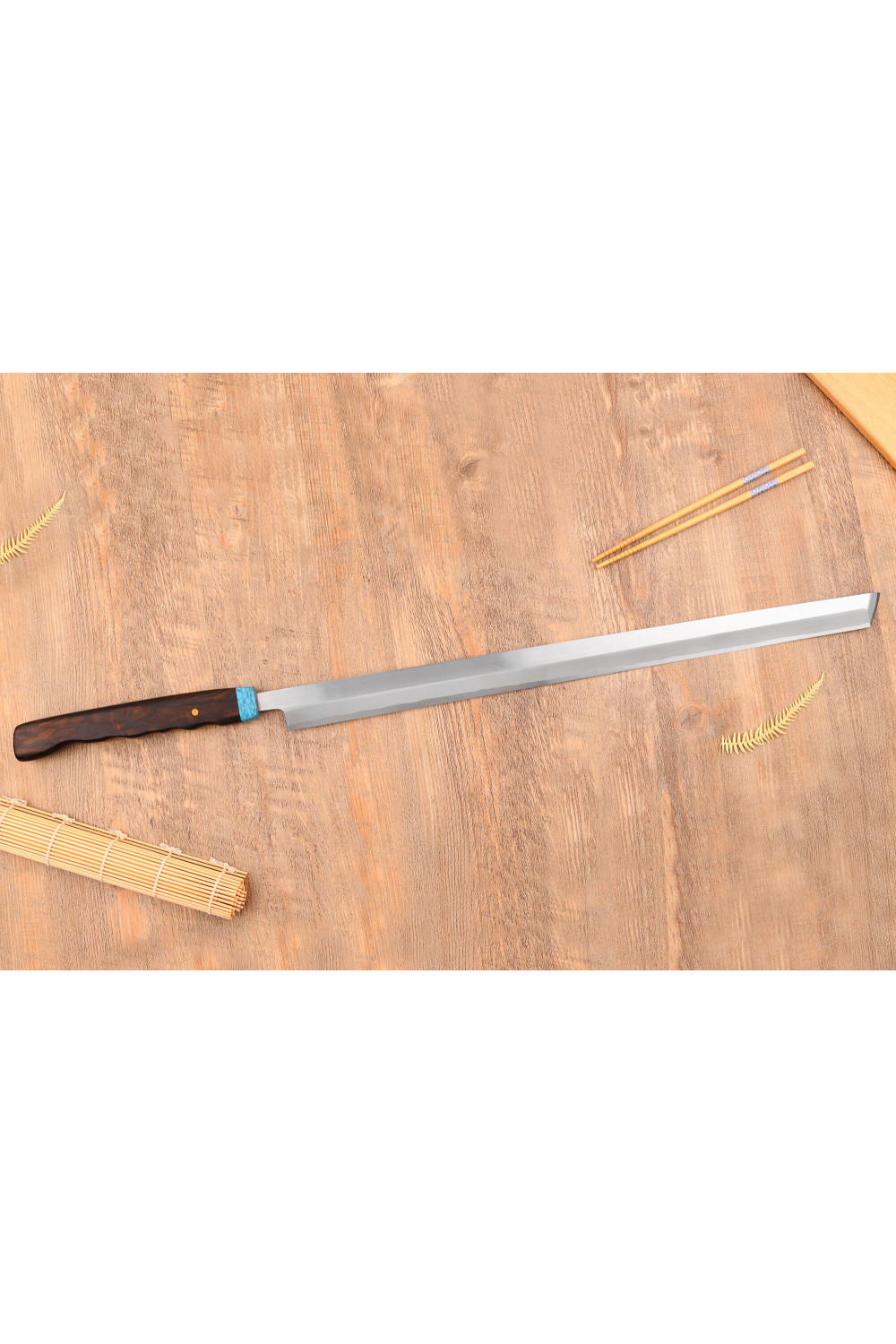
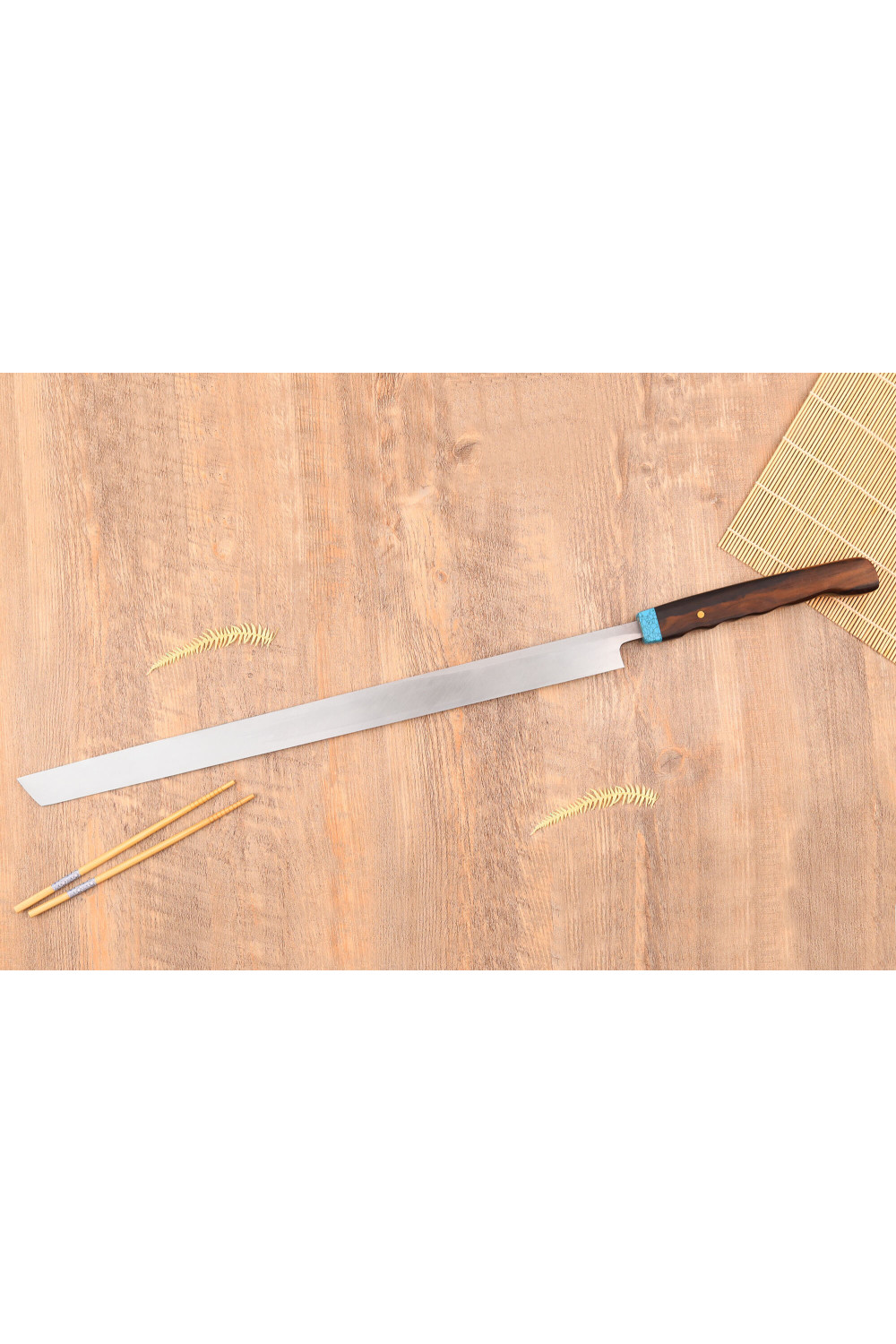
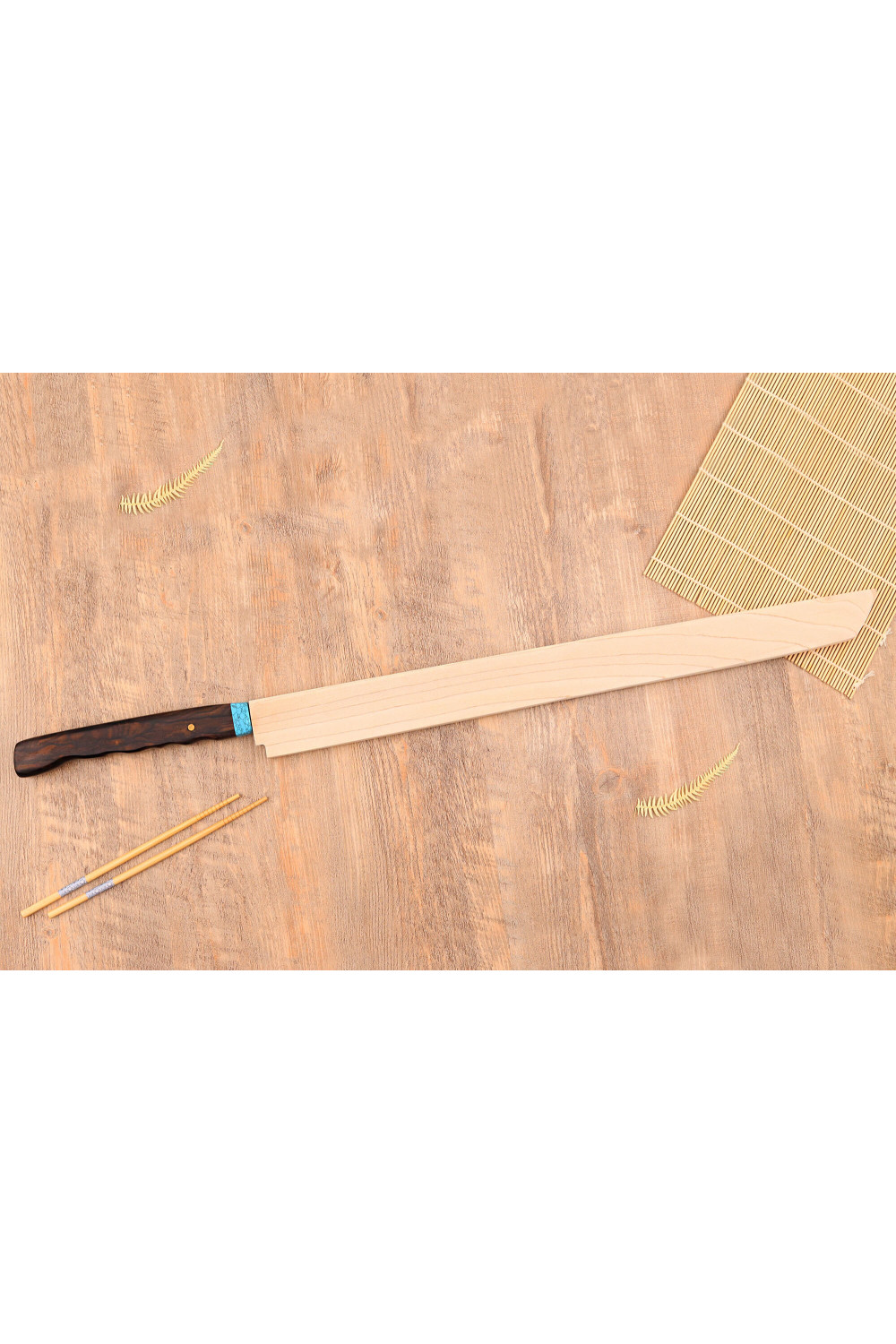
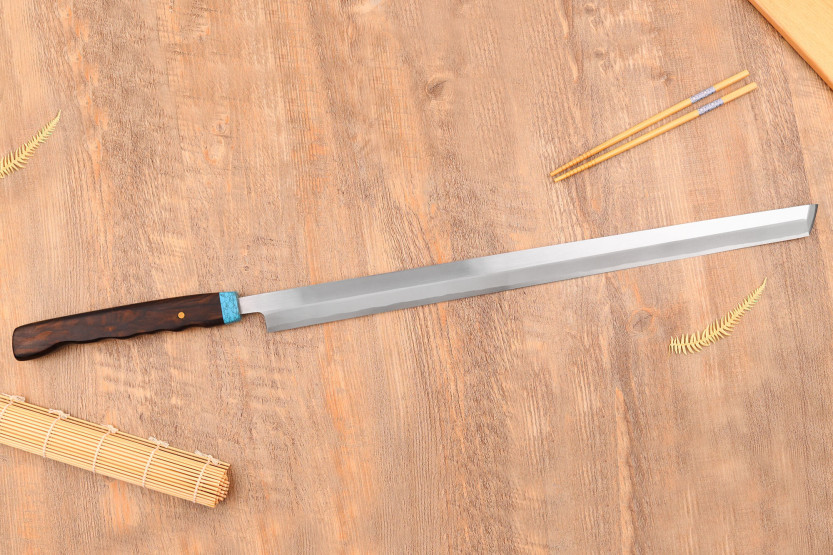
The Japanese tuna knife, or Maguro bōchō, is a very large , traditional knife designed for precise, fluid cutting of whole tuna in markets or specialized restaurants. Featuring a long, thin blade, it enables clean cuts in a single movement, without altering the delicate flesh of the fish. Its asymmetrical sharpening and elongated handle, sometimes manipulated with two hands, make it a Japanese kitchen knife reserved exclusively for filleting professionals. This fish knife embodies Japanese craftsmanship in the service of the seafood industry.
A blade designed for excellence in fish cutting
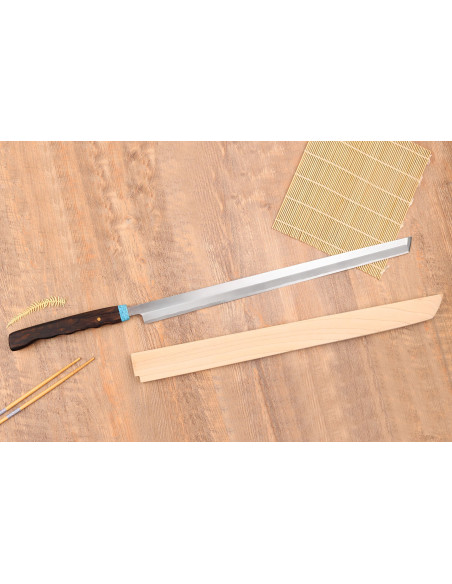
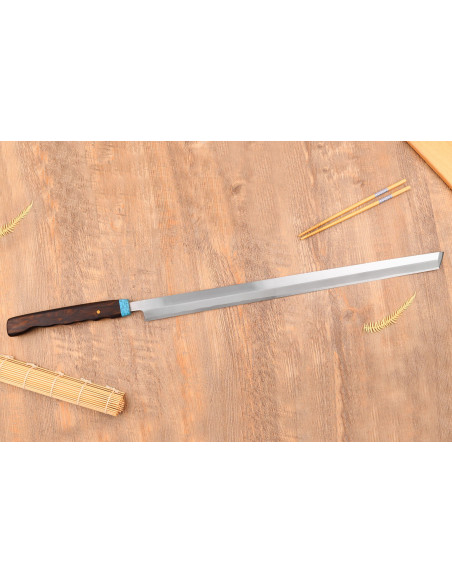
The Nakamura 54cm maguro knife embodies the rigor of traditional Japanese cutlery, both in its structure and sharpness.
It adopts a San Maï structure, a Japanese term literally meaning "three layers". This means that the core of the blade is sandwiched between two softer outer layers. This construction offers two major advantages: the hardness of the core guarantees an extremely fine, long-lasting edge, while the softer outer layers provide flexibility, limiting the risk of breakage or chipping.
At the heart of this structure is Shirogami #2steel (also known as White Paper Steel #2 or WS2), one of the carbon steels most prized by Japanese blacksmiths for kitchen cutlery. It is manufactured by the renowned steelmaker Hitachi from very pure steel, containing around 1.2% carbon and very few impurities. This results in a steel that is extremely fine to grind, with remarkable cutting capacity, ideal for the precision cuts required in fish preparation.
The blade has a hardness of 61 HRC on the Rockwell scale, a high value that guarantees excellent edge retention over time. This hardness is an ideal compromise for traditional kitchen knives: hard enough to retain a razor-sharp edge for a long time, yet "flexible" enough to avoid breakage at the slightest stress.
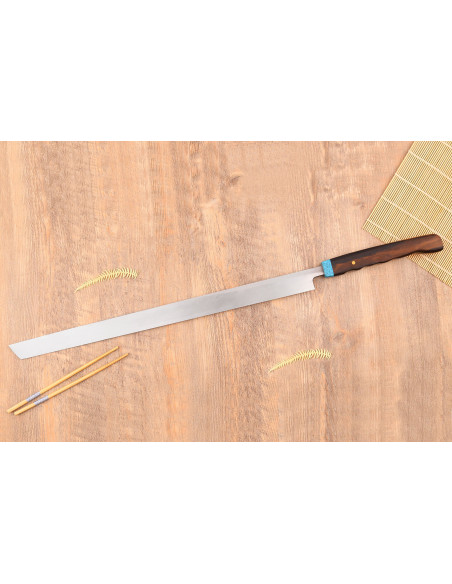
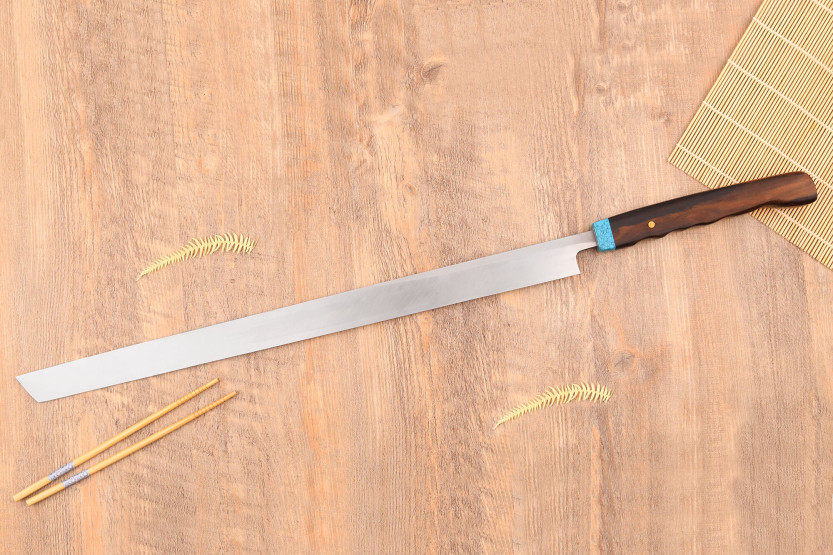
Another distinctive feature is theasymmetrical cutting edge, typical of Japanese fish knives, which is sharpened on one side only. This particular geometry, ideal for right-handed users, enables clean penetration of the fish flesh without crushing it, and better control of the cutting trajectory, particularly when filleting or cutting along edges.
Finally, the blade features a Kasumi satin finish, the aesthetic signature of traditional forged blades. This slightly misty finish is achieved by meticulous polishing of the steel layers.
A refined handle, between robustness and unique aesthetics
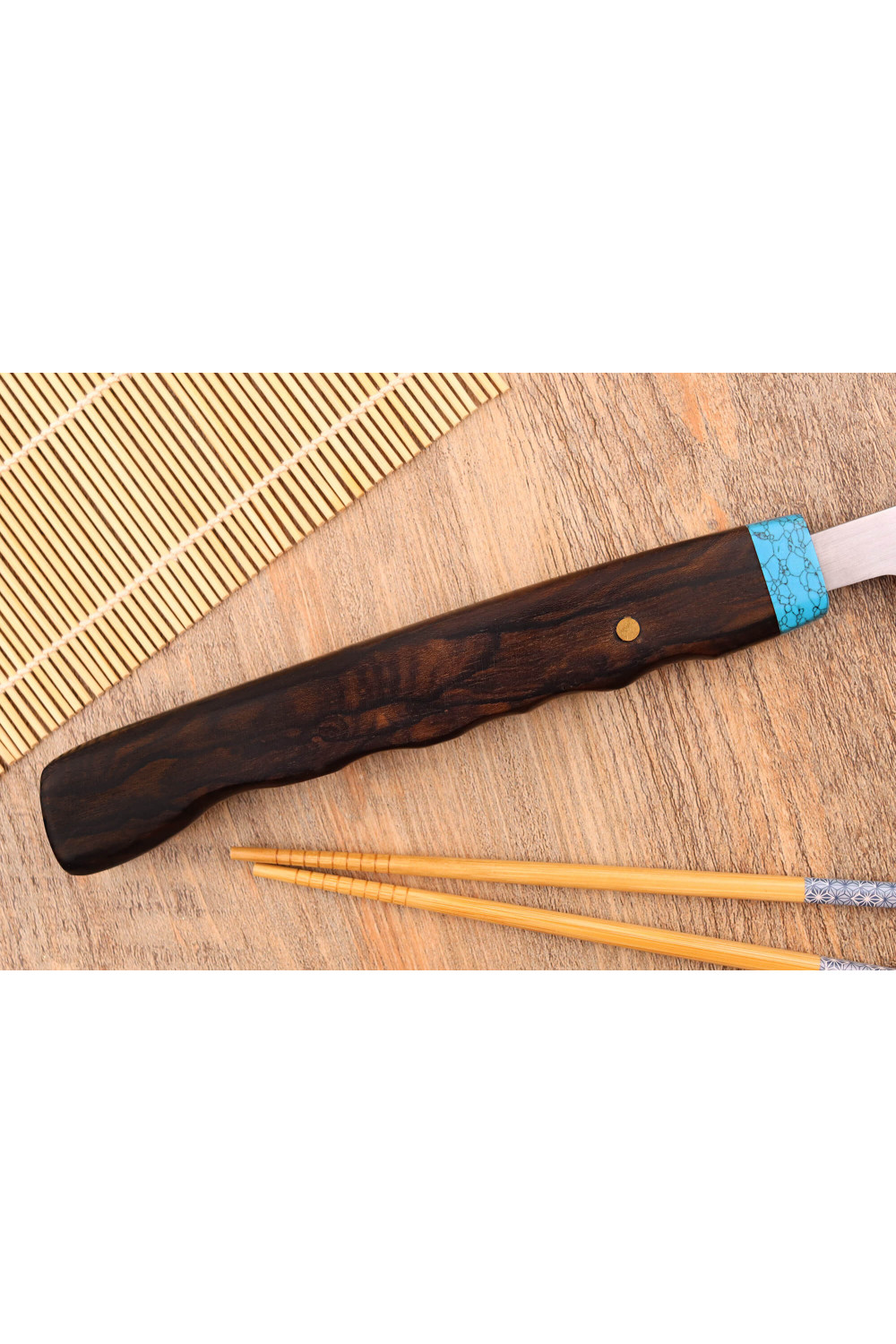
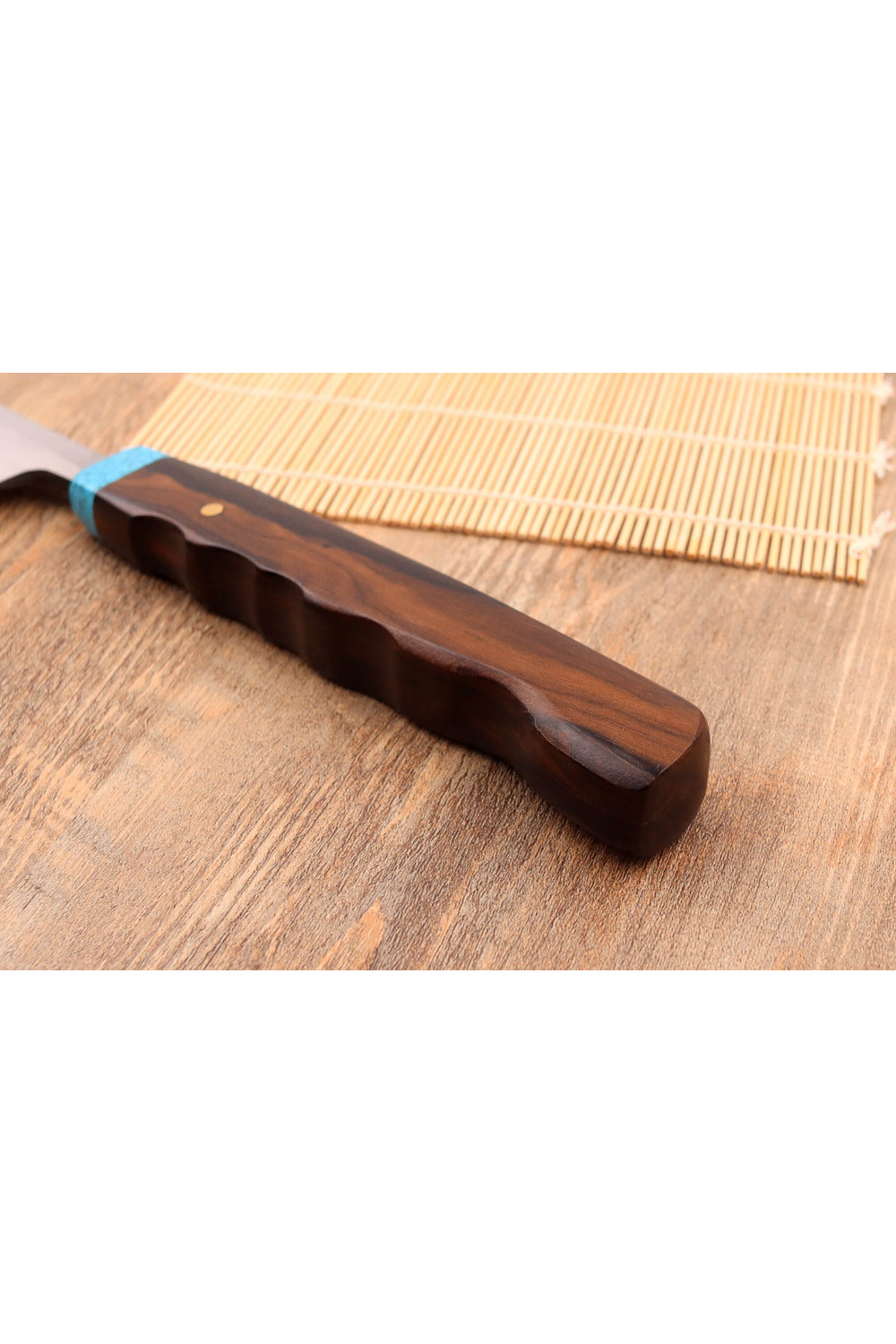
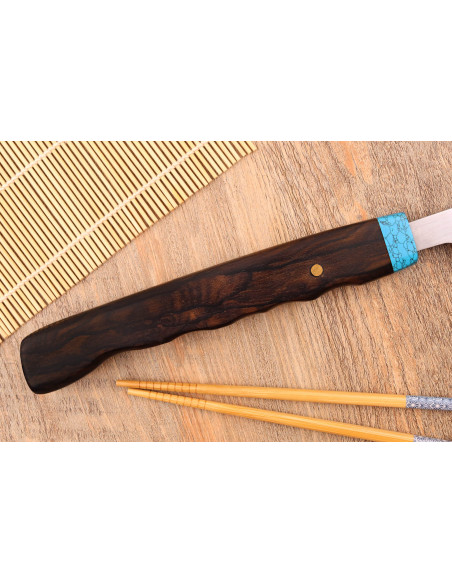
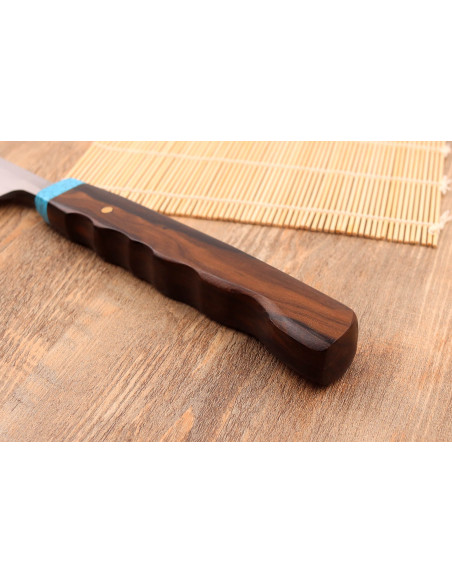
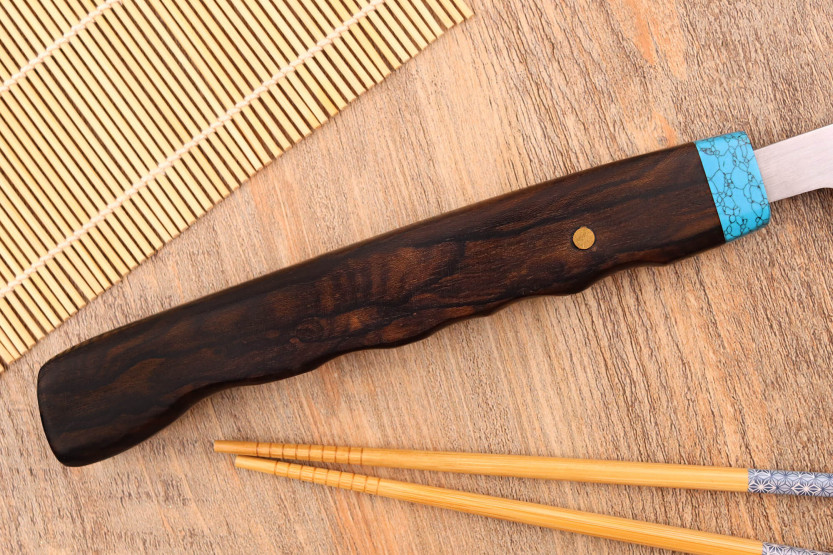
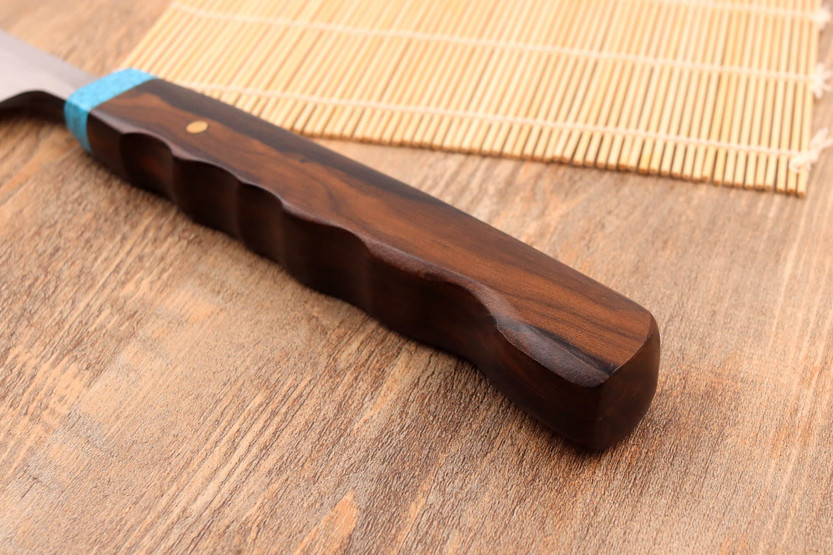
The handle of this Japanese kitchen knife is a true work of craftsmanship, combining noble materials and a design conceived for intensive use. It is crafted from rosewood, a dense, naturally oily wood appreciated for its resistance to humidity and exceptional durability in the kitchen. This wood is also distinguished by its fine grain and deep shades of brown and red, bringing a warm, elegant aesthetic to your Japanese craft knife.
At the junction between blade and handle is a turquoise stone bolster, a rare feature in Japanese cutlery. This semi-precious stone, recognizable by its ribbed blue color, adds a touch of originality and refinement, while ensuring a solid, stable transition between blade and handle.
The whole is held in place by a unique, discreet yet sturdy brass rivet , which ensures a durable hold without compromising the knife's balance. The ergonomic, slightly rounded shape of the handle naturally conforms to the palm of the hand, providing a comfortable, secure and precise grip, even during prolonged use. This well-thought-out design helps reduce fatigue and increases cutting control, particularly on delicate or bulky workpieces.
Summary of technical features and benefits of your Japanese tuna knife
-
San Maï blade: structural strength and controlled flexibility
-
Shirogami #2 steel (1.2% carbon): extremely fine, durable cutting edge
-
Hardness61 HRC: excellent long-term edge retention
-
Asymmetrical cutting edge: precise cutting without crushing the flesh
-
Kasumi satin finish: traditional aesthetics and meticulous polish
-
Rosewood handle: comfortable grip and moisture resistance
-
Natural turquoise
bolster
How to care for a carbon knife
It should be hand-washed immediately after use, using a soft sponge and lukewarm water, without abrasive products. It is essential to dry it thoroughly immediately after washing, to prevent rust. A natural patina may form on the blade over time: this is a normal process that protects the steel and in no way alters its performance. For sharpening, use a fine-grain Japanese stone, which respects the original cutting edge and prolongs blade life.
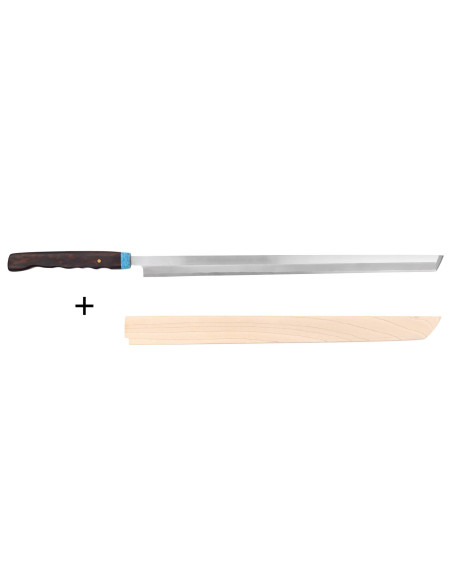
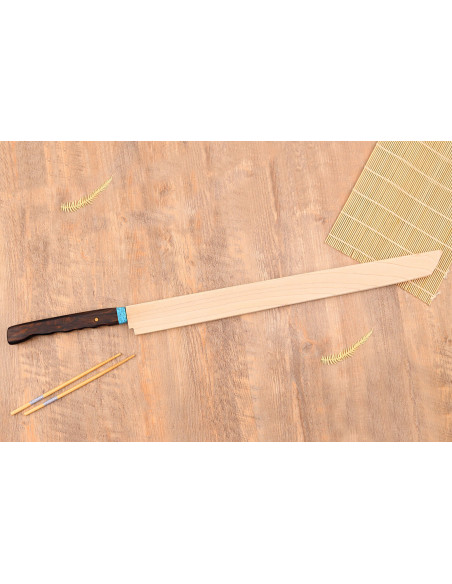
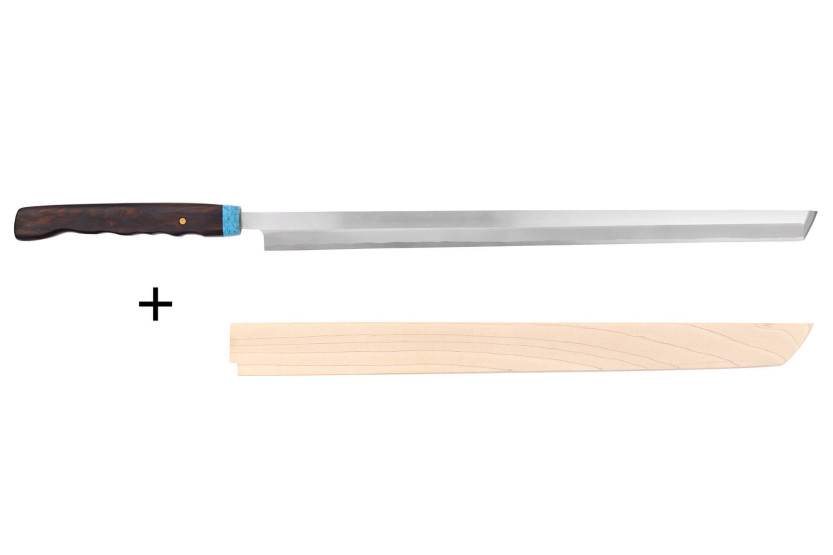
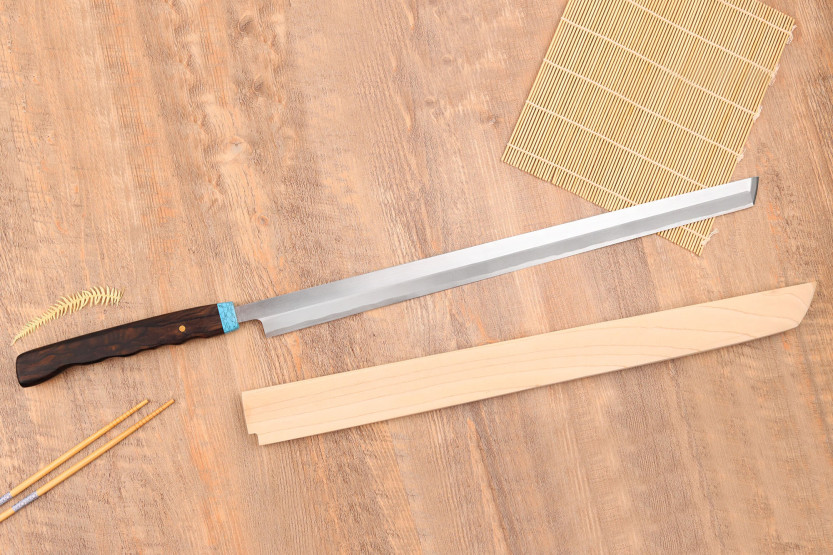
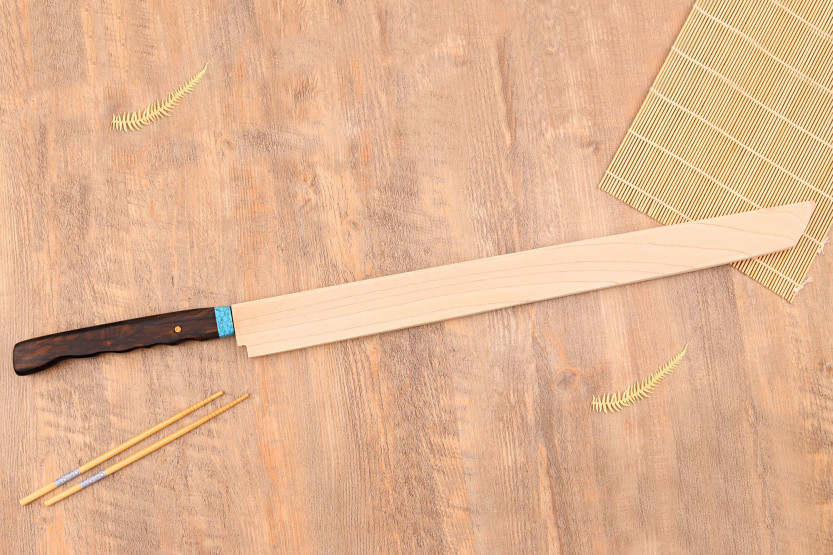
This Nakamura knife comes with a wooden saya, a traditional Japanese sheath designed to protect the blade when not in use. Tailor-made to fit the shape of the maguro knife, the saya avoids impact or friction that could damage the cutting edge.
Find other exceptional Japanese knives on Knifeleader.eu!




 By buying this product you can collect up to