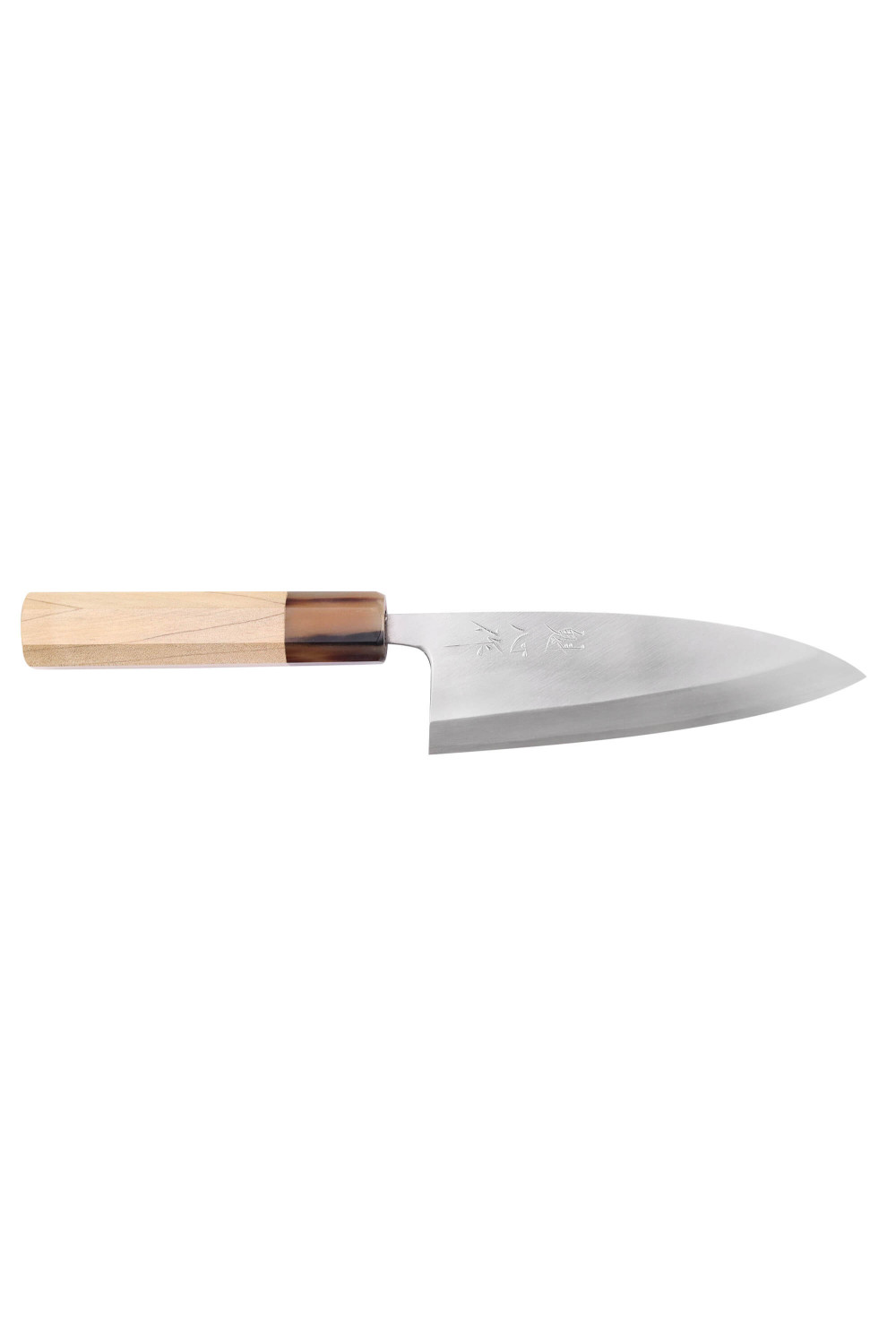
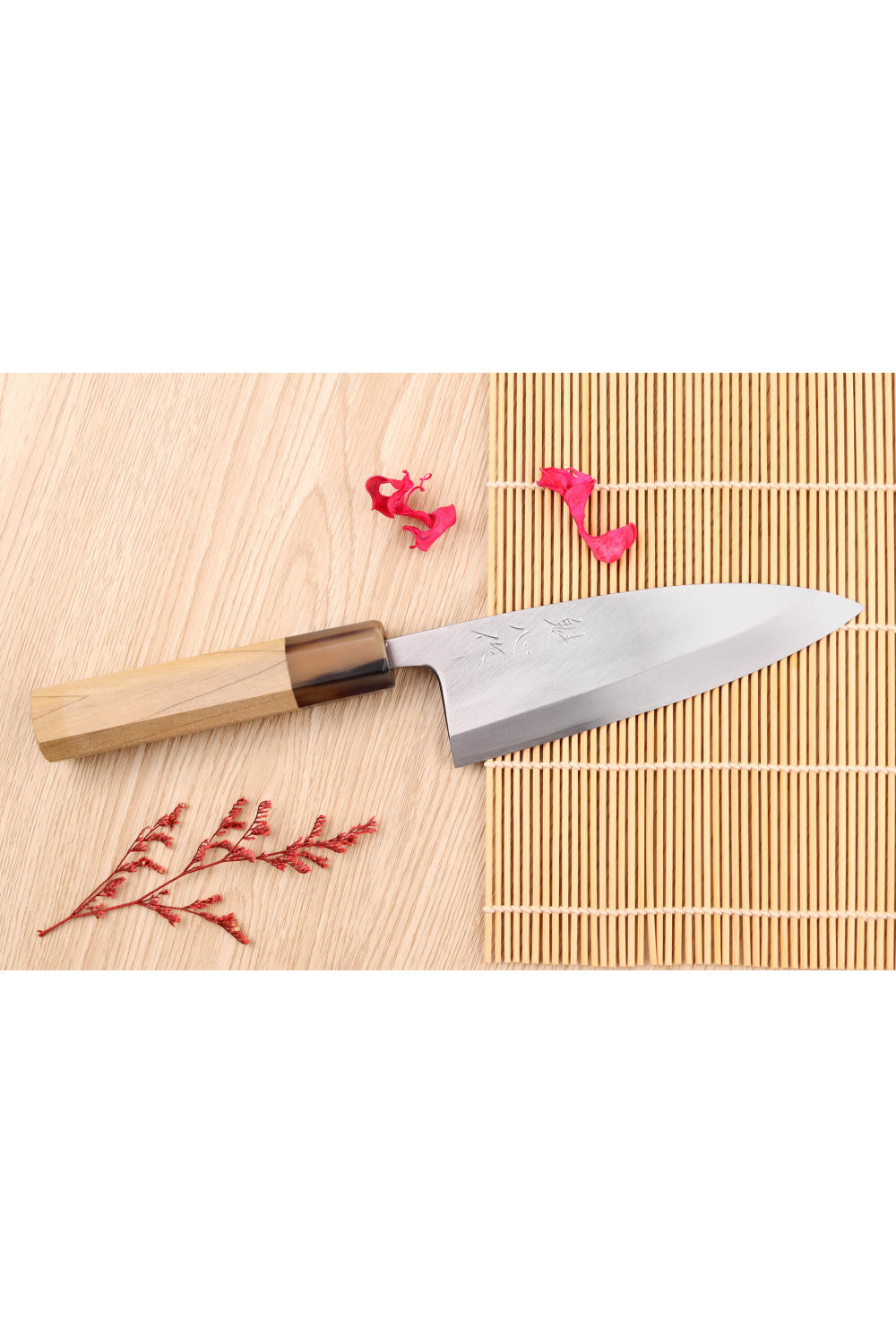
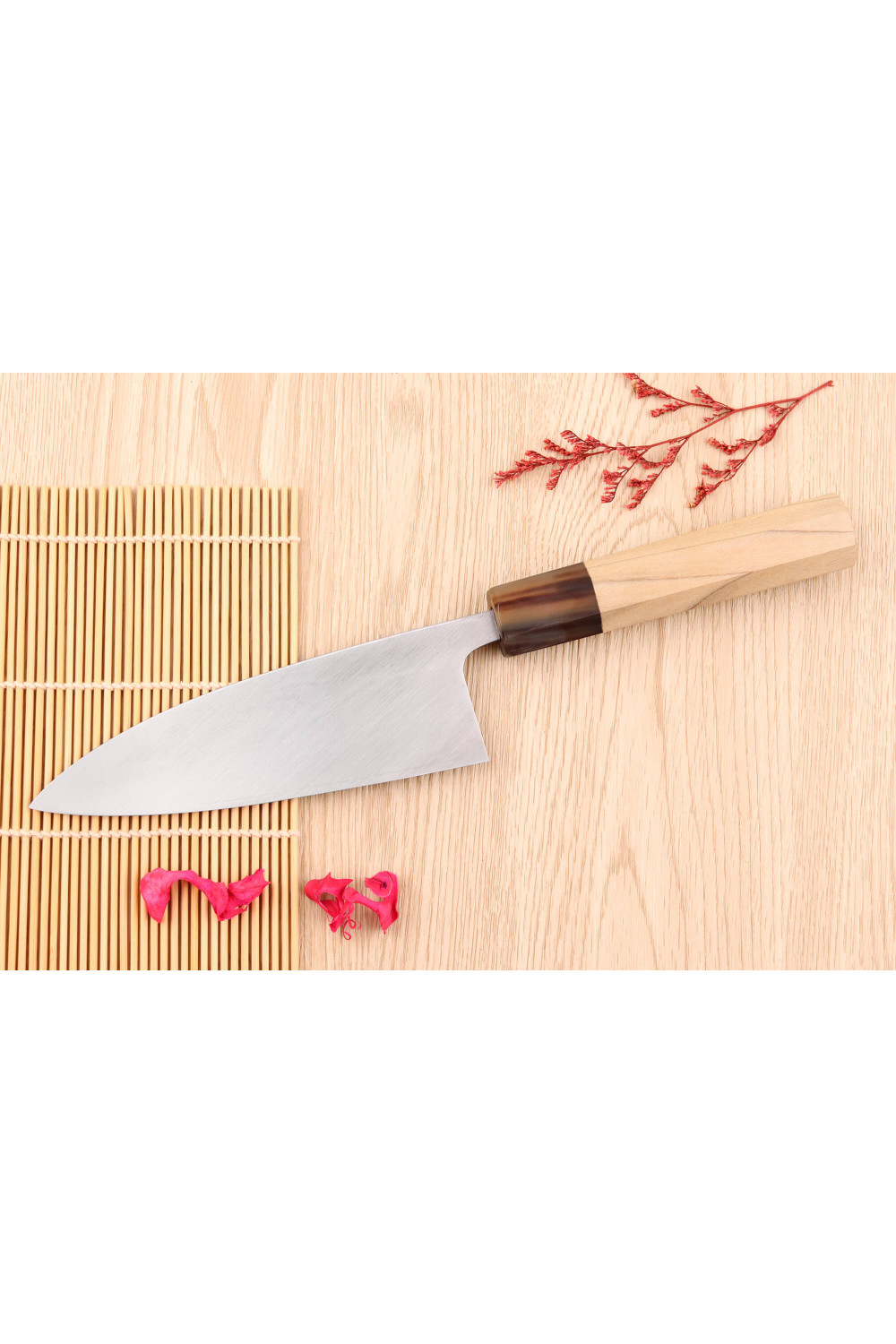
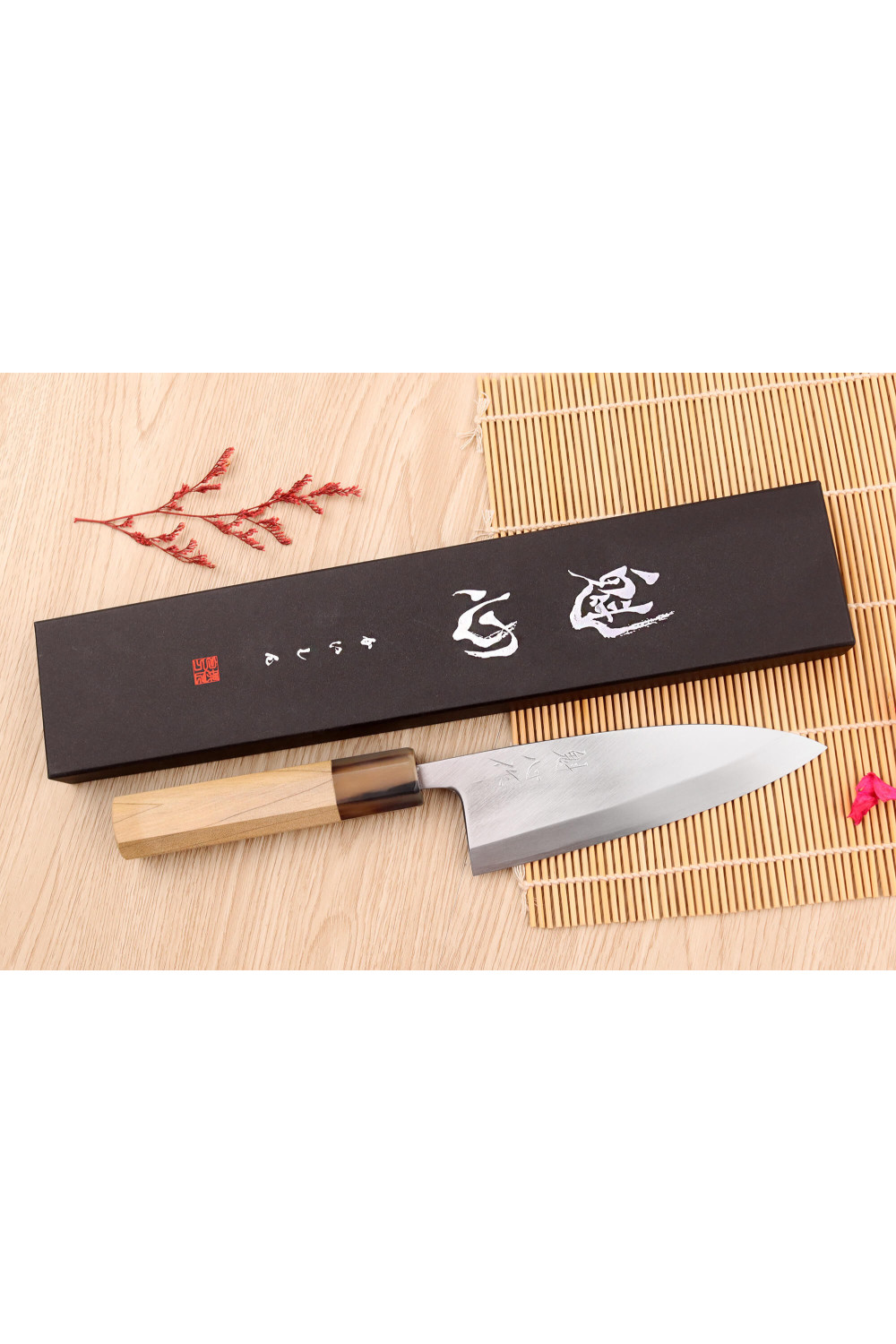
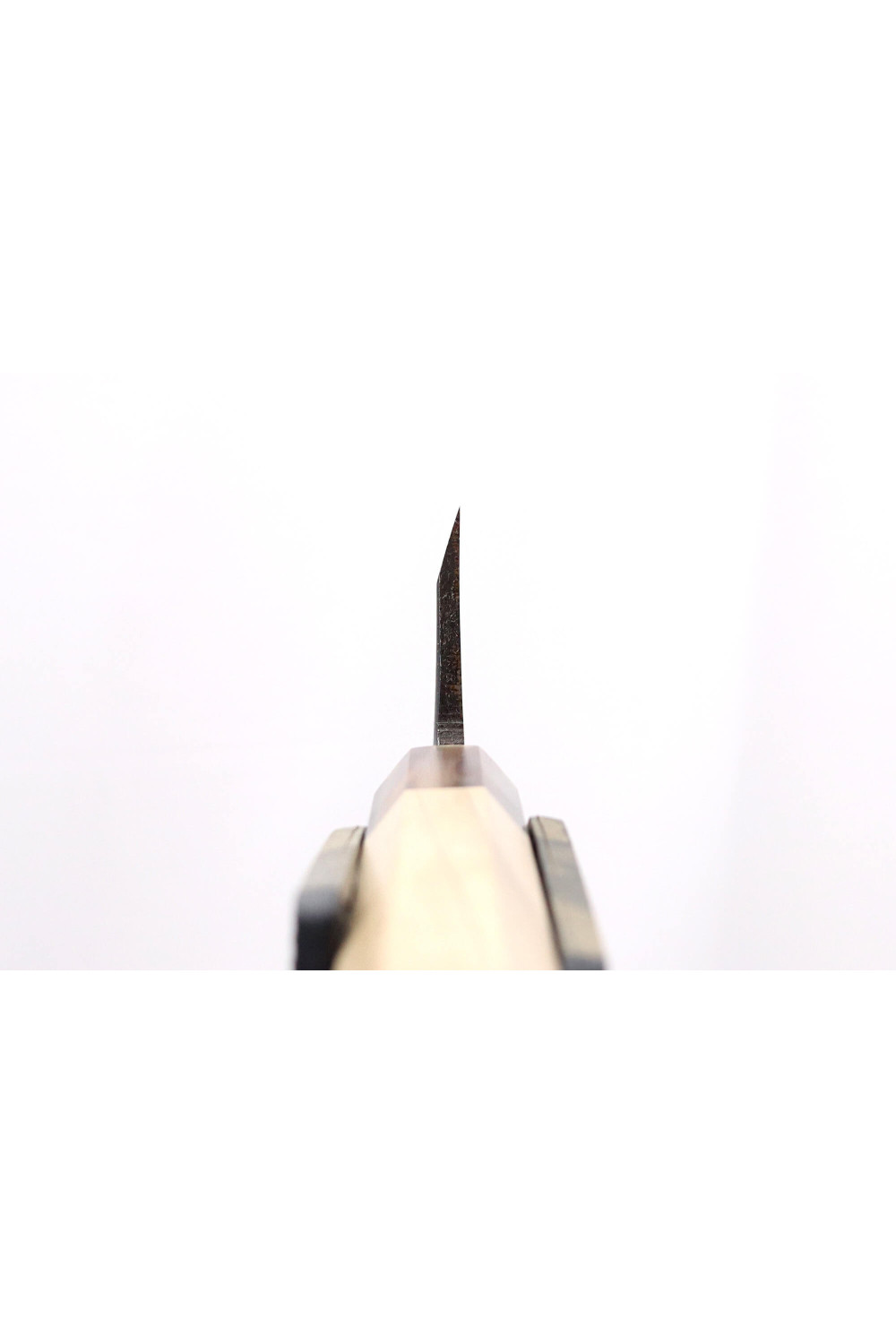
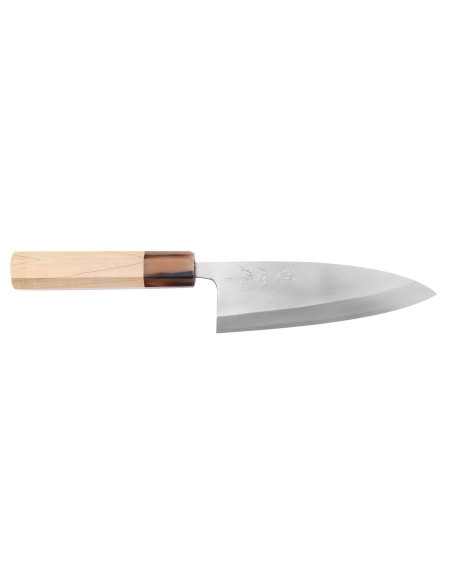
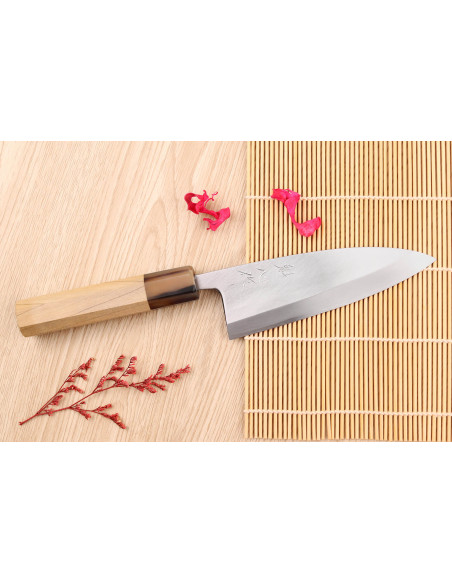
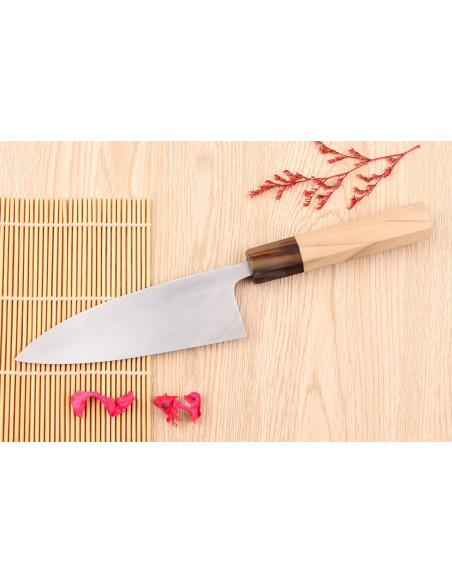
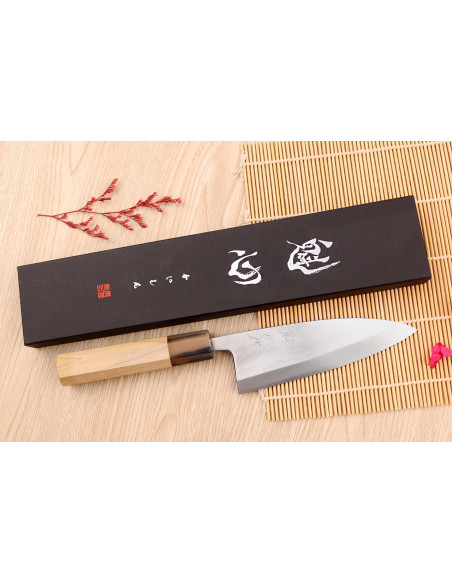
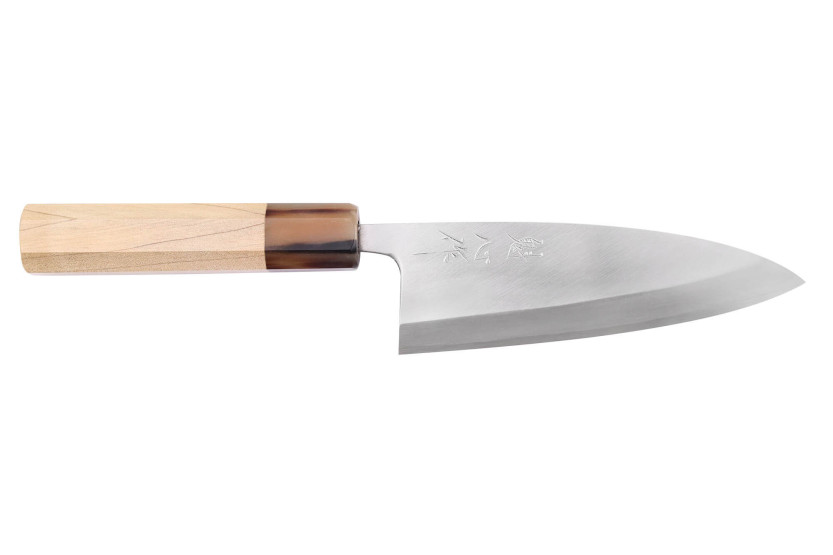
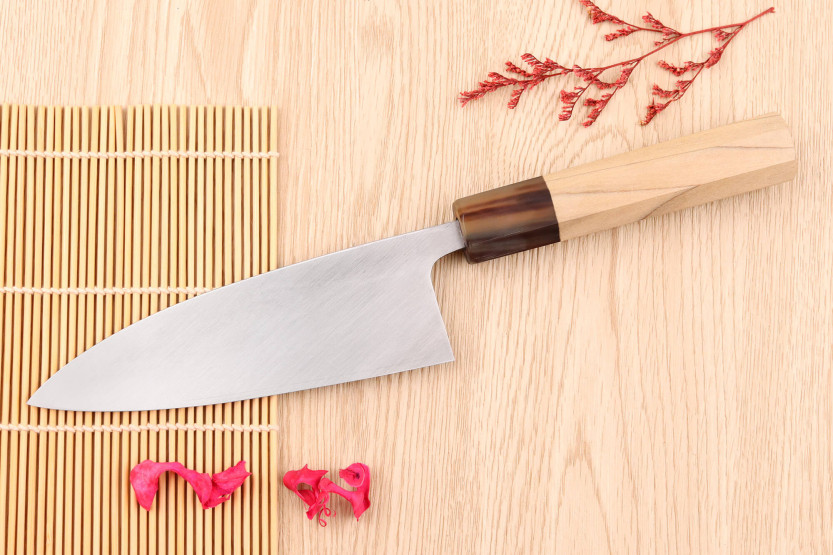
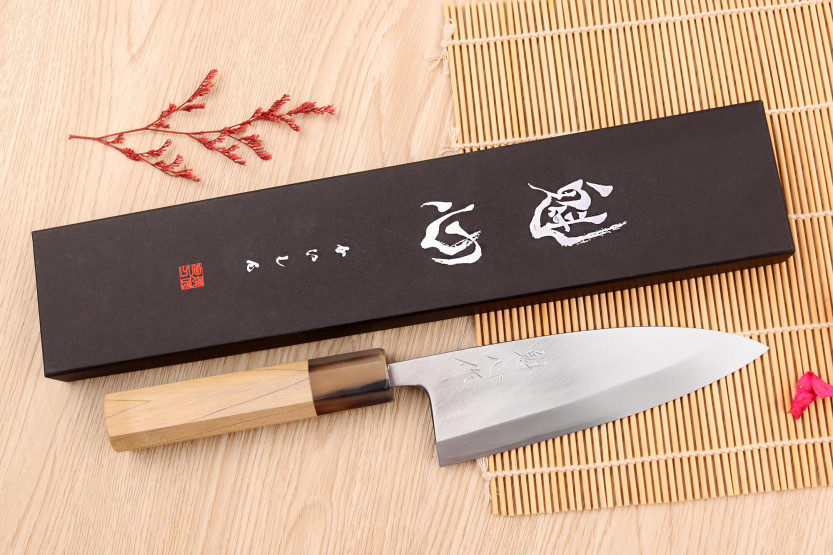
Discover this traditional deba knife hand-forged in Japan's prestigious Sakai region! This 15 cm Nakamura Kaishin Saku WS2 deba knife, crafted by expert artisans and carefully sharpened by master Ajioka-san, embodies the perfect blend of ancestral know-how and modern performance. It will accompany you with precision in all your fish preparations.
The deba knife with a high-quality blade
The blade adopts the ancestral San Maï three-layer technique: a rigid steel core is forged and then covered with a softer, folded-over layer of steel. This method balances the blade's hardness and protects its core.
The blade of your Japanese kitchen knife has a core of Shirogami#2 steel (also known as White Paper Steel 2), enriched with 1.2% carbon. This gives it a high hardness of 61HRC on the Rockwell scale, guaranteeing long-lasting edge retention and precise cutting.
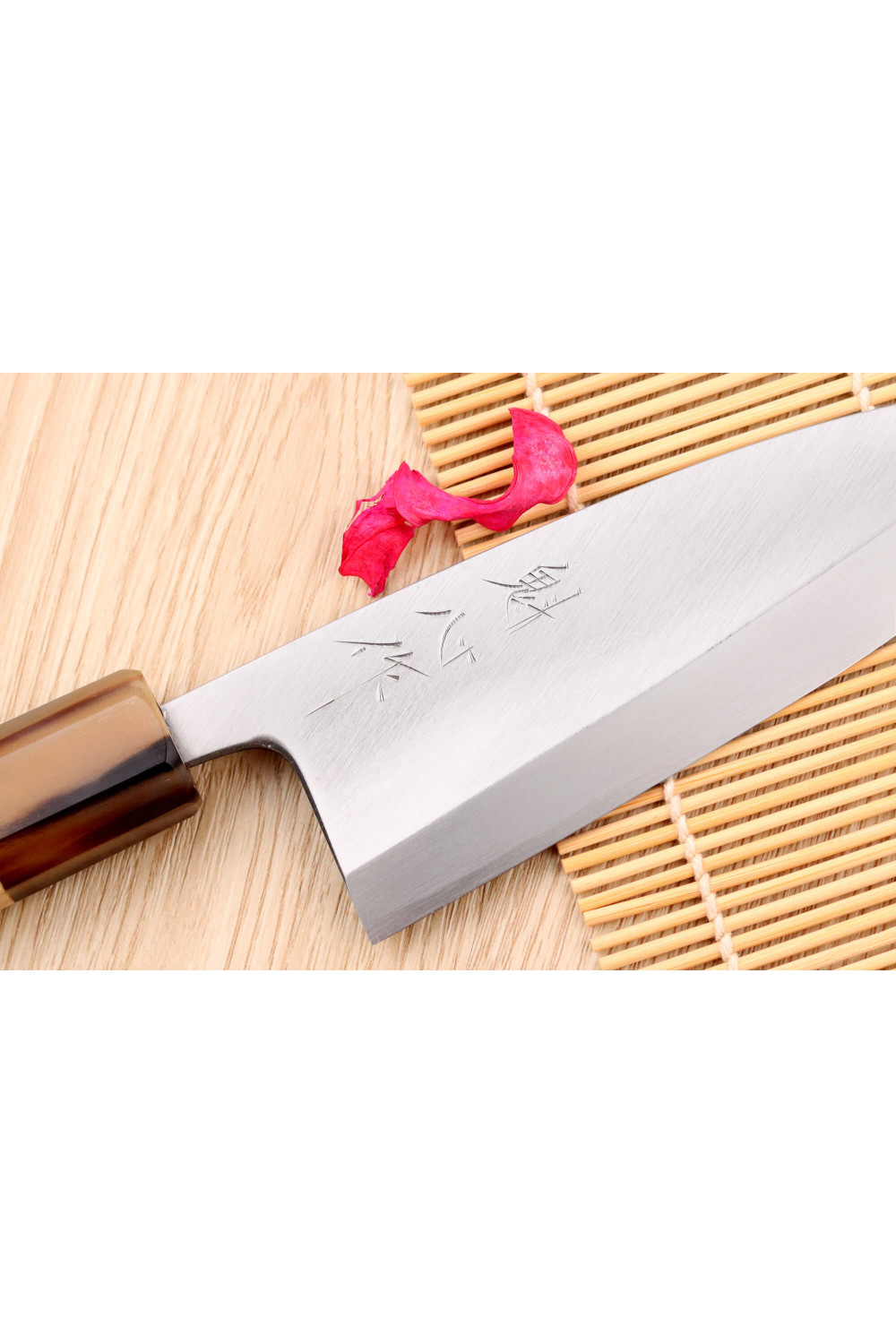
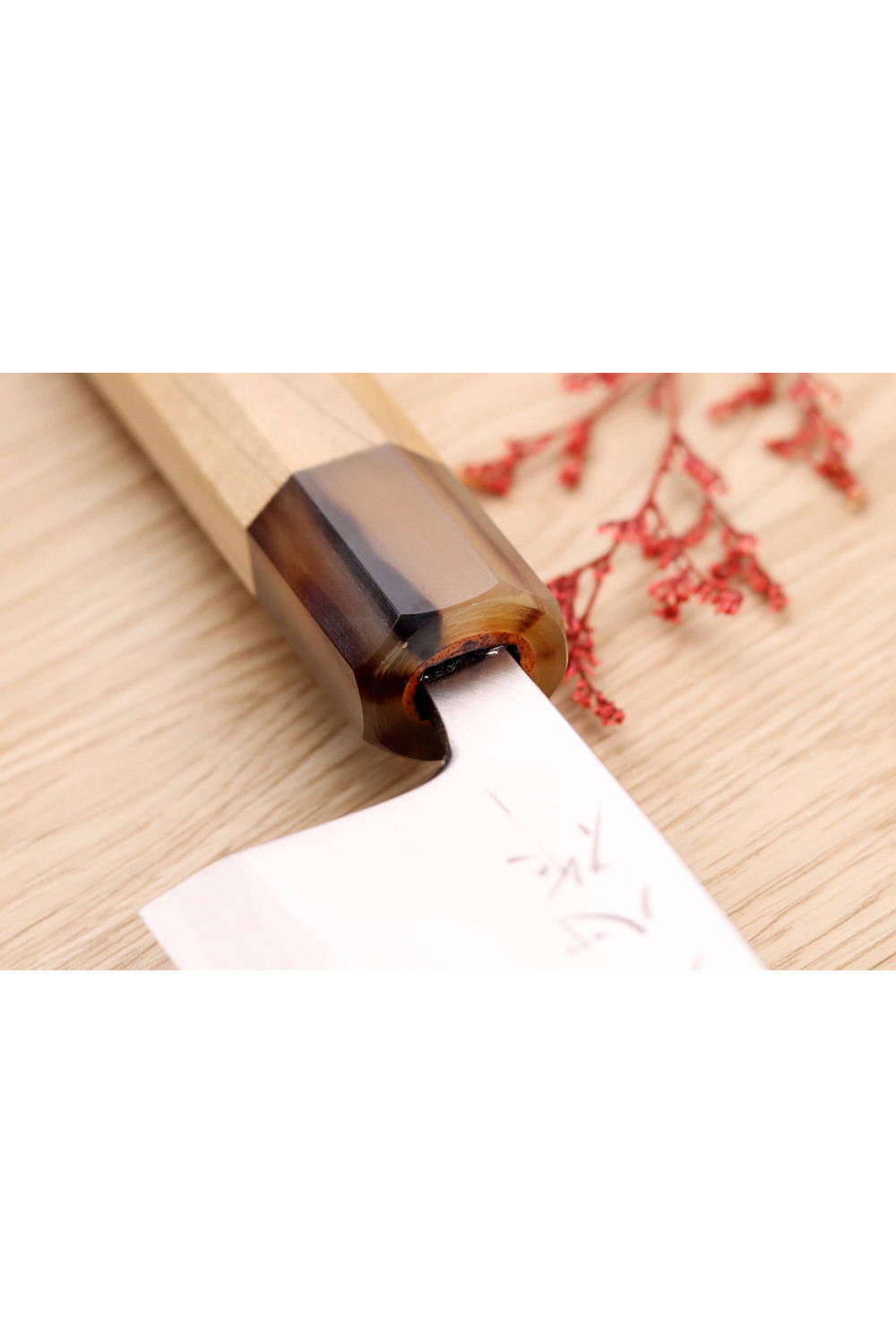
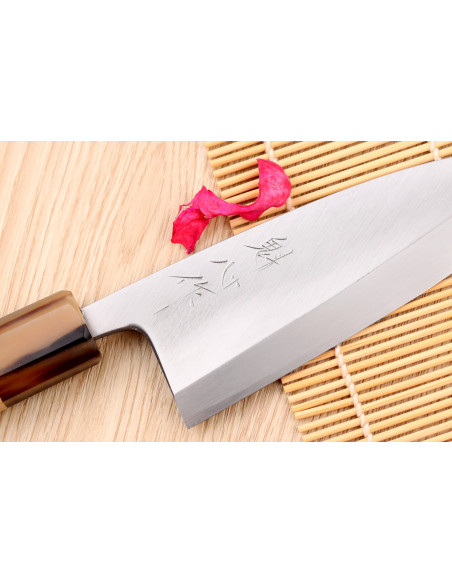
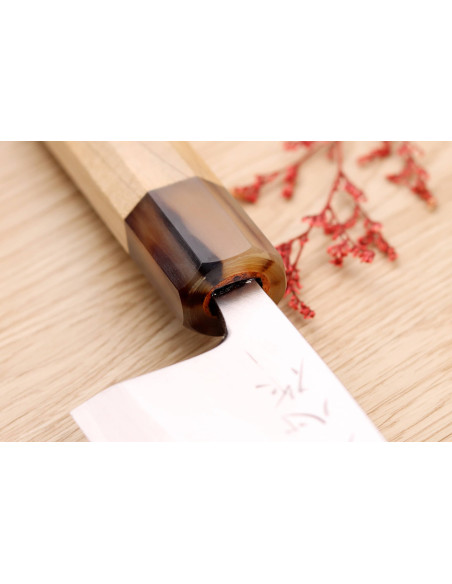
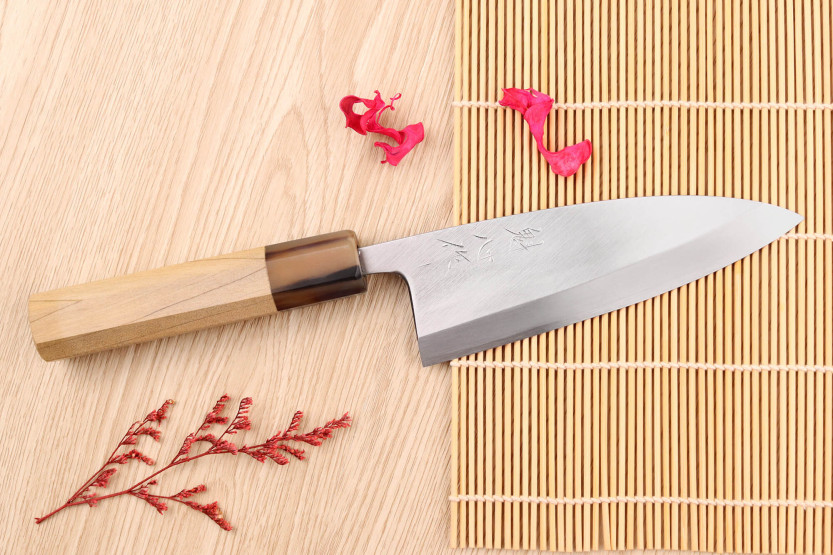
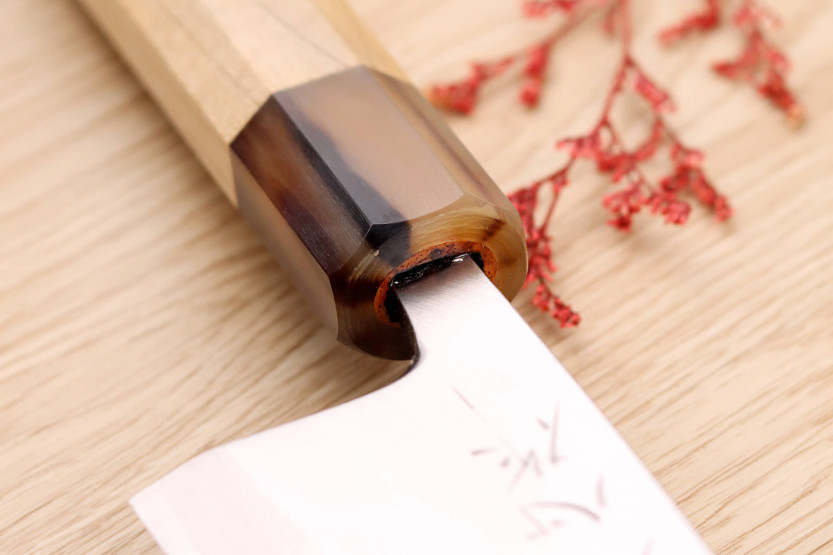
Then, the soft-iron casing ensures controlled flexibility for impact resistance and longevity. The blade receives a refined Kasumi polished finish, accompanied by hand-engraved kanjis, signalling its handcrafted authenticity.
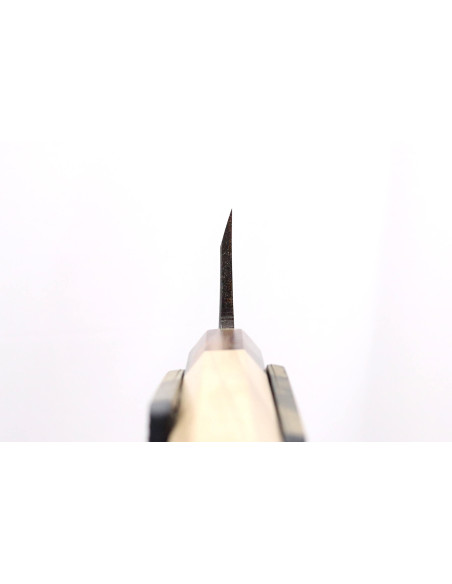
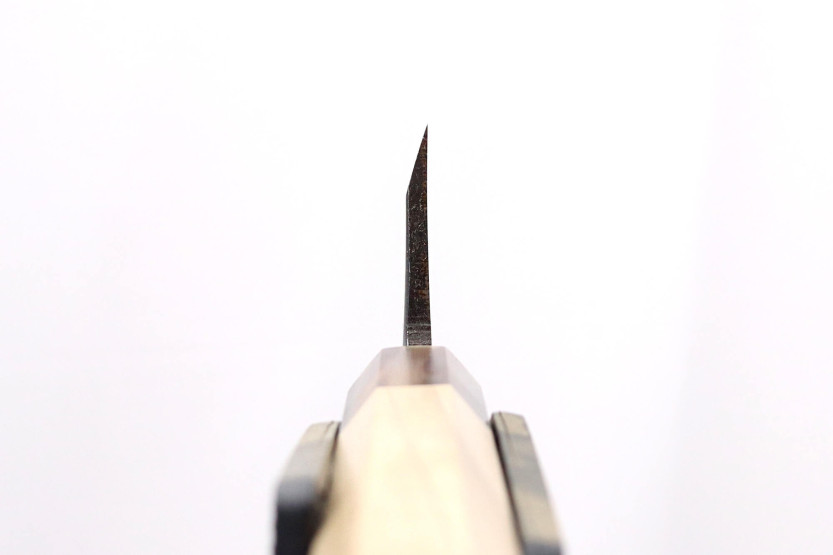
Your handcrafted Japanese knife benefits from the asymmetrical cutting edge typical of Japanese deba knives. This bevelled edge is ideal for right-handed users, enabling them to make cuts in a single movement.
An elegant handle for this handcrafted Japanese knife
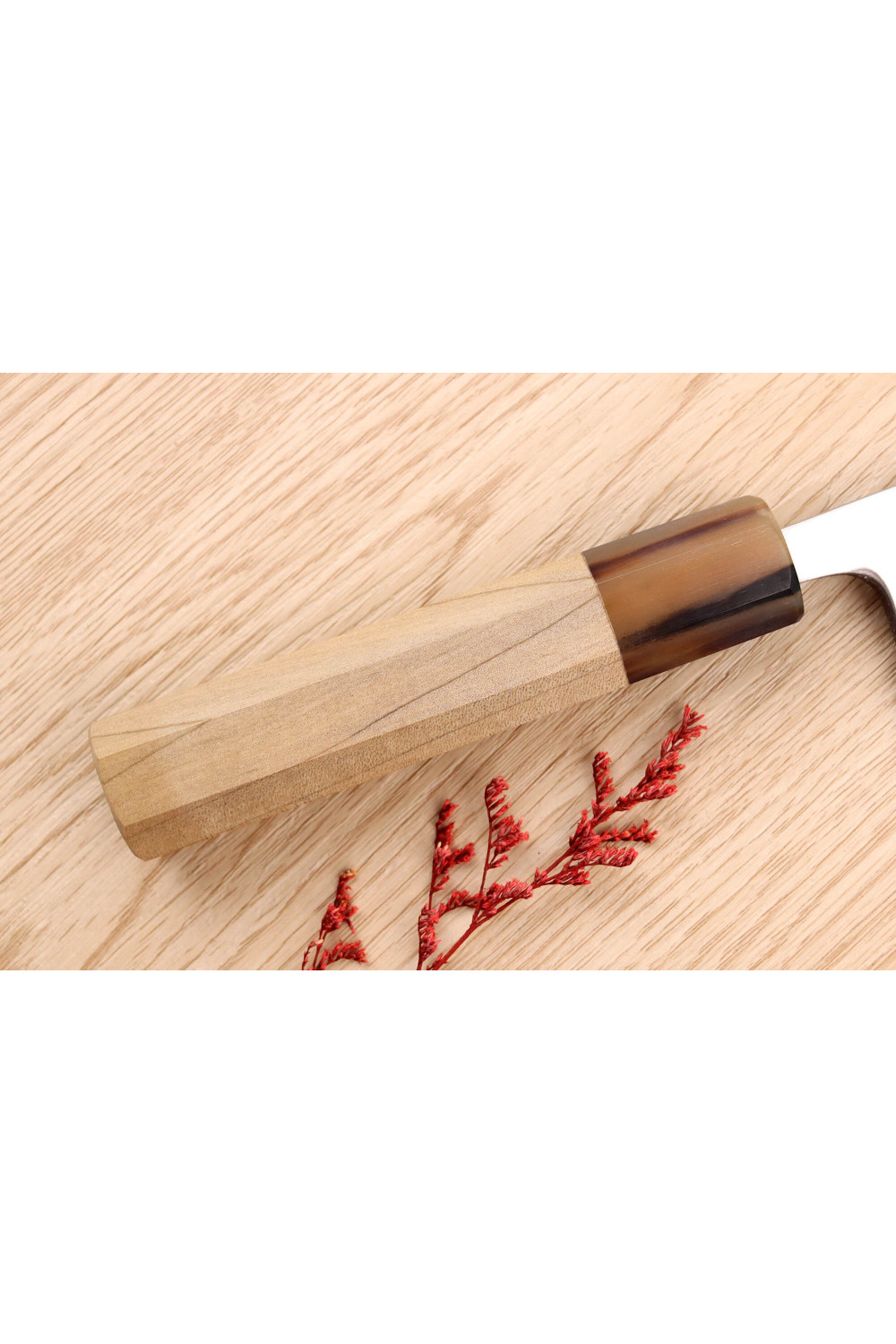
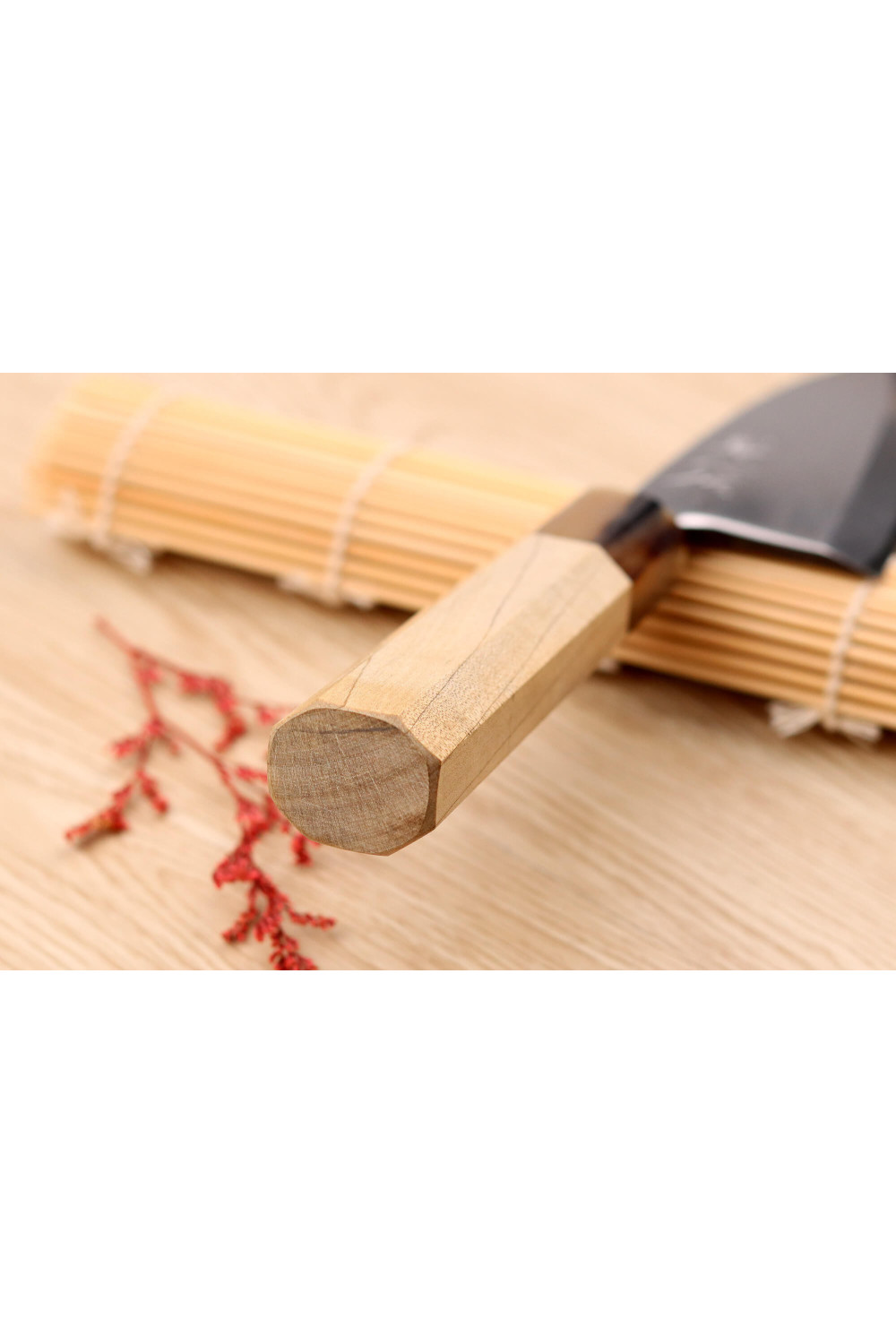
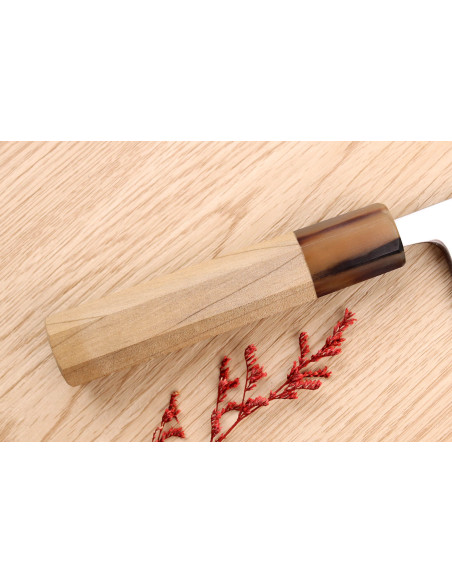
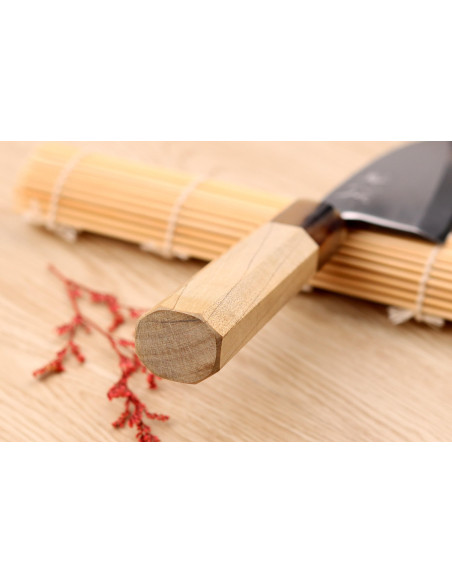
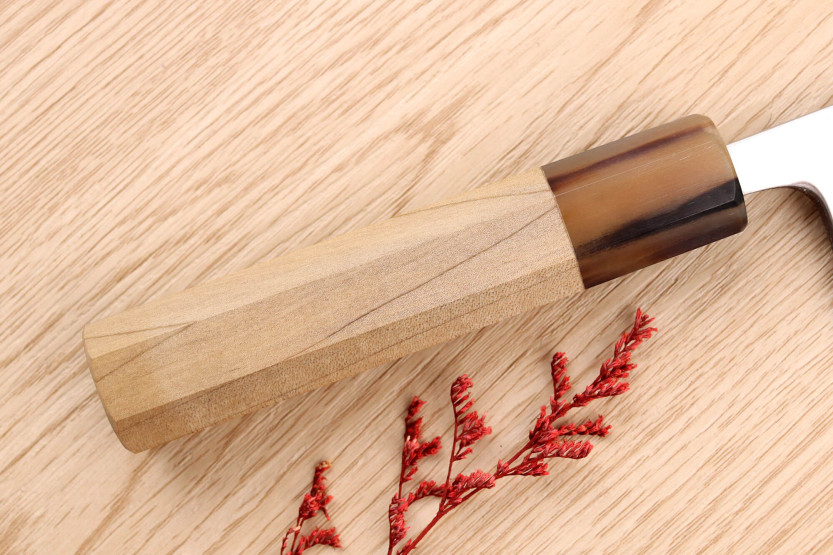
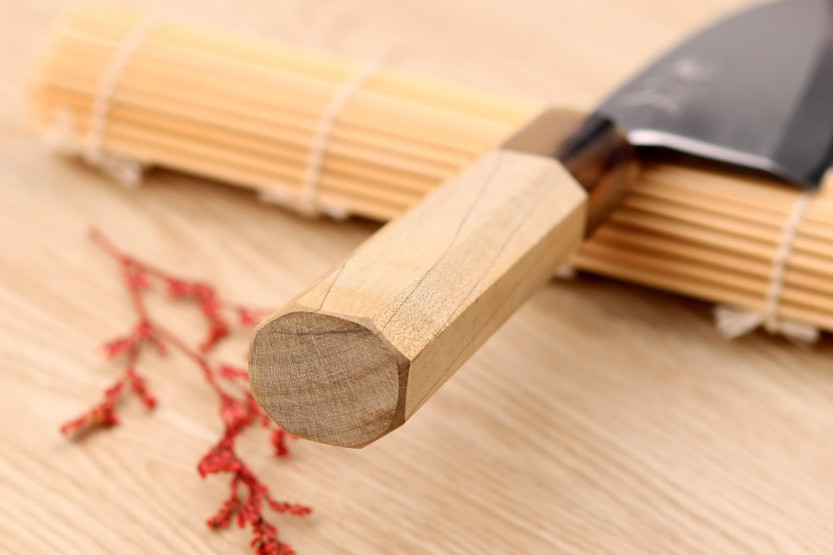
The handle is made of magnolia wood, appreciated for its strength, resistance to humidity and delicate, light-tone veining.
It is octagonal in shape, perfect for a stable, comfortable grip during prolonged use. The white buffalo horn bolster adds a unique, authentic visual touch.
The key features of your Nakamura knife
- San Maï and Shirogami #2 heart: strength and precision
- 61 HRC: long-lasting edge
- Kasumi polished finish: refined aesthetics
- Octagonal magnolia handle: ergonomic and durable
- Forged and sharpened by hand in Sakai: certified traditional know-how
Caring for my Japanese kitchen knife
Clean this carbon knife by hand only, with a soft sponge and a non-abrasive product. Dry immediately to avoid oxidation, then store in a dry place. Avoid the dishwasher and prolonged soaking in the sink. A natural patina may appear over time: this is a sign of use and in no way alters its performance. To preserve the edge, sharpen regularly with a Japanese stone.
Focus on the Japanese master sharpener: Tomoyuki Ajioka
Ajioka-san, based in Sakai, the historic capital of cutlery, is a traditional master sharpener with over fifty years' experience. His know-how is passed on to the next generation, with respect for the perfection of the cutting edge. Each blade he sharpens is calibrated to deliver a smooth, delicate and effortless cut. It's this level of expertise, combined with authentic Japanese forging, that gives your Nakamura Kaishin Saku WS2 deba knife its signature excellence!
Discover our selection of damascus knives on Knifeleader.eu!





 By buying this product you can collect up to