Nakamura is a Japanese company founded in 2015, initially conceived as an artisan workshop. Its aim: to bring together Japan's most talented blacksmiths and sharpeners to design knives that combine aesthetics and performance. To highlight this expertise, the Kaishin (魁心) brand was born."Kai" (魁) means "pioneer" and "Shin" (心) refers to "spirit". This spirit of innovation is at the heart of Nakamura Kaishin's philosophy to create exceptional Japanese knives!
For this yanagiba knife, Nakamura called on a renowned Japanese blacksmith: Satoshi Nakagawa. Although young, he is renowned for the excellence of his Japanese knives and his expertise. At just 18, he became a pupil of master blacksmith Kenichi Shiraki, with whom he perfected his art for over 15 years. Today, at the head of his own workshop, he masters traditional forging techniques for carbon steel knives, as well as refined processes such as Suminagashi and Honyaki. His expertise also extends to stainless steels such as VG10 and Ginsan, demonstrating his versatility in his work.
An elegant blade for this damask knife
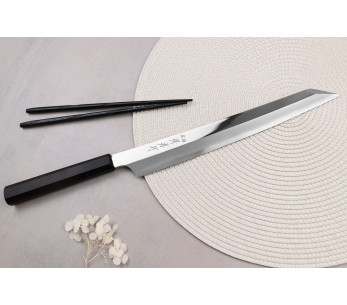
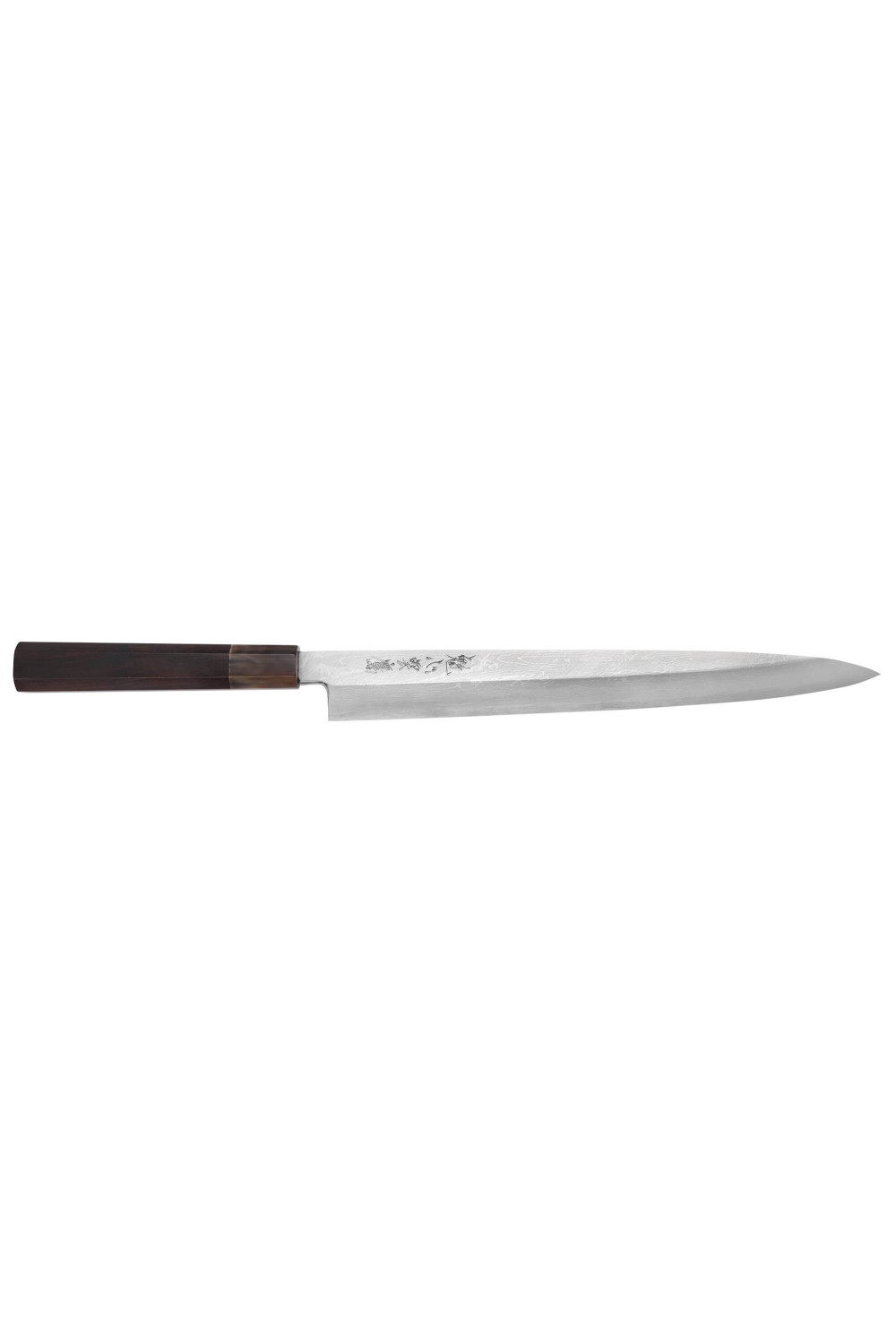
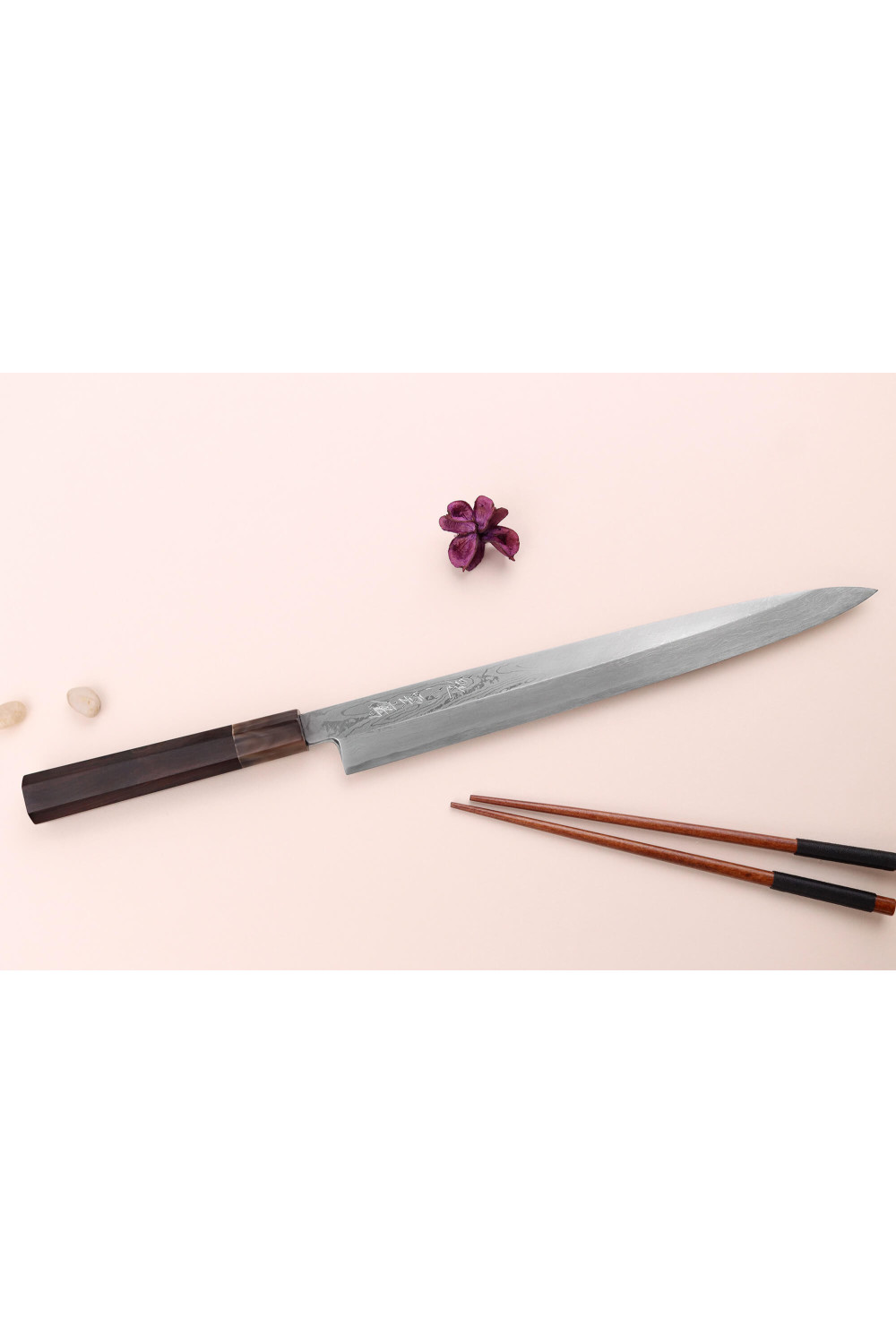
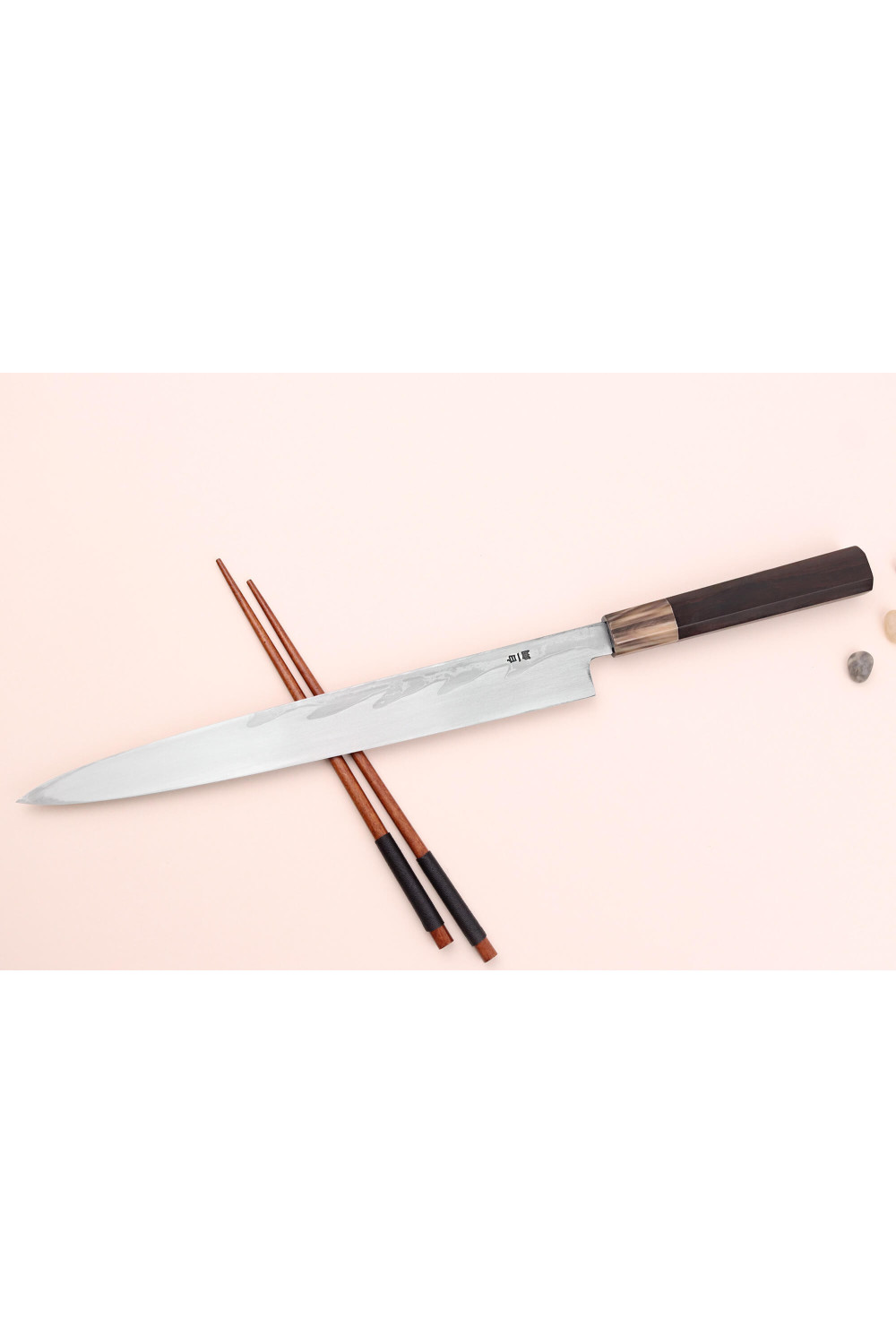
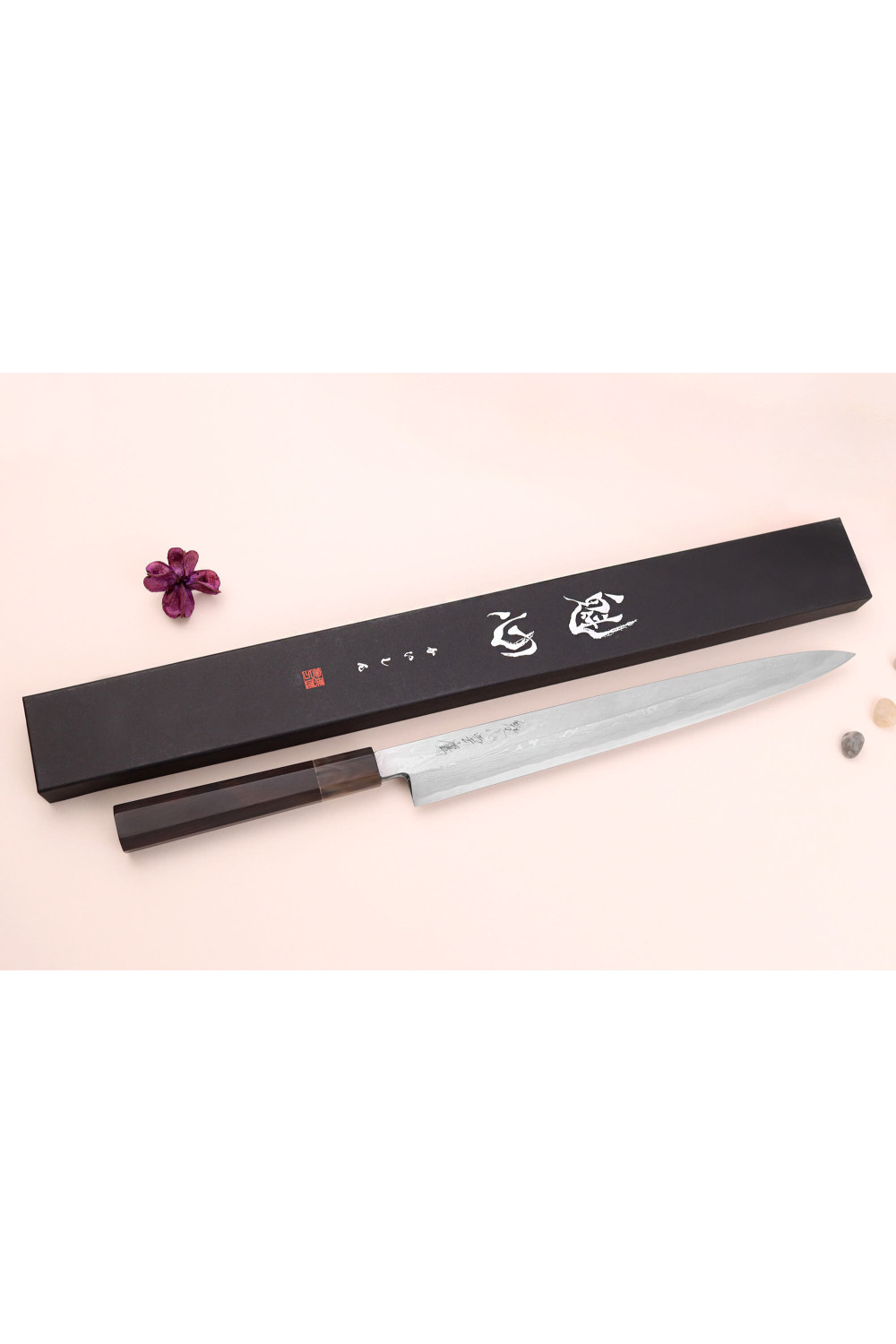
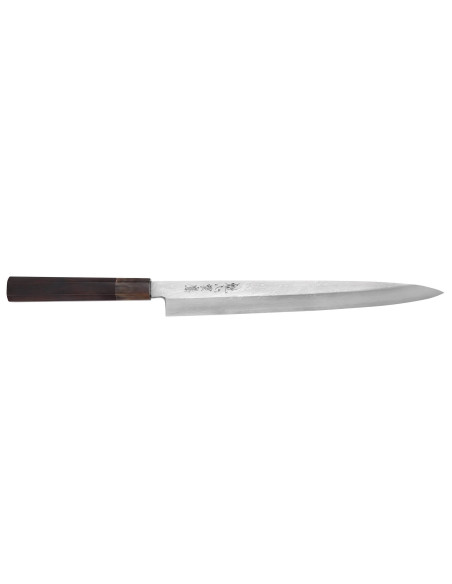
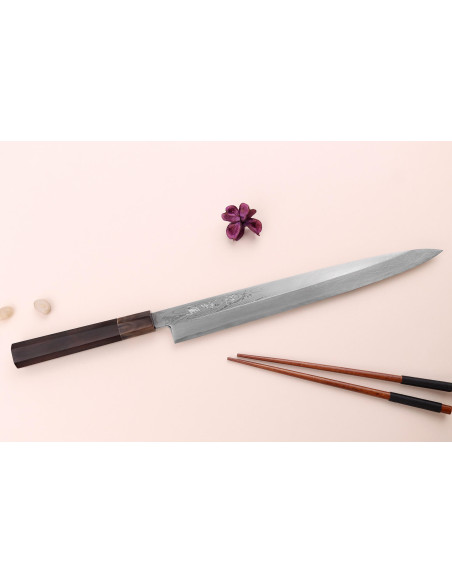
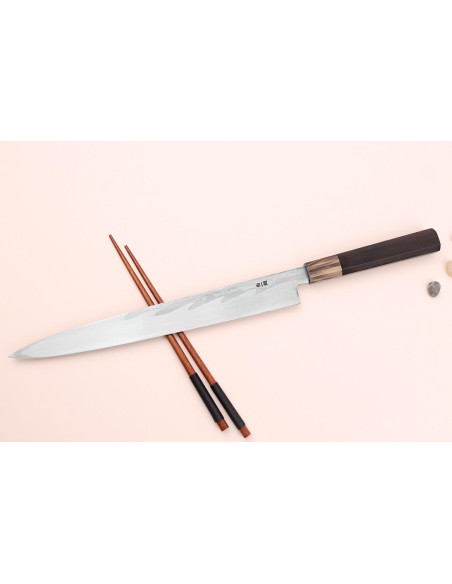
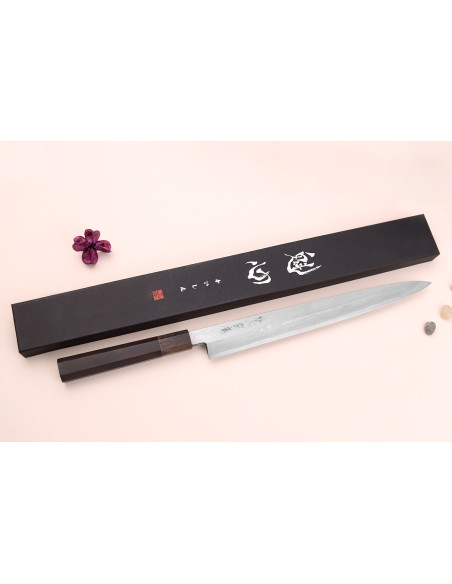
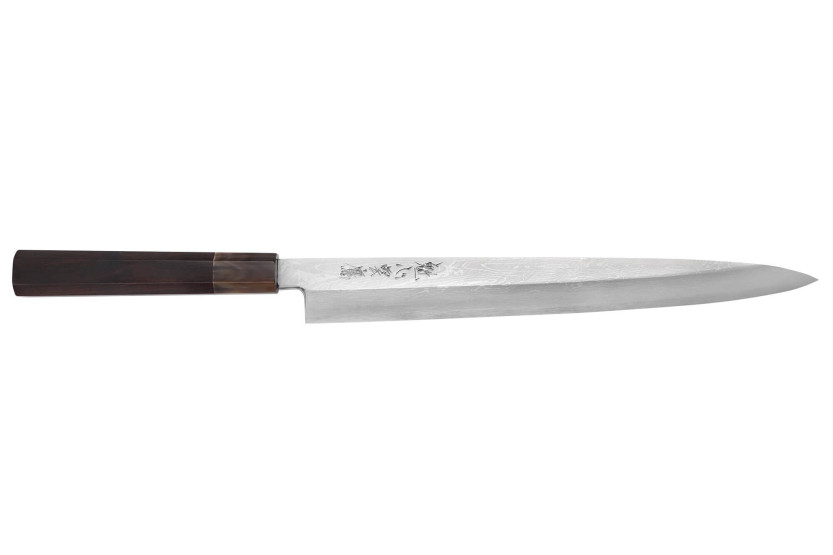
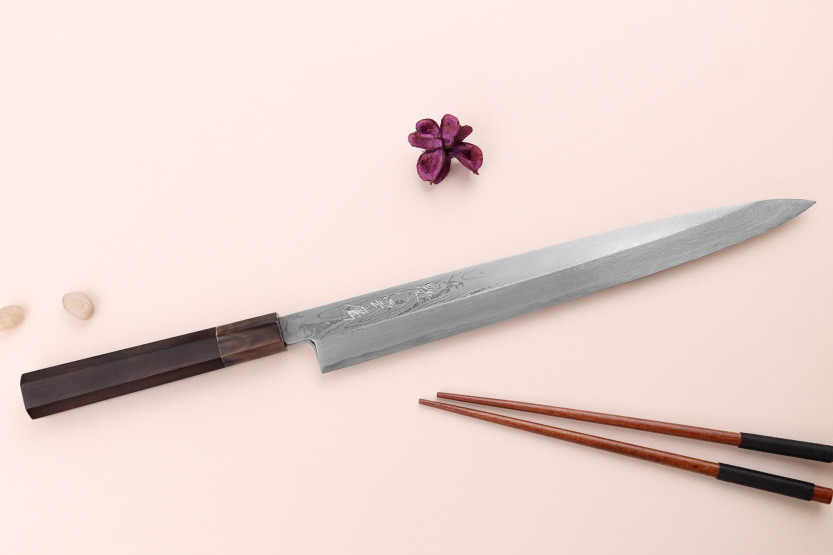
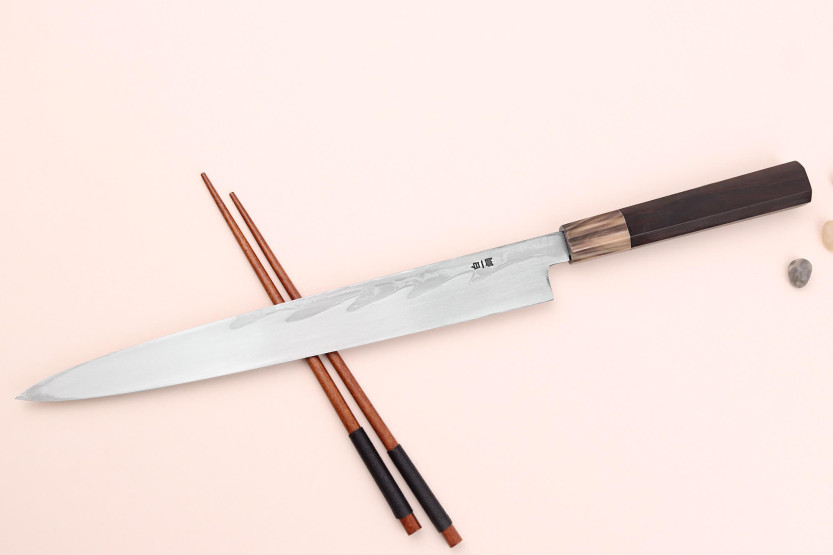
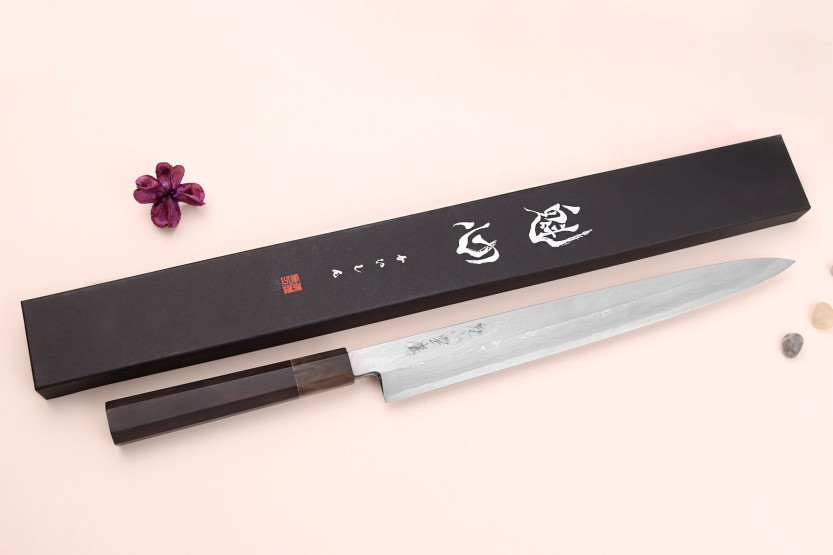
This yanagiba knife features a 30cm damascened blade, a technique consisting of forging a rigid steel core which is then surrounded by several layers of softer steel. This process gives your blade optimum balance and protects its center!
The heart of your blade is made from Japanese Shirogami #1 steel (also known as White Paper Steel 1), an alloy produced by the famous steelmaker Hitachi. It has a high carbon content of around 1.3%: an element that increases the hardness of steel. As a result, this blade has a hardness of 62HRC on the Rockwell scale, ensuring excellent edge retention for a high-performance cutting edge.
Continuing with the Shirogami alloy, it has an advantage in terms of its microstructure! Indeed, this steel is considered "pure" because the micro-carbides that make it up are evenly distributed. This gives your blade greater resistance to micro-cracking and wear.
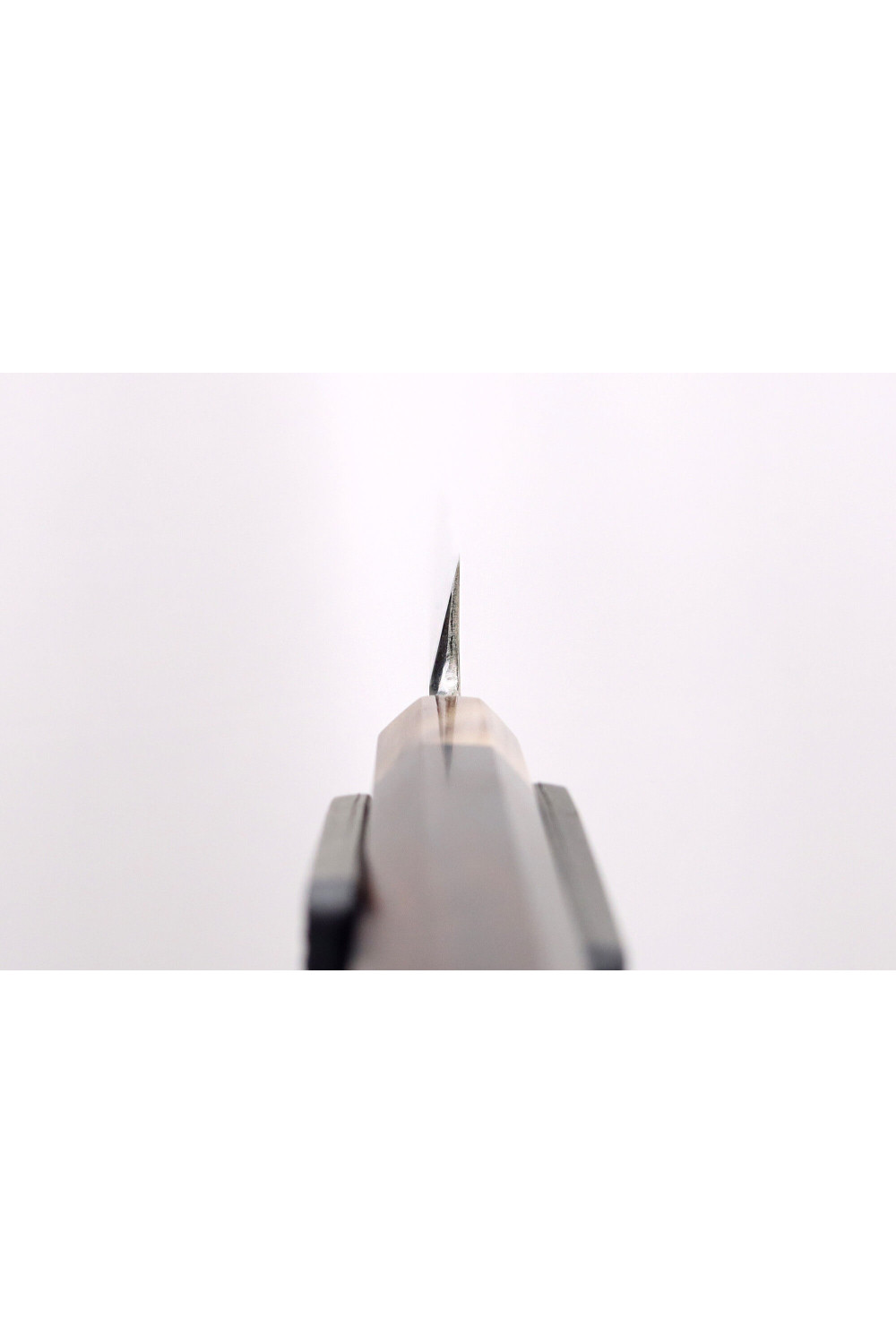
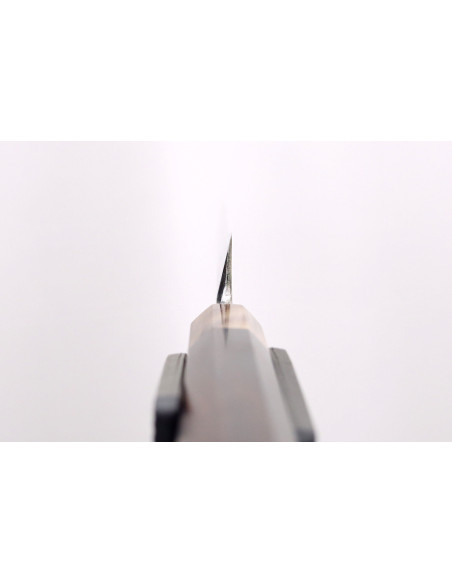
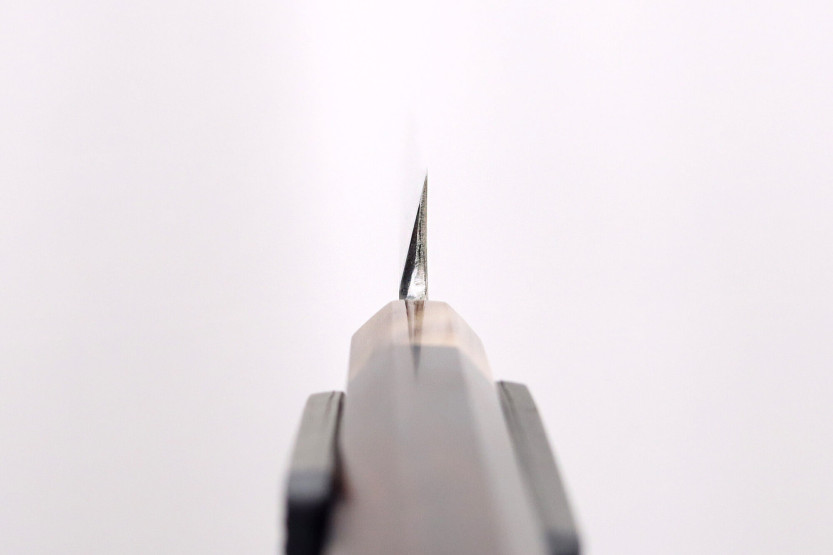
This Japanese kitchen knife has an asymmetrical cutting edge, typical of yanagiba knives. The cutting edge of this knife is therefore beveled and specially adapted for right-handed use. It enables you to make fine, even slices in a single movement, with a clean cut!
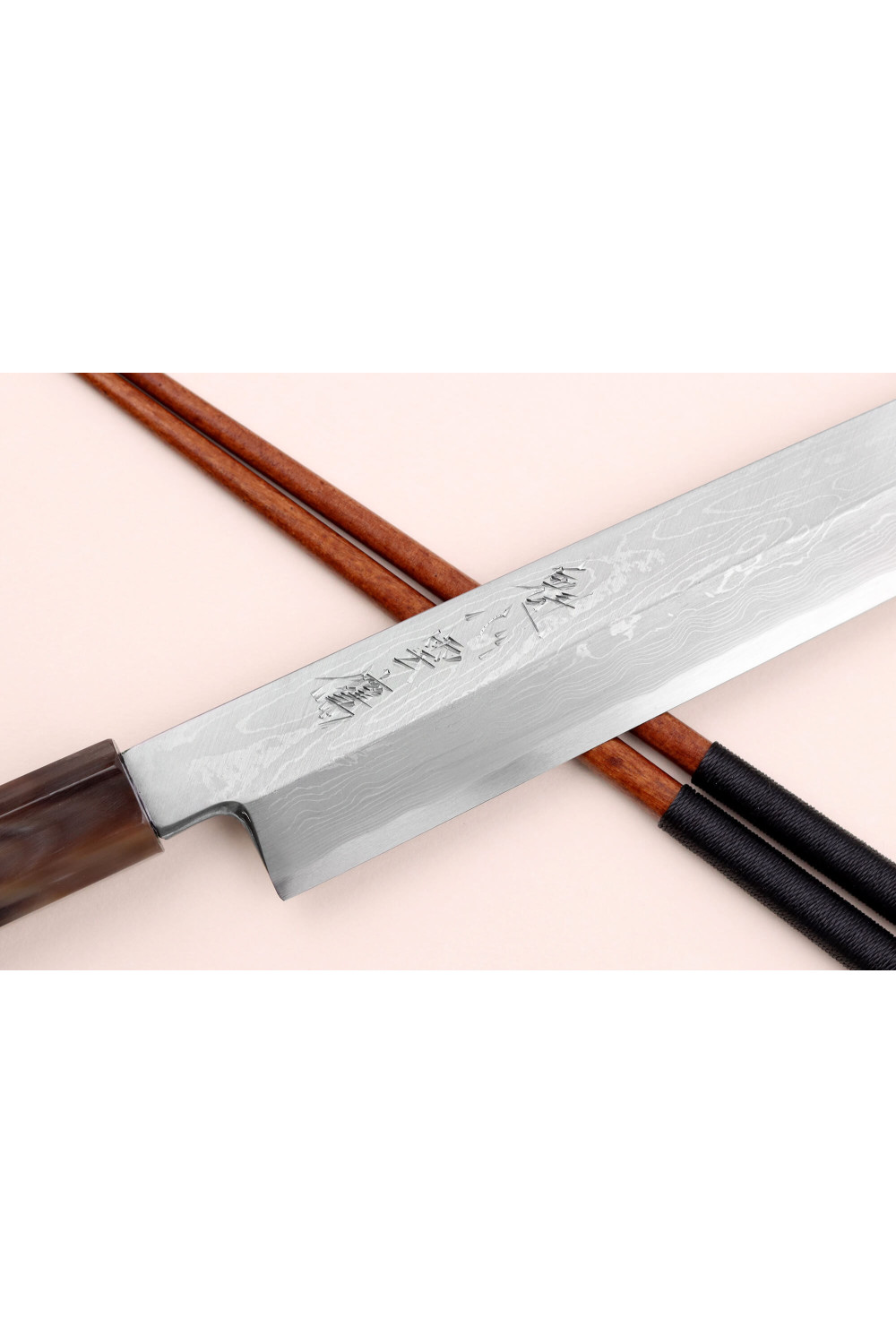
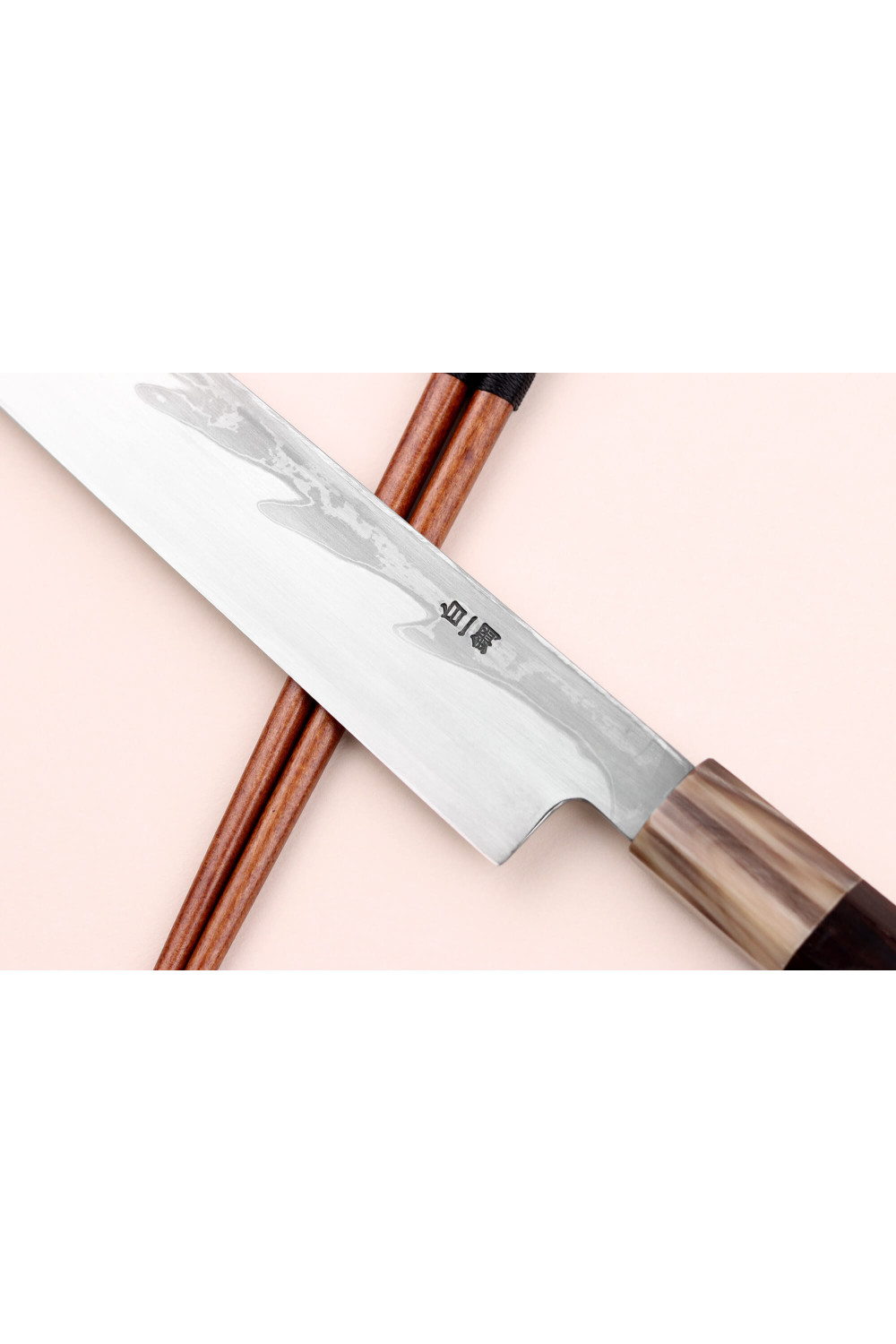
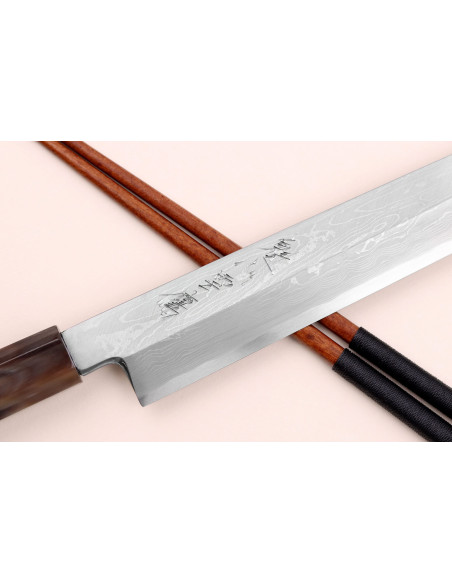
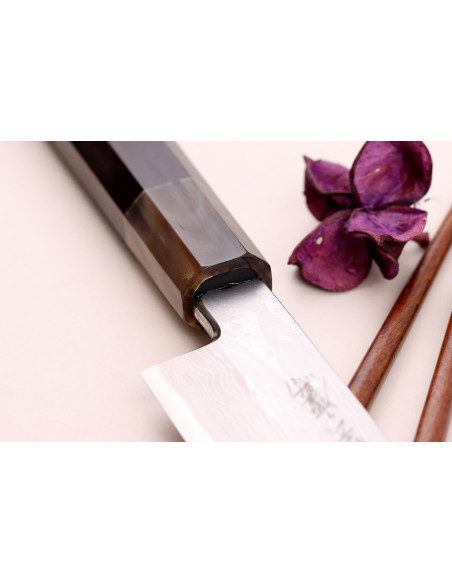
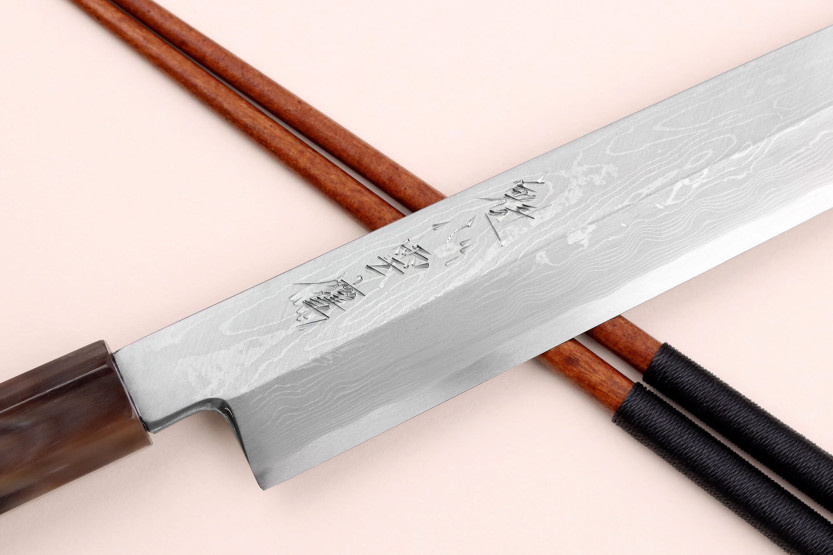
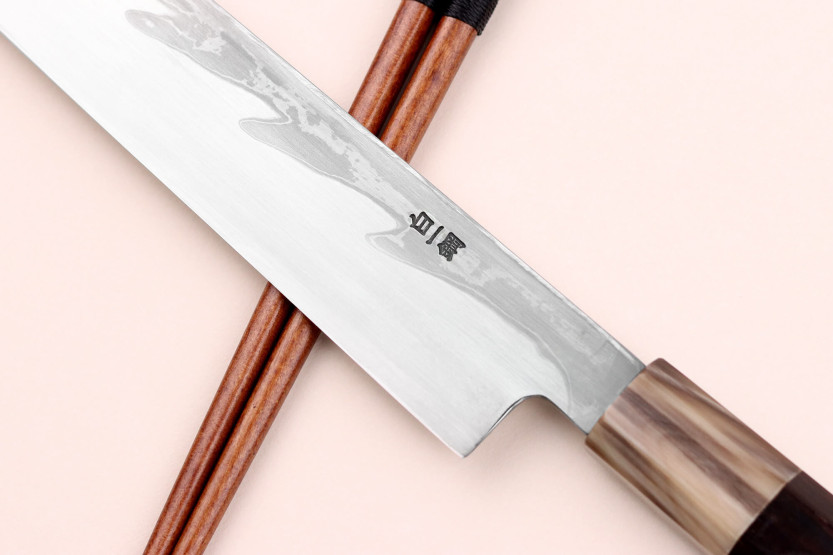
Next, the damascus is complemented by several layers of softer steel to add a slight suppleness to your blade (without making it flexible). This makes your blade less brittle in use. Damascus also gives your Japanese kitchen knife a real aesthetic edge! The superimposition of different steels forms patterns unique to each Nakamura knife, making your knife singular. Here, the patterns are subtle and the damascus slightly outlined for an elegant design.
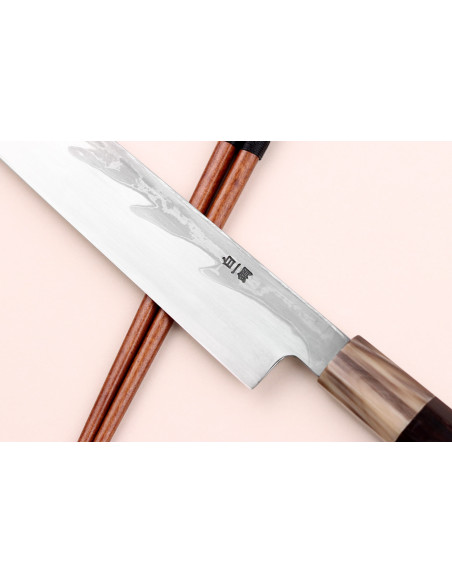
What's more, your blade has been given a polished finish for an extra touch of refinement. Kanjis have been hand-engraved by the blacksmith to give character to your handcrafted Japanese knife.
An exceptional Japanese knife with a quality handle
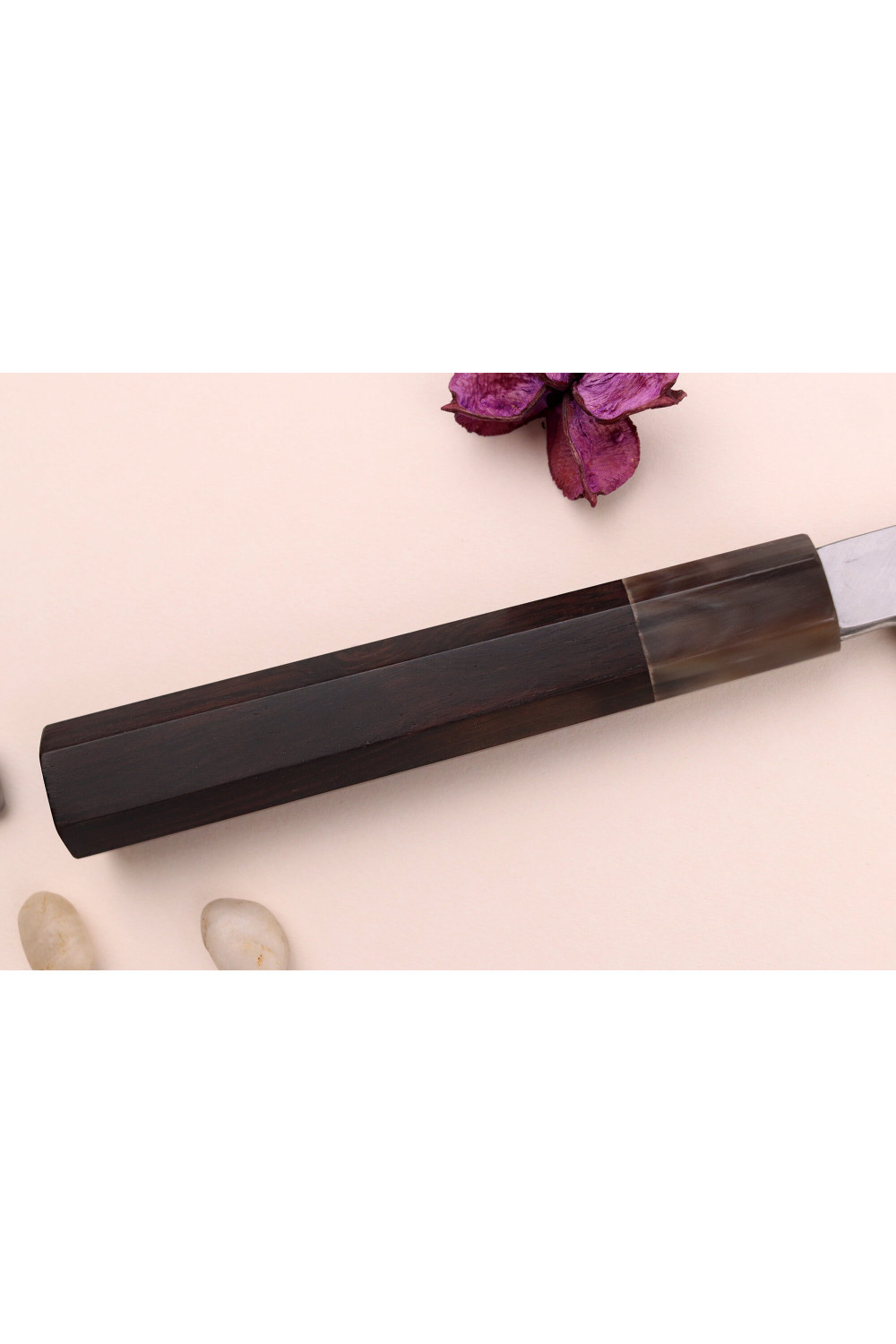
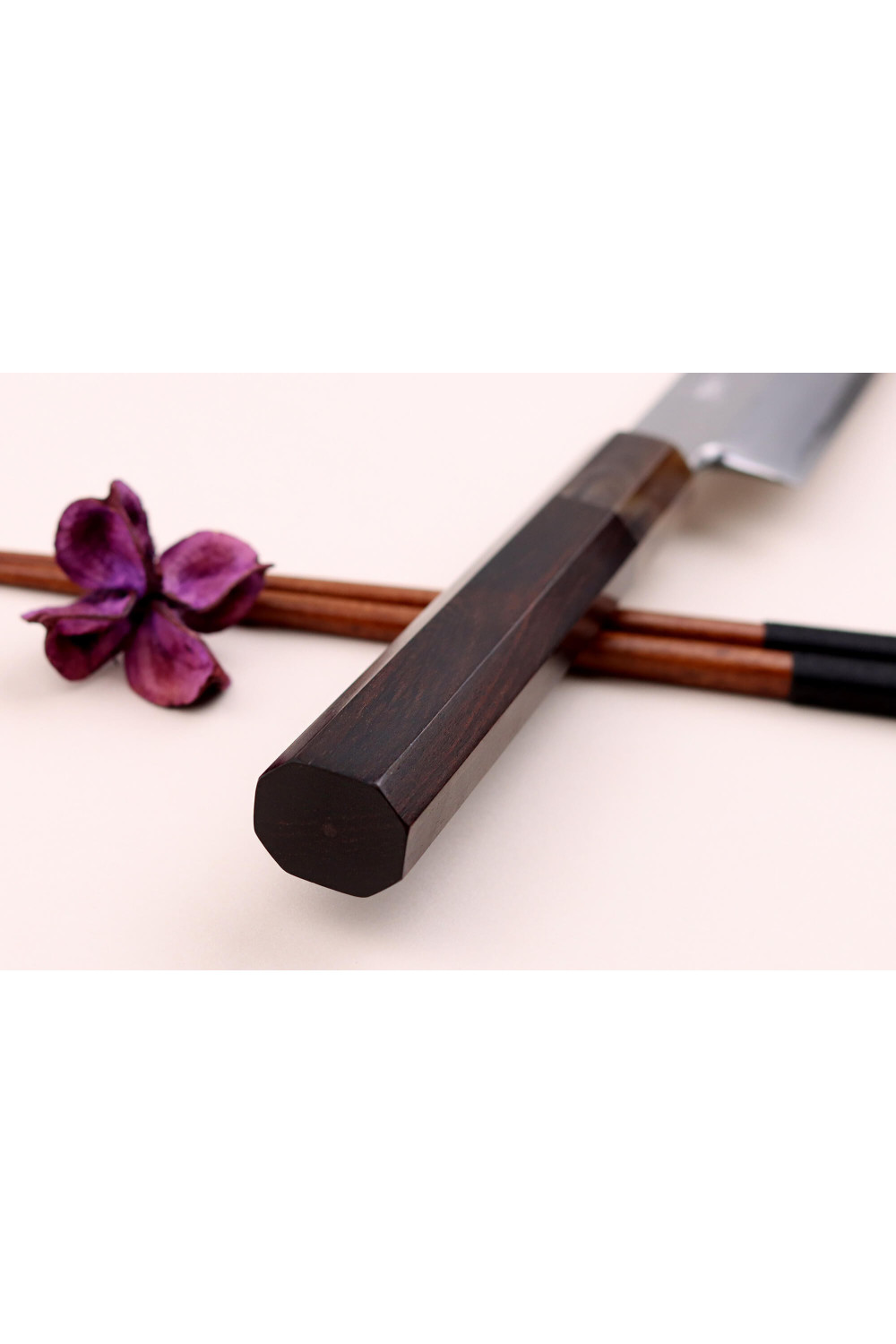
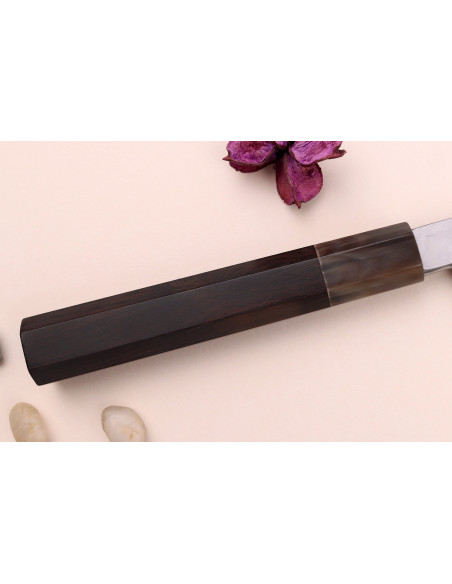
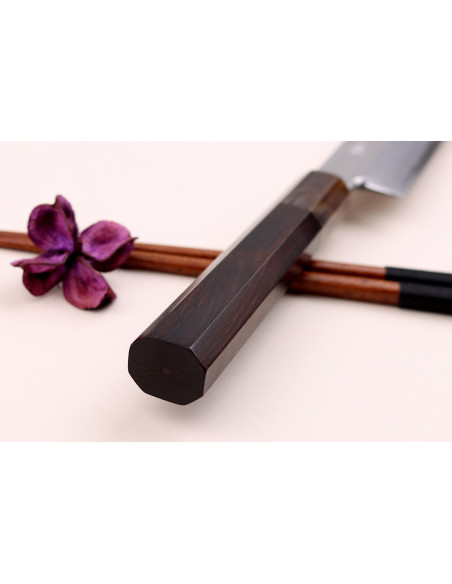
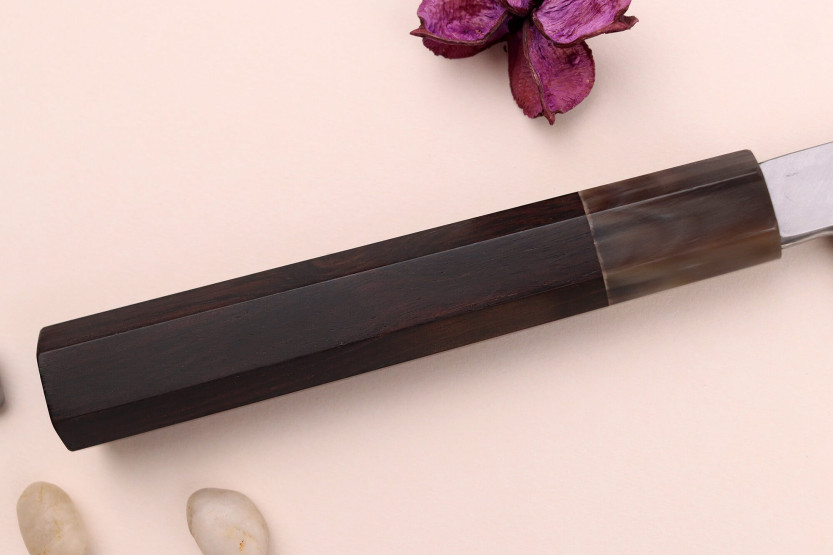
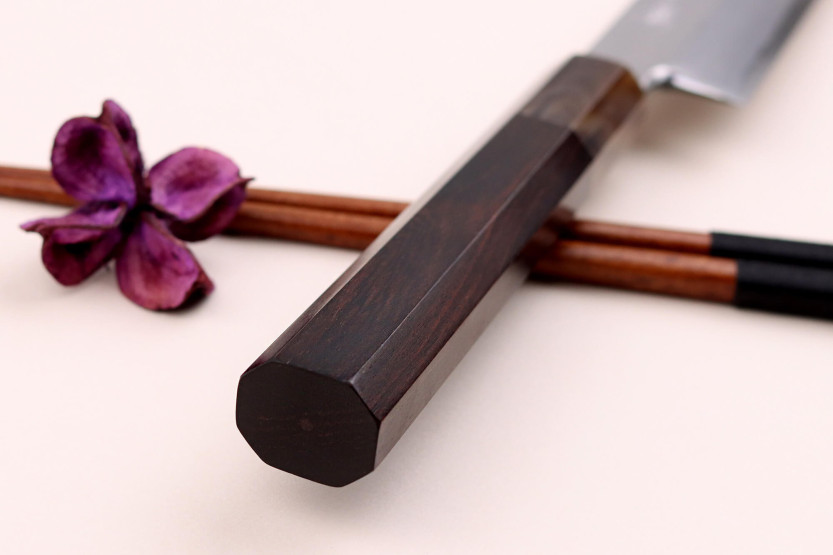
This Damascus knife has a handle made from ebony, a precious tropical wood prized for its strength. The wood's high density makes it highly resistant to shock and humidity. Ebony is prized for its dark hue and distinctive dark veining, offering a touch of elegance!
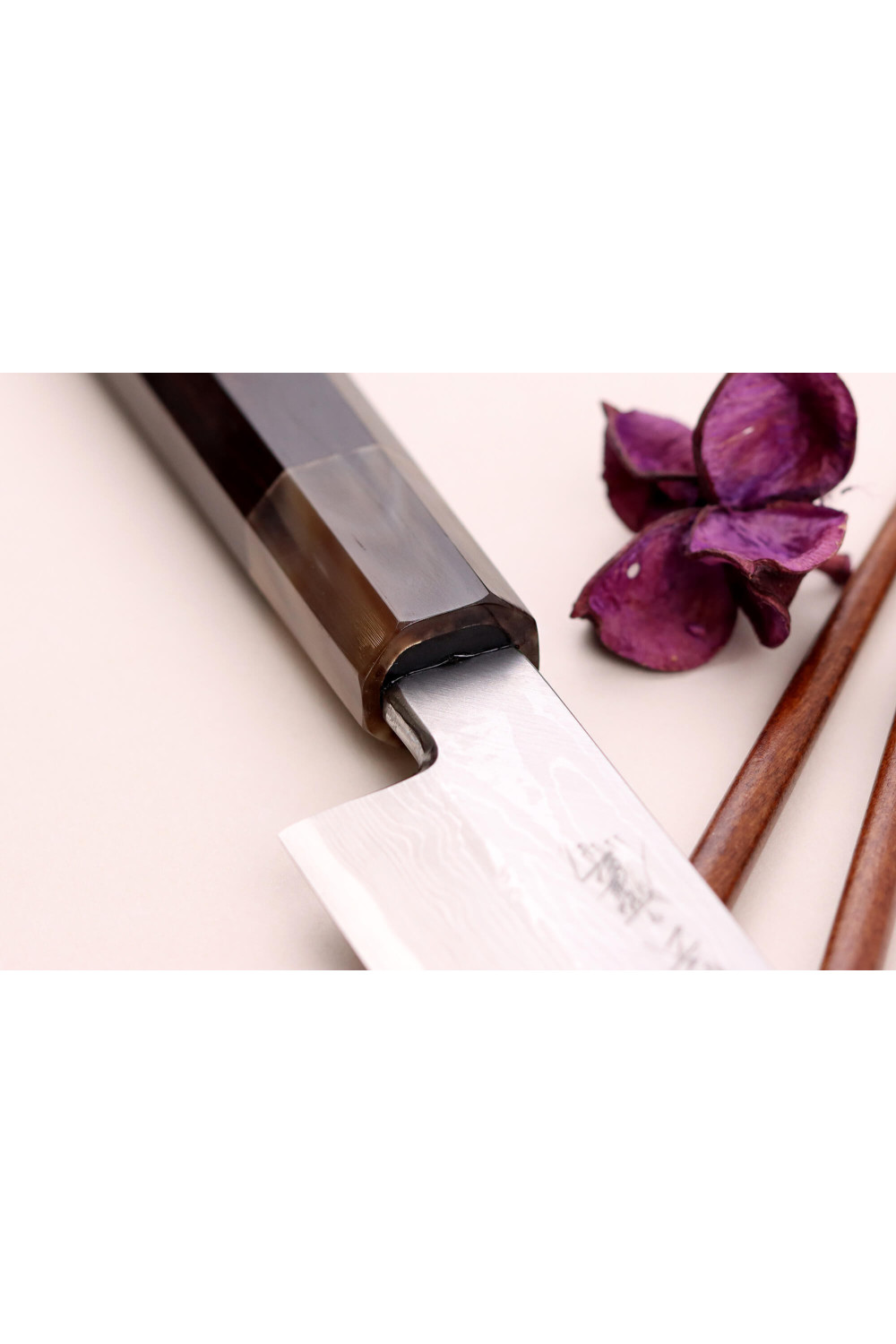
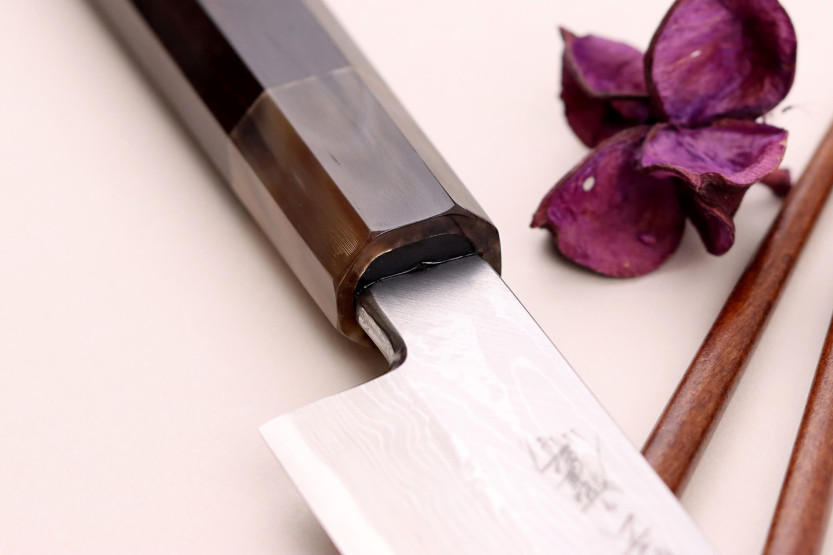
To complete the handle, a bolster is added where the blade meets the wood. It is made of white buffalo horn, a natural material that presents unique variations with each piece. It contrasts perfectly with the rest of the ebony handle.
The handle is octagonal in shape to fit the hands of all cooks! It offers an ergonomic grip for comfortable use, especially during long cooking sessions.
Finally, wood putty has been added where the blade meets the handle to fill any gaps. This ensures a watertight seal and prevents water or small food items from seeping inside.
Caring for a handcrafted Japanese knife
To care for your damask knife, it's essential to wash it by hand only, with a sponge and a mild detergent, avoiding getting the handle wet. Once cleaned, you should dry it immediately with a clean cloth to remove all moisture, and store it in a dry place. Do not place in the dishwasher or leave to soak in the sink.
As time goes by, the color of your blade may change slightly: this is perfectly normal! This is a natural reaction of the carbon to the acidity of the food you're cutting and the humidity in the air. This in no way affects the use of your exceptional Japanese knife!
To maintain it, discover our sharpening stones on Knifeleader.eu!




 By buying this product you can collect up to