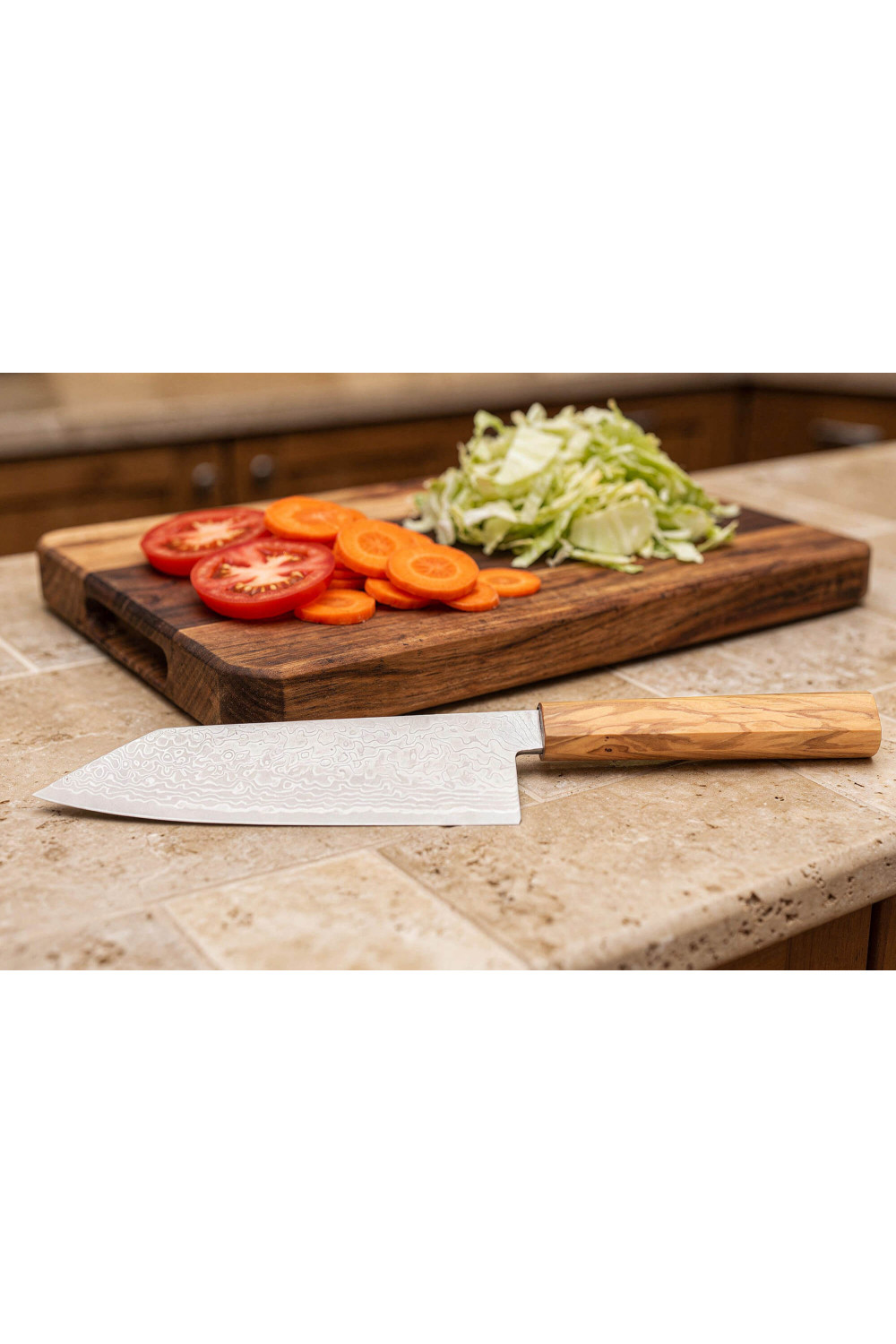
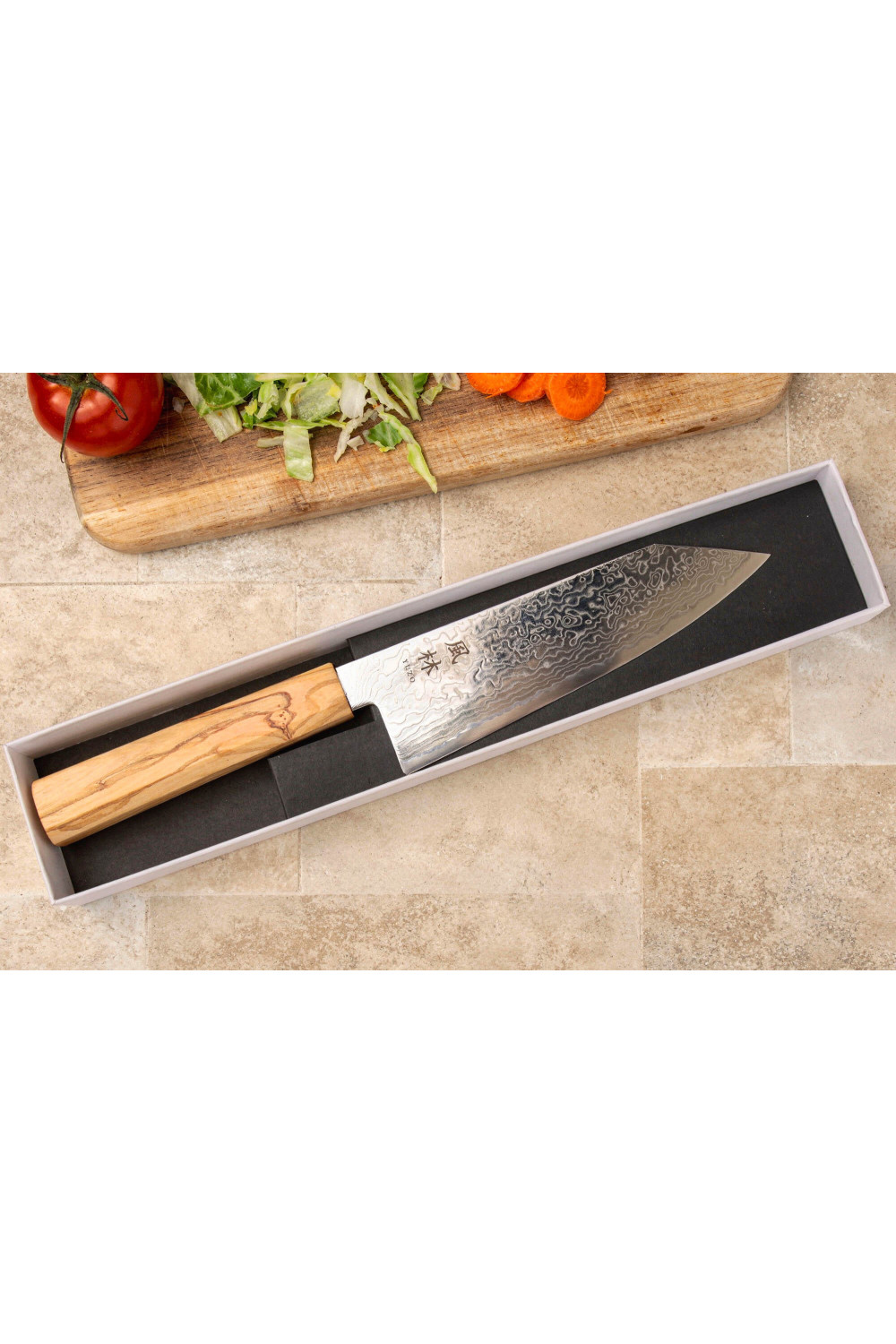
A precise and versatile Japanese bunka knife
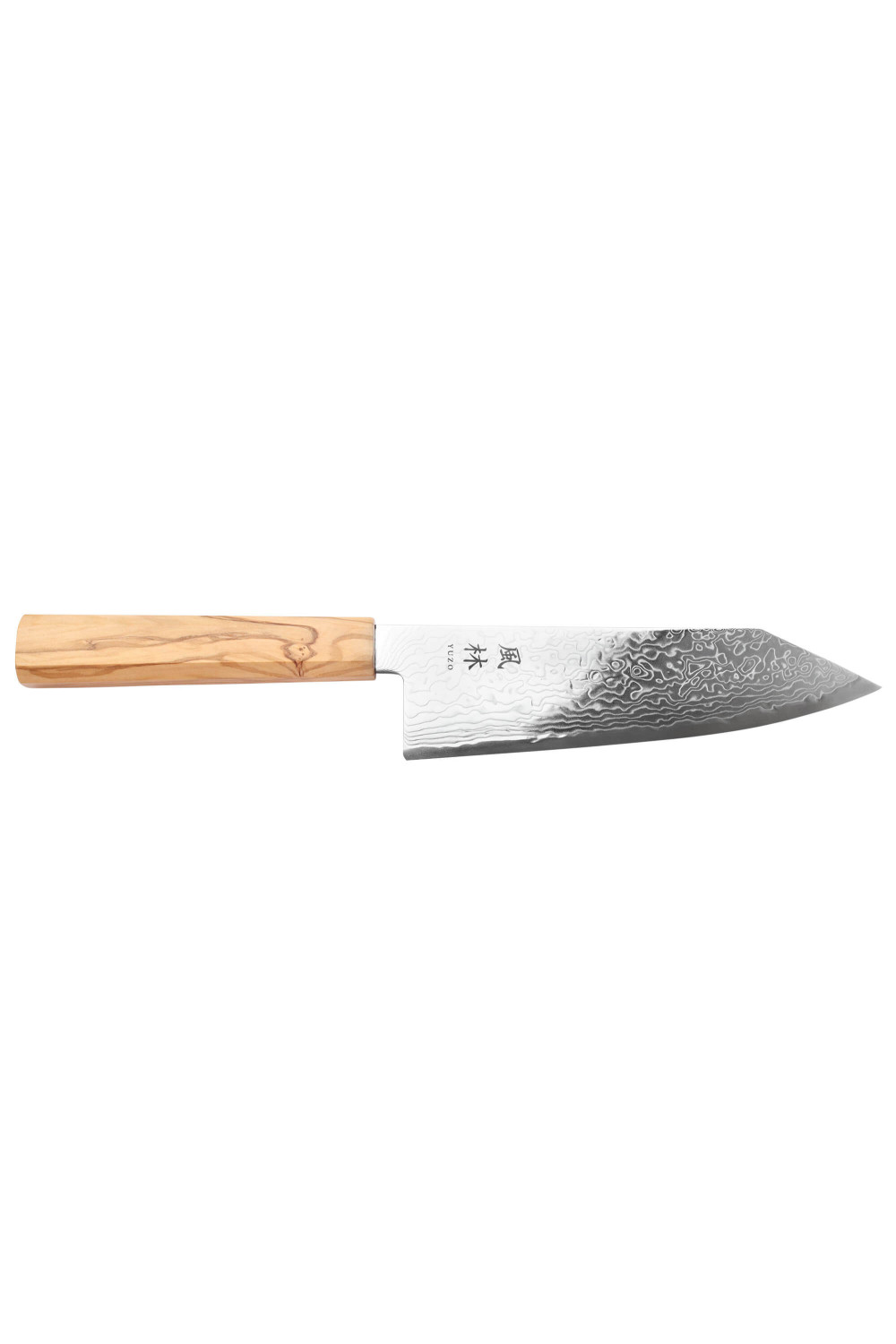
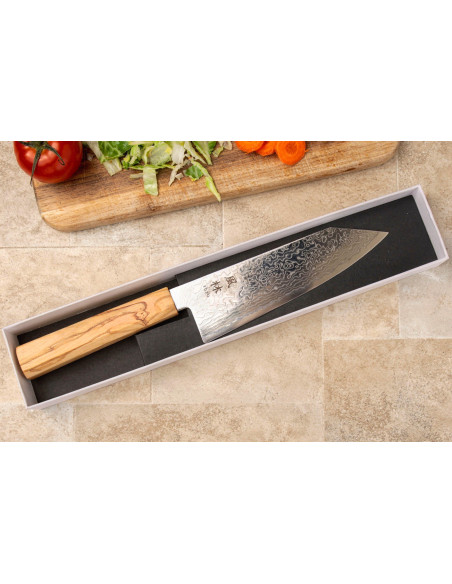
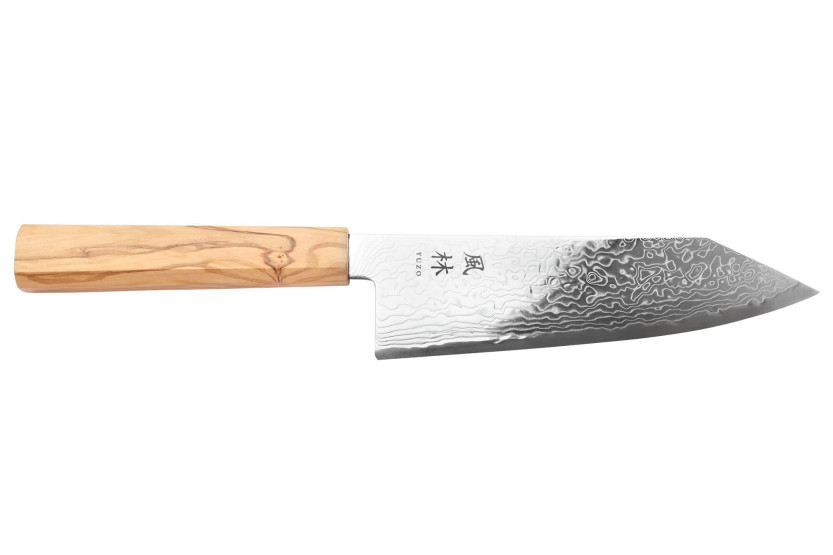
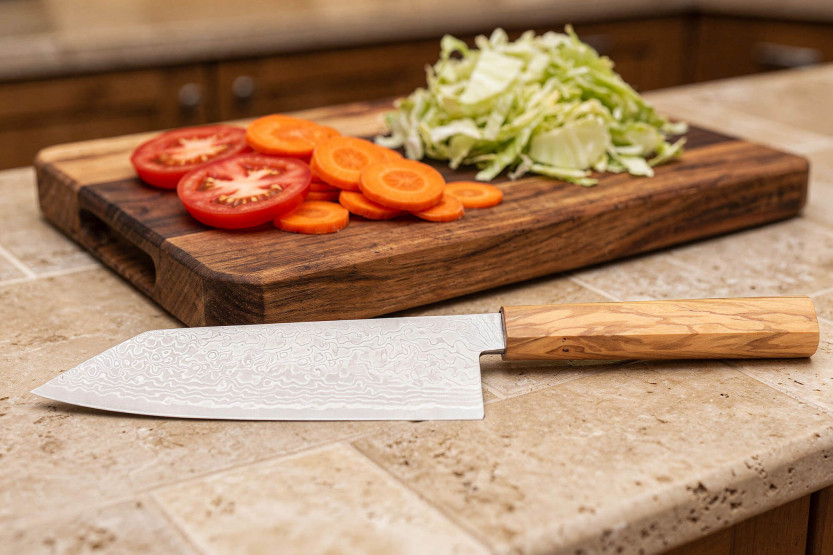
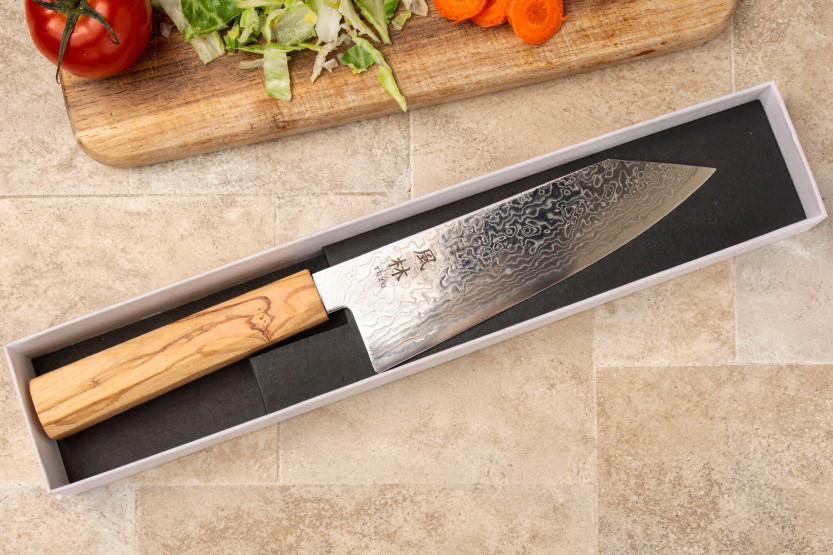
The Yuzo Japanese bunka knife from the Ryuho range combines the refined aesthetics of Japanese damascus with a design conceived for precision in the kitchen. Produced in Japan, it draws on generations of cutlery expertise to deliver a high-performance blade that's a pleasure to use every day.
The name Ryuho, which translates as "Dragon's Treasure", evokes a precious blade crafted with care. This name underlines the attention paid to materials and forging work, to create an elegant and efficient knife.
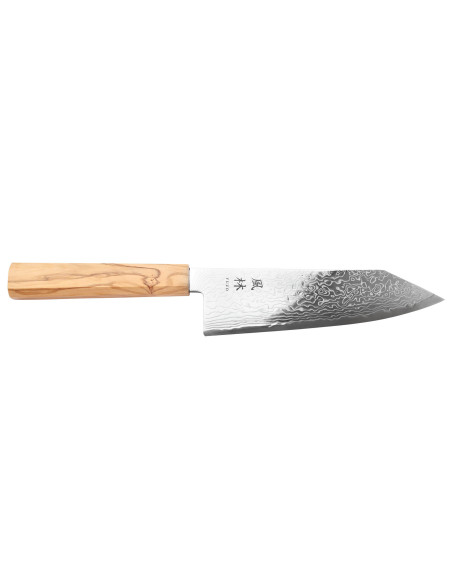
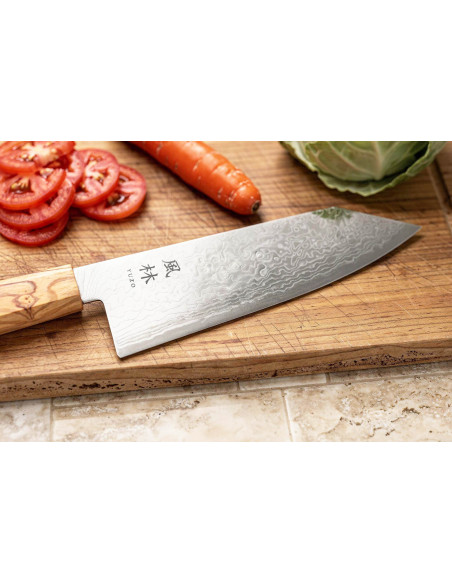
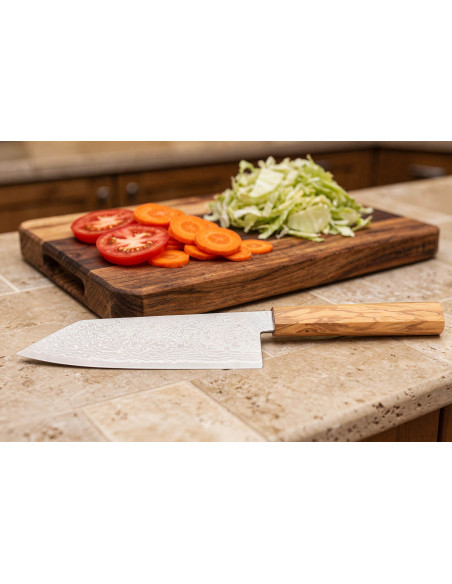
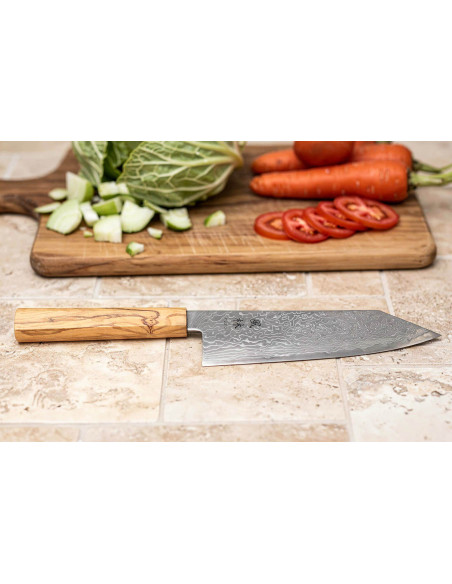
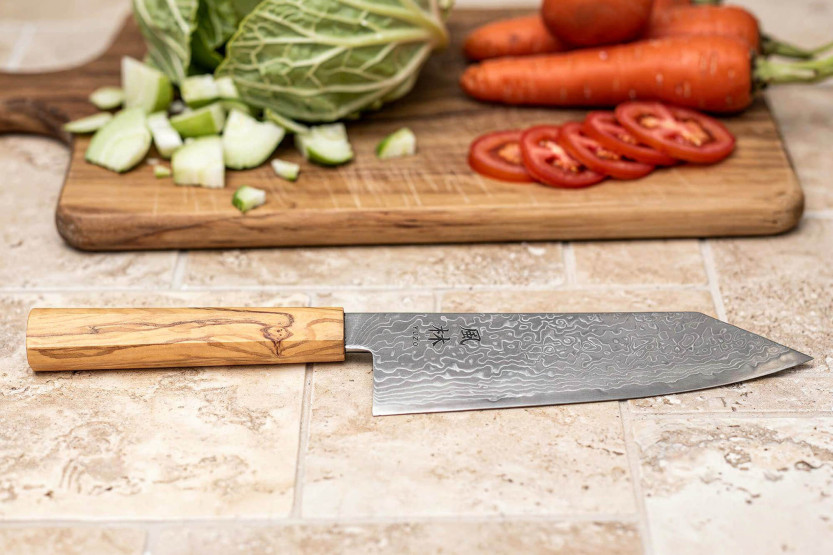
The bunka is a multi-purpose Japanese knife with a particularly precise, angular kiritsuke tip. This shape facilitates meticulous cutting, such as chiseling herbs, incising vegetables or working on pieces of fish.
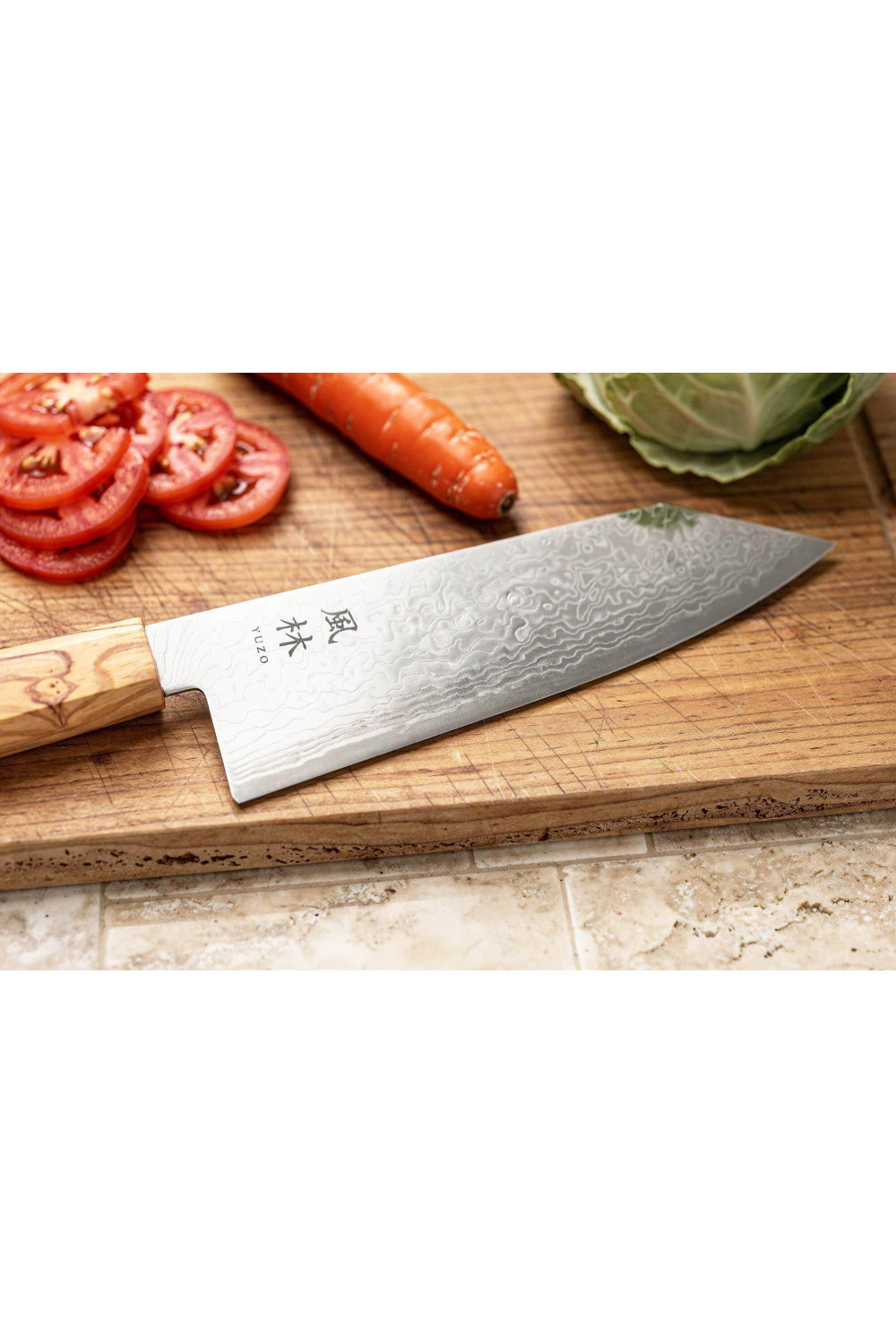
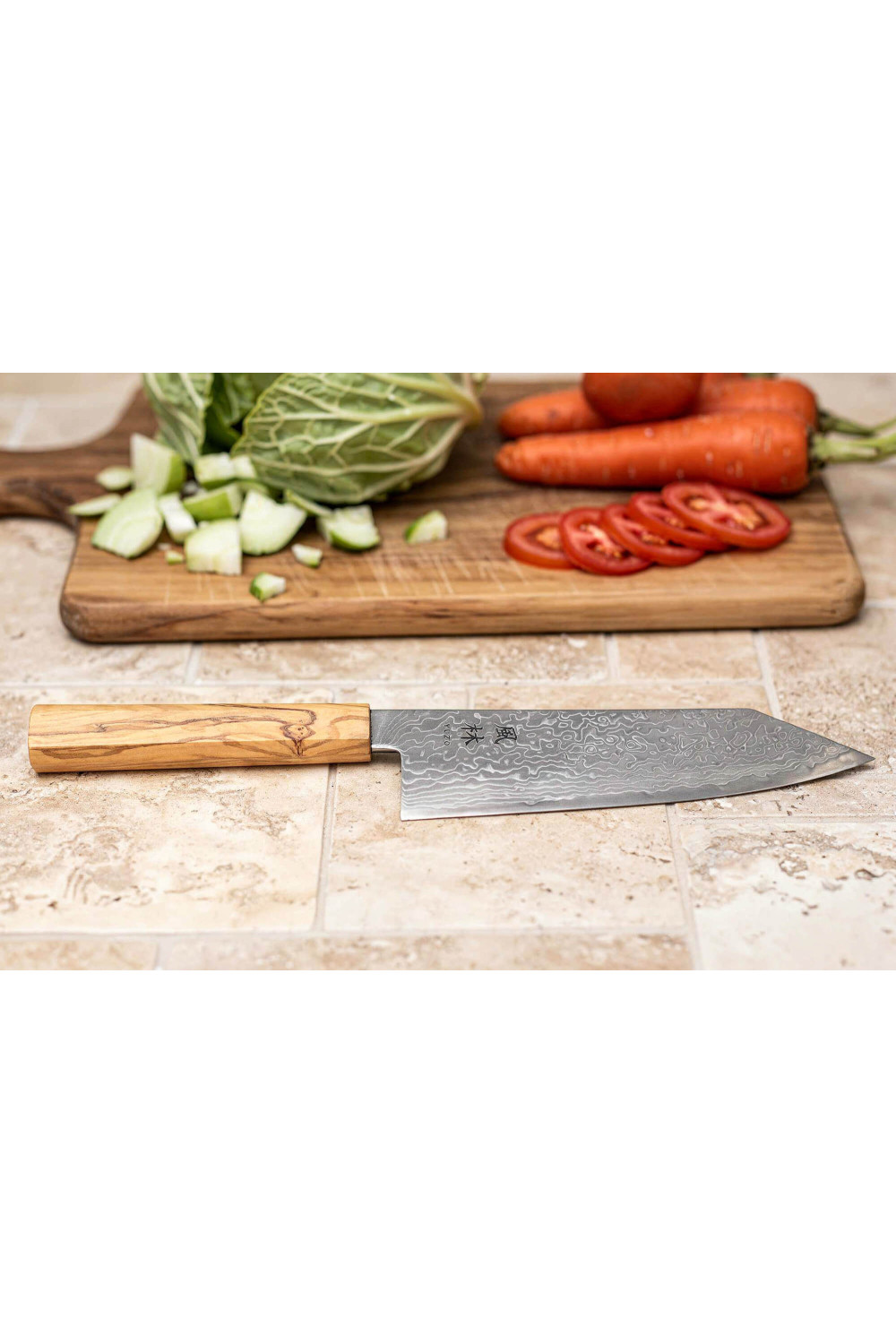
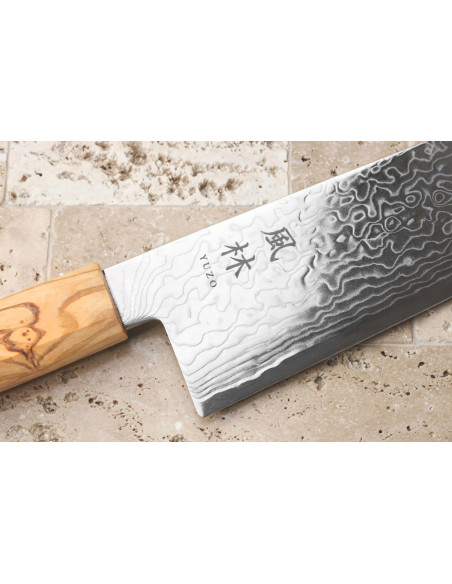
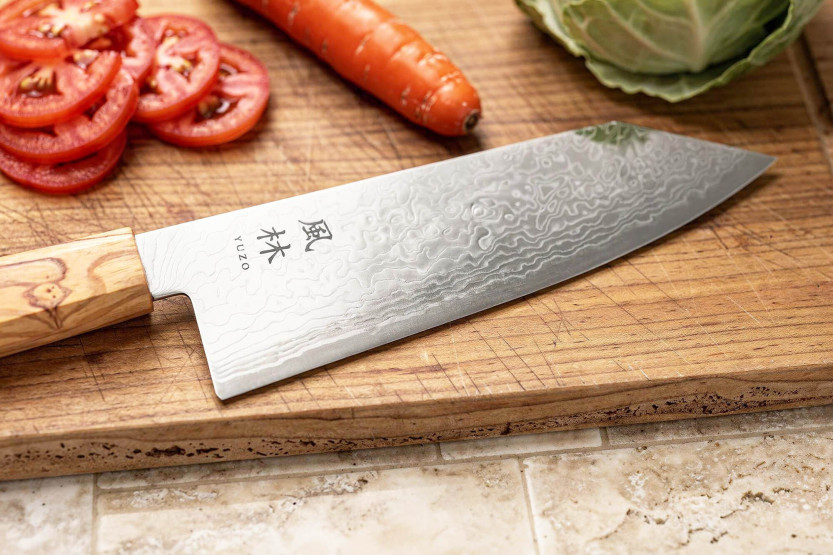
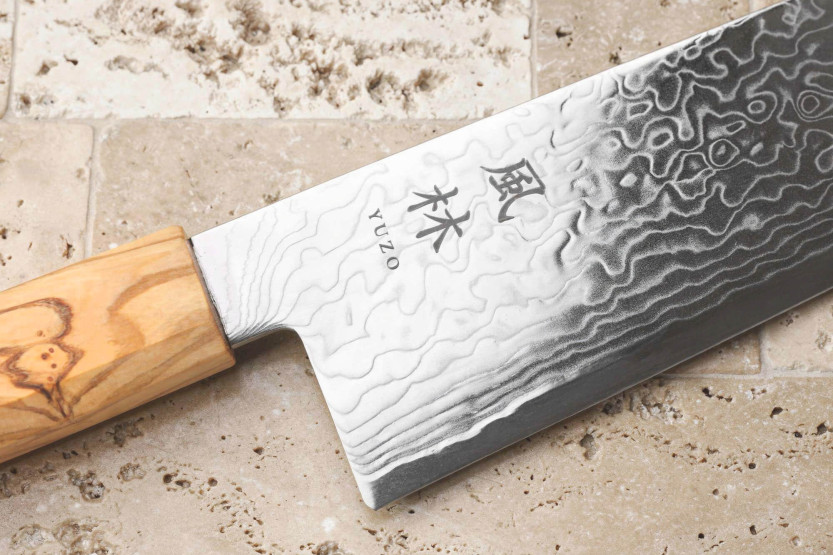
With its 18cm blade, this knife offers a comfortable cutting surface for slicing, dicing or preparing a wide range of recipes. Its damask pattern is reminiscent of drifting ice, creating a subtle visual relief that changes with the light.
A precise blade with a long-lasting edge
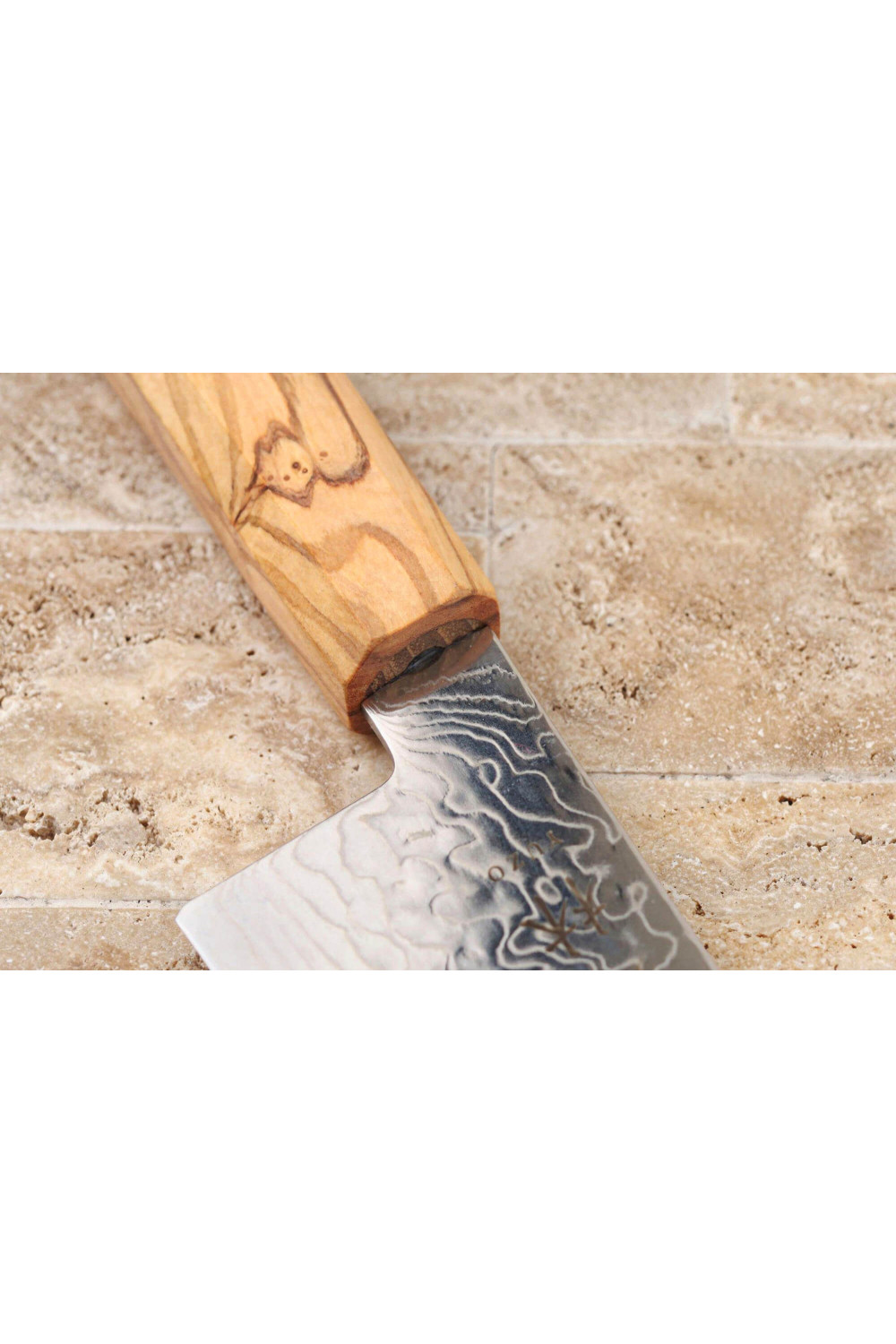
The bunka's blade features a damascened structure, composed of alternating layers of stainless steel. This construction protects the heart of the blade while creating a unique natural pattern.
At the center is a core of Japanese SG2 powdered steel, an alloy renowned for its fine grain and high cutting performance. With almost 1.3% carbon, this steel achieves a hardness of around 63 HRC on the Rockwell scale.
This high hardness ensures excellent edge retention, providing a precise cut over a long service life. Sharpening remains accessible to the Japanese stone to restore the edge when necessary.
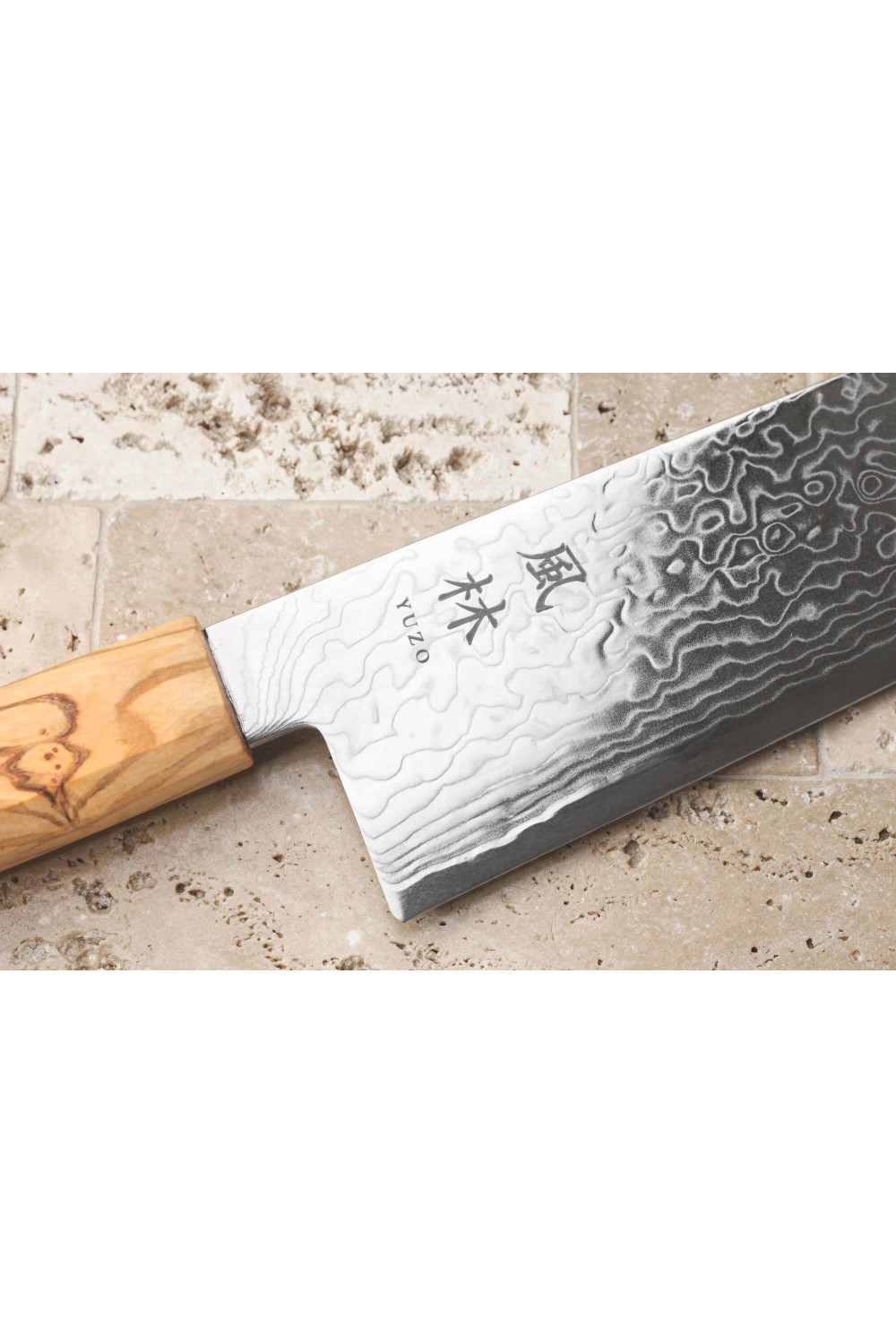
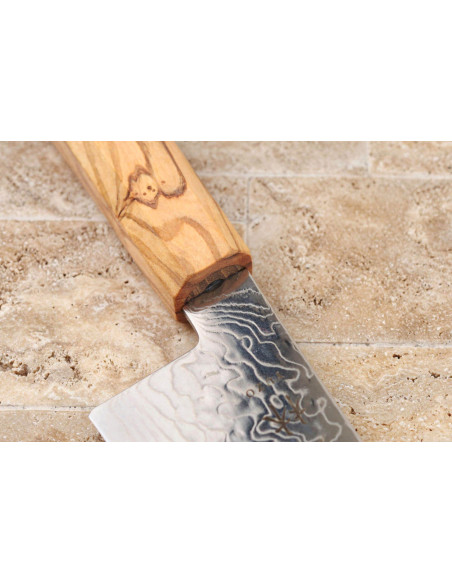
The layers of stainless steel surrounding the core provide protection and flexibility, while forming a spectacular damask pattern. The mirror finish fully reveals these undulating lines, reminiscent of drifting ice.
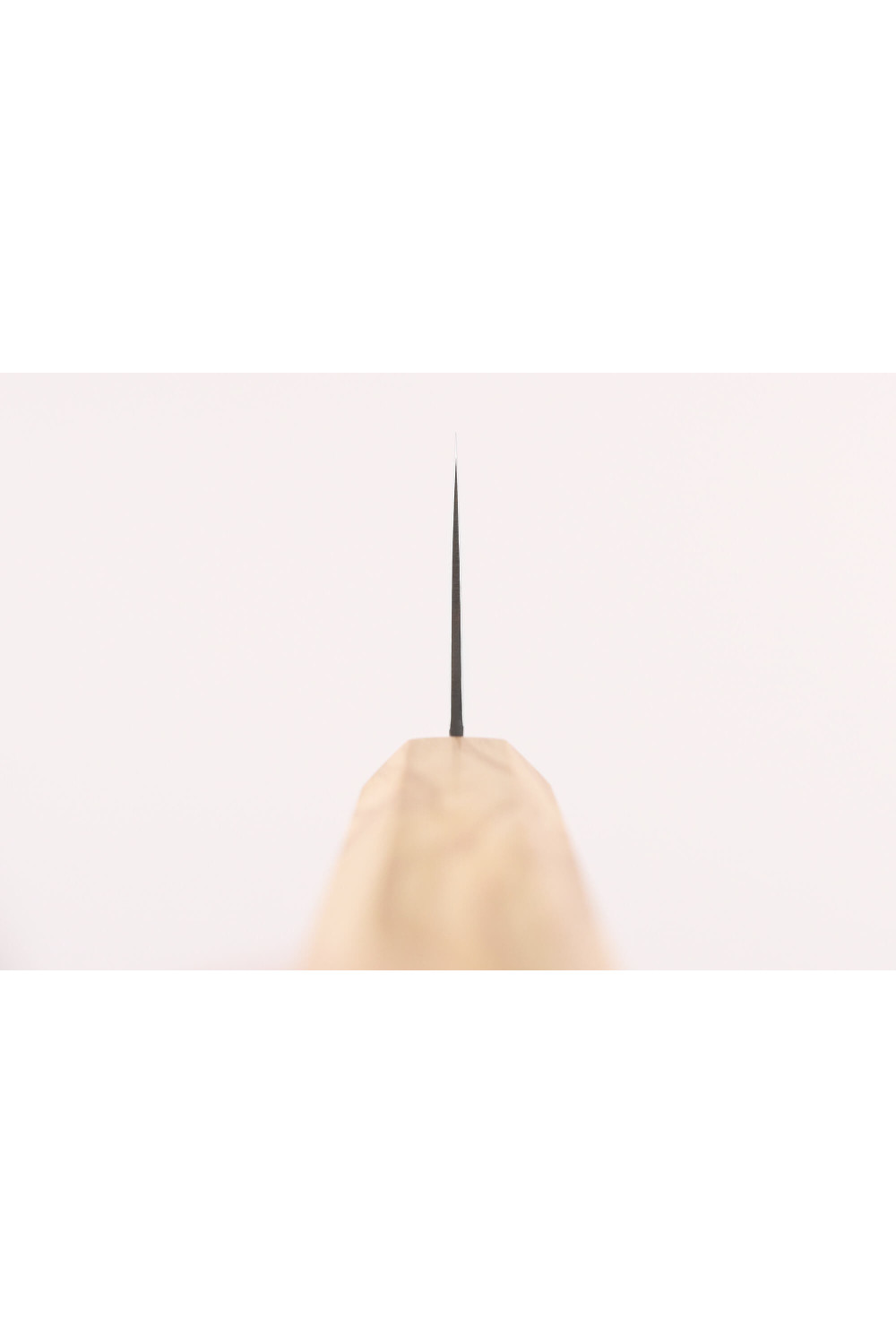
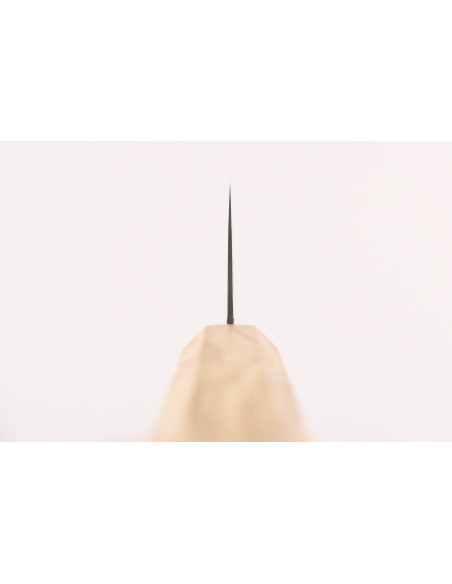
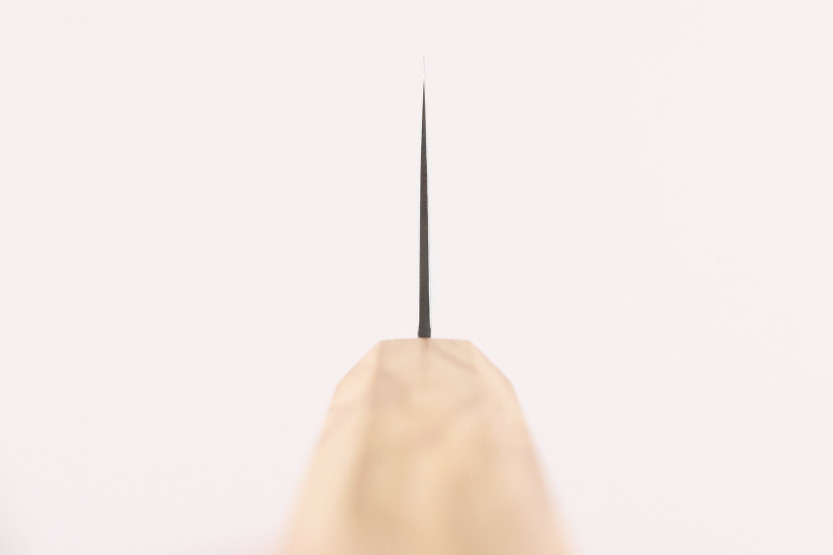
Theflat cutting edge completes the blade's design. It promotes clean penetration of food and ensures fluid cutting without crushing textures. Finally, the kiritsuke tip provides extra control for precise gestures, especially when making fine cuts or working with detail.
A uniquely grained olive wood handle
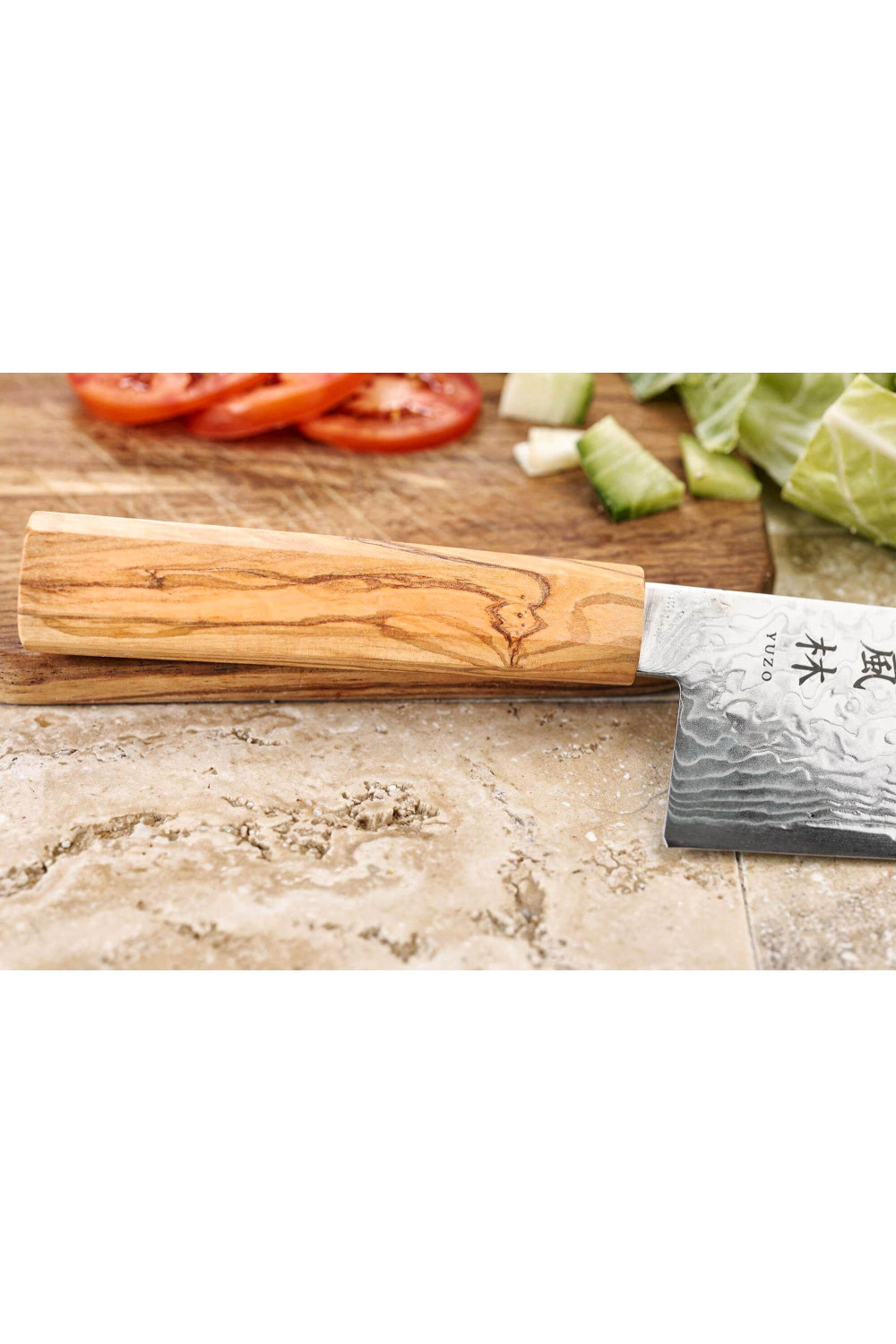
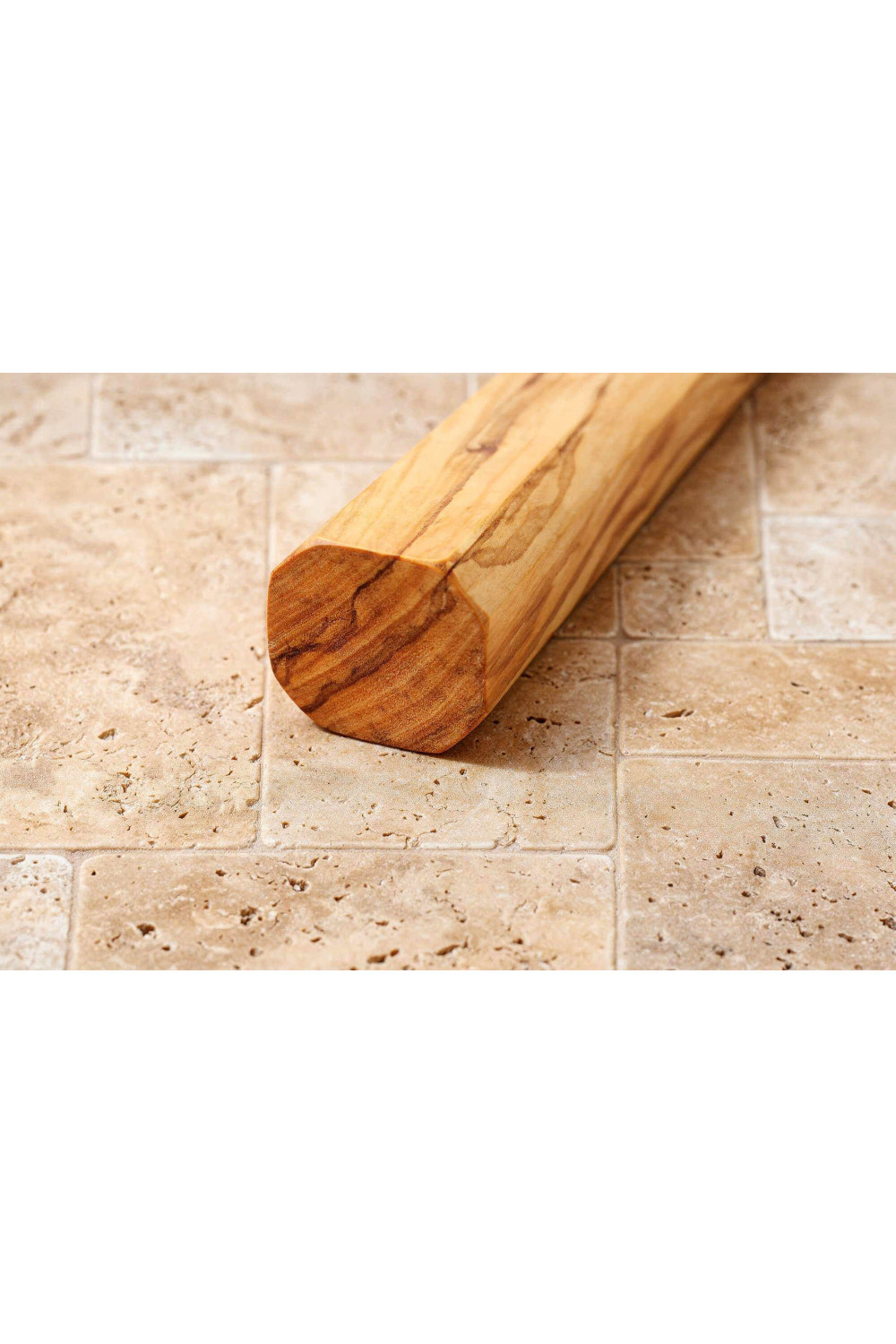
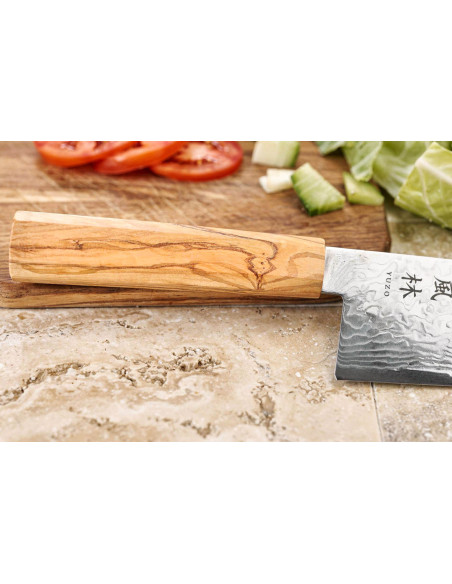
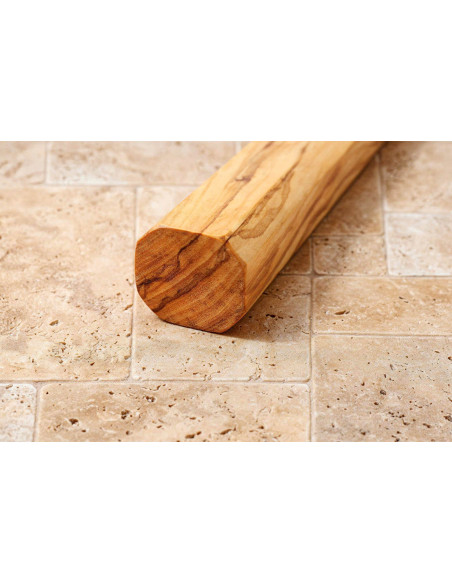
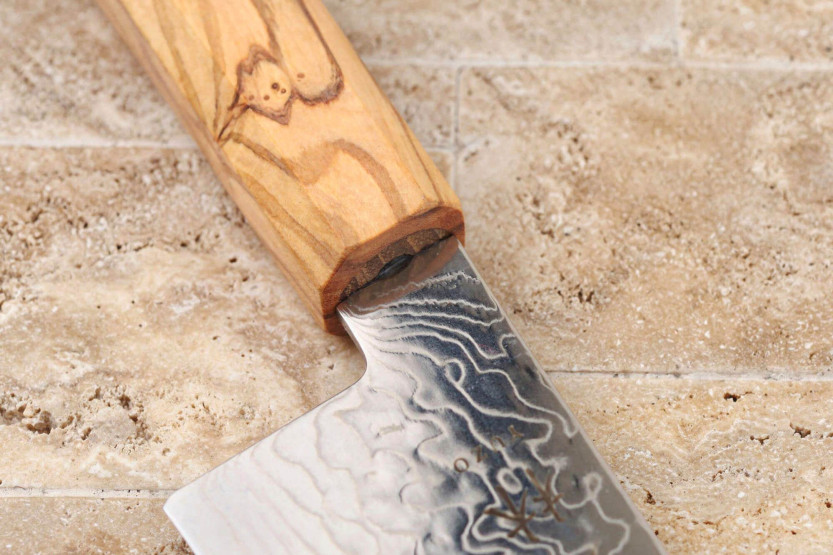
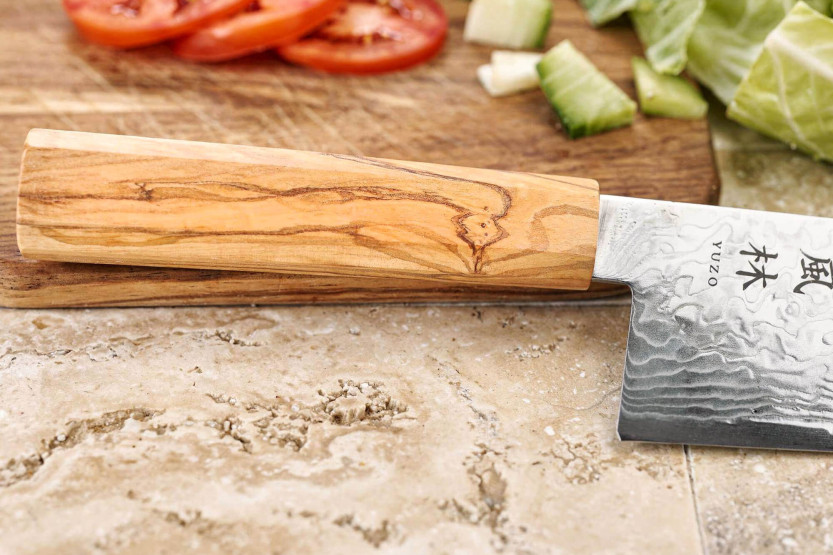
The handle is made from olive wood, appreciated for its warm nuances and natural grain. Each handle features a unique design, making each knife slightly different.
Olive wood also boasts good moisture resistance and balanced density, qualities well-suited to use in the kitchen.
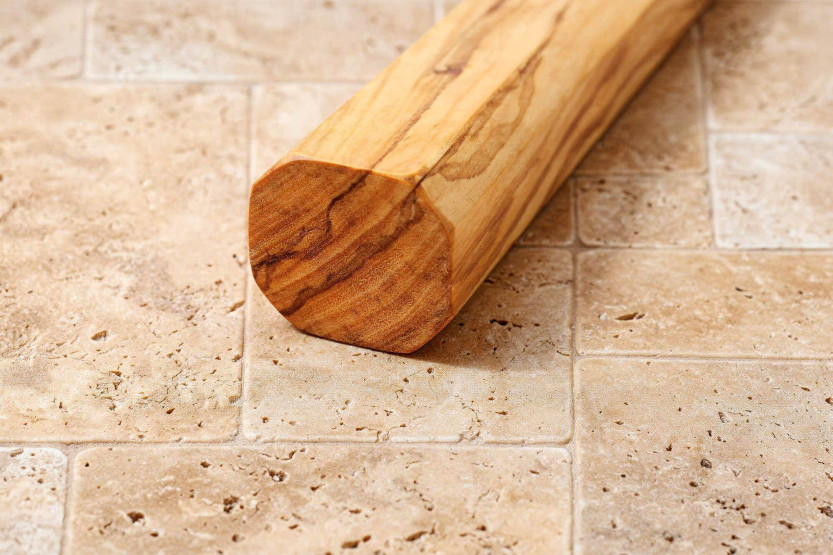
The handle is carved in a traditional octagonal shape, offering a stable, comfortable grip. This geometry is suitable for both right- and left-handed users, and facilitates control of the cutting gesture.
The combination of damascus blade and olive wood creates an elegant contrast, while offering a balanced knife that's pleasant to use.
Features and benefits at a glance
- 18cm bunka blade: ideal length for slicing and dicing with precision
- Japanese SG2 powdered steel (≈1.3% carbon): fine structure promotes a long-lasting edge
- Rockwell
hardness- 63 HRC: effective edge retention over use
- Stainless steel damascus construction: protects the core while creating a distinctive pattern
- Mirror polish: reveals the damascus reliefs inspired by drifting ice
- Flat grinding: clean penetration into food and even cutting
- Kiritsuke tip: precise control for technical gestures and finishing
- Olive wood handle: each piece features a unique grain
- Traditional octagonal shape: stable balance for right- and left-handed use
- Japanese manufacturing: cutlery heritage from the Seki region
Use and care
To preserve the full performance of your Yuzo bunka Japanese knife, use it preferably on a wooden or soft synthetic cutting board. Hard surfaces such as glass, stone or stainless steel can damage the cutting edge prematurely.
After each use, clean the blade by hand with a soft sponge and mild soap. Rinse, then dry immediately with a clean cloth to avoid any traces of moisture on the steel.
Dishwashing is prohibited, as is prolonged soaking in the sink. To maintain optimum sharpness, regular sharpening with a Japanese stone will easily restore the fineness of the cutting edge.
Since olive wood handles are a natural material, you can occasionally apply a thin coat of wood oil to nourish the material and preserve its shine over time.
A cutlery heritage from Seki
The Ryuho range is made in Japan, in the Seki region, known for centuries for the quality of its blades. This town has a long tradition of steel processing and the development of precise cutting tools.
Historically, many blacksmiths settled here to produce Japanese swords. Their mastery of tempering and sharpening techniques helped build the city's reputation in the cutlery industry. Today, this experience continues to influence the production of modern kitchen knives, designed to offer precision and consistency in cutting.
Find all bunka knives on Knifeleader.eu!




 By buying this product you can collect up to

.png)