Function of your Yuzo craft knife
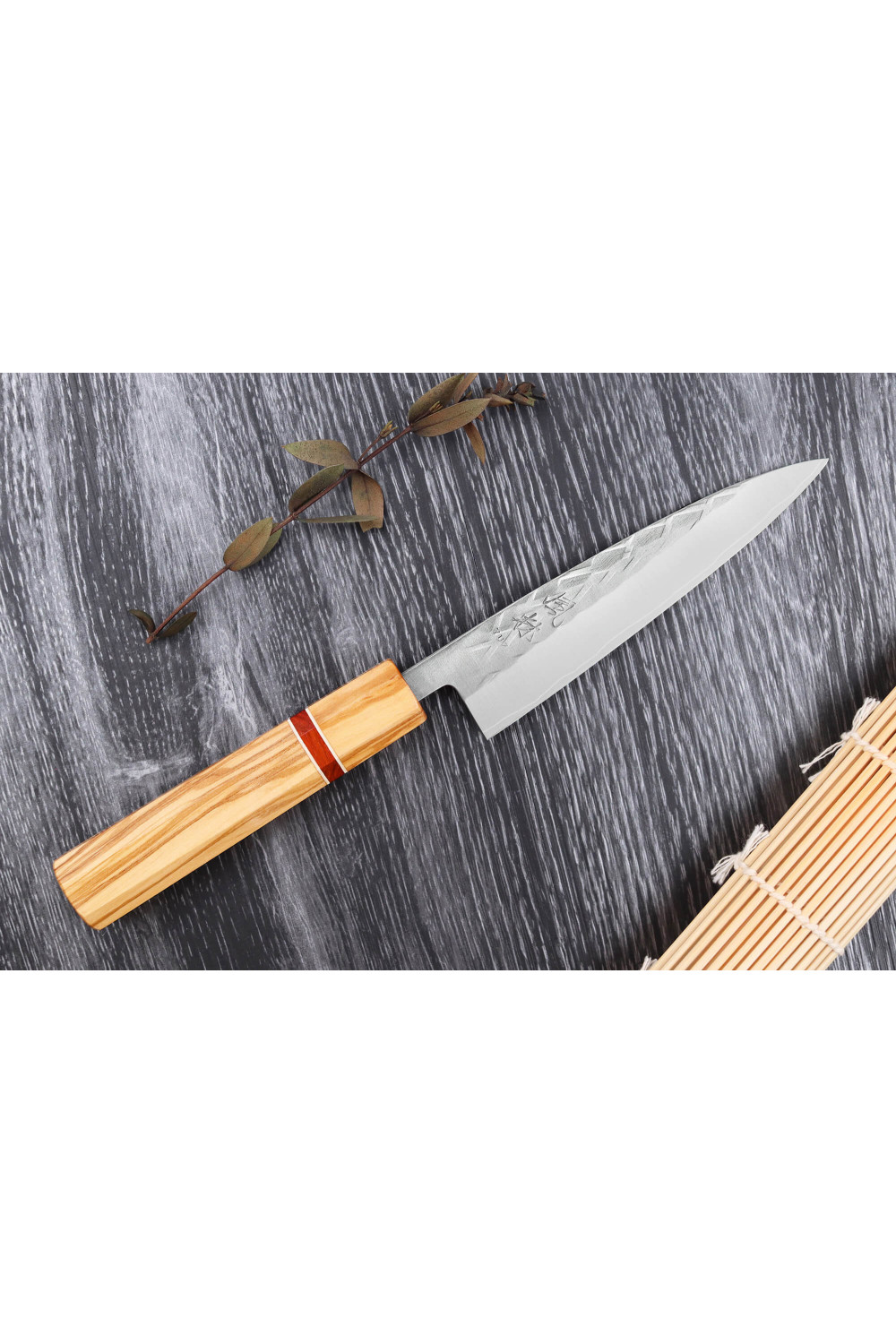
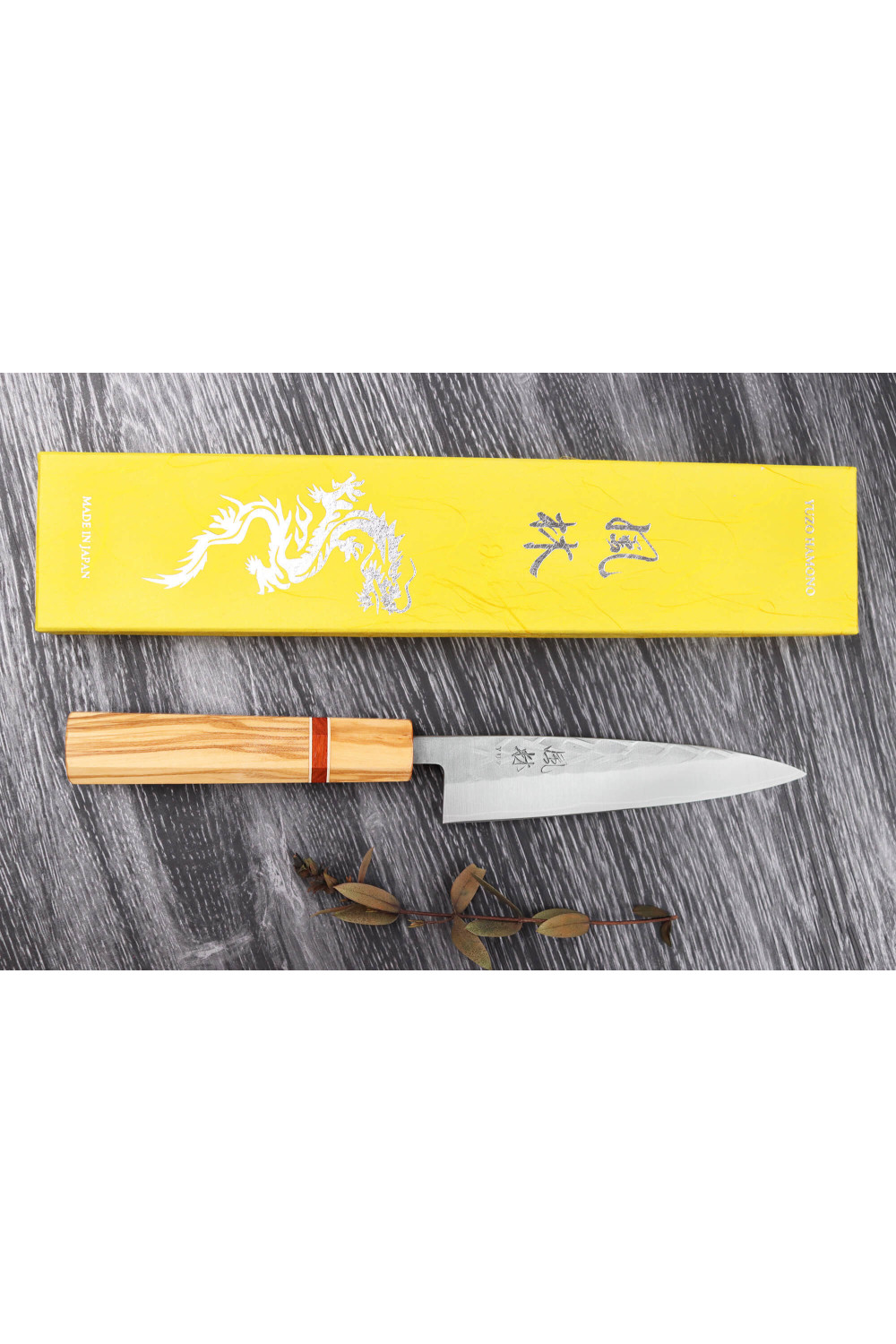
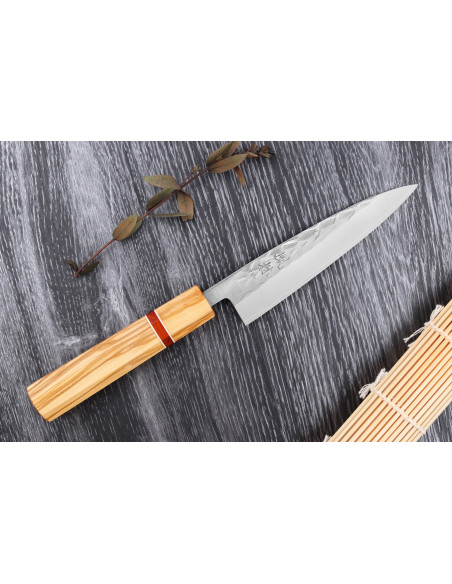
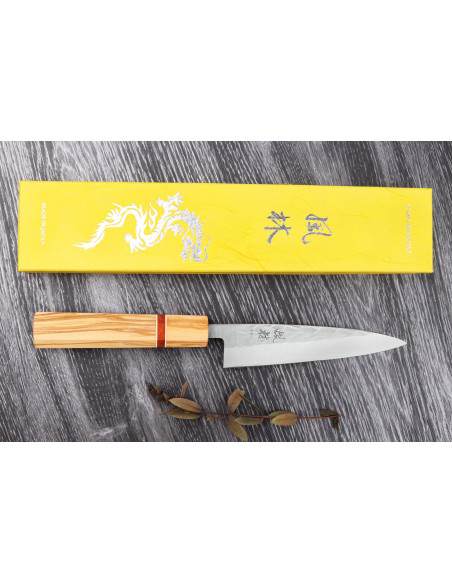
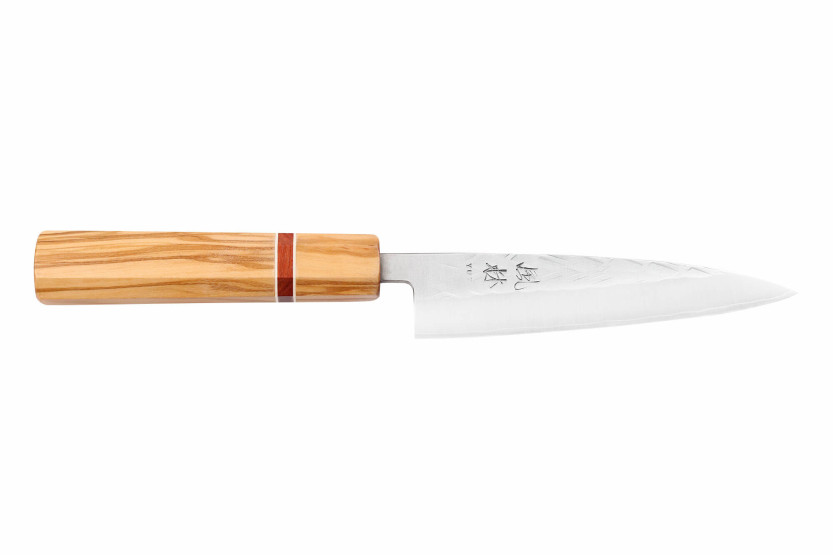
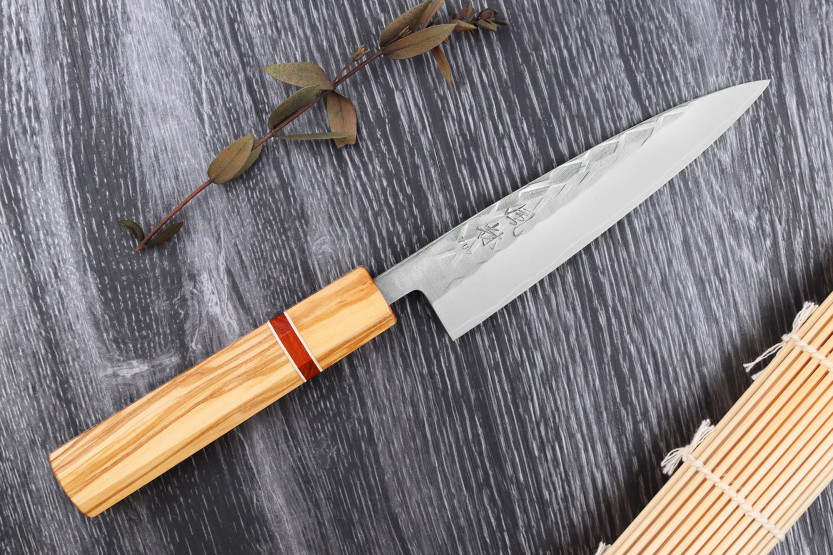
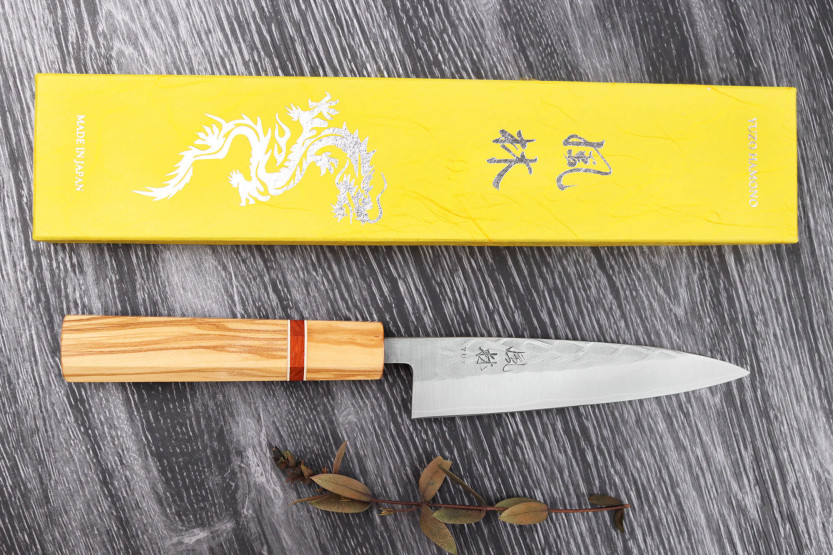
The Yuzo SLD PolishedUniversal knife is a small, versatile knife that will immediately find its place in your kitchen. It can be used to cut small to medium-sized fruit or vegetables, and you can also use it to chop small pieces of meat that don't contain bones (because the blade isn't designed to slice food that's too hard either).
It is forged by the Japanese cutlery company Tadafusa, whose workshop is located in Sanjo, Japan. It's made with know-how handed down from generation to generation, and it lets you benefit from quality materials at a reasonable price.
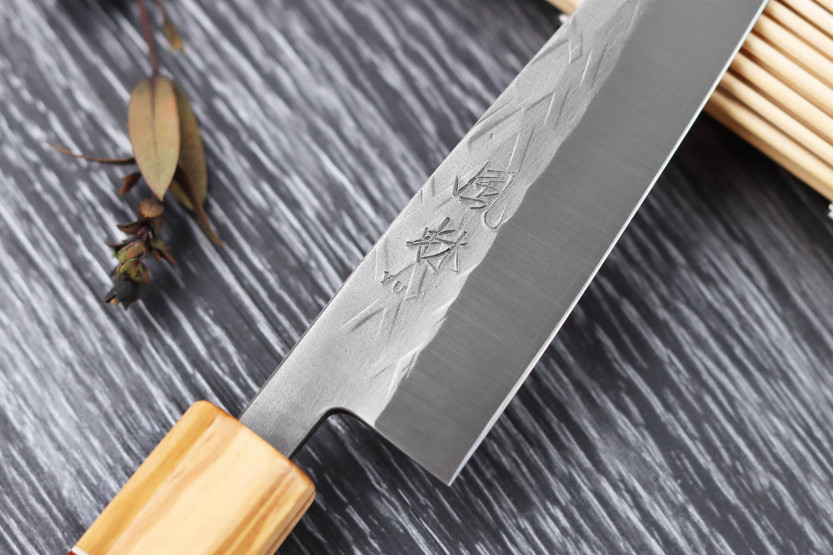
Japanese SLD steel blade with impeccable finish
The heart of this knife is made of Japanese SLD steel. This alloy was developed by the Japanese steelmaker Hitachi, whose reputation is well established both in Japan and internationally. Originally, Hitachi had created this alloy for cutting other steels through various machines (to make mechanical parts, for example). However, when the manufacturer saw SLD's highly advantageous characteristics, it decided to make it an alloy in its own right!
We can cite several of these advantages here: for a start, SLD steel has a very high carbon content (almost 1.6%), enabling it to reach 63 HRC on the Rockwell scale (bearing in mind that the average for Western knives is around 58HRC). With its improved hardness, the knife will retain an effective cutting edge for a long time to come, which is a real advantage when you're doing a lot of cutting.
In addition to its high carbon content, allaige also contains 13% chromium, the element that contributes to its resistance to corrosion. Note, however, that this steel is still considered oxidizable. In fact, it's a hybrid steel, somewhere between stainless and oxidizable, but one for which special care is taken, as if it were entirely carbon.
Finally, note that the very micro-structure of the alloy is very well balanced, and the micro-carbides can be seen evenly distributed (with the help of a microscope). This increases its resistance to wear and micro-cracking.
A layer of stainless steel is applied around the SLD steel to give it a little extra resistance to oxidation (without making it stainless, as previously mentioned). This extra layer also balances the blade and makes it more "flexible". Strictly speaking, the knife doesn't become flexible, but it is more resistant to shocks (because if steel is too hard, it breaks more easily). The fact of having a blade with 3 layers of steel (a core surrounded by a protective layer) is typically Japanese. This is the San Maï structure (which means "3 layers" in Japanese).
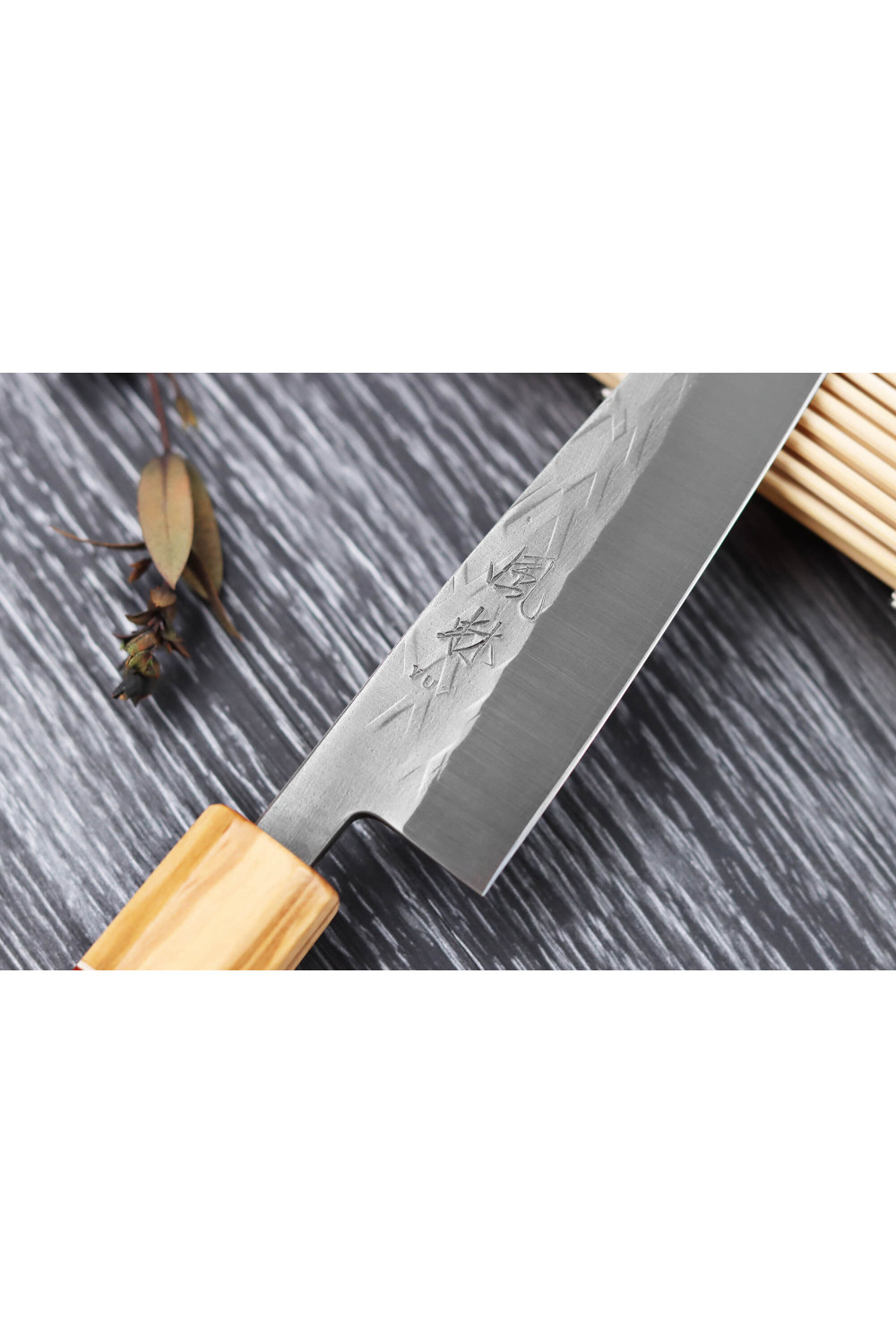
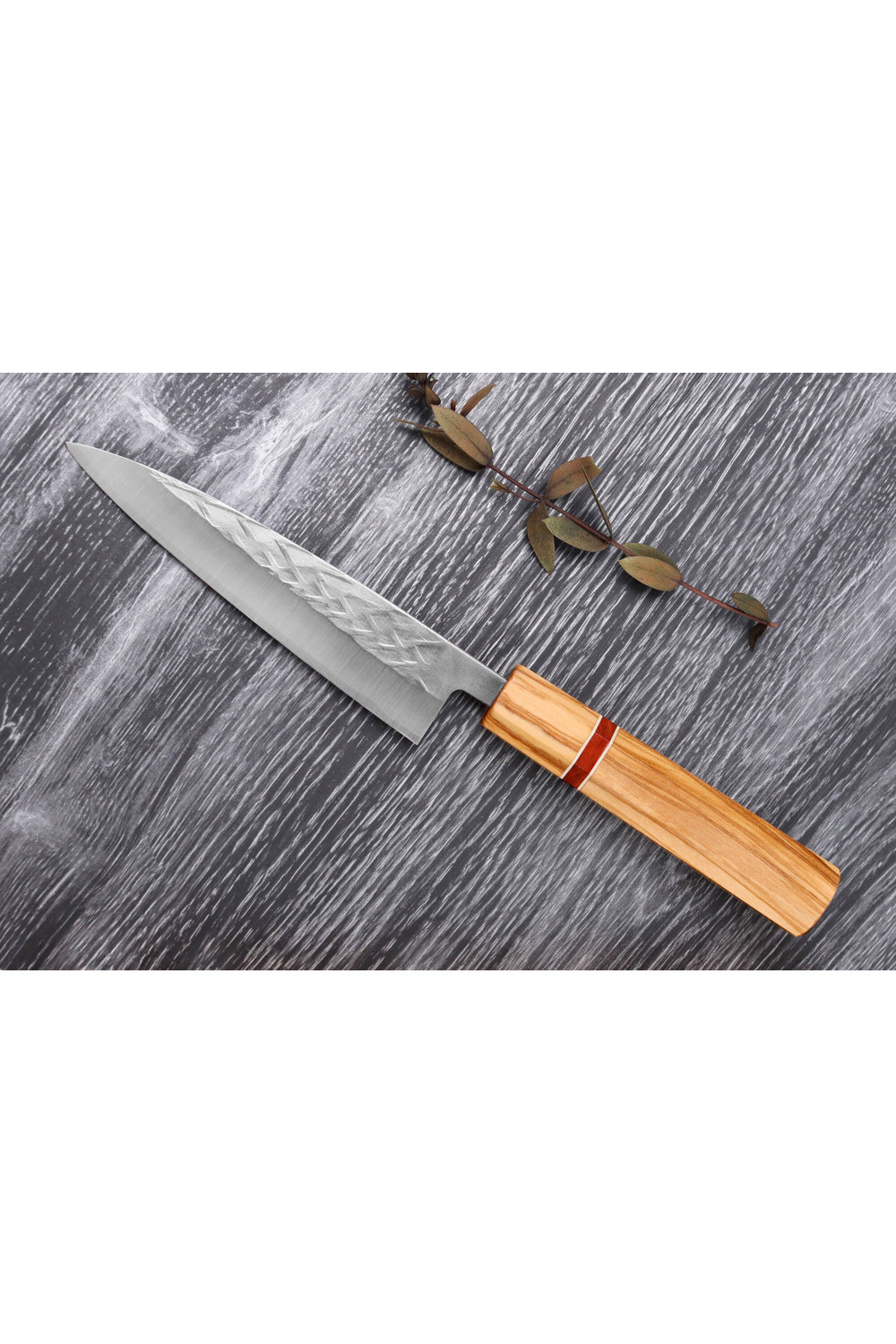
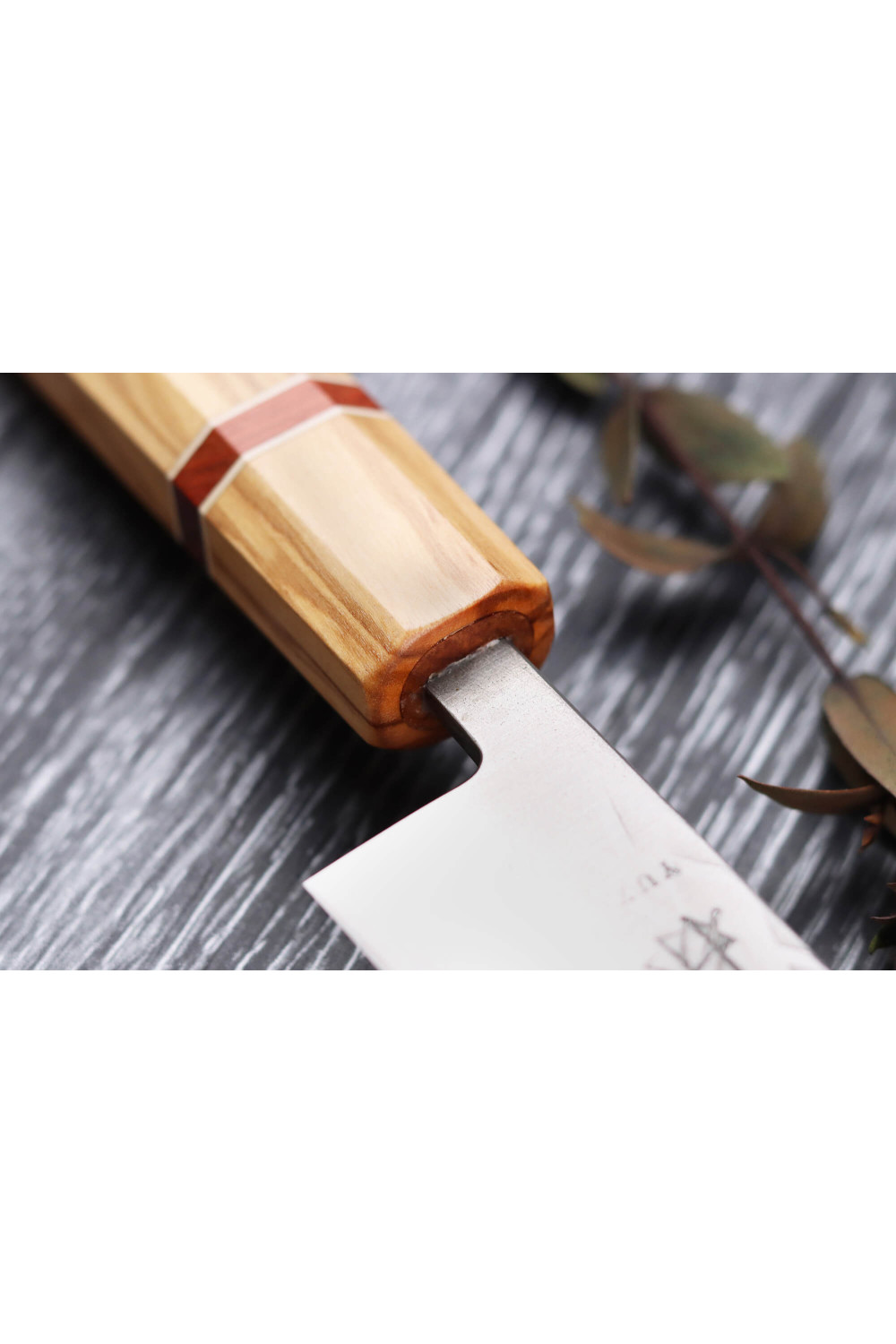
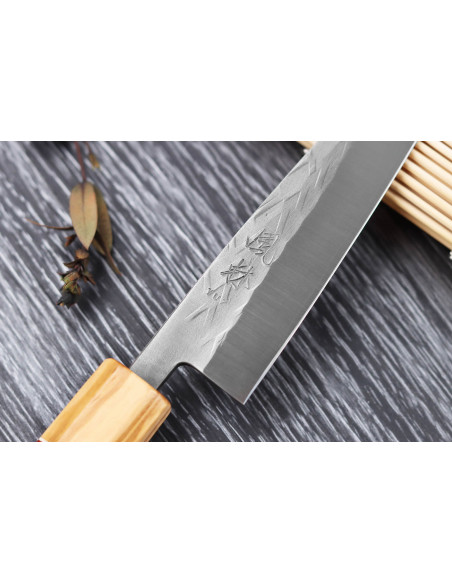
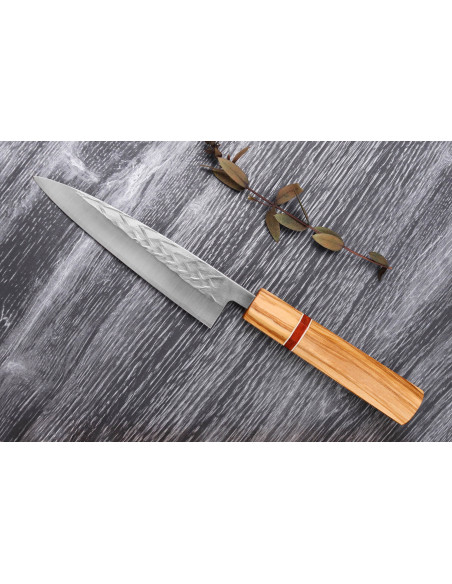
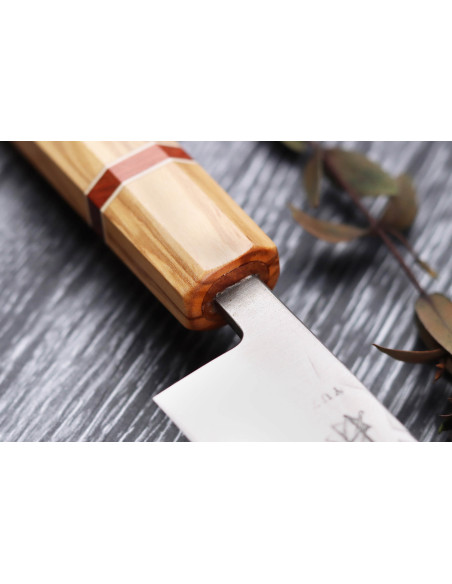
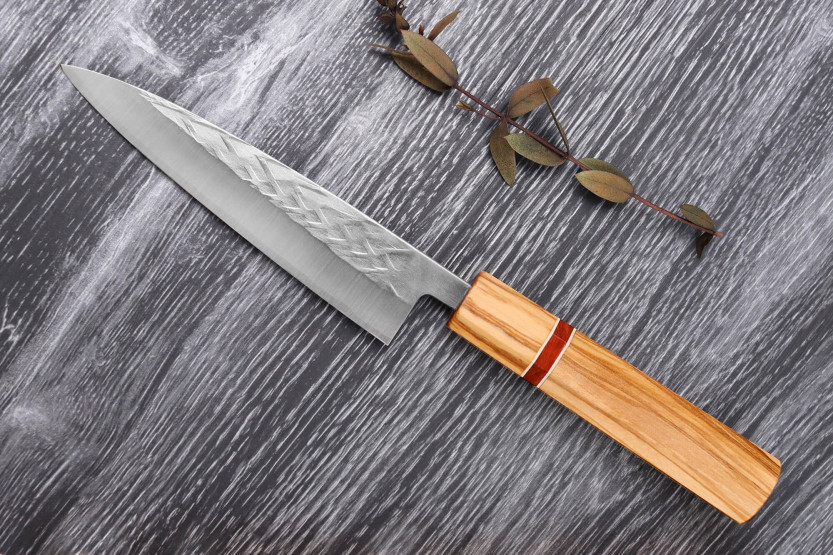
In addition to its technical advantages, the blade is highly aesthetic thanks to its hammering with original criss-cross patterns, to give it even more character. The hammering is enhanced by a polished finish, which also protects the surface of the blade and makes it less porous (the latter is smoothed).
An olive wood handle for all cooks
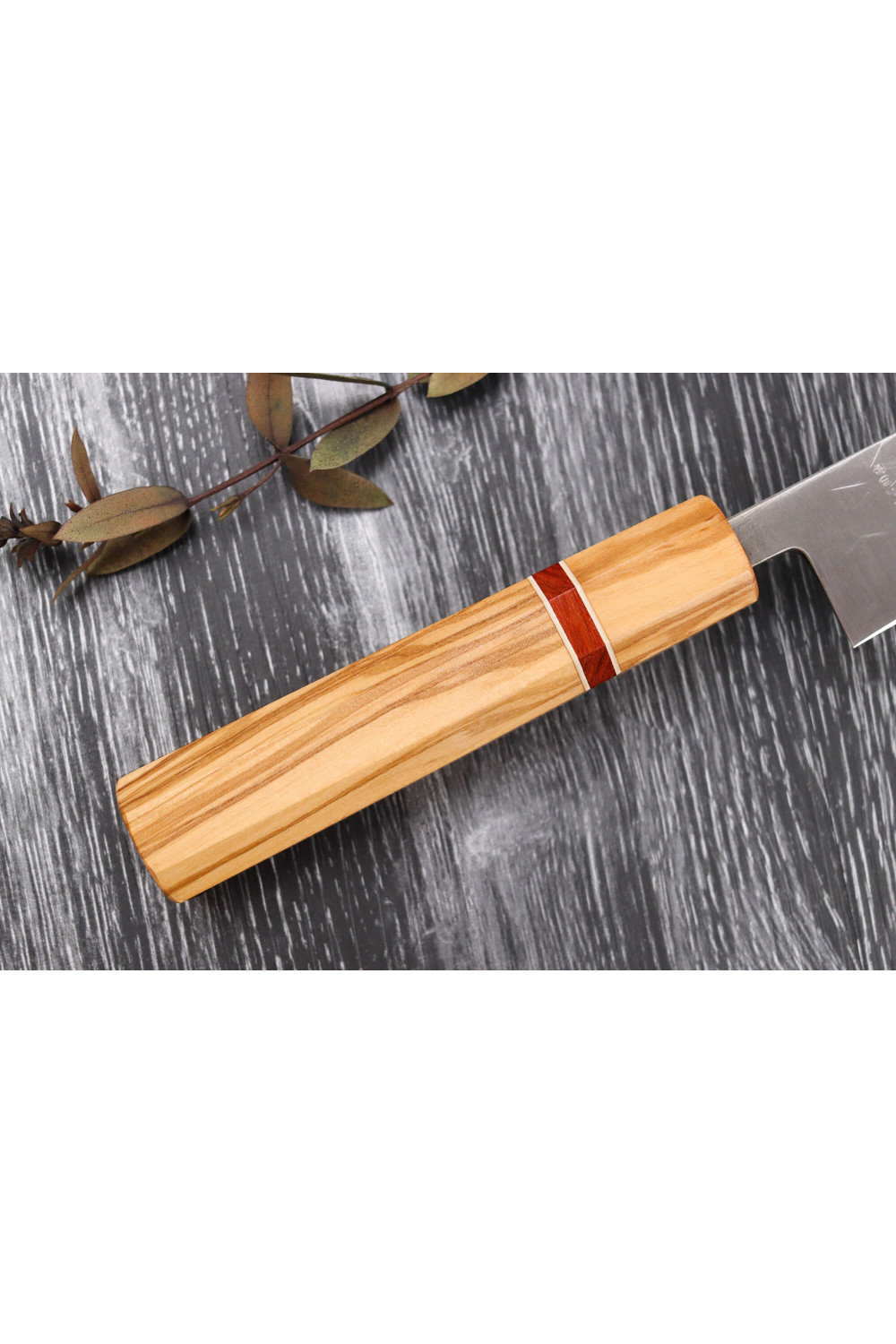
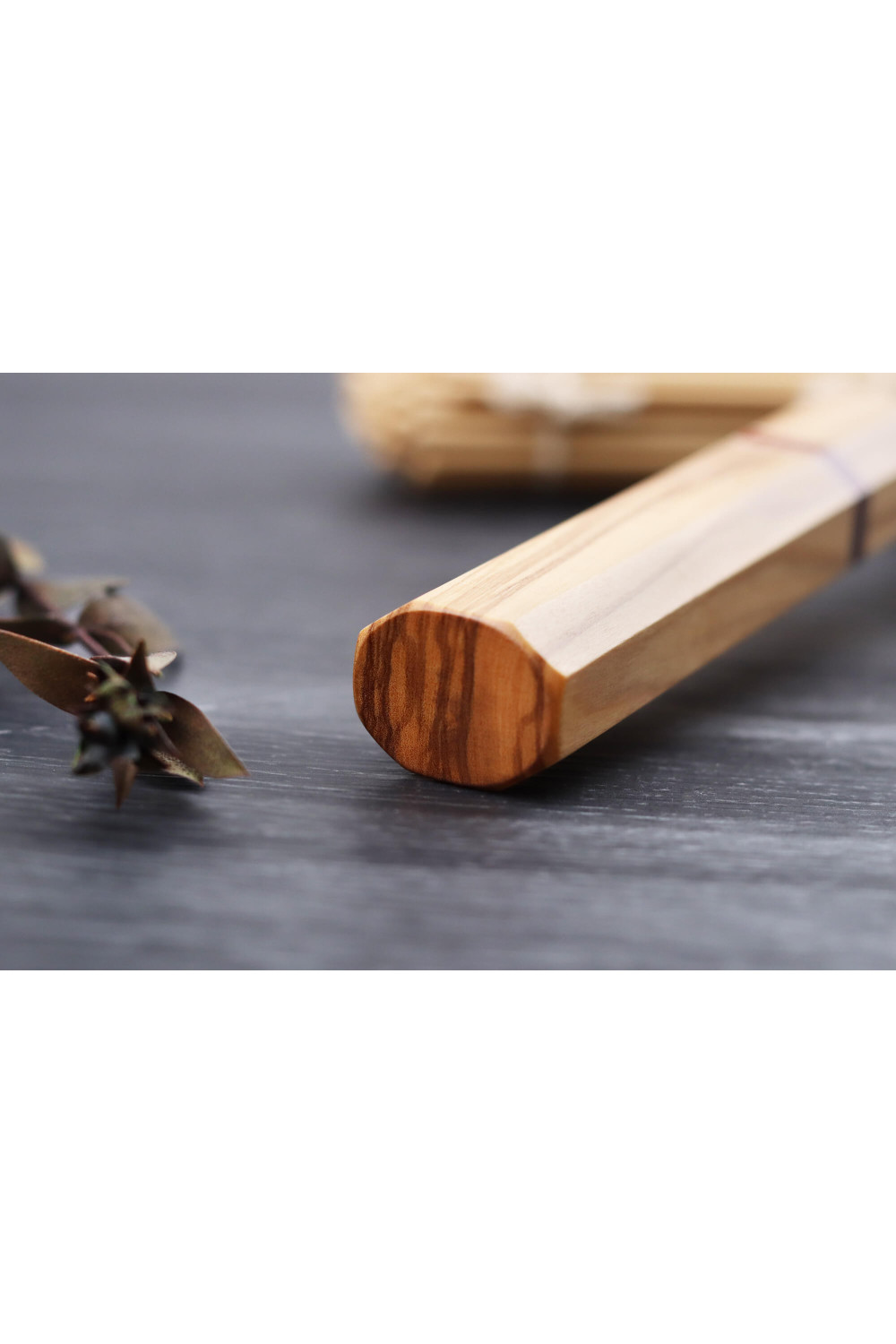
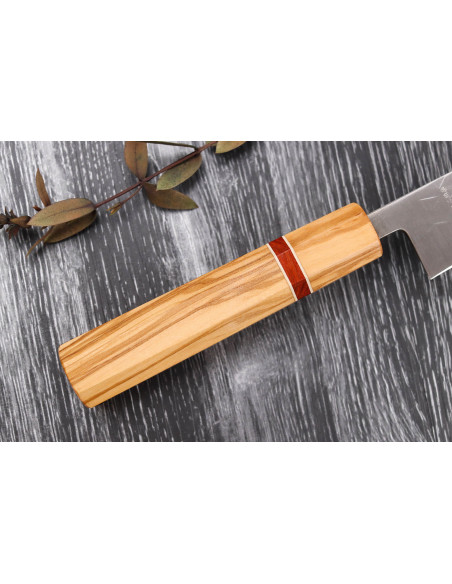
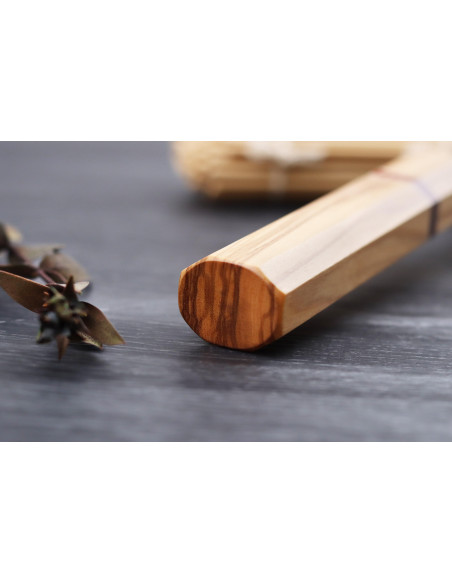
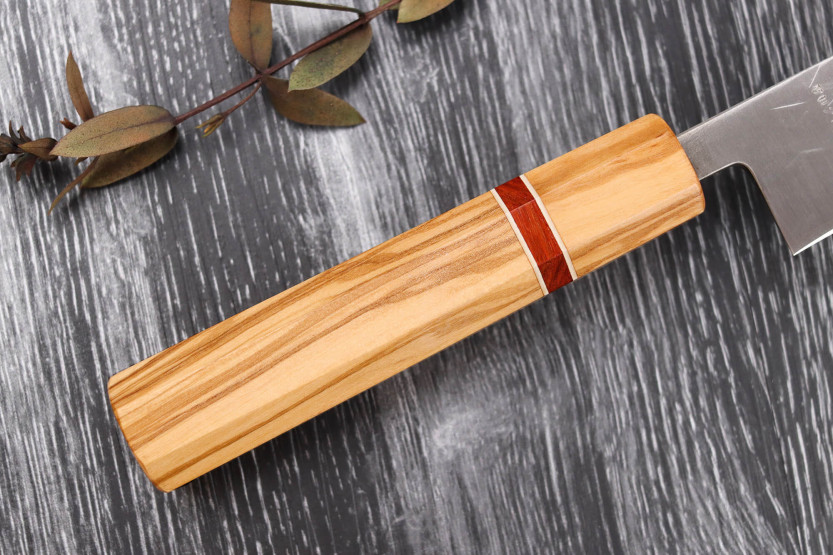
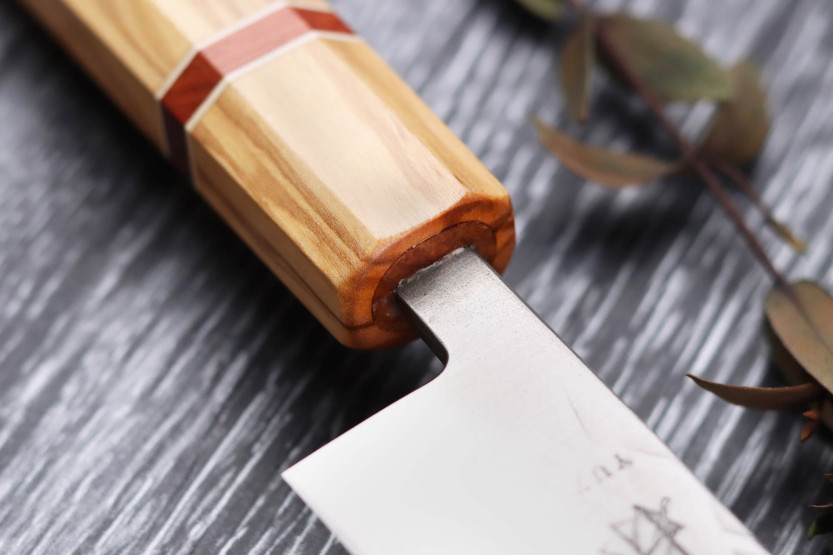
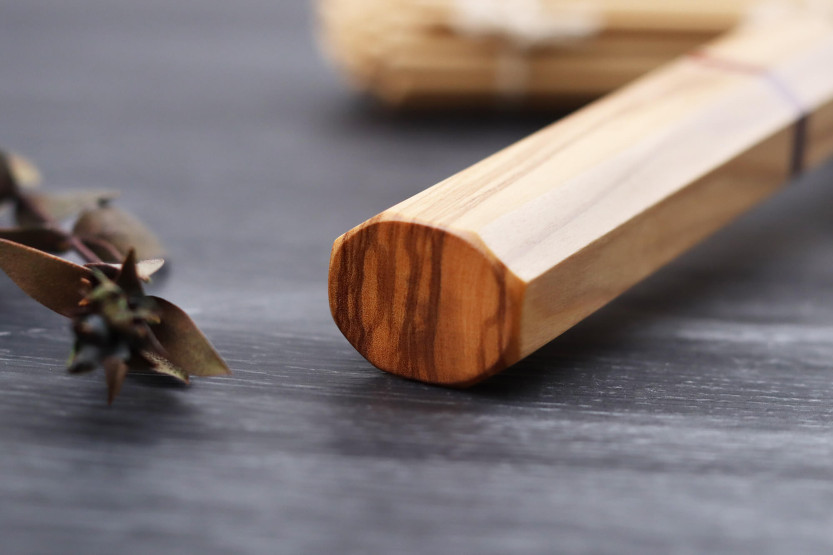
In fact, the handle is made from beautifulolive wood, a durable species that is pleasant to the touch and therefore to use. This wood, with its distinctive scent, has a grain that is unique to each model (natural material). This wood is also dense, making it more resistant to impacts. This capacity also makes it more waterproof than average, so it's better equipped to withstand humidity. We also appreciate its antibacterial properties.
With its octagonal shape, this handle is suitable for both right-handed and left-handed cooks.
It is complemented by an olive-wood bolster.
Between the two olive sections is a sequoia ring. This wood is resistant to humidity and bacteria. It is durable and therefore a good choice for a kitchen knife.
Finally, two elegant white micarta edgings surround it.
To fill the space where the blade fits into the handle, wood pulp has been integrated into the interior.
Caring for my Japanese knife
As we've said, SLD steel is a hybrid steel with a tendency to oxidize. It is therefore important not to leave it in contact with moisture. Note that over time, the blade's color may change, and this is perfectly normal! In fact, the acidity of the food being cut and the humidity in the air can have an impact on its alloy, which will then react naturally.
To preserve it at its best, wash it by hand, using a sponge and a mild detergent. Don't put it in the dishwasher, or soak it in your sink. When you've washed it, wipe it dry and store it in a dry place.
Find all Yuzo Japanese knife ranges here!




 By buying this product you can collect up to
.png)