
Your cart
There are no more items in your cart
Smooth, toothed or serrated knife blade: which one to choose?
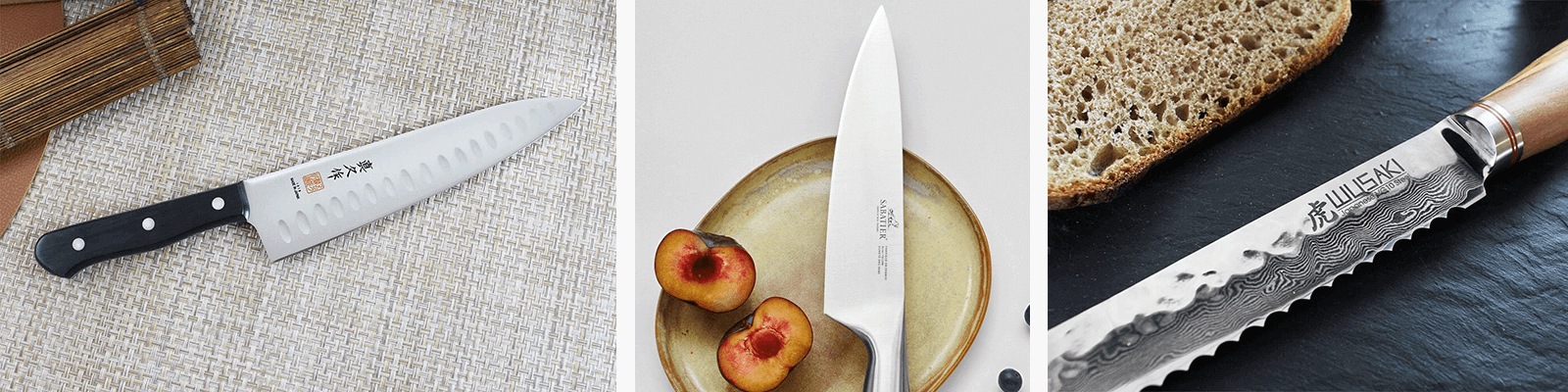
The right blade for every need!
Food preparation requires a wide variety of tools. As a result, kitchen knives need to have a variety of blade shapes. We can easily count on 3 major blade varieties:
Smooth blades :
The smooth edge of the blade produces an absolutely clean cut, with no fraying. Smooth-blade knives are used for cutting both hard and soft materials: meat, vegetables, fruit. Smooth edges are also essential for peeling:

Toothed or serrated blades:
The regular serration of the blade facilitates cutting initiation and the cutting of thick-skinned or hard-rinded products, such as bread, tomatoes and rind. There are also a few small variations, such as the micro-serrated blade developed by Wüsthof on its latest bread knife, visible here. To date, it's the best bread knife we've tested.
 Wusthof Classic" width="460" height="89" />
Honeycomb or fluted blades:
When slicing with this type of blade, air cushions form in the grooves of the blade, preventing the cut material from sticking to the blade. This type of blade is recommended when very thin slices are required, such as for ham or salmon. Honeycombed blades are very common on Santoku models.



