A Japanese chef's knife forged by fire
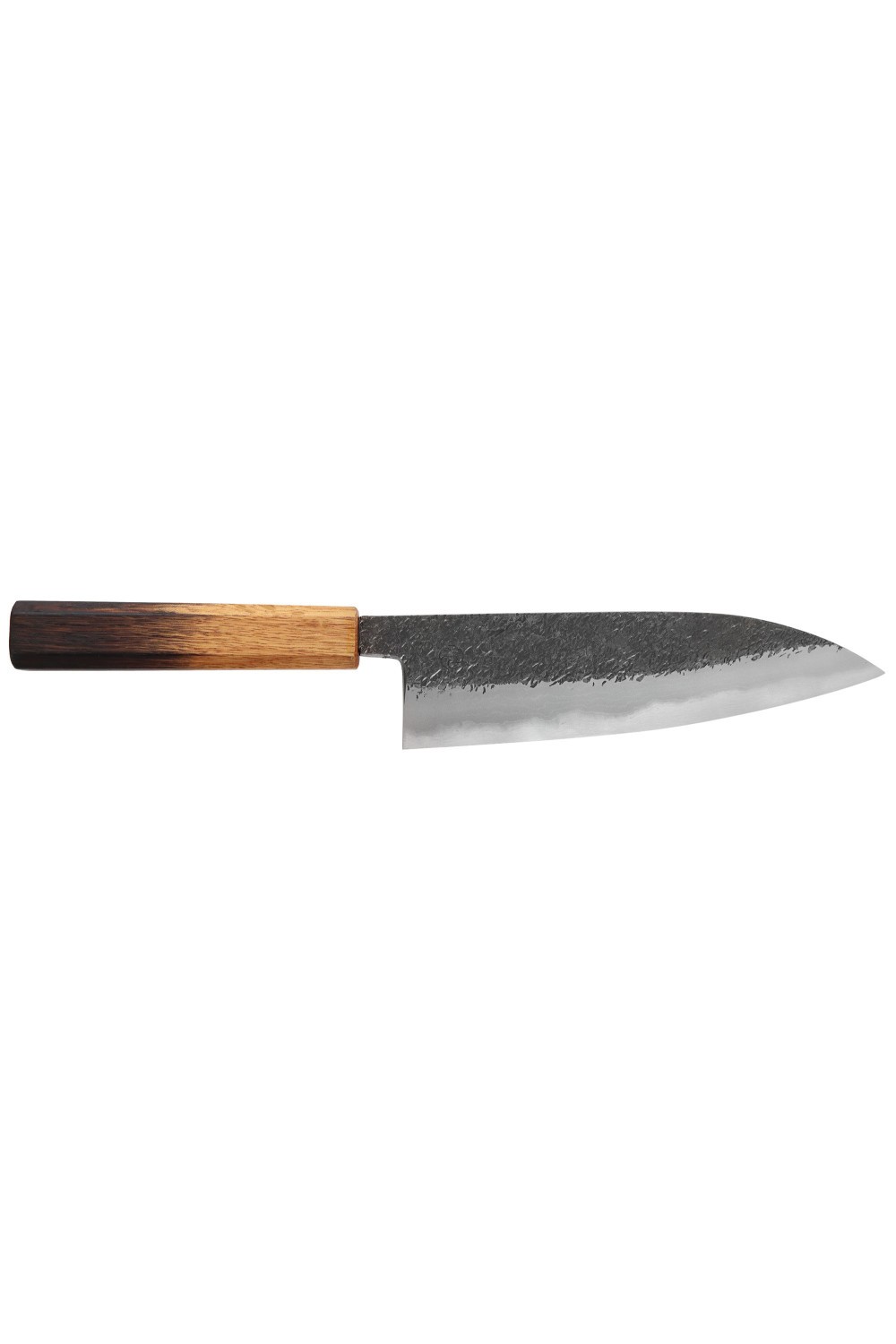
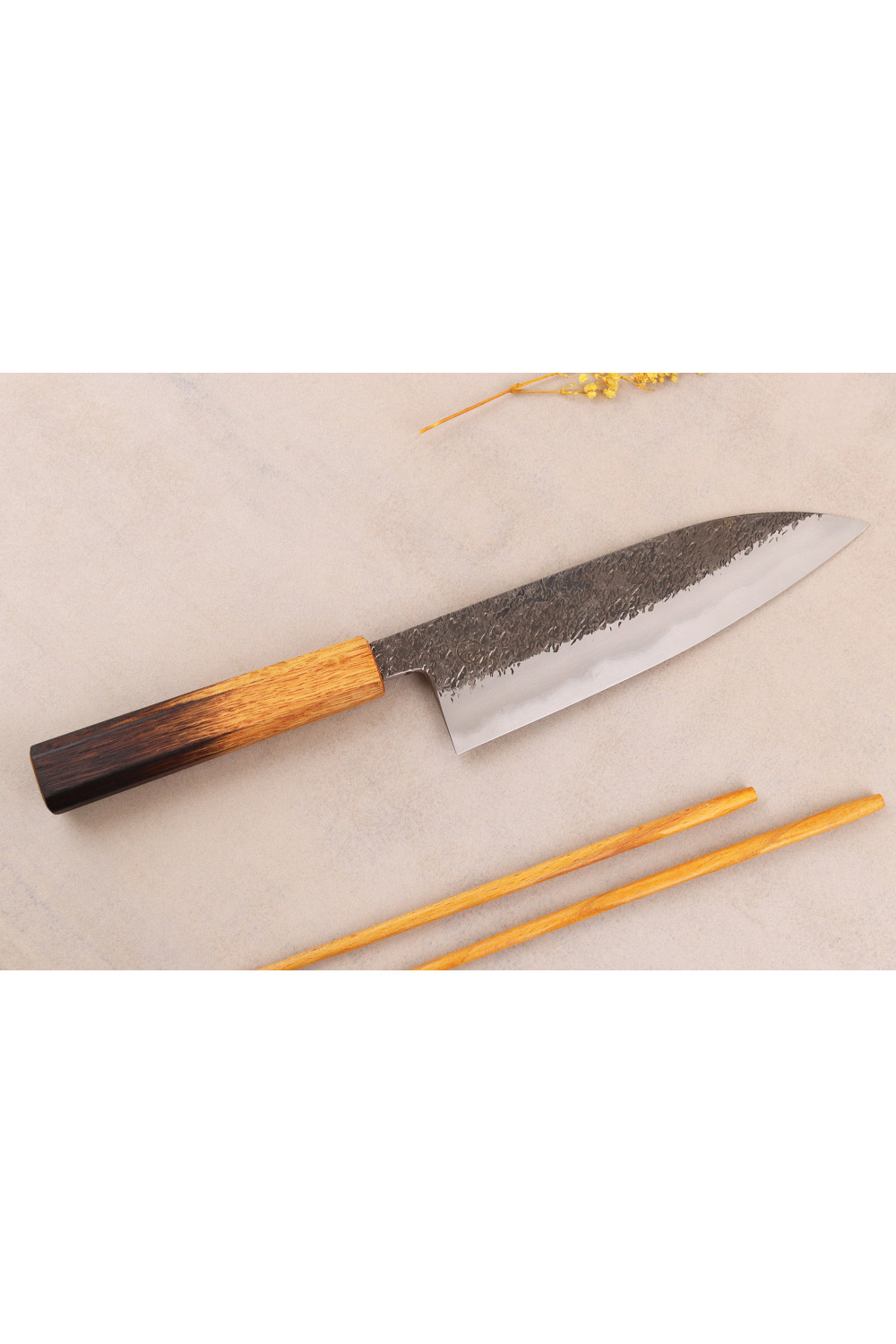
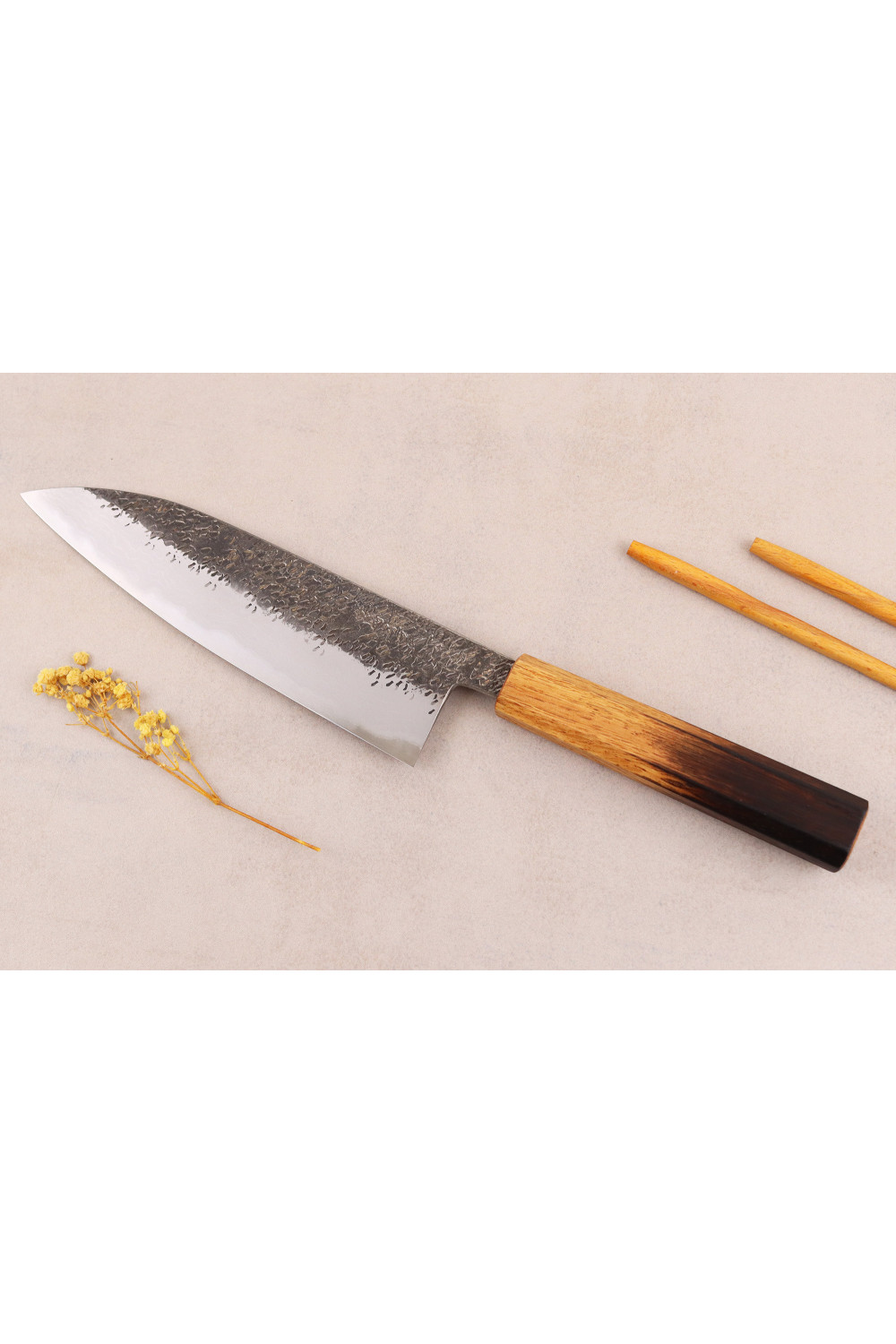
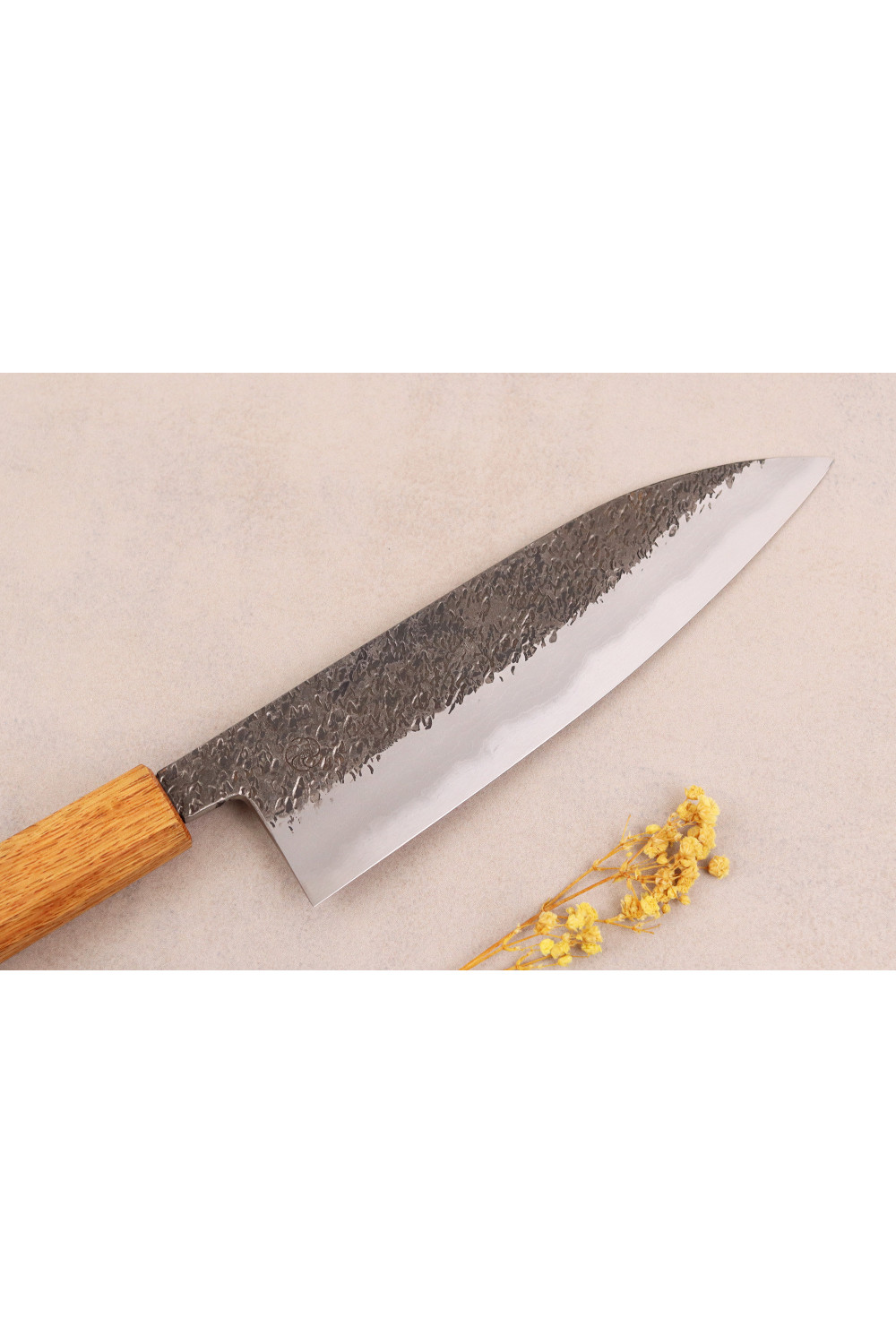
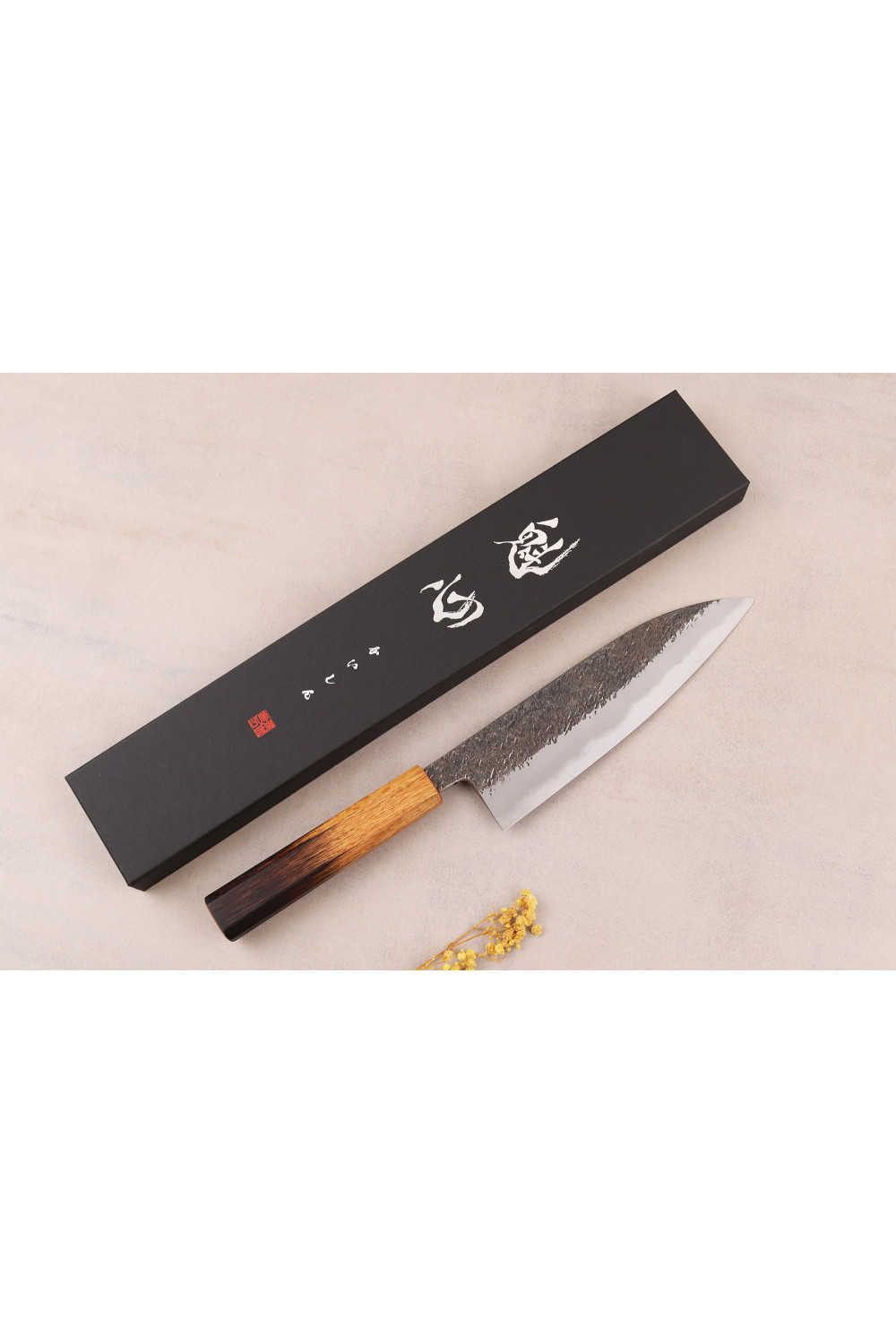
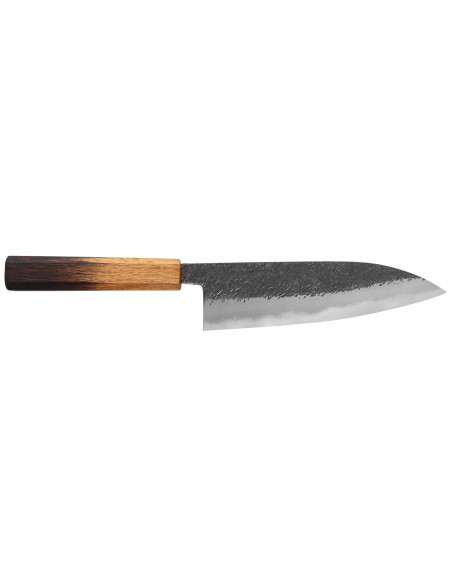
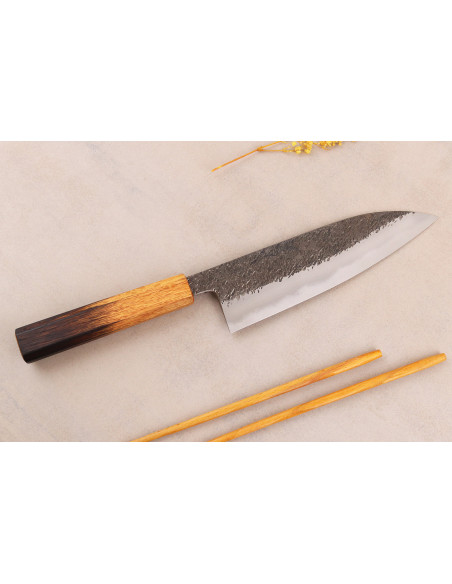
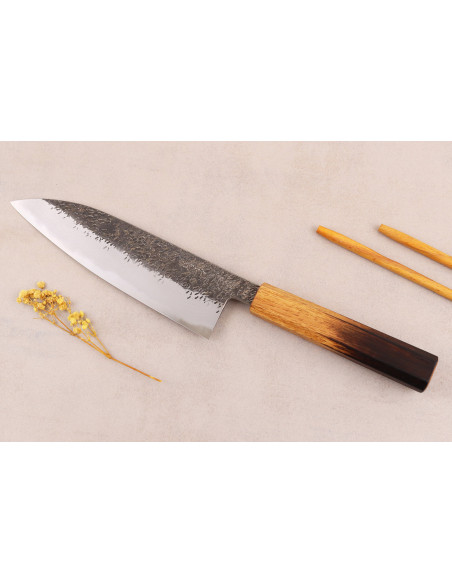
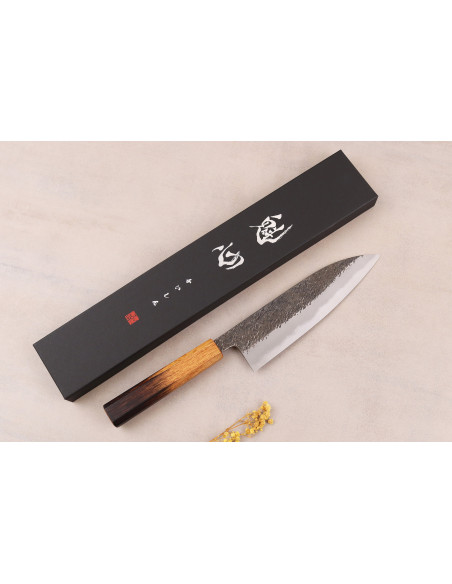
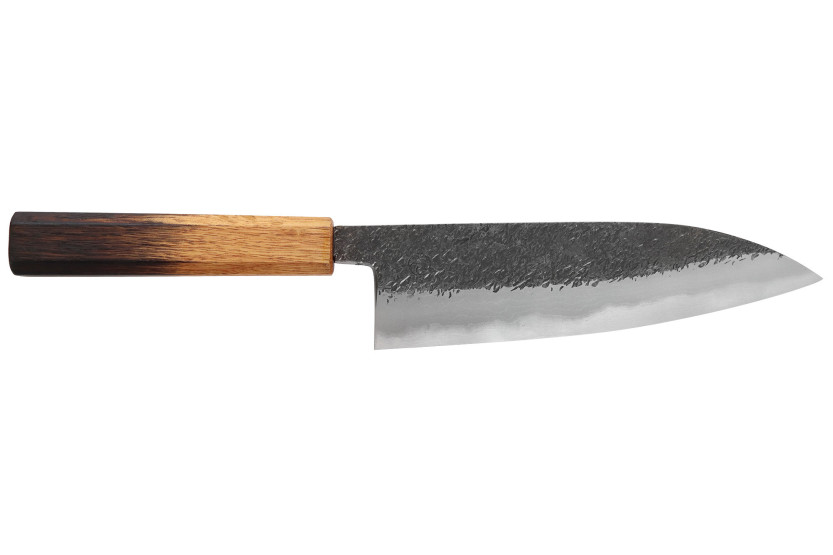
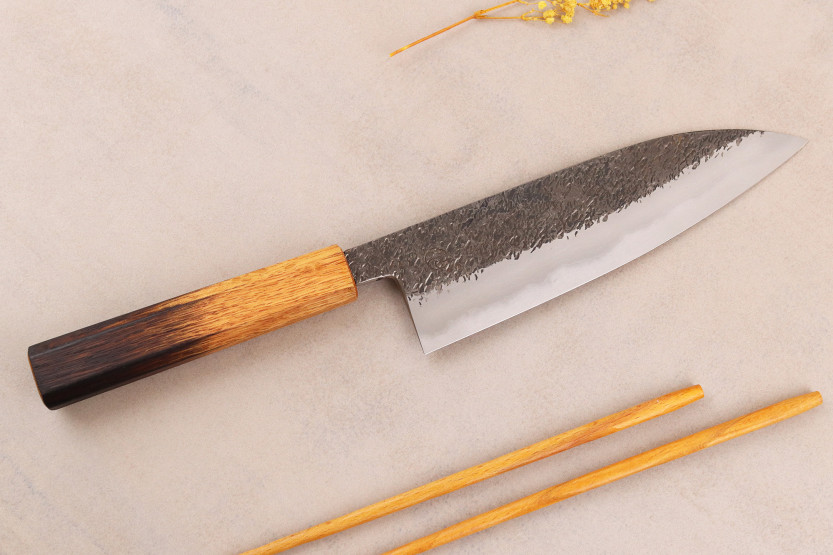
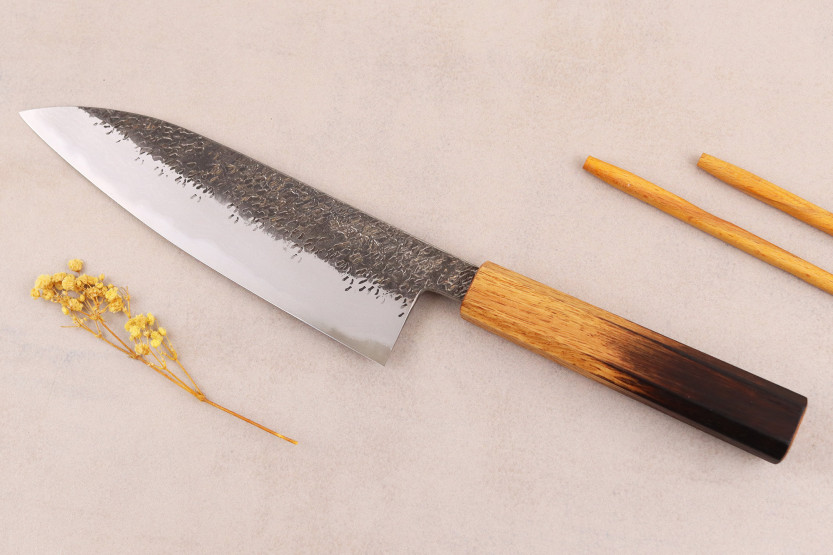
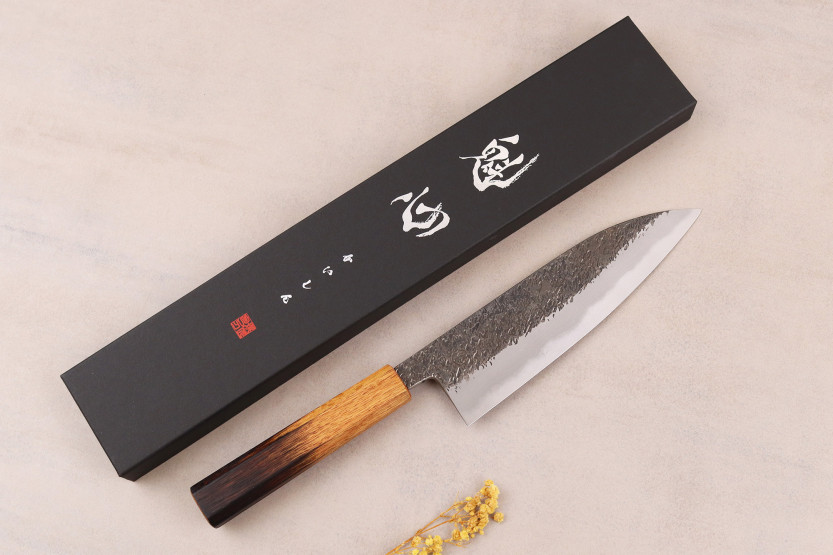
The Miyazaki Kajiya Tsubaki Damascus BS2 Kurouchi Tsuchime Japanese chef's knife bears the marks of its craftsmanship down to the finest details! Crafted by blacksmith Haruki Miyazaki on the Goto Islands in Nagasaki Prefecture, it features an 18-cm blade with spectacular hammered patterns, reminiscent of volcanic rock shaped by the elements. Beneath this raw surface lies Aogami #2 Japanese steel, renowned for its cutting qualities. With its slender silhouette and charred oak handle, this handcrafted 18-cm Japanese chef’s knife combines the artistry of handcrafted work with the precision sought after in Japanese cutlery!
Aogami #2 steel enhanced by a wild hammered finish
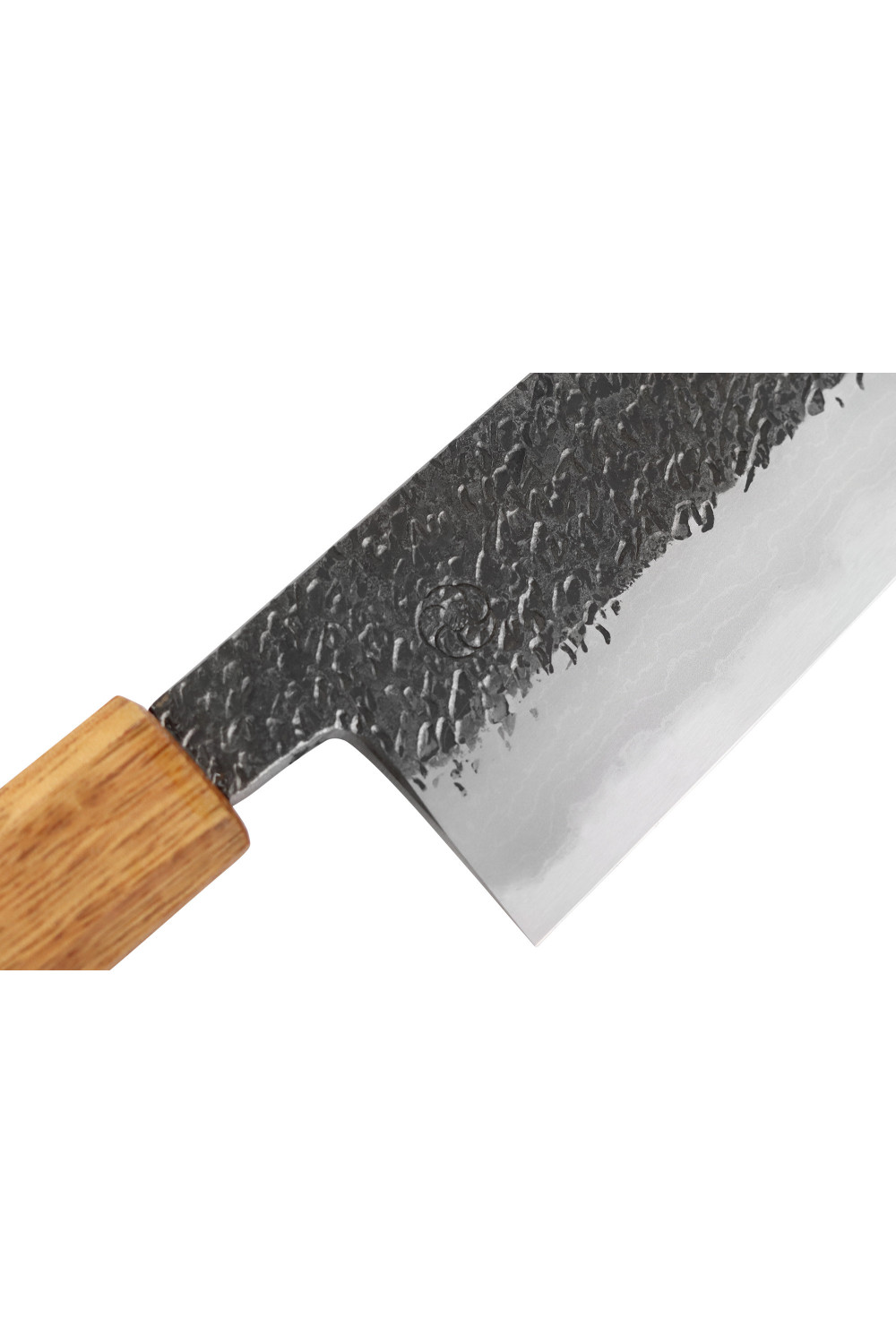
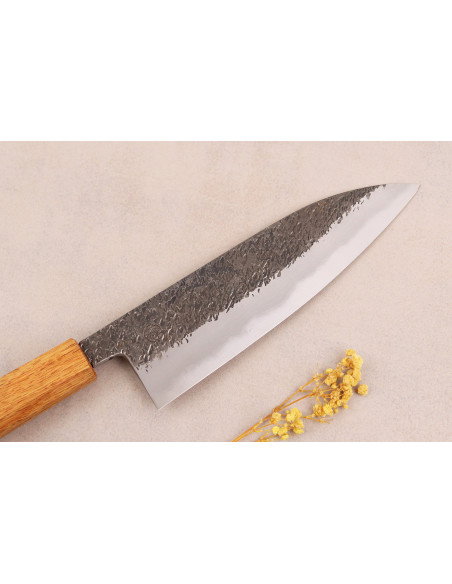
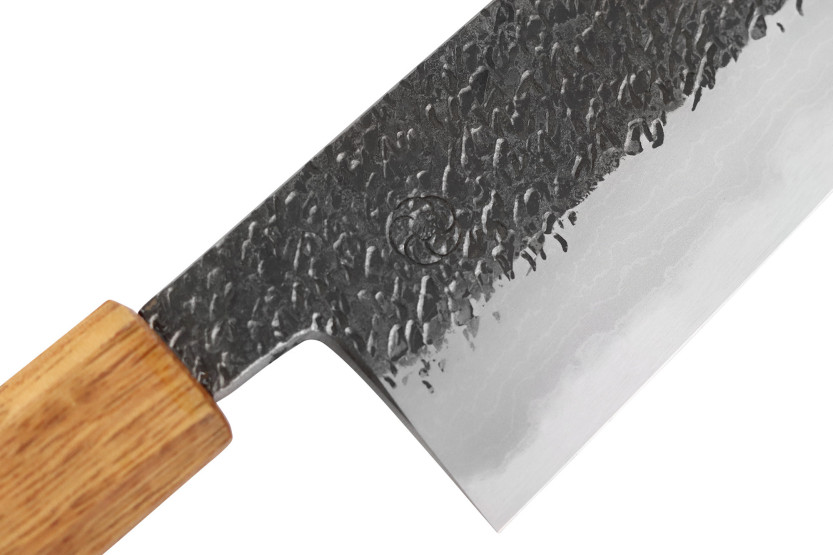
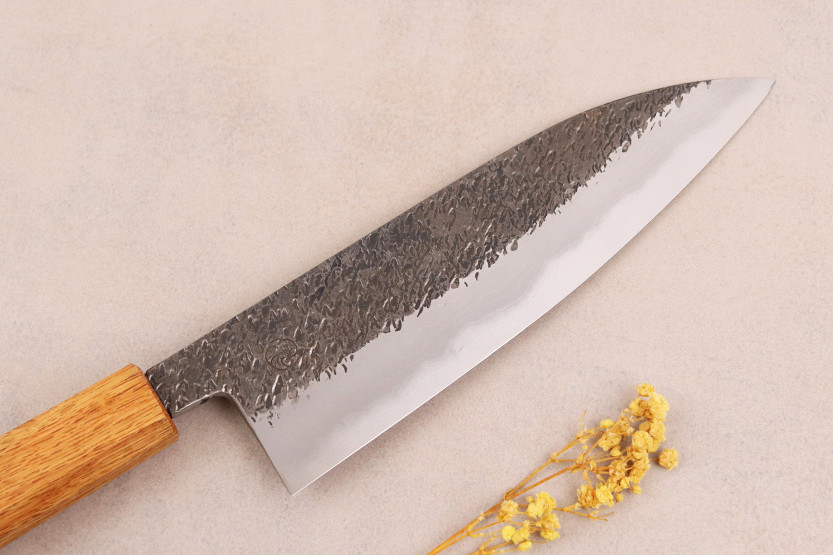
The 18-cm blade features a damascened structure, achieved by layering multiple sheets of steel to create distinctive patterns on its surface. Its core is made of Aogami #2, also known as Blue Paper Steel #2, a Japanese high-carbon steel with a carbon content of approximately 1.2%. It is prized for its ability to achieve a particularly fine edge and retain a sharp cutting edge. The outer layers of softer steel surround the core and contribute to the blade’s structure. The damascene work adds an extra aesthetic dimension, with natural variations that make each piece unique.
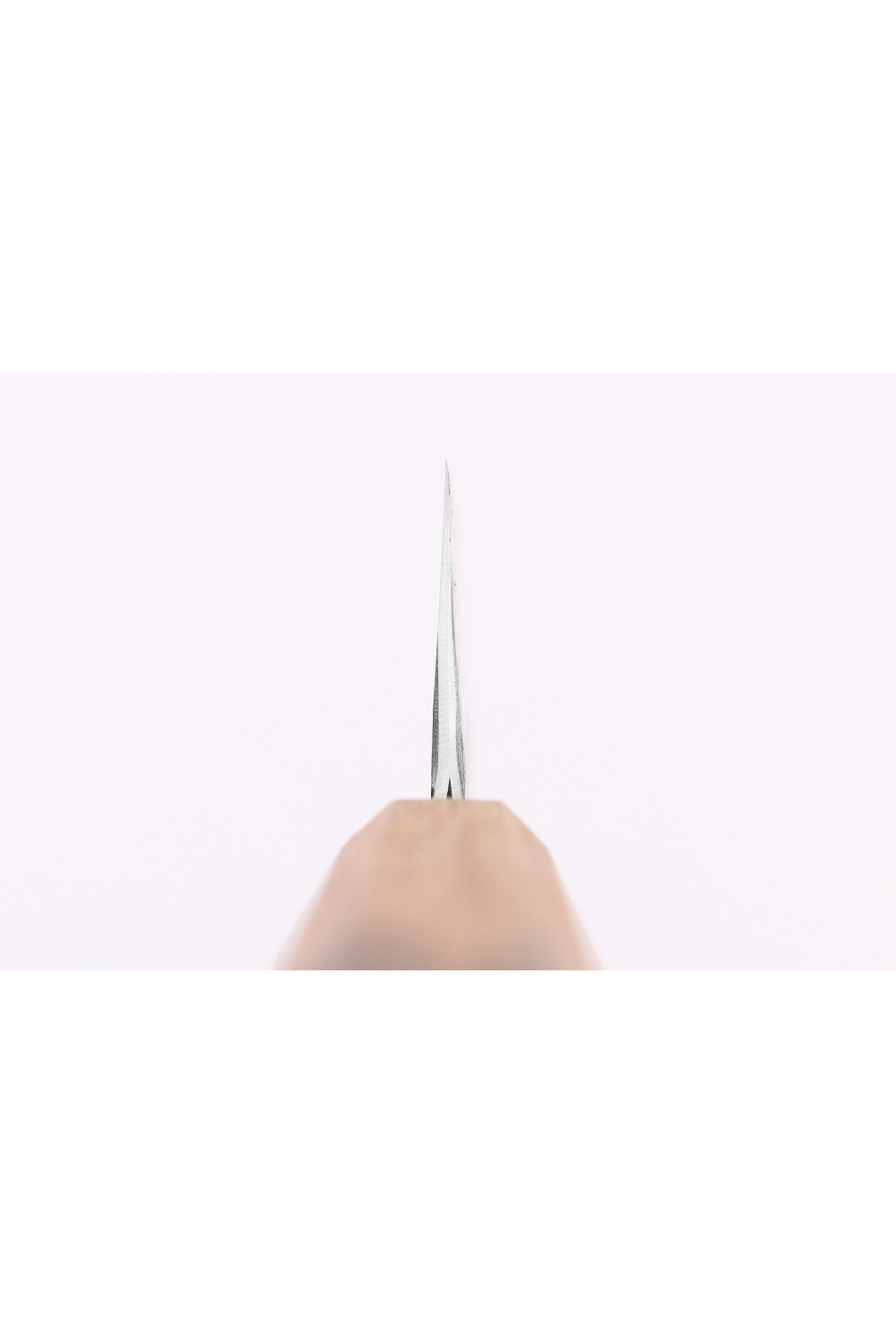
With a Rockwell hardness of 62 to 63 HRC, this knife offers excellent edge retention, ideal for performing a series of tasks with consistency. Its flat grind allows for precise cutting through food and is well-suited for fine cuts. The 18-cm length provides an excellent balance between usable length and maneuverability: it allows you to slice a boneless cut of meat, julienne vegetables, or prepare fish with controlled movements.
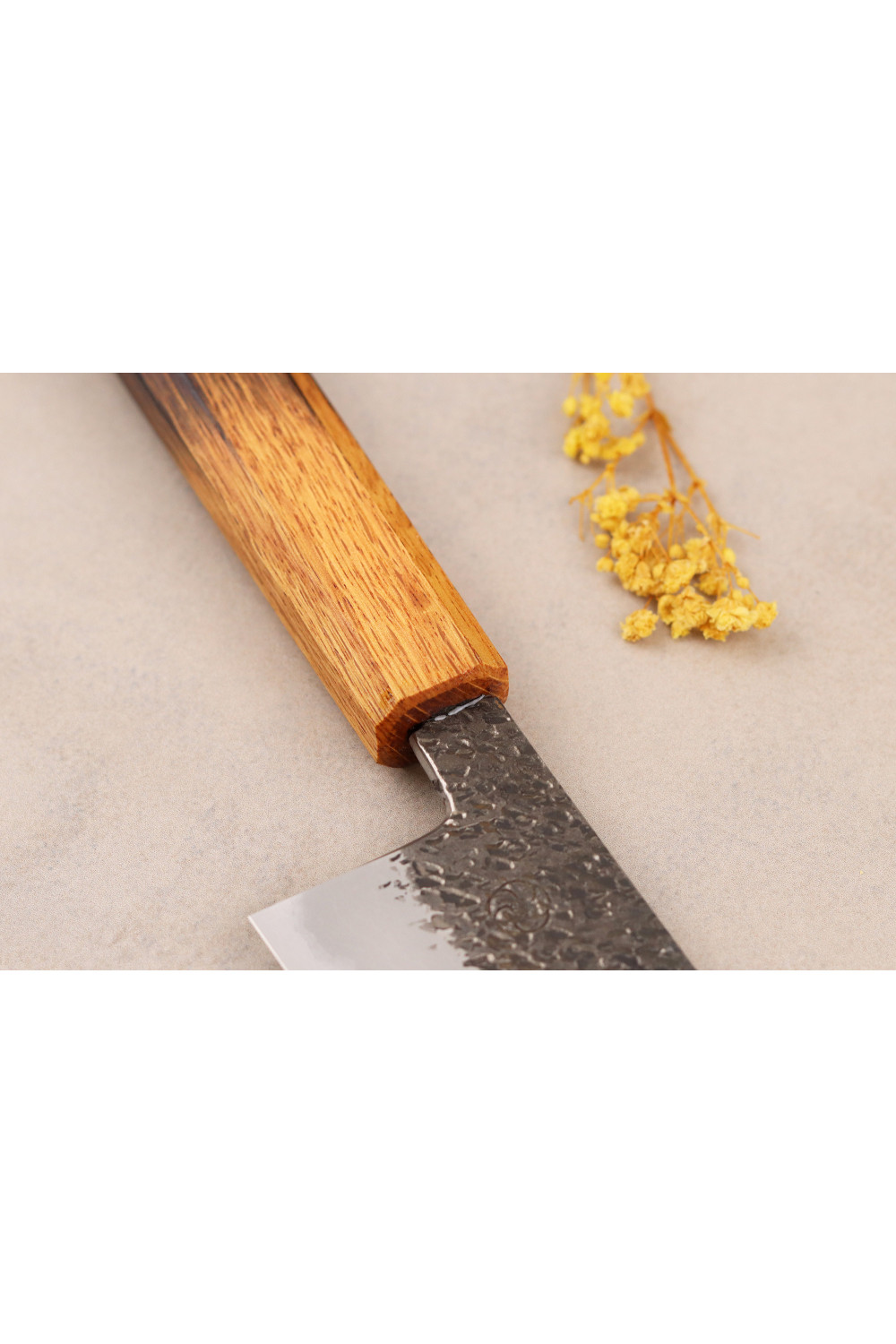
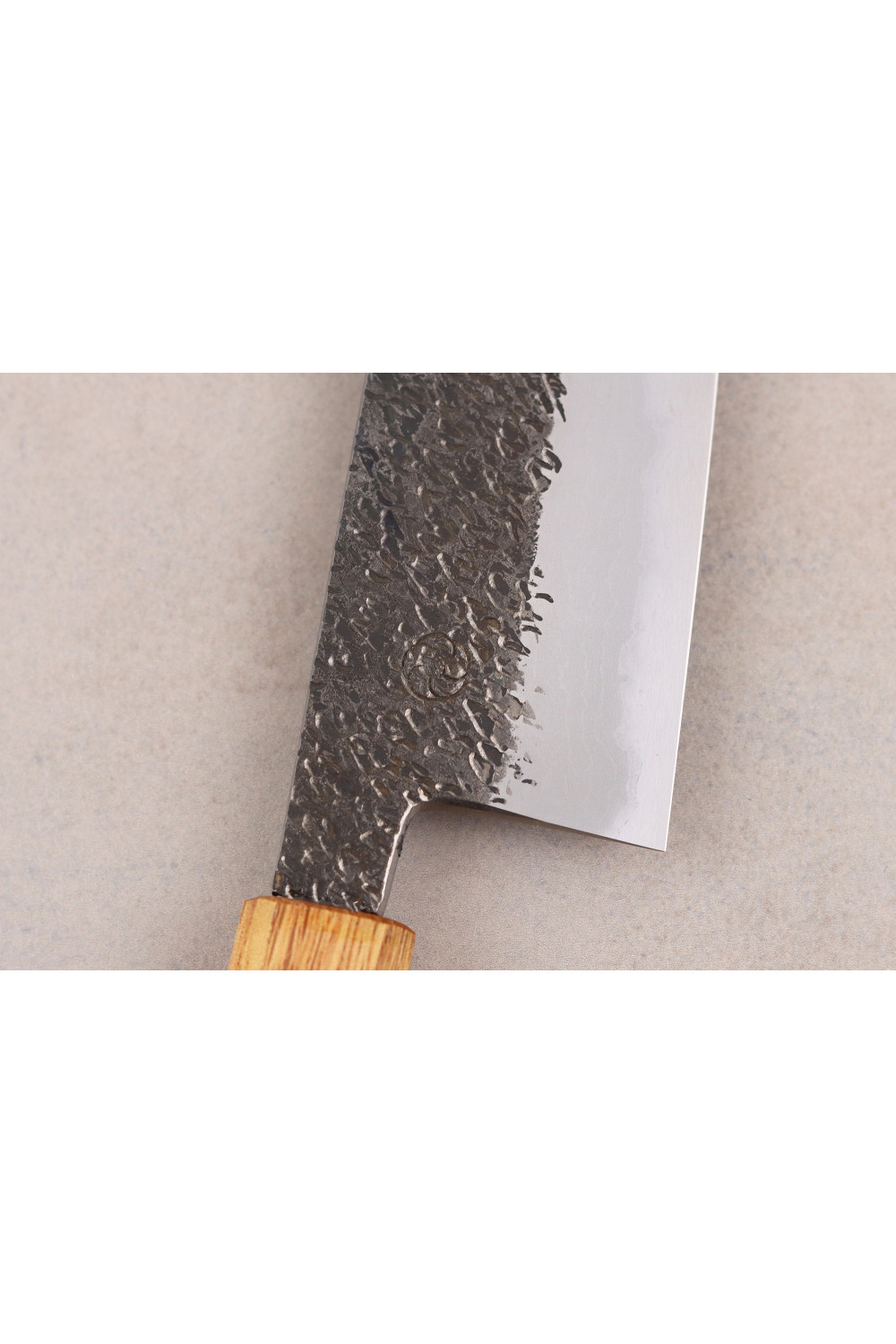
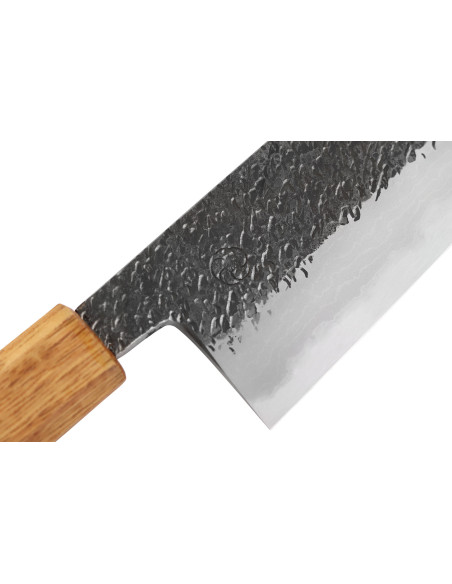
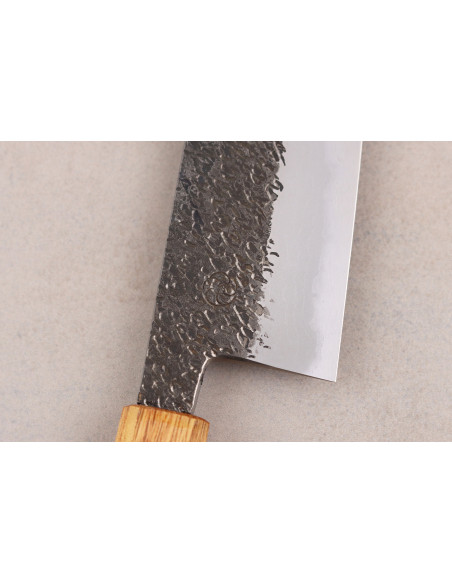
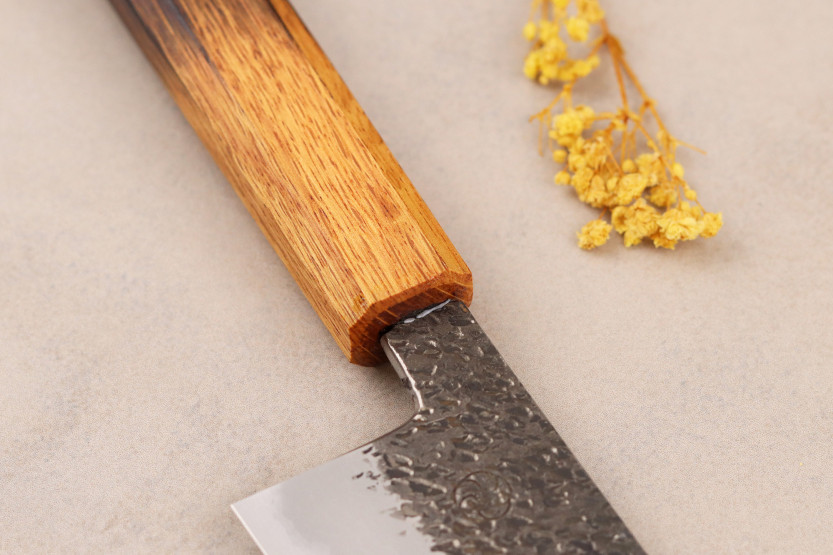
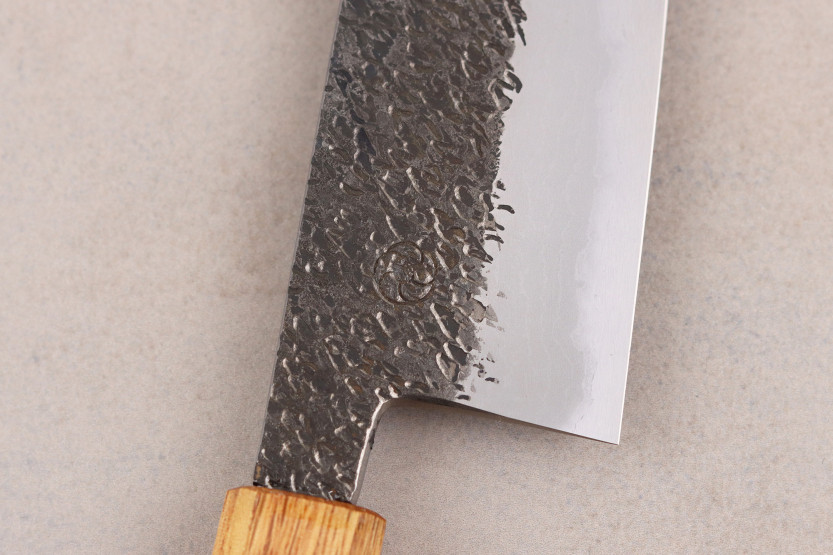
The upper part of the blade features a Kurouchi finish—a dark layer resulting from the forging process—which contrasts with the lighter lower section. It is adorned with a deeply textured Tsuchime hammered pattern, consisting of irregular, tightly packed indentations resembling mineral scales. Their relief resembles the surface of a volcanic rock, where every irregularity seems to have been sculpted by fire. Much like Japan’s rocky coastlines battered by waves, the indentations follow one another without ever forming a perfectly repetitive pattern. This texture gives the blade a unique character and bears witness to the work of the hammer.
A handle made of charred oak in the Japanese style
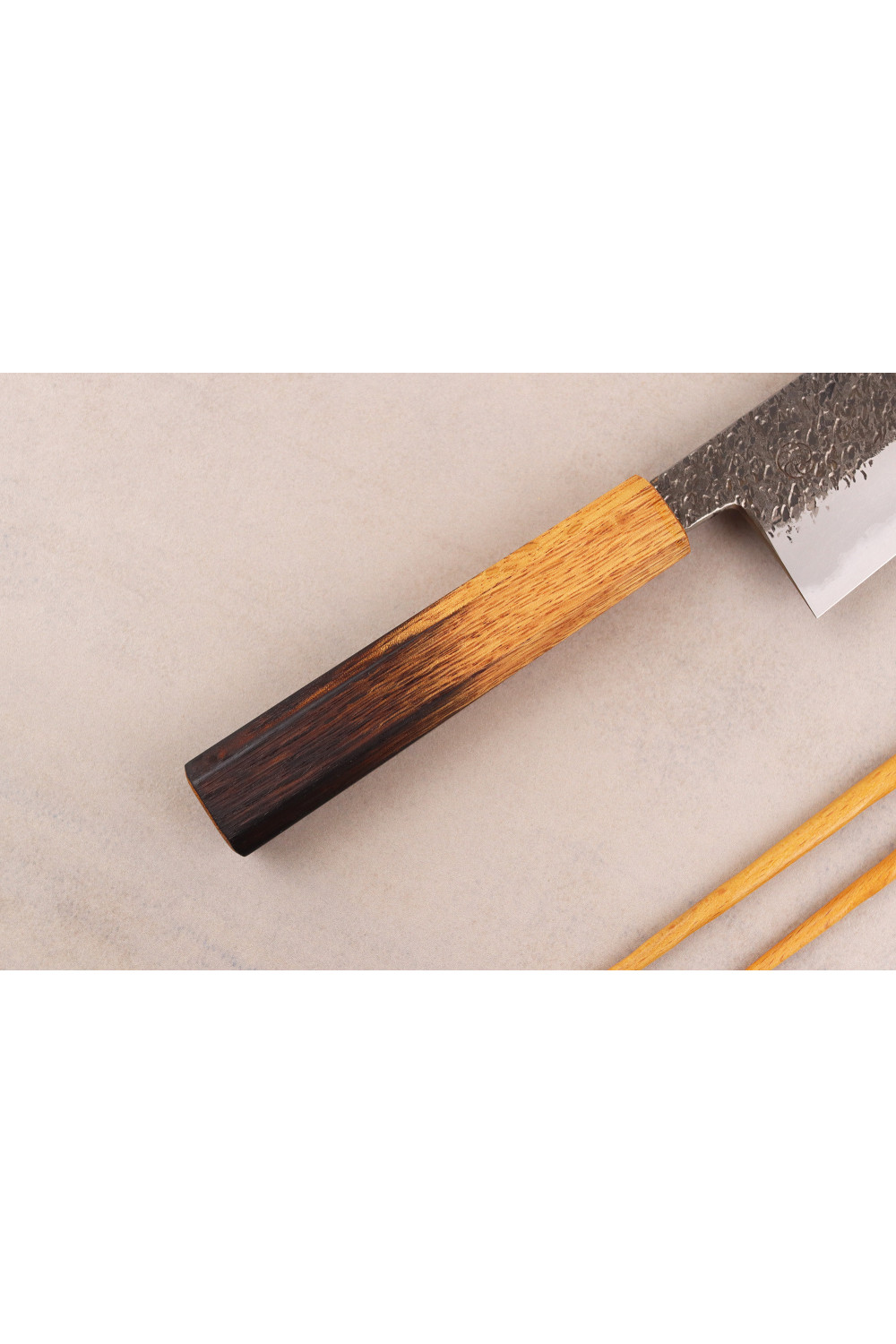
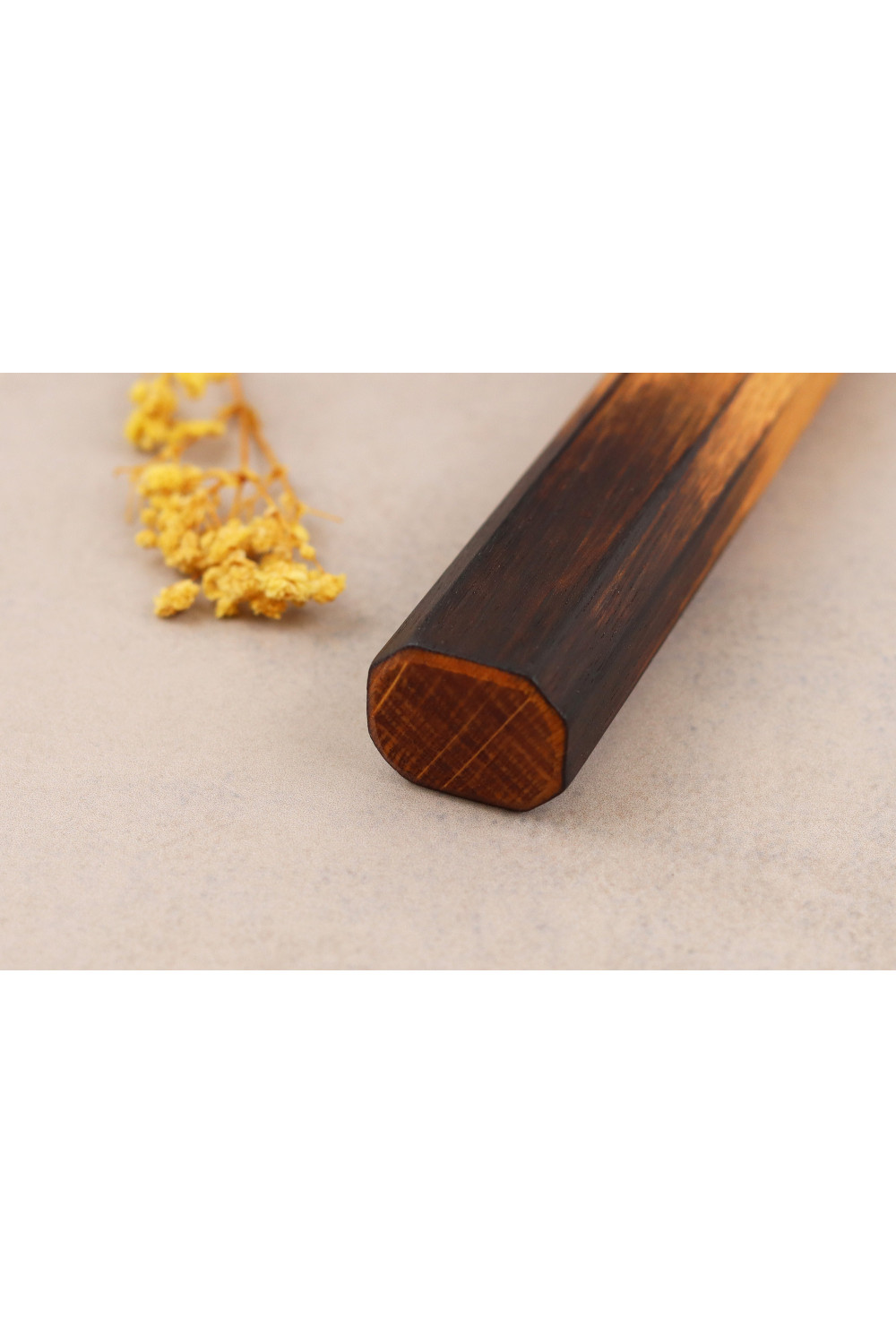
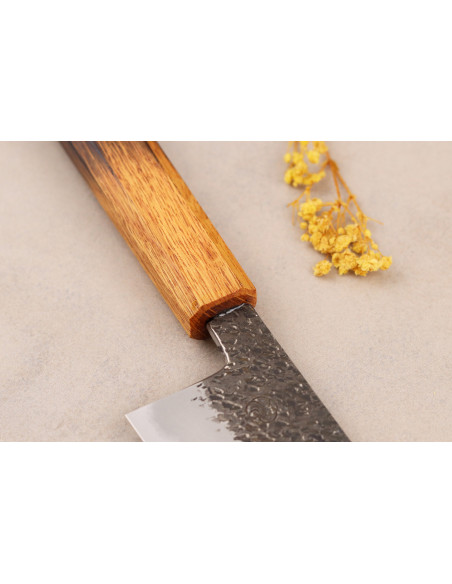
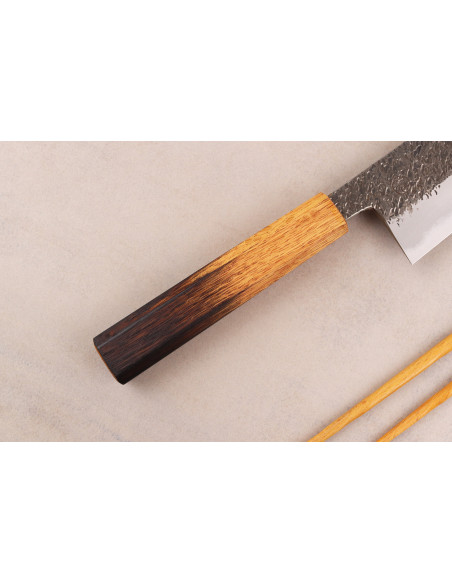
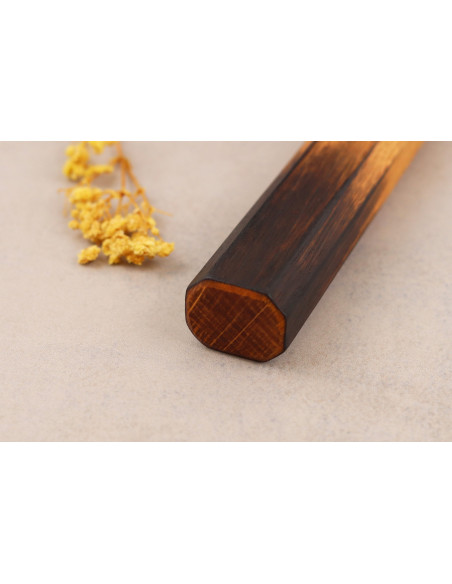
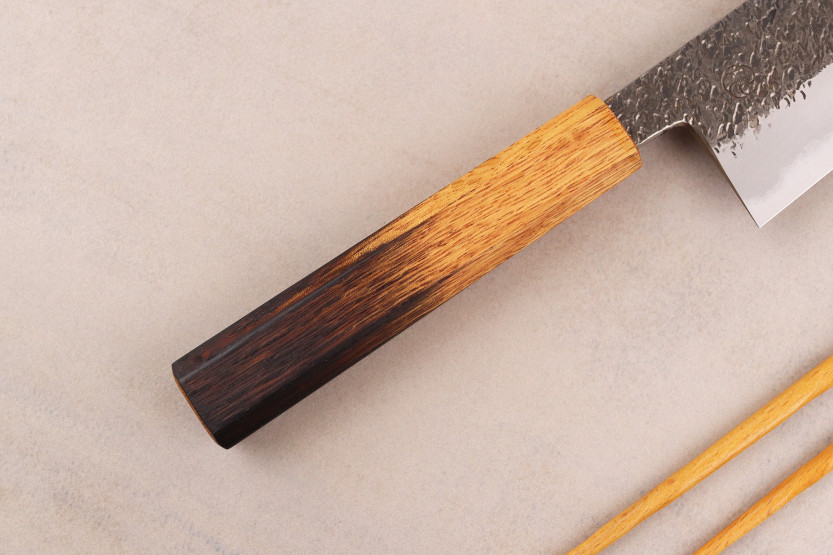
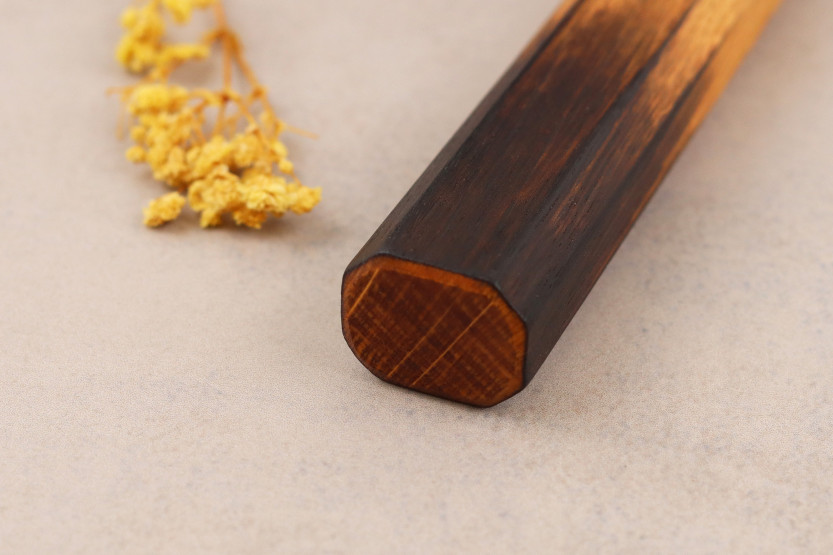
To complement the blade’s raw appearance, this model features a partially charred oak handle—a natural material whose color and grain add a warm touch. The charring process highlights the oak’s grain and enriches its hues, creating an aesthetic that complements the steel’s dark areas particularly well.
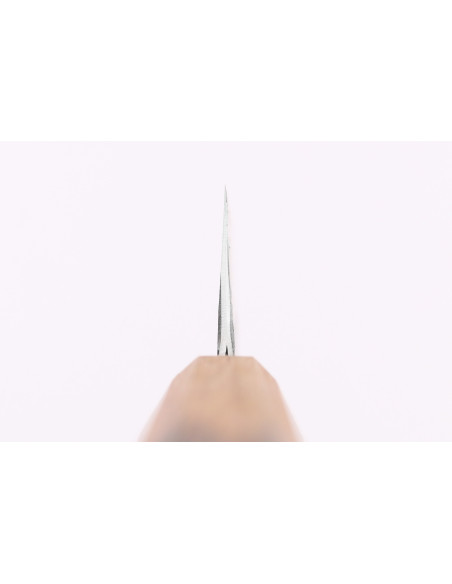
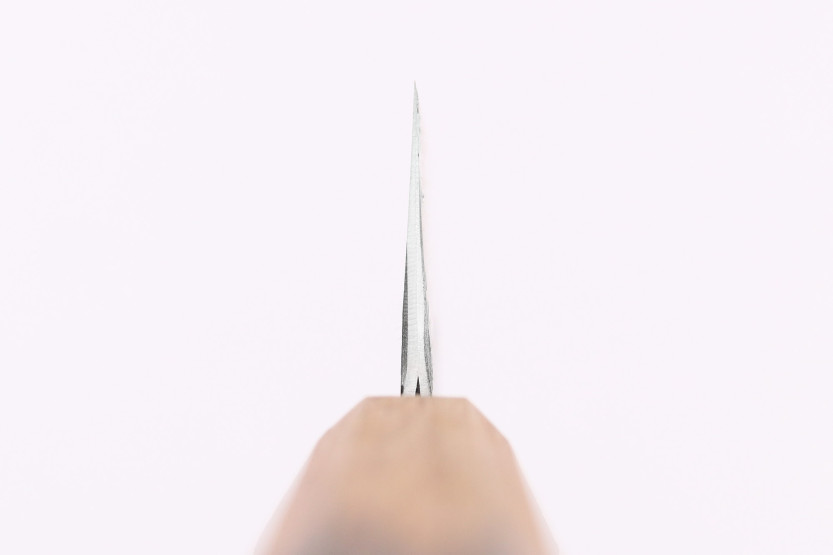
The handle features a traditional Japanese octagonal shape, with eight sides that serve as natural finger guides. This allows you to naturally position the knife and maintain a stable grip when performing more technical tasks. It also has the advantage of being ambidextrous, suitable for both right- and left-handed users.
The contrast between the charred oak and the hammered steel creates a visually harmonious whole, in which each material retains its own character. This knife evokes the Japanese wabi-sabi aesthetic, which celebrates irregularities, natural textures, and the marks left by time or craftsmanship. A piece whose beauty lies precisely in its lack of uniformity!
Features and Benefits
-
- 18 cm blade: a versatile size for everyday food preparation
-
- Damascus steel construction: a hard core surrounded by softer steel
- Aogami #2 Japanese steel core: capable of being sharpened to a very fine
edge
- Hardness of 62/63 HRC: excellent edge retention
-
- Flat grind: smooth and precise cutting action through food
- Kurouchi finish: dark surface that retains the raw, forged appearance
- Tsuchime hammering: textured finish reminiscent of volcanic rock
-
- Charred oak handle: natural grain highlighted by the wood treatment
- Octagonal shape: stable grip and ambidextrous use
- Forged by Haruki Miyazaki: handcrafted on the Goto Islands, Japan
Preserving a high-carbon Japanese blade
Since Aogami #2 steel is susceptible to oxidation, wipe your knife regularly while preparing food, especially after cutting acidic ingredients. A natural patina may gradually appear on exposed areas of the steel: this is normal.
Wash your knife by hand only, without abrasive cleaners, then dry the blade and handle immediately. Do not put it in the dishwasher or let it soak for long periods. When cutting, use a wooden or synthetic cutting board, and never cut bones or frozen foods. Maintain the edge using a Japanese whetstone, without applying excessive pressure to the cutting edge.
Haruki Miyazaki: A Passionate Blacksmith from the Goto Islands
Far from the major historic centers of Japanese cutlery, Haruki Miyazaki practices his craft on the island of Fukue, in the Goto Archipelago off the coast of Nagasaki. Born on this island in 1985, he grew up in an environment where nature and traditions play an important role. It was through his father that he discovered the history of Japanese blacksmiths and their essential role in rural communities, which helped him develop his calling.
After completing his studies, he set out to find a master who could teach him this craft. He met Toshio Ooba, a third-generation blacksmith based in Fukuoka, known in particular for his traditional Hakata Bocho knives (of the Bunka style). Despite the master’s initial reluctance to take on an apprentice, his determination eventually won him over. Haruki Miyazaki then underwent five years of training, during which he learned the fundamental techniques of blacksmithing.
Upon returning to his native island, he founded his own workshop, Miyazaki Kajiya, and continued his apprenticeship with other Japanese artisans, notably Yukinori Shirataka, renowned for his work with antique iron. He gradually developed his own designs under the Tsubaki brand, favoring expressive blades with rustic finishes.
His knives reflect his dedication to handcrafted work and raw materials. Their hammered surfaces, Kurouchi finishes, and meticulously crafted silhouettes are a testament to an artisanal approach where each piece retains the marks of its creation. A unique craftsmanship, born in the heart of the Japanese archipelago!
Be sure to check out our selection of Miyazaki Kajiya knives to explore more of their creations!




 By buying this product you can collect up to