A Japanese santoku knife with a distinctive character
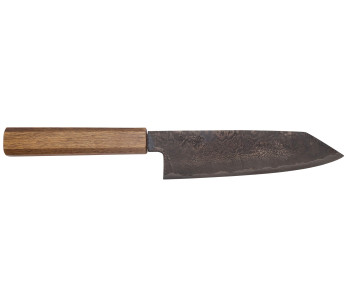
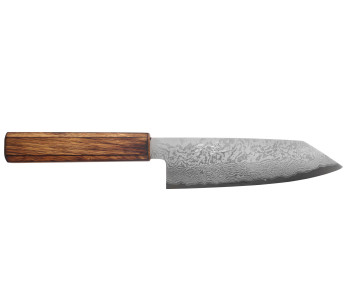
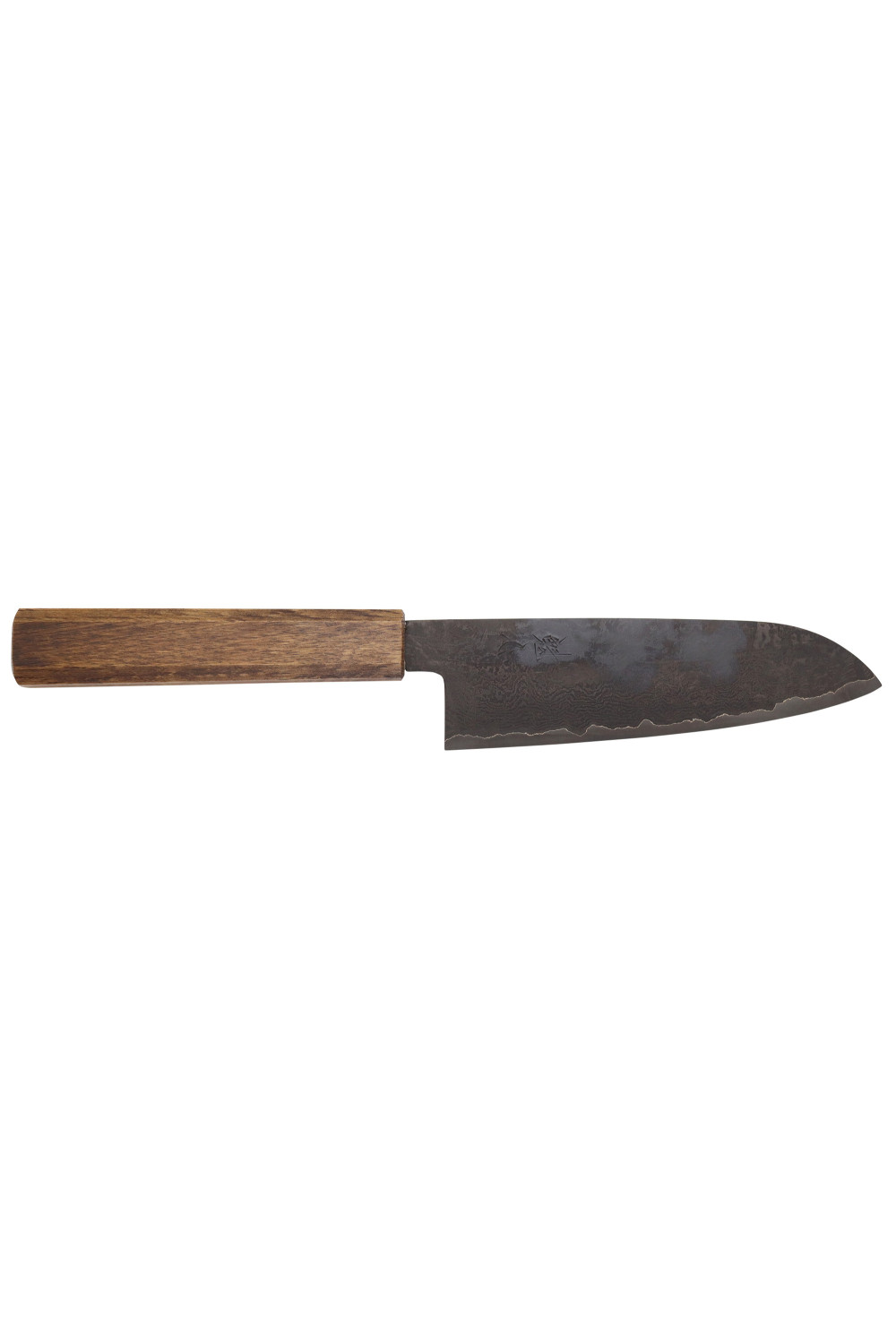
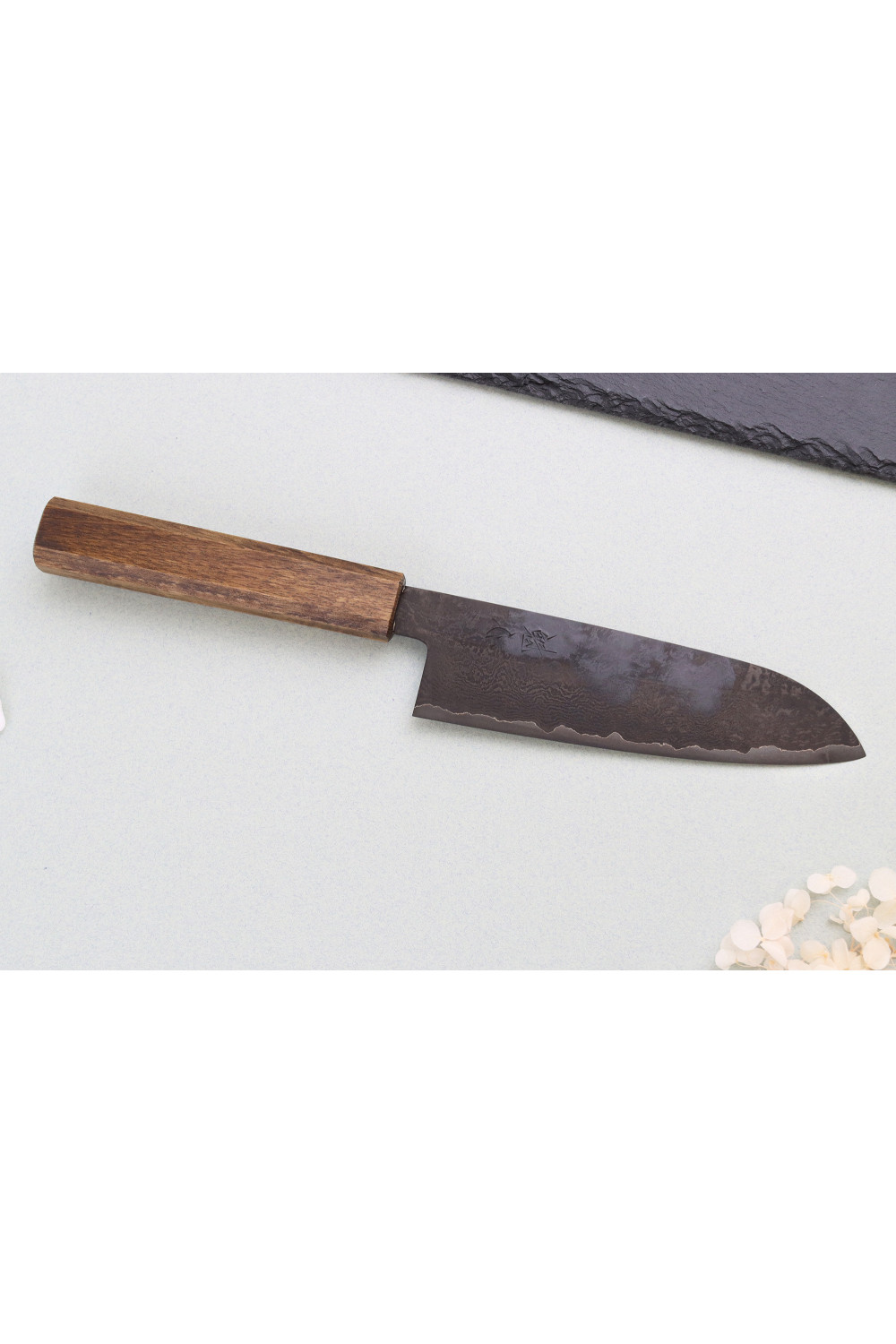
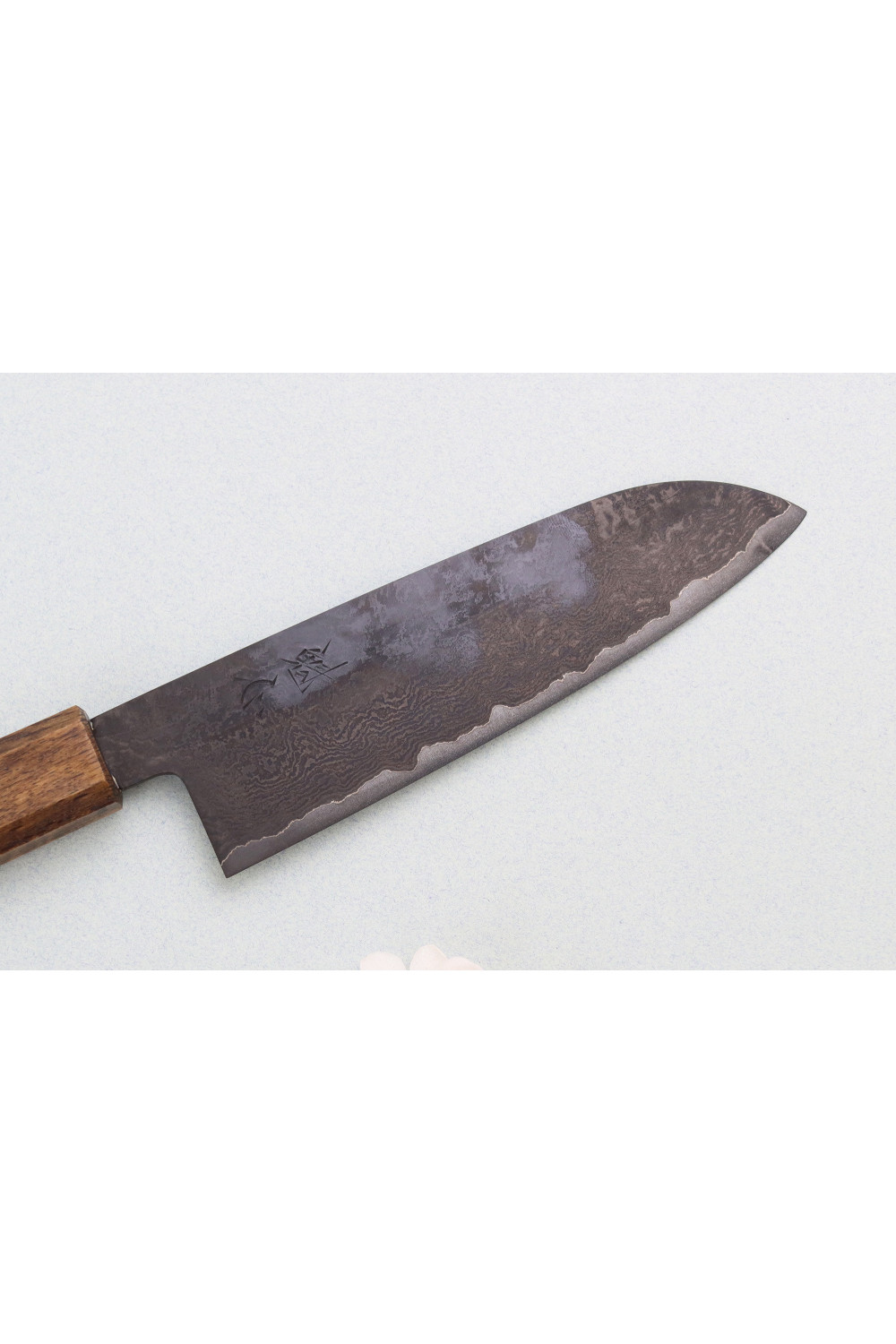
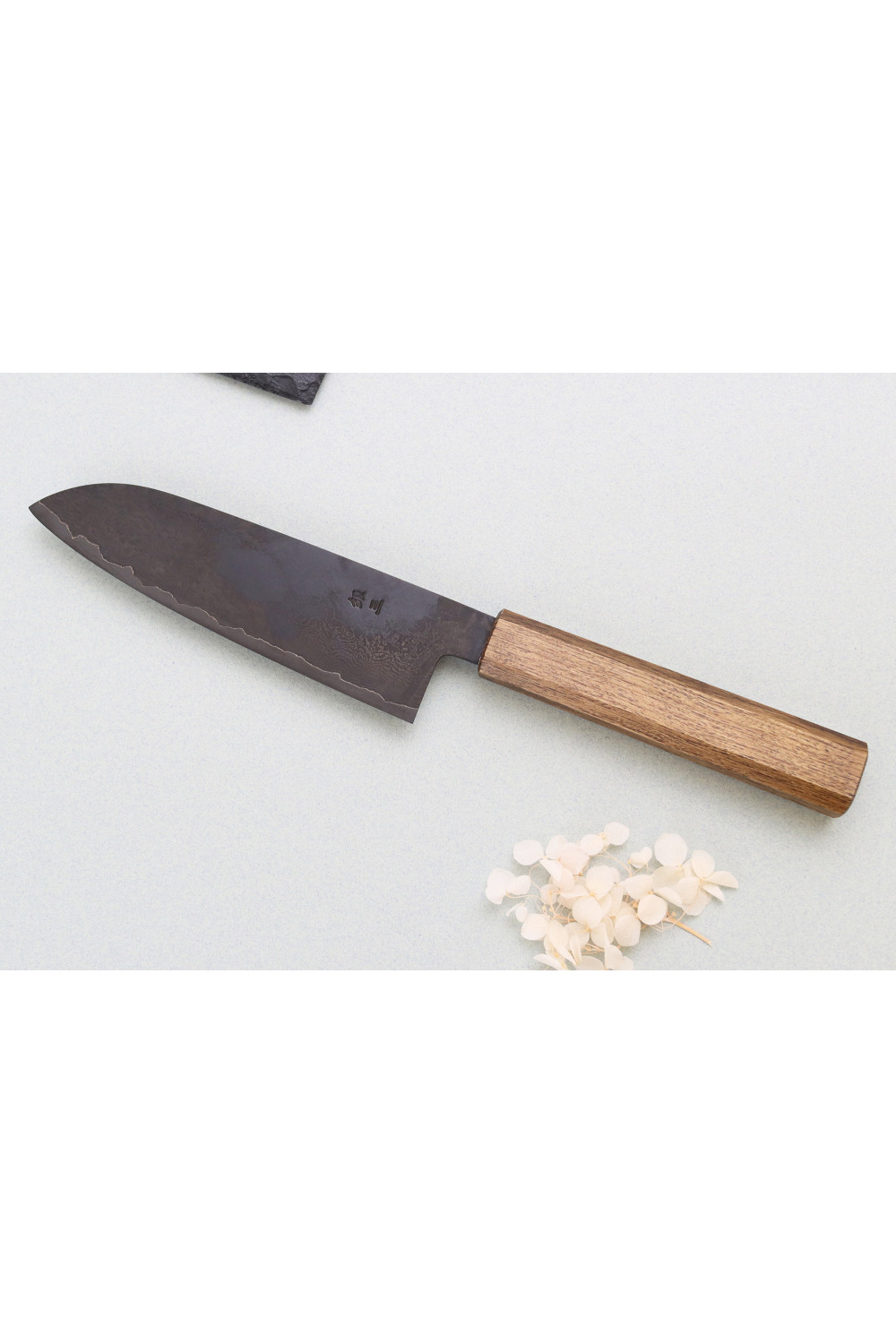
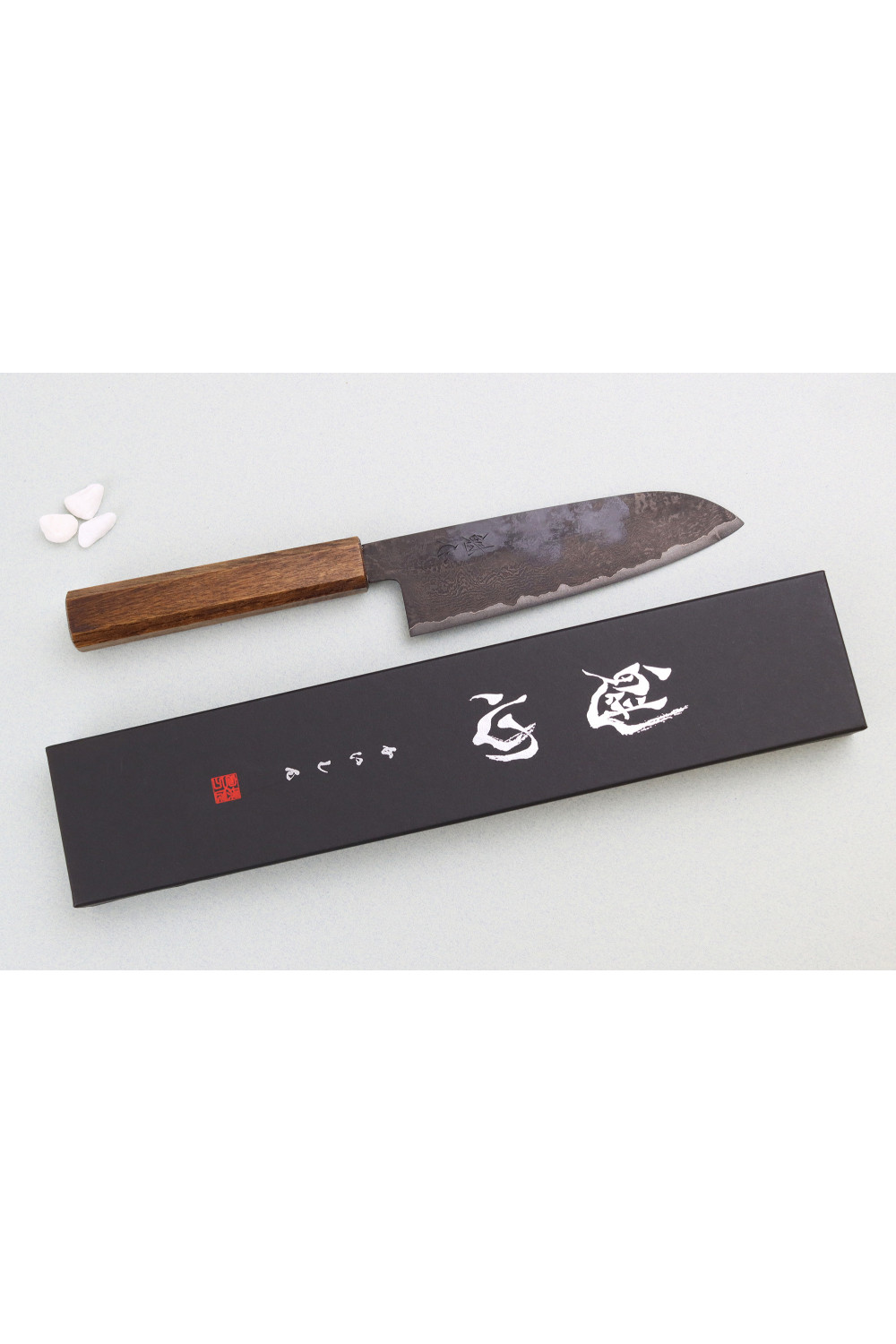
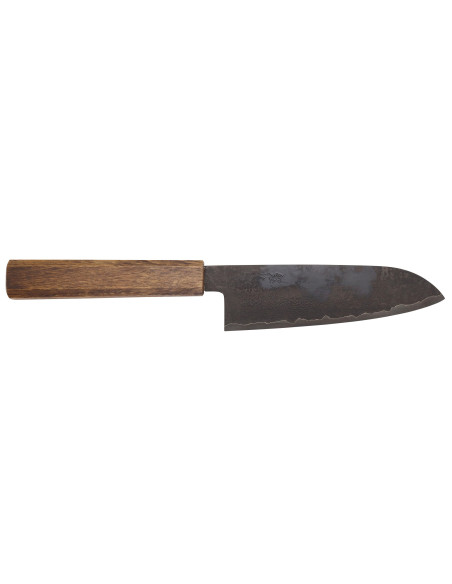
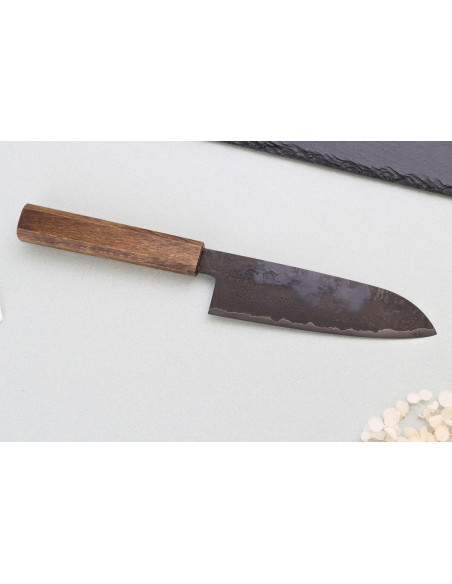
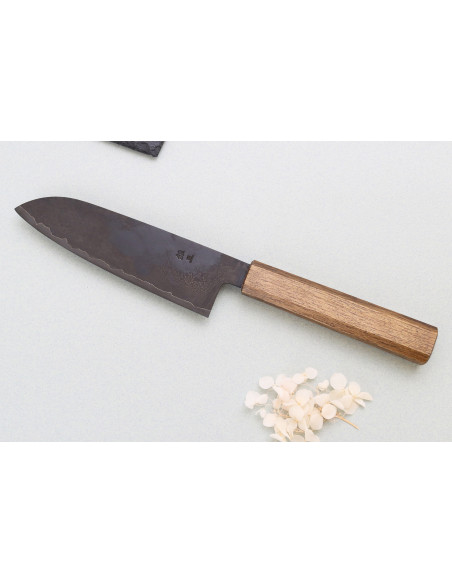
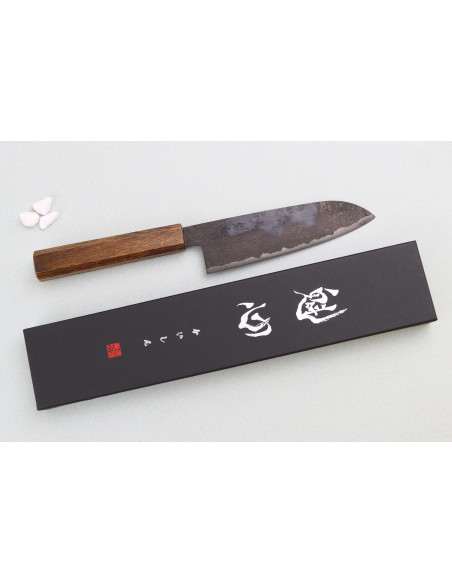
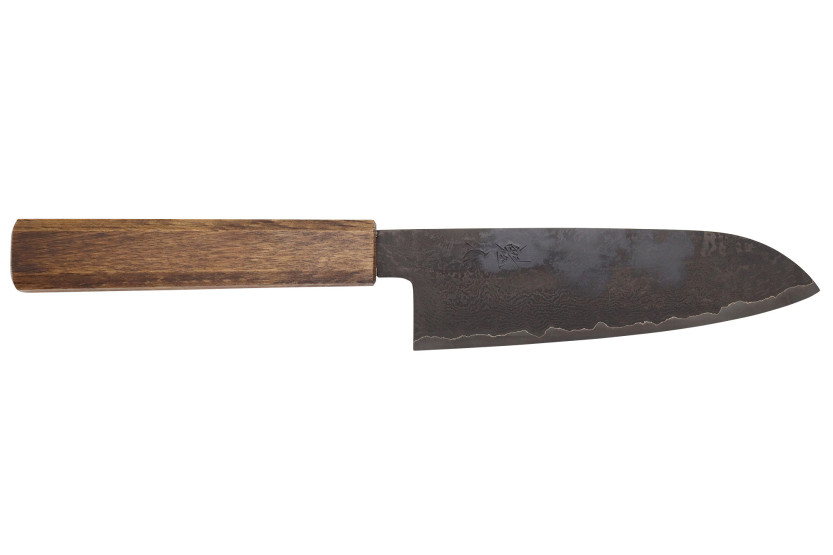
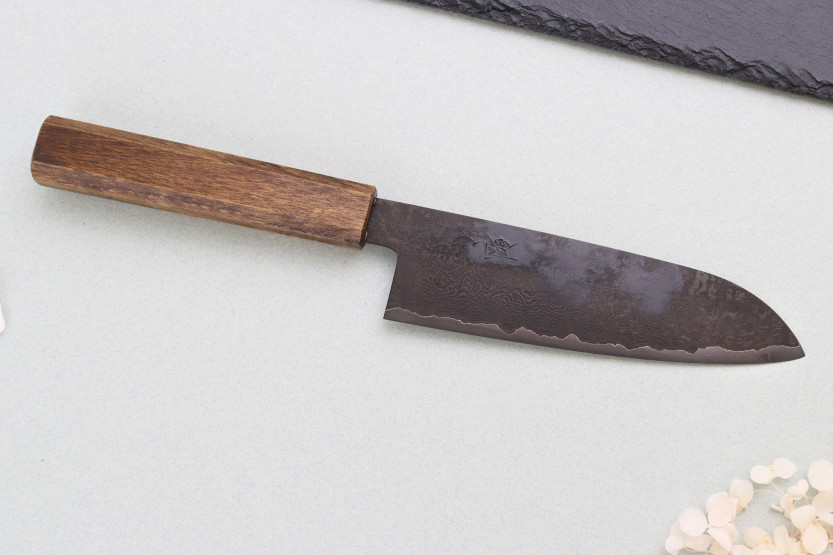
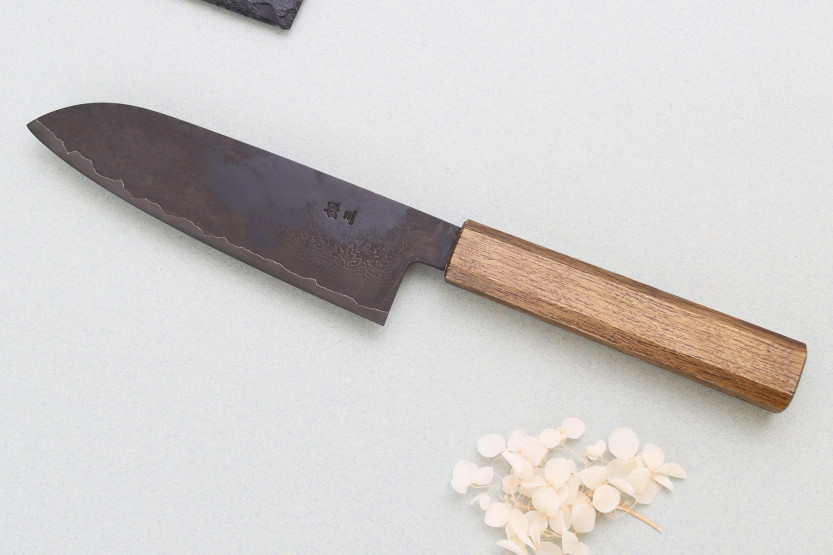
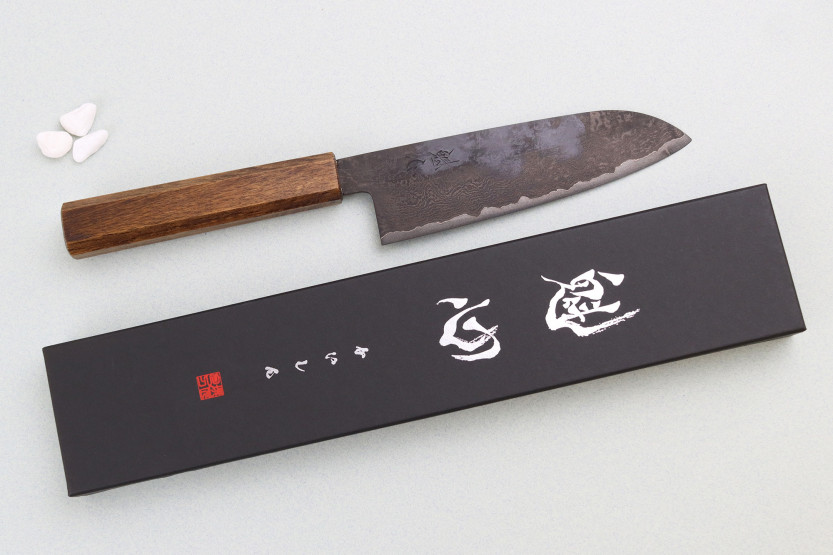
The Nakamura Kaishin Ginsan Black Damascus Japanese santoku knife combines traditional Sakai craftsmanship with carefully selected materials! Handcrafted in Japan by Shogo Yamatsuka, its 16.5 cm blade features an elegant Black Damascus finish, whose contrasting patterns create a striking visual identity. Its Ginsan steel core ensures a sharp edge, while its smoked oak handle adds a warm, natural touch to the overall design. This knife is your perfect companion for everyday food preparation, from chopping vegetables to cutting meat and fish!
A damascened blade with a Ginsan steel core
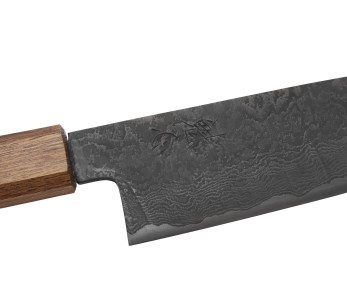
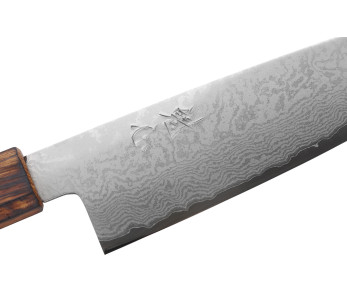
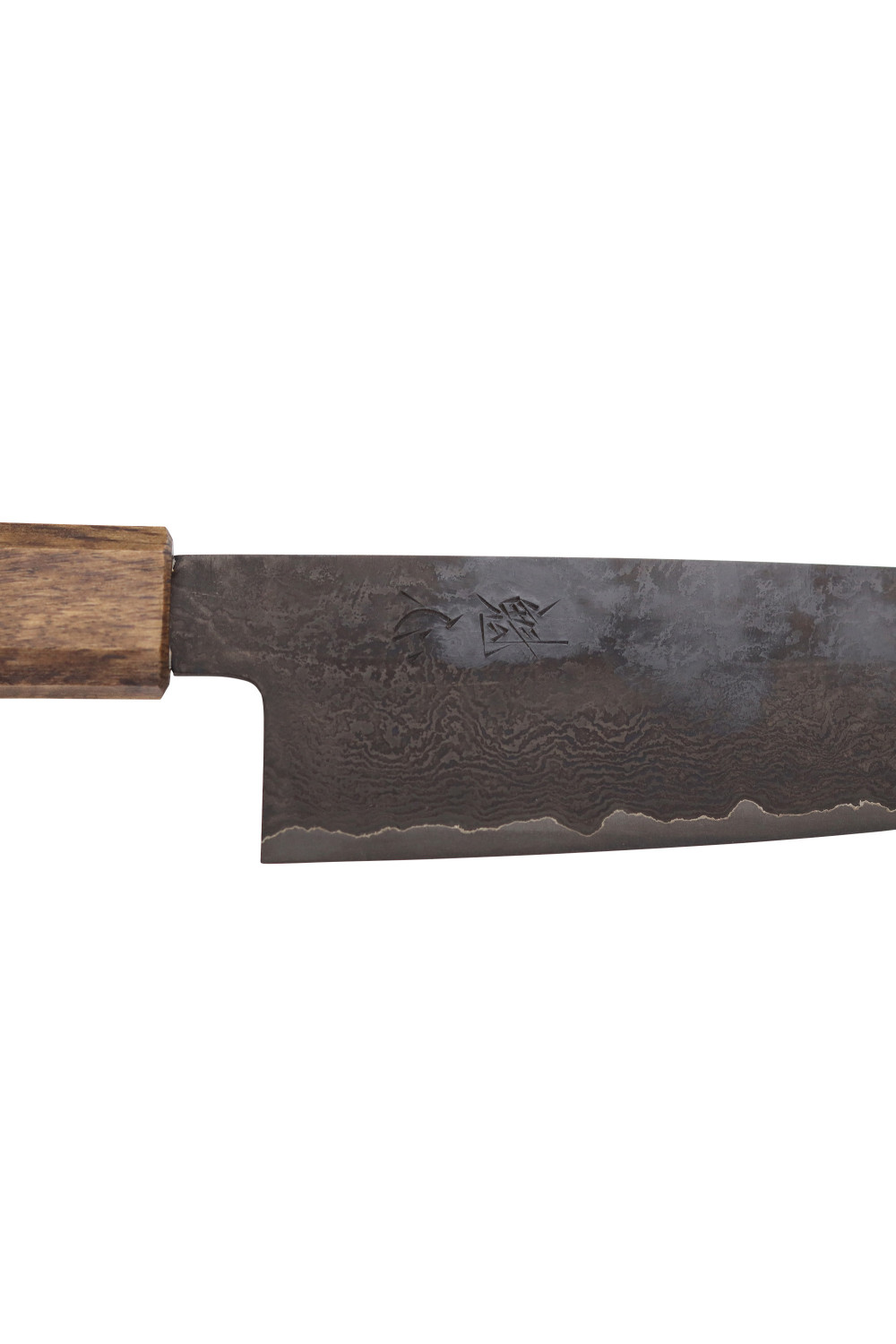
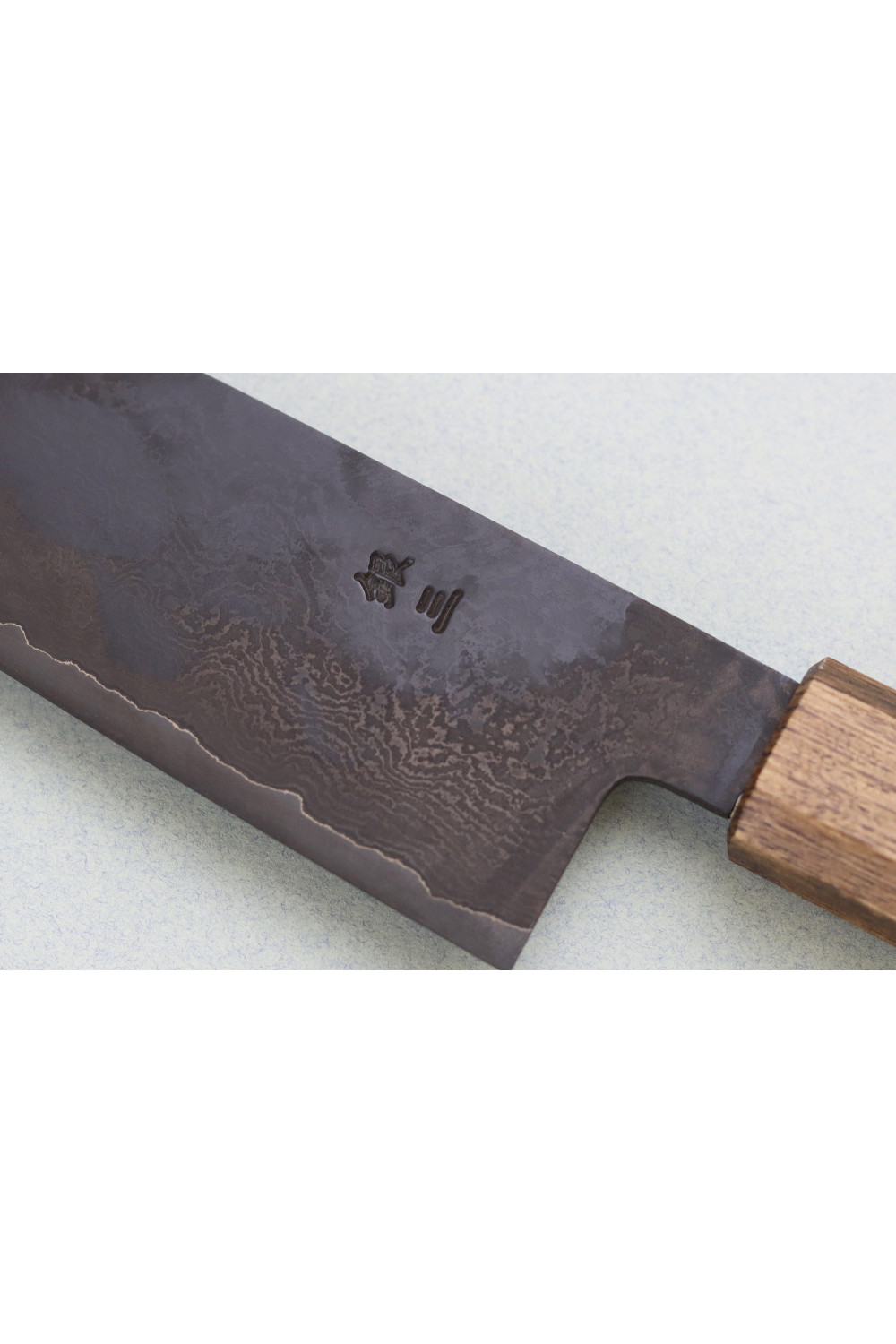
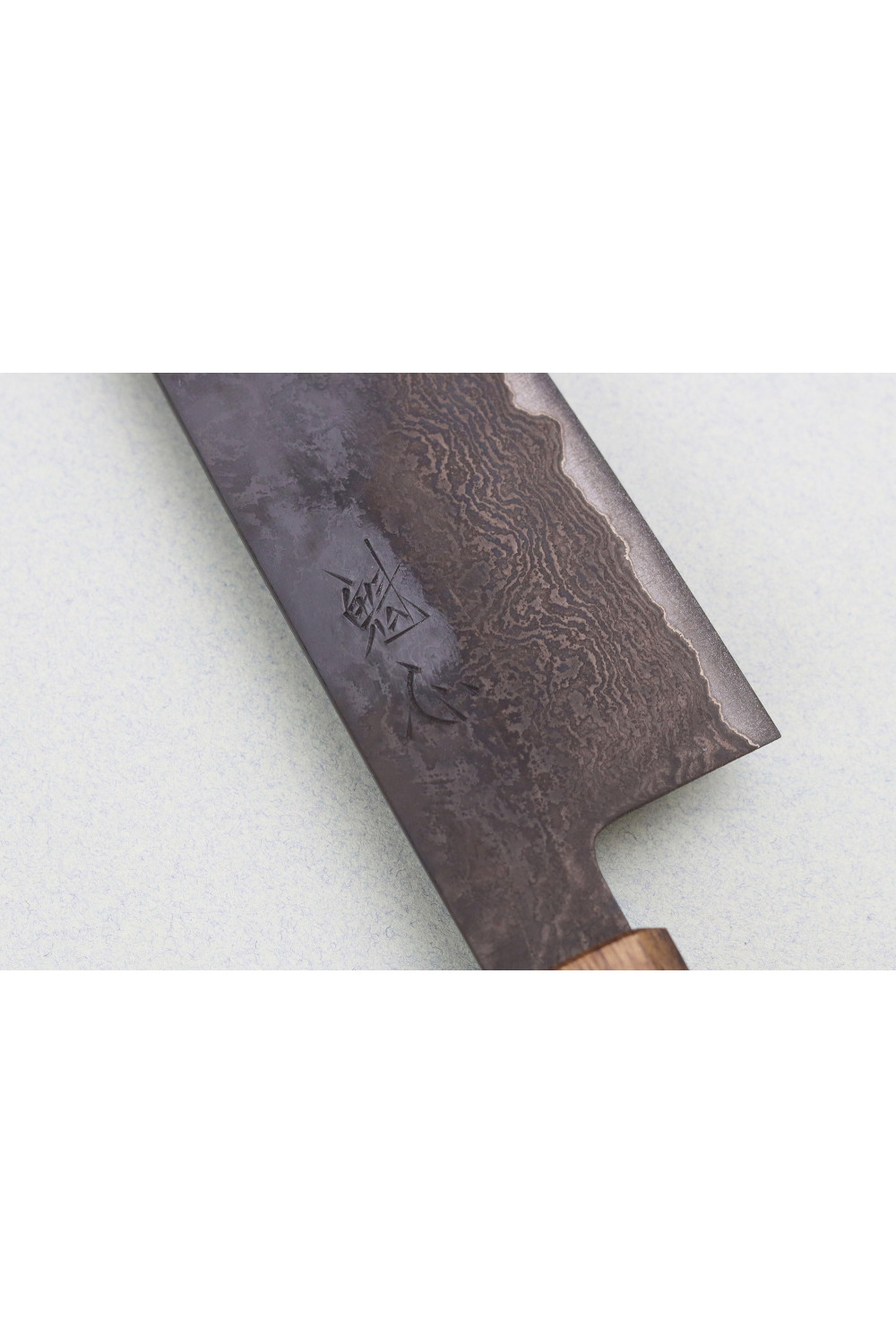
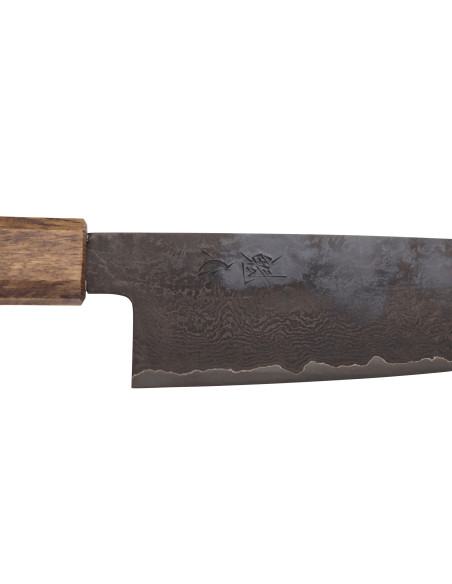
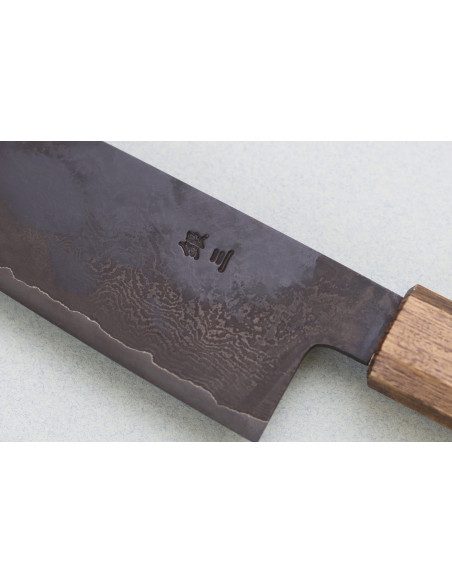
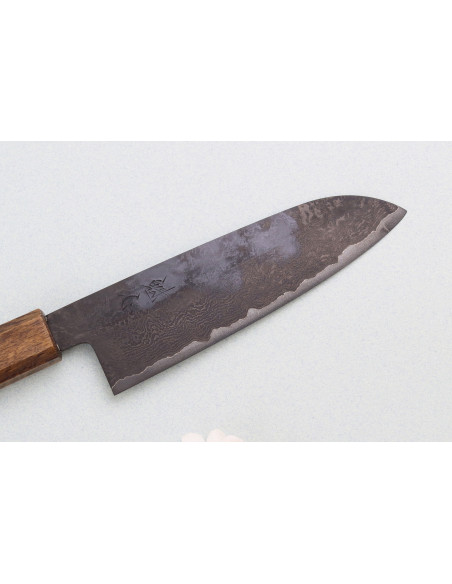
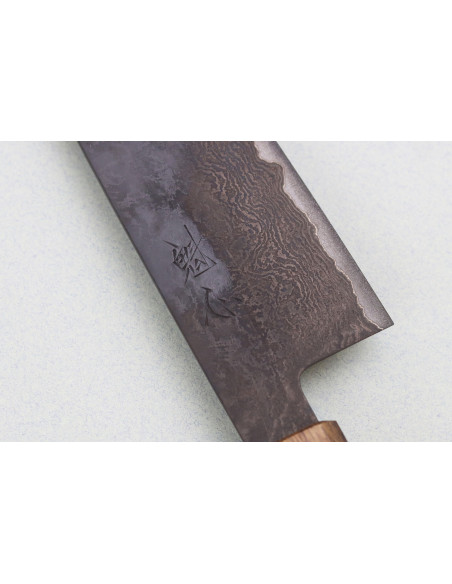
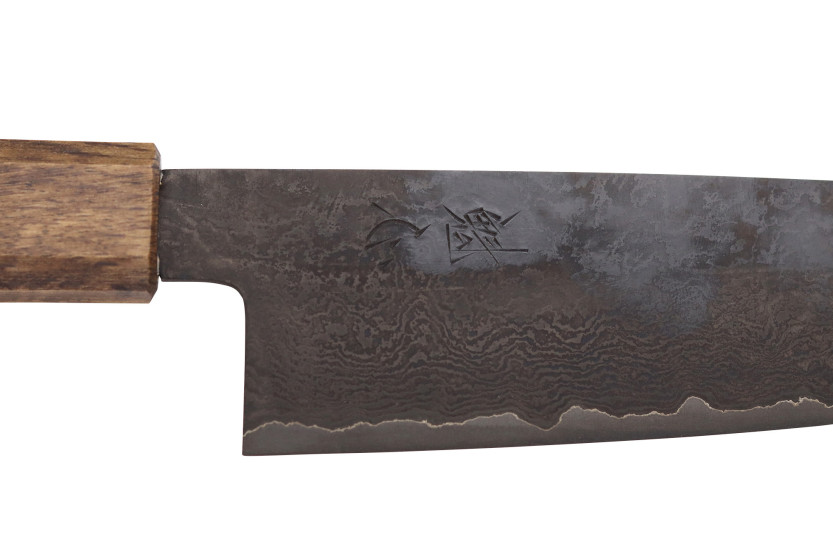
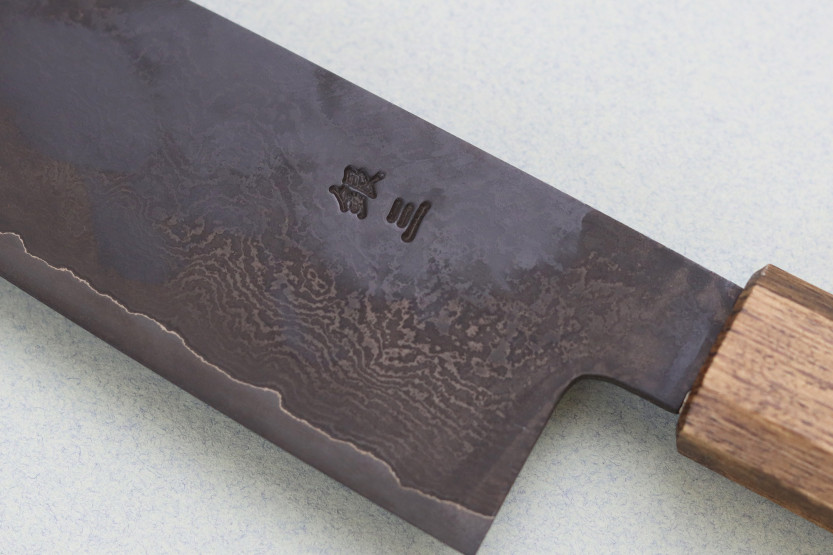
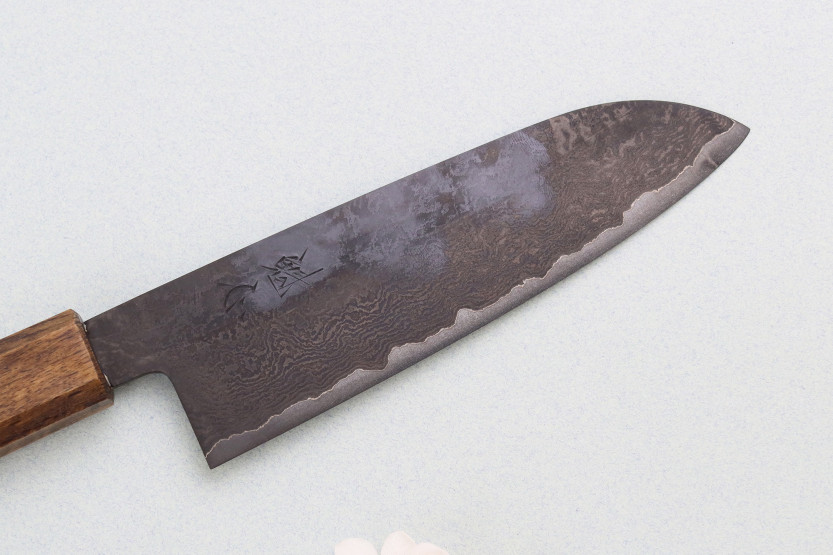
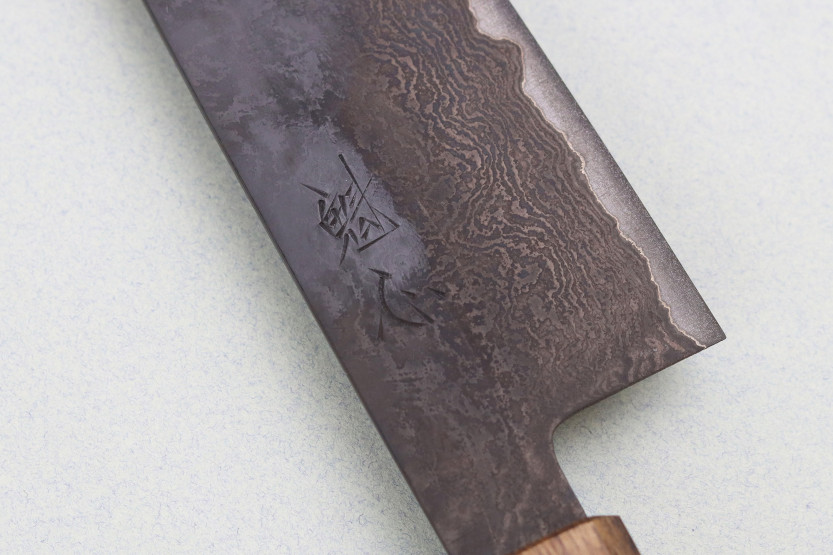
This Japanese knife features a 16.5 cm blade composed of 63 layers of Damascus steel. At the center of this structure lies a core of Japanese Ginsan stainless steel—also known as Silver 3—containing approximately 0.95% carbon. This alloy is prized for its ability to provide a precise cutting edge while offering good corrosion resistance. The outer layers of softer stainless steel surround the core and help protect the blade’s structure.
With a hardness of 59 to 60 HRC on the Rockwell scale, this santoku knife offers an excellent balance between cutting finesse, edge retention, and ease of maintenance. Its blade is further enhanced by a Black Damascus finish, which reveals the ripples of the Damascus steel through dark, contrasting shades. Each piece thus features a unique visual appearance, reflecting the craftsmanship applied to the steel.
An octagonal handle made of smoked oak
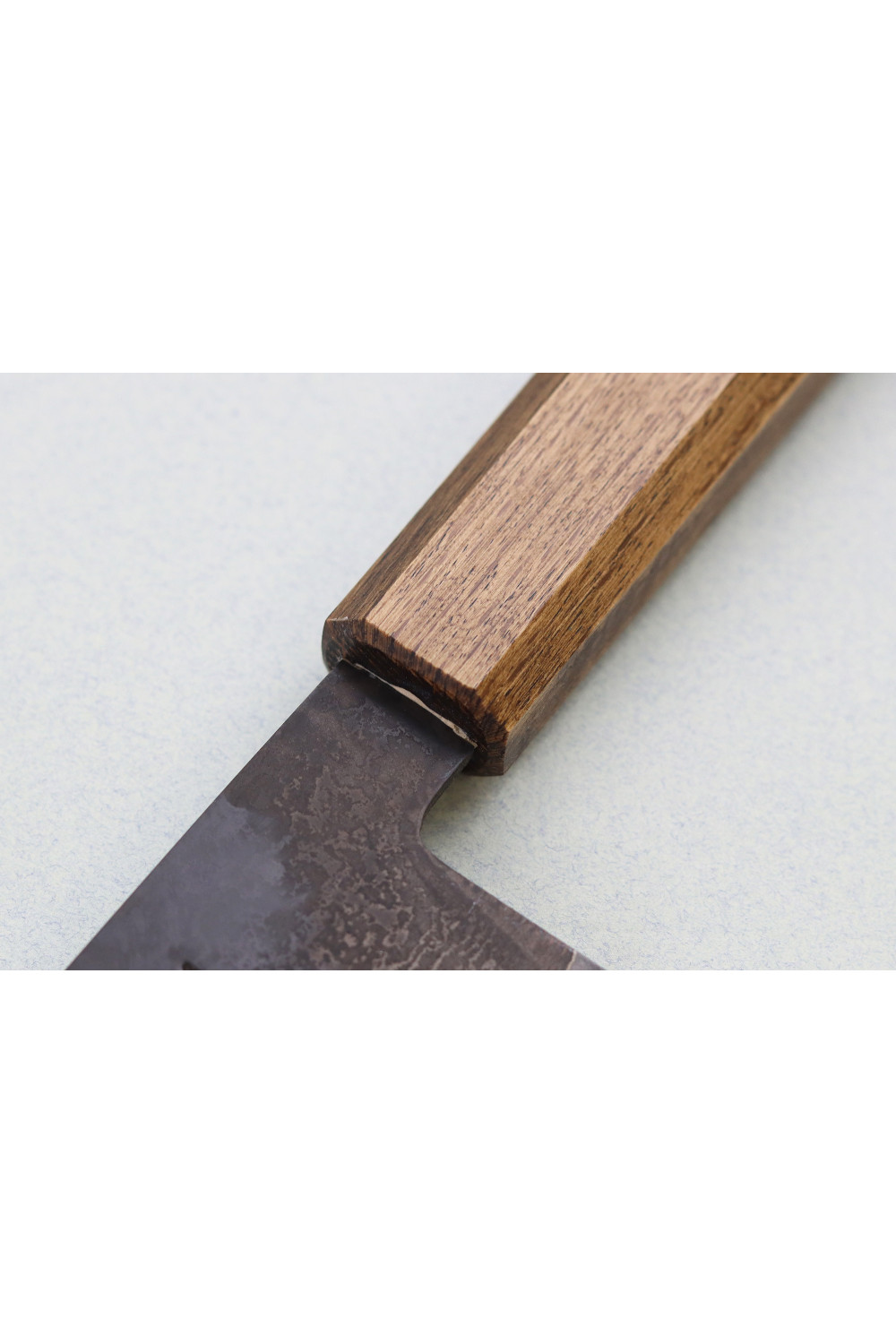
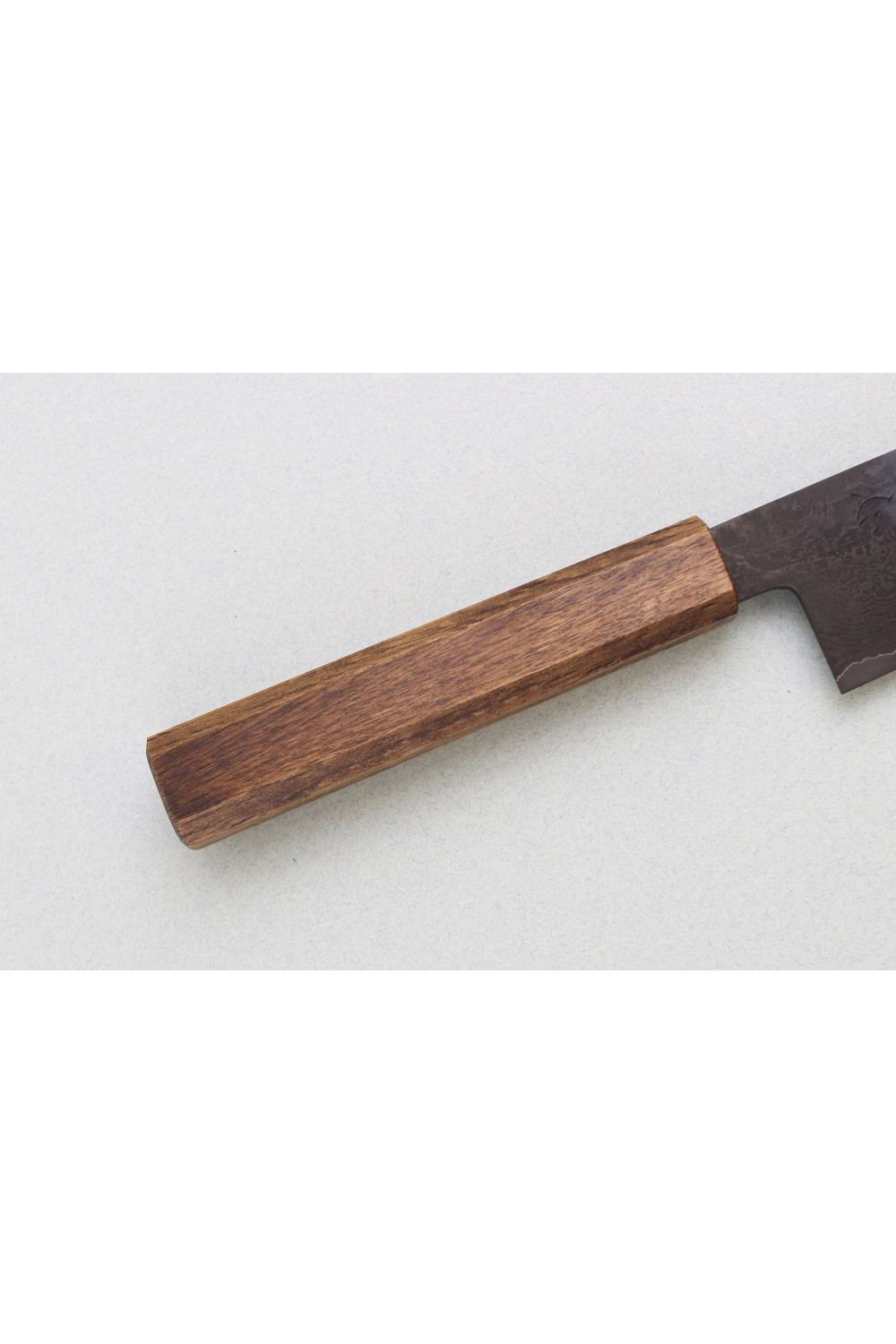
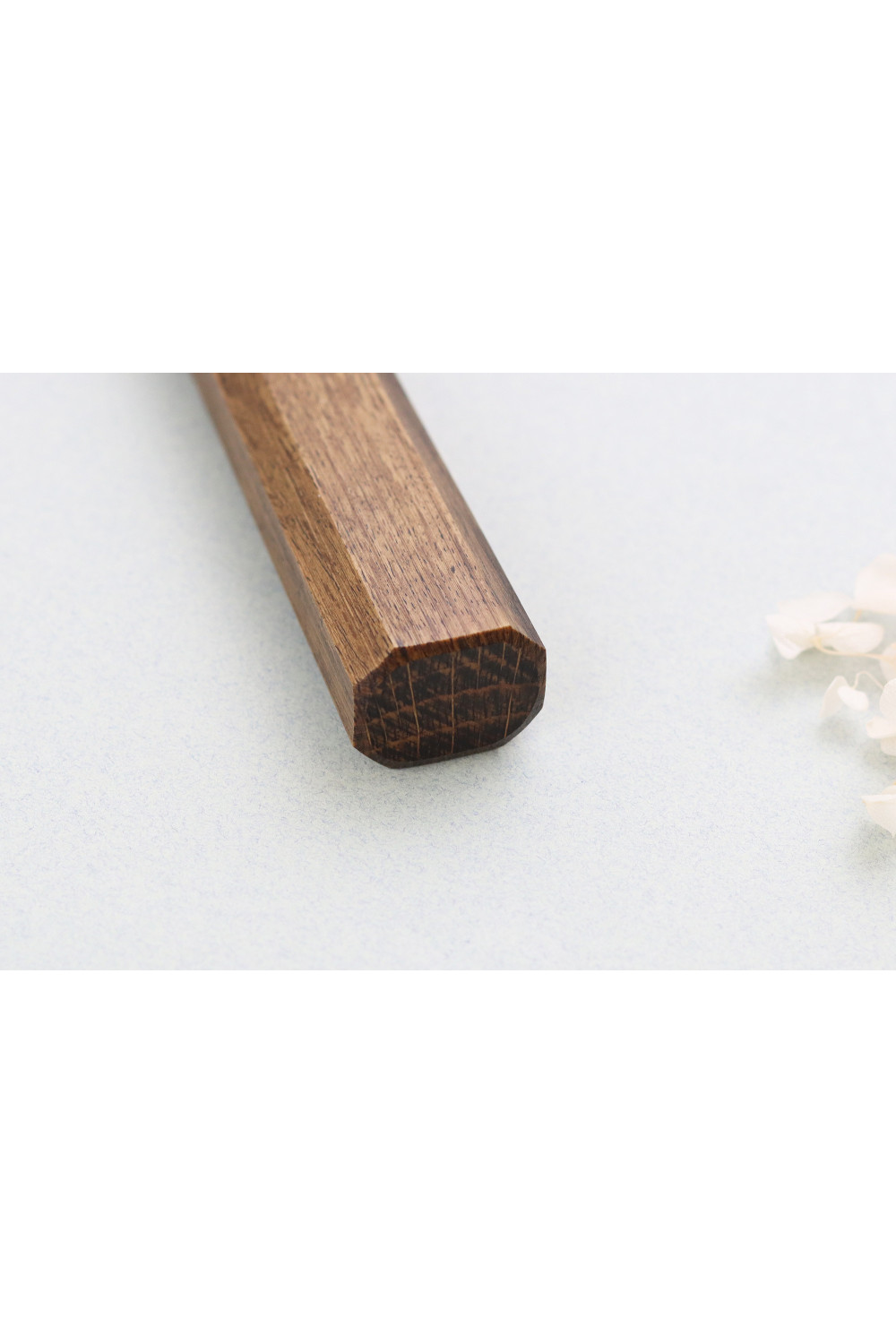
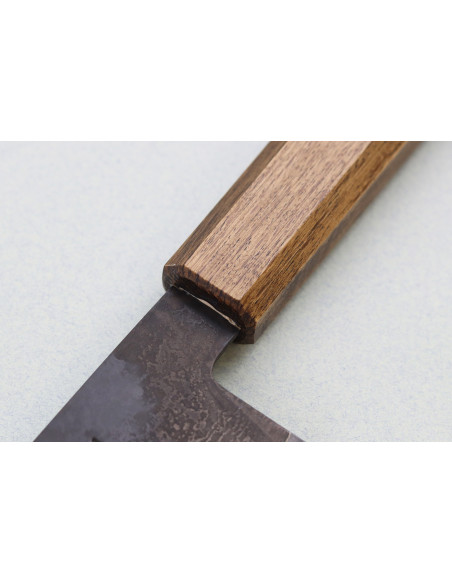
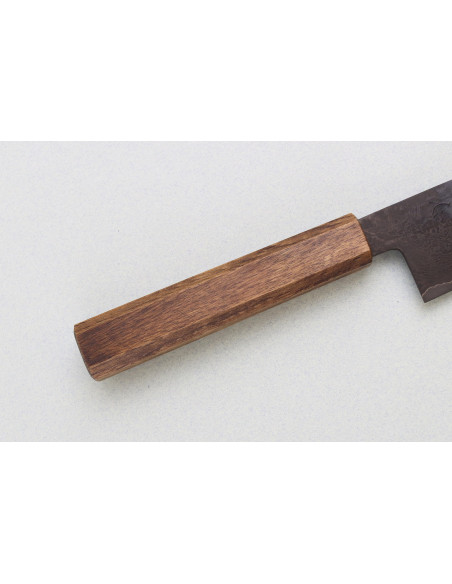
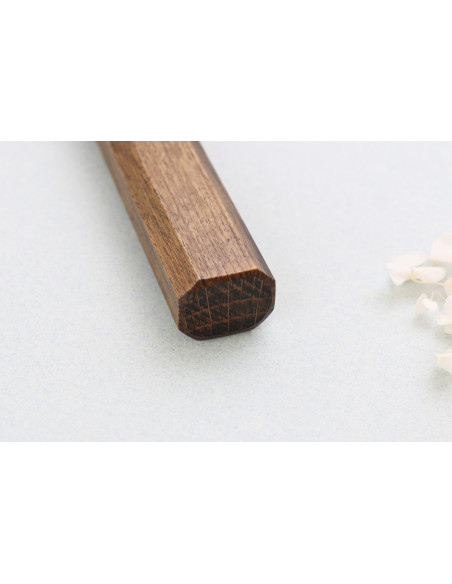
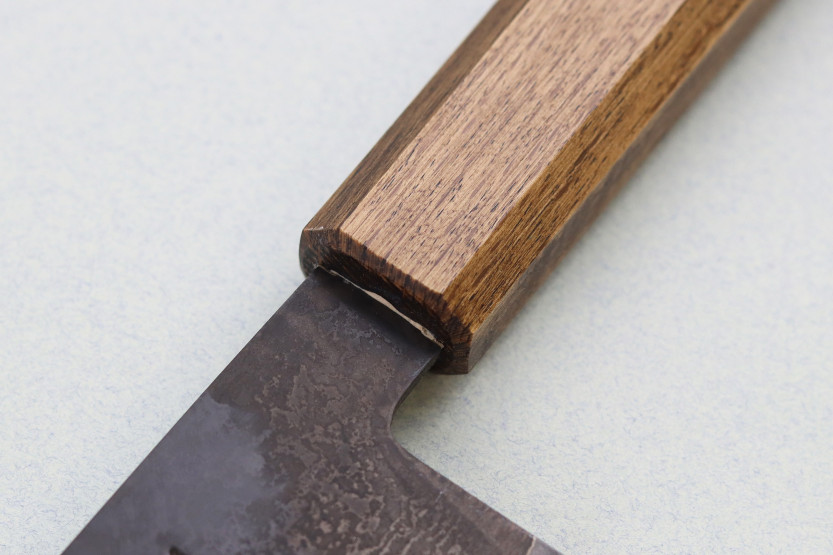
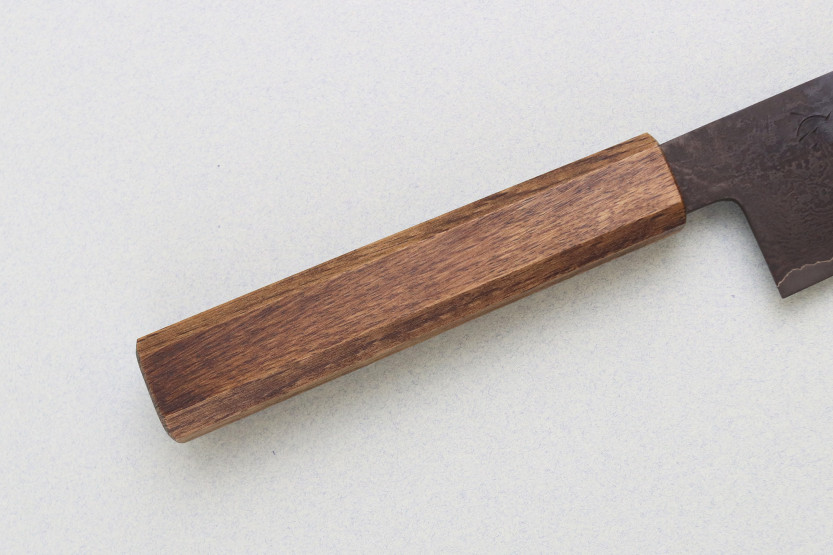
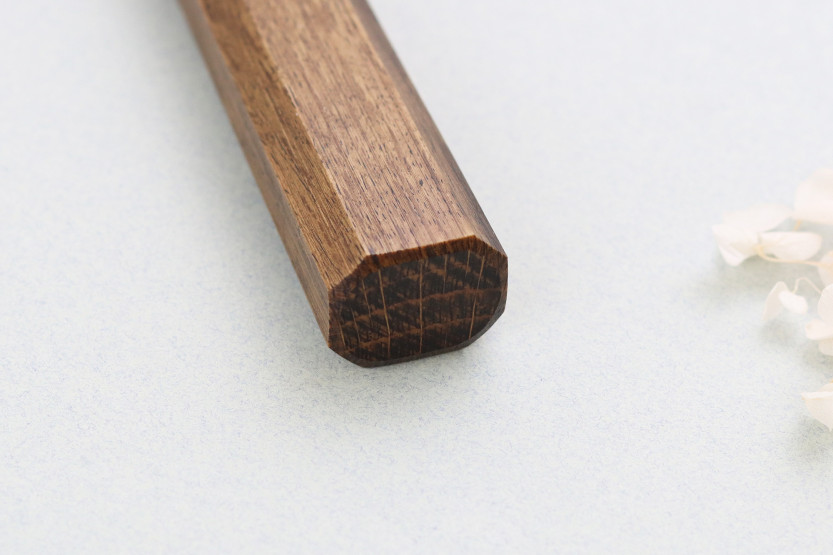
The handle of this handcrafted santoku knife is made of smoked oak, a wood that lends the knife a natural and refined aesthetic. The smoking process gives the wood a deeper hue, highlighting its grain and creating a beautiful contrast with the dark surface of the Black Damascus blade.
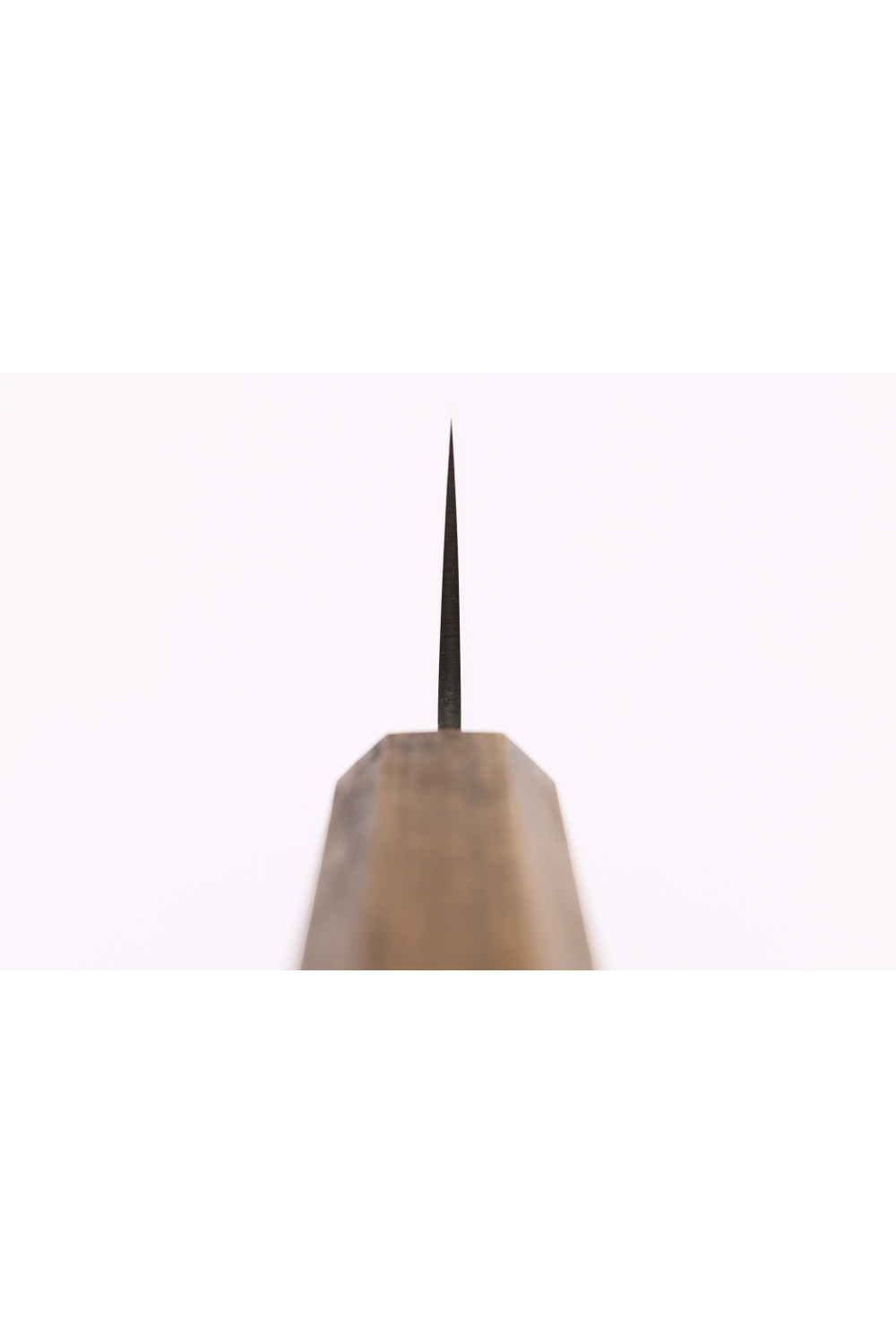
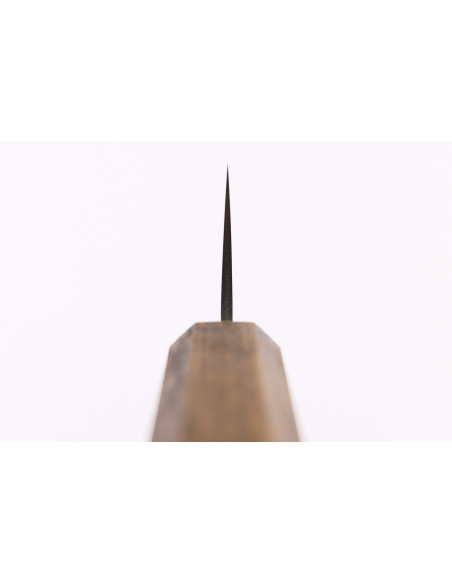
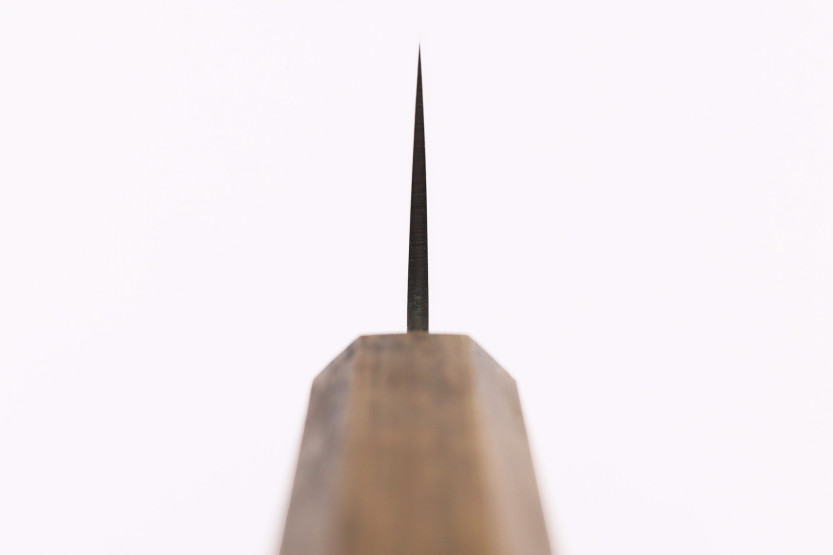
Its traditional eight-sided octagonal shape provides multiple points of contact for the fingers and ensures a stable grip while cutting. It is suitable for both right- and left-handed users, ensuring comfortable everyday use.
The combination of smoked oak and Damascus steel gives this knife a look that is both authentic and contemporary. The handle’s clean lines highlight the craftsmanship of the blade without overwhelming its aesthetic. It’s a particularly appealing choice for fans of Japanese cutlery who are looking for a tool that’s as pleasant to use as it is to admire!
Key Features
-
- 16.5 cm santoku blade: a versatile size for cutting meat, fish, and vegetables
- 63-layer Damascus structure: a combination of multiple layers of steel
- Ginsan stainless steel core: high-performance edge and good corrosion resistance
-
- Hardness of 59/60 HRC: balance between edge retention and easy maintenance
- Black Damascus finish: contrasting patterns for a unique aesthetic
-
- Smoked oak octagonal handle: stable, ambidextrous grip
- Forged by Shogo Yamatsuka and sharpened by Fujii Hamono: crafted by Japanese specialists
How to care for your Japanese santoku knife?
To preserve the sharpness and finish of your knife, use a cutting board made of wood or a suitable synthetic material. Avoid hard surfaces such as glass, stone, or ceramic, as well as cutting bones and frozen foods.
After each use, wash the blade by hand with a soft sponge and a little soap, then dry the entire knife immediately with a clean cloth. Do not put the knife in the dishwasher, especially to protect the smoked oak handle. To restore a sharp edge, use a suitable Japanese whetstone, maintaining the blade’s original cutting angle.
Handcrafted by Shogo Yamatsuka and Fujii Hamono
The craftsmanship of this knife is the result of the talent of two specialized artisans based in Sakai, Japan—a city renowned for its long tradition of cutlery making.
The blade is forged by Shogo Yamatsuka, a Japanese master blacksmith born in 1958 into a family of artisan knife makers. Trained since 1973 in the family workshop, he now has over 50 years of experience working with steel. Recognized as a Traditional Master Craftsman since 2012, he is particularly renowned for his mastery of Ginsan steel, a demanding alloy that requires precise temperature control during forging. He has devoted several decades to perfecting his work with this steel, notably through the traditional hot-forging technique known as Hizukuri.
The sharpening is then entrusted to Fujii Hamono, a workshop specializing in the finishing of Japanese blades. This essential step involves precisely shaping the cutting edge’s geometry to achieve a clean, consistent cut. The sharpener’s work thus complements that of the blacksmith, in keeping with the Sakai tradition, where each artisan contributes their expertise to a specific stage of production.
This collaboration results in a handcrafted santoku knife that brings together several generations of Japanese craftsmanship and reflects the high standards of Sakai’s artisans!
Find all Nakamura Hamono knives at Knifeleader.eu!




 By buying this product you can collect up to