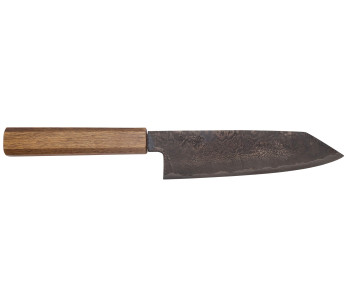
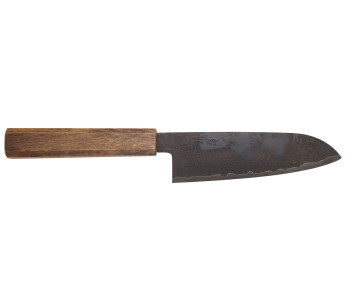
A Japanese bunka with authentic details
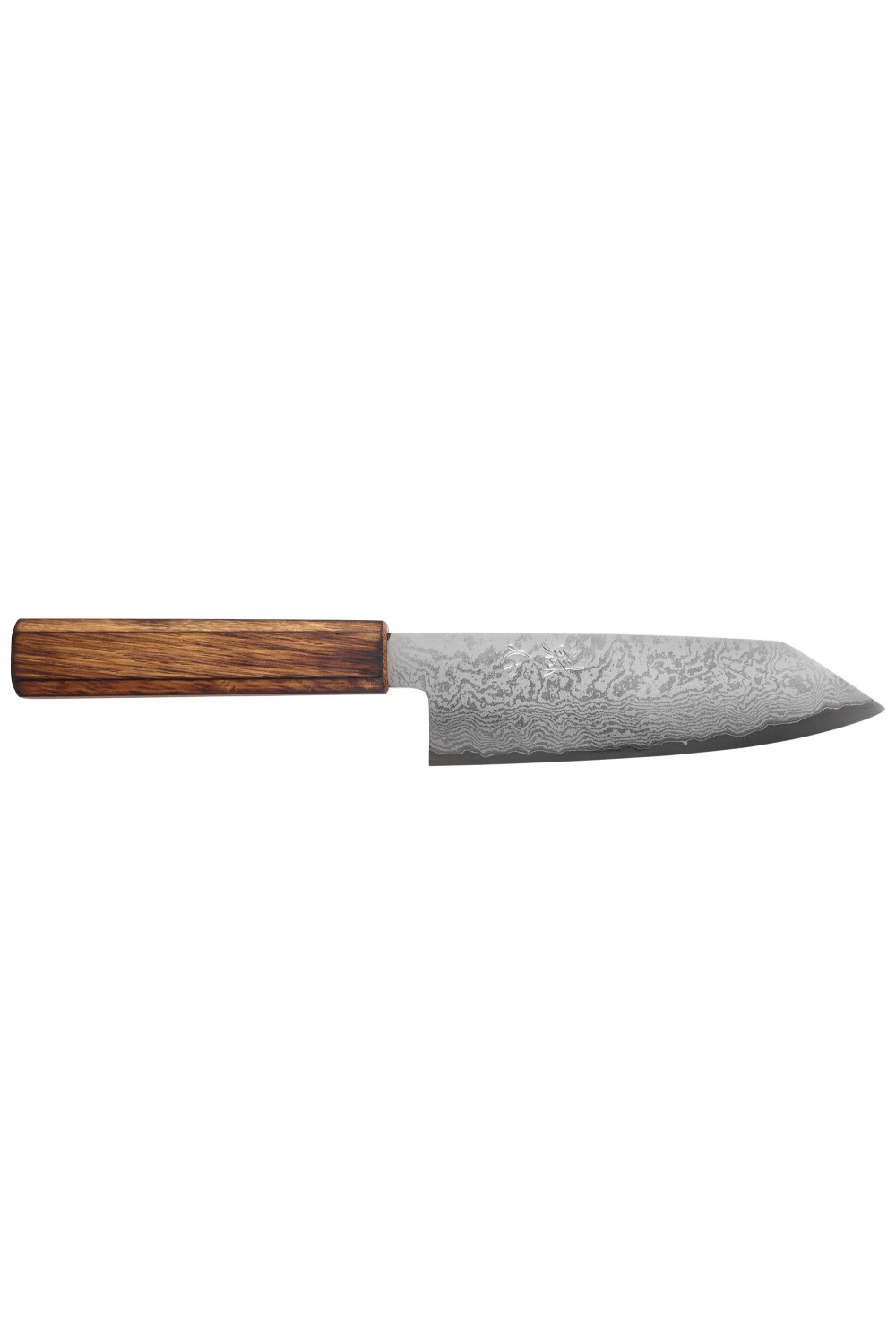
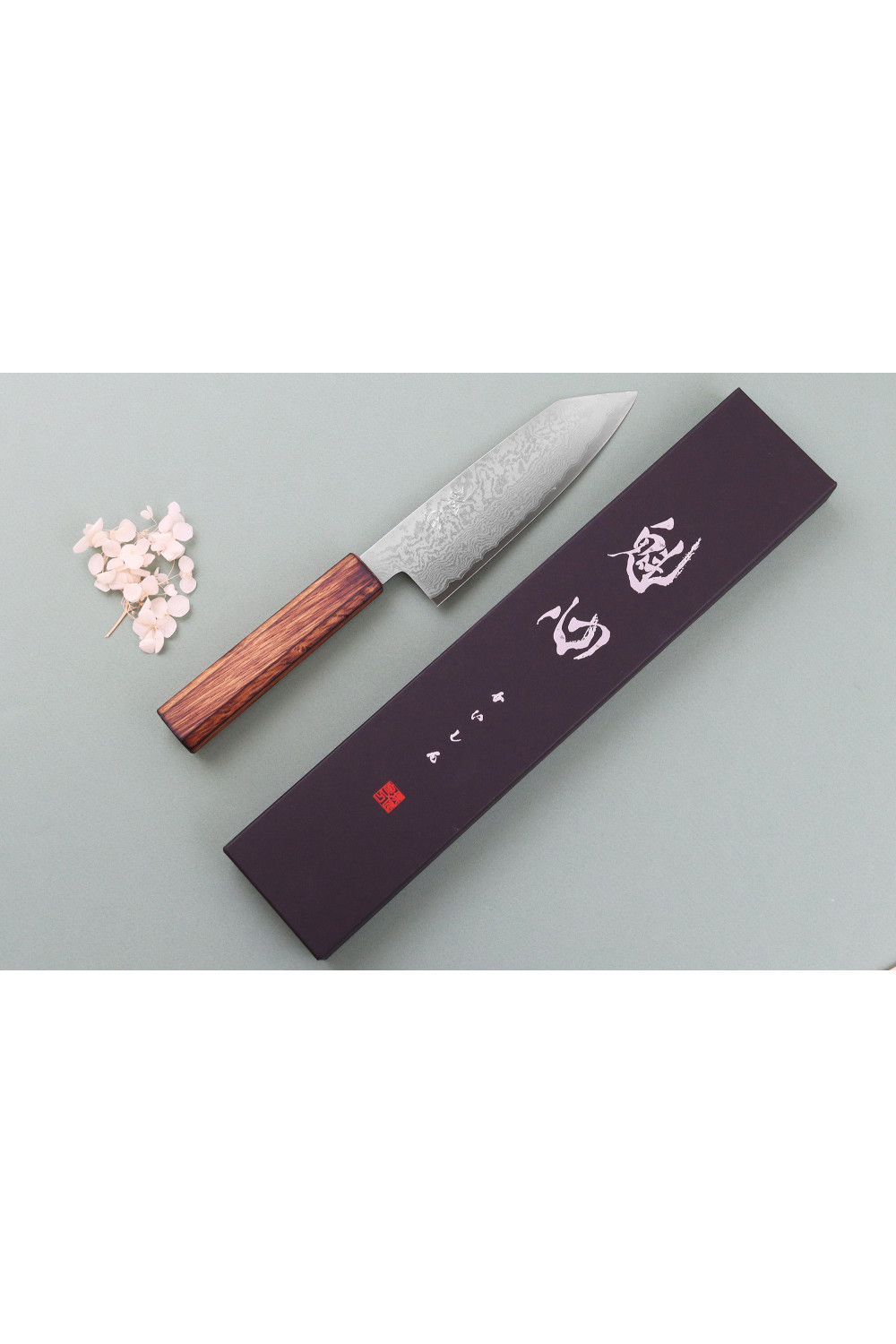
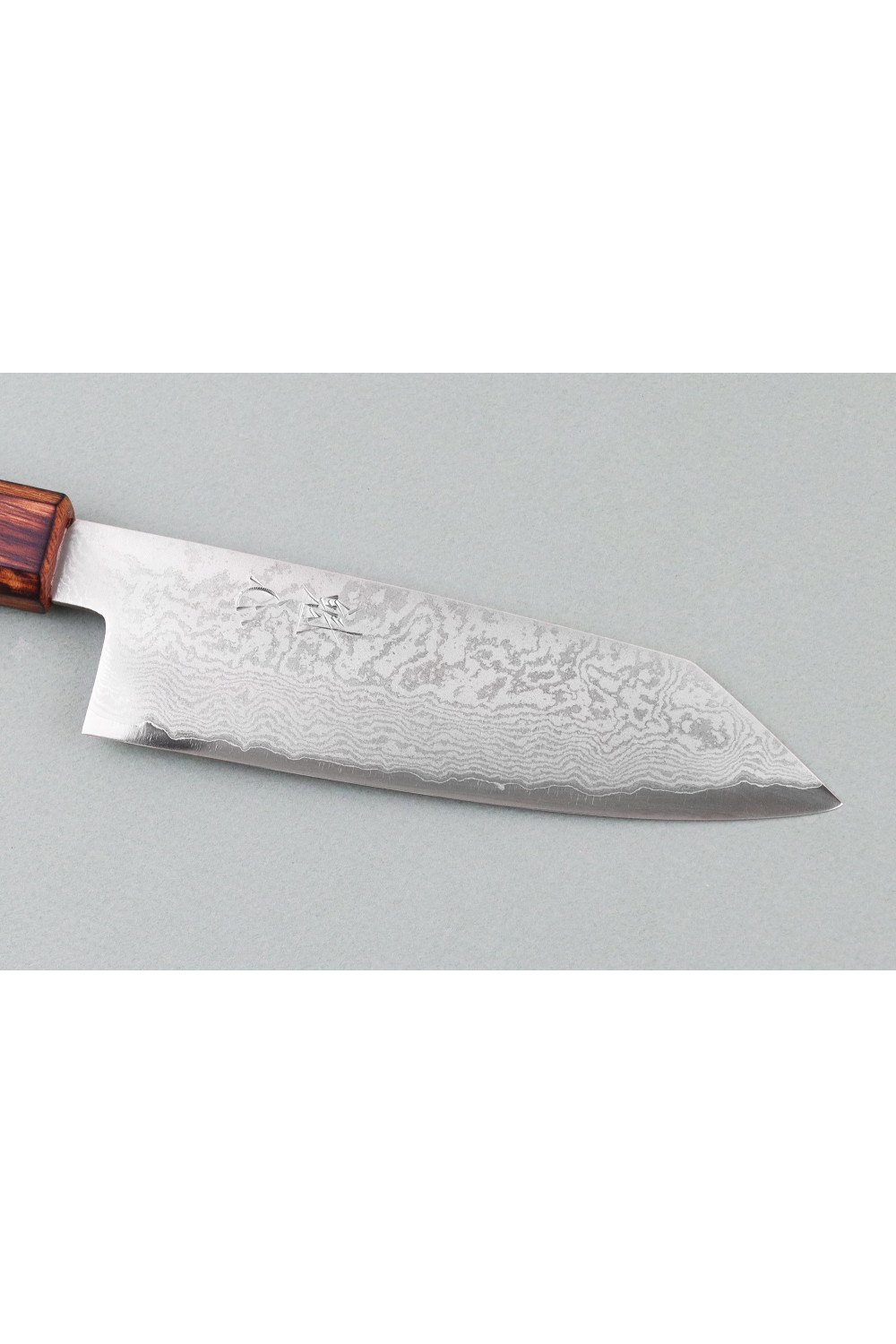
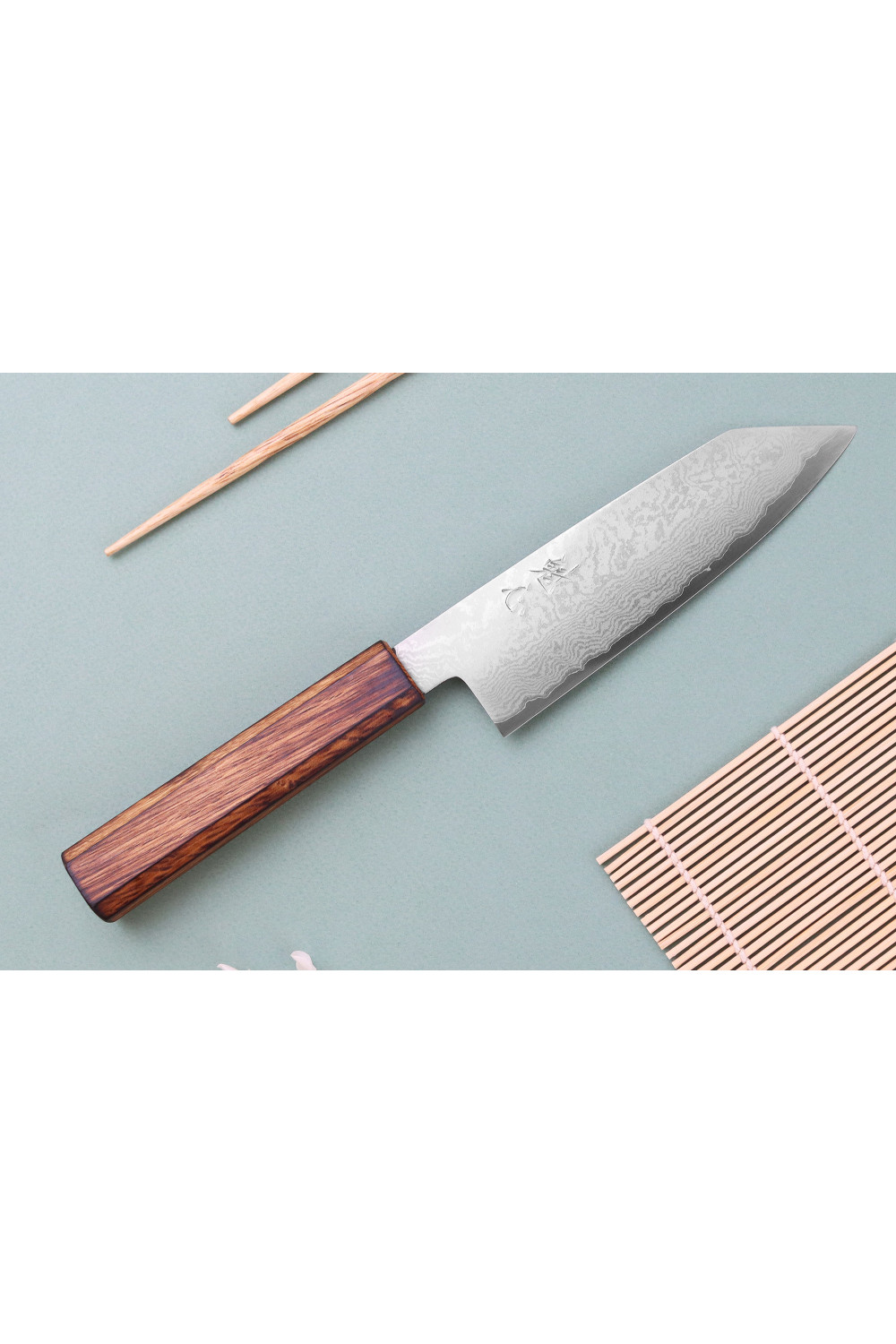
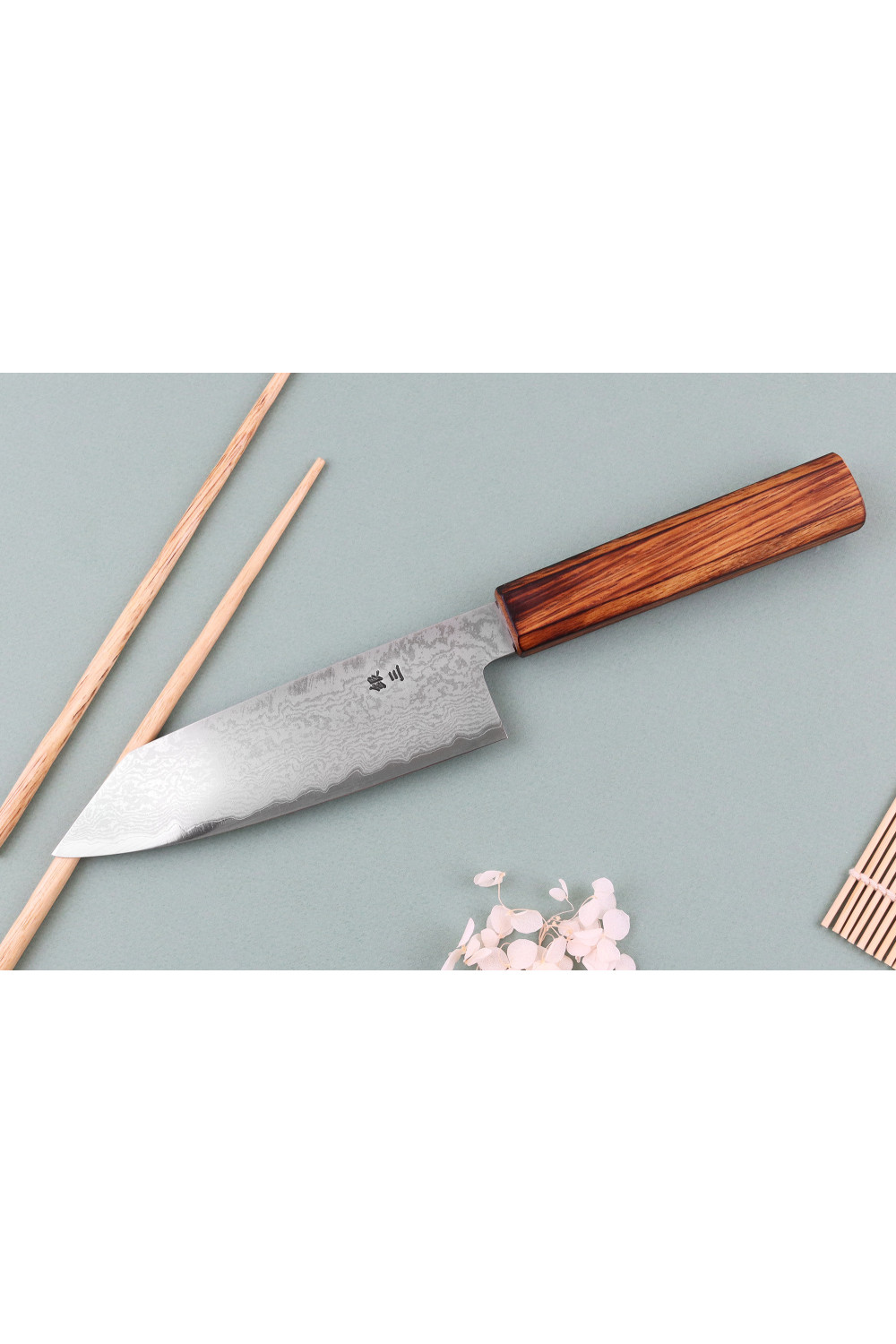
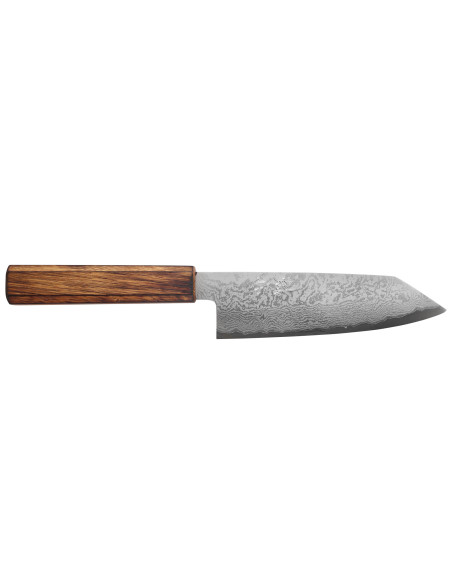
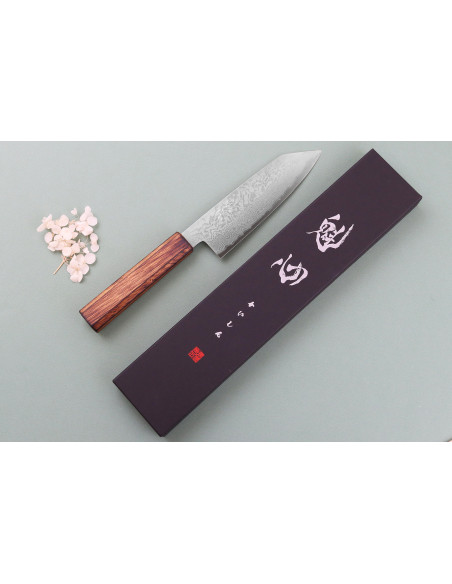
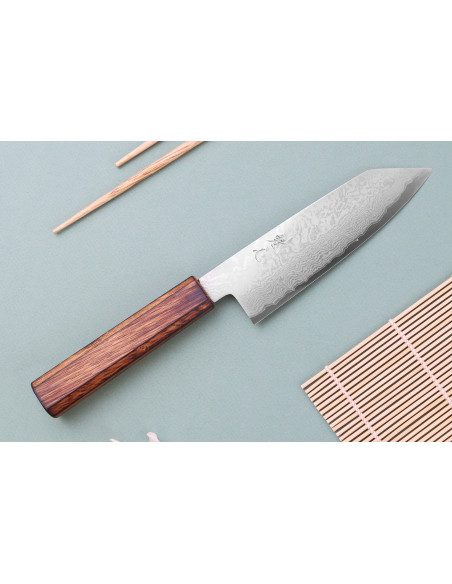
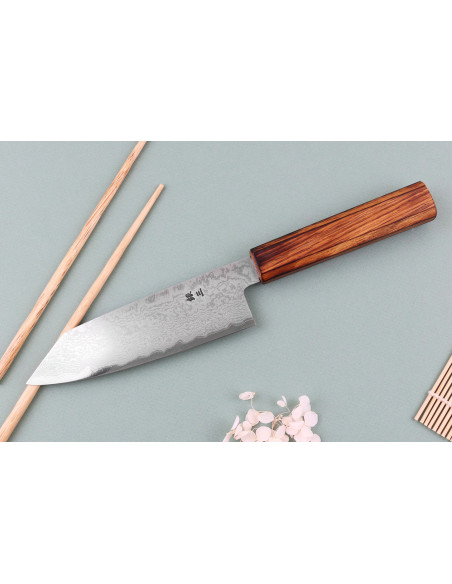
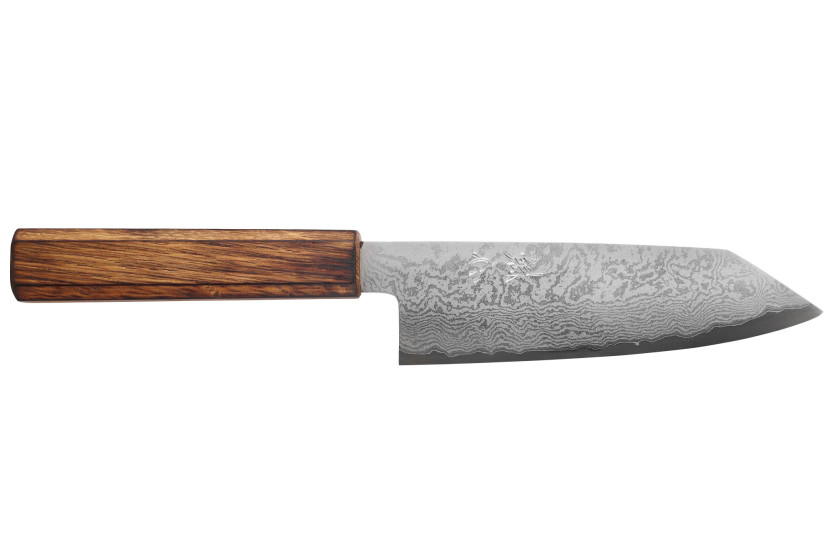
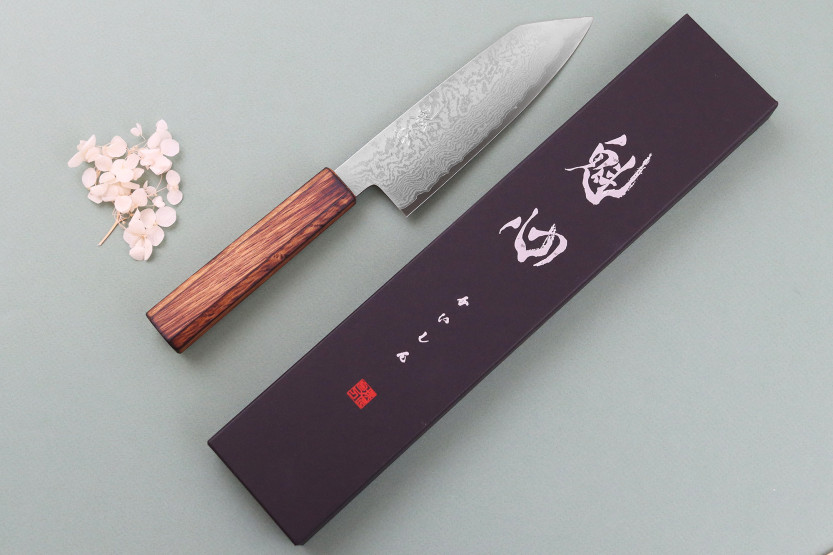
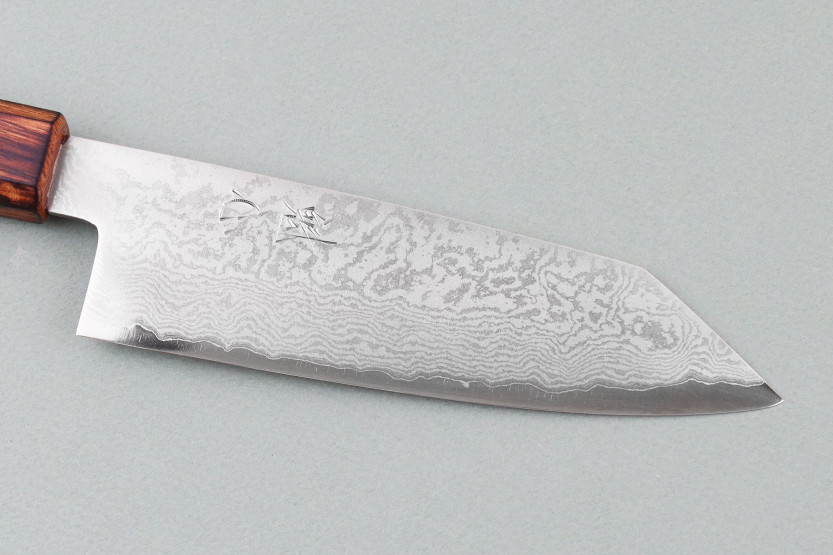
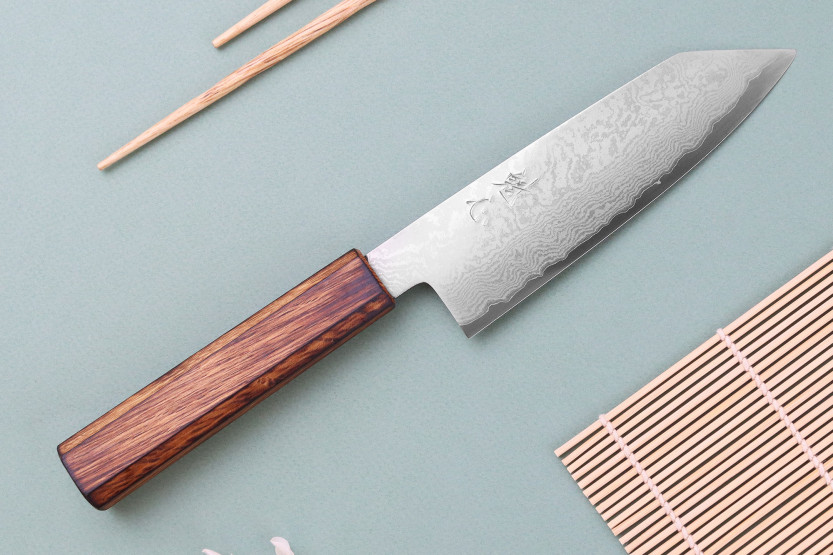
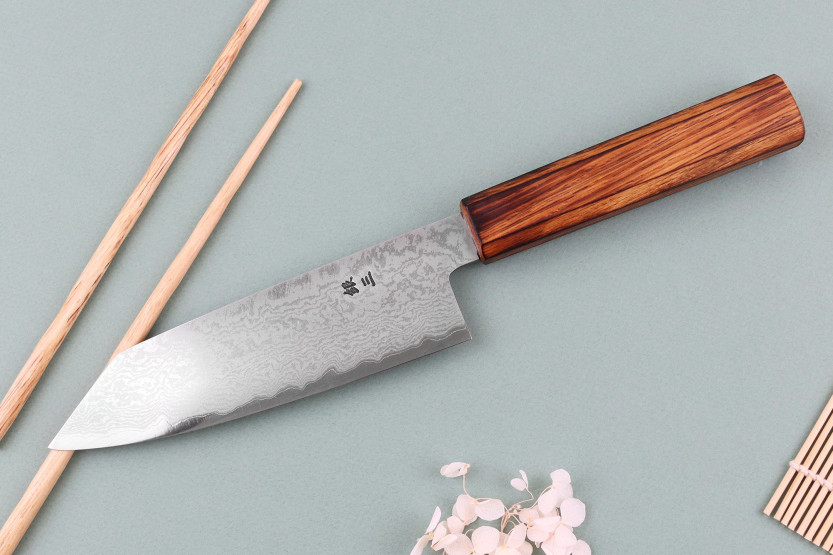
The Nakamura Kaishin Ginsan Damascus Japanese Bunka knife captivates with its blend of traditional cutlery craftsmanship and natural aesthetics! Made in Sakai, Japan, this modelfeatures a 16.5 cm Damascus blade, which is particularly easy to handle for tasks requiring precision. Its Bunka profile, recognizable by its angular tip, facilitates precise movements, while its charred oak handle gives it a unique visual identity. This handcrafted 16.5 cm Bunka knife will easily find its place in your kitchen for preparing vegetables, chopping herbs, or slicing boneless cuts of meat and fish.
High-performance Ginsan steel for precise cutting
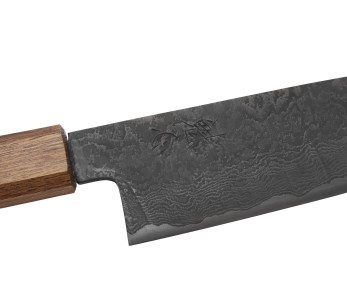
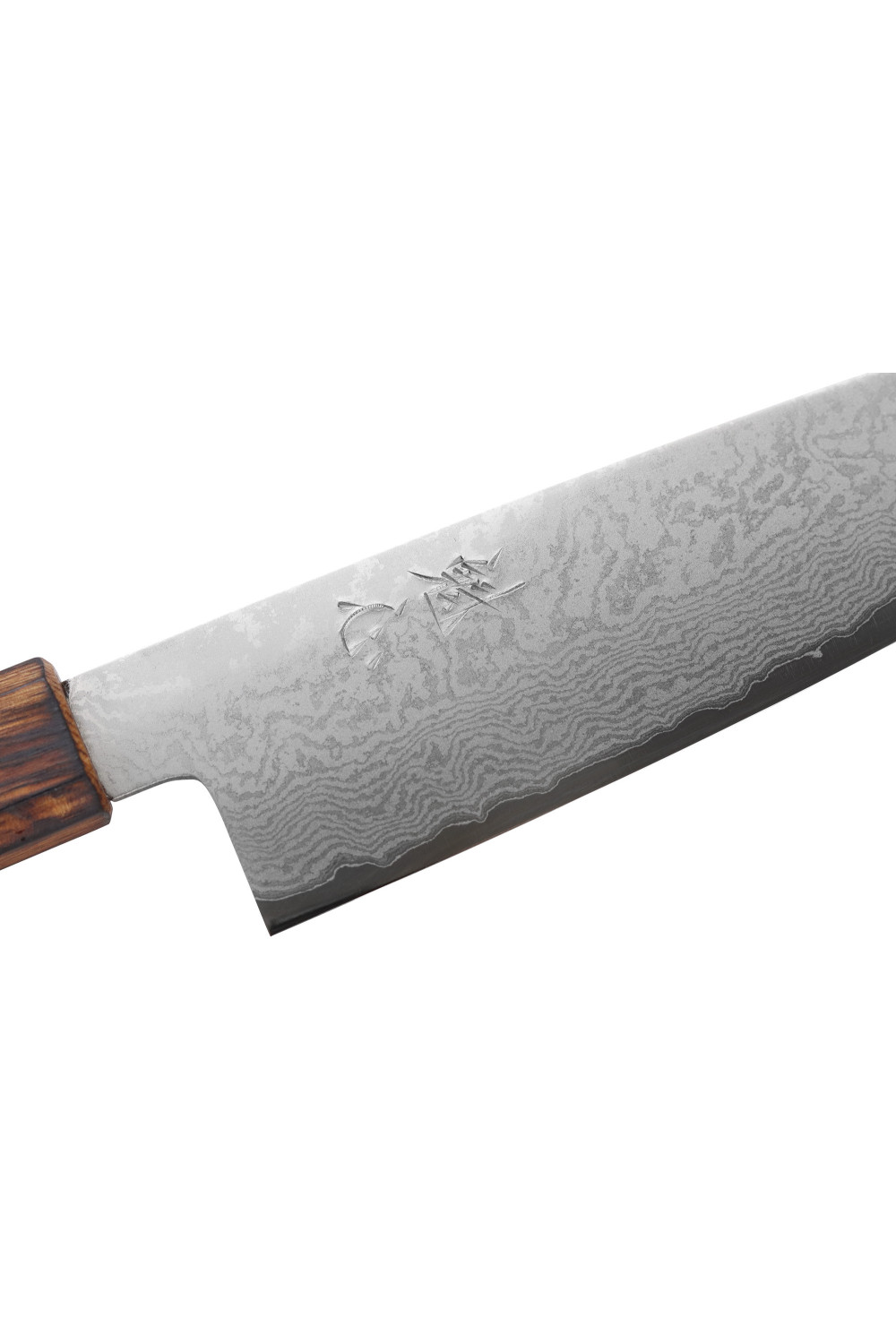
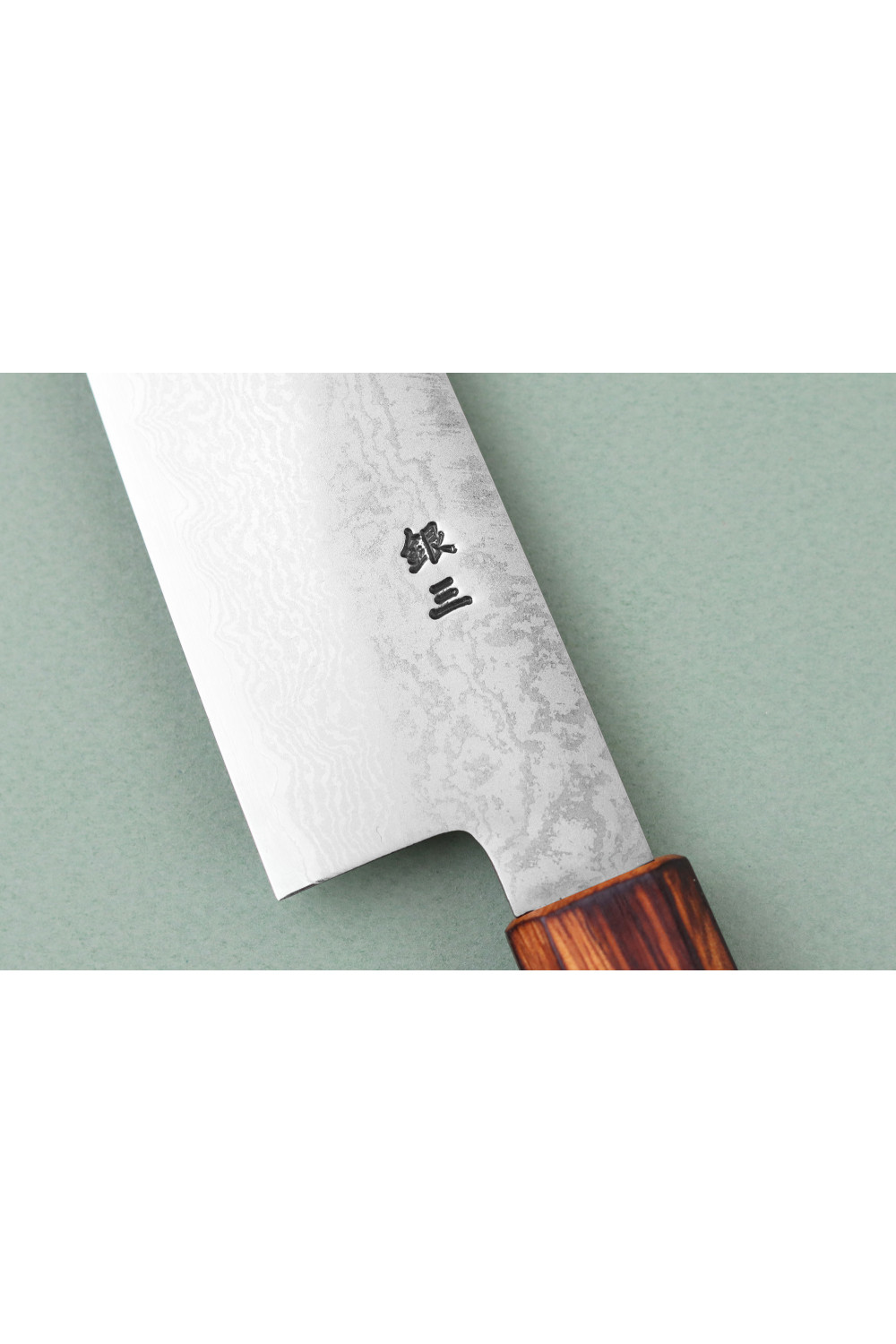
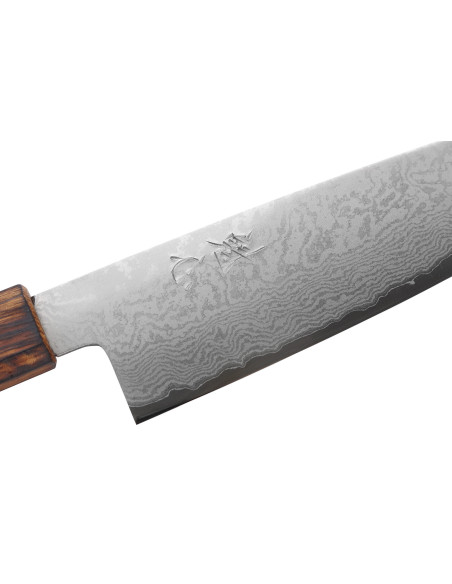
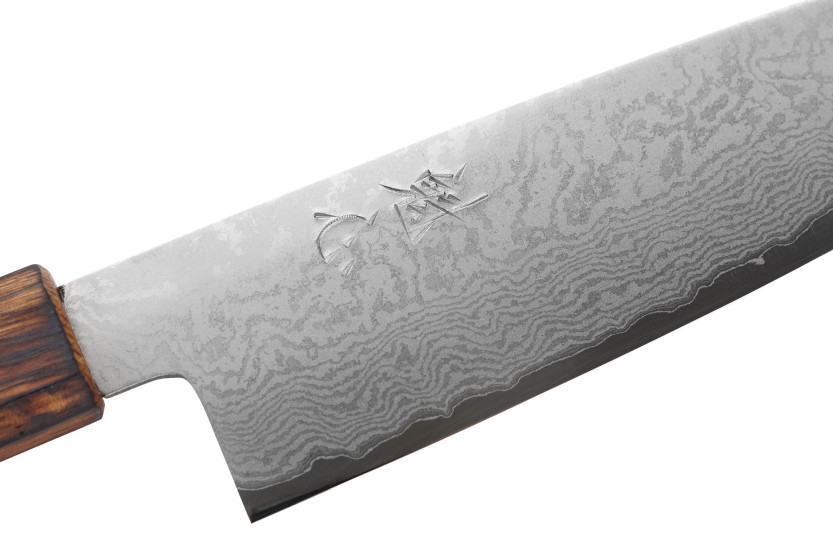
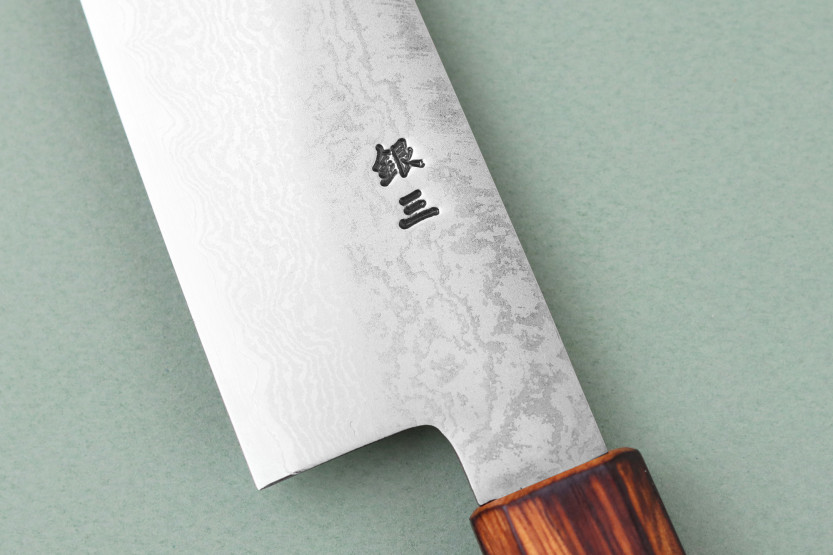
At the center of this 16.5 cm blade lies a core of Japanese Ginsan stainless steel, also known as Silver 3. Its composition, containing approximately 0.95% carbon, delivers a sharp edge while maintaining good corrosion resistance. This steel forms the core of a 63-layer damascene structure, with the outer layers made of softer stainless steel. This construction combines a hard core with softer outer layers, resulting in a blade designed to meet the demands of Japanese cutlery.
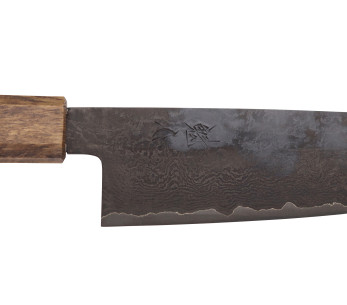
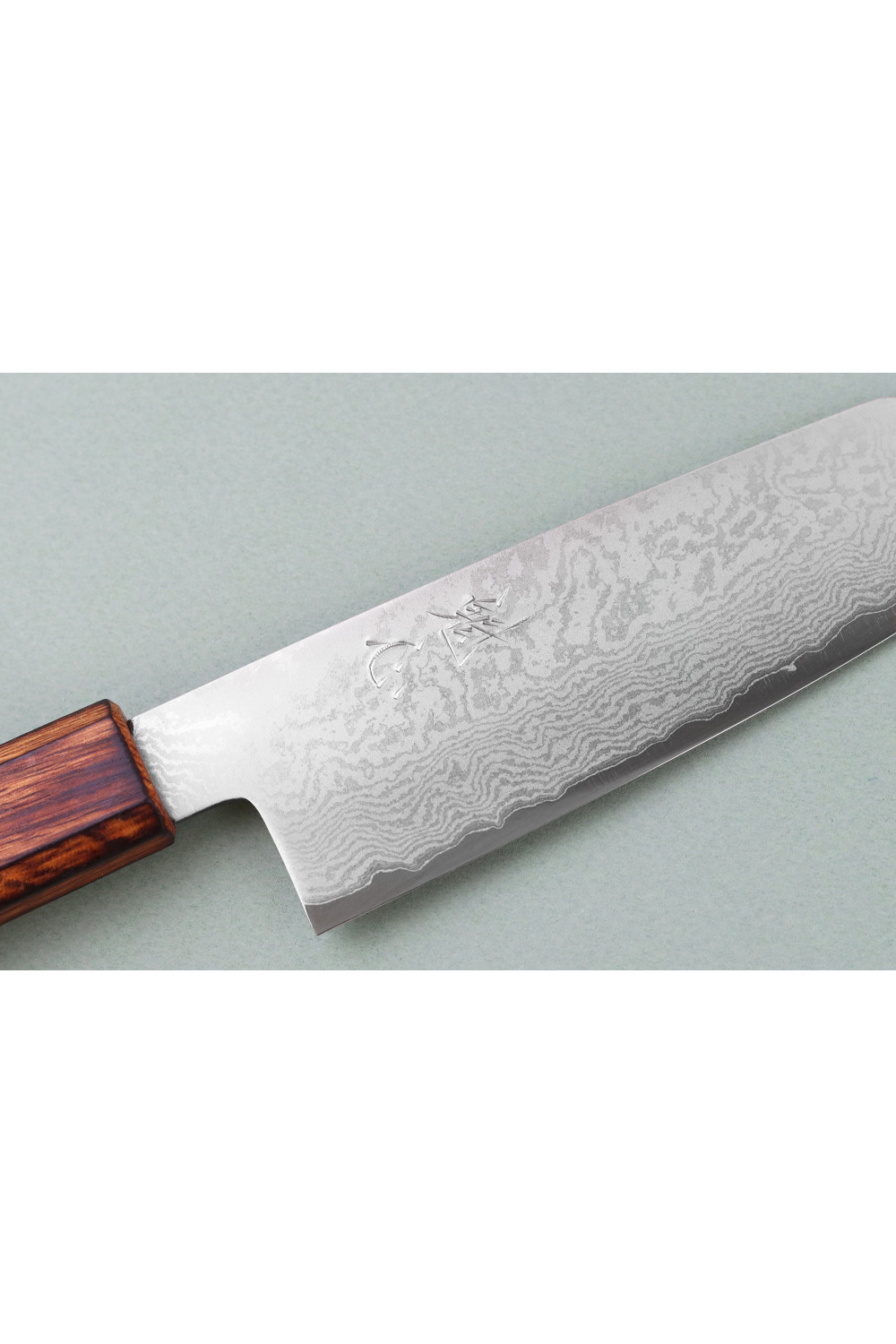
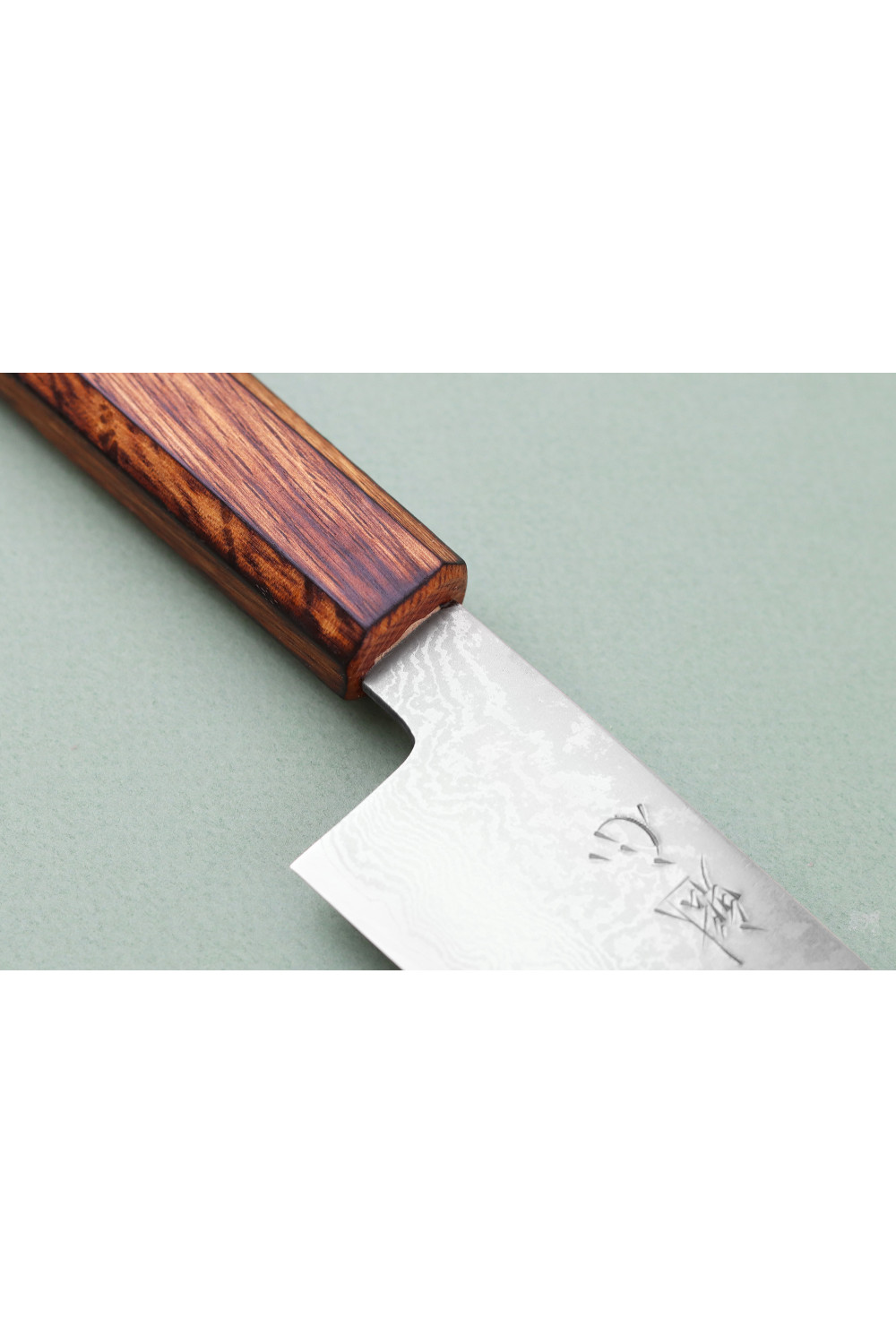
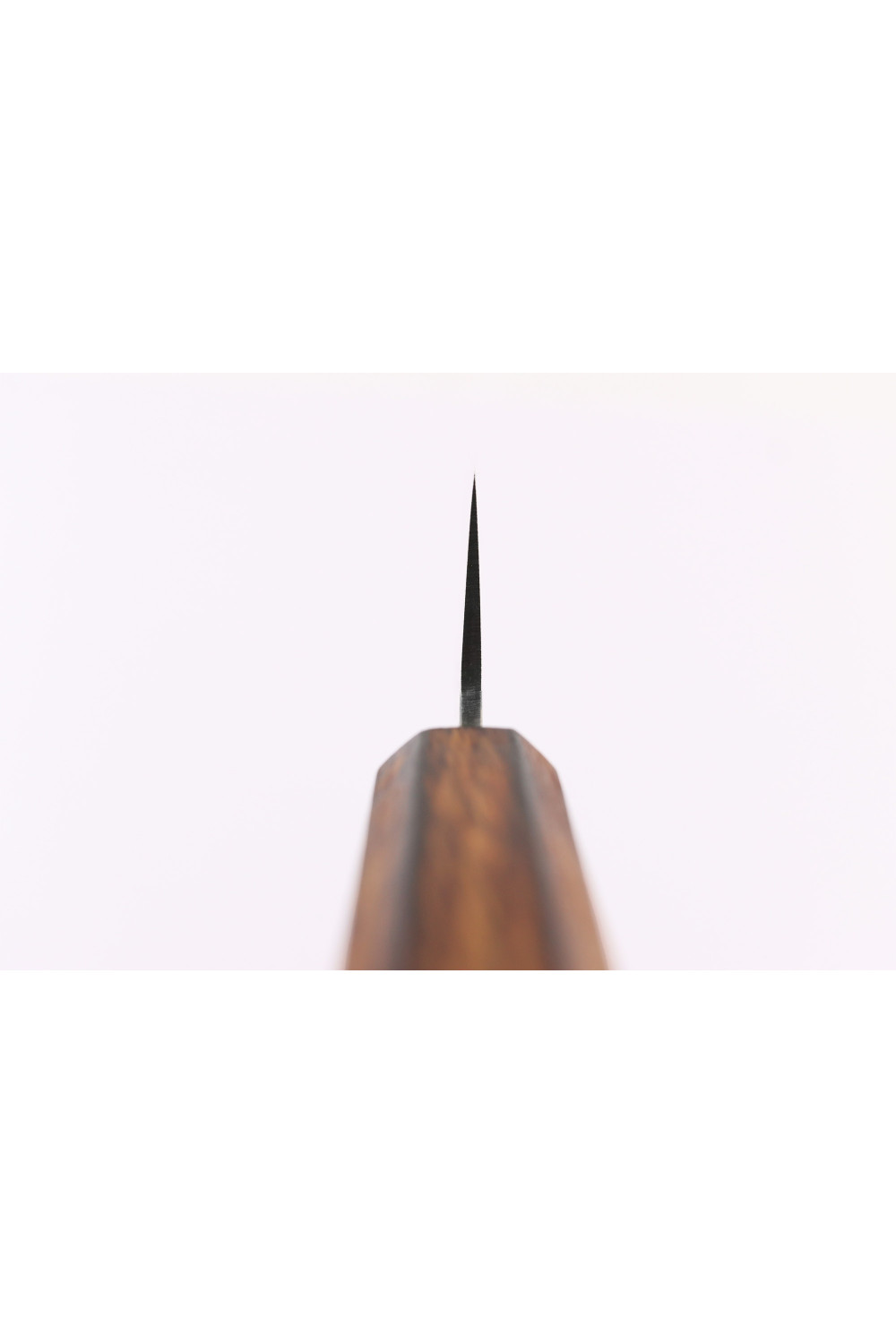
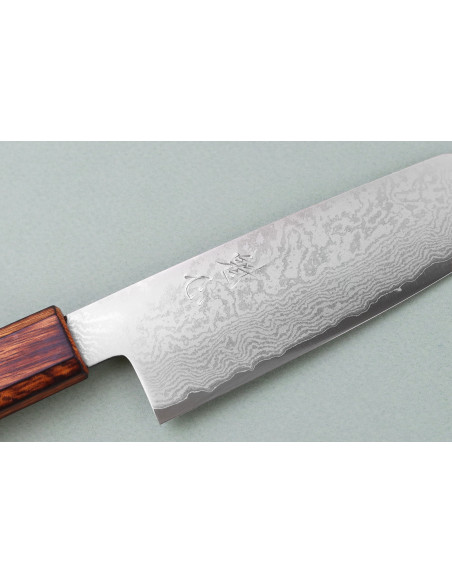
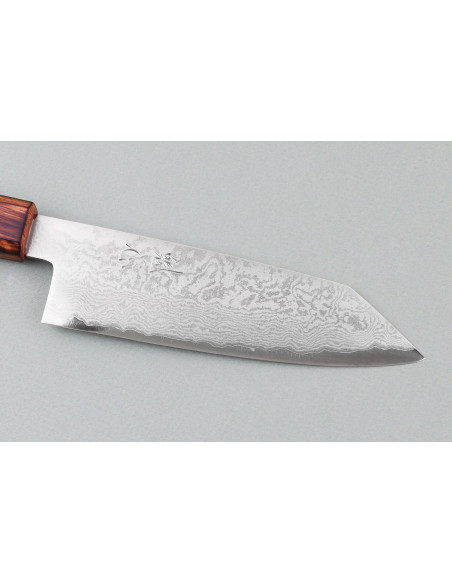
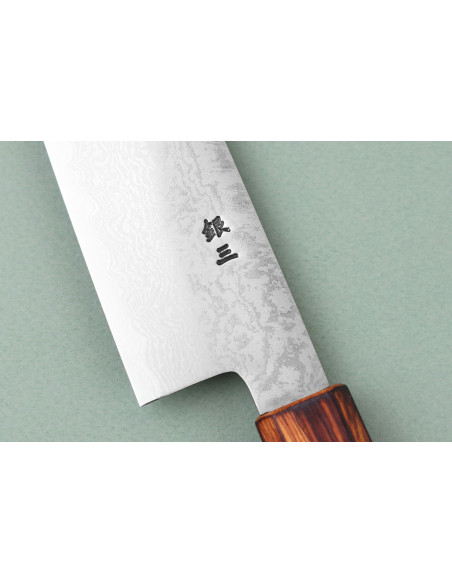
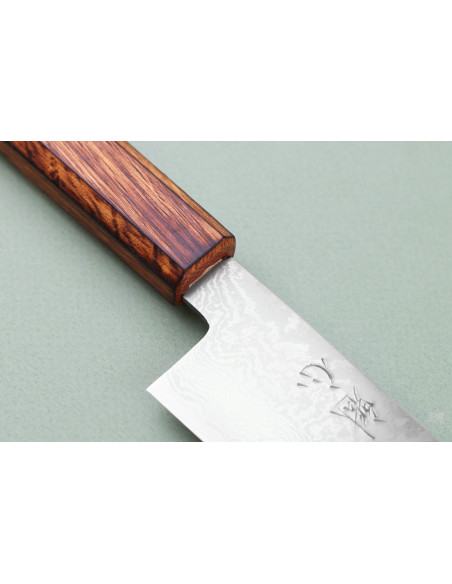
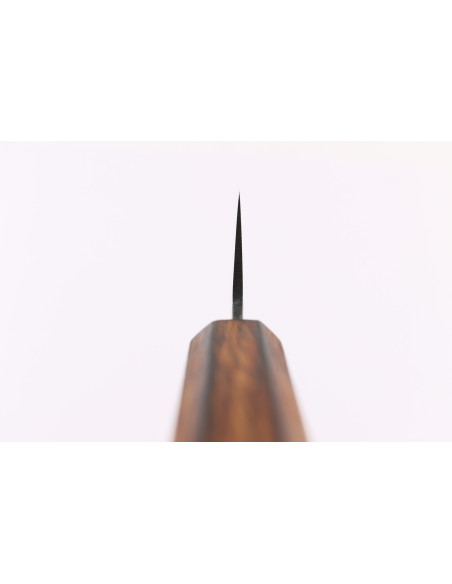
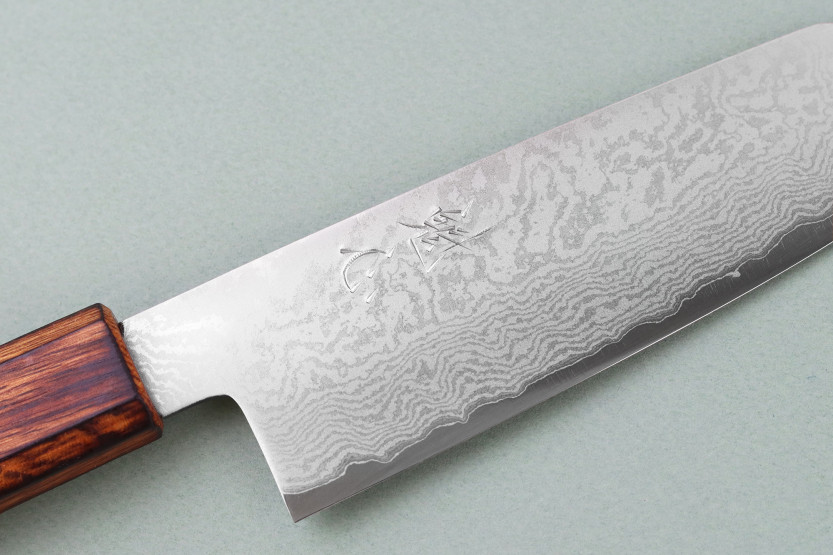
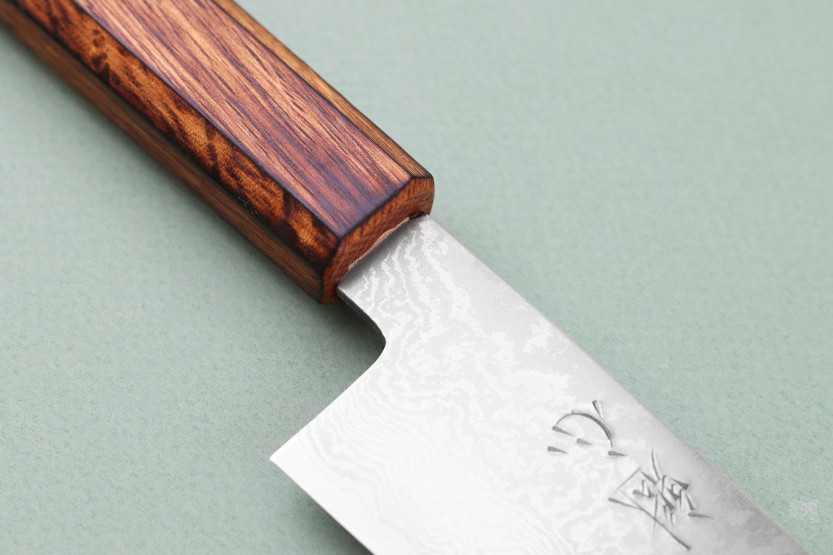
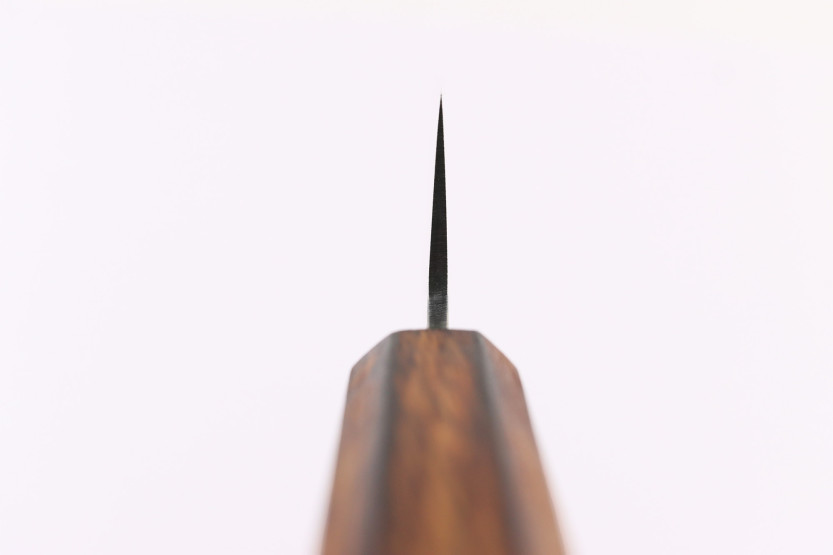
The blade achieves a hardness of 59 to 60 HRC, which helps the edge hold up during repeated cutting. Its flat grind ensures smooth cutting through the material and facilitates the production of thin slices. The Damascus pattern also gives the steel’s surface an intricate appearance, with lines that reveal the layering of the different layers and contribute to the charm of this handcrafted piece.
The bunka geometry gives it considerable versatility. Its K-tip-style point, formed by a blade spine that slopes toward the tip, allows for precise, localized cuts. It is particularly useful for scoring the skin of a tomato, mincing garlic, or trimming the edges of a vegetable. The 16.5 cm length facilitates controlled movements and offers good maneuverability when space on the cutting board is limited. Its relatively wide blade also allows you to guide food with your fingers while slicing.
A charred oak handle with a unique character
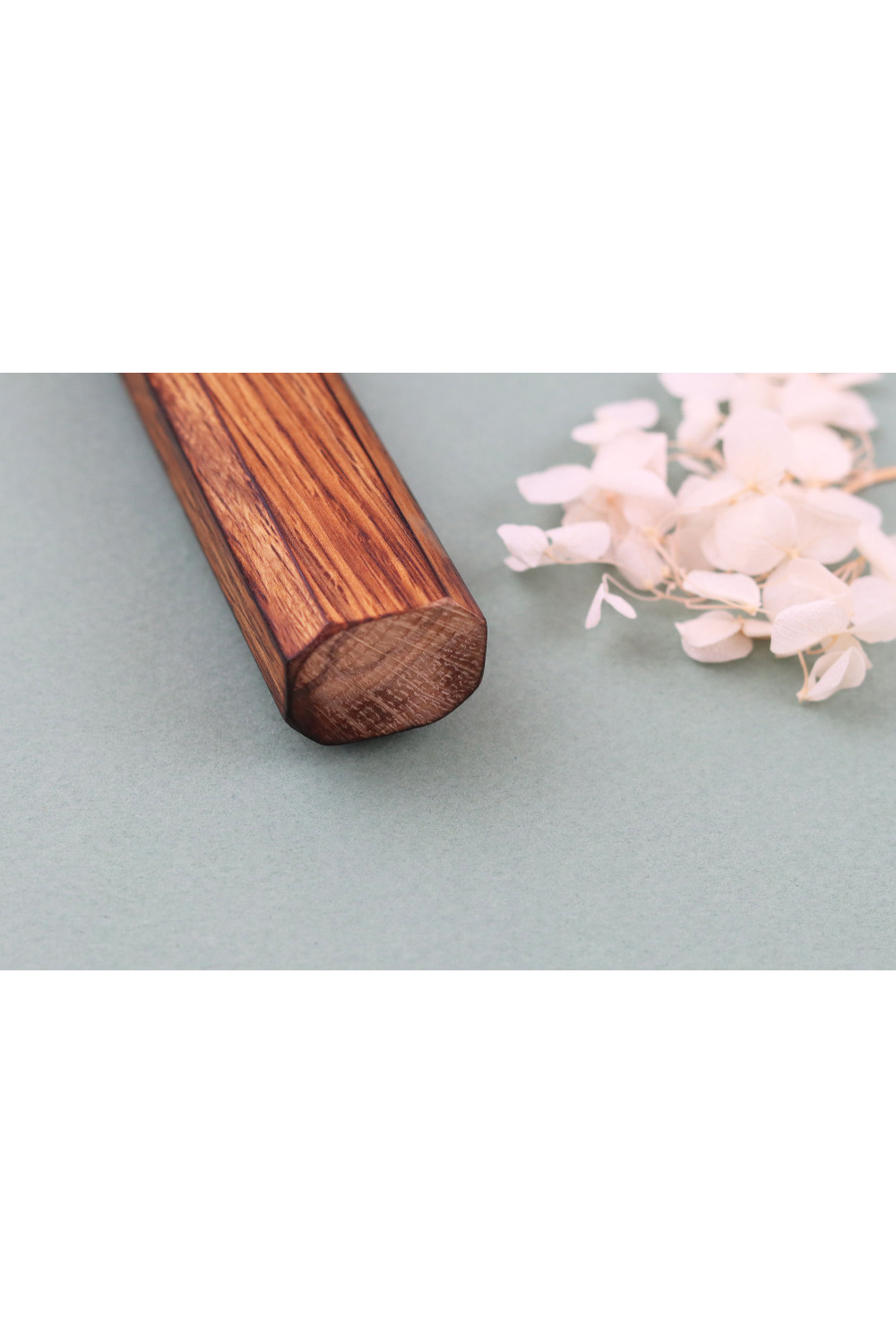
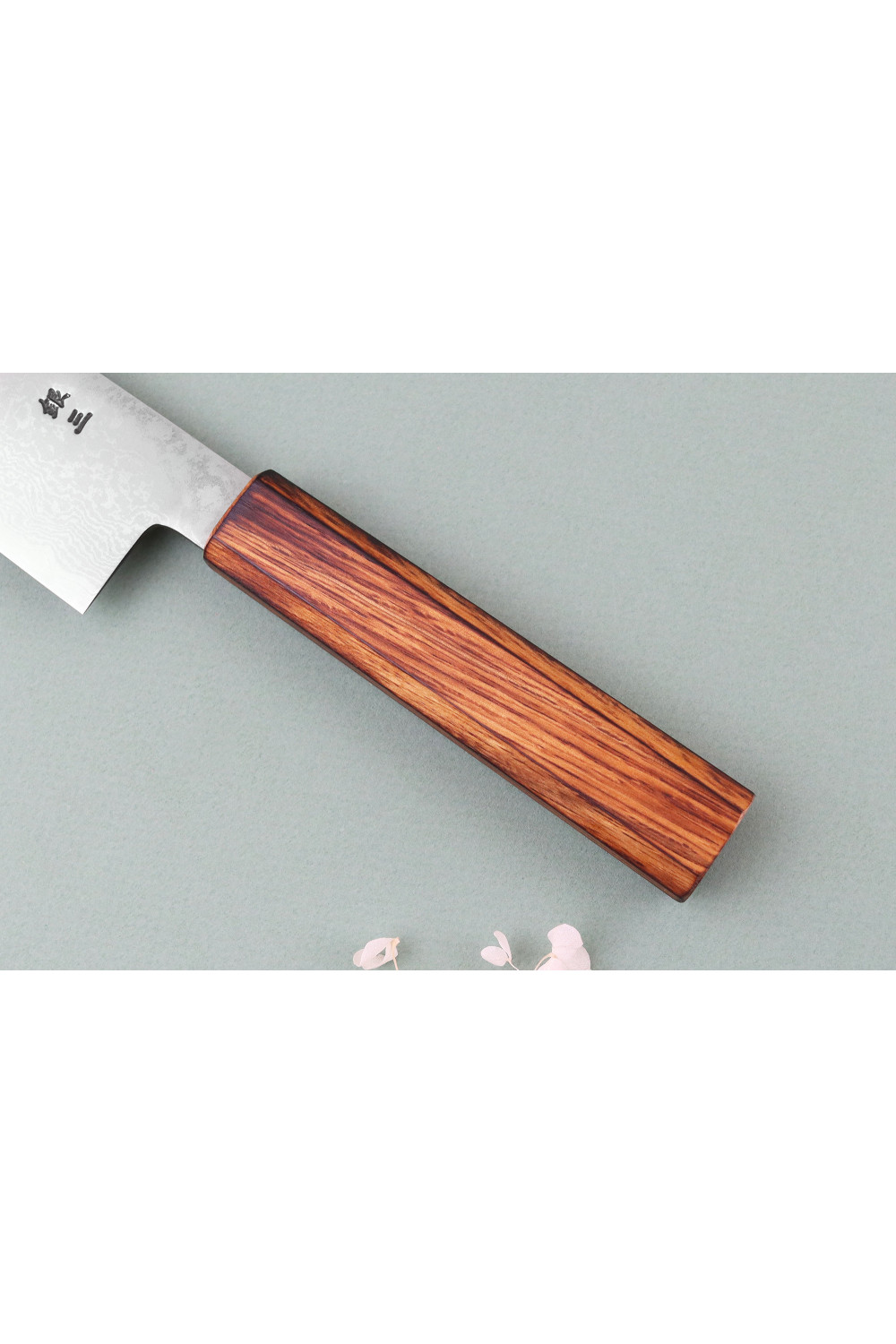
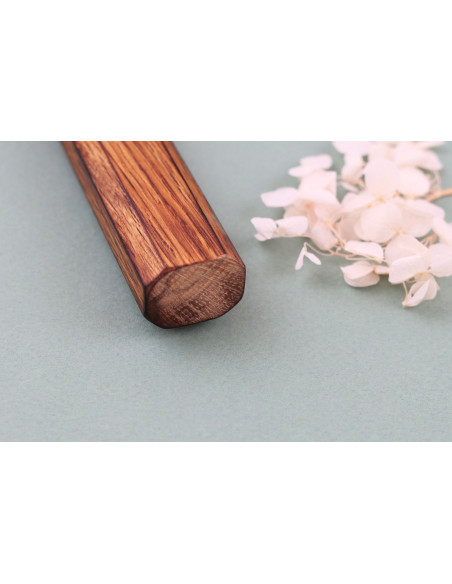
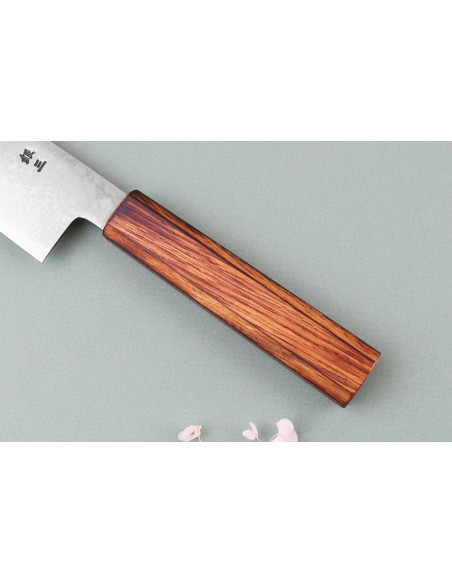
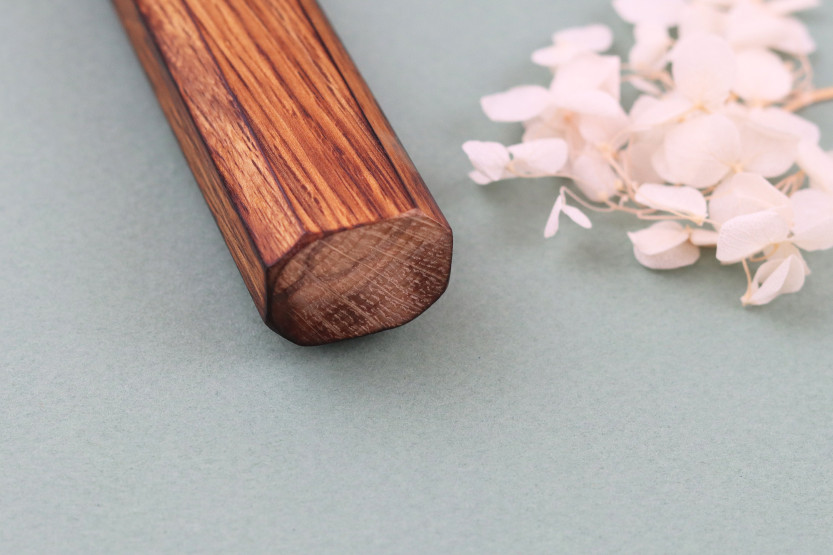
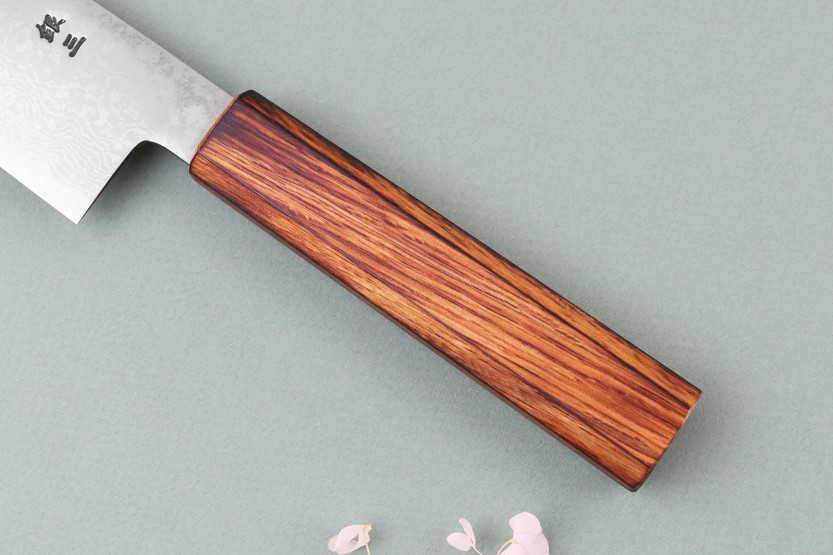
This bunka’s identity also lies in its charred oak handle, whose appearance evokes traditional Japanese woodworking finishes. The surface treatment darkens the oak and highlights its natural grain, creating variations in shade that give each piece its own character.
Unlike a completely smooth, cylindrical handle, its octagonal shape features eight distinct sides. This design allows the fingers to find natural points of support and helps minimize unintended rotation of the knife during use. Its symmetry allows for a comfortable grip for both right- and left-handed users.
The charred oak creates a contrast with the sheen of the Damascus steel. The dark tones of the handle highlight the metallic patterns on the blade, giving this bunka a simple, almost rustic look, while retaining the elegance characteristic of handcrafted Japanese knives. A combination of materials that will appeal to lovers of traditional cutlery!
Key Features
-
- 16.5 cm bunka blade: a manageable size for everyday cutting tasks
- Angular K-tip: enhanced precision for incisions and delicate tasks
- 63-layer damask structure: layers of steel wrapped around a central core
-
- Japanese Ginsan steel core: fine edge and good corrosion resistance
- Hardness 59/60 HRC: effective edge retention
- Flat grind: even penetration into food
-
- Burnt oak handle: dark finish that highlights the wood grain
- Octagonal shape: comfortable grip for both right- and left-handed
users
- Forged by Shogo Yamatsuka and sharpened by Fujii Hamono: specialists from Sakai
-
- Made in Japan: centuries-old cutlery craftsmanship
Caring for Your Japanese Knife on a Daily Basis
To keep the blade in excellent condition, use your bunka knife on a wooden cutting board or a soft plastic cutting mat. Since its angled tip is designed for precise work, avoid using it to pry or apply lateral pressure. Frozen foods, bones, and very hard surfaces should also be avoided.
After each use, gently wash the blade by hand, then dry it immediately. Protect the charred oak handle from prolonged exposure to moisture, and never put the knife in the dishwasher. To maintain its performance, sharpen the knife with a water stone, preserving the original cutting edge angle.
Two artisans from Sakai dedicated to the blade’s sharpness
The creation of this knife involves a traditional artisanal process characteristic of Sakai, where forging and sharpening are traditionally entrusted to different specialists. This method allows each artisan to focus on their area of expertise.
Shogo Yamatsuka, born in 1958, comes from a family of Japanese blacksmiths. He began his apprenticeship with his father in 1973, before devoting much of his career to mastering the steels used in kitchen knives. His work with Ginsan has allowed him to develop an in-depth understanding of this stainless steel, the forging of which requires precise temperature control. In 2012, he was awarded the title of Master Traditional Craftsman in recognition of his career and skills. He specializes in Hizukuri, a hot-forging technique that allows the steel to be gradually shaped.
The next step is handled by Fujii Hamono, a sharpening workshop in Sakai led by Fujii Keiichi. The workshop’s work consists of refining the blade’s surfaces on specialized grinding wheels to define its geometry and create a uniform cutting edge. The precision of these operations directly influences the quality of the cut and the feel of the knife during use.
By combining Yamatsuka’s mastery of forging with Fujii Hamono’s sharpening expertise, Nakamura Hamonocarries on a Japanese cutlery tradition rooted in the specialization of artisans!
Explore our selection of Nakamura Hamono Japanese knives to discover other pieces from the Sakai cutlery tradition!




 By buying this product you can collect up to