Japanese Bunka: A Balance of Sophistication and Versatility
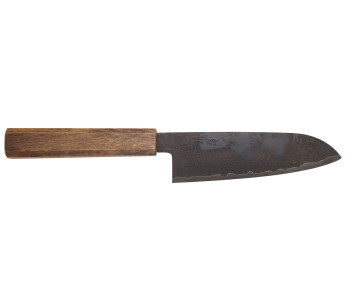
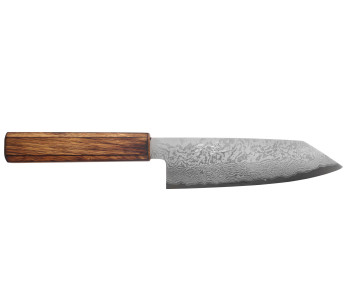
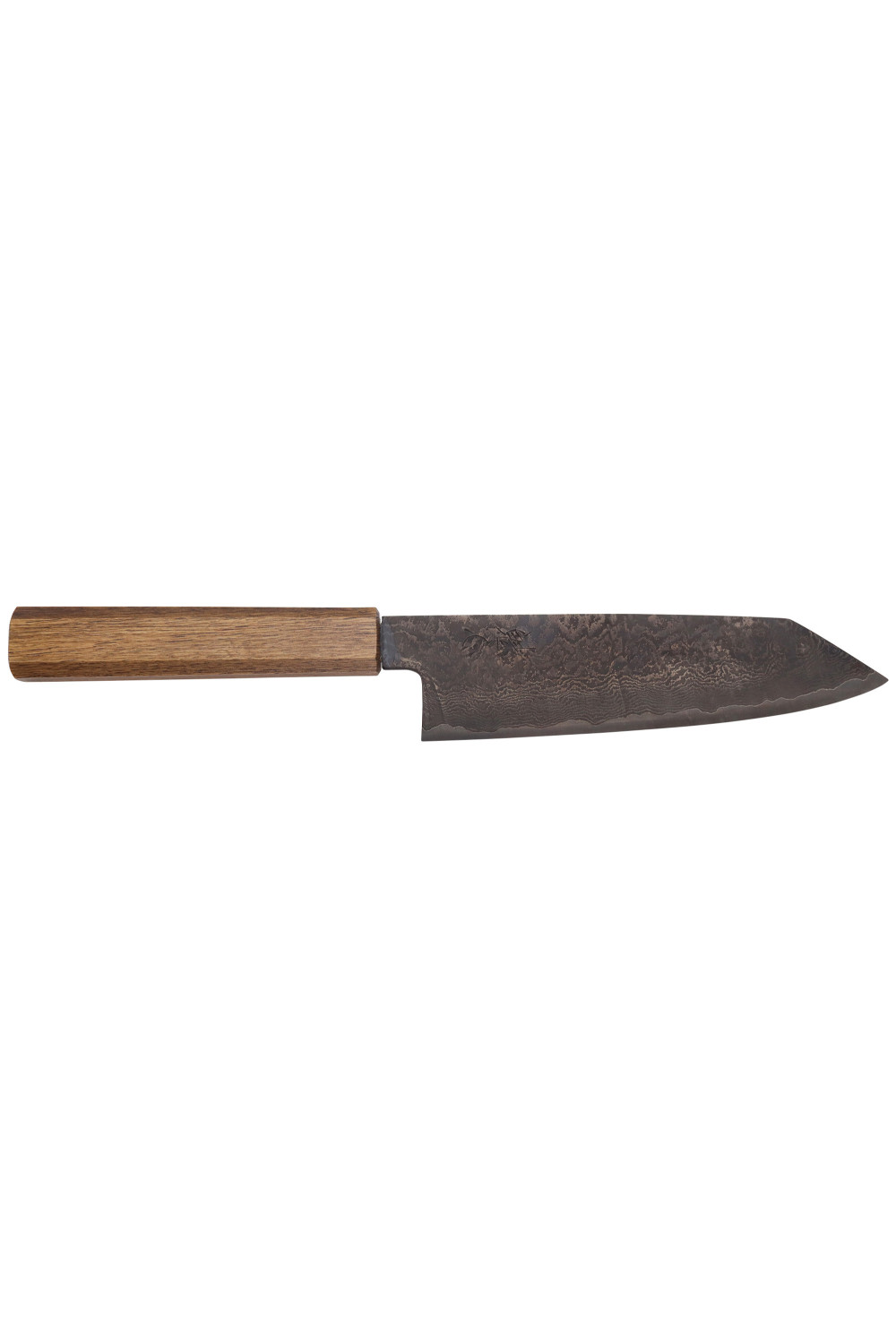
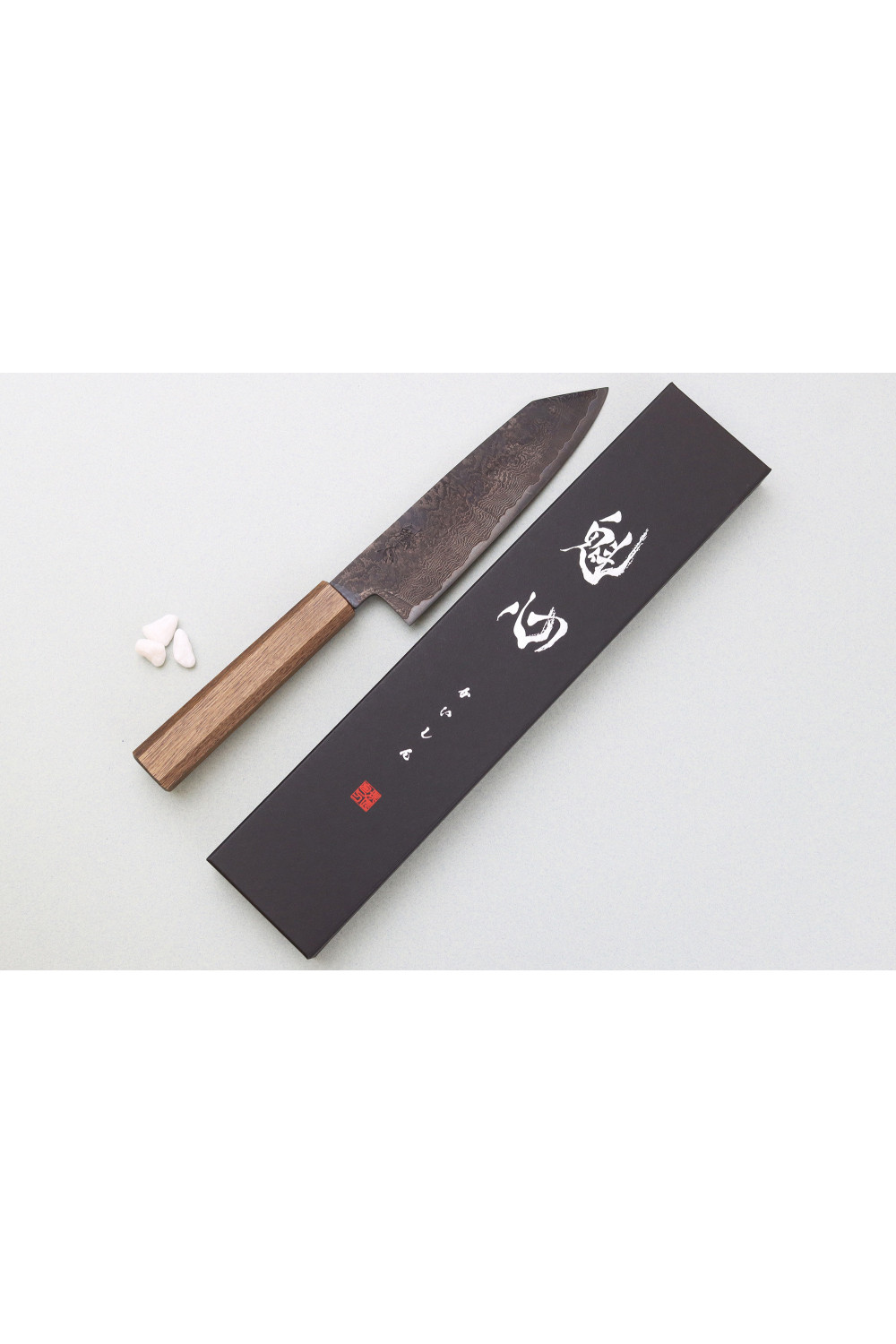
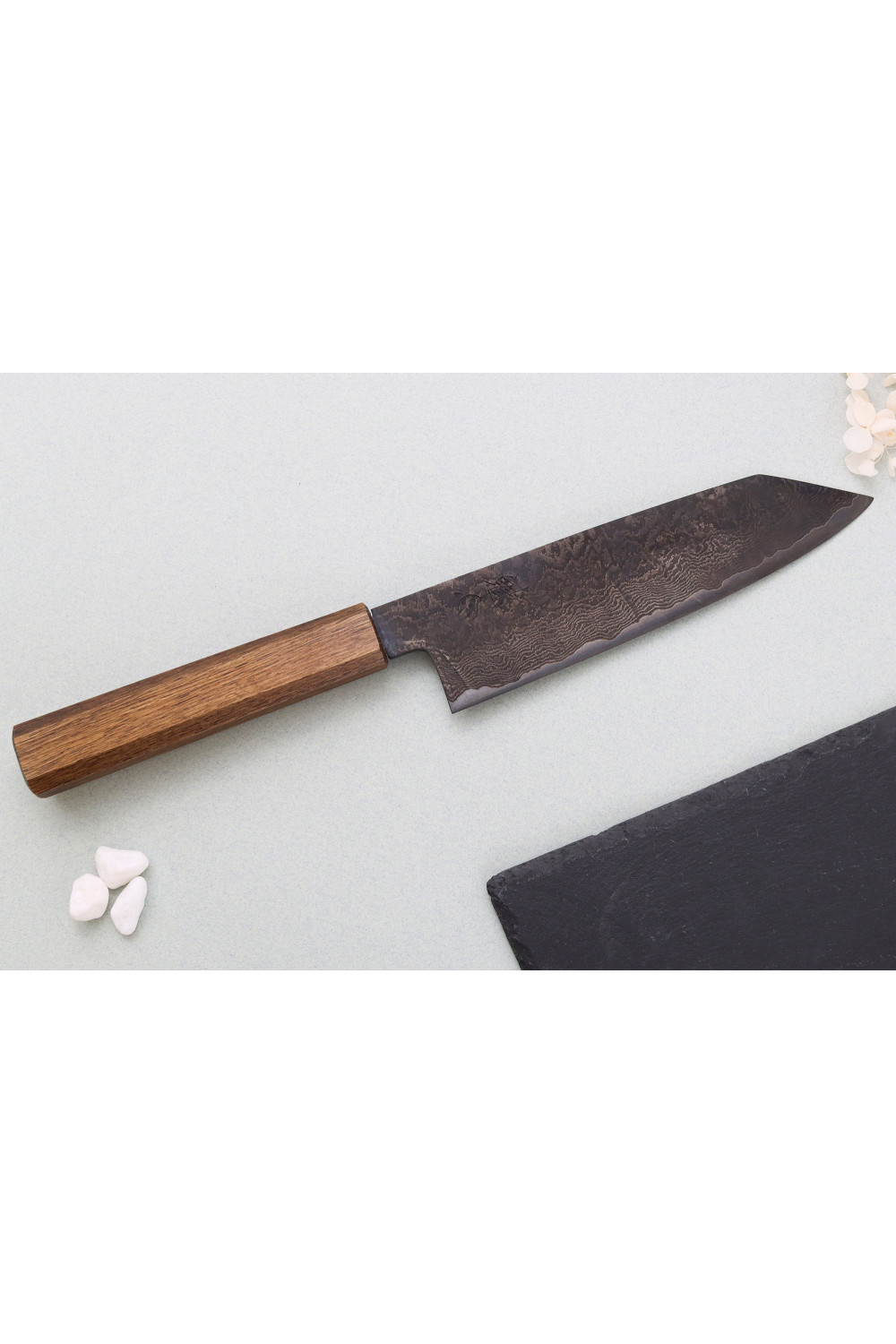
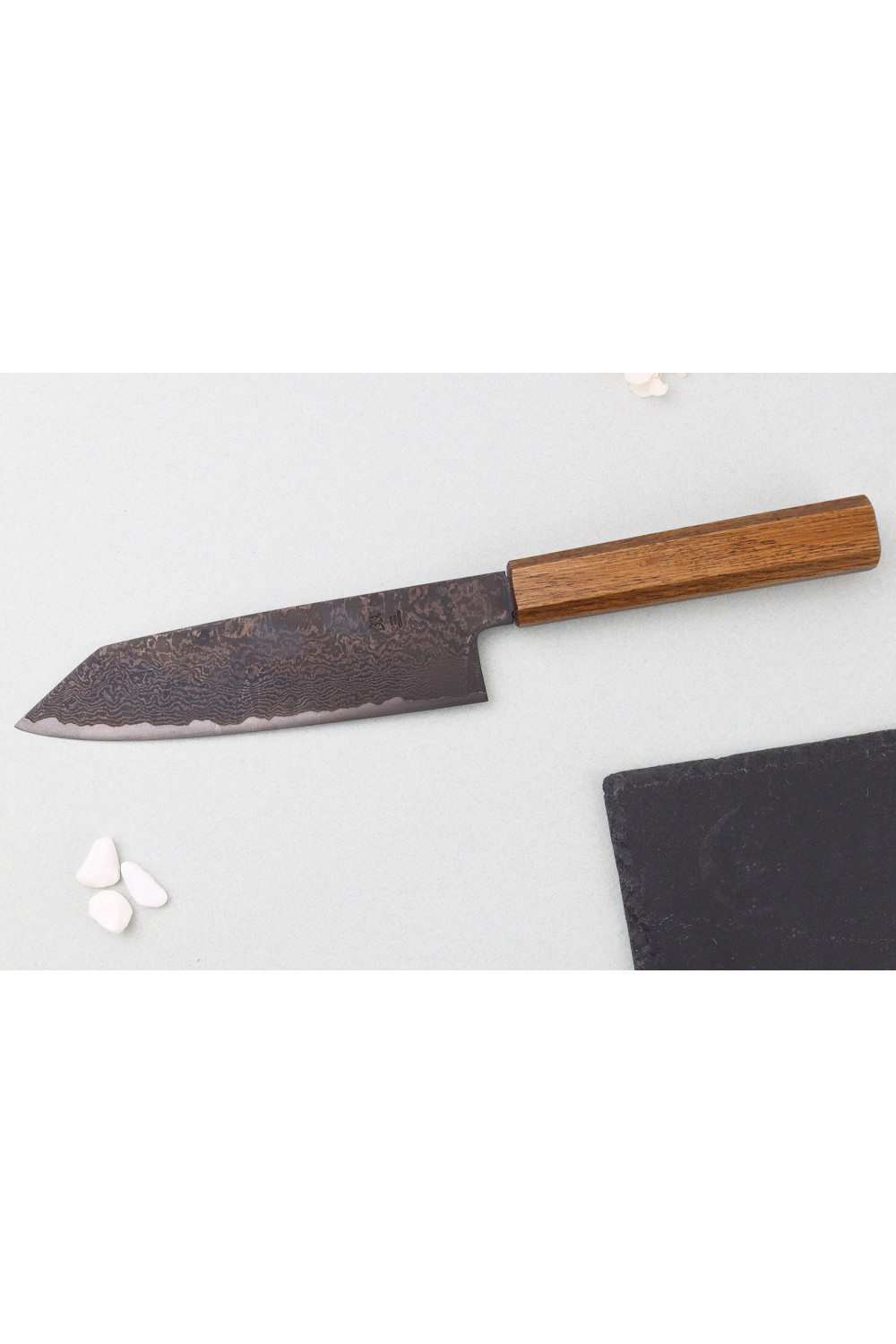
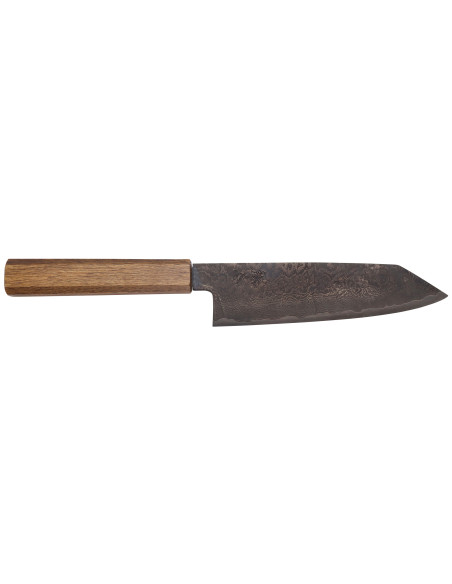
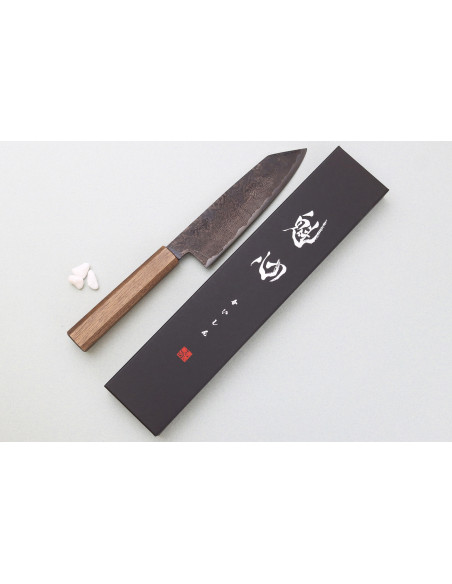
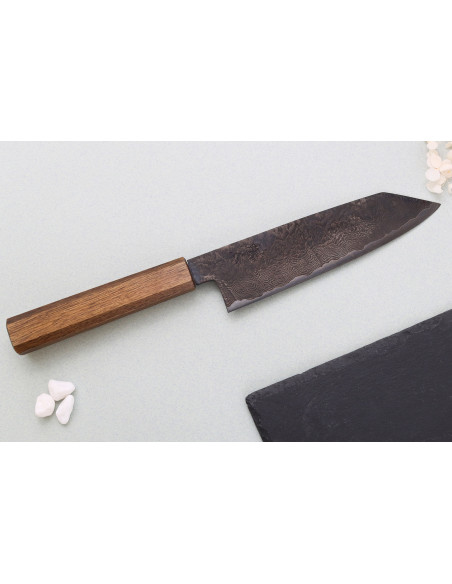
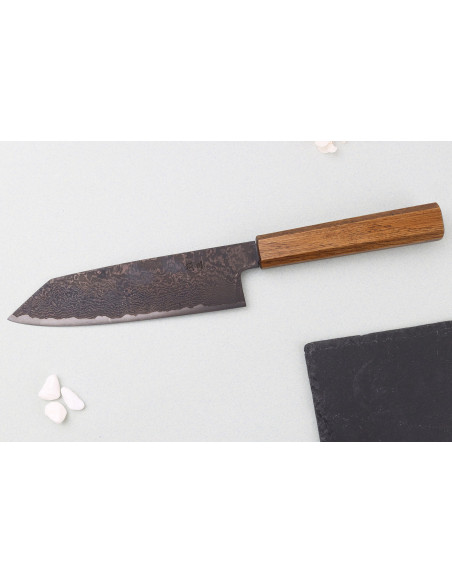
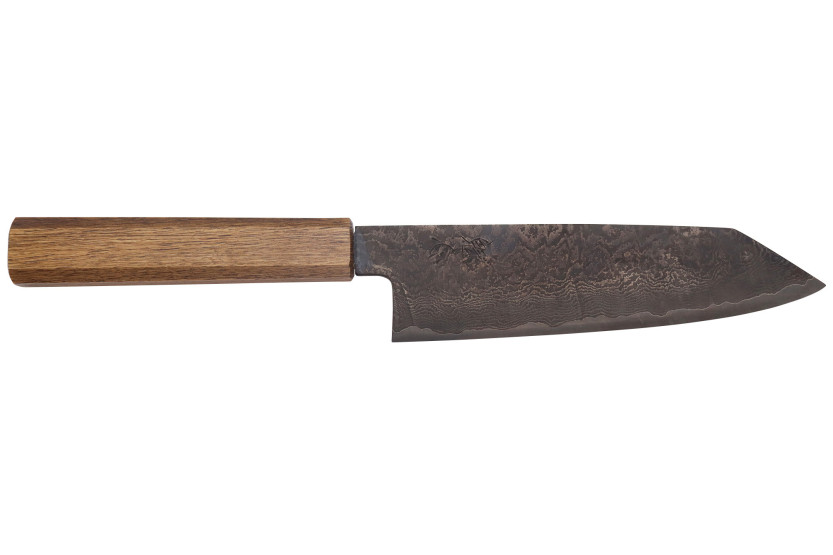
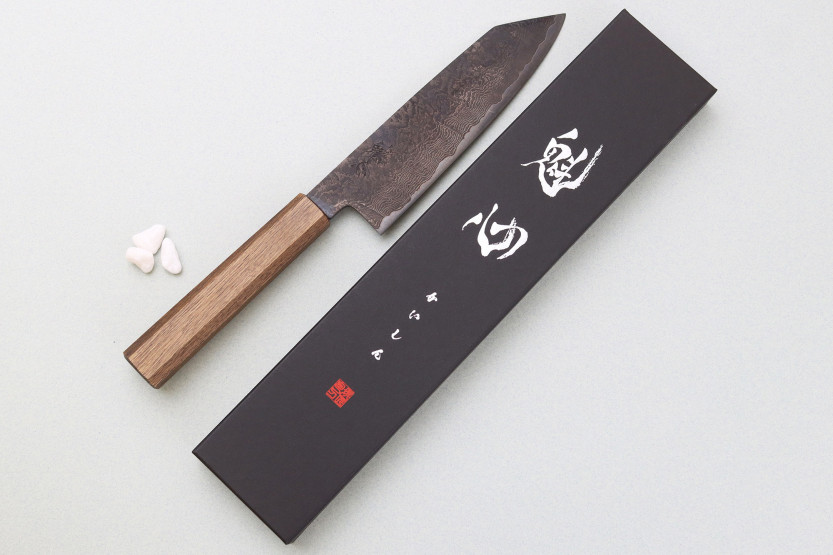
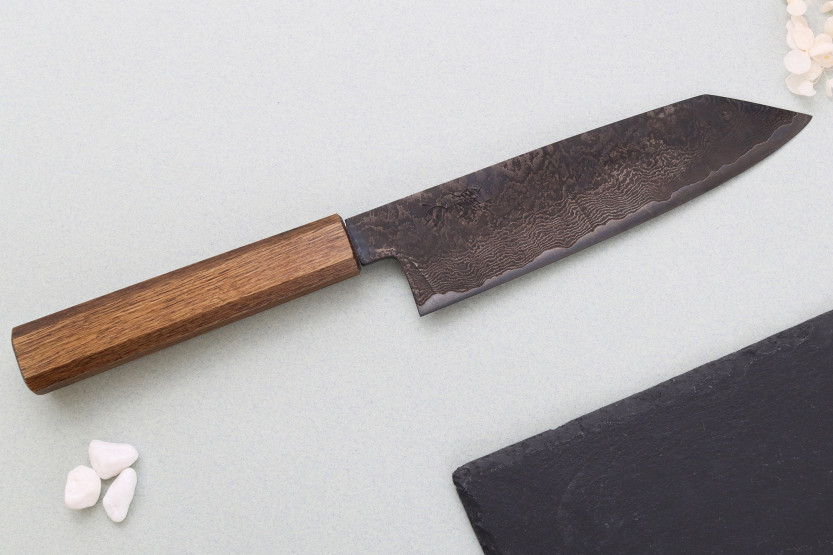
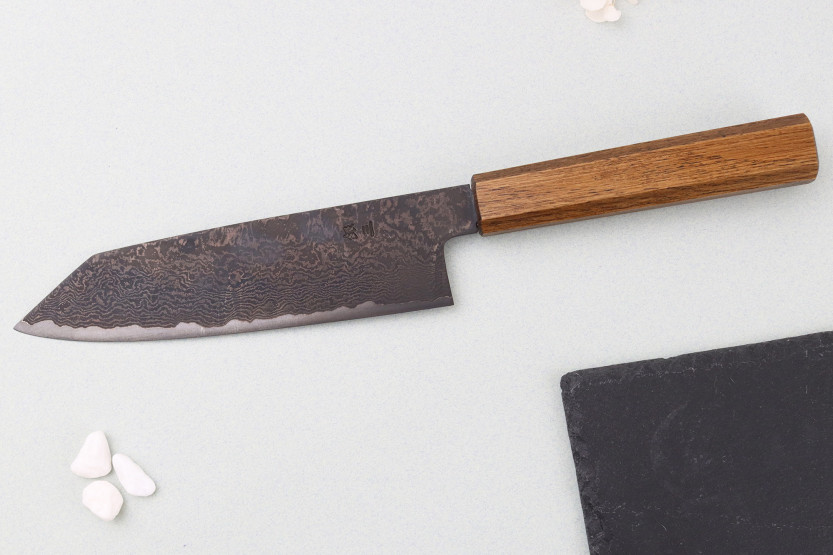
With its angular profile and bold silhouette, the Nakamura Kaishin Ginsan Black Damascus Japanese bunka knife immediately catches the eye! Handcrafted in Sakai, Japan, itfeatures an 18-cm blade with a distinctive tip that allows for exceptionally precise cuts. Its damask construction, Ginsan steel, and elegant smoked oak handle make it a true pleasure to use. Designed to handle a wide variety of ingredients, this 18-cm artisanal Bunka knife lets you slice herbs just as easily as you can prepare vegetables, fish, or boneless cuts of meat.
An 18-cm blade designed for precise cuts
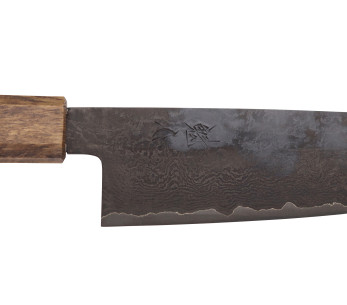
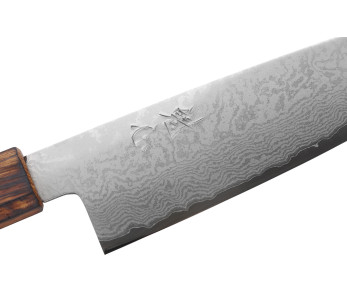
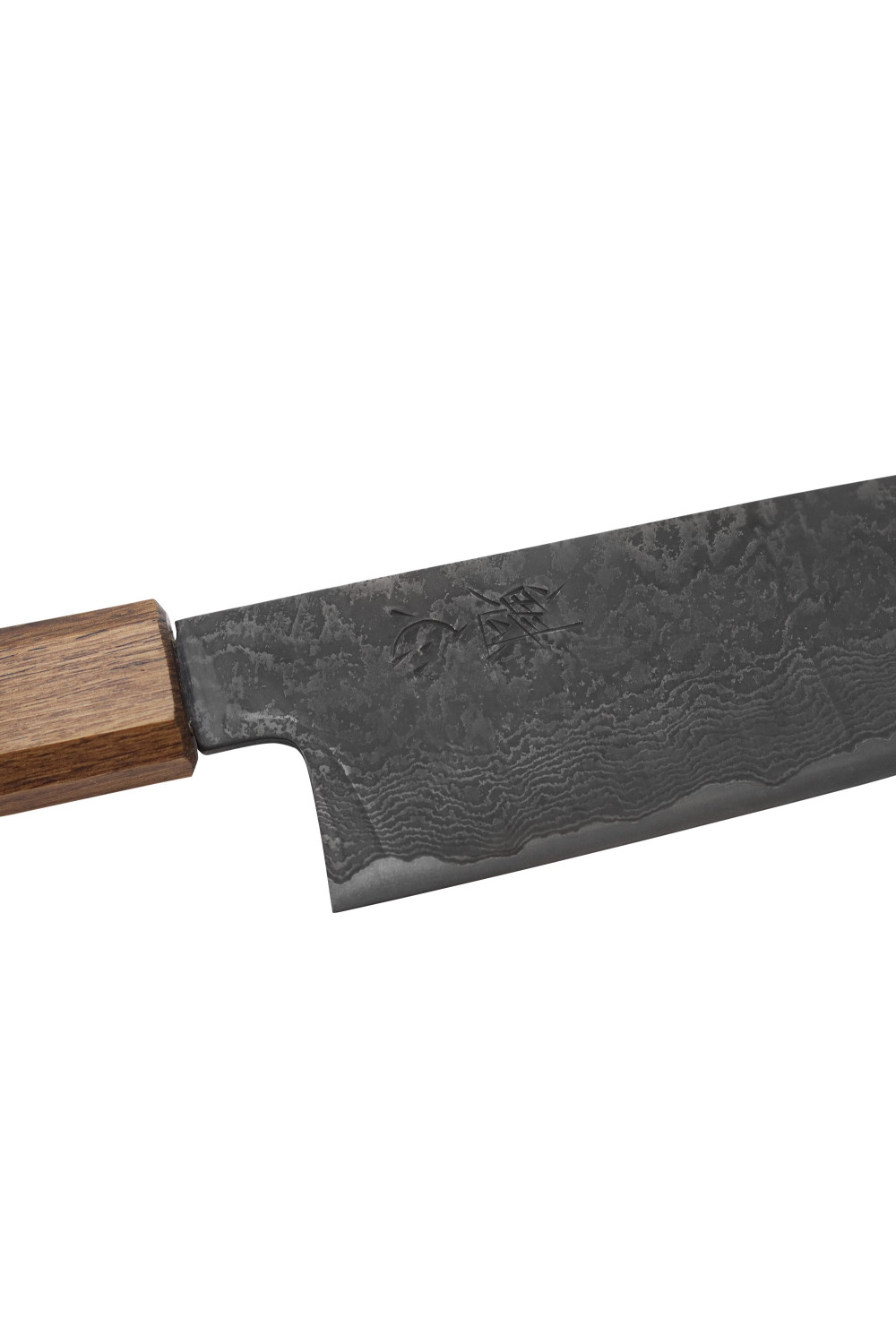
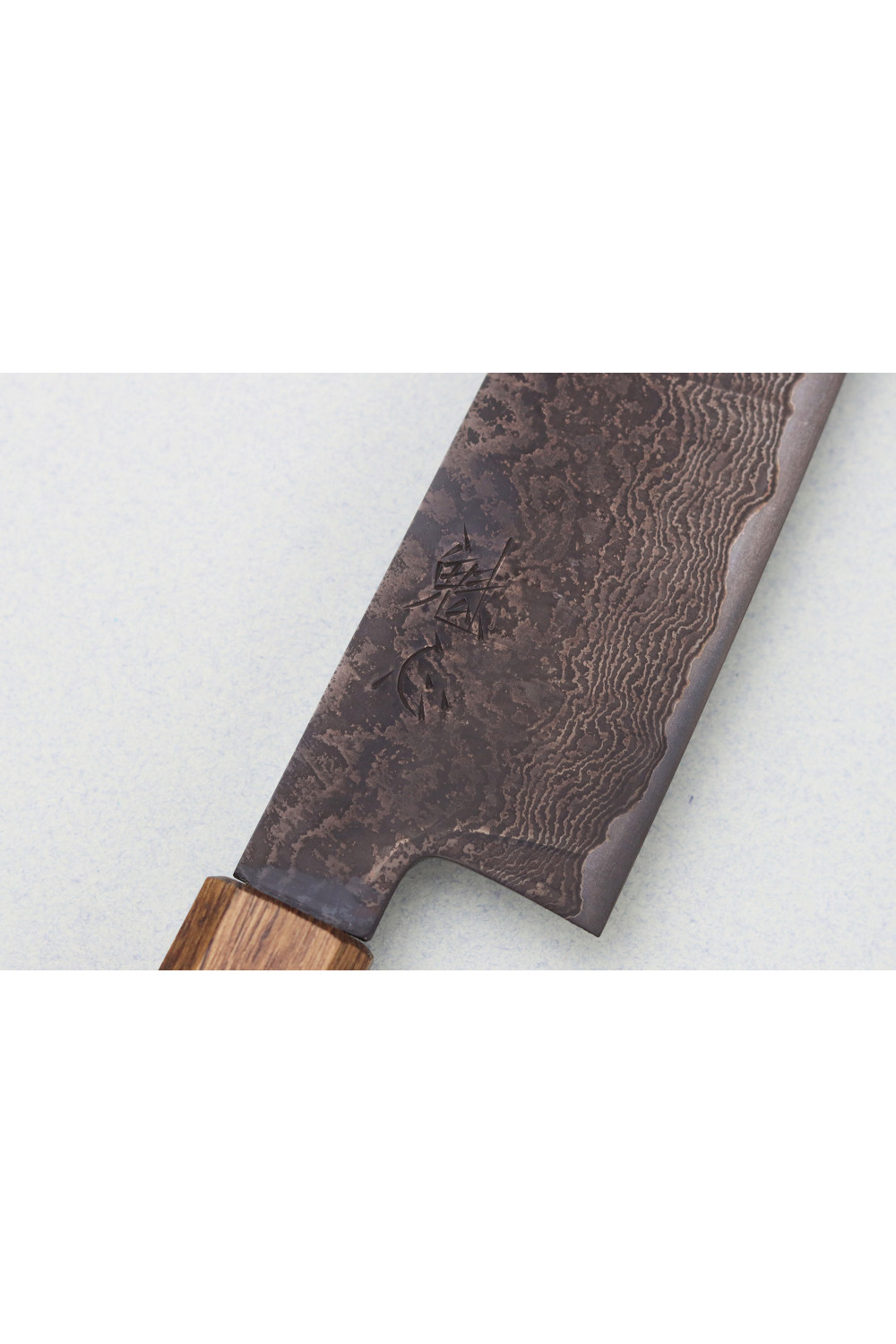
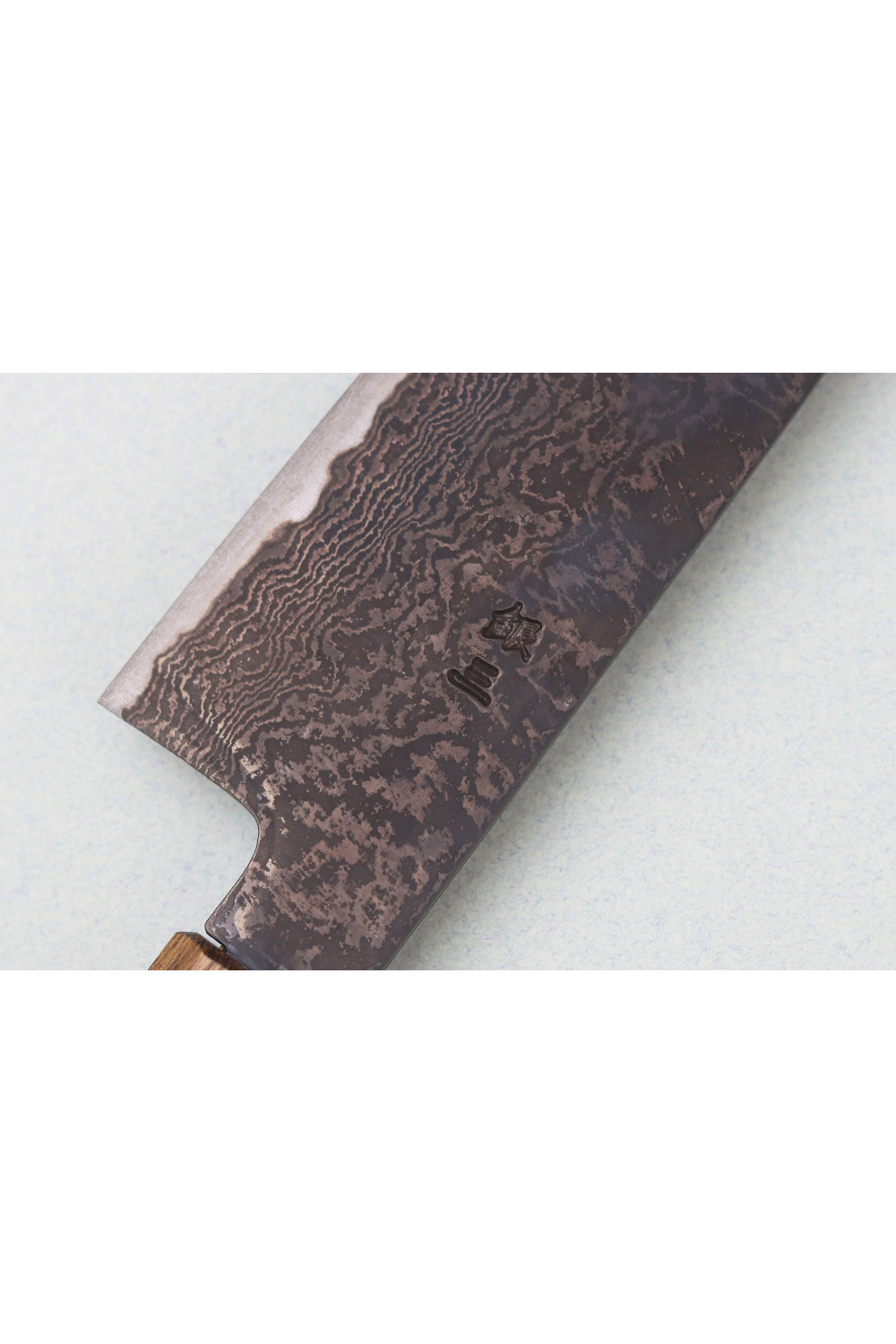
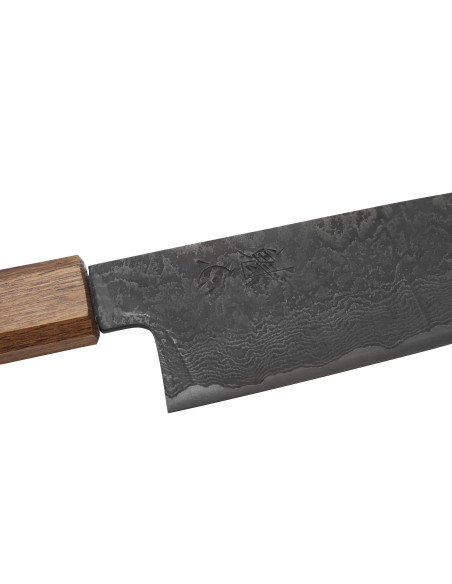
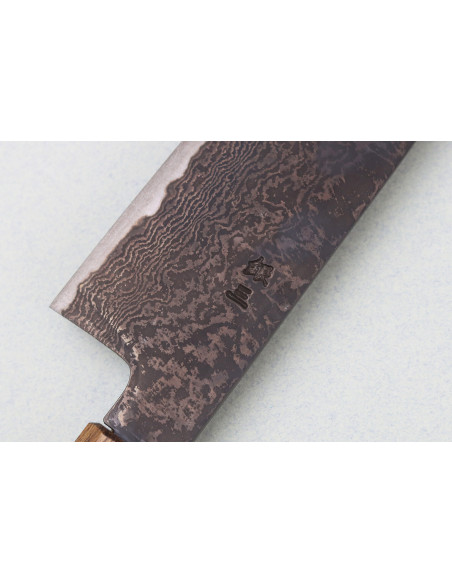
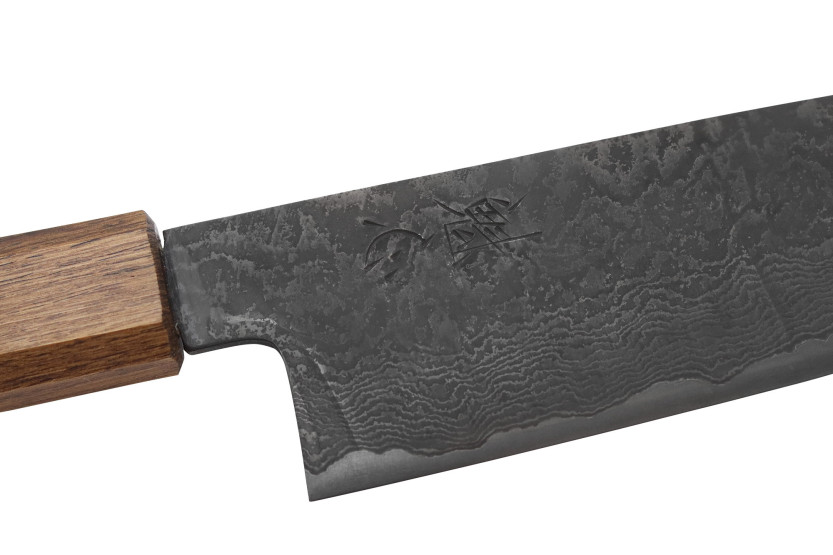
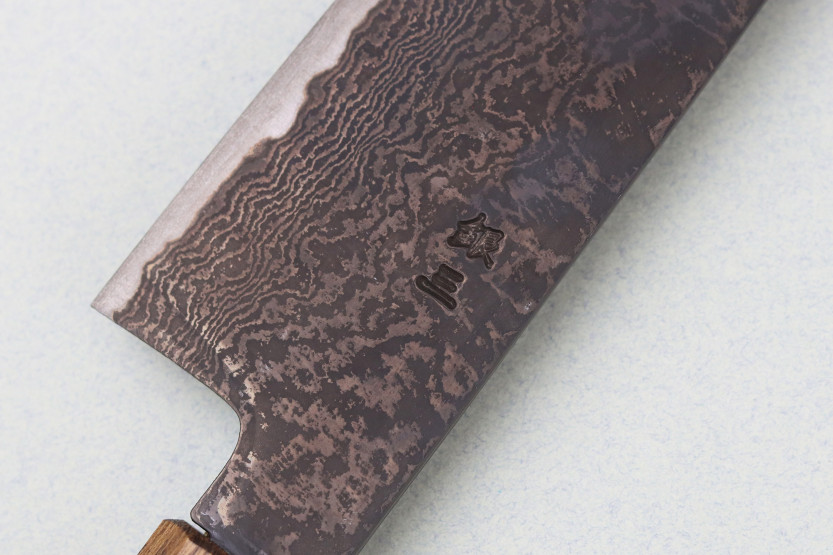
The blade of this Bunka knife features a 63-layer damascene construction, with a core of Japanese Ginsan stainless steel, also known as Silver 3. This alloy contains approximately 0.95% carbon, a composition that yields a particularly sharp edge after sharpening. Its stainless nature also minimizes the risk of oxidation during food preparation. The core is wrapped in layers of softer stainless steel, which contribute to the blade’s multilayer structure while protecting the core.
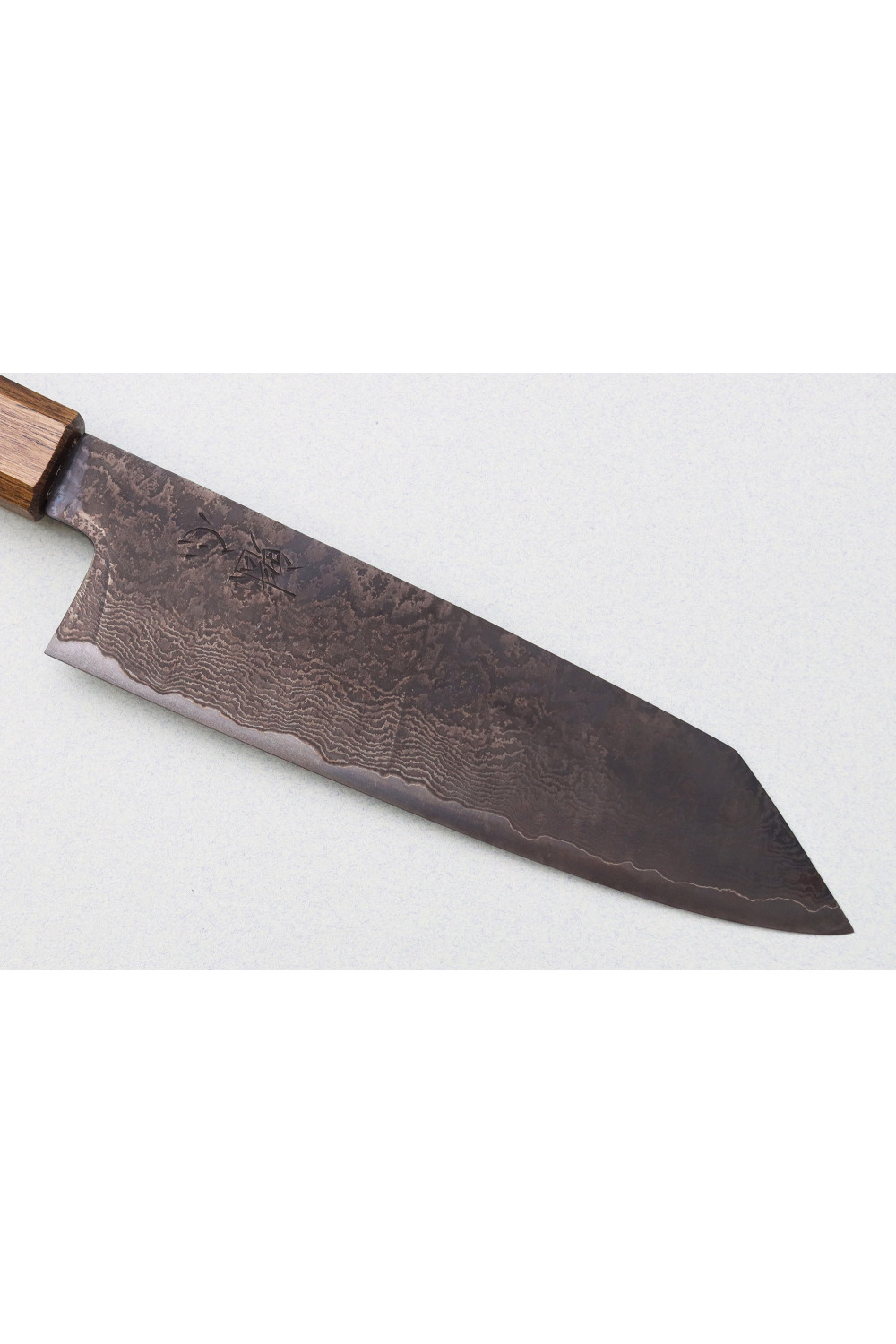
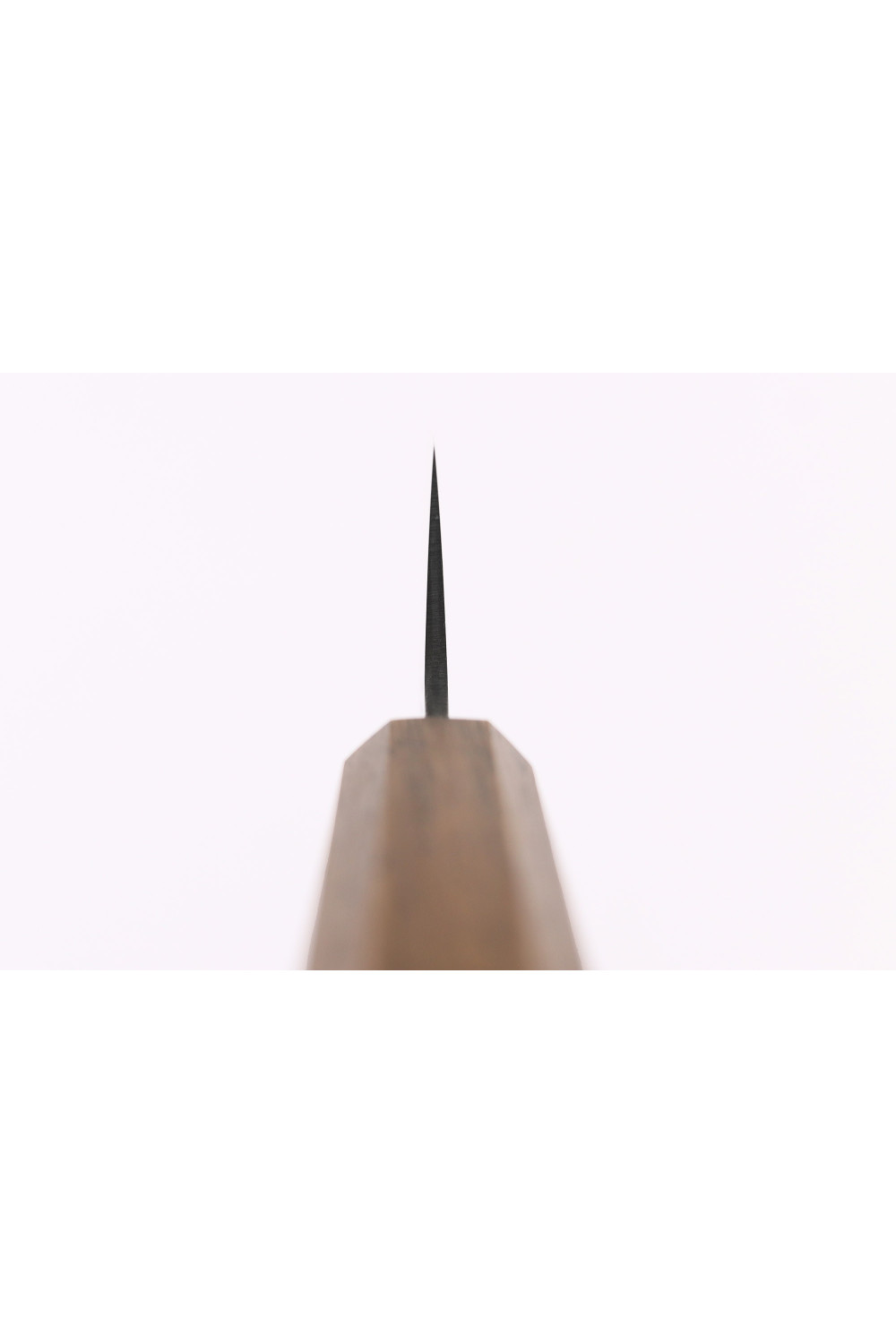
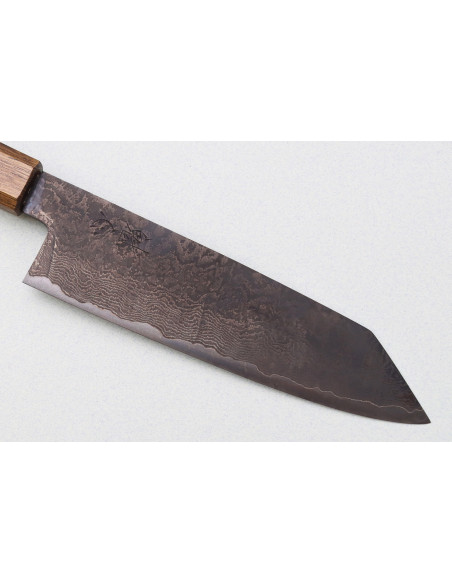
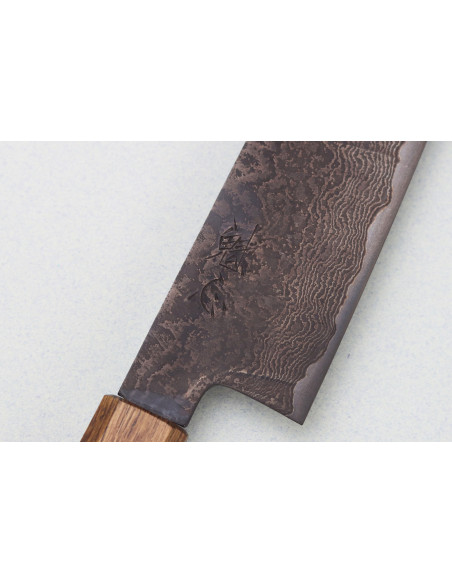
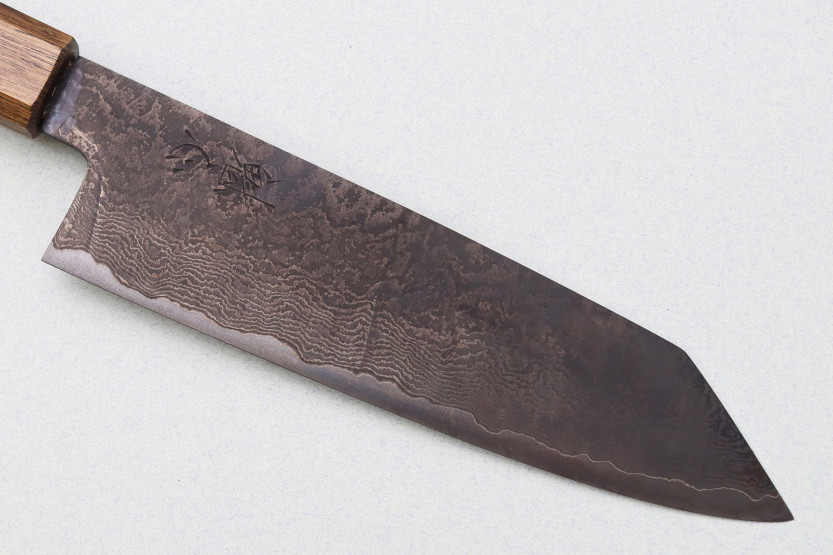
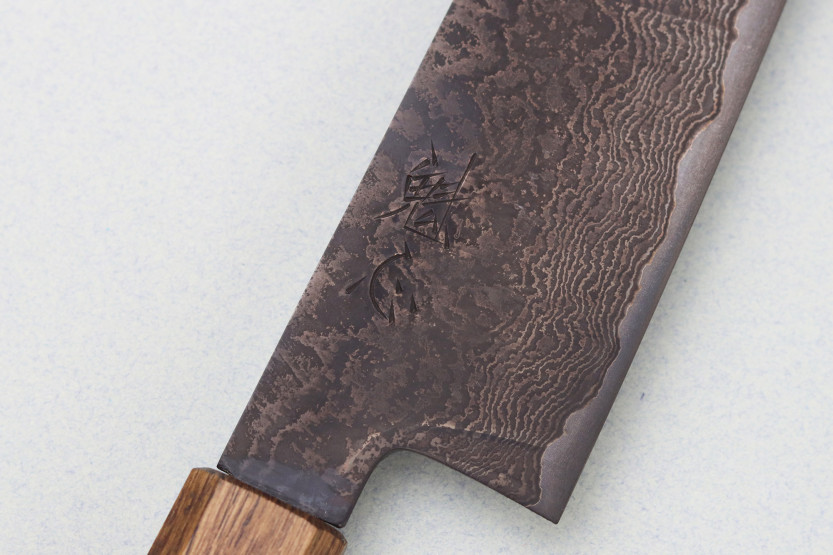
Its hardness of 59/60 HRC allows it to maintain good cutting performance over repeated use.The flat grind promotes even penetration into food and offers a geometry well-suited to everyday kitchen tasks. The surface features a Black Damascus finish, recognizable by its wavy patterns that run across the steel against a dark background. These graphic variations highlight the artisanal character of each blade.
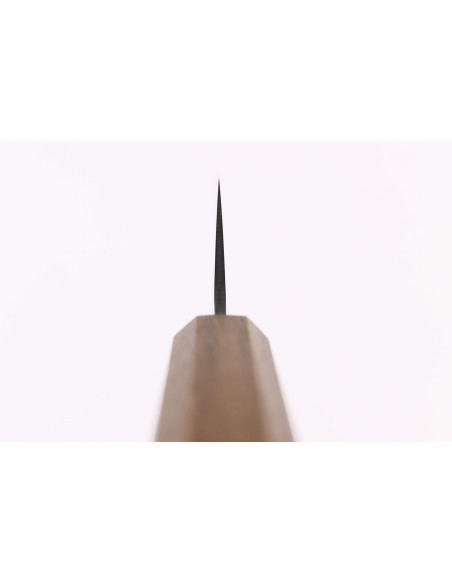
The Bunka features a distinctive detail particularly prized by enthusiasts of Japanese cutlery: its angular tip, known as the K-tip, created by a pronounced break in the spine line. This geometry allows for greater precision when tackling delicate cuts, such as mincing a shallot, removing an unwanted part of a vegetable, or making fine incisions. At 18 cm, this model also offers a comfortable cutting length for shredding cabbage, trimming mushrooms, or slicing a boneless cut of meat.
The natural charm of a smoked oak handle
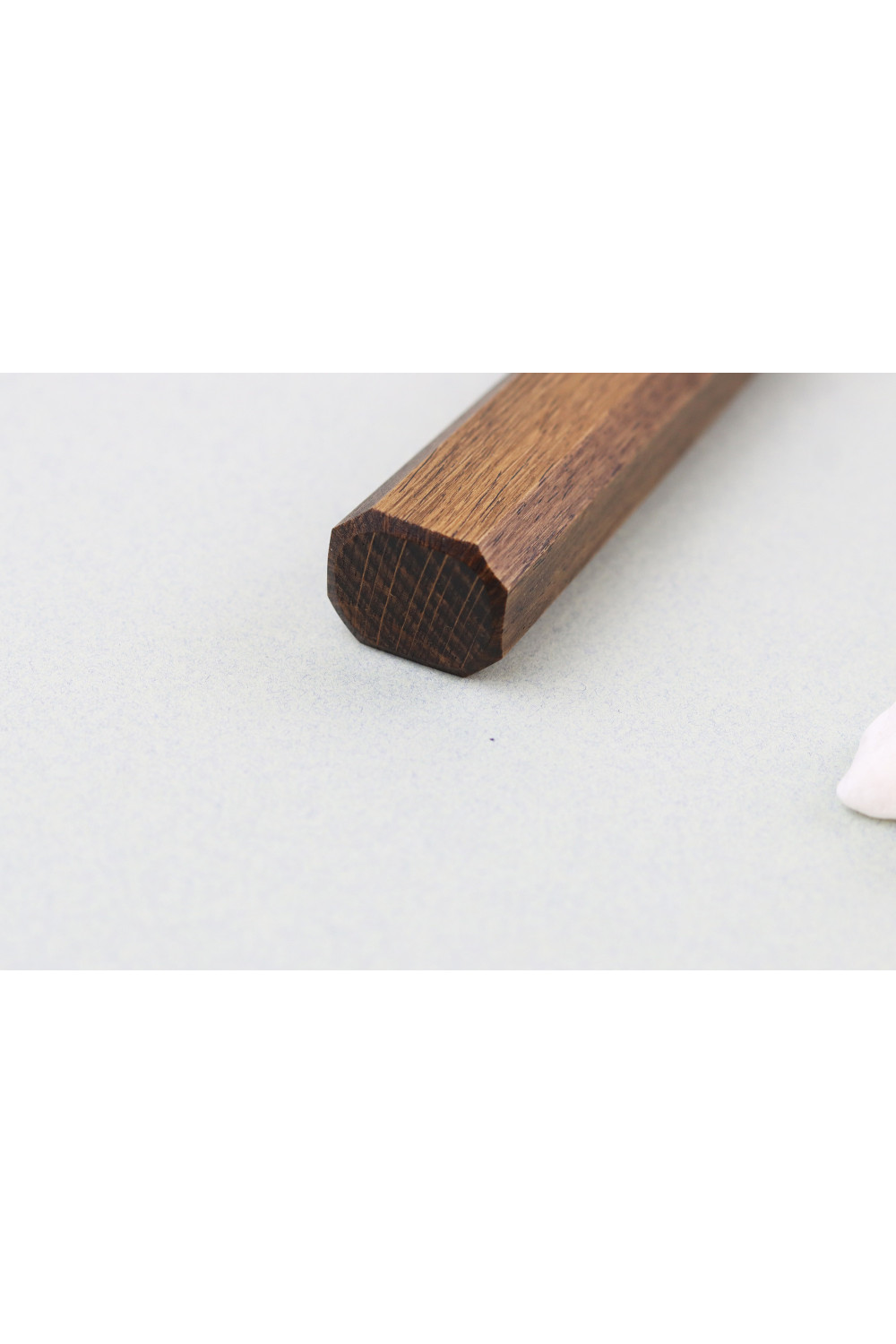
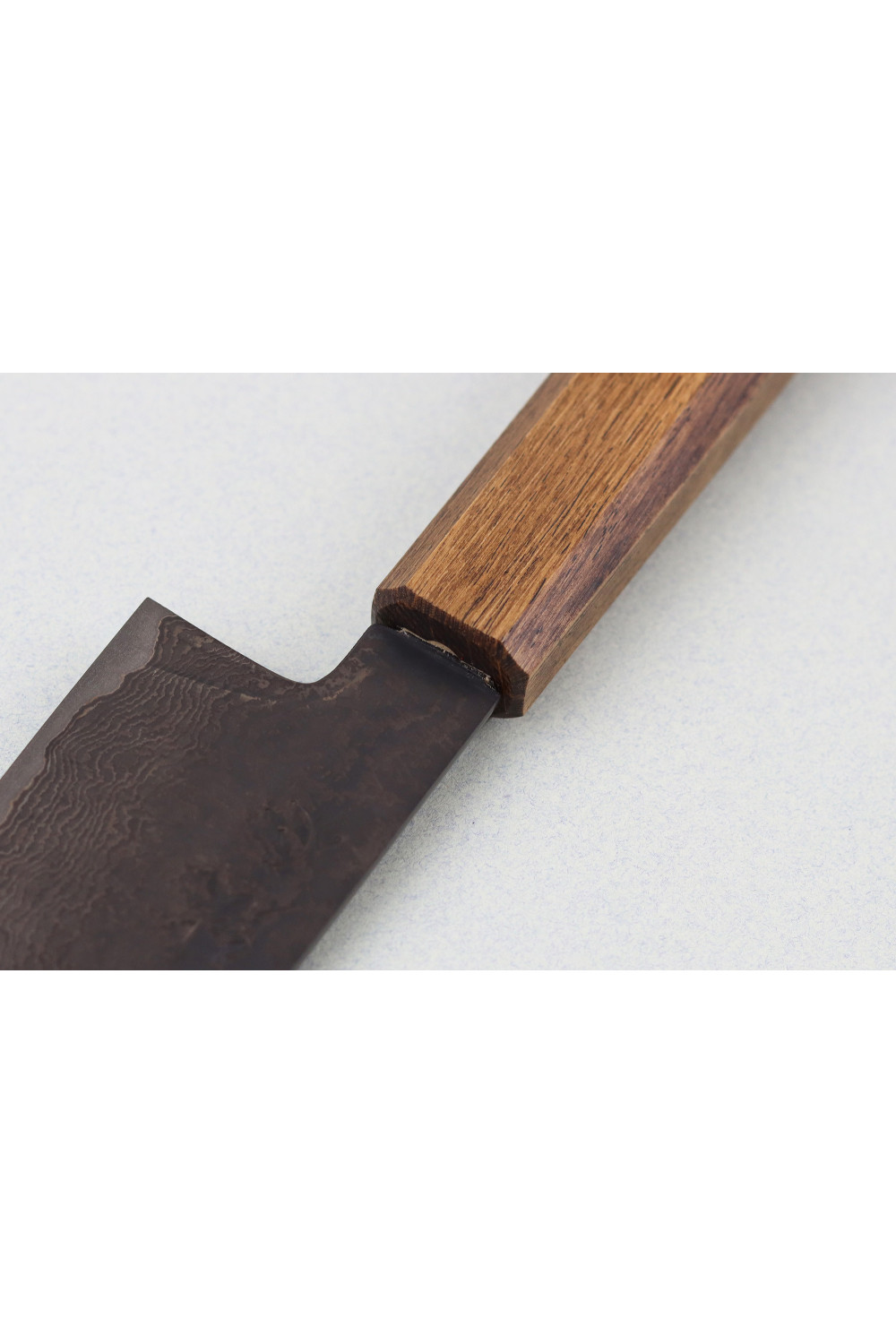
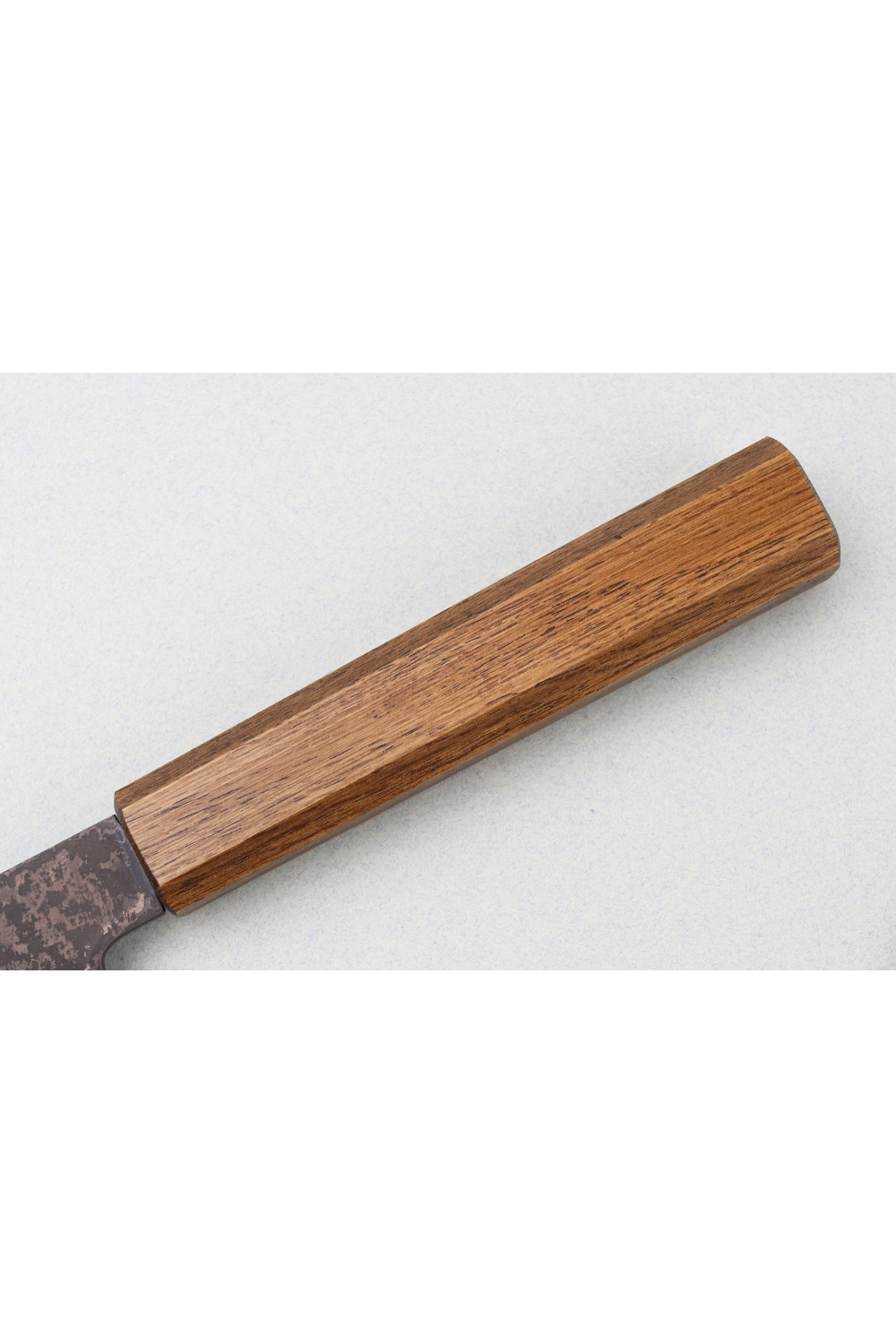
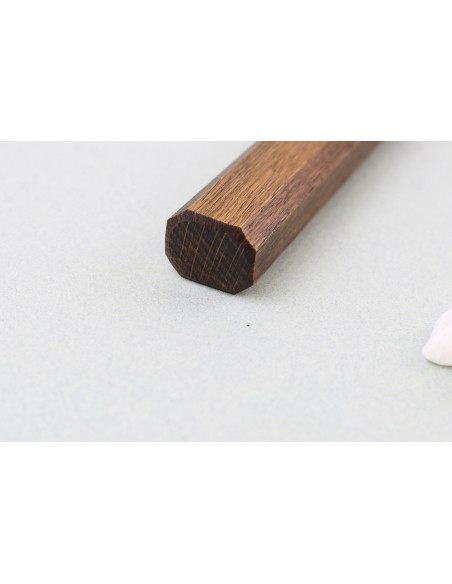
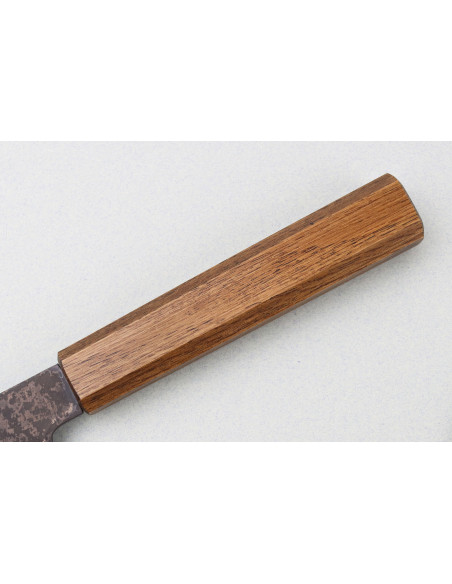
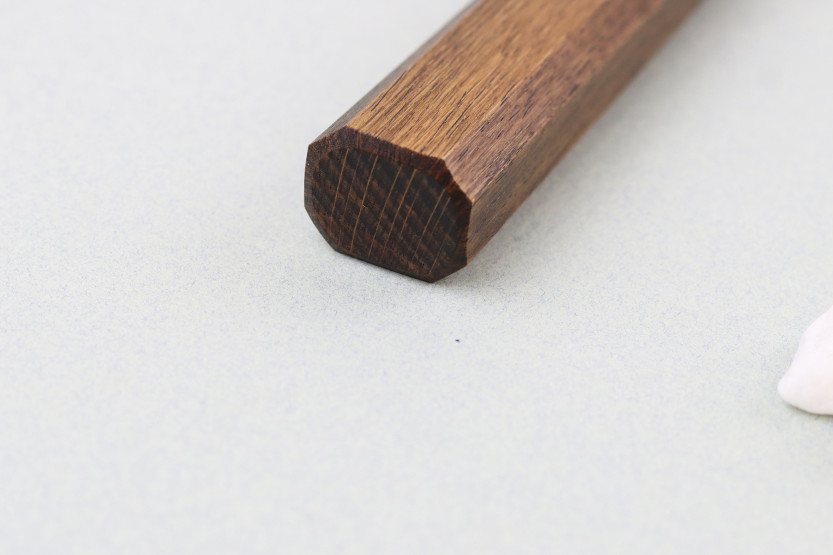
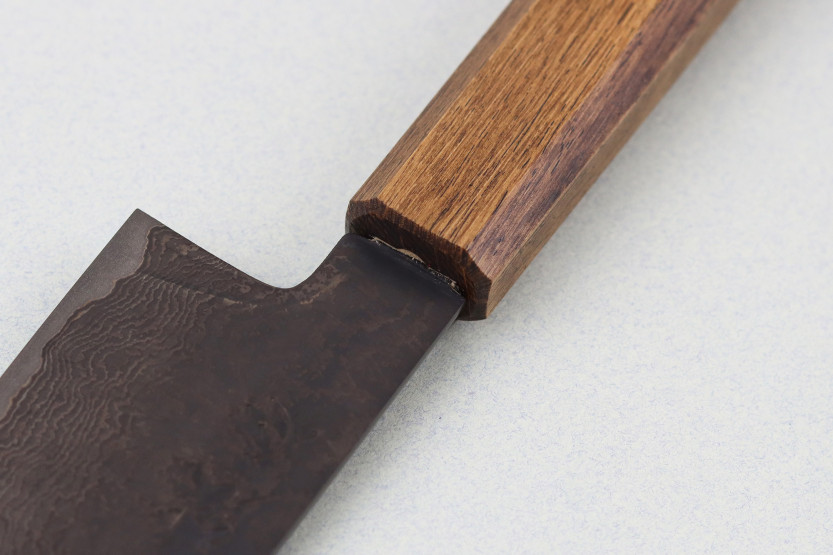
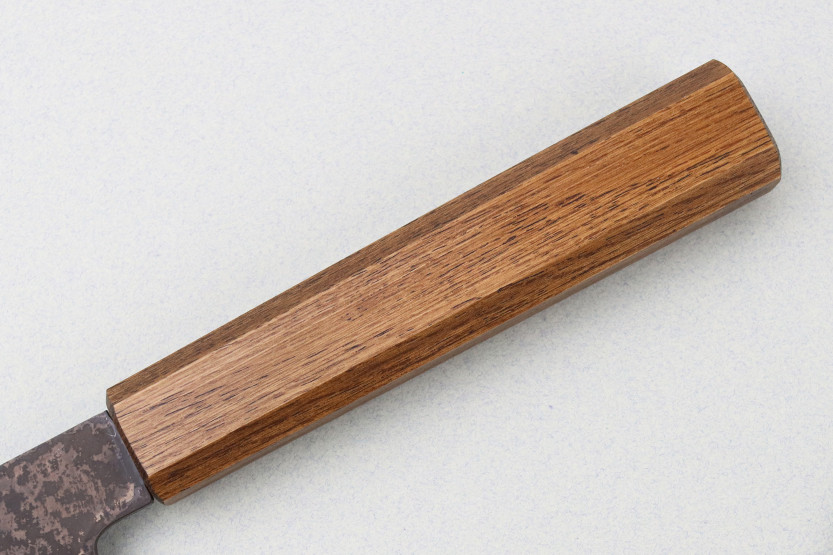
To complement this blade with its geometric lines, the artisans chose a smoked oak handle. This wood features deep brown hues—achieved through the smoking process—that accentuate its character and the richness of its natural grain. Its grain varies from piece to piece, giving each knife a unique character.
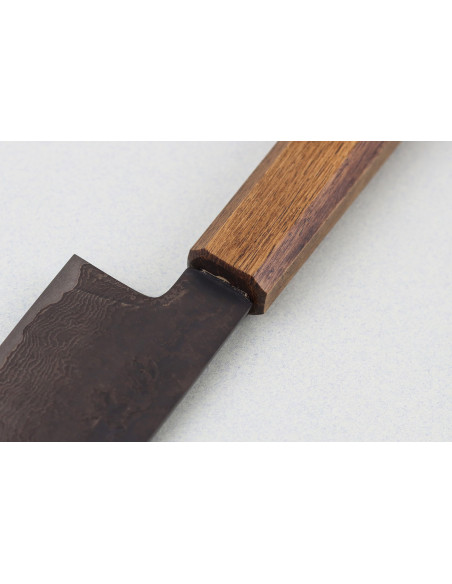
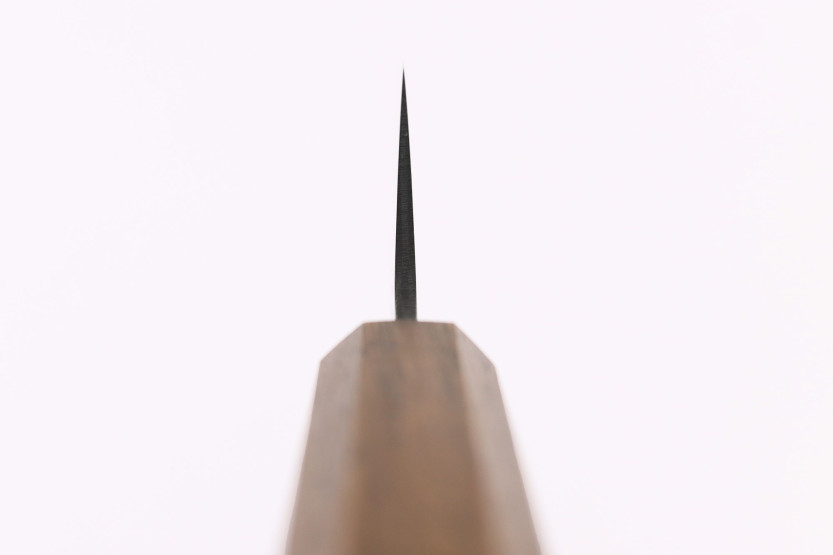
The handle features an octagonal shape characteristic of traditional Japanese knives. Its eight facets make it easier to position the fingers and provide tactile guidance during cutting motions. This symmetrical design is suitable for both right- and left-handed users.
The oak feels pleasant to the touch, while the edges of the octagonal shape contribute to control over the movement. This ergonomic design is particularly useful during tasks that require precise guidance of the bunka’s tip.
Aesthetically, the woody tones of the handle complement the metallic and black highlights of the blade. Together, they create a meticulously finished knife whose appearance combines the elegance of natural materials with the distinctive geometry of Japanese blades!
Features and Benefits
-
- 18 cm bunka blade: length suitable for a variety of preparations and detailed cutting tasks
- Angular K-tip: excellent precision for meticulous work
-
- 63-layer Damascus
- steel
- with a soft stainless steel cladding: multi-layered structure surrounding the core
- Japanese Ginsan stainless steel: high-performance edge and resistance to oxidation
- Hardness 59/60 HRC: excellent edge retention for everyday use
-
- Flat grind: consistent cut and effective penetration into food
- Black Damascus finish: Damascus patterns with dark contrasts
-
- Octagonal smoked oak handle: comfortable grip and ambidextrous use
- Forged by Shogo Yamatsuka and sharpened by Fujii Hamono: complementary artisanal expertise
- Made in Japan: Sakai cutlery craftsmanship
Tips for caring for your bunka
Use this knife on a wooden or food-safe synthetic cutting board, employing controlled cutting motions. Its K-tip requires special care: avoid twisting it sideways, using it as a lever, or striking it against hard surfaces. Do not use it to cut through bones or frozen foods.
To clean, wipe with a non-abrasive sponge using warm water and dish soap, then carefully dry the blade without getting the handle wet. Do not leave the knife soaking in the sink, and never put it in the dishwasher. Sharpening with a Japanese water stone will maintain the blade’s edge without damaging its geometry.
Shogo Yamatsuka and Fujii Hamono: Sakai’s excellence in cutlery
Behind this blade lie two complementary crafts, practiced by specialists in Japanese cutlery. It is in Sakai, a historic center of Japanese knife-making, that Nakamura Hamono’s creations take shape.
The forging is handled by Shogo Yamatsuka, born in 1958 into a family of blacksmiths. He learned the trade from his father beginning in 1973 and gradually developed remarkable expertise in working with Ginsan steel. For nearly three decades, he has refined his methods to harness the qualities of this stainless steel. His career led to his being awarded the title of Traditional Master Craftsman in 2012, a Japanese recognition of his expertise. His work relies in particular on his mastery of hot forging, a technique that requires an in-depth understanding of how steel behaves when heated.
Once the blade is forged, it passes into the hands of the specialists at Fujii Hamono, a sharpening workshop led by Fujii Keiichi. The artisans work on large grinding wheels to refine the blade’s geometry and prepare its cutting edge. Their work directly contributes to the blade’s cutting precision by giving the edge its final finish.
This division of labor perpetuates a tradition unique to Sakai: the blacksmith shapes the steel, while the sharpener brings out its full cutting potential. Two areas of expertise come together in a Japanese artisanal creation!
The Nakamura Kaishin Black Damascus knife collection is available on our website!




 By buying this product you can collect up to