
Your cart
There are no more items in your cart
The paring knife is one of the smallest kitchen knives, but also one of the most useful. Its short, narrow and pointed blade offers excellent control for all the precise tasks that would be more difficult with a chef’s knife or santoku. It is particularly suitable for peeling fruit and vegetables, removing stalks, trimming ingredients, cutting garlic, segmenting citrus fruit or making small decorative cuts.
Most paring knife blades measure between 8 and 13cm. A short 8 or 9cm blade is ideal for working directly in the hand and performing detailed movements, while a 12 or 13cm blade offers greater versatility when cutting ingredients on a chopping board. The best choice therefore depends on your cooking habits, your experience and the level of maintenance you are prepared to provide.
Stainless steel paring knives are generally easy to maintain and highly resistant to corrosion. Harder steels, Damascus blades and San Mai constructions retain their sharpness for longer, but they usually require more careful use and hand washing. The handle is just as important: synthetic materials prioritise hygiene and durability, while pakkawood, ebony and resin offer a warmer feel and a more distinctive design.
To help you find the right model without exceeding your budget, discover our selection of the 10 best paring knives under €50.
Our top 10 paring knives under €50
1. Satake Cutlery Black Pakkawood Japanese paring knife 13cm
This Satake Cutlery paring knife is an excellent choice for cooks looking for a versatile Japanese knife that remains easy to maintain. Its 13cm blade is slightly longer than that of a traditional paring knife, making it suitable for both precision work and small cuts on a chopping board.
The stainless steel blade is enriched with molybdenum and vanadium to improve its resistance to corrosion and everyday impact. With a hardness of approximately 57HRC, the edge offers a good balance between cutting performance, durability and ease of sharpening. It can therefore be maintained without requiring advanced sharpening skills.
The Western-style handle is made from black pakkawood, a composite of laminated wood and resin that combines an attractive natural appearance with good resistance to moisture. Its full tang construction and three stainless steel rivets provide strength and stability, while the bolster improves the knife’s overall balance.
Best for: everyday cooks looking for a versatile, comfortable and easy-to-maintain Japanese paring knife.
2. Kutoyama Damas Azur paring knife 8cm
With its compact 8cm blade, the Kutoyama Damas Azur paring knife is designed for highly precise work. It is particularly practical for peeling fruit, removing blemishes, trimming vegetables or making small decorative cuts directly in the hand.
Its Damascus blade features a VG10 stainless steel core protected by 66 additional layers of softer stainless steel. This construction combines a rigid cutting core with outer layers that protect the blade and create its distinctive Damascus pattern. Its hardness of approximately 60HRC provides excellent edge retention and a clean, precise cutting sensation.
The mirror-polished surface highlights the layered pattern, while the handle combines blue resin with a light wood effect. Its almost oval shape is comfortable for both right- and left-handed users. A stainless steel bolster and end cap complete the knife and provide a well-balanced grip.
Best for: experienced cooks looking for a compact Damascus paring knife with an original design and a long-lasting edge.


3. Arcos Riviera paring and peeling knife 10cm
The Arcos Riviera 10cm paring knife is a robust and practical model designed for regular kitchen use. Its pointed blade offers the precision required for peeling, trimming and cutting small fruit and vegetables, while its forged construction provides good balance between the blade and handle.
The blade is made from NITRUM stainless steel, an alloy developed by Arcos to provide increased hardness, corrosion resistance and cutting performance. Its hardness of approximately 57HRC makes the blade durable while keeping it relatively easy to sharpen.
The black handle is made from POM, a strong synthetic material that is resistant to deformation, moisture and temperature variations. It is secured by three stainless steel rivets and is designed to provide a reliable grip during repeated use. This Spanish-made model is therefore particularly suitable for cooks who prioritise strength, hygiene and straightforward maintenance.
Best for: regular home cooks and professionals looking for a reliable forged knife with a hygienic synthetic handle.
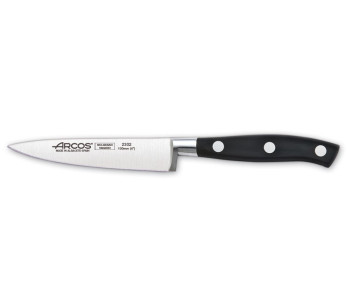


4. Au Nain Forgé Idéal paring knife 10cm
The Au Nain Forgé Idéal paring knife represents traditional French cutlery at an accessible price. Manufactured in France and carrying the Esprit de Thiers label, it is designed for cooks who appreciate a classic, solid and functional kitchen knife.
Its 10cm forged stainless steel blade is suitable for peeling, trimming and cutting a wide variety of small ingredients. The forged construction provides additional strength and a more balanced feel than a simple stamped blade. Its hardness of around 54HRC makes it particularly easy to sharpen and less sensitive to small handling errors.
The black ABS handle is fixed with three aluminium rivets, creating a traditional Western profile that is comfortable and secure. The materials have been selected for their resistance to everyday kitchen conditions, and the knife can be placed in the dishwasher, although hand washing remains preferable to preserve the edge for longer.
Best for: beginners and traditional cooking enthusiasts looking for a durable, French-made forged paring knife.
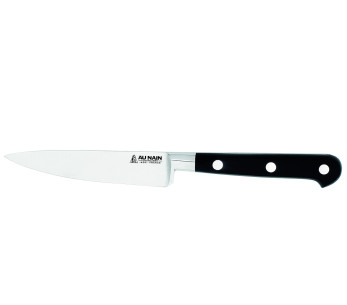


5. Fukito Ebony Hammered Damascus paring knife 9cm
The Fukito Ebony Hammered Damascus paring knife combines high cutting performance with an elegant Japanese-inspired design. Its 9cm blade is compact enough for peeling and detailed preparation while remaining practical for slicing small ingredients on a board.
The Damascus blade is built around a 10Cr15CoMoV stainless steel core, an alloy with a high carbon and chromium content. Its hardness of approximately 60HRC helps the edge remain sharp for longer, making it suitable for frequent and precise cutting. The layered pattern is complemented by a hammered finish, which gives the blade additional character and can help reduce contact between the food and the upper part of the blade.
The oval handle is made from ebony, a dense wood valued for its strength, smooth feel and deep colour. A brass ring and stainless steel elements complete the refined appearance while contributing to the knife’s balance.
Best for: keen home cooks who want a sharp, compact and elegant Damascus paring knife for frequent use.
6. Sabatier Trompette all-stainless-steel paring knife 9cm
The Sabatier Trompette all-stainless-steel paring knife stands out for its simple, modern and hygienic design. Its compact 9cm blade provides the control needed for peeling, trimming and carrying out small precision cuts.
The blade is made from 5Cr15MoV stainless steel and has a hardness of approximately 55HRC. This moderate hardness makes the knife easy to sharpen and well suited to everyday family cooking. The polished finish also makes the blade straightforward to clean after use.
Both the blade and handle are made from steel, creating a uniform appearance without traditional wooden or synthetic handle scales. This construction limits areas where food residue can accumulate and makes the knife particularly practical for users who prioritise hygiene. Its light, ergonomic shape also makes it comfortable for short and repetitive preparation tasks.
Best for: occasional or regular cooks looking for a compact, hygienic and low-maintenance all-steel knife.
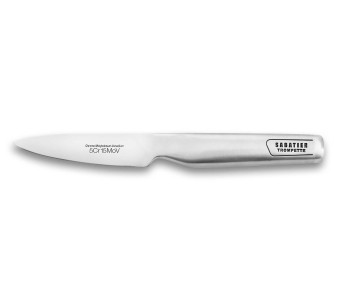
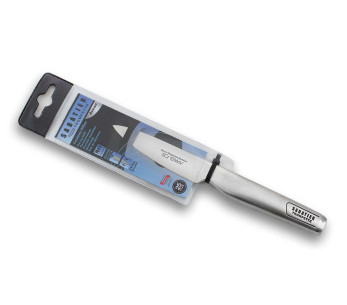

7. Déglon Idéal Sabatier DEG paring knife 10cm
The Déglon Idéal Sabatier DEG paring knife is a classic and functional option intended for everyday kitchen preparation. Its 10cm blade provides a good compromise between control in the hand and versatility on a chopping board.
The blade is made from X46Cr13 stainless steel, an alloy appreciated for its resistance to corrosion and simple maintenance. With a hardness of around 53HRC, it can be sharpened easily and is relatively tolerant of intensive everyday handling. It is therefore a reassuring option for beginners or cooks who do not want to use specialist sharpening equipment.
The black thermoplastic handle is resistant, hygienic and secured by three rivets. Its traditional Western shape and symmetrical blade make it suitable for both right- and left-handed users. The knife is also dishwasher-safe, although washing and drying it by hand will help maintain its sharpness.
Best for: beginners, families and regular users looking for a sturdy and uncomplicated paring knife.


8. Satake Nashiji Japanese paring knife 12cm
The Satake Nashiji 12cm paring knife is a versatile Japanese model with a blade long enough to handle a wider variety of ingredients. In addition to peeling and trimming, it can be used to slice fruit, vegetables, herbs and small pieces of meat on a chopping board.
Its stainless steel blade is enriched with molybdenum and vanadium to improve resistance to corrosion and impact. A hardness of approximately 57HRC ensures a good balance between edge retention and ease of sharpening. This makes it suitable for everyday use, including for cooks who are discovering Japanese knives.
The upper part of the blade features a lightly hammered Nashiji finish, which gives the knife a more traditional and textured appearance. Its black pakkawood handle is fixed with two rivets and offers the familiar shape of a Western handle. The knife is manufactured in Seki, one of Japan’s best-known cutlery-producing cities.
Best for: cooks looking for an accessible Japanese paring knife with a slightly longer and more versatile blade.


9. Fukito Pakka San Mai paring knife 9cm
The Fukito Pakka San Mai 9cm paring knife is designed for users who want a high-performance blade without the visual complexity of a full Damascus construction. Its compact dimensions make it highly manoeuvrable for peeling, trimming and detailed preparation.
The blade uses a three-layer San Mai construction. Its rigid 10Cr15CoMoV stainless steel core is surrounded by protective outer layers, combining a sharp cutting edge with improved resistance. With a hardness of approximately 60HRC, it retains its edge well and is particularly suitable for frequent use.
The satin-finished blade is paired with a light-coloured pakkawood handle. A decorative mosaic rivet, polished bolster and stainless steel end cap give the knife a refined finish while ensuring a stable, comfortable grip. Due to its harder steel and wooden handle, hand washing is strongly recommended.
Best for: regular and experienced cooks seeking long-lasting sharpness in a compact and elegant San Mai knife.


10. Fukito X50 Ebony paring knife 9cm
The Fukito X50 Ebony paring knife provides an excellent balance between cutting performance, durability and ease of maintenance. Its 9cm blade is suitable for all the classic tasks expected from a paring knife, including peeling, trimming, coring and finely cutting small ingredients.
It is made from German X50CrMoV15 stainless steel, an alloy widely used for dependable kitchen knives. Its chromium content provides good corrosion resistance, while its hardness of approximately 58HRC allows the blade to retain a precise edge without becoming excessively difficult to sharpen.
The handle is made from genuine ebony and features three retaining rivets, including an attractive central mosaic rivet. A polished bolster and stainless steel end cap improve the knife’s balance and reinforce its premium appearance. This model is a good intermediate option between basic stainless steel knives and harder 60HRC Japanese-style blades.
Best for: regular cooks looking for a versatile, balanced knife with an elegant natural wood handle.


How should you choose your paring knife?
The right paring knife depends first on the tasks you perform most frequently. For peeling and working directly in the hand, an 8 or 9cm blade provides maximum control. A 10cm blade is the most versatile size for everyday use, while a 12 or 13cm blade is better suited to users who also want to slice small ingredients on a chopping board.
The blade material should be chosen according to your expectations regarding sharpness and maintenance. Stainless steels with a hardness between approximately 53 and 57HRC are forgiving, corrosion-resistant and easy to sharpen. They are particularly suitable for beginners, occasional cooks and busy households. Models from Déglon, Au Nain, Arcos, Satake and Sabatier Trompette are reliable options in this category.
For frequent cooking, a blade with a hardness of around 58 to 60HRC will generally retain its sharpness for longer. Damascus, VG10 and San Mai knives offer a finer and more durable cutting edge, but they should be handled carefully, washed by hand and used only on suitable chopping boards. The Kutoyama and Fukito models are therefore better suited to enthusiastic or experienced cooks who are prepared to maintain their knives properly.
The handle material also influences the choice. Thermoplastic, ABS and all-stainless-steel handles are hygienic, resistant and easy to clean. Pakkawood and resin combine durability with a more decorative finish, while ebony offers a natural, premium feel but requires hand washing and careful drying.
Ultimately, beginners should prioritise comfort, simple maintenance and a steel that is easy to sharpen. Regular home cooks can choose a balanced stainless steel model between 57 and 58HRC. More experienced users who cook every day will benefit from the superior edge retention of a 60HRC Damascus or San Mai blade. Whichever model you choose, a good paring knife will quickly become one of the most frequently used tools in your kitchen.


