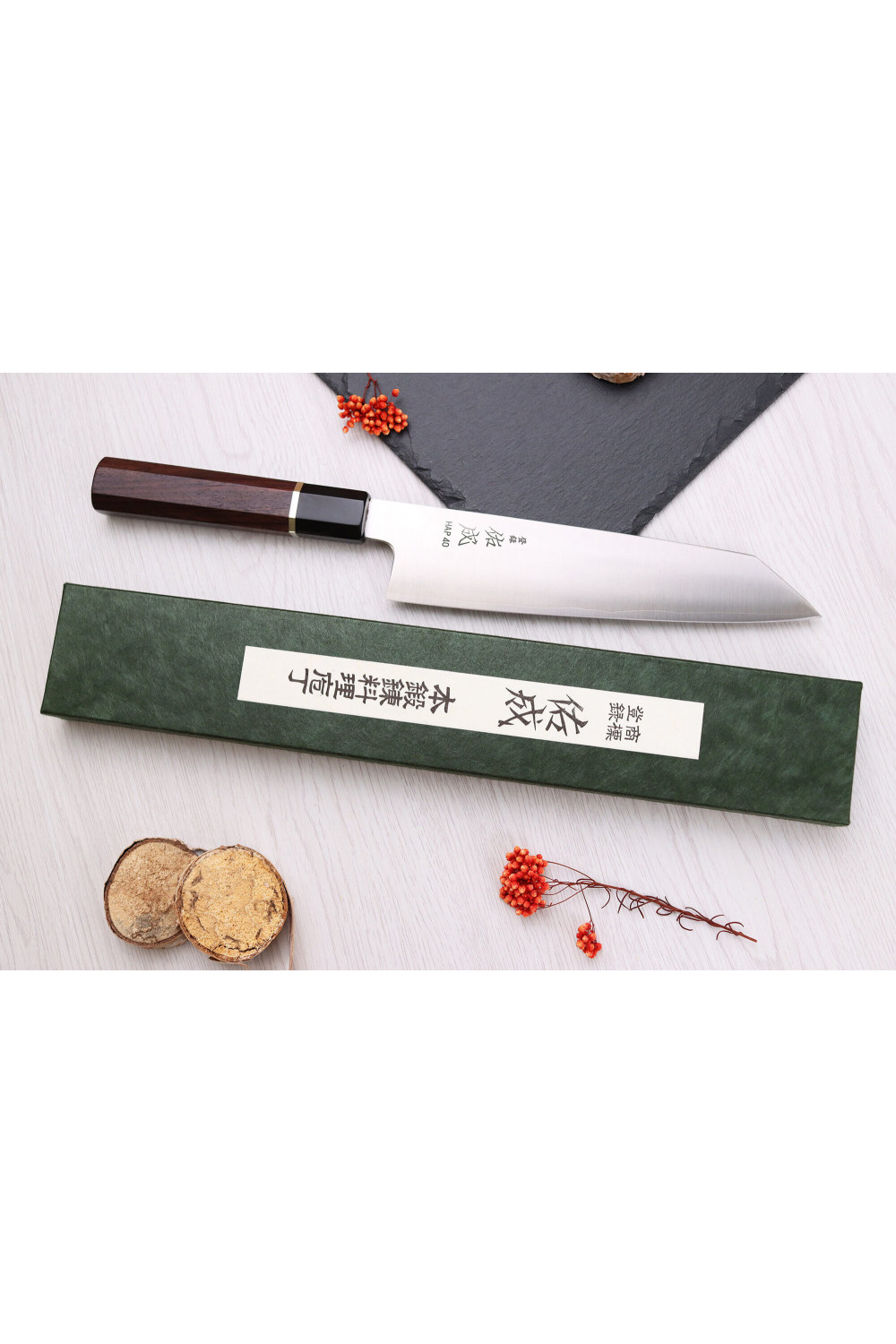
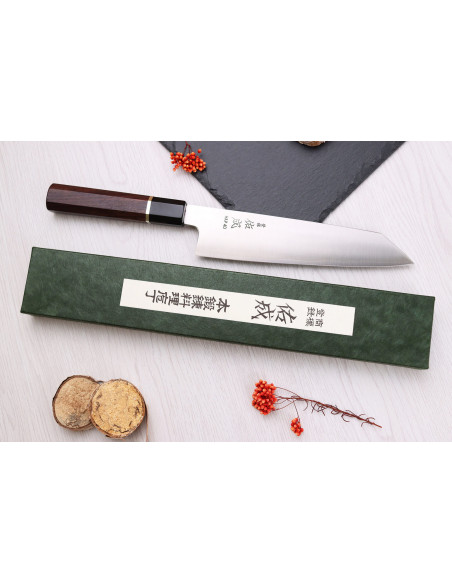
Sukenari is a Japanese cutlery company founded in 1933. The blacksmiths who make up its team are so skilled that they are able to produce Honyaki blades: the highest quality blades in cutlery. Sukenari has inherited the ancestral forging techniques used to make samurai katanas. With its vast experience, the cutlery firm is able to offer you knives with a modern look made using traditional techniques.
Ergonomic rosewood handles
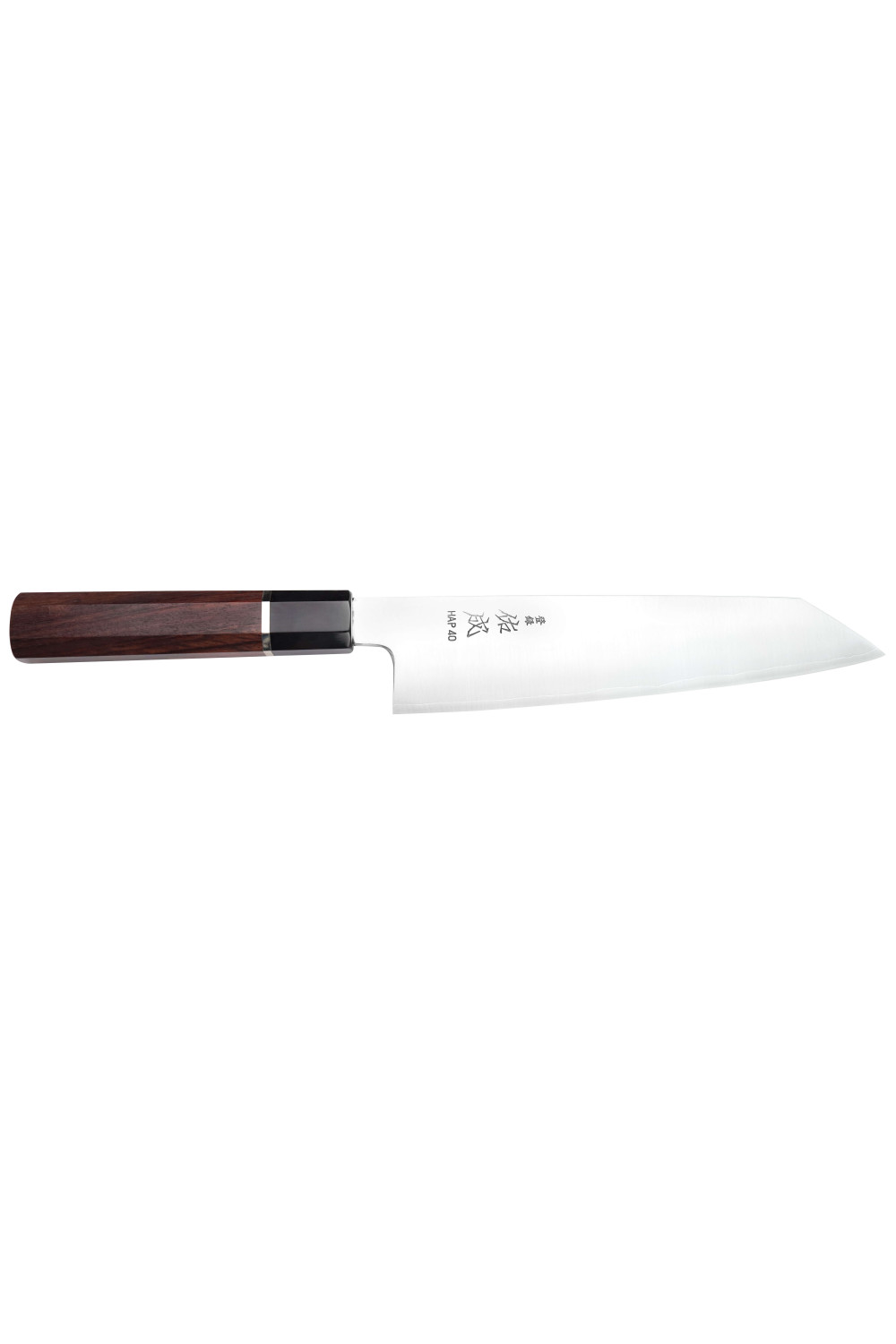
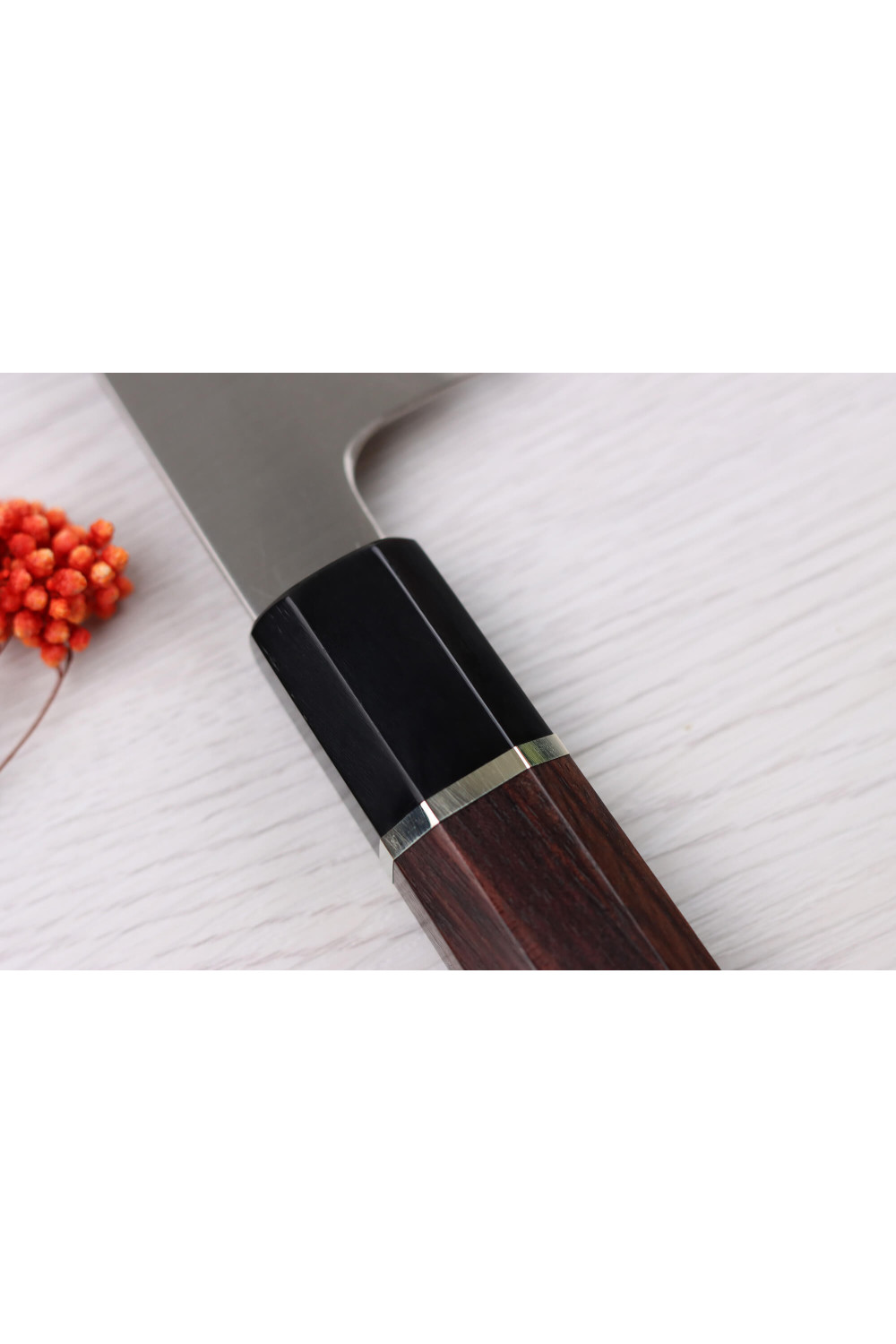
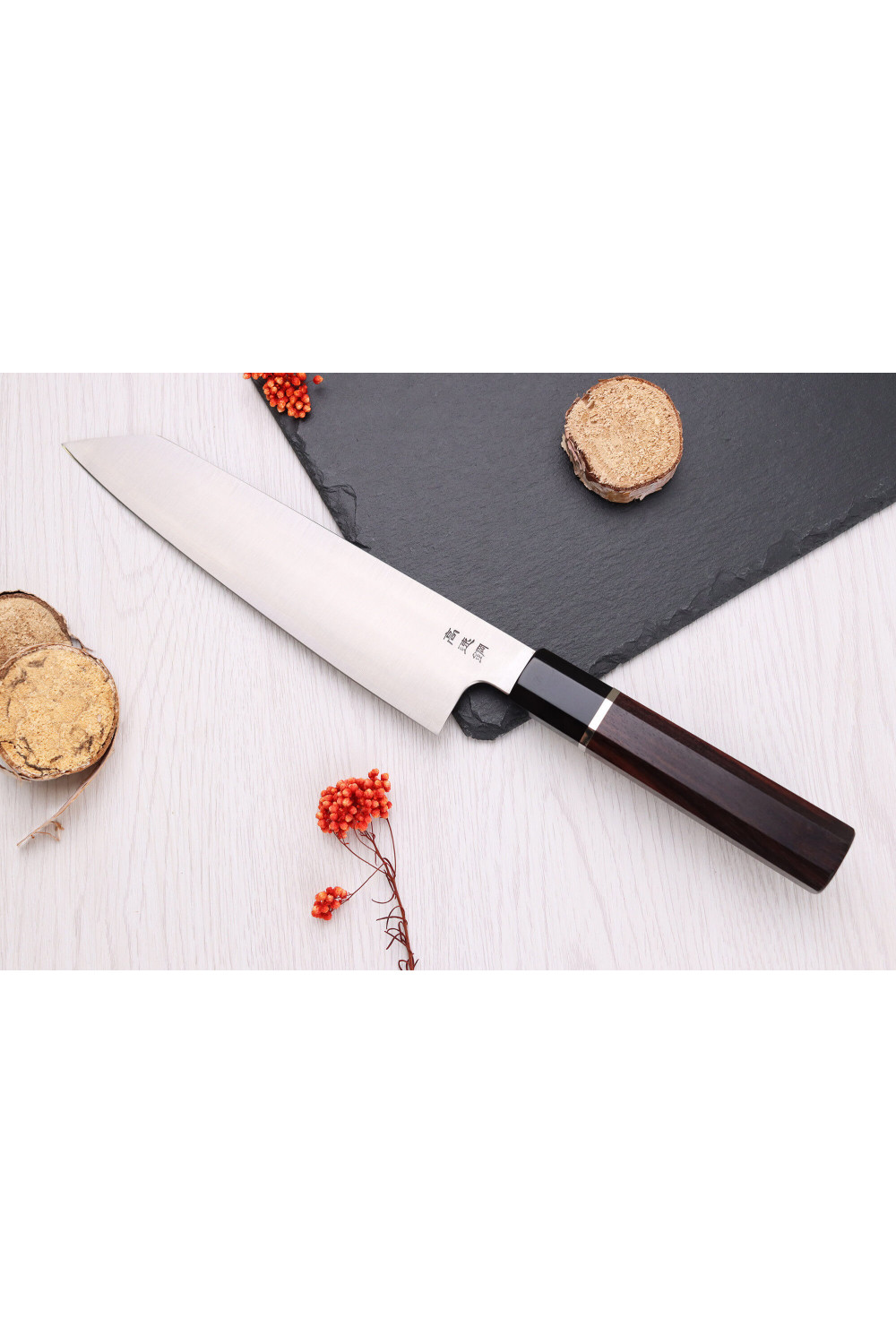
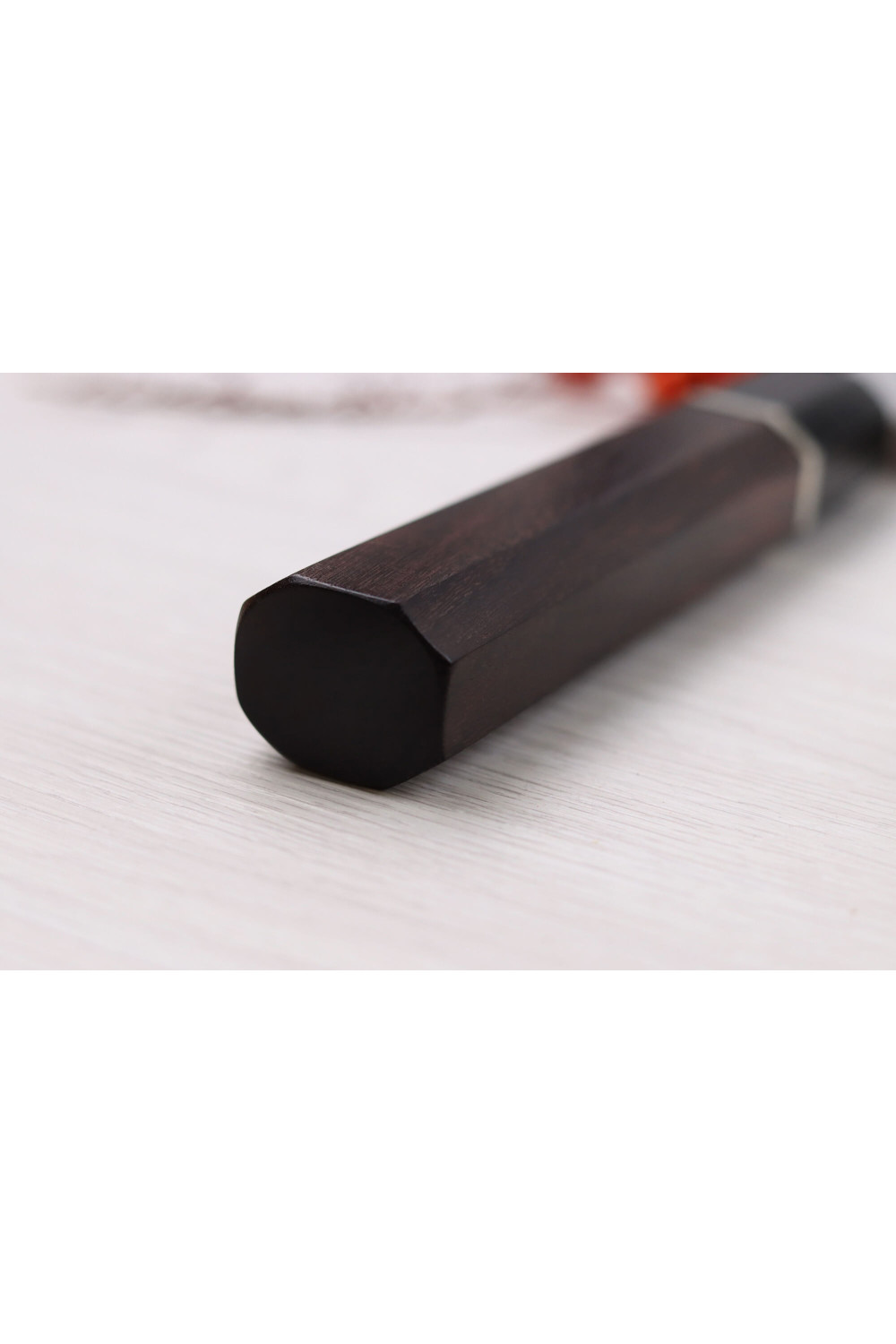
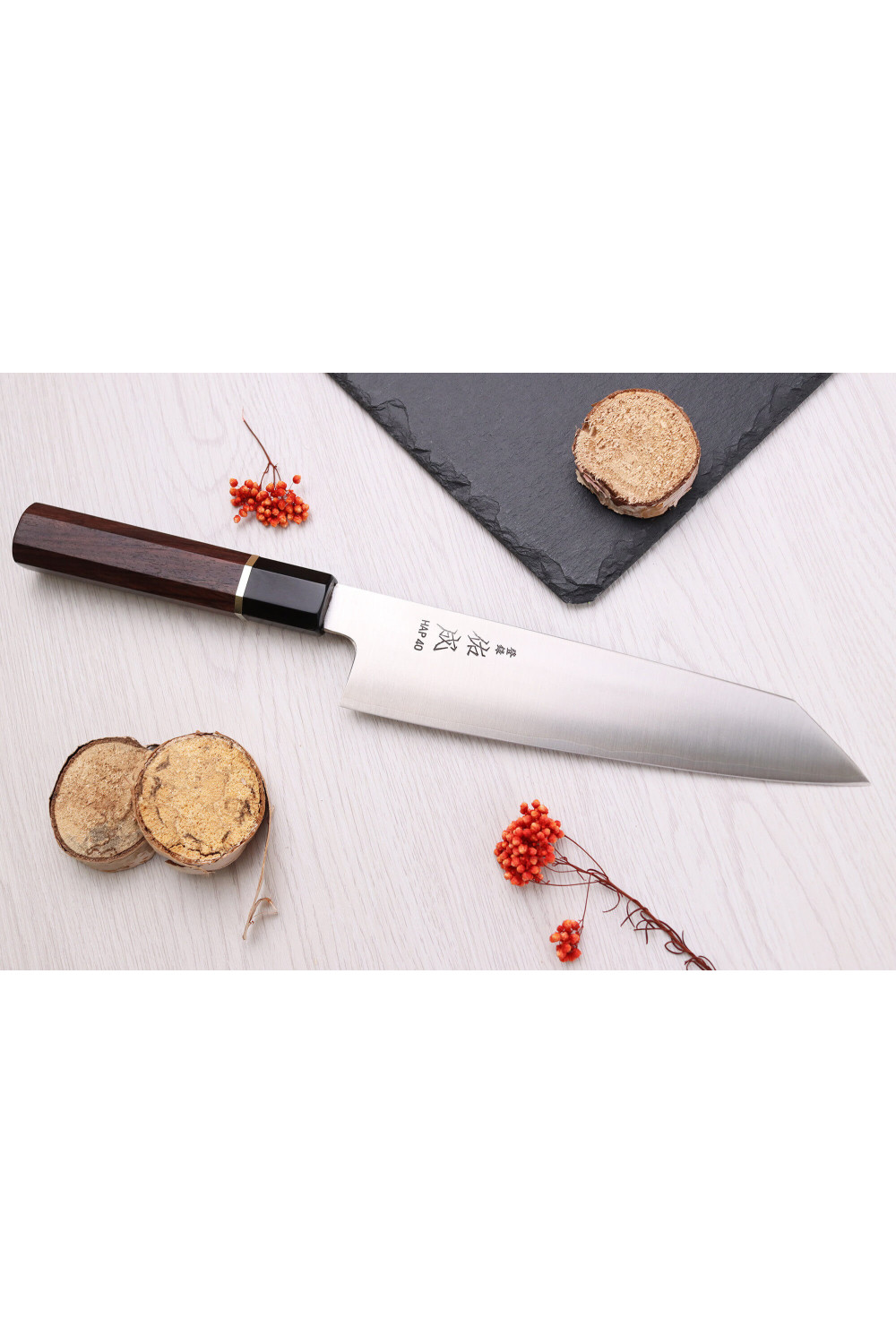
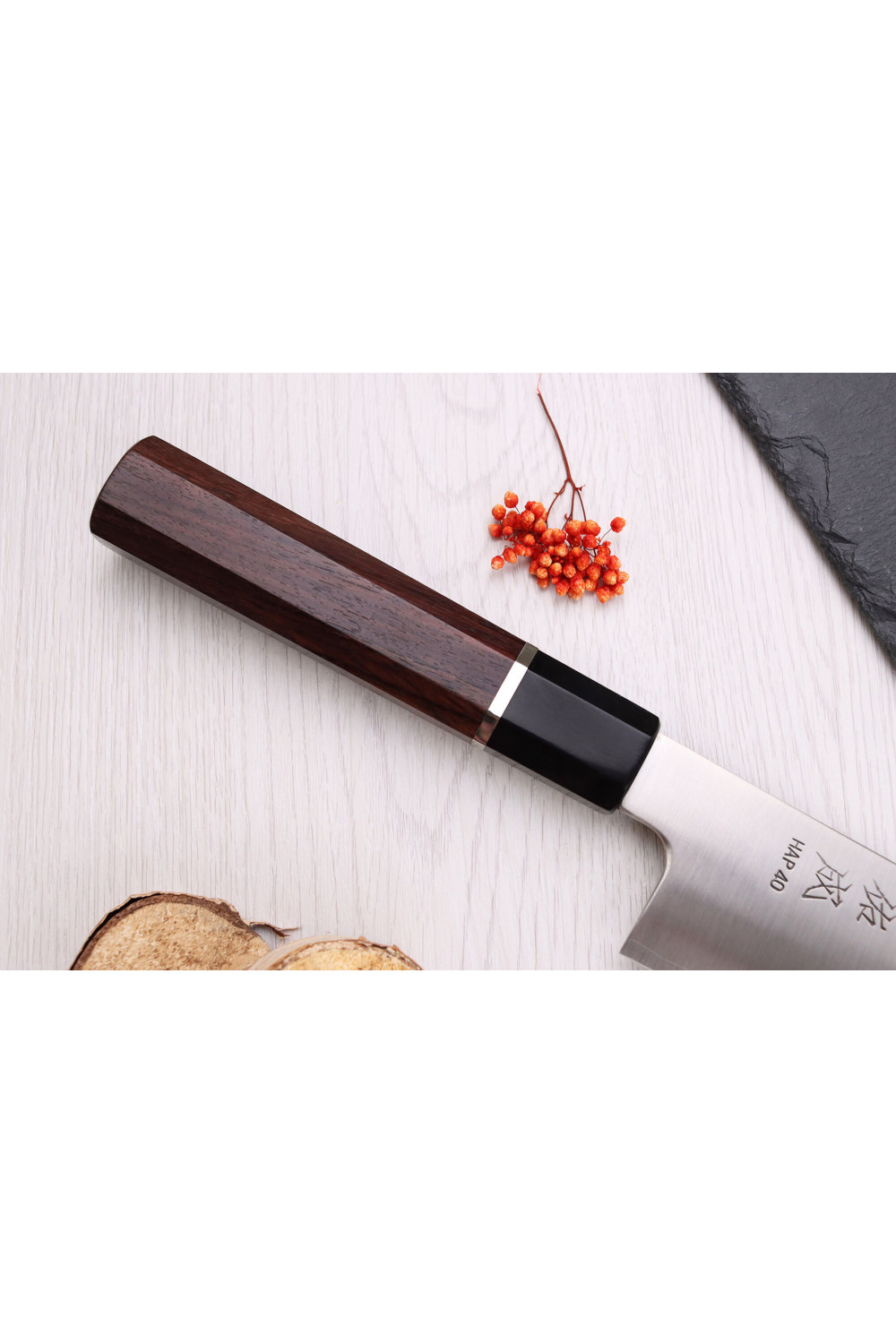
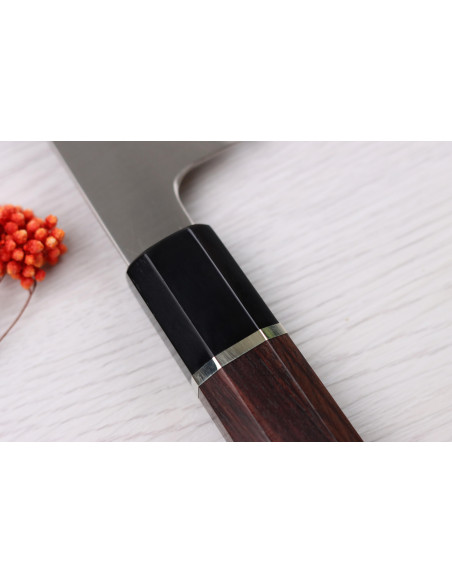
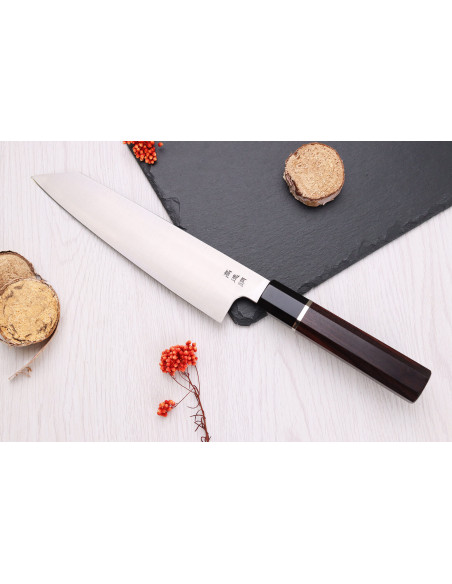
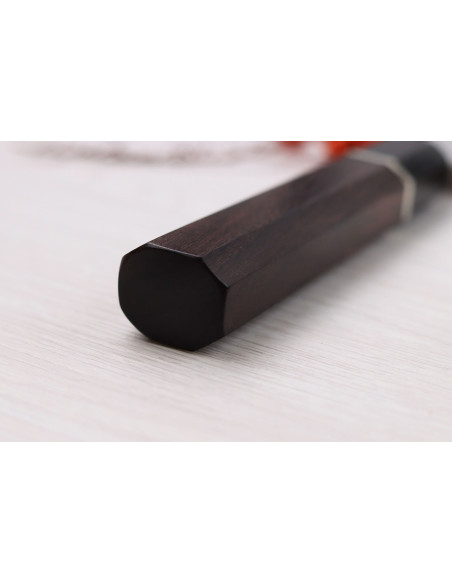
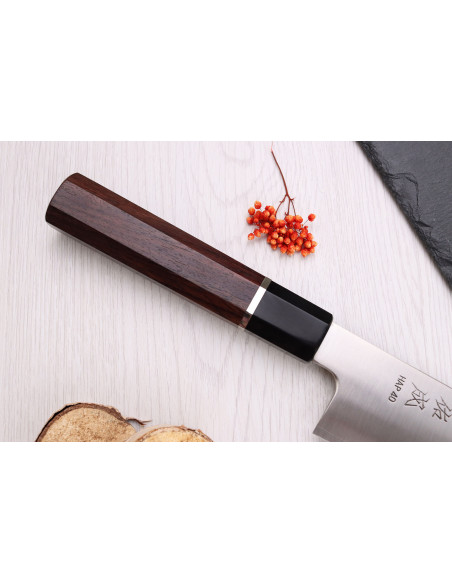
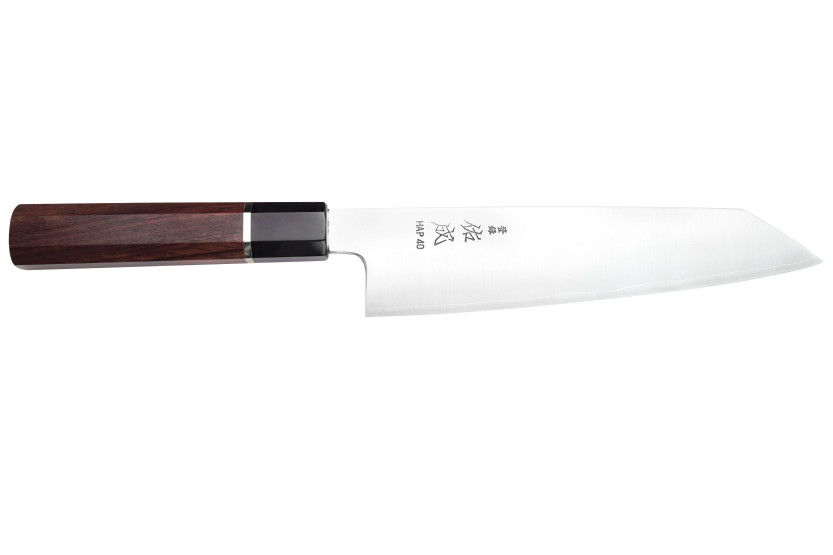
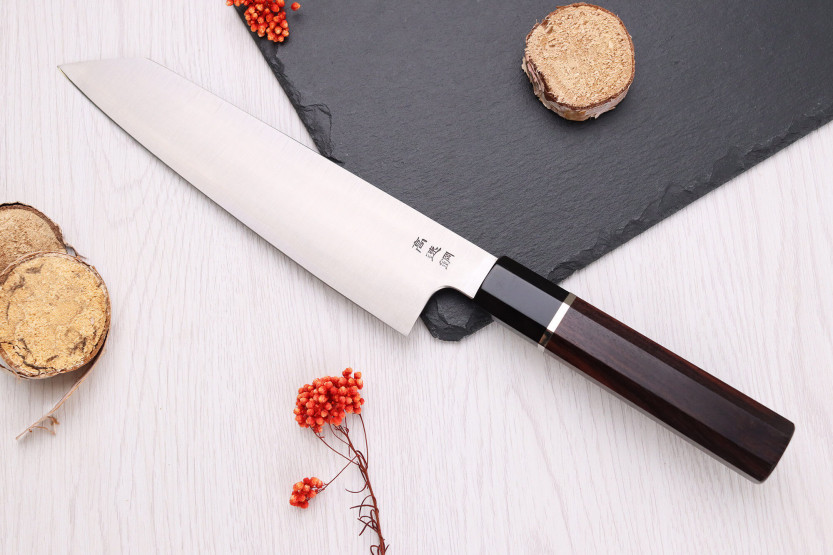
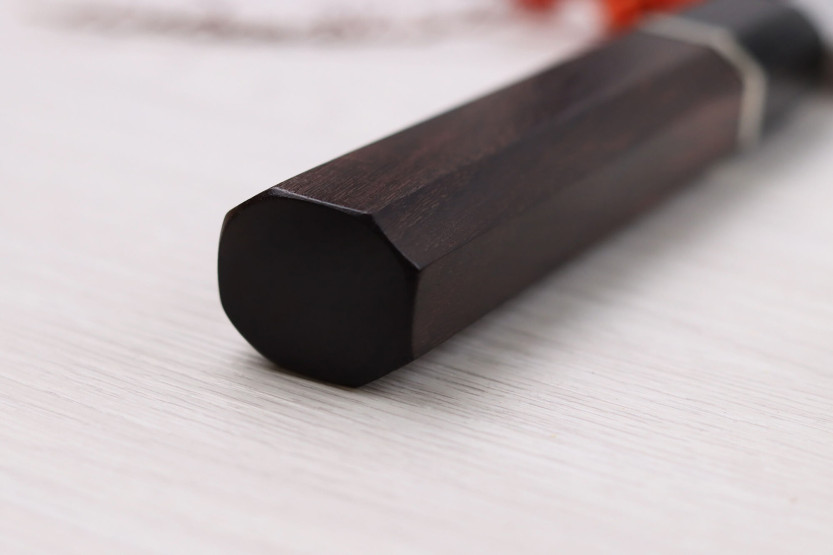
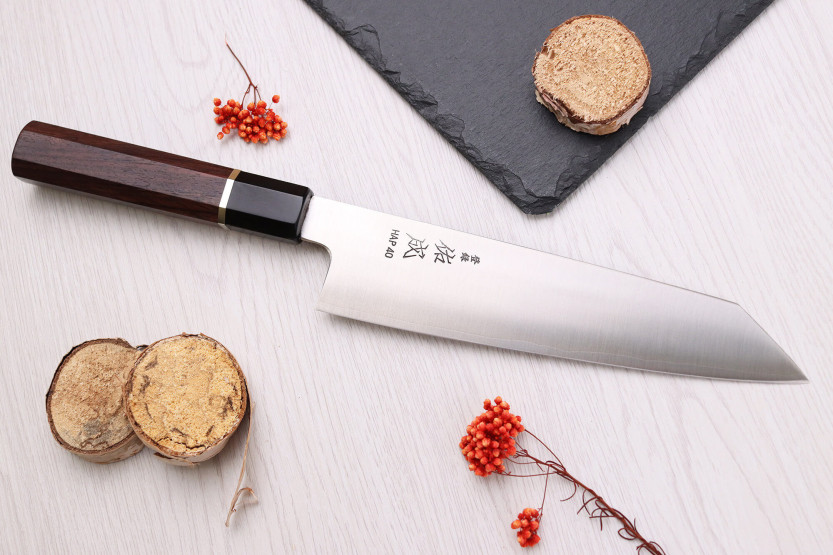
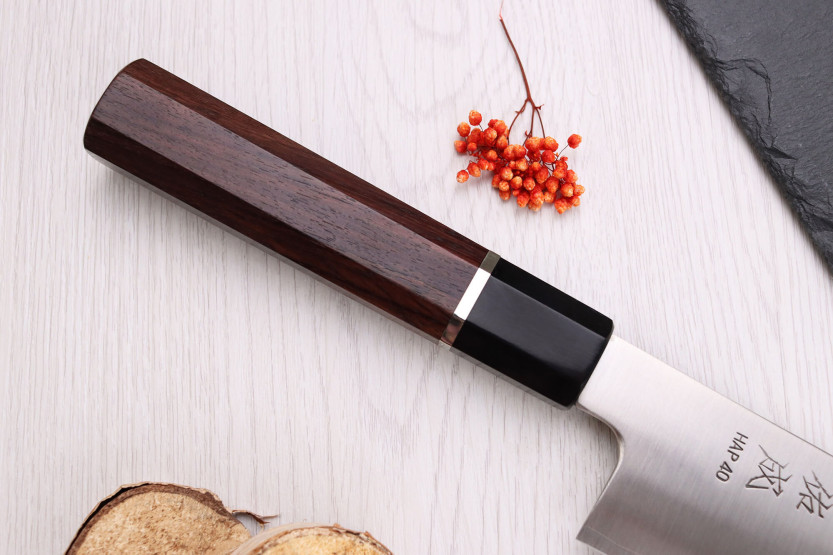
This kiritsuke has a handle made from rosewood, a robust wood known for its resistance to moisture and shock. The wood is brown in color with an elegant dark veining, giving you an authentic-looking handle. The grain is unique to each piece of wood.
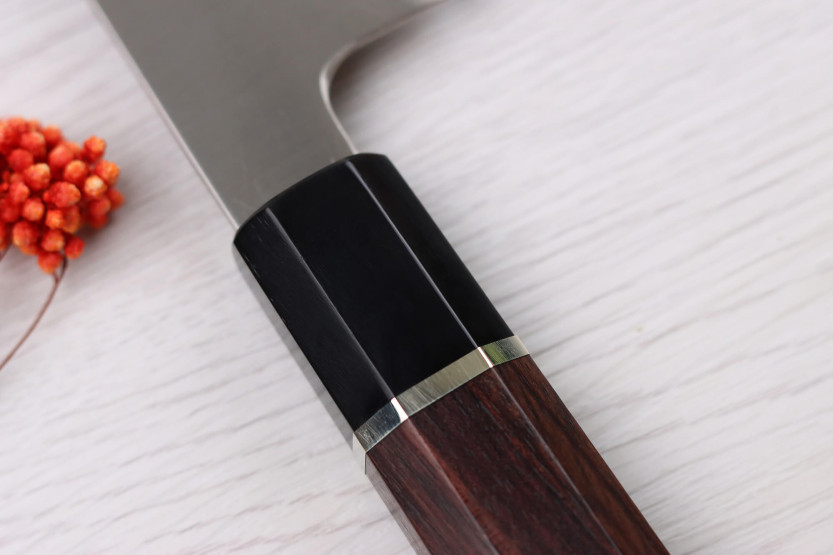
The handle has an octagonal shape suitable for all cooks, whether left- or right-handed. This shape hugs the palm of the hand, ensuring comfort of use and optimum maneuverability. The knife is ideal for intensive cutting.
A black buffalo hornBolster completes the handle, linking it to the blade. The Bolster gives the knife ideal balance. A silver ring elegantly separates the Bolster from the rosewood handle.
The space where the blade fits into the handle is filled with wood pulp, making the whole perfectly watertight. Cut food and water from cleaning operations cannot get in.
A high-end HAP40 steel blade
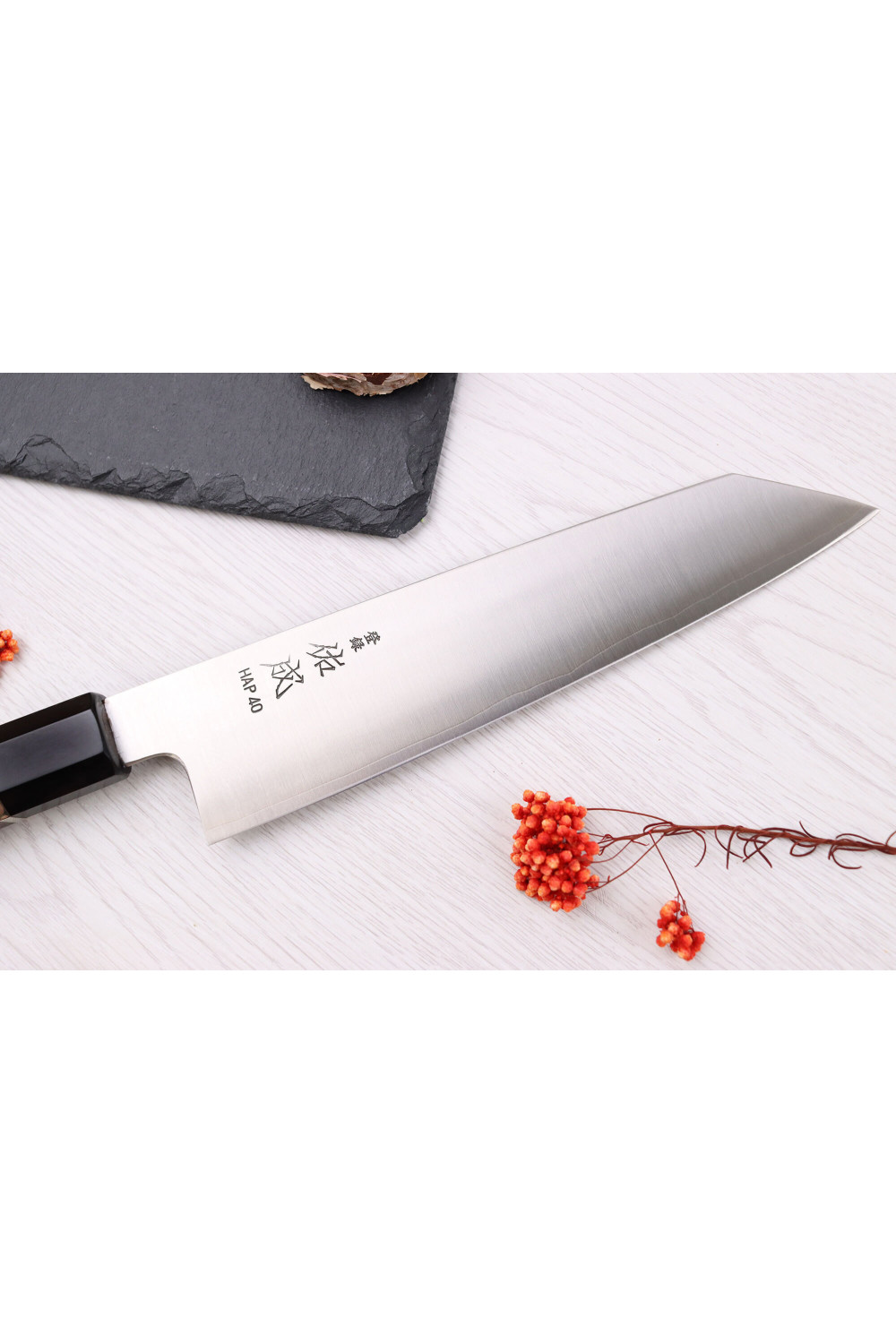
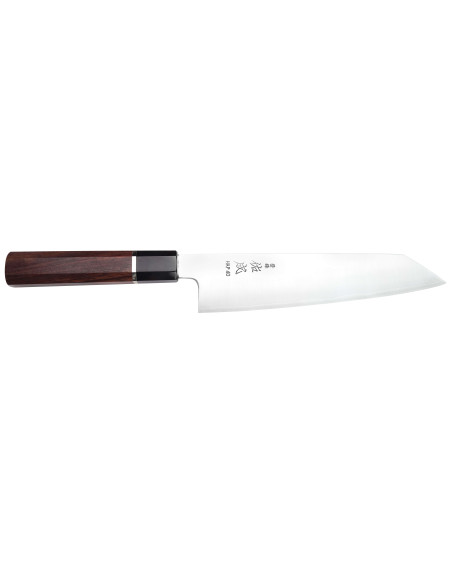
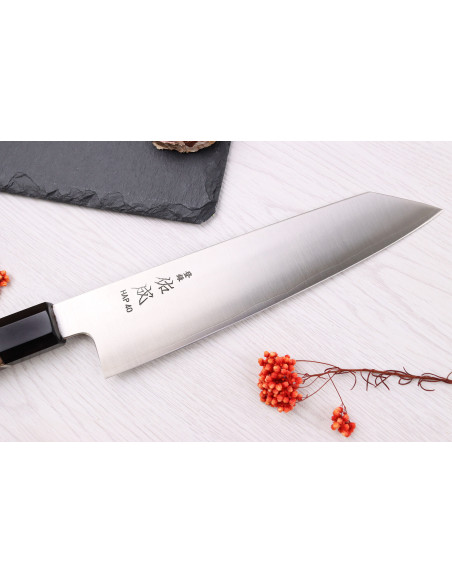
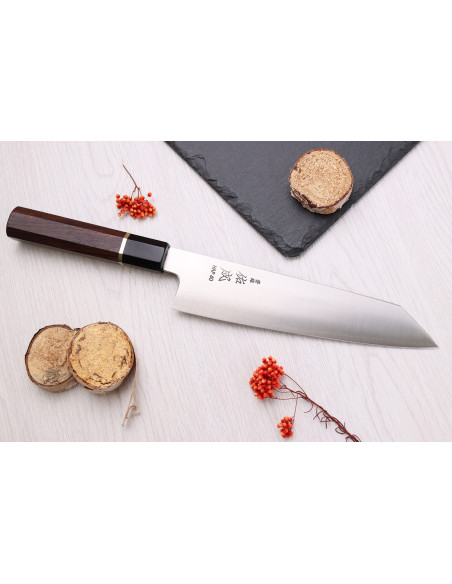
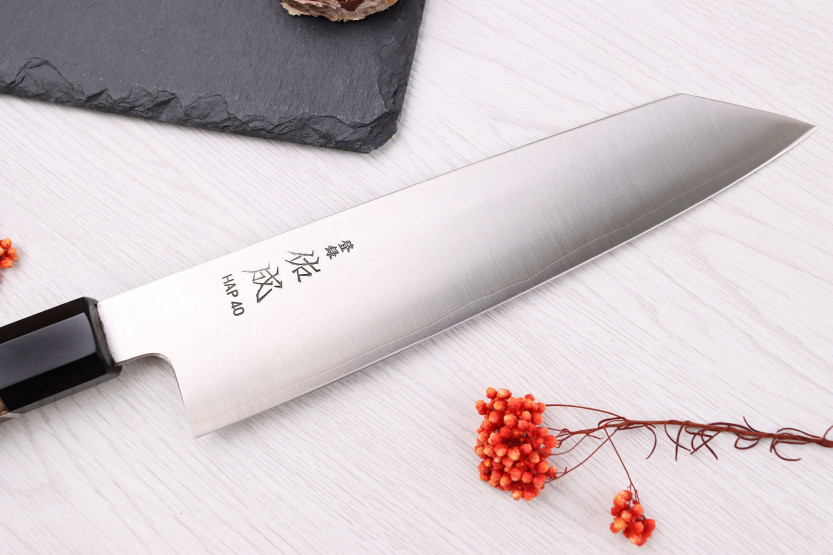
Your Sukenari Kiritsuke knife has a 21cm blade built according to a typically Japanese structure called San Maï. These terms translate as "3 layers" and are a good indicator of the blade's construction. It consists of a core of rigid steel surrounded by a layer of softer, folded steel on either side. This gives the blade excellent balance and protects the core.
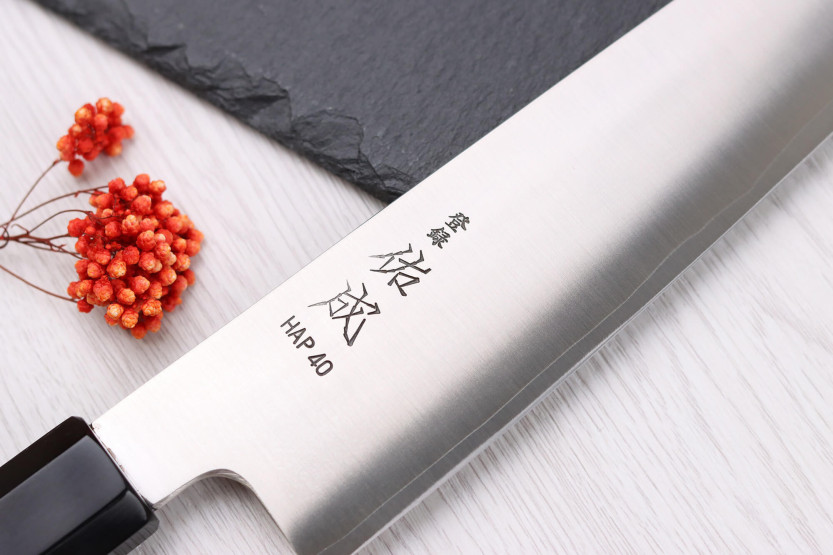
The core is made from Japanese HAP40 steel, a powder-metallurgy alloy produced by Hitachi's internationally renowned steelworks. HAP40 steel is a recent alloy that is fairly difficult and expensive to shape, and should only be handled by experts such as Sukenari blacksmiths to avoid major losses.
This steel is reputed to hold its cutting edge 3 to 5 times longer than conventional steels. In fact, its very fine grit makes it extremely resistant, preventing it from chipping along the edge. With a hardness of 65 HRC, its sharpness is marked and long-lasting, allowing you to space out your sharpening sessions. What's more, despite its high rigidity, this steel is easy to sharpen with a stone when necessary.
HAP40 steel contains almost 1.3% carbon, which is the element contributing to its hardness. However, it is neither totally oxidizable nor totally rustproof. It is a semi-stainless steel that requires very special care (our tips are available further down this page).
The heart of the blade is surrounded bya layer of softer steel that sandwiches it, creating the San Maï layers. This top layer provides the core with suppleness and protection. It is less susceptible to impact and breakage during cutting. The superimposed layers of steel are visible on the underside of the blade, forming a random wave that undulates along the entire length of the cutting edge.
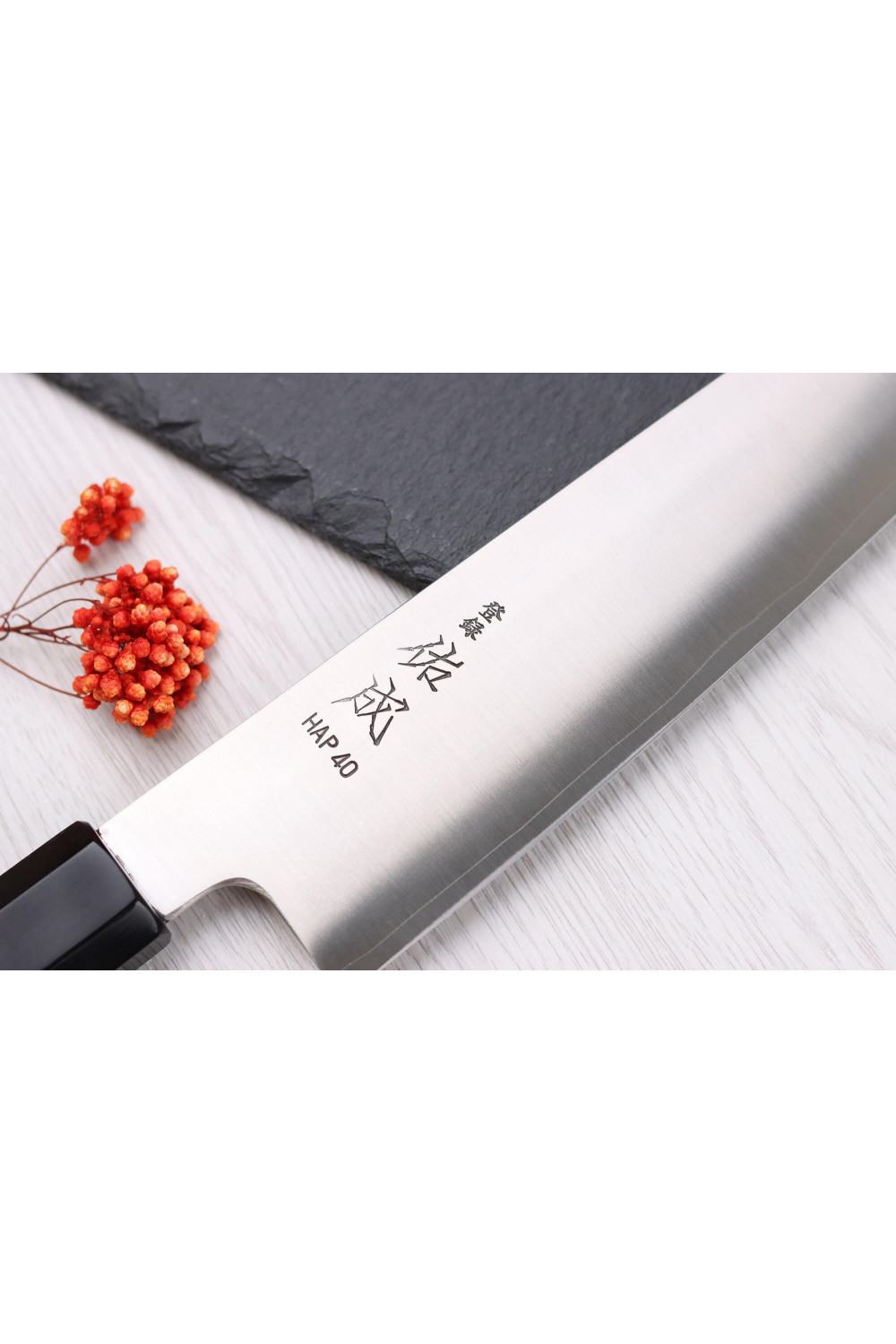
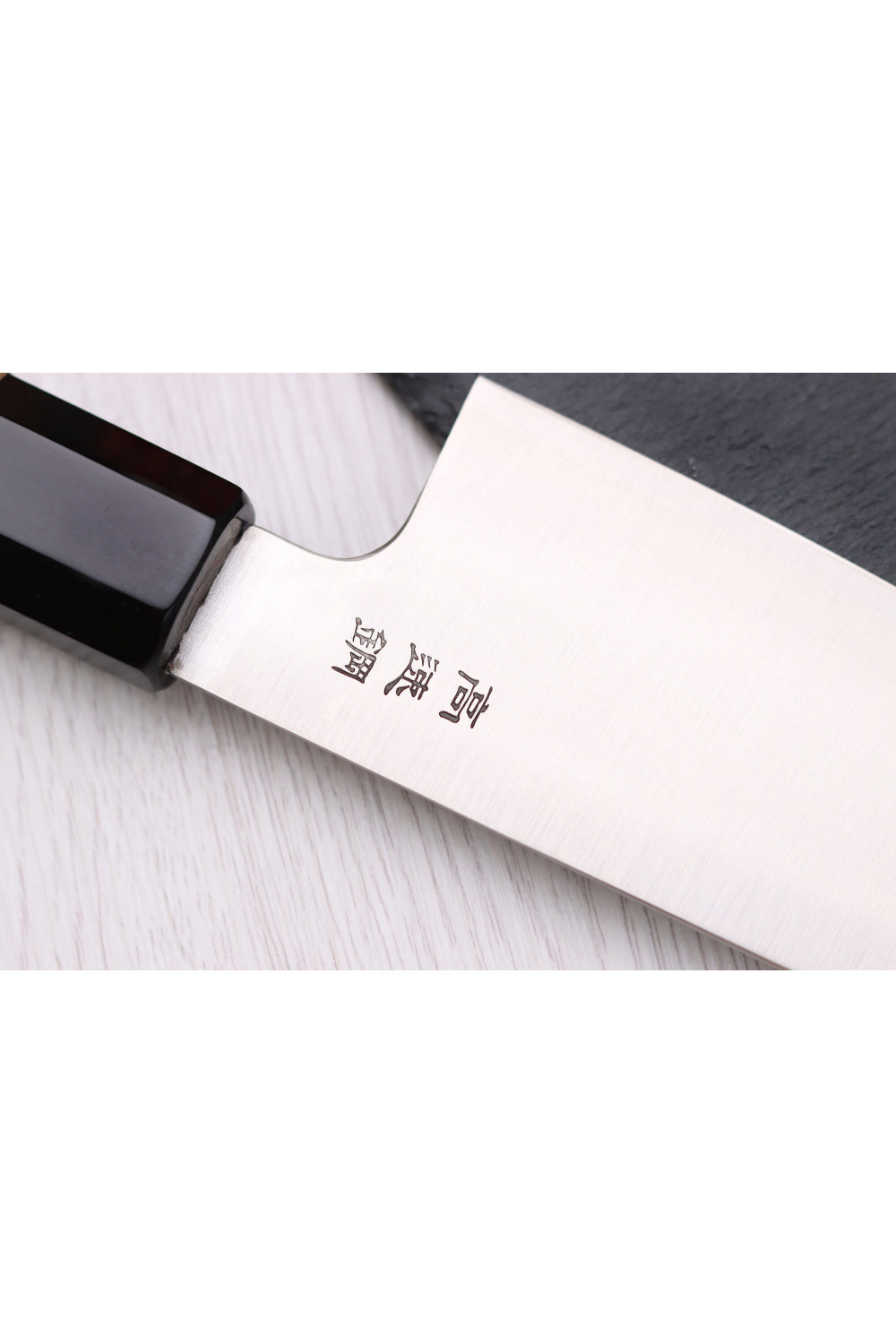
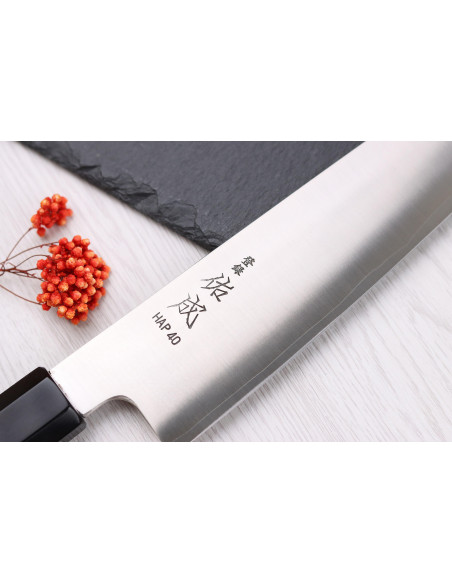
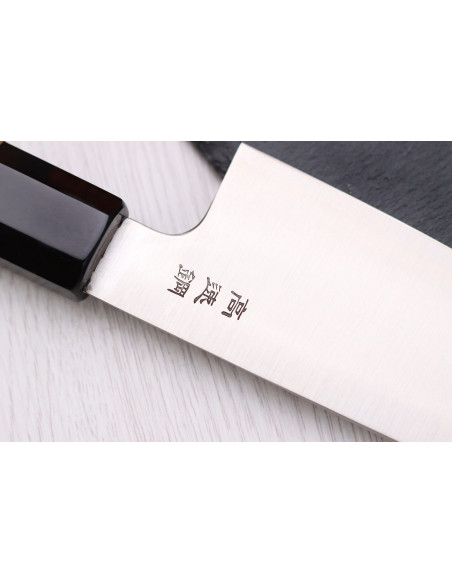
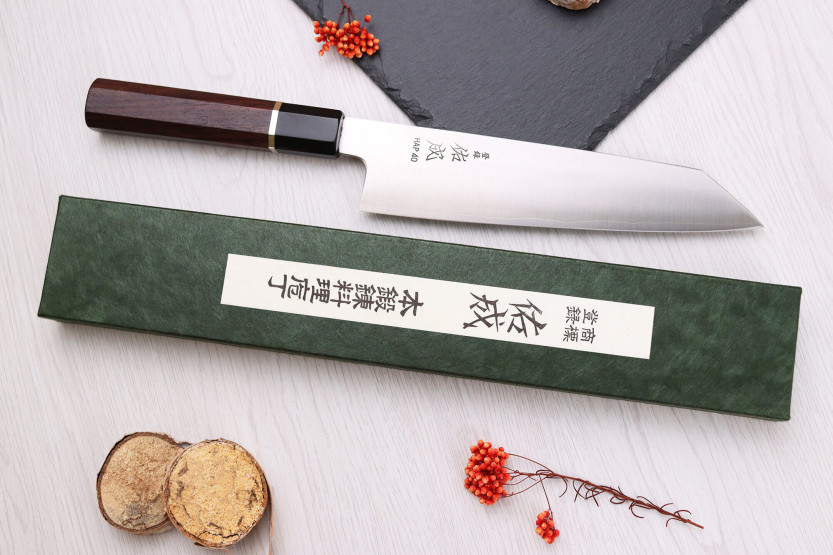
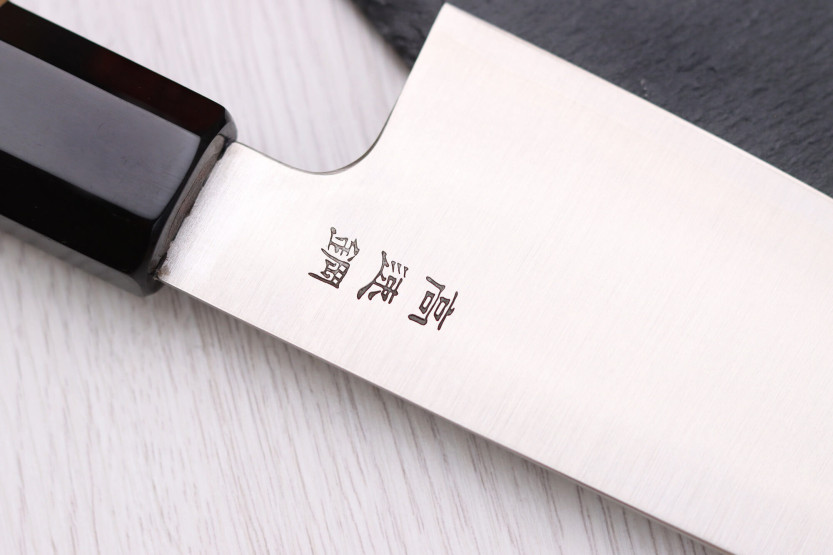
Finally, the blade has been engraved with kanji and steel type, then polished for an elegant, authentic finish.
How do I care for my Japanese knife?
Your kitchen knife is made from high-quality materials. To preserve it, it's essential to follow these few tips.
The knife must be washed by hand, using a mild detergent and a non-abrasive sponge. Wash in lukewarm water without wetting the handle. Then wipe the knife thoroughly to remove all drops of water.
You can then store the knife in a dry place, without any trace of moisture. Please note that due to the carbon content of the alloy, the blade may change color slightly over time. To protect it, we recommend applying a few drops ofoil from time to time.
Discover Sukenari knives on our website!




 By buying this product you can collect up to