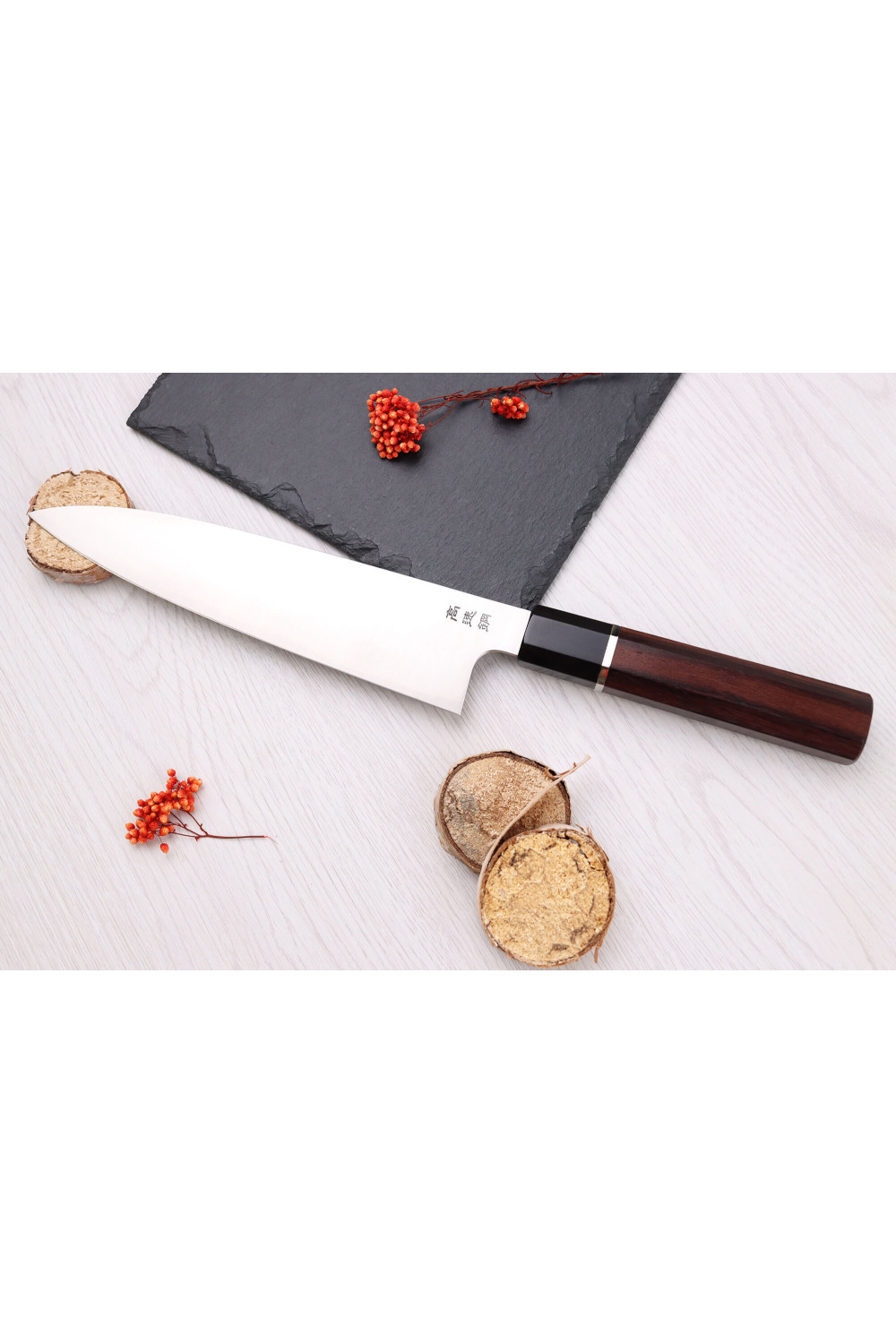
Sukenari Japanese cutlery was founded in 1933, having inherited the forging techniques used in the past by the blacksmiths who made the samurai's katanas. The company is staffed by blacksmiths whose skills are such that they are able to forge Honyaki blades, the highest quality blades in cutlery. Thanks to its know-how and experience, Sukenari can offer you knives that are both modern and traditional.
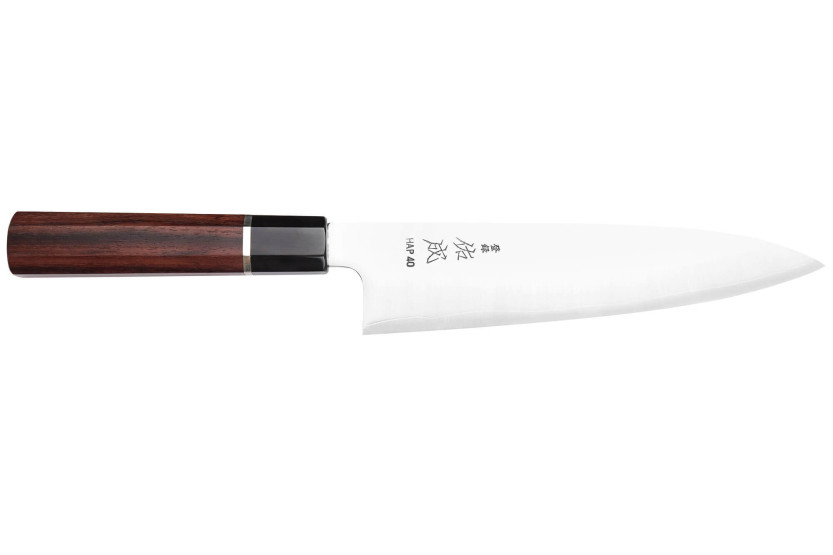
Octagonal rosewood handle
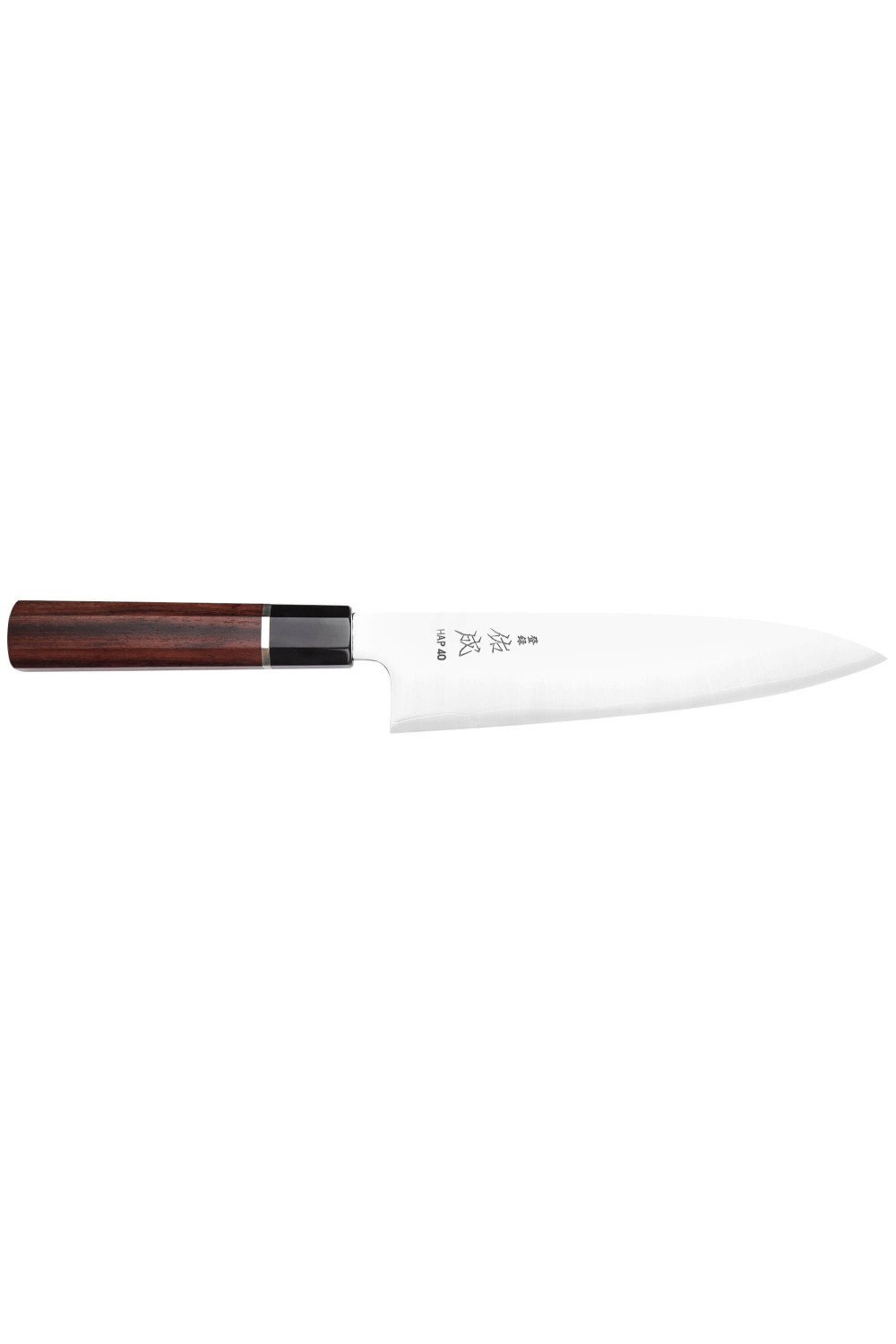
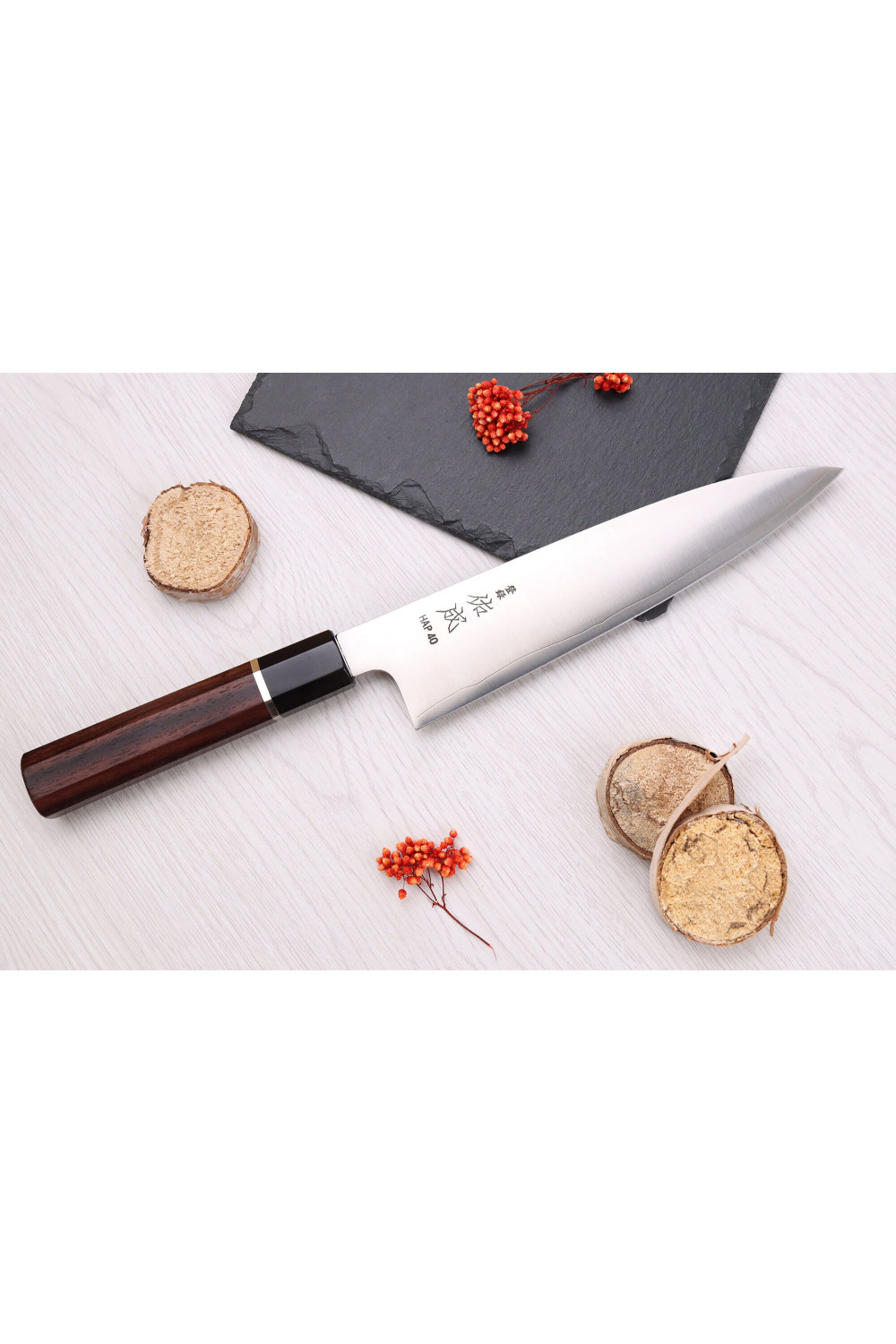
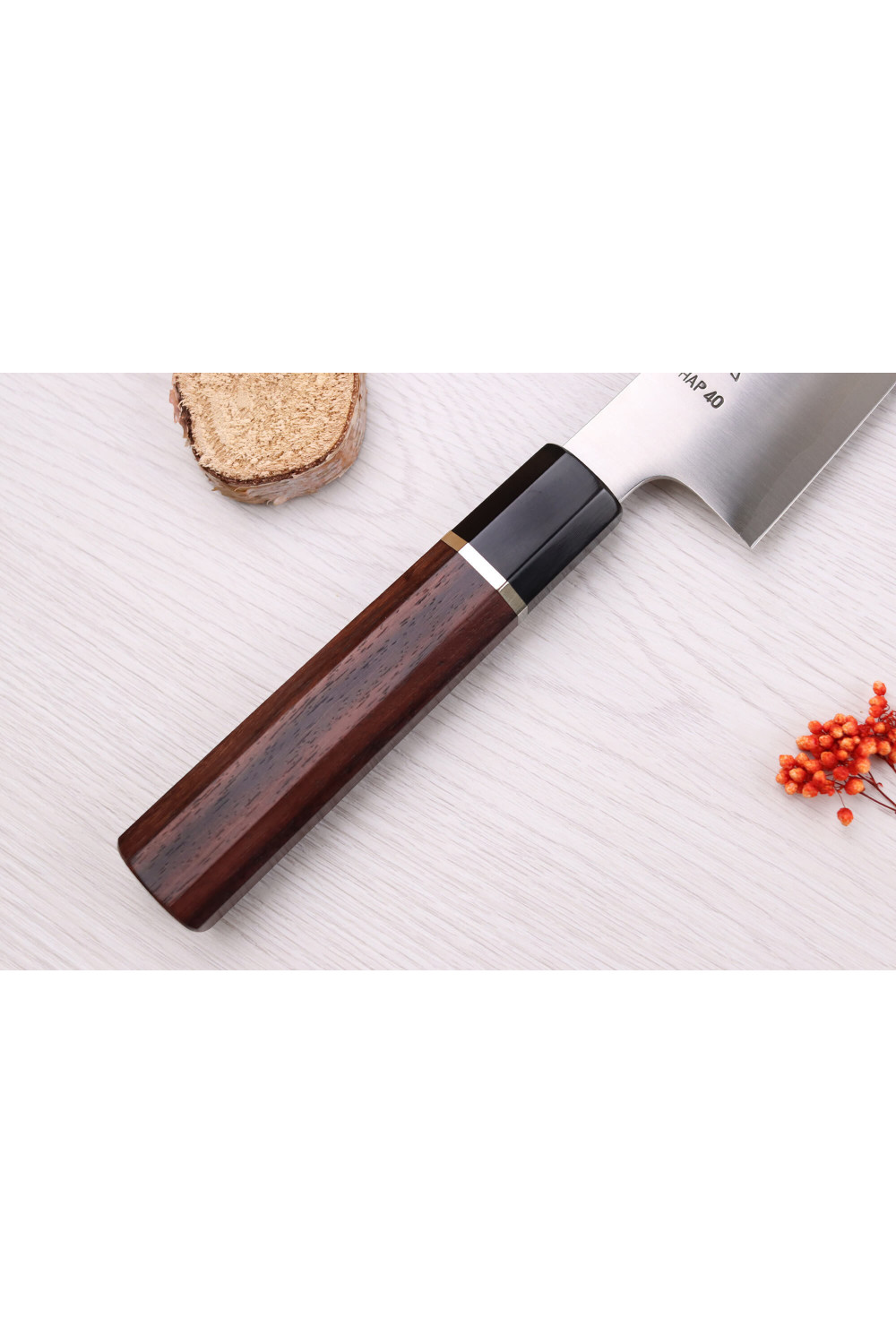
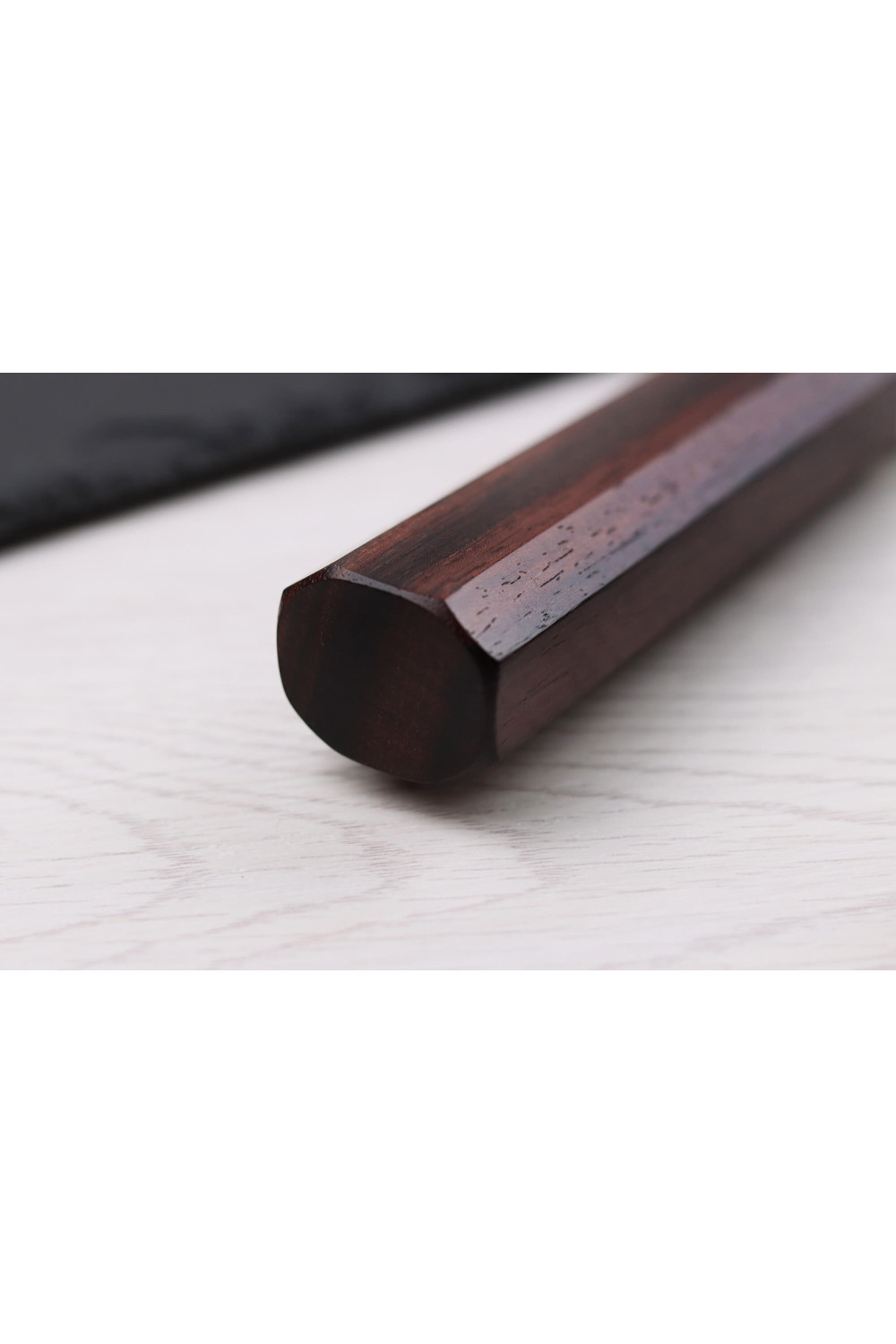
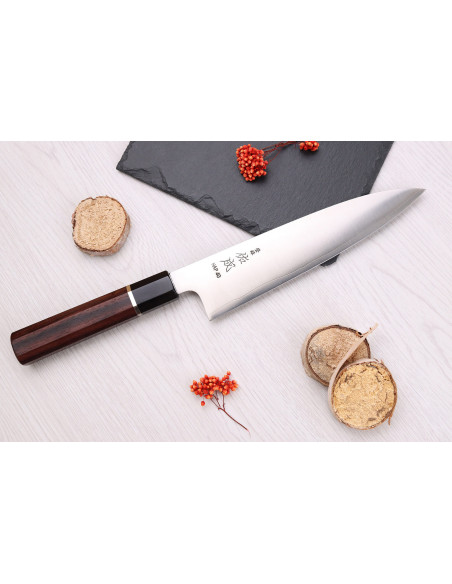
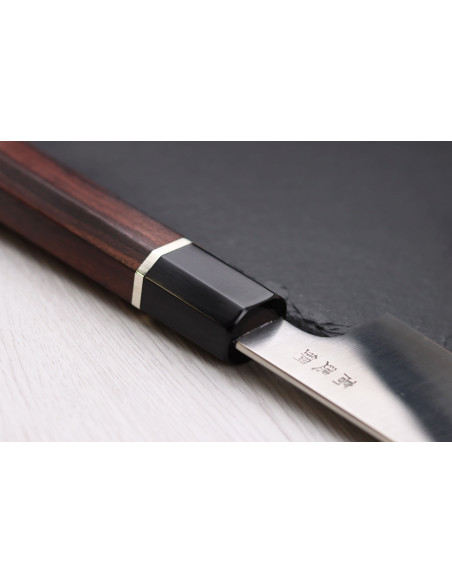
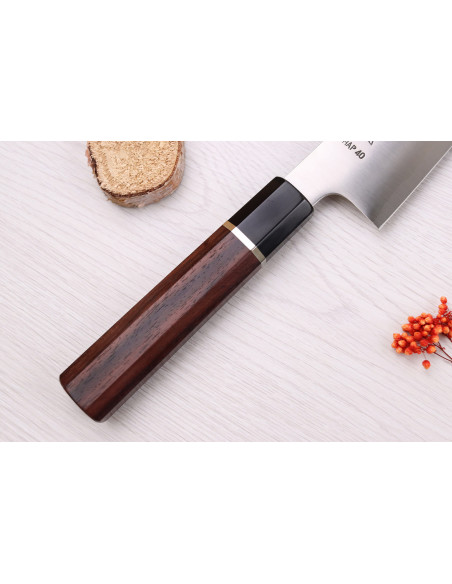
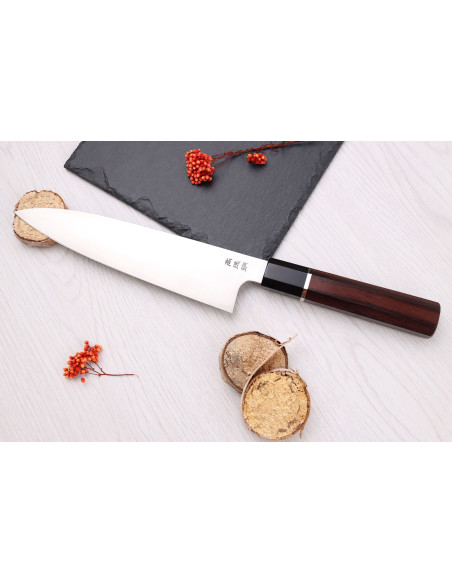
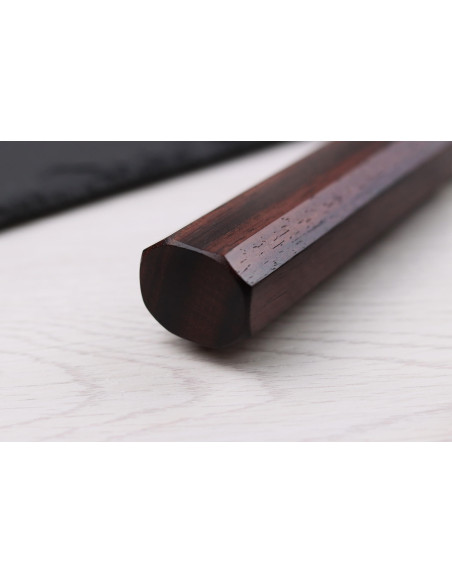
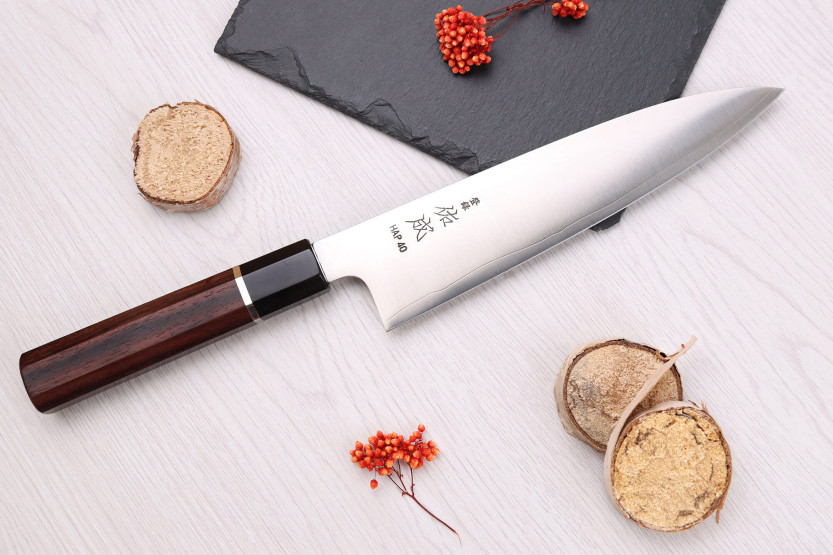
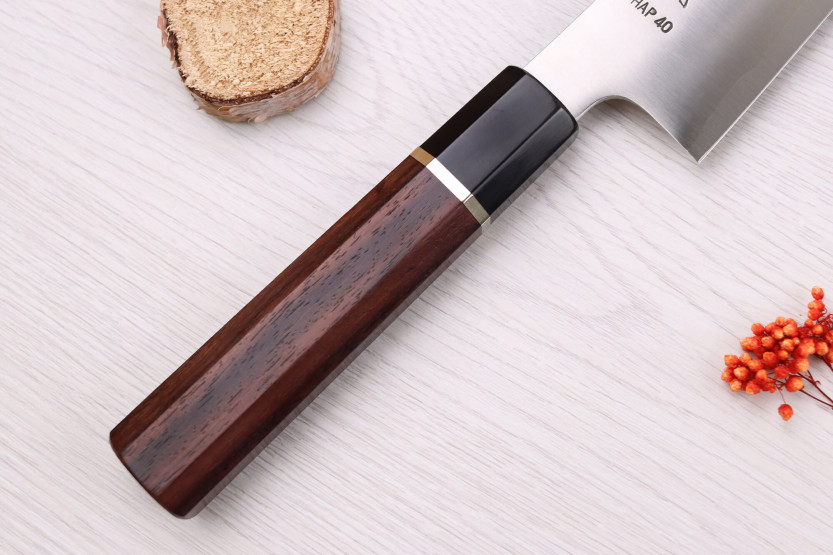
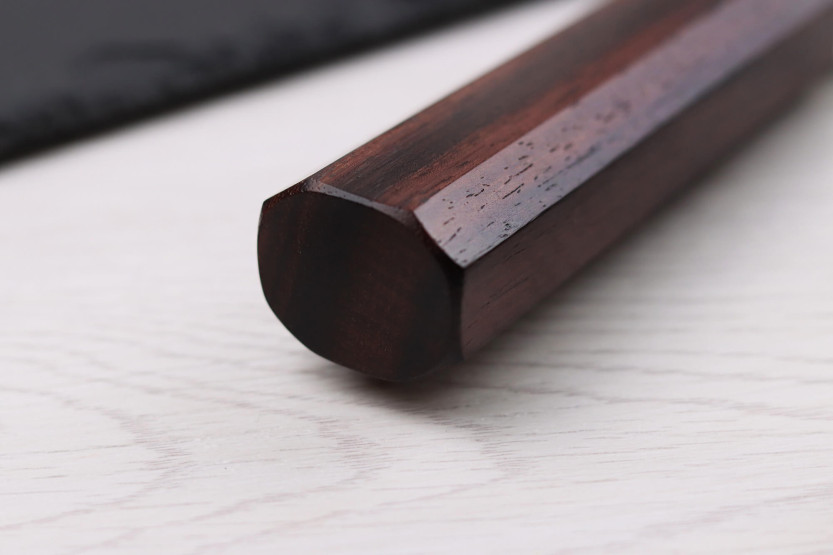
This Japanese chef's knife features a handle made from rosewood, a solid wood that is highly resistant to moisture and impact. Rosewood has a brown tint with dark veining, giving it an authentic appearance, as the veining is unique to each knife.
The wood has been cut into an octagonal shape to suit both left- and right-handed users. This shape hugs your palm perfectly for a comfortable grip and optimal handling, making the knife ideal for intensive cutting.
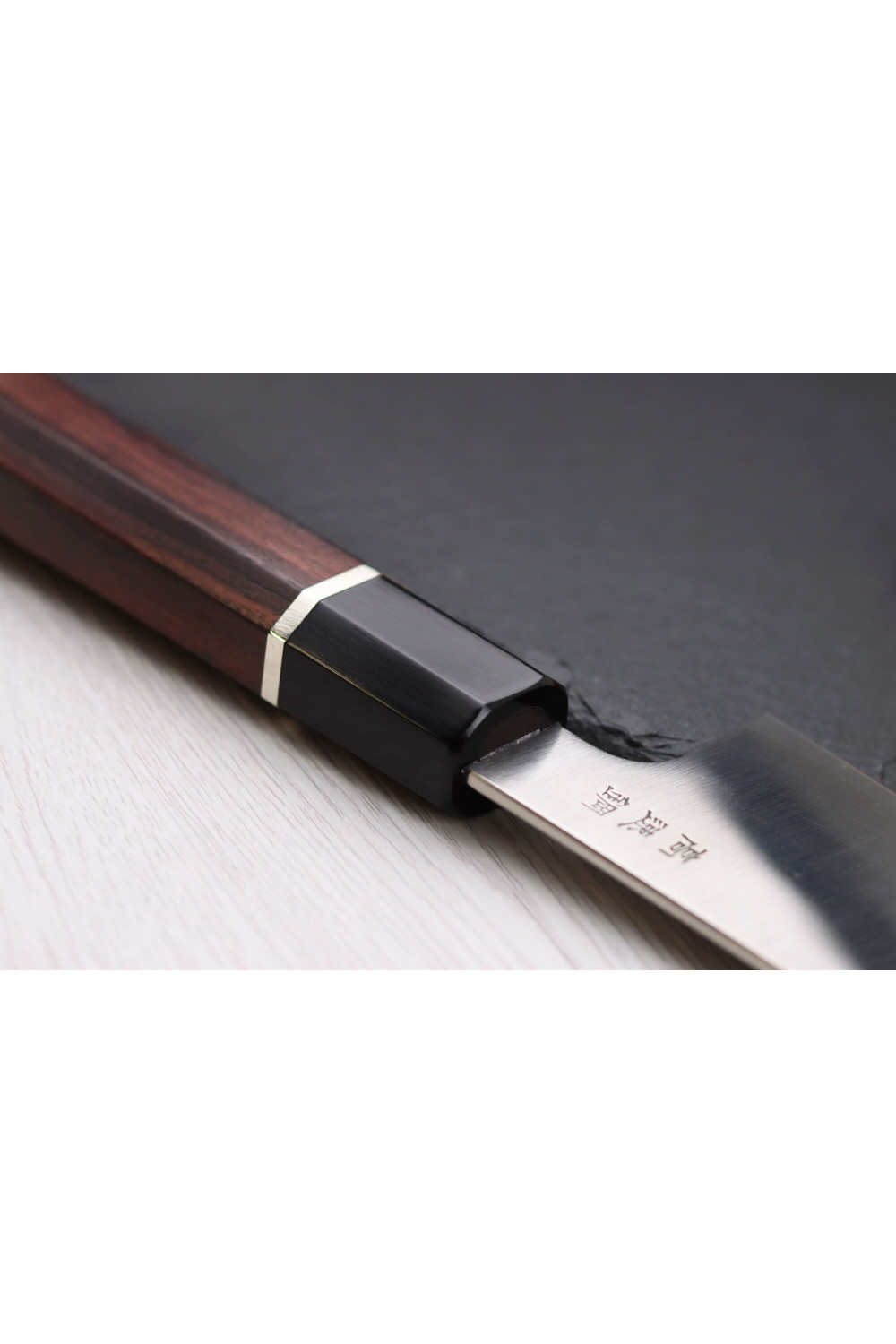
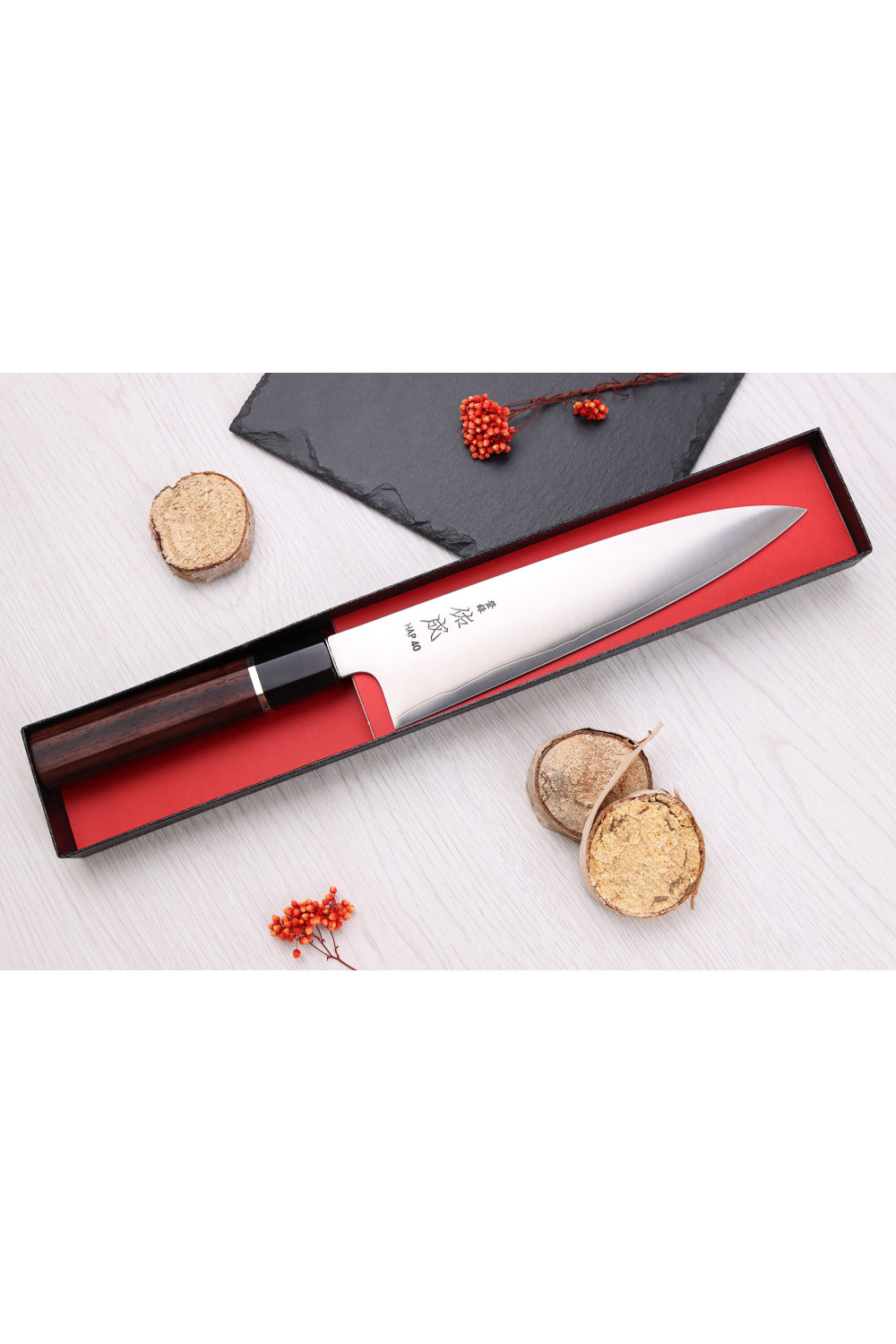
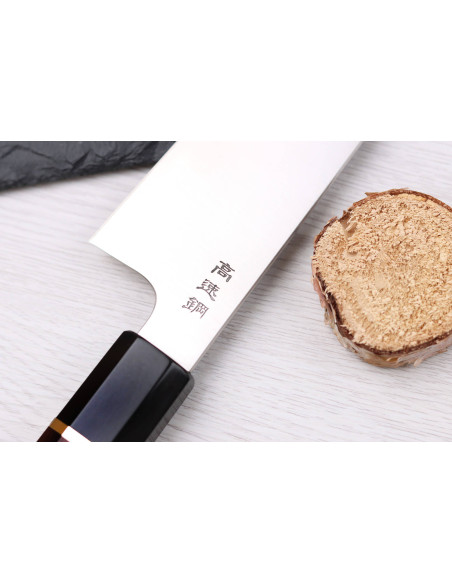
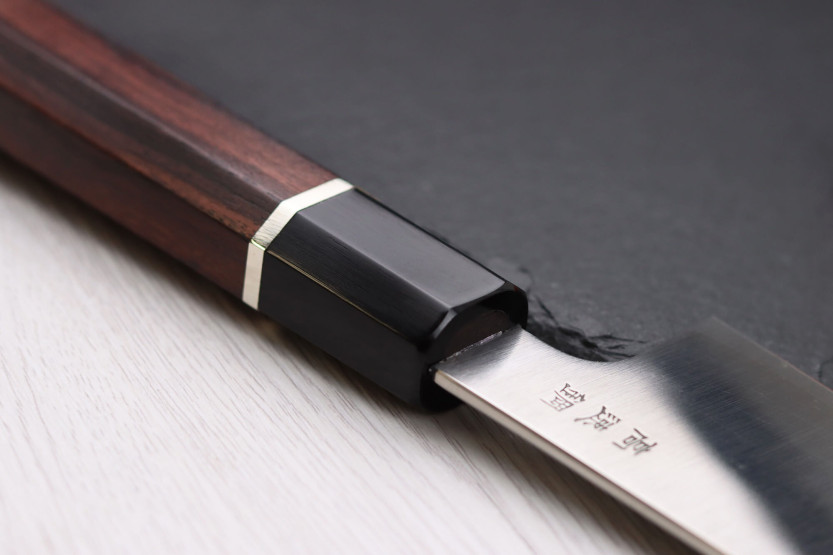
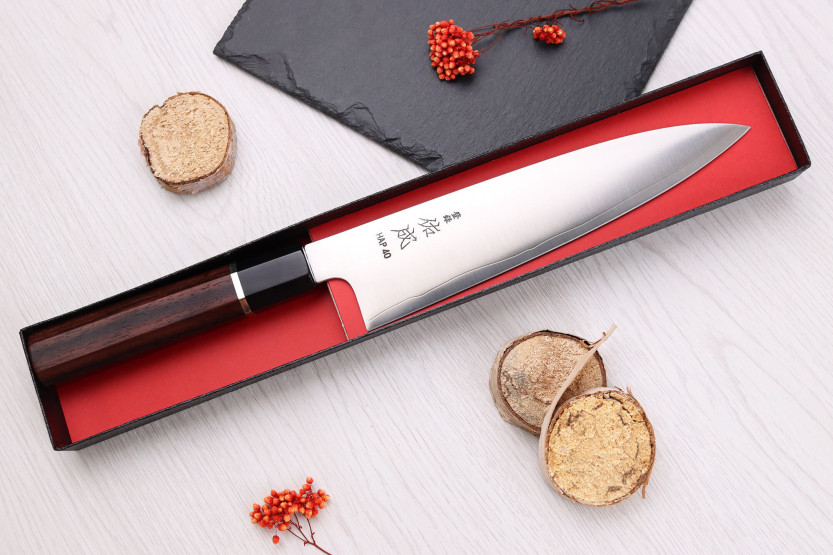
The handle is complemented by a black buffalo horn bolster that links it to the blade. This bolster ensures that your knife is well balanced.
To complete the handle, wood pulp fills the space where the blade fits into the handle. This makes the knife watertight, preventing cleaning water and bits of food from entering.
A San Maï blade with HAP40 steel core
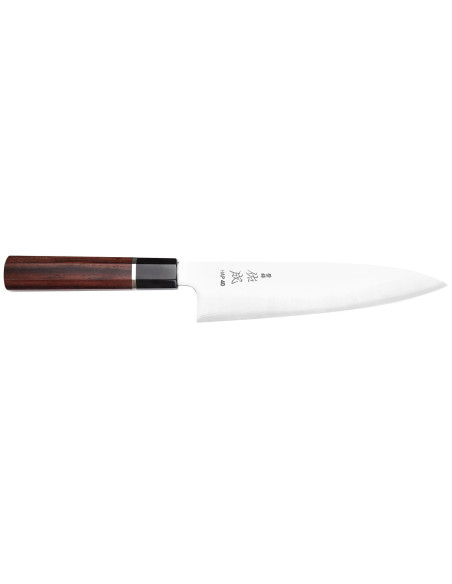
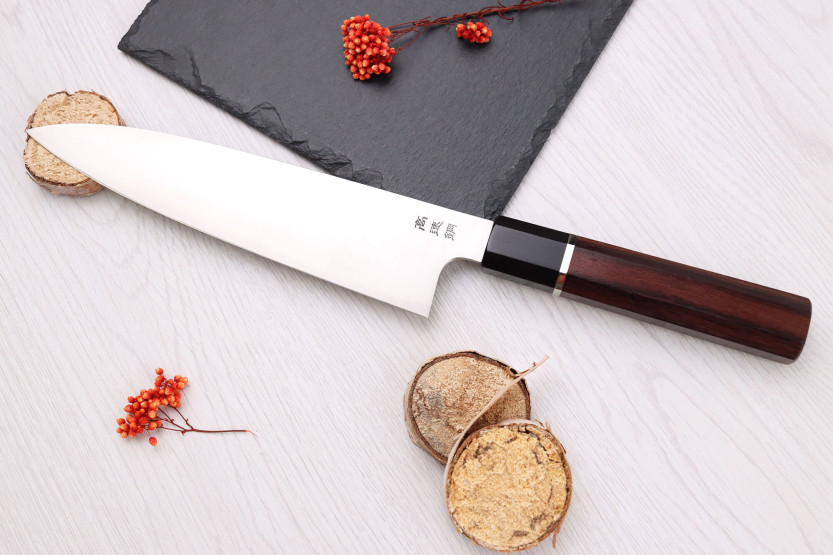
Your Sukenarigyuto features a 21cm blade with a typically Japanese San Maï structure. These terms mean "3 layers" in Japanese, and clearly indicate how the blade is constructed. It contains a core of rigid steel, which is then covered by a layer of softer steel folded over on each side. This design protects and balances the core.
The heart of the blade is made ofJapanese HAP40 steel, a powder-metallurgy alloy produced by the world-famous Hitachi steelworks. This alloy is not yet widely available on the market and is relatively difficult to work, which is why it is so expensive. You need to be an expert to shape it and avoid major losses. Such is the case of Sukenari's blacksmiths.
HAP40 alloy has a very fine grit and is extremely resistant, not chipping along the edge of the blade. This steel is reputed to hold its edge 3 to 5 times longer than conventional steels, making it ideal for longer sharpening sessions. It achieves 65 HRC on the Rockwell scale, which is a clear indication of its long-lasting sharp edge. Note that despite such hardness, the blade remains easy to sharpen with a stone whenever necessary.
The alloy's composition is what makes it a hybrid. Although it contains almost 1.3% carbon, it cannot be considered totally oxidizable or totally stainless. It's a semi-stainless steel that requires careful maintenance (see our tips below).
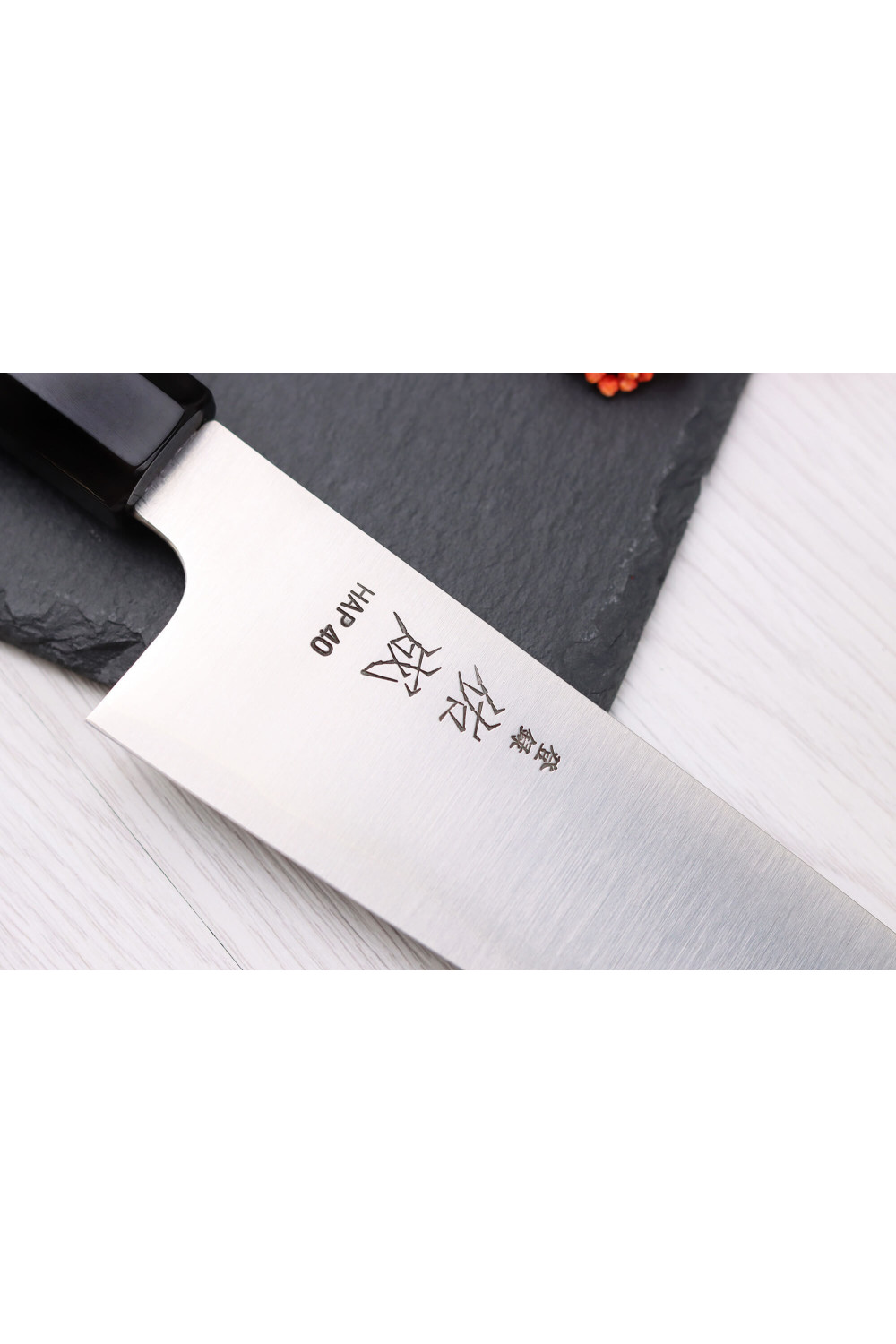
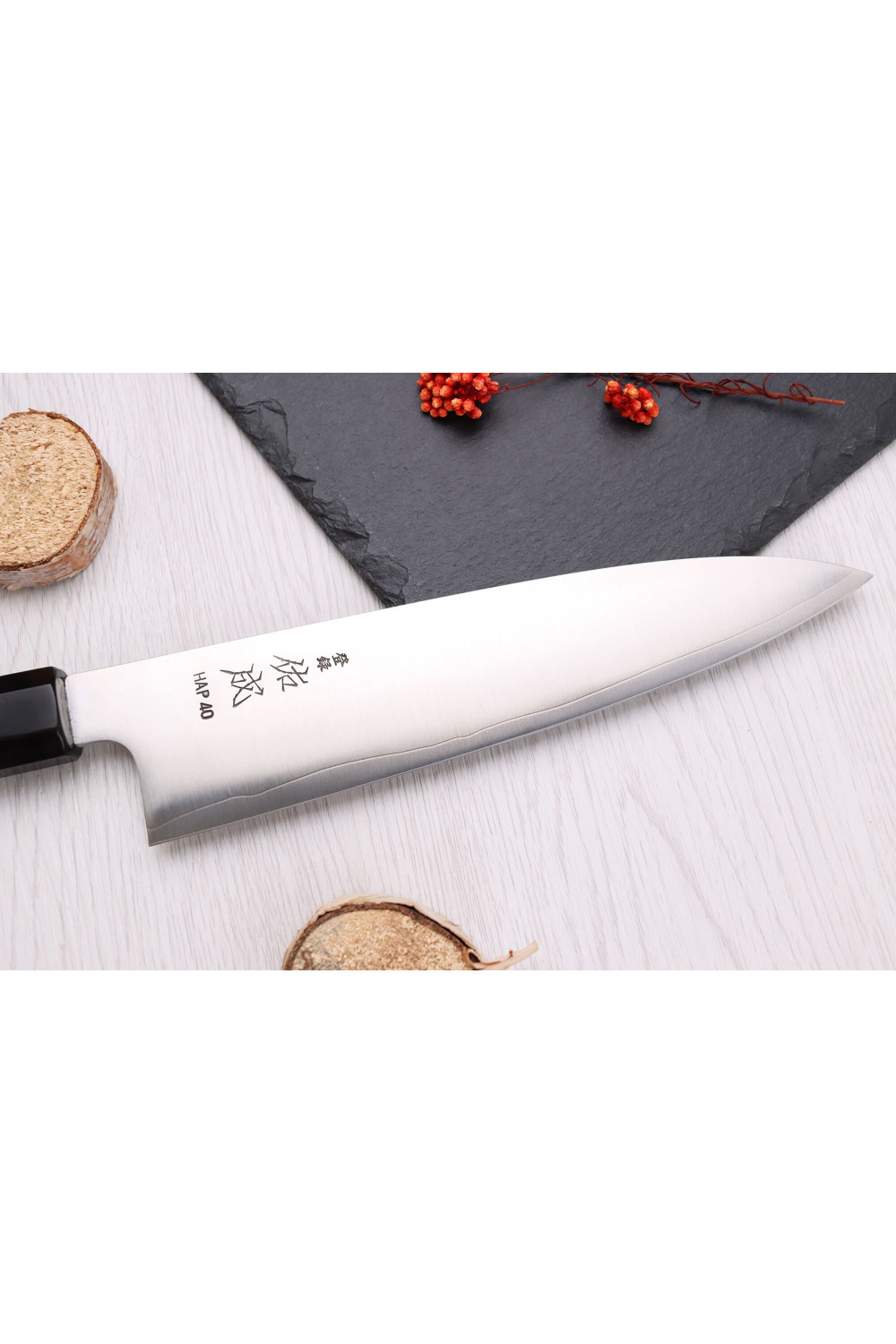
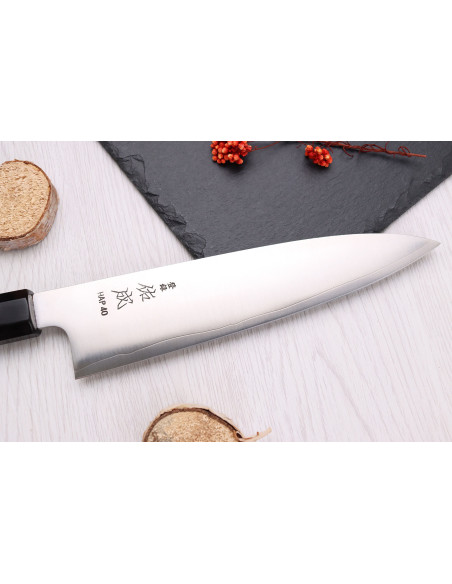
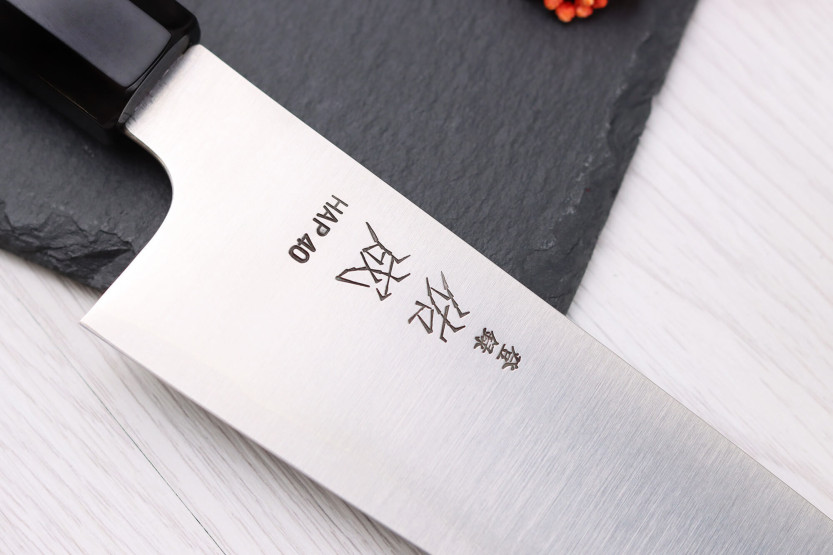
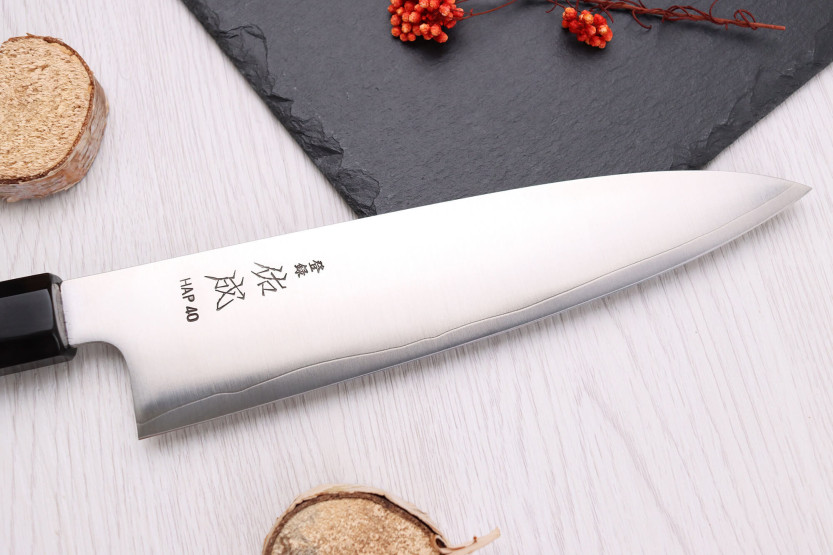
This HAP40 steel core is then covered by a layer of softer steel folded on either side: the 3 layers of San Maï are created. The outer layer not only makes the core more supple, making it less brittle in use, but also protects it. The superimposition of steel layers is visible on the underside of the blade. Near the cutting edge, a random wave undulates.
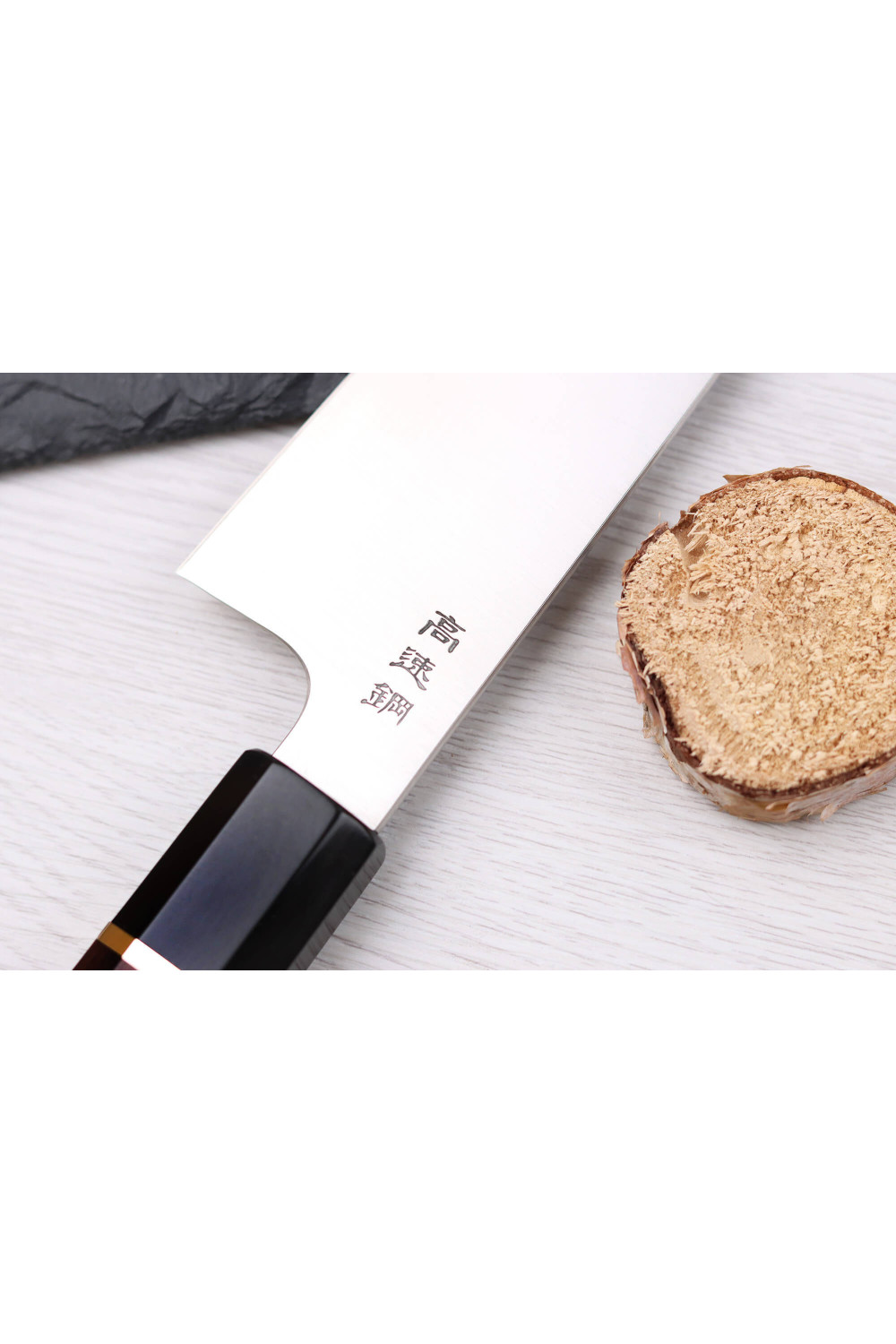
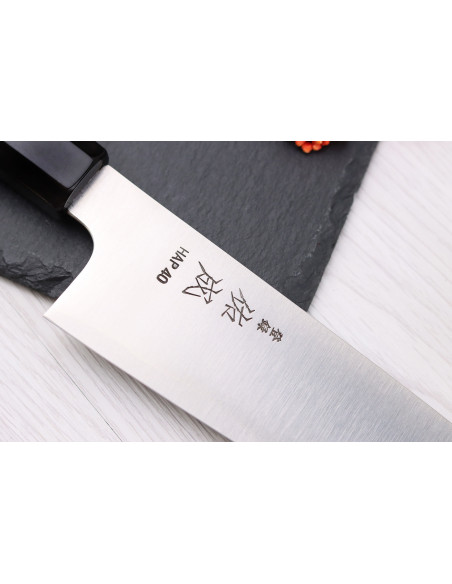
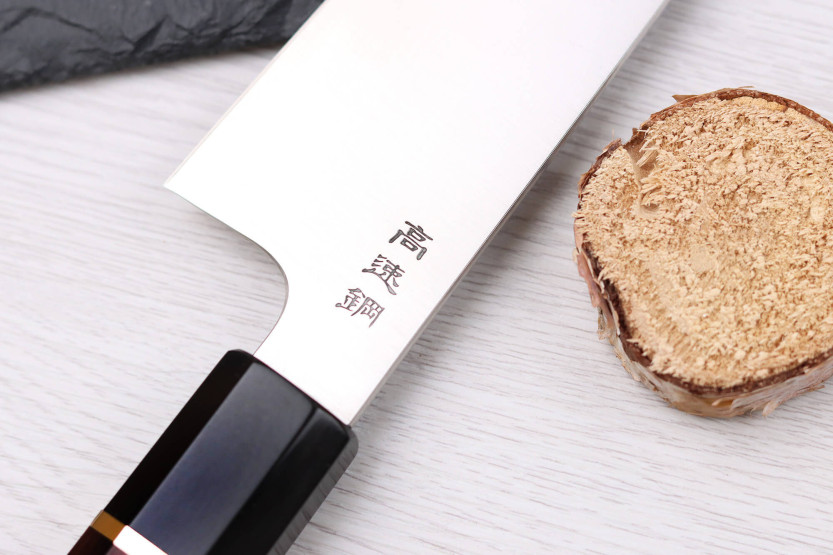
Finally, the blade features an elegant polished finish, as well as the type of steel used and engraved kanji. This knife has an absolutely authentic character.
Taking good care of my Japanese knife
Your knife has been crafted from top-of-the-range materials, so it's important to take the utmost care of it. It should not be washed in the dishwasher or soaked in the sink.
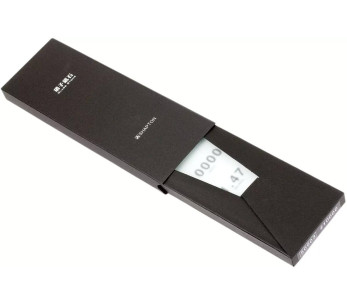
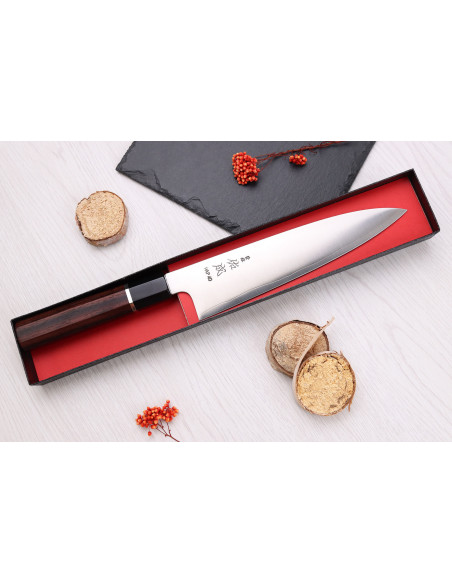
Use a mild soap and a non-abrasive sponge under lukewarm water, without wetting the handle. Once the knife has been washed, give it a thorough wipe-down to ensure that it's moisture-free. You can then place it in a dry place, as in its box.
As the knife blade contains a high carbon content, its color may change slightly over time. To preserve it, you can apply a littlecamellia oil from time to time.
Many Japanese sharpening stones are ideal for your knife!




 By buying this product you can collect up to