Sukenari is a Japanese company founded in 1933. Today, it enjoys an excellent reputation in the art of manufacturing top-of-the-range knives. The company's blacksmiths are highly skilled, drawing on ancestral forging techniques used to forge samurai katanas. Sukenari blacksmiths are also capable of forging Honyaki knives, considered to be of the highest quality. Sukenari offers you handcrafted knives combining authenticity and modernity.
Top-of-the-range Macassar ebony handles
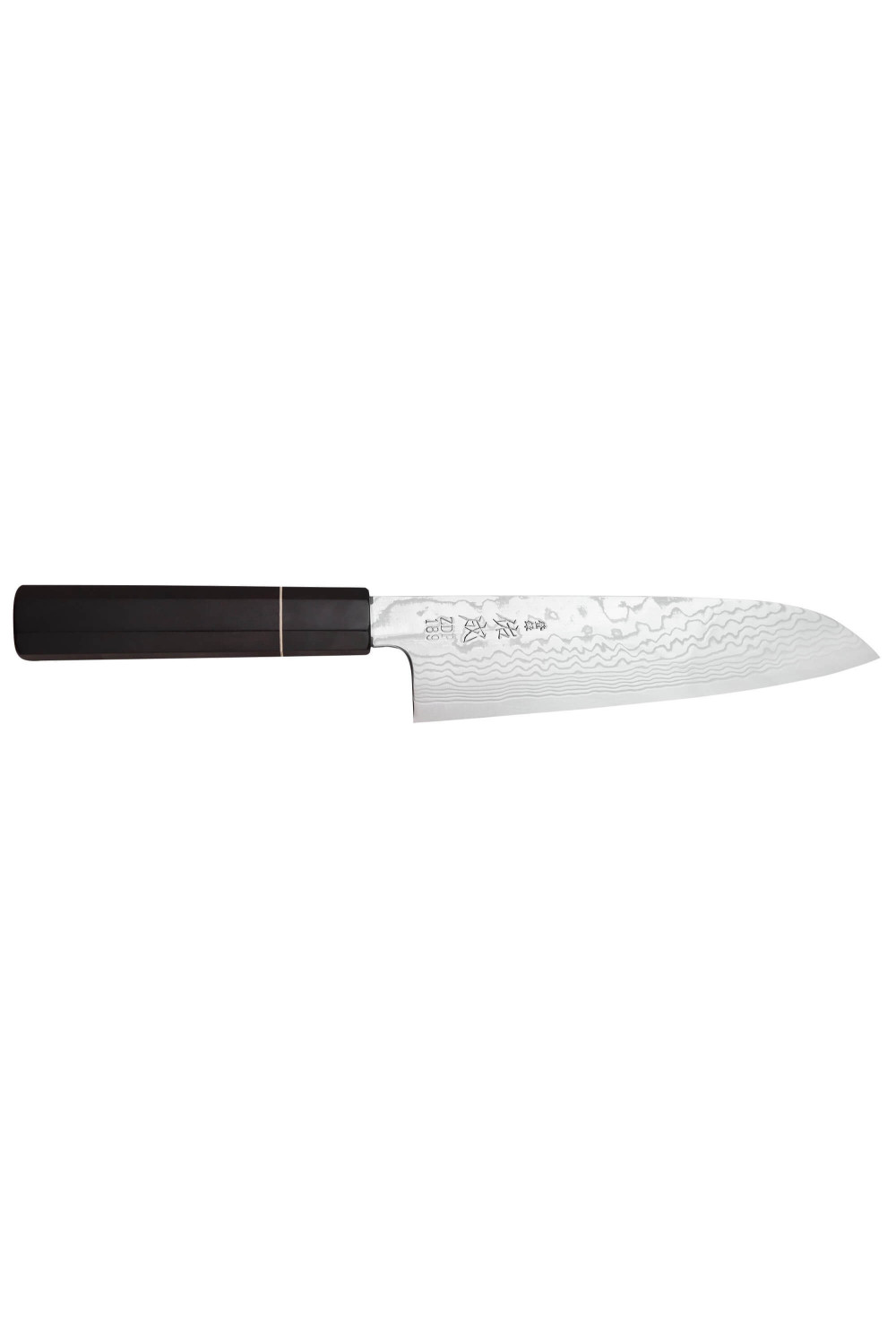
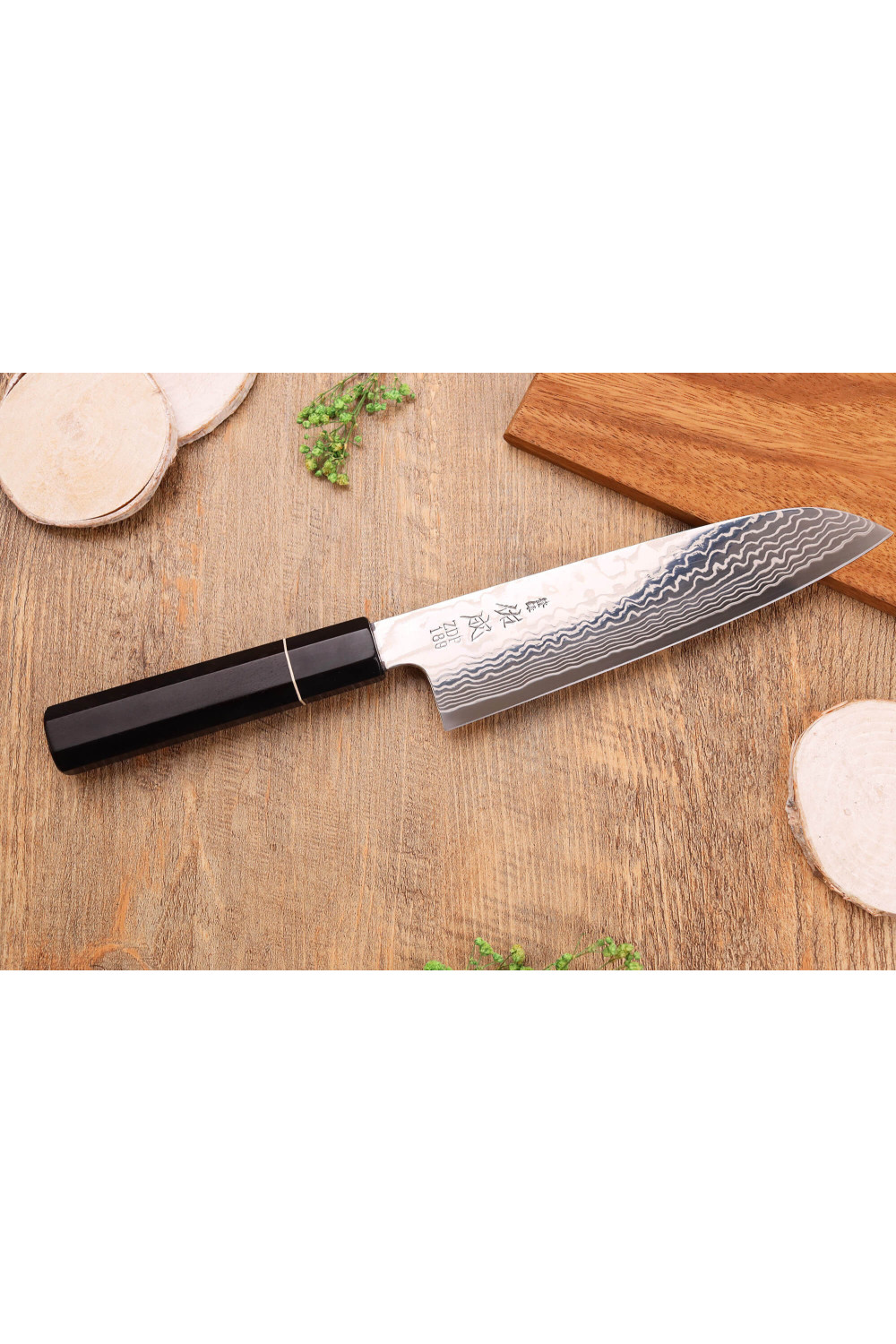
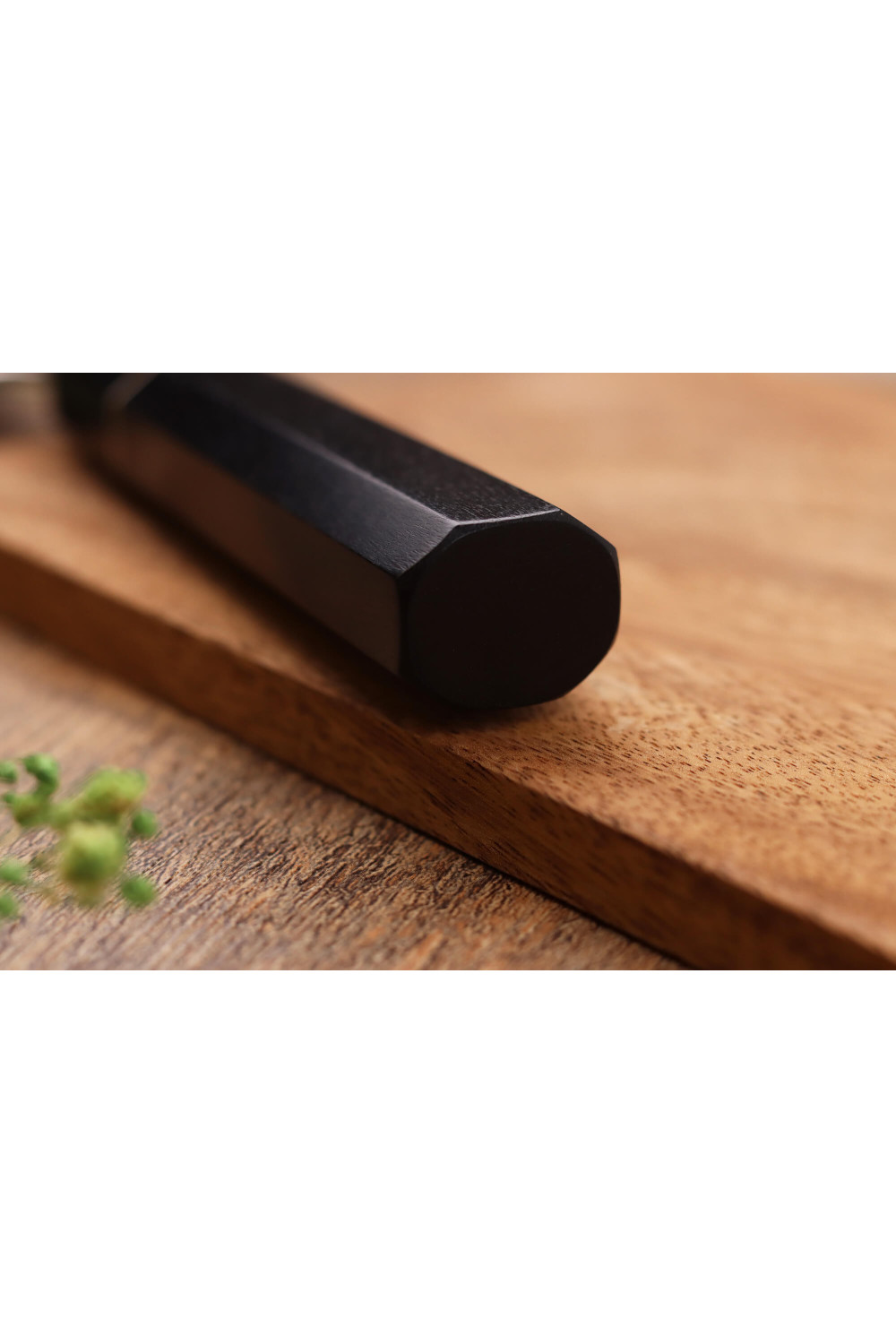
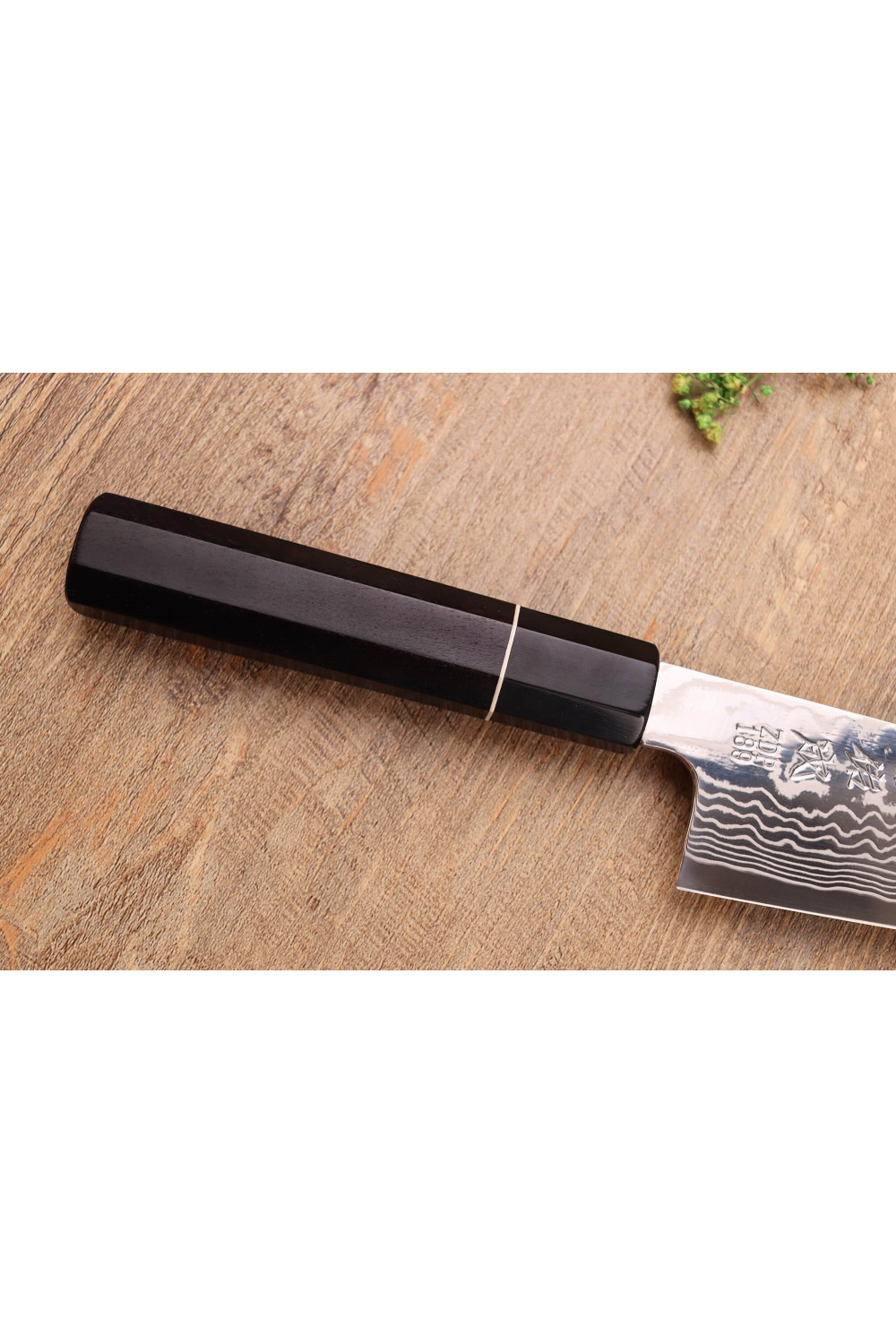
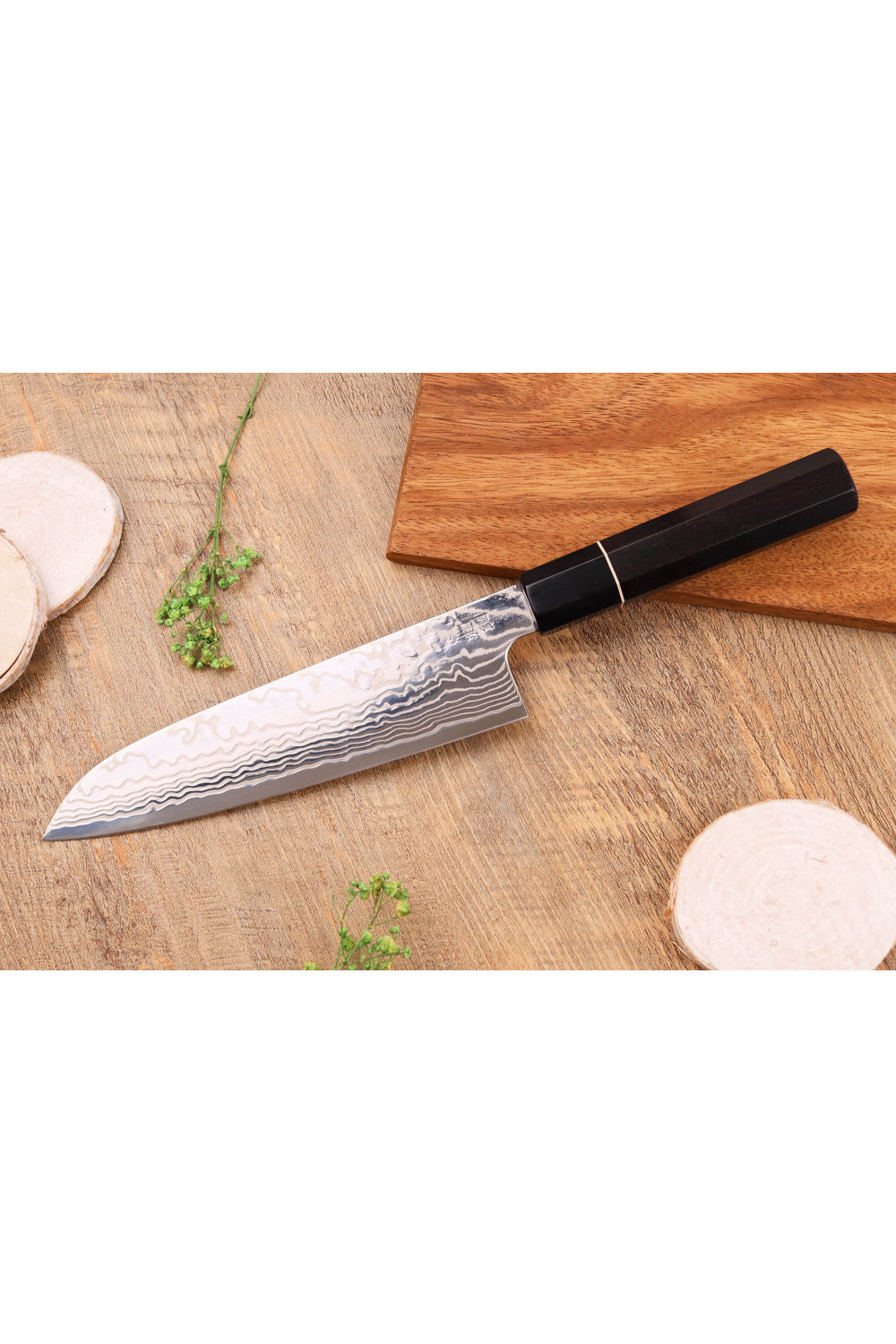
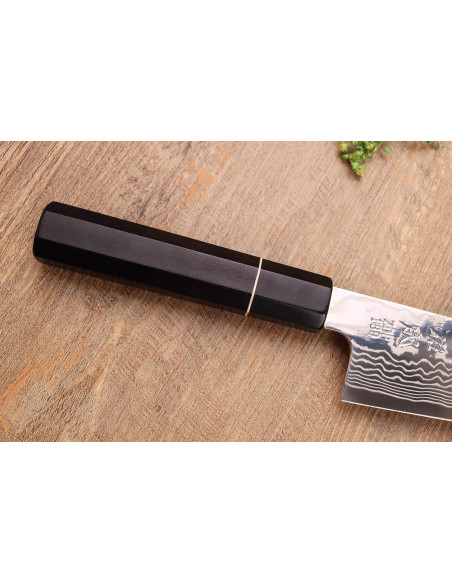
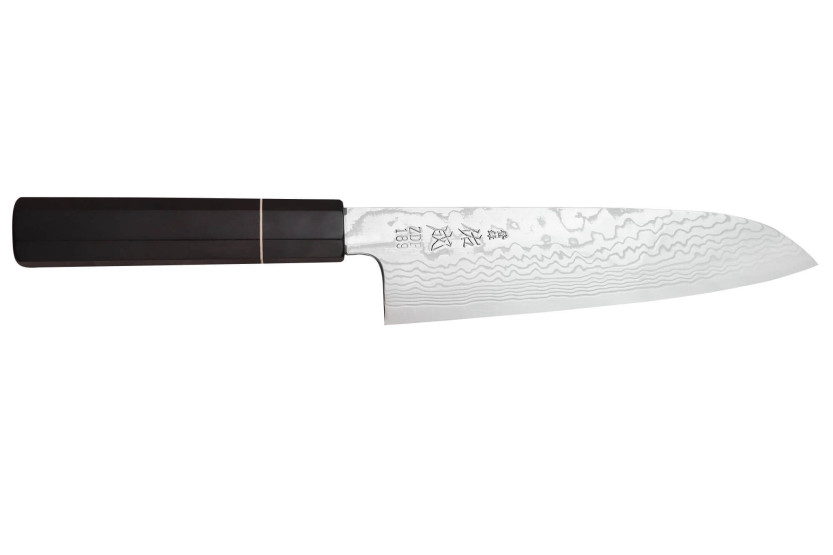
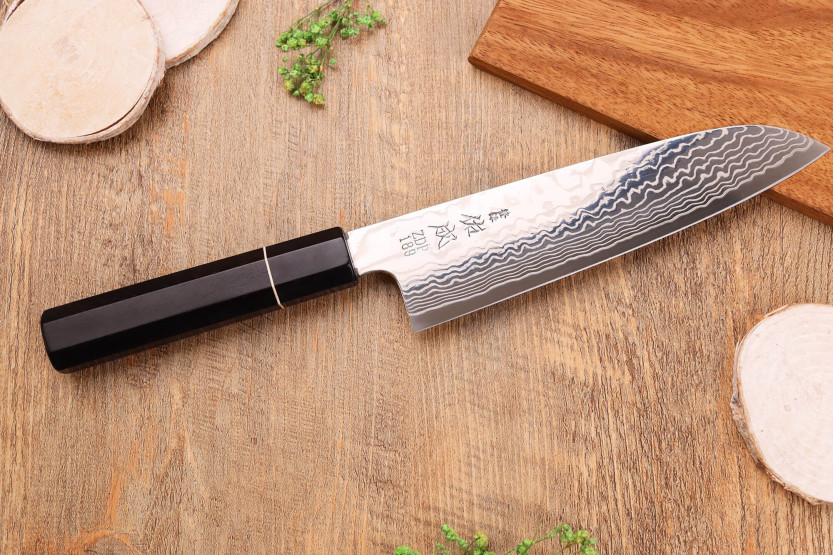
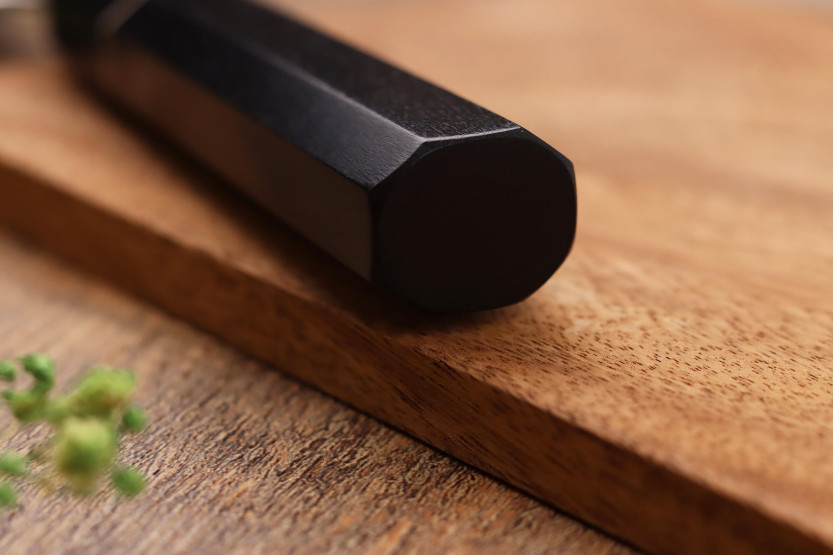
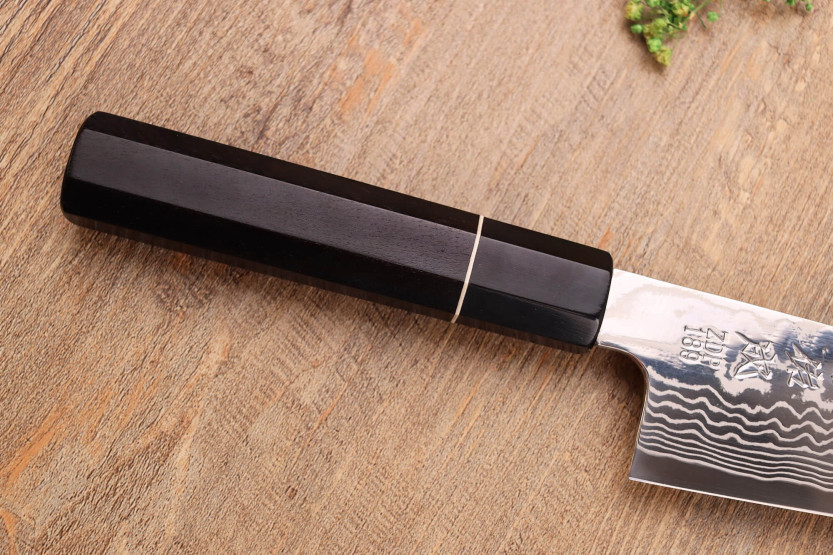
This santoku knife features a superb handle made from Macassar ebony, a species native to Indonesia. Also known as golden ebony, this prestigious wood is very hard and characterized by a dark brown color and broad, slightly mottled black veins. With its smooth, uniform grit, Macassar ebony offers a knife handle of the highest visual quality.
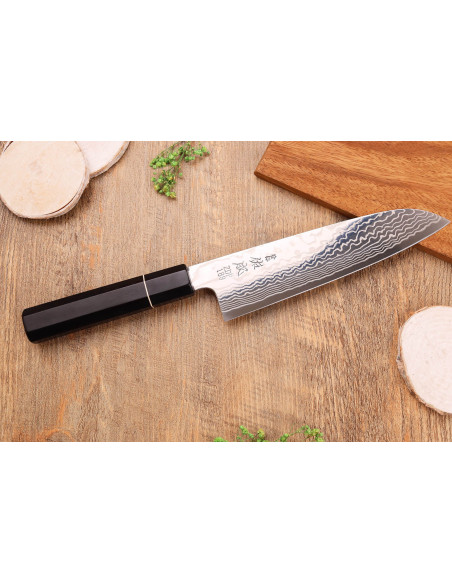
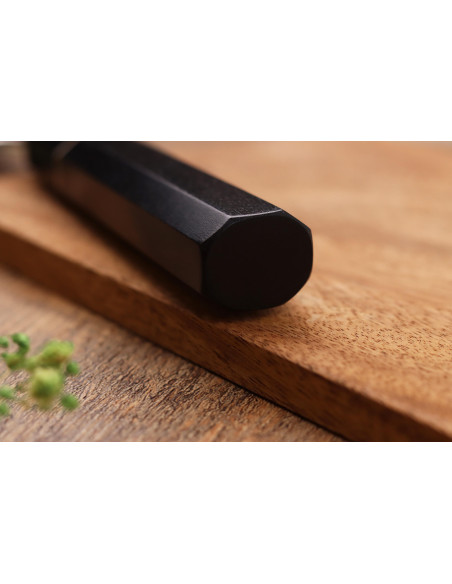
The handle is octagonal in shape, ideal for both right- and left-handed cooks. Comfortable to hold and easy to handle, the knife is perfect for intensive cutting.
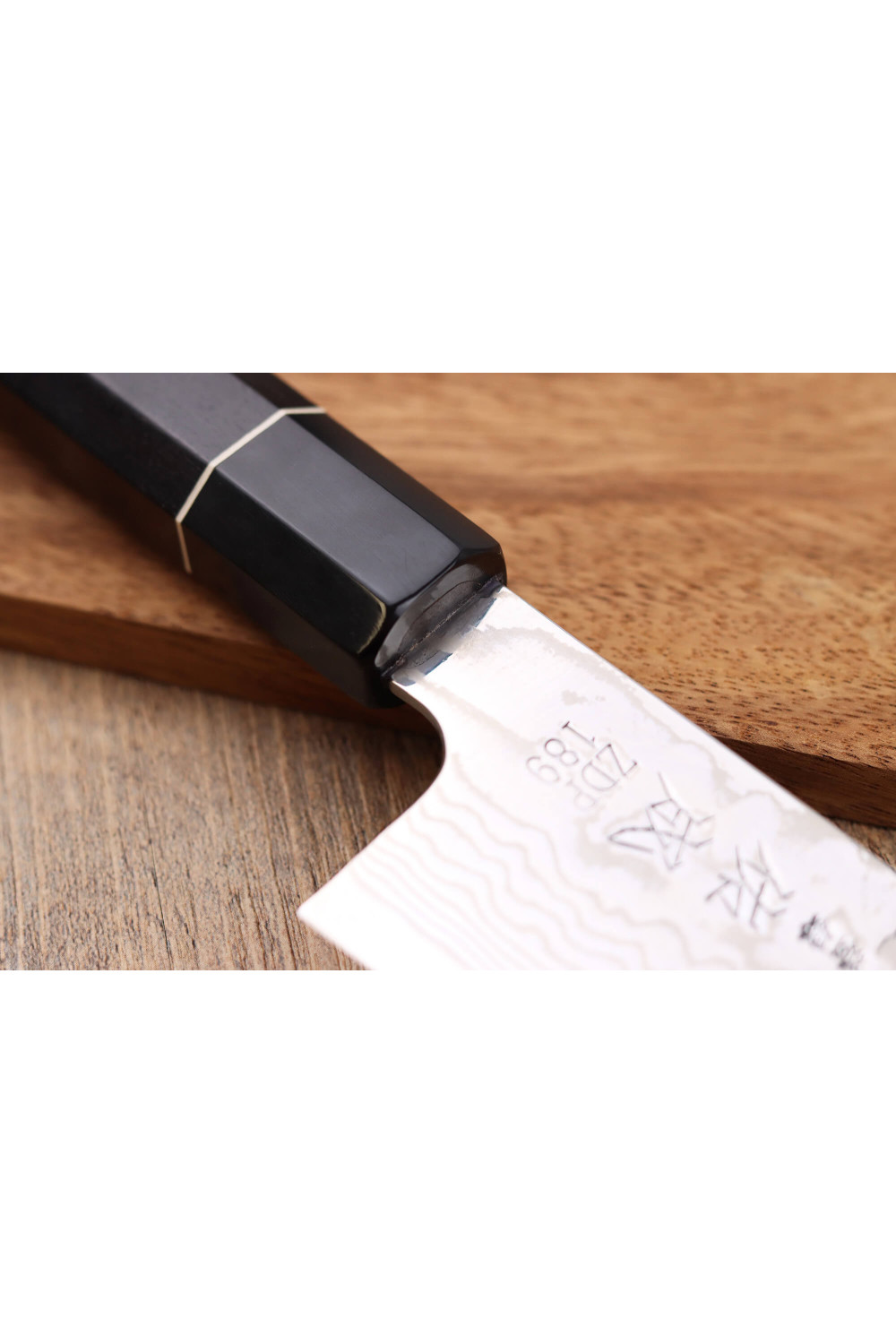
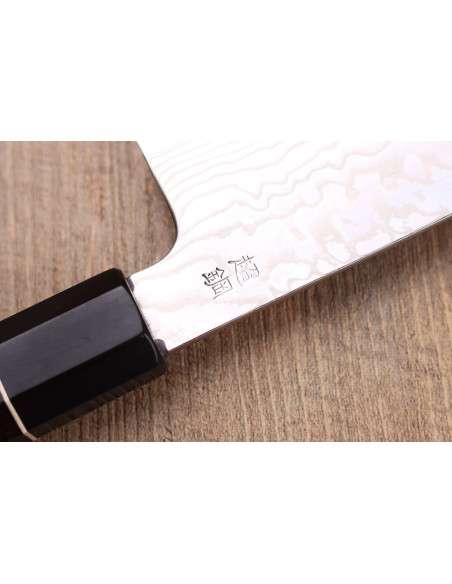
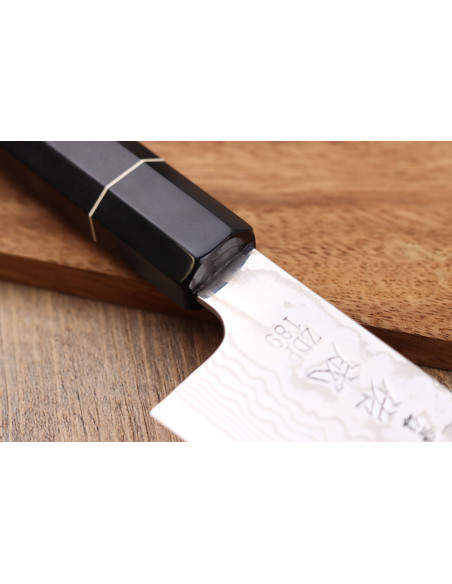
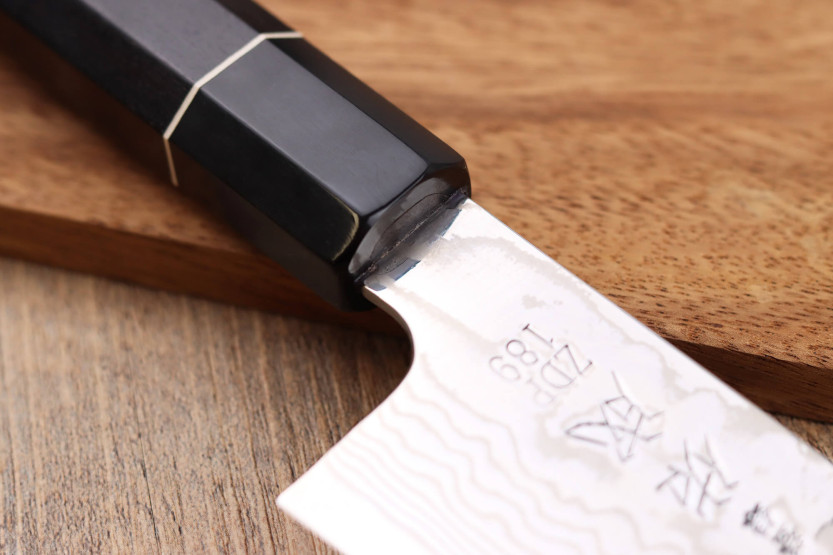
A black buffalo horn bolster completes the handle, giving it perfect balance and linking it to the blade. The two materials are delineated by a fine white micarta ring, providing contrast.
Finally, the space where the blade fits into the handle is filled with wood pulp to make the whole thing watertight and prevent bits of food from entering.
A ZDP-189 powdered steel blade with a damascus structure
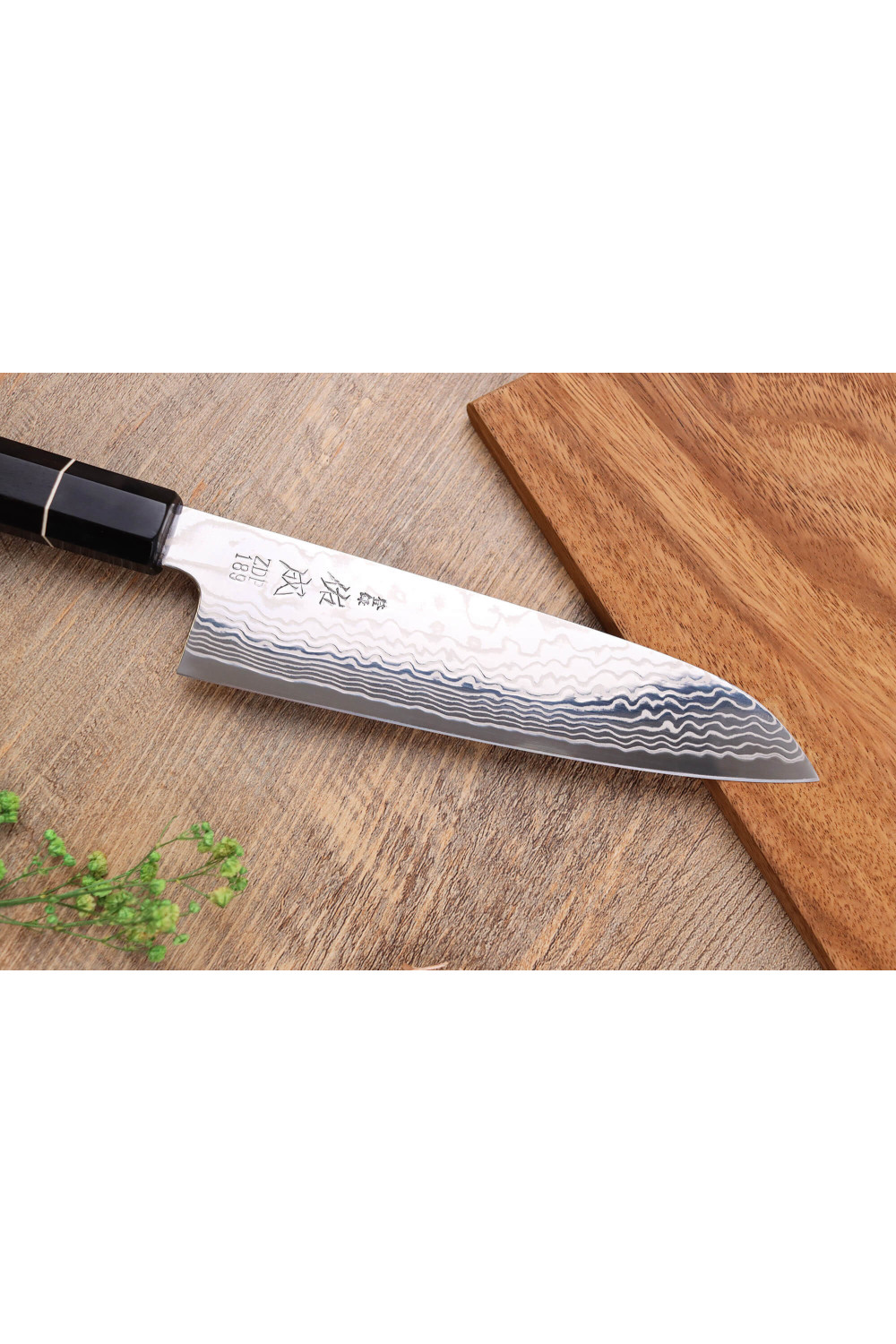
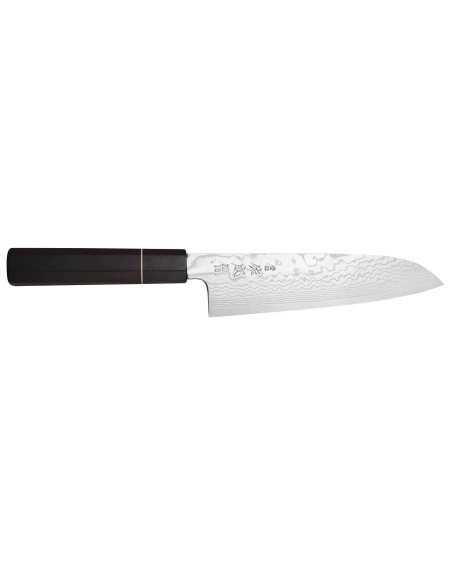
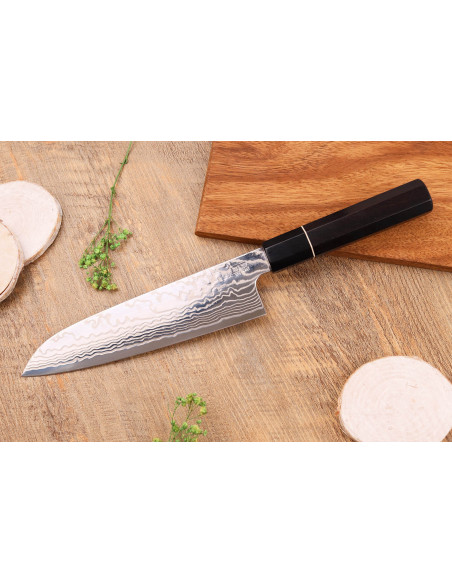
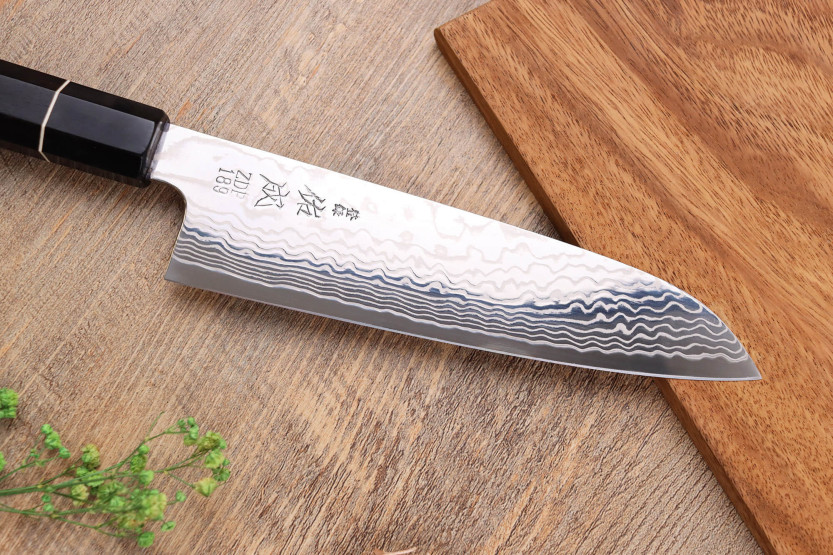
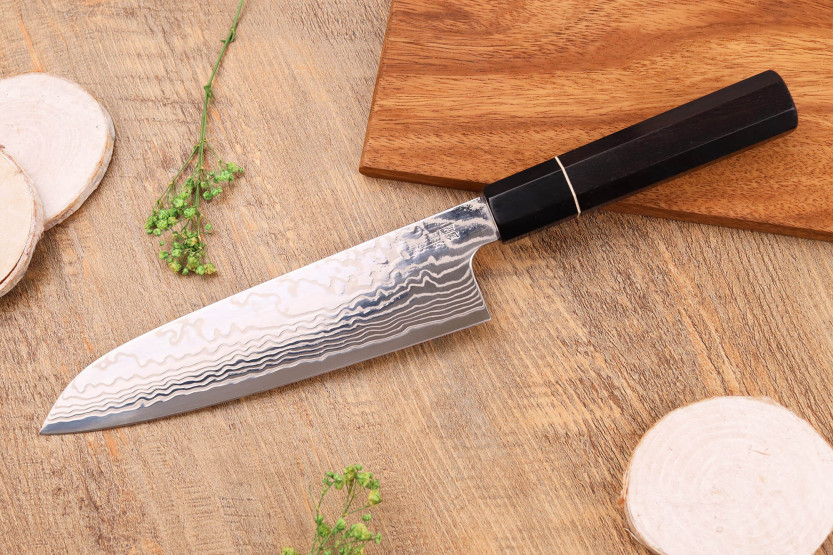
Your Japanese knife features a 19.5cm damascened blade. This typically Japanese blade structure consists of surrounding a rigid steel core with several alternating layers of softer steel to balance the blade. This blade structure also serves to protect the core.
Here, the blade core is made from Japanese ZDP-189 steel, a high-quality powder-metallurgy hybrid steel produced by world-renowned steelmaker Hitachi.
The alloy stands out for its exceptionally high carbon content of around 3%. Carbon is the element that ensures an alloy's hardness and delivers a high-performance, long-lasting cutting edge, making it truly advantageous for your cutting needs. ZDP-189 steel also contains almost 20% chromium to counterbalance the high carbon content. The chromium thus makes the alloy corrosion-resistant: it combines the advantages of a stainless steel with those of a carbon steel.
With this steel, the blade reaches a hardness of 65 HRC on the Rockwell scale, proving its long-lasting, high-performance cutting edge. However, due to the very high carbon content of the alloy, it's important to maintain your knife with the utmost care (see our tips below).
ZDP-189 hybrid steel is a difficult alloy to work with, and is not yet widely available on the market. Only the most experienced blacksmiths are capable of working it, which is the case for Sukenari blacksmiths.
The ZDP-189 steel core is then surrounded by several layers ofnickel steel, a softer alloy. The layers are superimposed, creating the damascus which protects and balances the core's high rigidity.
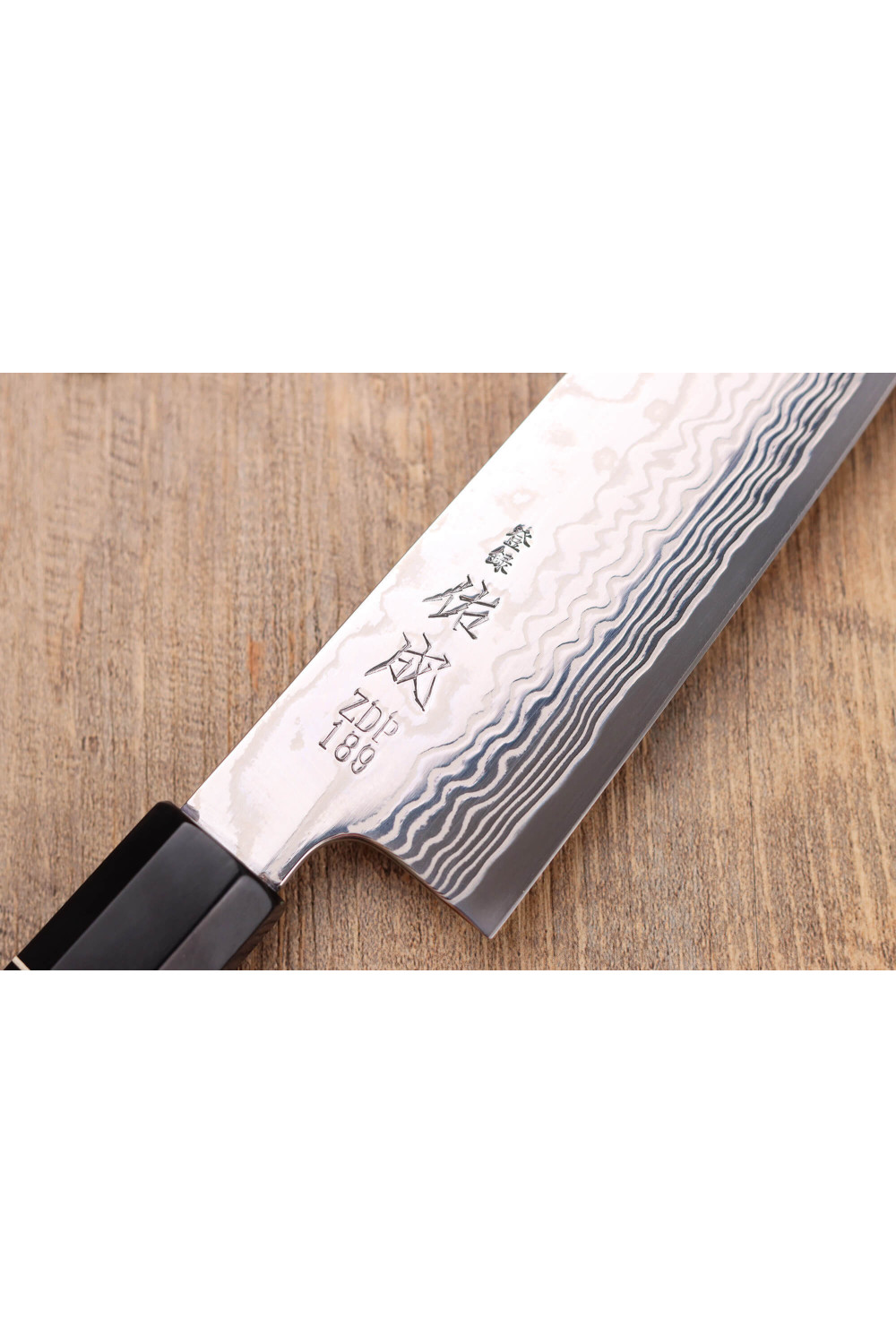
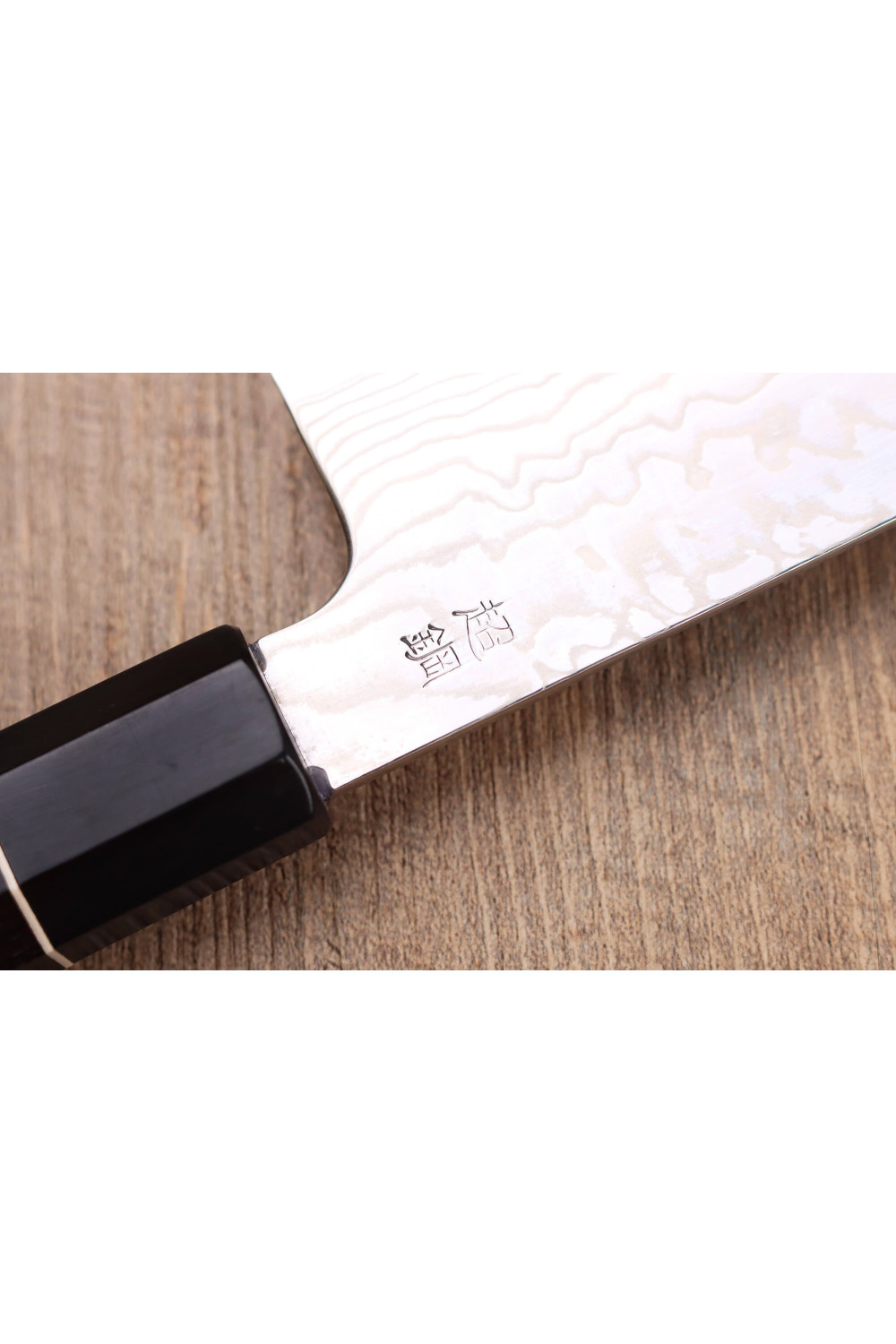
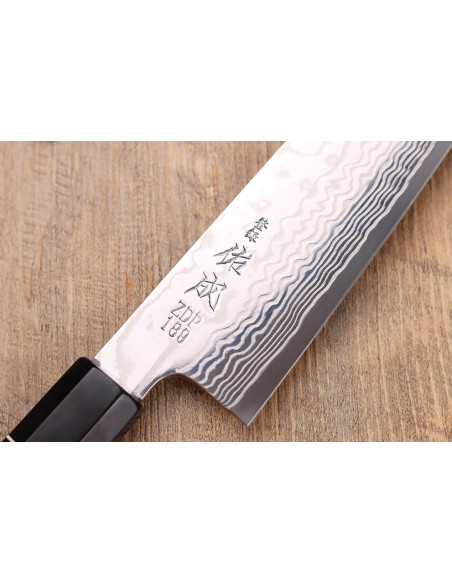
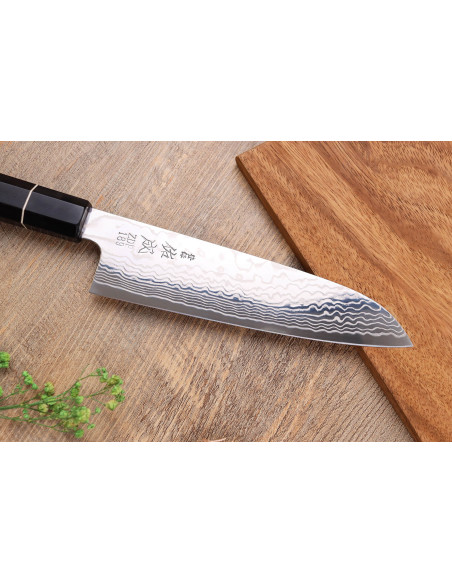
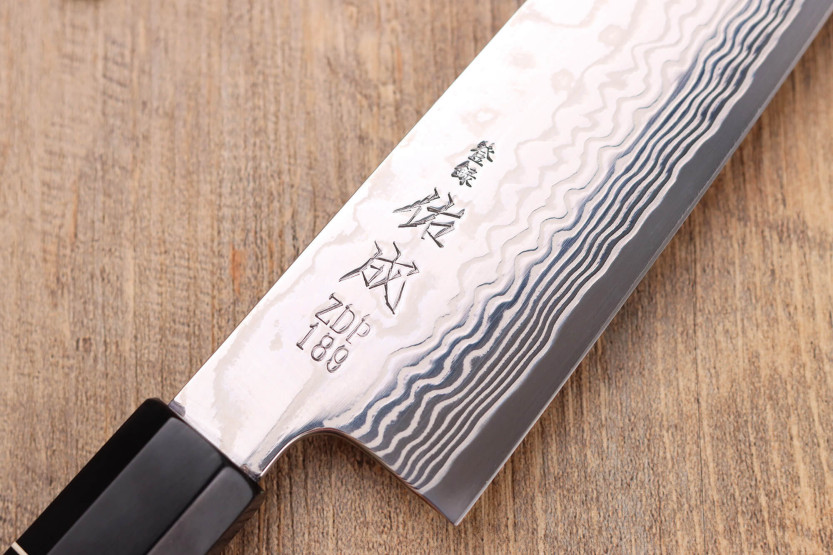
You can see the superimposed layers of steel all over the blade's cutting surface: they form beautiful, randomly undulating waves. The damascus is unique to each knife.
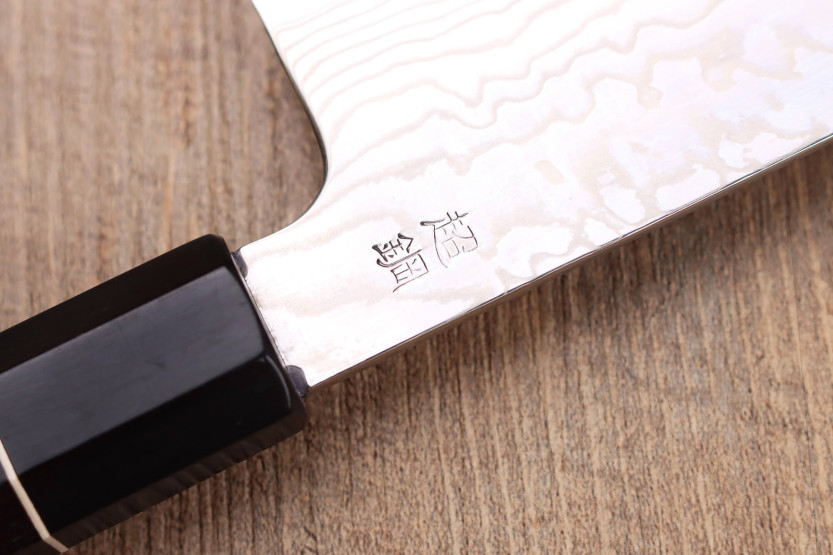
Finally, the blade has been hand-sharpened on a Japanese water stone, giving it a superb mirror-polished finish. It also features engraved kanji on both the front and back, as well as the range logo. The blade of this knife is completely authentic.
How to care for this carbon knife
This damascus knife contains a high carbon content, so it's important to follow these maintenance tips. Starting with cleaning, which should only be done by hand.
As dishwashing and soaking in the sink are not recommended, wash the knife with a mild soap and a non-abrasive sponge, without wetting the handle. After washing, dry the knife immediately, removing all traces of moisture.
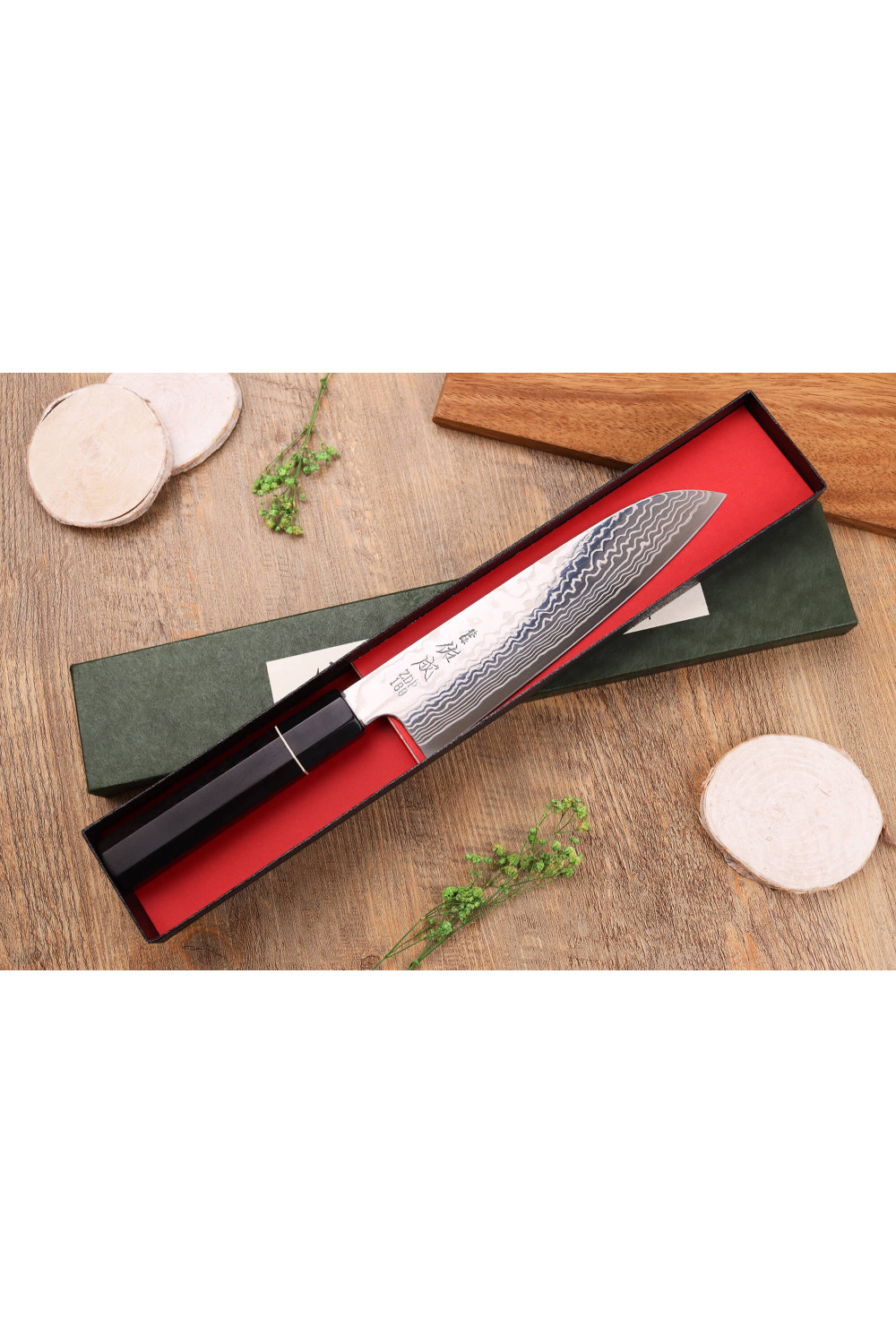
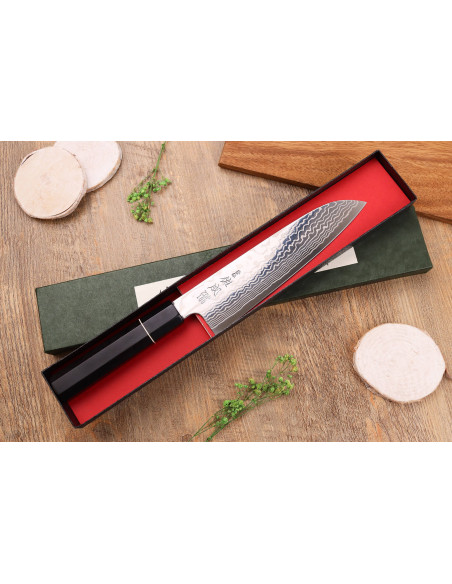
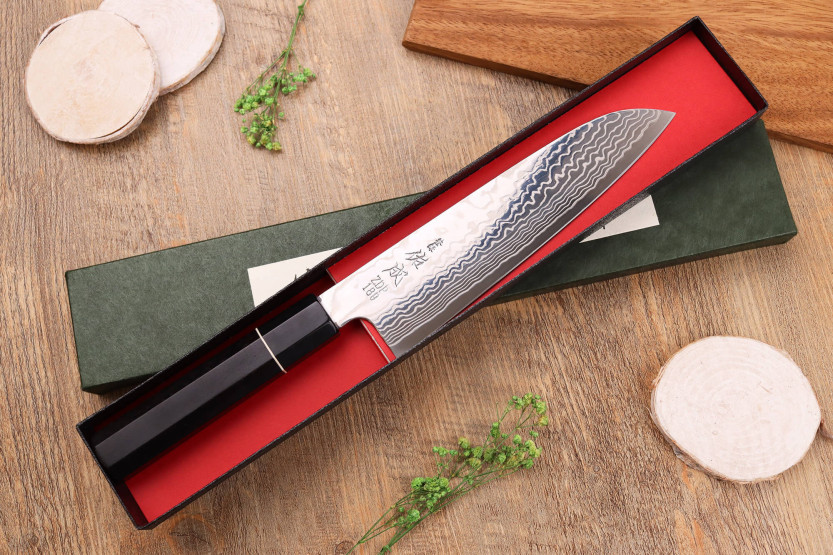
You can then store the knife in a dry place, such as its case. As steel has a high carbon content, the blade may change color slightly over time.
Finally, the knife must be stone-sharpened whenever necessary. Due to the hardness of the alloy, this can be a difficult operation. That's why we offer a sharpening service to do it for you.
All damask Japanese knives are available on KnifeLeader.eu!




 By buying this product you can collect up to