Sukenari cutlery was founded in 1933. Made up of highly skilled blacksmiths, it has inherited the ancestral forging techniques used to make samurai katanas. Its team of blacksmiths is capable of producing Honyaki blades, which are considered to be of the highest quality in cutlery. Thanks to its expertise, Sukenari offers you knives with a skilful blend of tradition and modernity.
A top-of-the-range blade with a Japanese San Maï structure
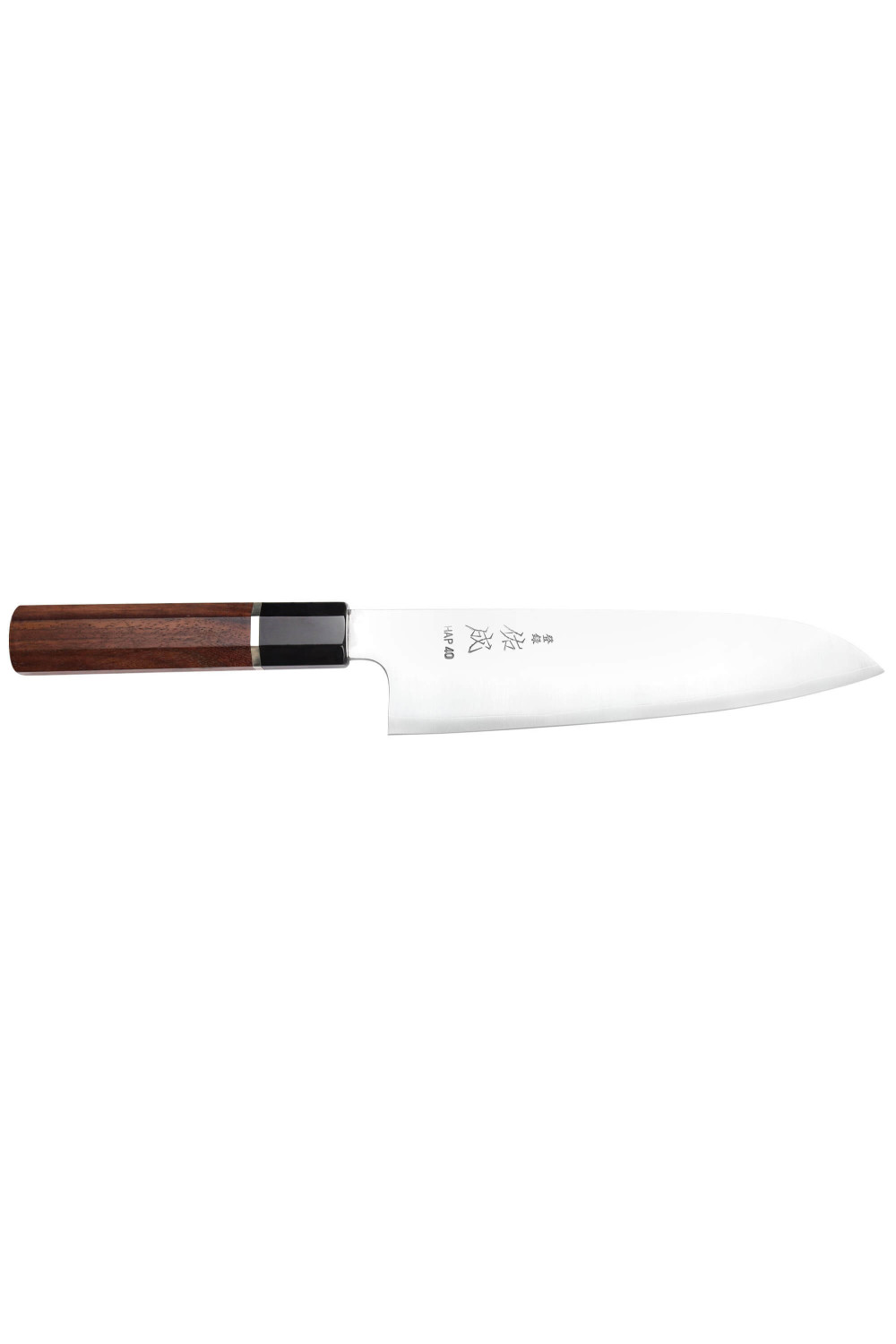
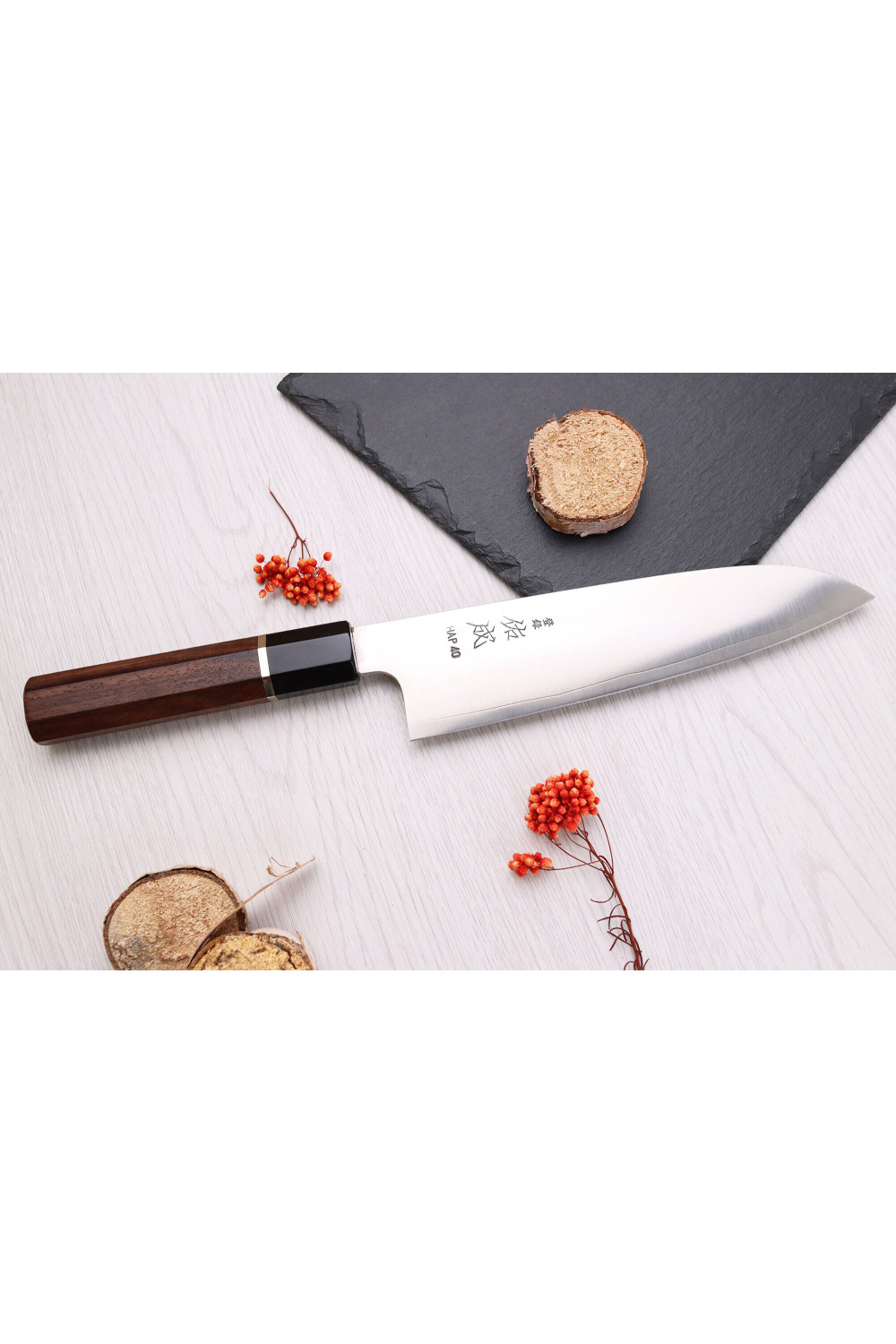
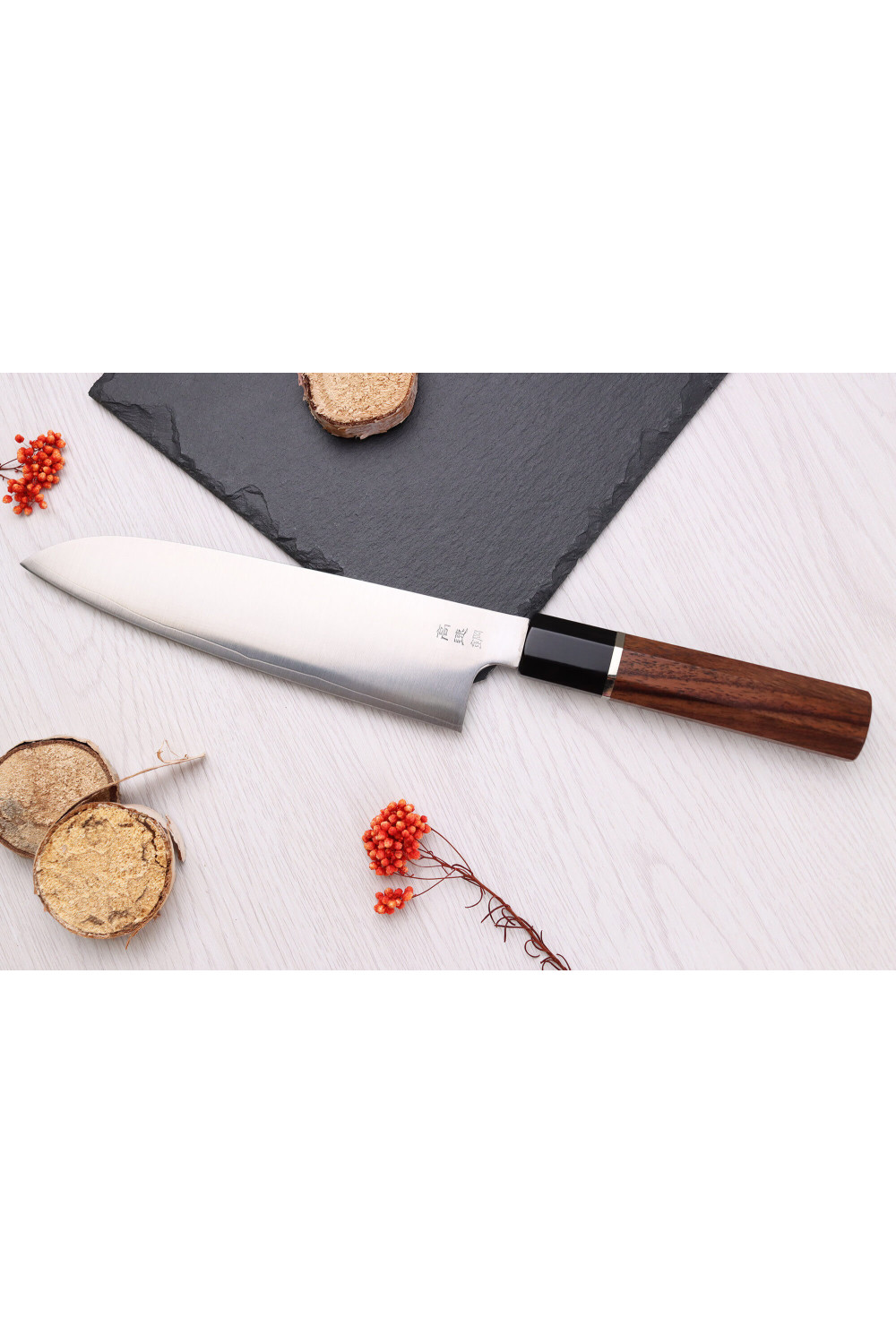
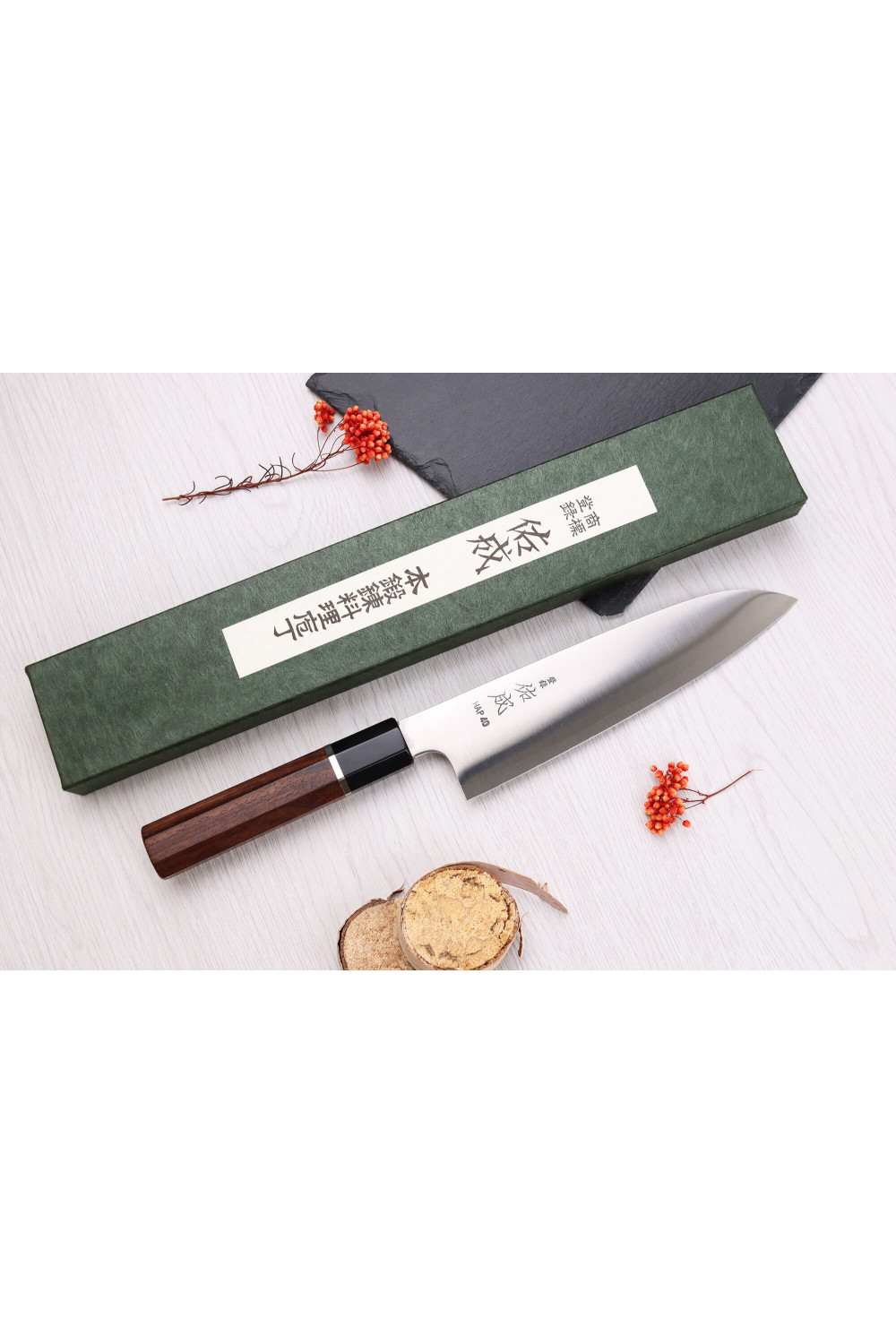
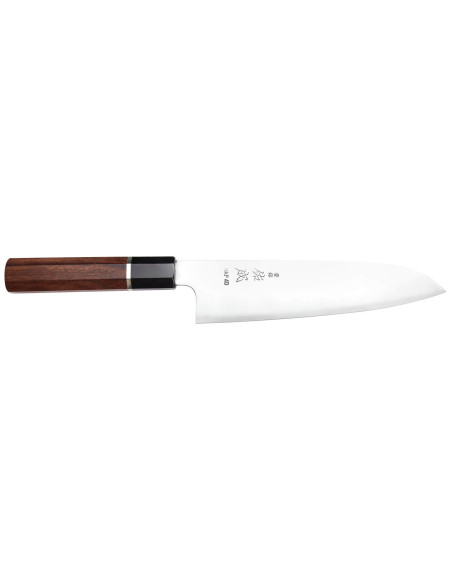
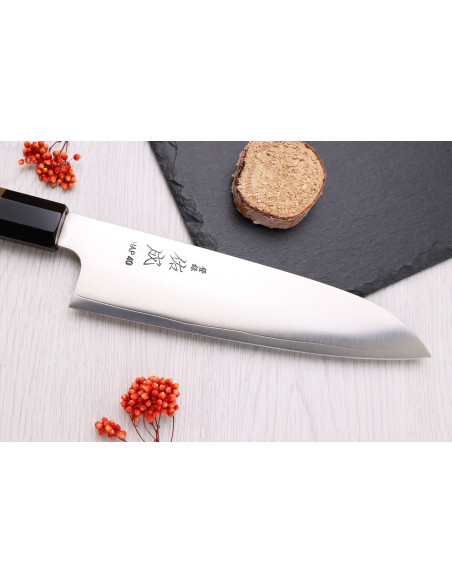
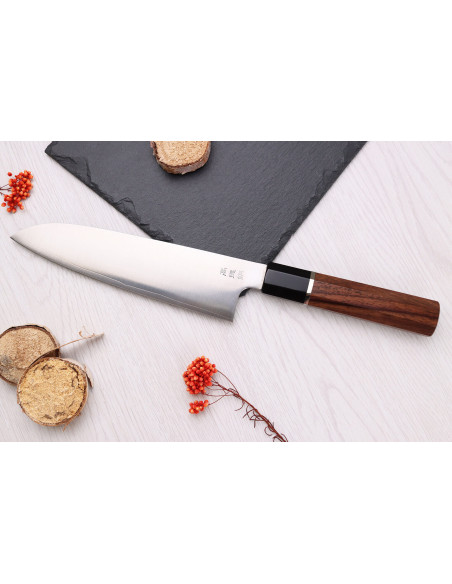
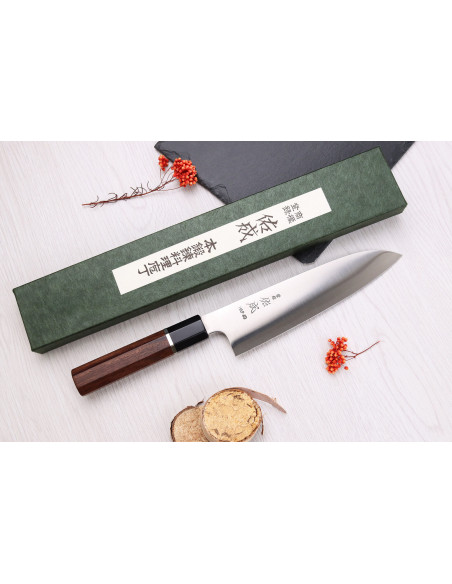
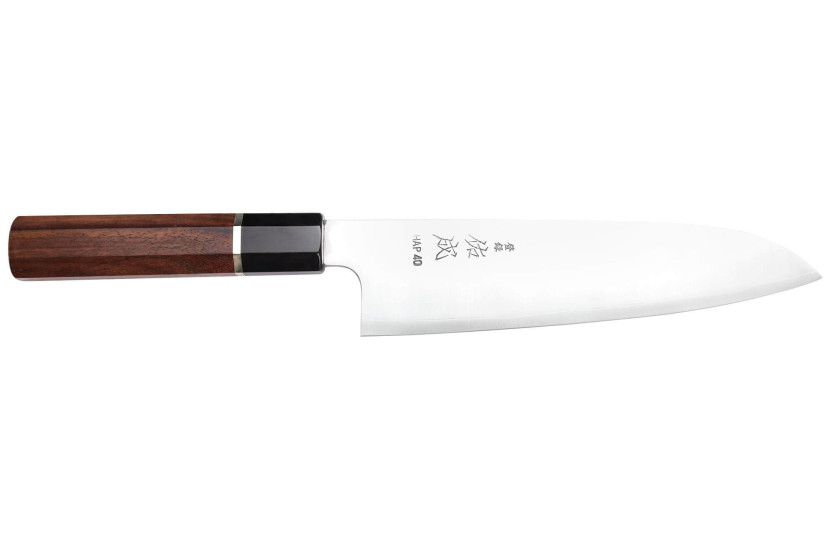
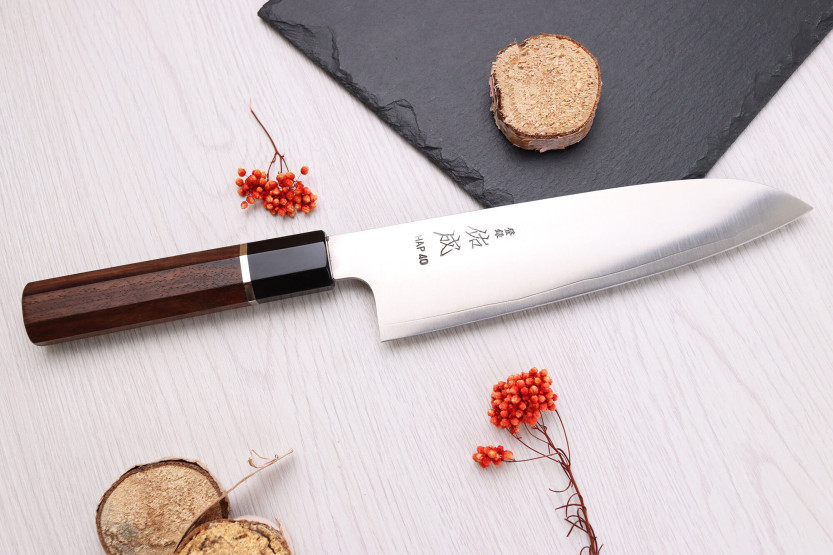
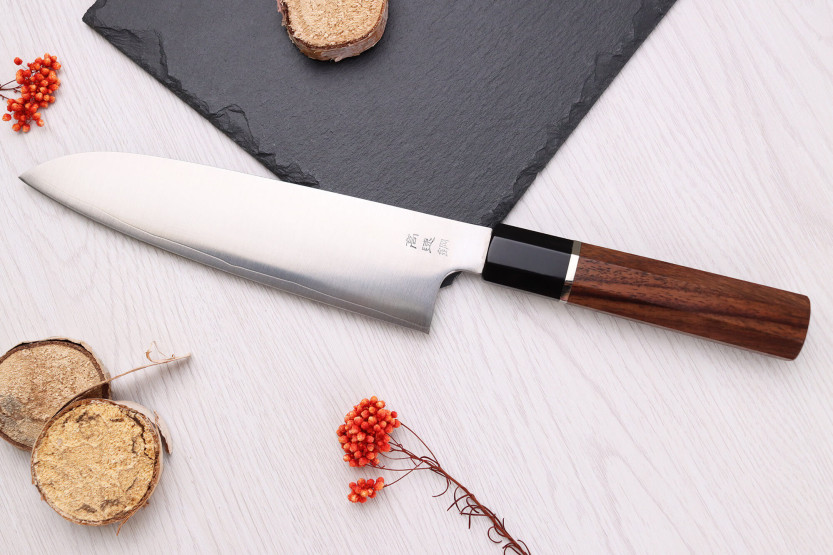
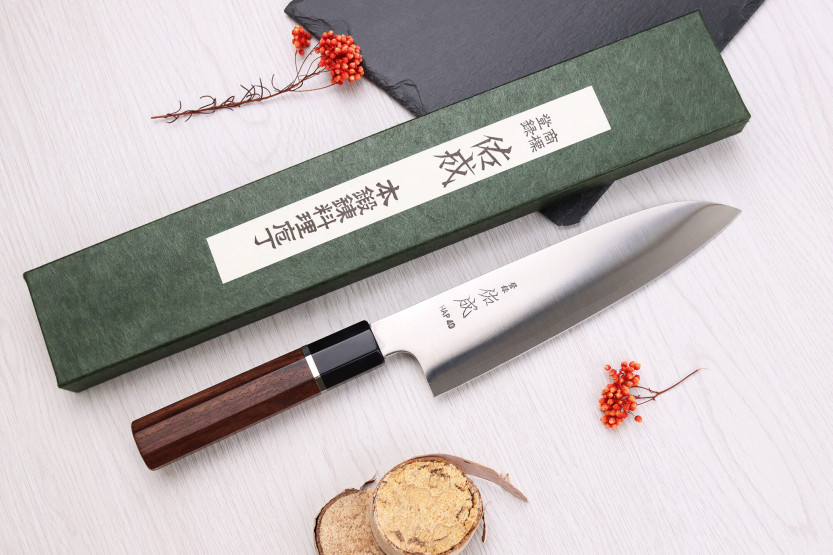
This Japanese santoku has a 19.5cm blade with a typical San Maï structure. San Maï means "3 layers" in Japanese, which clearly indicates how the blade is constructed. This structure comprises a core made of rigid steel, which is then covered by a layer of softer steel. This layer sandwiches the core, protecting and balancing it.
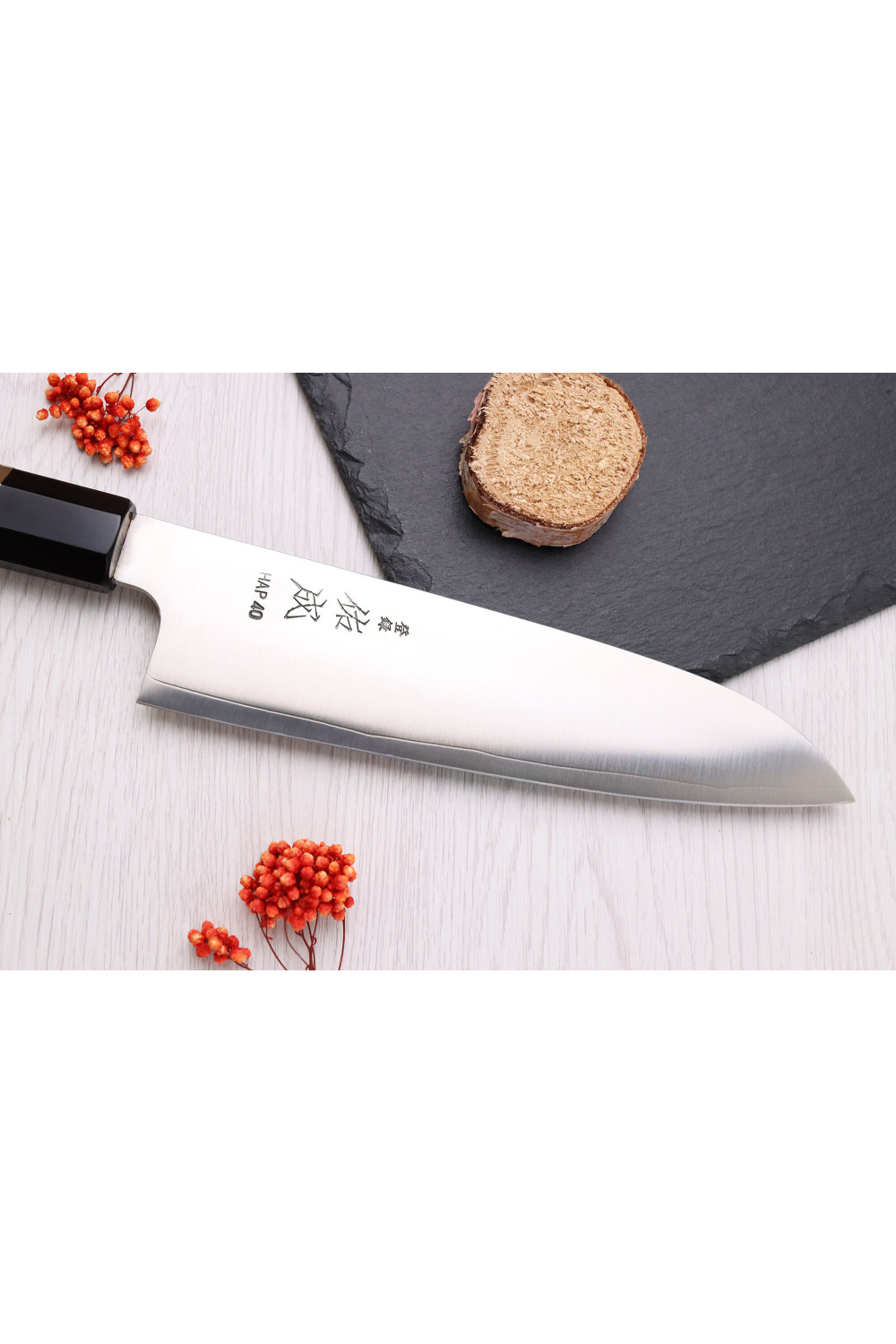
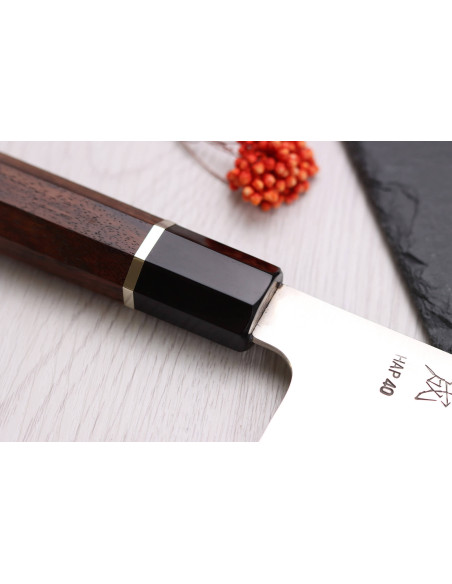
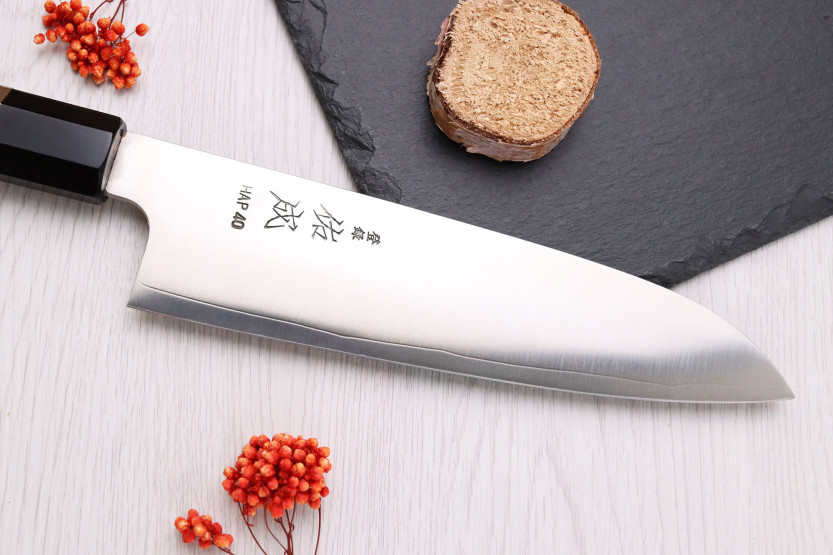
Here, the blade core is made from HAP40 powder steel, a hybrid alloy manufactured by Hitachi, the world-famous steelmaker. It's a difficult alloy to work with, and not yet widely available on the market, which is why it's so expensive. You need to be a real expert to shape it to avoid major losses. Fortunately, Sukenari blacksmiths are such experts.
The alloy is very grit yet extremely tough, which is why it does not chip along the edge. HAP40 steel is also reputed to hold its edge 3 to 5 times longer than conventional steels, a real asset when it comes to spacing out sharpening sessions. It achieves a hardness of 65 HRC, which is synonymous with a very pronounced, long-lasting cutting edge. Despite its high hardness, this alloy is still easy to sharpen with a stone.
This steel contains around 1.3% carbon, the element that contributes to its hardness. However, due to the rest of its composition, it cannot be considered a carbon steel or a stainless steel. It is a semi-stainless steel that requires the utmost care on your part (see our tips below).
The rigid core is then surrounded bya layer of softer steel that sandwiches it. This top layer adds a little flexibility to the core's hardness, balancing it out. As a result, the core is less susceptible to breakage and impact during cutting, and is protected from damage. What's more, the superimposed layers of steel form an attractive random wave that undulates along the blade's cutting edge.
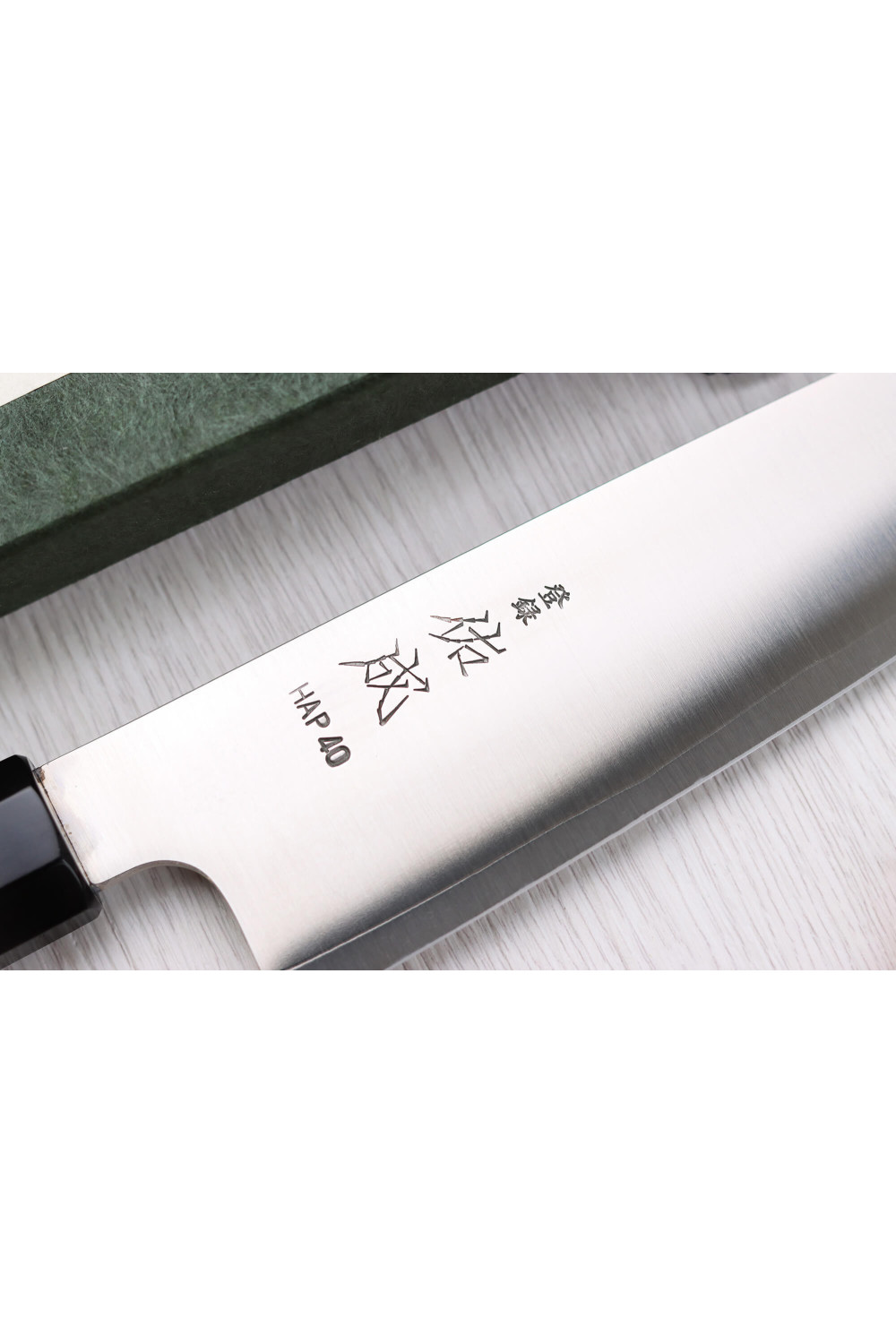
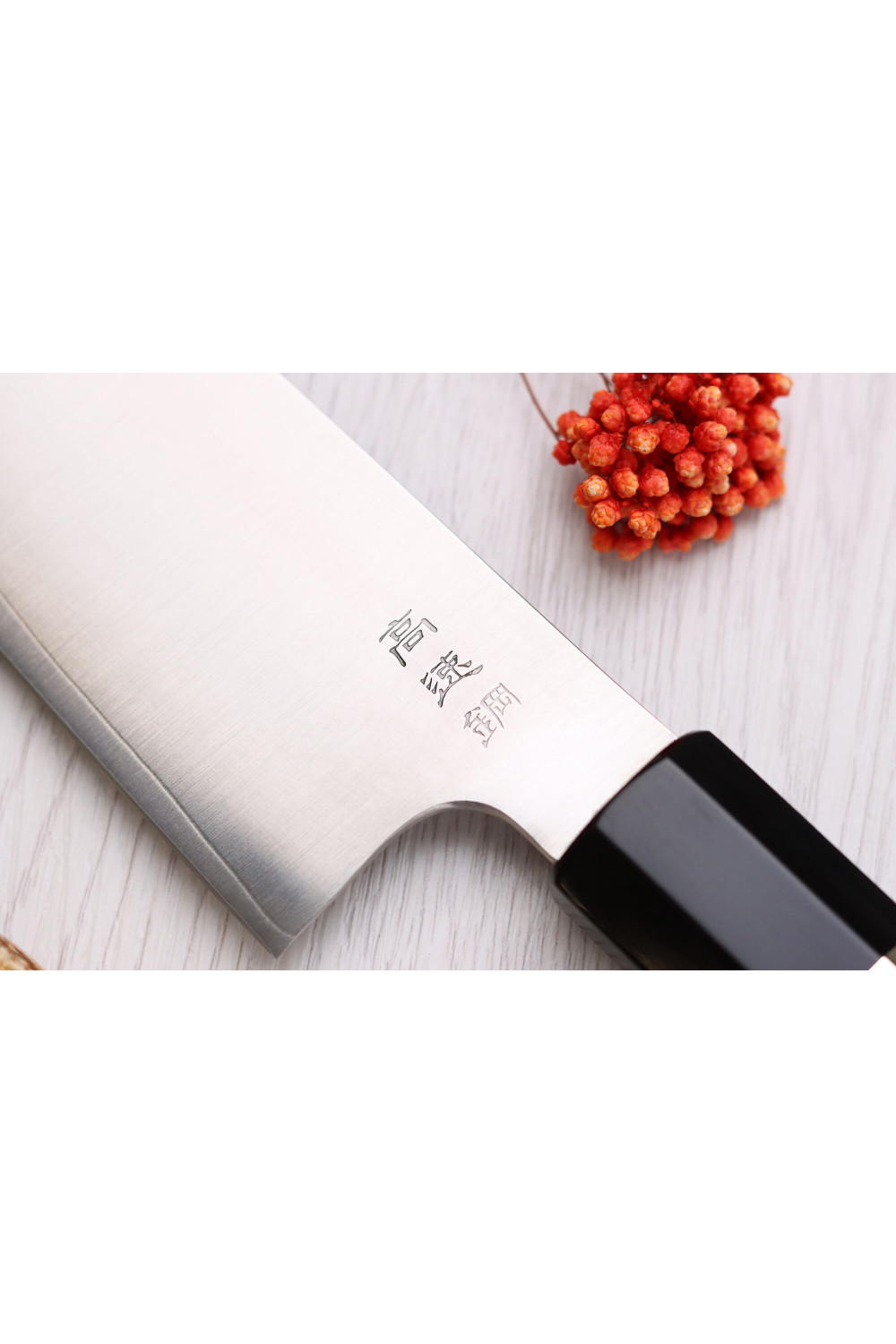
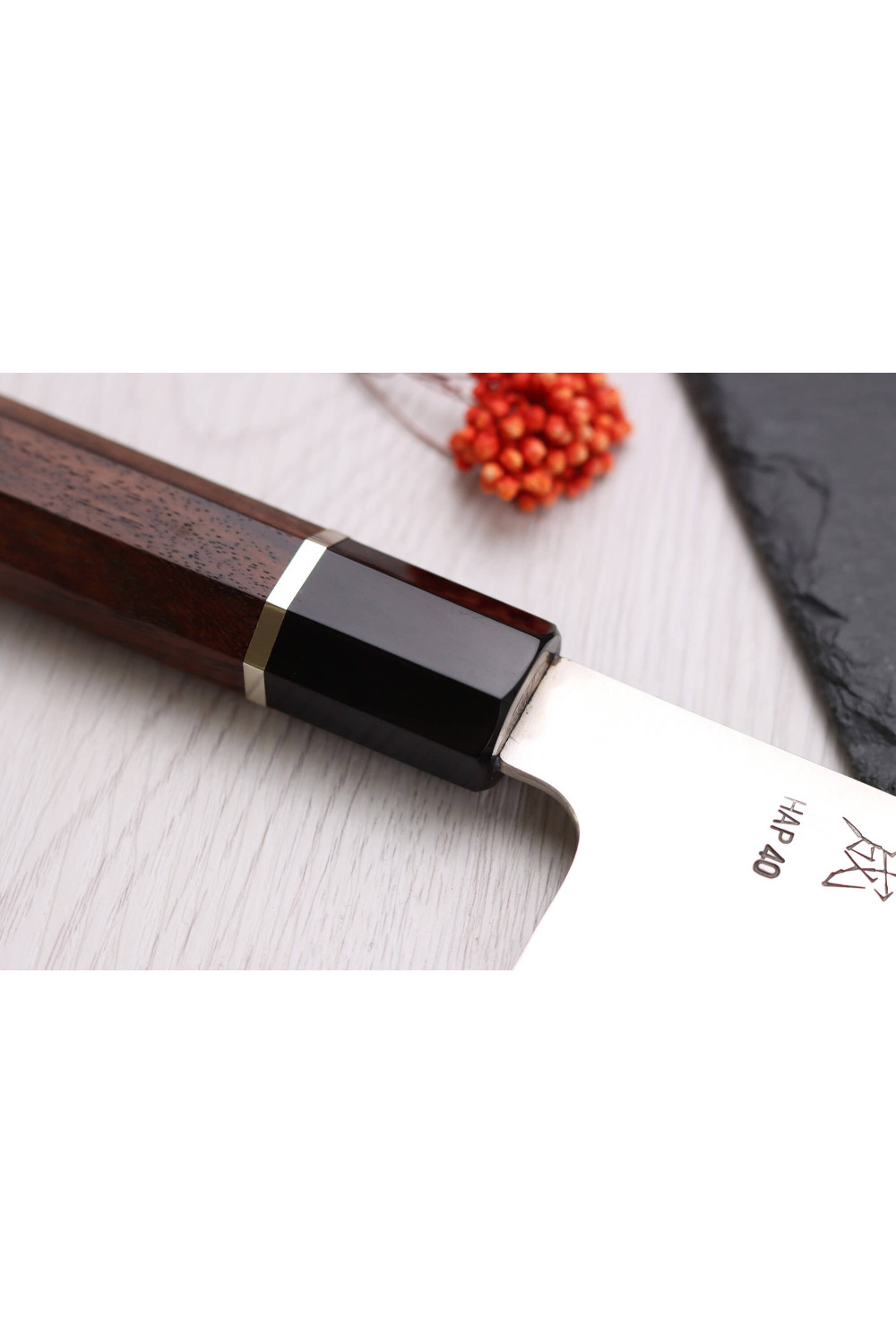
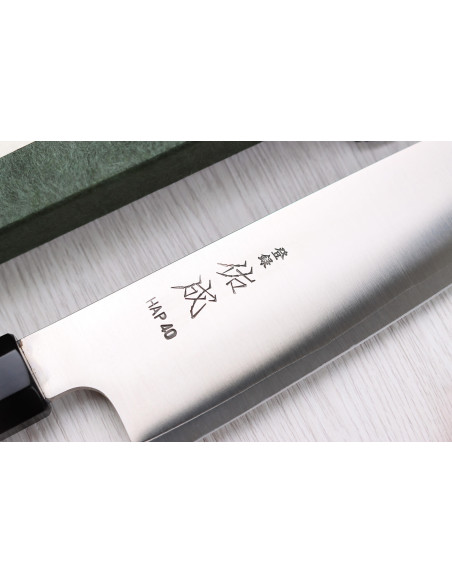
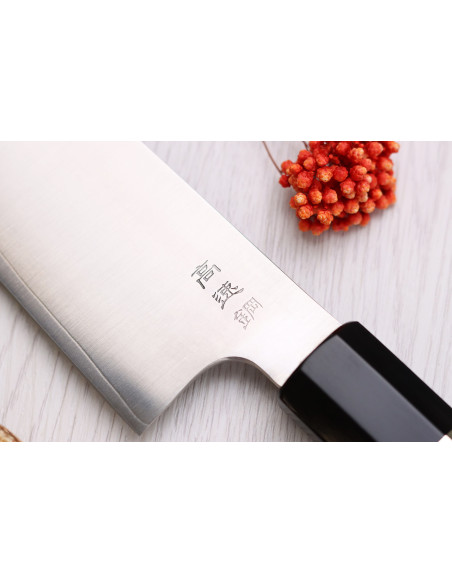
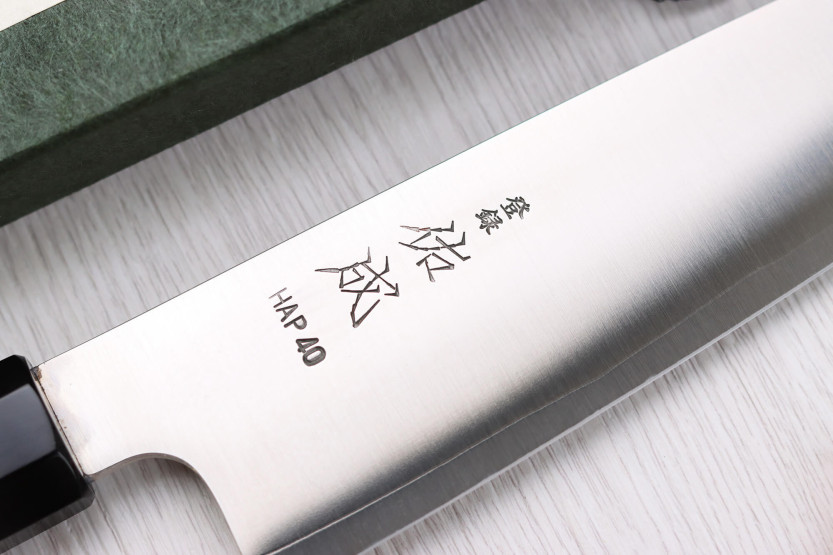
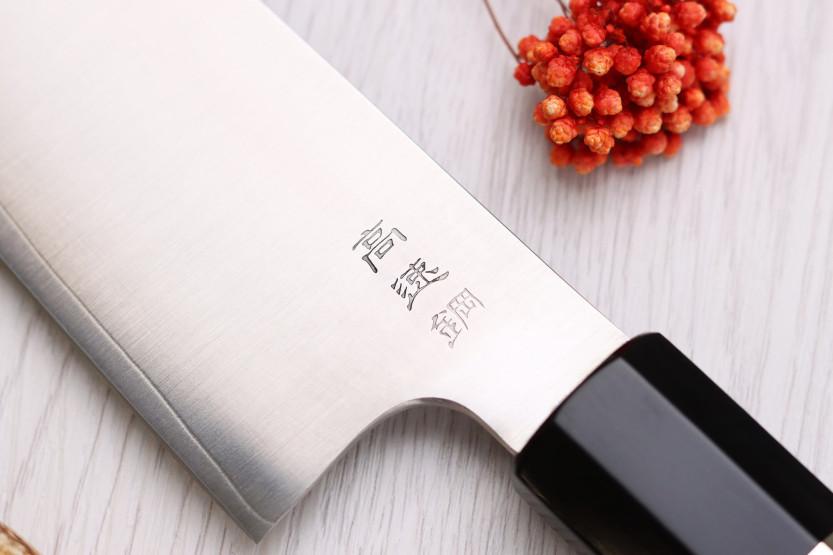
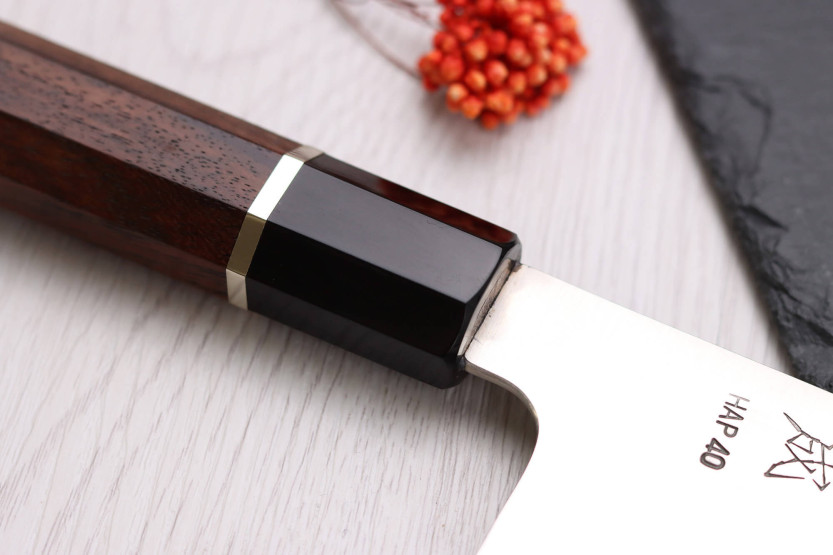
Finally, the blade is engraved with kanji and the type of steel used. These engravings, combined with the polished finish, give this blade a lot of character.
A Japanese knife with an octagonal handle
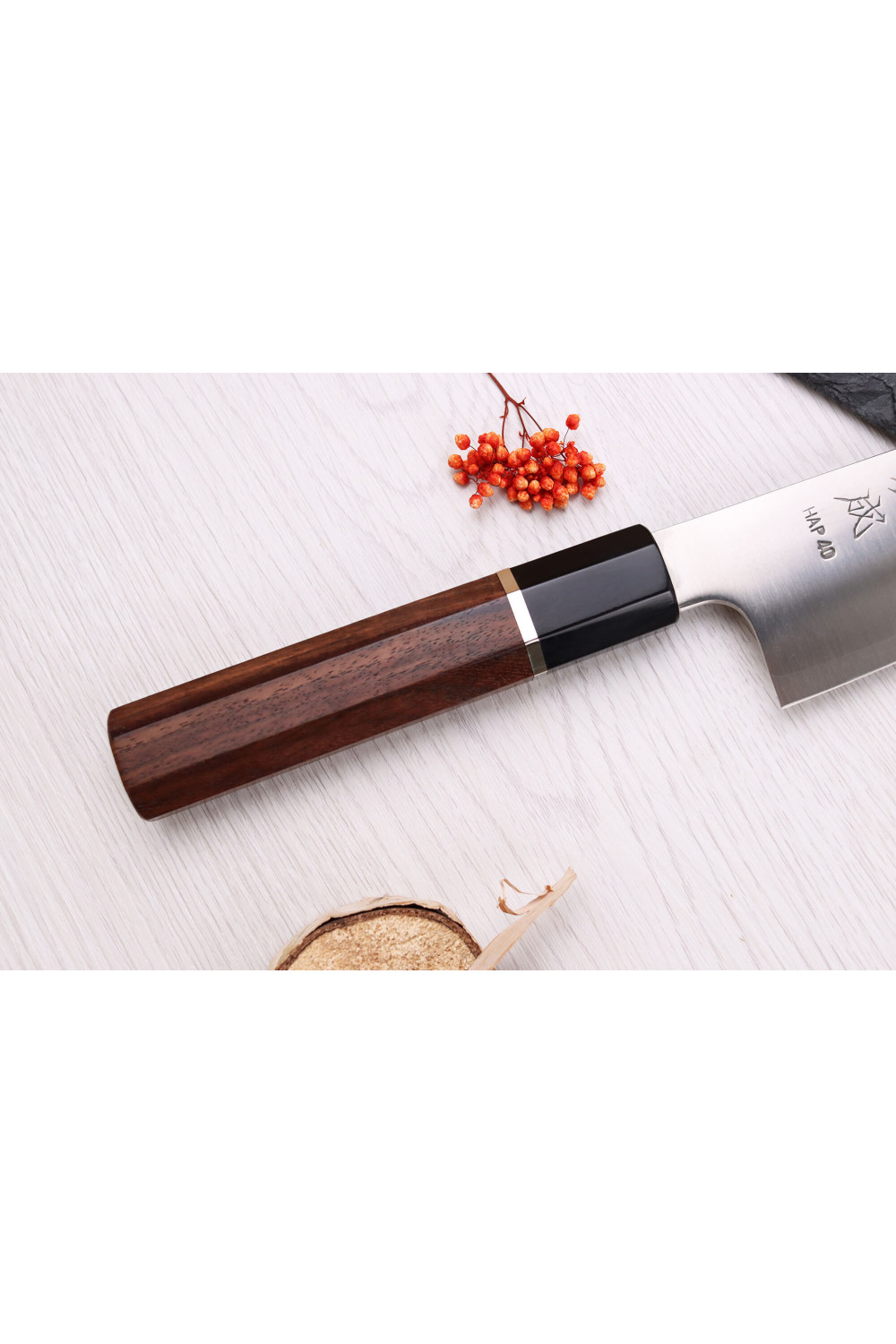
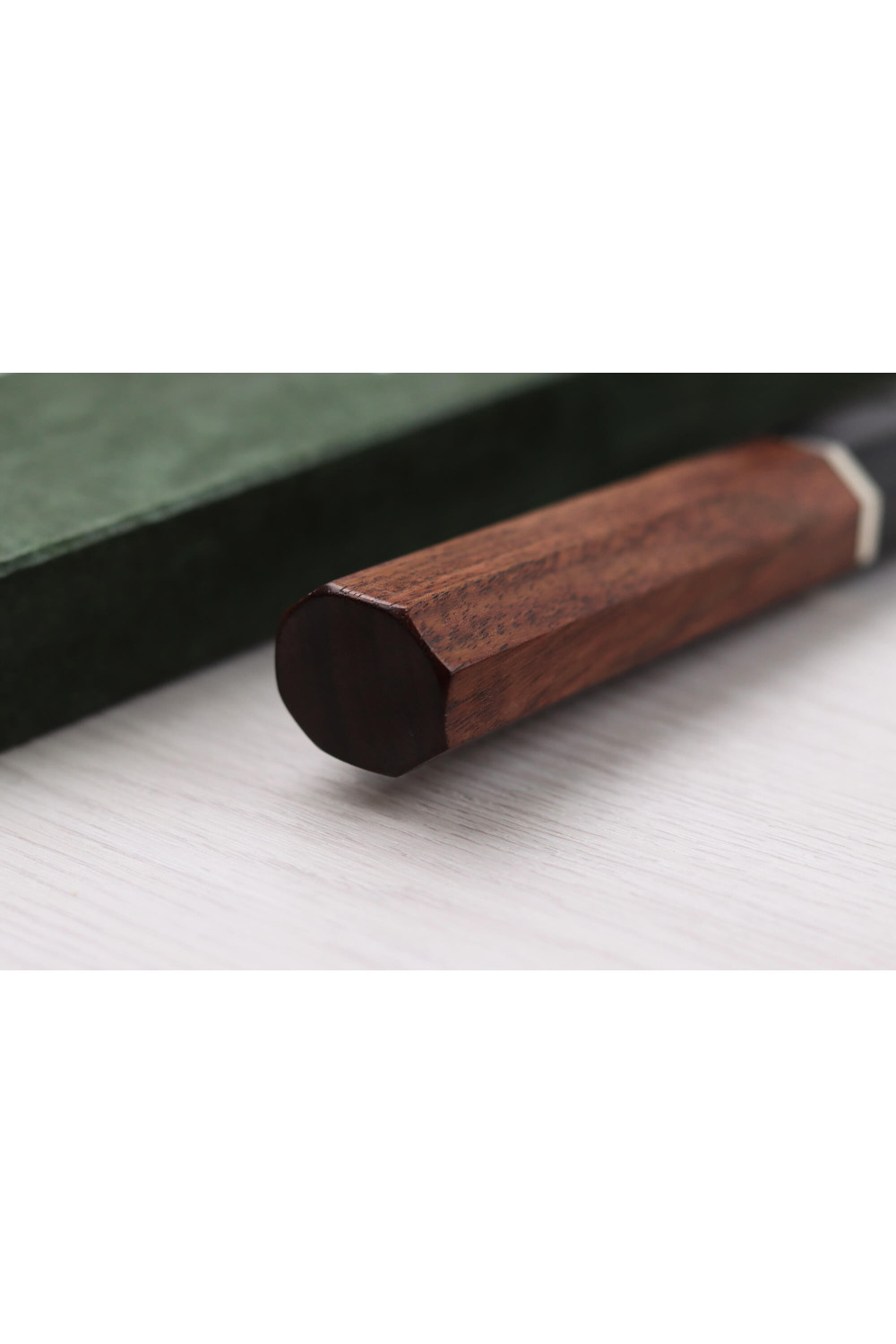
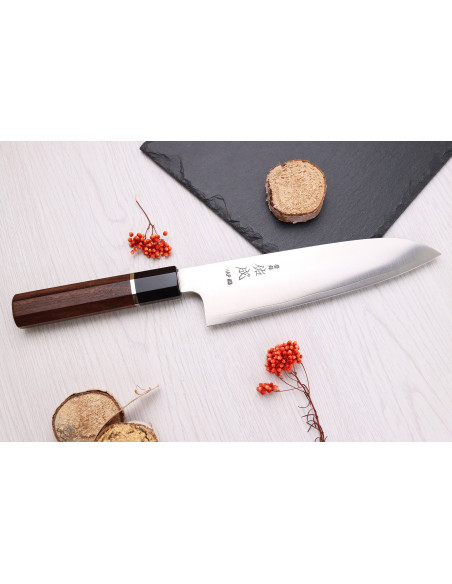
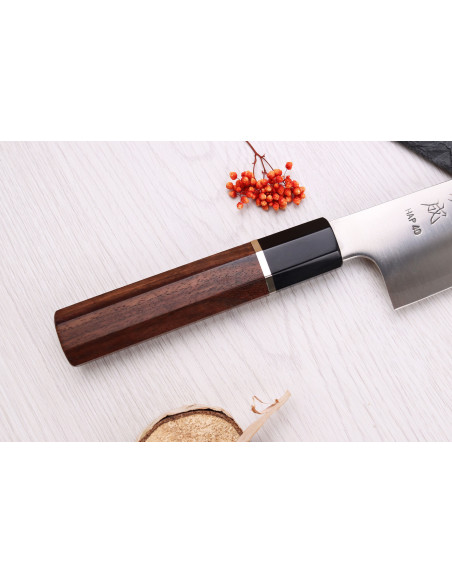
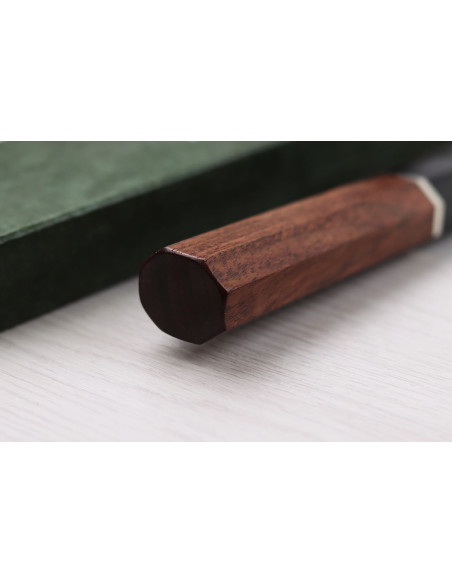
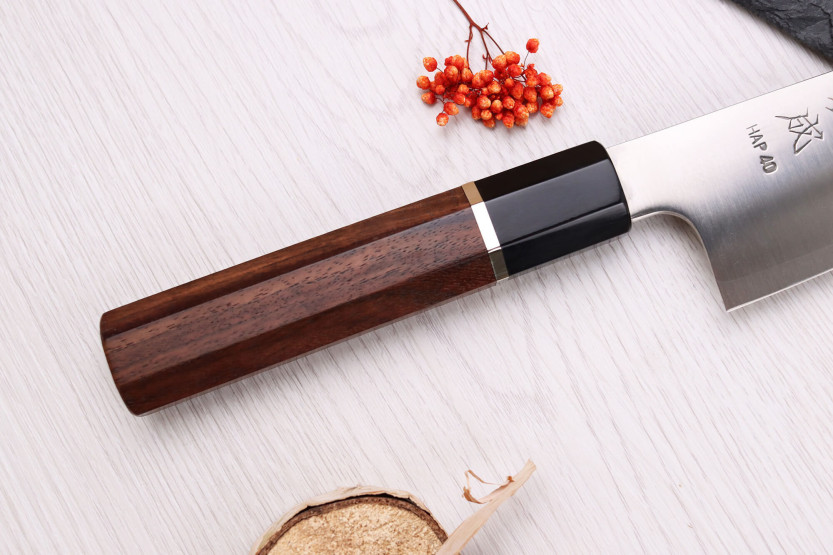
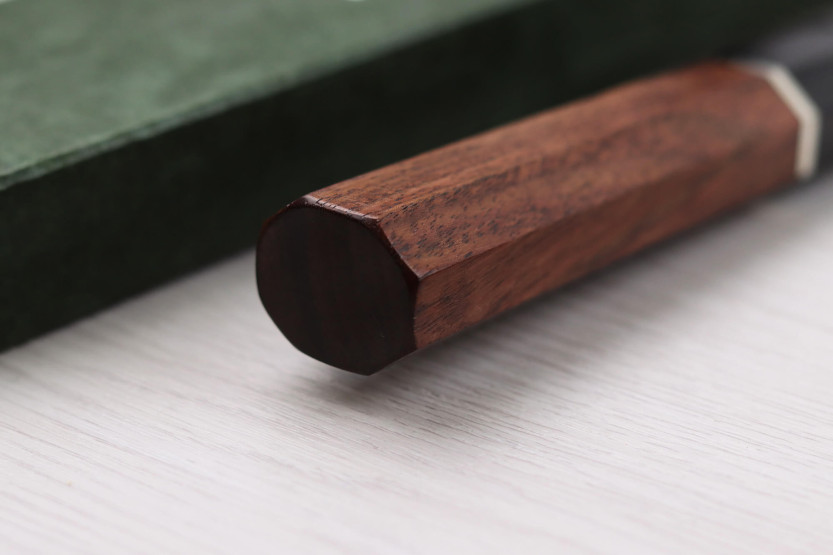
This handcrafted knife features a handle made from rosewood, a sturdy wood that resists shock and humidity. The wood's brown hue is highlighted by darker veining, giving you a knife with a very authentic look. Note that the grain is unique to each piece.
The wood is carved in an octagonal shape that fits your palm perfectly. Perfect handling and ergonomics mean you can use your knife for longer cuts. The octagonal shape also has the advantage of being suitable for both left-handed and right-handed users.
The knife's bolster acts as a link between the blade and the handle, providing ideal balance. The bolster is made of black buffalo horn and separated from the wood by an elegant silver ring.
Wood paste has been added to fill the gaps where the blade fits into the handle. It makes the whole thing watertight, preventing water from cleaning and food particles from getting inside.
Caring for my kitchen knife
As your Sukenari knife is made from top-quality materials, it's important to follow these maintenance tips to preserve it. Starting with washing, which must be done by hand. Dishwashing and soaking in the sink are not recommended.
Use a suitable detergent and a soft sponge under lukewarm water, without wetting the knife handle. Once washed, dry it immediately and thoroughly to remove all traces of moisture. You can then place it in its box or in a dry place.
As the knife's blade is enriched with carbon, it may change its appearance slightly over time. This is perfectly normal. If you wish, you can apply a littleoil from time to time to preserve it for the long term.
Other HAP40 San Maï knives are waiting for you on KnifeLeader.eu!




 By buying this product you can collect up to