Kagekiyo knives are worthy representatives of Japan. They blend ancestral tradition with the latest industry technologies, to suit every chef!
They are in line with the principle of Monozukuri, a Japanese concept that refers to the art of making things with passion and in the best possible way. They also follow the principles of Kaizen, which lead to constant improvement of oneself or the things one does. One example is the use of electron microscopes to study the molecular structure of steel and improve all its facets.
Kagekiyo knives are made by the Baba family, whose family business has been producing knives for over a century. The 3rd generation is now taking over the factory, thanks to know-how handed down from father to son.
One of the family members, Baba Ichiji, even received a medal from the Emperor: theOrder of the Rising Sun, in recognition of his active participation in the cutlery industry. He was also awarded the Yellow Ribbon Medal, a distinction given to those who persevere in their field and become role models for others.
Kagekiyo knives are named after the commander Akushichibe"Fujiwara" Kagekiyo, who lived during the Heian era, around the 10th century.
Here, the Baba family called on young blacksmith Satoshi Nakagawa san to design the knives in the range. Despite his youth, he is renowned for his quality knives and excellent craftsmanship. At the age of 18, he became a pupil of master blacksmith Kenichi Shiraki san for over 15 years, and now has his own production workshop. He quickly assimilated the techniques he had learned during his apprenticeship, and now not only knows how to forge traditional carbon knives, but also how to use the Suminagashi and Honyaki techniques! Finally, he can forge stainless steel knives such as VG10 or Ginsan for this particular range. So he's got many strings to his bow!
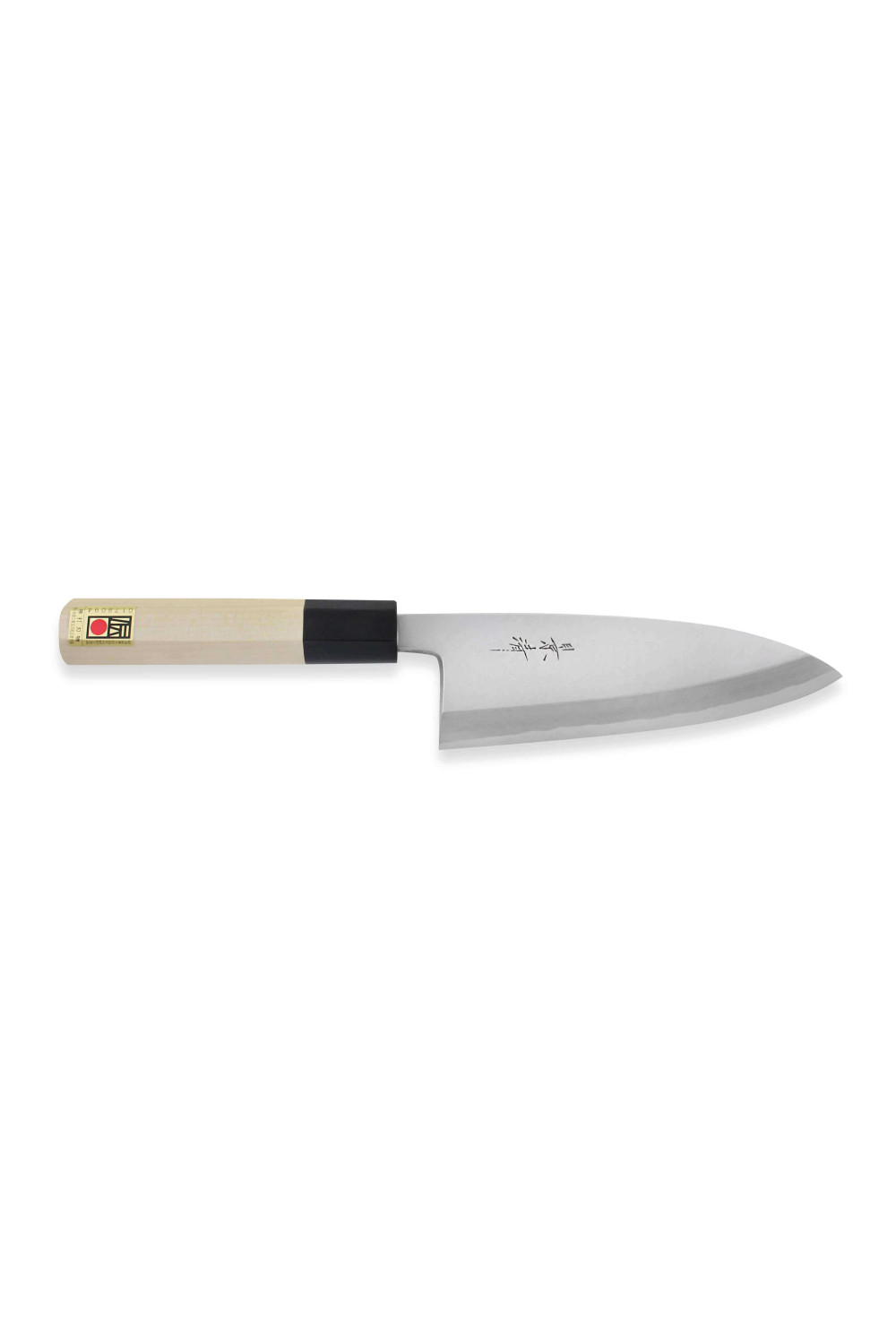
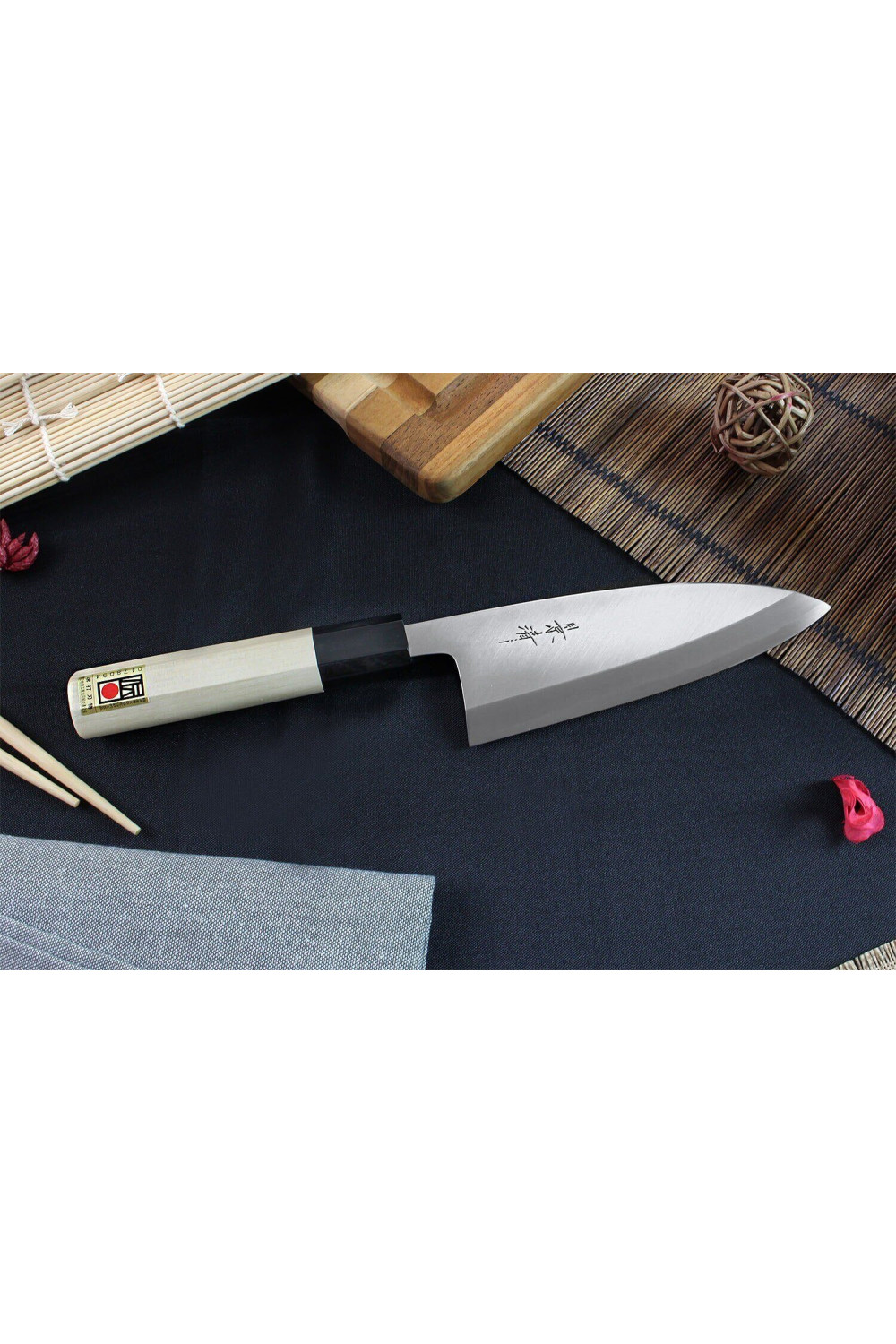
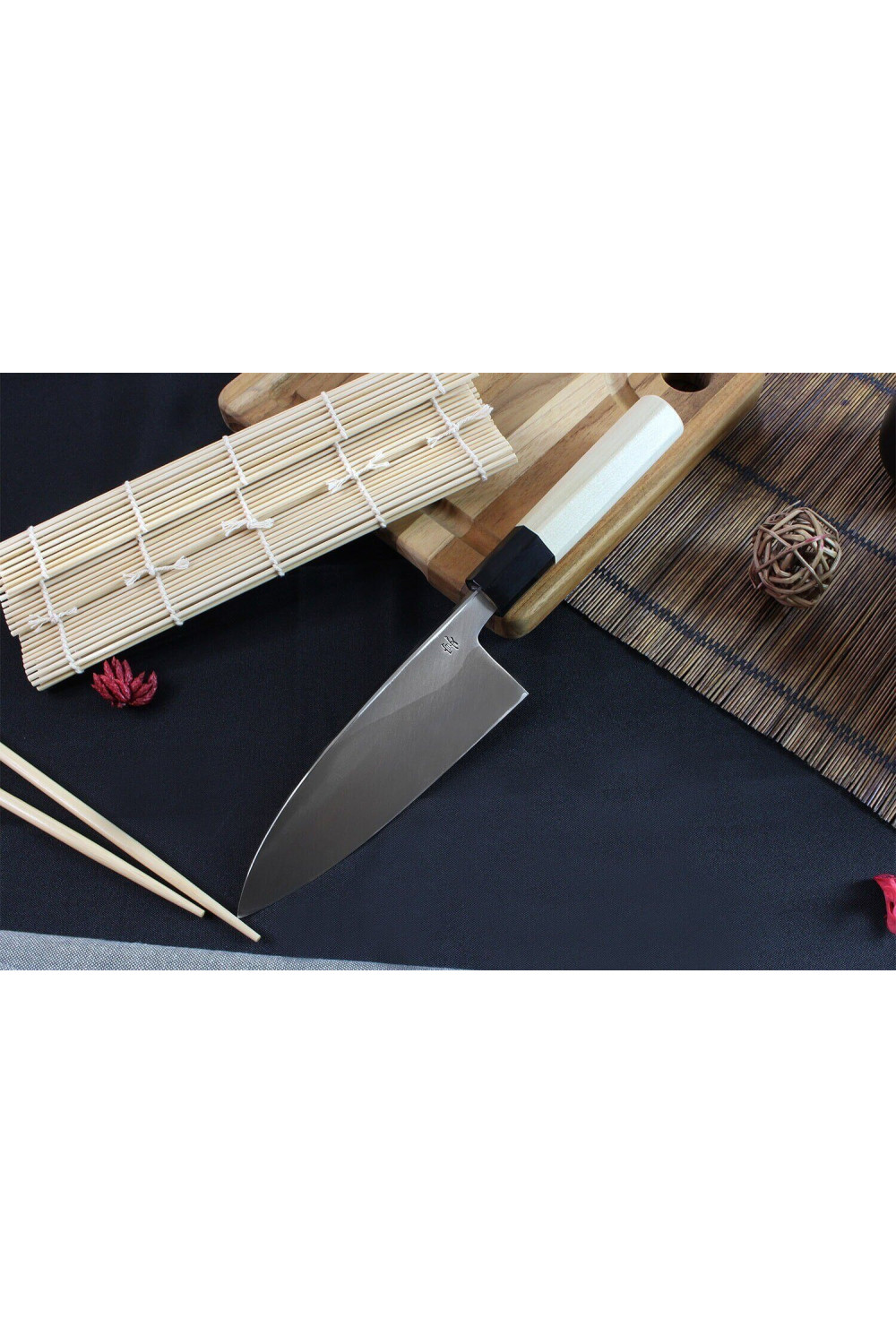
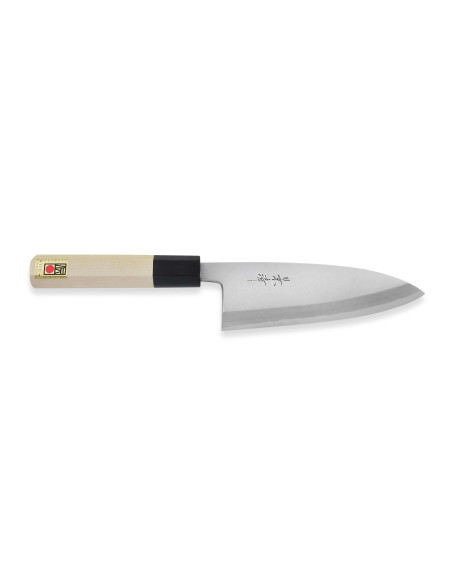
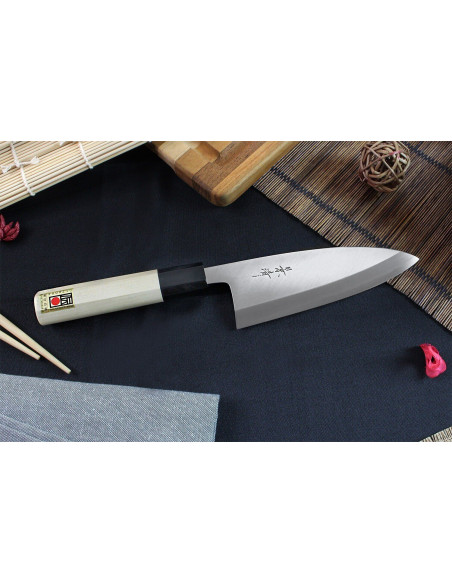
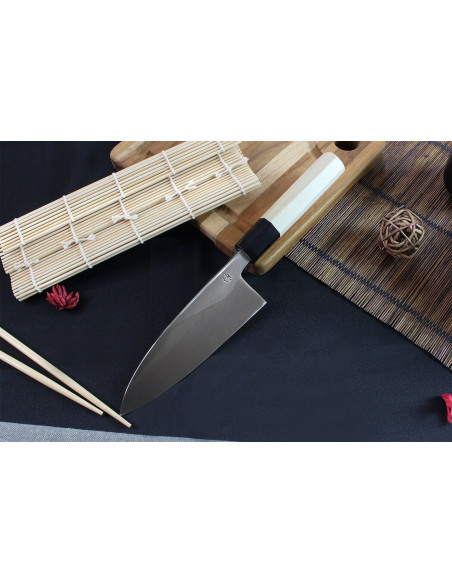
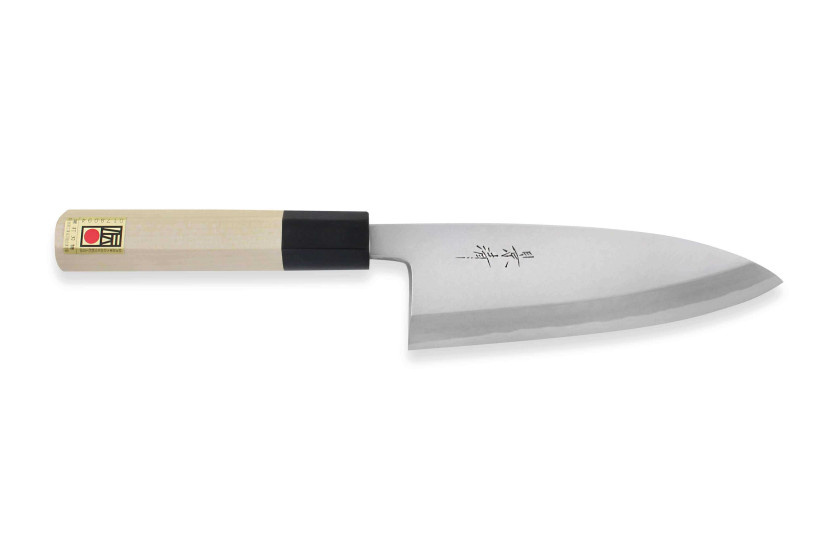
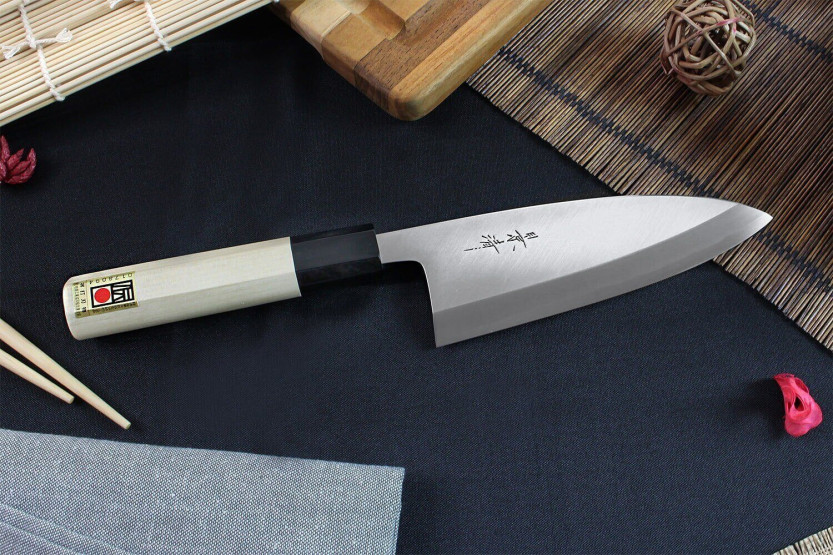
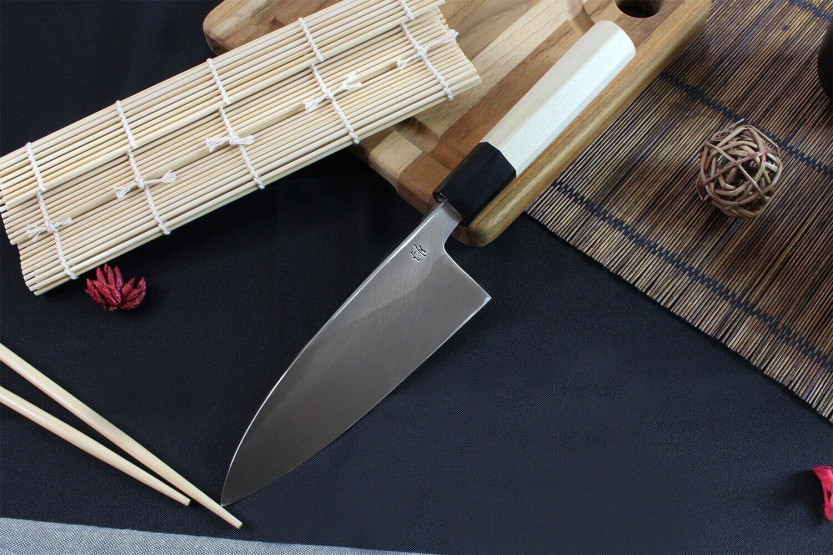
This deba Kagekiyo Utage 16.5cm knife is used to cut fish and fish carcasses, thanks to its thick, bevelled, right-handed and heavy blade (width at thickest point of blade: 6mm - Weight of knife: 240g). It can also be used to make tartars.
Blade :
The blade is made of Yasuki White Steel 2, an extremely fine, typically Japanese steel produced by Hitachi steelworks (Japan's most renowned steel supplier). In Japan, Yasuki steel knives are highly appreciated by cooks with traditional values, as it is produced directly there and worked by the best blacksmiths. One of the purest steels in cutlery, it is enriched with iron ore and carbon (between 1 and 1.2%). These two elements increase the blade's hardness (around 61 HRC), and a stiffer blade can be sharpened more thoroughly. The result is a sharp edge that lasts, thanks to the high retention capacity of this top-of-the-range steel. Despite its rigidity, this alloy remains easy to sharpen, when the need arises.
Its purity has another advantage: at microscopic level, its structure is very homogeneous, which makes it more resistant (there is less risk of chipping, for example).
Finishes :
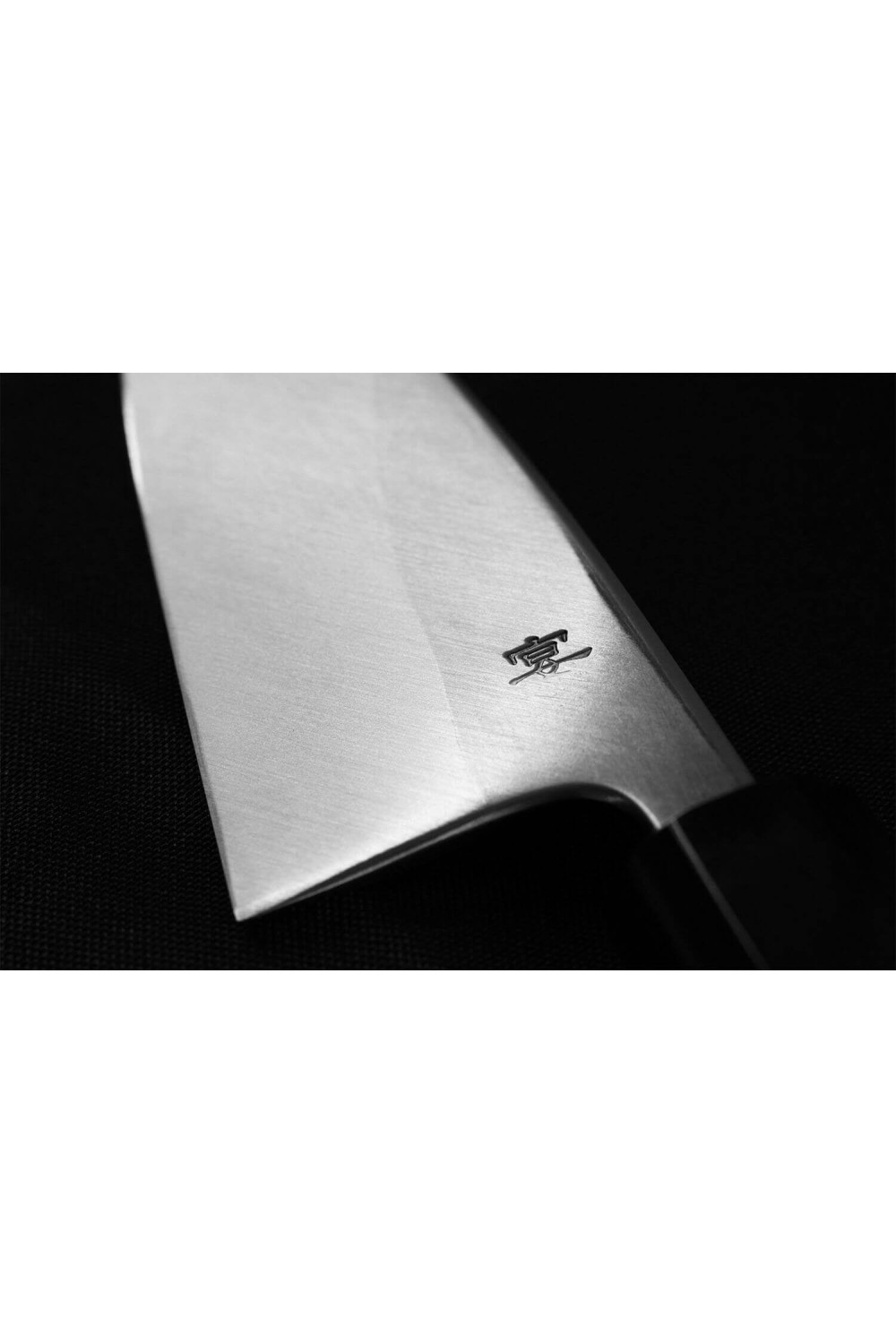
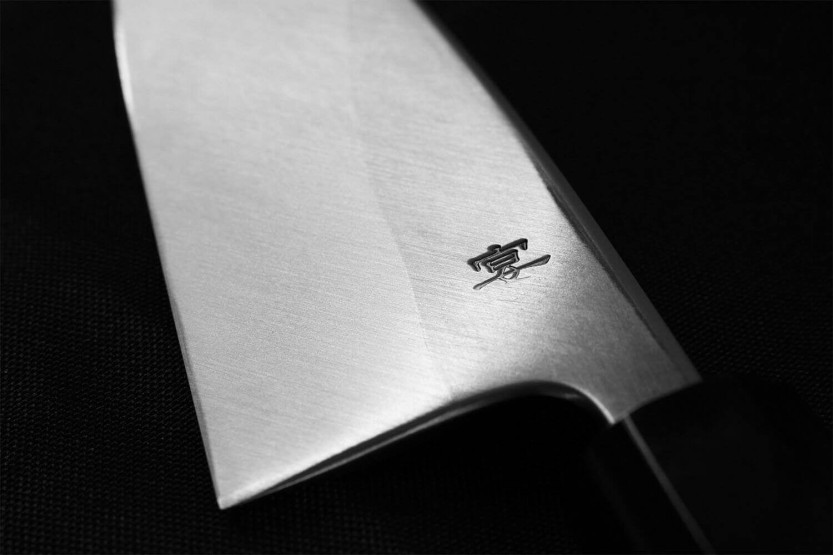
Its top edge and the surface at the base of the blade have been polished to make them more pleasant to the touch. Indeed, some cooks take their knife very high up on the handle, and can even rest their index finger on the back of the knife. Polished edges are much more comfortable to use!
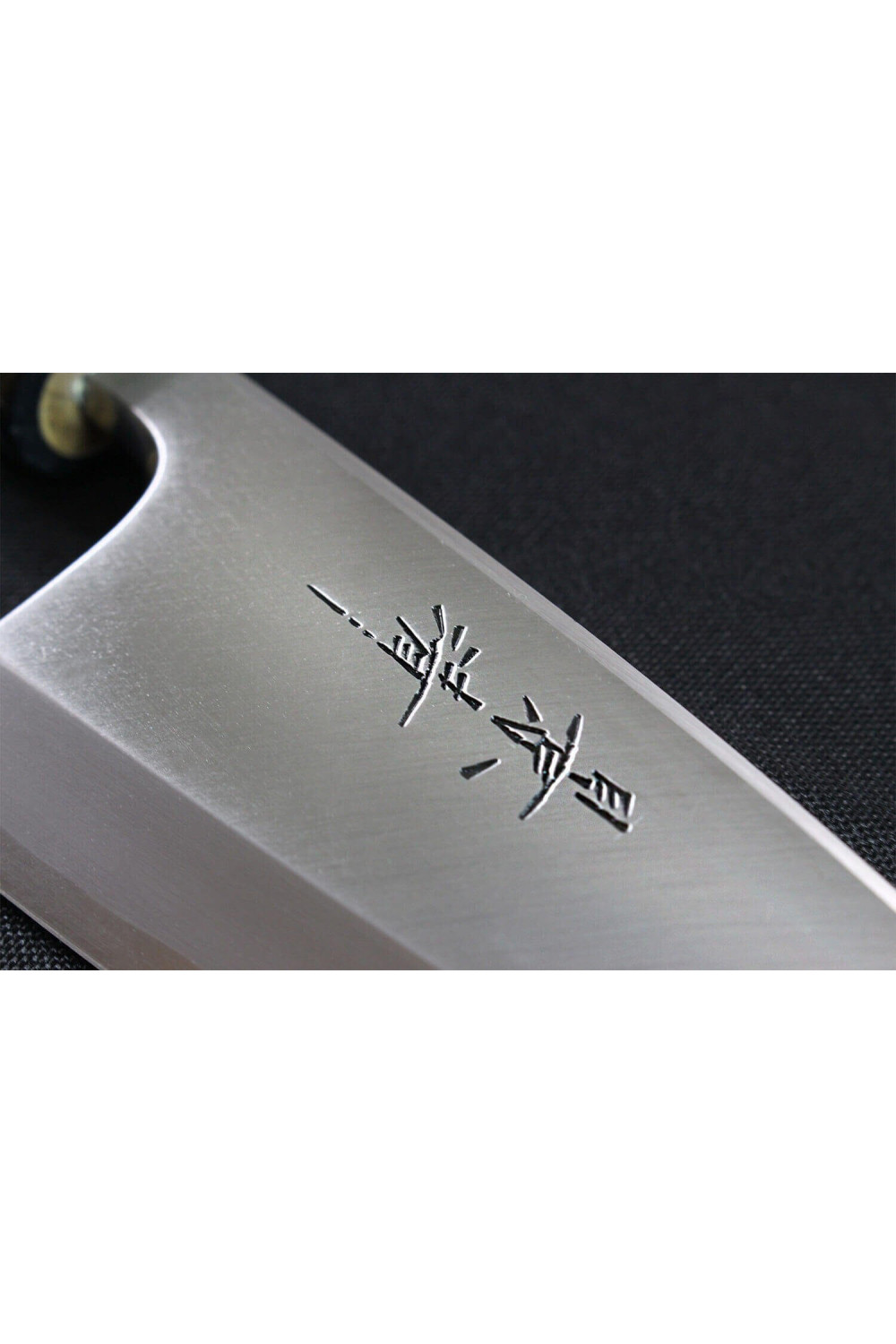
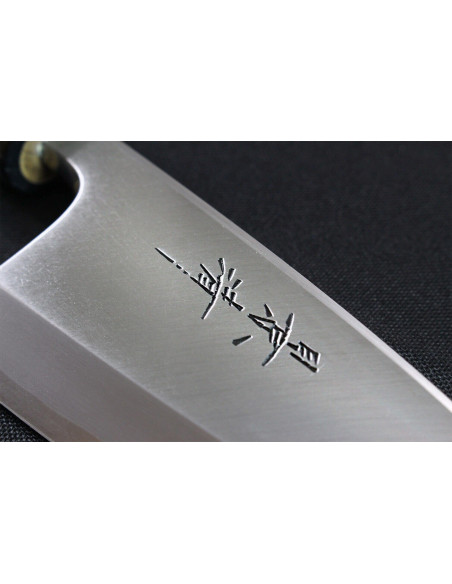
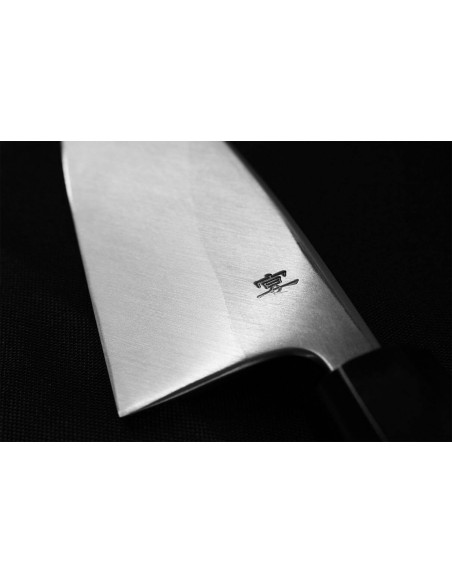
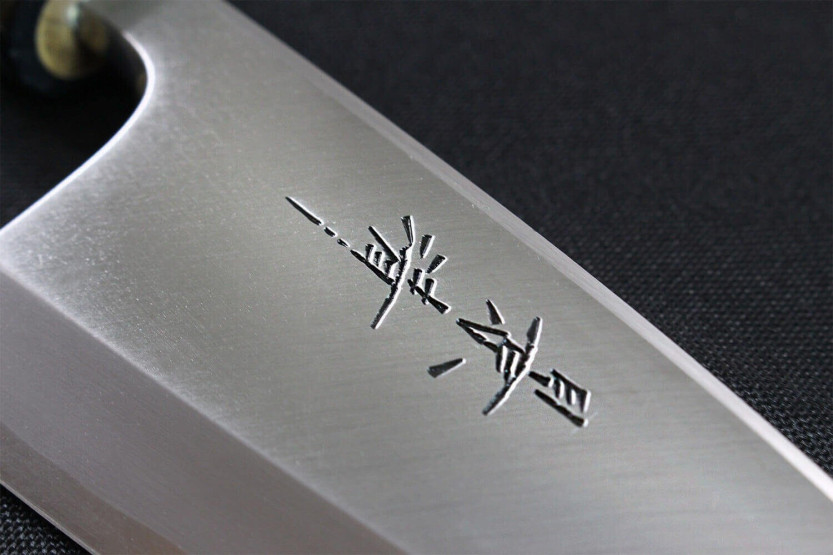
The brand logo has been placed on the cutting surface, and the latter benefits from a traditional finish, achieved with a sharpening technique using stones of different grit. This technique brings out a wave on the steel, which appears more polished.
The handle :
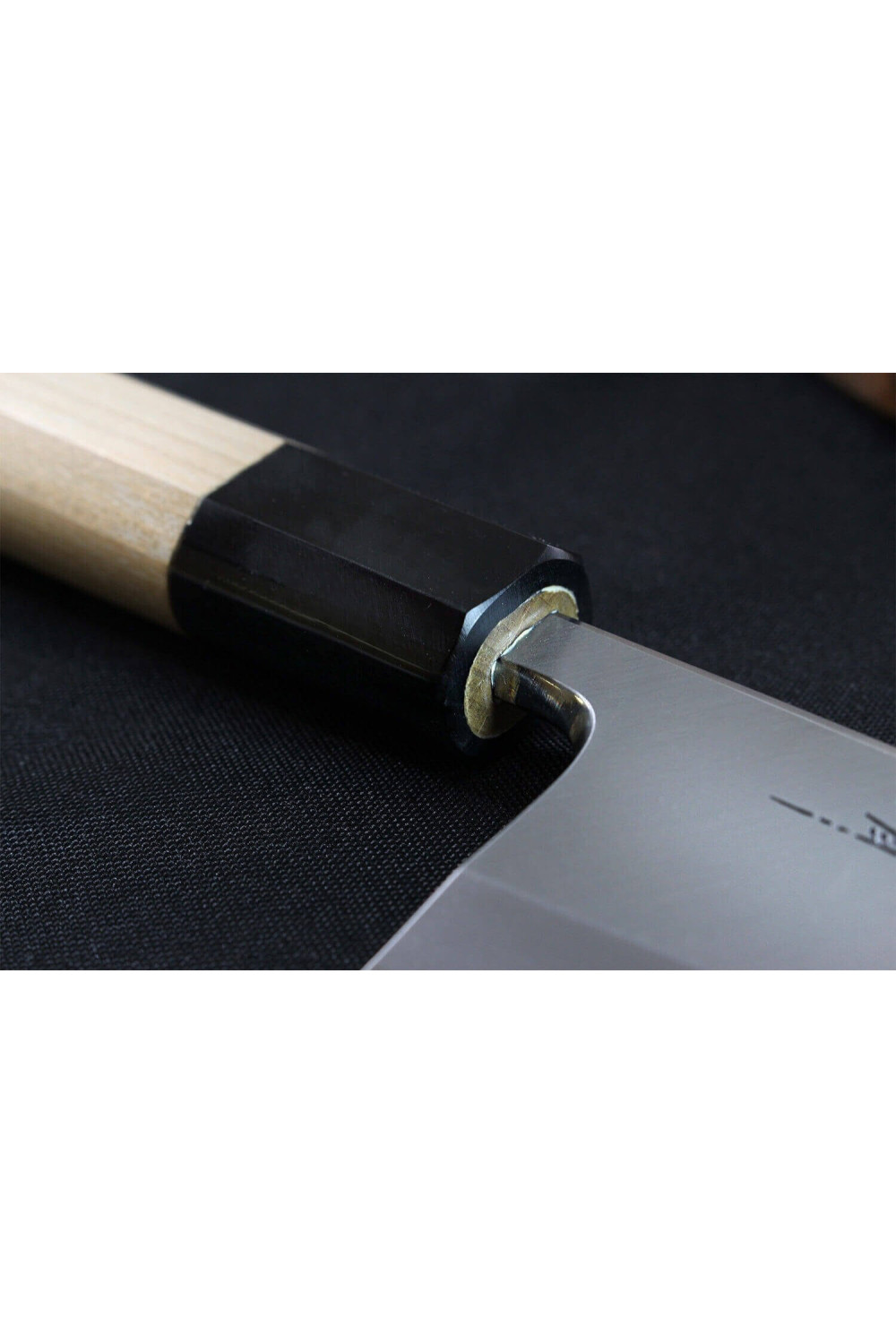
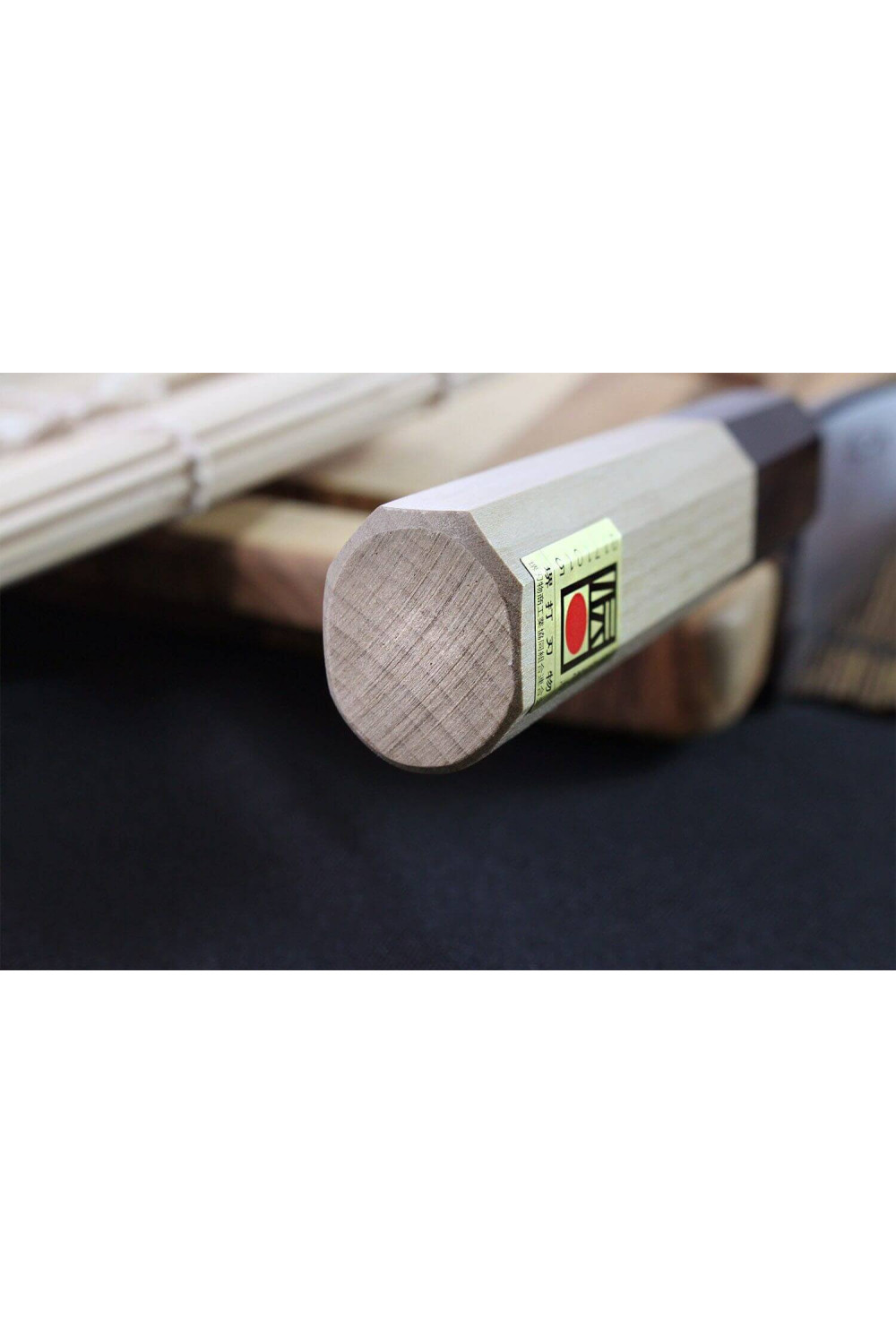
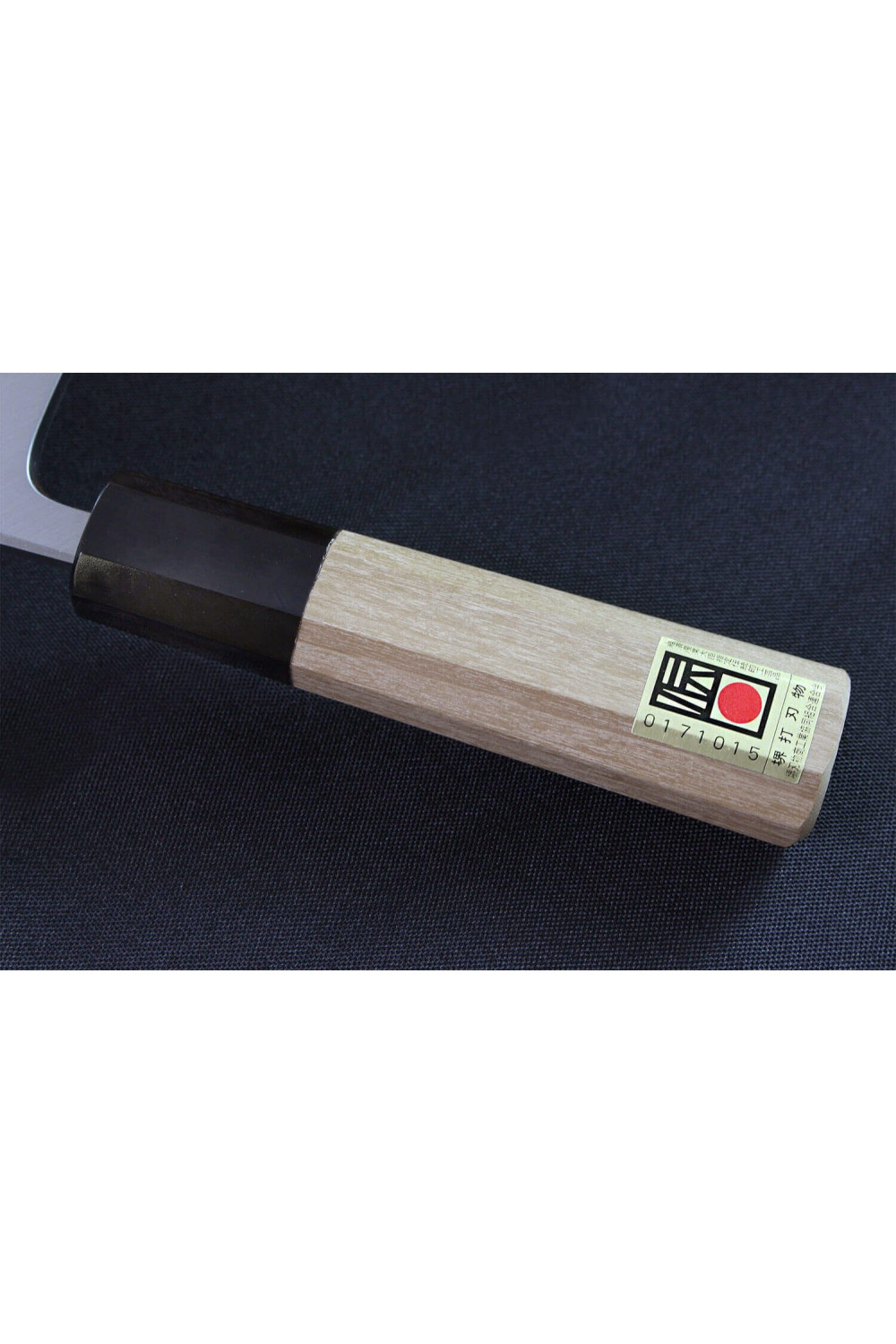
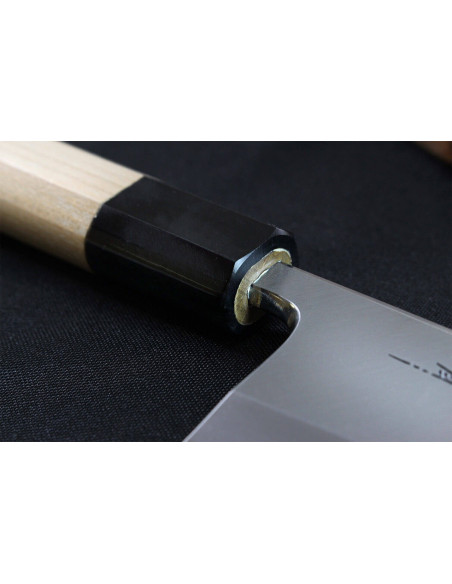
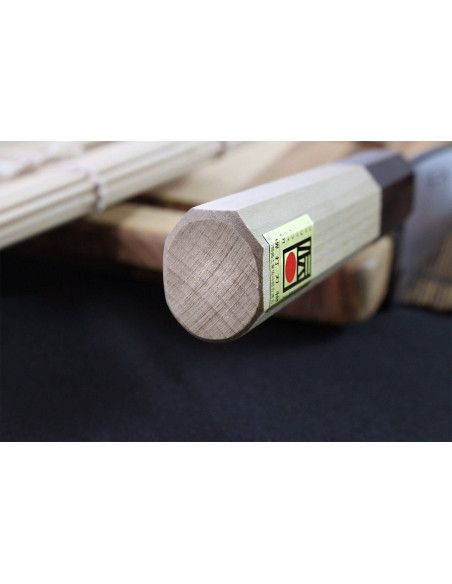
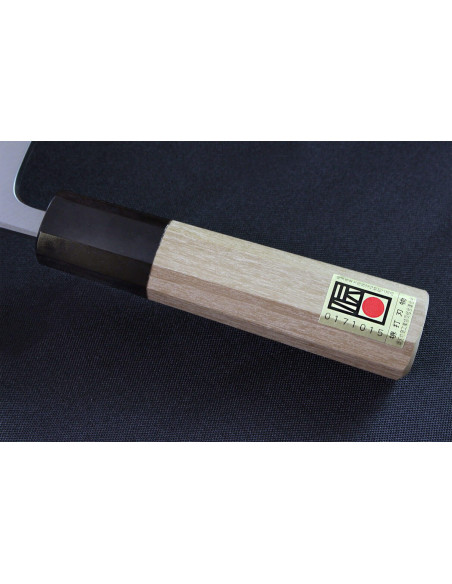
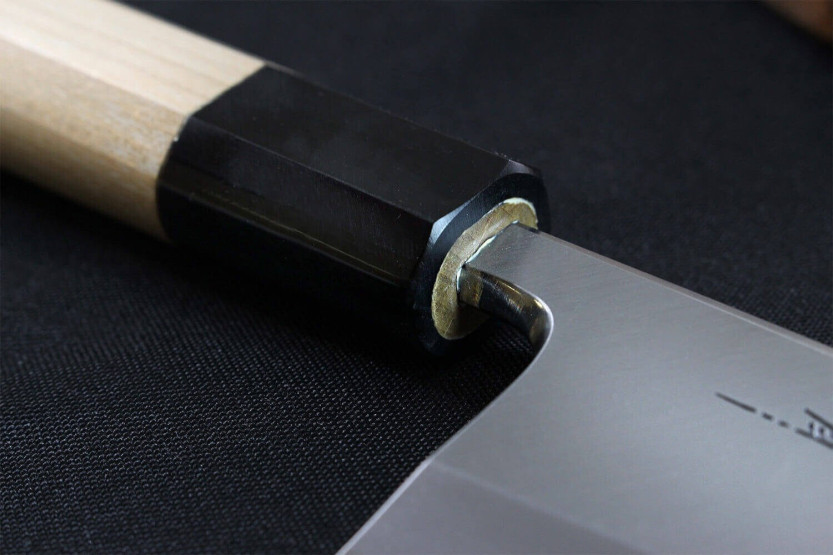
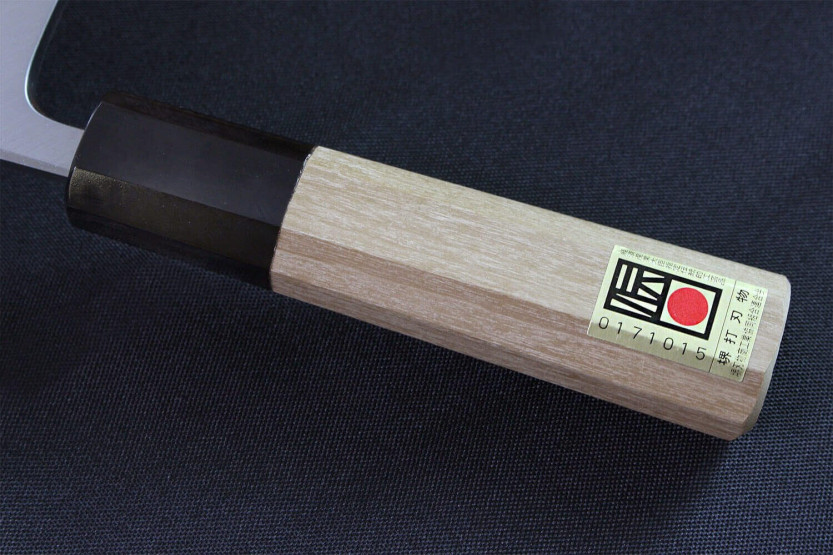
The handle is hand-cut from magnolia, a typical light-colored wood that is resistant to bacteria. The wood is sanded for a soft feel. In addition, it has been cut into a hexagon: this original shape sits comfortably in the heart of the hand, thanks to its completely rounded lower part. The black bolster is made of buffalo horn, smooth and perfectly joining the blade to the handle. Each bolster is available in different shades.
The space between the blade and the bolster is filled with a wood paste that makes the whole thing watertight, and prevents small scraps and water from penetrating inside during cleaning.
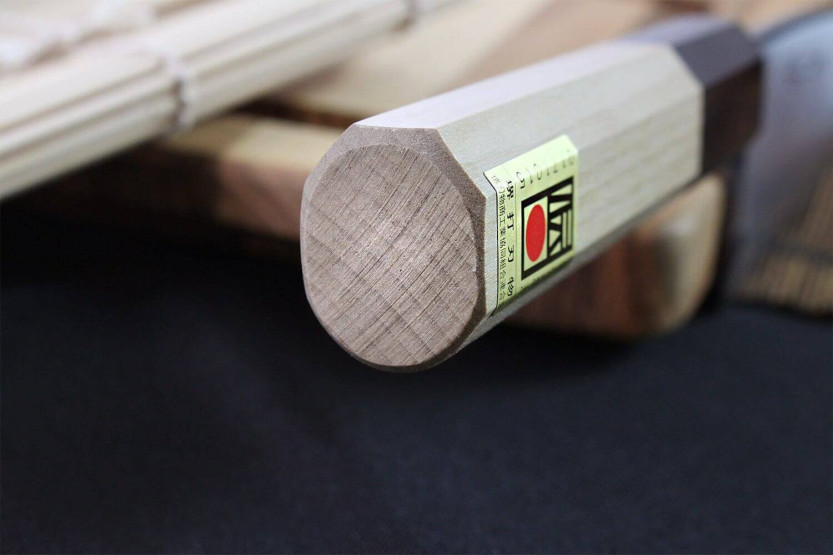
A sticker is visible at the end of the handle. This golden label is affixed to knives that have been entirely handcrafted in Sakai, a Japanese town renowned for its cutlery production. It's proof ofauthenticity, and each label has a unique serial number.
Care and maintenance :
As the blade has a high carbon content, it is more susceptible to corrosion. The knife can be cleaned by hand (no dishwasher). You can use a mild soap and run it under hot water, without using an abrasive sponge. Then wipe with a soft cloth to remove all traces of moisture from the blade and handle. However, it is important to note that a carbon blade, despite special care, can still become tarnished over time, as its alloy reacts in this way in the normal way. For maximum protection, you can oil it from time to time to ensure that its beauty lasts.
To remove it, wipe the blade with a cloth dipped in vegetable oil, then wash it in the traditional way.
N.B.: the former name of the Kagekiyo brand was Sakai Ichiji, named after the town where it originated.
To find out more about Kagekiyo Utage knives, click here!


 By buying this product you can collect up to