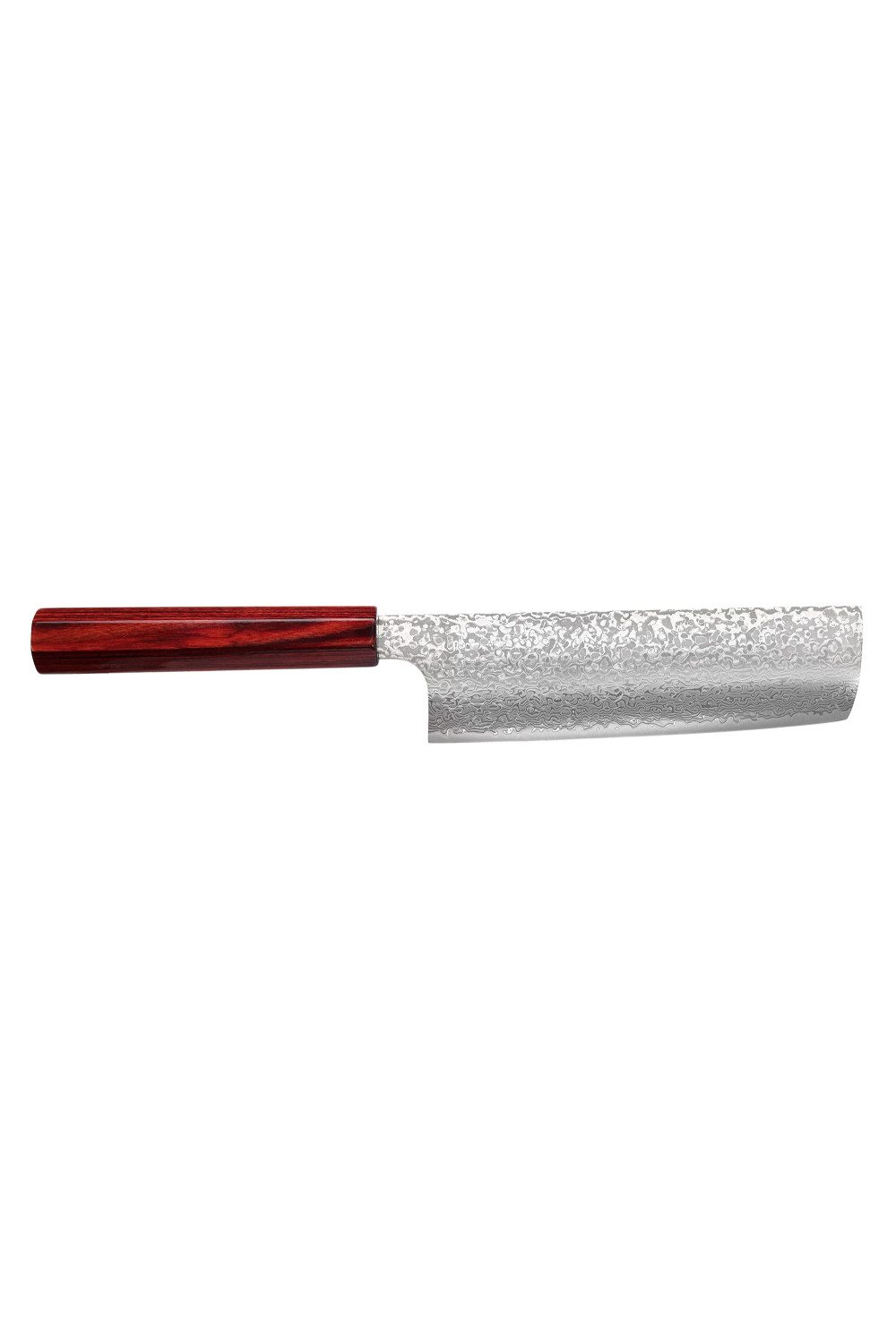
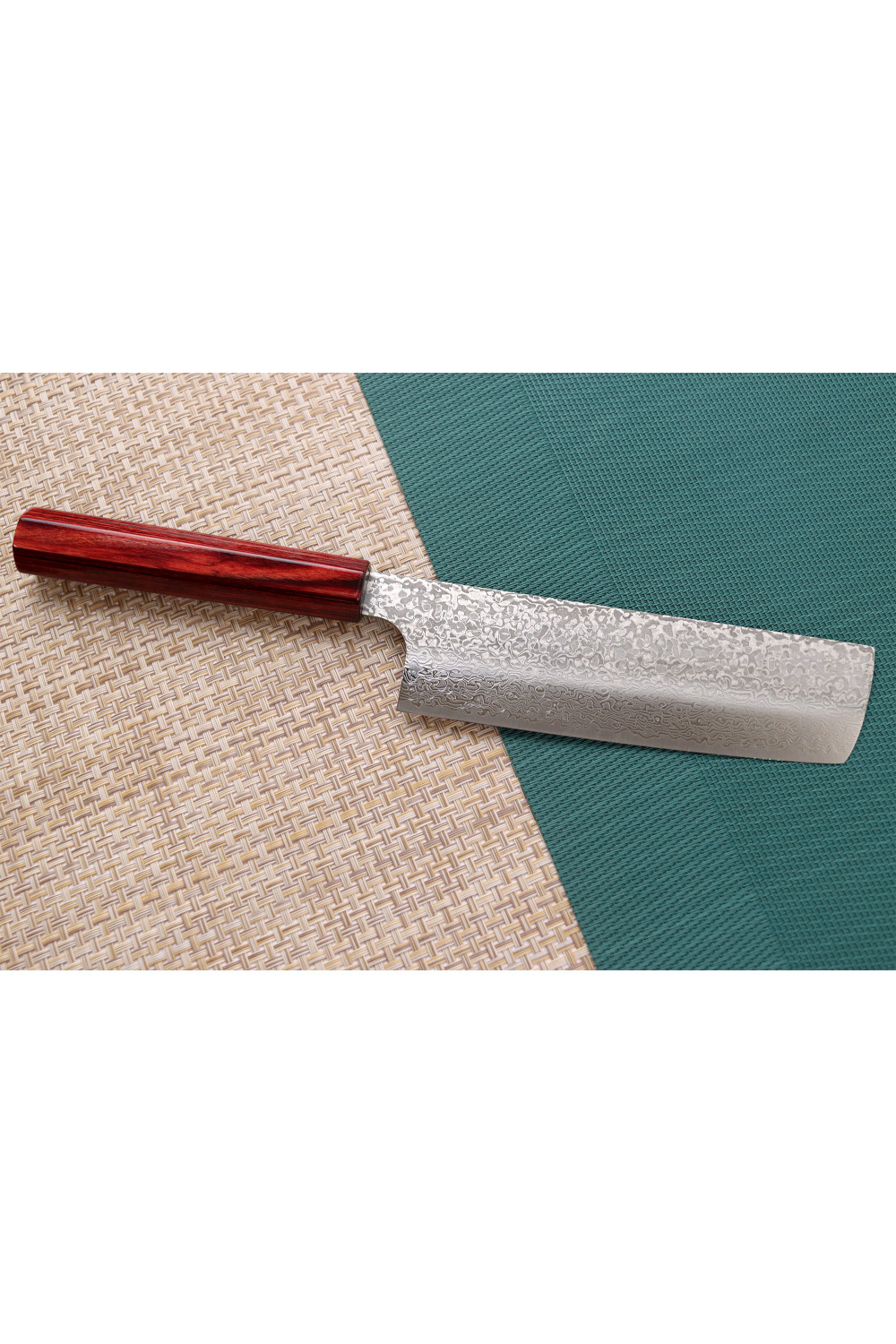
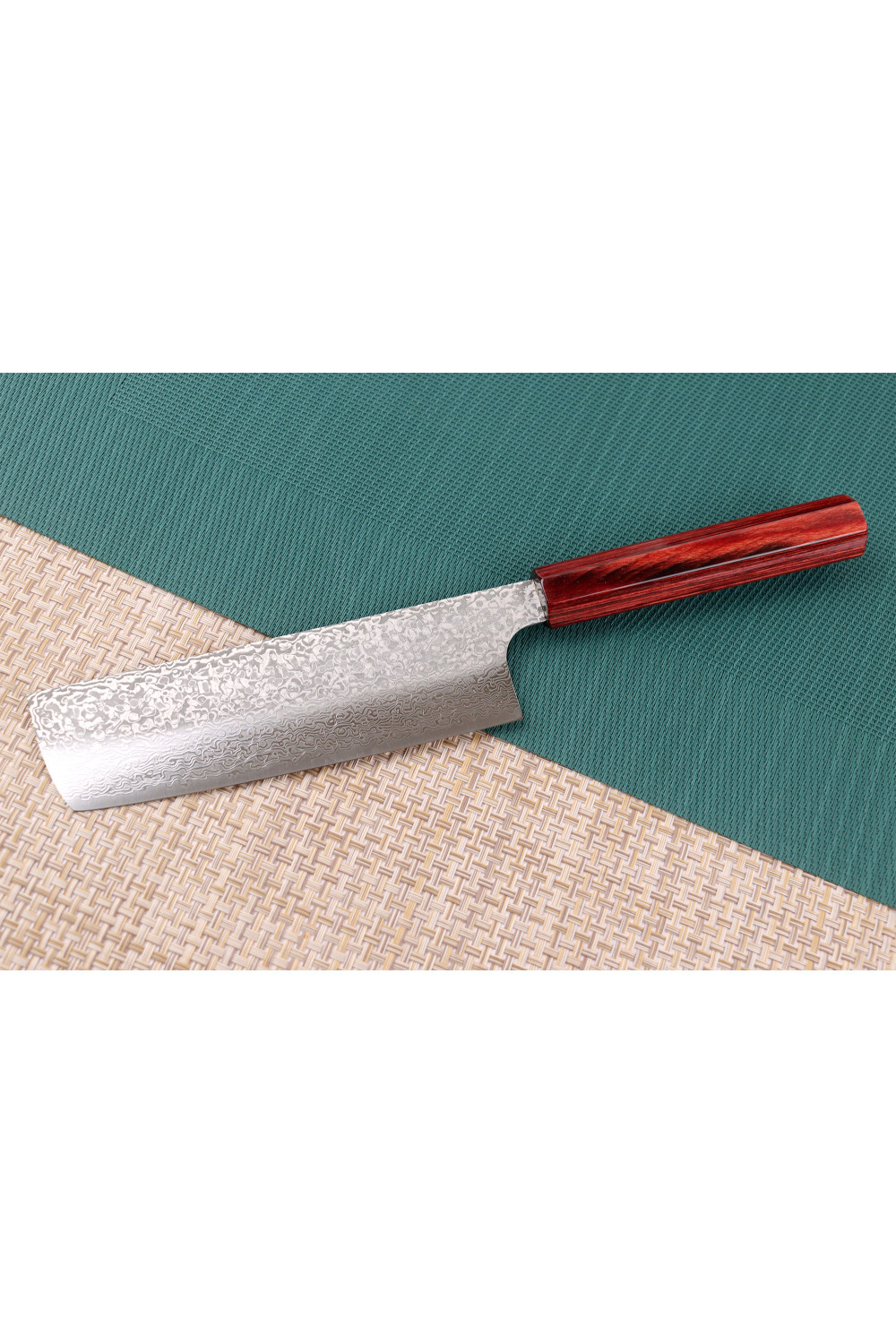
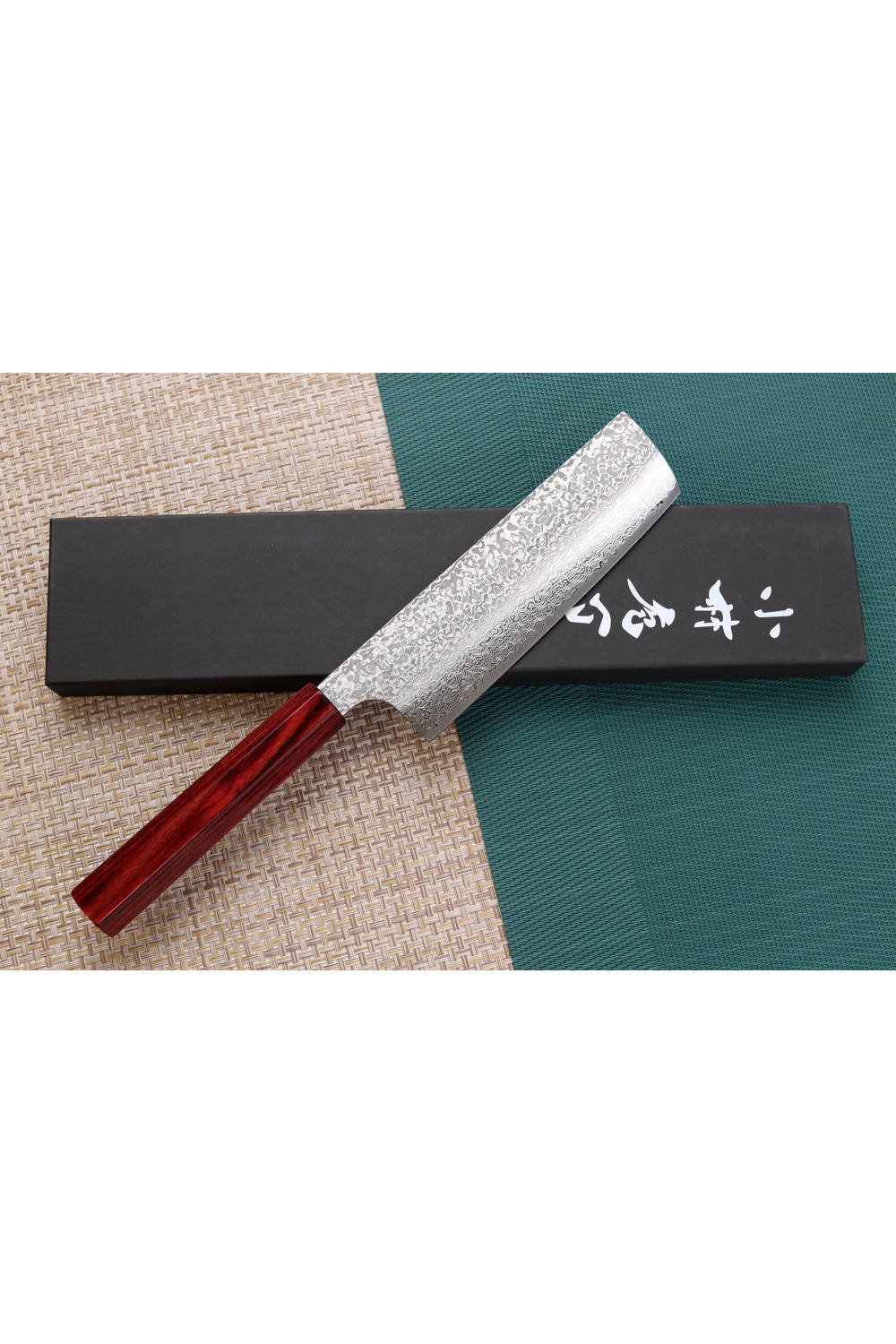
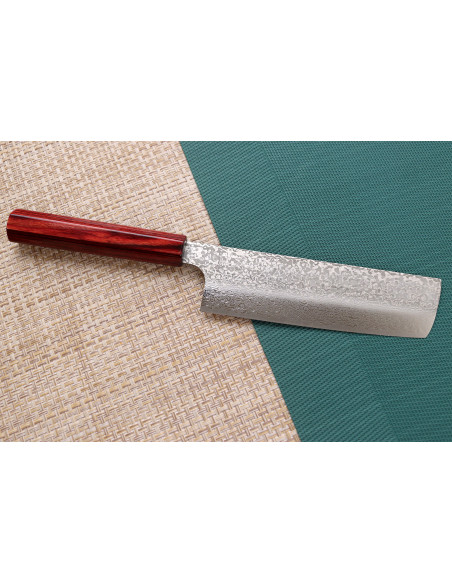
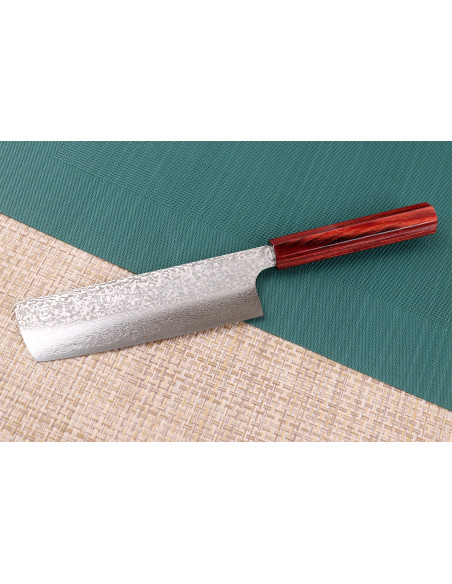
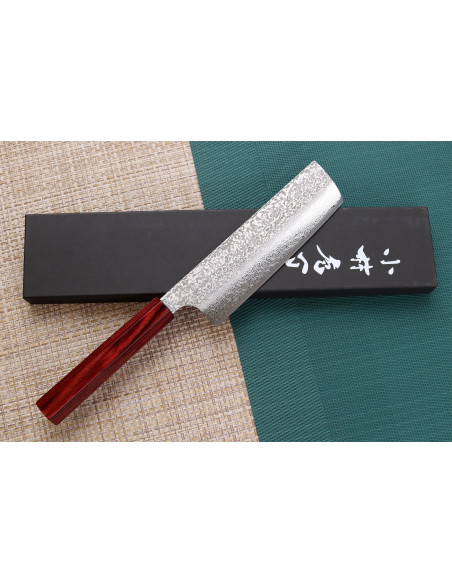
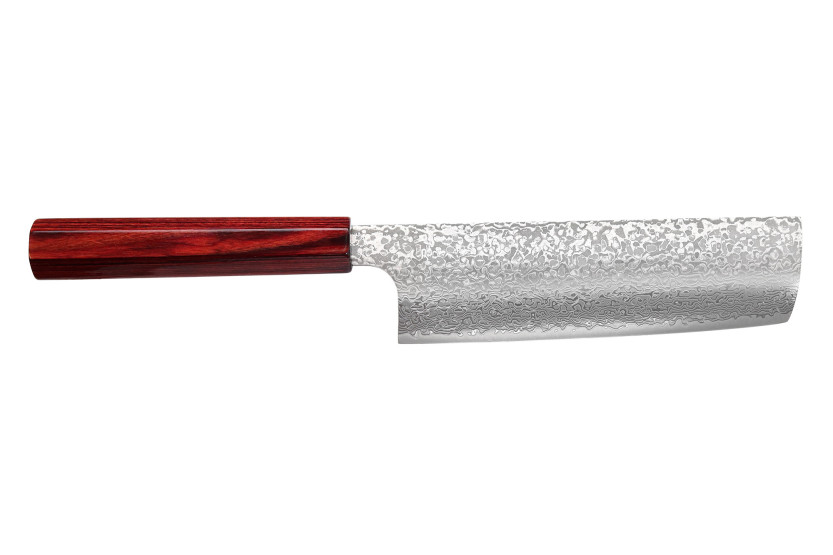
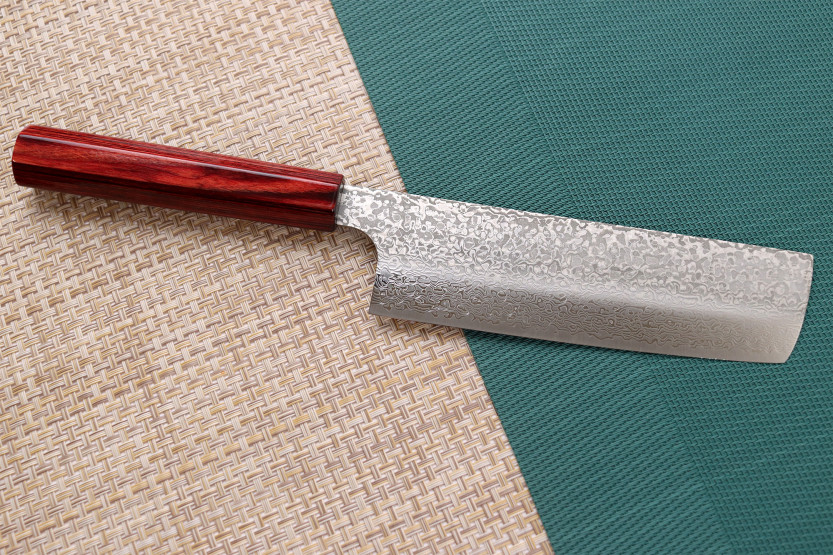
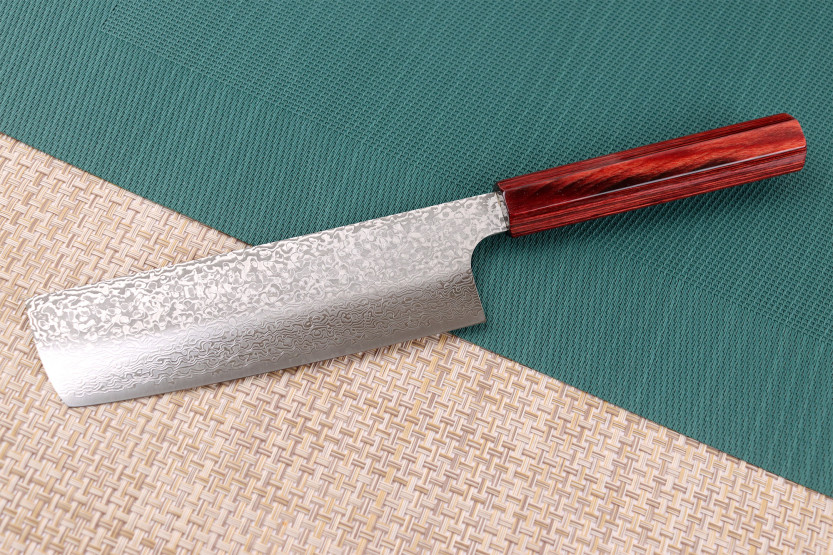
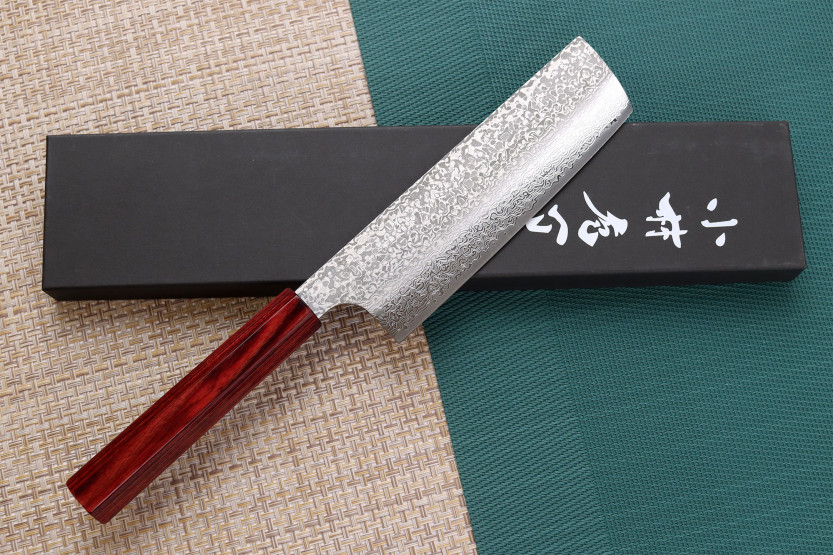
The Kei Kobayashi SG2 Damascus 16.5 cm Handcrafted Japanese Nakiri Knife combines precision cutting, Japanese craftsmanship, and refined finishes! Handcrafted in Seki, Japan, by the talented Kei Kobayashi, it features a rectangular blade specially designed for cutting vegetables. Its SG2 Damascus powdered steel, paired with a deep red pakkawood handle, gives it a striking appearance and top-of-the-line cutting performance.
Thanks to its exceptionally sharp edge and geometry optimized for vertical cuts, this nakiri knife makes preparing vegetables a smooth and effortless process. Slicing cabbage, julienning carrots, or chopping herbs becomes a true pleasure!
A damascened SG2 nakiri blade for precise cuts
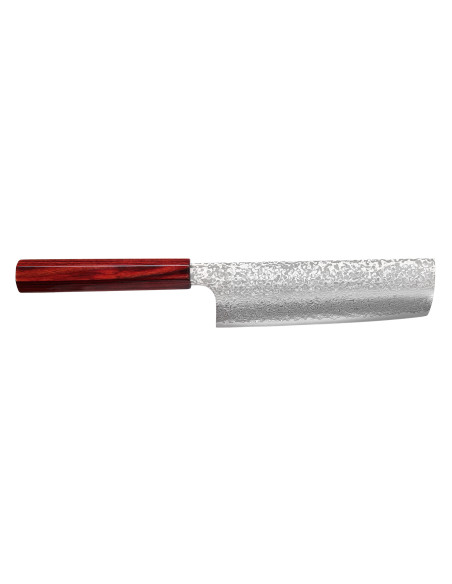
This Japanese nakiri knife features a 16.5 cm blade, recognizable by its rectangular shape and nearly straight edge. This traditional Japanese blade geometry is specially designed for preparing vegetables. It allows for vertical cutting motions—from the heel to the tip of the blade—to efficiently slice ingredients from top to bottom. Its wide cutting surface also makes it easy to transfer the sliced vegetables to your serving dish.
At the core of its blade lies SG2 powdered steel, a high-end Japanese alloy containing approximately 1.3% carbon. Produced through powder metallurgy, this steel features a homogeneous structure that promotes a sharp cutting edge and resistance to wear. Its hardness of 63 HRC on the Rockwell scale allows it to maintain a particularly sharp edge over time, provided you follow the precautions specific to very hard steels.
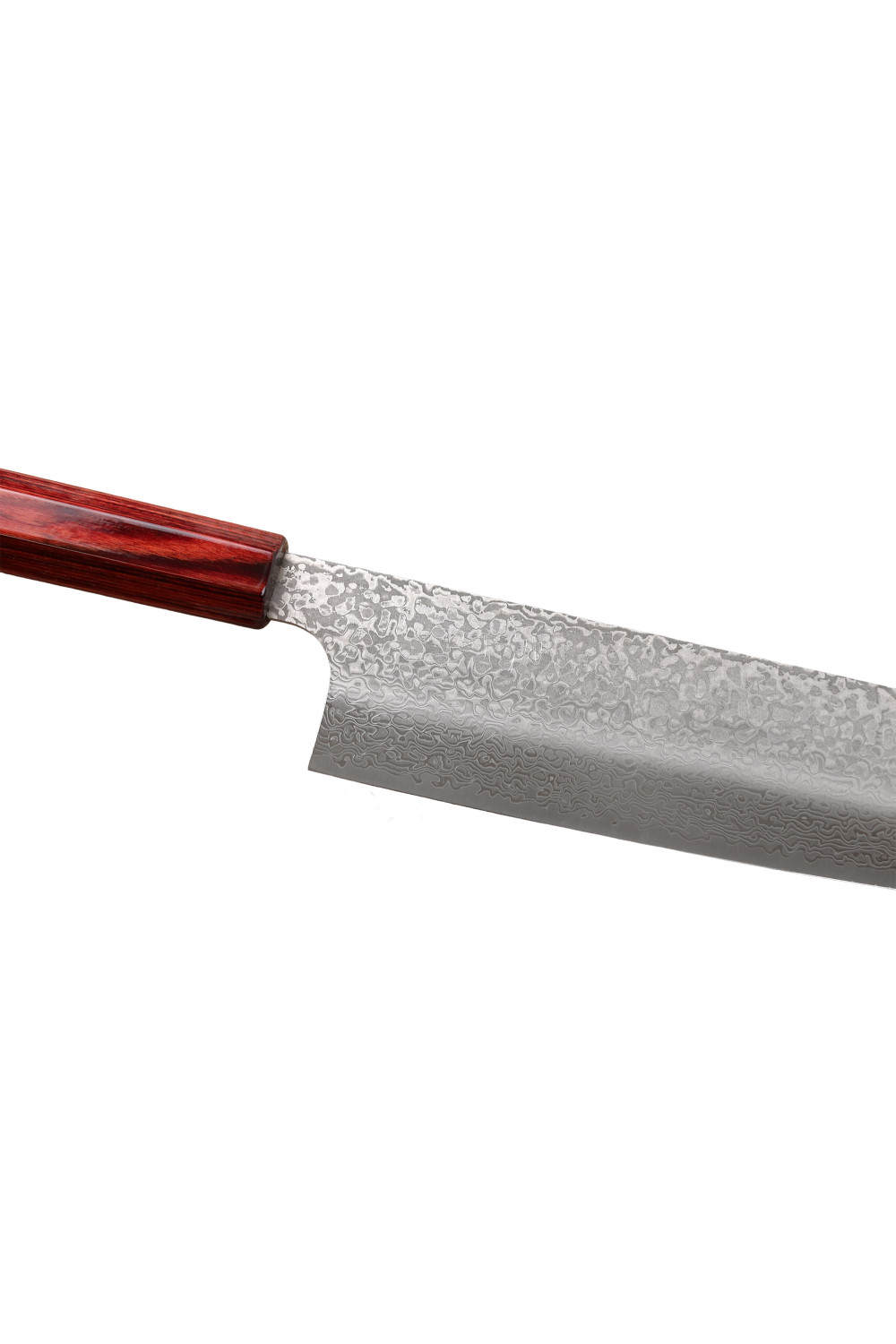
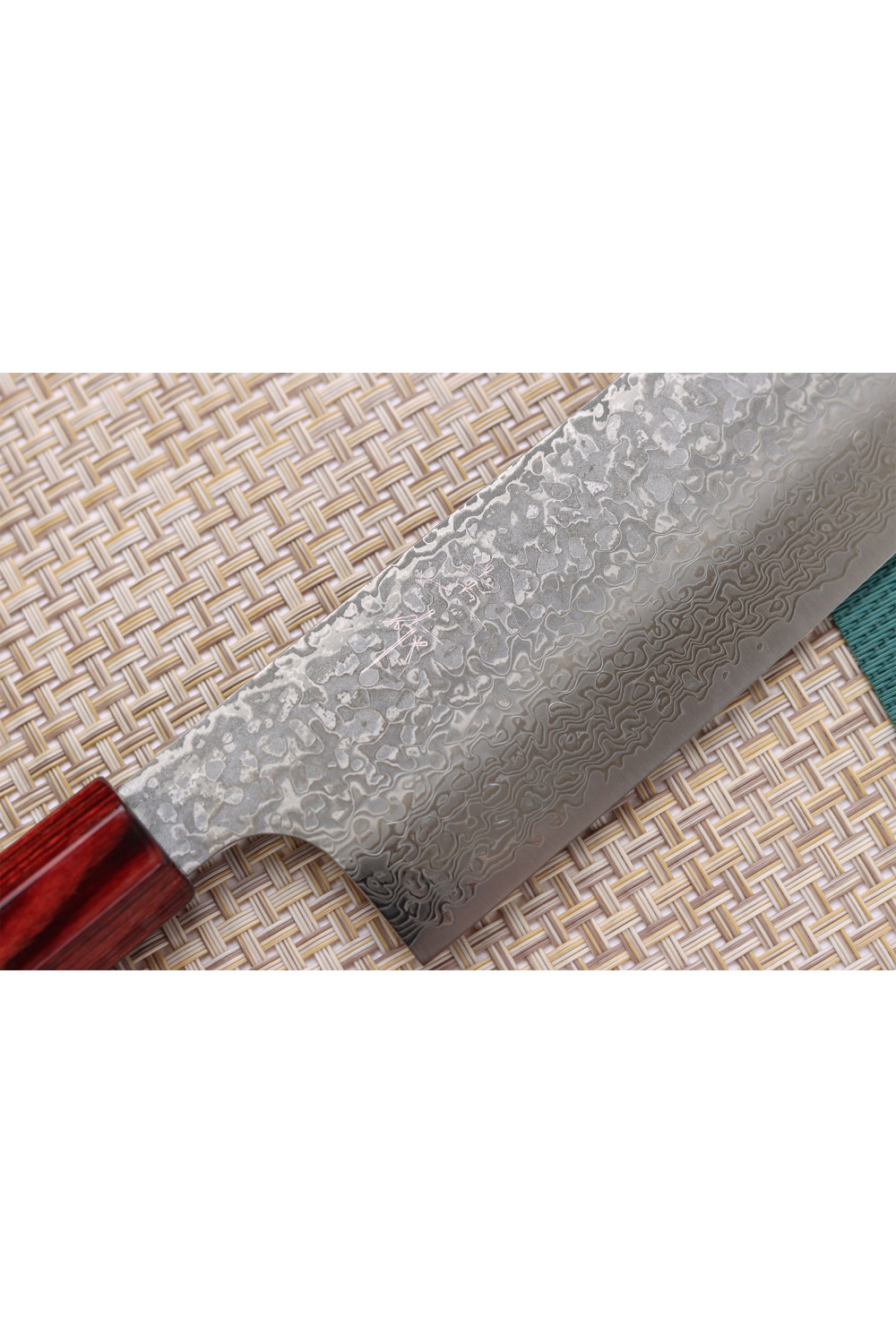
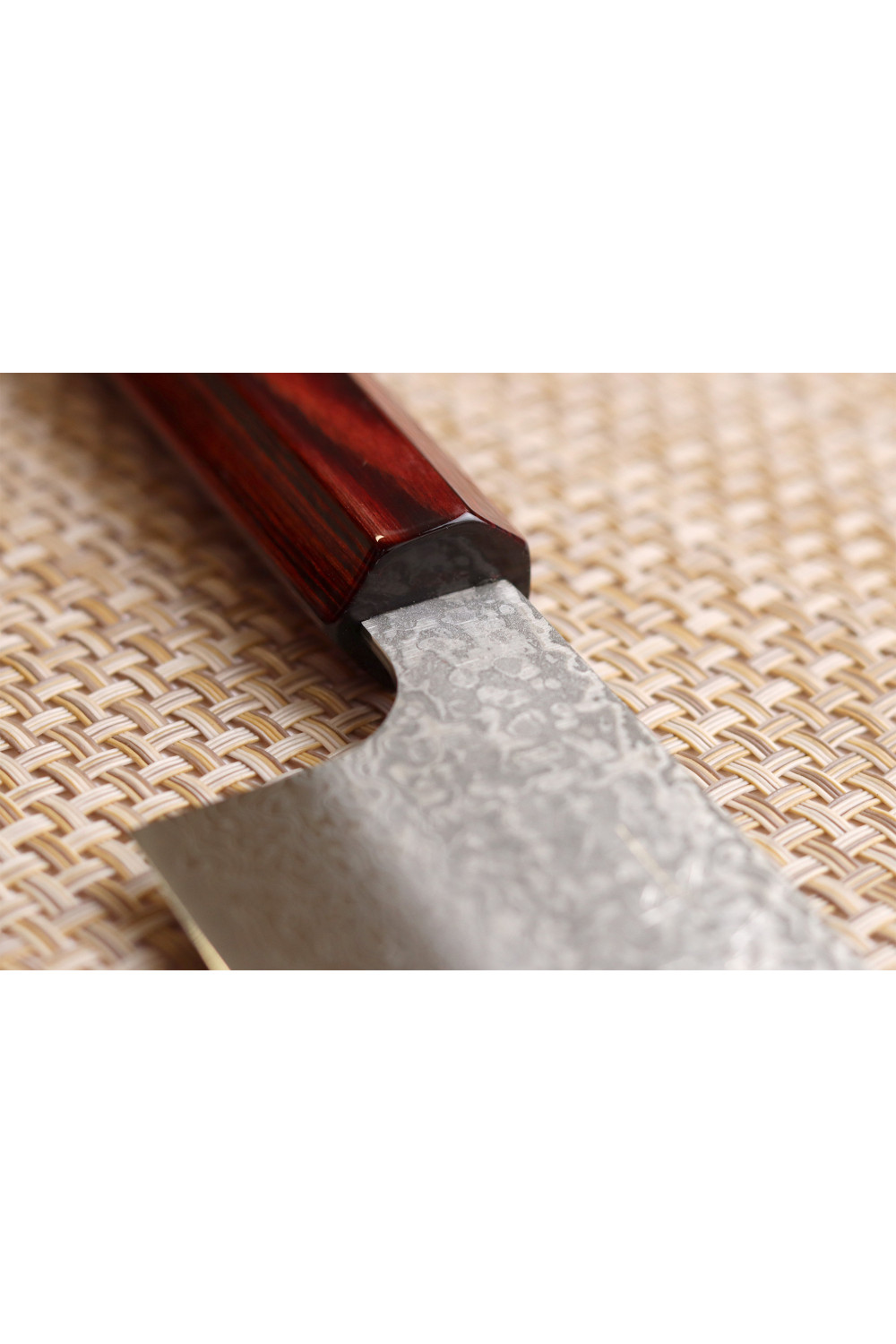
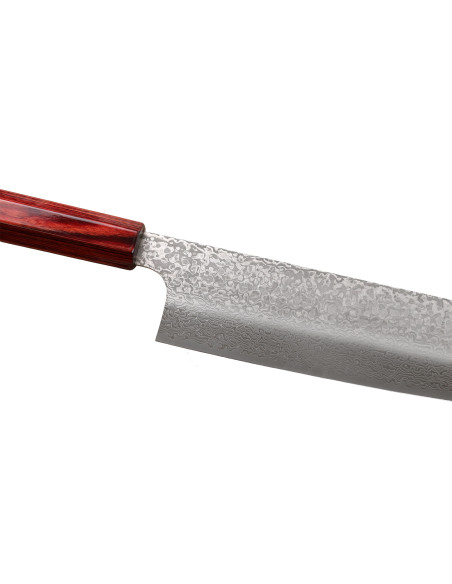
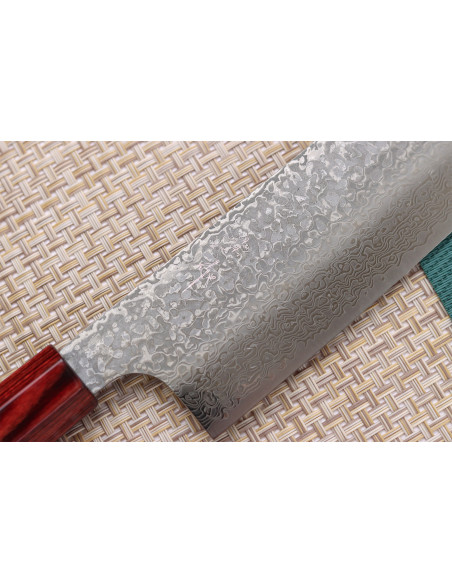
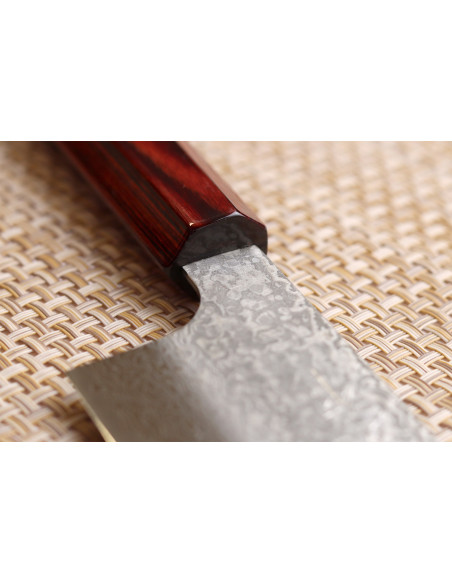
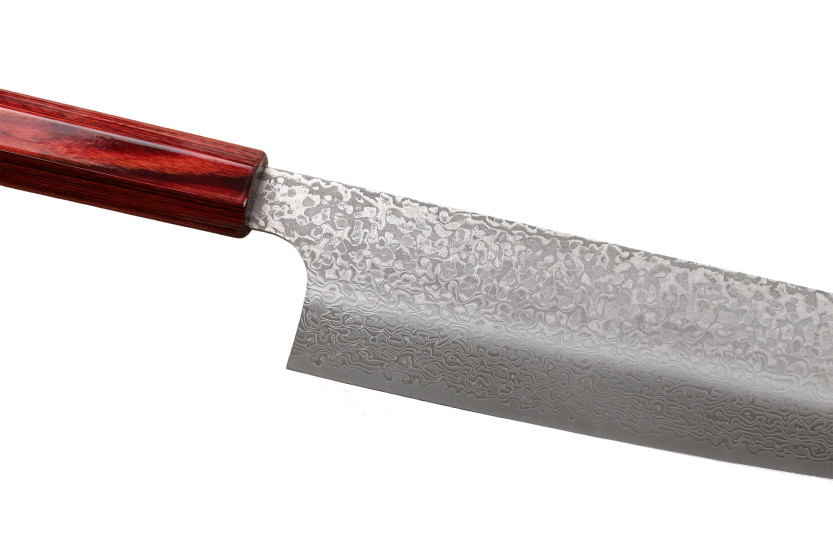
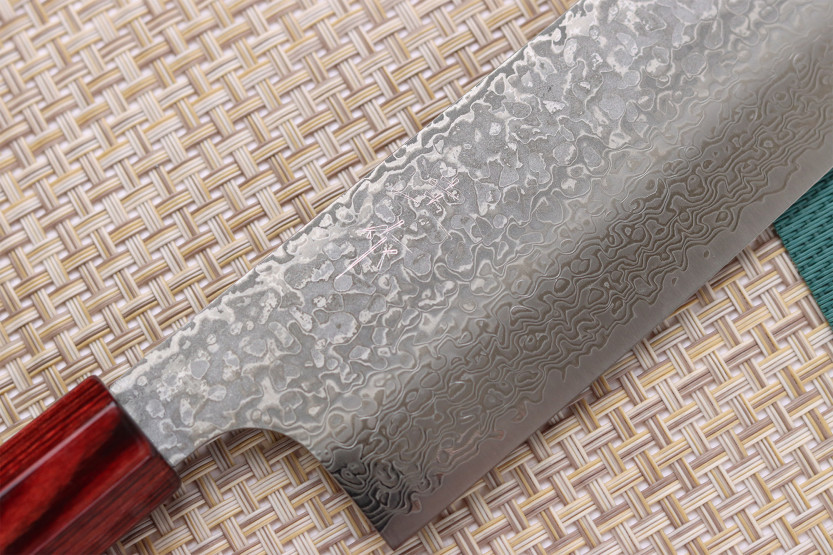
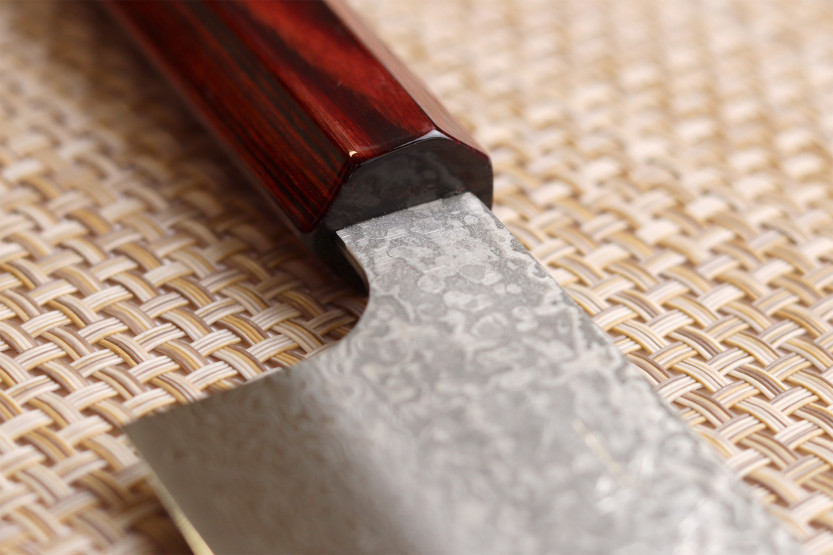
The damasceneconstruction combines the SG2 core with several layers of steel that create delicate ripples along the blade’s sides. This finish adds real visual depth, with patterns unique to each knife.
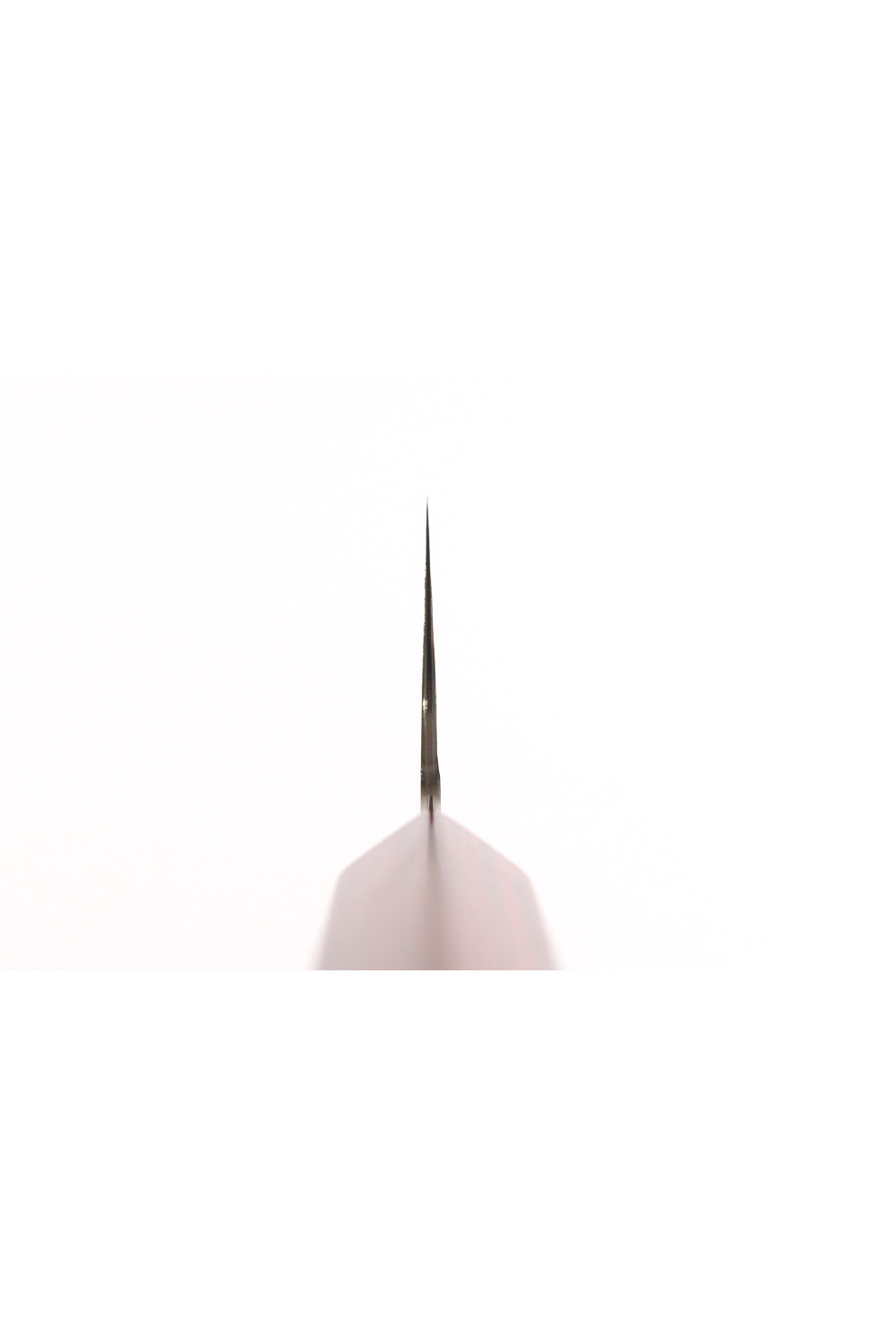
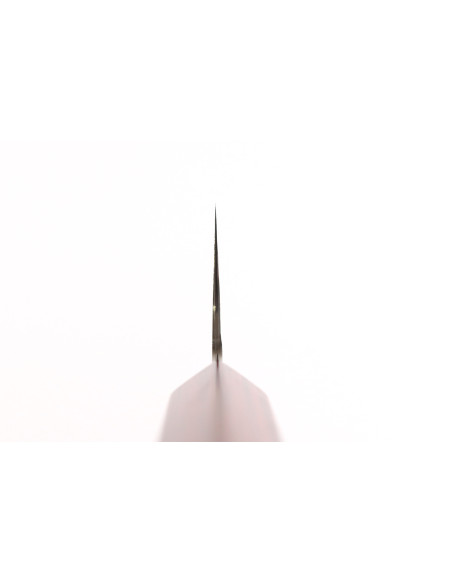
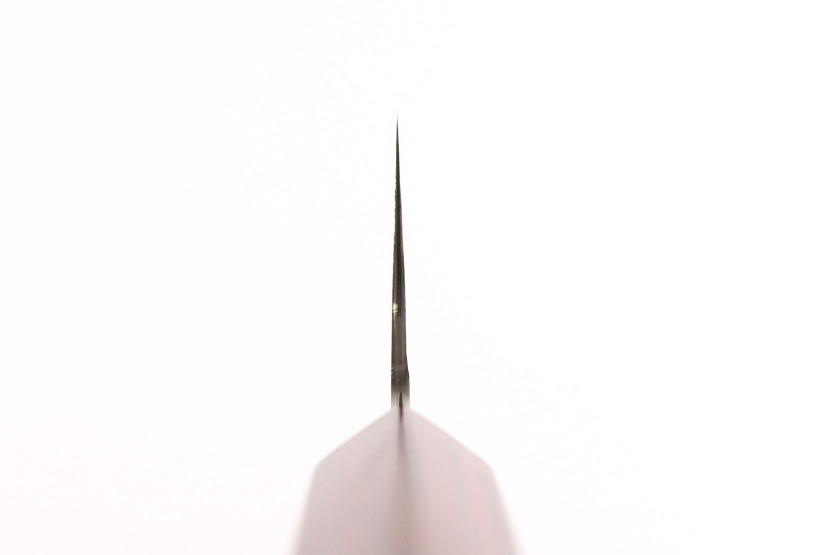
Finally, its flat grind ensures smooth penetration into food and a clean cut. This gives you a particularly smooth edge for slicing thin rounds, cutting even sticks, or making precise julienne cuts!
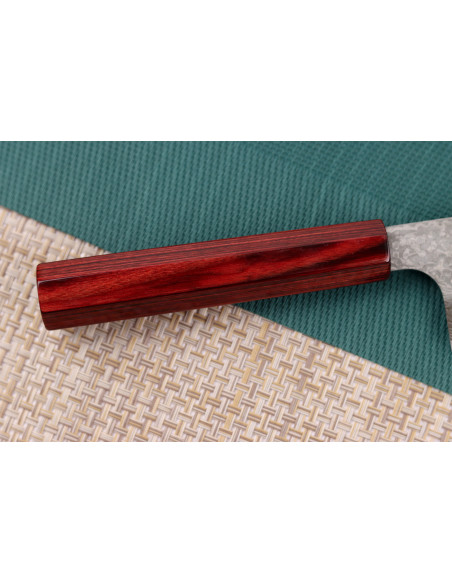
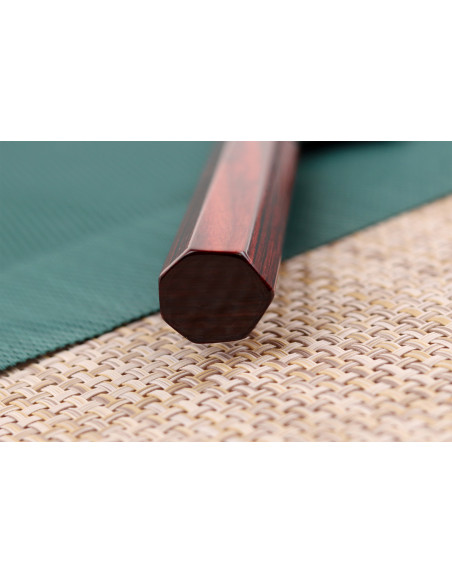
A bold, red heptagonal handle
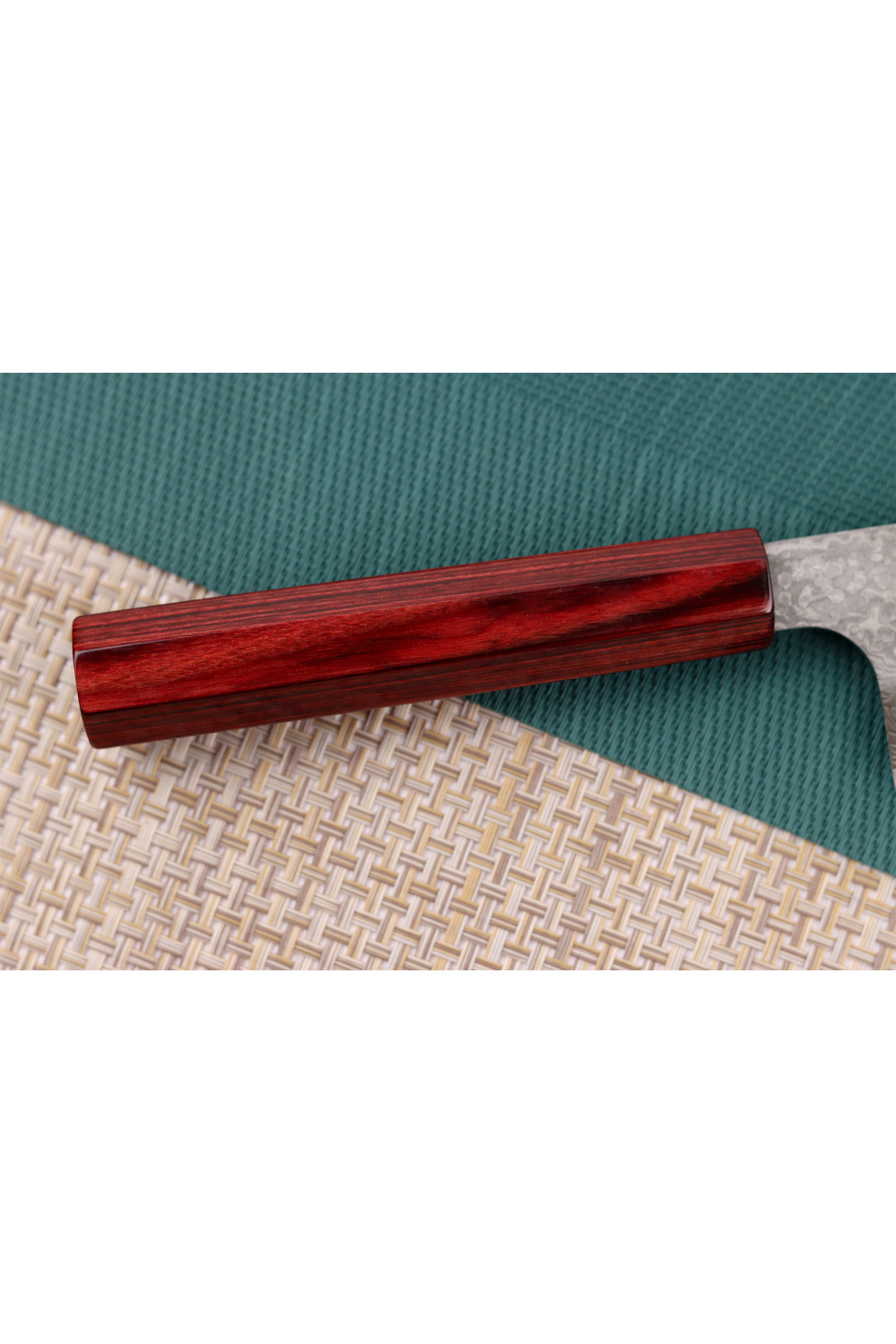
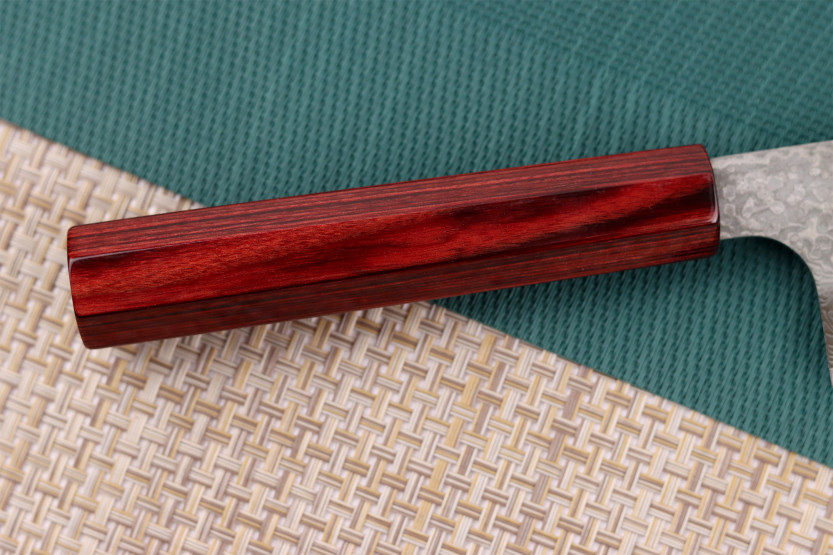
The handle of this handcrafted Japanese nakiri knife is made of varnished red pakkawood, a composite material created by impregnating thin layers of wood with resin and then compressing them. This design provides good stability and excellent resistance to the moisture encountered during food preparation.
Its varnished finish highlights a deep,luminous red that contrasts elegantly with the silvery highlights of the damascened blade.
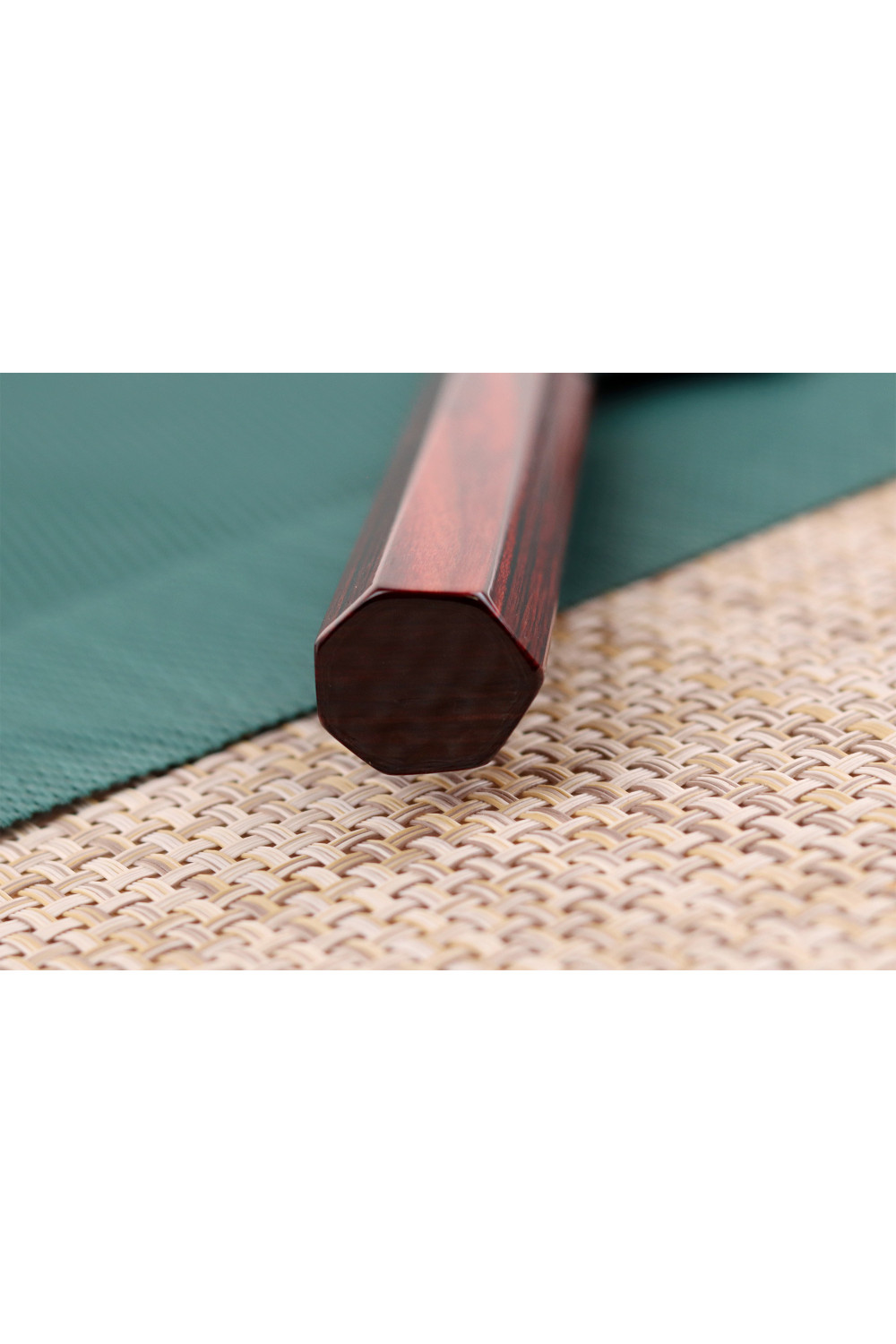
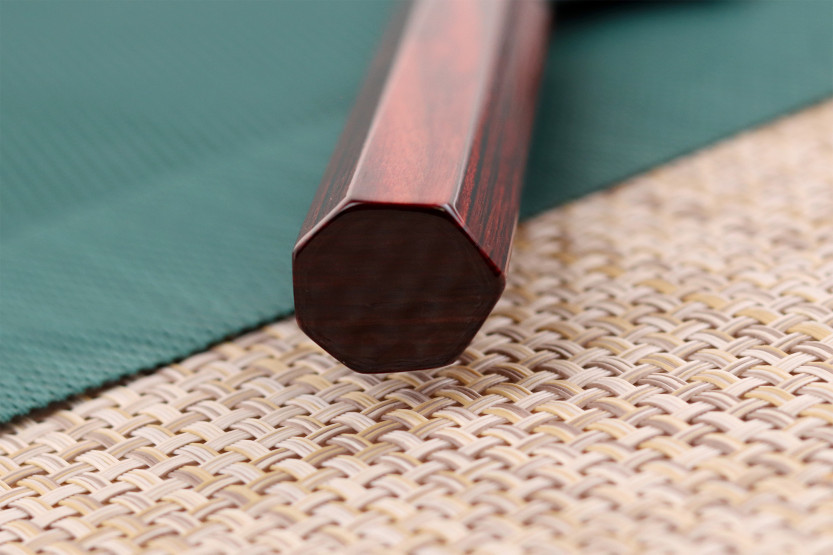
The uniqueness of this handle also lies in its seven-sided, heptagonal shape. Its various facets provide tactile guides that make it easier to position your fingers and contribute to a stable grip.
The combination ofvarnished red pakkawood, the heptagonal profile, and the damascened blade creates a harmonious whole, where every detail contributes equally to both the knife’s comfort and its aesthetic appeal!
The advantages of this handcrafted Japanese nakiri
16.5 cm rectangular blade: ideal for precisely slicing, dicing, and chopping vegetables.
-
SG2 powdered steel containing approximately 1.3% carbon: allows for a particularly fine cutting edge.
-
High hardness of 63 HRC: ensures excellent edge wear resistance.
Multi-layered damascene structure: creates unique wavy patterns on each blade.
-
Flat grind: promotes even penetration into food.
-
Varnished red pakkawood handle: ensures good stability in the face of humidity fluctuations.
-
Heptagonal shape: provides tactile guides for a precise grip.
Handcrafted in Seki: benefits from Kei Kobayashi’s Japanese knife-making expertise.
-
How to care for your Japanese nakiri knife?
To preserve the performance of your high-carbon SG2 steelblade , be sure to hand-wash it after each use.
Clean your knife with warm water, a soft sponge, and a non-abrasive detergent. Immediately dry the blade and handle with a clean cloth. Do not put the knife in the dishwasher or let it soak for long periods of time.
Use a suitable wooden or synthetic cutting board. Avoid bones, frozen foods, and twisting motions that could damage the edge.
To maintain the knife’s sharpness, use a Japanese whetstone rather than a traditional sharpening steel.
Kei Kobayashi: The Art of the Japanese Edge
Based in Seki, in Gifu Prefecture,Japan, Kei Kobayashi practices his craft in the heart of a city renowned for centuries for its cutlery-making tradition.
Before developing his own designs, this Japanese artisan specialized in precision sharpening—an experience that directly influences his approach to knife design. He established his workshop in the early 2000s, drawing on techniques he learned from experienced artisans.
His work places particular emphasis onthe geometry of the blades, the finesse of their grind, and the quality of the edge. These elements contribute to the reputation of his creations among enthusiasts of Japanese cutlery.
Kei Kobayashi notably uses SG2 powdered steel, prized for its high hardness and its ability to maintain a precise cutting edge. His creations come in various traditional Japanese forms, featuring damascene or San Mai construction.
The colorful handles, meticulous finishes, and clean lines give his knives a distinctive identity.
Each piece reflects his approach: combining technical precision, cutting efficiency, and Japanese aesthetics!
Check out our selection of sharpening stones to keep your knife sharp!




 By buying this product you can collect up to