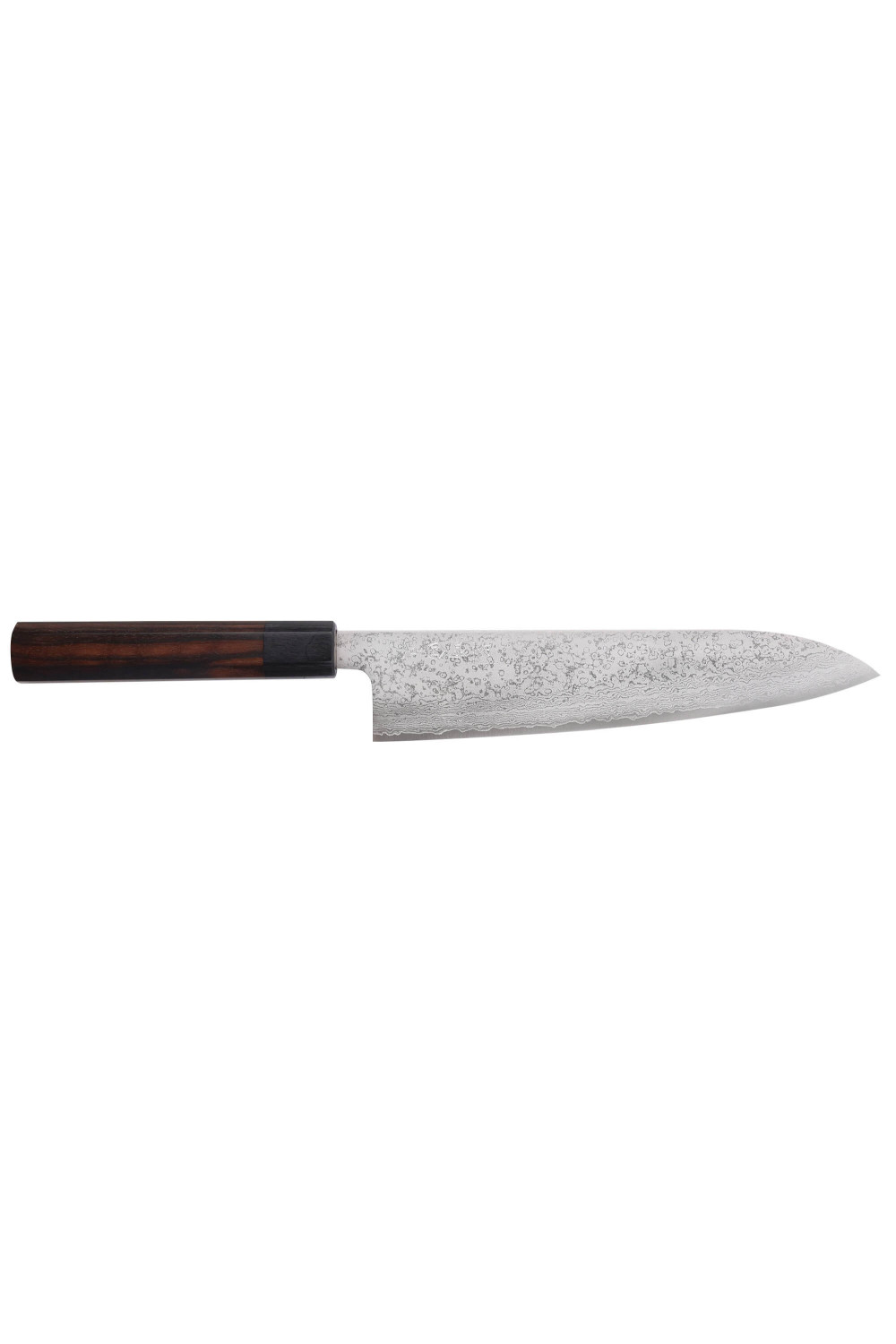
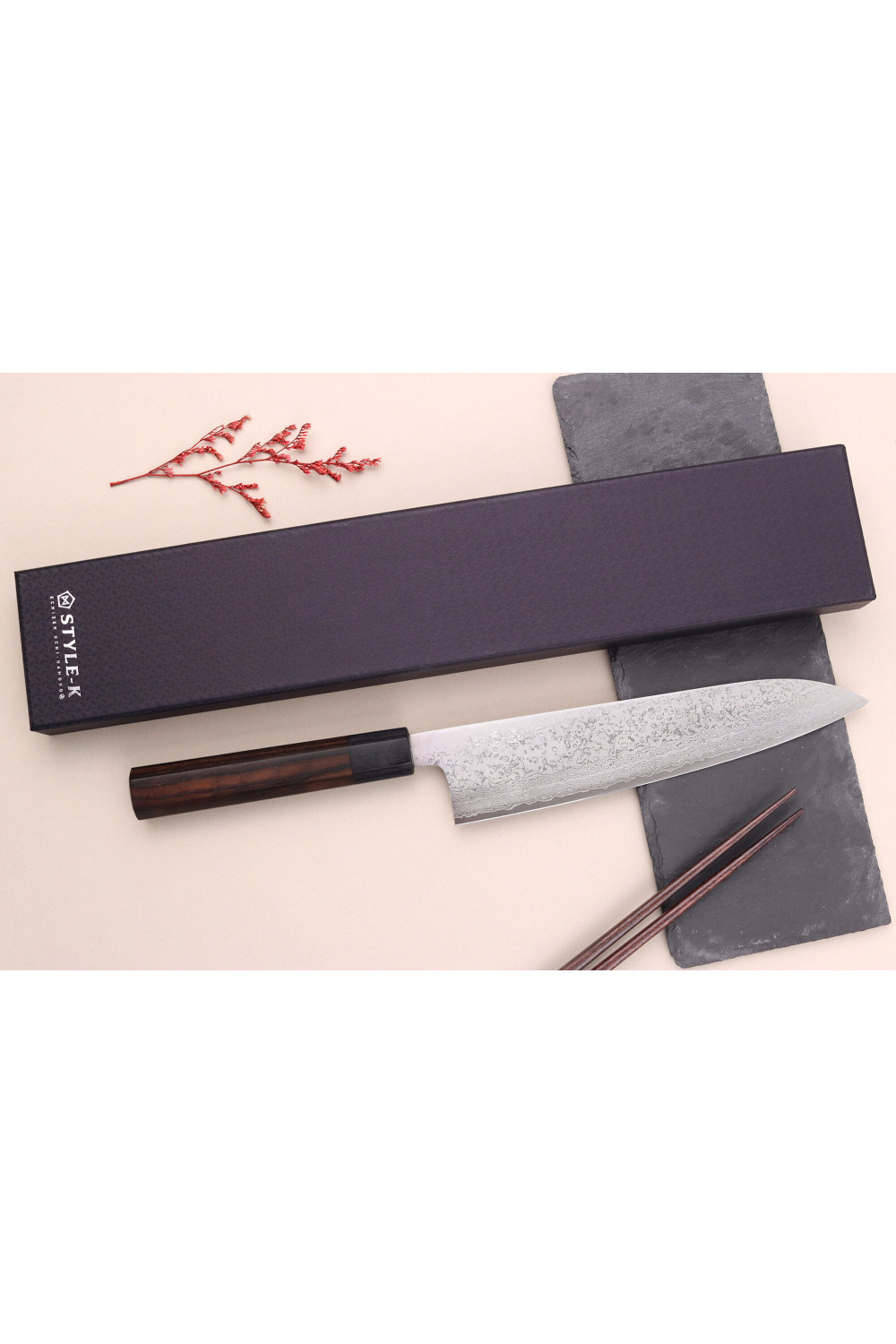
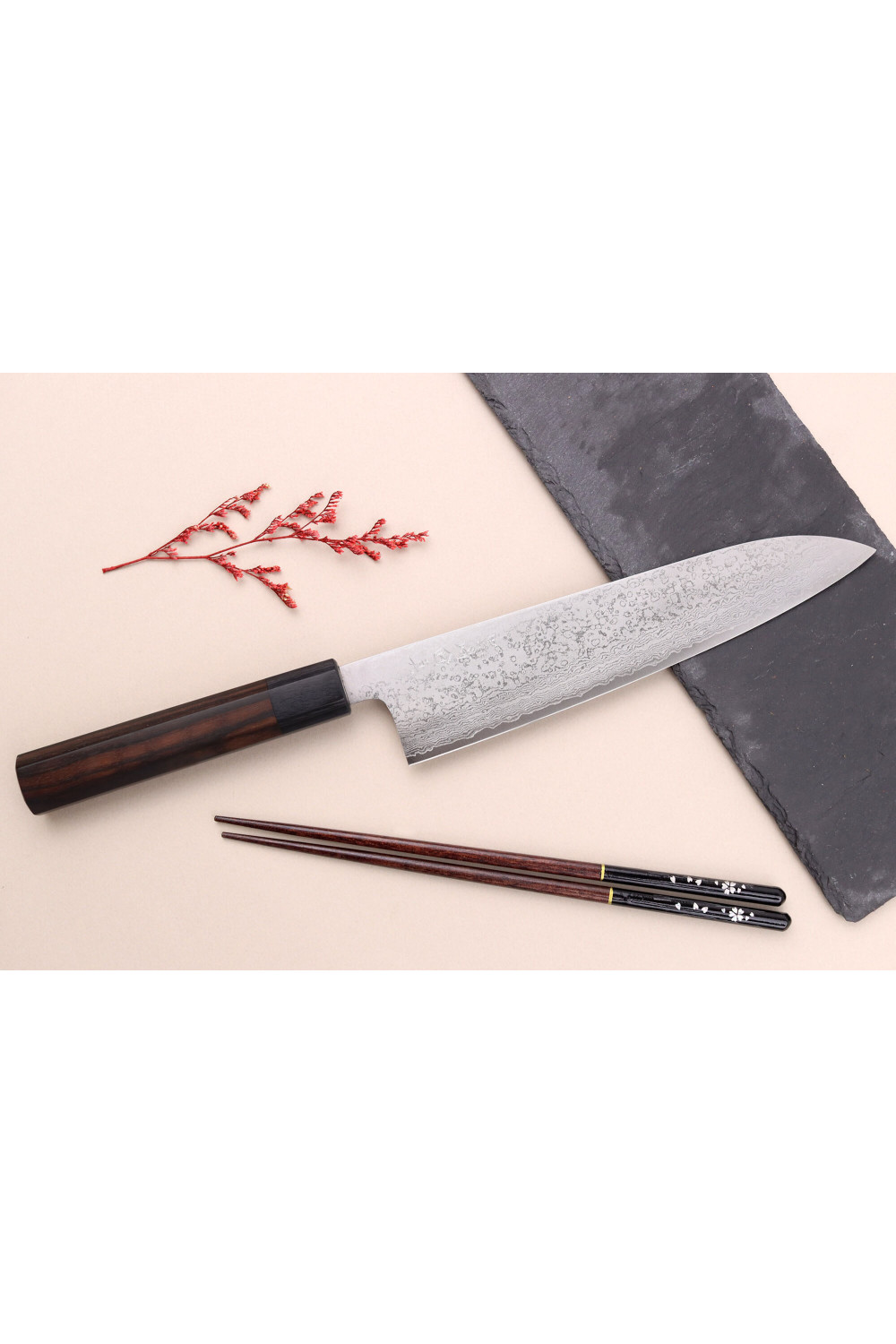
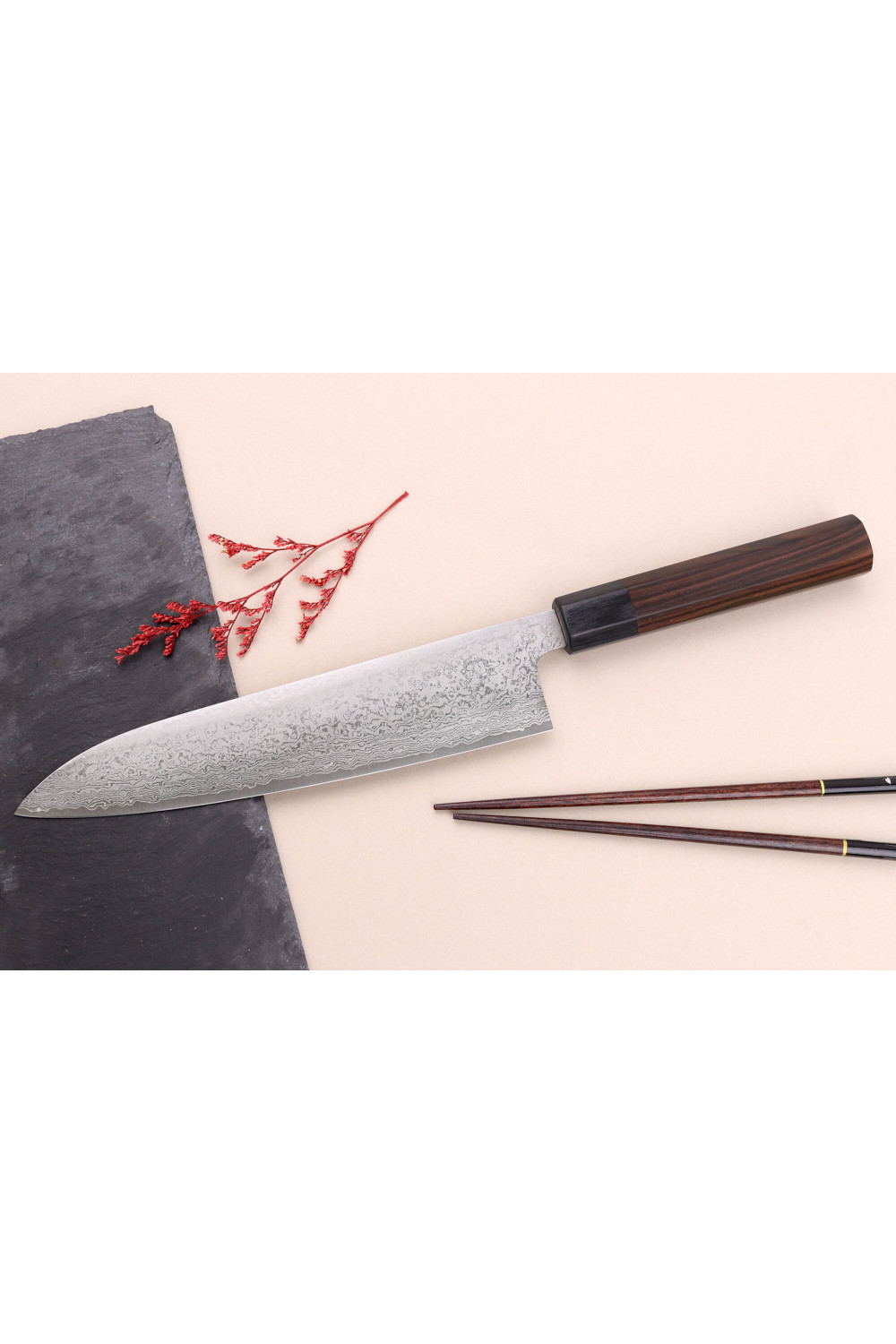
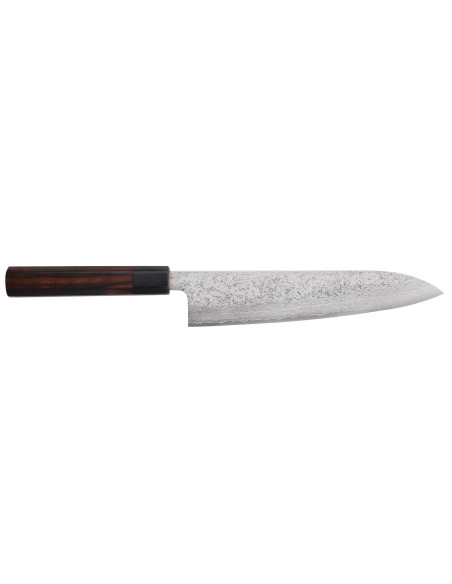
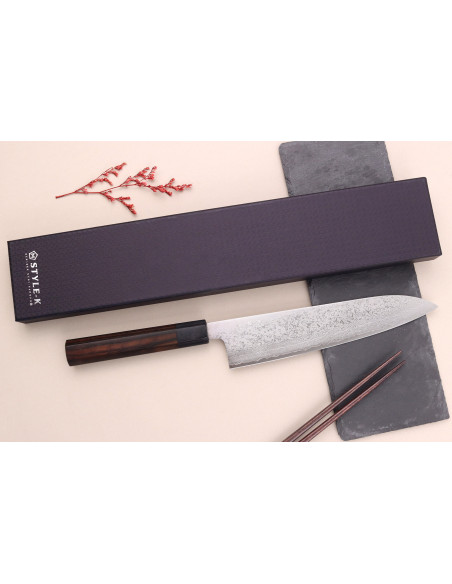
A Japanese chef' s knife with an elegant design
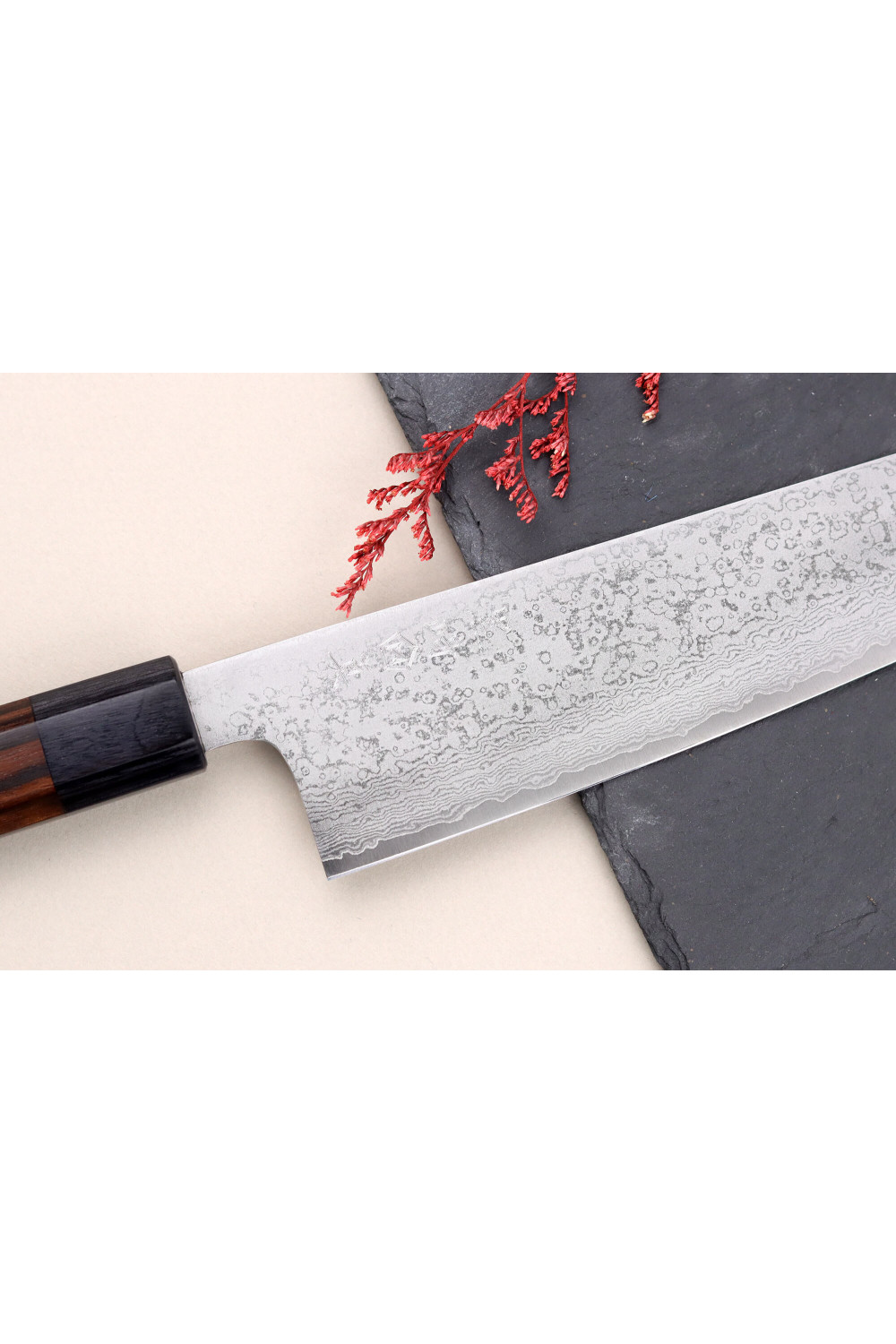
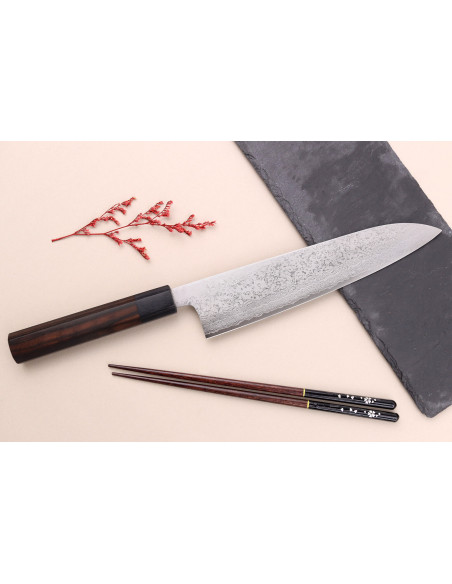
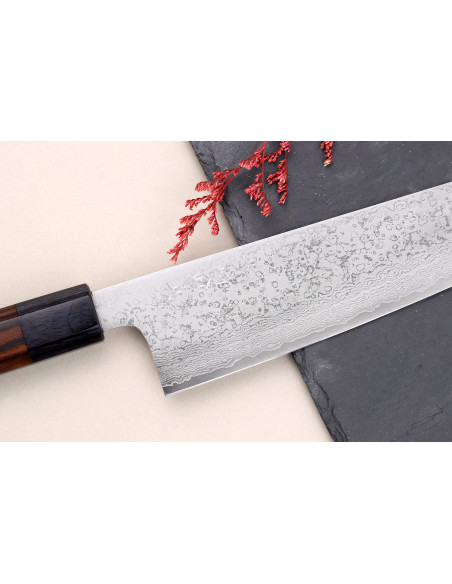
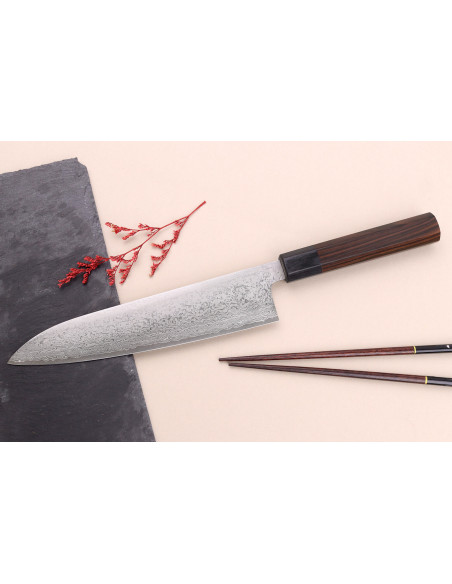
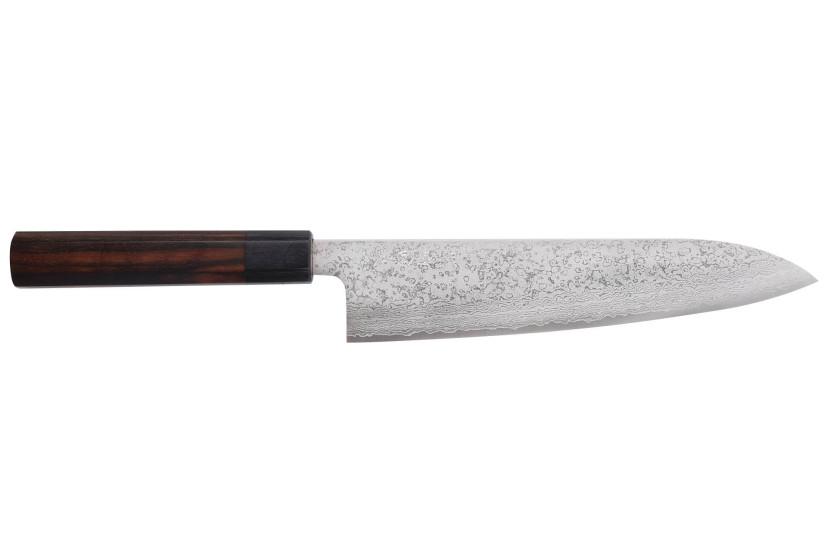
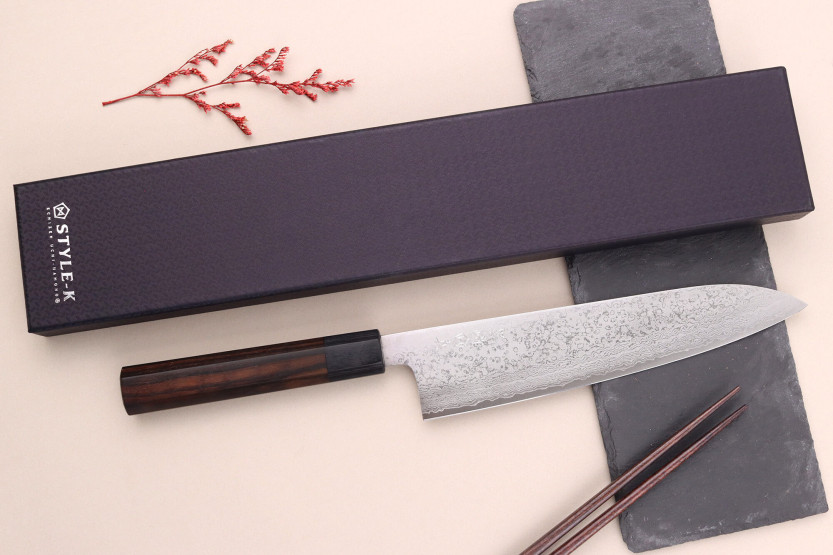
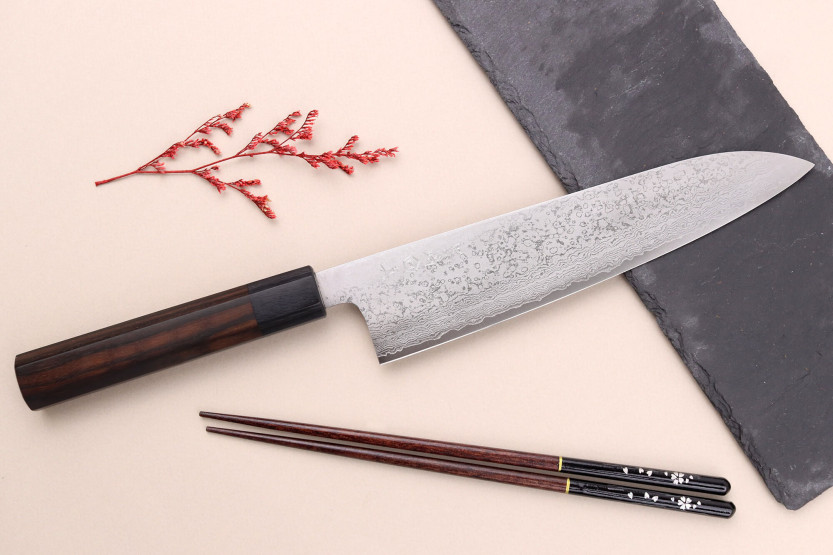
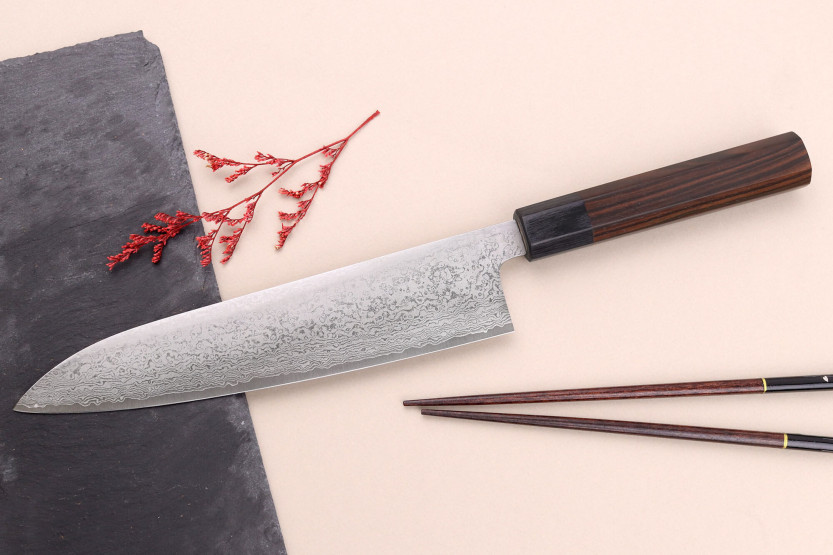
This chef's knife is distinguished by its elegant damascened blade, crafted using an age-old technique of wrapping a rigid steel core with several layers of softer steel. This precise process combines core protection with an optimal balance between strength and suppleness in the hardness of your blade.
The core of this gyuto knife is forged from VG7 steel, a quality alloy developed by the renowned Takefu Special Steel company. Composed of around 1% carbon, this steel achieves a hardness of around 61HRC on the Rockwell scale, offering excellent edge retention and efficient cutting performance!
What's more, VG7 steel contains 1.25% tungsten, which enhances its durability, and 14% chromium, which considerably improves its corrosion resistance. Initially designed for high-end precision scissors, this alloy was quickly adopted by Japanese blacksmiths to create kitchen knives with outstanding performance and long-lasting sharpness.
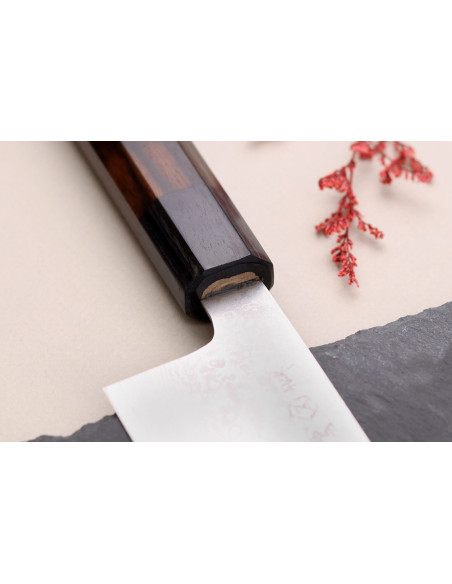
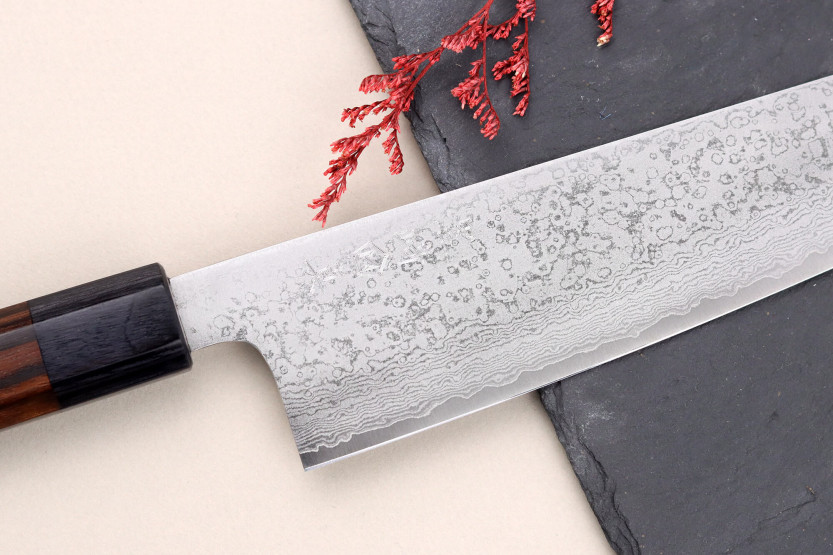
To complete the damascus finish, several layers of softer stainless steel are superimposed around the core, reinforcing the blade's strength and reducing its sensitivity to impact during use. These different layers of steel create elegant and unique patterns that cover the surface of the blade, making each Makoto Kurosaki knife a truly singular piece.
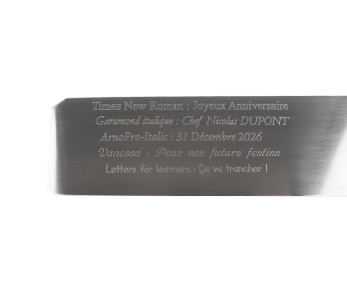
A satin finish is then applied to enhance the beauty of the damascus and underline the finesse of its distinctive patterns. Hand-engraved kanjis complete the design, bringing a touch of authenticity and character to this handcrafted Japanese knife.
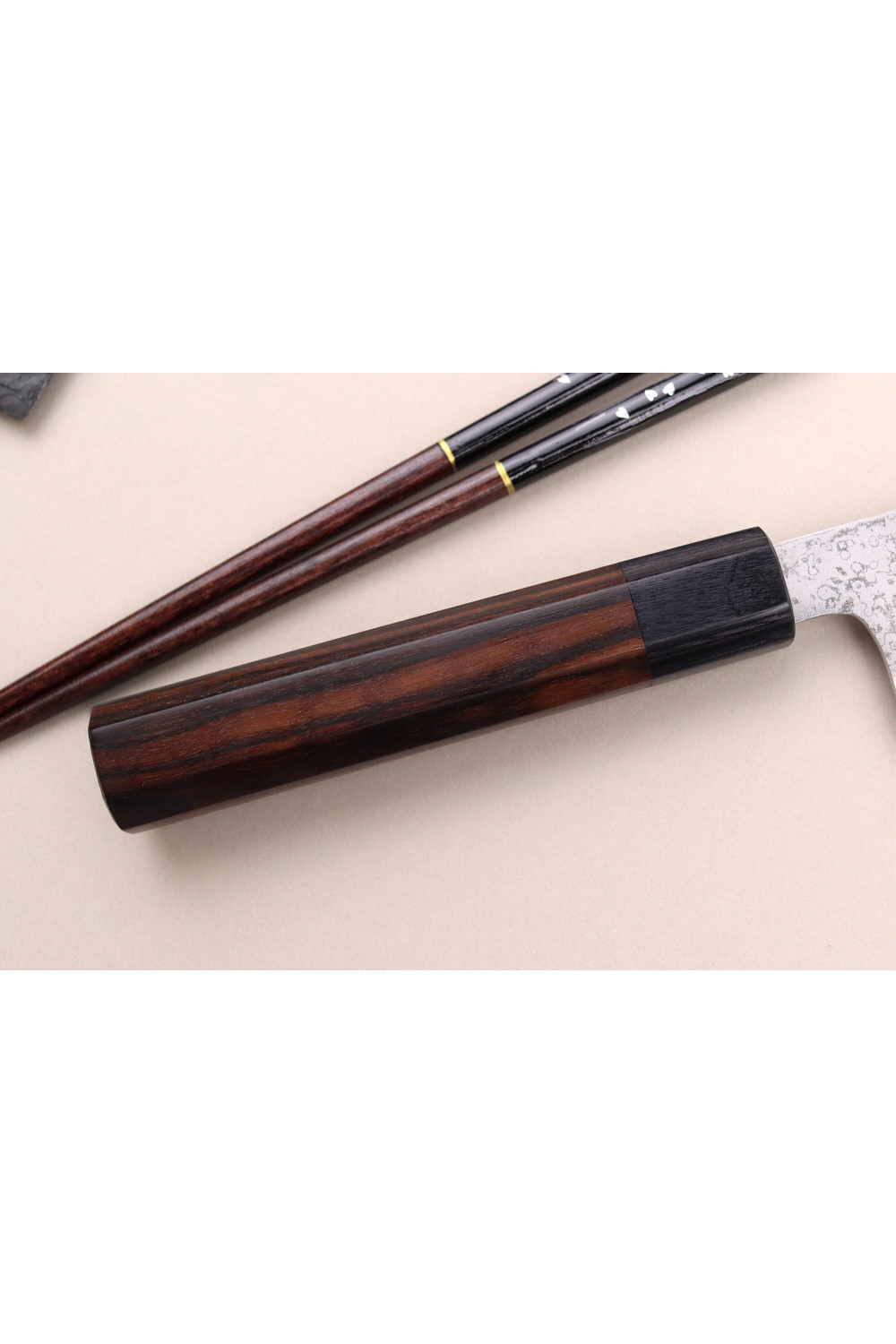
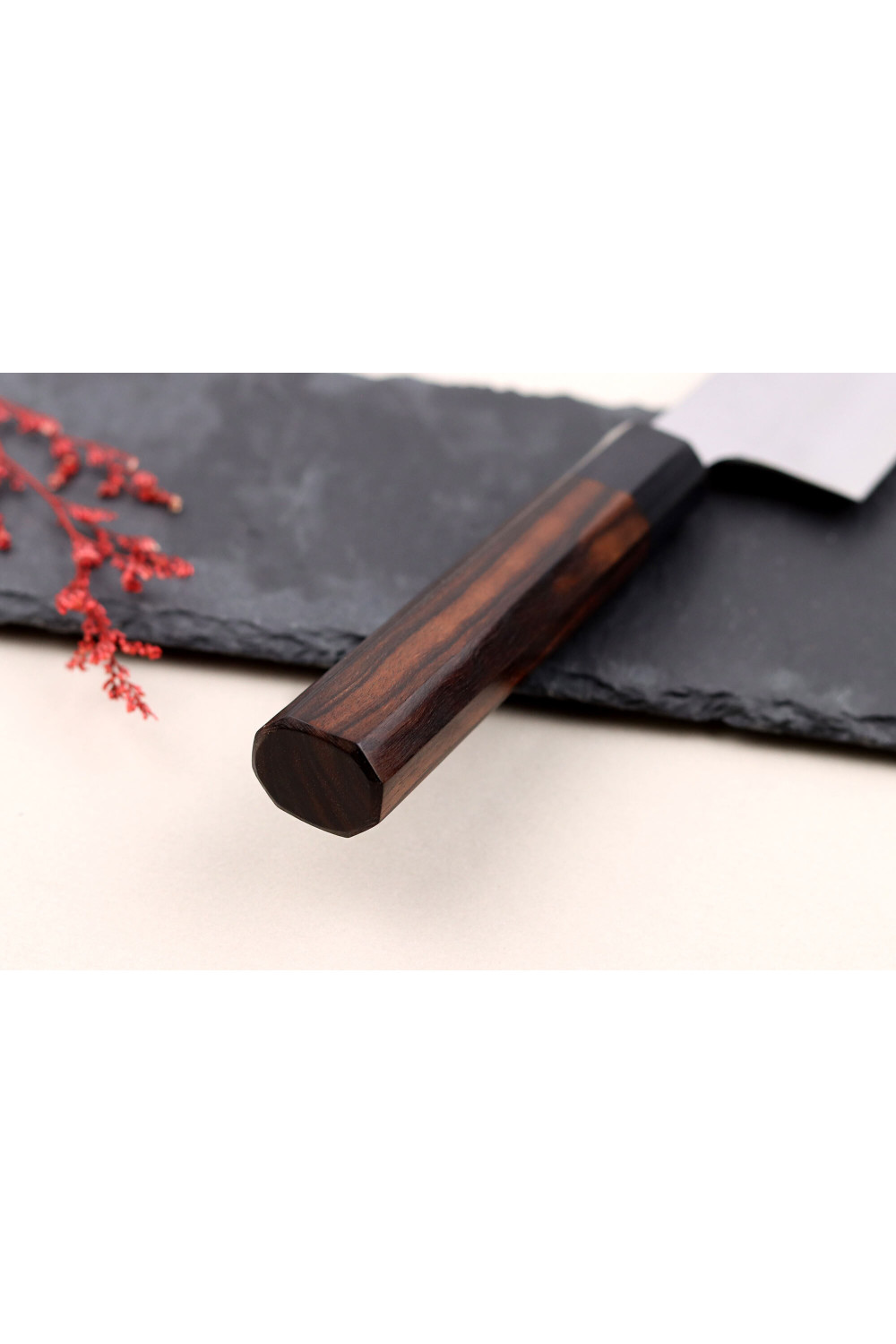
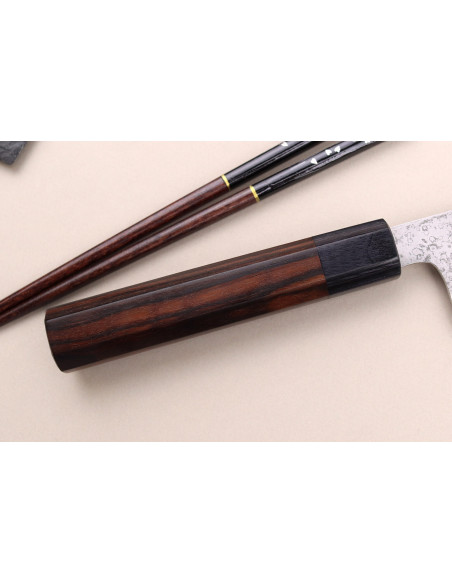
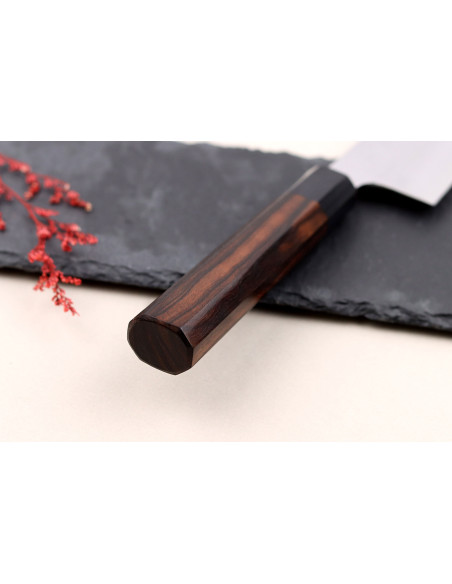
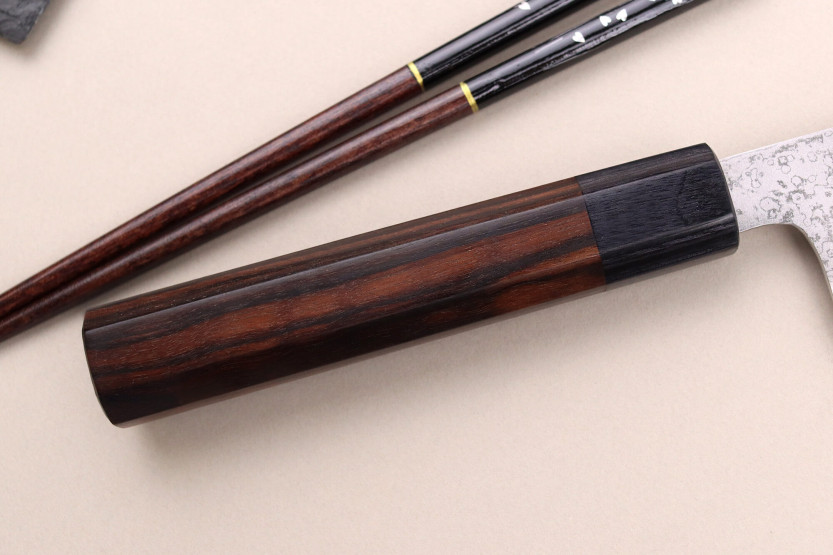
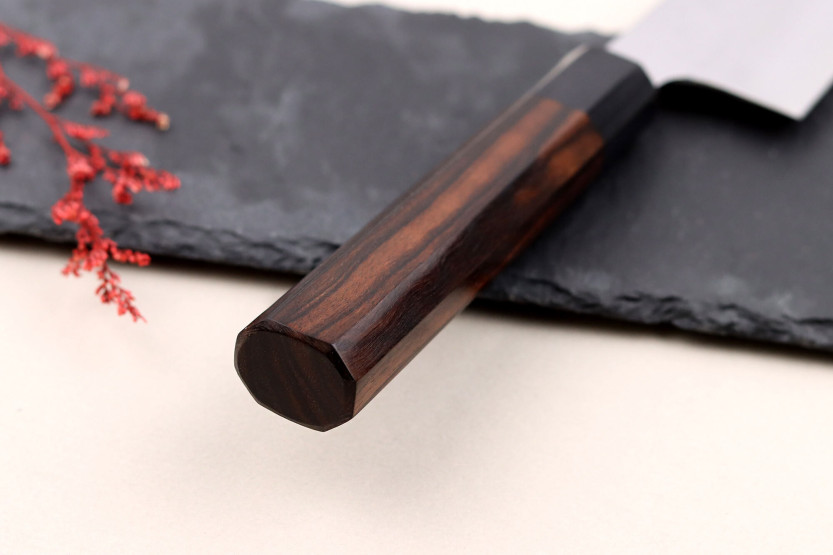
The ebony handle adds a natural elegance to the whole. This tropical wood, prized for its high density, resists humidity and retains its shape over time. Its deep color and unique grain give the handle an authentic, timeless style.
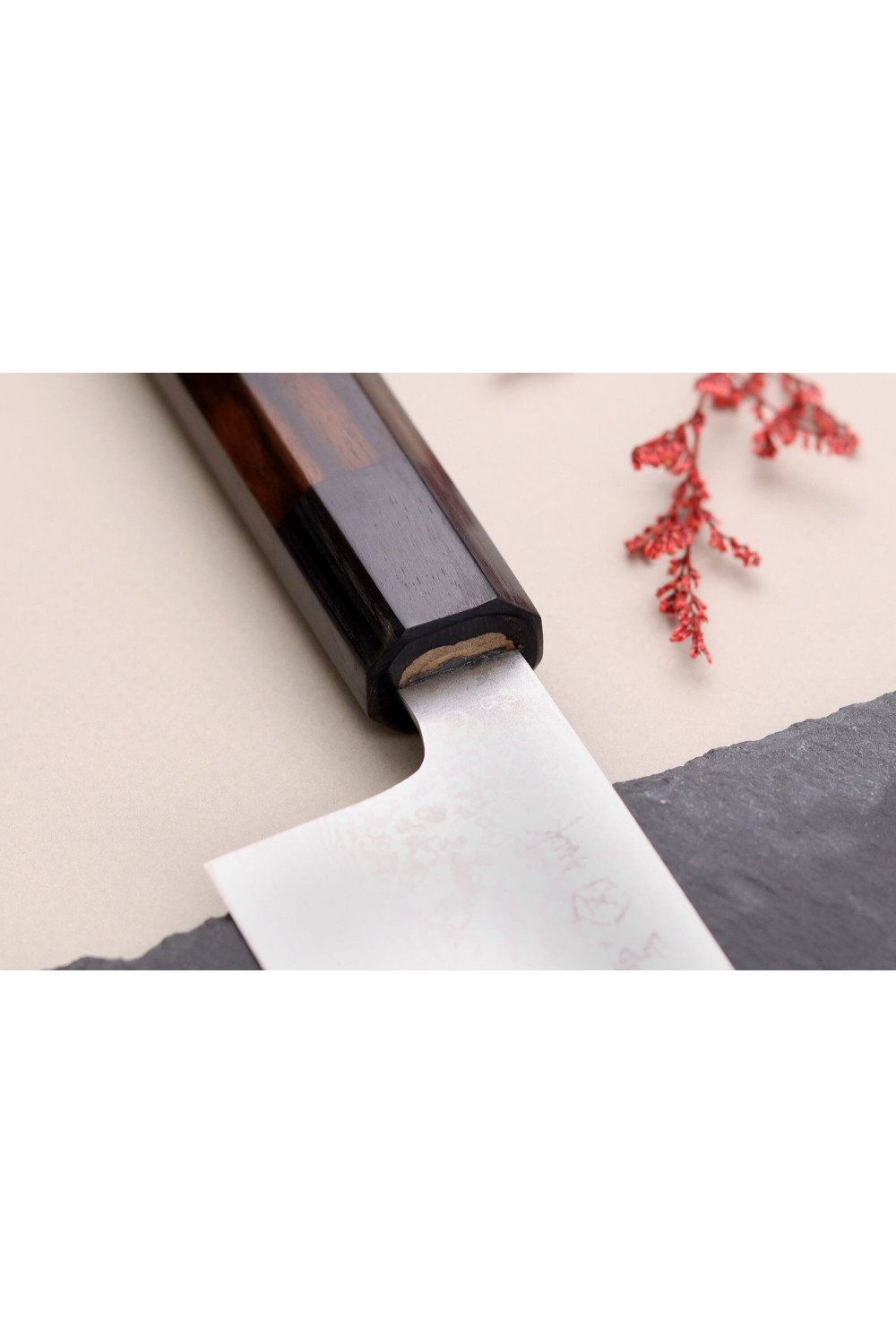
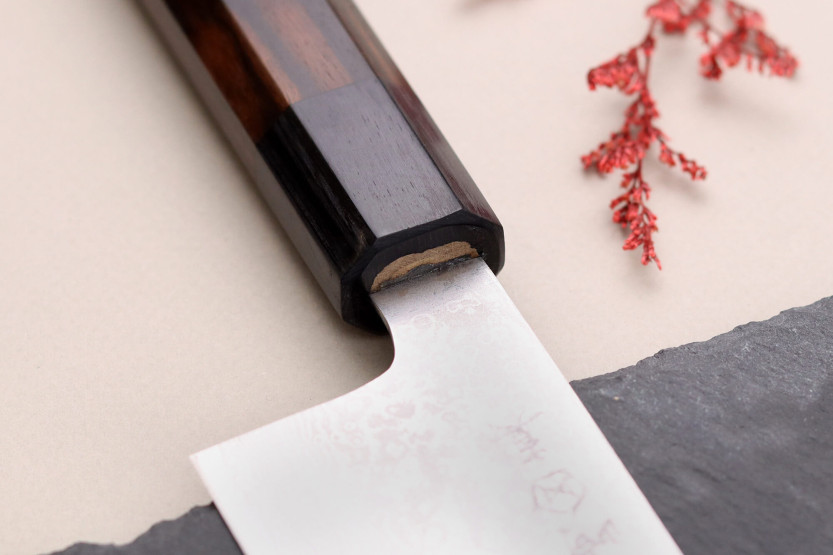
The handle also features a black pakkawood bolster, creating a harmonious transition with the blade. This composite material, composed of laminated wood and heat-compressed resin, combines great strength with a natural appearance, with subtle veining adding a touch of elegance.
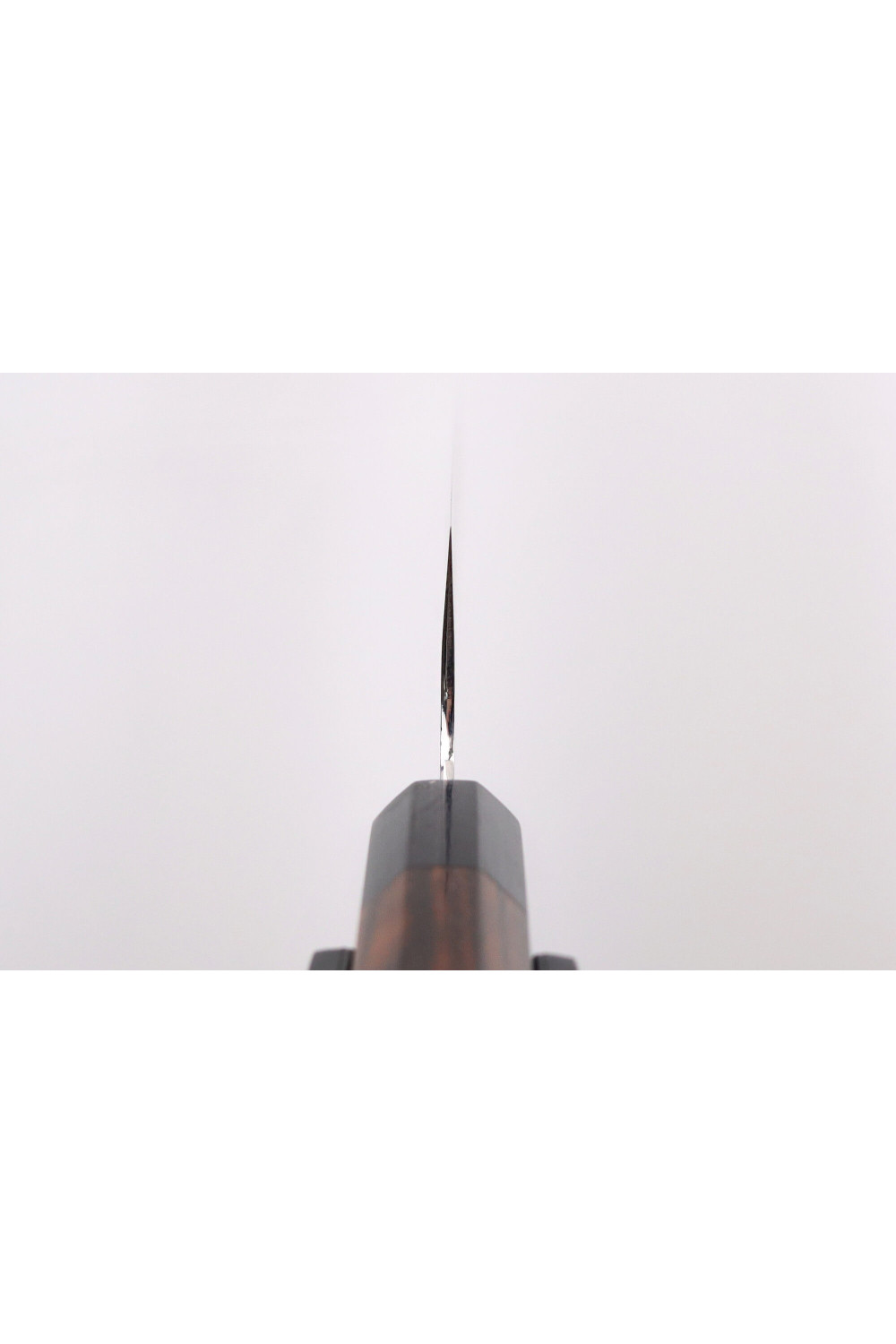
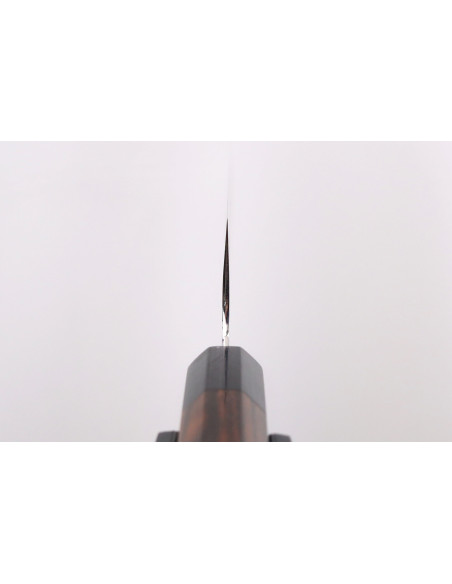
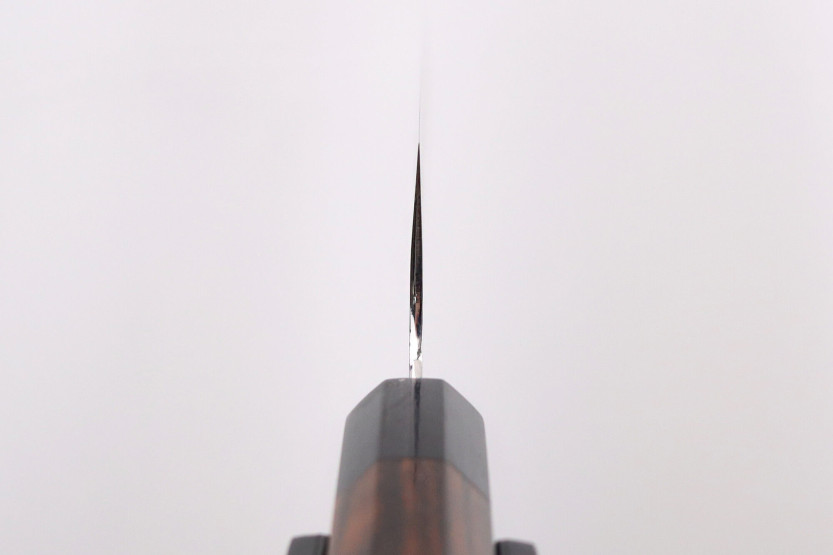
With its octagonal shape, the handle is ergonomically designed for both right- and left-handed users, ensuring a comfortable grip, even during long kitchen sessions!
For optimum watertightness, wood paste has been carefully applied to the junction between blade and handle. This prevents the infiltration of water or food particles, ensuring impeccable hygiene and long life for this Japanese kitchen knife.
To care for your Damascus knife, clean it exclusively by hand with a soft, non-abrasive sponge, avoiding wetting the handle. After washing, dry immediately to remove any residual moisture and store in a dry place. Never put in the dishwasher or soak in water.
Japanese blacksmith Makoto Kurosaki: a master of sharpening
Makoto Kurosaki is a craftsman based in Echizen, Japan, in the prestigious Takefu Knife Village. This emblematic place brings together numerous master blacksmiths who preserve ancestral know-how while sharing their knowledge, techniques and equipment. A true place of exchange and training, it plays a key role in passing on traditions to future generations of Japanese blacksmiths.
Makoto is also the elder brother of Yu Kurosaki, a renowned blacksmith in the world of Japanese cutlery!
Makoto Kurosaki perfected his art with master blacksmith Hiroshi Kato, an icon with almost 50 years' experience and one of the founders of Takefu Knife Village. Under his tutelage, he acquired the skills needed to create exceptional Japanese knives.
A recognized specialist in sharpening, Makoto Kurosaki pays particular attention to the precision and sharpness of his knives, meeting the demands of the most perfectionist chefs!
Discover the rest of Makoto Kurosaki knives on Knifeleader.eu!


 By buying this product you can collect up to