Makoto Kurosaki is a passionate craftsman based in Echizen, Japan, in the heart of the famous TakefuKnife Village. This emblematic site of artisanal cutlery brings together numerous master blacksmiths who perpetuate ancestral know-how while sharing their techniques, expertise and equipment. It's a true center of exchange and learning, ideal for training future generations of Japanese blacksmiths.
He is the elder brother of Yu Kurosaki, a Japanese blacksmith renowned in the cutlery world!
Makoto Kurosaki had the good fortune to learn his craft from master blacksmith Hiroshi Kato, a living legend who has devoted almost 50 years to the craft of Japanese knives and is one of the founding members of the Takefu Knife Village. It was during this apprenticeship that he mastered the forging techniques needed to create exceptional knives.
Renowned for its expertise in sharpening, Kurosaki takes particular care to perfect the edge of its Japanese kitchen knives, meeting the expectations of the most demanding chefs!
An efficient, elegant blade for this damascus knife
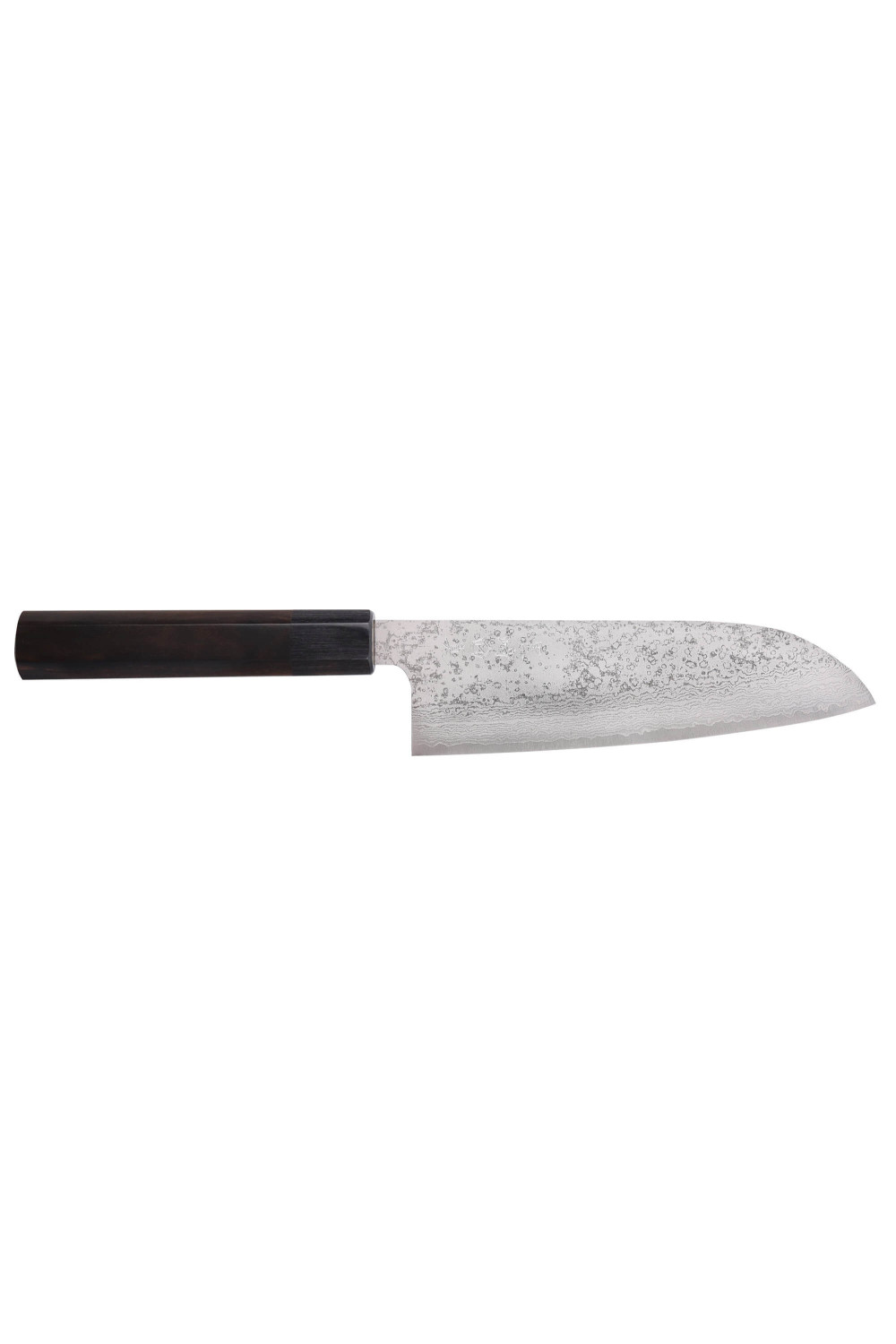
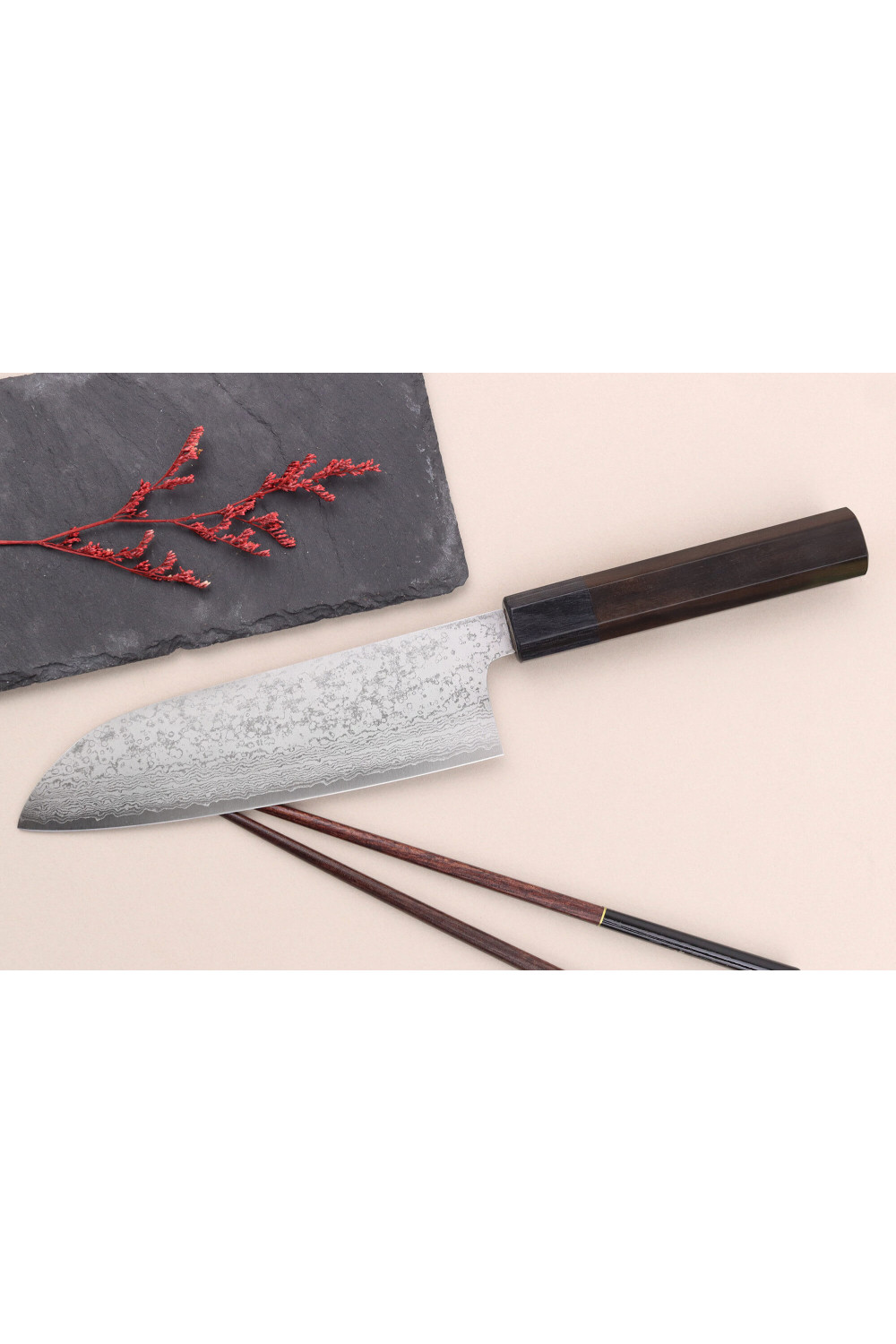
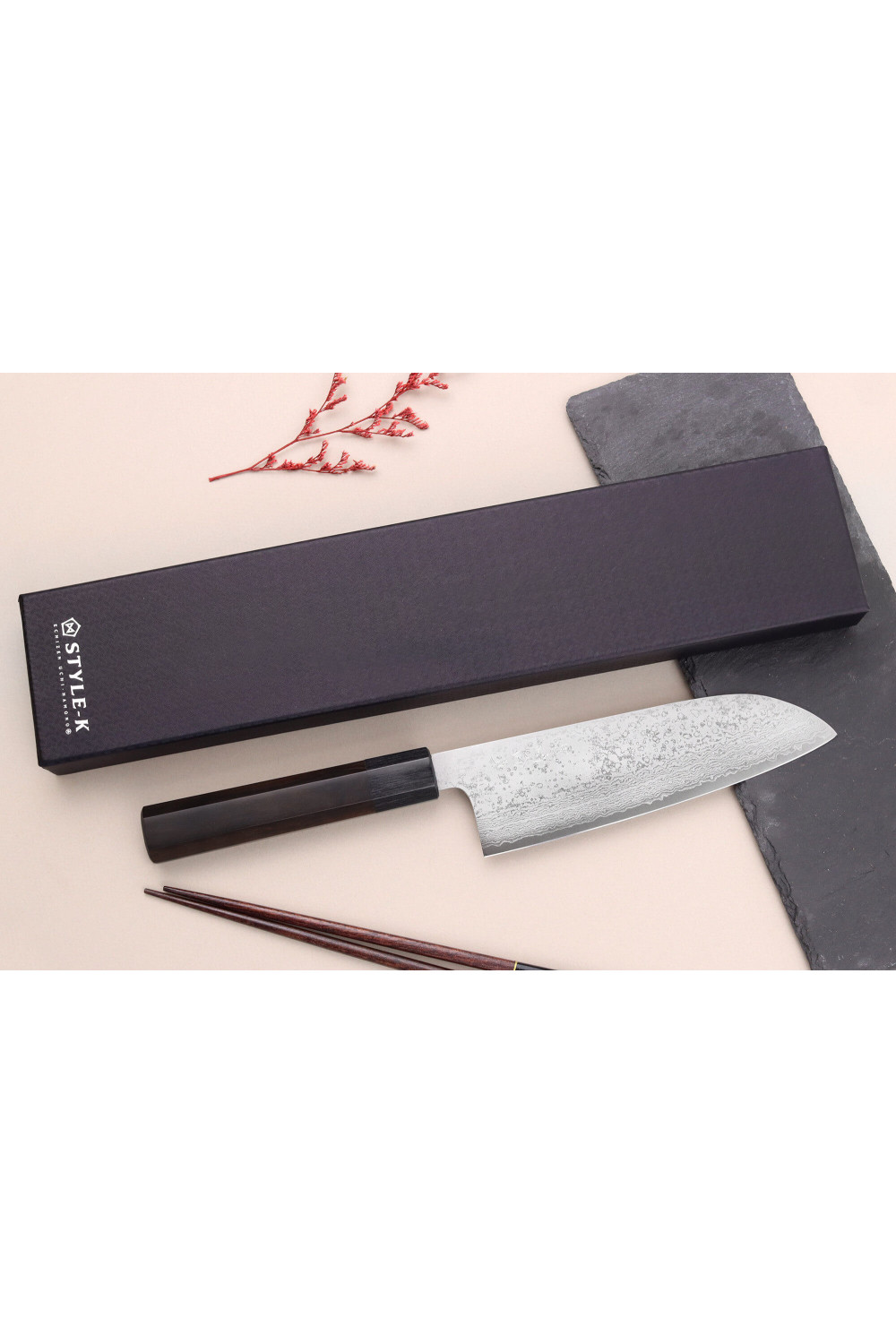
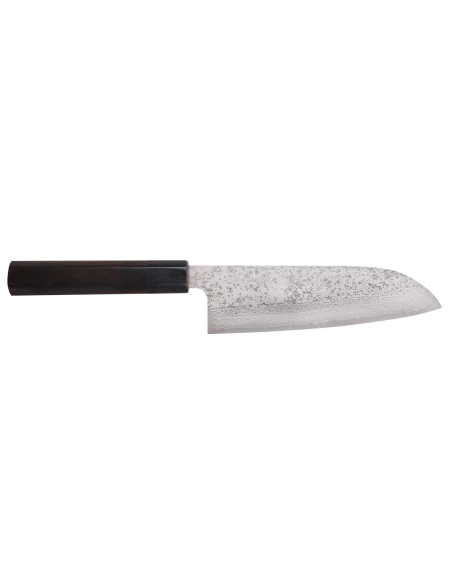
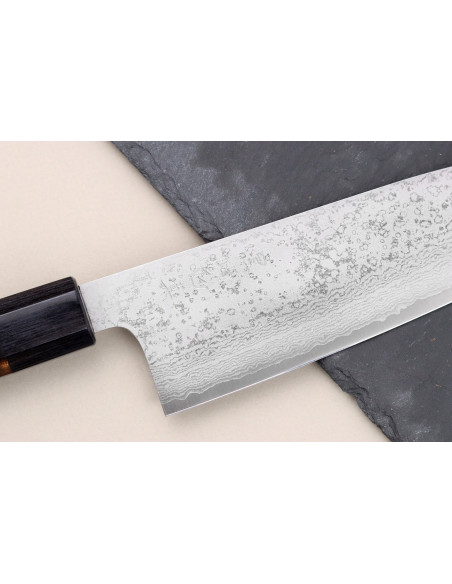
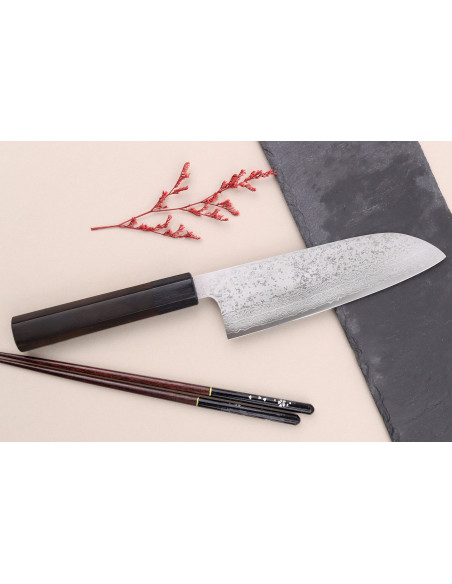
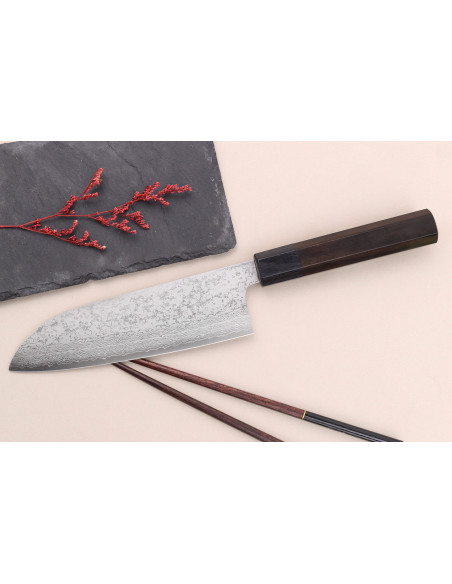
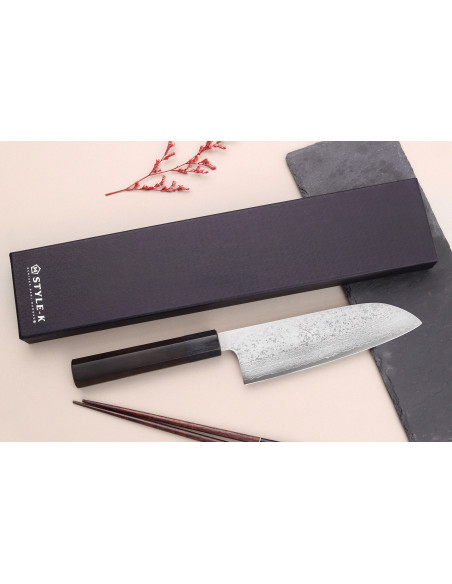
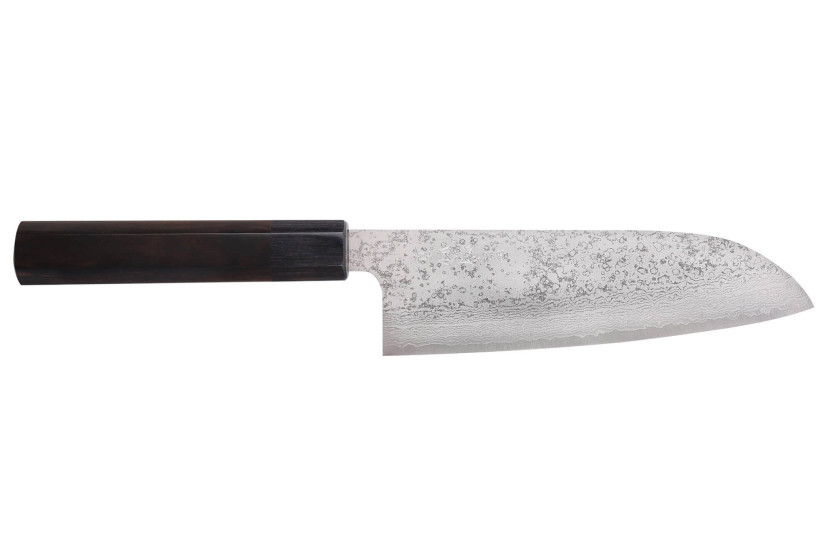
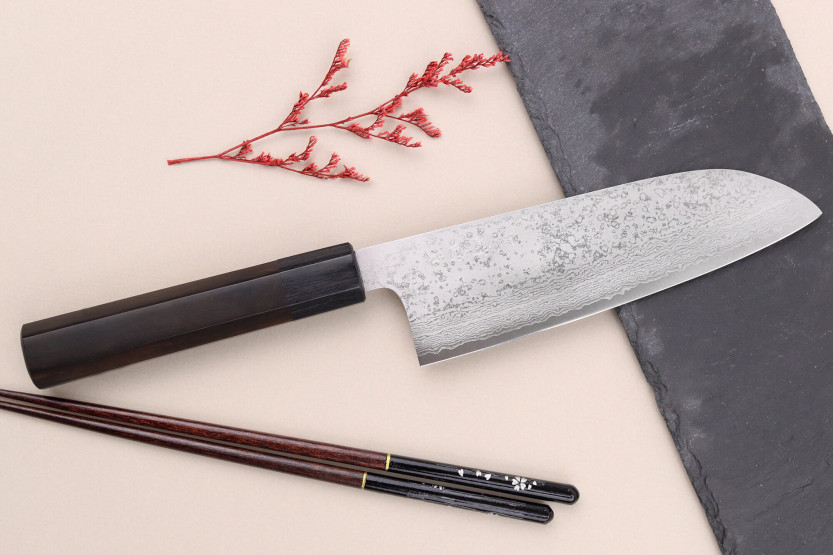
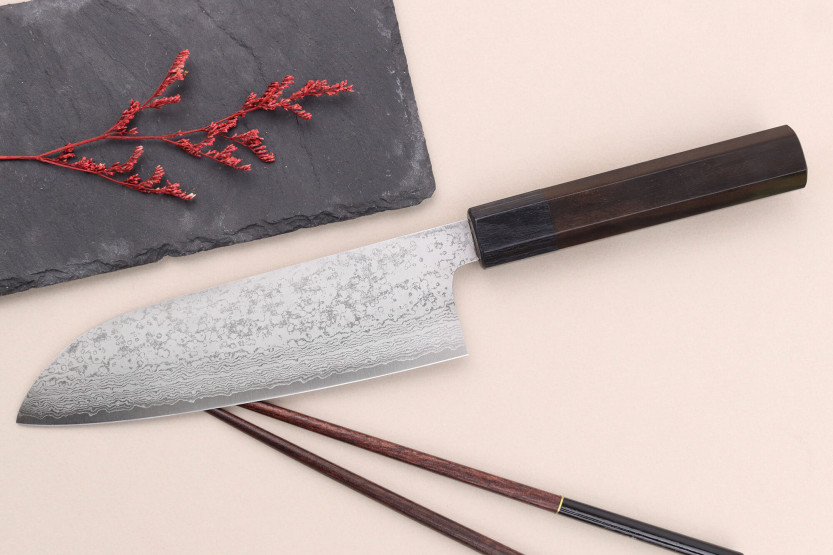
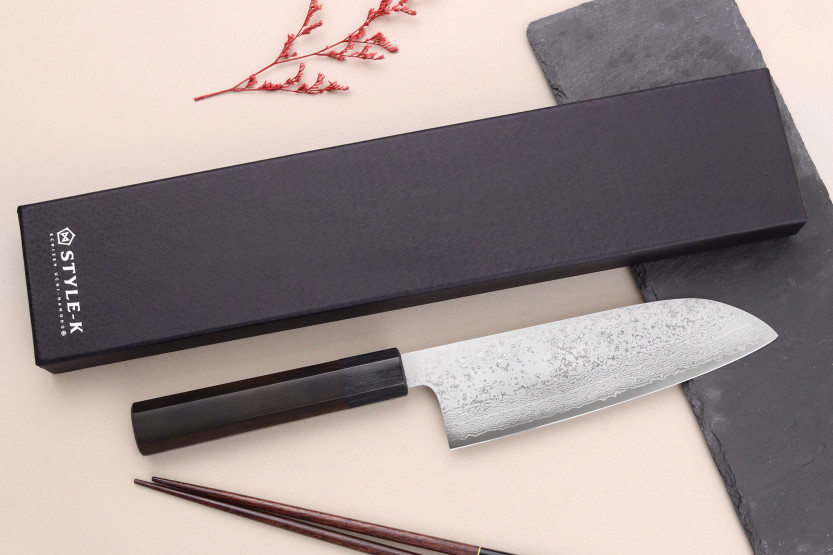
This santoku knife is distinguished by its refined damascus blade, produced using a traditional technique of surrounding a hard steel core with several layers of softer steel. This method offers a dual advantage: it protects the core while ensuring an optimal balance between blade strength and flexibility.
The core of this handcrafted Japanese knife is made from VG7 steel, a quality alloy developed by the renowned Takefu Special Steel company. With a carbon content of around 1%, this steel offers a hardness of around 61HRC on the Rockwell scale, guaranteeing high edge retention and outstanding cutting performance.
In addition, VG7 steel contains 1.25% tungsten, for enhanced durability, and 14% chromium, for improved corrosion resistance. Initially developed to make high-end scissors, this alloy has proved so effective that Japanese blacksmiths have begun adopting it to create sharp kitchen knives!
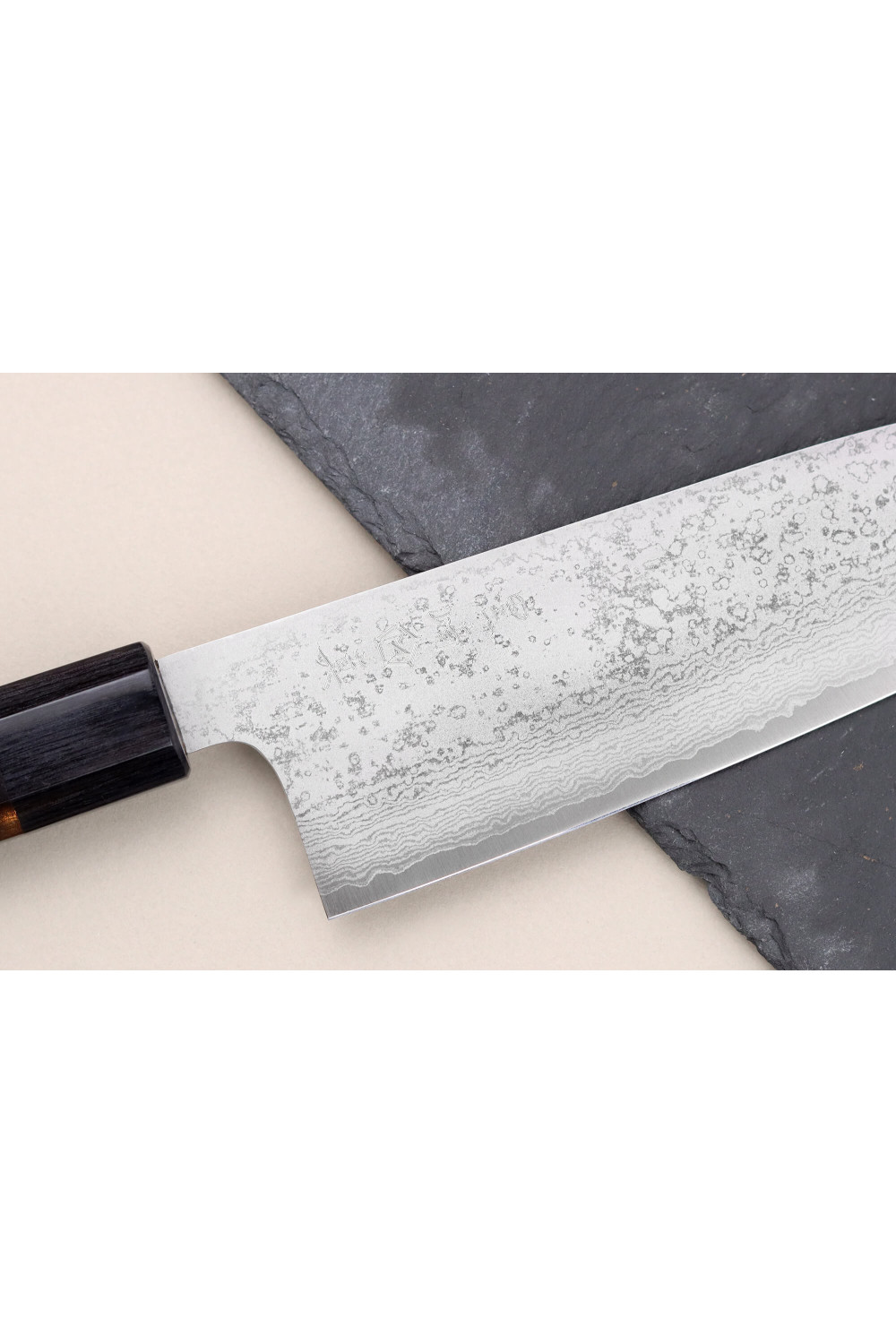
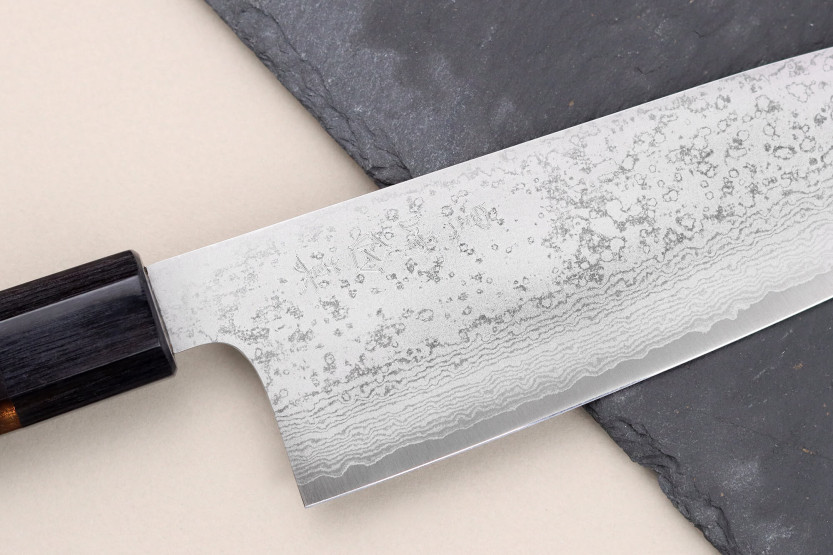
To finalize the damascus finish, several layers of softer stainless steel are added around the core, reducing the blade's fragility in use. The different layers of steel, visible all over the blade surface, form unique and elegant patterns that make each Japanese kitchen knife truly singular.
A satin finish is then applied, enhancing the refined look of the damascus and sublimating its distinctive patterns. To accentuate the authenticity of this Makoto Kurosaki knife, hand-engraved kanjis complete its aesthetic appeal.
A handcrafted Japanese knife with a sturdy handle
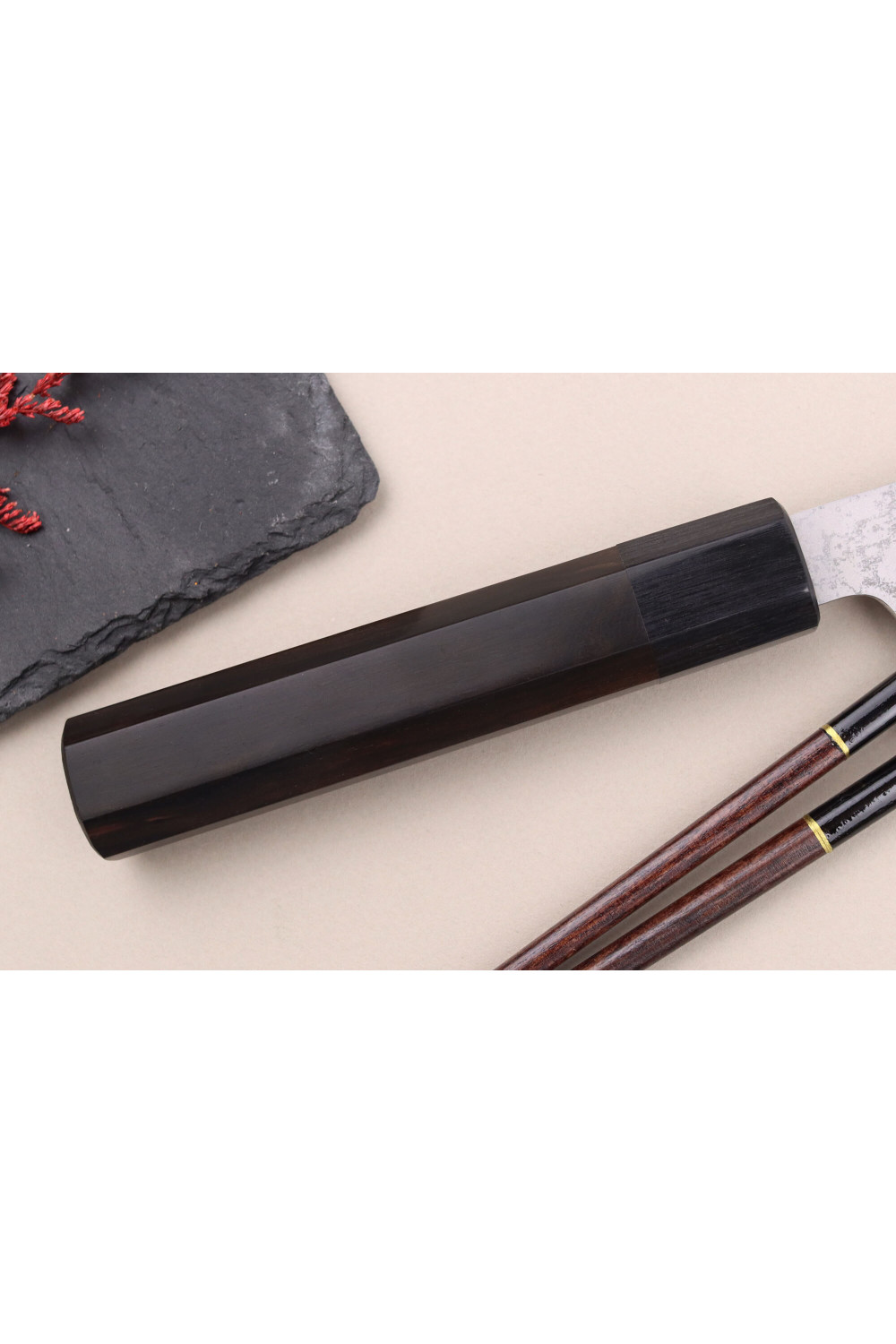
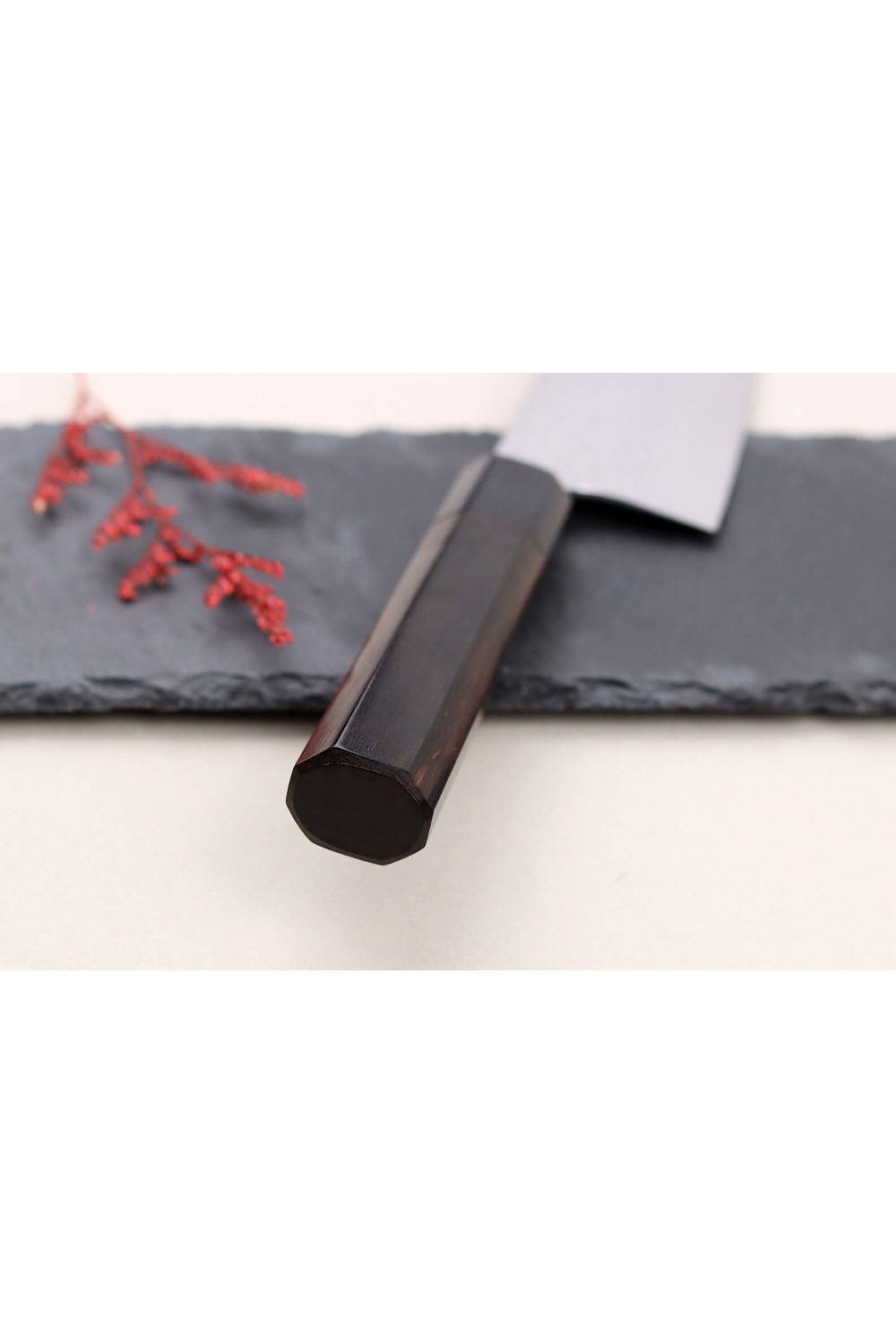
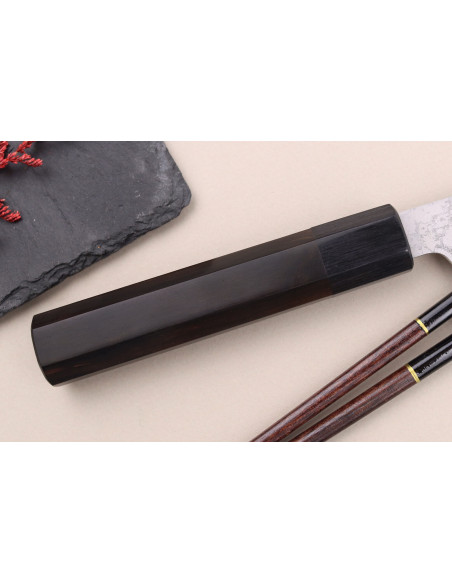
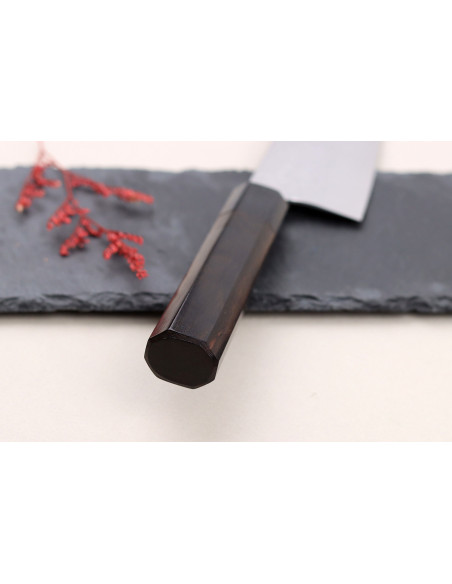
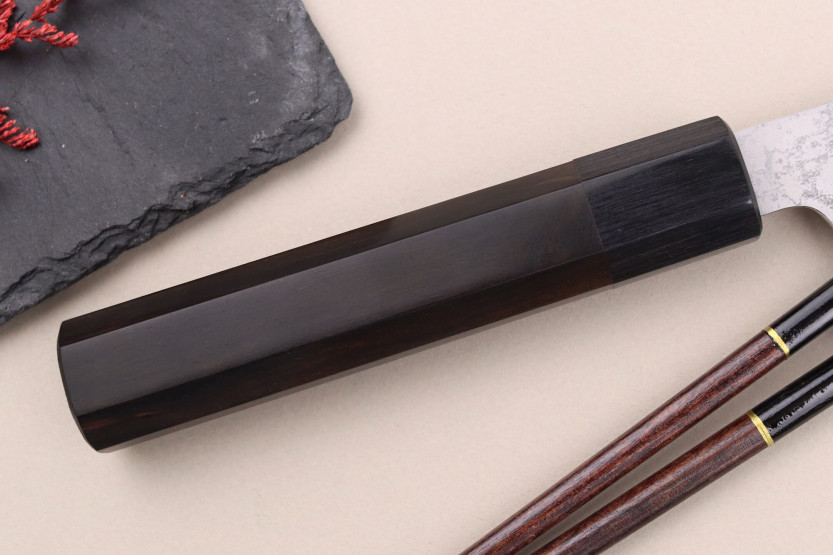
The handle, made of ebony wood, adds an extra touch of elegance. This precious tropical species is renowned for its high density, which makes it highly resistant to humidity and remarkably stable. Its dark color and unique grain patterns add a sophisticated visual dimension.
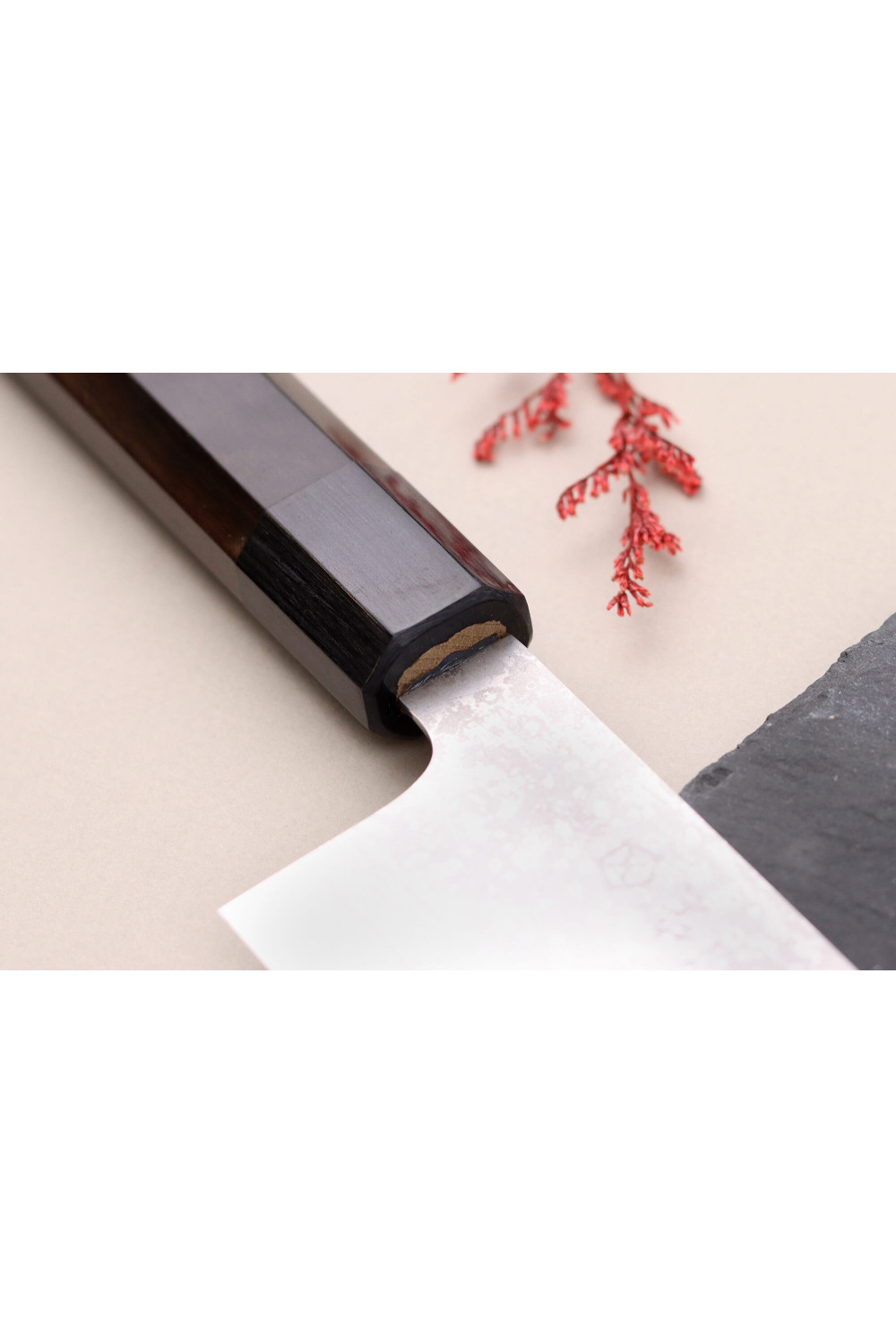
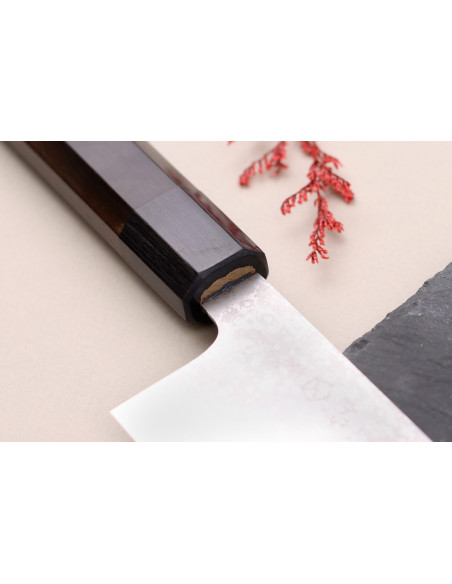
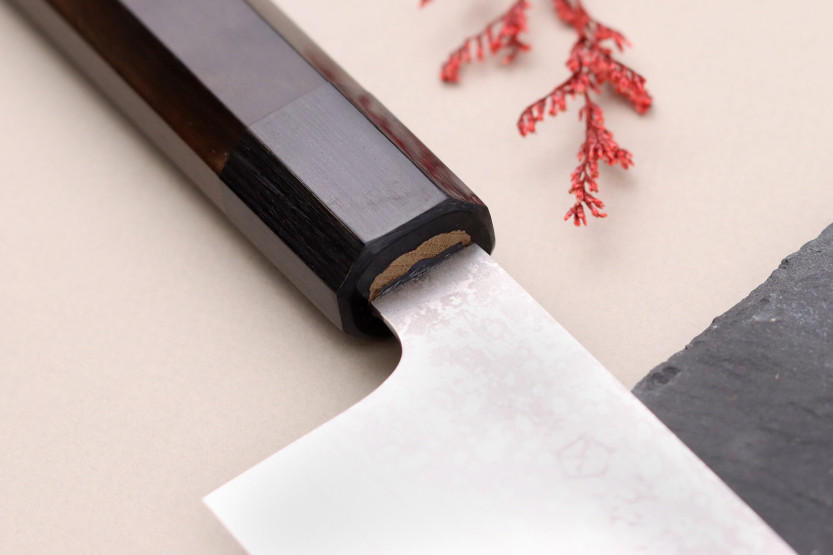
The handle is completed by a black pakkawood bolster, which provides an elegant transition to the blade. This composite material, made from laminated wood and hot-compressed resin, offers excellent strength while retaining a natural appearance with its distinctive veining.
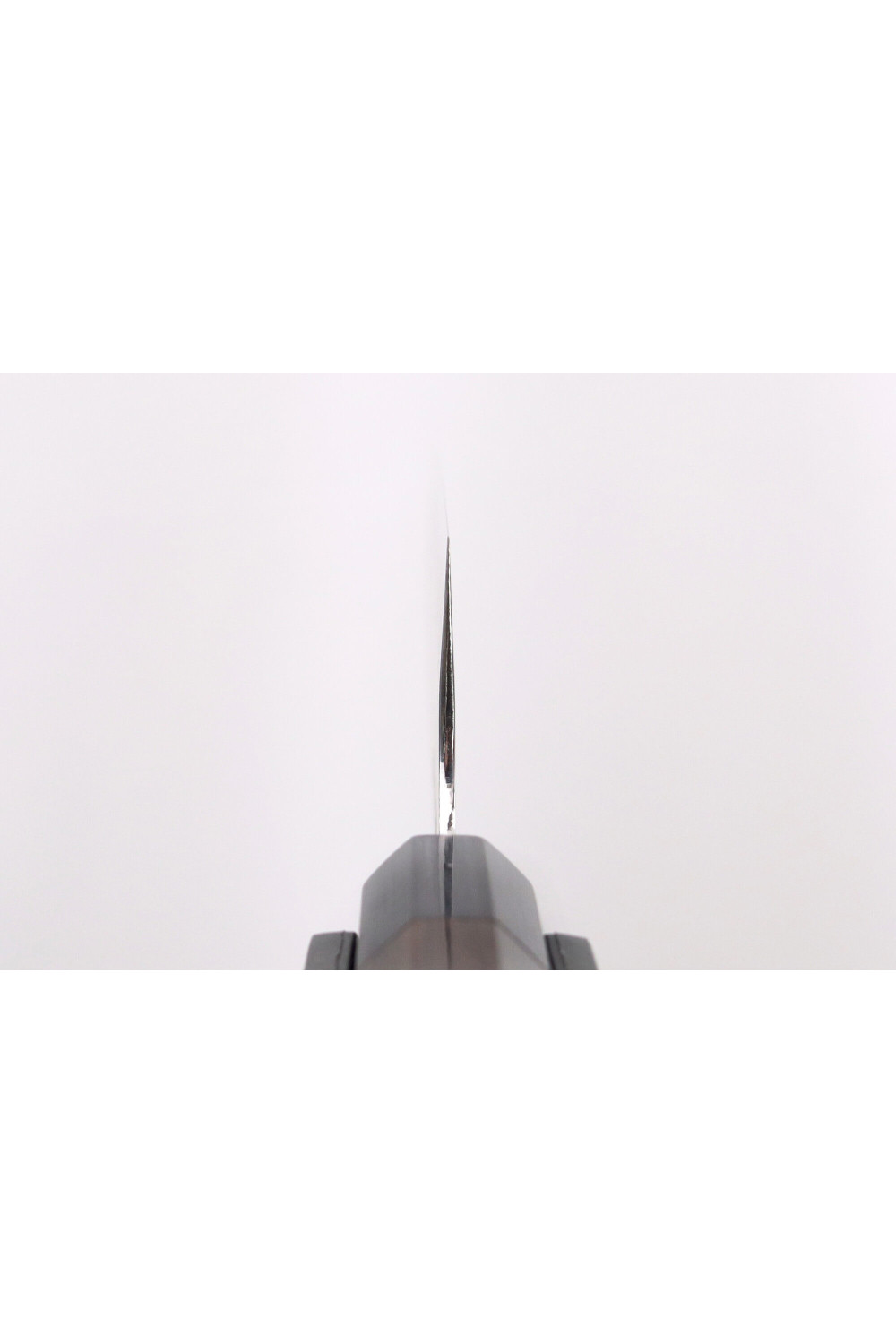
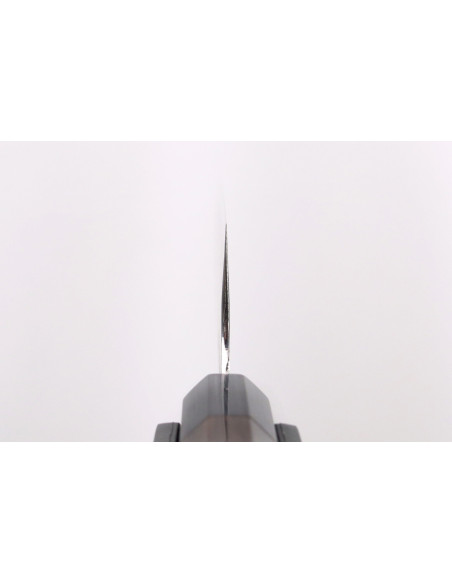
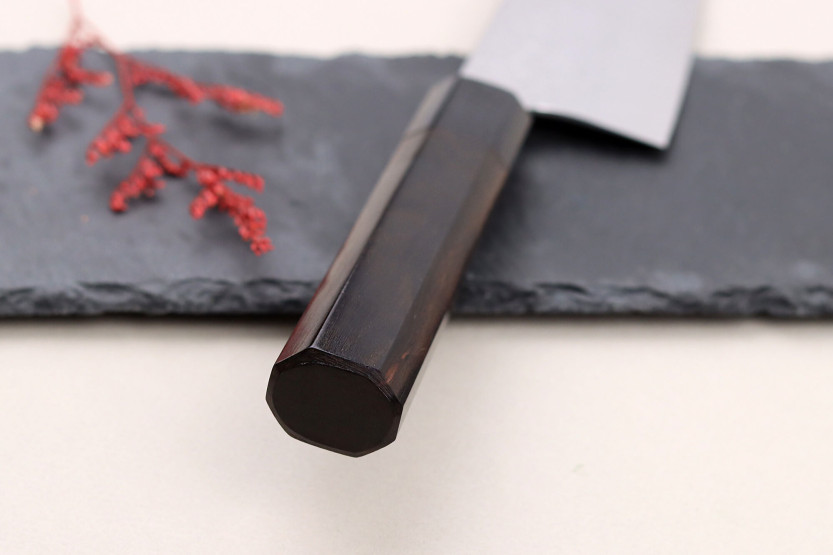
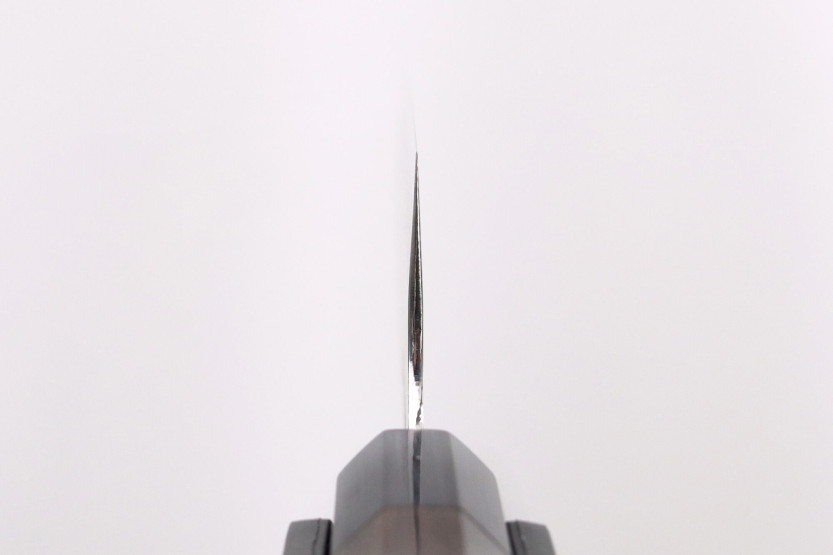
Designed in an octagonal shape, the handle is perfectly suited to both right-handed and left-handed cooks. It guarantees an ergonomic grip, offering optimum comfort even during prolonged use in the kitchen!
To ensure optimum watertightness, wood paste has been applied to the junction between the blade and the handle. This prevents water or small food debris from seeping in, prolonging the durability and hygiene of your handcrafted Japanese knife.
Caring for your damask knife requires a few precautions. Clean only by hand with a non-abrasive sponge, avoiding wetting the handle. Once washed, dry immediately to remove all traces of moisture, then store in a dry place. Do not put it in the dishwasher or soak it in water.
Find other damascus knives on Knifeleader.eu!




 By buying this product you can collect up to