A Japanese San Maï blade with a Ginsan steel core
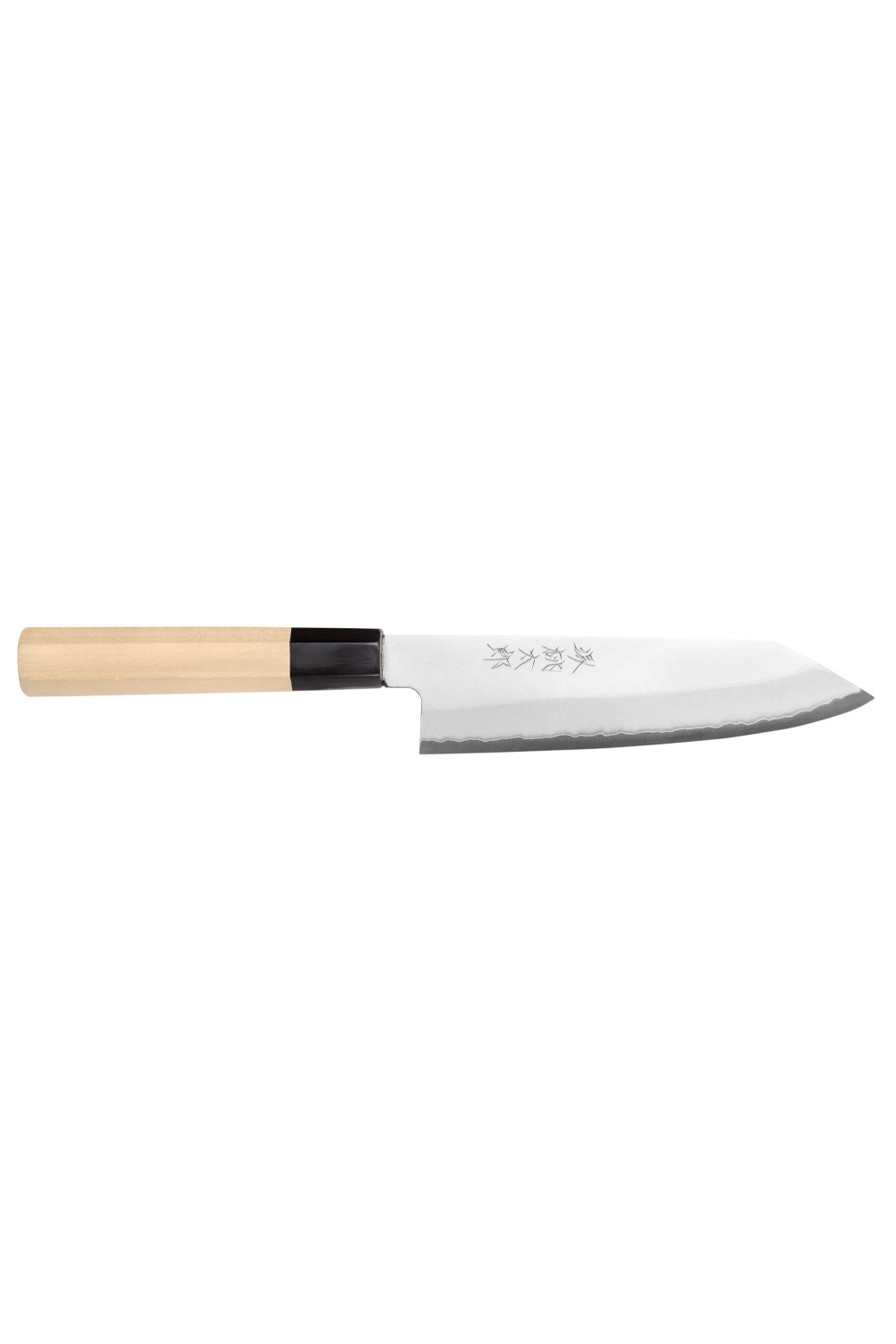
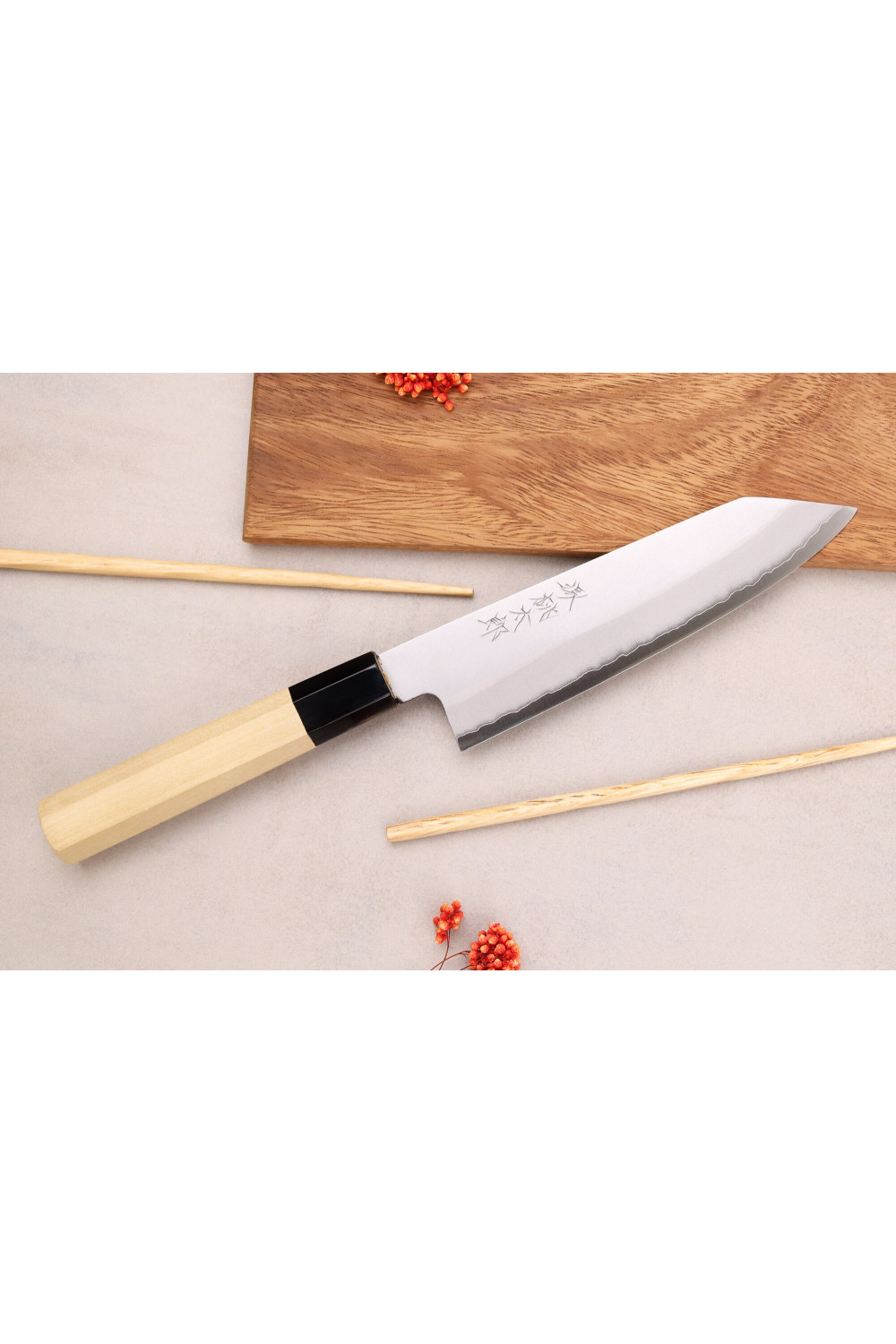
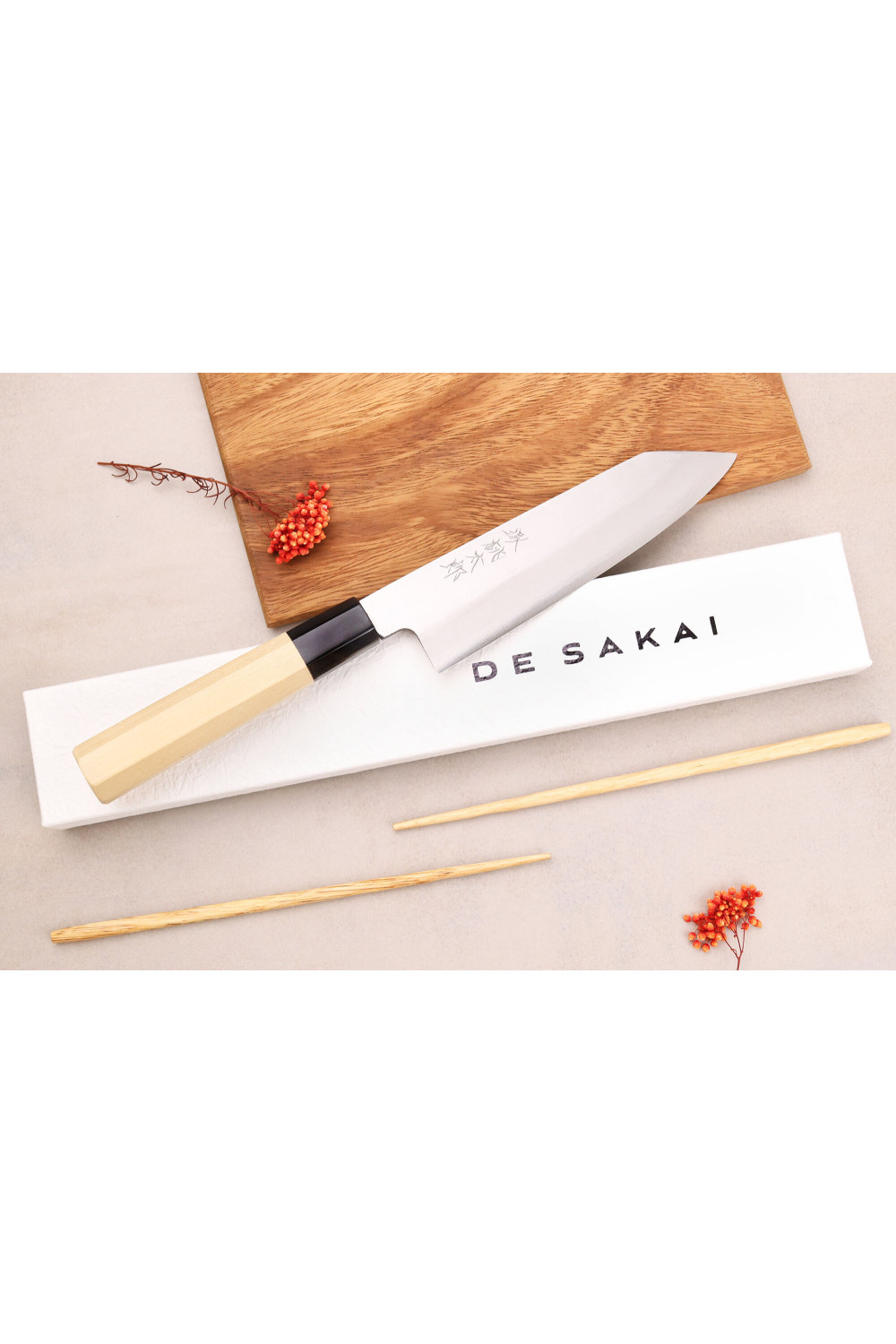
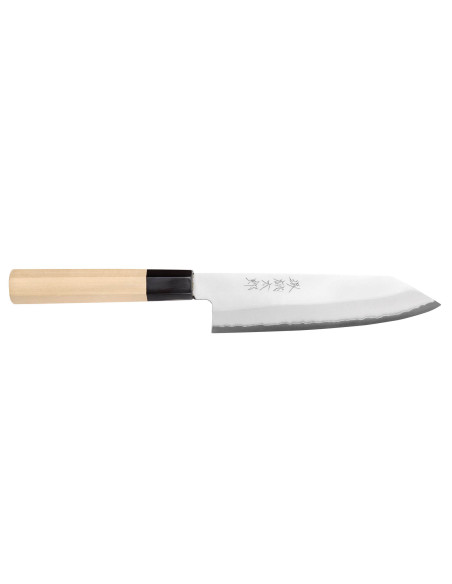
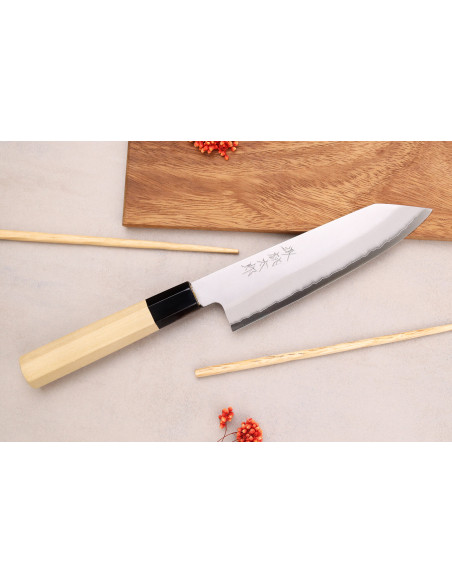
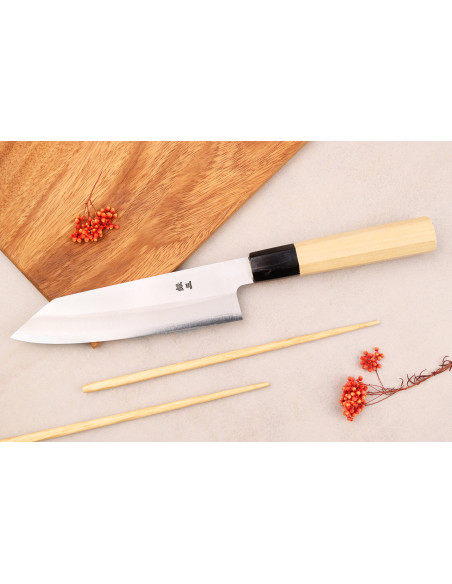
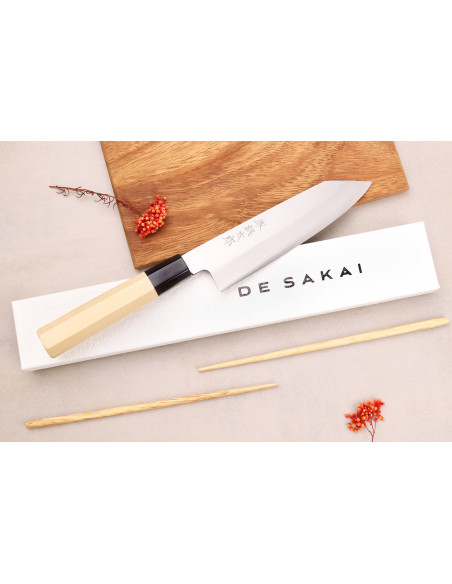
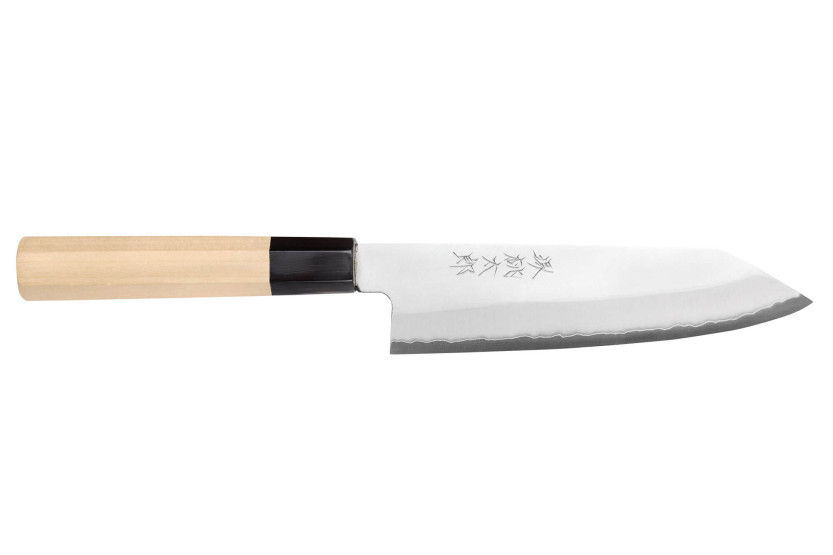
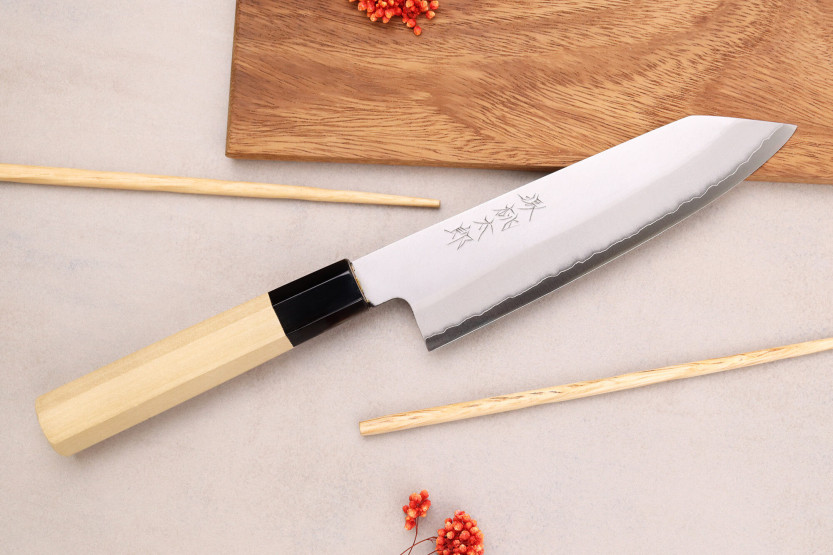
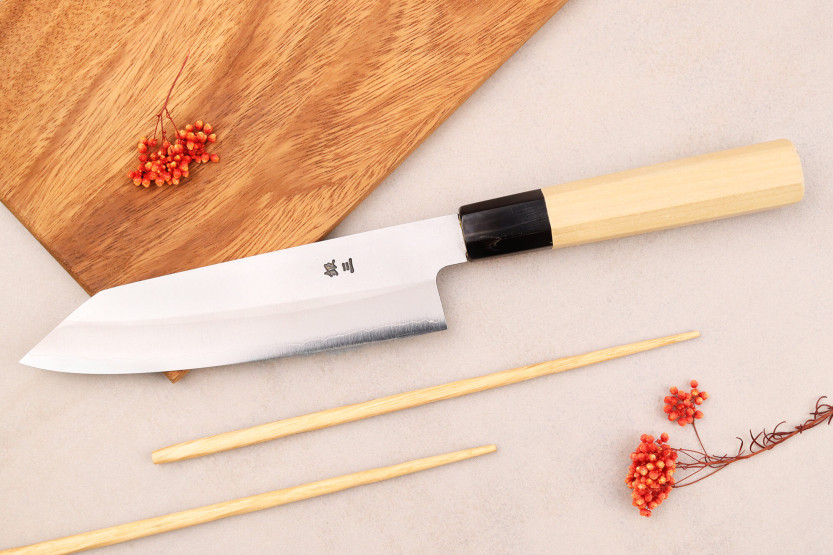
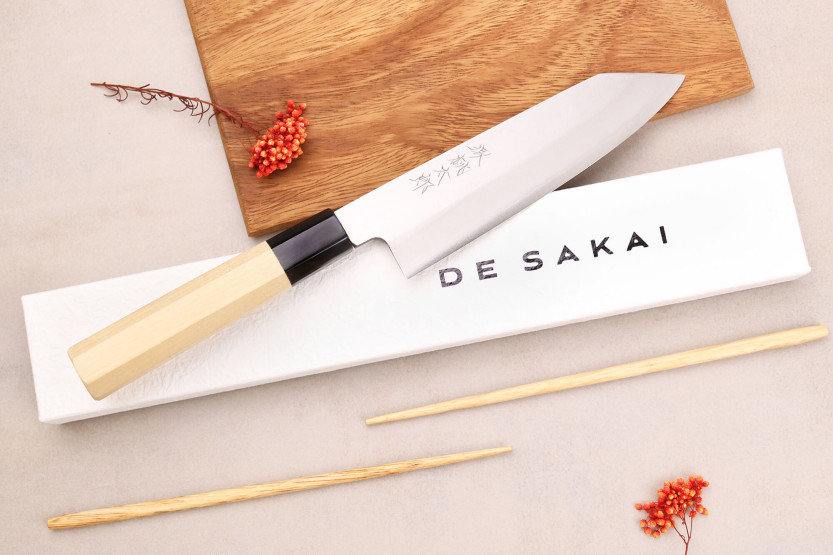
This handcrafted Japanese knife features an 18cm kiritsuke-tipped blade with a San Maï structure. This Japanese term means "three layers", and is a good indicator of the blade's construction. It means that it contains a rigid steel core wrapped in a layer of softer steel that folds in on either side. This design balances the hardness of the core while protecting it.
The blade core is made of Japanese Ginsan steel, also known as G3 or Silver 3. This alloy contains around 0.95% carbon, making it harder and stiffer to maintain its sharpness for longer. What's more, thanks to its high chromium content, Ginsan steel is highly resistant to corrosion.
The knife has a hardness of 59/60 HRC on the Rockwell scale, ensuring easy blade maintenance. If necessary, sharpening with a stone is easy.
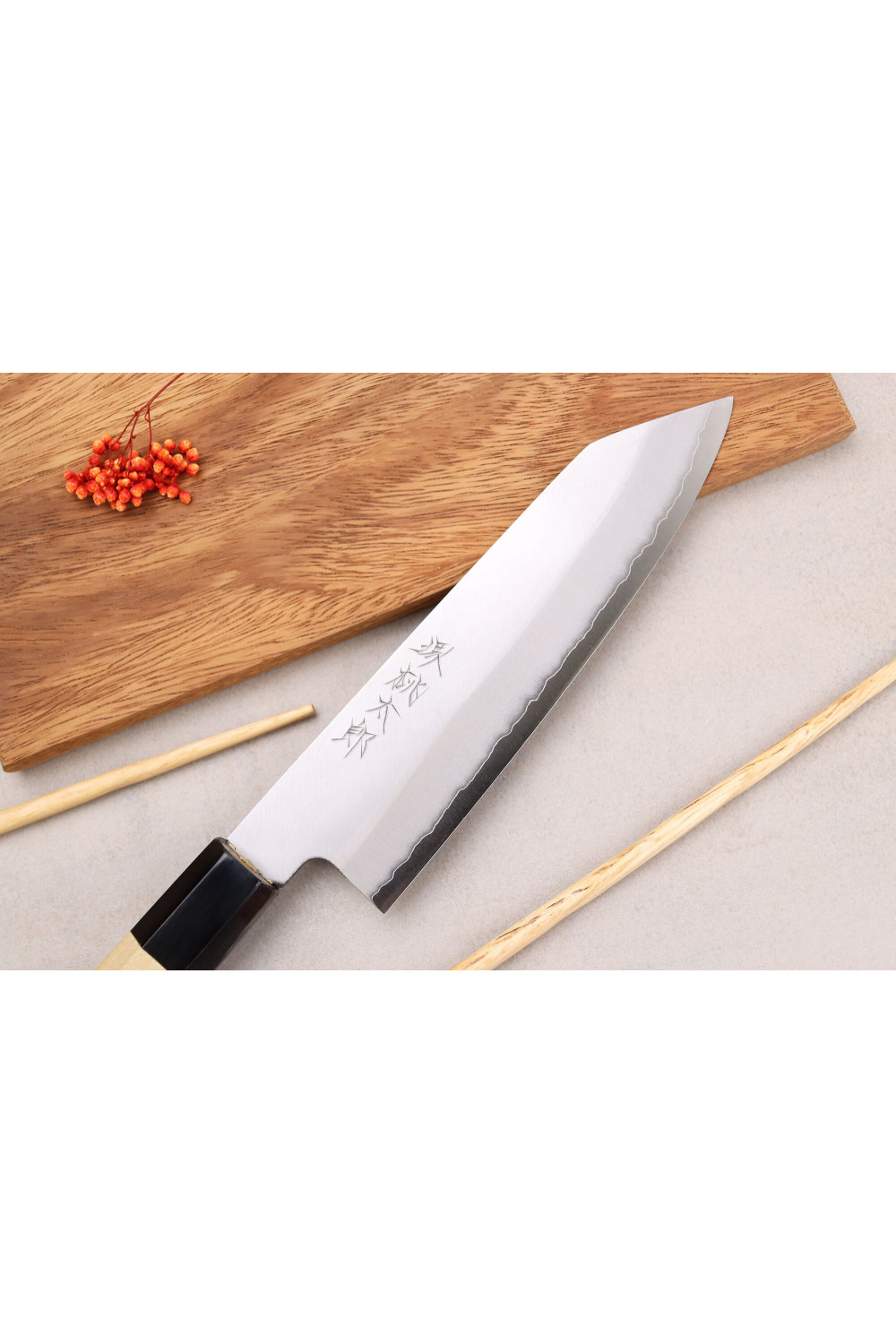
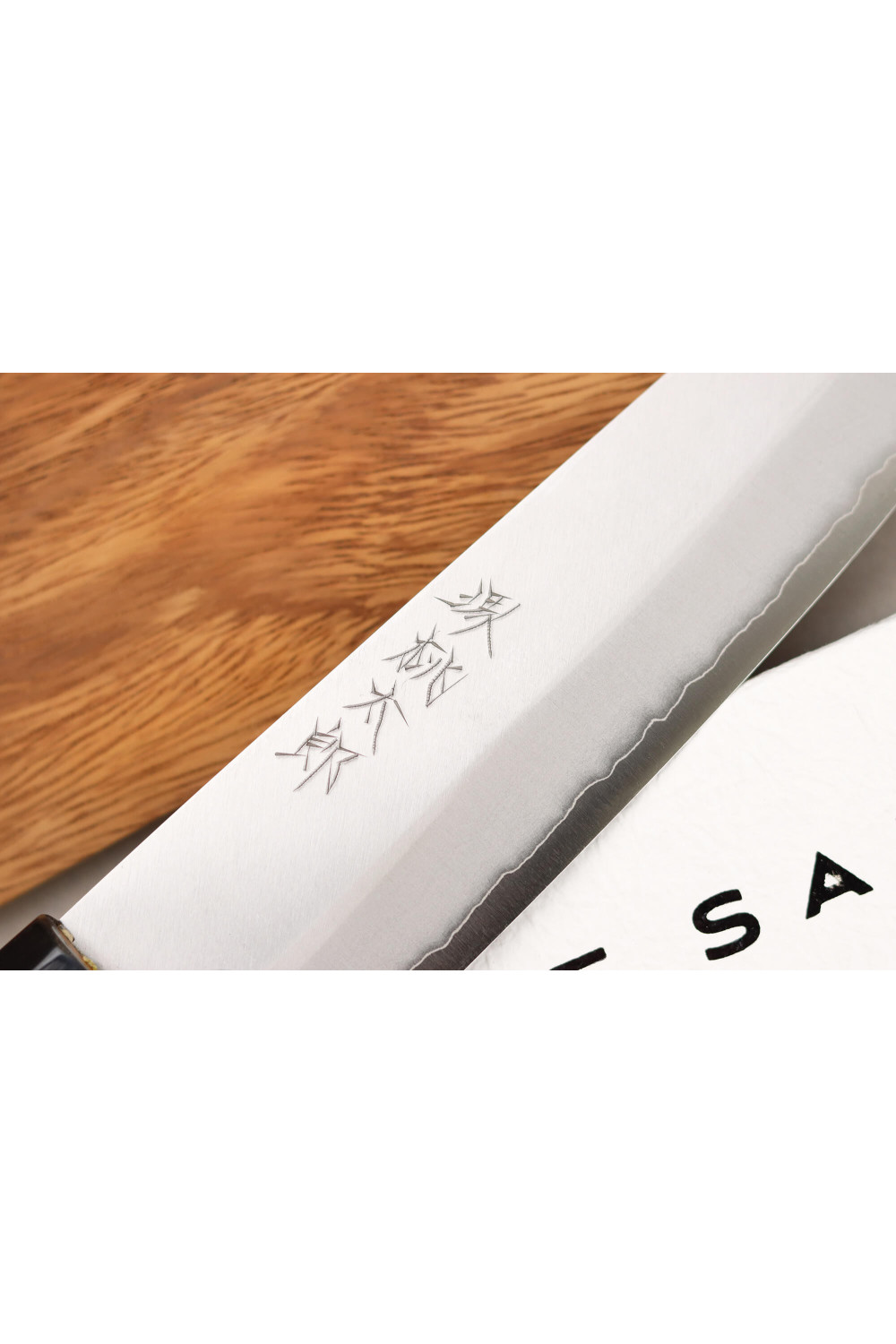
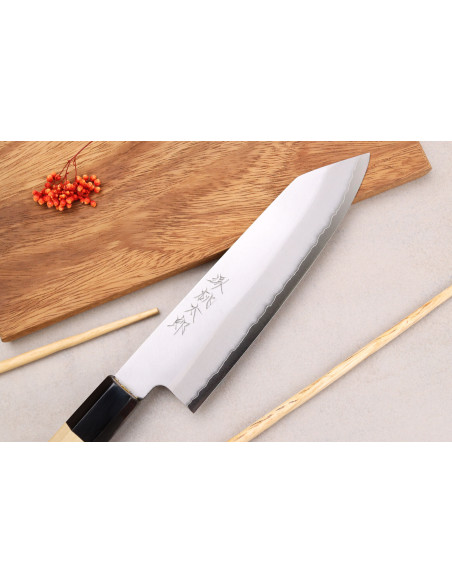
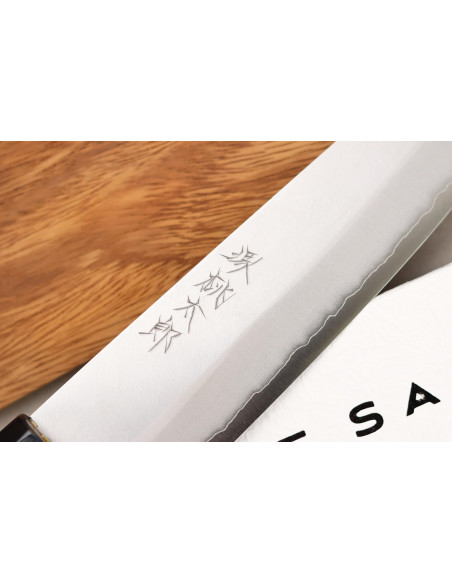
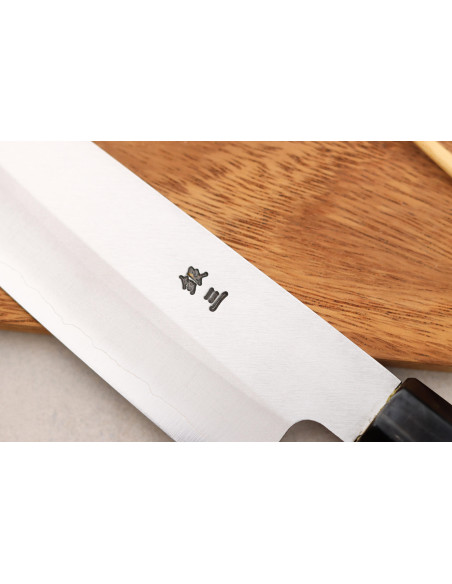
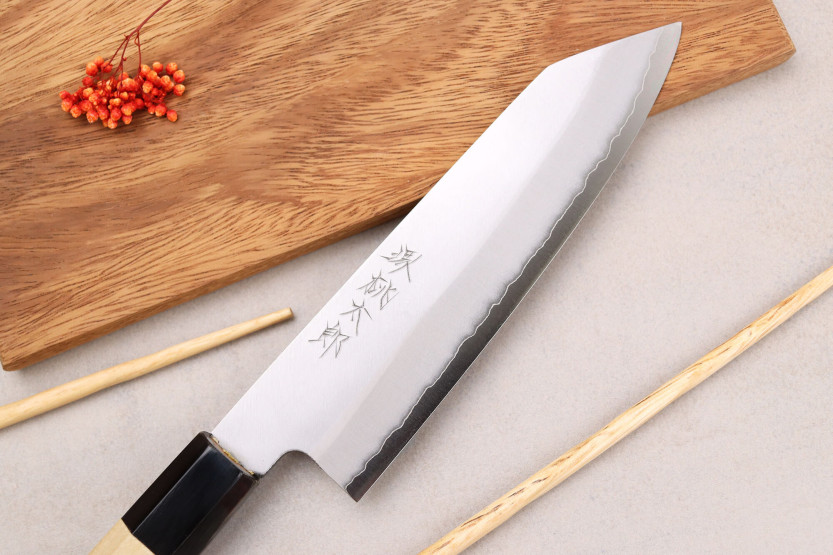
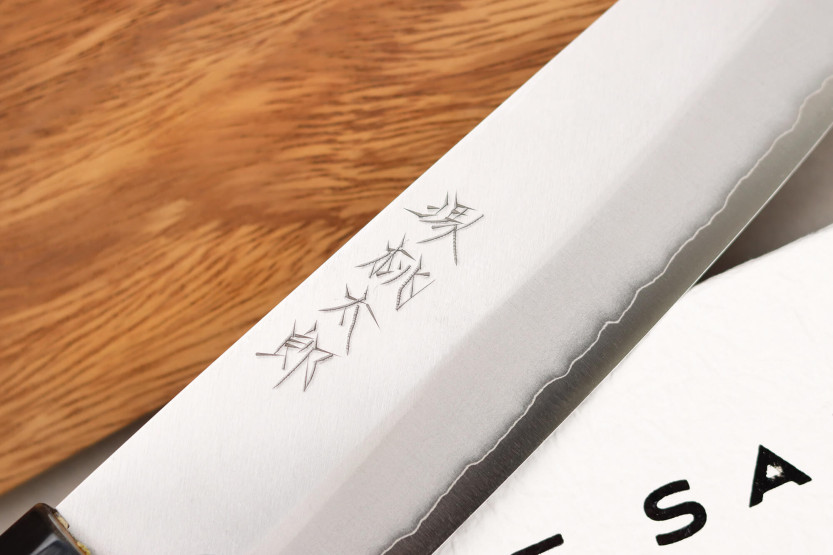
A layer of softer steel is then added over the Ginsan core and folded over on either side, forming the three layers of steel. This outer layer serves to protect the Ginsan and give it flexibility, making it less susceptible to breakage during use. You can see the alternating layers of steel along the edge.
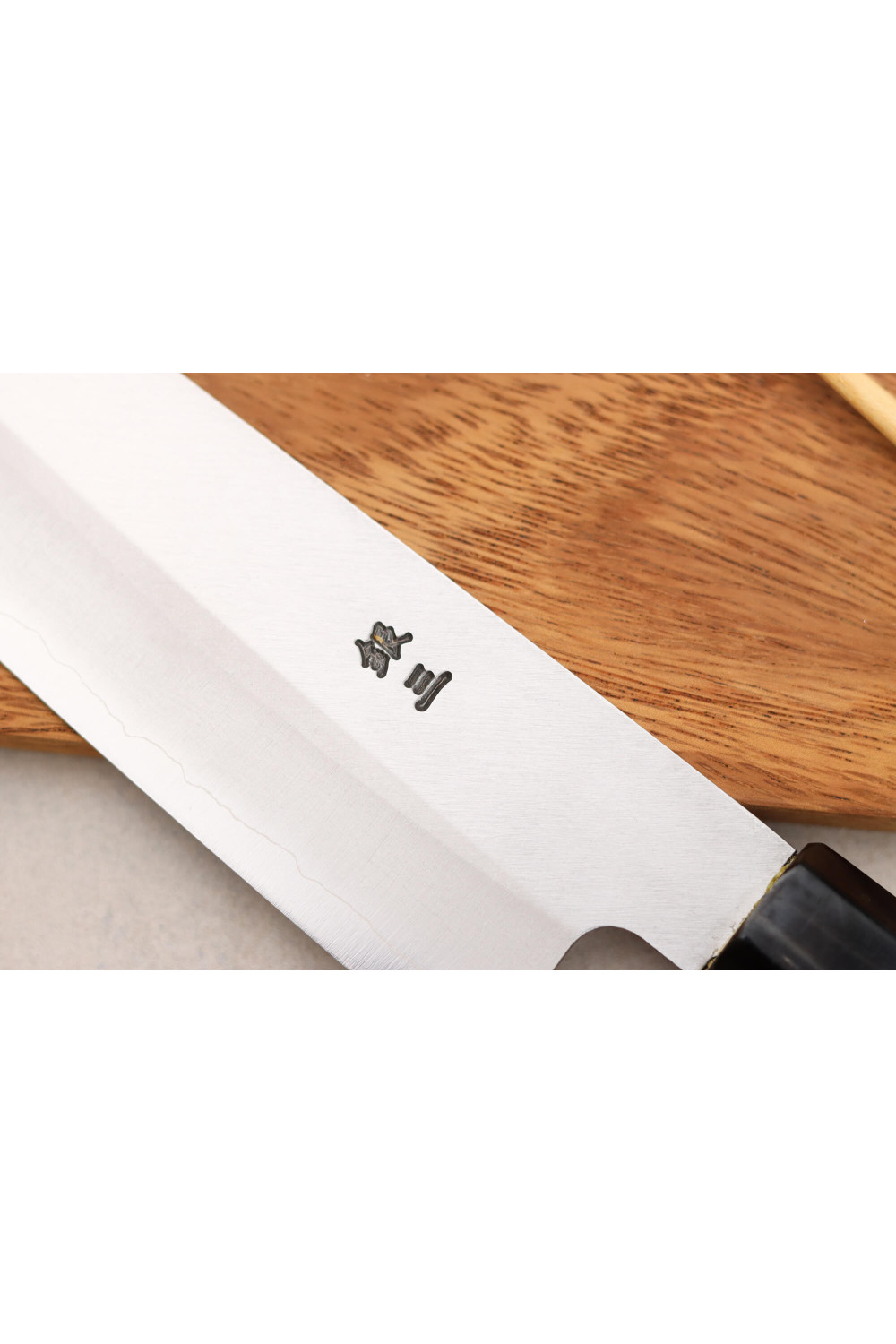
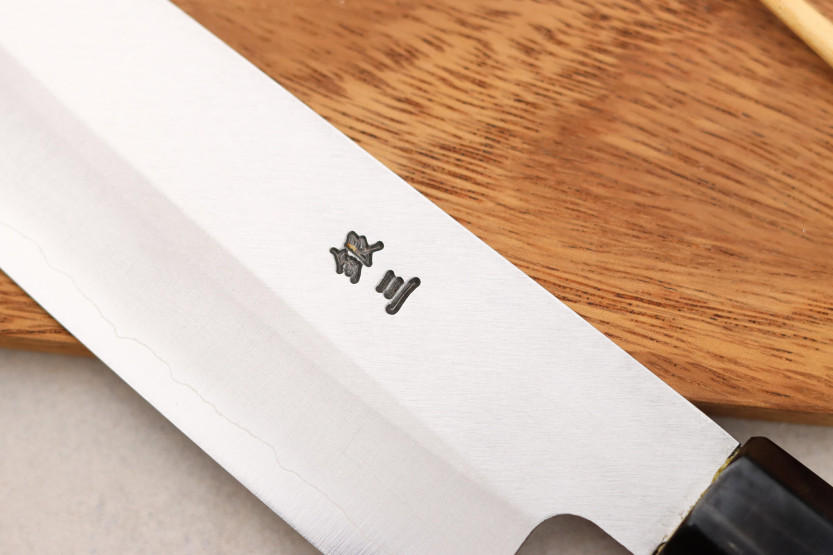
Finally, the blade features delicate kanji engraving on both sides and has been carefully polished. This blade is synonymous with elegance andauthenticity.
High-quality magnolia handle
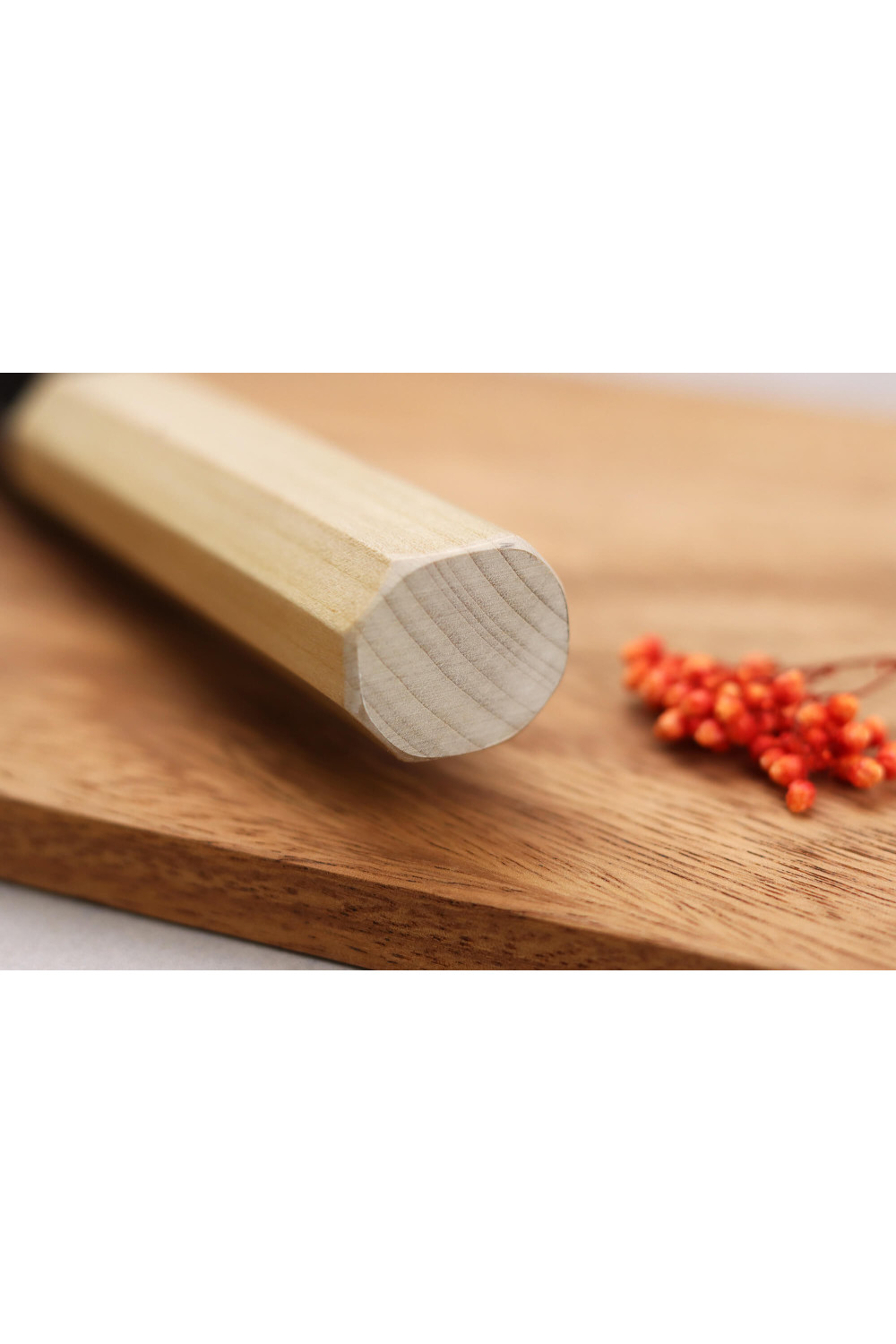
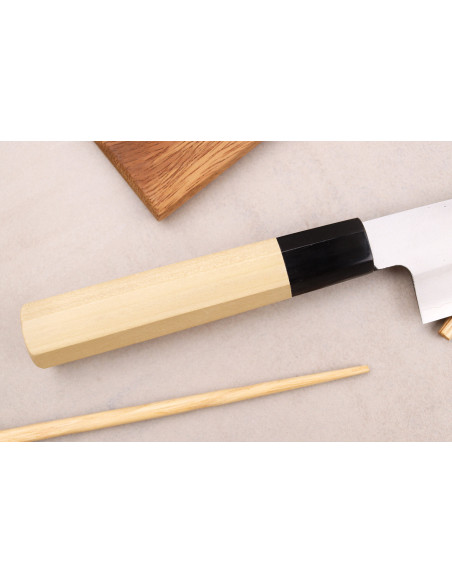
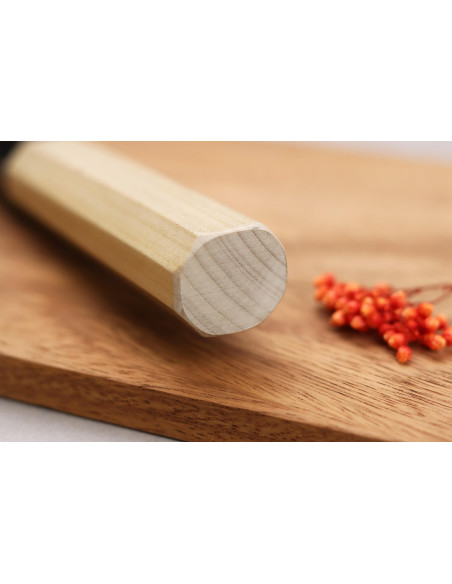
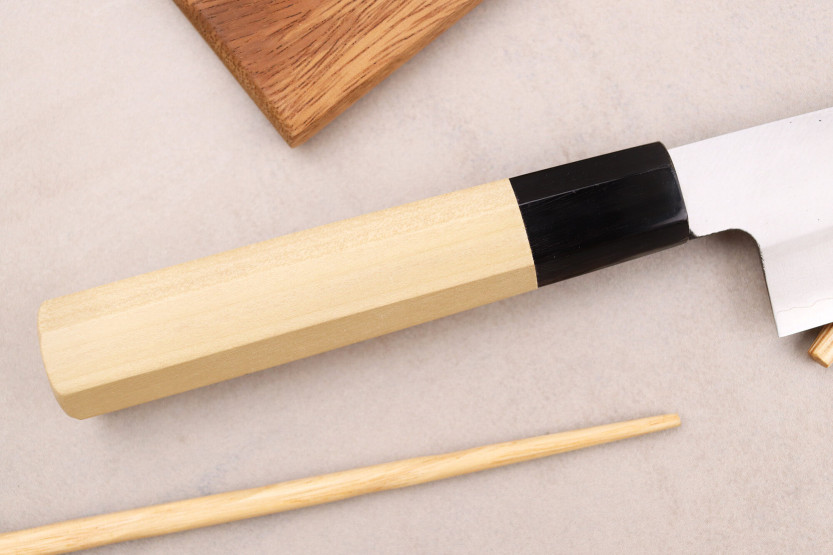
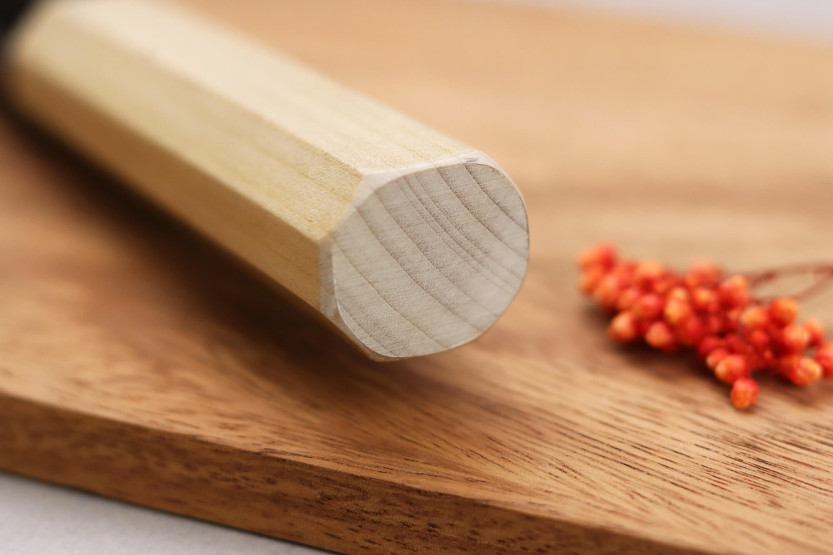
The handle is made from magnolia wood, a precious wood recognizable by its light, creamy color. Magnolia is traditionally used to make scabbards for Japanese swords, thanks to its lightness, softness and resistance to humidity.
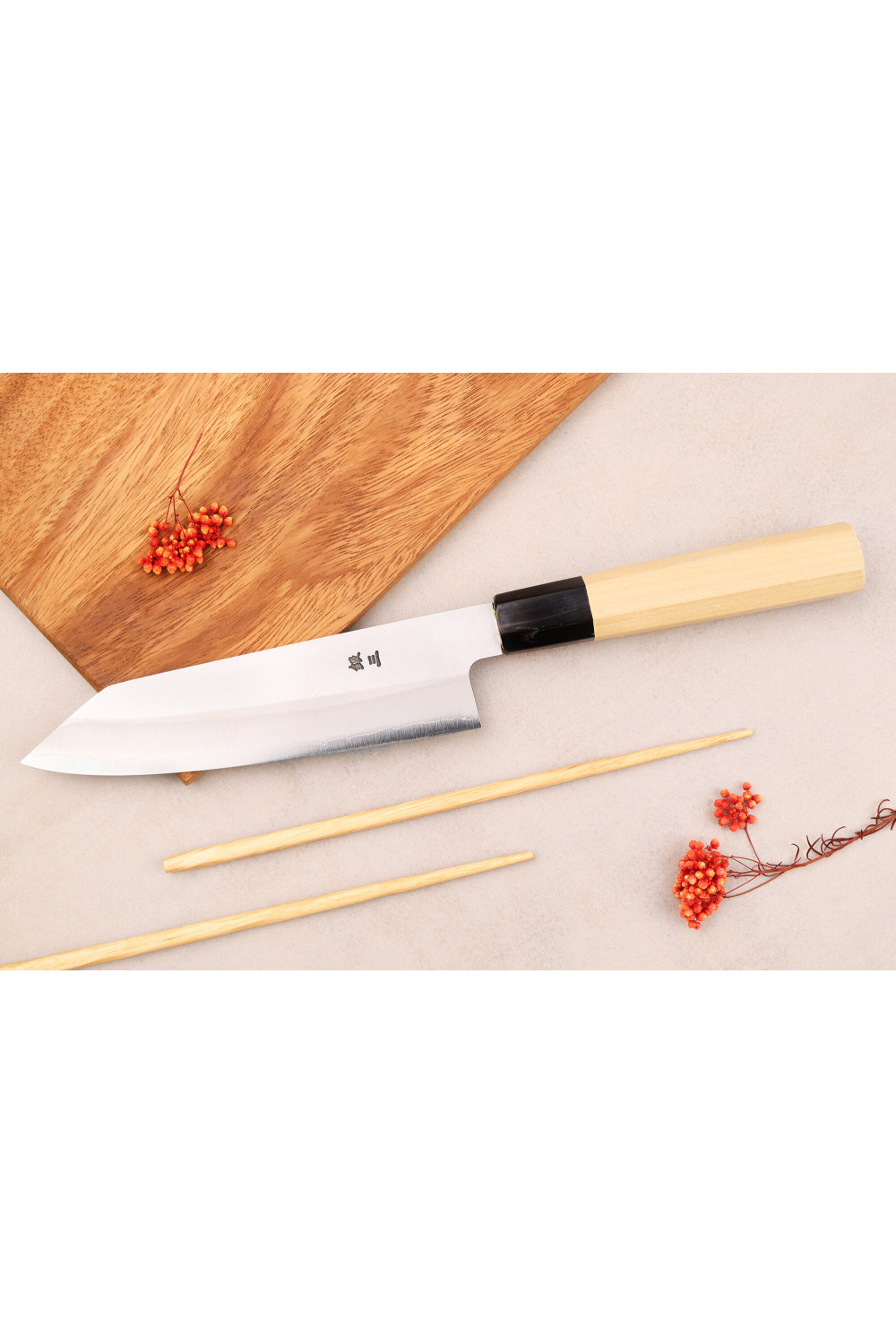
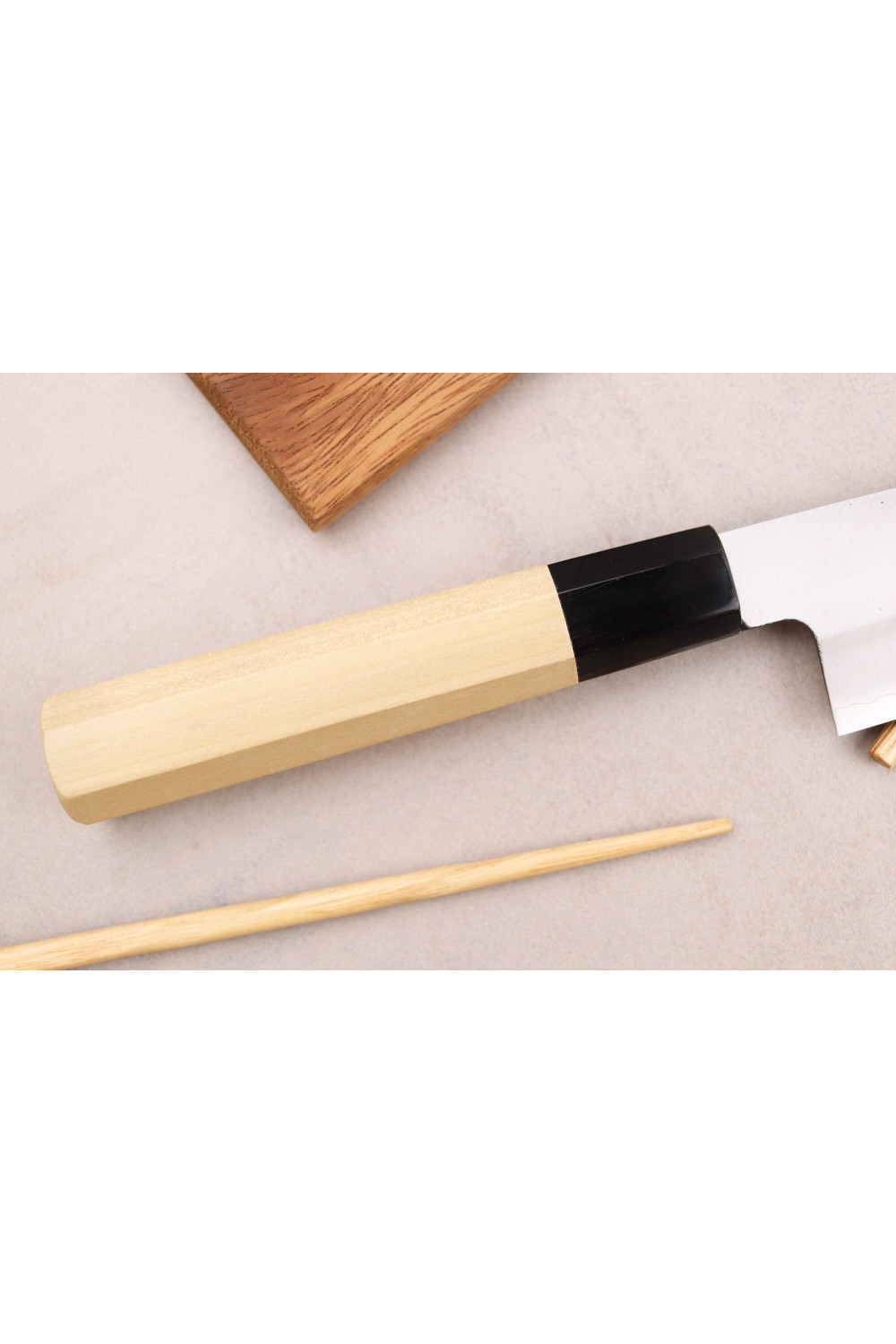
Your Momotarosantoku knife has an octagonal-shaped handle to suit both left- and right-handed users. The handle fits snugly in the palm of your hand, making it very comfortable to use, especially when cutting intensively.
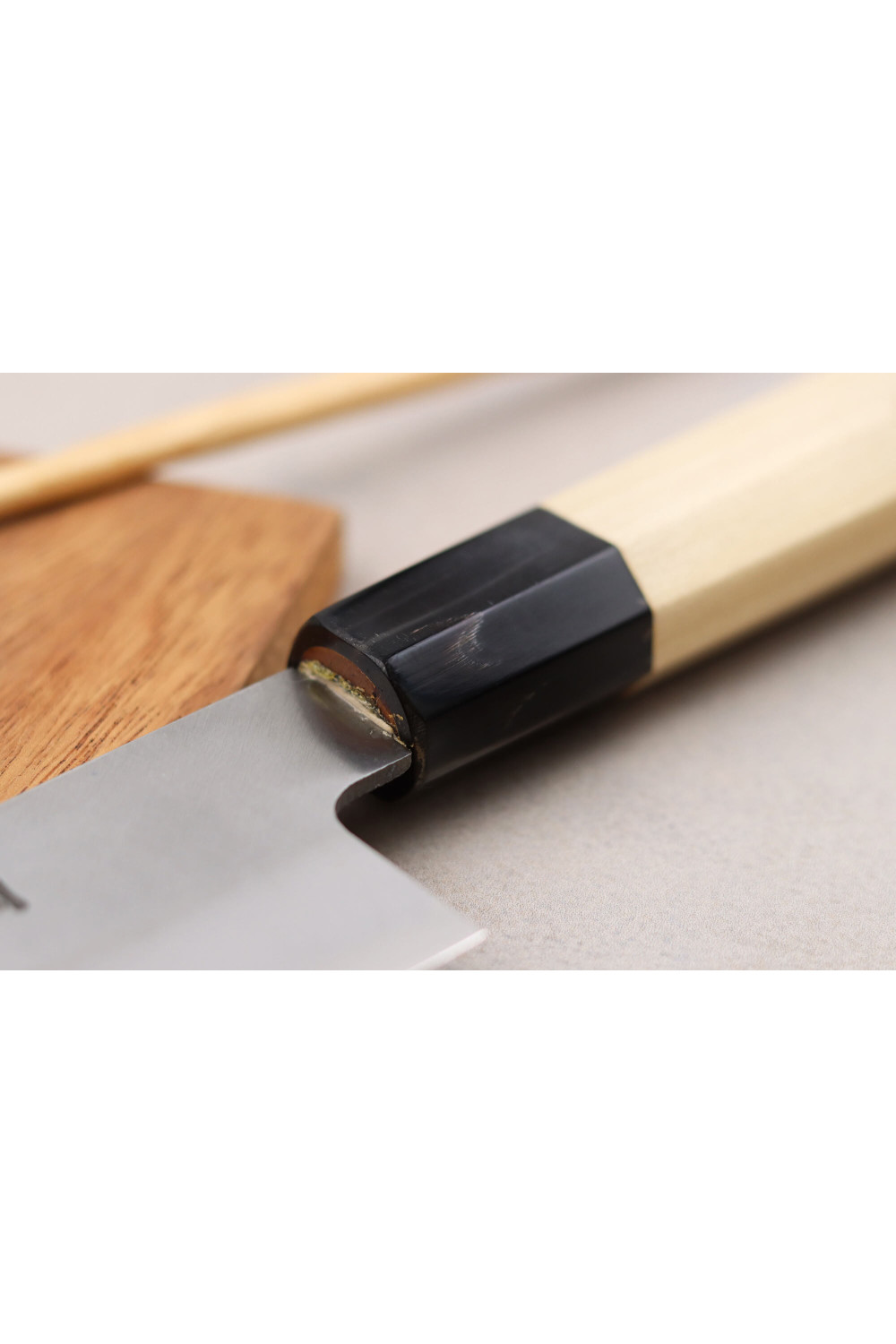
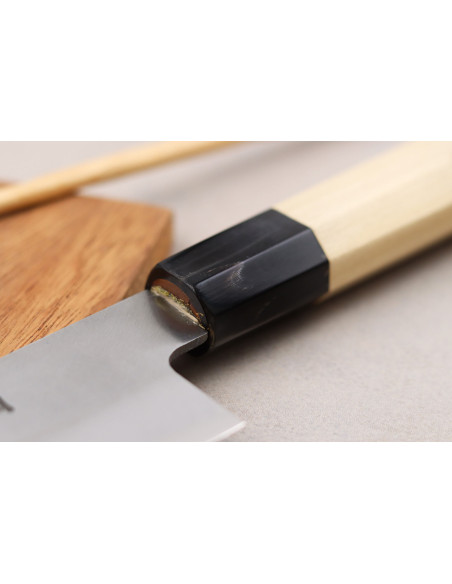
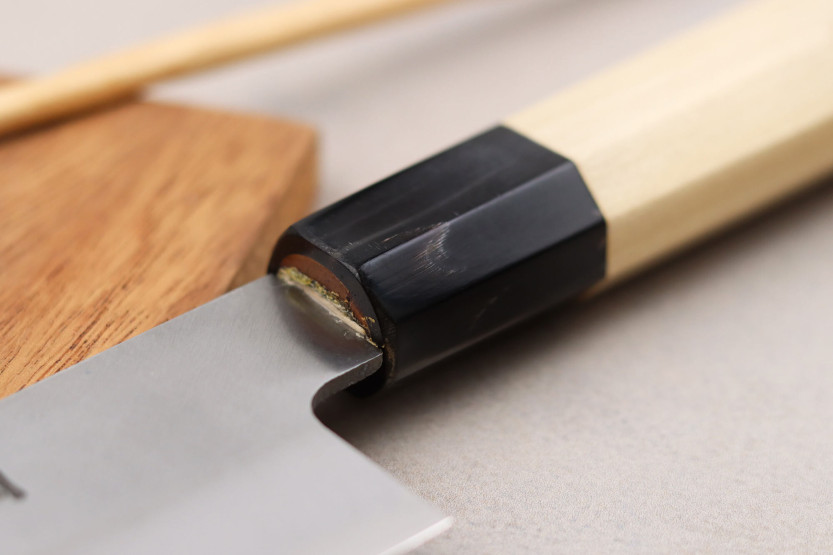
The handle is complemented by a black buffalo horn bolster that blends harmoniously with the blade of this knife. It not only adds a finishing touch to the overall aesthetic, but also helps to balance the knife.
Wood pulp has also been added where the blade fits into the handle, making the knife perfectly watertight. Water from various cleaning operations and food cuts cannot enter the knife.
How to care for your Momotaro Japanese knife
To preserve the quality of your knife, which is made from top-quality materials, it is essential to wash it only by hand. Be careful not to get the handle wet. To do this, use a soft sponge and appropriate soap, rinsing under lukewarm water.
After cleaning, dry the knife thoroughly before storing, leaving no trace of moisture. Finally, store the knife in a dry place, such as its box, to preserve its original appearance over the long term.
Learn more about Shogo Yamatsuka
This santoku knife was forged in Sakai by Shogo Yamatsuka, a native of the town. He learned the trade from his father, who was also a blacksmith, and trained him to work with Ginsan steel. Shogo Yamatsuka san is the only blacksmith in Sakai capable of hot-forging Ginsan steel, due to its difficult handling.
Shogo, a true Ginsan steel expert, is always ready to meet the challenges presented by new steel variations. His expertise has been recognized by the Japanese Ministry of Economy, Trade and Industry, which has awarded him the title of Master Traditional Craftsman. This honorary title is awarded to craftsmen who have devoted many years to perfecting their skills in traditional Japanese industry and craftsmanship, and passing on their know-how. This distinction marks genuine recognition for Shogo Yamatsuka, who has worked for 30 years to master the art of steel forging, known as Hizukuri.
This santoku was sharpened by Mitsuo Yamatsuka, also a Traditional Master Craftsman, but in the art of sharpening. Thanks to the skills of these two remarkable cutlers, you can be sure of a blade of formidable efficiency.
See also our selection of Japanese sharpening stones!




 By buying this product you can collect up to