A Japanese work of art where steel meets art
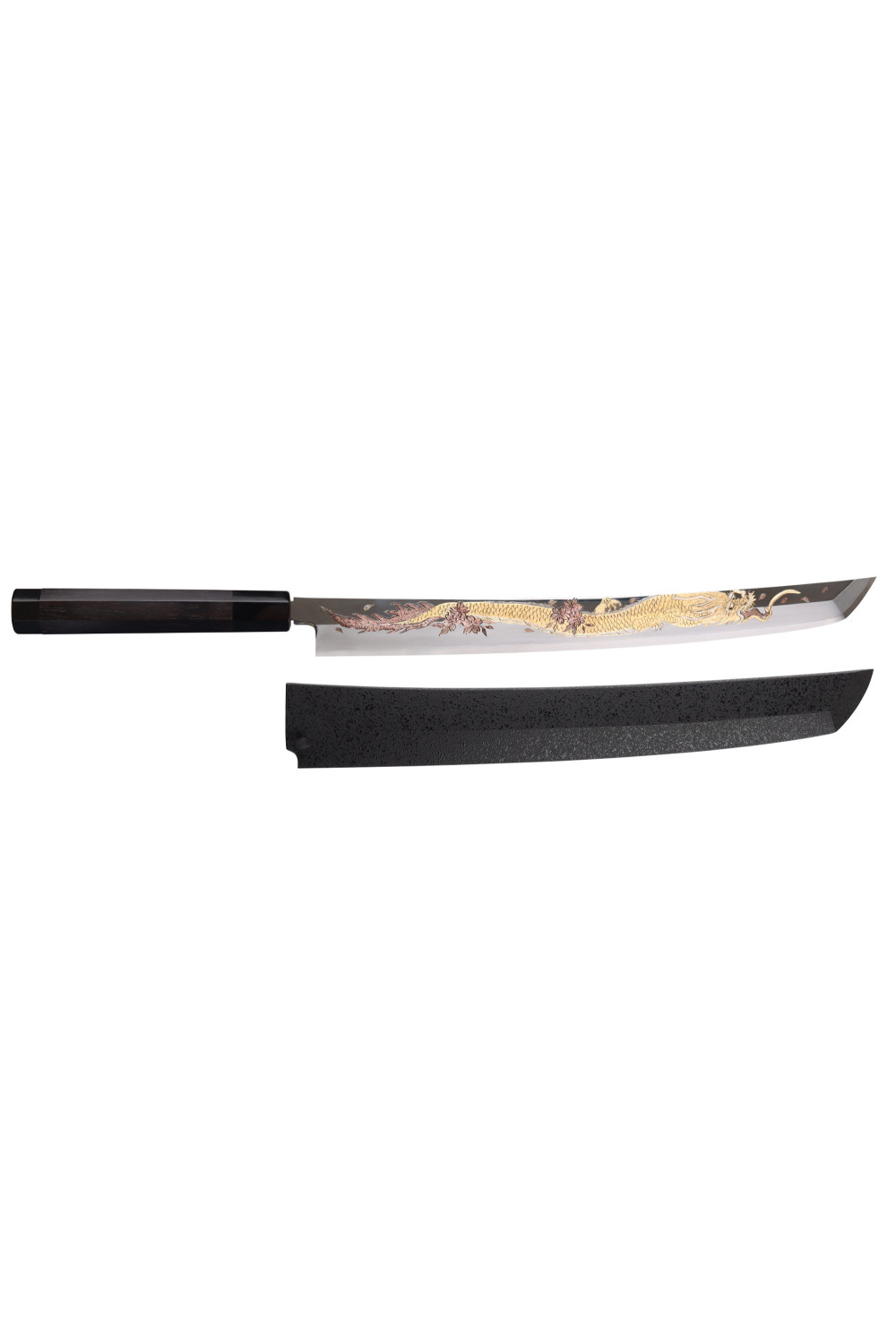
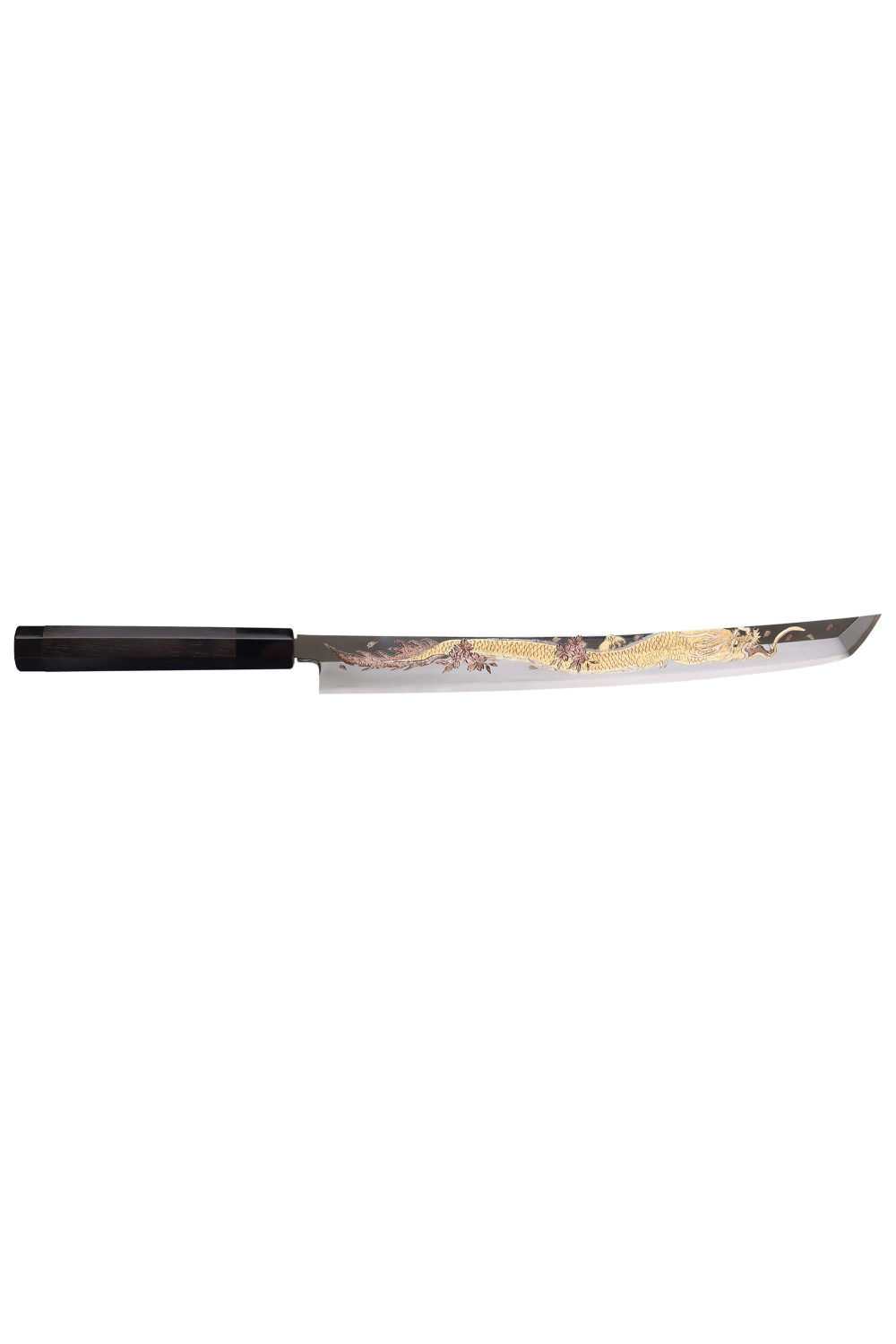
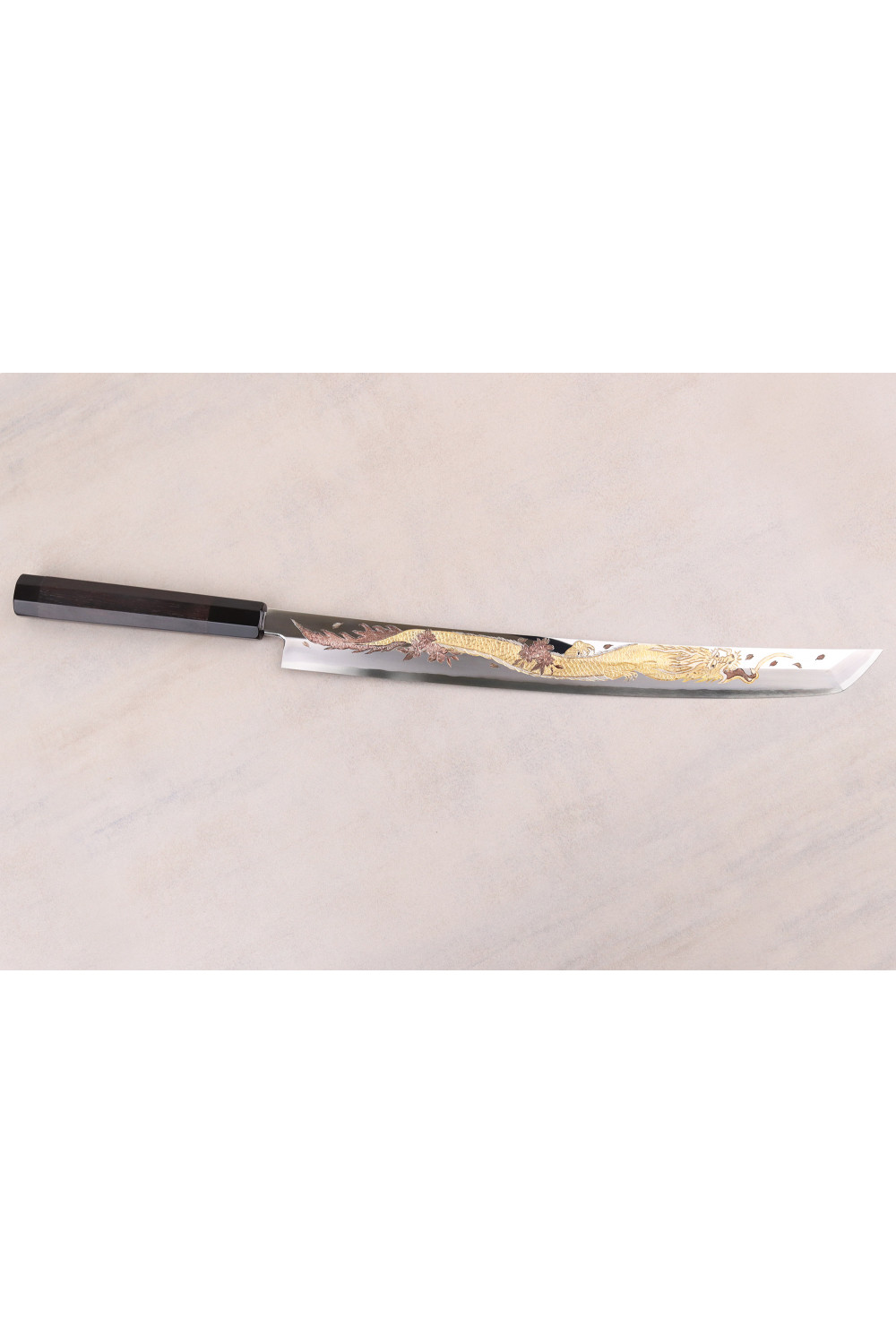
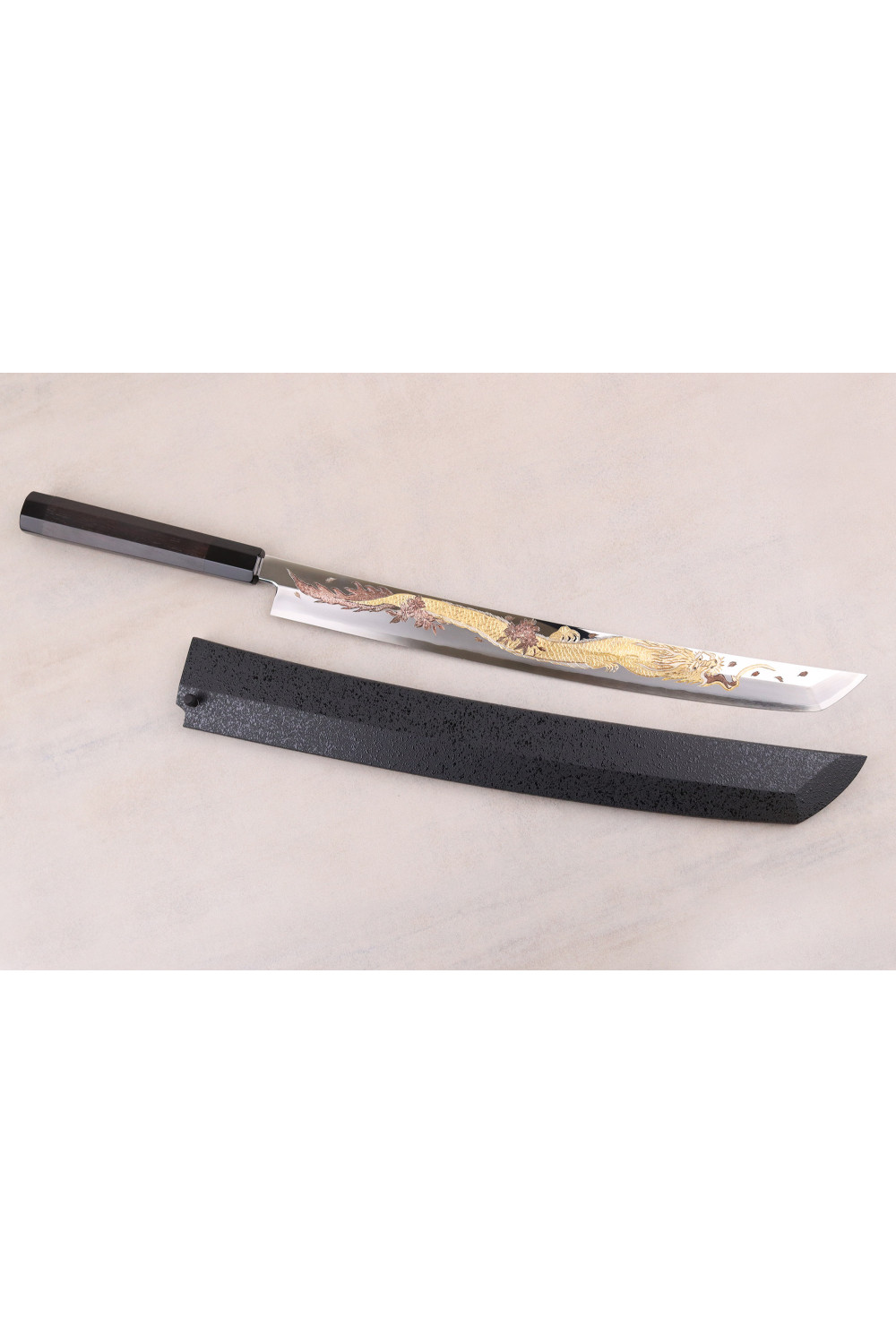
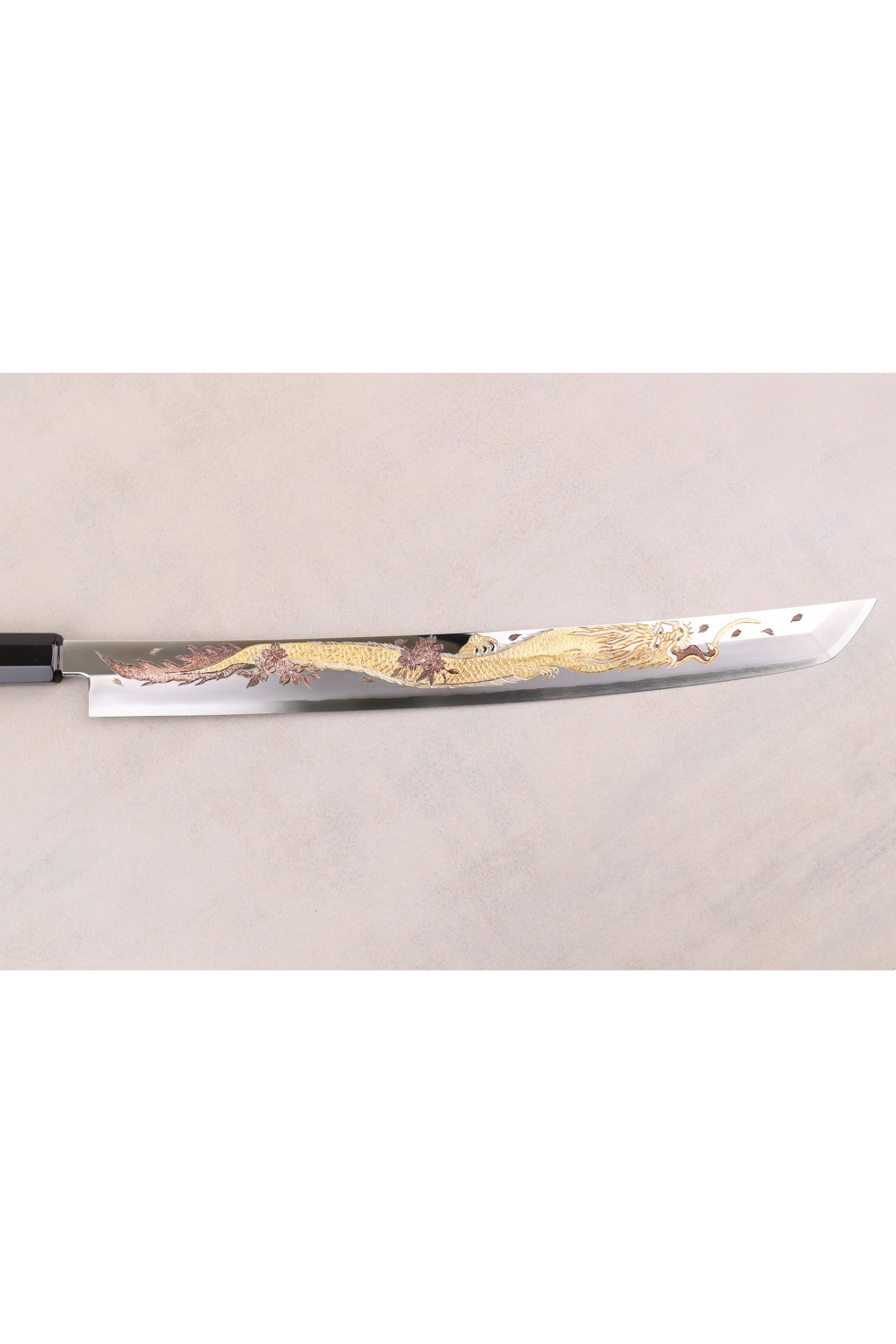
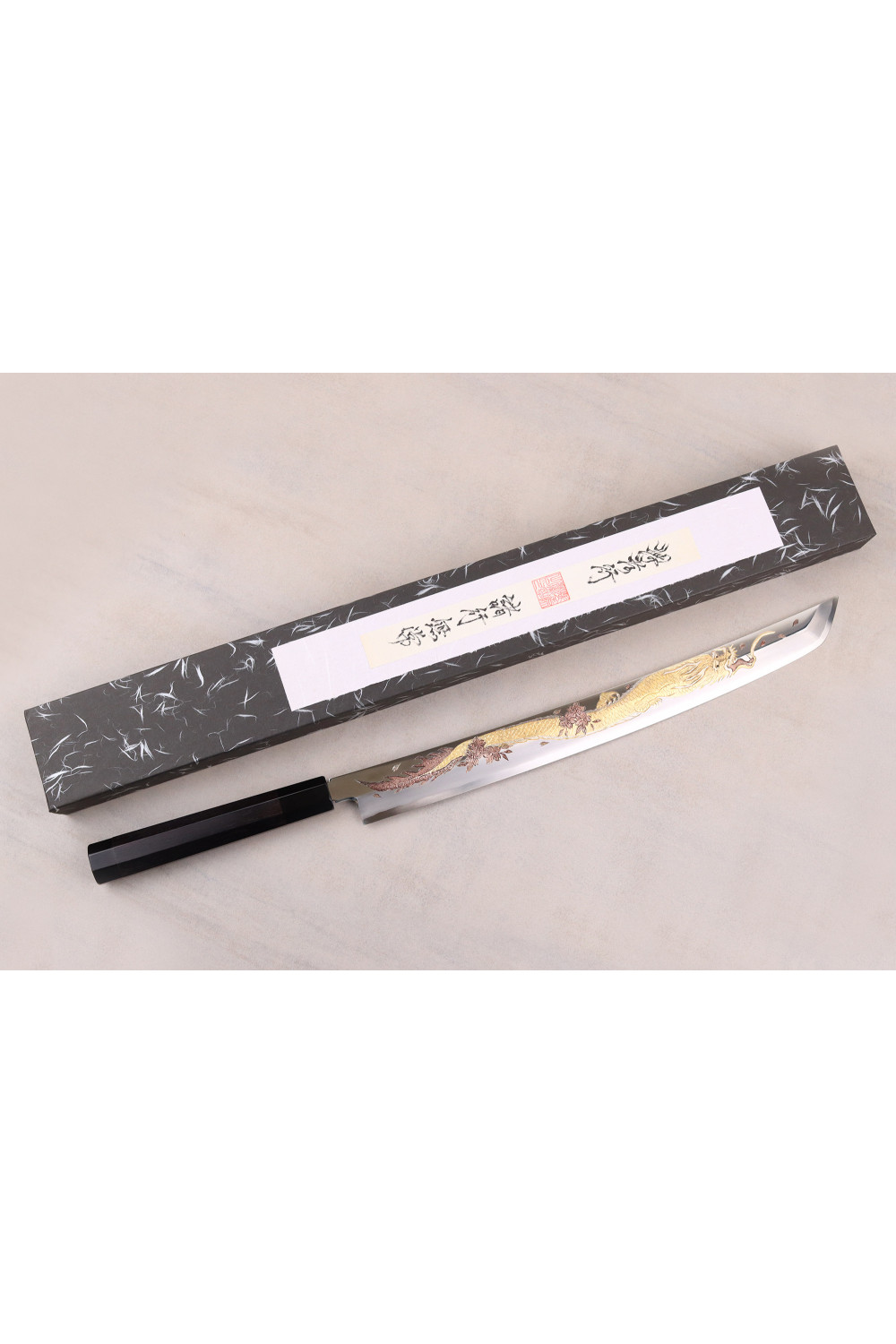
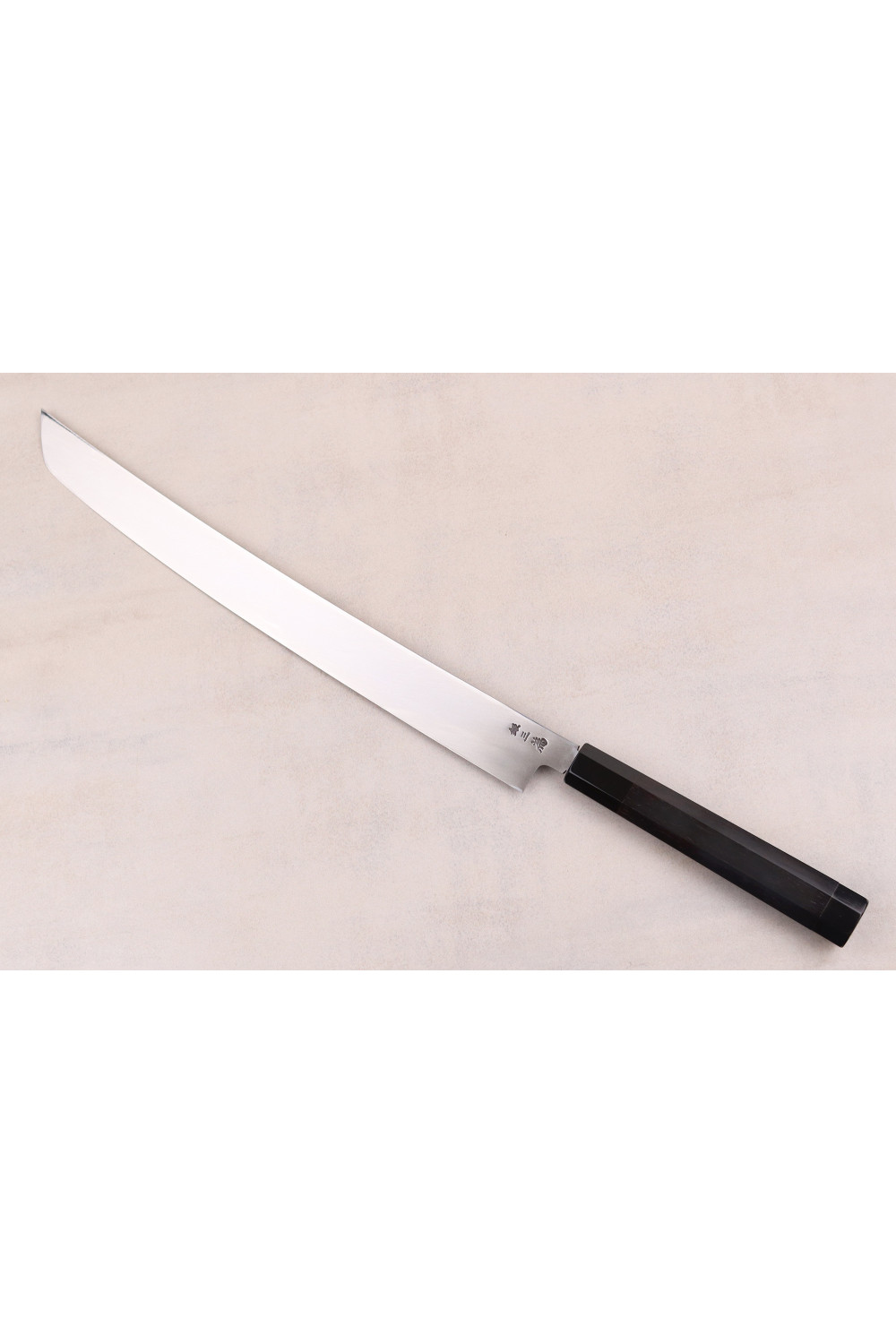
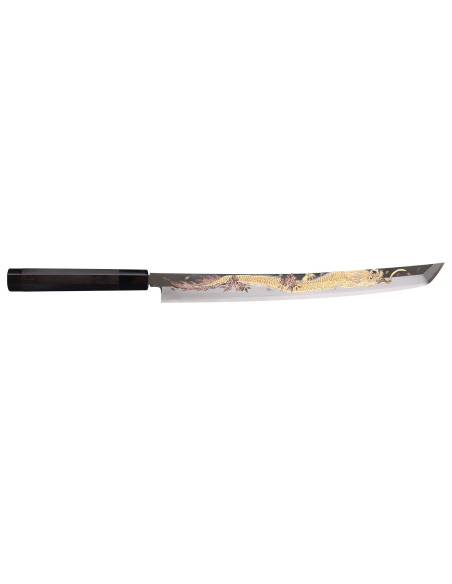
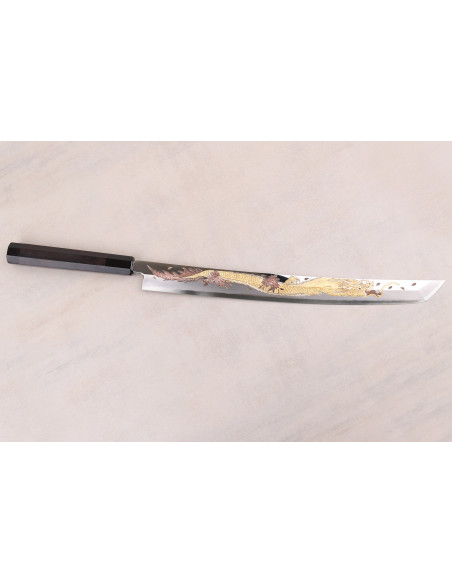
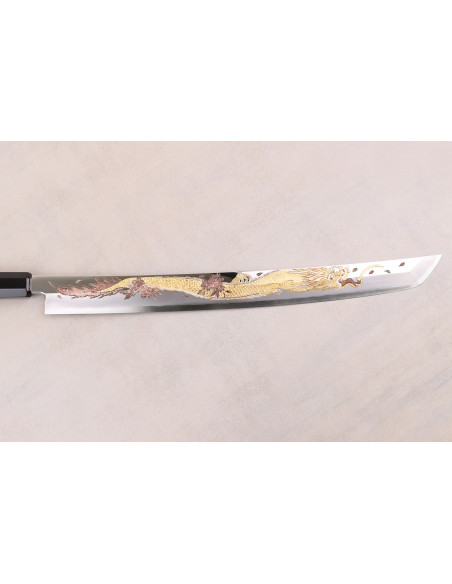
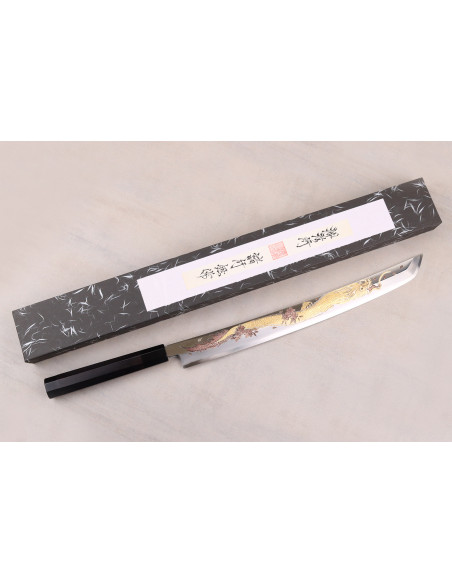
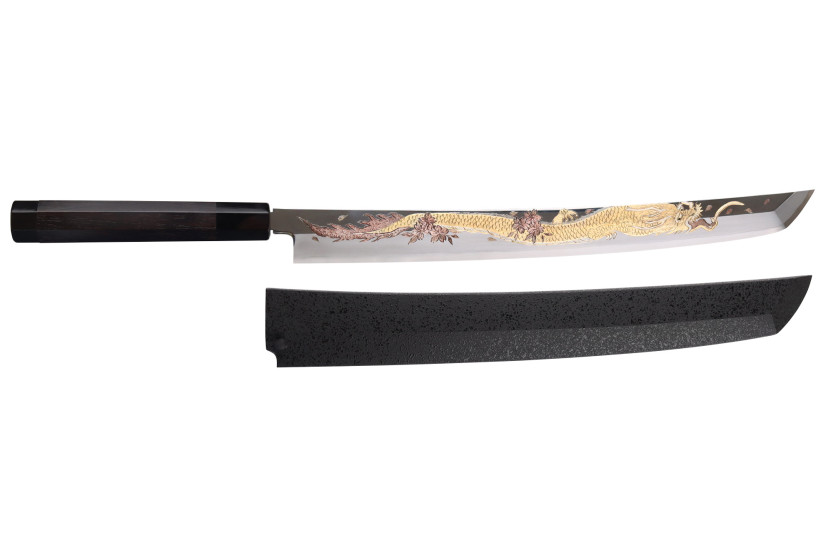
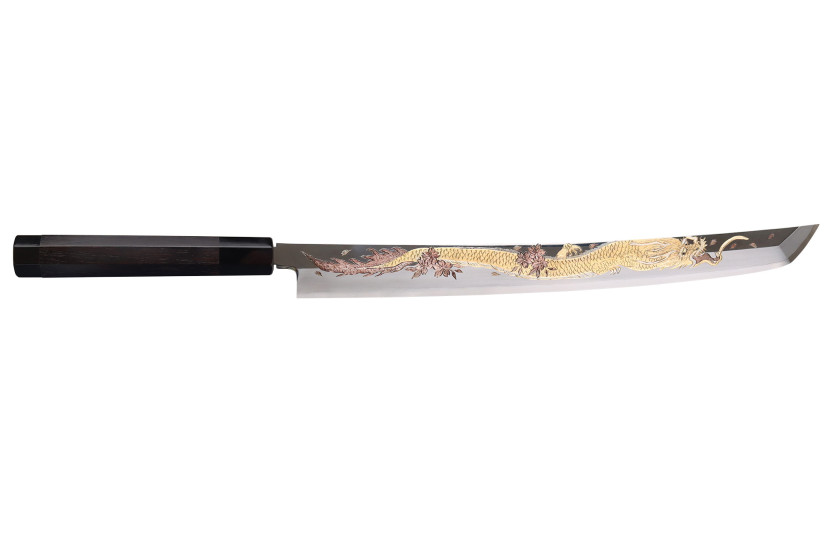
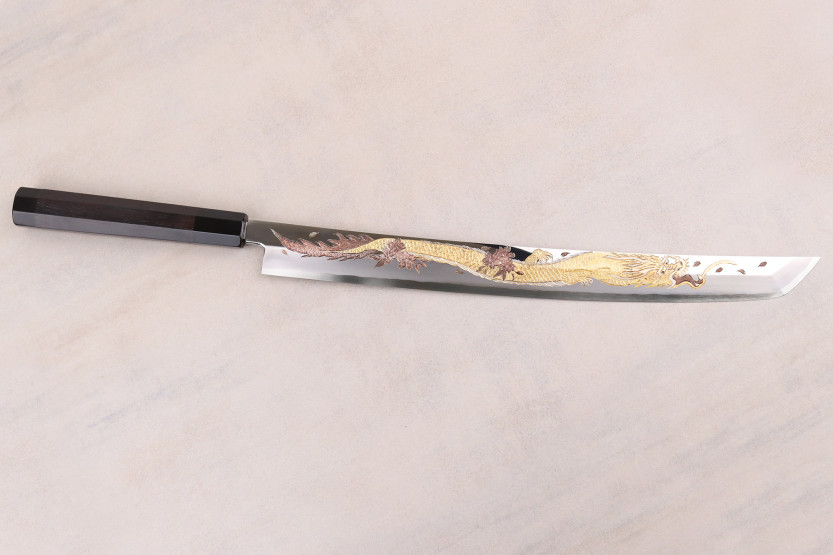
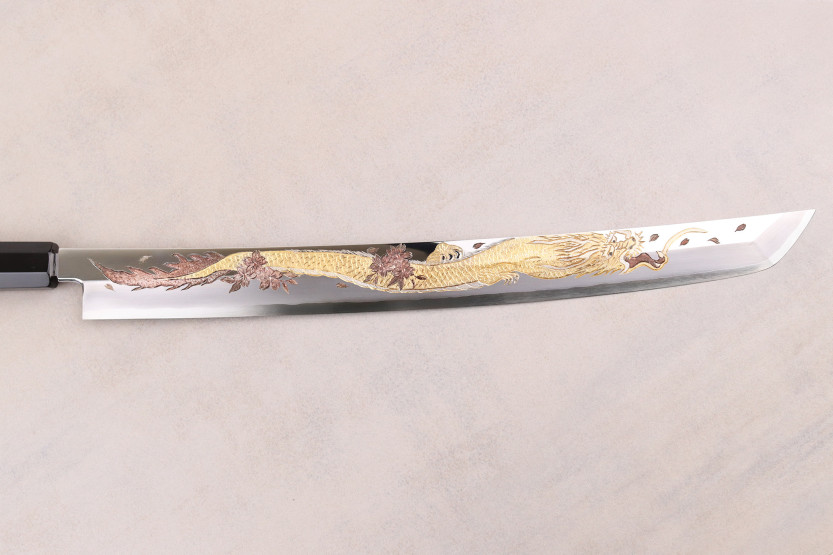
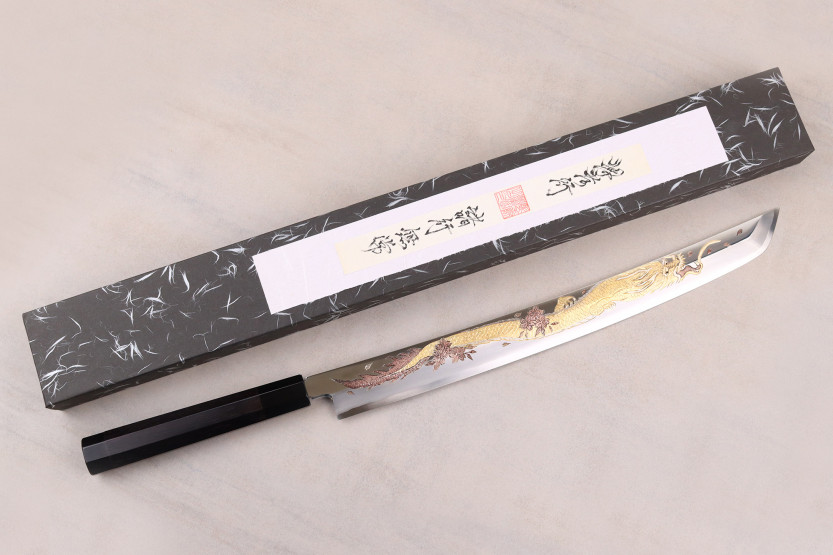
The high-end Sakai Takayuki Shogyō Mujō Japanese knifeis a true work of craftsmanship, designed for enthusiasts of traditional cutlery and collectors. Forged in Sakai, Japan, this sakimaru takohiki features an impressive 39-centimeter blade adorned with a majestic dragon winding its way through Japanese cherry blossoms. This scene, handcrafted by artisan Michiko Kubota, evokes transformation, power, and the transience of existence.
Behind this work lies the craftsmanship of blacksmith Shogo Yamatsuka and knife sharpener Mitsuo Yamatsuka. Ginsan steel, a mirror finish, an ebony handle, and meticulous engraving come together to create an exceptional piece! Much more than just a kitchen utensil, this creation is meant to be admired, collected, and cherished.
A 39-cm blade that blends technical mastery with Japanese artistry
This 39-cm blade features a San Mai structure, a traditional Japanese construction consisting of three layers of steel stacked on top of one another. At the center is a core of Japanese Ginsan stainless steel—also known as Silver 3—with a carbon content of approximately 0.95%. This steel has a hardness of approximately 60 HRC on the Rockwell scale, a level that helps maintain a fine, precise edge. The core is surrounded by two layers of softer stainless steel, which provide greater flexibility to the construction and minimize the risks associated with mechanical stress.
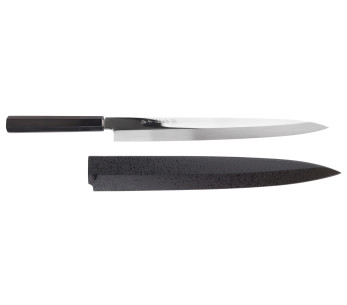
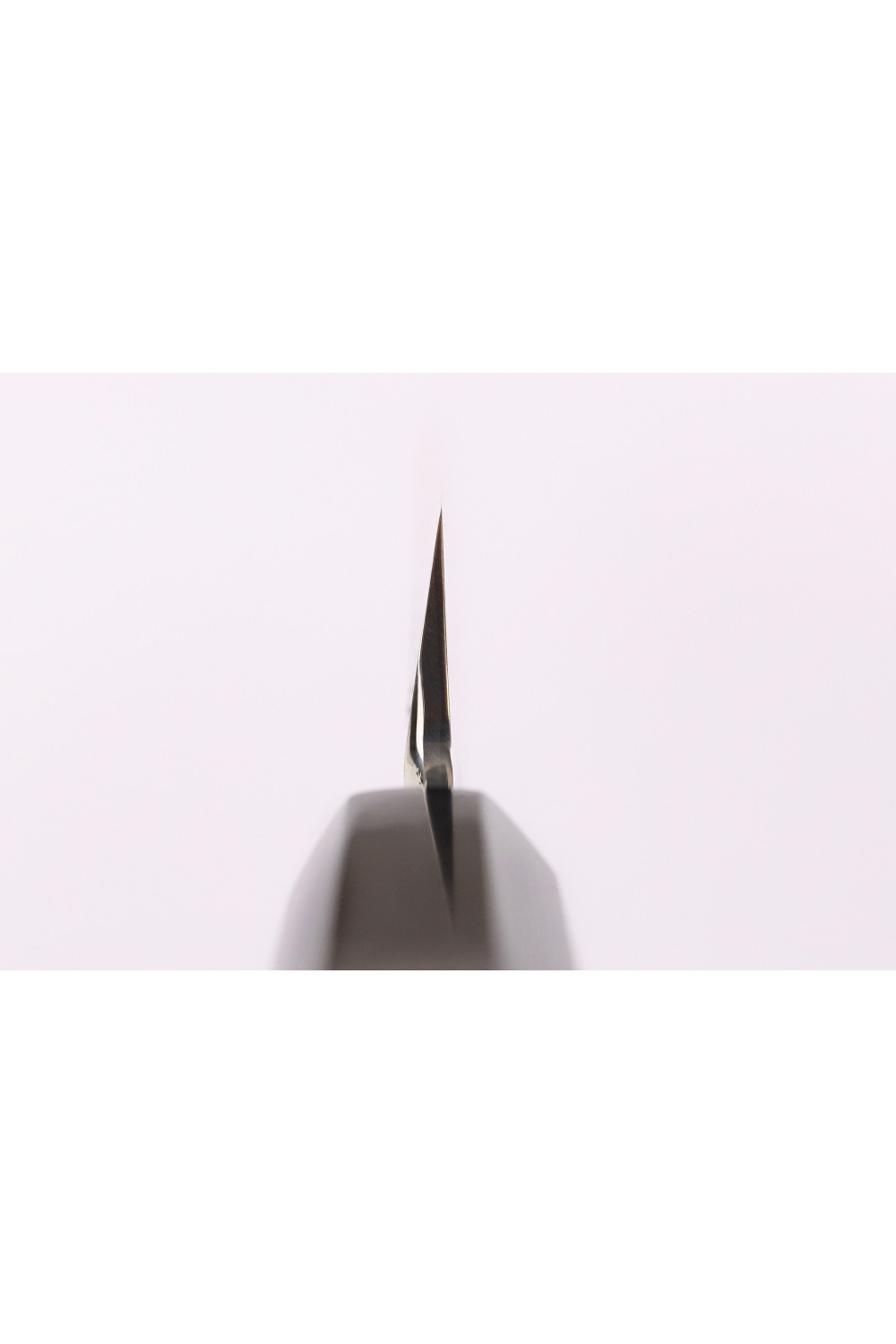
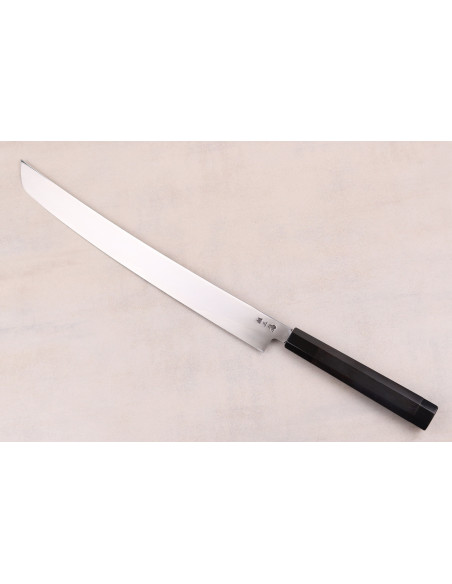
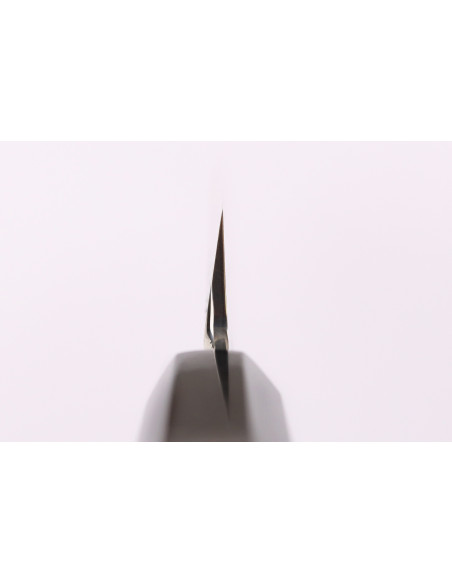
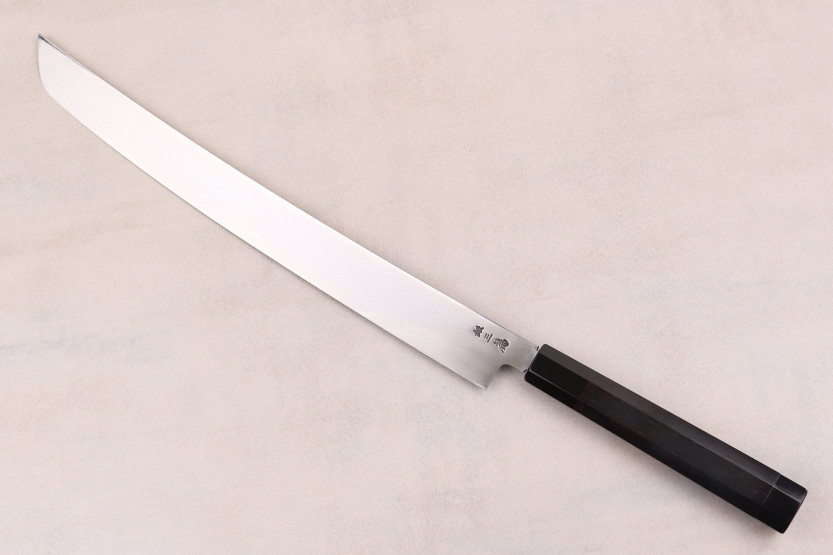
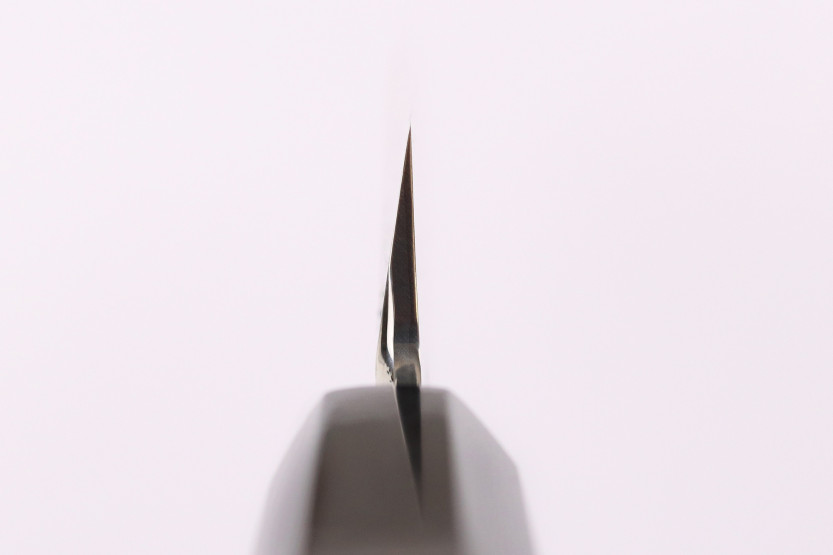
The Sakimaru Takohiki’s silhouette draws on the traditional design of long Japanese blades used for preparing fish. Its elongated profile and rounded tip theoretically allow for long, even cuts, which are particularly prized for preparing sashimi.The asymmetrical grind is designed for right-handed users and makes it easier to guide the blade during fine cuts. However, its unusual length, combined with its particularly elaborate decoration, makes this model primarily a collector’s item.
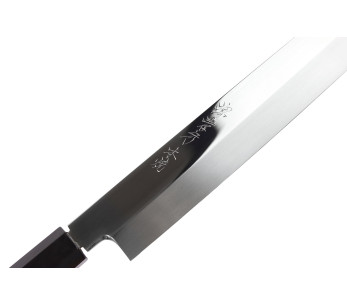
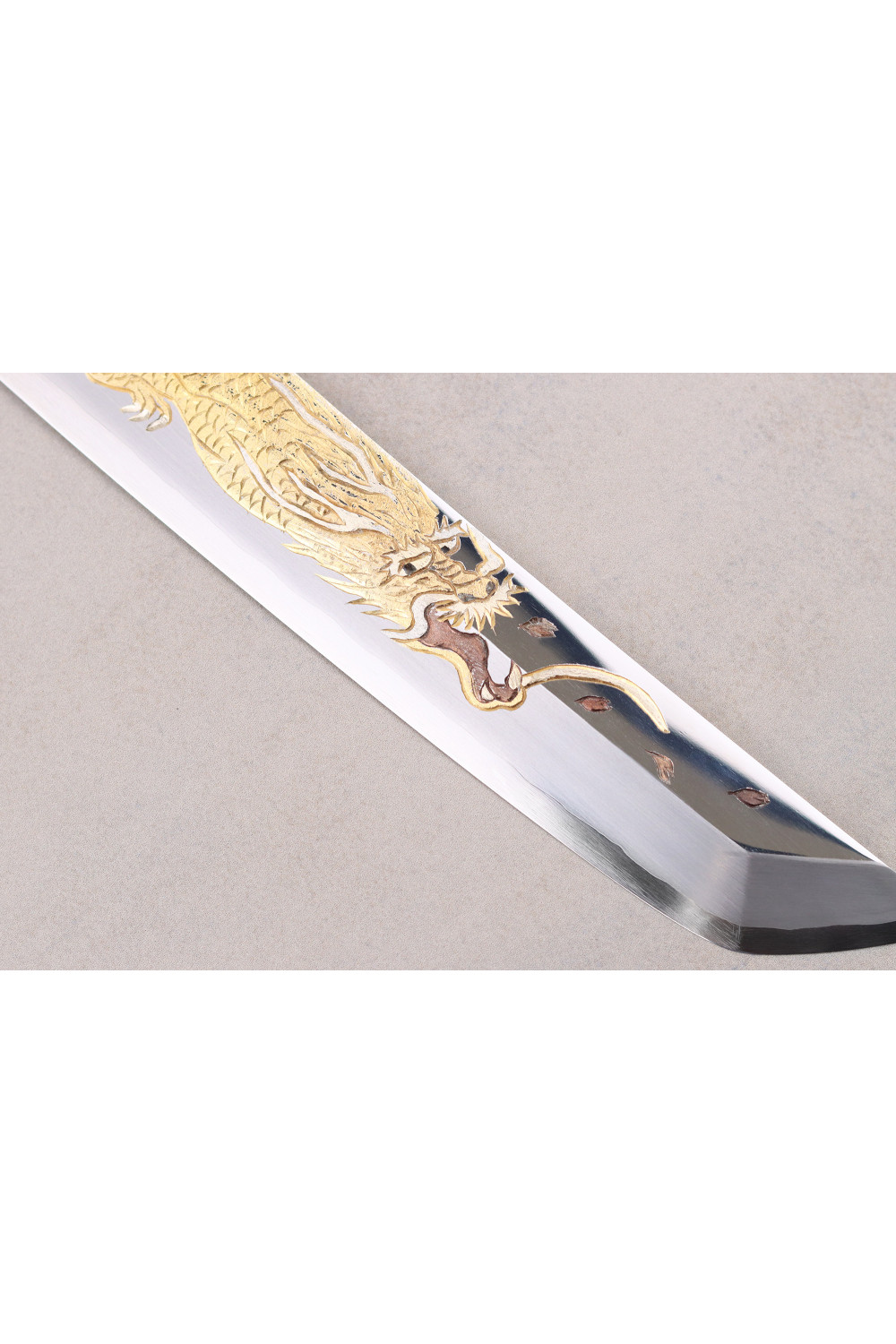
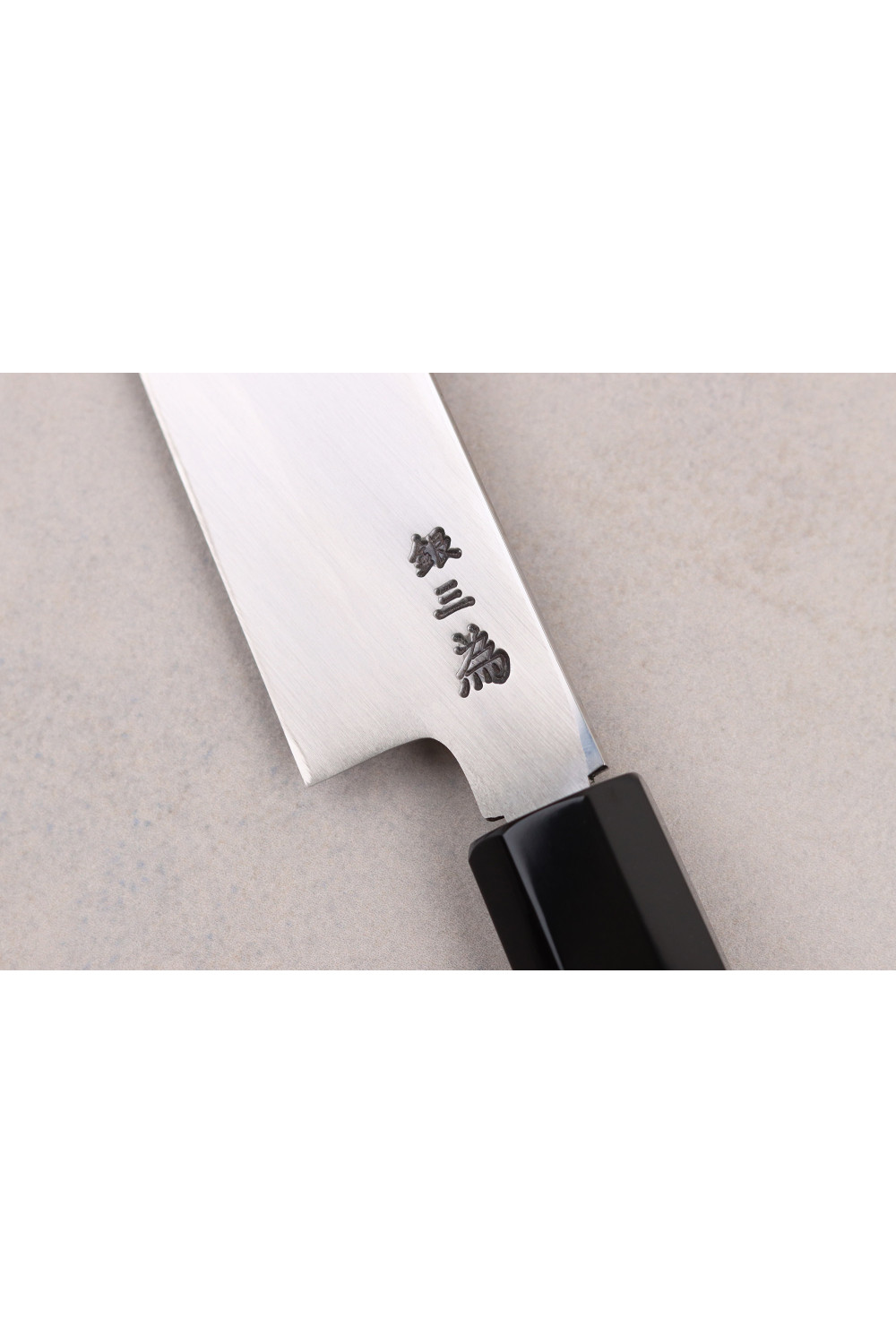
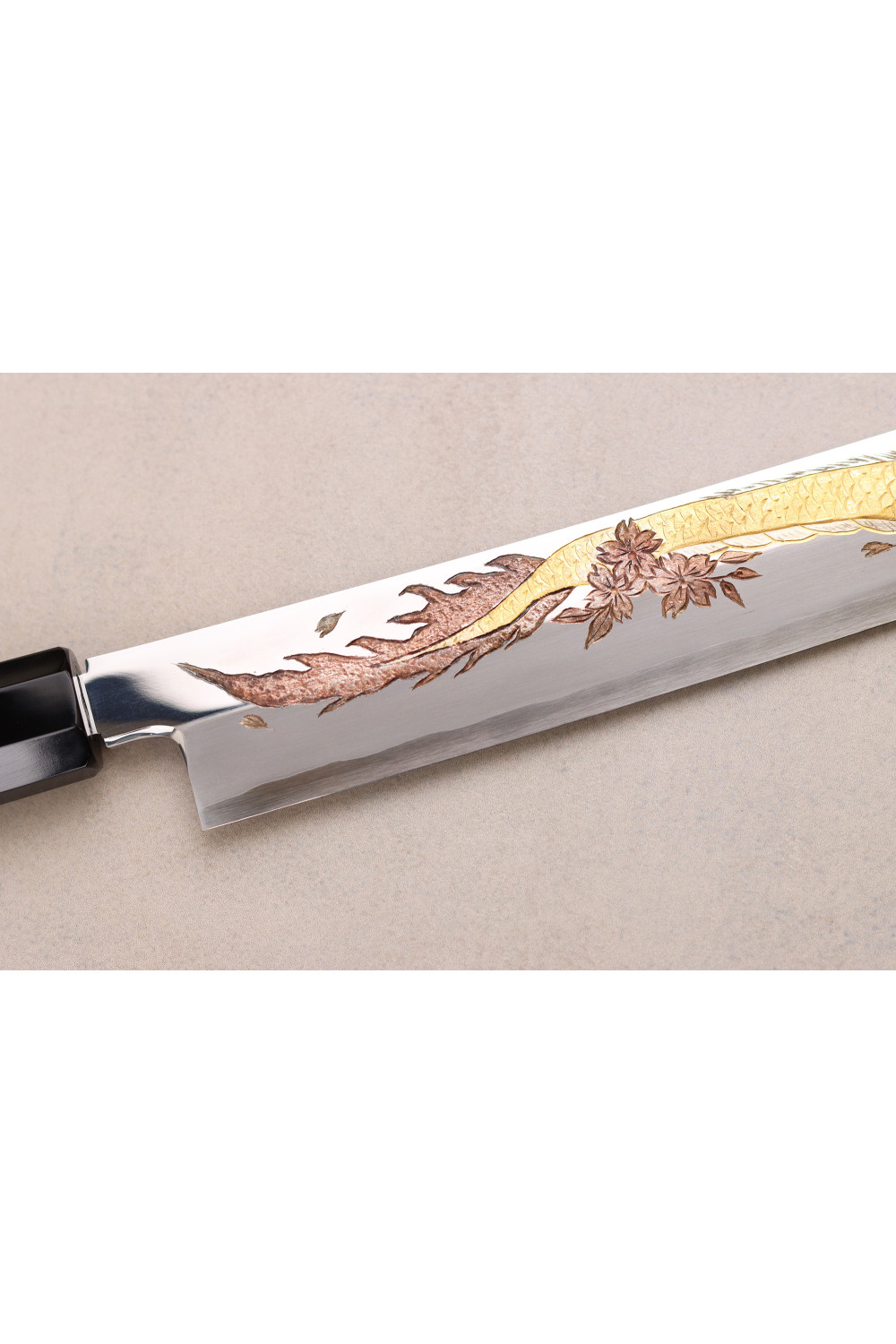
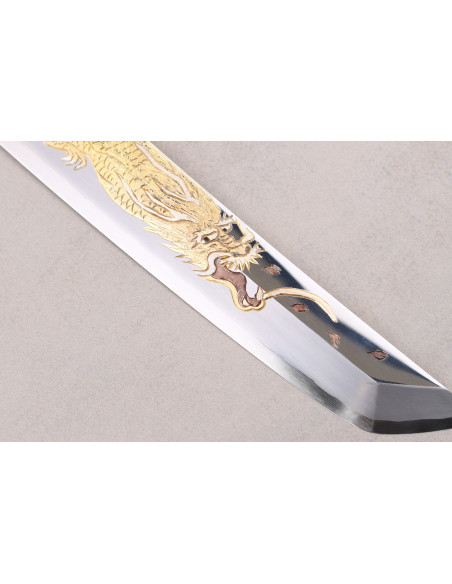
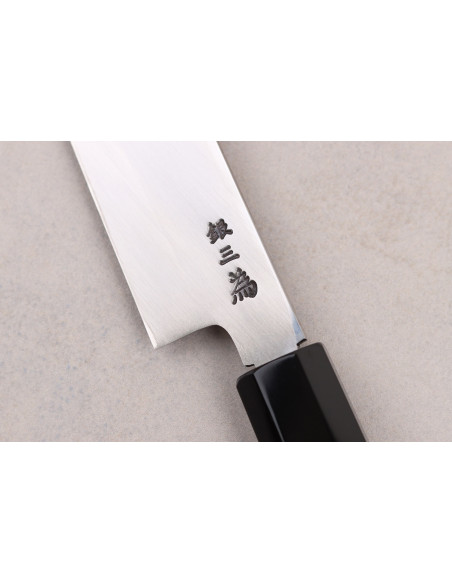
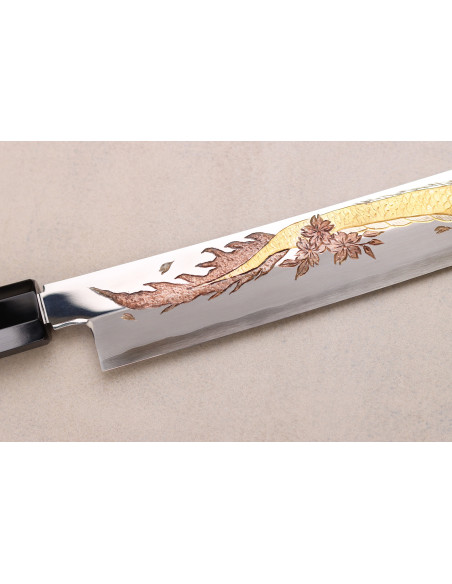
The surface features a mirror finish, achieved through a polishing process that gives the steel a shiny, reflective appearance. This meticulously prepared surface provides a remarkable backdrop for the engraved design: the polished areas catch the light, while the raised areas of the engraving create contrasts of depth.
Shogyō Mujō: a hand-engraved dragon, rich in symbolism
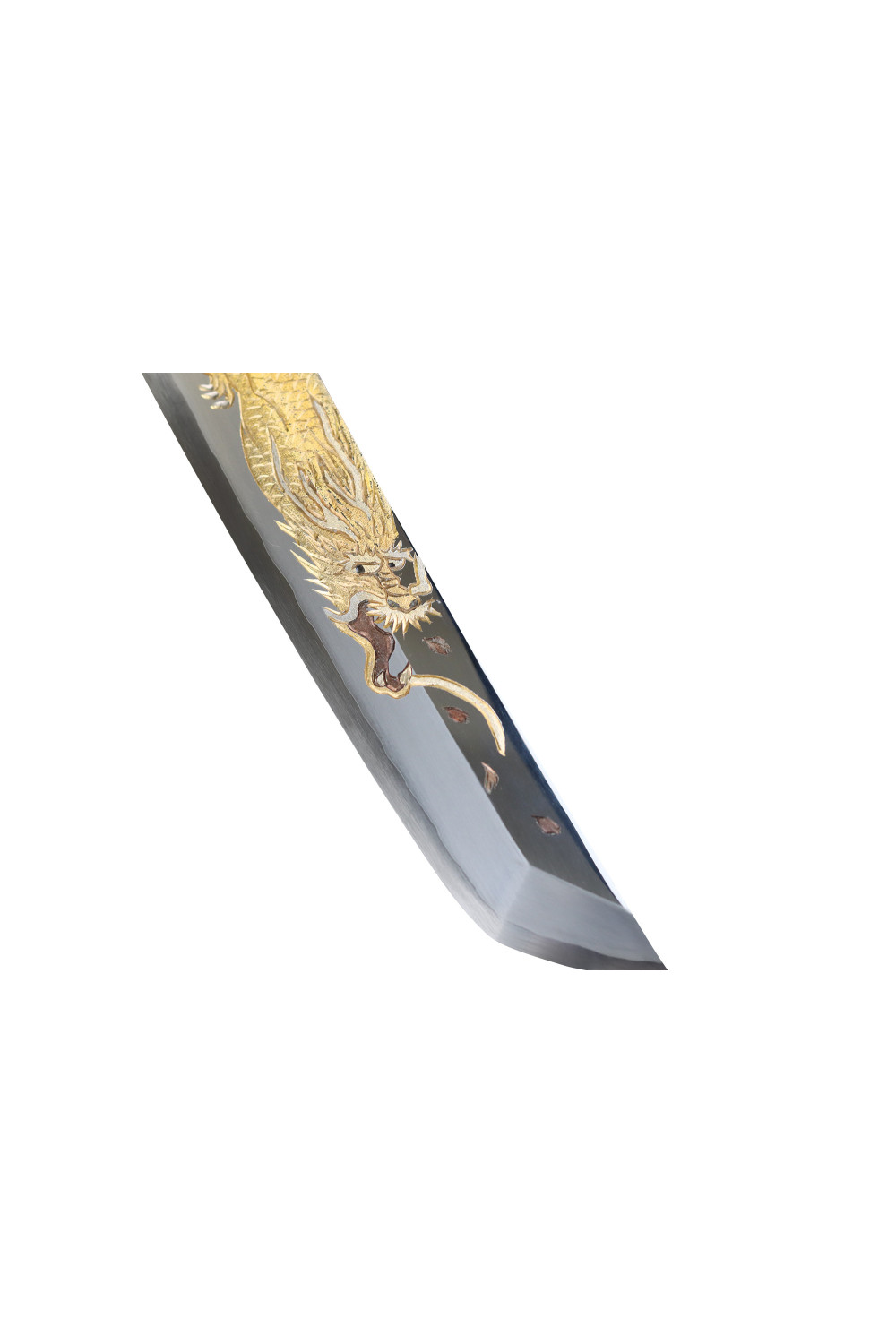
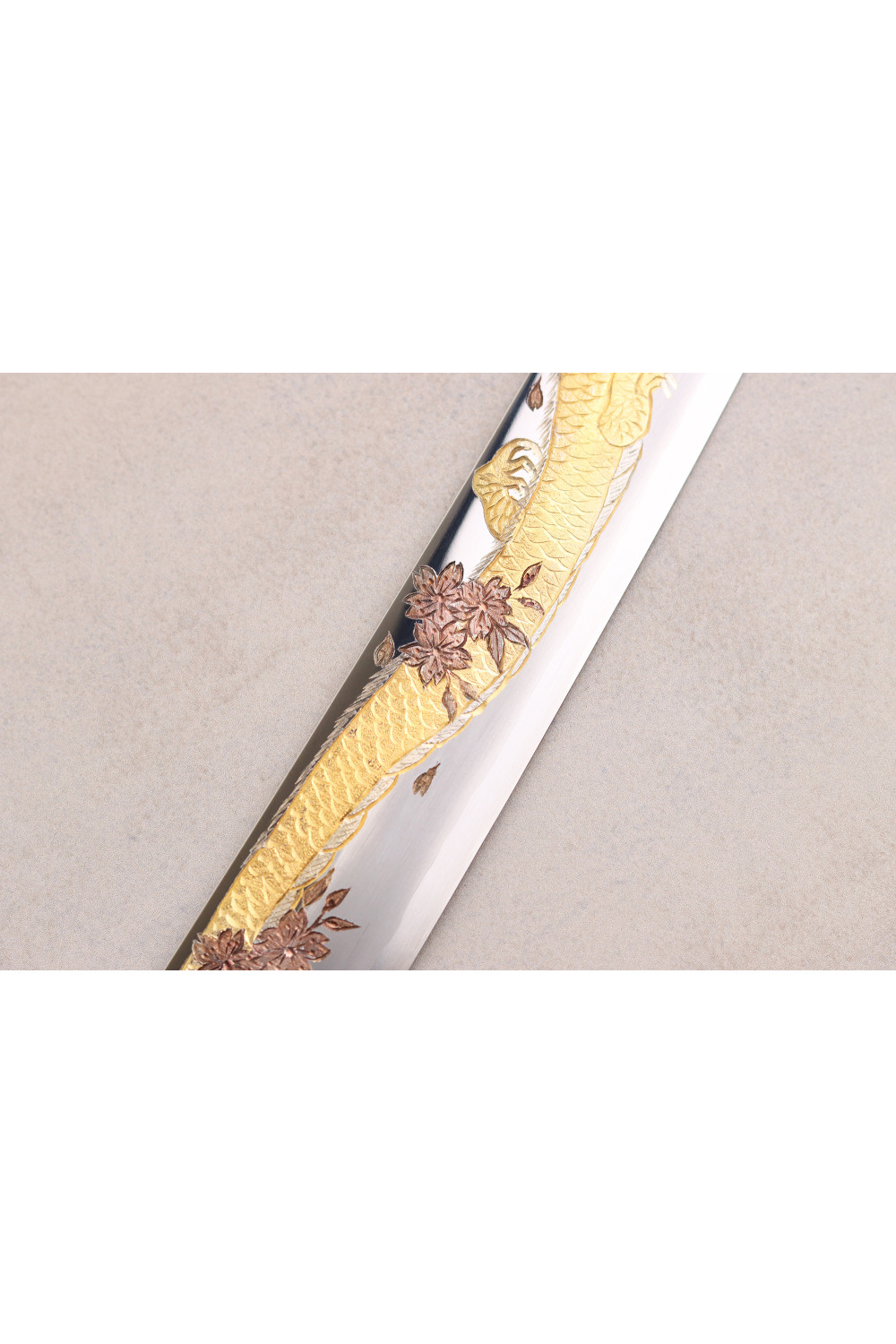
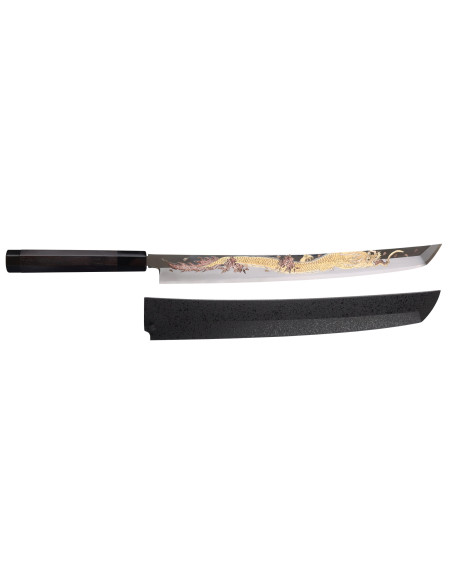
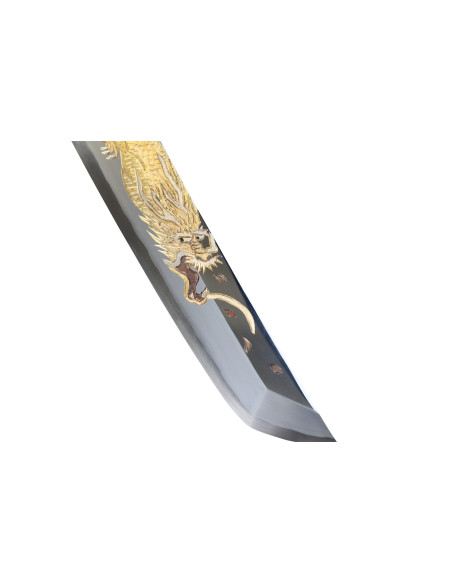
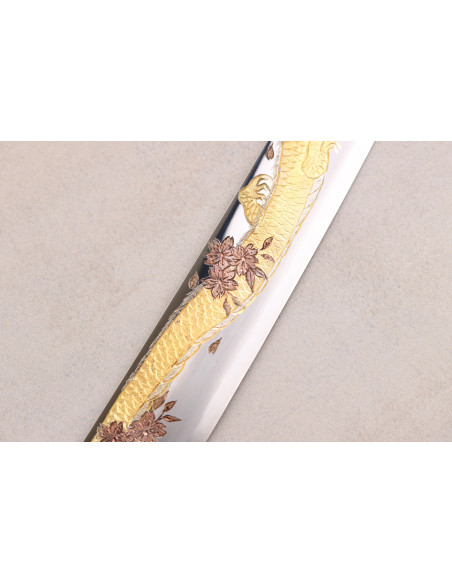
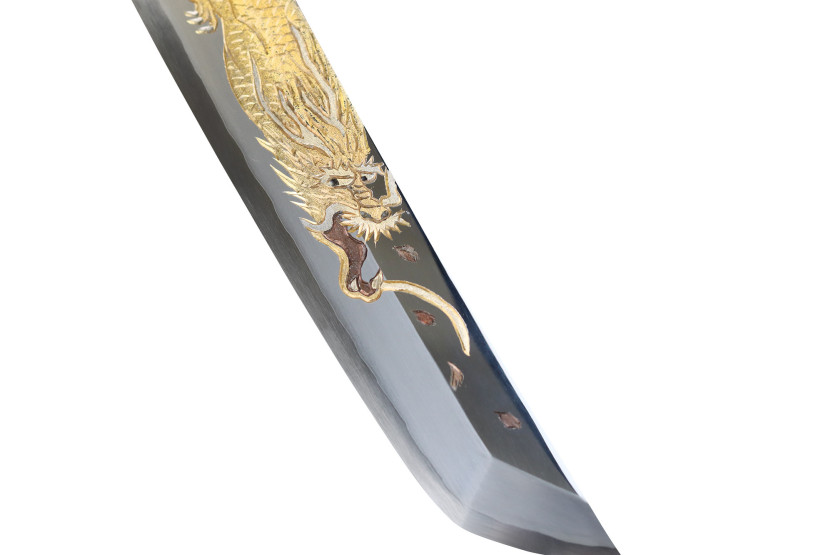
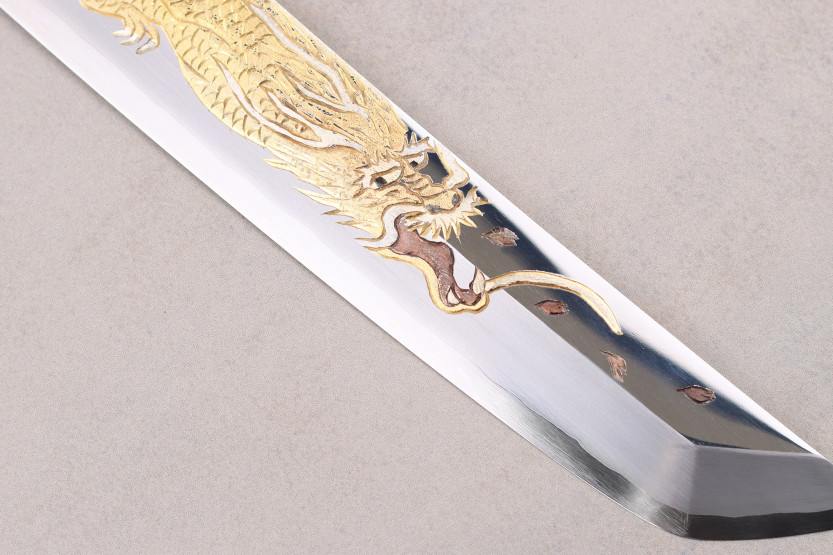
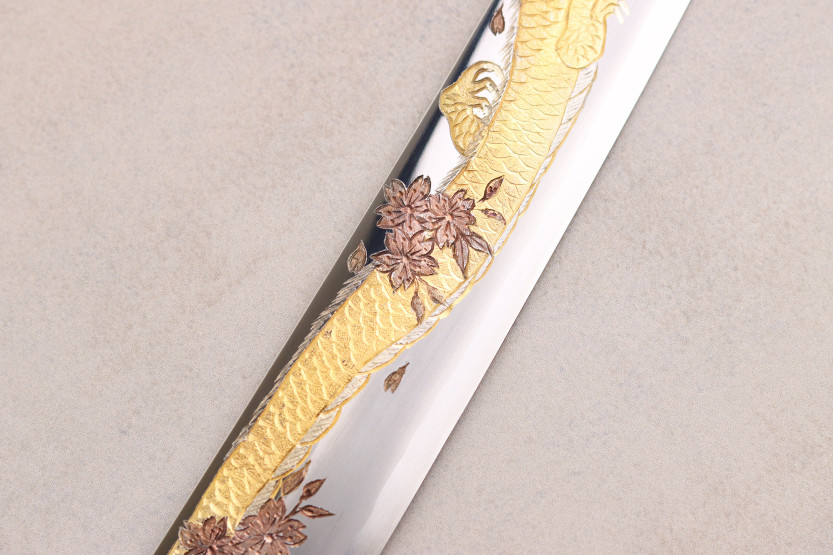
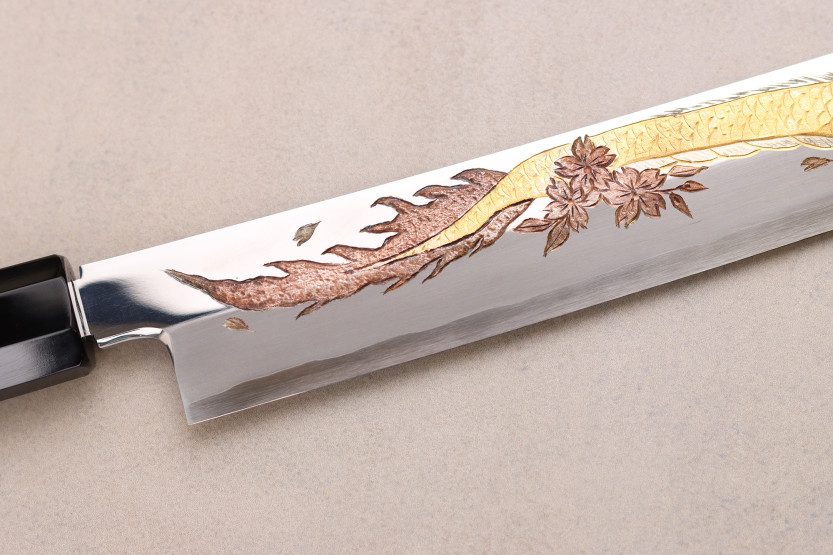
This knife stands out for its hand-engraved design by Michiko Kubota. The engraving depicts a majestic Japanese dragon winding its way through scattered sakura flowers and petals. The dragon’s body movements, scales, and floral elements form a richly detailed composition, whose reliefs shift visually depending on the angle of the light.
The Shogyō Mujō theme refers to a concept rooted in Japanese Buddhist thought: the transience of all things. Nothing remains the same forever; beings, seasons, and phenomena are in a state of constant transformation. Cherry blossoms, whose bloom is as spectacular as it is fleeting, illustrate this idea particularly well. Their beauty invites us to fully appreciate every moment.
As for the dragon, it echoes a famous East Asian legend: that of the koi carp, which bravely swims upstream to the Dragon Gate. After overcoming this challenge, it transforms into a mighty dragon. This tale symbolizes perseverance, pushing one’s limits, and transformation. Combined with the sakura petals, the dragon lends the design a philosophical dimension where strength and change meet the fragility of existence.
To bring this scene to life, Michiko Kubota works directly on the metal using chisels and a hammer. Every line, every scale, and every floral detail requires precise control over the depth of the incision, the angle of the tool, and the force of the strikes. The colored sections are created through plating, a process that involves applying a thin layer of metal to specific areas of the surface. These touches of color enrich the composition and accentuate the contrasts with the polished steel.
An ebony handle with refined finishes
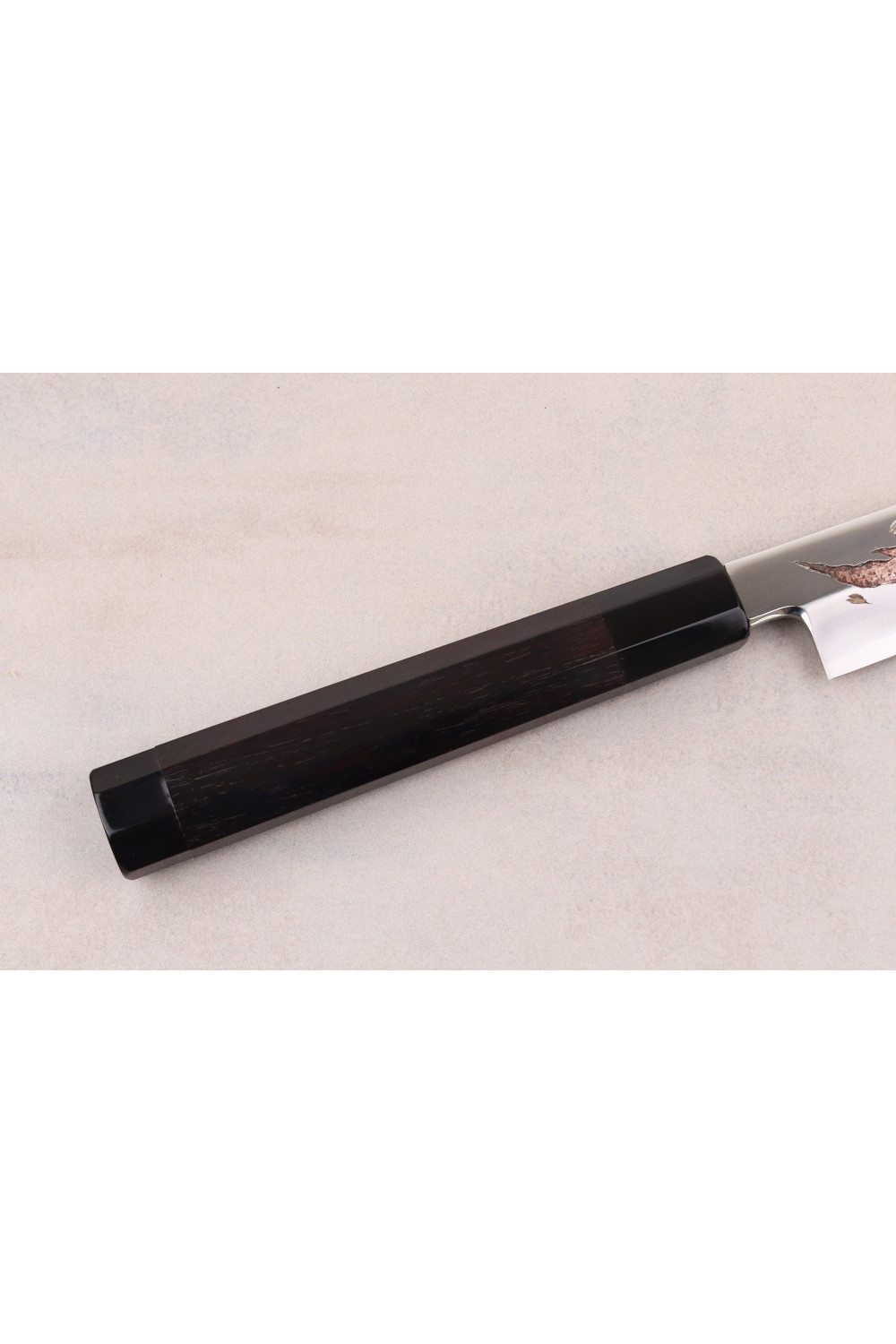
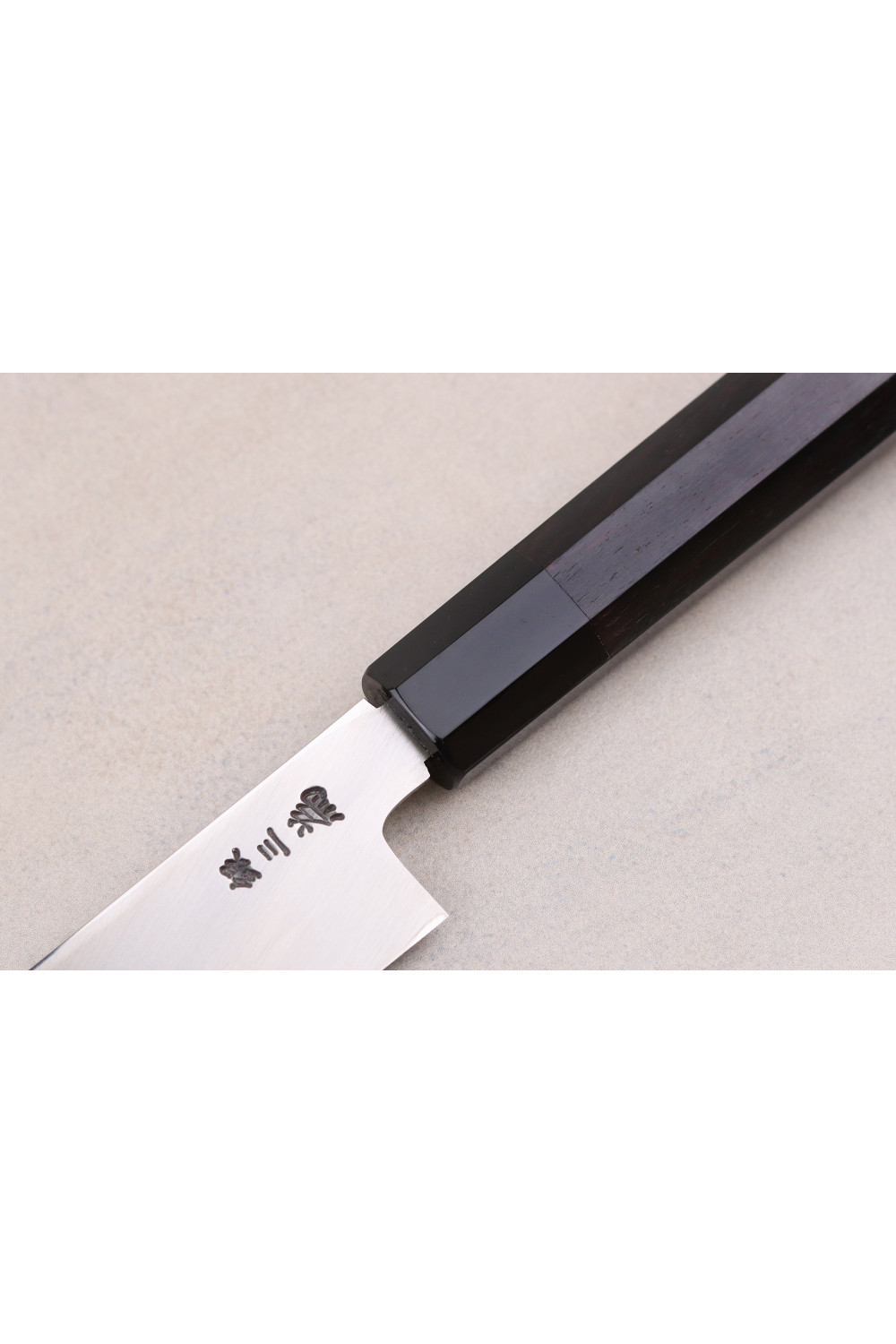
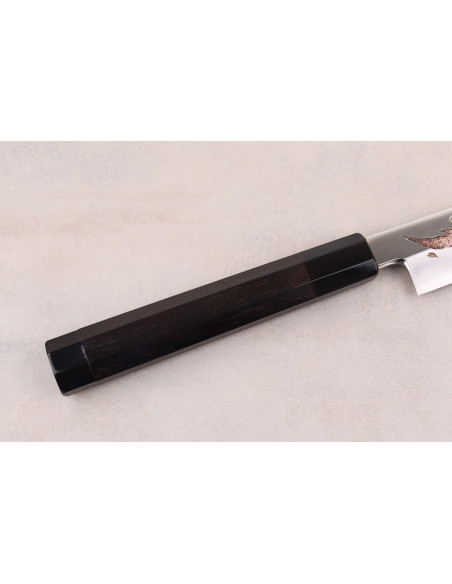
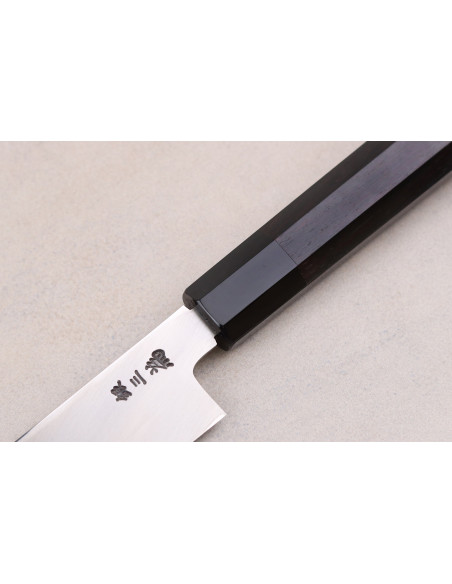
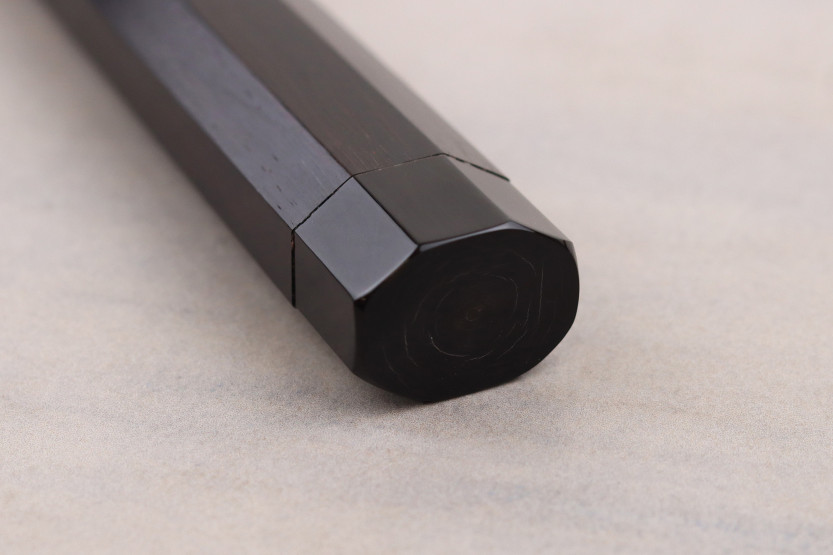
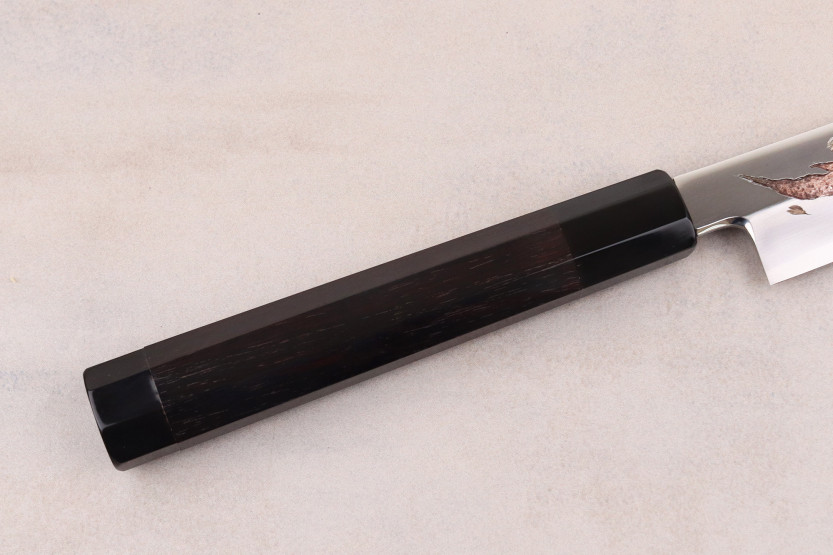
The handle is crafted from ebony, a wood renowned for its density, deep color, and elegant appearance. Its dark hue provides a beautiful contrast to the blade’s silvery sheen and the nuances of the engraved design. Ebony also has a texture that is pleasant to the touch, making it particularly well-suited for crafting high-end handles.
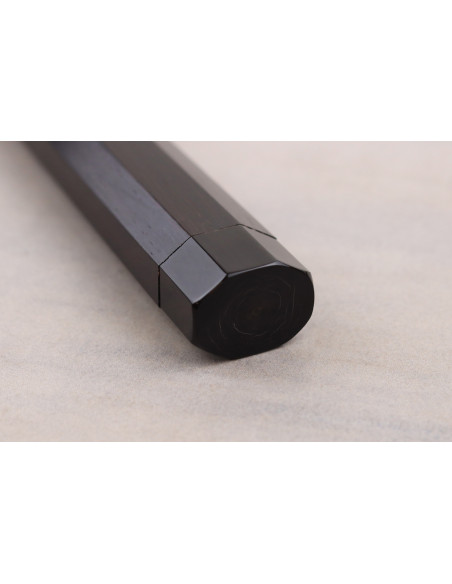
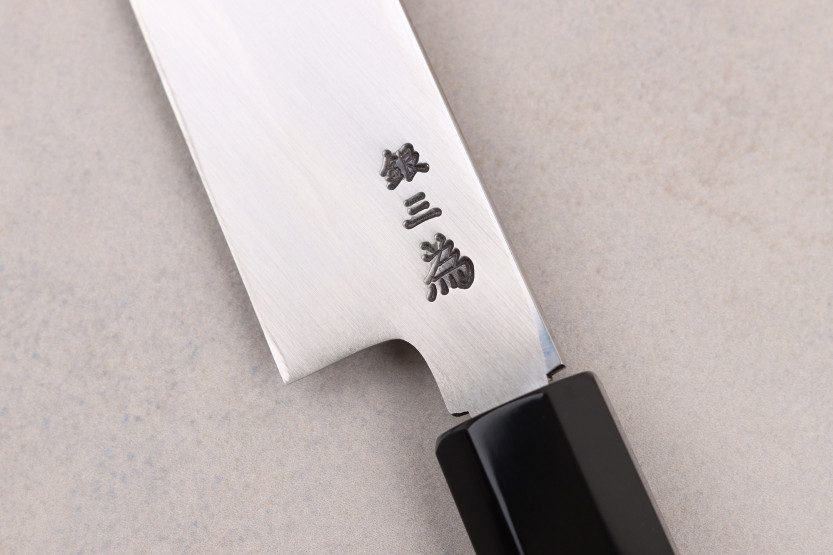
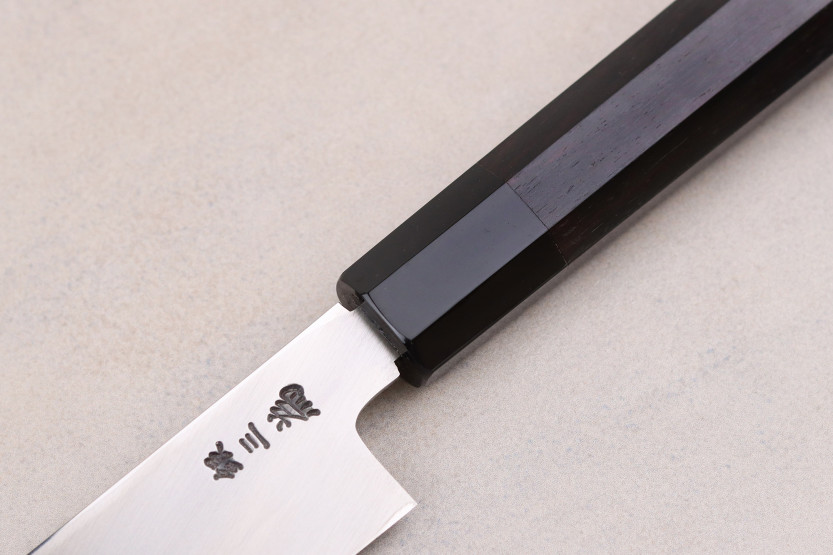
Its octagonal shape features eight sides that provide precise support for the fingers. This traditional profile makes it easy to identify the orientation of the handle and guides cutting motions when the knife is in use. Its geometric design also complements the minimalist aesthetic of Japanese cutlery.
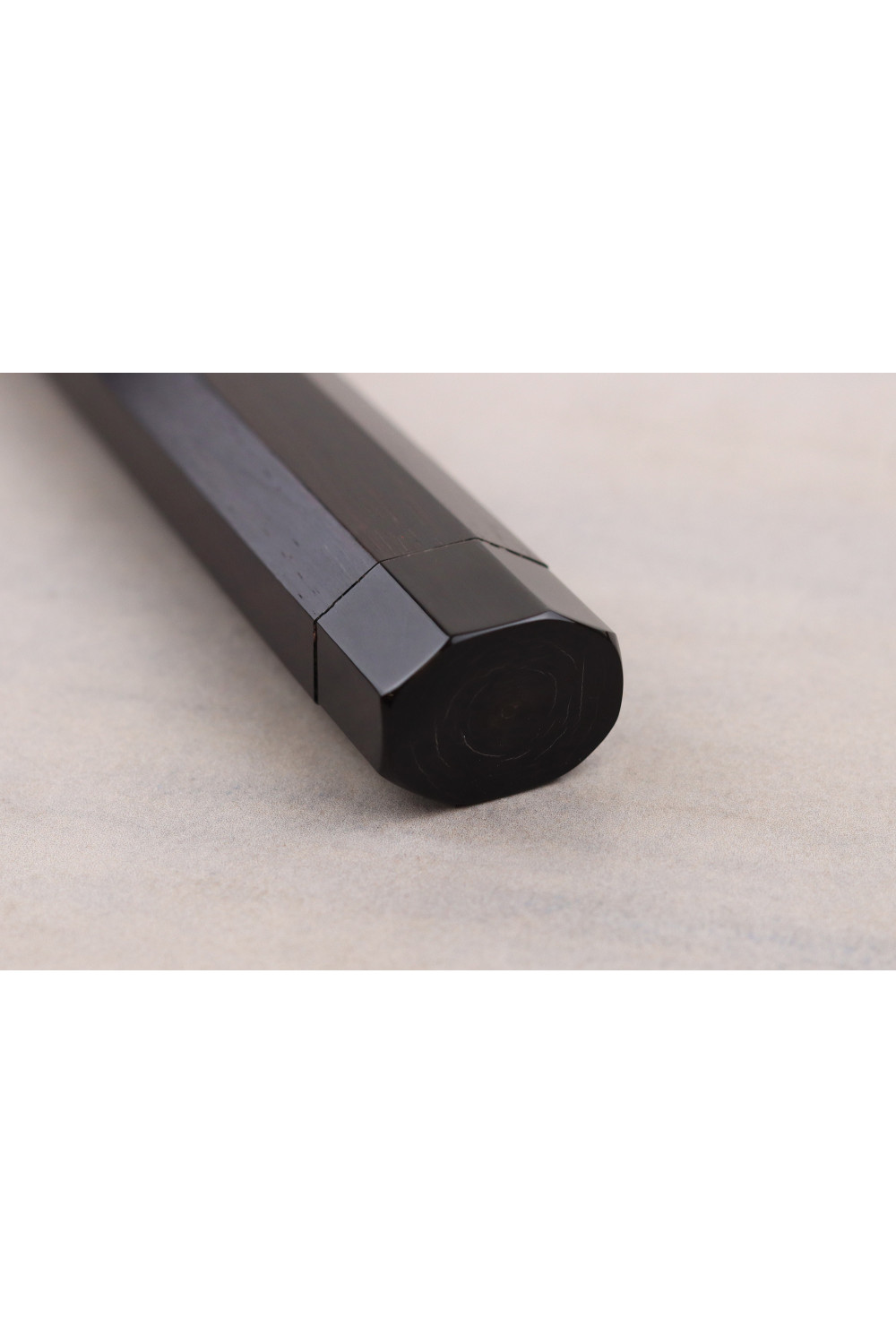
The bolster and pommel are made of black buffalo horn. The bolster provides a visual transition between the blade and the handle, while the pommel adds a refined finish to the end of the handle. Wood and horn are natural materials whose color and texture may vary from one knife to another.
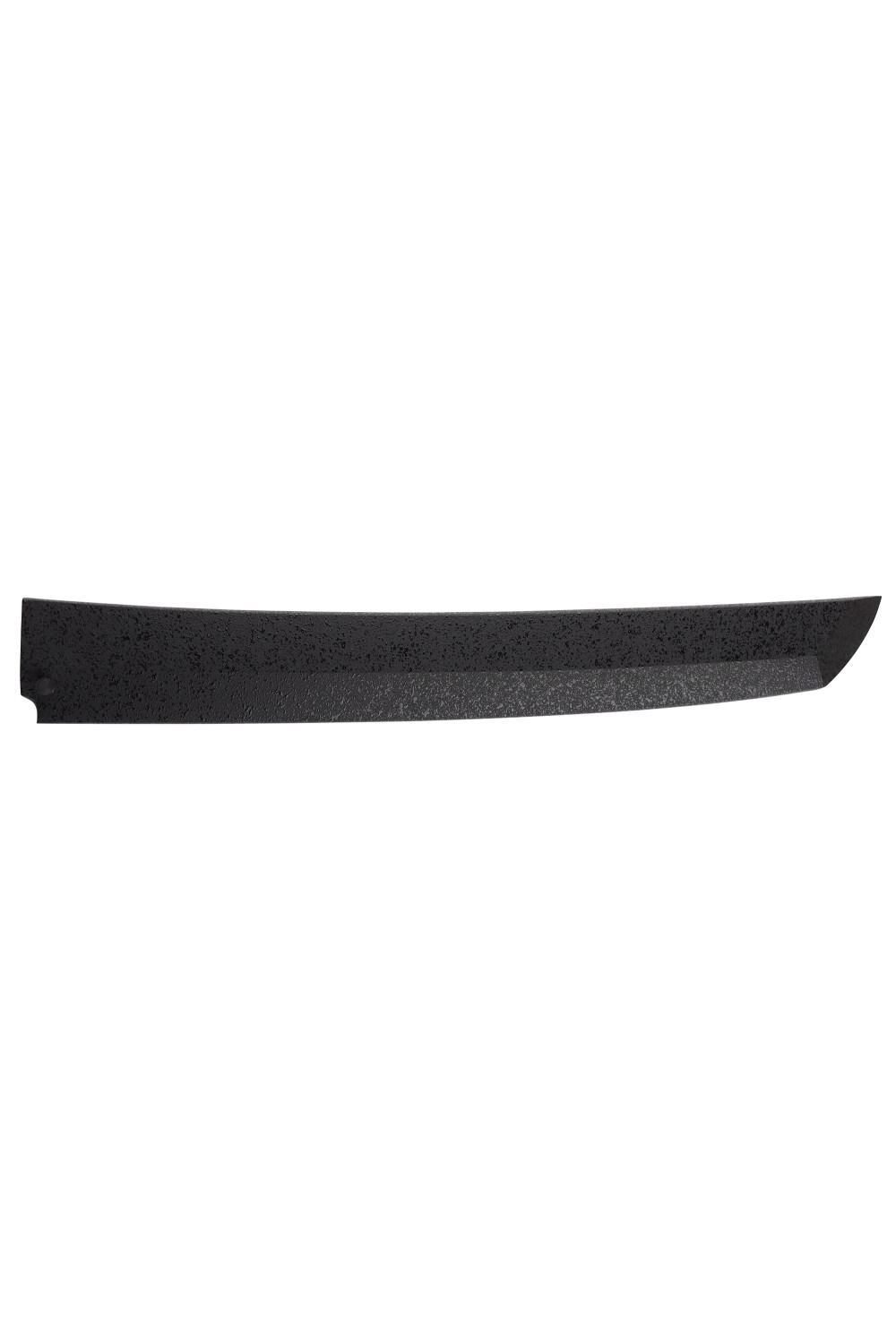
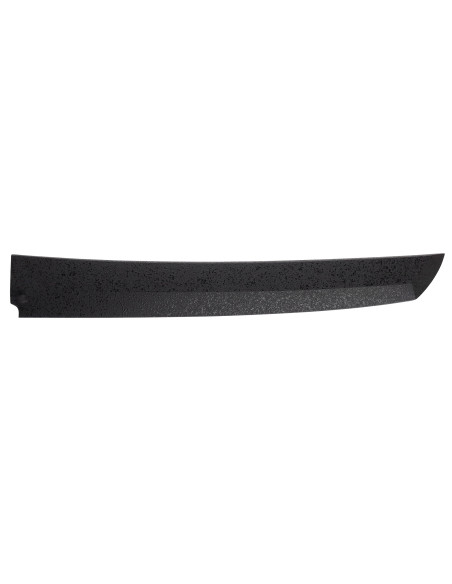
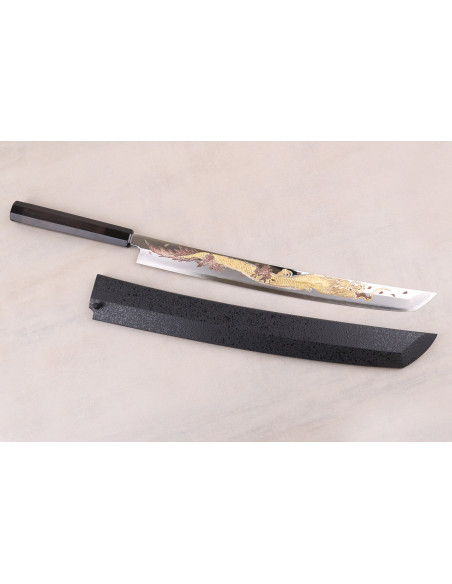
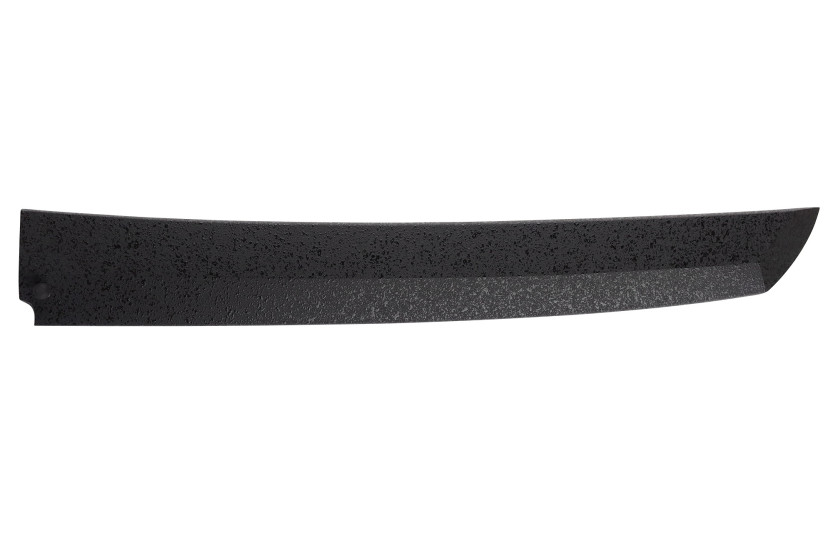
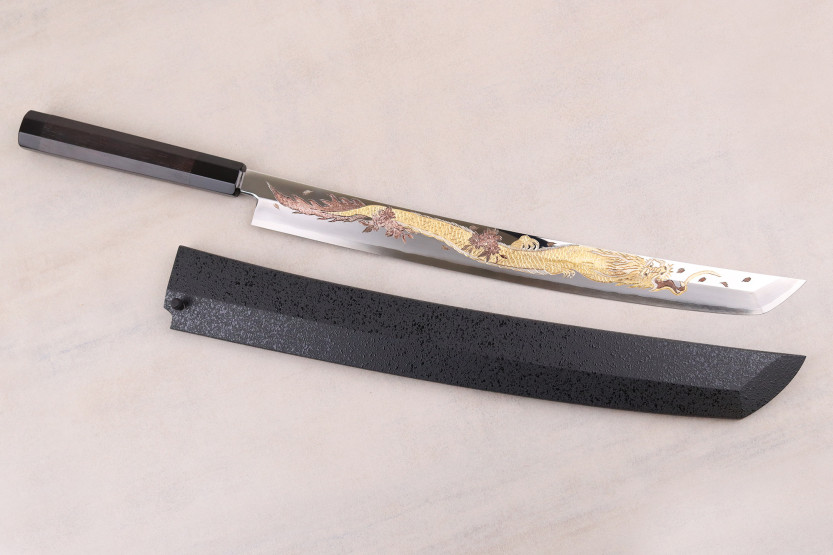
This Sakimaru Takohiki comes with a Kuroishime saya, a Japanese sheath designed to cover the blade and protect it when stored. The term “Kuroishime” refers here to a textured black finish, whose appearance is reminiscent of a mineral surface.
Key features of this high-end knife
-
- 39-cm blade: large Japanese blade for cutting fish
- Sanmai construction: combines a hard core with softer outer layers
- Japanese Ginsan stainless steel: sharp edge with excellent corrosion resistance
-
- Hardness of approximately 60 HRC: promotes long-lasting edge retention
- Asymmetrical grind: precise guidance for right-handed users
- Mirror finish: highlights the relief and contrasts of the engraving
-
- Hand-engraved by Michiko Kubota: an interpretation of Shogyō Mujō
- Octagonal ebony handle: dark aesthetic and ergonomic design
- Black horn bolster and ferrule: complement the handle’s natural finish
- Forged by Shogo Yamatsuka: specialist in Ginsan steel
-
- Sharpened by Mitsuo Yamatsuka: specialized craftsmanship focused on the cutting edge
- Kuroishime saya included: protects the blade when stored
- Made in Sakai, Japan: centuries-old cutlery tradition
Preserving this exceptional piece
This creation requires particularly meticulous care to preserve its mirror finish, cutting edge, and decorative details. Despite Ginsan steel’s corrosion resistance, its carbon content and delicate finishes demand constant attention.
If you use it in the kitchen, be sure to cut food on a wooden or synthetic cutting board. After use, gently wash the blade by hand, then dry it immediately with a soft, non-abrasive cloth. Avoid harsh cleaning products, abrasive sponges, and repeated scrubbing on engraved or plated areas. Never put the knife in the dishwasher or let it soak.
Store it completely dry in its saya, away from moisture. To preserve its collectible condition, handle it as little as possible and have it sharpened only by a specialist in asymmetrical Japanese blades.
Three Japanese crafts come together in Sakai
The creation of this piece involves several artisanal specialties, which play an essential role in the cutlery tradition of Sakai, in Osaka Prefecture.
Shogo Yamatsuka is the blacksmith who crafted the blade. Born into a family of blacksmiths, he learned his trade from his father and gradually specialized in working with Ginsan steel. In particular, he has mastered hizukuri, a traditional hot-forging technique that requires great precision in temperature control and metal shaping. His career has earned him official recognition as a Japanese Traditional Master Craftsman.
Mitsuo Yamatsuka is responsible for sharpening the blade. This Master Traditional Craftsman, who specializes in knife finishing, helps define the geometry of the cutting edge and the quality of the cut. His work exemplifies the traditional organization of Sakai’s cutlery industry, where forging and sharpening are often two complementary trades.
Finally,Michiko Kubota adds her artistic signature through engraving. Originally from Osaka Prefecture, she discovered knife engraving through her interest in meikiri, the art of engraving inscriptions on blades. She then developed her own decorative style by experimenting with various chisel and hammer techniques. Her work draws inspiration from animals, nature, and Japanese cultural heritage. Her compositions transform knives into ornamental works of art, with every detail the result of a manual stroke.
This collaboration brings together three distinct skills: mastery of steel, precision in sharpening, and the finesse of artistic engraving. It showcases the full richness of Japanese craftsmanship!
Discover our entire selection of engraved knives to explore other creations from this cutlery tradition!




 By buying this product you can collect up to