A blade with a remarkable, long-lasting cutting edge
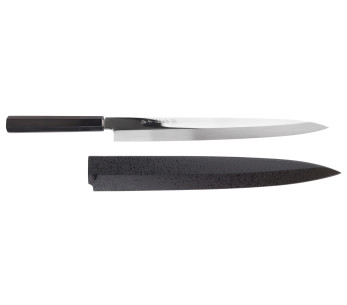
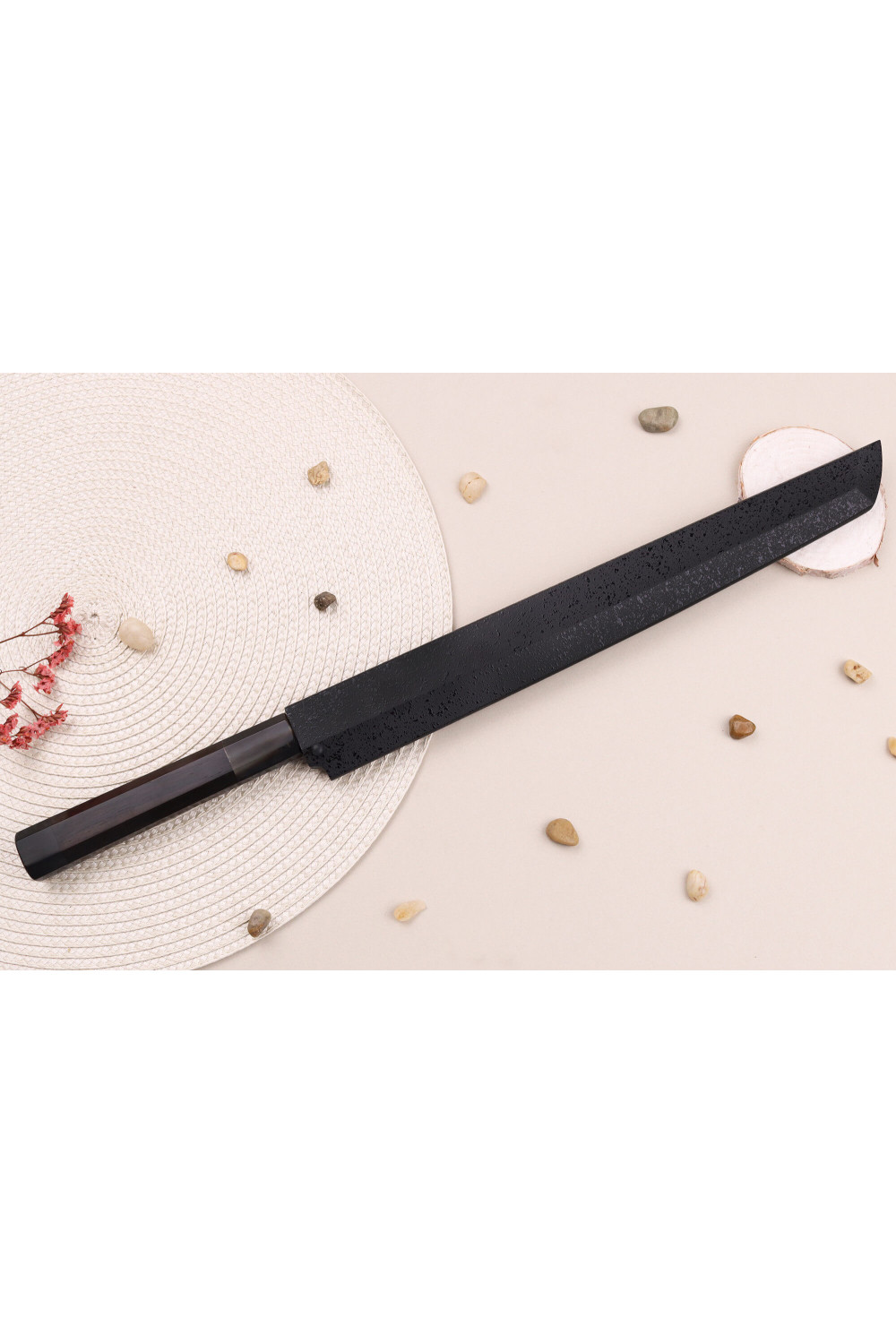
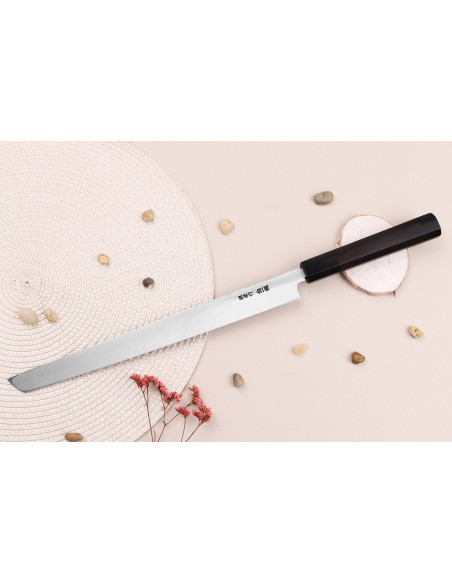
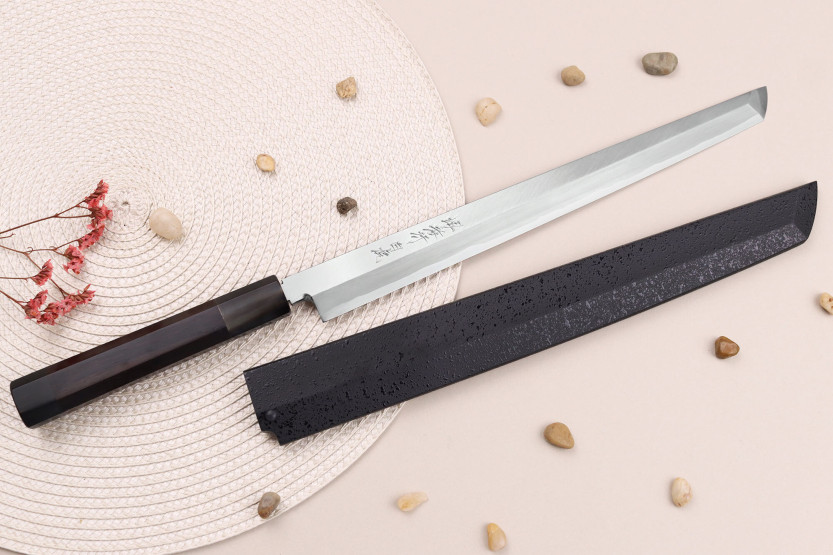
This Sakimaru Takohiki knife features a blade structured using the San Maï technique, meaning "3 layers" in Japanese. This involves forging a core of rigid steel surrounded by a layer of slightly softer steel folded in on itself, forming the remaining 2 layers. This process gives the blade optimum balance, while protecting the core.
The core of this blade is made from Shirogami #1 steel (also known as White Steel #1), a premium Japanese alloy produced by Hitachi's world-renowned steelworks. The term "Shiro" means white and "gami" stands for steel, inspired by the white paper used in the alloy's manufacturing process. It is highly appreciated by chefs attached to traditional values, as it is made in Japan and forged by the finest blacksmiths. They like to use it because it's easy to work with.
This high-quality alloy is enriched with iron ore and also contains almost 1.2% carbon, essential elements for increasing the hardness of an alloy. Shirogami #1 achieves a hardness of 62HRC on the Rockwell scale, giving it a razor-sharp edge. The blade has a clean, long-lasting edge, offering precise cuts from the very first use and requiring less frequent sharpening sessions. In addition, sharpening remains easy to carry out whenever necessary.
The microscopic structure of this alloy is also remarkable. Its homogeneity allows us to observe a uniform distribution of micro-carbides on its surface, giving the steel a high degree of purity and reinforcing its resistance to splintering.
Secondly, the outer layer is made of softer steel and surrounds the core on both sides. This arrangement is designed to balance the core's rigidity while protecting it from the micro-shocks likely to occur when cutting. The softer steel gives the blade a certain flexibility of use without compromising its strength.
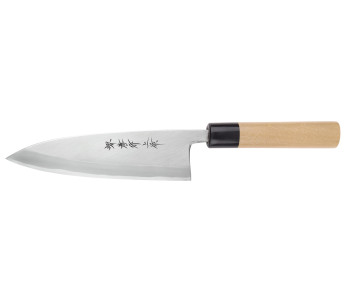
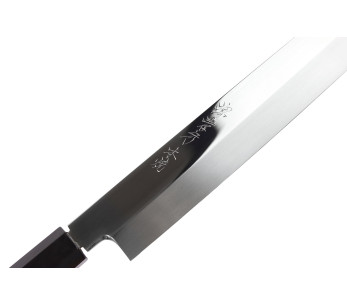
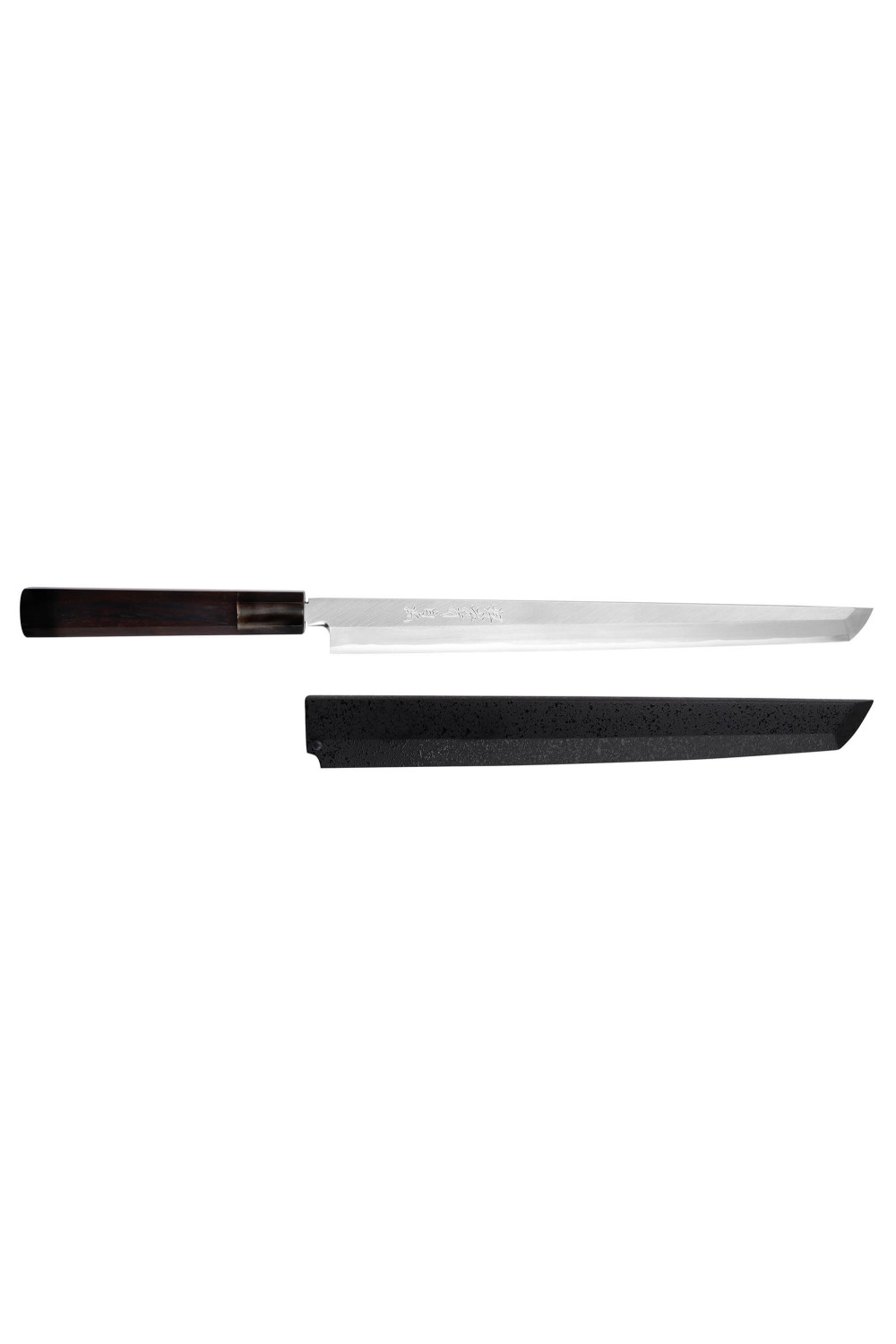
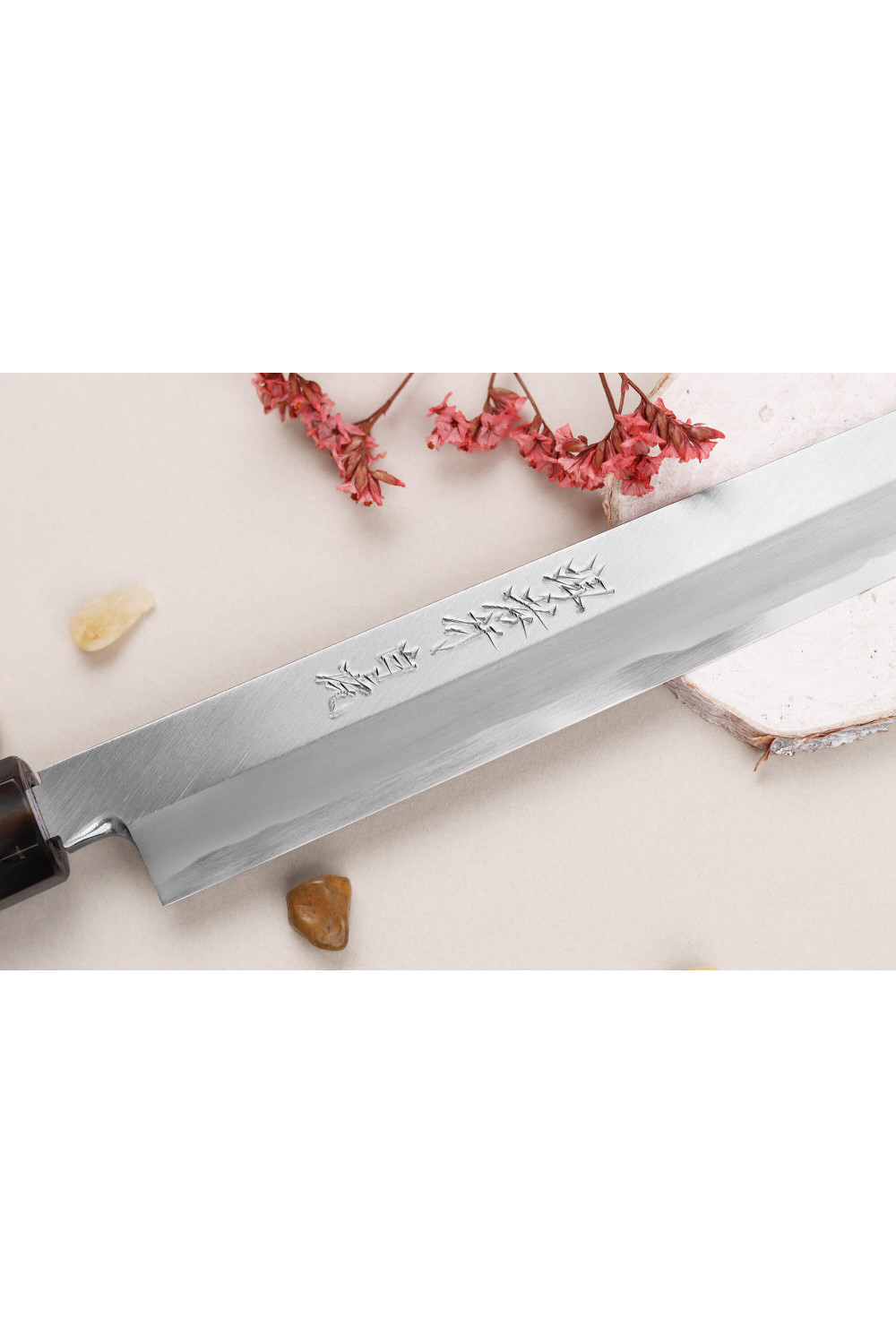
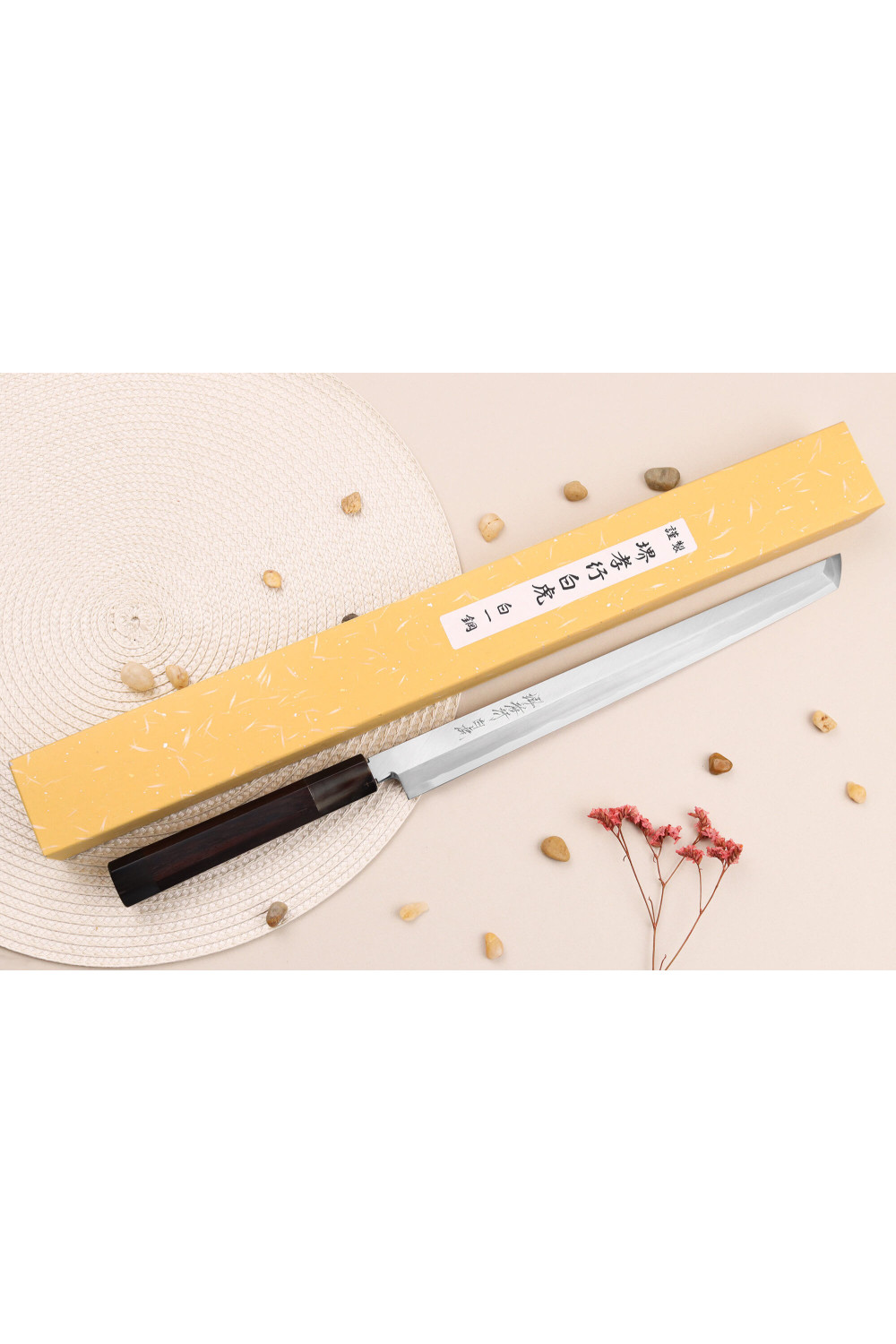
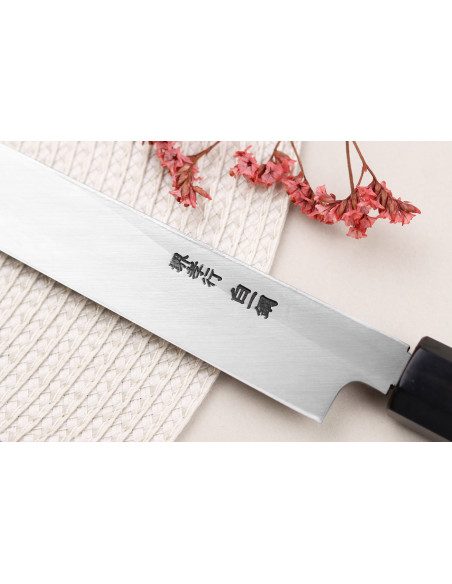
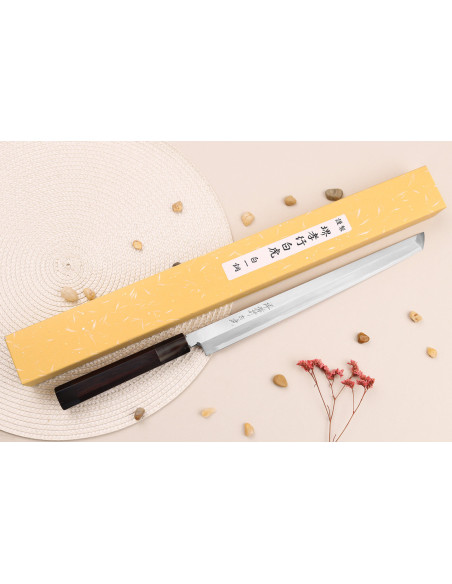
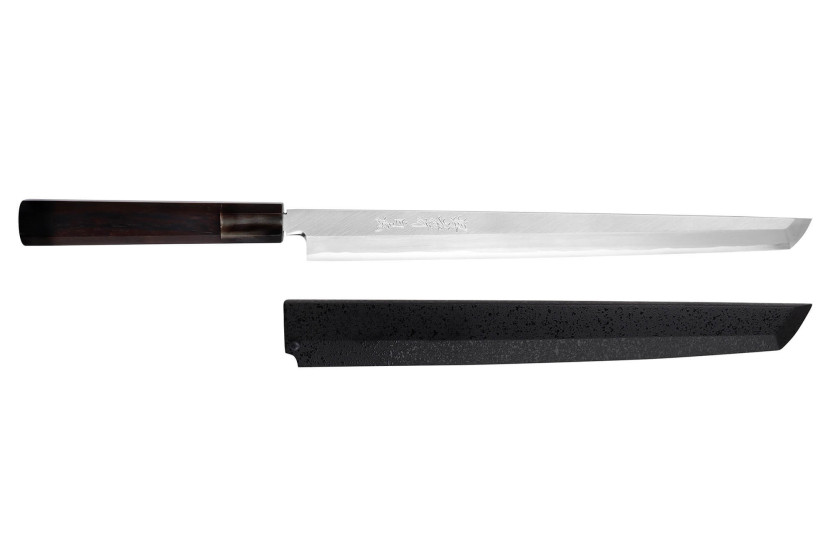
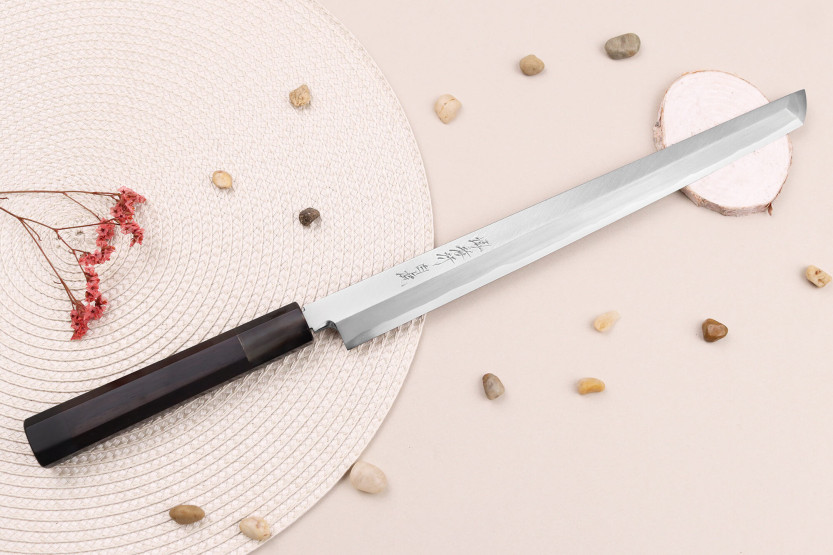
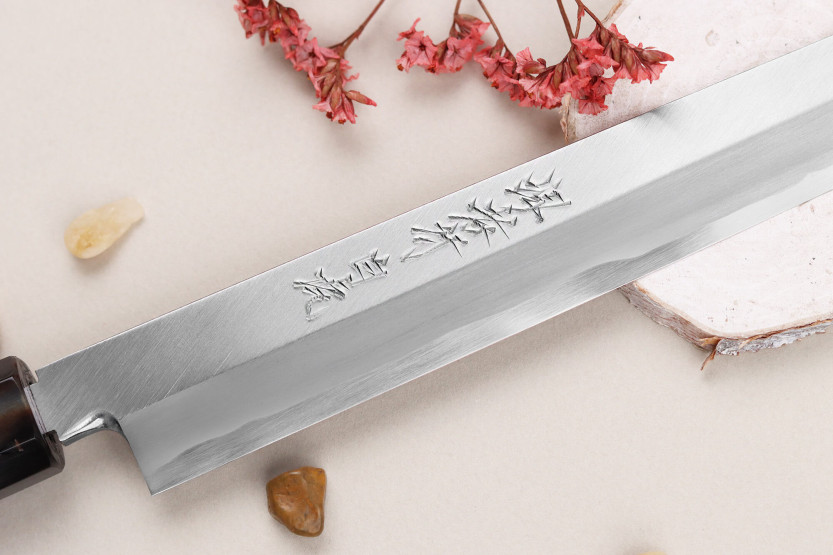
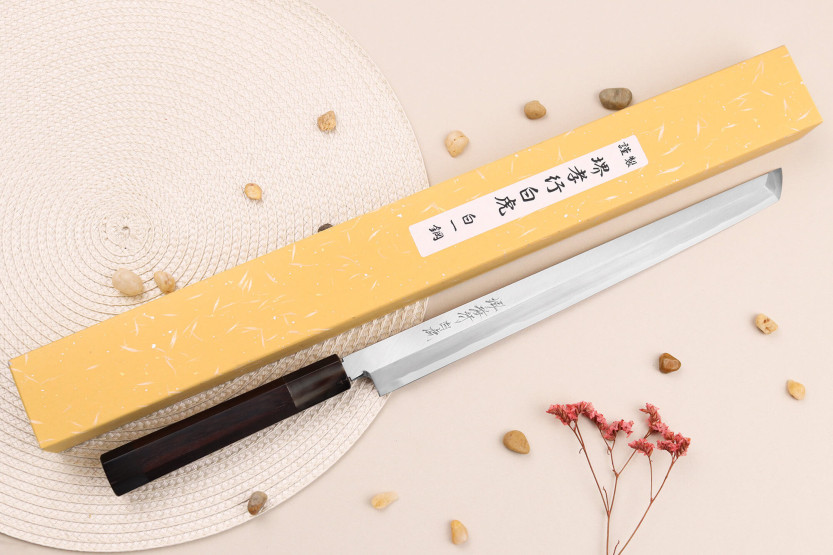
The blade has a bevelled edge, sharpened on one side only, which makes it easy to remove slices of food. What's more, the back of the blade has a hollow cutting edge, promoting air circulation and preventing food from sticking.
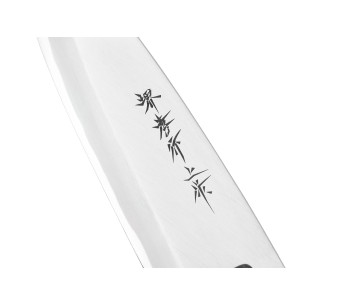
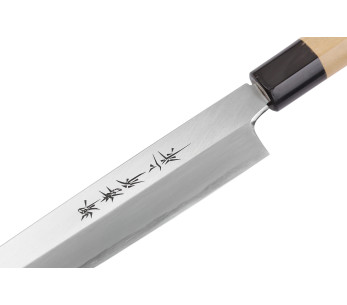
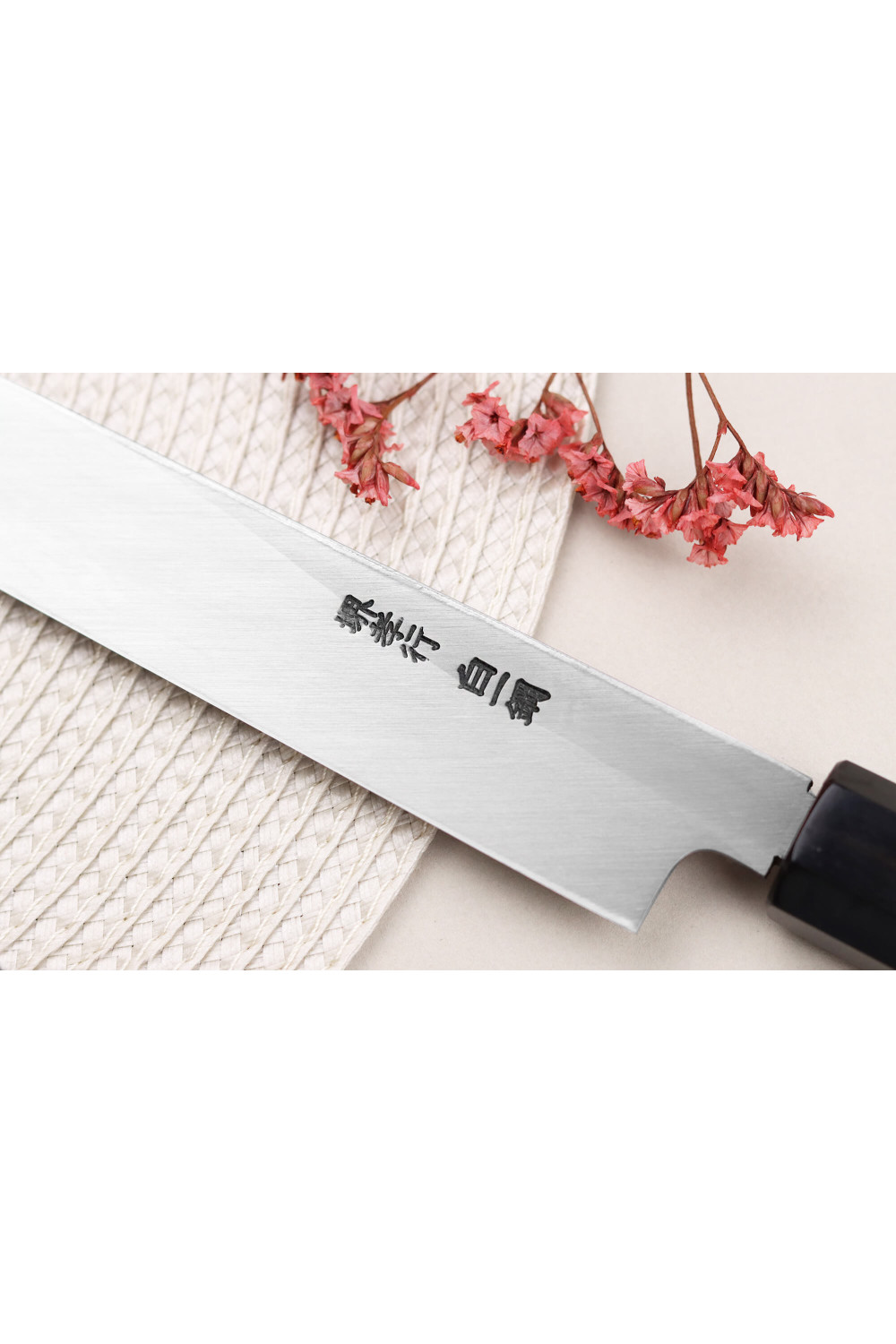
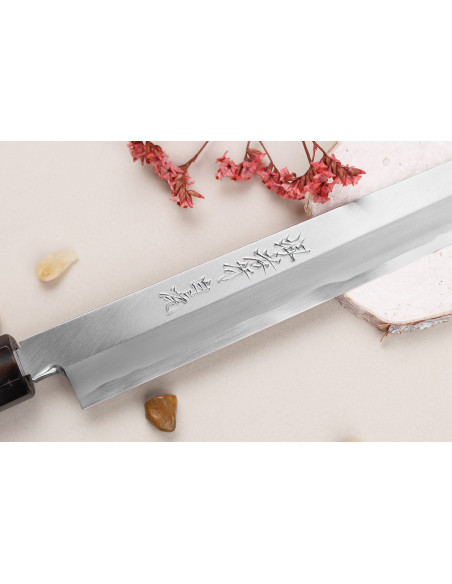
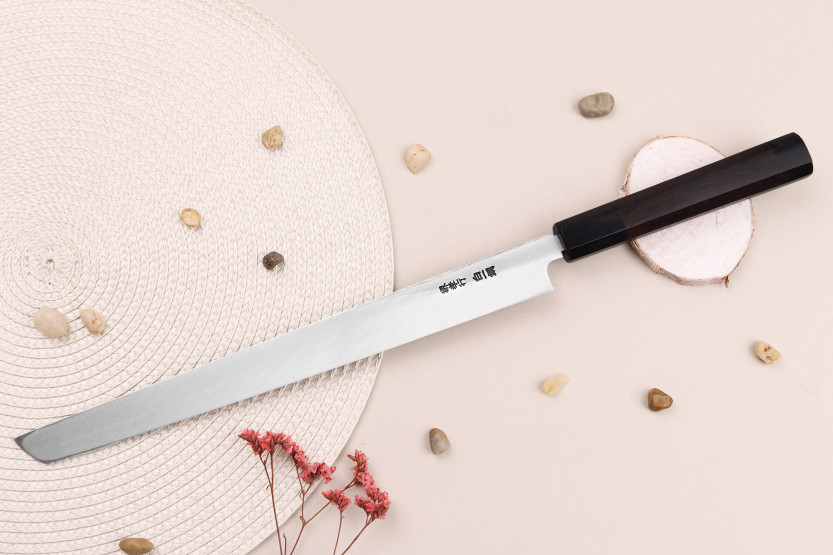
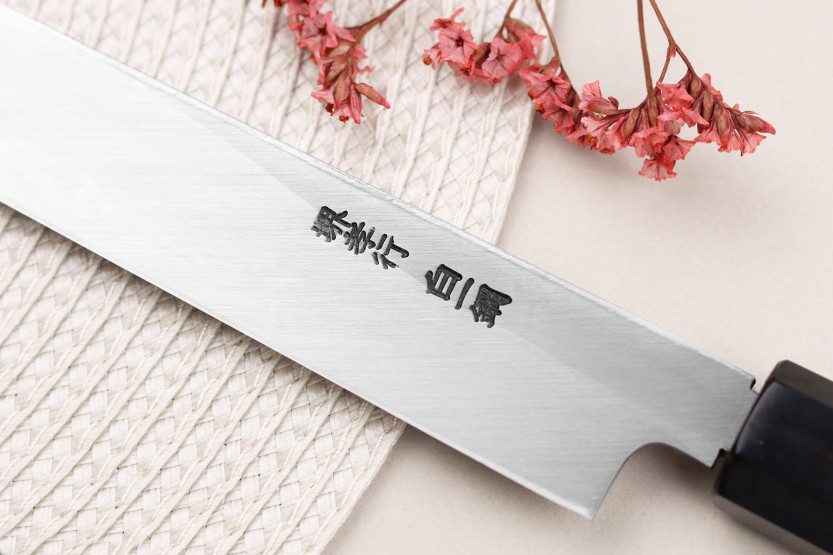
The blade is also adorned with engraved kanji, adding a traditional, authentic touch to this Japanese kitchen knife. One of these kanji, located on the back of the blade, reads "白虎"(Byakko in Japanese), which means "White Tiger" and refers to the name of the range.
An elegant, ergonomic handle
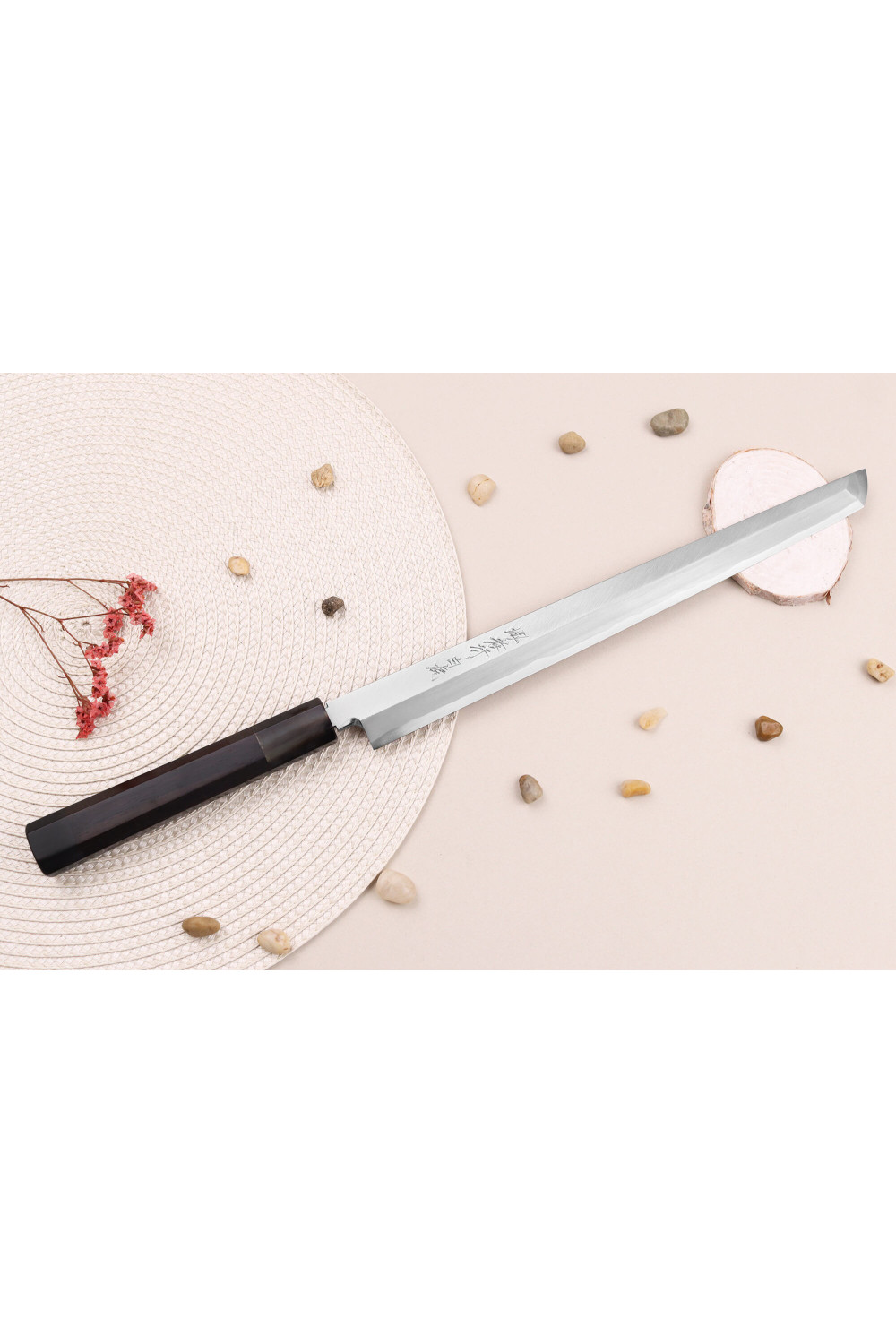
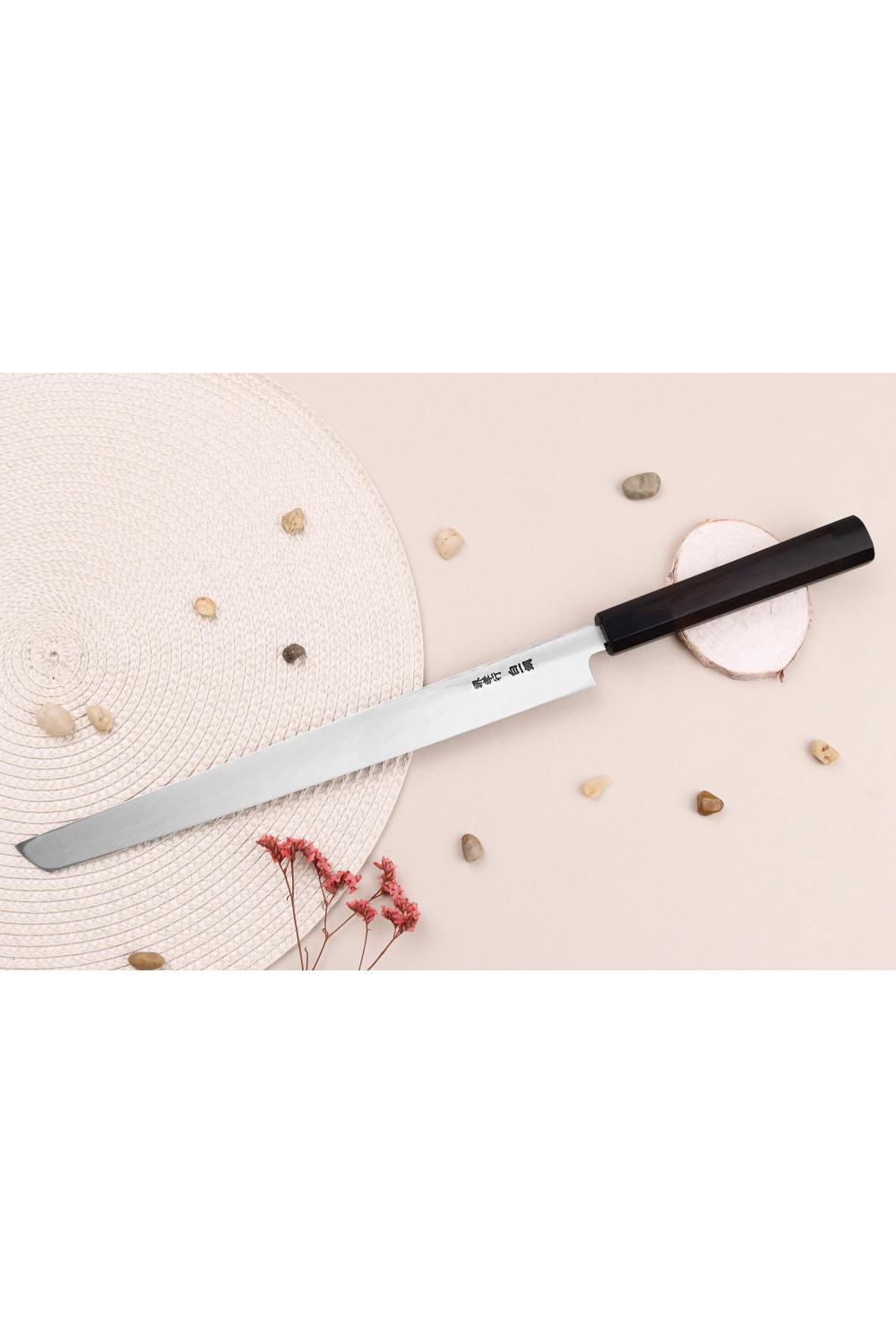
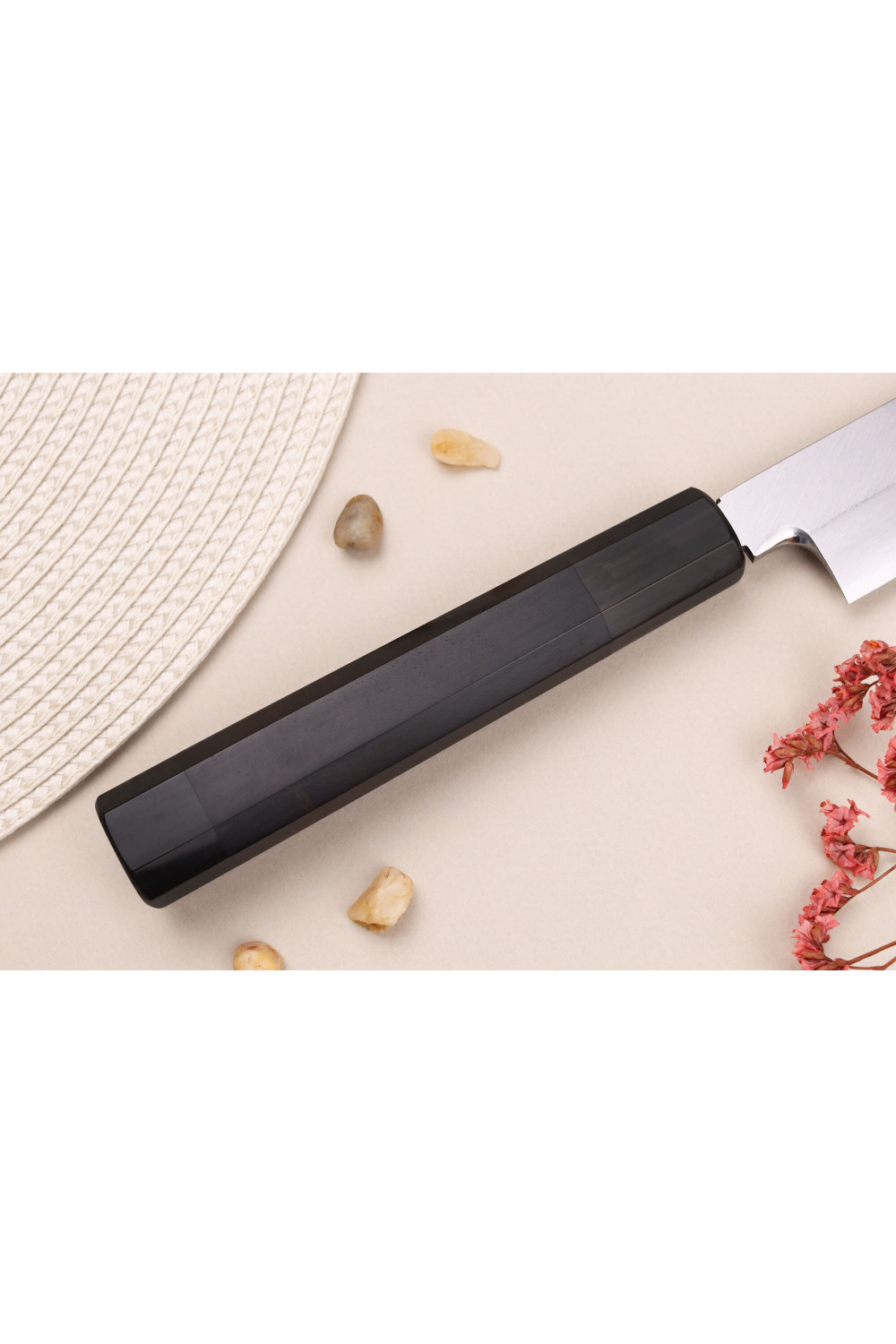
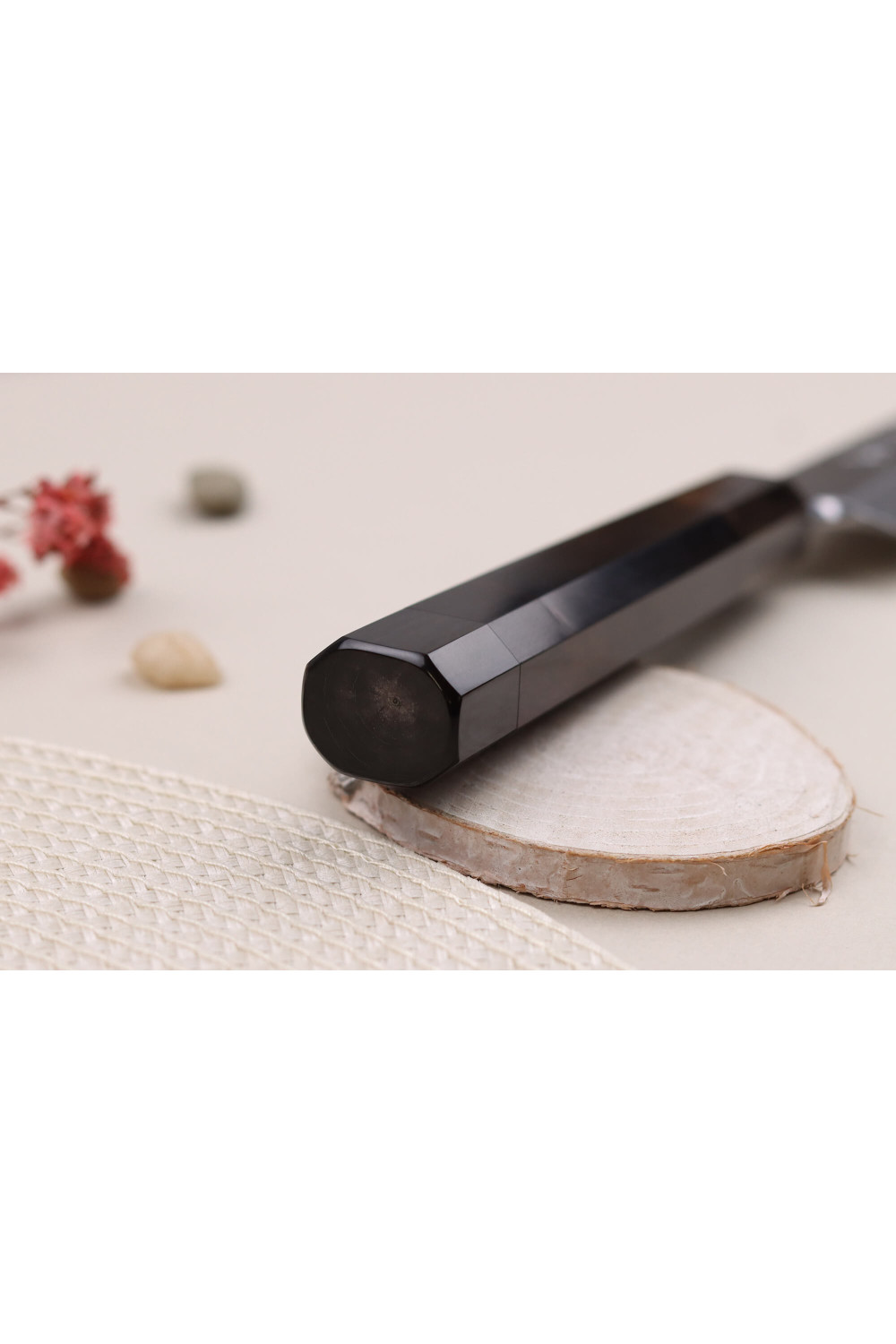
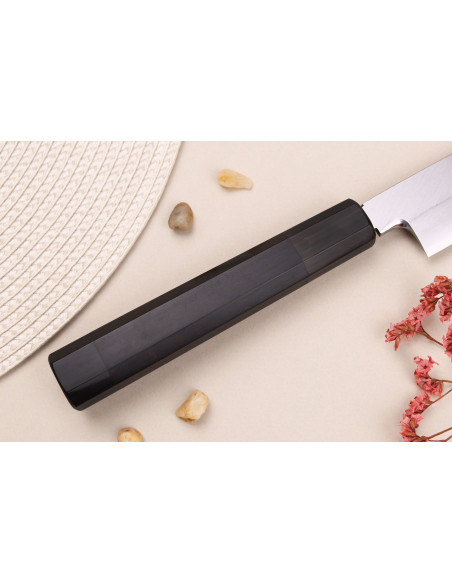
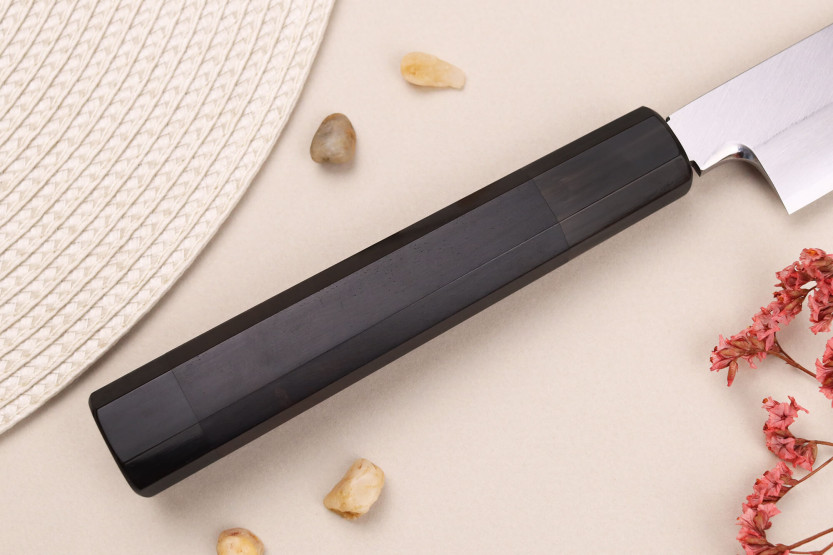
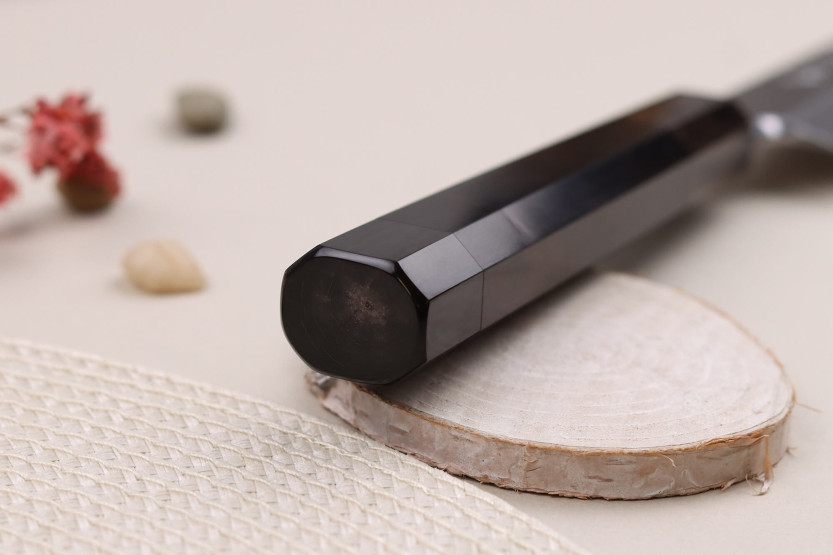
The handle of this handcrafted Japanese knife is made from ebony, a precious tropical wood recognizable by its very dark brown, almost black, hue. Renowned for its high density, ebony is extremely robust and resistant to cracking. Its durability makes it ideal for regular, even daily use.
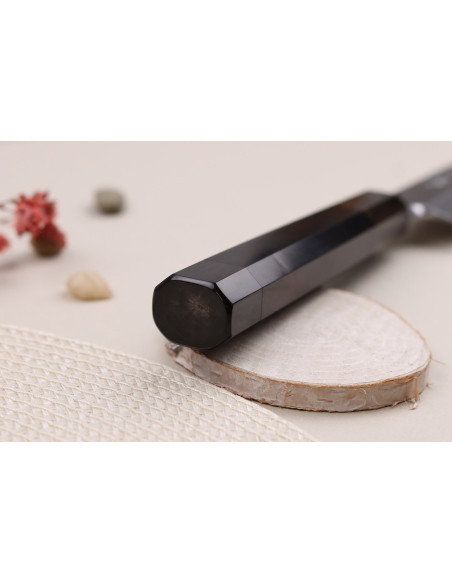
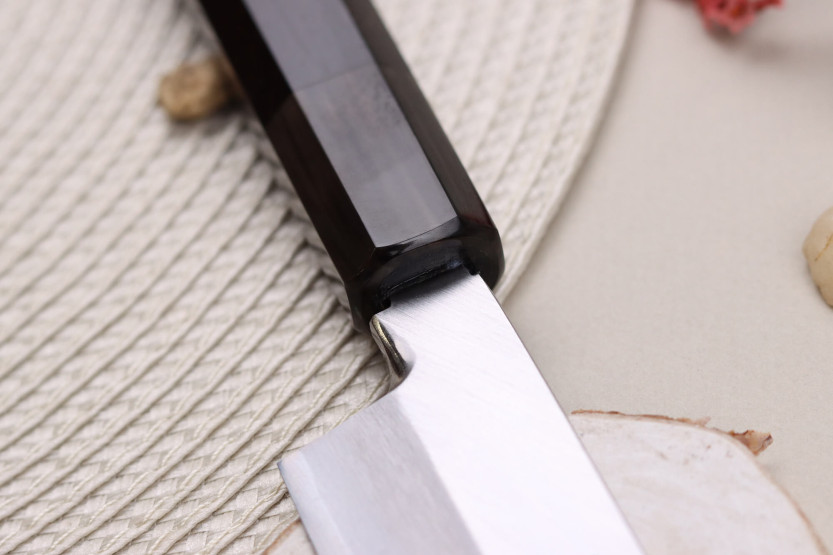
The deep, warm nuances of ebony are enhanced by a bolster and base, both made from black buffalo horn. Horn, as a living material, can exhibit slight aesthetic variations from one knife to the next, adding a unique touch to each piece.
The octagonal-shaped handle offers an ideal grip and great comfort, particularly during prolonged cutting sessions. This design reduces the fatigue associated with long-term use.
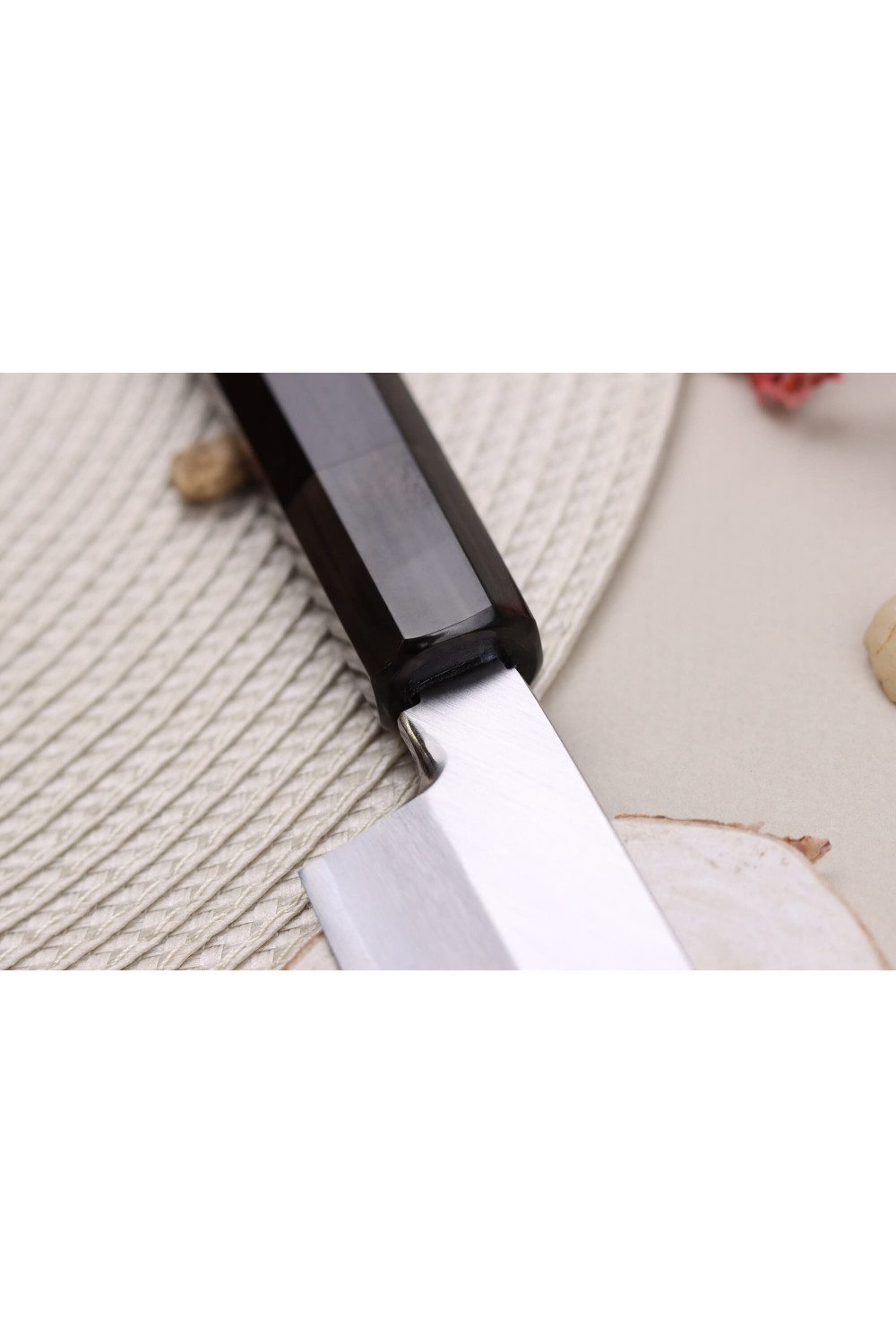
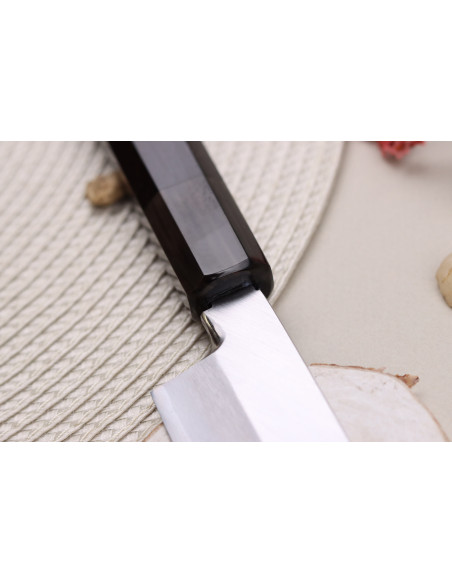
The blade gives the impression of not fitting completely into the handle - intentionally so! This feature is the apparent machi, a tradition from the Sakai region aimed at optimizing the knife's balance by acting on its center of gravity.
To ensure optimum watertightness, the space between the blade and the handle is filled with wood pulp. This prevents the infiltration of water and cut food.
Care and maintenance of a handcrafted Japanese knife
It is imperative to clean your Japanese knife only by hand, not to soak it in the sink or place it in the dishwasher. Use a non-abrasive sponge and mild soap, taking care not to over-wet the wooden handle. After washing, be sure to dry your knife immediately to remove all traces of moisture, then store it in a dry place.
Please note that despite careful maintenance, a slight variation in blade color may occur over time. This is perfectly normal, as the blade contains a high percentage of carbon, which naturally reacts to the humidity and acidity of food.
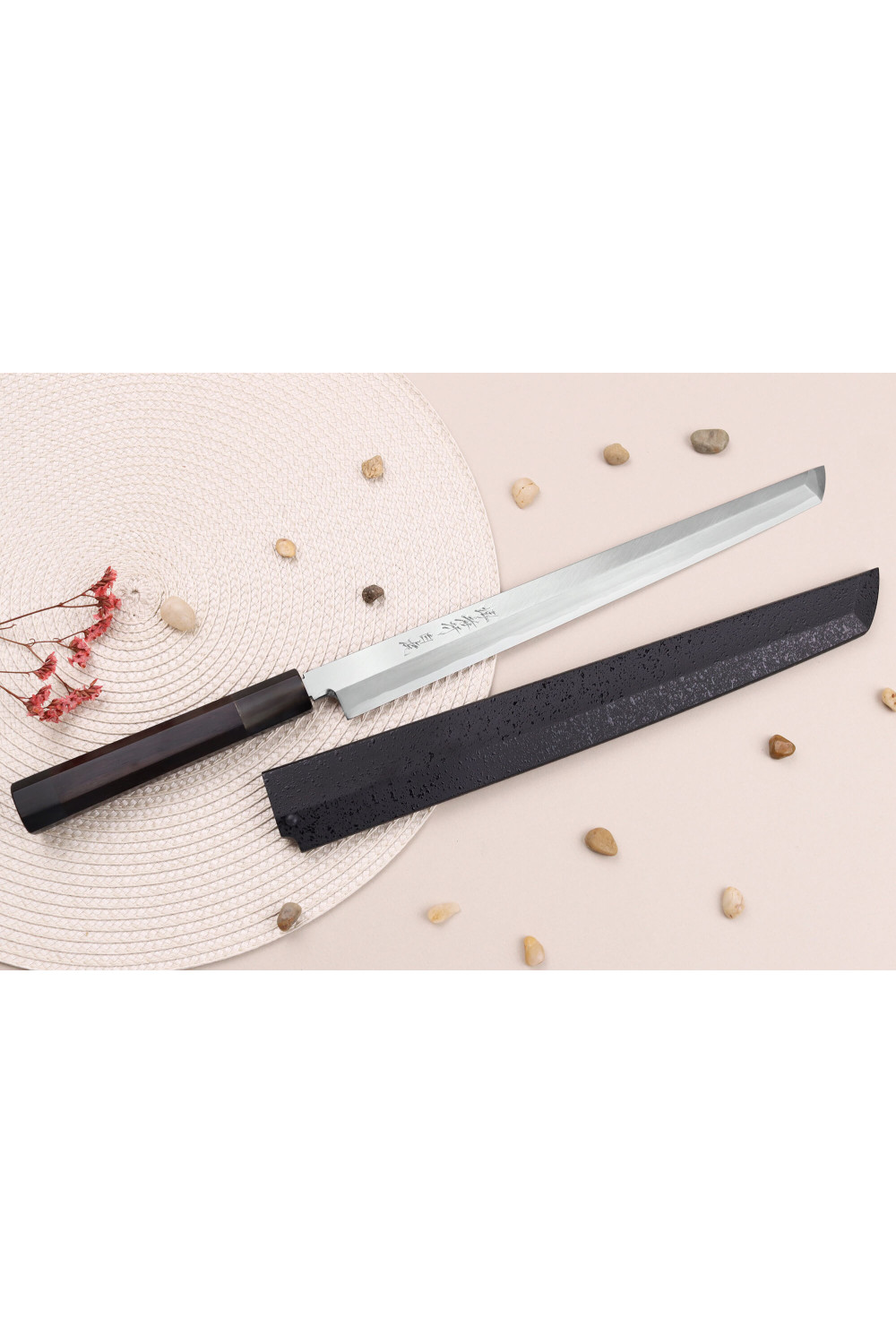
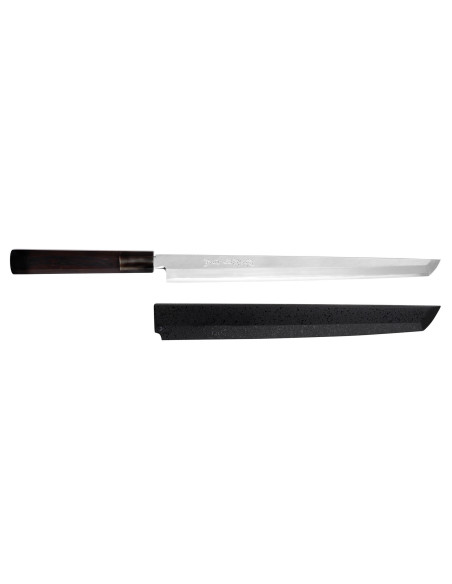
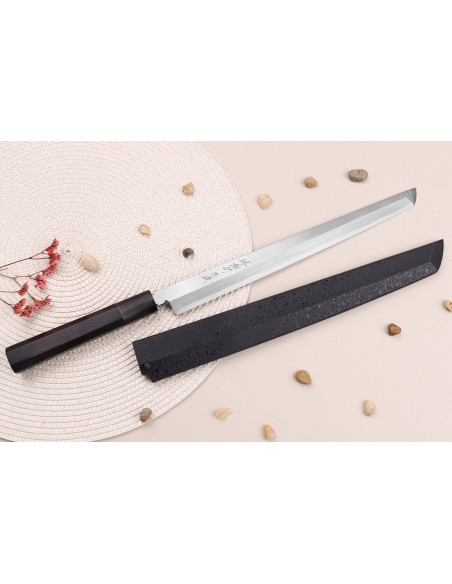
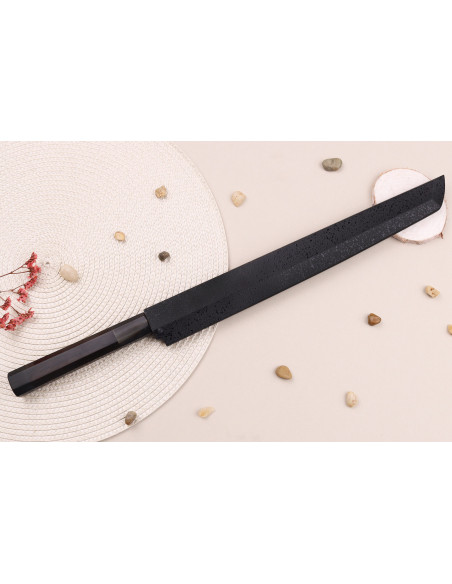
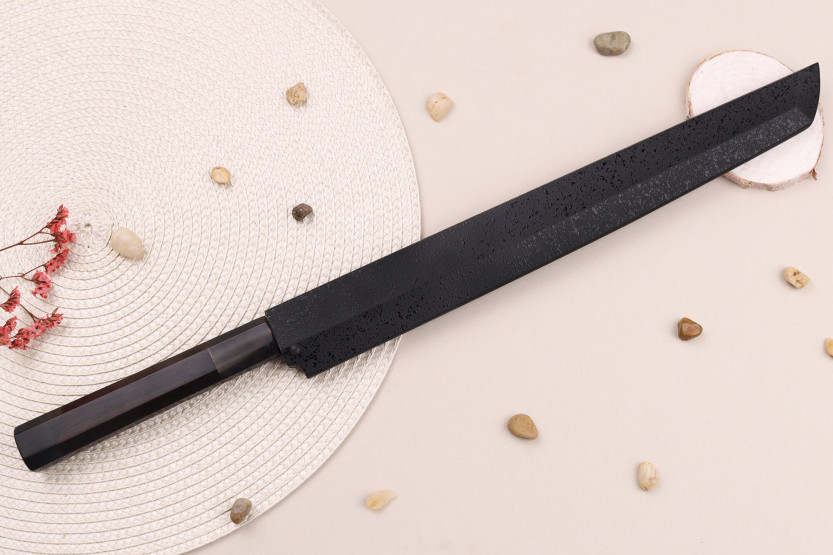
The protective sheath supplied with your knife is specially designed to fit the shape of the blade, ensuring optimum protection against external aggression while minimizing the risk of injury.
More about Sakai Takayuki and the Japanese blacksmith
Founded in the 1950s in Sakai, Japan, Sakai Takayuki has inherited a wealth of cutlery-making expertise. Heir to an ancestral tradition in the region that is the birthplace of the famous katanas, it perpetuates the heritage of master blacksmiths who have passed on their art through the generations. This expertise enables Sakai Takayuki to offer Japanese knives combining contemporary designs with ancestral manufacturing methods.
Sakai Takayuki called on master blacksmith Kenji Togashi to create the Byakko knife range. Kenji Togashi began his career in the 1960s, since when he has accumulated remarkable expertise and know-how. He stands out as one of the few blacksmiths to have mastered the art of making Honyaki blades, and his skills have been recognized with numerous awards throughout his career. In the 90s, he was awarded the prestigious title of Dento-Kureishi by Japan's Ministry of Economy, formalizing his status as a Master Traditional Craftsman. This distinction underlines his commitment to preserving traditional local craft techniques.
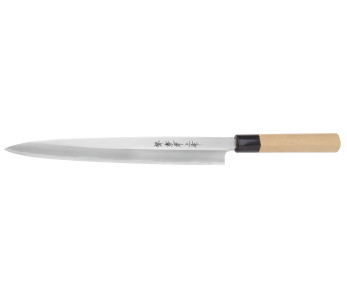
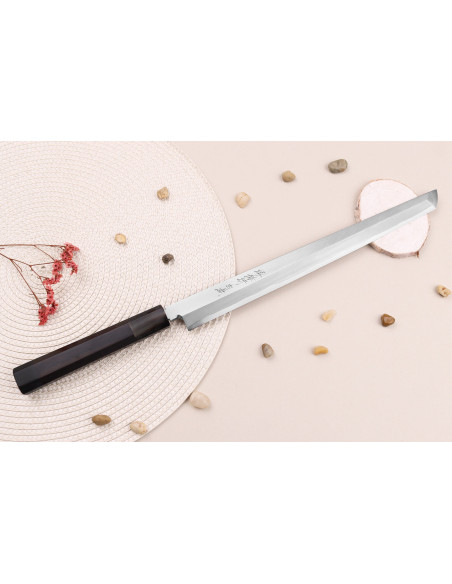
The sakimaru takohiki knife features a traditional Japanese design. Its elongated blade is specifically designed for slicing fish, and is particularly well-suited to large pieces such as tuna. However, it should not be used on excessively hard foods such as squash, bones or frozen products.
Discover the rest of the Sakai Takayuki Byakko range on KnifeLeader.eu!




 By buying this product you can collect up to