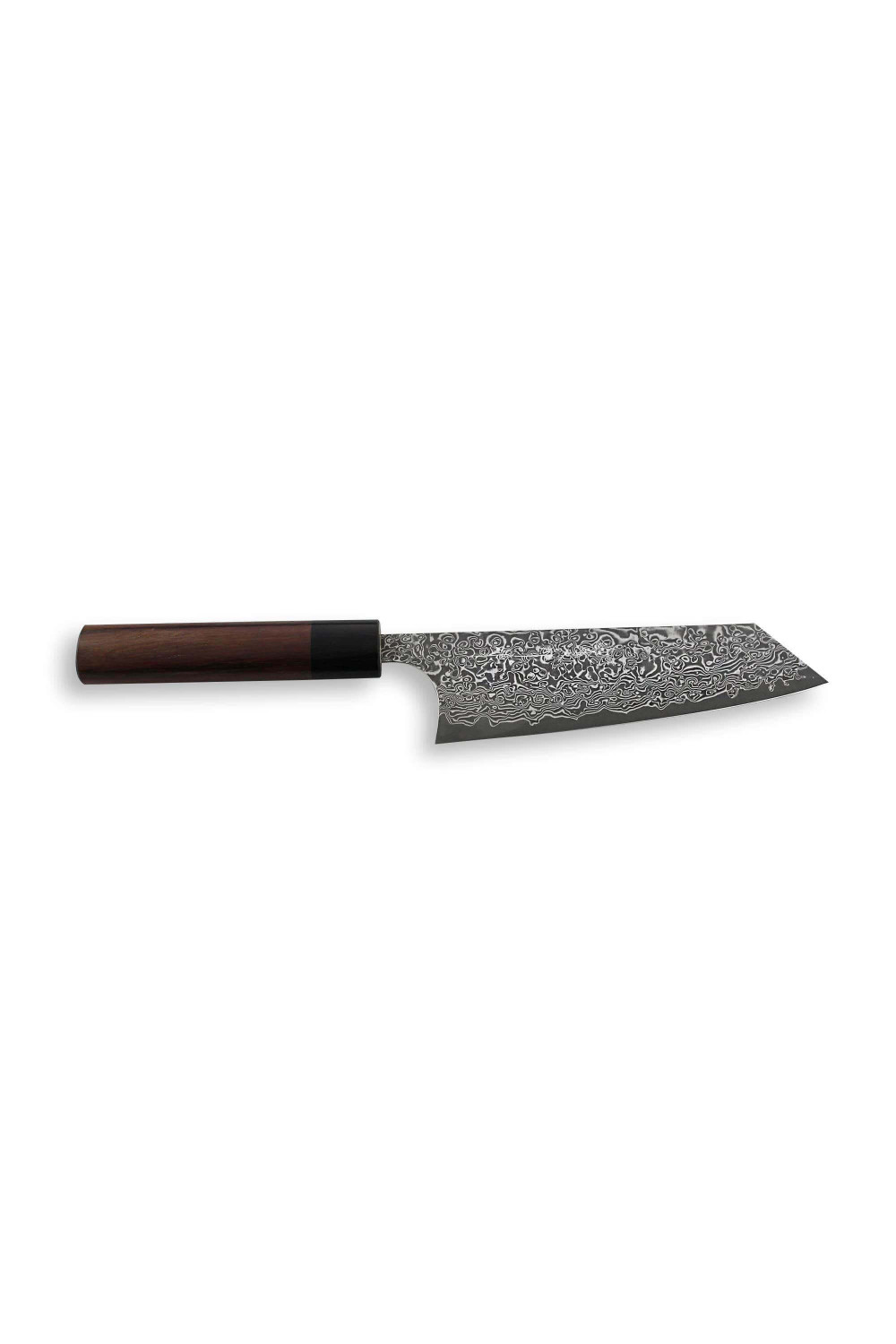
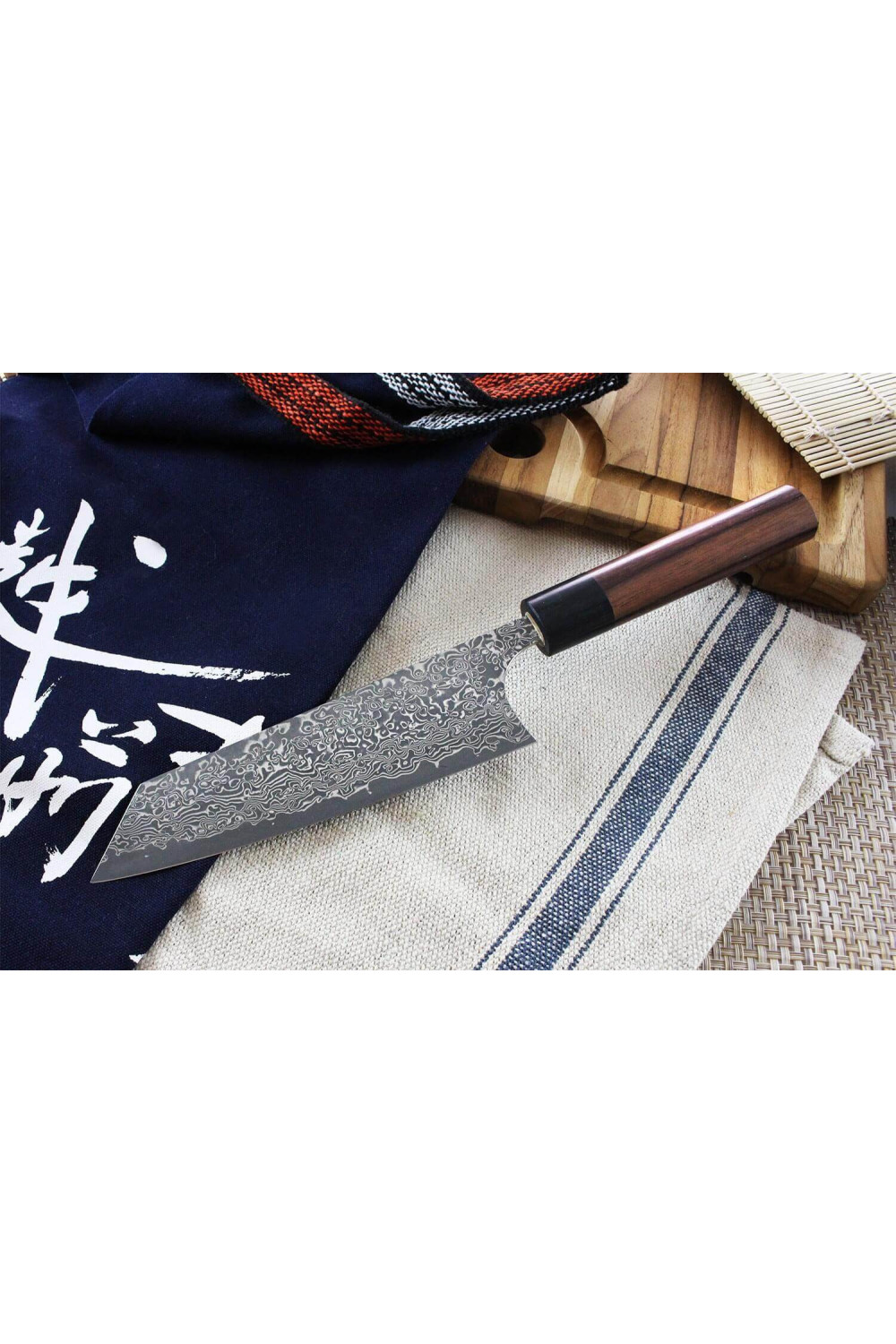
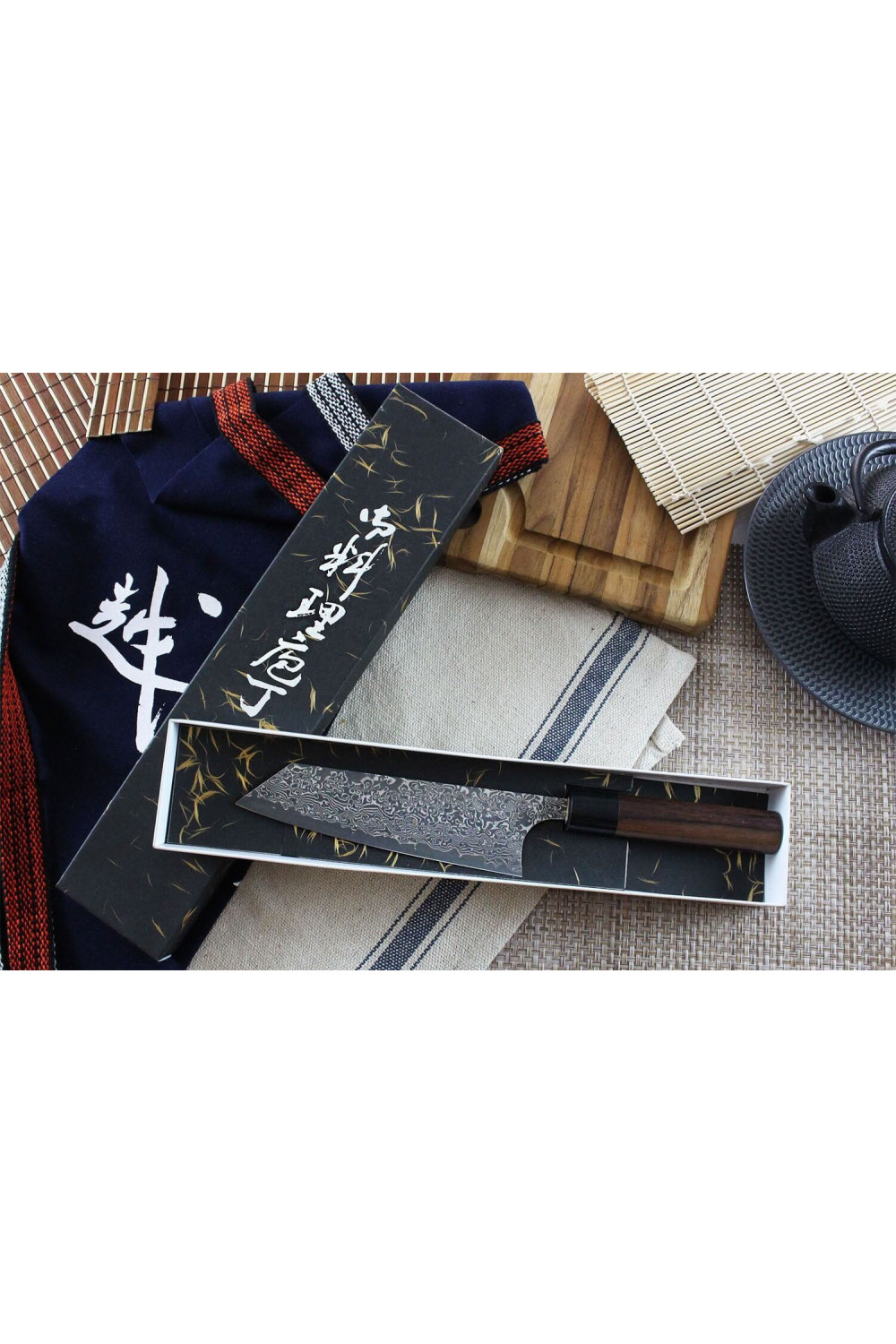
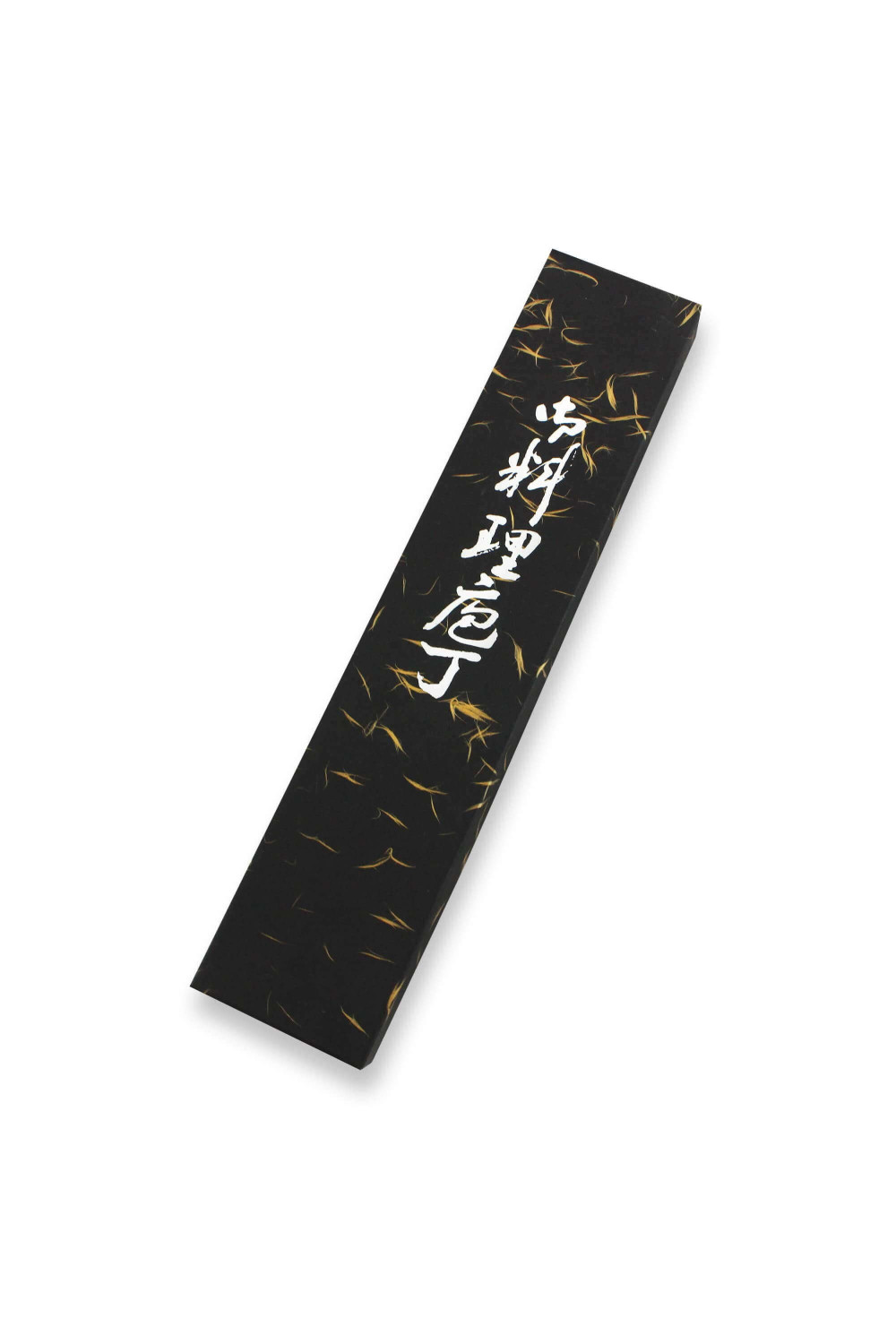
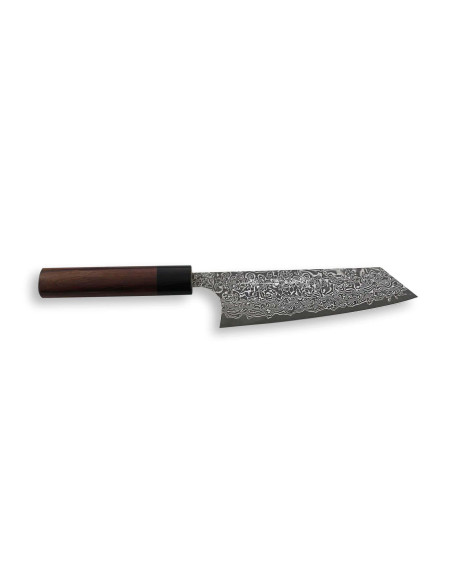
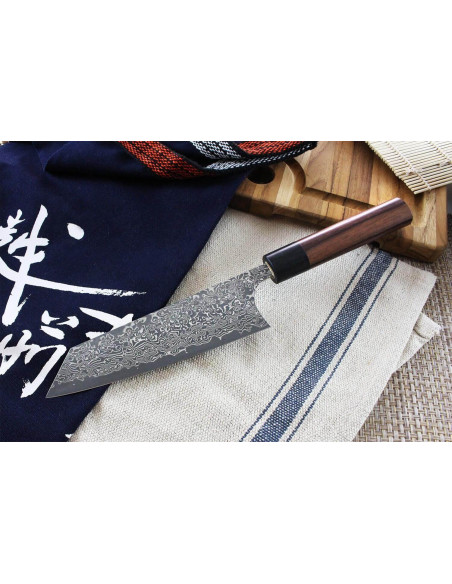
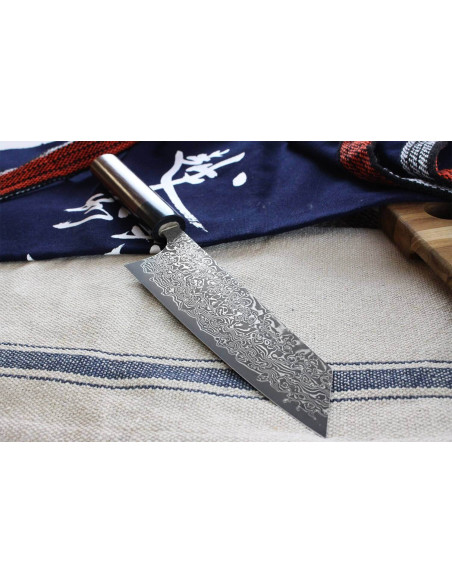
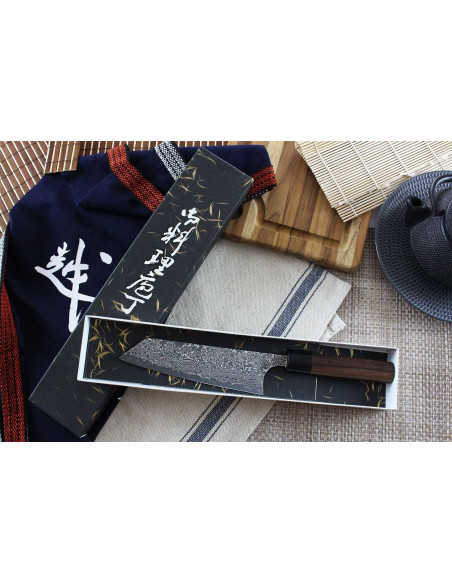
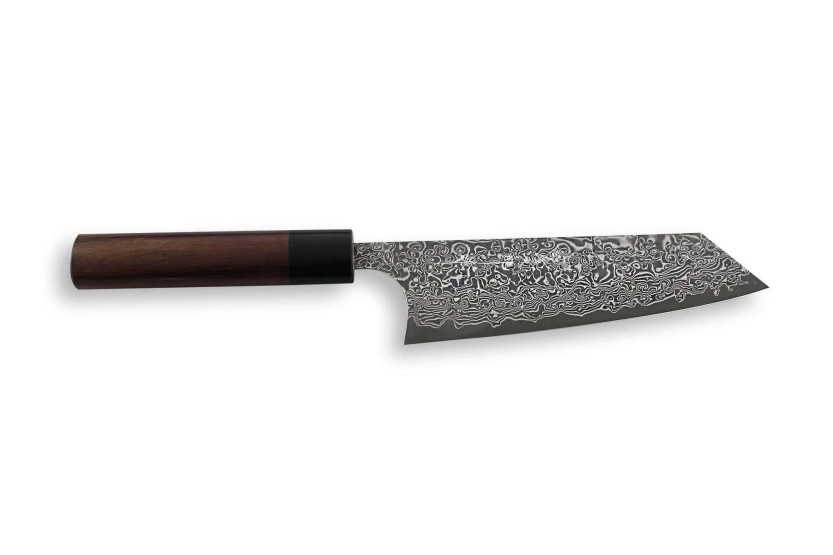
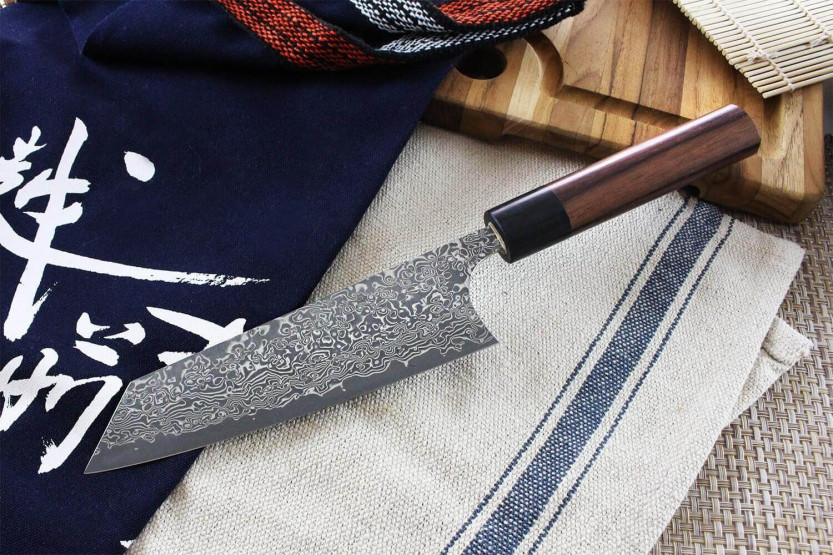
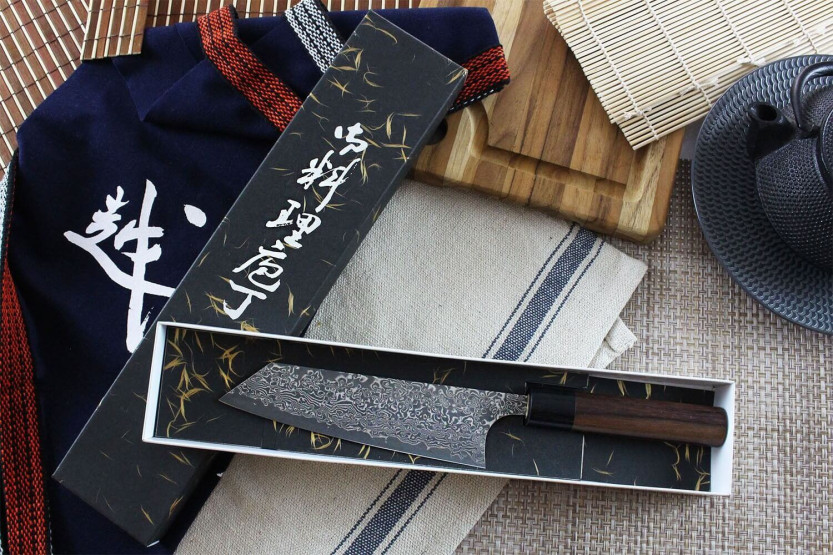
This 16.5cm Bunka knife was made by Japanese blacksmith Yoshimi Kato, a certified craftsman from the town of Takefu. He has studied under several renowned blacksmiths, including Hiroshi Kato San, who is highly respected in Japan and is also his father-in-law.
The latter is one of Japan's greatest master blacksmiths. He has been creating knives almost every day for almost 50 years, which is an indication of his current level of expertise. He is also one of the founding members of the Takefu Blacksmith Village, which facilitates the work of blacksmiths in the area, who can share their know-how, materials and ideas, as well as becoming a highly sought-after area for apprentice blacksmiths.
He now teaches his art to the next generation. Yoshimi has taken over his workshop and continues to create his master's knives (now retired), while having launched his own line of knives. Each Kato knife is crafted in the Japanese tradition, using meticulous techniques and the finest processes, to ensure a unique piece that will suit you perfectly or make the ideal gift for a cook.
Yoshimi Kato began his apprenticeship in 2013, and is a very talented blacksmith who learns very quickly. He continues the work of Hiroshi Kato San, while bringing innovative ideas that all cooks will appreciate!
The blade of this knife is fully forged, i.e. Yoshimi Kato San forms the knife from a solid piece of steel, which increases the knife's strength and durability. Kato uses a cold-forging method: contrary to its name, the knife is not forged at low temperature, but at room temperature, before it reaches its recrystallization point. The advantage of this process is that the knife is formed quickly, and the blacksmith does not necessarily need to carry out very complex finishing work afterwards.
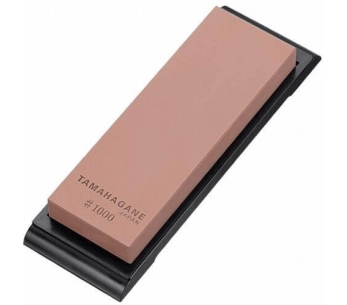
The heart of the knife is made of VG10 Japanese stainless steel, an alloy much appreciated in the cutlery world for its durability and razor-sharp edge when sharpened. It is composed of 1% carbon, giving it an excellent hardness of around 60 HRC on the Rockwell scale. The edge is long-lasting, and can be maintained with a Sharpening stone.
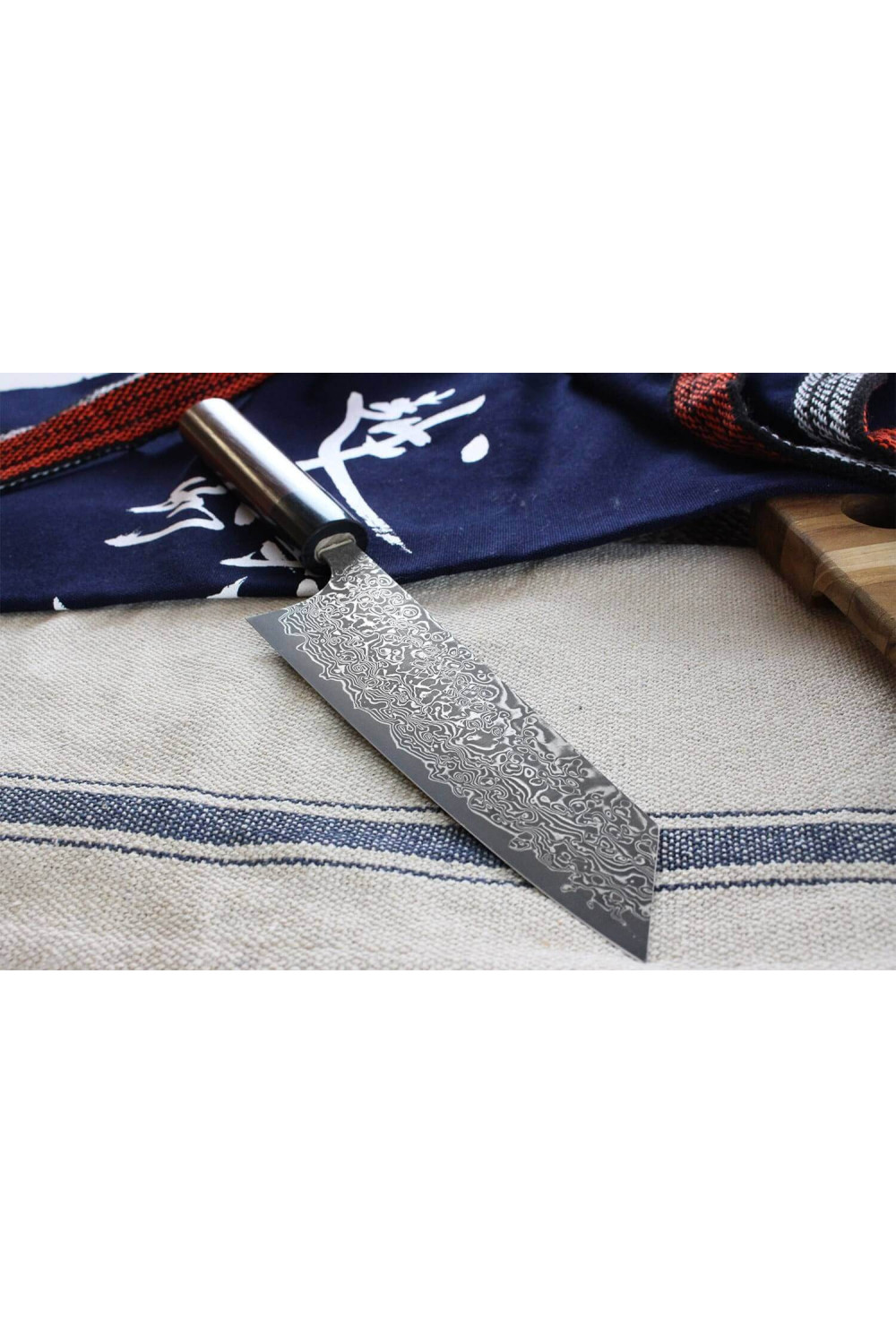
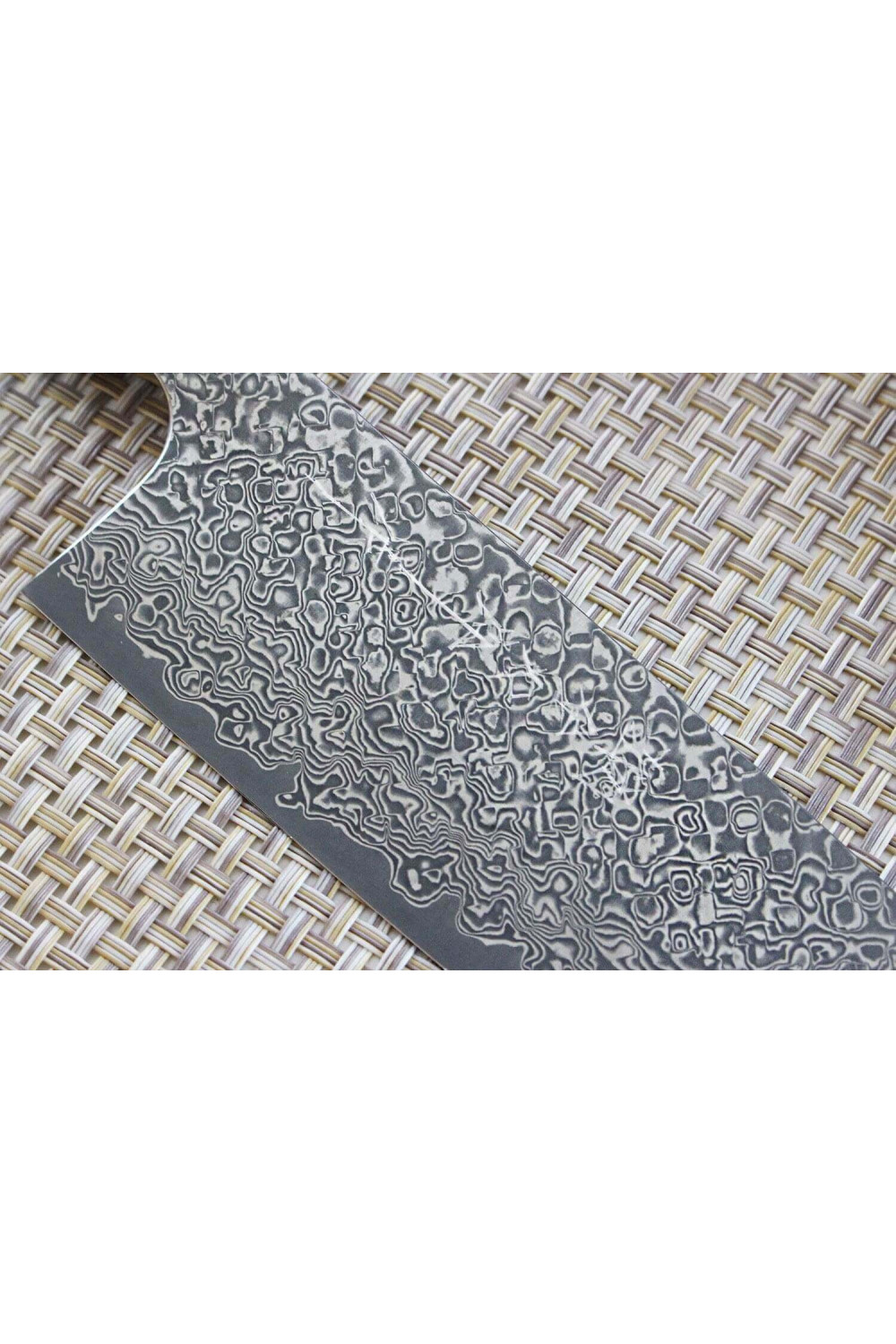
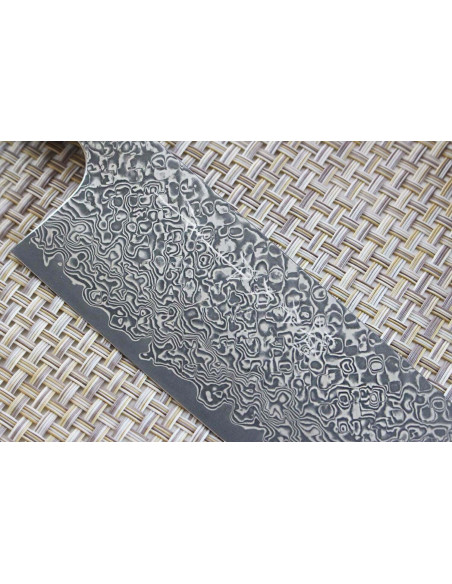
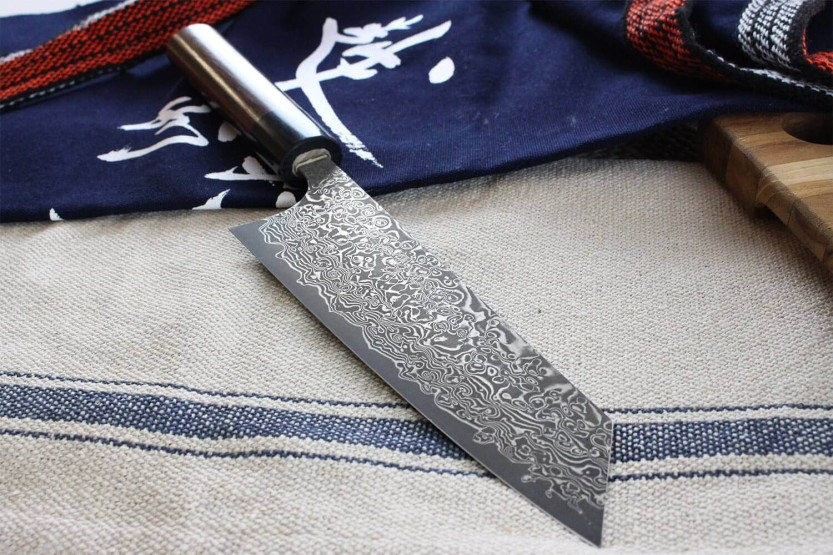
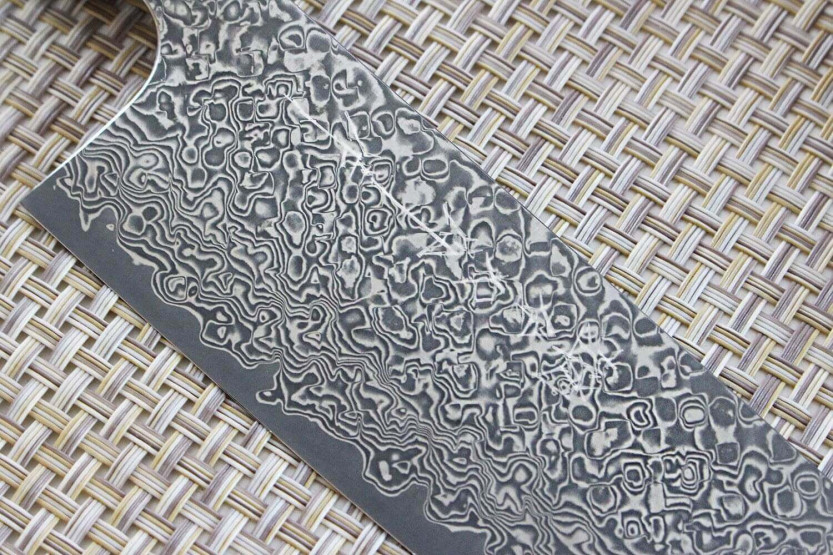
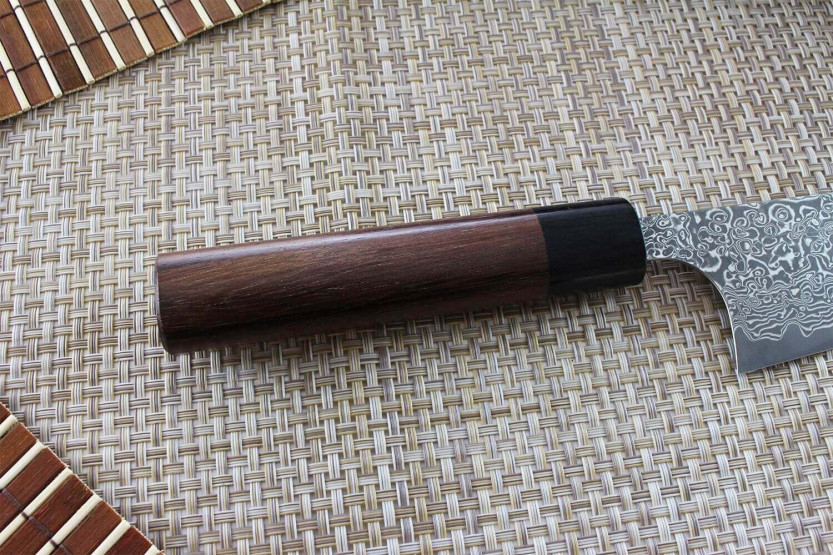
This core is then surrounded by several layers of different steels, making it a 63-layer damascus (31 layers folded in 2 on the core + the latter, which is counted in the calculation). A damascus knife is one on which slices of steel have been folded one on top of the other. Here, Kato uses a mild stainless steel and a nickel steel. It's the variation in steels that creates the unique undulating waves on the cutting surface. The stainless steel has the advantage of increasing the steel's corrosion resistance, while the nickel steel will give it greater mechanical strength. The blend of the two tones gives the knife a surprisingly distinctive look. It's a unique piece of cutting equipment.
The blade is hand-sharpened to guarantee excellent cutting performance. The Japanese characters on its surface are engraved by hand.
Note that the Bunka model is a versatile knife, to be used as a santoku knife. It can be used for chopping, mincing or mincing food (without bones).
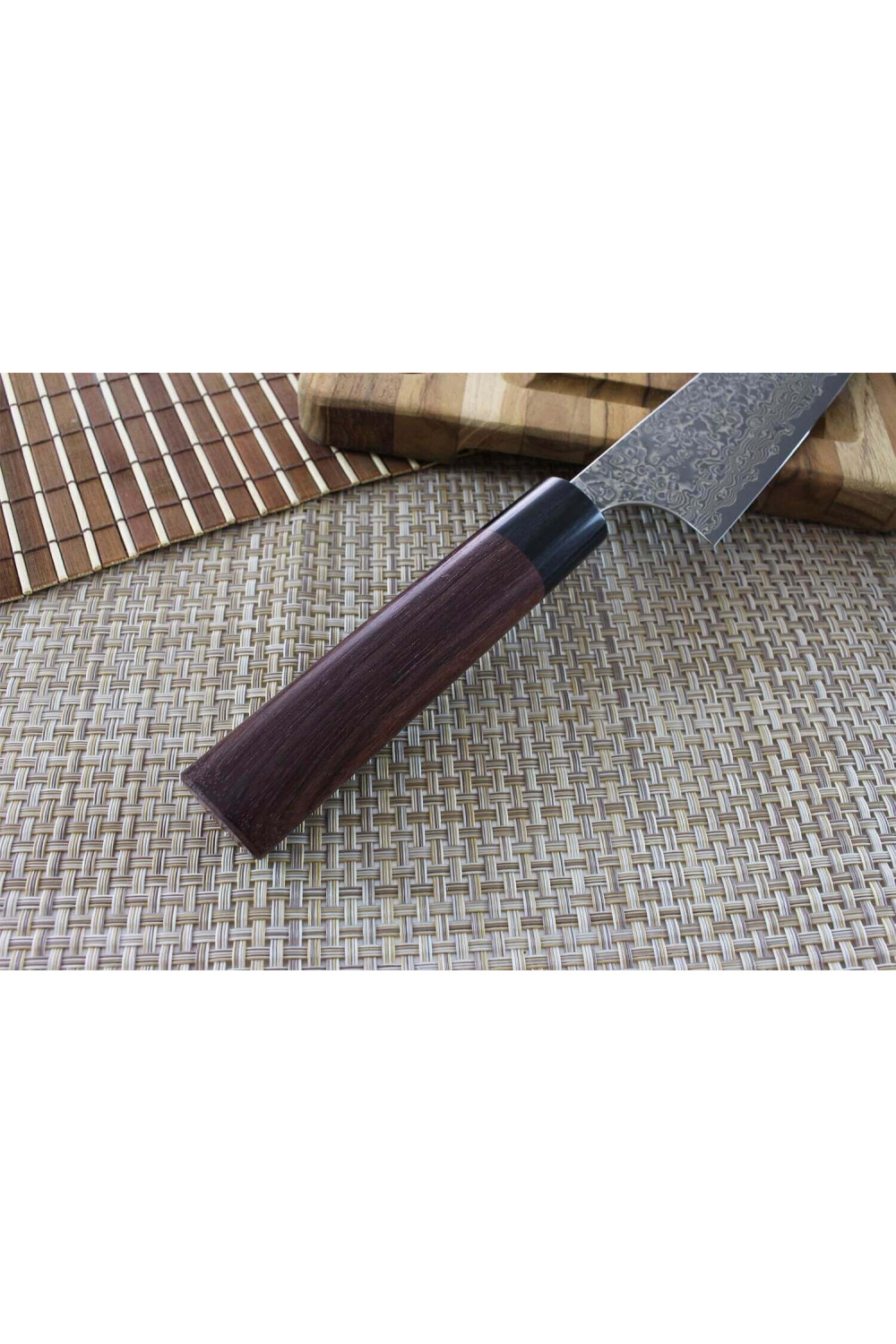
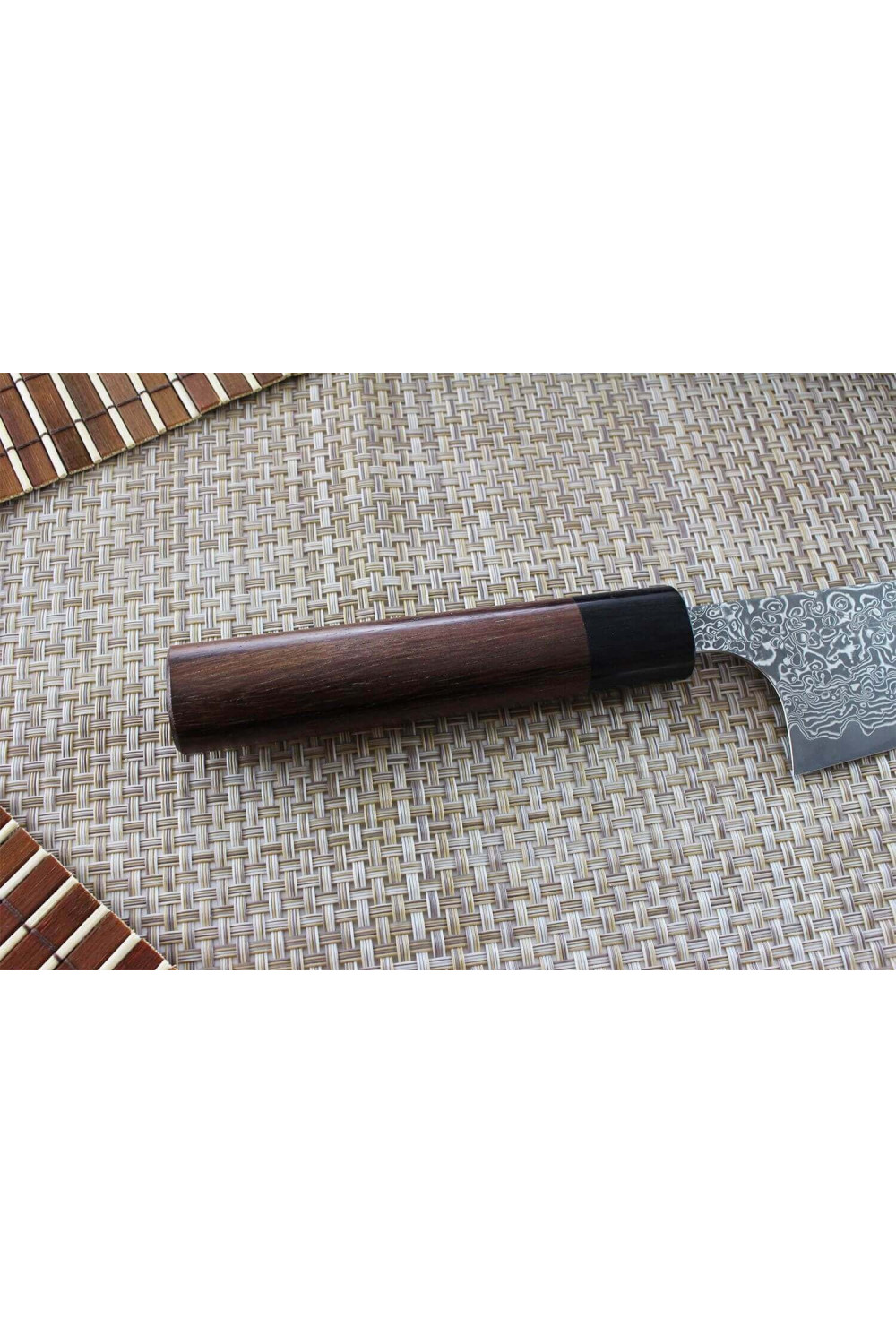
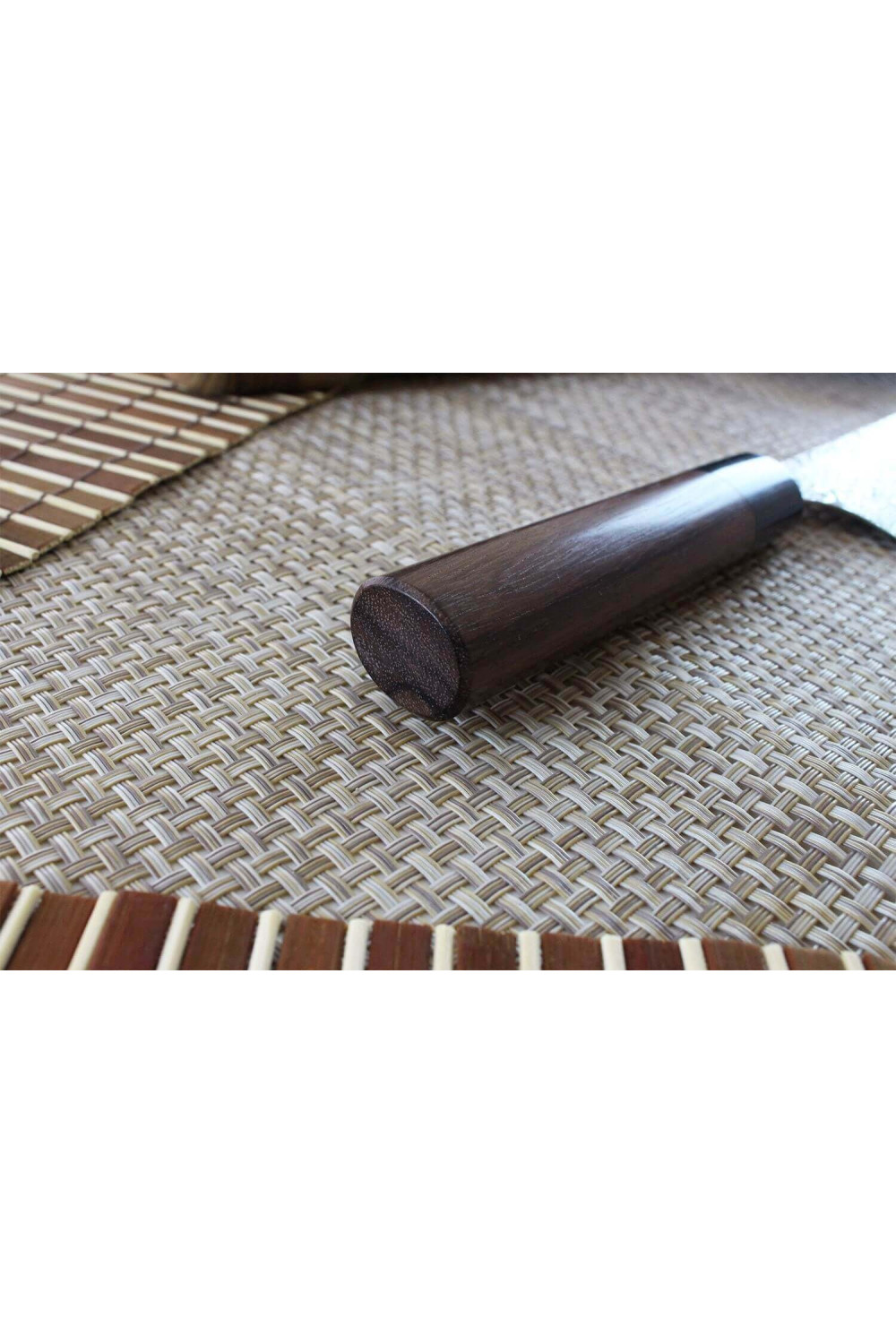
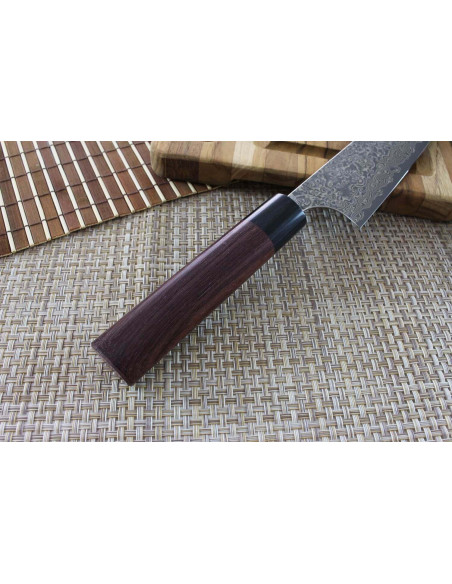
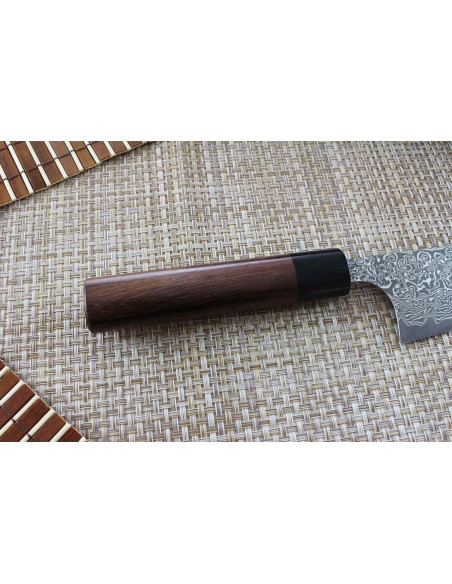
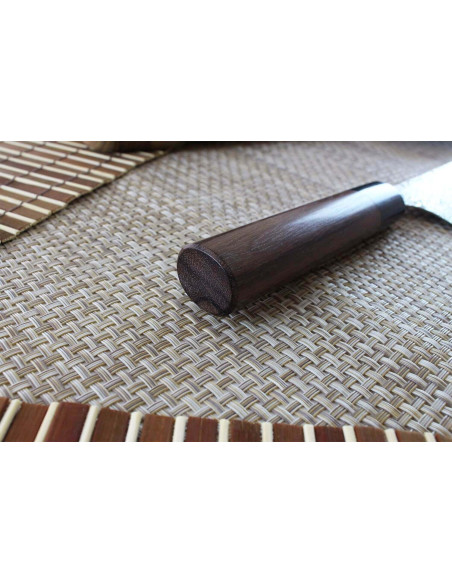
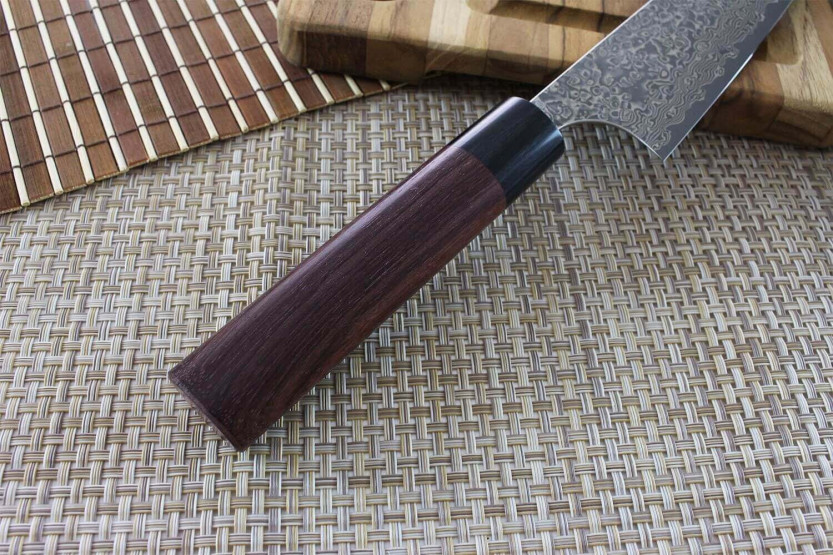
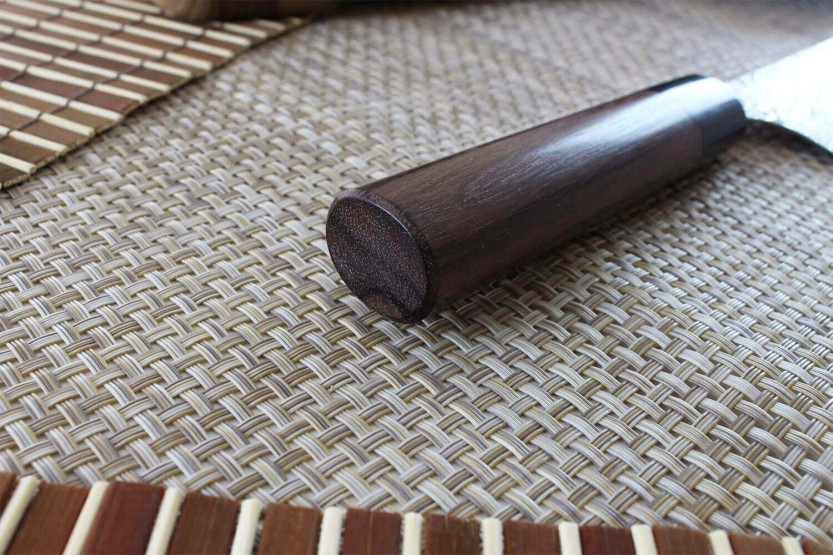
The handle of this knife is made of rosewood, a wood species highly appreciated for its density and resistance to humidity. Its dark shades contrast perfectly with the cool metal of the blade. Its functional oval shape makes it suitable for right- and left-handed use. It is completed by a black bolster in Pakkawood, a moisture-resistant, antibacterial composite material.
Care and maintenance:
The knife should be washed by hand, to maintain its appearance and effectiveness over time (no dishwasher). Then wipe dry with a soft cloth and store in a dry place. It should not be left in contact with moisture for any length of time.
The choice of Japanese knives on our site: equip yourself with the best brands!


 By buying this product you can collect up to