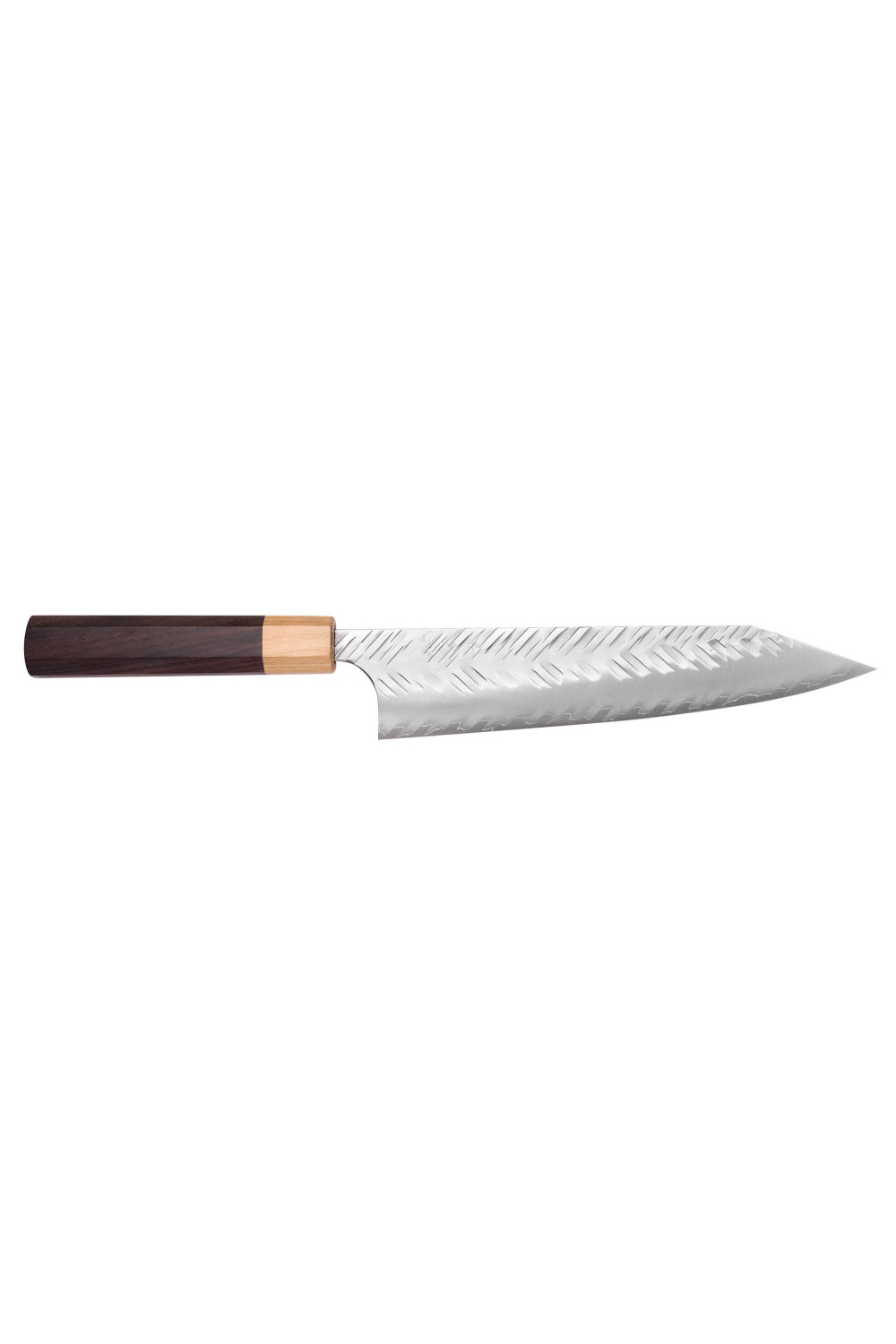
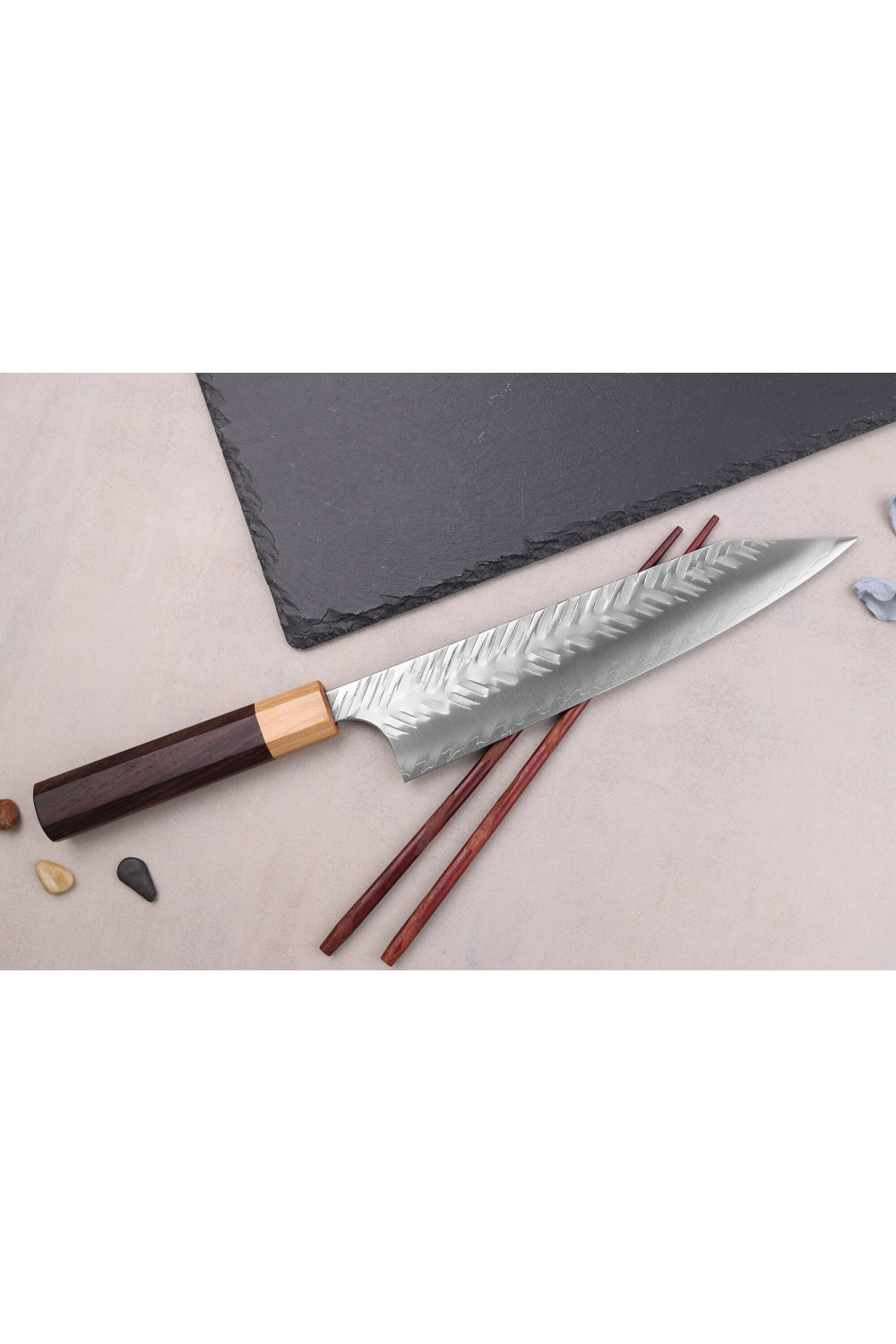
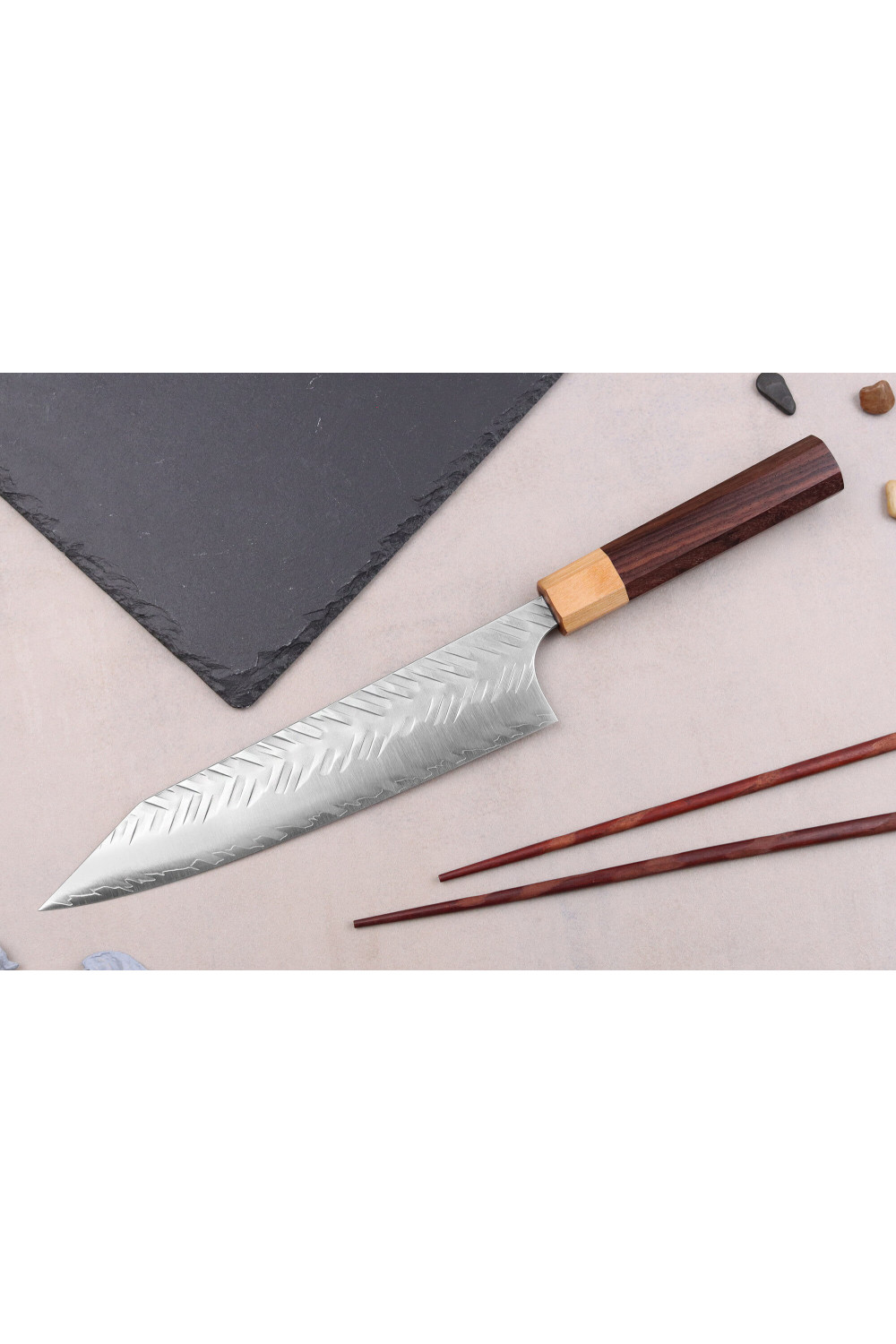
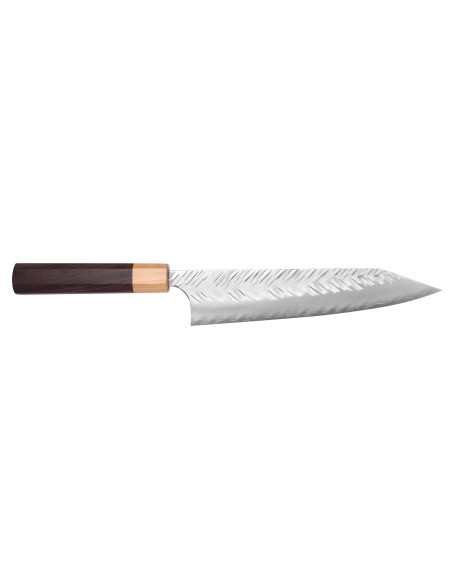
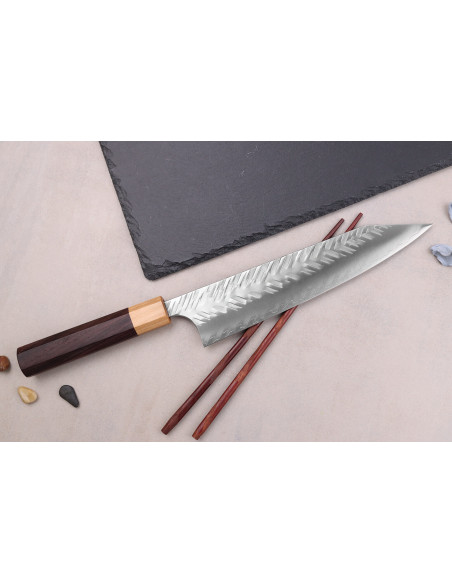
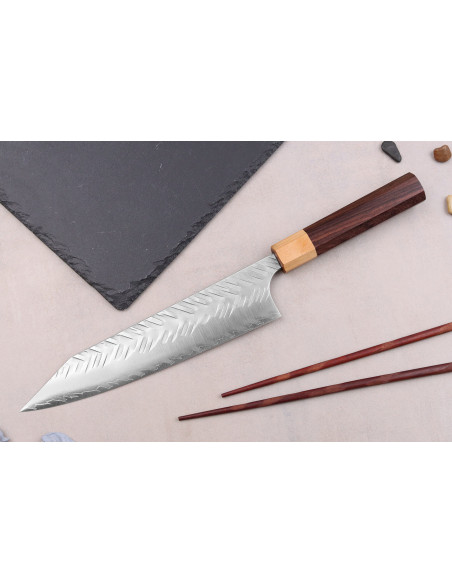
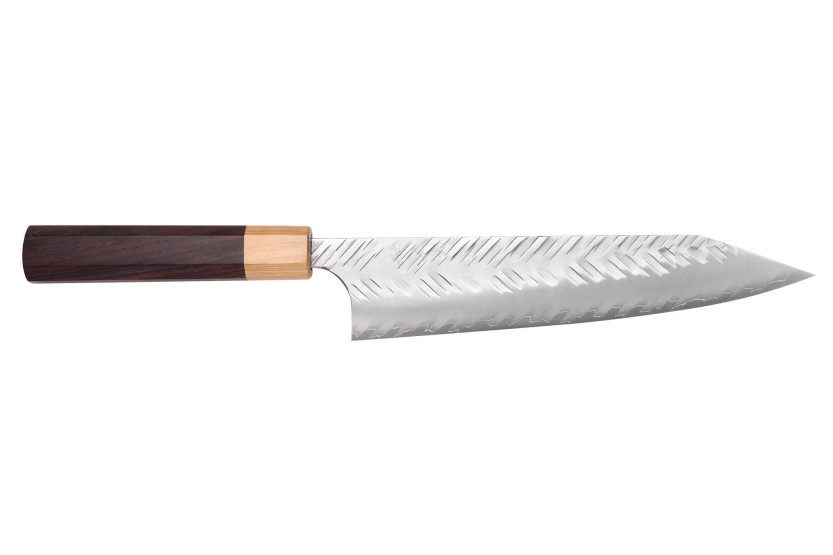
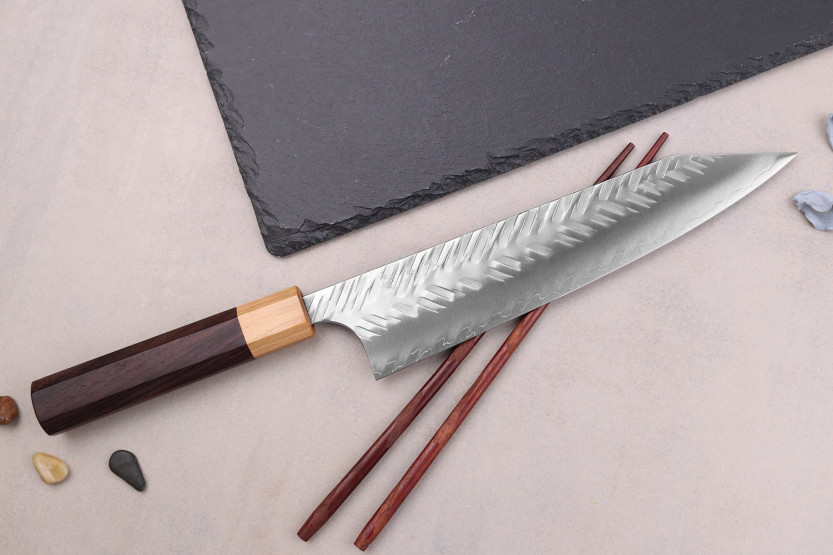
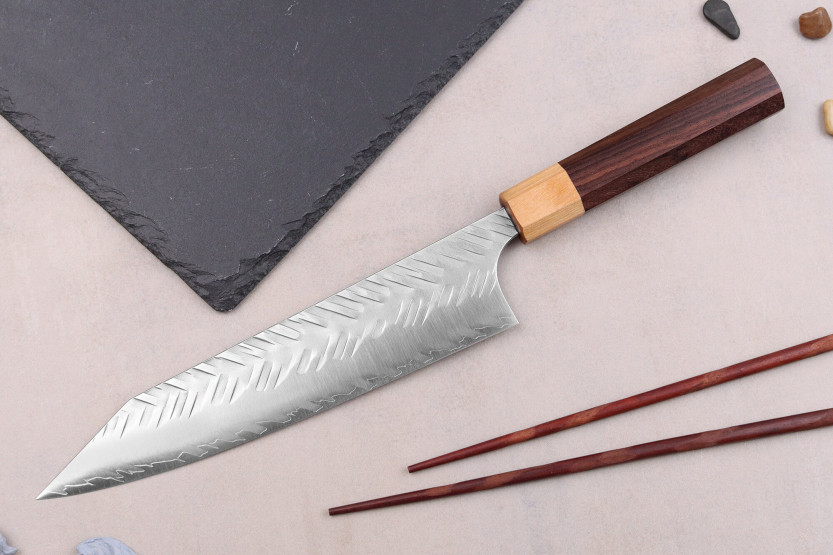
This Kiritsuke knife lets you make a whole host of cuts! Like a chef's knife, you can chop meat, mince vegetables and chop herbs with ease. What's more, its kiritsuke tip means you can work with greater precision! Do not use on hard foods such as squash, frozen foods, bones, etc.
The famous Japanese blacksmith Yoshimi Kato
Japanese knives are much more than simple kitchen tools: they are true works of art, combining aesthetics with remarkable performance! This knife was forged in the heart of the Takefu Cutlery Village by Yoshimi Kato san, a place where numerous blacksmiths gather to share their experience and know-how. The village groups together a number of craftsmen who perpetuate the traditional methods inherited from their predecessors.
Yoshimi Kato is a Japanese blacksmith who apprenticed with several renowned masters, including Hiroshi Kato, his father-in-law, who is highly respected in the cutlery industry. Hiroshi san, one of the region's most eminent master blacksmiths, fashioned a large number of knives throughout his nearly 50-year career, before retiring. He is also one of the founding members of the Takefu Cutlery Village.
Begun in 2013, our young blacksmith's training has proved extremely promising. He has taken over his mentor's workshop and developed his own knife ranges, establishing himself as one of the emerging talents in Japanese cutlery.
A hammered knife with an original blade
This Japanese kitchen knife features a blade with a typically Japanese San Maï (meaning "3 layers") structure. This technique consists of forging a core of rigid steel, which is then enveloped in a layer of softer, folded-over steel. The result is a balanced blade with optimum core protection.
The core of this blade is made from SG2 powder steel (also known as R2), a powder-metallurgy alloy produced by the renowned Takefu Special Steel. It contains a high carbon content of around 1.3%, the element that increases a steel's hardness. On the Rockwell scale, its hardness is therefore 63HRC, ensuring excellent edge retention and cutting performance.
One of the main advantages of this alloy is its "pure" micro-structure. In fact, the micro-carbides of which it is composed are evenly distributed, guaranteeing greater resistance to micro-cracking and wear.
What's more, SG2 steel is easy to sharpen with a stone when necessary! So you can space out your sharpening sessions and carry them out with ease.
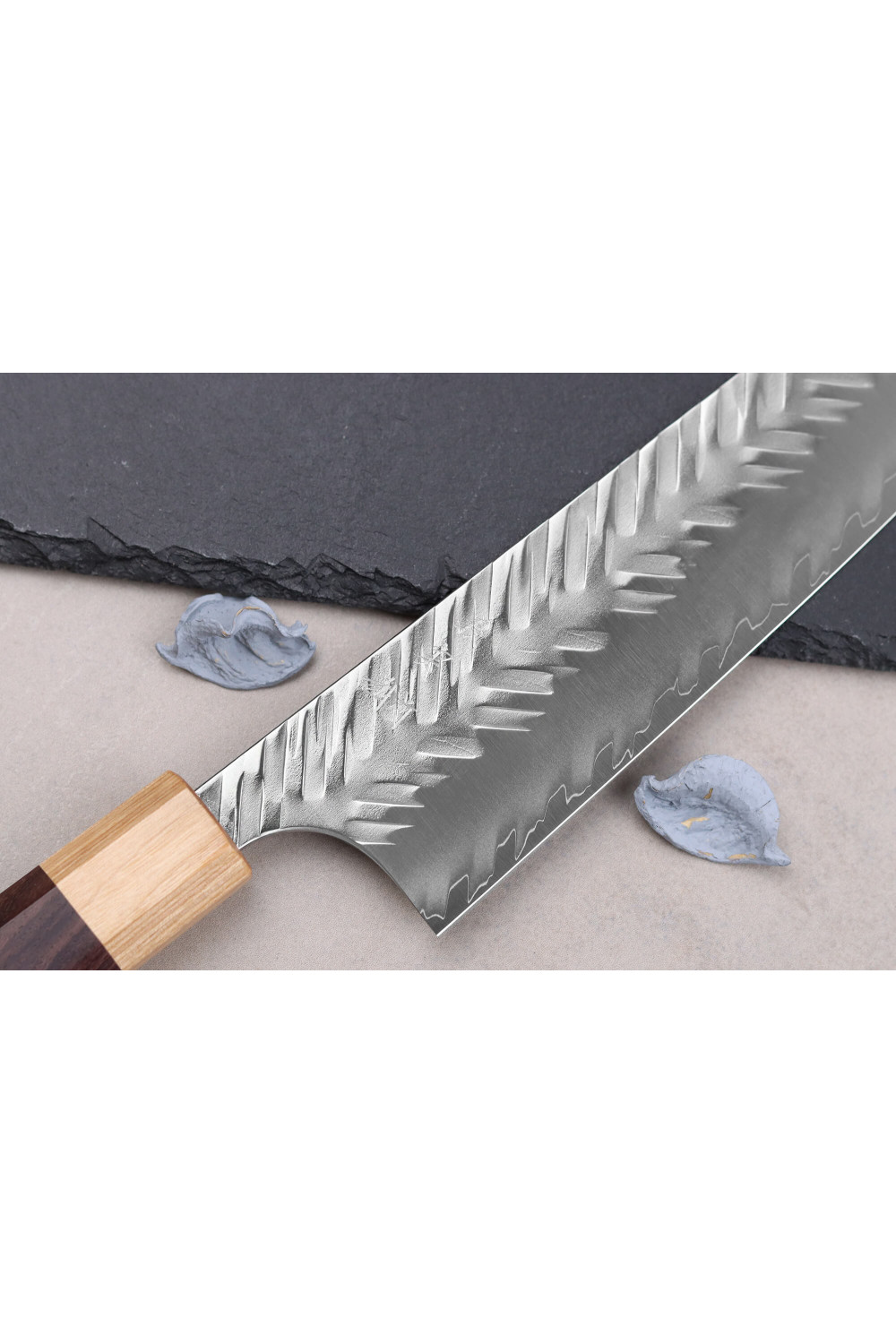
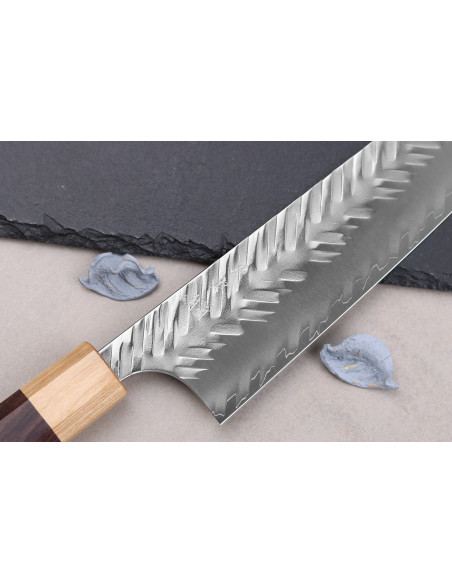
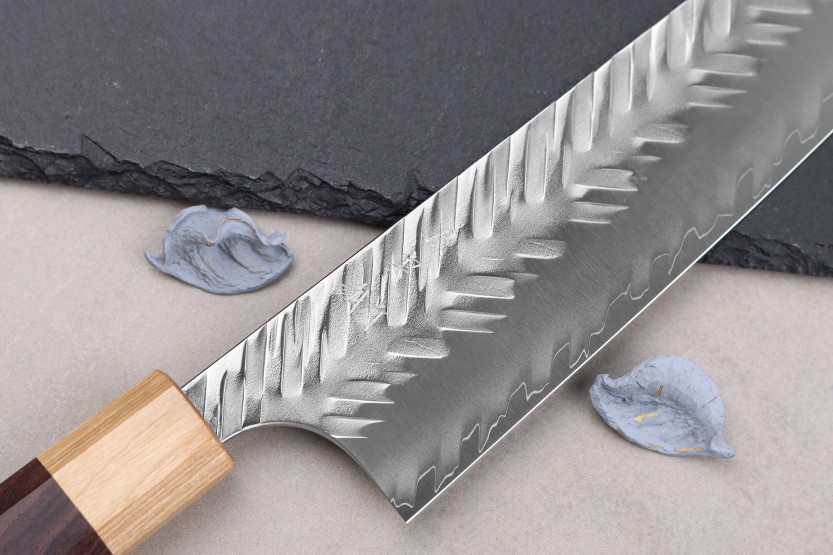
To finish the San Maï, a softer layer of stainless steel wraps around the core to form the remaining 2 layers. It balances the blade by adding more "suppleness" (without becoming flexible) so that it is less brittle in use. In fact, you can observe the superimposition of steel layers along the cutting edge, where they form a fine wave with random patterns.
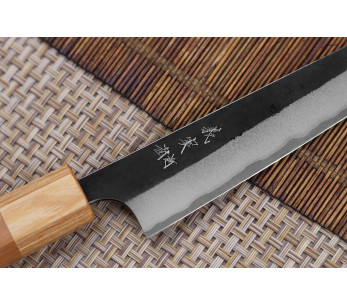
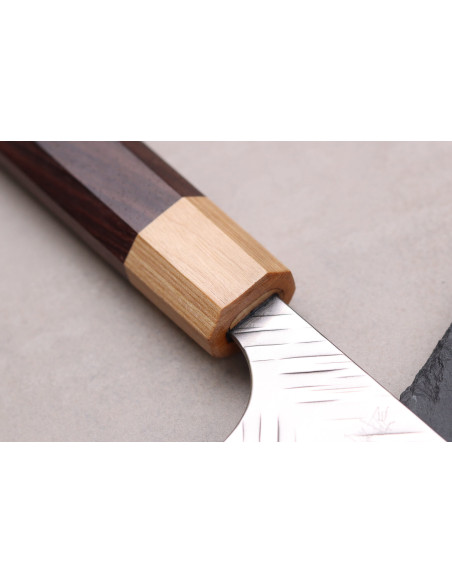
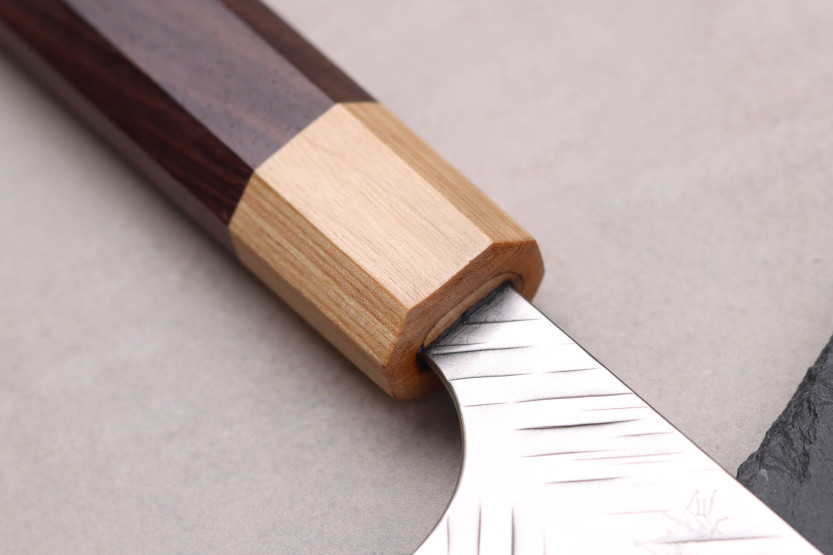
The surface of your blade has been hammered with original "V"-shaped patterns to give character to your handcrafted Japanese knife. What's more, the blade has been polished to add an extra touch of elegance. Kanjis have also been engraved for added authenticity.
An elegant handle for your handcrafted Japanese knife
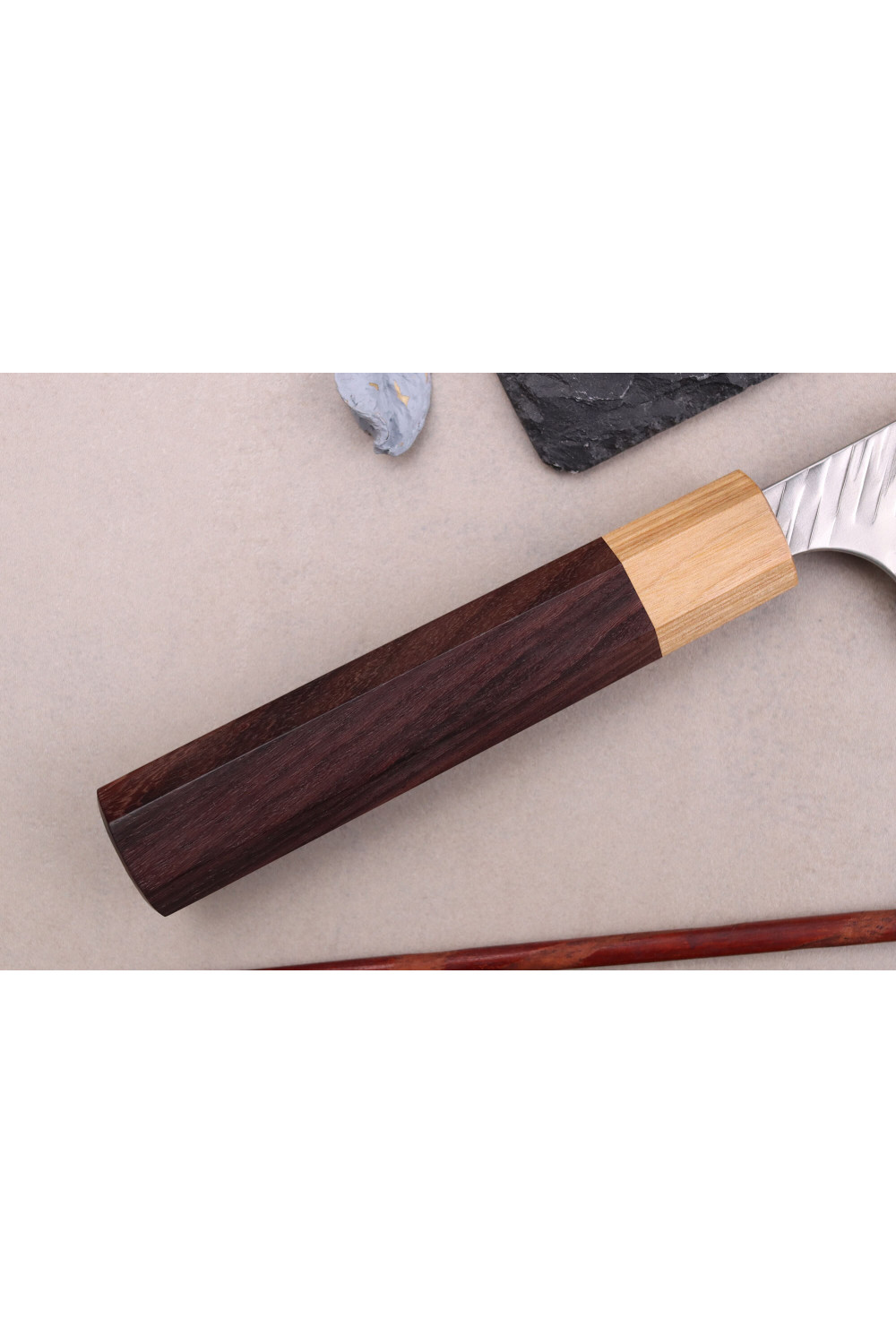
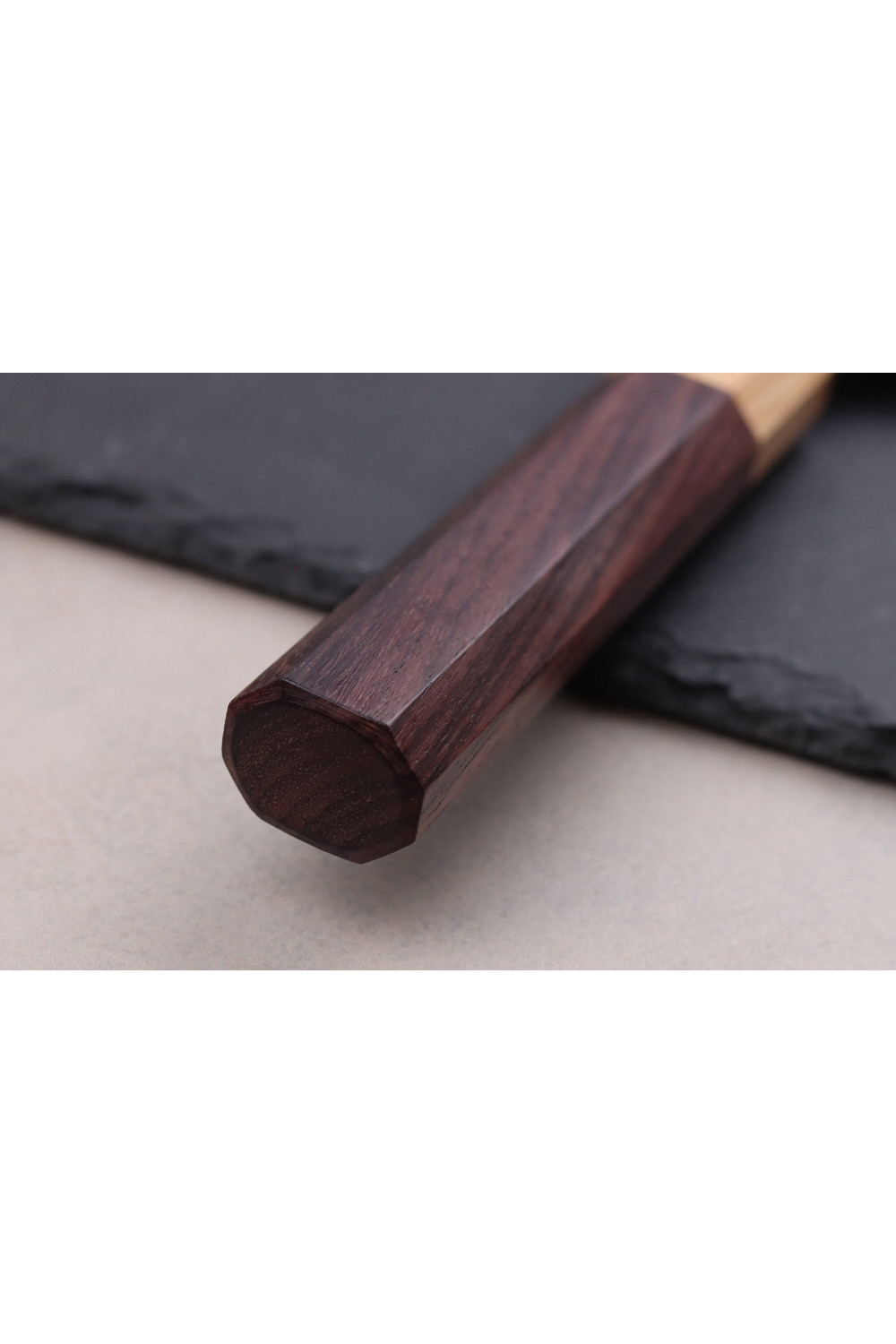
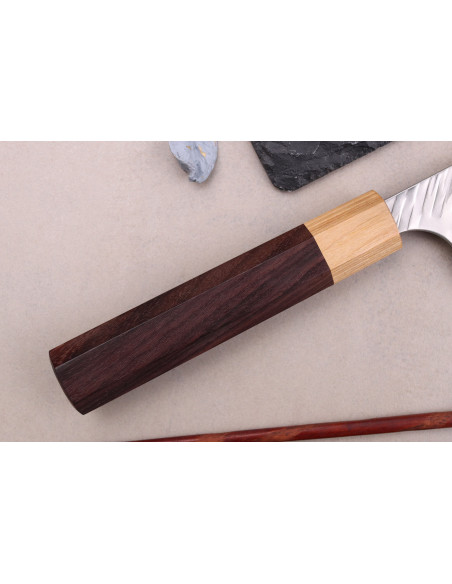
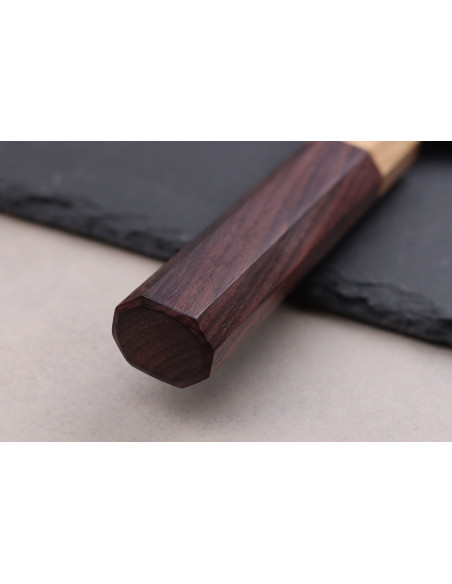
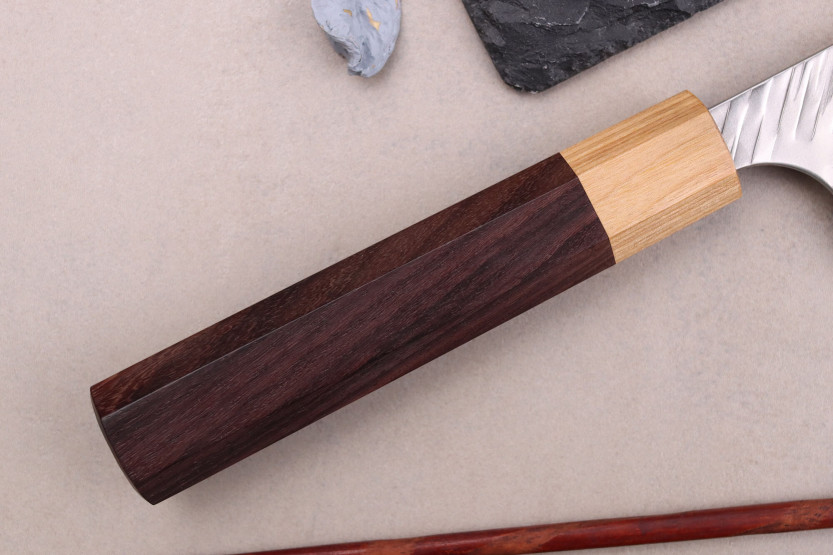
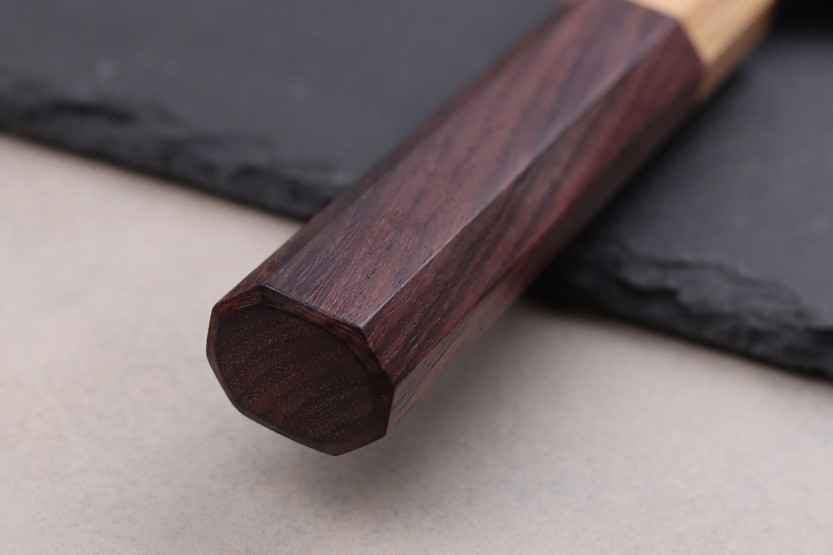
The handle of this handcrafted knife is made from rosewood, a species renowned for its warm nuances. This dense, finely gritwood offers resistance to humidity while retaining a pleasant texture to the touch. Each handle features natural variations in color and pattern, making each knife unique!
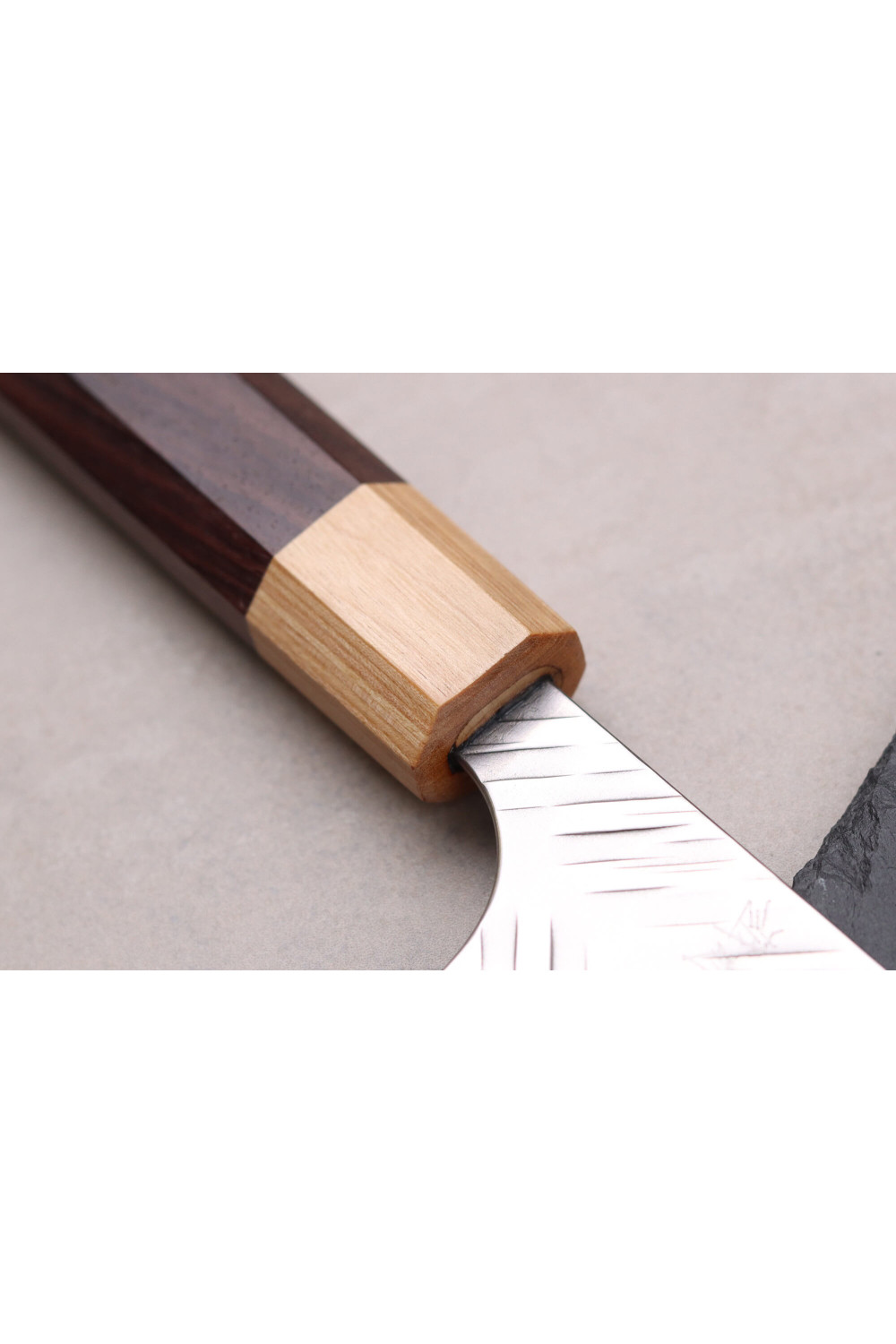
To join the rosewood to the blade, a pakka wood Bolster has been added. Pakkawood is a composite material made from laminated wood and resin, all heat-hardened. This combination gives the material great strength, while the grain gives it the appearance of natural wood.
The handle is octagonal in shape to suit the hands of both right- and left-handed cooks! It guarantees an ergonomic grip for perfectly controlled handling, especially during prolonged use.
Finally, wood putty is added to fill the small gaps where the blade meets the handle. This ensures a watertight seal and prevents water infiltration.
To care for your Japanese knife, it should be washed only by hand with a soft sponge, avoiding getting the handle wet. Once cleaned, you should dry it immediately to remove all moisture and store it in a dry place. Do not put in the dishwasher or leave to soak in the sink.
Discover other knives forged by Yoshimi Kato on KnifeLeader.eu!




 By buying this product you can collect up to