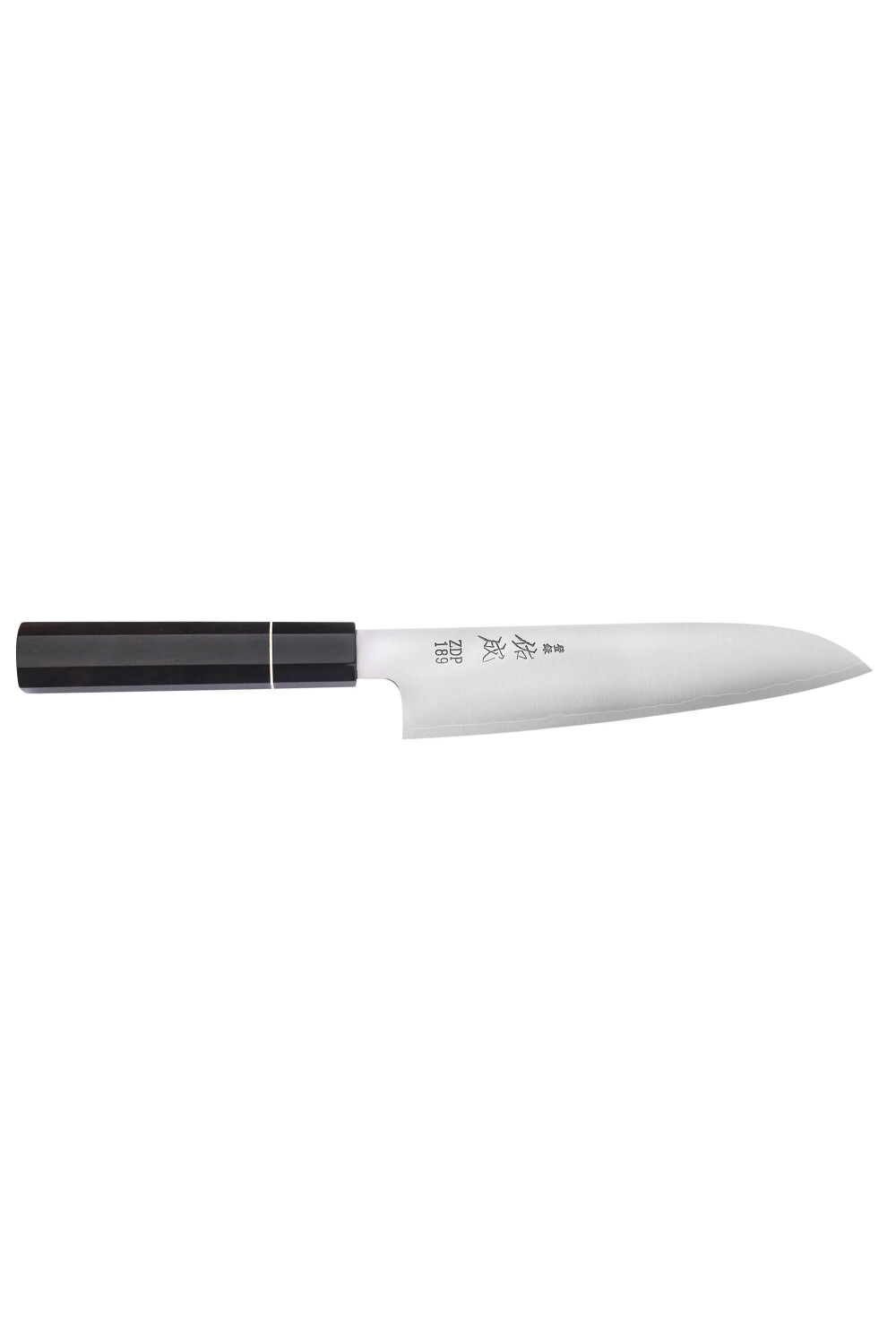
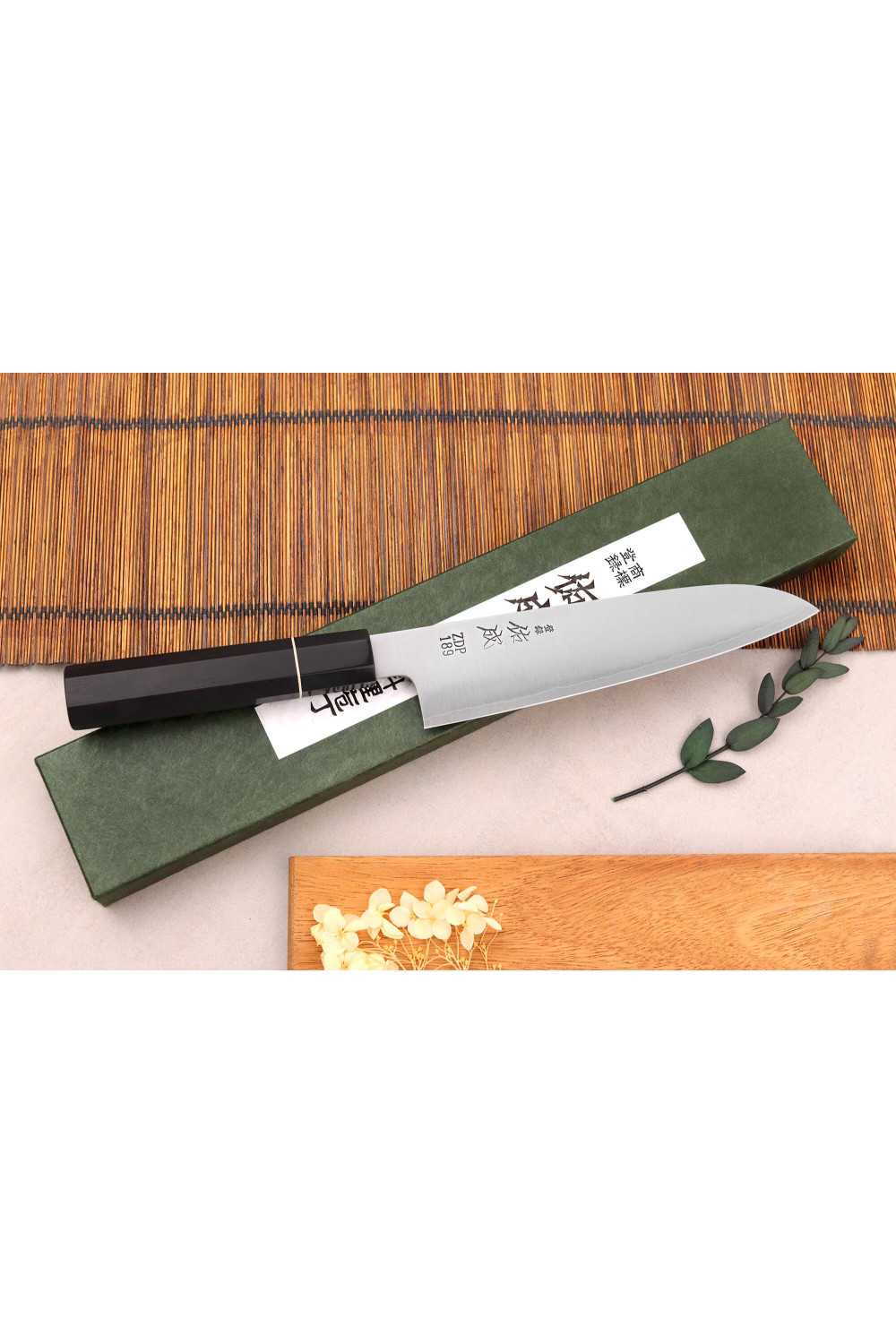
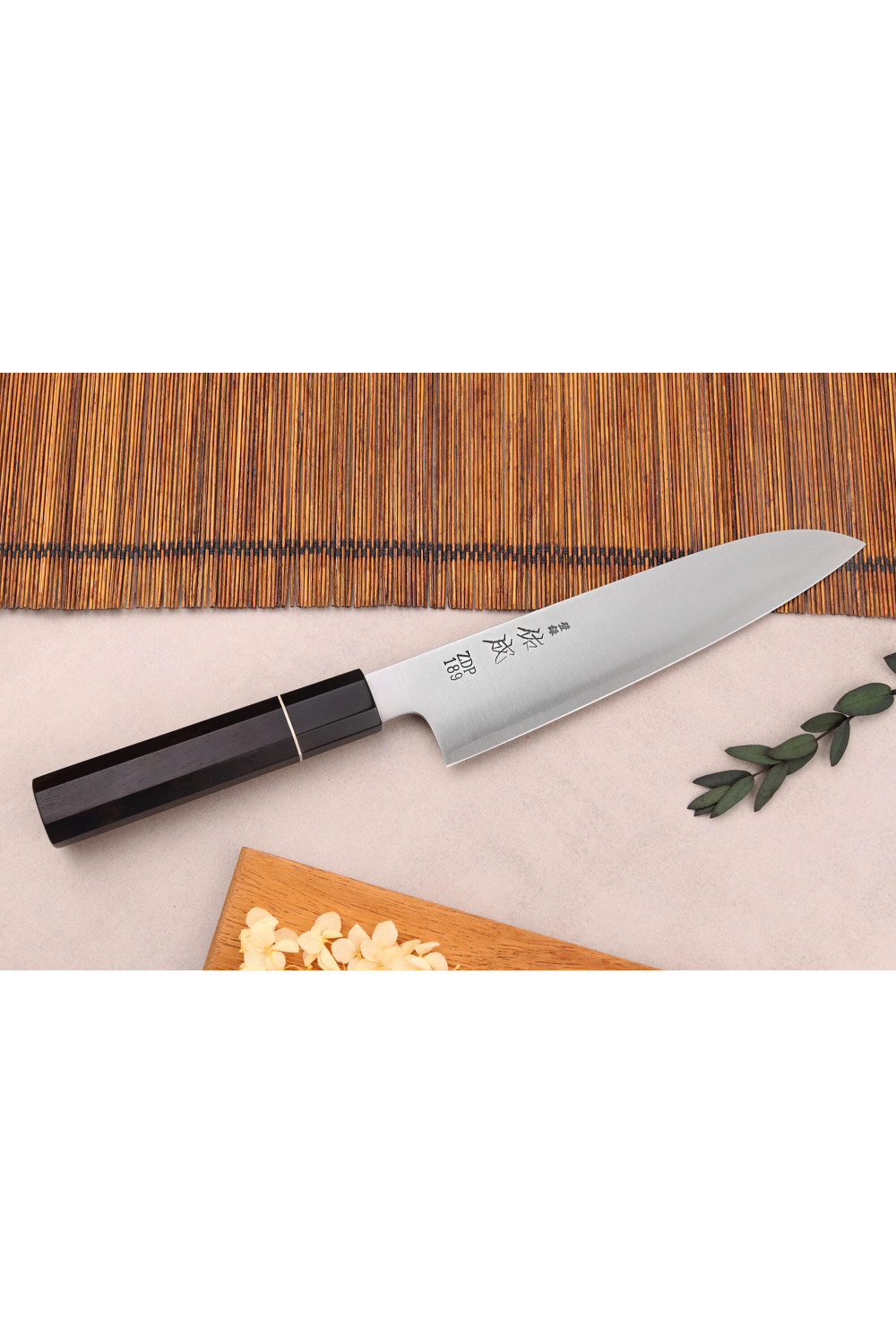
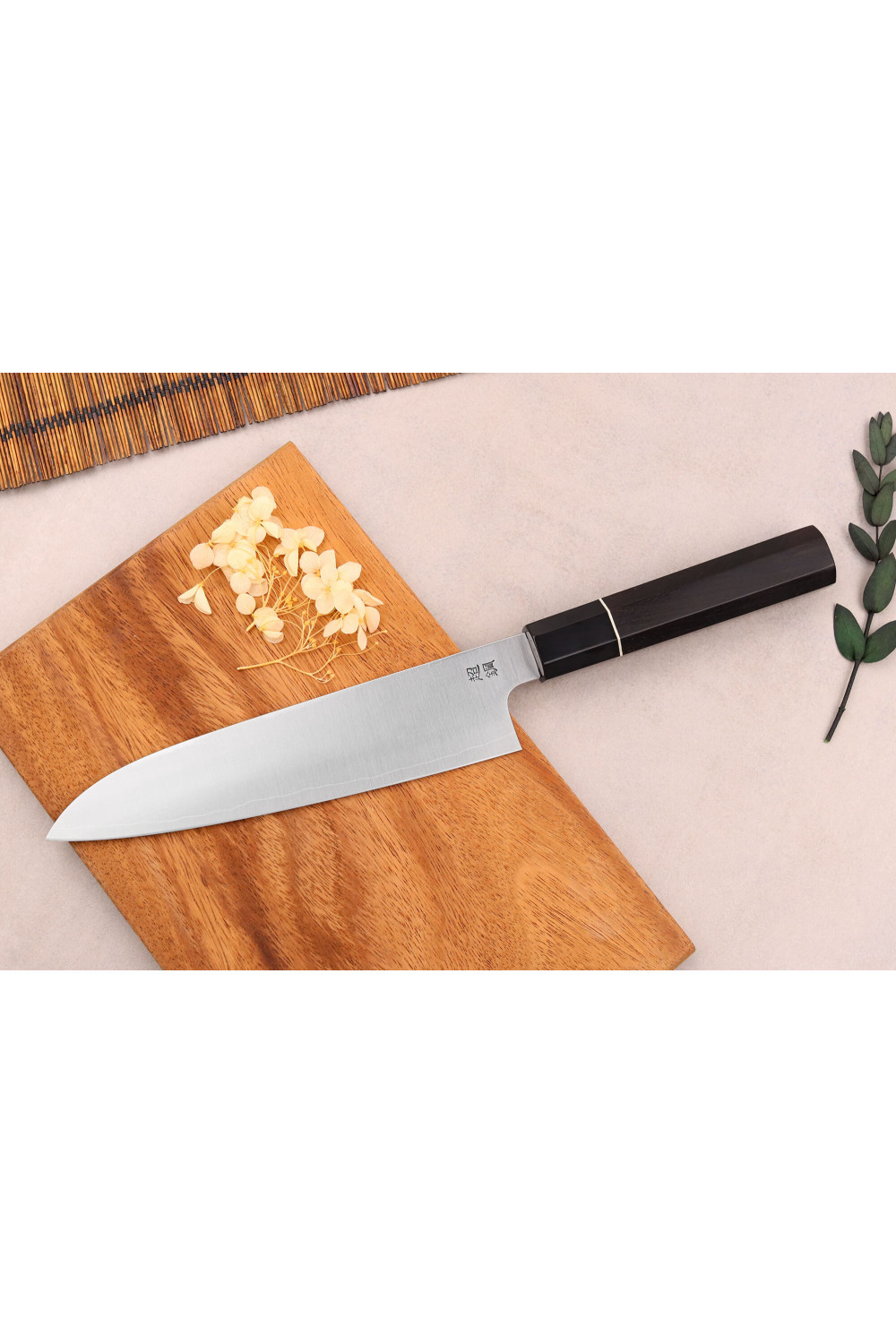
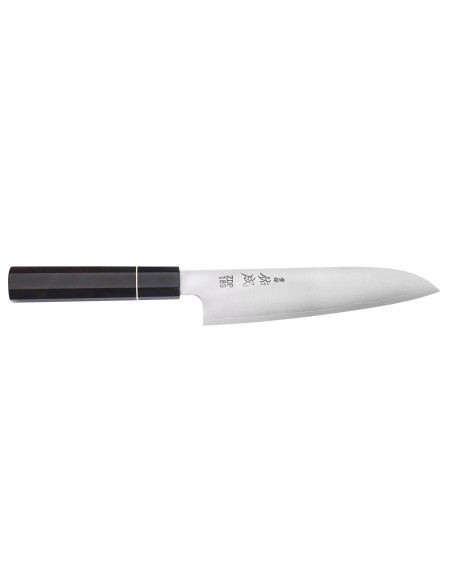
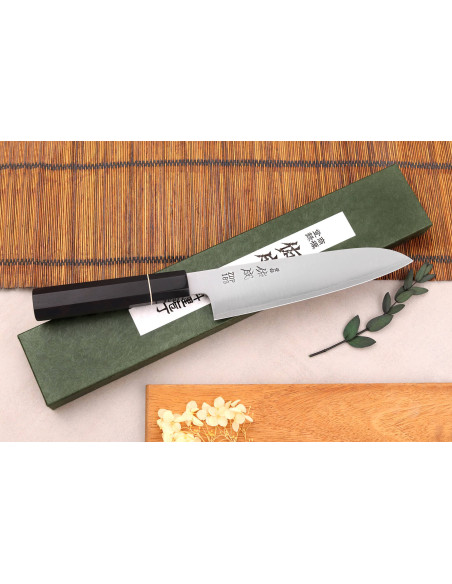
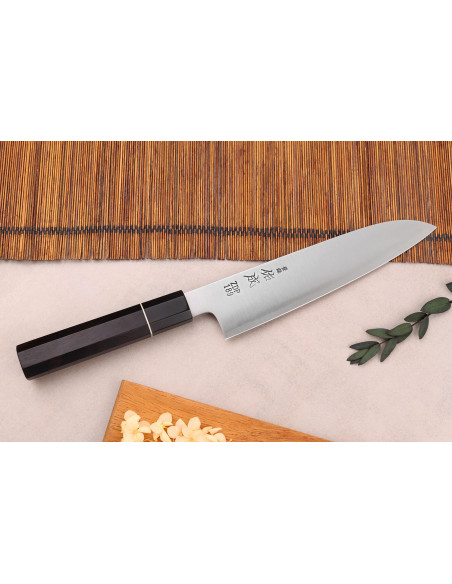
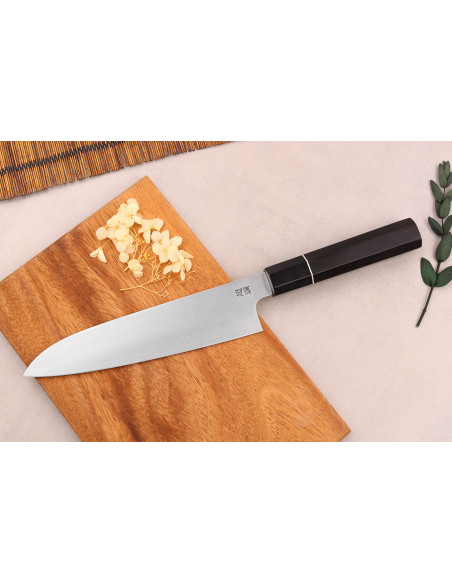
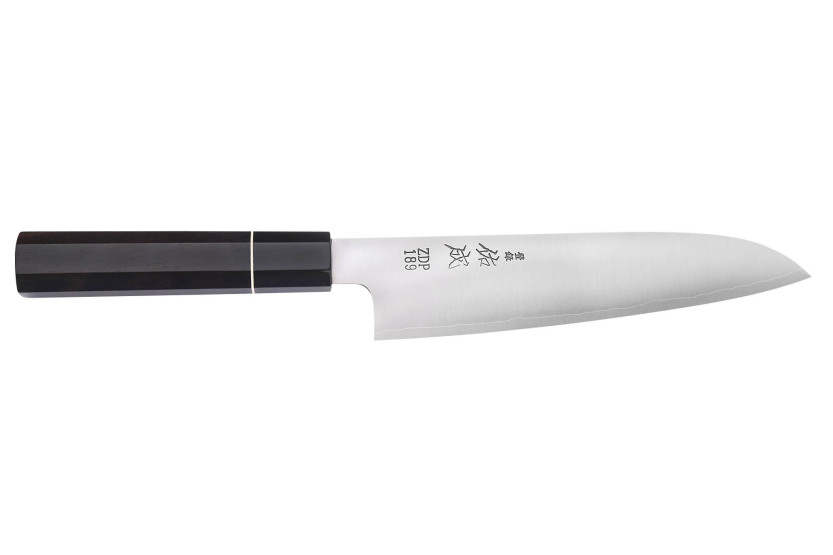
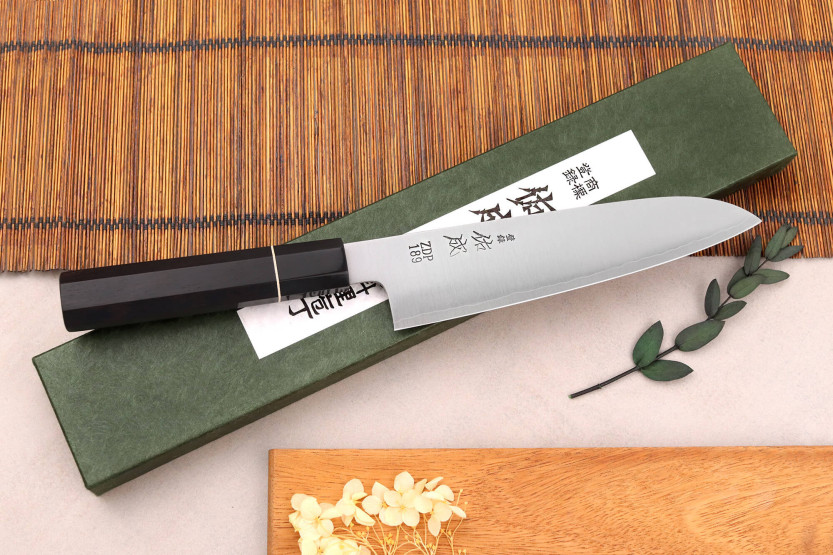
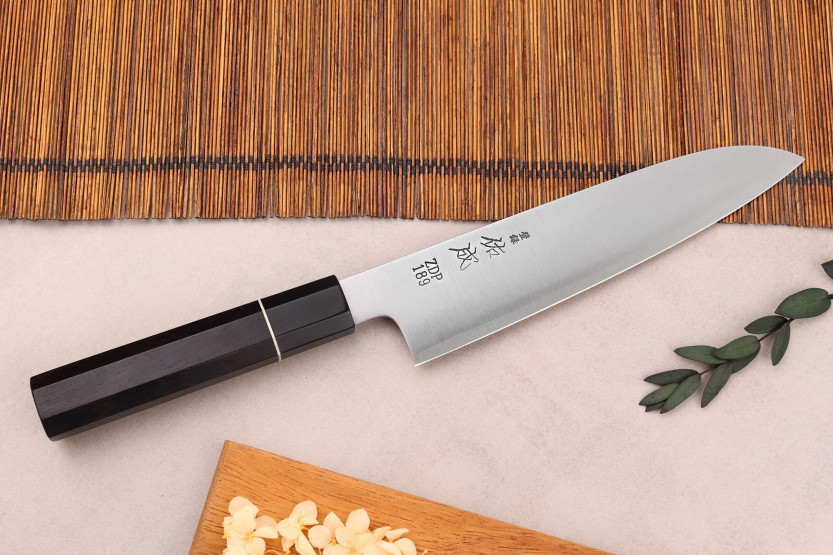
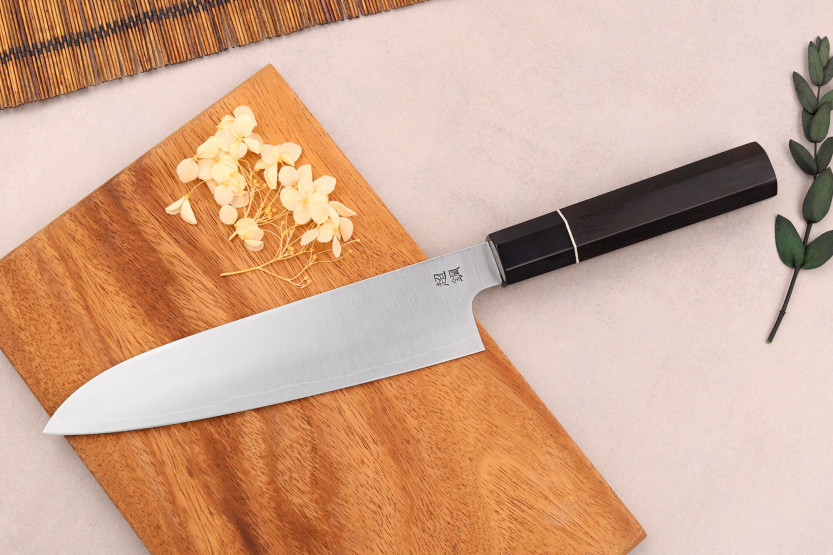
This Sukenari ZDP-189 San Maï 19.5 cm artisanal Japanese santoku knife embodies refinement and performance in a versatile format. Based on revisited ancestral techniques, it is ideal for enthusiasts who want to combine aesthetics, precision and durability in their culinary practice!
Blade: protected ZDP-189 core, long-lasting cutting edge
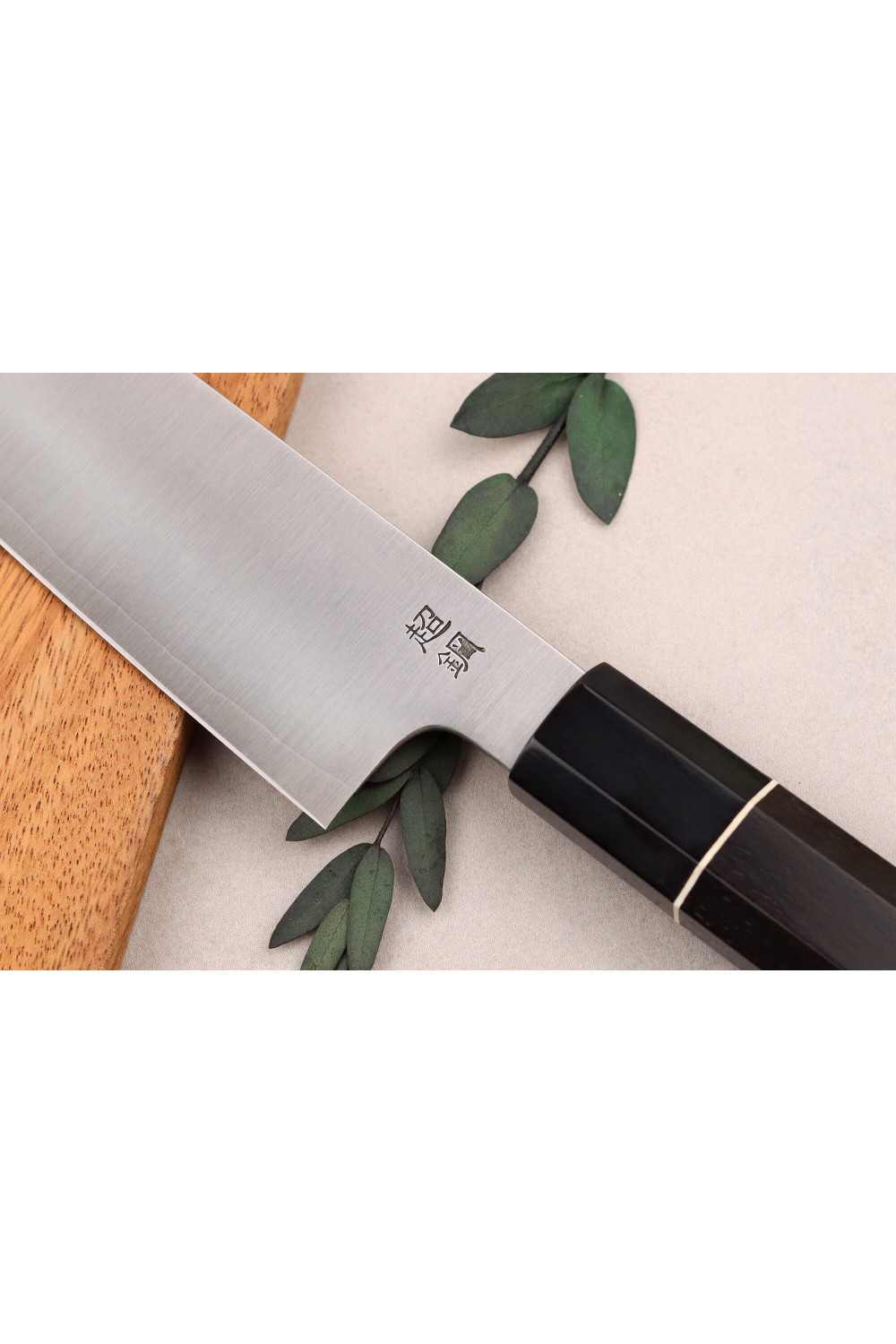
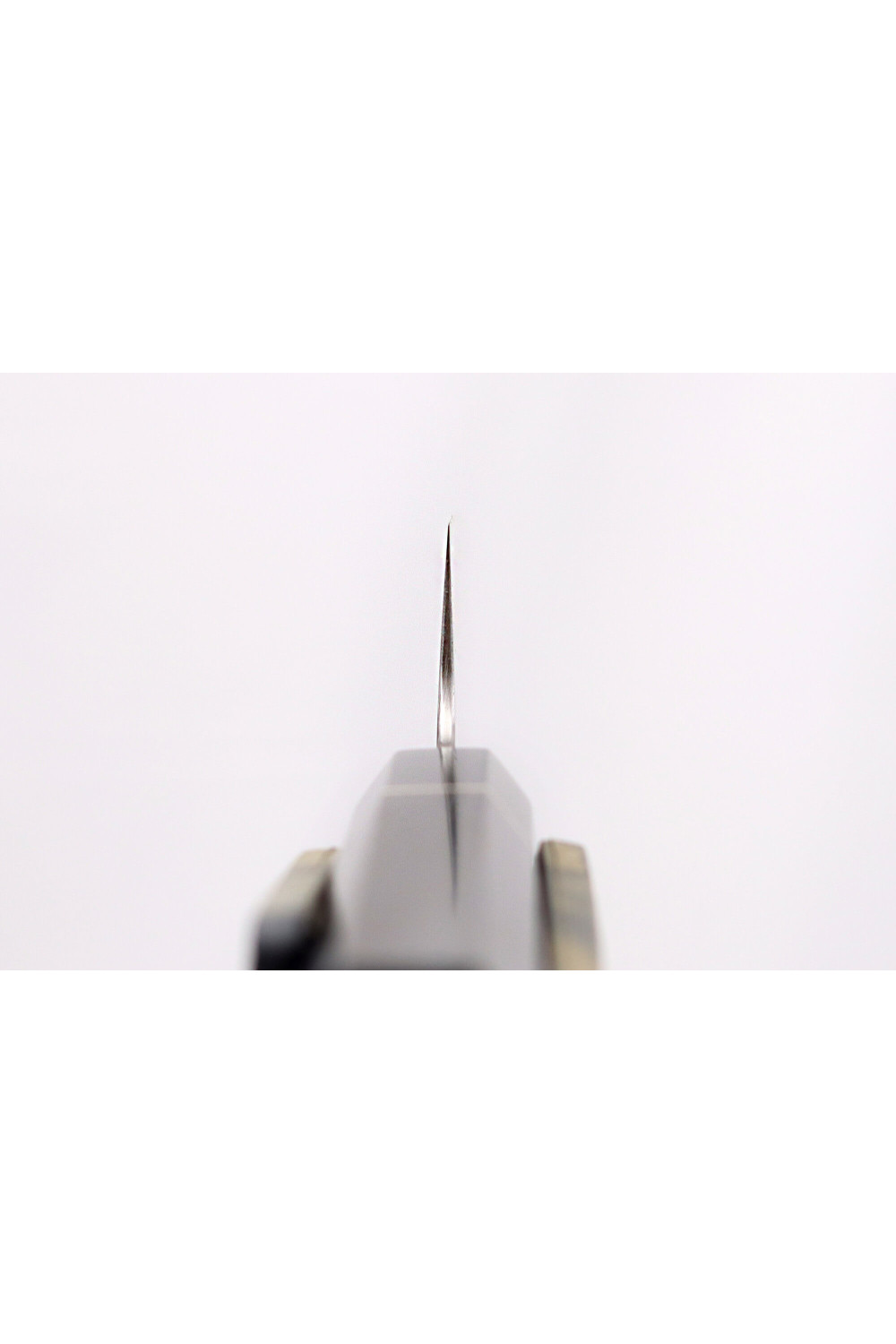
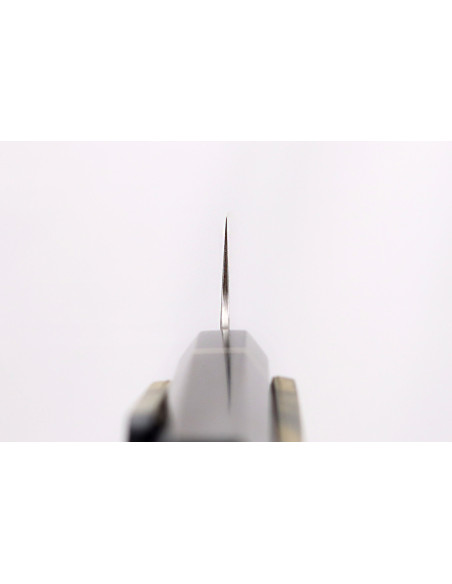
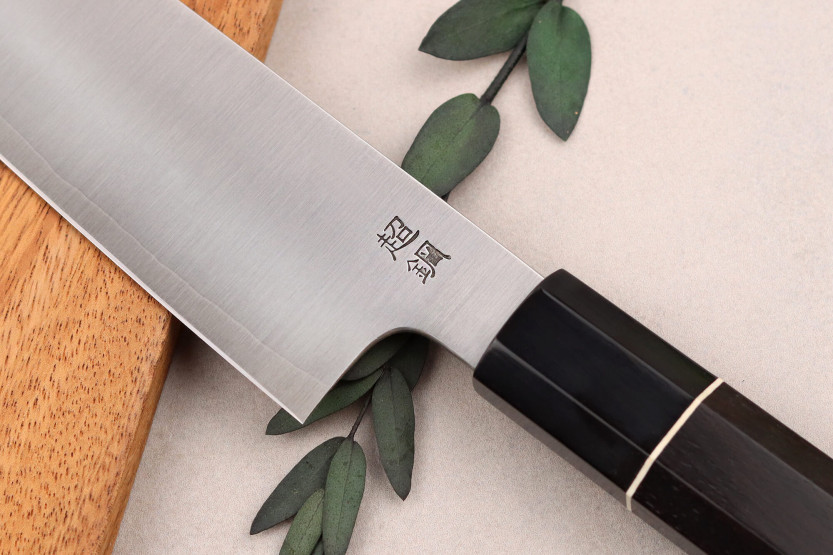
The blade adopts the San Maï structure, i.e. a hard steel core wrapped in two layers of "softer" steel to offer a good compromise between strength and flexibility.
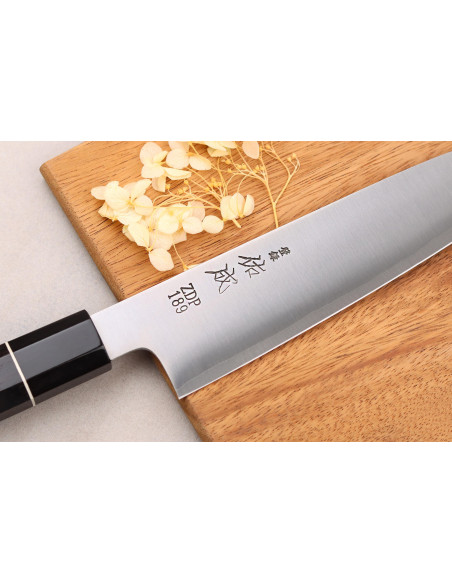
The core is made of ZDP-189 powdered steel, a top-of-the-range Japanese alloy renowned for its extreme carbide density: it contains around 3% carbon and a high percentage of chromium, giving it greater resistance to corrosion while retaining the sharpness of a high-carbon steel. But beware: with its high carbon content, your Japanese knife still needs to be carefully maintained.
Thanks to careful heat treatment, the blade achieves a hardness of around 65HRC on the Rockwell scale. This guarantees outstanding edge retention over time, while enabling fine resharpening when necessary.
The softer outer layers act as shock absorbers on light blows, limiting the risk of breakage or micro-cracks: a significant advantage for fine, controlled use.
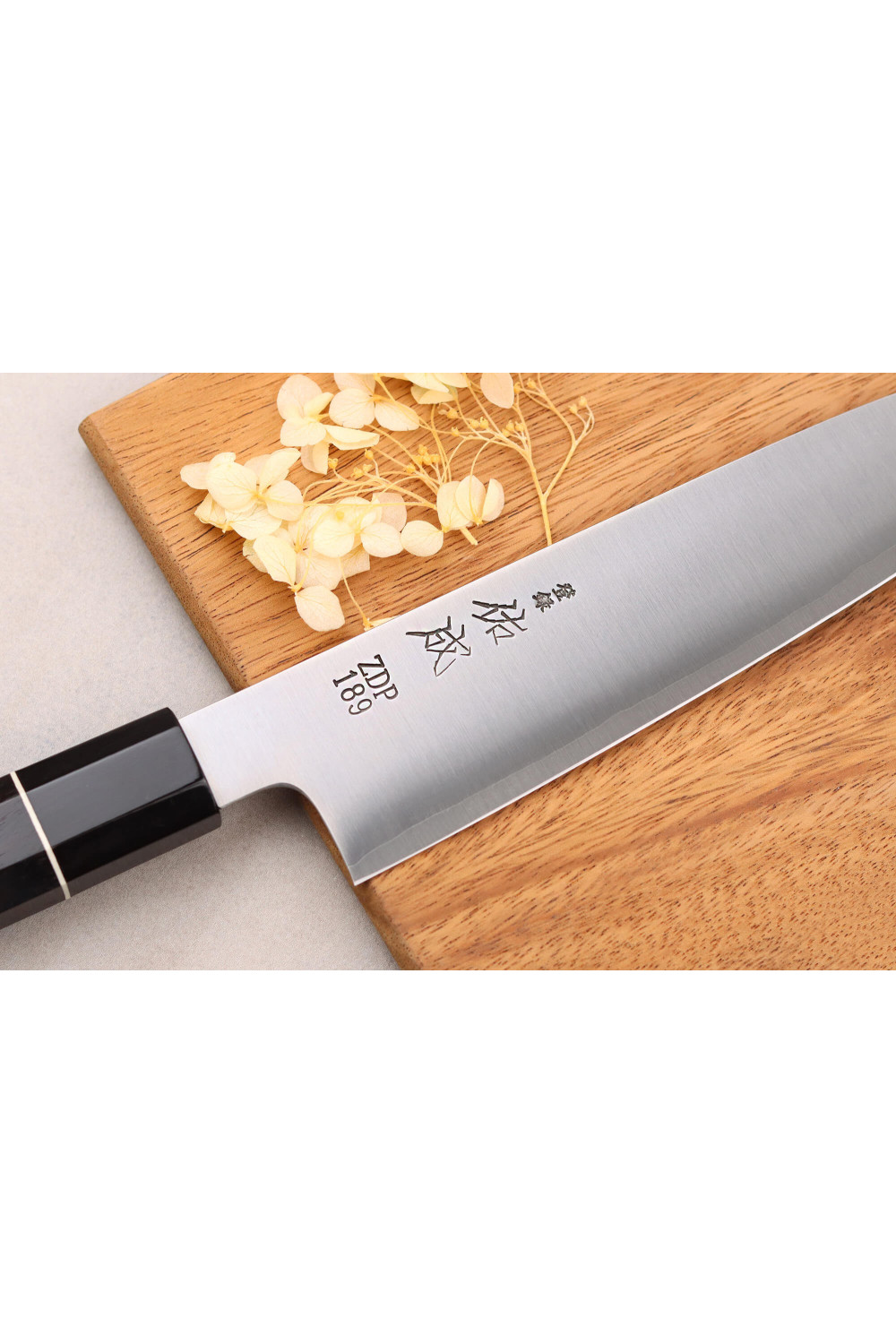
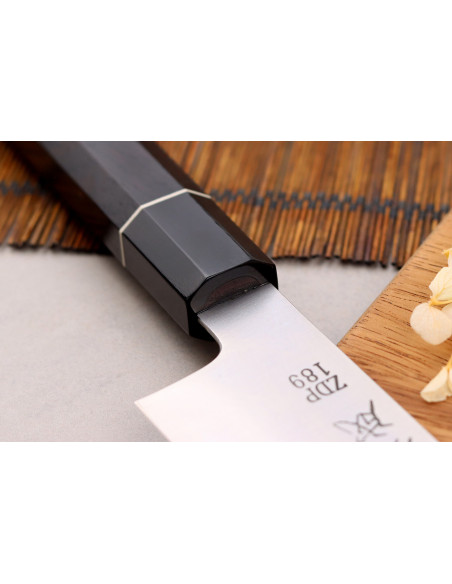
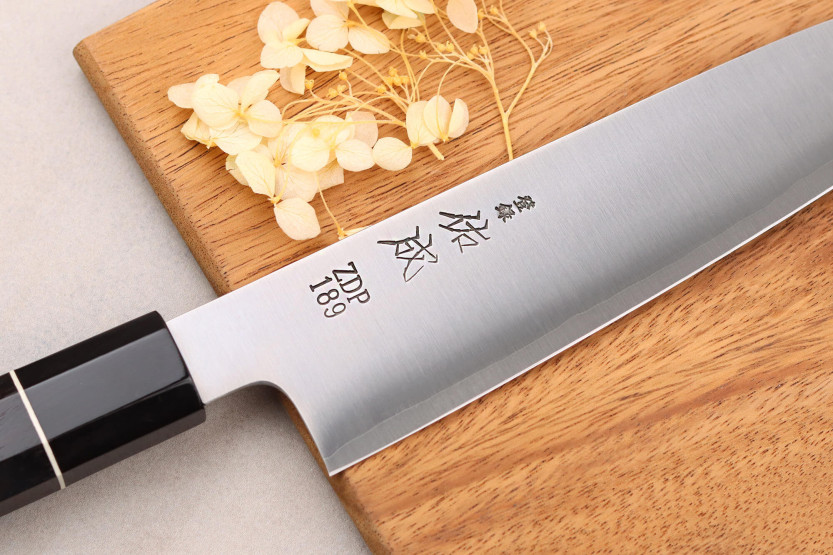
The polished finish, accompanied by authentic kanji engravings, underlines the noble character of your handcrafted Japanese knife.
The santoku knife with its elegant handle
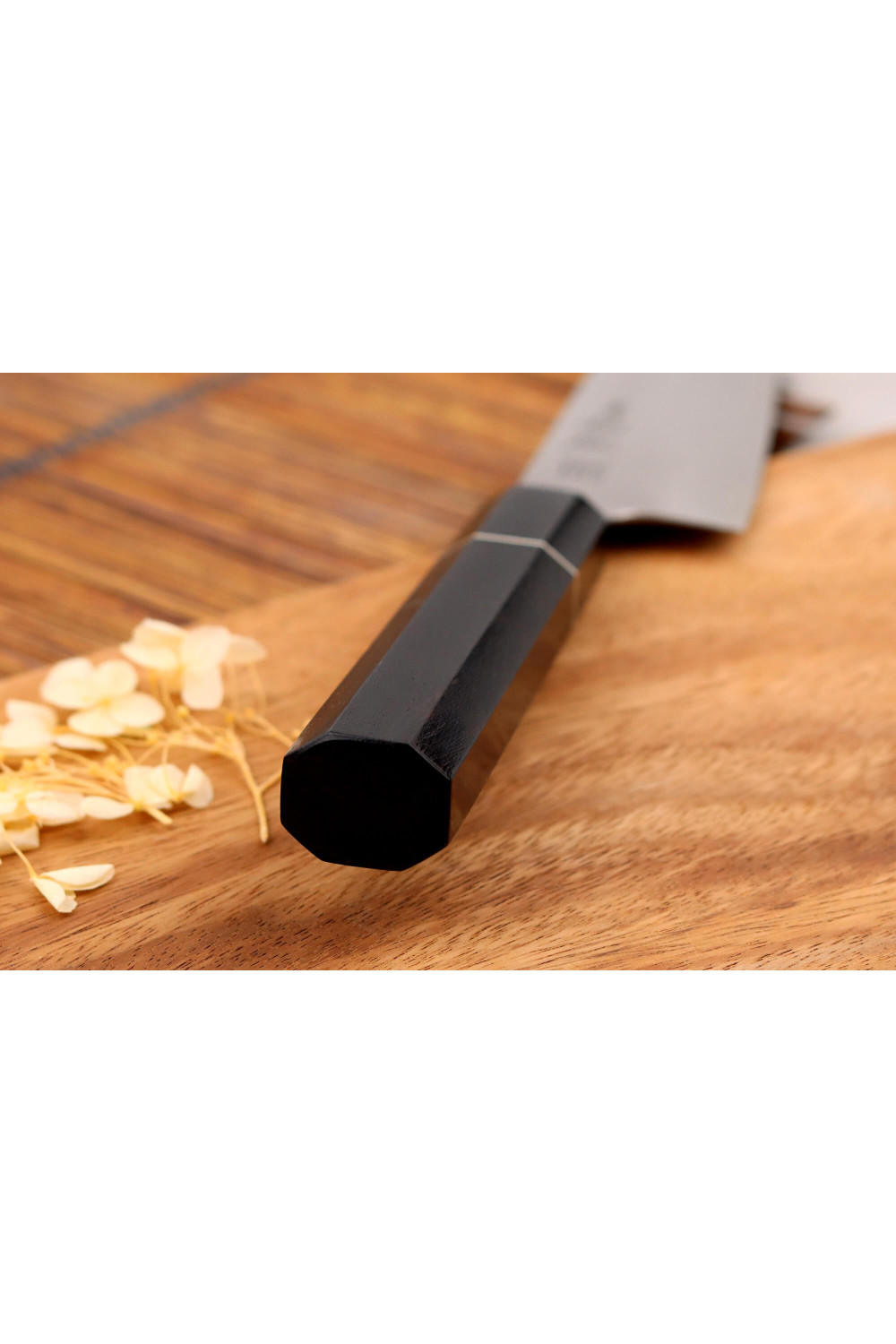
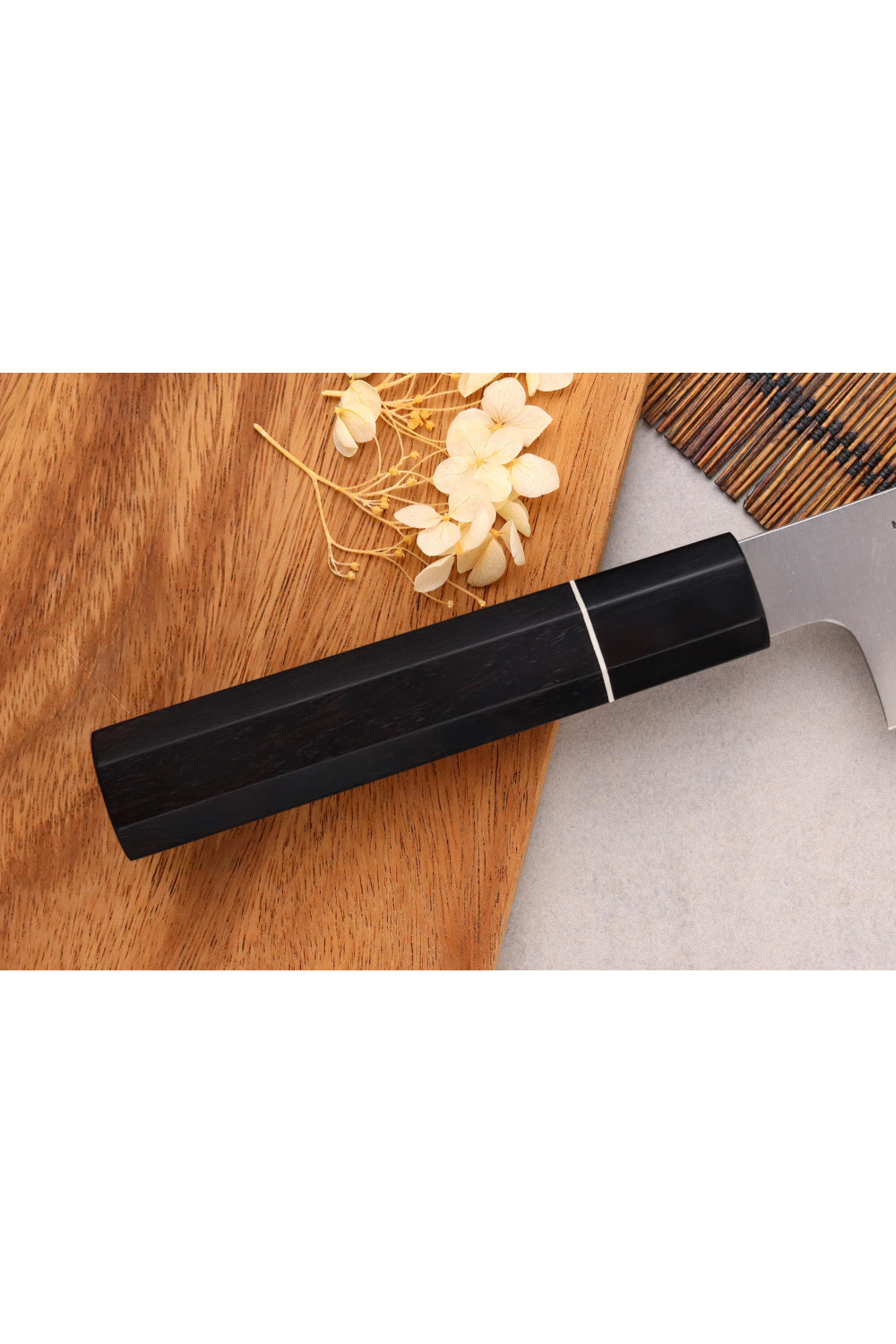
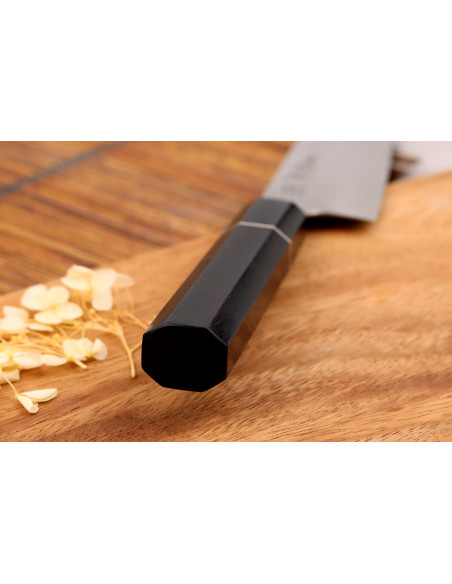
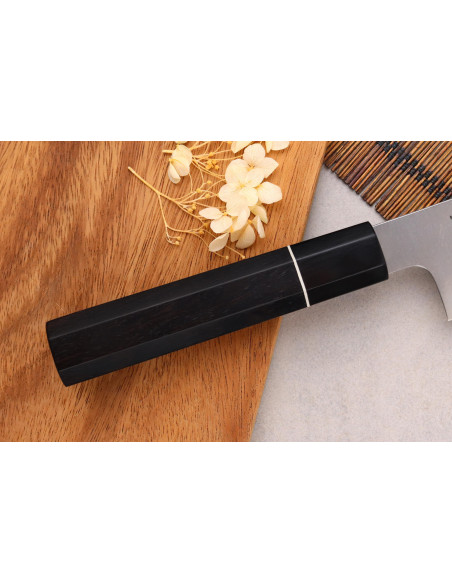
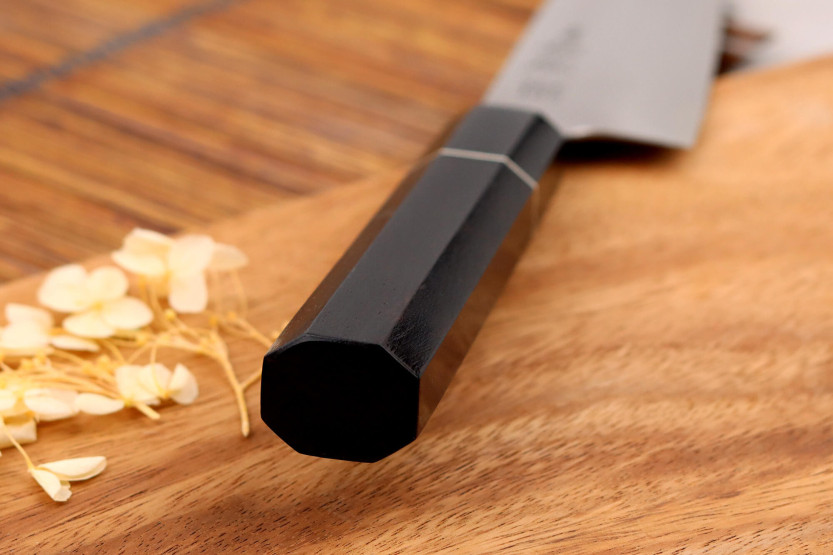
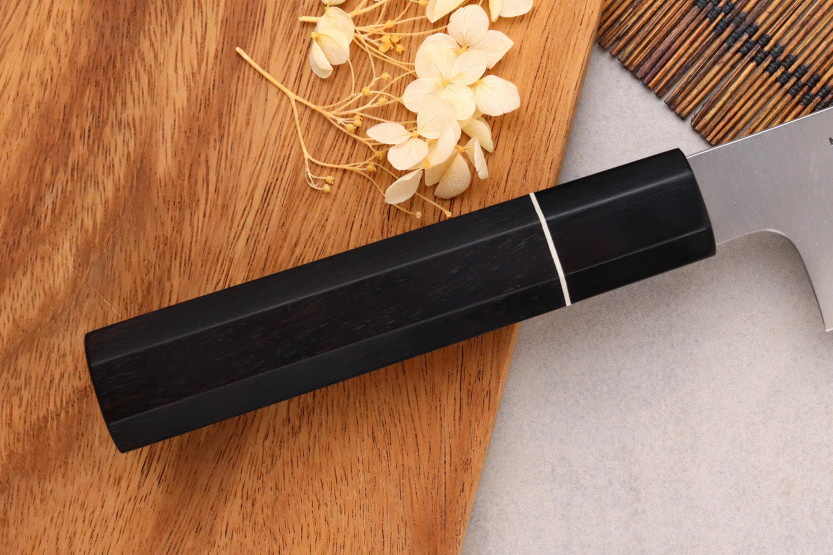
The handle is carved from Macassar ebony, a precious wood with dark striated tones and exceptional density and finesse. Its high density makes it even more robust, particularly in the face of humidity.
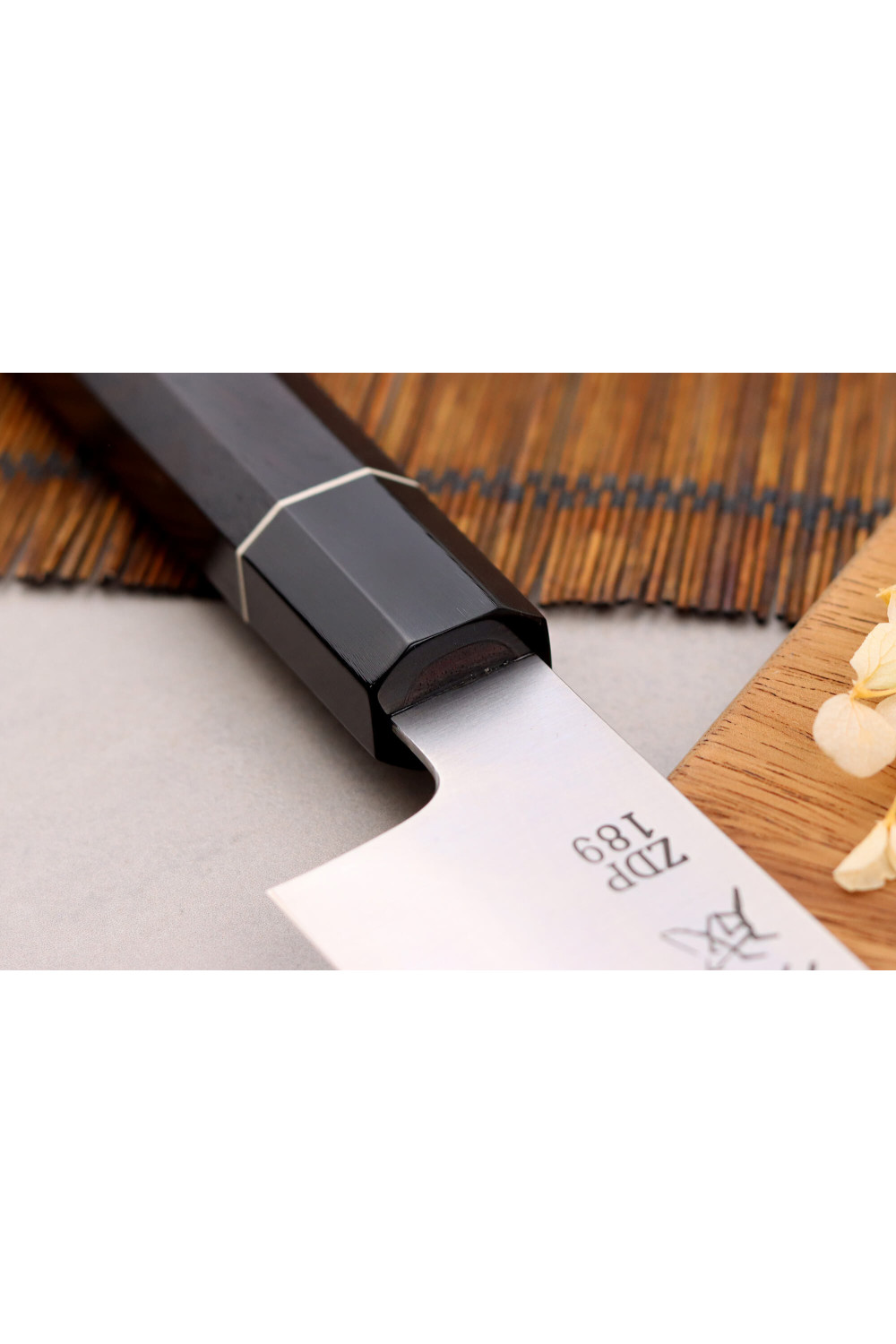
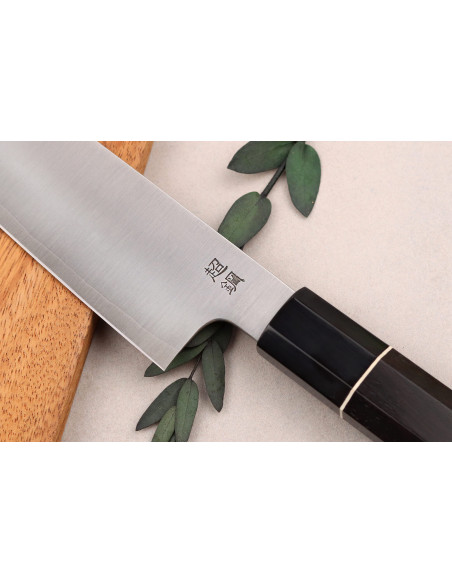
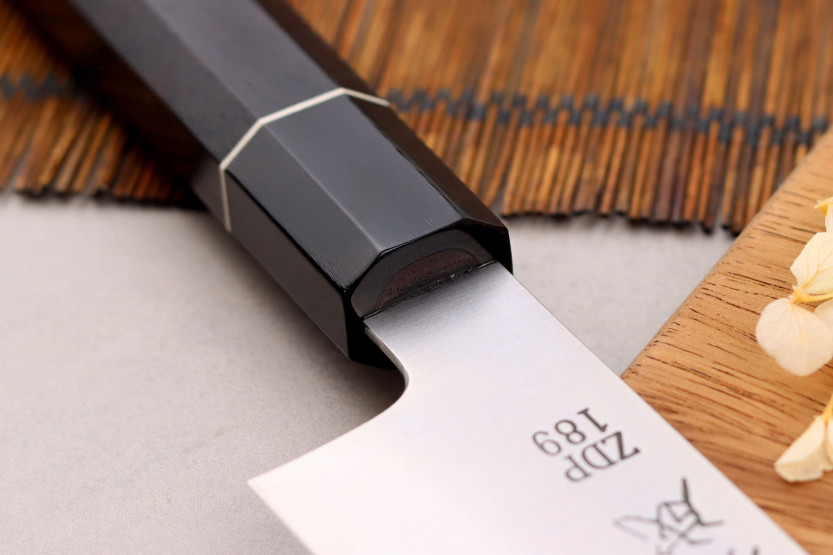
A black buffalo horn bolster creates an elegant junction between the wood and the blade, contrasting subtly with the dark ebony.
A white micarta ring visually separates the two materials, reinforcing the visual and functional balance of the whole.
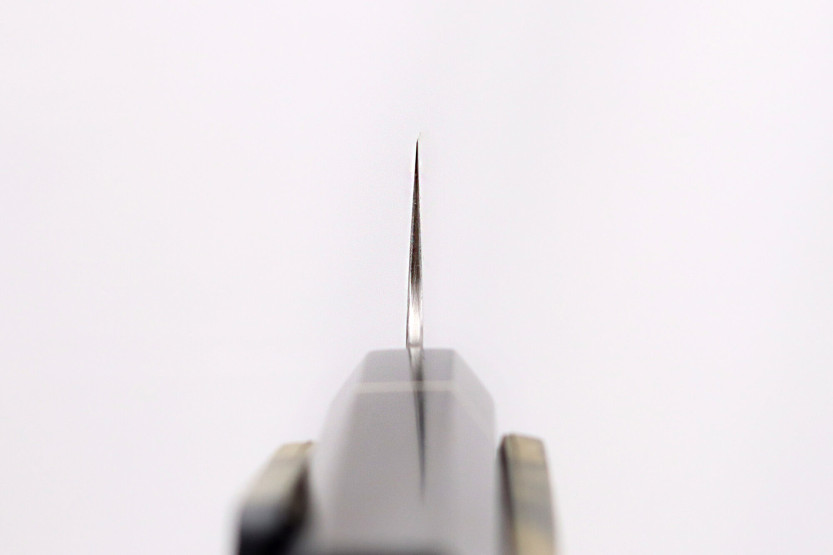
Its octagonal shape ensures a stable, secure and comfortable grip, suitable for both right- and left-handed users. This Japanese kitchen knife provides an excellent grip, especially during long cutting sessions in the kitchen.
Finally, the assembly is meticulously crafted, and the handle is filled with wood paste to ensure a watertight joint, preventing the infiltration of moisture or food residues.
Summary of the features and benefits of your Sukenari knife
- 3-layer San Maï structure: balance between strength and flexibility
- ZDP-189 core steel: exceptional cutting performance
- 65 HRC Rockwell
hardness- : long-lasting sharpness
- Polished finish and engraved kanji: elegance and authenticity
- Macassar ebony handle: sturdiness and aesthetics
- Black horn
bolster
- with white micarta ring: refined contrast
- Octagonal shape: excellent ergonomics over time
- Japanese craftsmanship: traditional quality
Care instructions for this Japanese craft knife
This Japanese kitchen knife is designed for fine cuts, slices, vegetables, fruit or boneless meat. Avoid abrasive use or contact with bones, hard metals or abrasive surfaces.
Wash only by hand, using mild soap and a non-abrasive sponge. Never soak or put in the dishwasher. Dry the blade immediately with a soft cloth.
From time to time, apply a very thin coat of mineral oil to protect the blade, and wipe it dry between cuts to limit the risk of oxidation.
The color of your blade may vary slightly over time: this is perfectly normal! This is a natural reaction of the carbon to ambient humidity and the acidity of the food being cut. This in no way affects the use of your Japanese santoku knife.
About the Sukenari knife brand
Founded in 1933, the Sukenari workshop perpetuates know-how inherited from the traditional forging techniques used for katanas. Its highly skilled craftsmen are particularly capable of forging Honyaki blades, reputed to be one of the most demanding and prestigious forms of Japanese cutlery. Today, Sukenari enjoys a solid reputation and offers knives combining ancestral tradition and contemporary design, designed to meet the expectations of the most demanding cooks!
Discover our other Sukenari Japanese knives on Knifeleader.eu!




 By buying this product you can collect up to