The Japanese company Sukenari was founded in 1933 and specializes in the manufacture of high-quality knives. Sukenari's blacksmiths are renowned for their expertise in blade forging, inherited from the ancestral techniques used to make samurai katanas. In fact, they are capable of producing Honyaki blades, which are the highest-quality blades available. Their knives are appreciated for their blend of traditional techniques and modern designs.
A typically Japanese San Maï blade
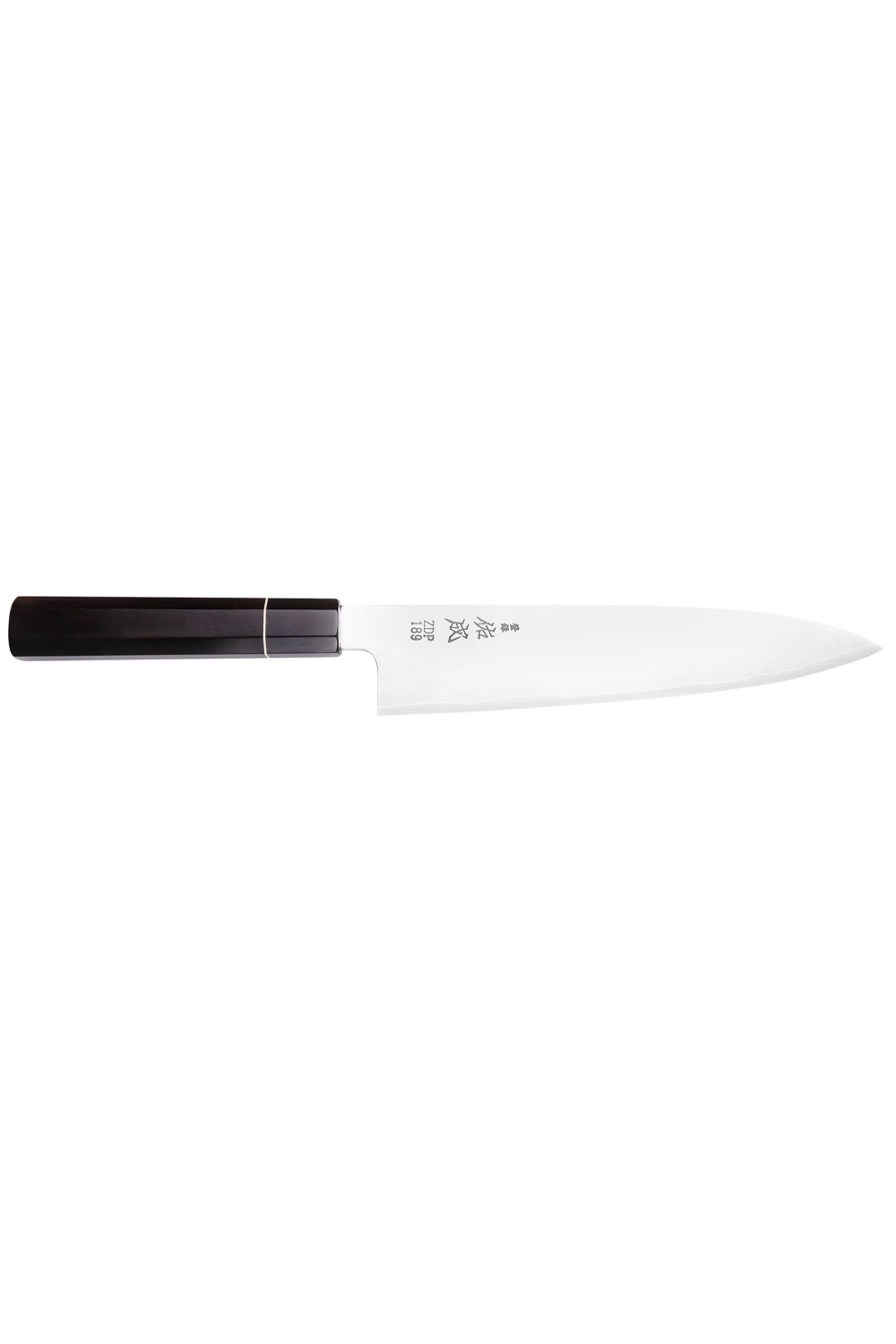
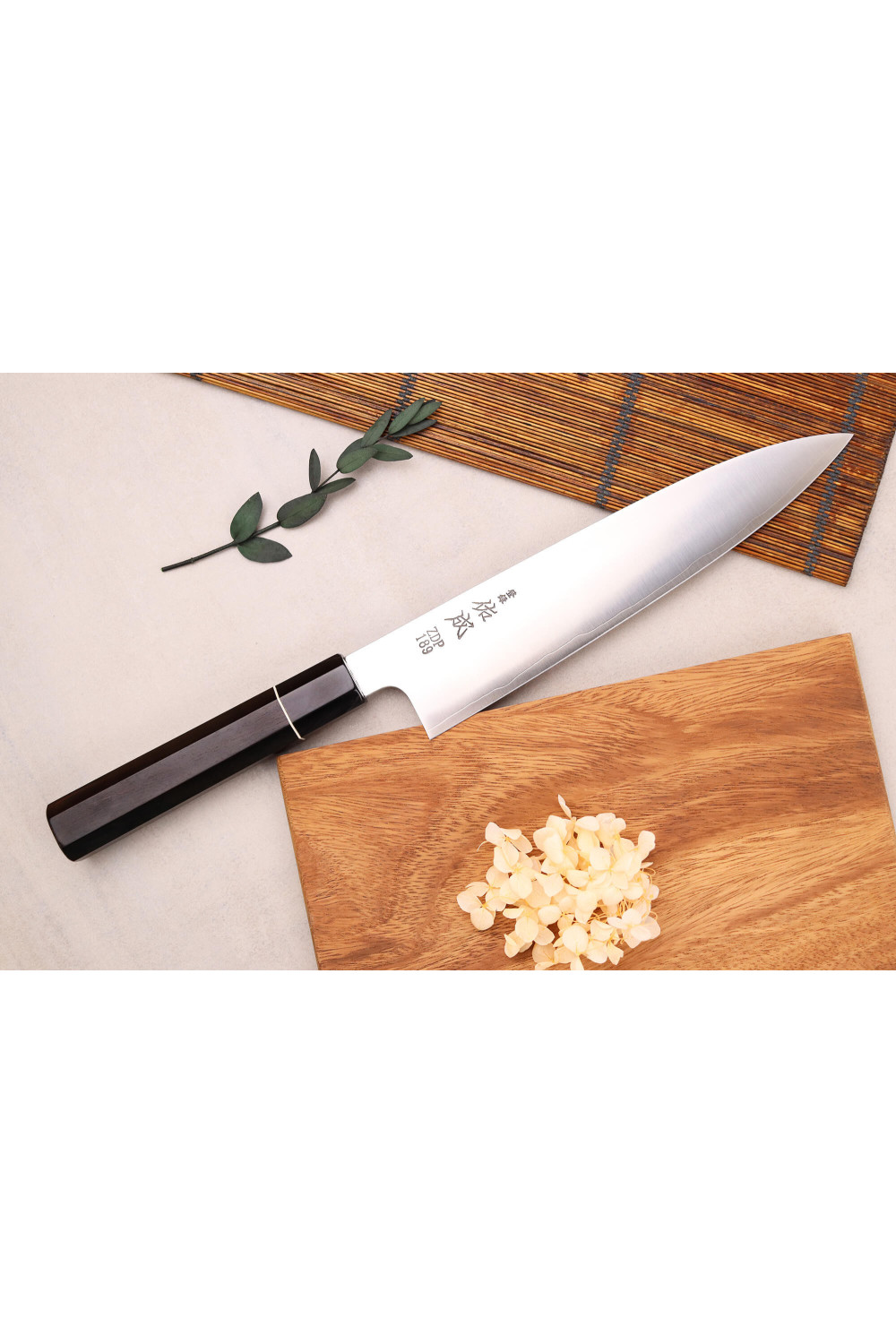
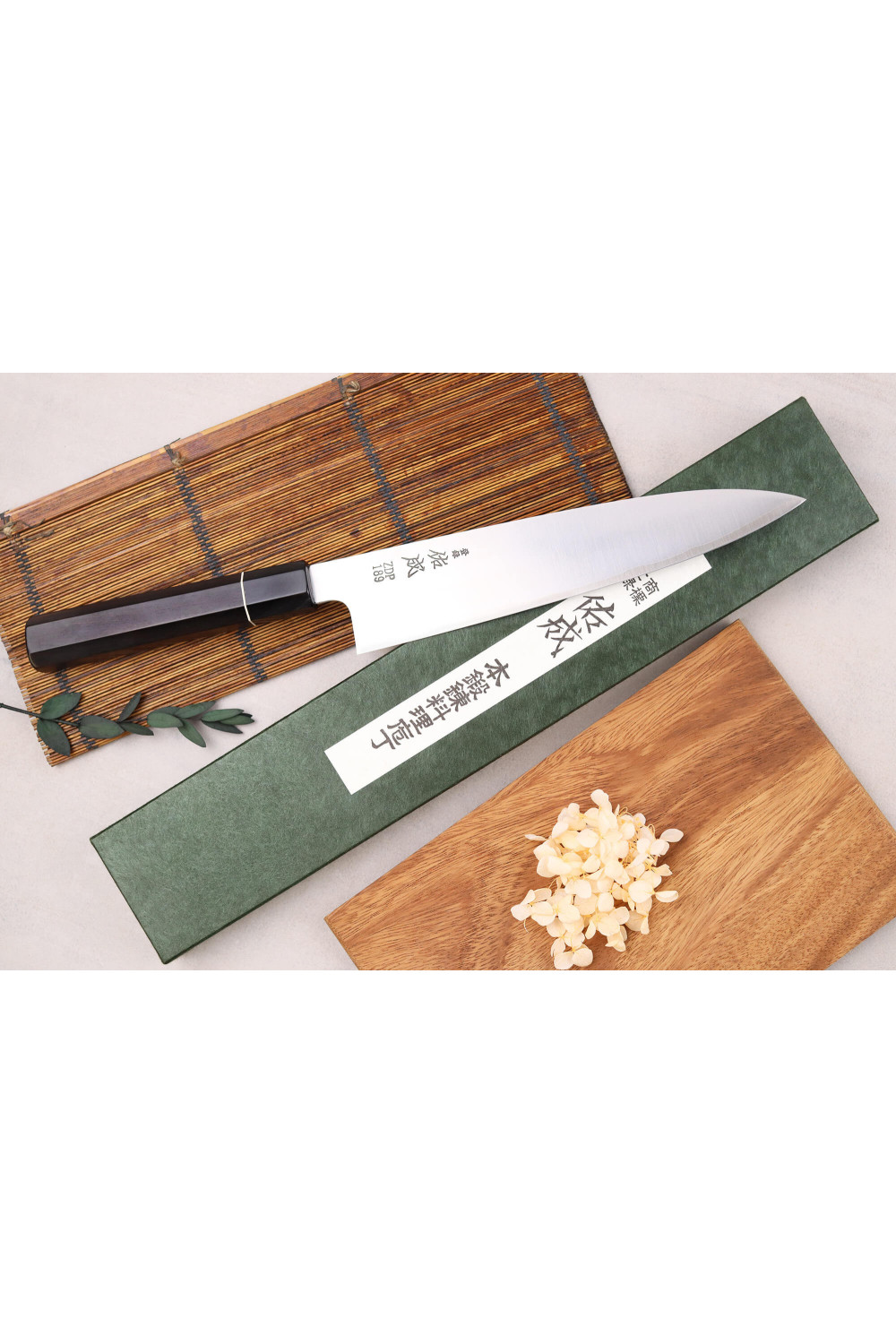
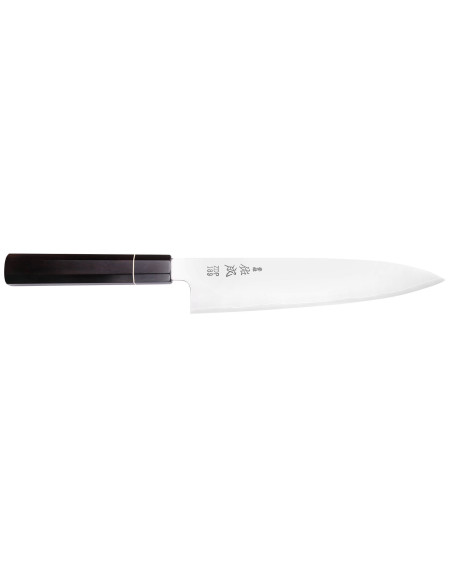
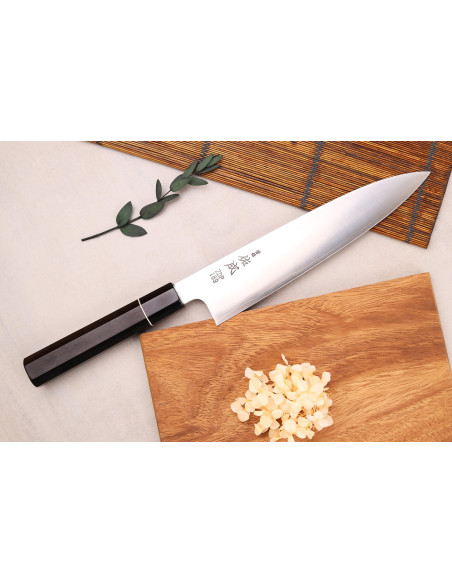
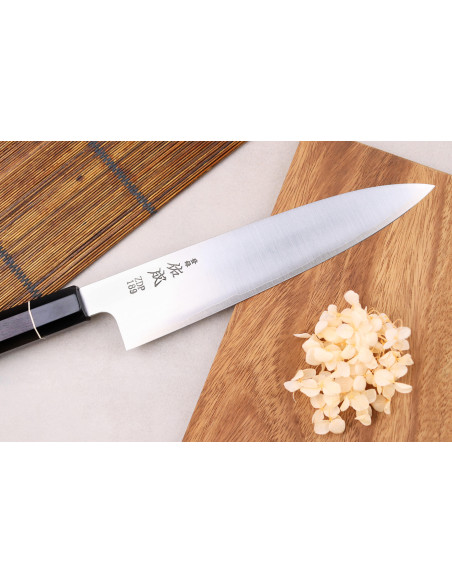
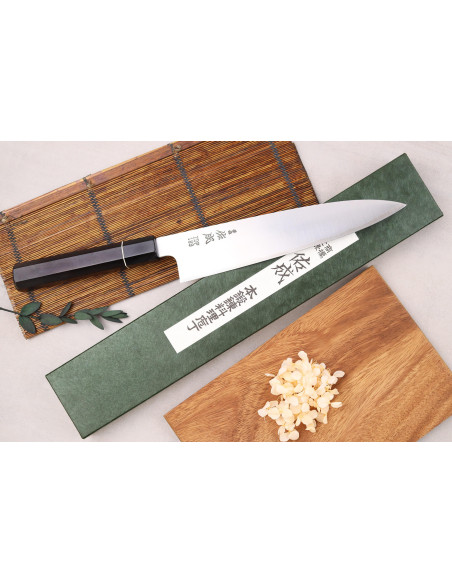
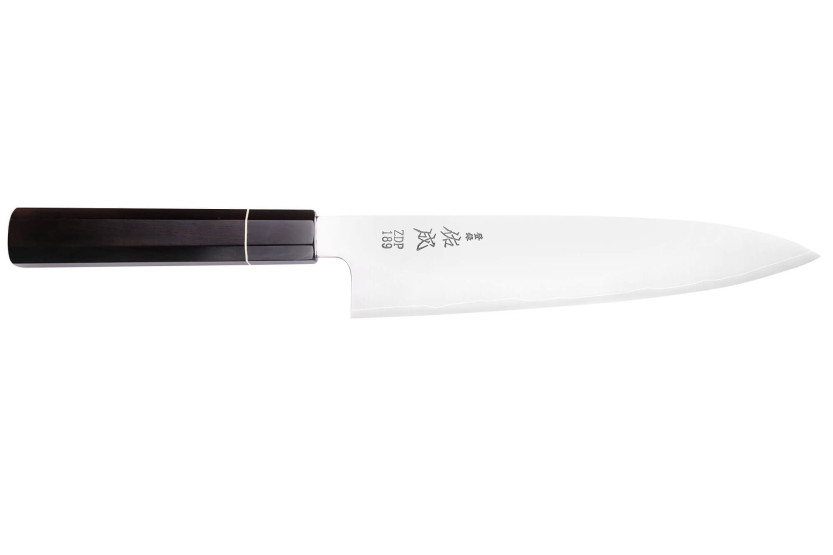
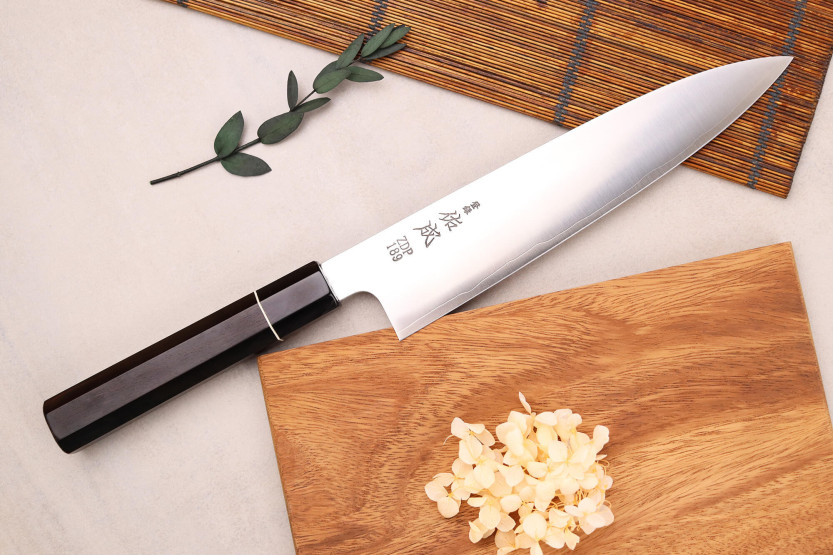
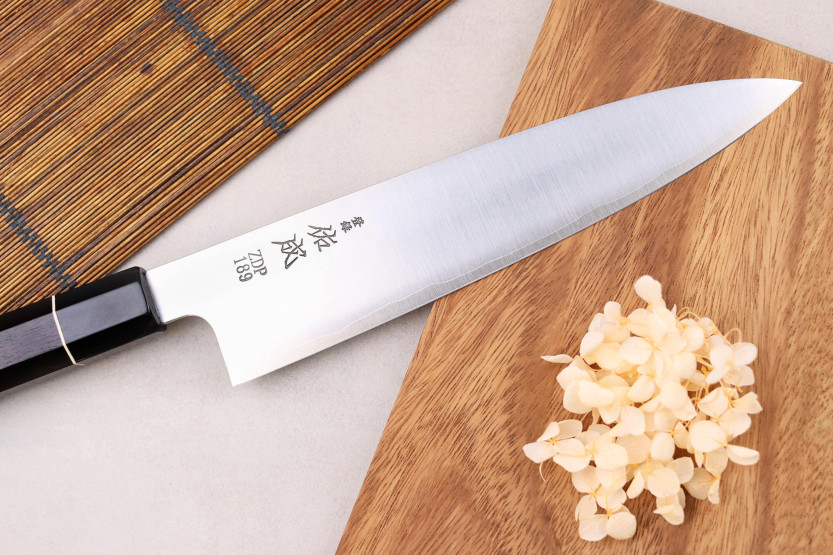
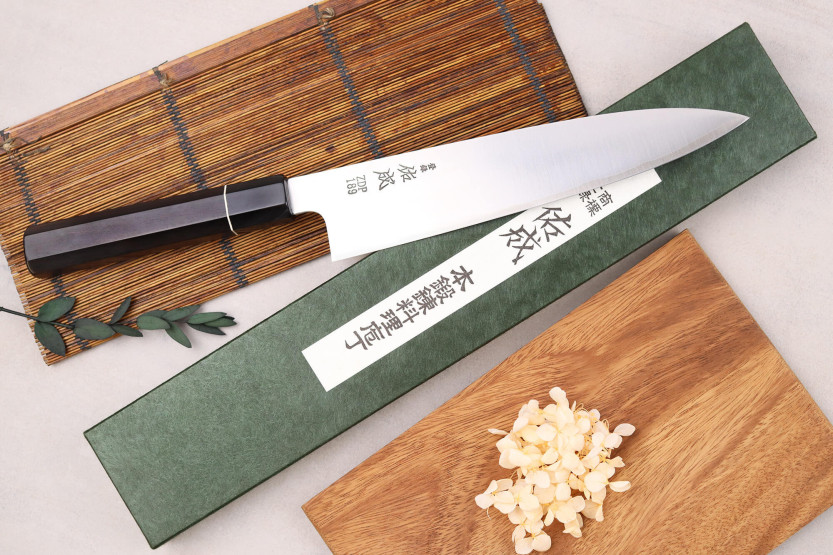
This Sukenari chef's knife has a 24cm blade with a San Maï structure, which means "3 layers" in Japanese. This means that the blade consists of a rigid steel core surrounded by softer steel to protect it and give it balance.
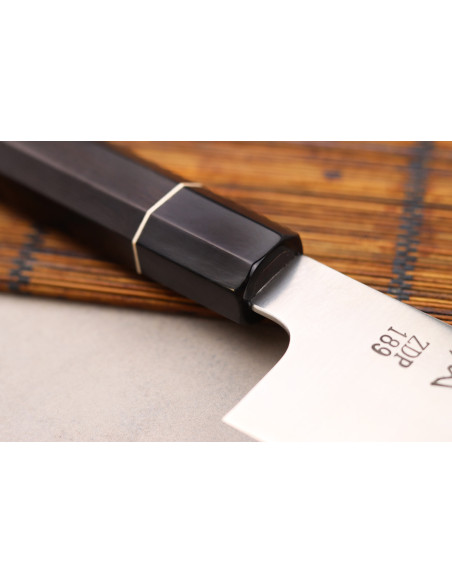
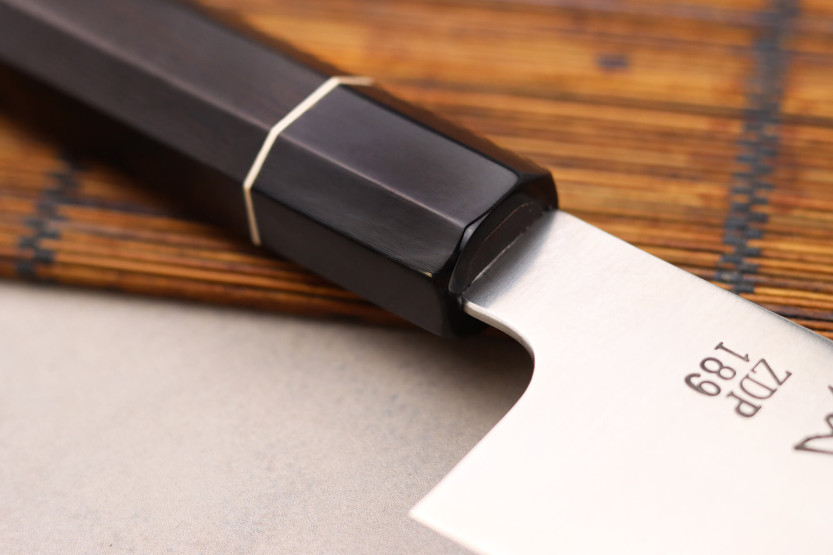
The blade core is made fromZDP-189 powder steel, a high-quality Japanese alloy manufactured by Hitachi, the renowned steelmaker. This steel is characterized by a high carbon content (nearly 3%), giving it great hardness and excellent edge retention. It also contains around 20% chromium to resist corrosion. It combines the advantages of a carbon steel with those of a stainless steel.
The blade achieves a hardness of 65 HRC on the Rockwell scale, demonstrating its high performance and long edge retention. However, due to its high carbon content, it requires careful maintenance (see our tips below).
The alloy used is rare and difficult to work, which explains its higher price. You need to be an expert to shape it, as Sukenari blacksmiths are, to avoid major losses.
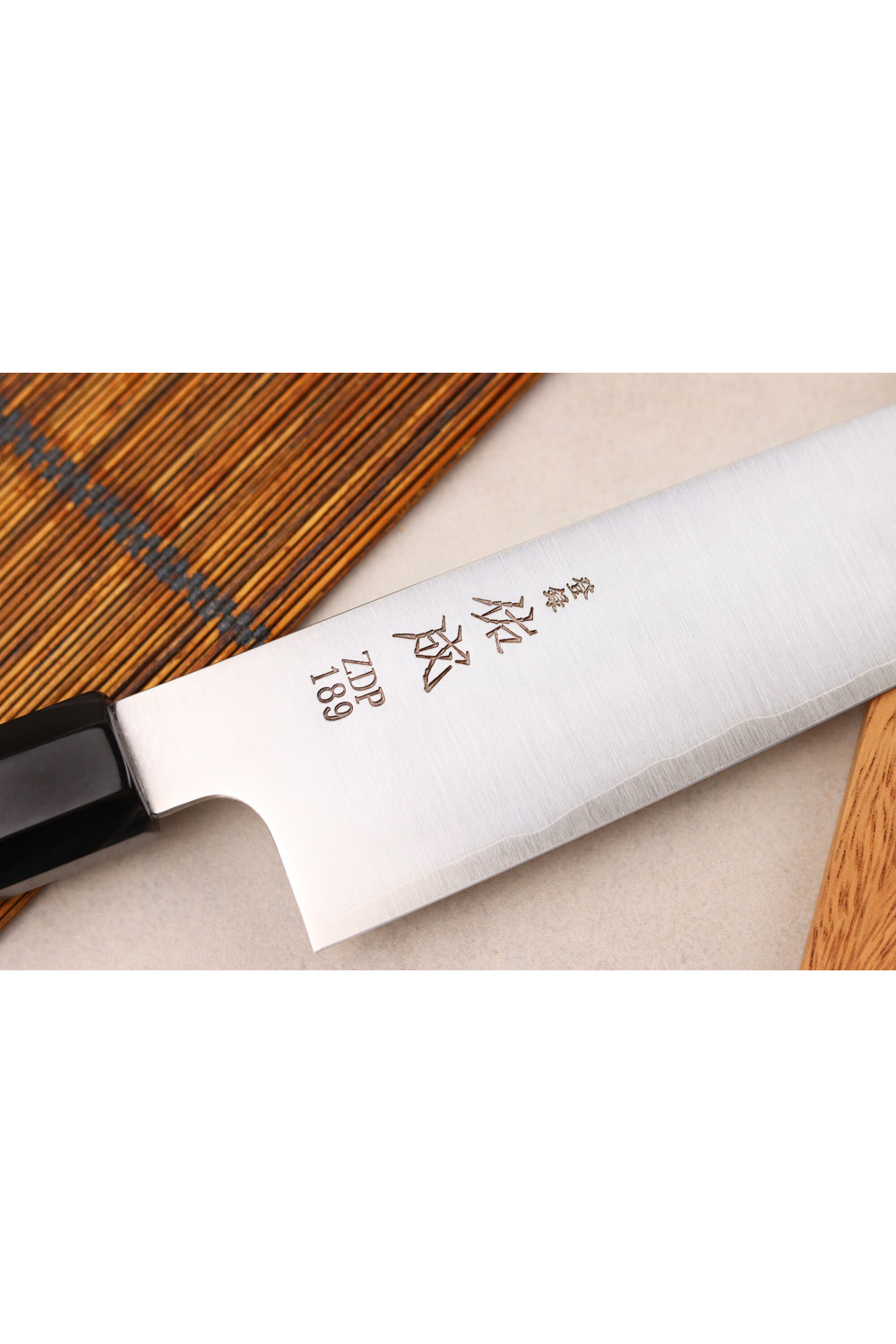
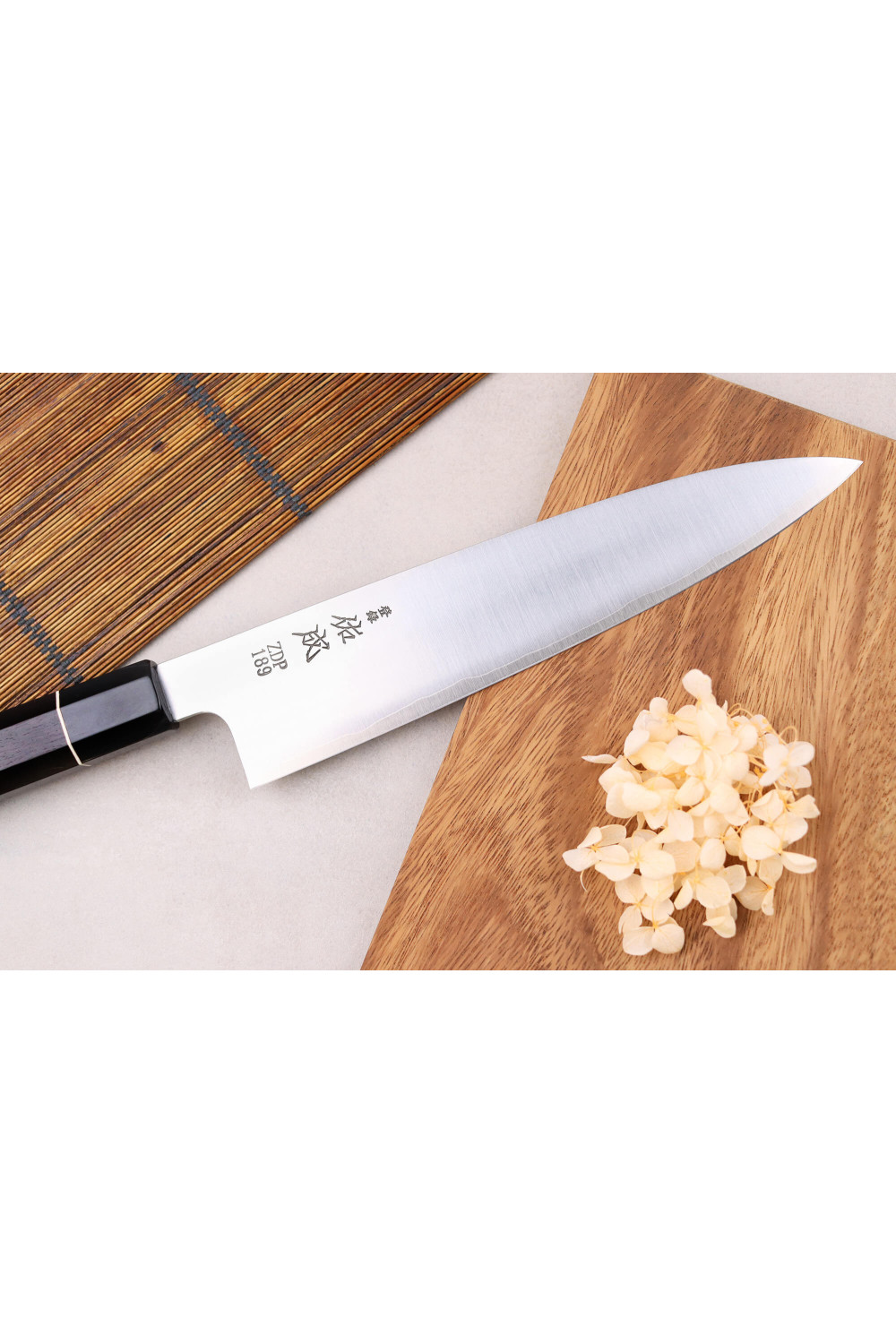
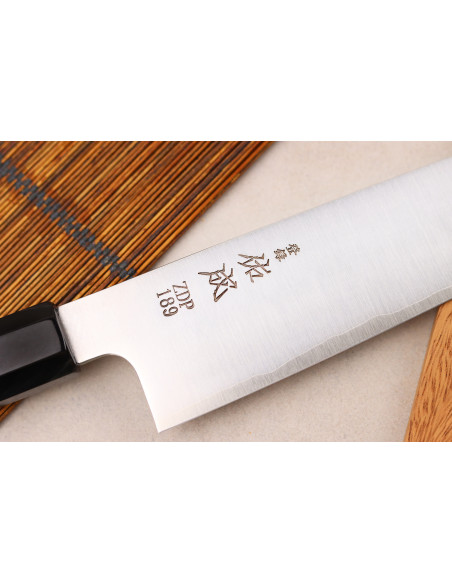
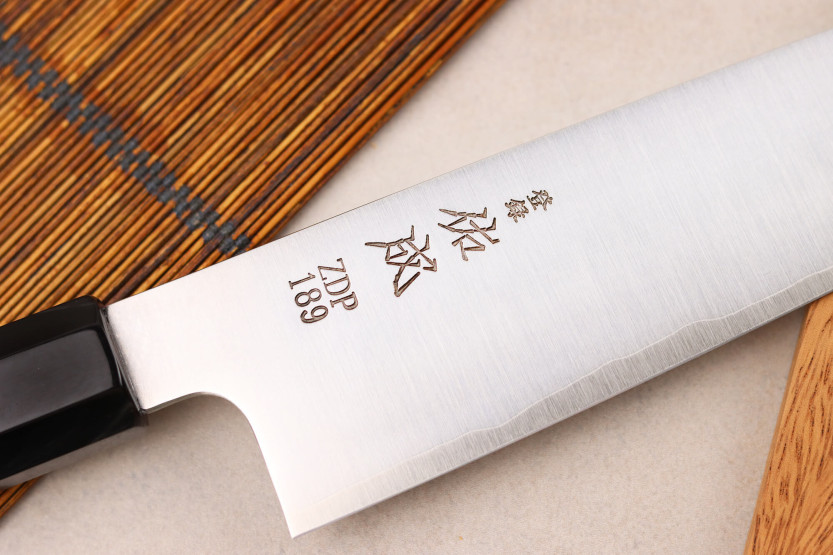
The rigid core is then covered with a layer of softer steel folded on either side, creating the San Mai. This outer layer protects the core and adds a slight suppleness to its high rigidity. This makes the steel less brittle in use, as it is less sensitive to impact. You can also see the superimposition of steel layers on the cutting surface. A random wave runs the length of the blade.
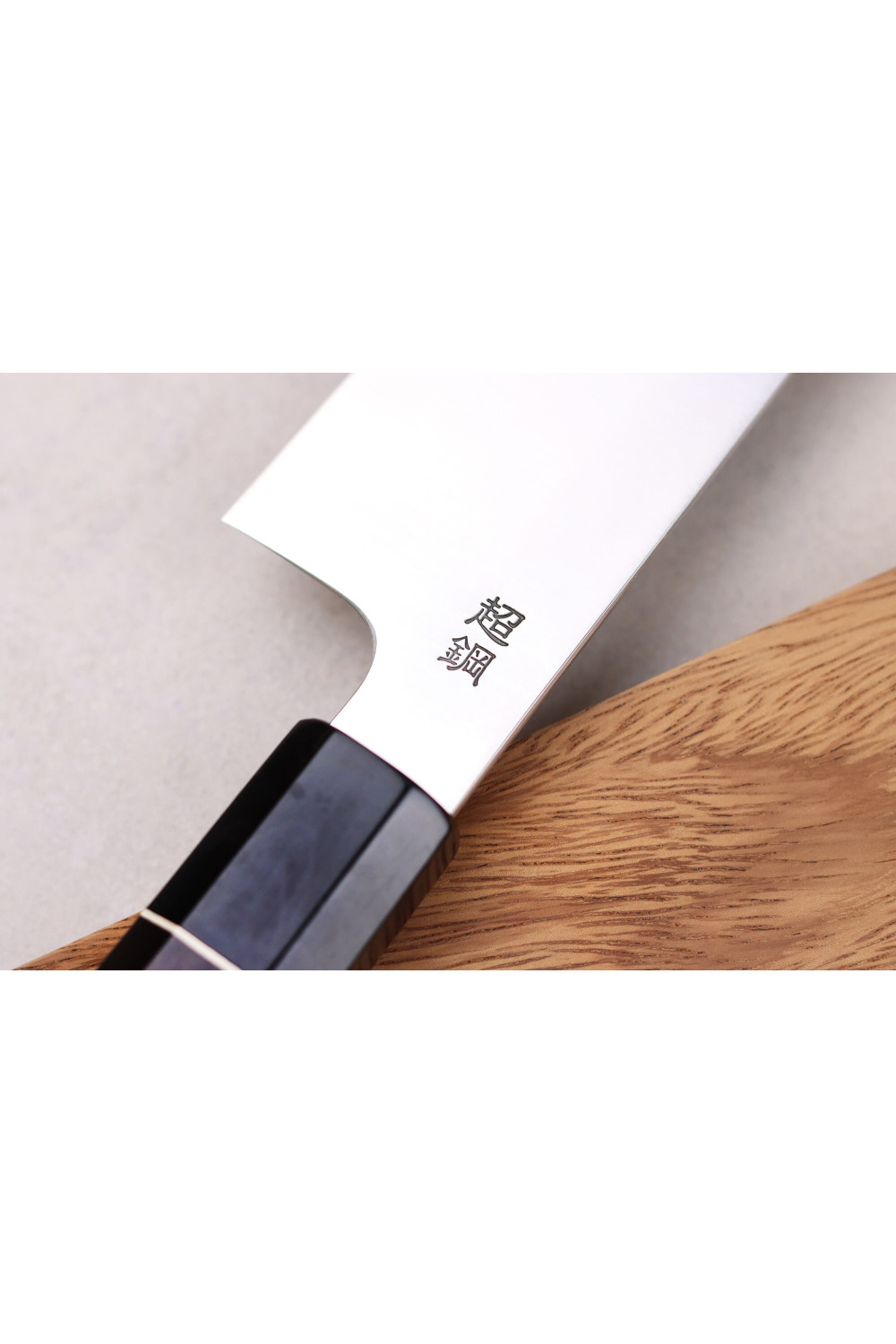
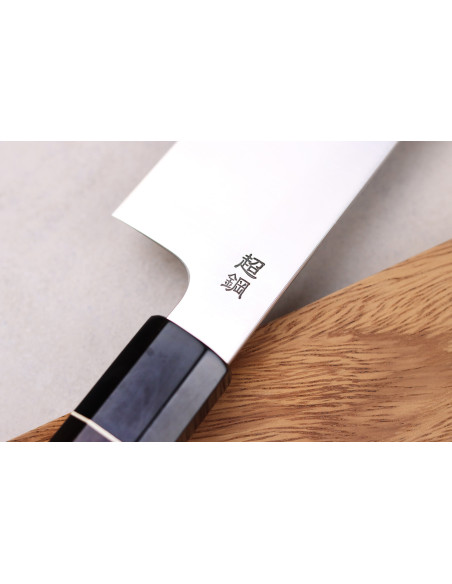
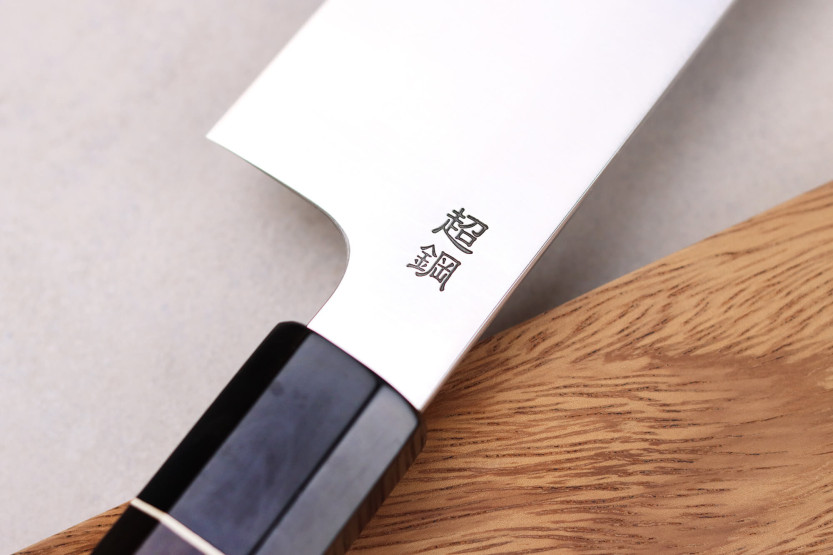
Finally, the blade has been elegantly polished and engraved with authentic kanji. This is a blade with great character.
An octagonal handle in Macassar ebony
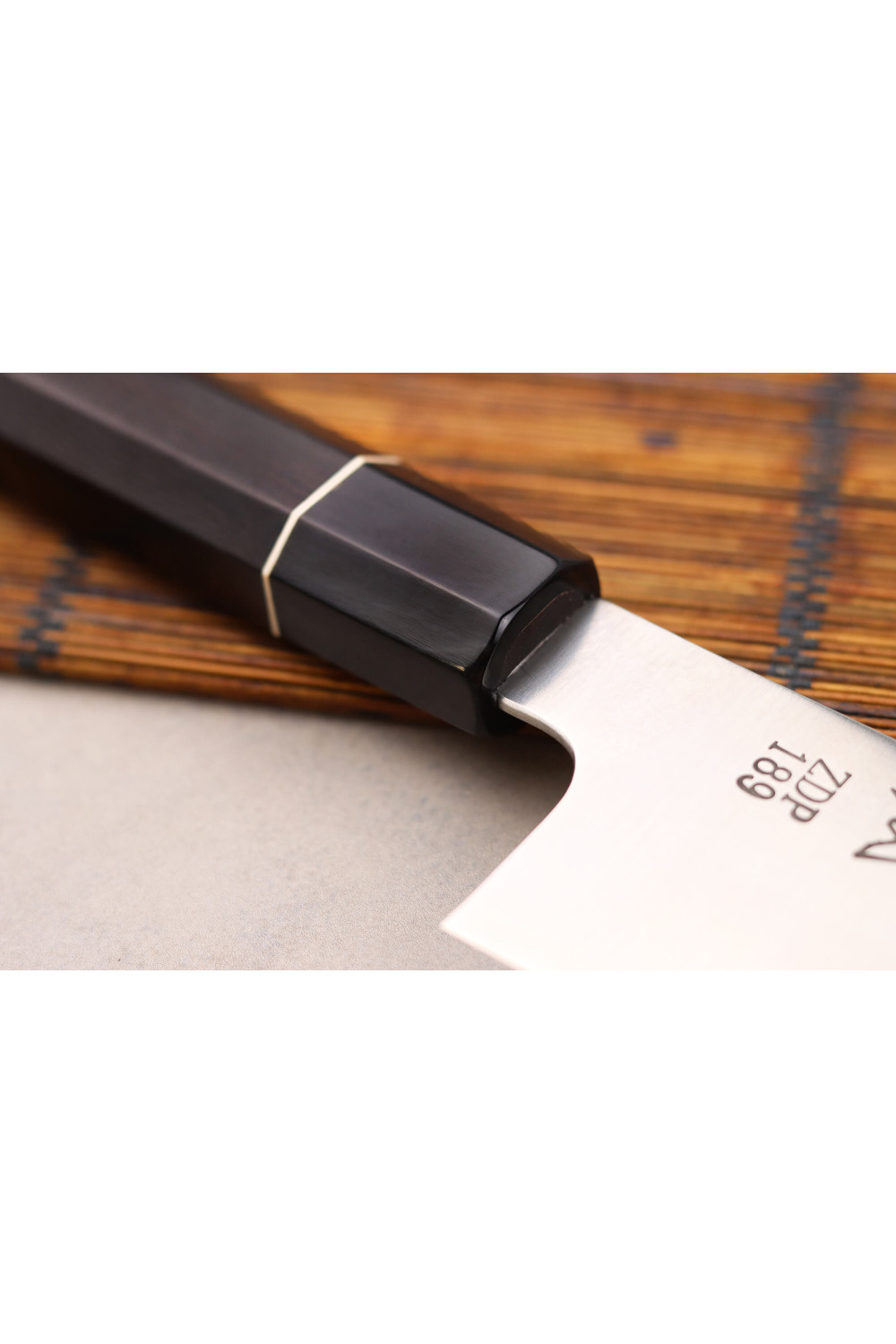
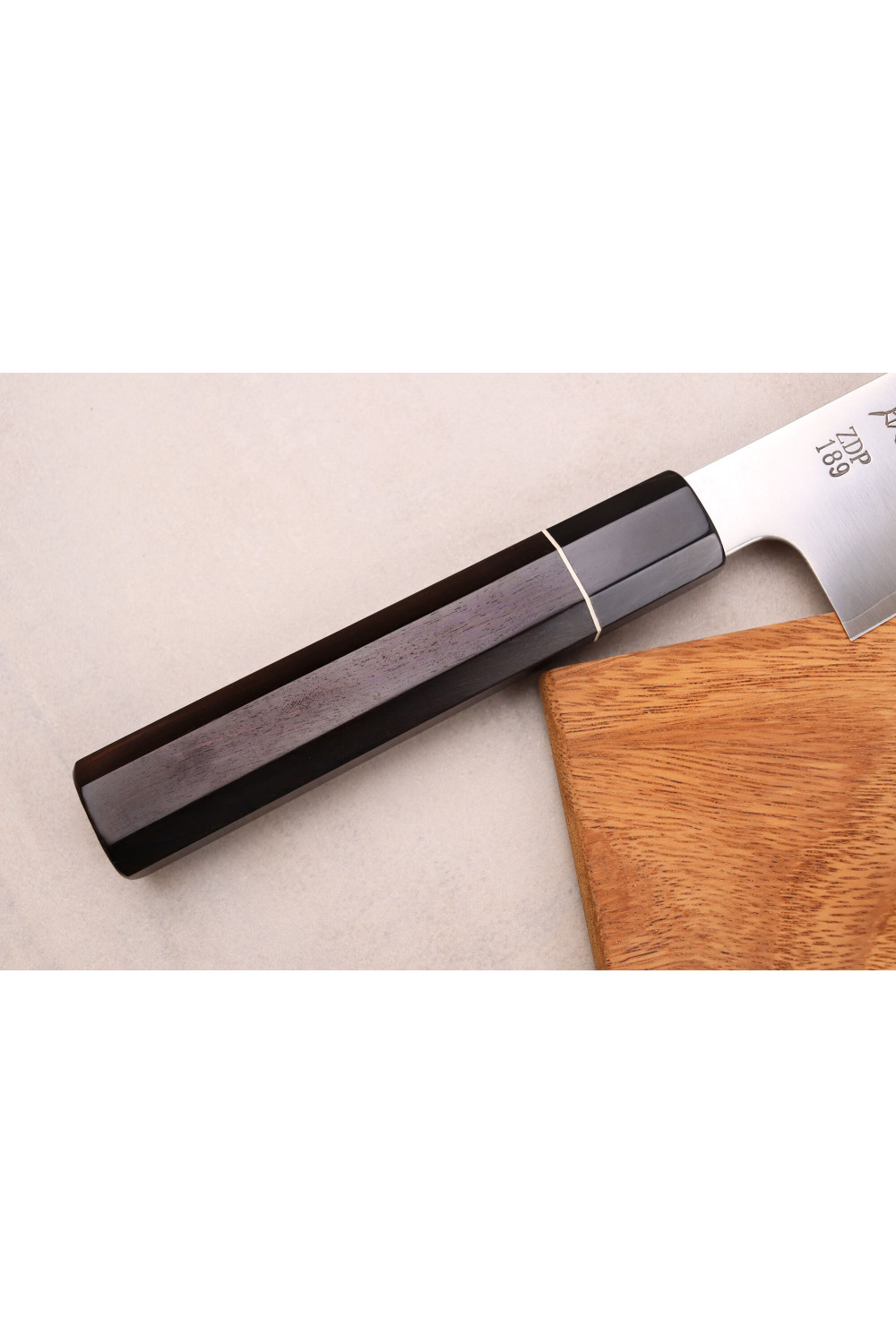
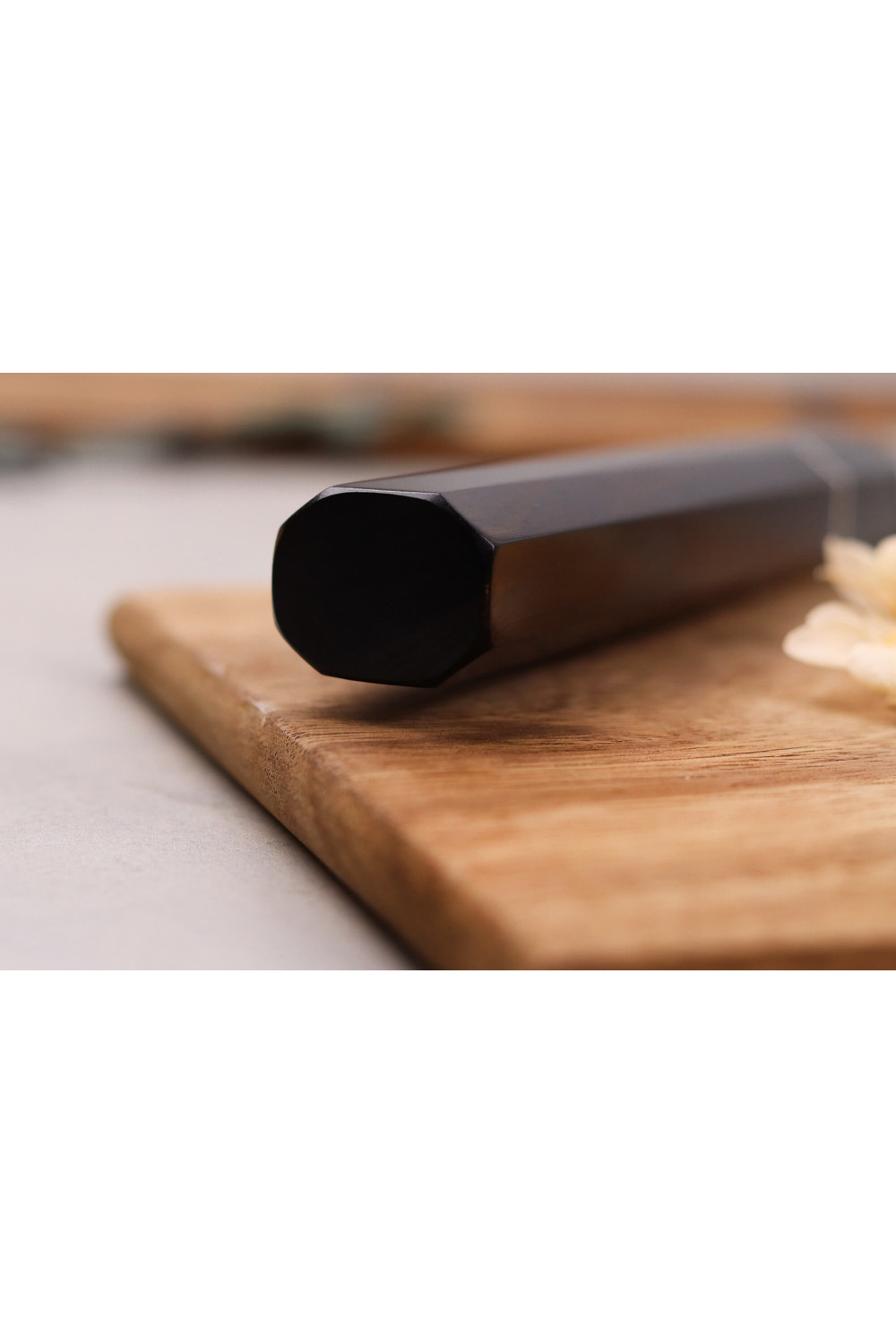
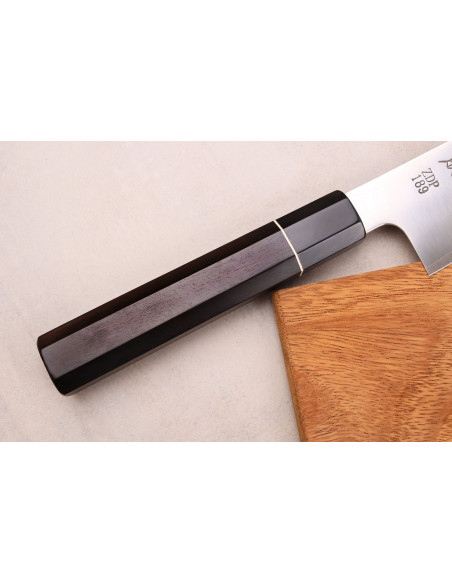
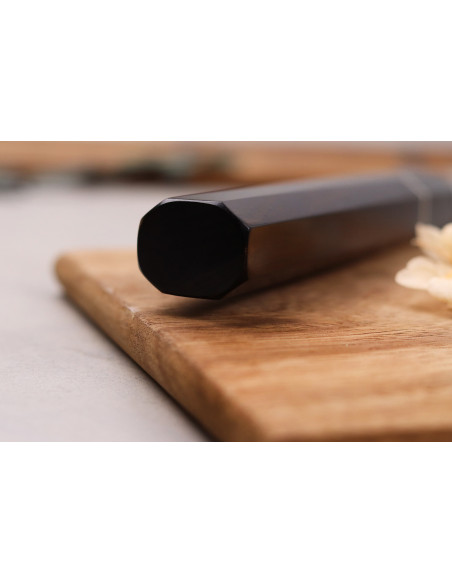
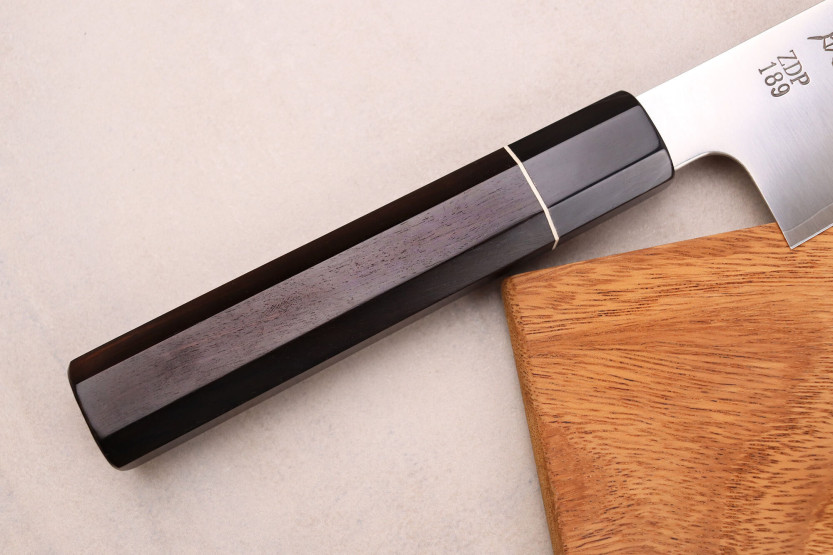
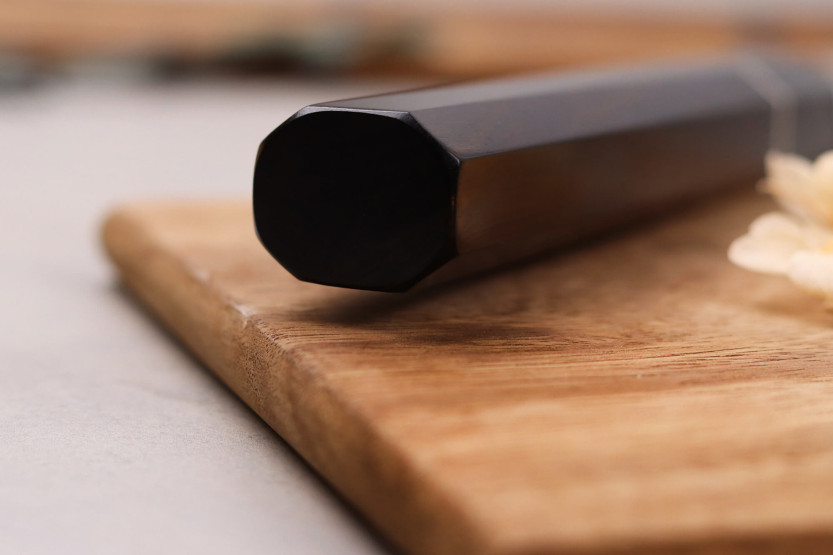
The Japanese knife also features a magnificent handle in Macassar ebony, a rare exotic wood from Indonesia. This prestigious wood features a dark color nuanced by a broad veining ranging from brown to black. It's a solid wood with a smooth, uniform grit, ensuring a long-lasting handle.
The handle is cut in an octagonal shape to provide a comfortable grip and optimum maneuverability for all cooks, left- and right-handed. A white micarta ring and black buffalo horn bolster complete the handle. The bolster adds balance to the knife.
Wood pulp fills the area where the blade fits into the handle, making the knife watertight. Cut food and cleaning water cannot get inside.
Care and maintenance
It's essential to take good care of this high-carbon, handcrafted Japanese knife by following these helpful tips.
Wash by hand with a soft sponge and a suitable detergent. Do not put in the dishwasher or soak in the sink. Avoid getting the handle wet when cleaning. After washing, be sure to dry it thoroughly to remove any moisture.
Then store it in a dry place, for example in its case. Please note that, due to the high carbon content of the alloy, the blade may change its appearance slightly over time.
Finally, it is essential to sharpen the blade with a stone when necessary. This operation can be difficult for beginners due to the high hardness of steel. If you wish, our sharpening service is at your disposal to facilitate the maintenance of your knife.
Sukenari's ZDP-189 San Maï range is available on our website!




 By buying this product you can collect up to