The Japanese company Sukenari was founded in 1933. It is made up of highly talented blacksmiths whose expertise is derived from the ancestral forging techniques used to make samurai katanas. Sukenari blacksmiths are even capable of forging Honyaki blades, considered to be of the highest quality in cutlery. Today, the company enjoys an excellent reputation, offering knives that combine traditional techniques with modern visuals.
A San Maï blade for this handcrafted knife
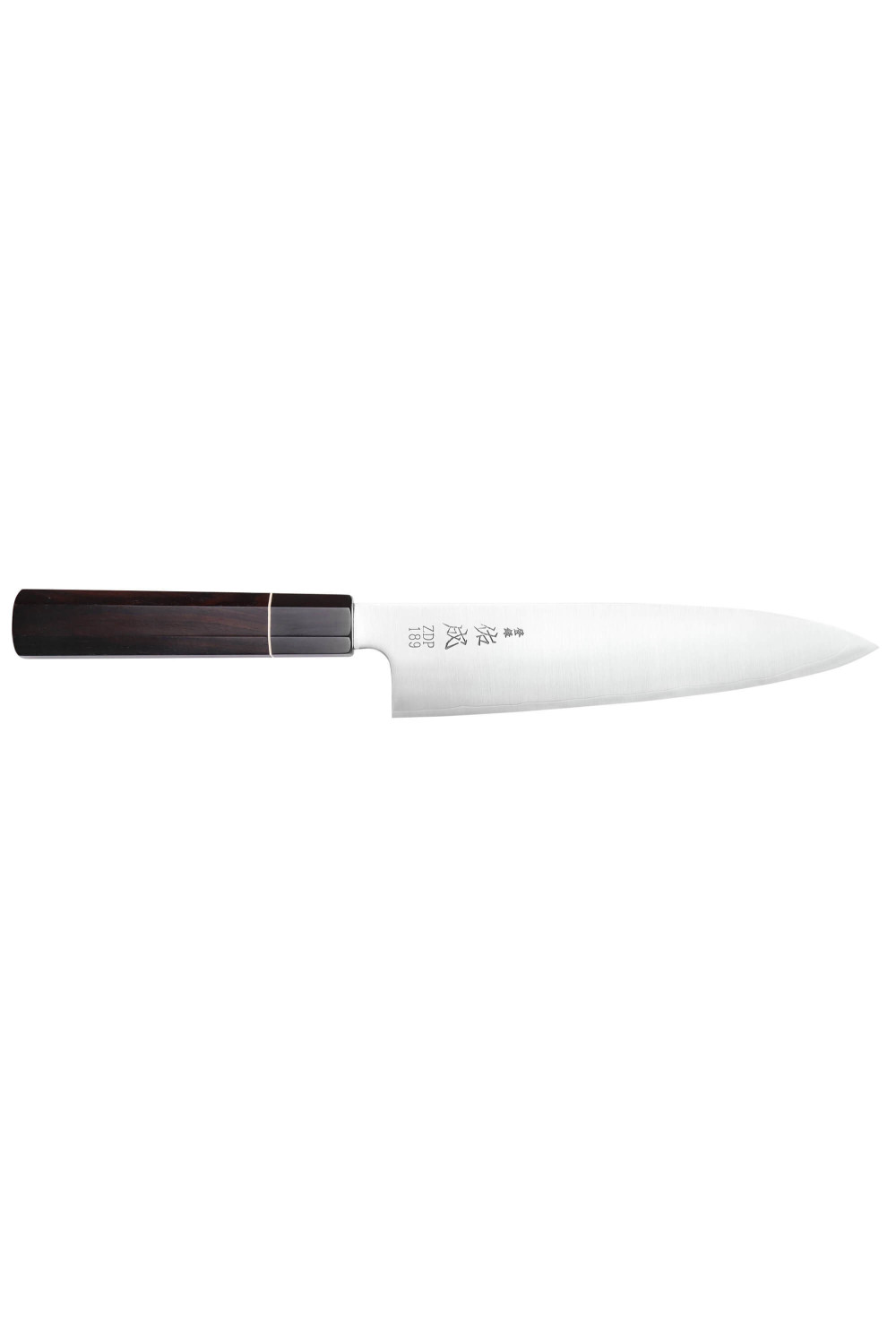
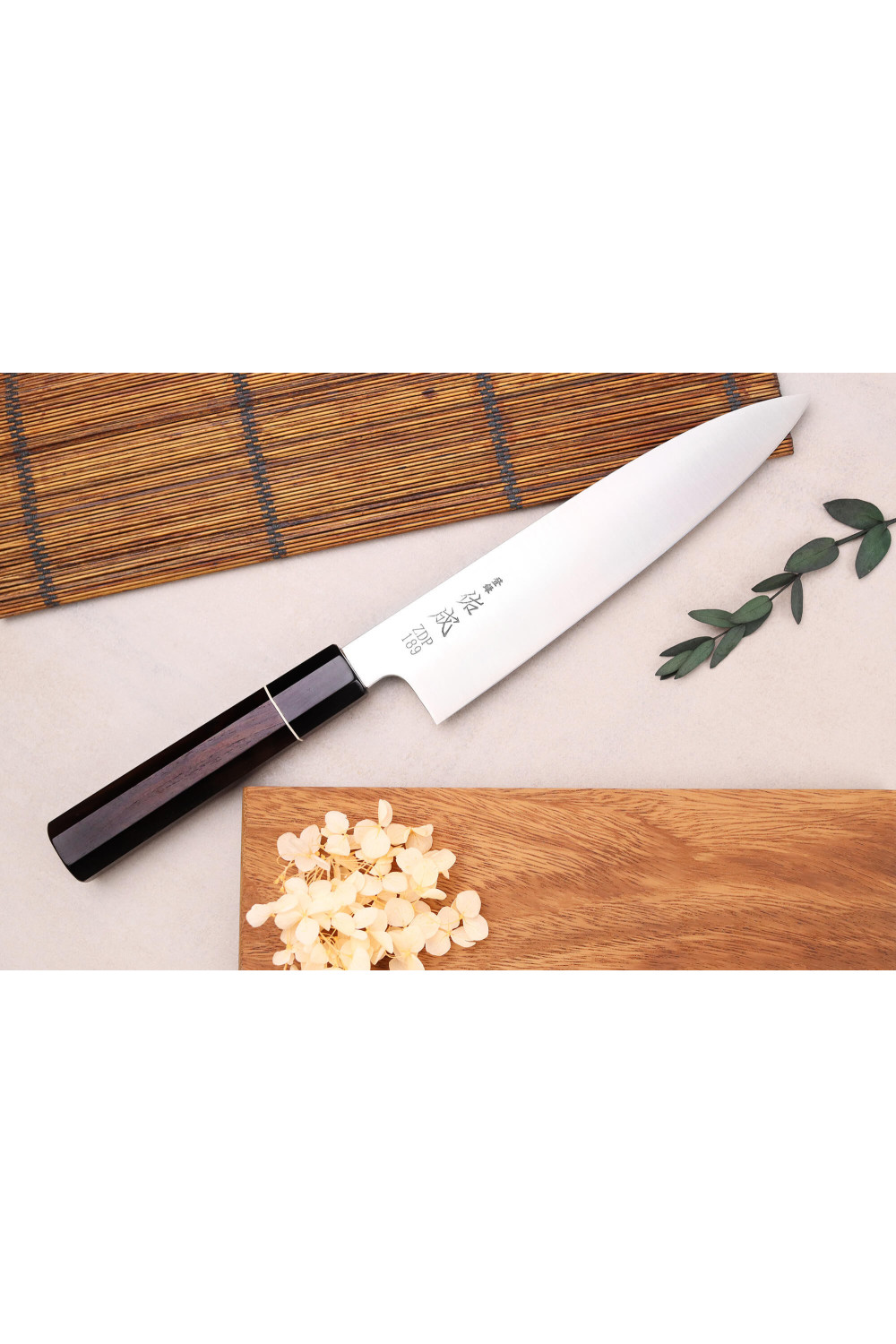
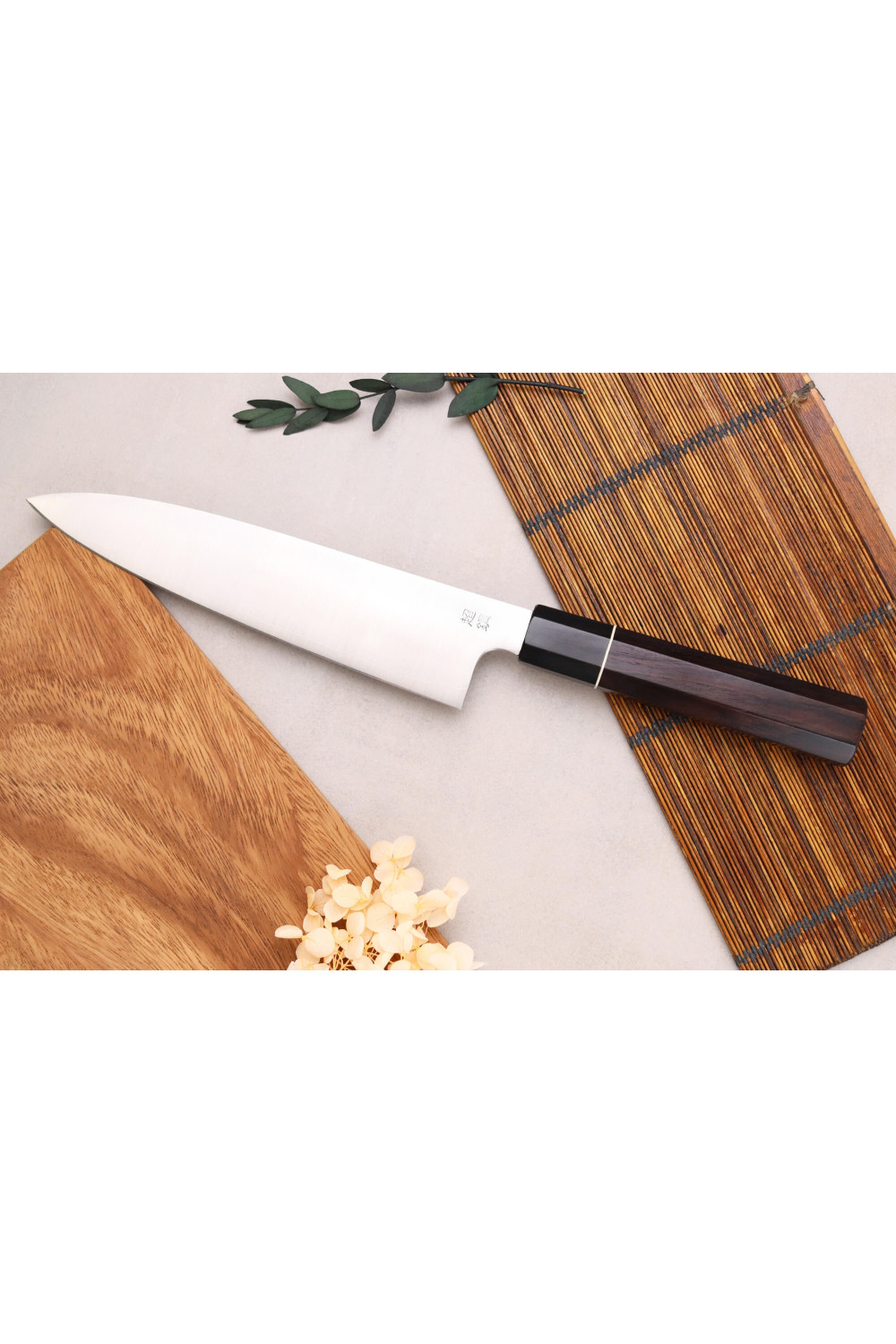
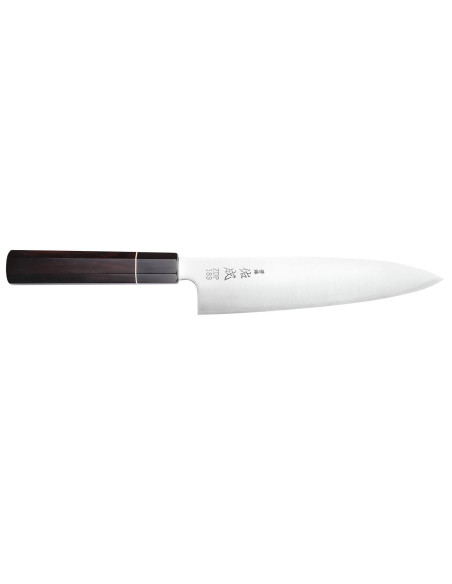
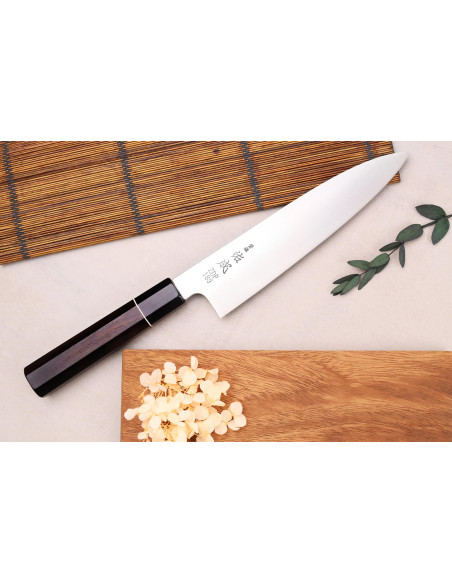
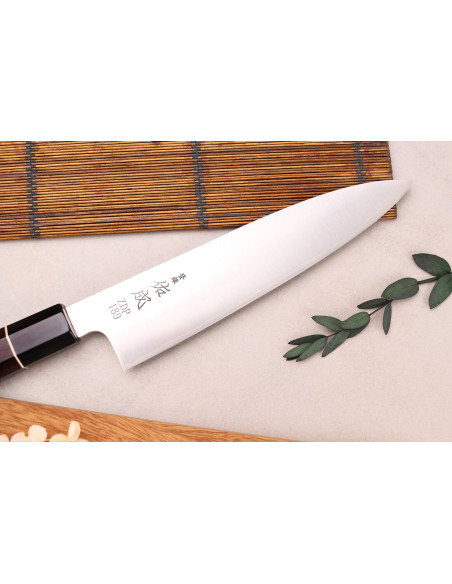
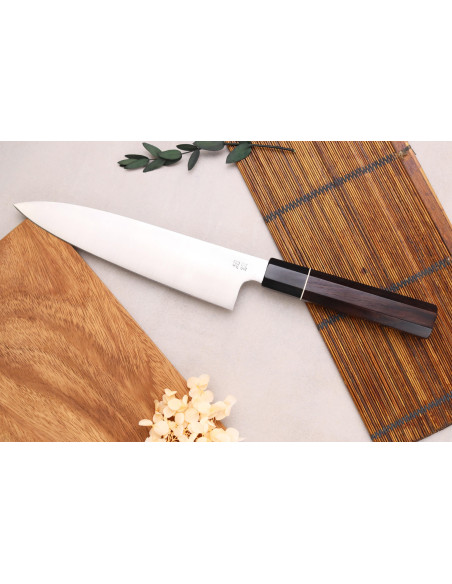
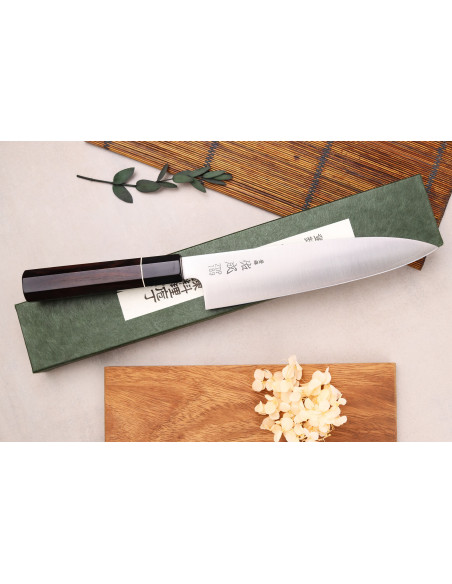
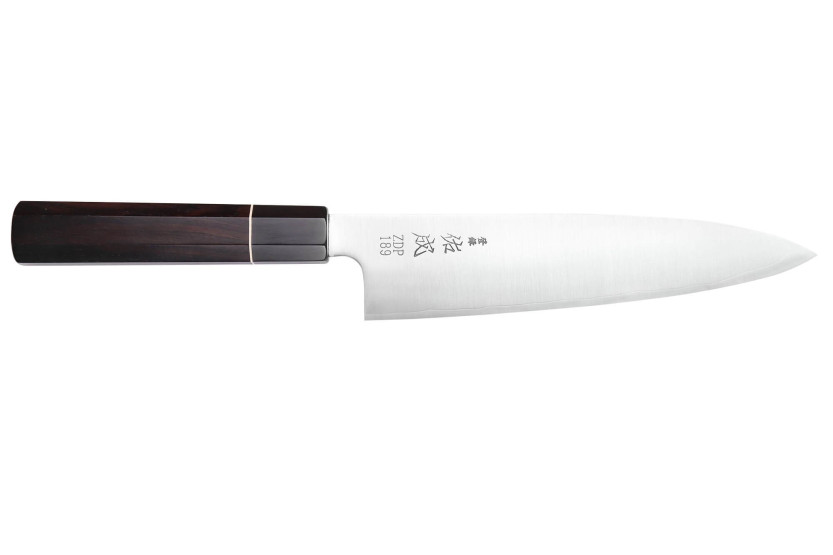
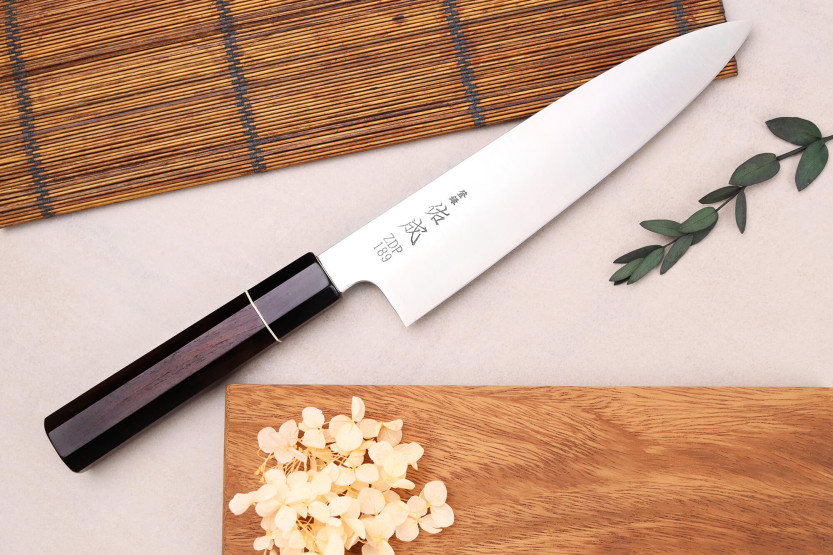
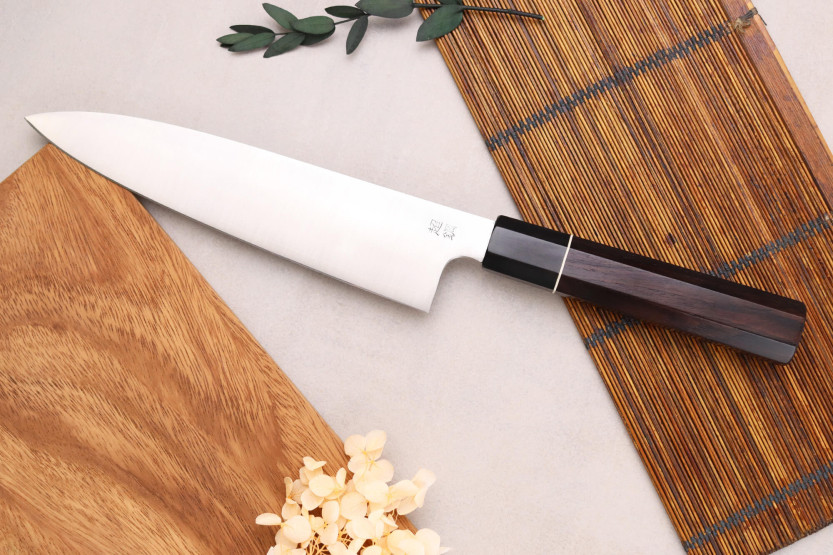
This chef's knife features a 21cm blade with a so-called San Maï structure: these words mean "3 layers" in Japanese, and clearly indicate how the blade is constructed. This blade design consists of creating a core of rigid steel, then surrounding it with softer steel to protect it and give it balance.
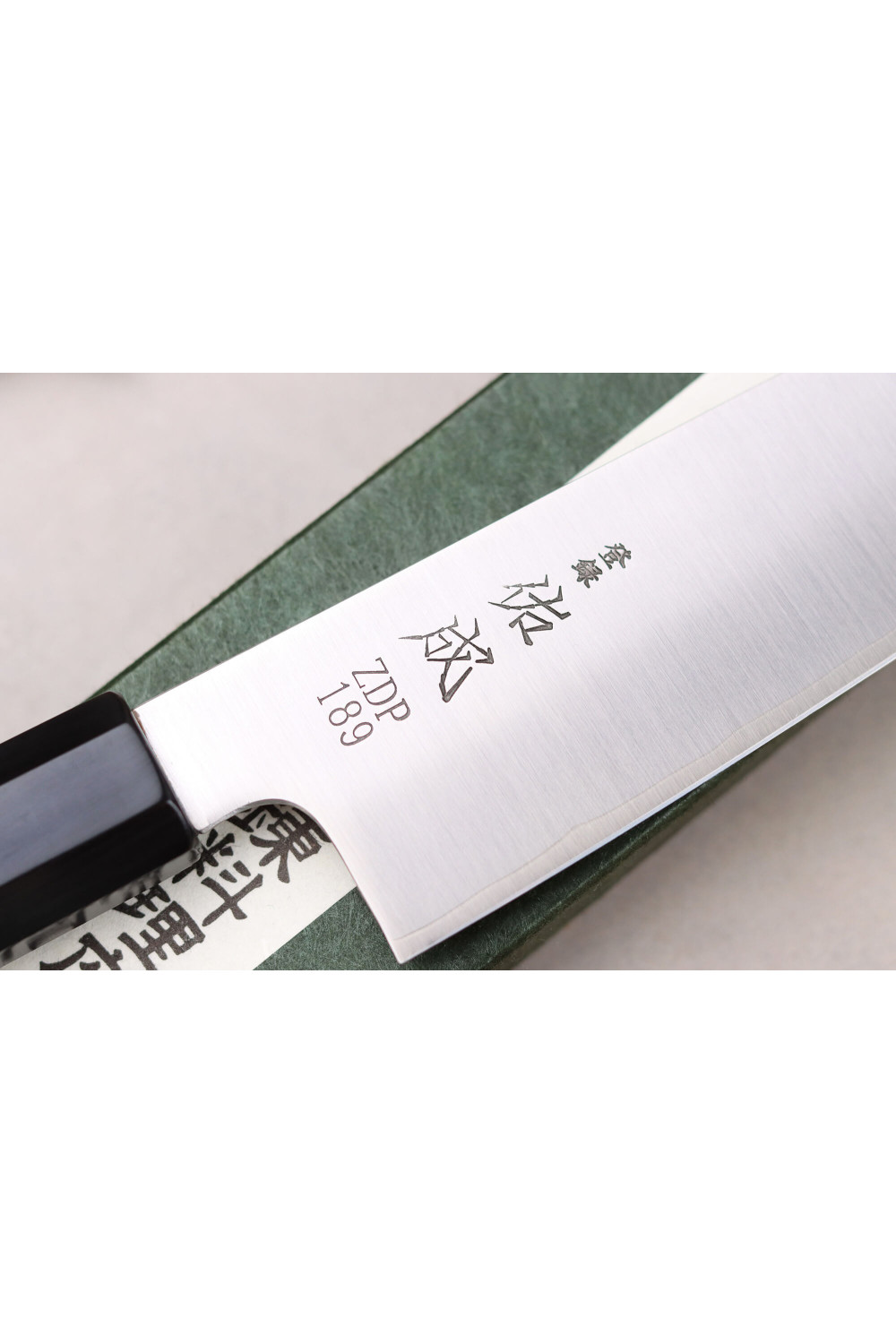
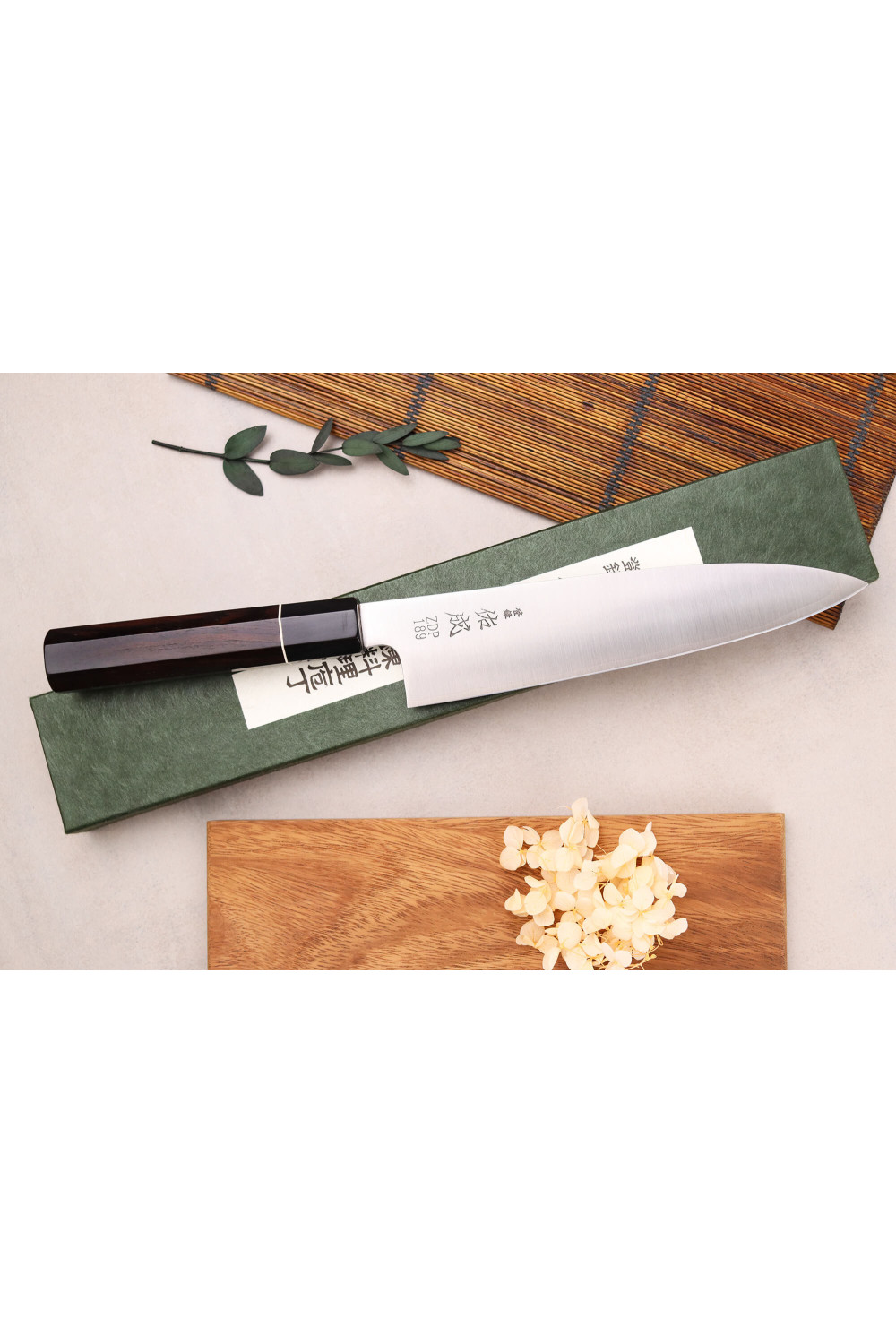
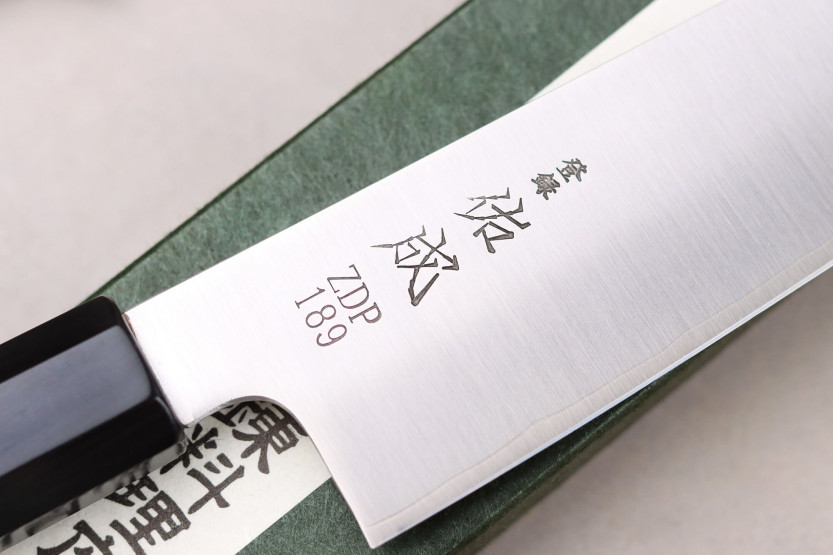
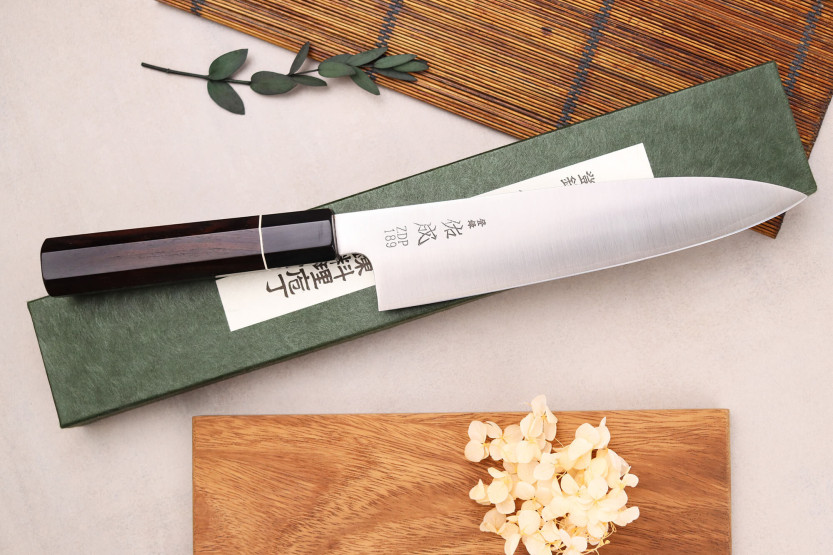
The blade core is made fromZDP-189 powdered steel, a high-quality Japanese hybrid steel manufactured by world-renowned steelmaker Hitachi.
This alloy features a very high carbon content of around 3%. Carbon is the element in an alloy that ensures its hardness and gives it a high-performance, long-lasting cutting edge. ZDP-189 steel is ideal for cutting. It also contains almost 20% chromium, which counterbalances the high carbon content. Thanks to its chromium content, the alloy is resistant to corrosion, offering the advantages of both stainless and carbon steel.
The blade of this knife achieves a hardness of 65 HRC on the Rockwell scale thanks to this alloy. This demonstrates the quality of its cutting edge and its excellent holding power. Please note, however, that due to the high carbon content of ZDP-189 steel, your knife requires careful maintenance (our tips are available further down on this page).
Hybrid alloy is still rare on the market and difficult to work with, which is why it is quite expensive. Only a few expert blacksmiths, like those at Sukenari, know how to shape it to avoid major losses.
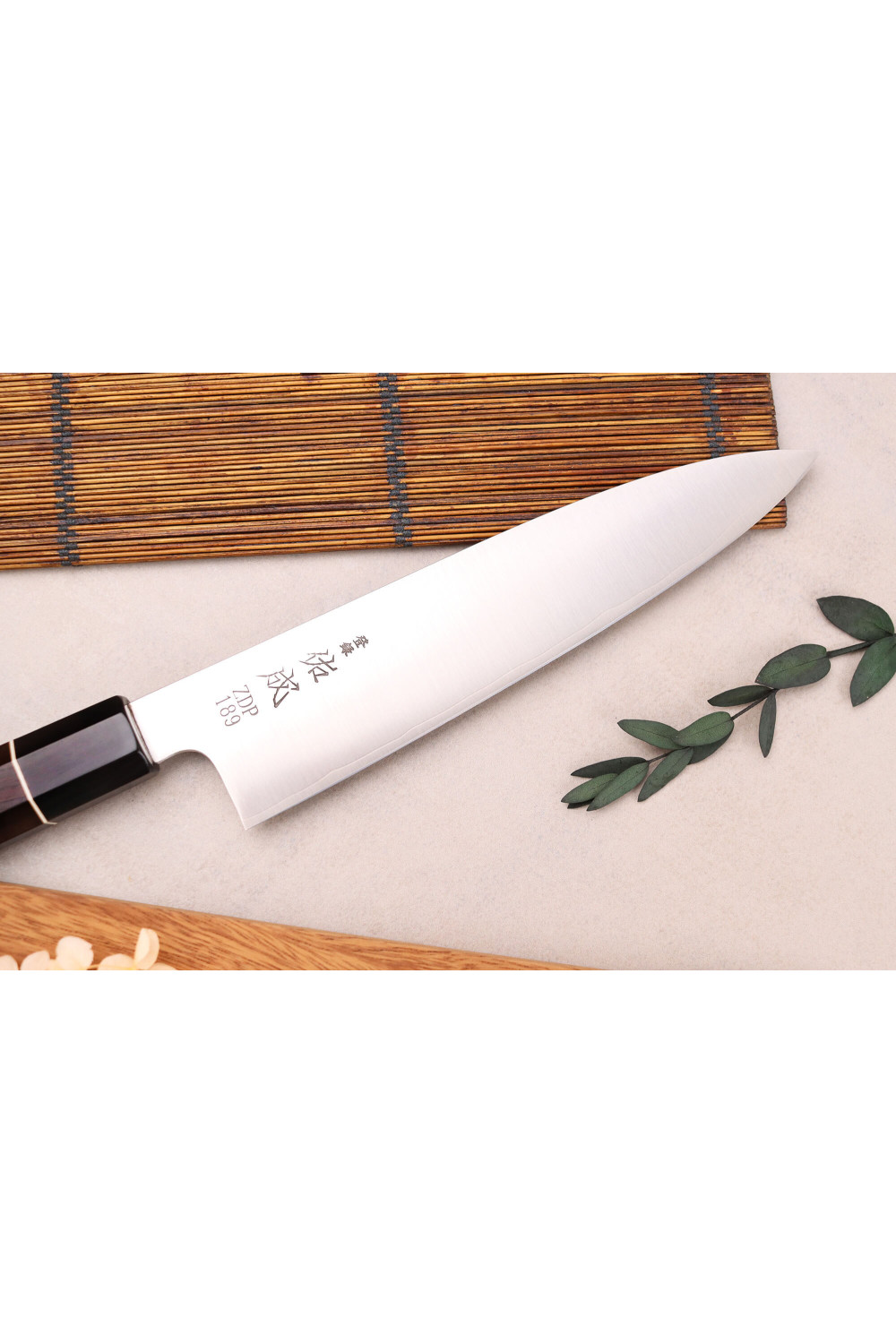
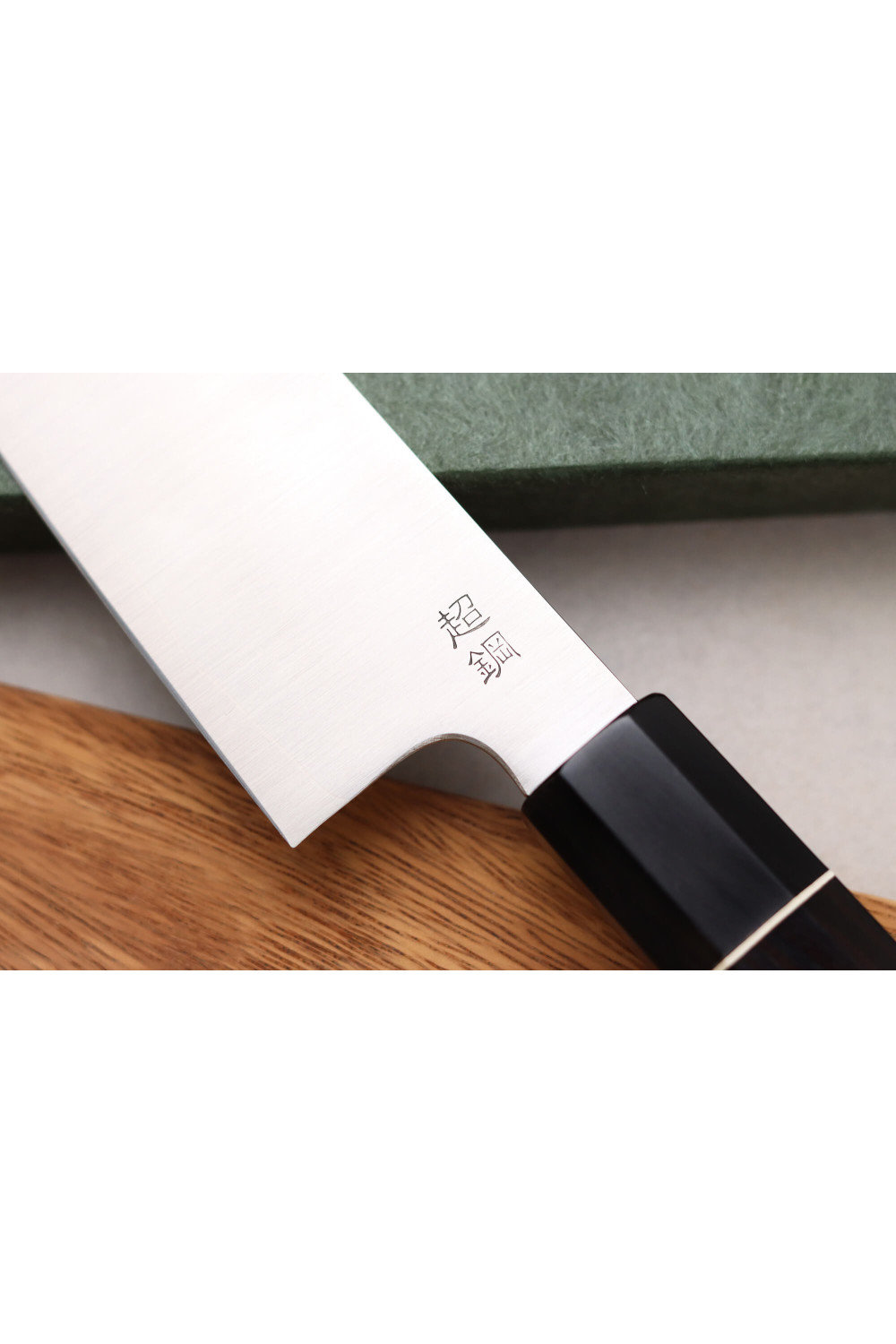
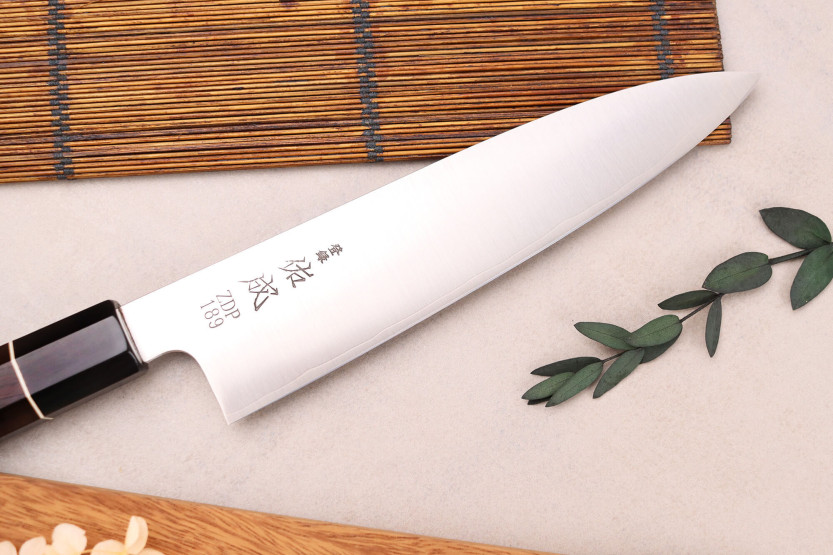
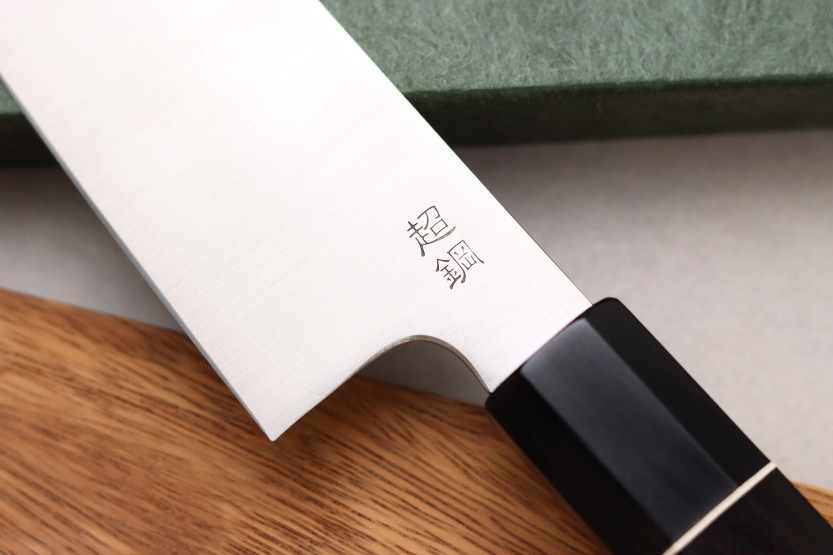
Next, this rigid core is covered by a layer of softer steel, which sandwiches it by being folded on either side: this is how the San Mai is created. The outer layer protects the core and adds a little flexibility to its high rigidity, making it less sensitive to impact when cutting, and therefore less brittle. The superimposition of the steel layers can be seen on the underside of the blade: a random wave undulates along the entire length of the blade.
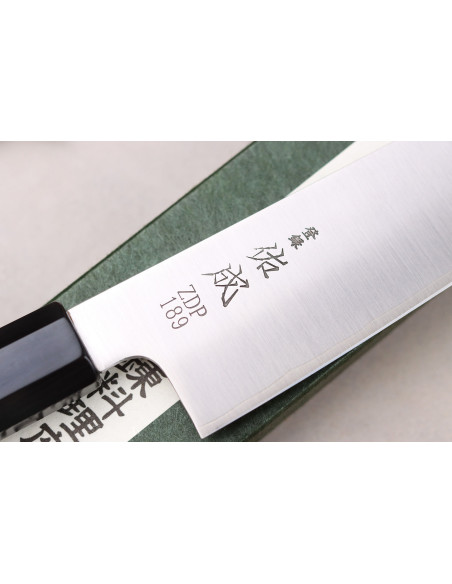
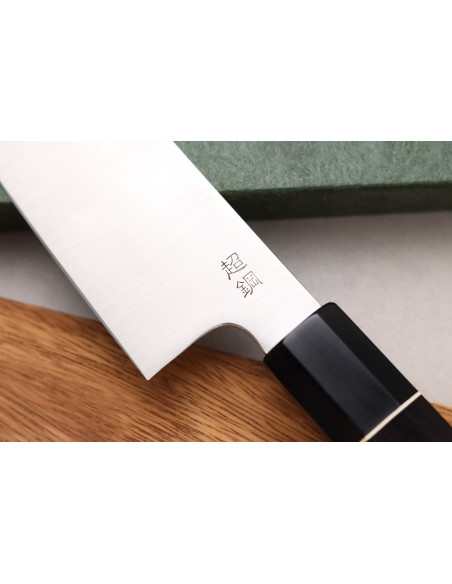
Finally, the blade is engraved with the type of steel used and authentic kanji. The blade also boasts an elegant polished finish that only adds to its character.
High-quality Macassar ebony handle
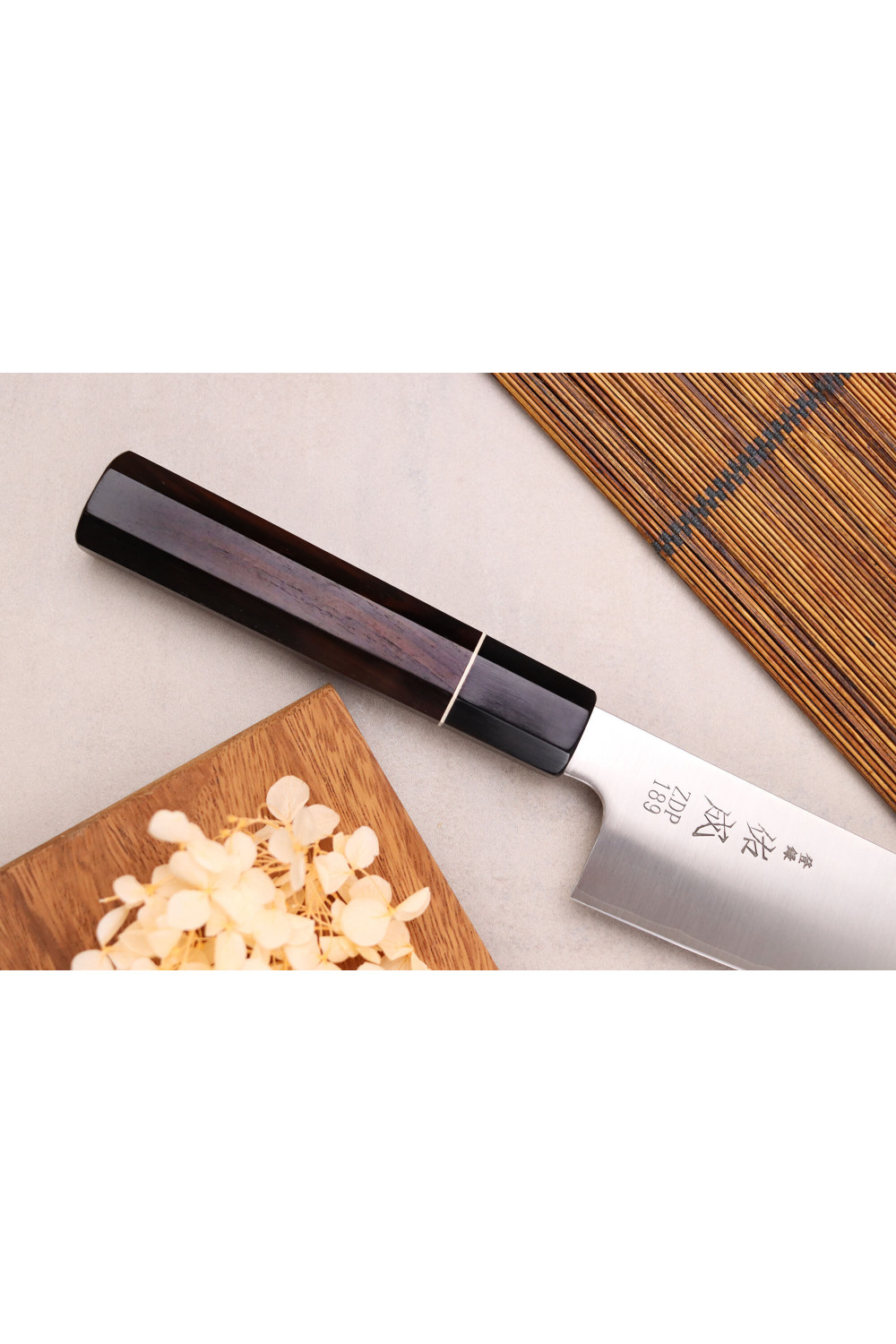
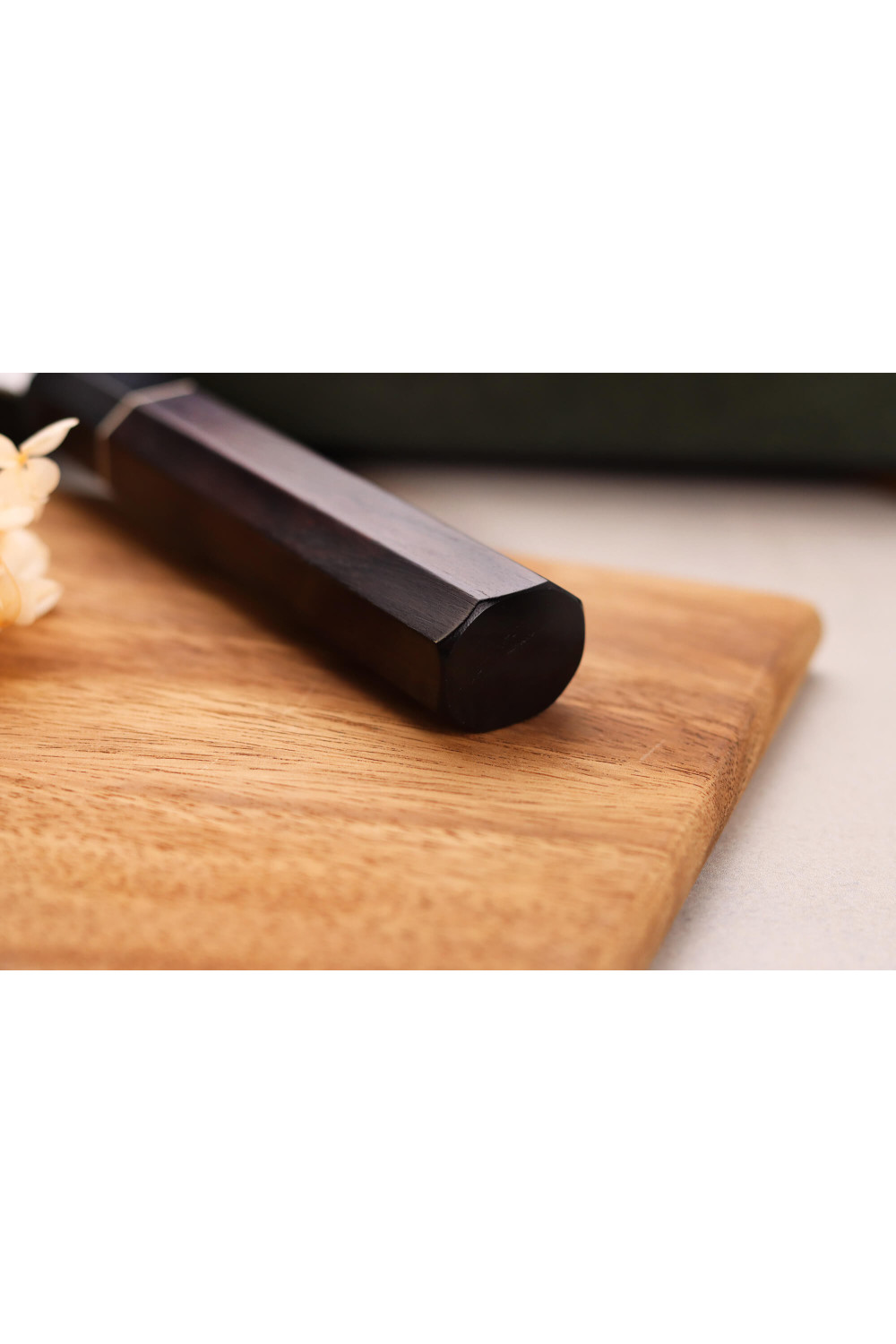
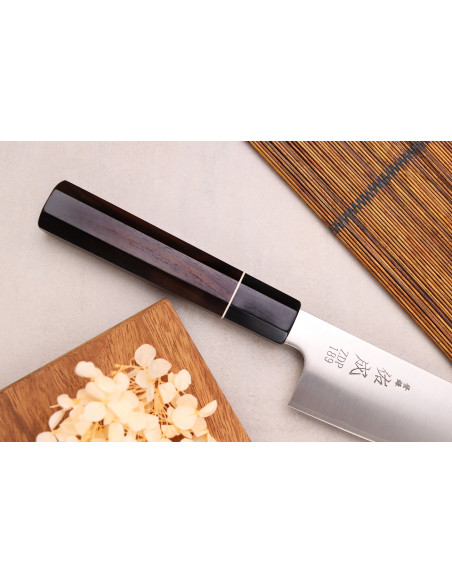
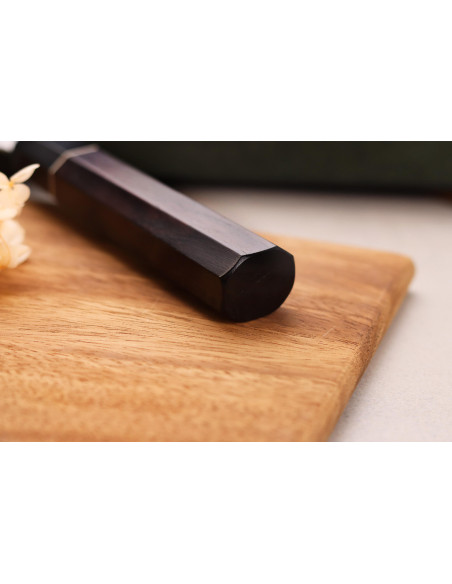
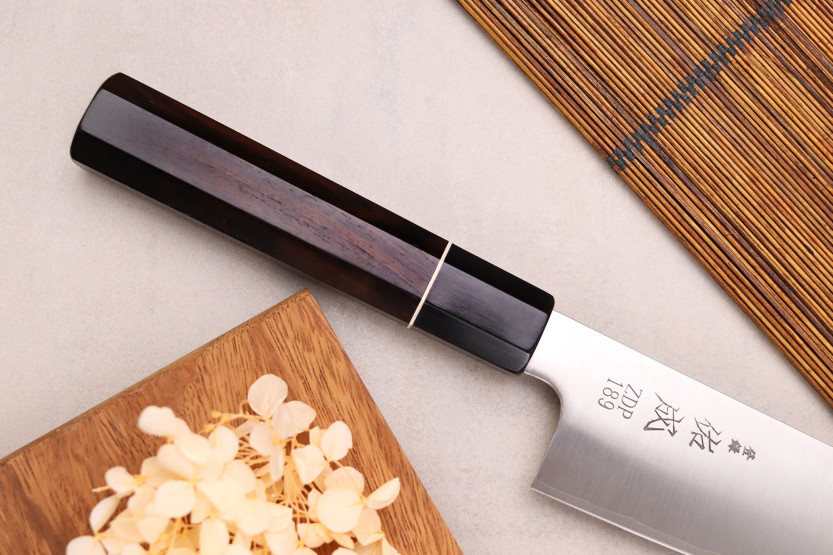
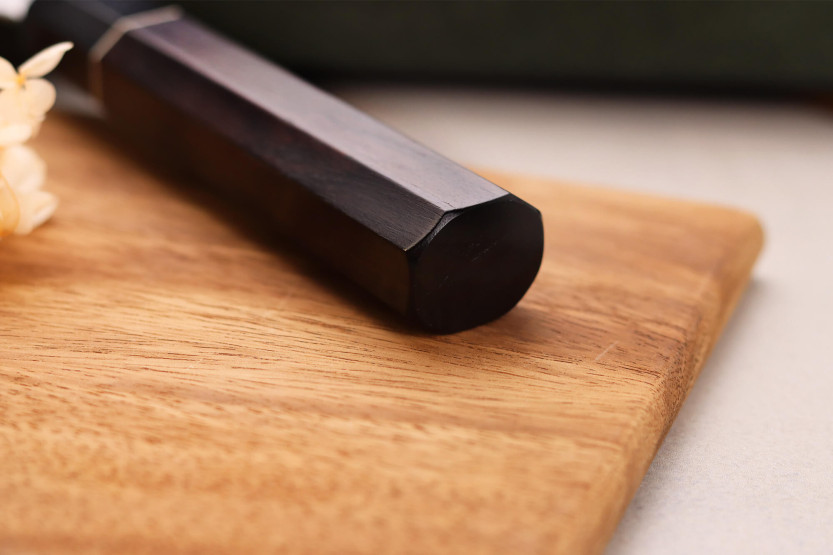
Your top-of-the-range Japanese knife features a magnificent handle in Macassar ebony, a rare exotic species from Indonesia. Also known as golden ebony, this prestigious wood is characterized by a dark hue highlighted by marked veining ranging from black to brown. Its smooth, uniform grit and hardness make it a solid wood made to last.
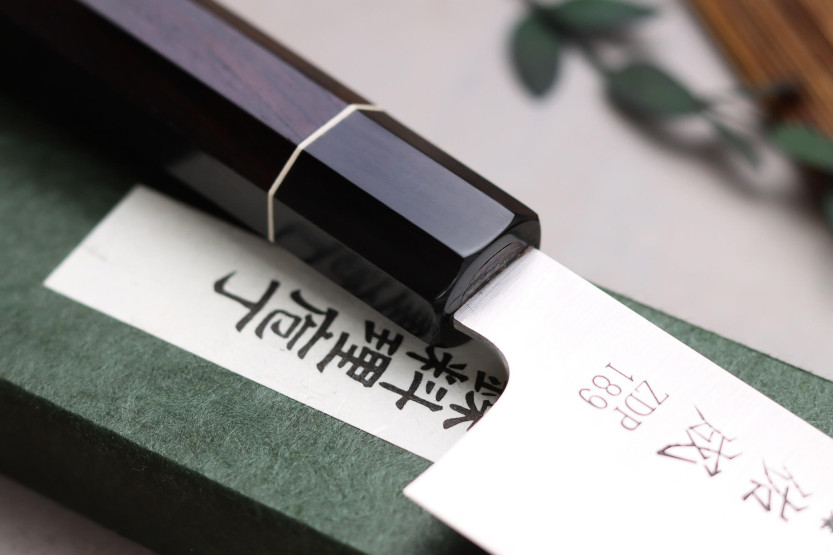
The knife's octagonal handle shape is suitable for all cooks, right- and left-handed. This shape is comfortable to use and offers optimal maneuverability, making the knife suitable for intensive cutting.
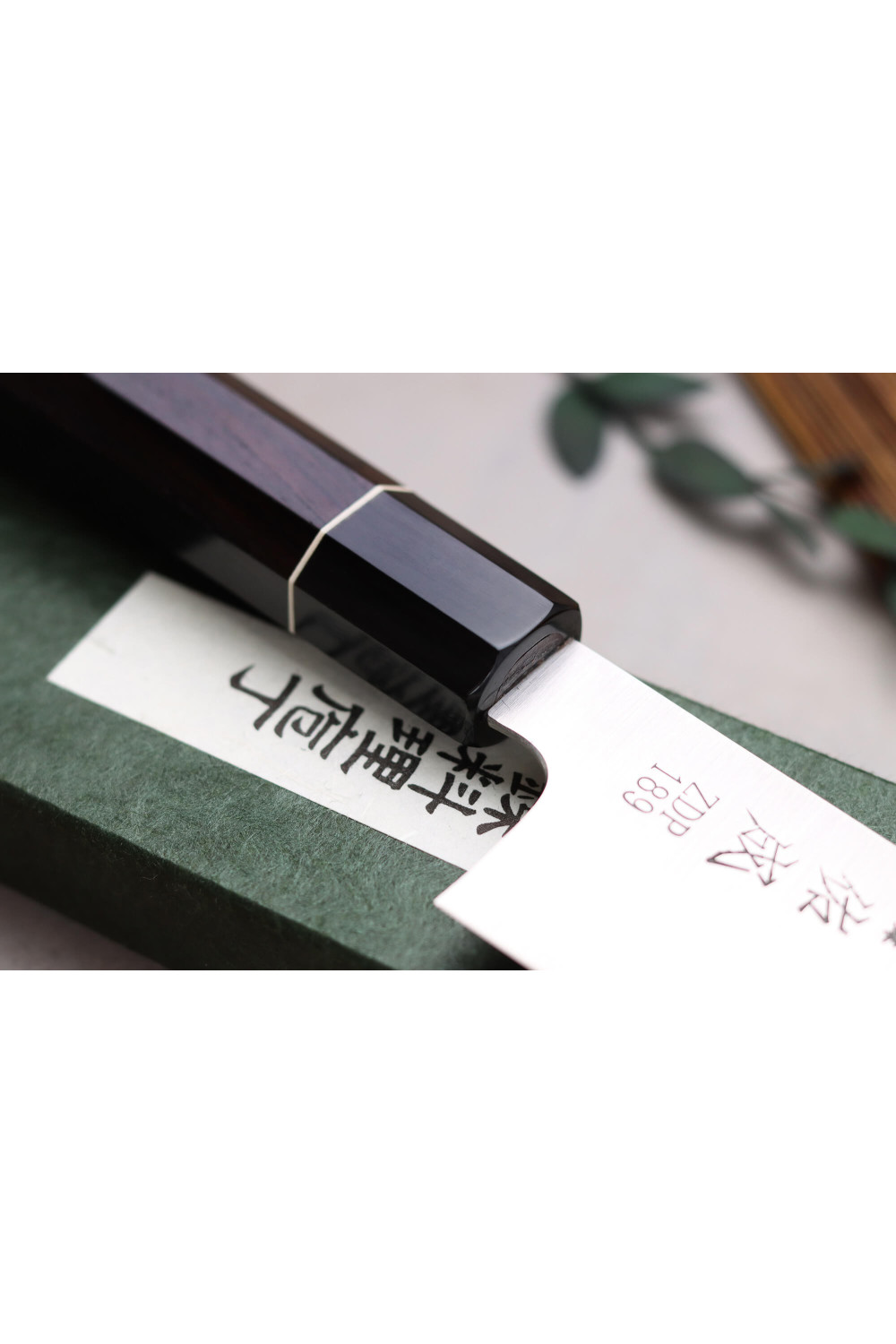
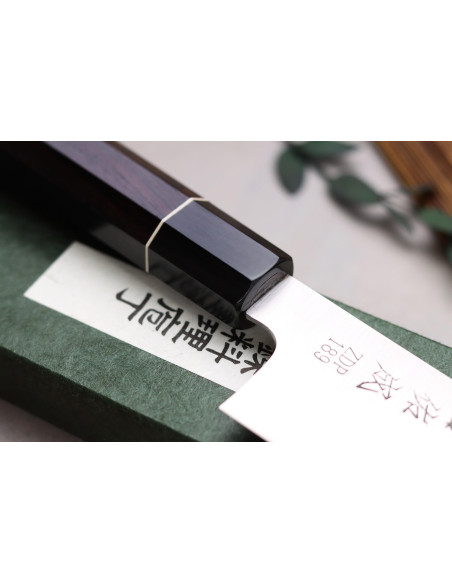
A black buffalo horn bolster completes the handle for perfect balance. The bolster also acts as a link between the handle and the knife blade. The bolster and handle are defined by a thin white micarta ring.
Finally, the space where the blade fits into the handle is filled with wood pulp. The whole unit is therefore perfectly watertight, preventing water infiltration and the insertion of bits of food.
How do I care for my Japanese knife?
As this handcrafted Japanese knife contains a high carbon content, it's vital to take the utmost care of it by following these few tips.
Your knife should be washed by hand with a soft sponge and a suitable detergent. Never put it in the dishwasher or leave it to soak in the sink. When cleaning, be careful not to get the handle wet. Once your knife has been washed, dry it immediately and thoroughly to remove all traces of moisture.
The knife can then be stored in a dry place, such as in its case. Please note that due to the high carbon content of the alloy, the blade's appearance may change slightly over time.
Finally, the knife must be stone-sharpened whenever necessary. This may prove difficult for novices, given the high hardness of steel. If you wish, we can provide you with our sharpening service to facilitate the maintenance of your knife.
Discover all Sukenari knives on KnifeLeader.eu!




 By buying this product you can collect up to