Add a touch of Japanese authenticity to all your cutouts!
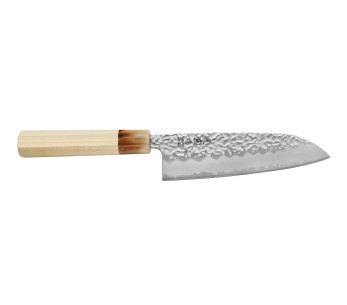
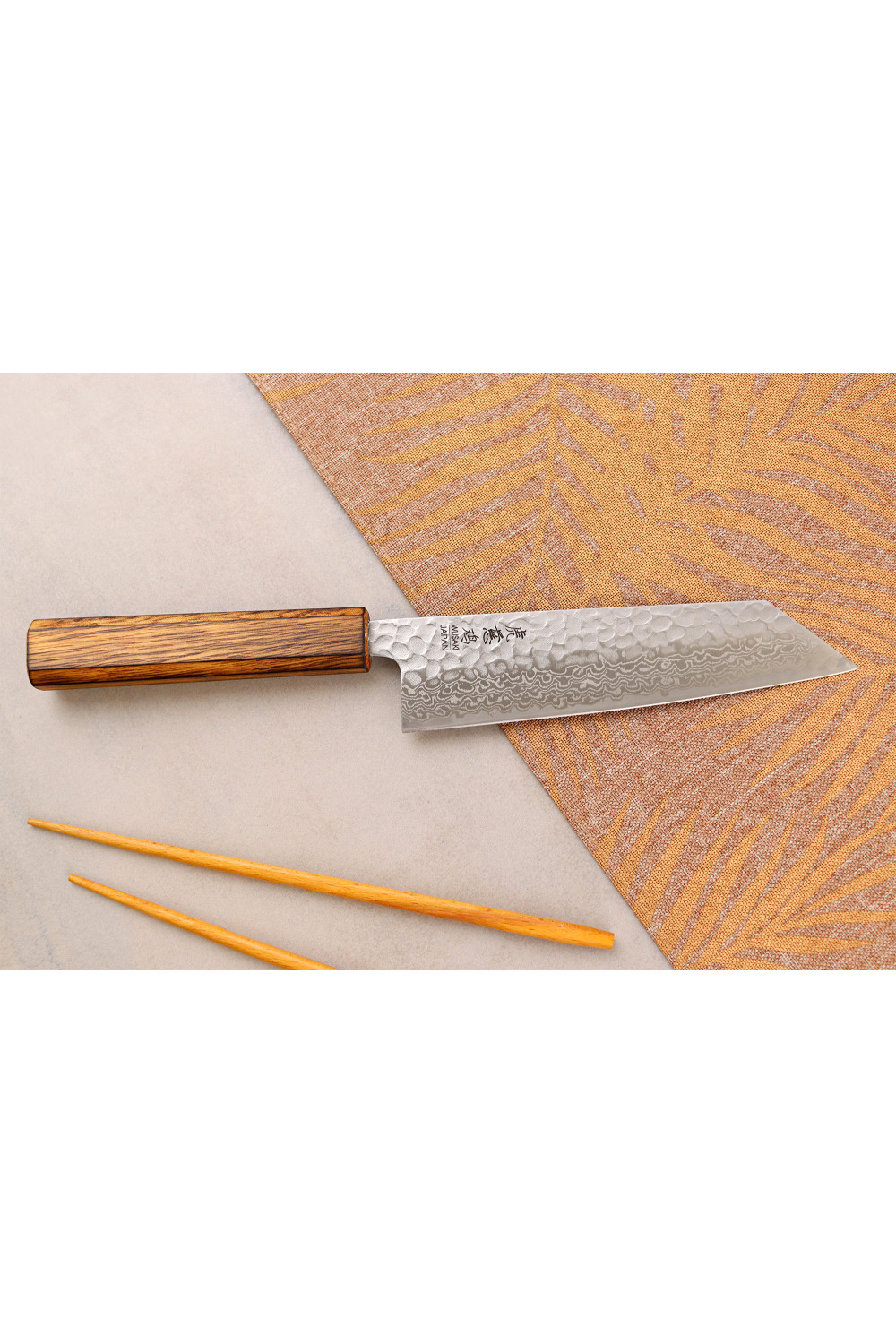
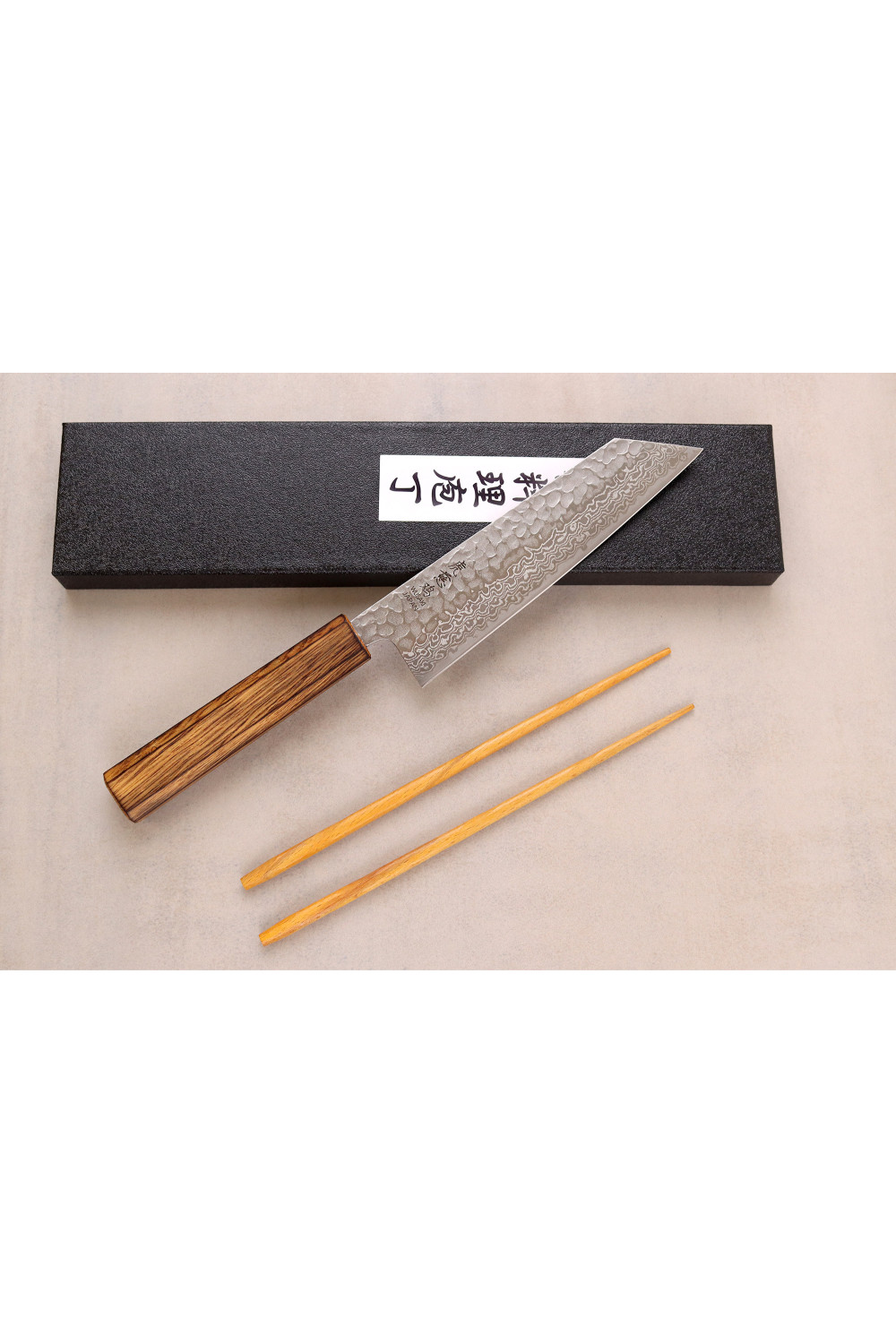
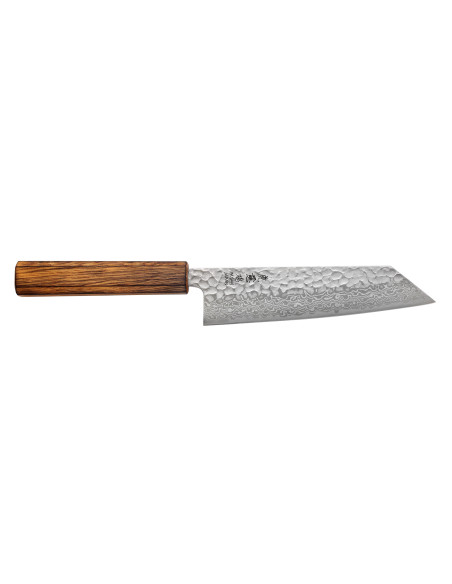
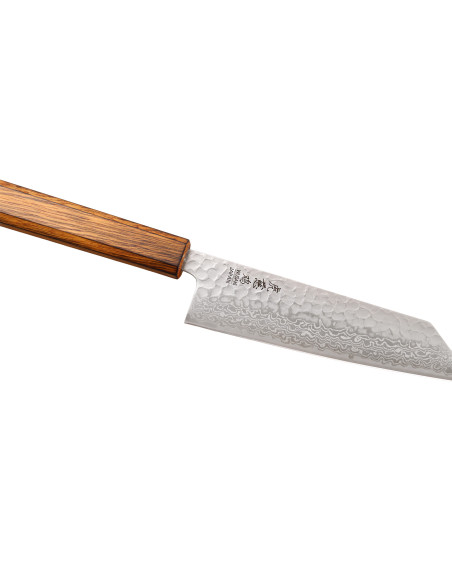
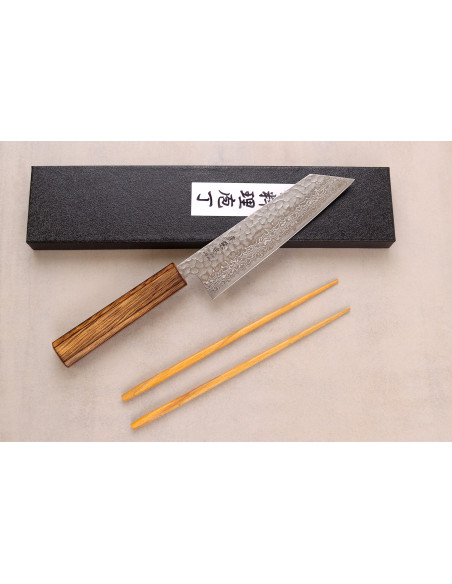
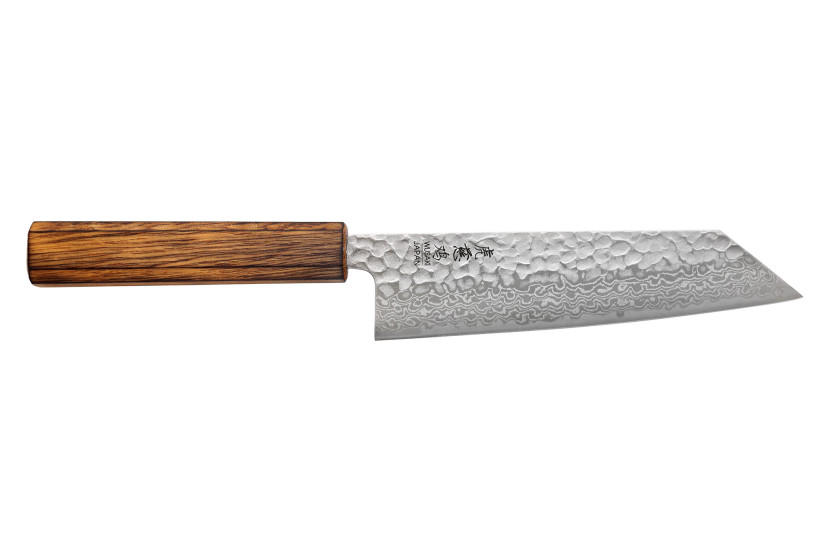
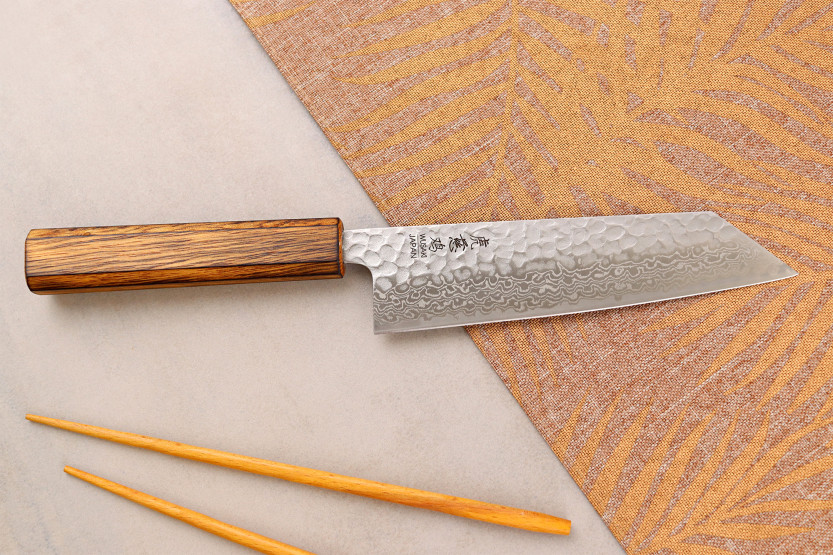
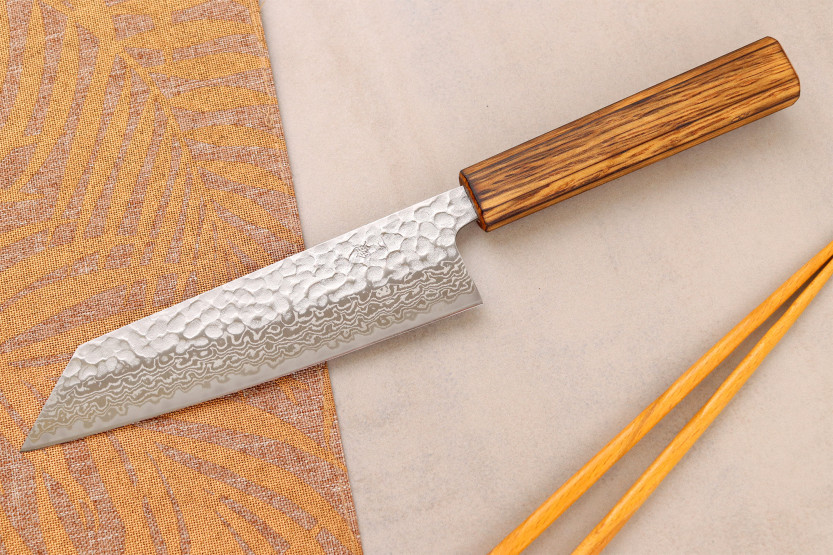
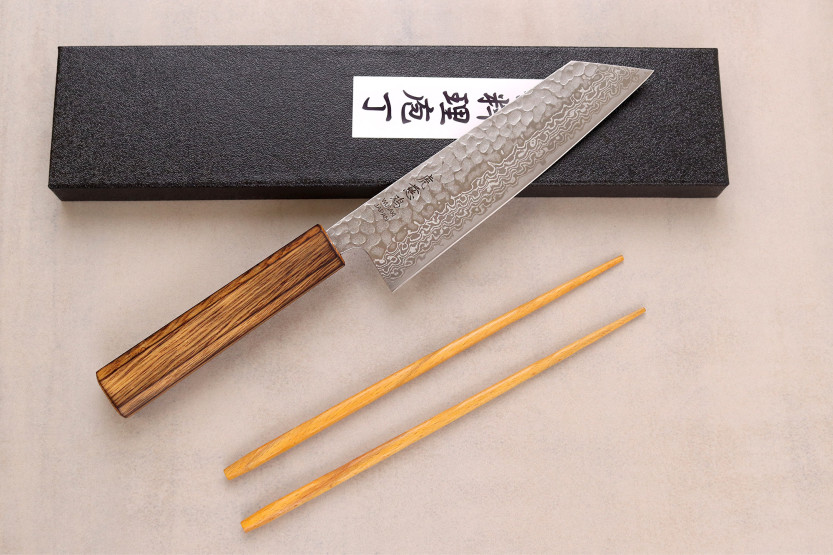
The Wusaki Suiteki G3 Damascus 17cm Bunka knife combines a high-performance cutting edge with refined aesthetics. Handcrafted in Japan by Tsunehisa Cutlery , it features several characteristics prized in Japanese cutlery: a damascened blade, Ginsan steel, and a traditional wooden handle.
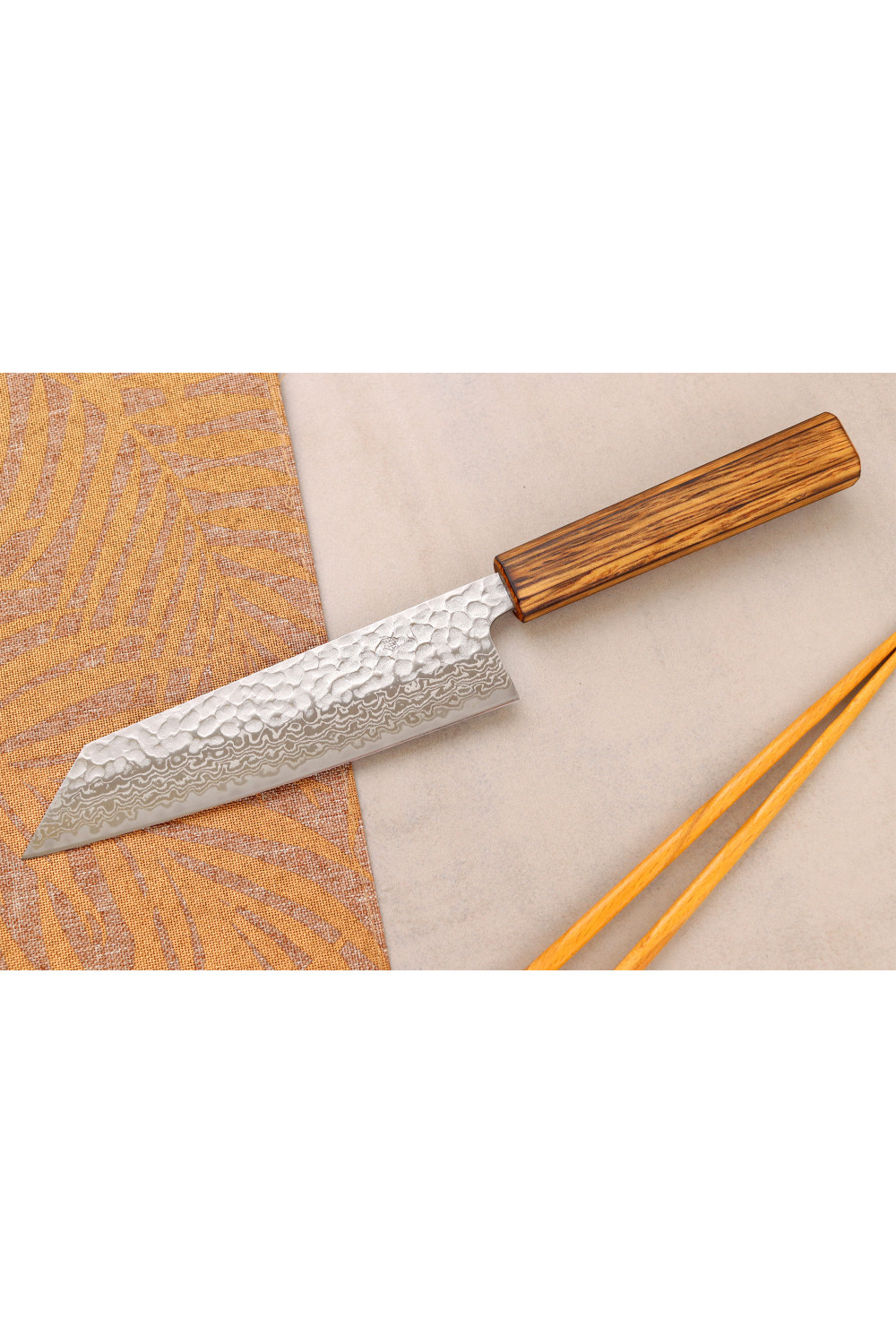
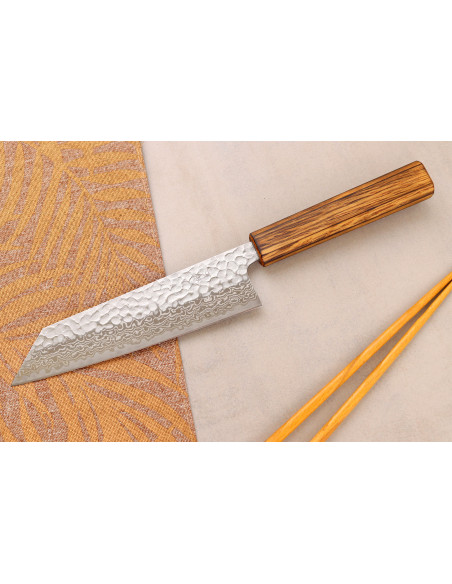
With its 17cm blade, this versatile Japanese knife is perfect for preparing vegetables, boneless meats, and fish. Its Bunka silhouette, recognizable by its angular tip, is ideal for both everyday cutting tasks and more precise work.
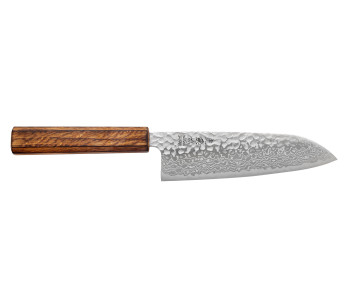
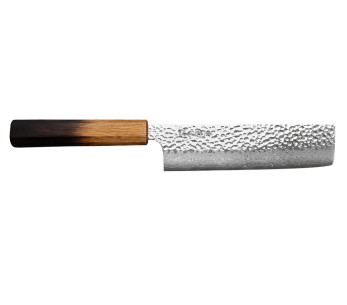
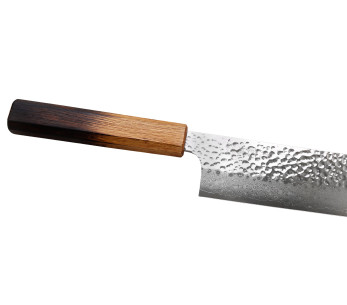
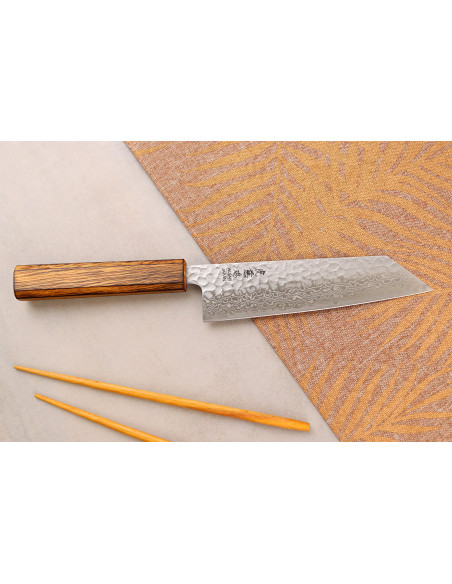
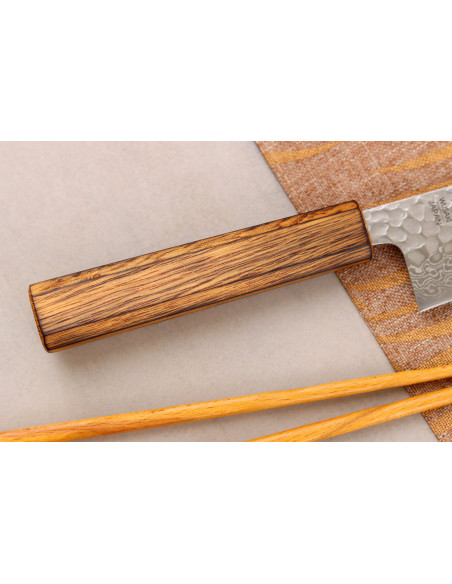
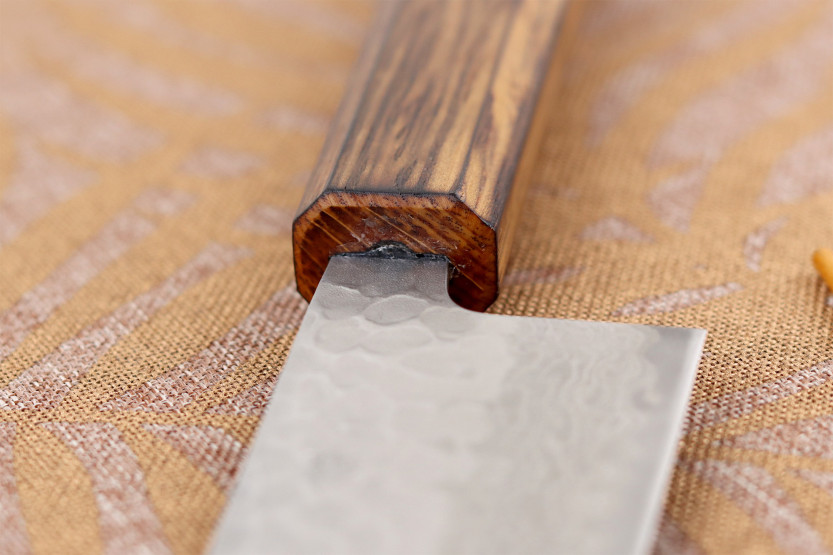
Its delicate hammered finish and charred oak handle give it a unique character. A beautiful balance between tradition, efficiency, and the joy of cooking!
A Japanese blade designed for precision
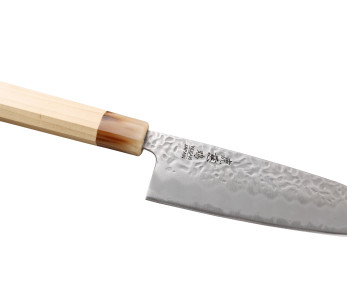
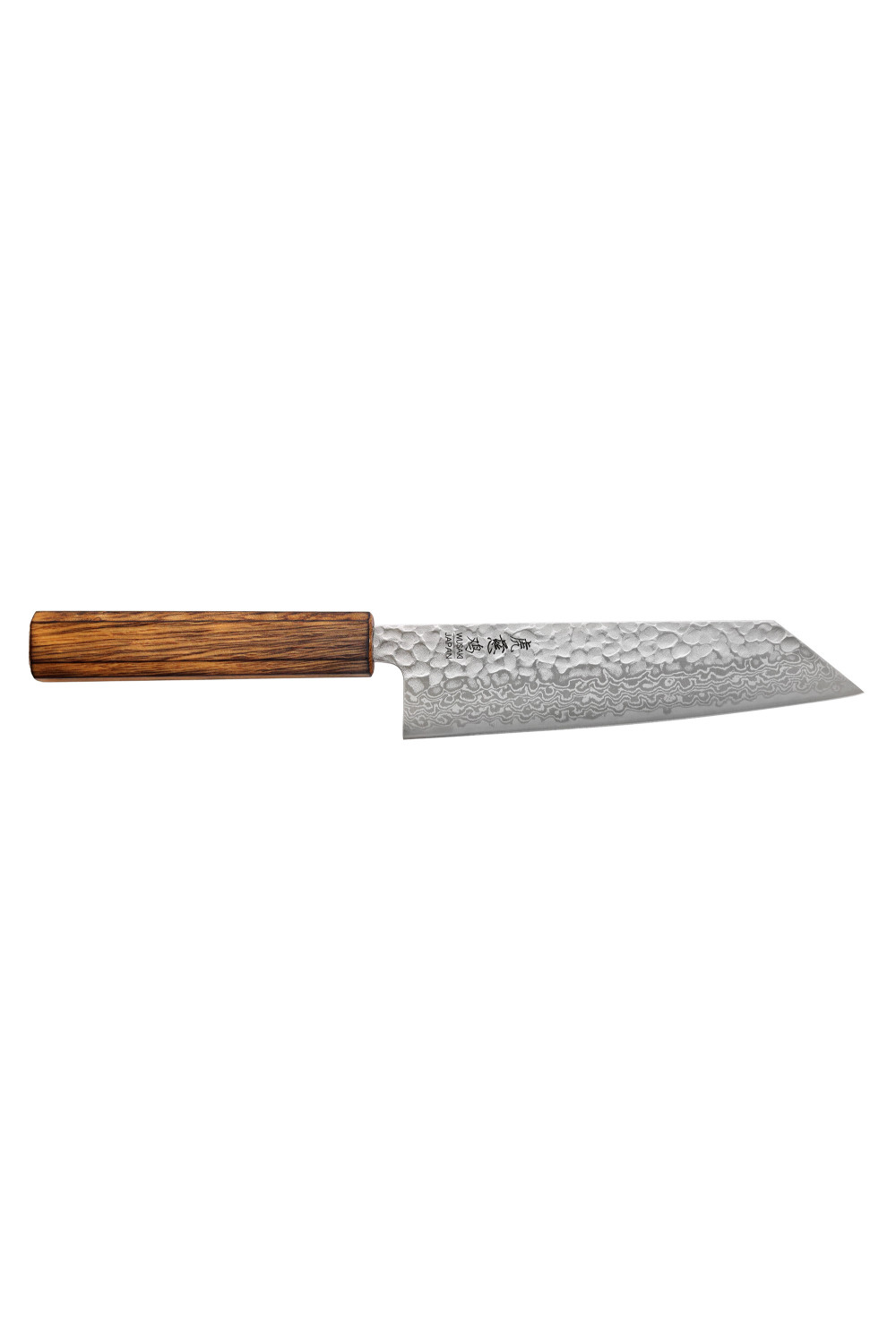
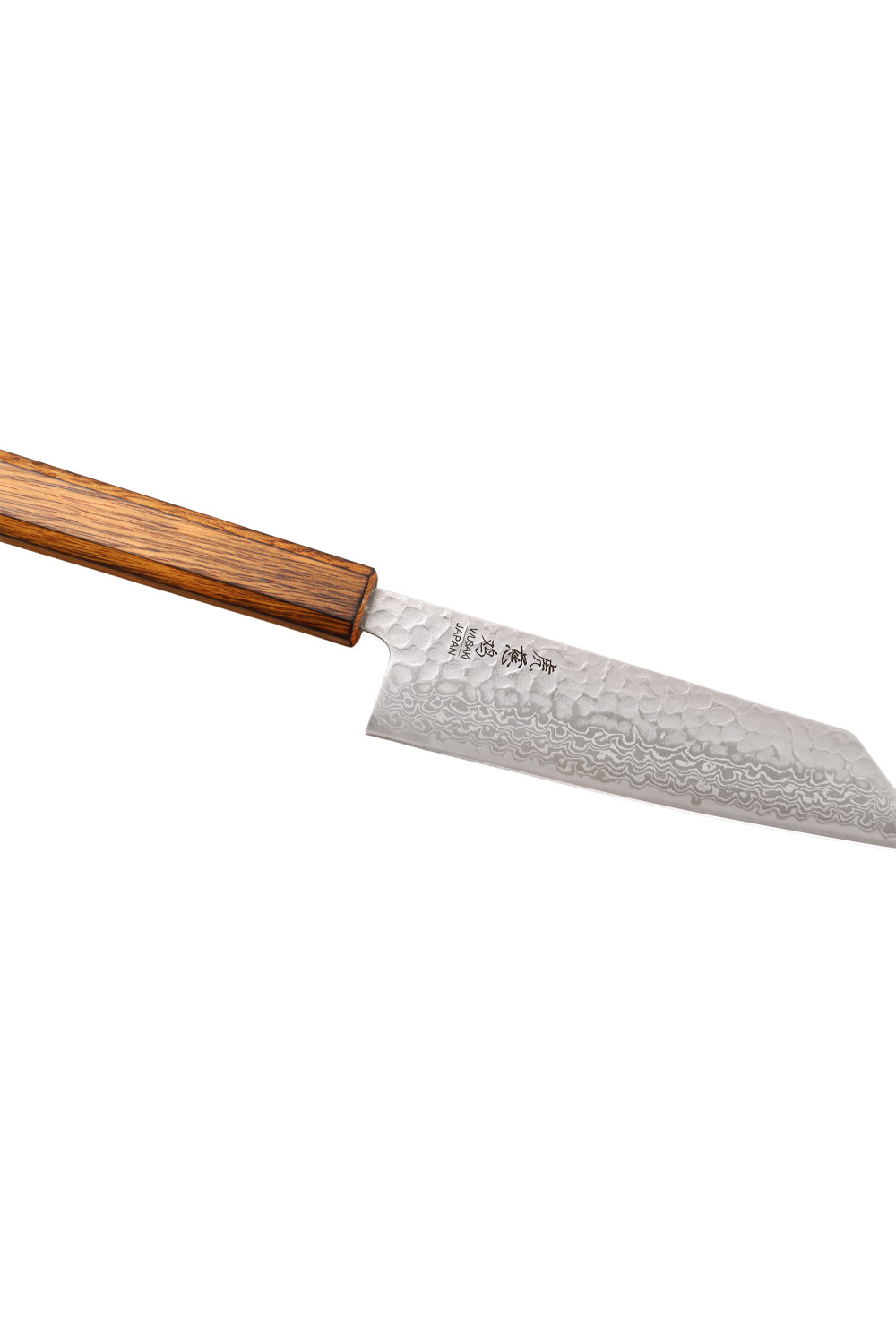
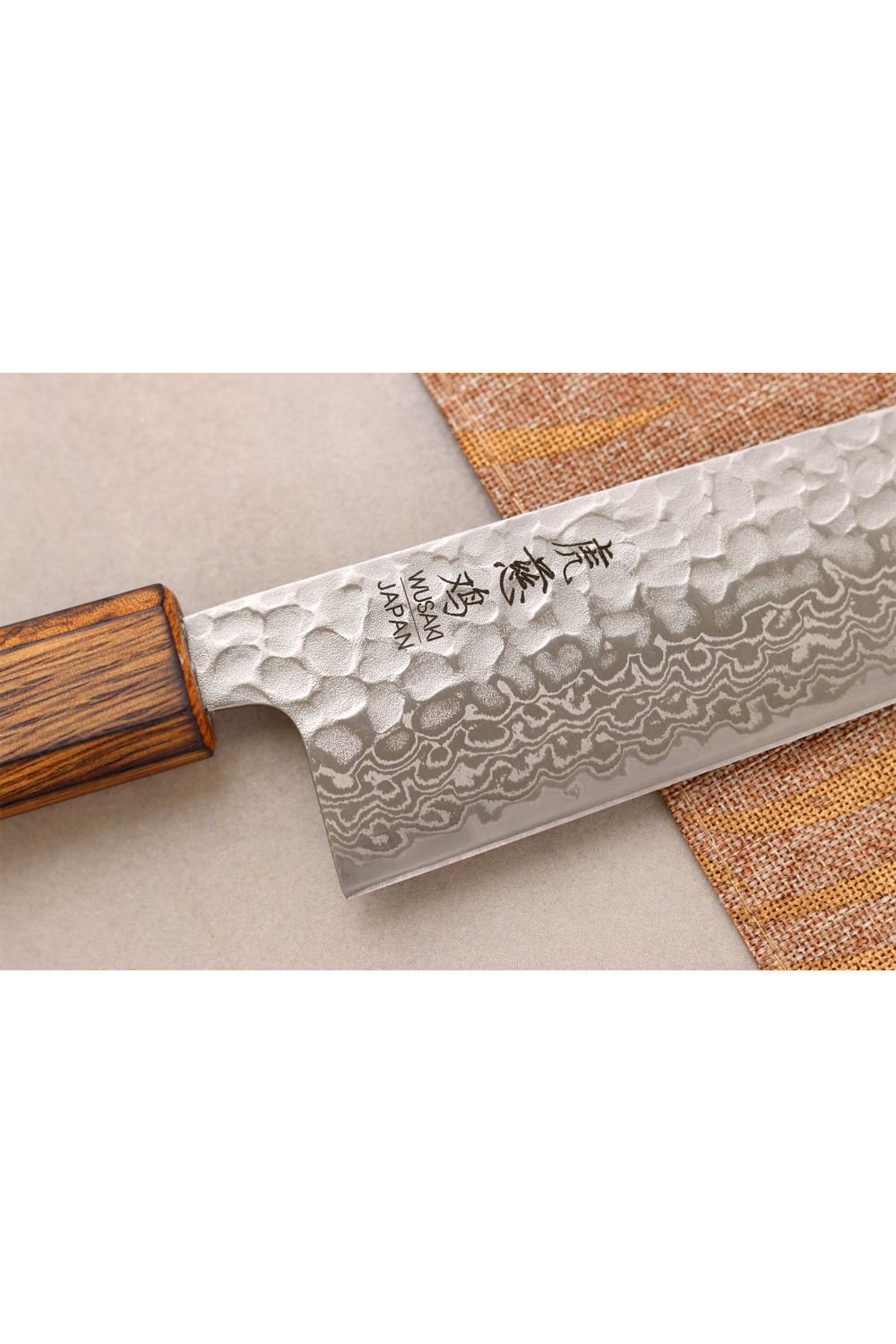
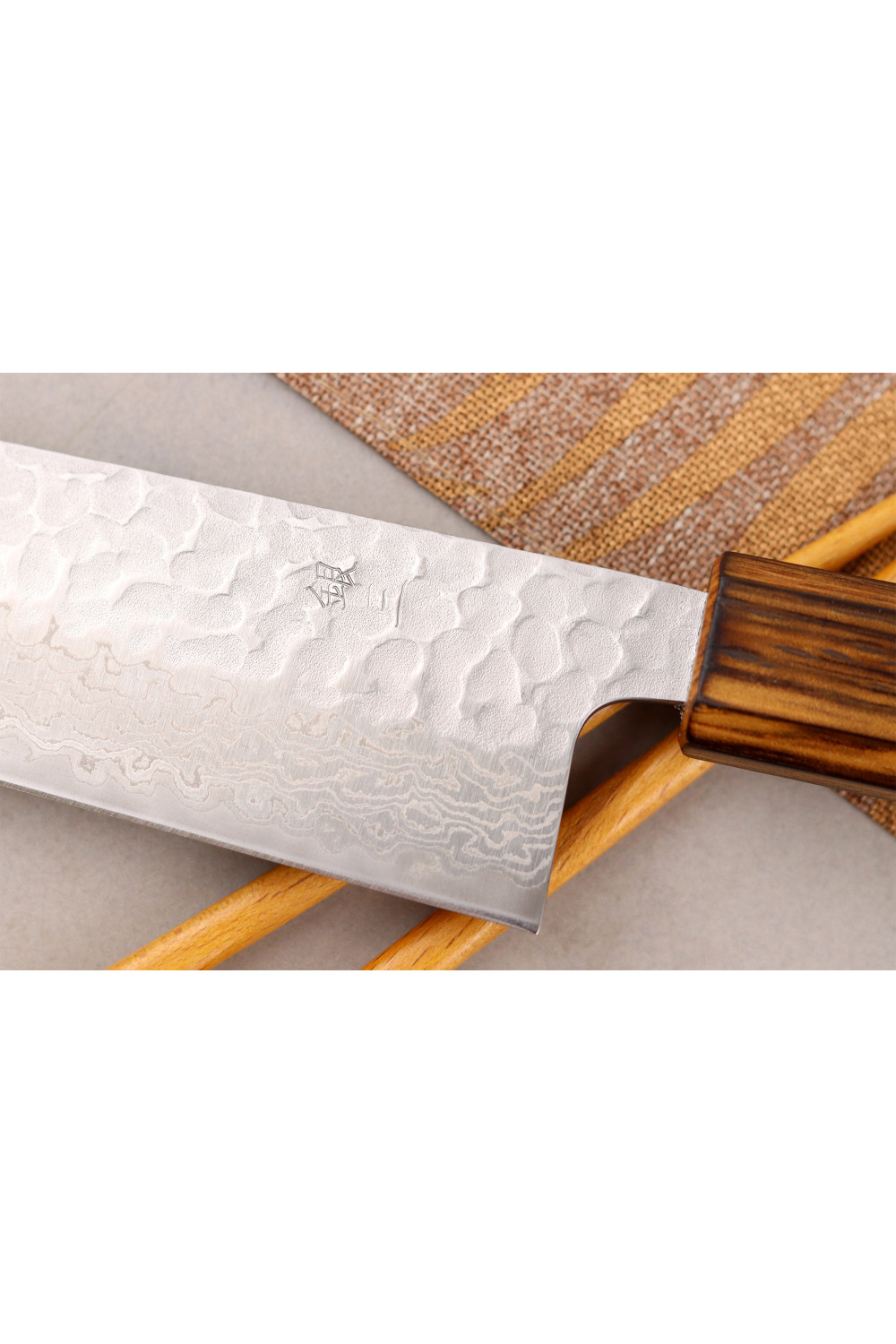
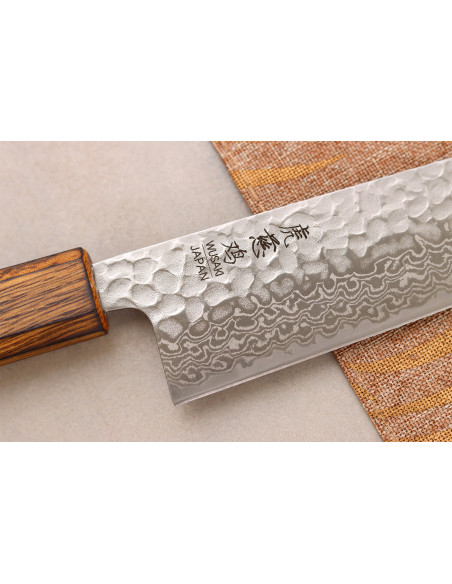
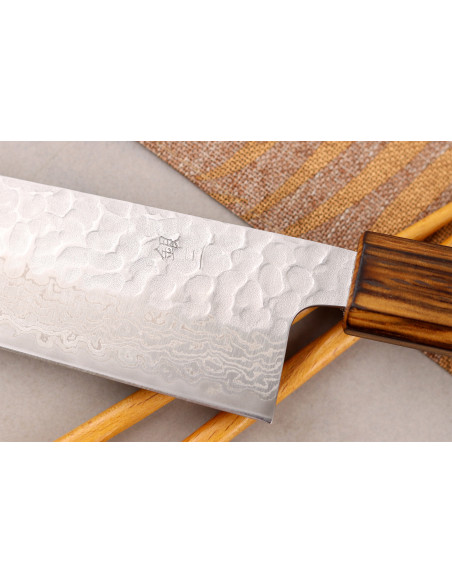
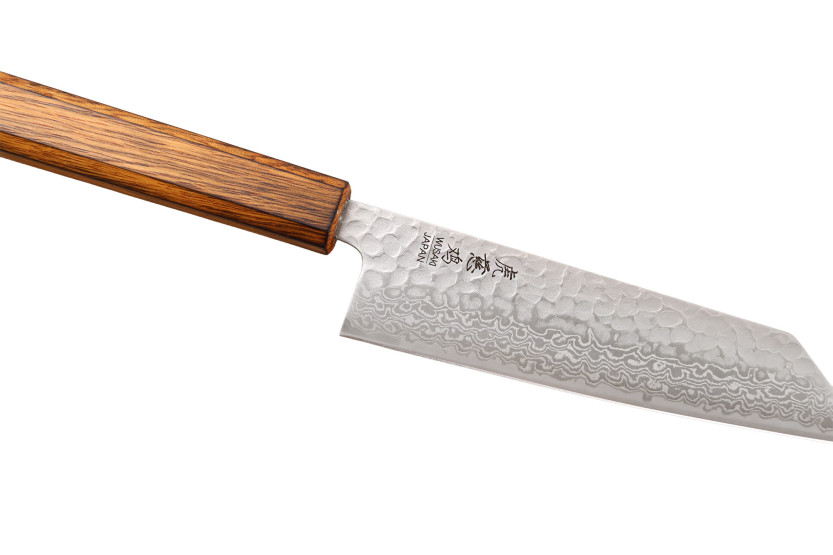
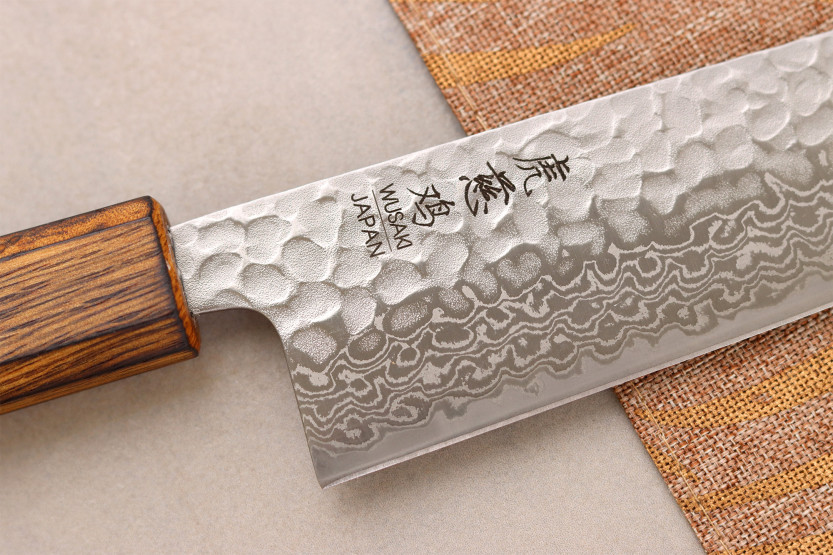
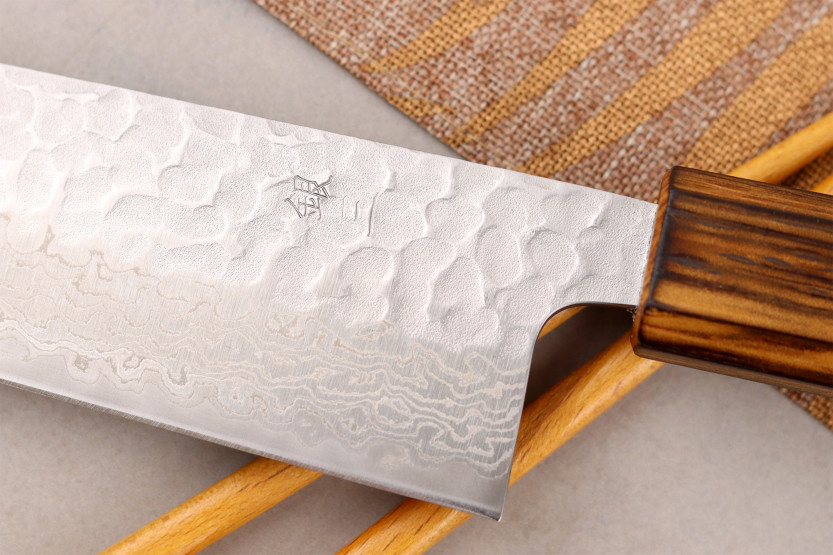
This 17-cm Japanese bunka knife features a damask-patterned blade composed of multiple layers of steel. This construction creates a refined visual appearance, with patterns that follow the blade’s contours, while ensuring a perfect balance among the different steels.
At the center of this structure lies a core of Japanese Ginsan steel, also known as G3 steel. This stainless steel contains approximately 0.95% carbon, a composition that allows it to achieve a desirable hardness while retaining good sharpenability.
The blade has a hardness of 59/60 HRC on the Rockwell scale. It thus offers a precise cutting edge and good edge retention over time, provided that the proper techniques for Japanese knives are followed.
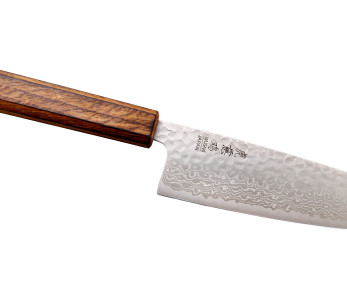
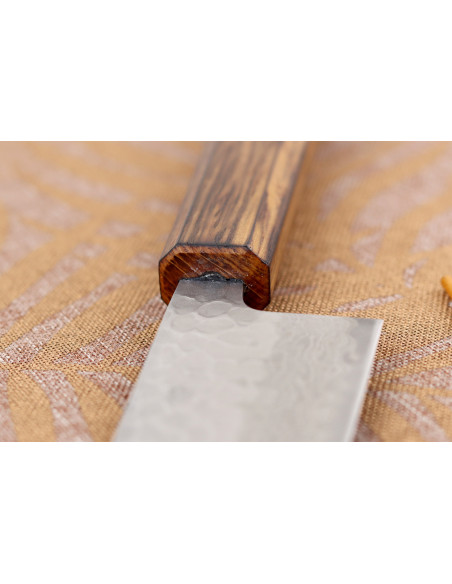
Its polished finish highlights the Damascus patterns and lends the knife a beautiful luster. On the upper part of the blade, a raised hammered pattern creates slight surface irregularities that help prevent certain foods from sticking during cutting.
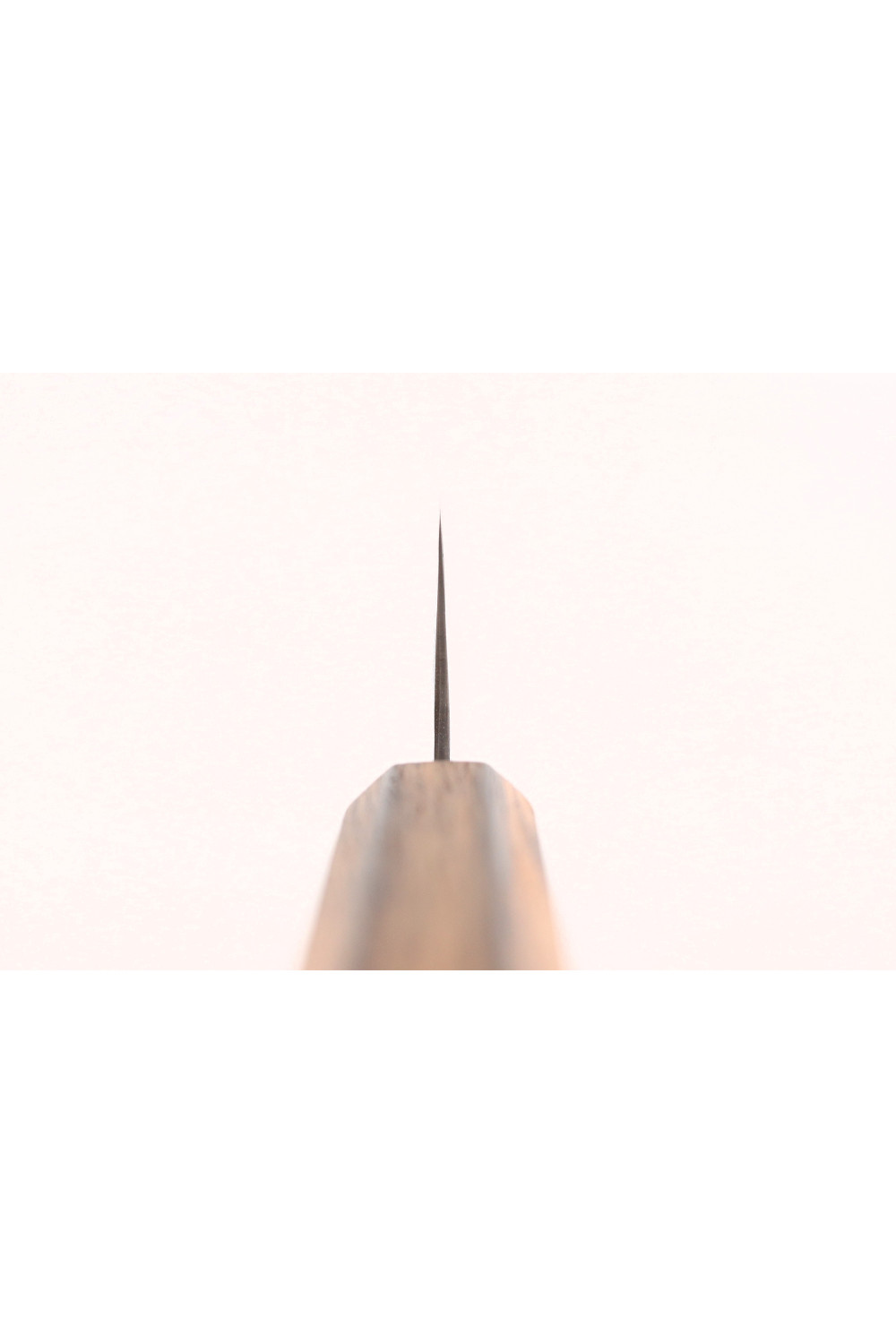
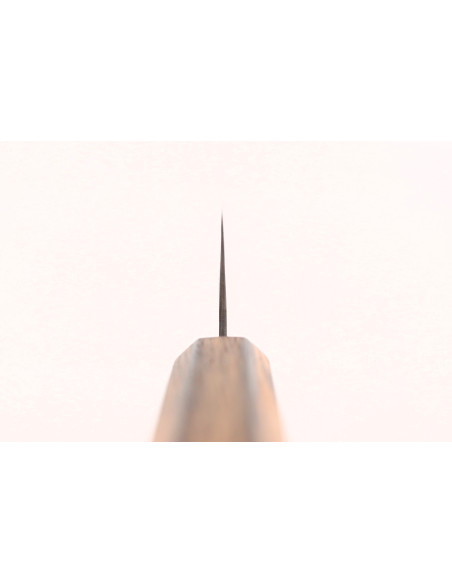
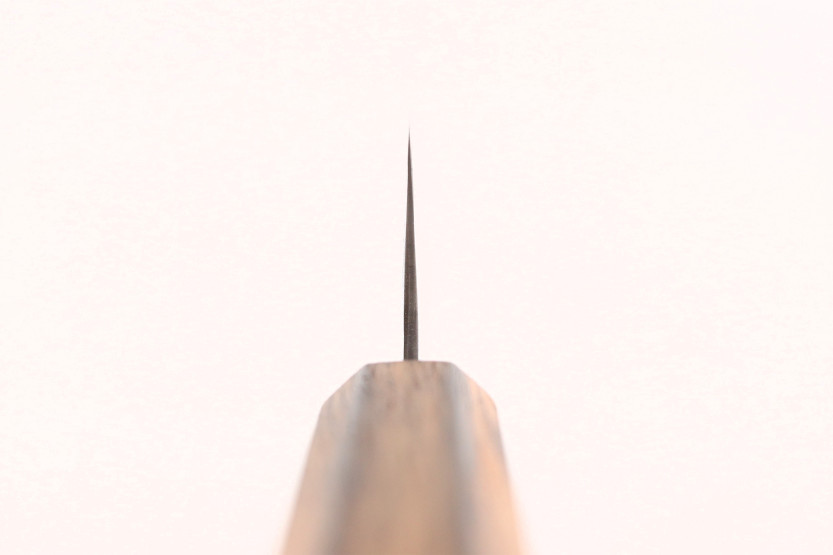
Finally, the bunka shape features an angular tip that’s particularly well-suited for precise work. Slicing vegetables, chopping herbs, or cutting meat into pieces becomes a real pleasure!
A traditional handle with a distinctive character
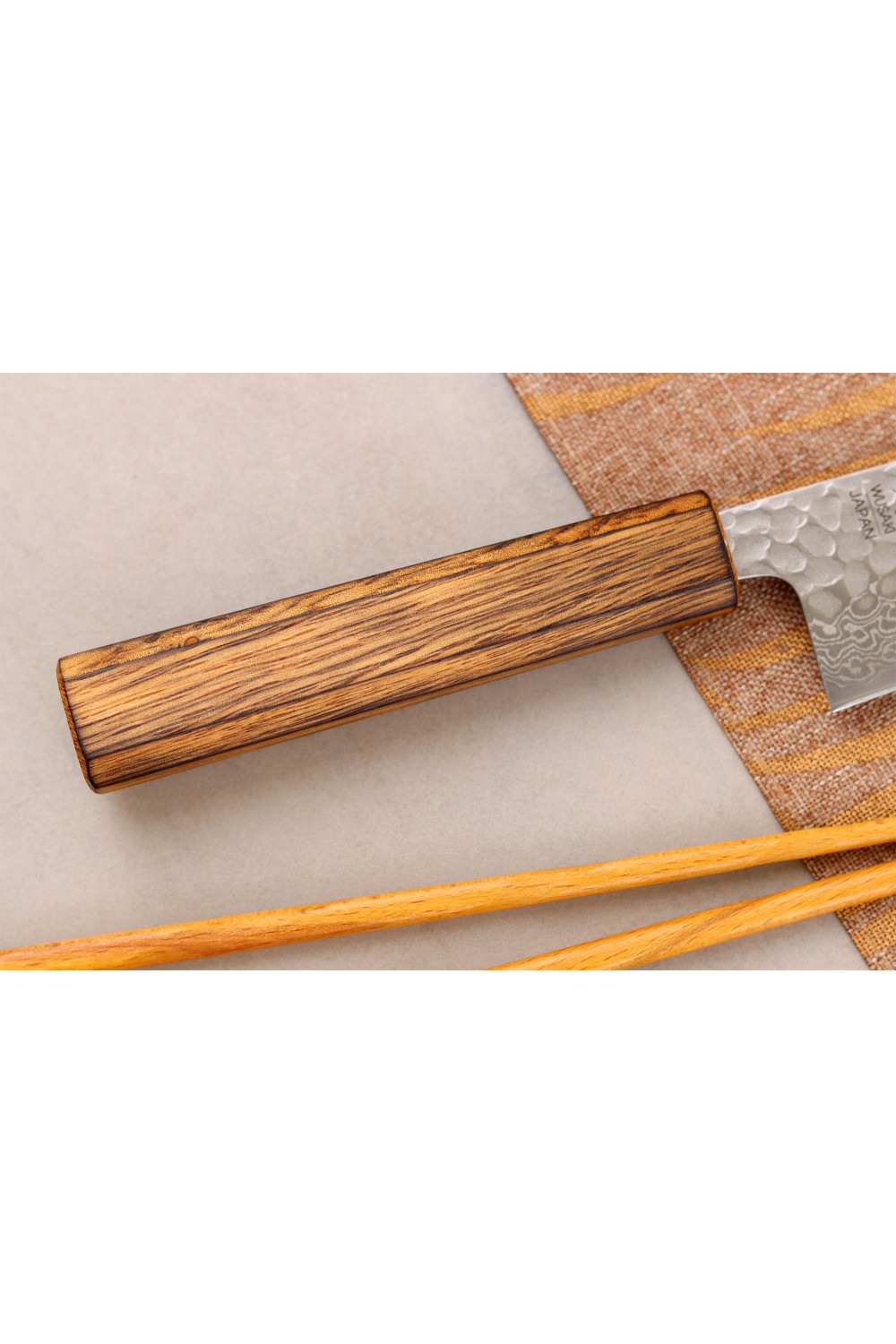
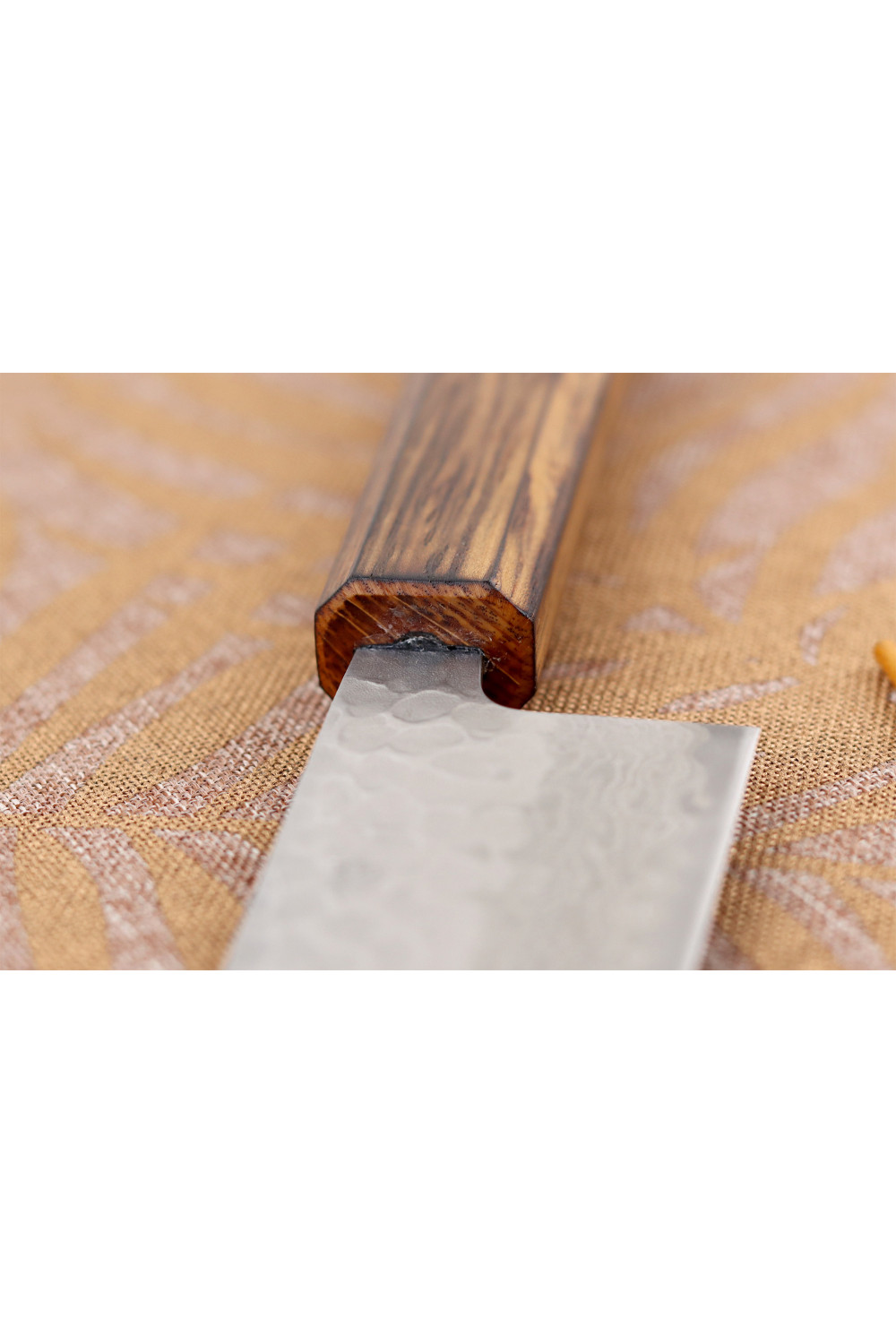
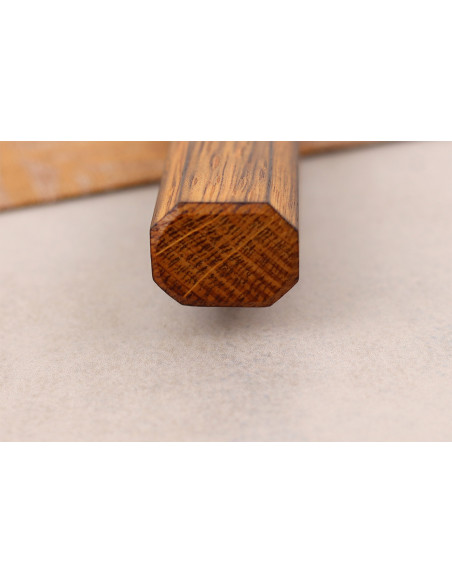
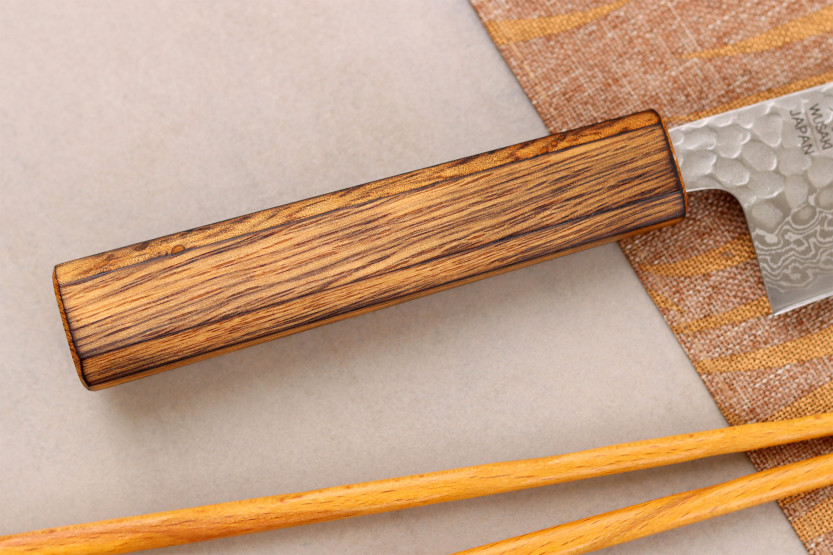
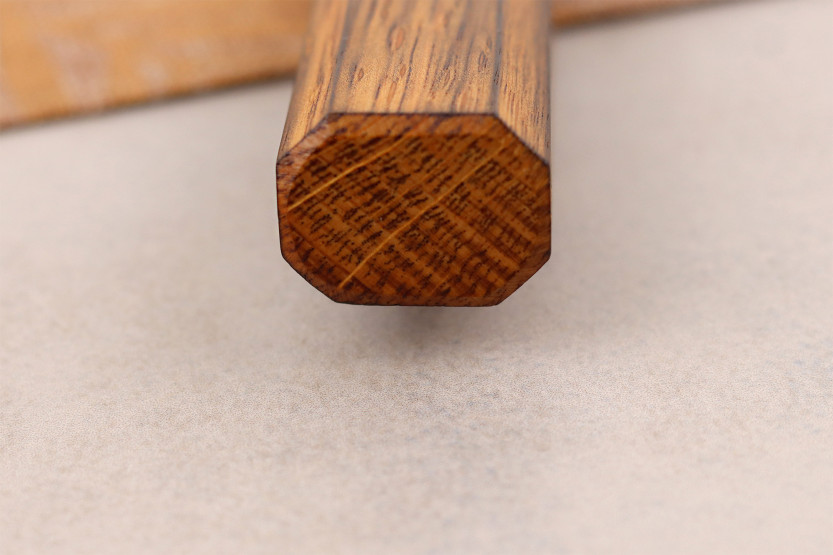
The handle of this handcrafted knife is made of charred oak, a wood whose surface treatment reveals warm tones and an authentic look.
Its color provides an elegant contrast to the blade’s lustrous finish. The wood’s natural grain also contributes to the unique character of each piece.
Beyond its aesthetic appeal, this material feels pleasant to the touch when held. Oak is prized for its durability and texture—two qualities that are particularly valuable for a kitchen tool used regularly.
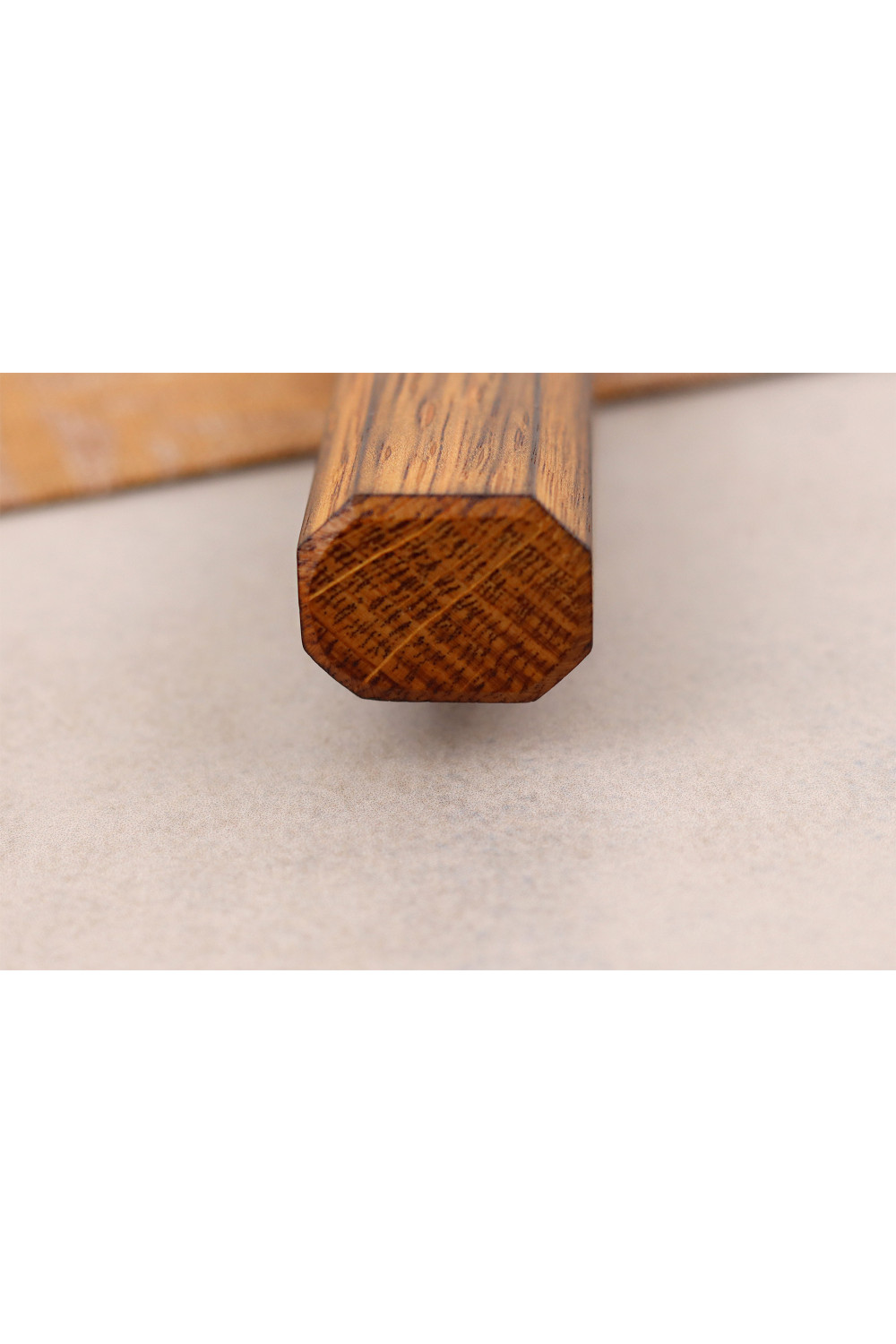
The handle is carved into an octagonal shape, following a traditional design found on many Japanese knives.
Its eight sides allow your fingers to naturally wrap around the handle and maintain tactile reference points during cutting motions. This shape promotes a stable grip and makes it easier to adjust your grip depending on the ingredients you’re working with.
Another advantage: its ambidextrousdesign works equally well for both right- and left-handed users!
Key Features
17 cm bunka blade: a versatile size for preparing vegetables, boneless meats, and fish.
-
Multi-layered damask structure: steel patterns that enhance the blade’s aesthetic appeal.
0.95% carbon Ginsan steel core: a stainless steel designed for a high-performance cutting edge.
-
Hardness of 59/60 HRC: excellent edge retention.
-
Hammered finish on the upper blade: reduces food sticking.
Polished finish: a lustrous surface that highlights the Damascus patterns.
-
Flat bevel: even penetration into ingredients.
Angular “bunka” tip: greater precision for detailed work.
Burnt oak handle: a warm, natural-feeling aesthetic.
-
Ambidextrous octagonal shape: a grip suitable for both right- and left-handed users.
Handcrafted in Japan: a knife made by Tsunehisa Cutlery.
-
Maintain a sharp edge for the long term
To get the most out of your Japanese knife, use a wooden or soft plastic cutting board. Avoid hard surfaces such as glass, stone, or ceramic.
Use the blade only for unfrozen, boneless foods. Do not twist the knife while cutting.
After each use, wash your knife by hand with a soft sponge and a mild detergent. Immediately dry the blade and handle with a clean cloth.
Do not put the knife in the dishwasher to preserve the steel and wood.
To maintain the sharpness, use a whetstone designed for Japanese knives.
Tsunehisa: Japanese knife-making expertise
Tsunehisa cutlery is known for crafting Japanese kitchen knives that combine traditional techniques with contemporary materials.
In the Wusaki Suiteki G3line , this craftsmanship is embodied in a damascened blade made of Ginsan steel and a traditional handle crafted from charred oak.
A wonderful way to experience the qualities of a handcrafted Japanese knife in your everyday life!
Want to round out your collection? Explore our selection of Japanese knives and find the blade shapes that suit all your cooking needs!




 By buying this product you can collect up to