The blade:
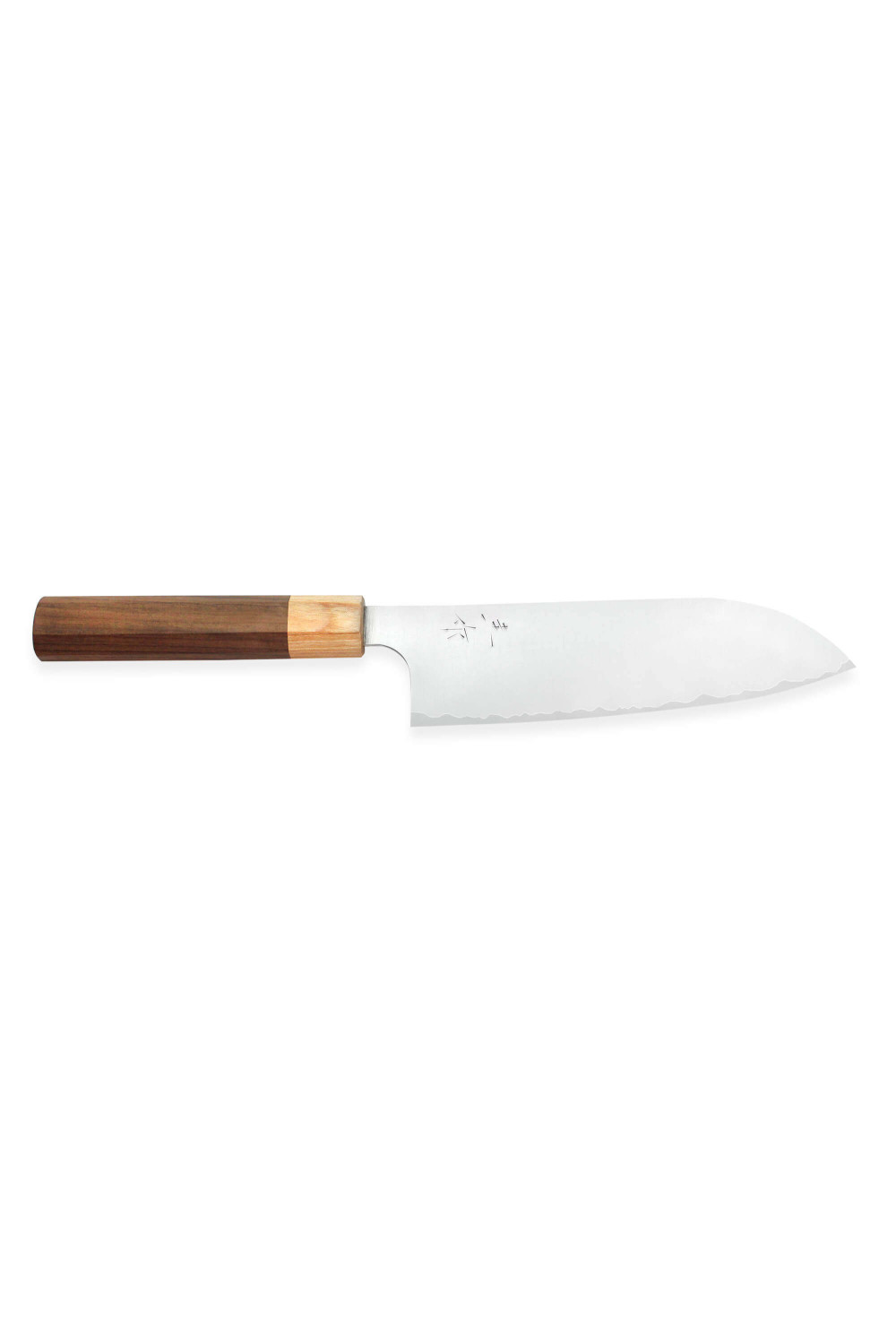
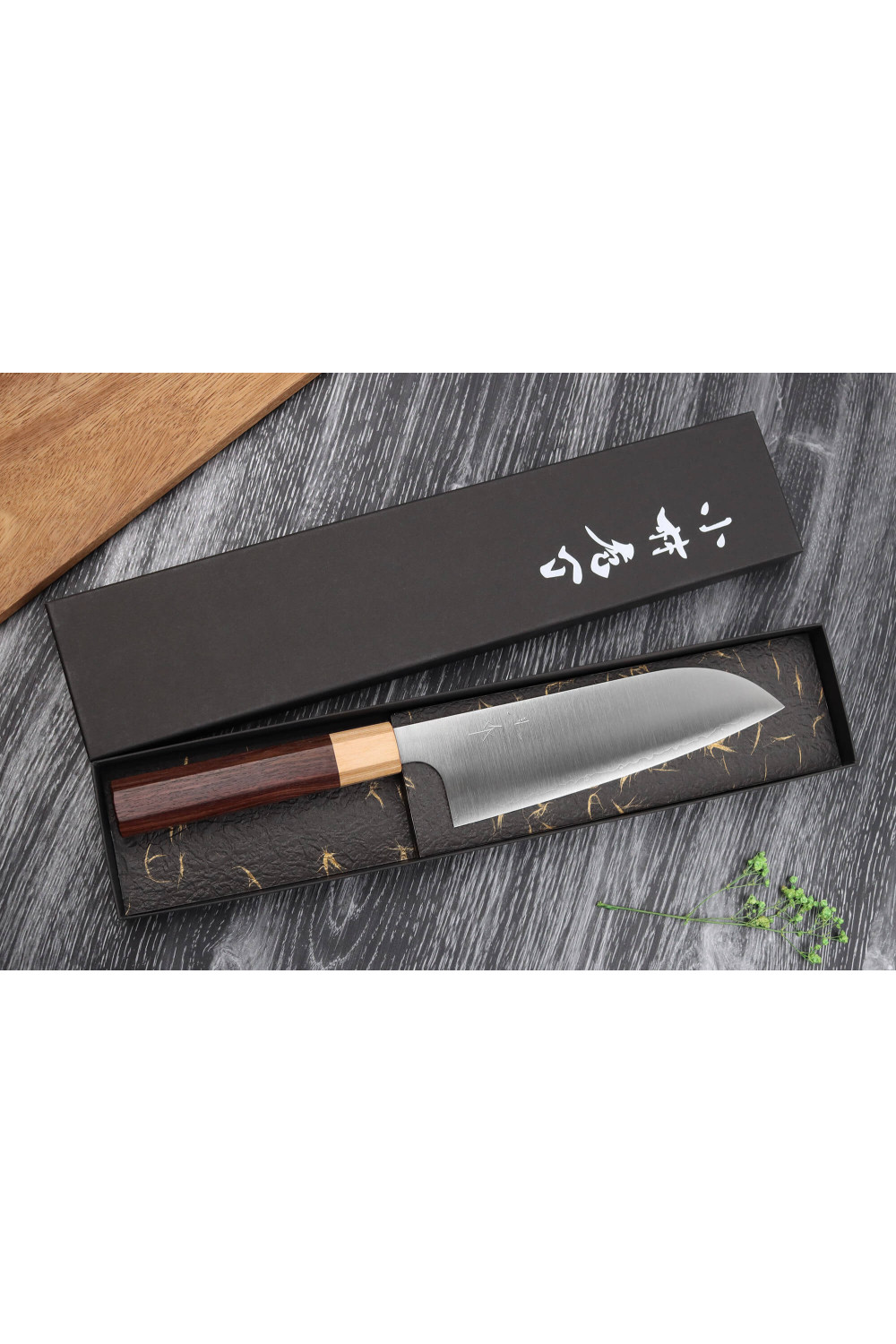
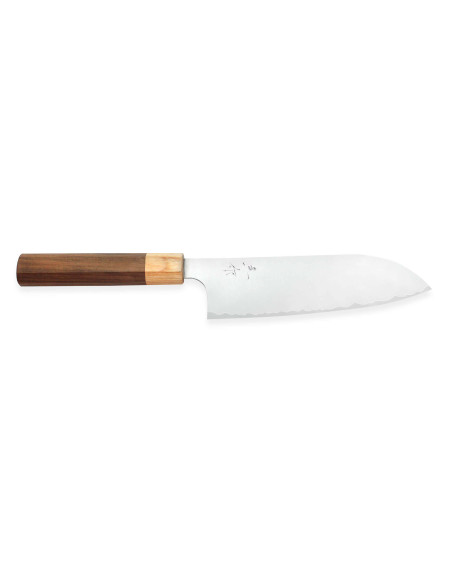
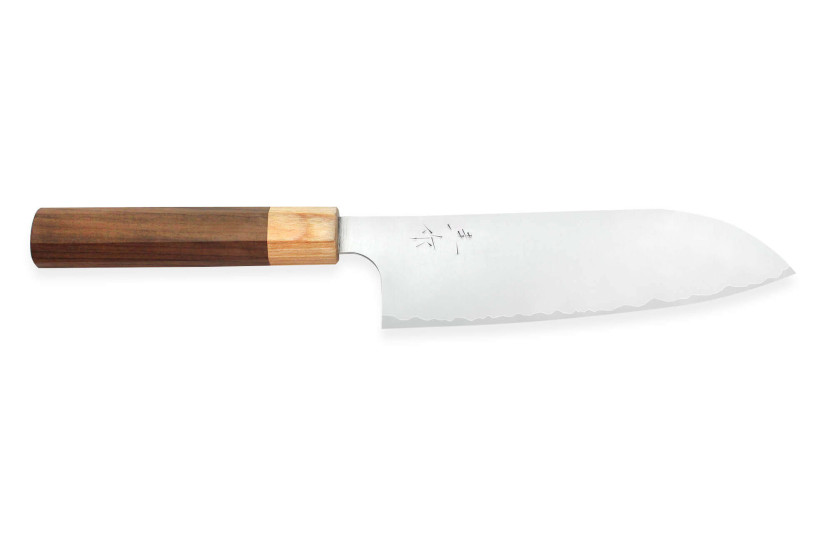
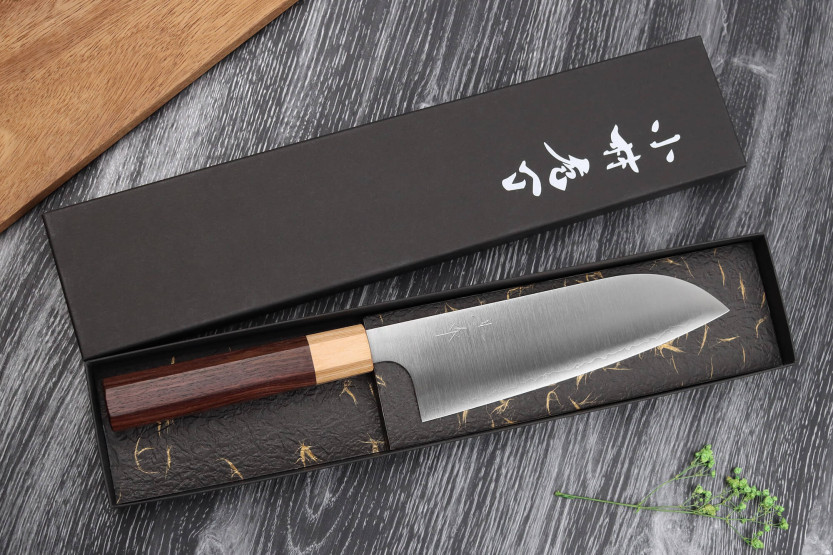
The blade of this 17cmsantoku knife is called San Mai, which means it's built with 3 alternating layers of steel, like a simplified damascus.
The heart of the knife is made of SG2 powdered steel, a costly, high-quality alloy with many advantages! For example, with its hardness of around 63 HRC, it holds its edge over the long term, so you don't have to keep sharpening it. And even though it's very hard, SG2 steel is easy to sharpen - a real asset for such a rigid alloy. Maintenance is carried out with a Sharpening stone.
Another advantage of SG2 steel is its purity. At the microscopic level, its structure is very homogeneous, which makes it more resistant (for example, there is less risk of chipping when using it).
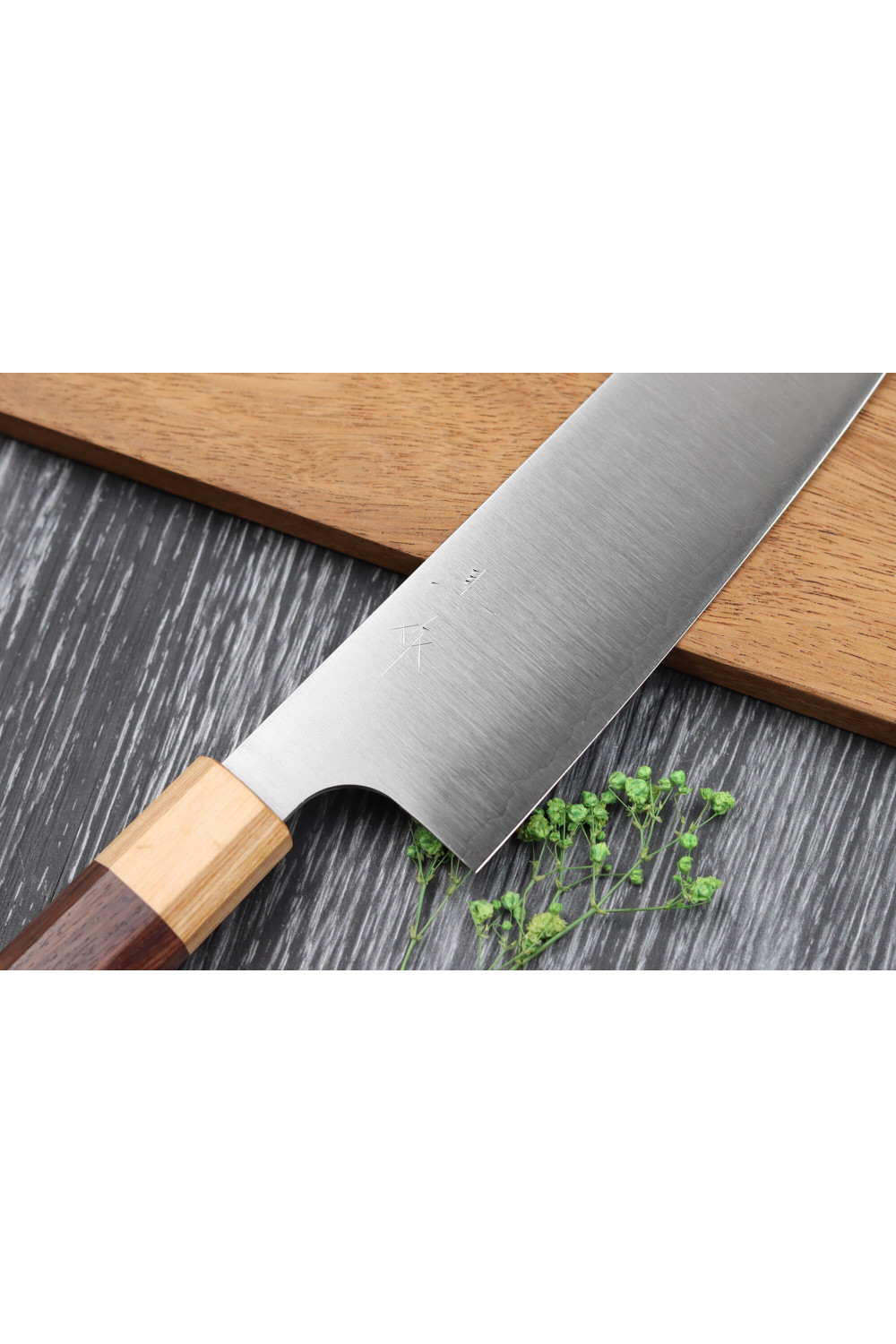
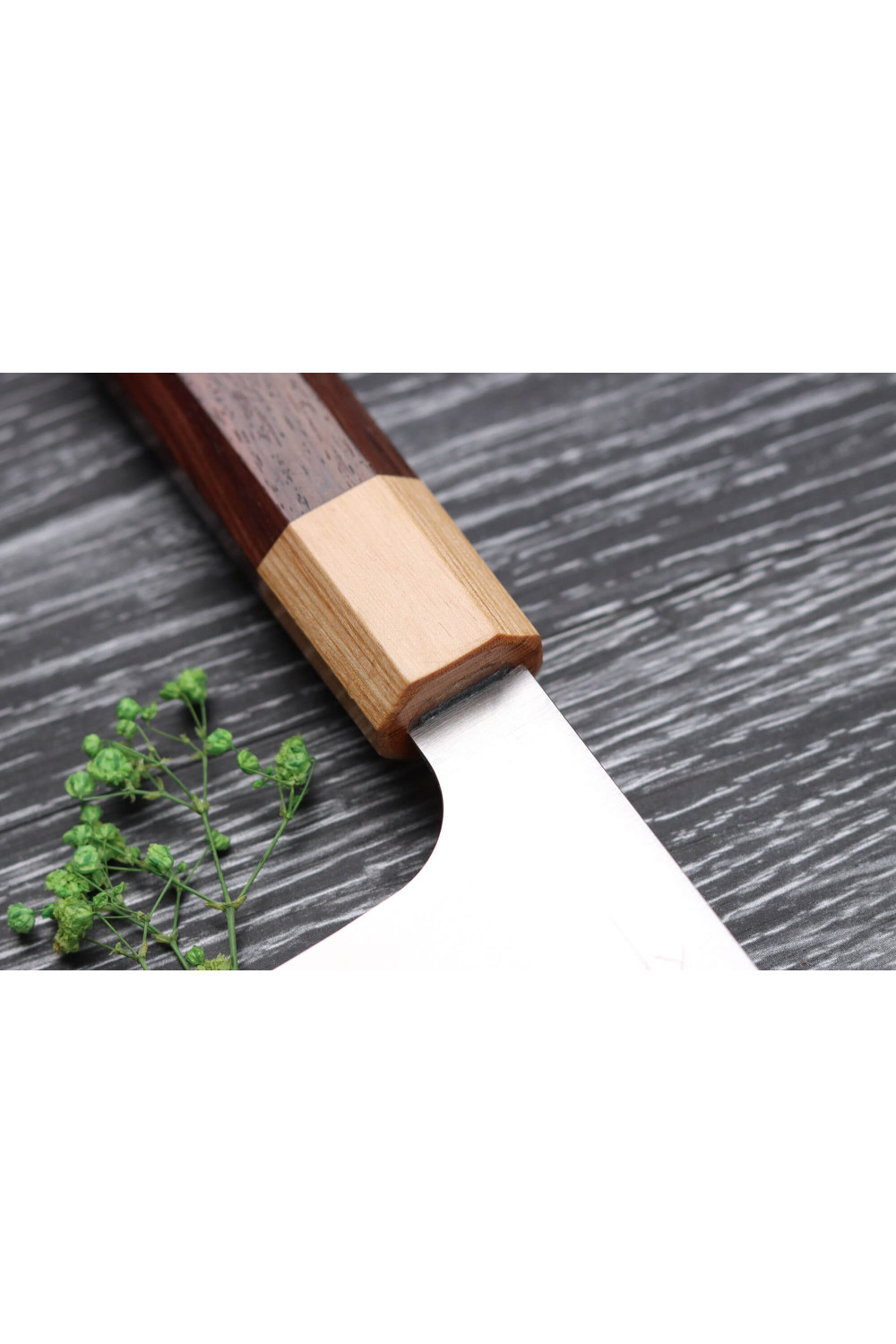
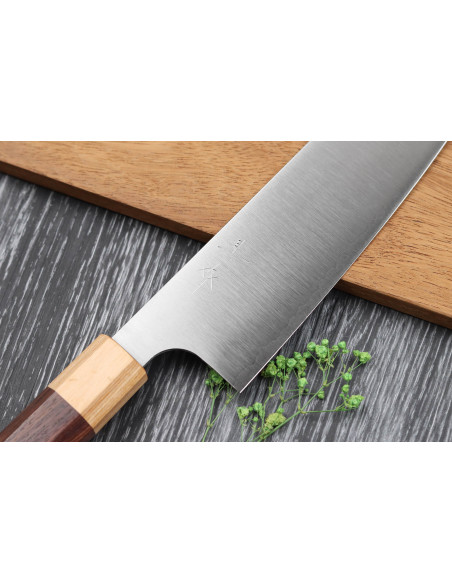
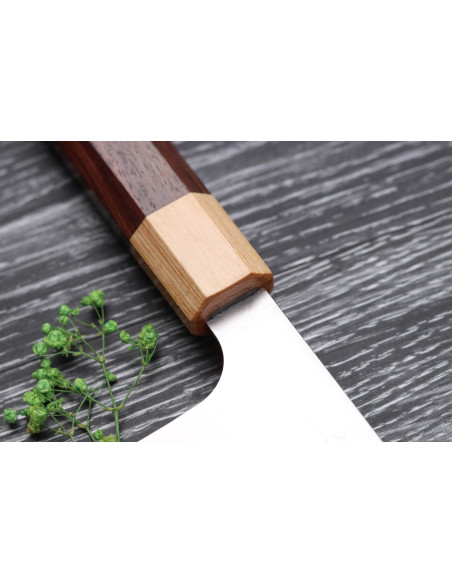
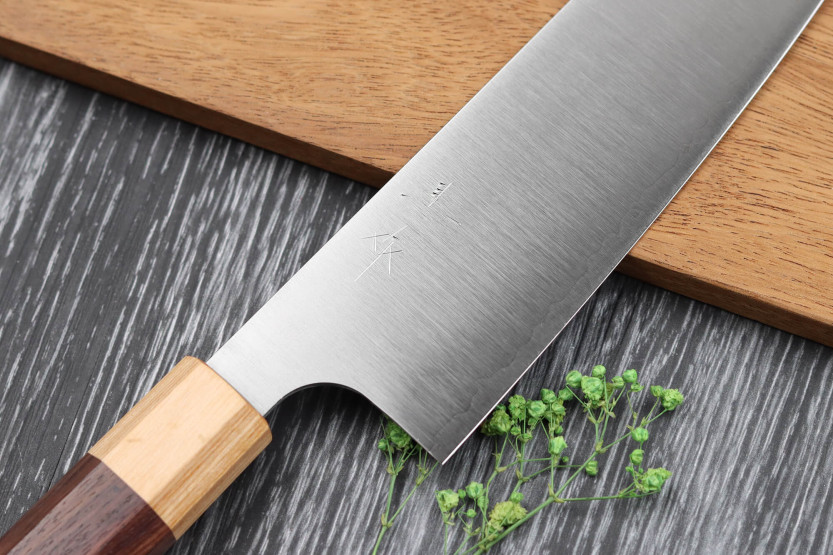
A layer of softer stainless steel then surrounds the SG2, protecting it by sandwiching it. You can see this mix of steels at the base of the blade: an irregular thread runs along the edge, showing the bonding of the various steels.
Finishes :
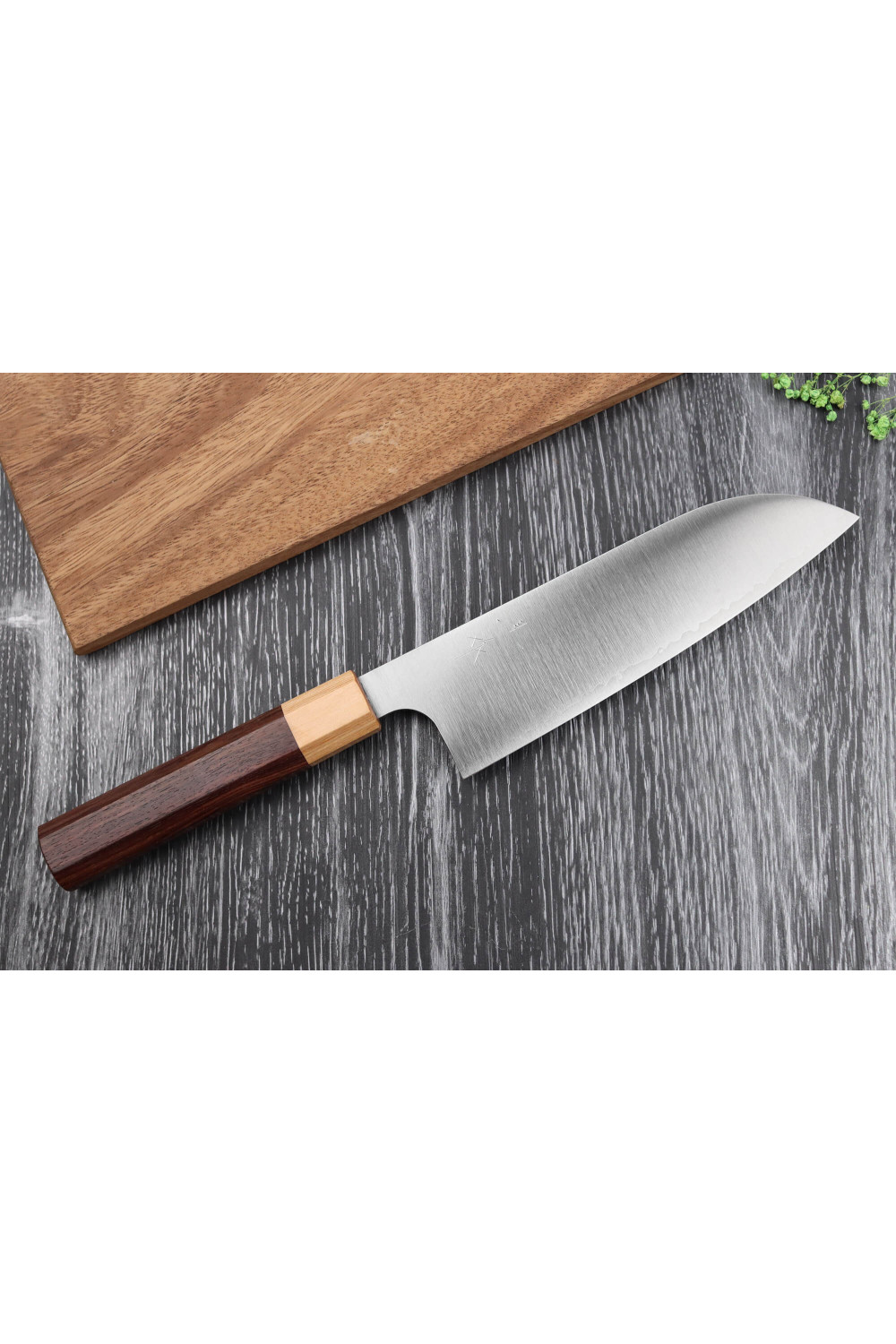
To guarantee a razor-sharp edge right from the first cut, the blade is hand-sharpened on a grinding wheel. The Japanese characters on its surface are engraved by hand, adding a welcome touch ofauthenticity to the knife. The top edge of the blade, as well as the surface at the base of the blade, have been polished to make them more pleasant to the touch. This is particularly useful if you take your knife high up on the handle, or rest your index finger on the back of the knife when cutting food.
Handle composition :
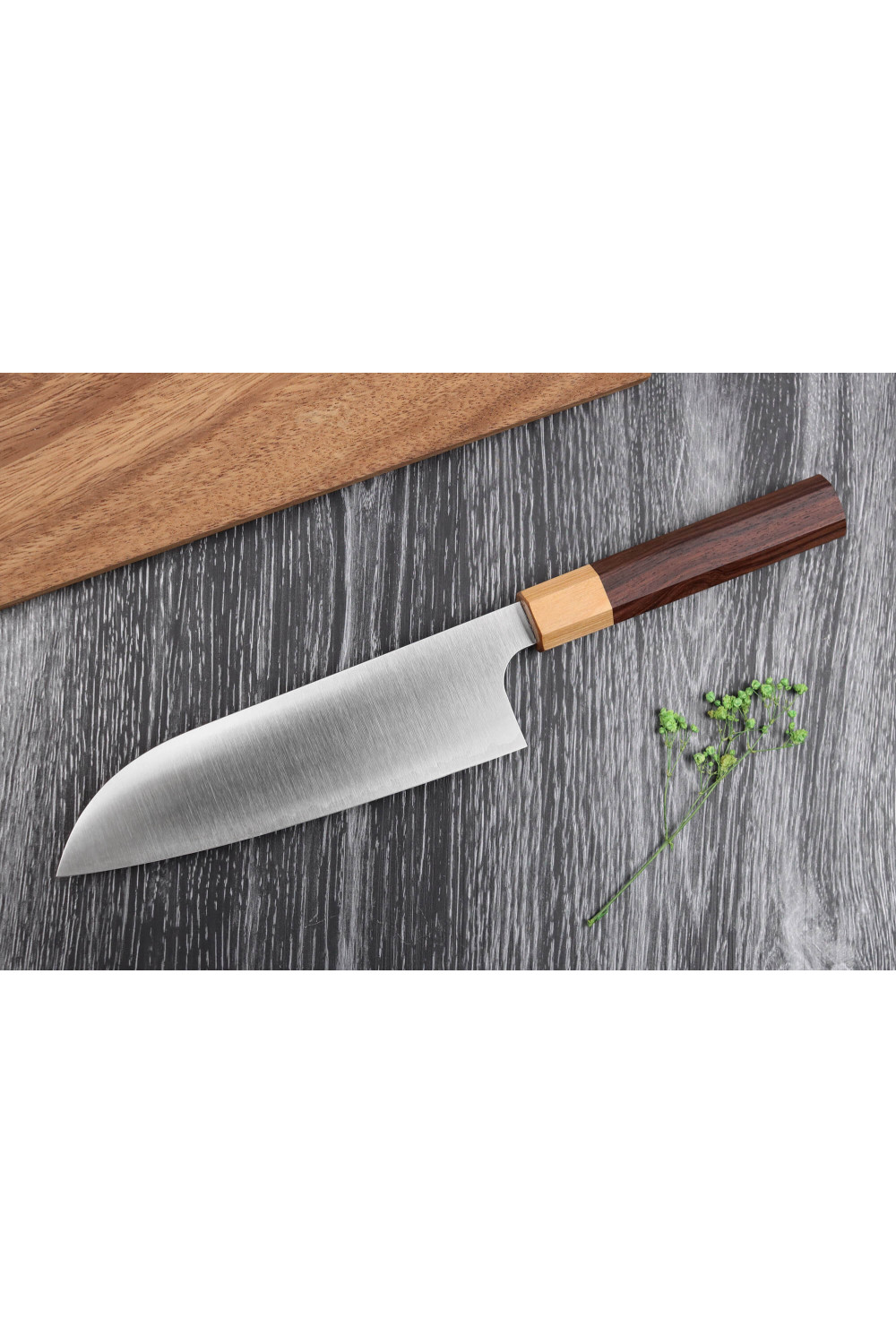
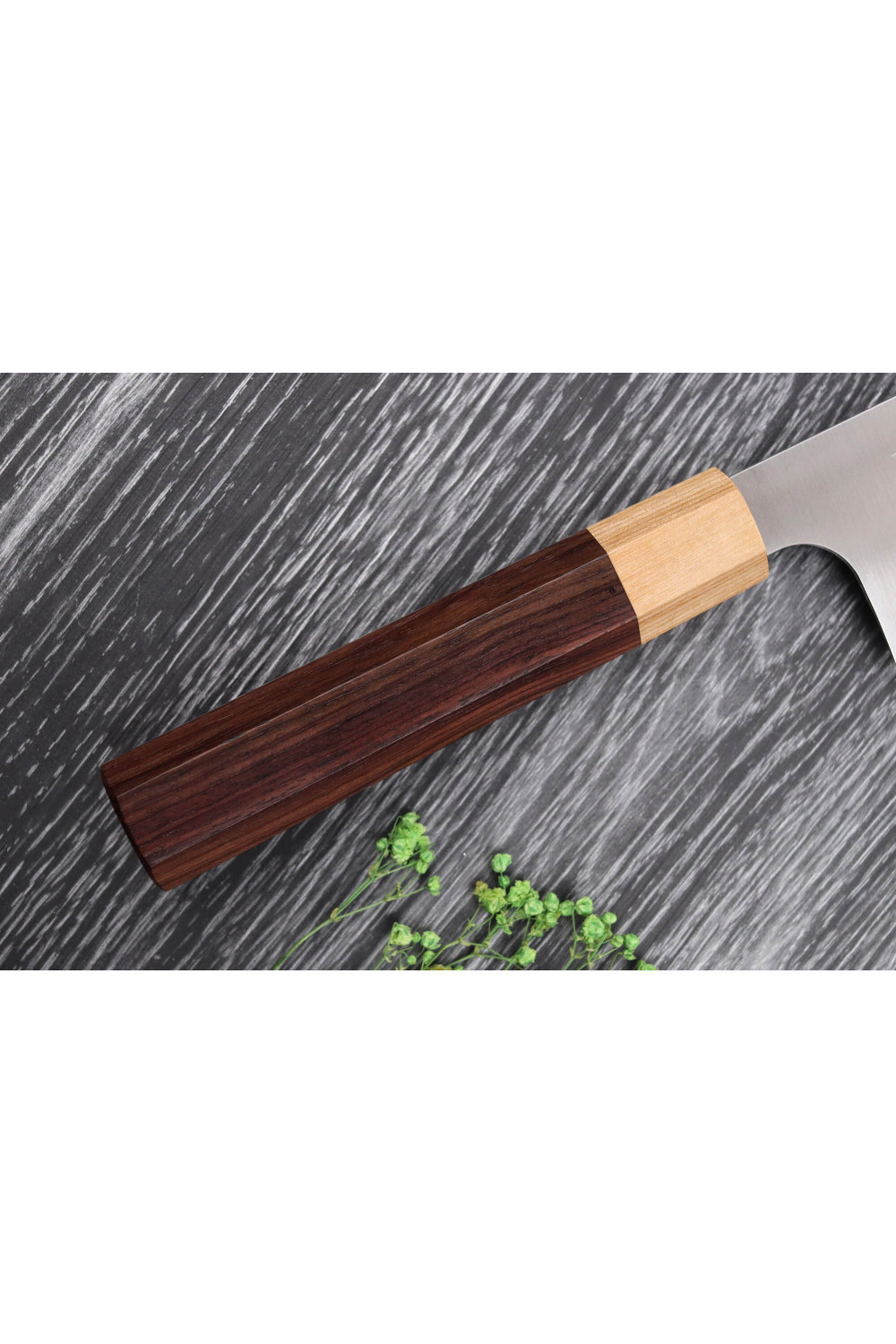
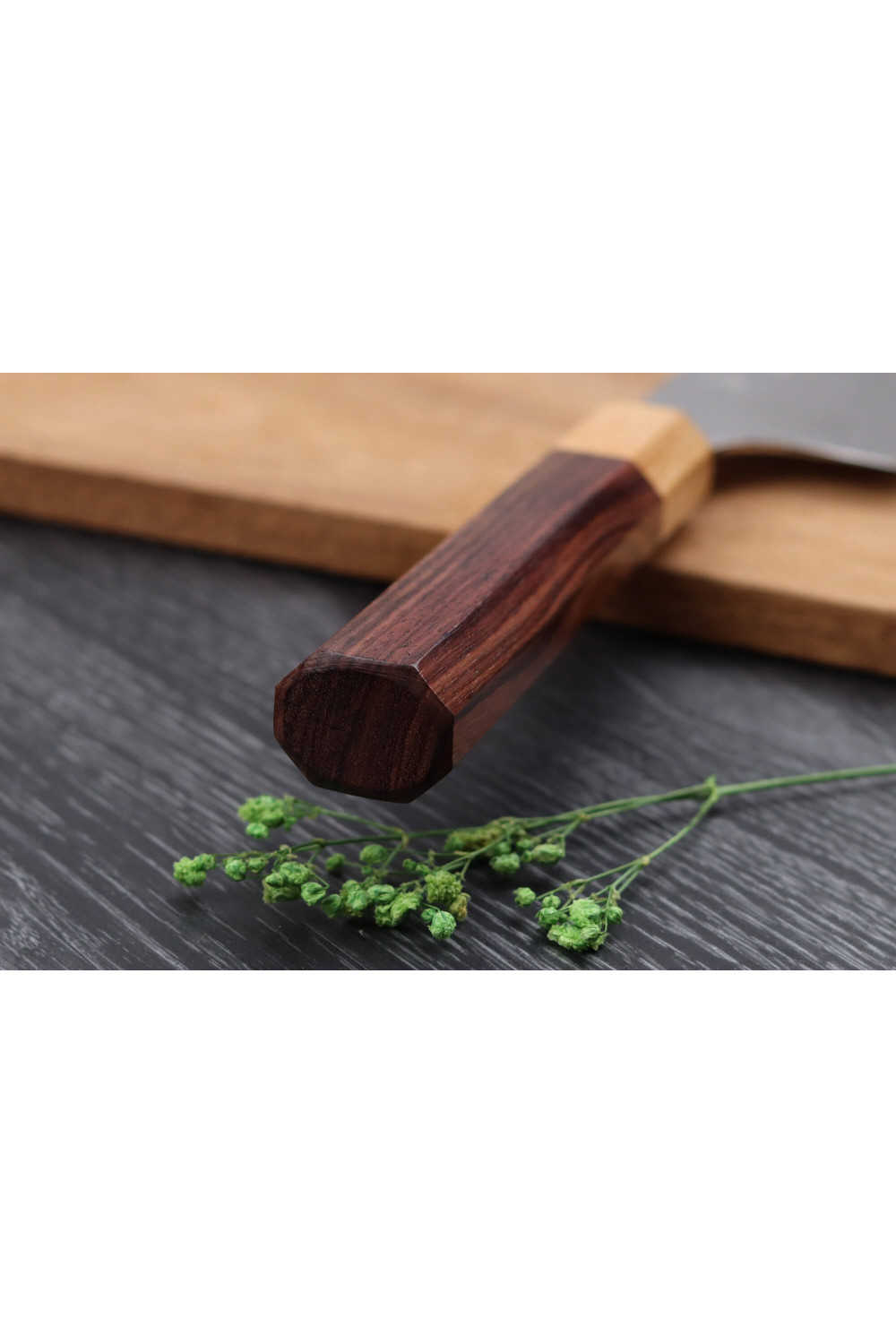
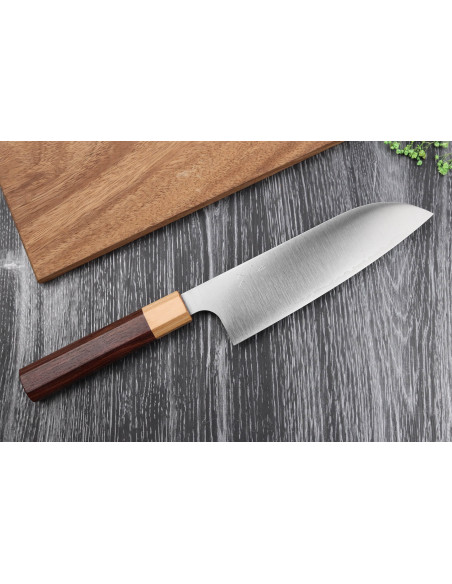
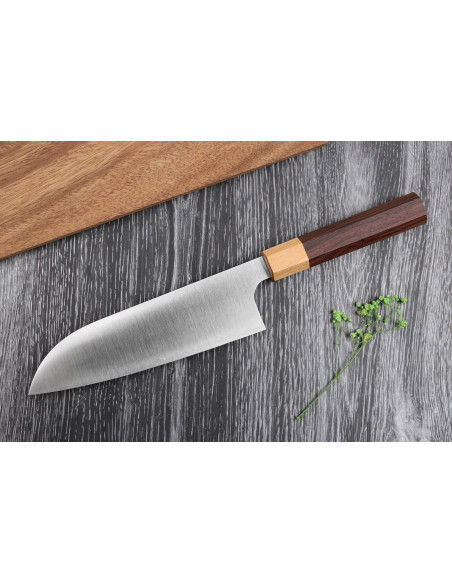
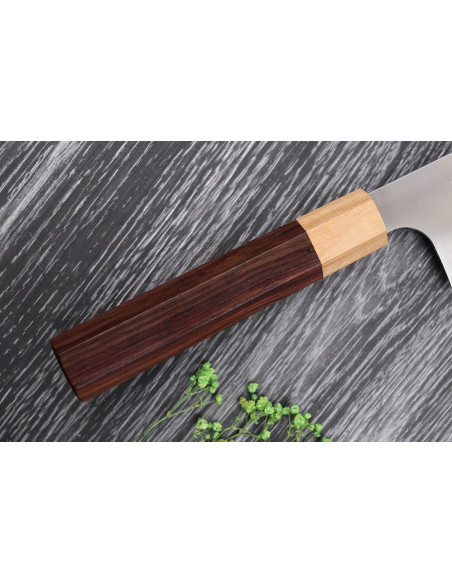
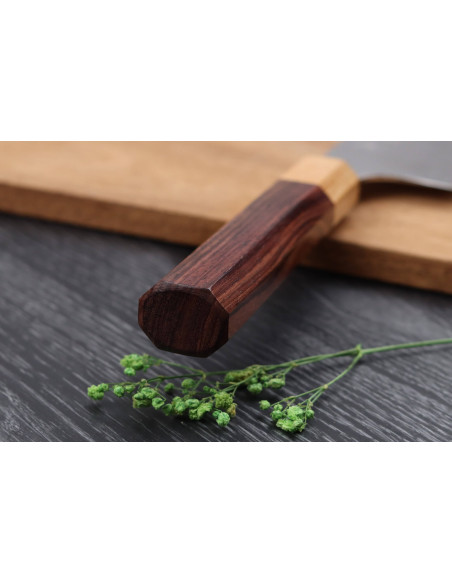
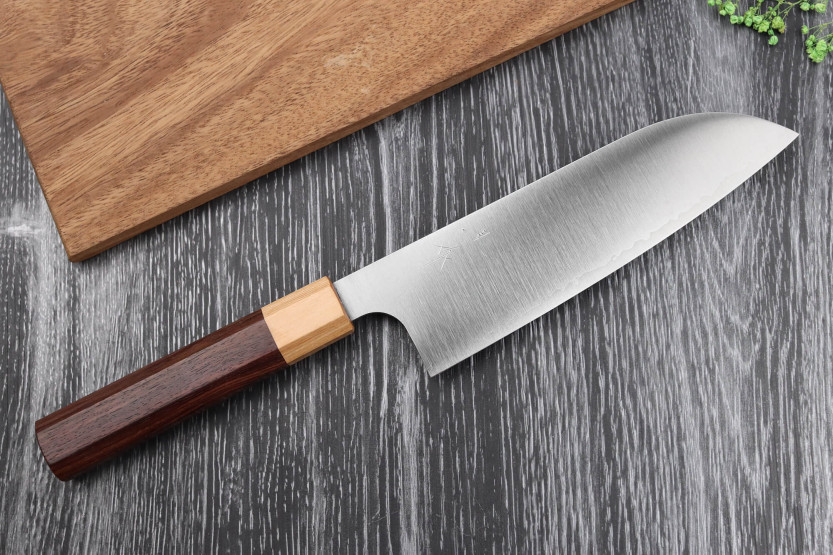
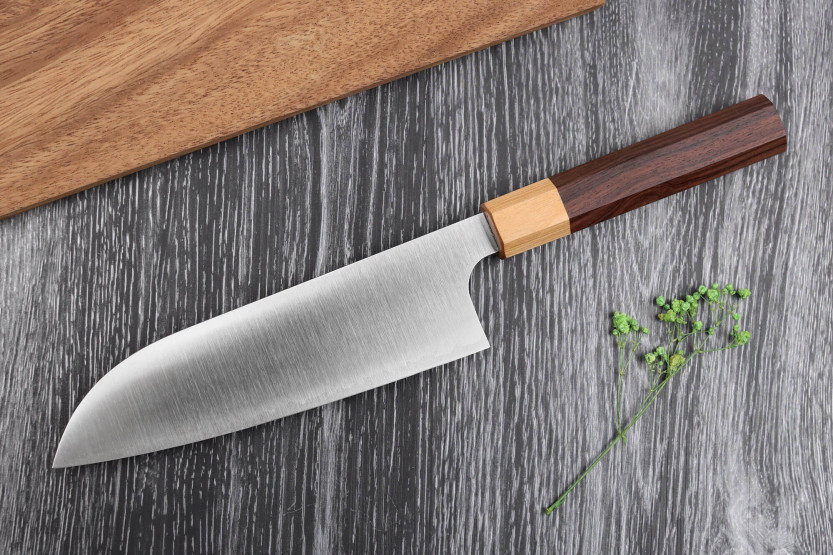
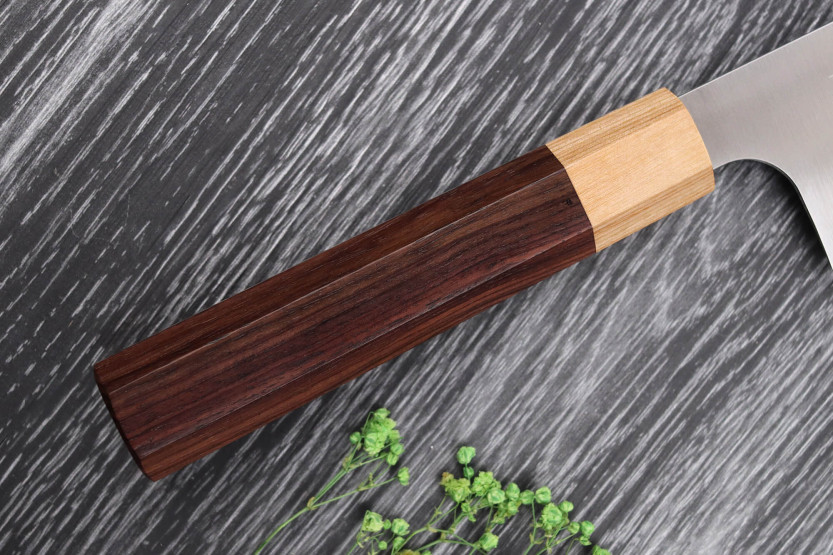
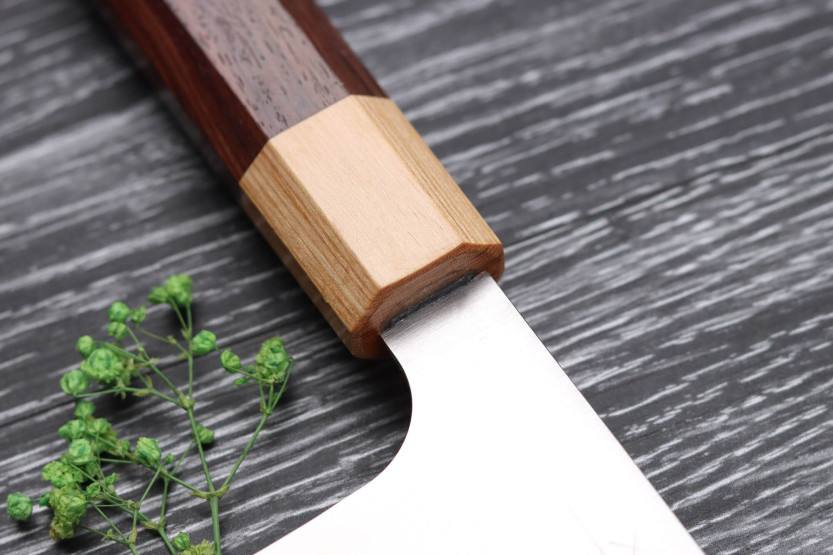
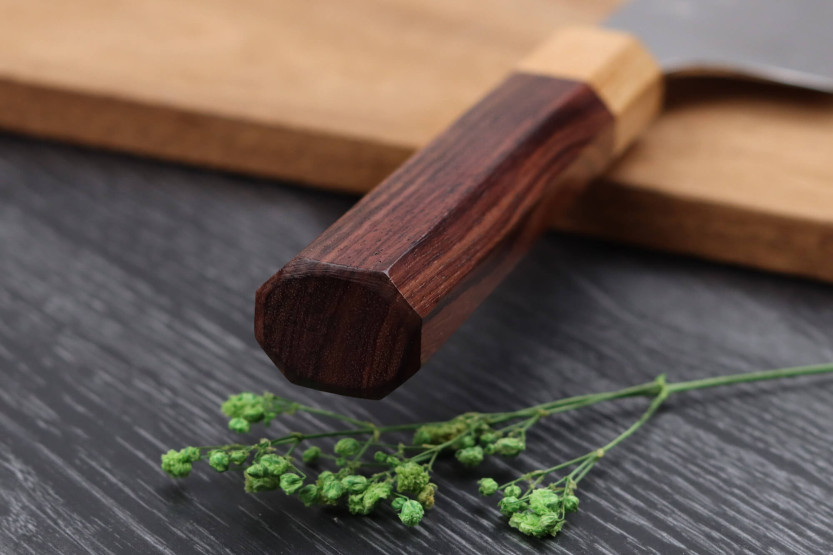
The handle is made of rosewood, an attractive, warm-toned, veined wood. It is polished for a soft touch, making it even more pleasant to use. Octagonal in shape, it sits perfectly in the palm of your hand for long-lasting ease of use (for right- and left-handed users). A Pakkawood bolster links the blade to the handle. This is an antibacterial composite material combining laminated wood and resin, all heat-compressed. This material is appreciated in professional kitchens for its thermal and mechanical resistance.
Finally, a wood paste fills the gap between blade and handle. This makes the handle watertight, and also prevents waste from getting inside during cutting.
Model:
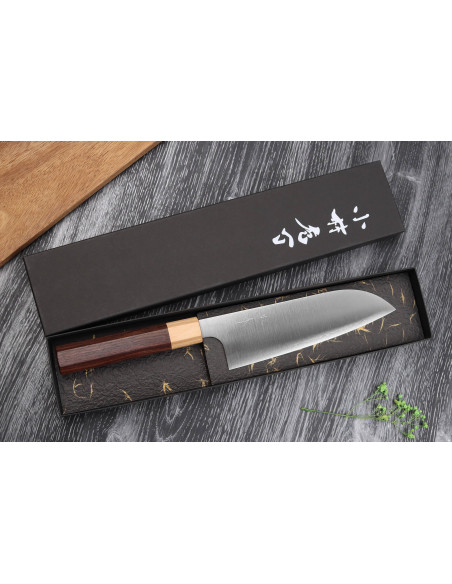
This 17cmsantoku knife is an asset in the kitchen, enabling you to cut all kinds of food. It's a kind of all-purpose knife with a typically Japanese shape! With it, you can chop, mince or minced meat, vegetables or fresh herbs. In use, it resembles a chef's knife, but note that its blade is slightly more curved than that of the latter, making it particularly pleasant for chopping. This creates a natural rocking motion, which facilitates the action.
Learn more about blacksmithing:
Japanese knives enjoy an excellent international reputation. They equip the best chefs, from the home to the most fashionable restaurants.
All Kei Kobayashi kitchen knives are handcrafted by the young blacksmith of the same name, who was first known as a talented knife sharpener. In fact, it was after many years of sharpening and finishing other blacksmiths' kitchen knives that Kobayashi San decided to create his own lines of knives. Each of his knives combines formidable efficiency with a design rarely seen before. The whole is very sober, but highly efficient, so watch your fingers!
Knife care :
To care for your knife, wash it by hand to maintain its appearance and efficiency over the long term (don't put it in the dishwasher or soak it in the sink). You can then wipe it with a soft cloth and store it in a dry place. It should not be left in contact with moisture for any length of time.
A wide selection of Japanese craft knives awaits you on our site!




 By buying this product you can collect up to