The kiritsuke chef knife: a versatile essential for your preparations!
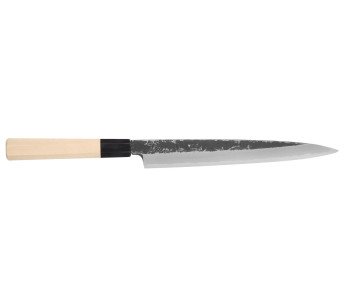
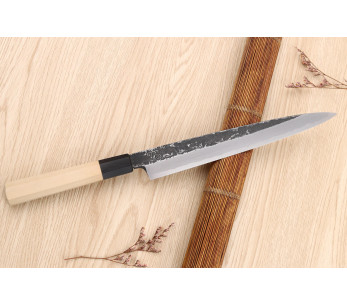
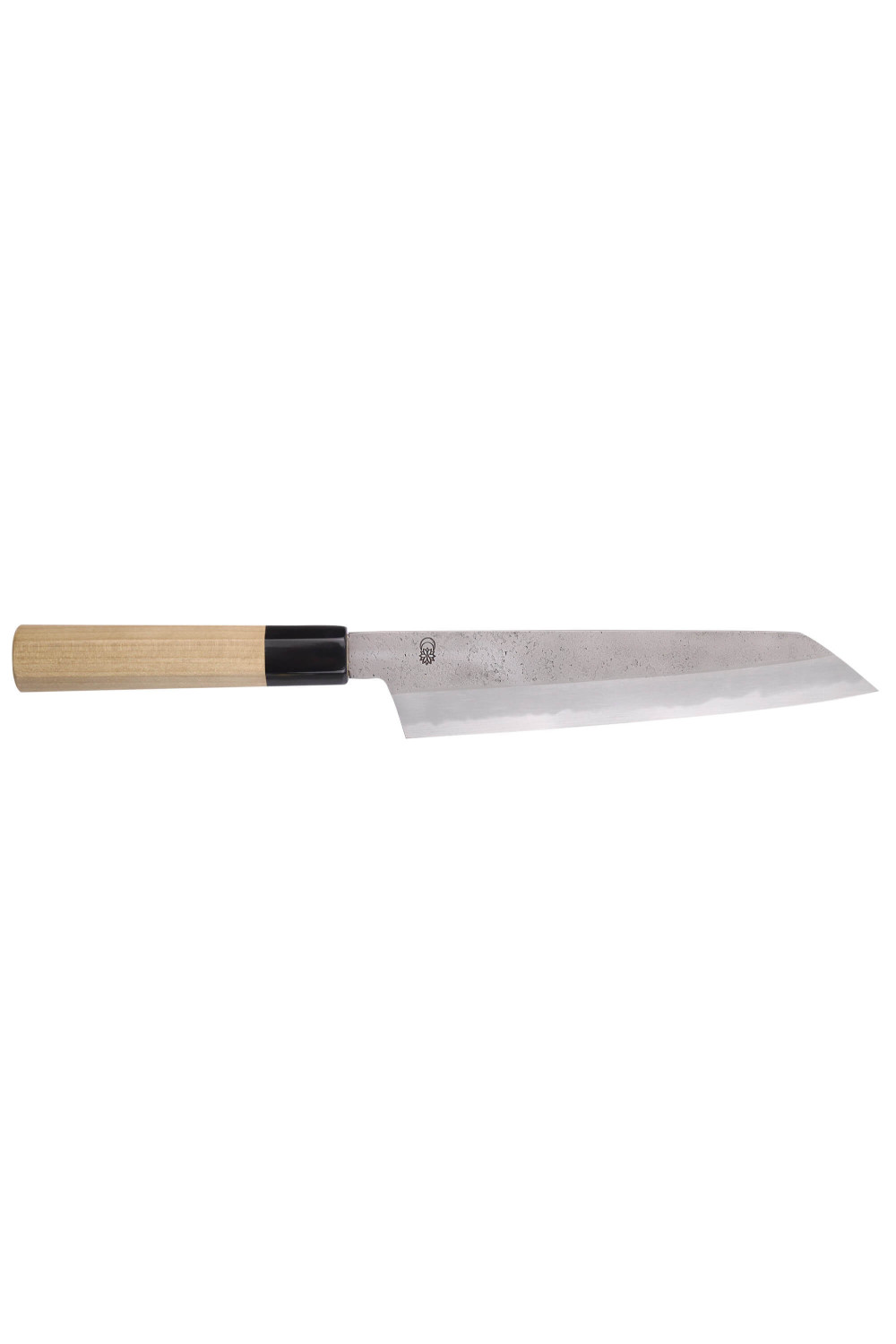
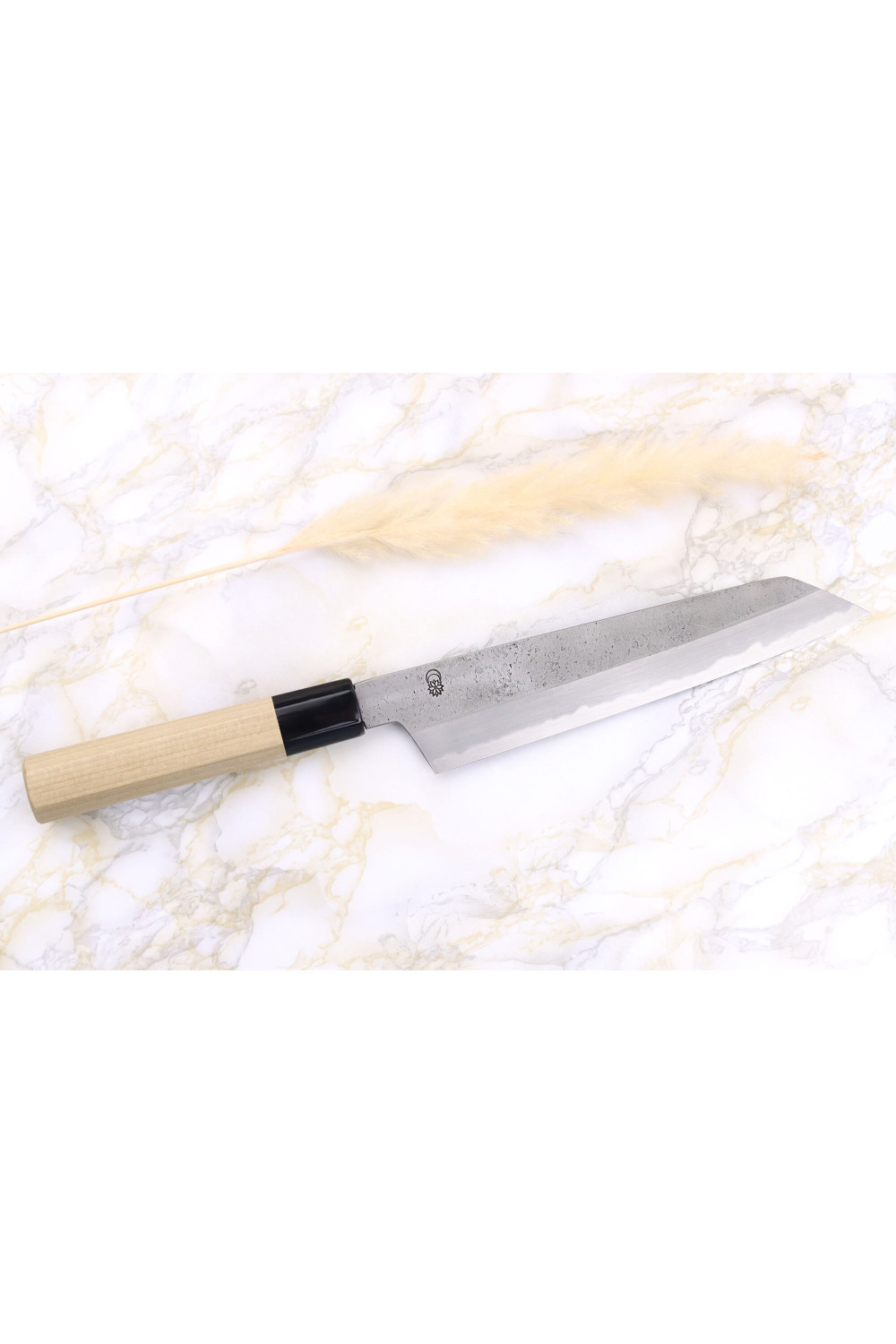
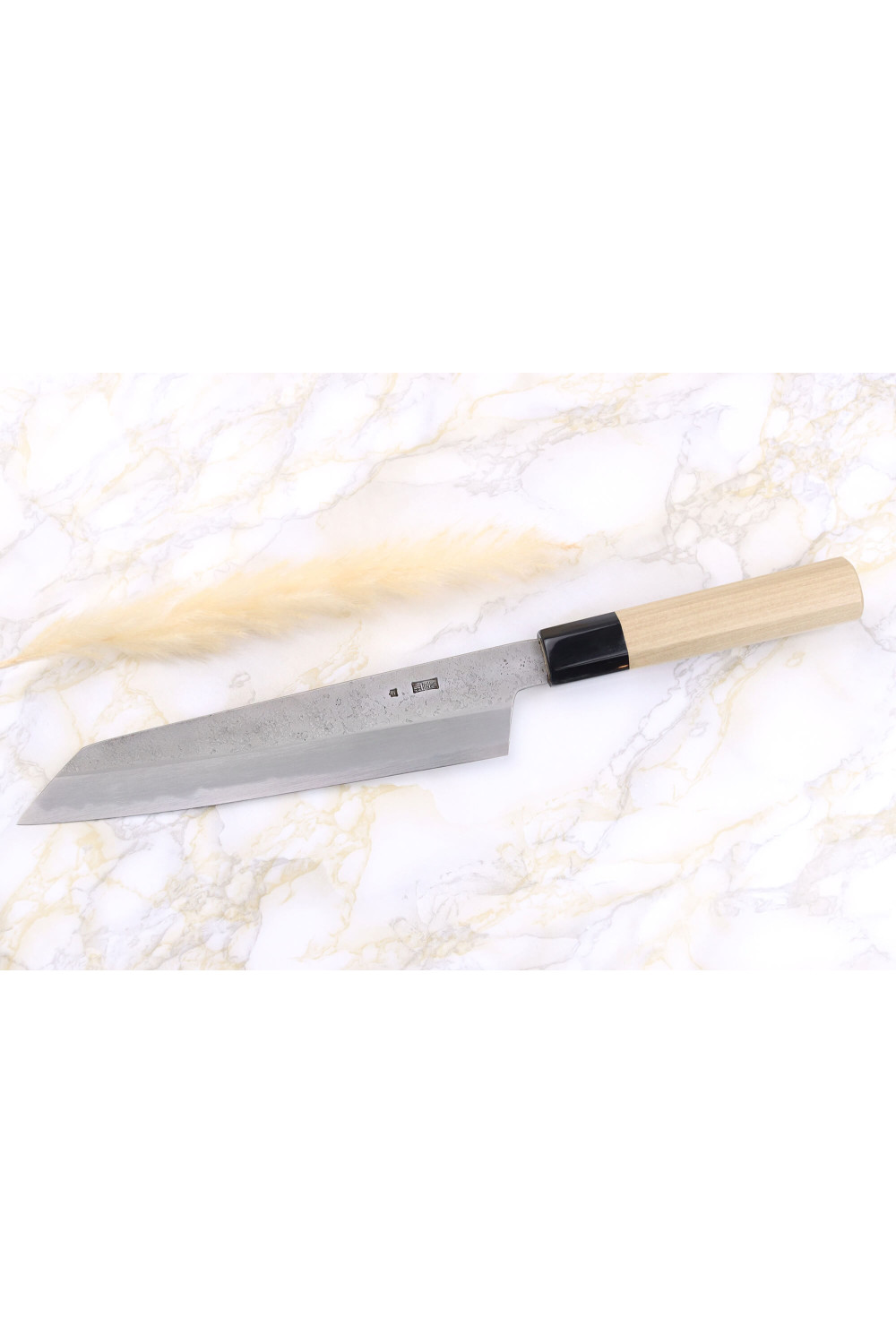
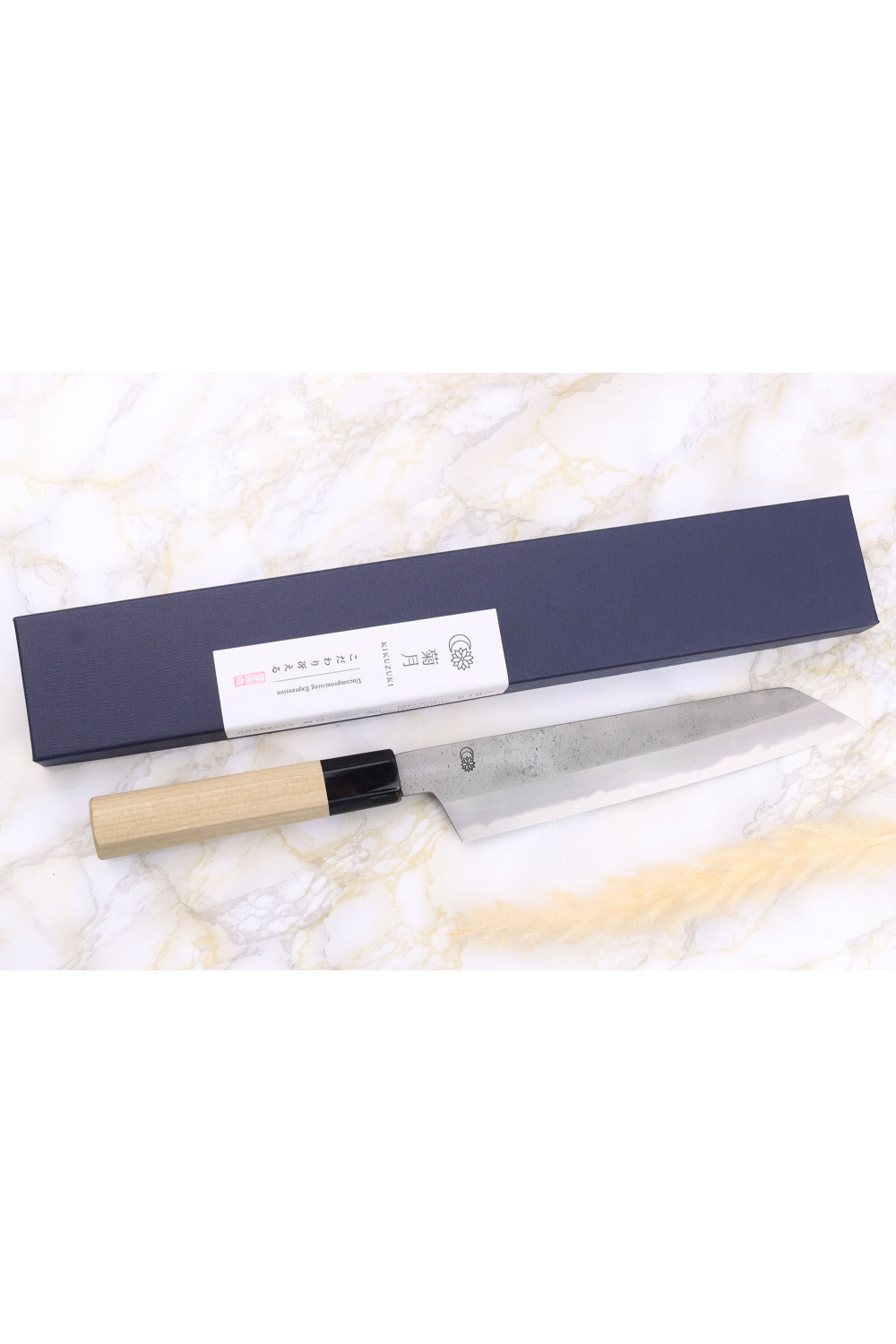
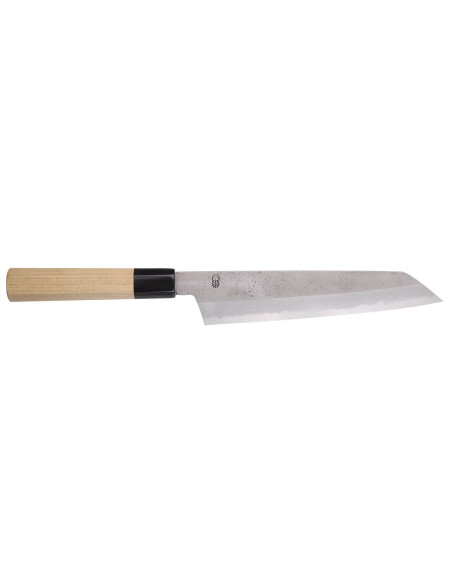
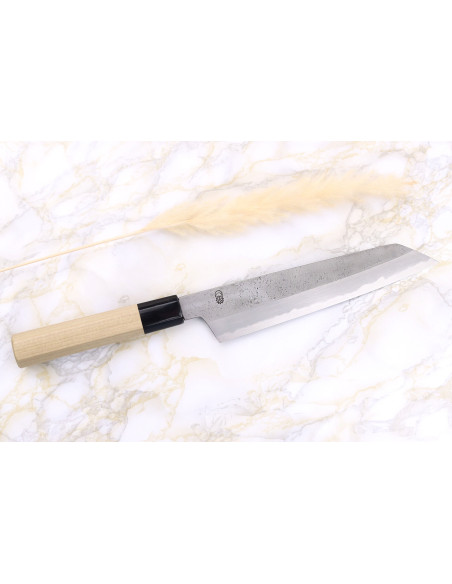
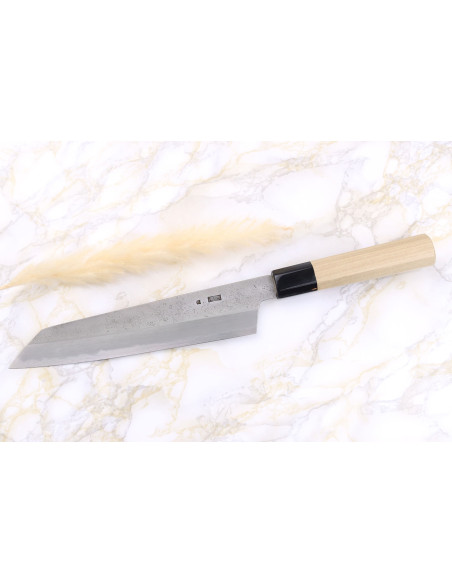
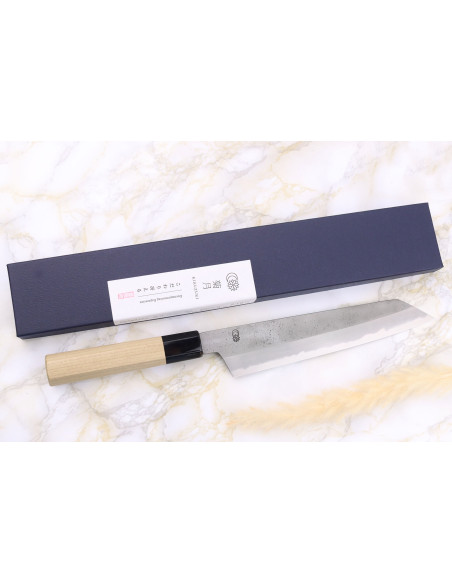
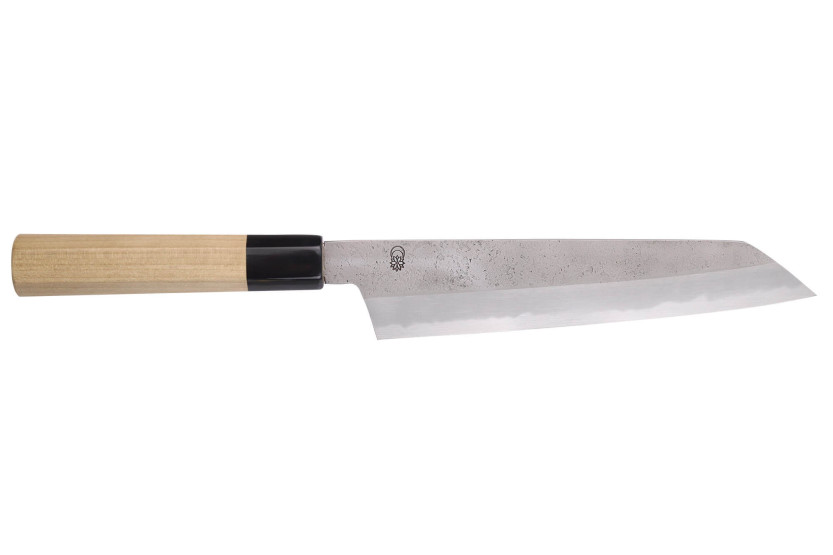
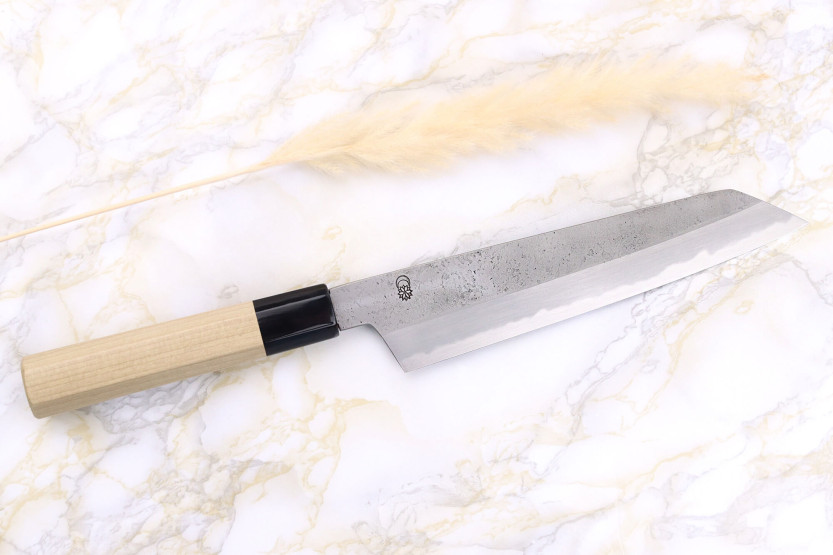
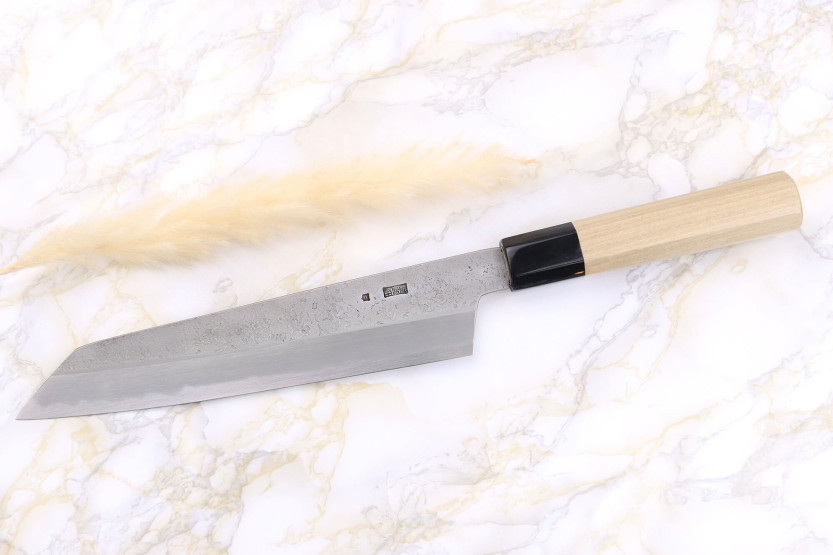
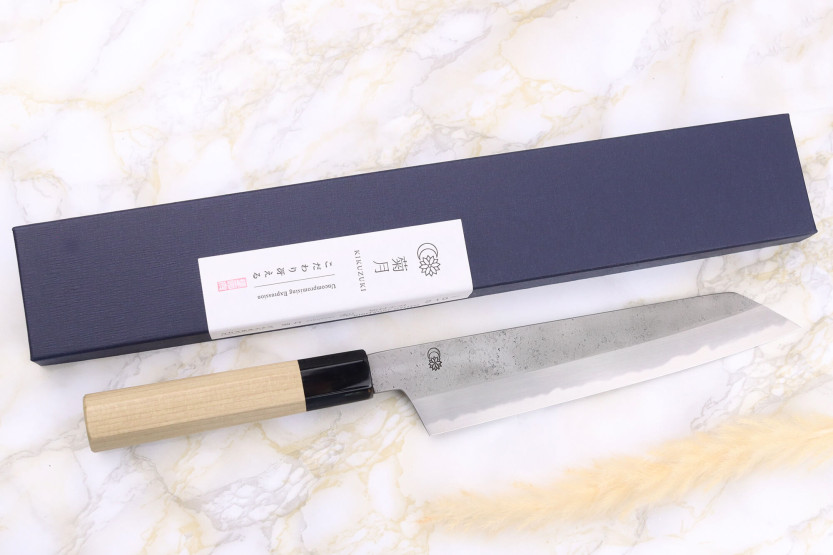
The Sakai Kikumori Kikuzuki Rin 21cm kiritsuke knife is an excellent ally when it comes to varying the cuts you make in the kitchen! Its long, sharp blade lets you slice vegetables, mince boneless meat or chop aromatic herbs with precision. At 21cm, it's perfectly suited to handling bulky pieces, and its kiritsuke shape, inspired by Japanese swords, brings a beautiful touch of tradition to your worktop!
As with any Japanese knife, it's important to use it on suitable foods. Avoid foods that are too hard, such as bones, squash or frozen products, to preserve the cutting edge intact.
A Japanese knife made from high-quality materials
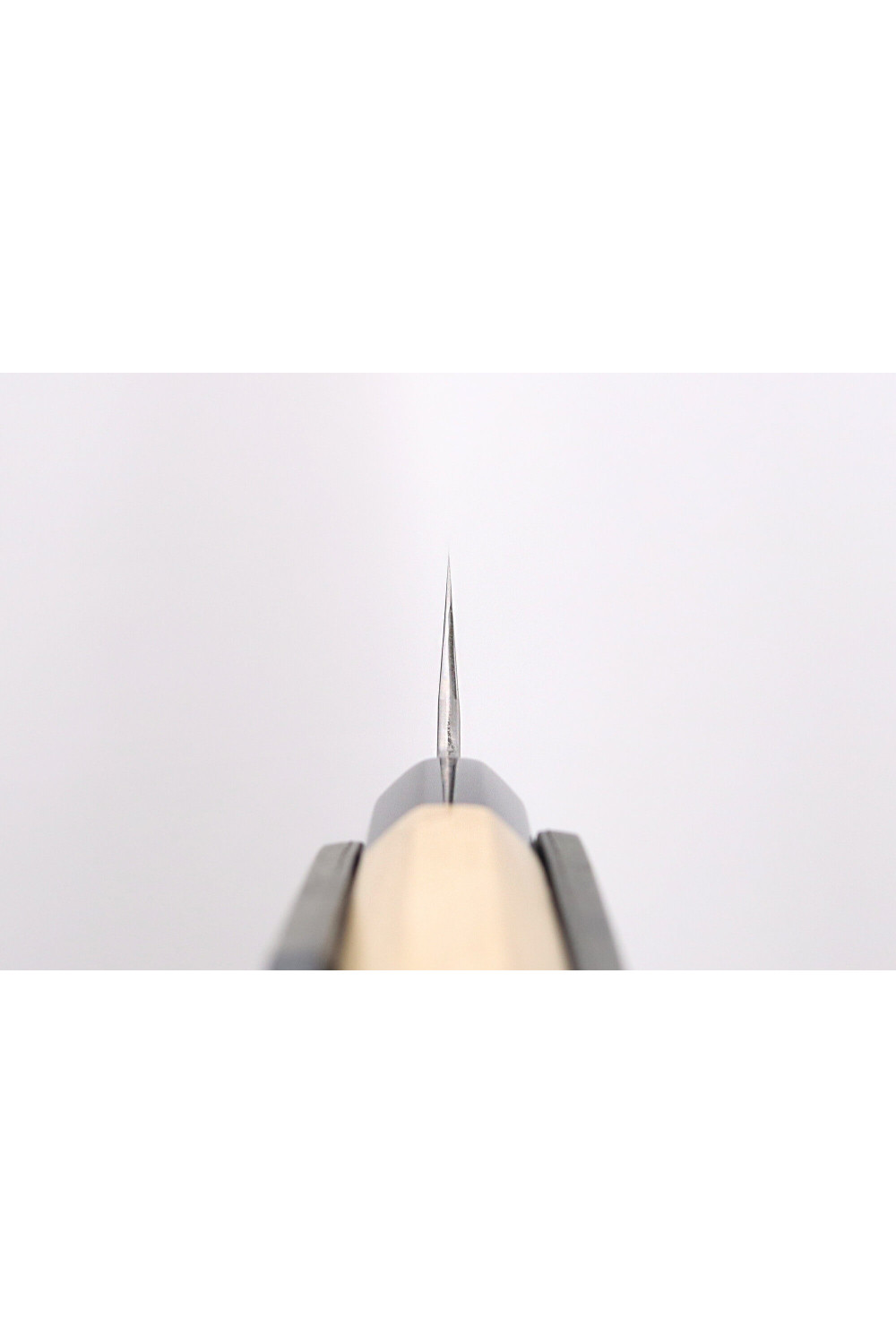
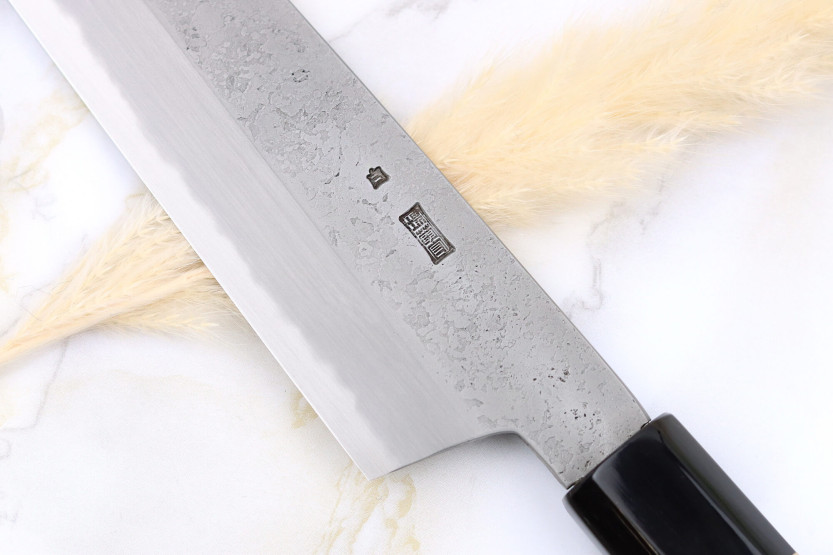
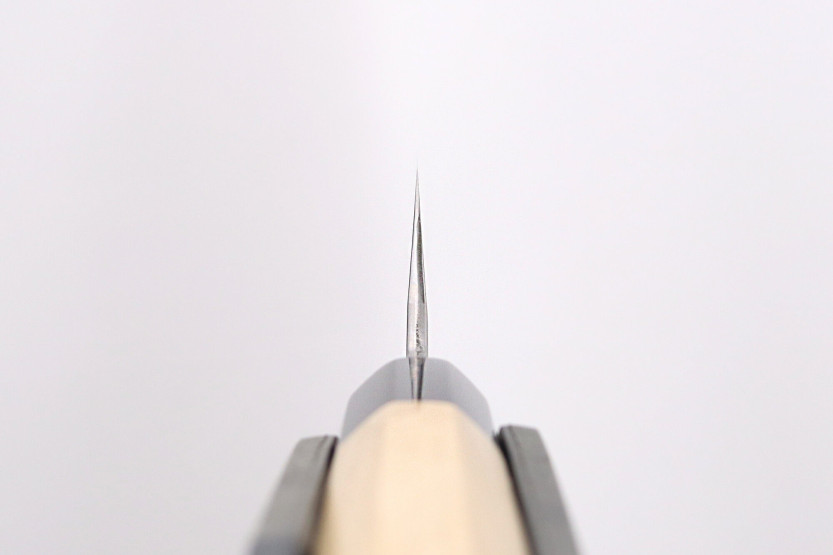
This kiritsuke chef's knife is forged using the San Mai technique, a traditional Japanese method of creating a blade composed of three layers. The core of the blade is made of hard steel, while two layers of softer steel wrap around each side to provide a good balance between rigidity and flexibility.
The central core is made of Shirogami 2 (or White Steel 2), a highly prized Japanese steel supplied by Hitachi steelworks. Appreciated for its purity and performance, Shirogami 2 appeals to cooks committed to tradition. Its composition includes around 1.2% carbon and a high iron content, enabling it to achieve a hardness of around 61HRC on the Rockwell scale. This makes it stiffer, easier to sharpen with precision, and capable of retaining its edge for a long time.
The purity of this steel has another advantage: it guarantees a homogeneous structure that reinforces the blade's solidity and limits the risk of chipping. Finally, the outer layer of softer steel protects the core and completes the San Maï construction.
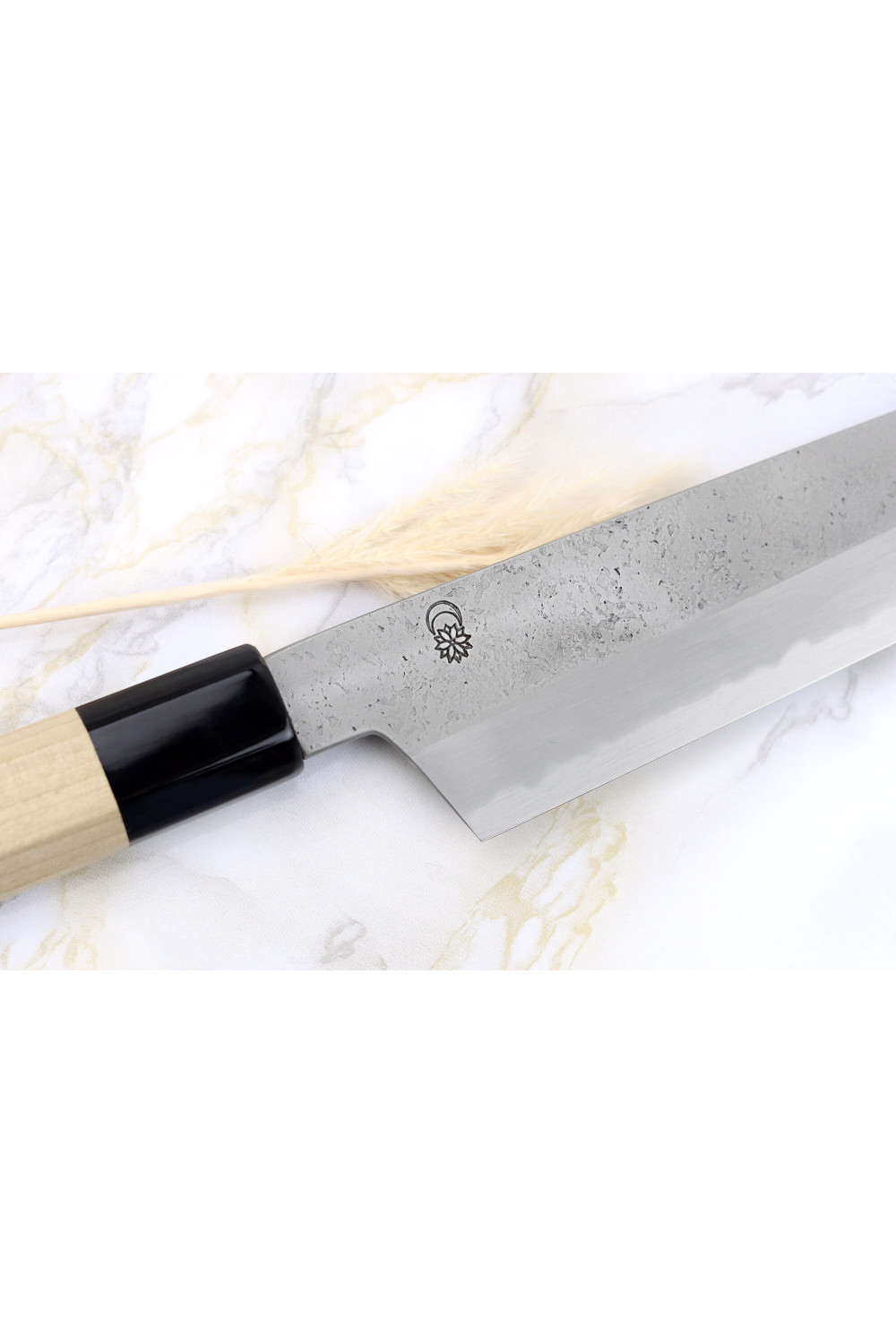
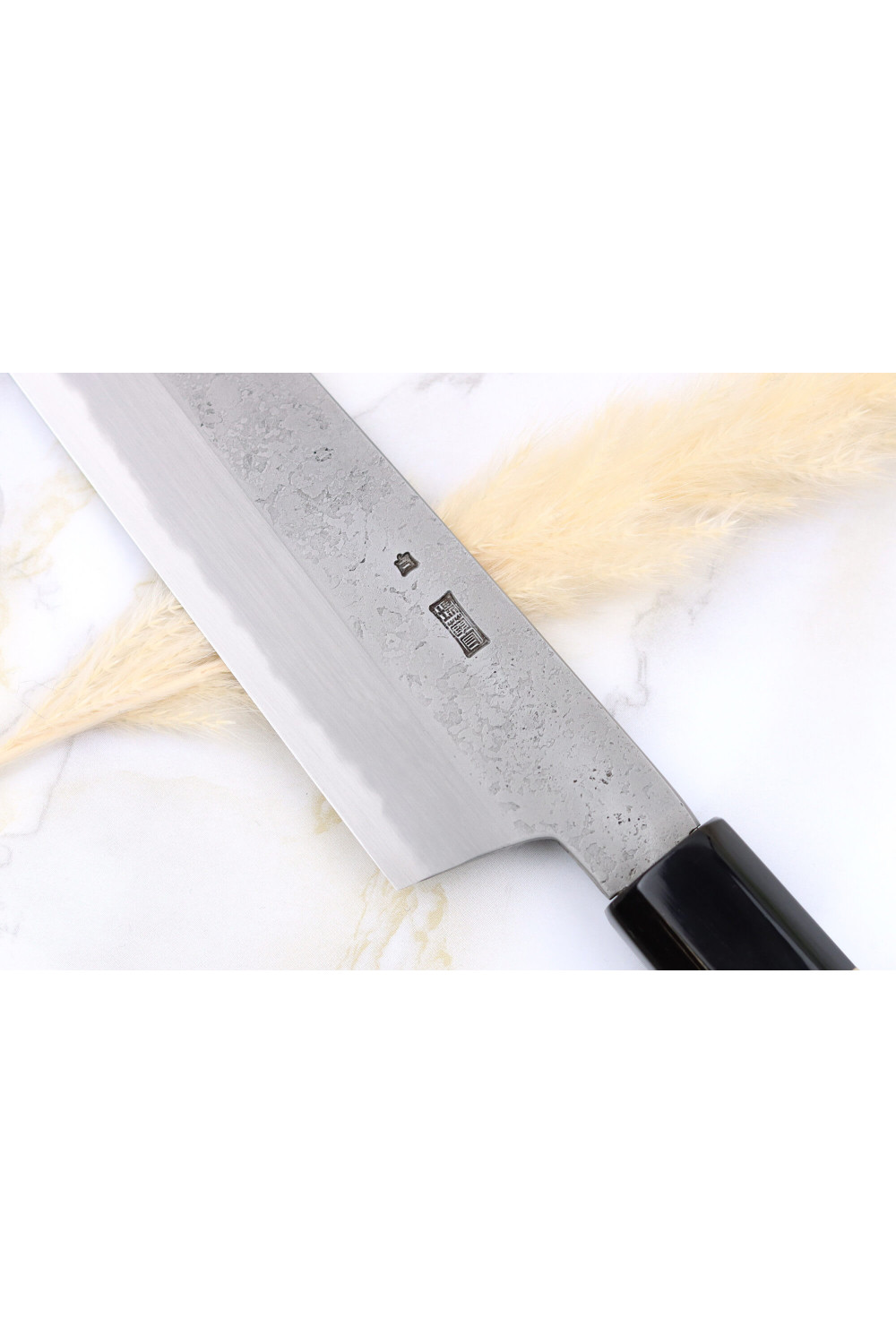
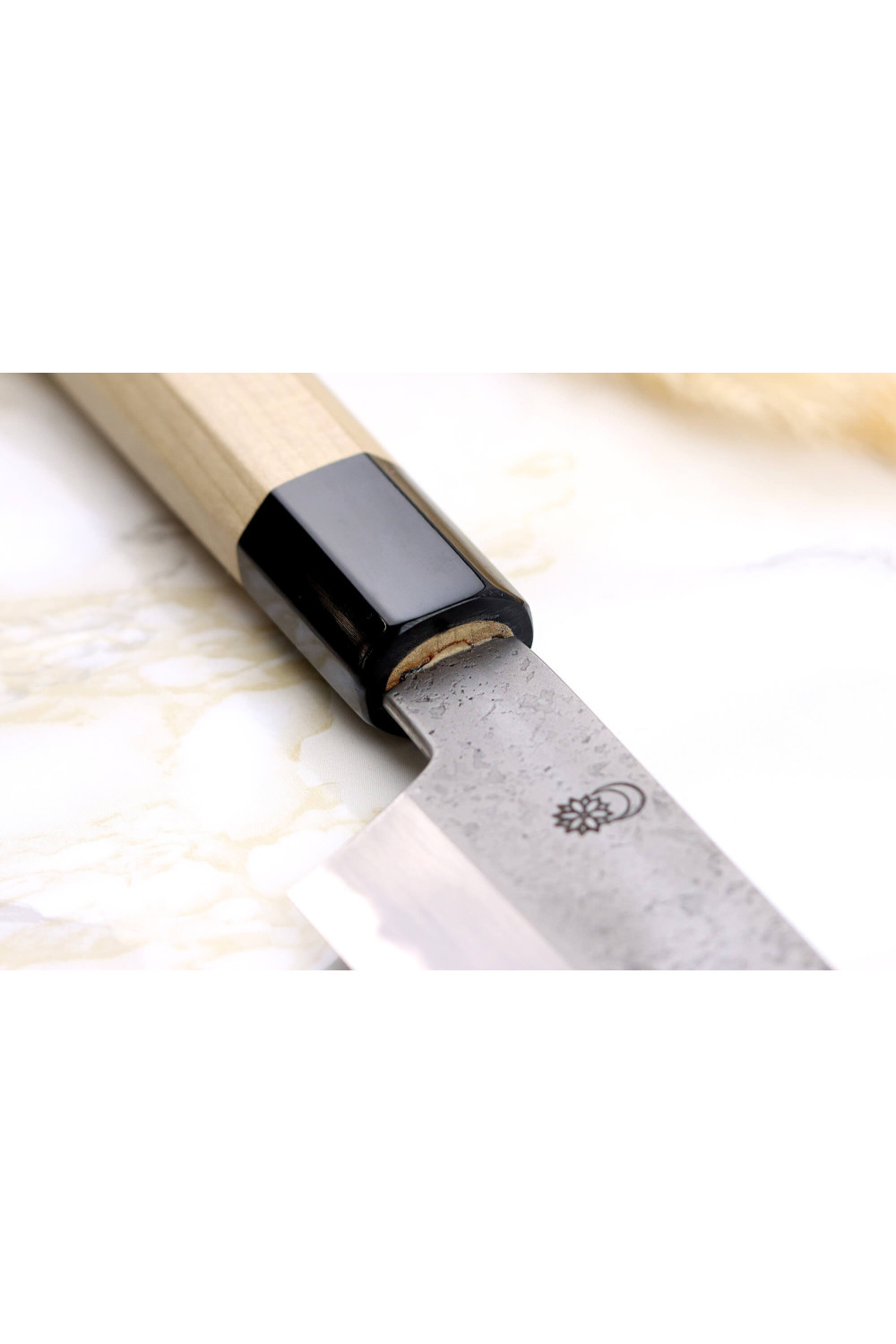
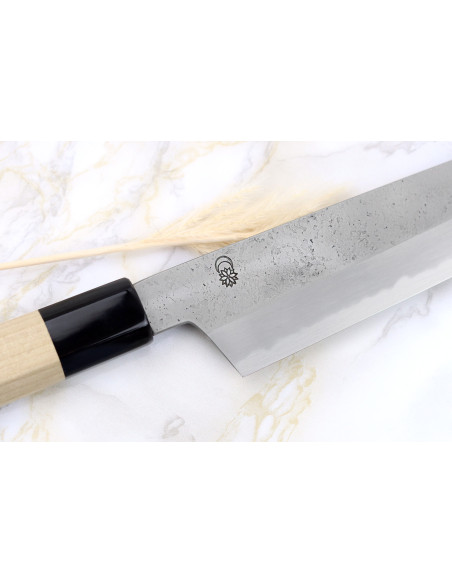
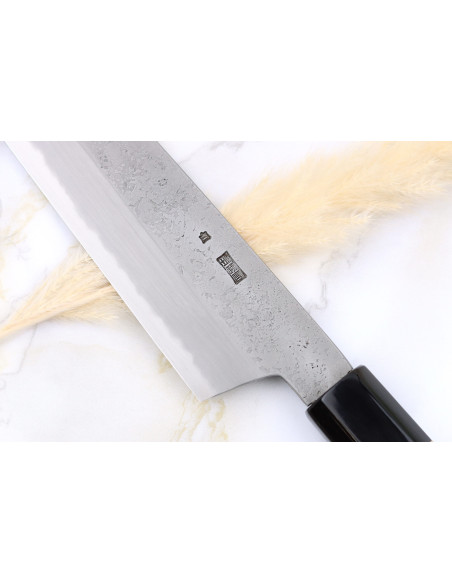
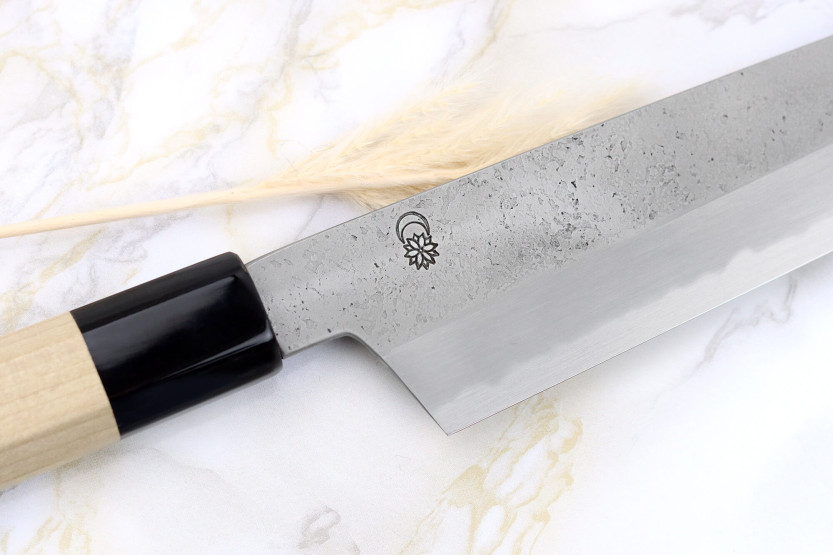
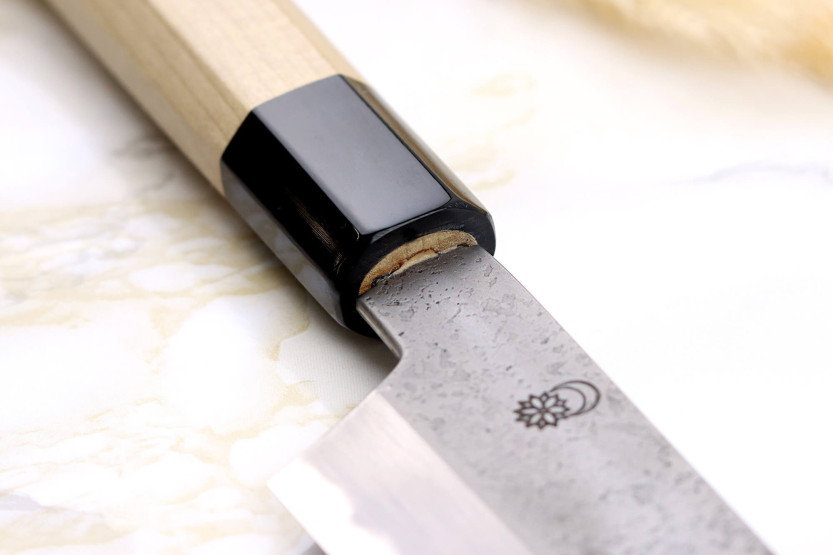
Aesthetically, the blade is distinguished by its Nashiji finish, a traditional Japanese technique that gives it a rough, matt, textured appearance. This rustic rendering lends it a great deal of charm and authenticity!
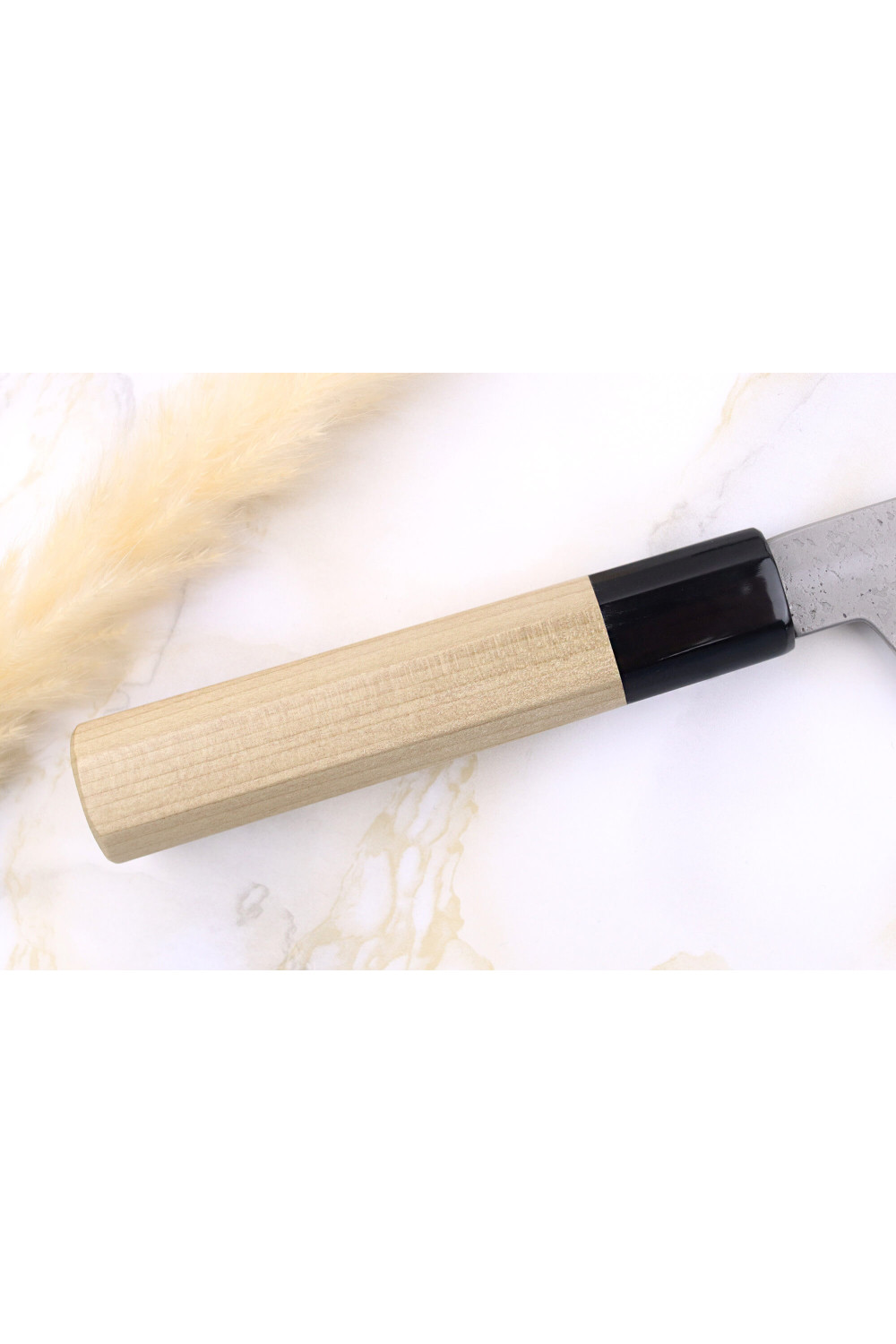
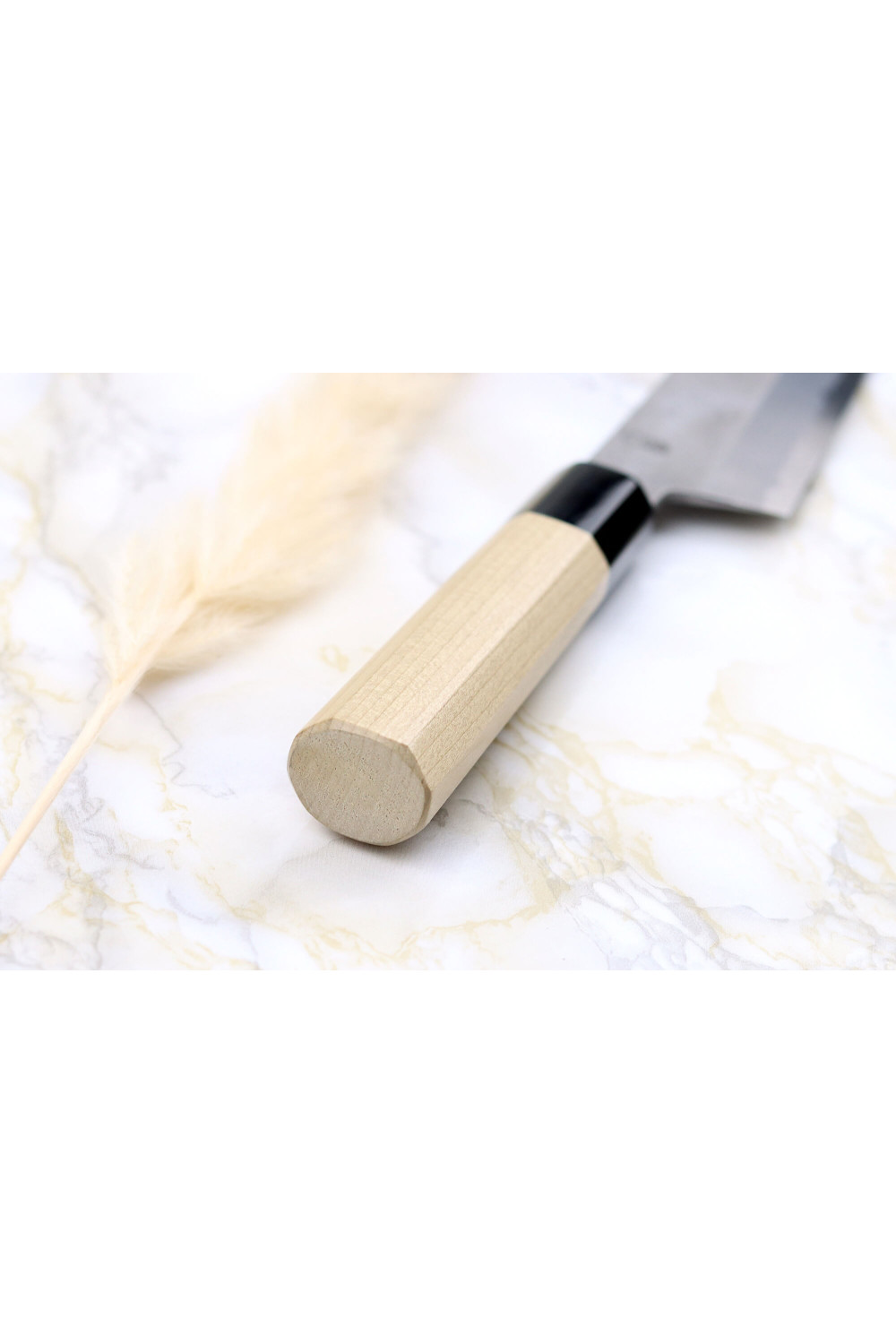
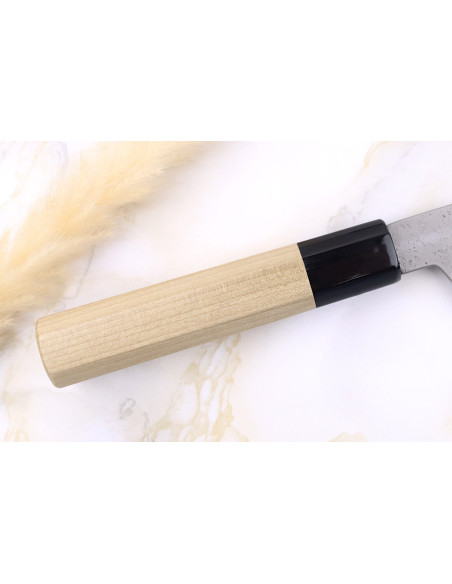
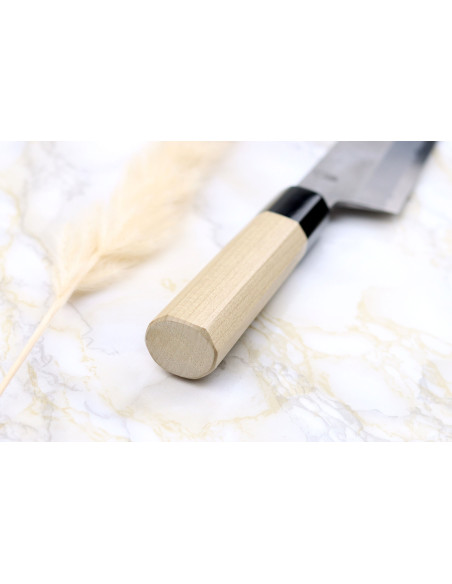
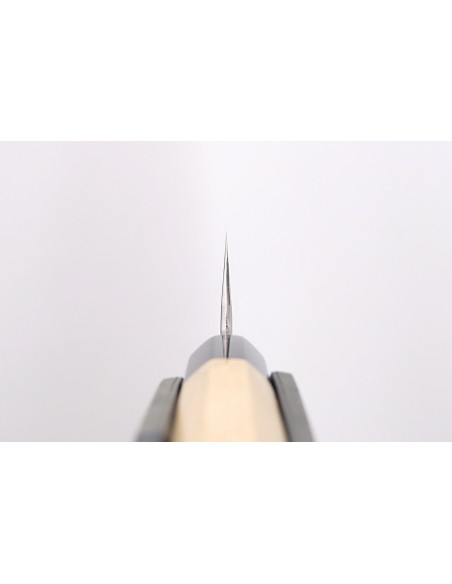
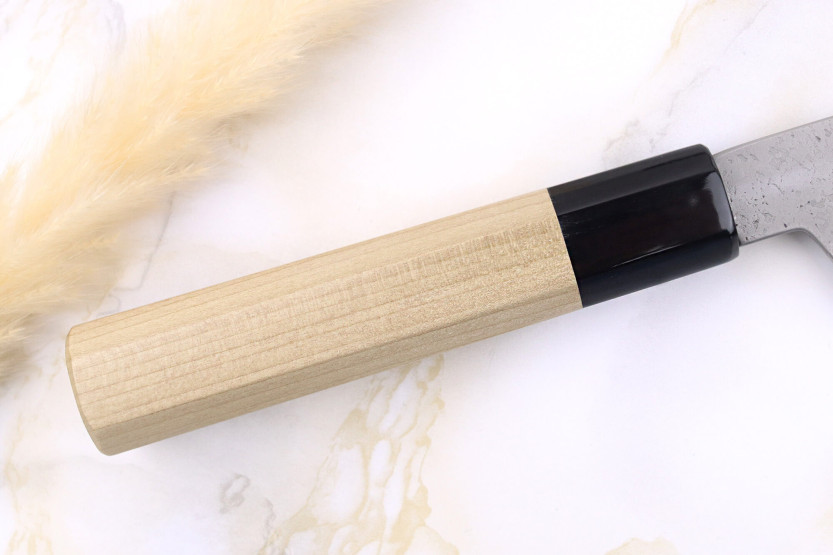
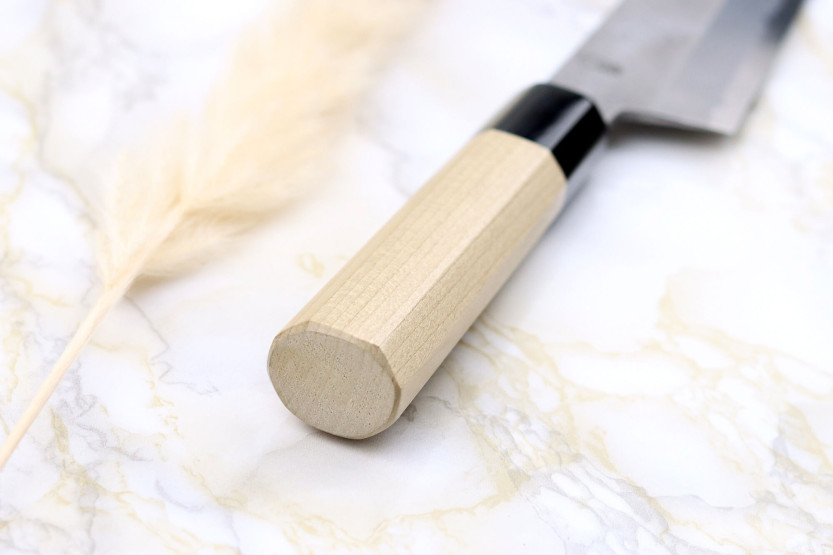
The handle of your Japanese kitchen knife is made of light magnolia, a light wood that's pleasant to the touch and highly appreciated for its natural resistance to humidity. Its octagonal shape makes it comfortable for both right- and left-handed users. This type of handle perfectly matches the sober, traditional style of your gyuto knife.
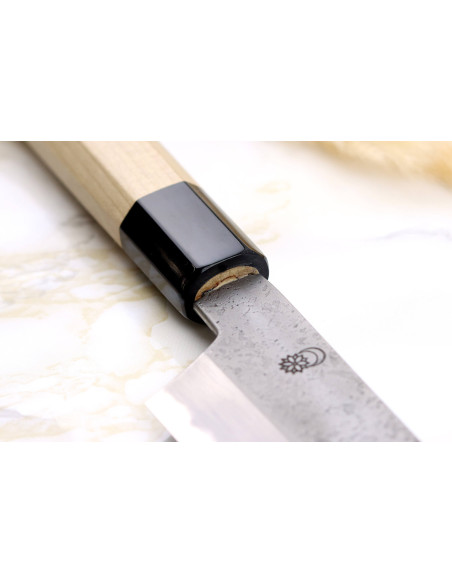
The bolster is made of black buffalo horn. As this is a natural material, each piece may show variations in shade or fine white streaks: an aesthetic detail that makes each Sakai Kikumori knife unique!
The space between the blade and the handle is filled with wood paste, ensuring a perfect seal for greater hygiene and safety in use.
Caring for your carbon kiritsuke knife
As the blade is rich in carbon, it is sensitive to oxidation. To preserve it, we recommend washing your Japanese kitchen knife by hand only, without soaking it and never putting it in the dishwasher. Use a mild soap and a non-abrasive sponge, avoiding over-wetting the wooden handle.
Once cleaned, carefully wipe your Japanese craft knife dry to avoid any traces of moisture before storing. You can store it in a drawer, on a magnetic bar or in a dedicated case.
Even when well cared for, the blade can develop a patina over time. This color change is quite normal: it's the result of acidity in food or ambient humidity. To limit this oxidation, you can oil the blade regularly with a suitable neutral oil.
This Japanese knife comes in an elegant cardboard box, finished in a deep blue.
Craftsmanship at the heart of every blade
The Sakai Kikumori forge, part of Kawamura Hamono and based in Sakai, offers a wide variety of hand-forged Japanese knives. Some are made by the great names in cutlery, others by small local workshops. This mix of approaches enables us to offer affordable, yet carefully-crafted pieces to meet every need!
To design the Kikuzuki Rin range, the brand called on the renowned Yoshikazu Tanaka san, one of Japan's most respected blacksmiths. His expertise has earned him official honors from the Japanese government, and his work on blade tempering is distinguished by rare precision. Thanks to him, blades retain their shape even after repeated sharpening on stone. A true guarantee of reliability and longevity!
Discover the rest of Sakai Kikumori Kikuzuki Rin knives on Knifeleader.eu!




 By buying this product you can collect up to