A precision blade forged to Japanese standards
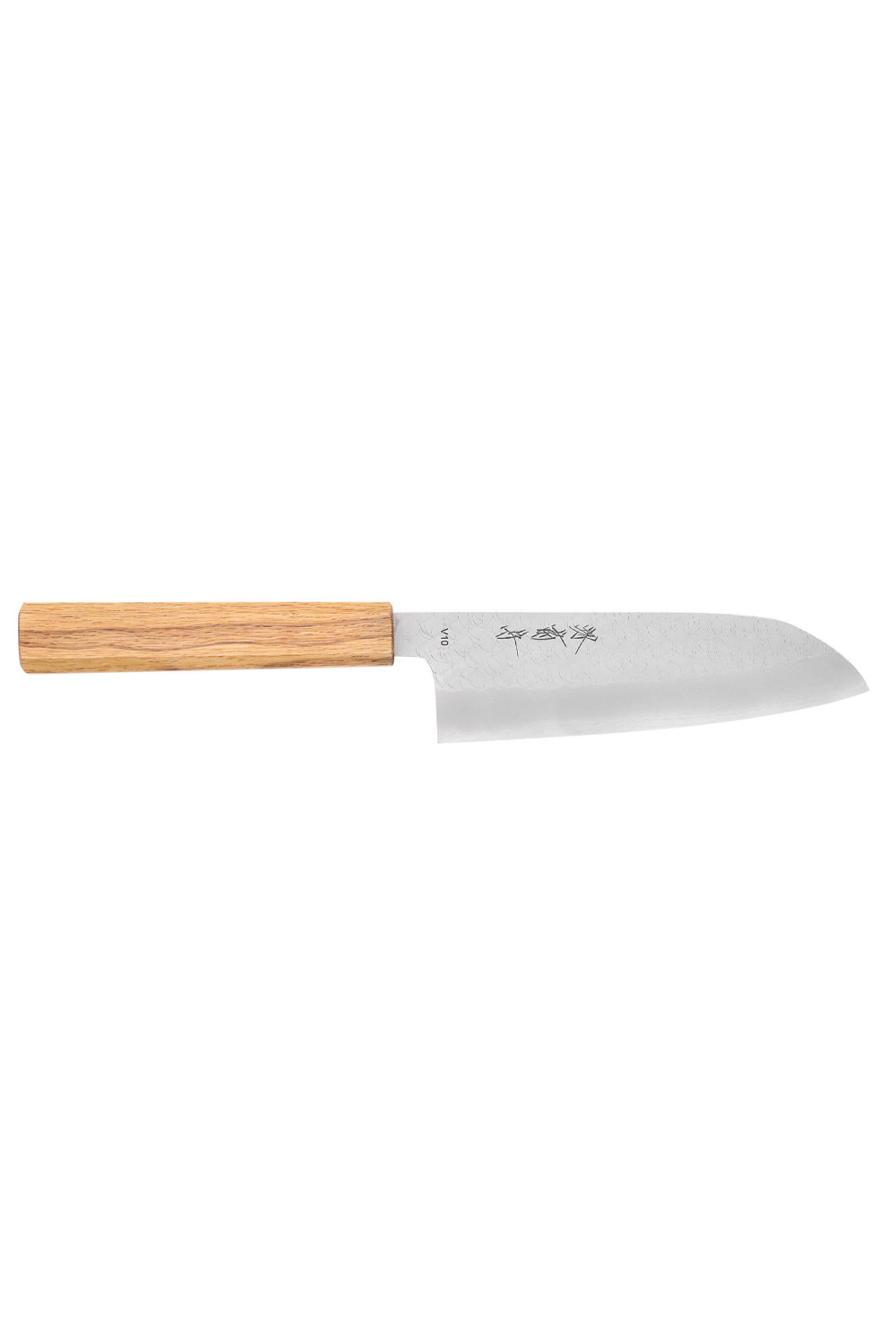
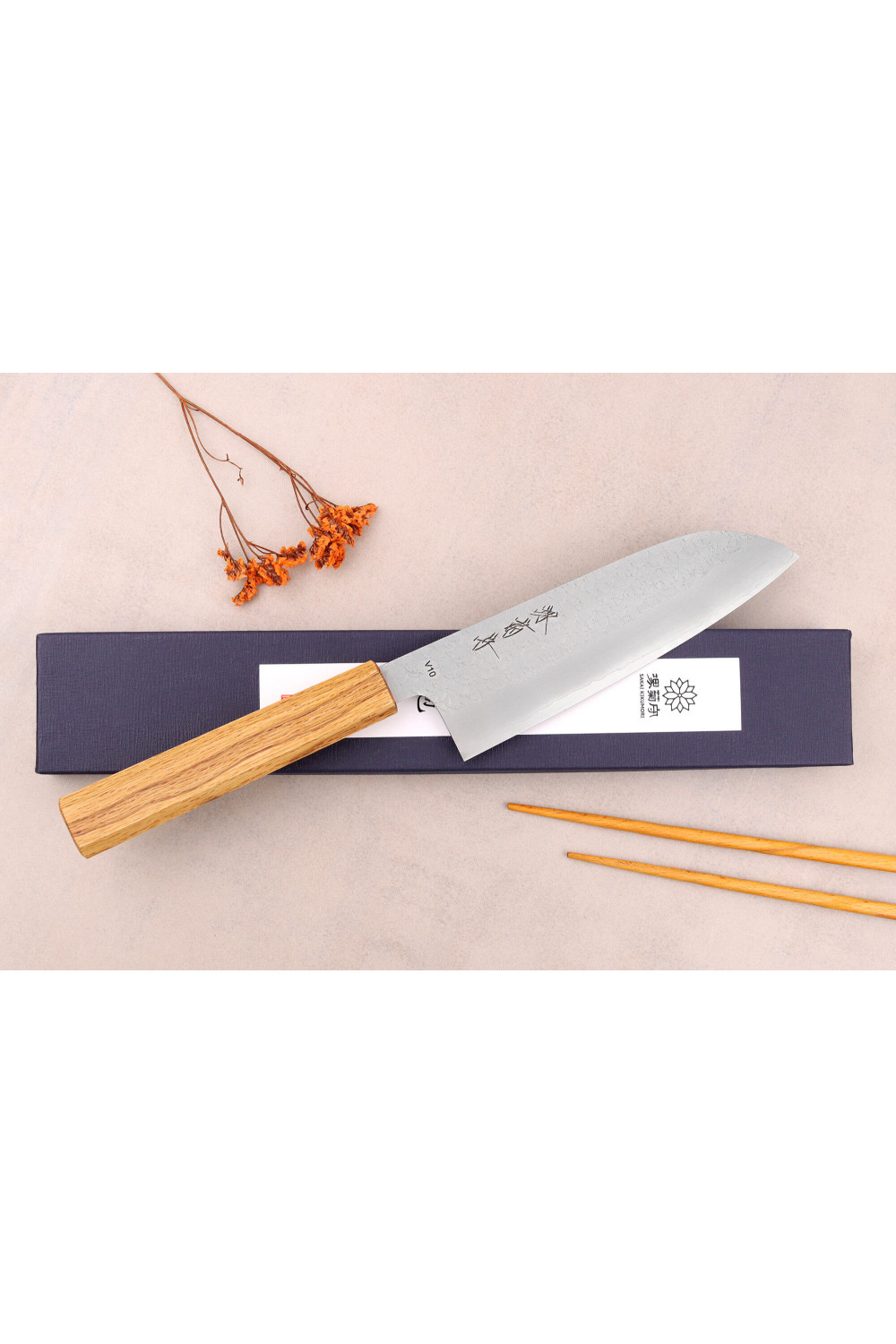
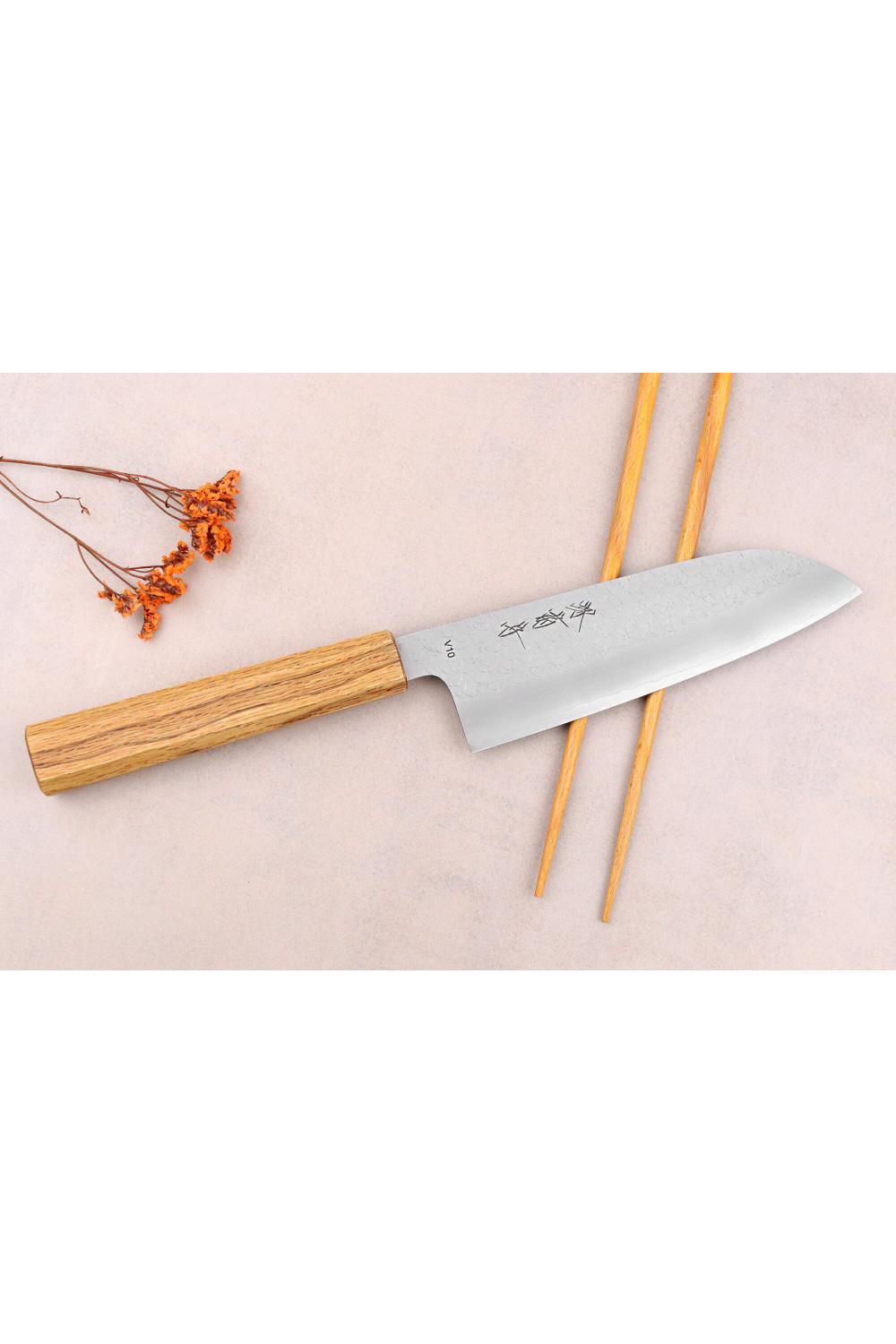
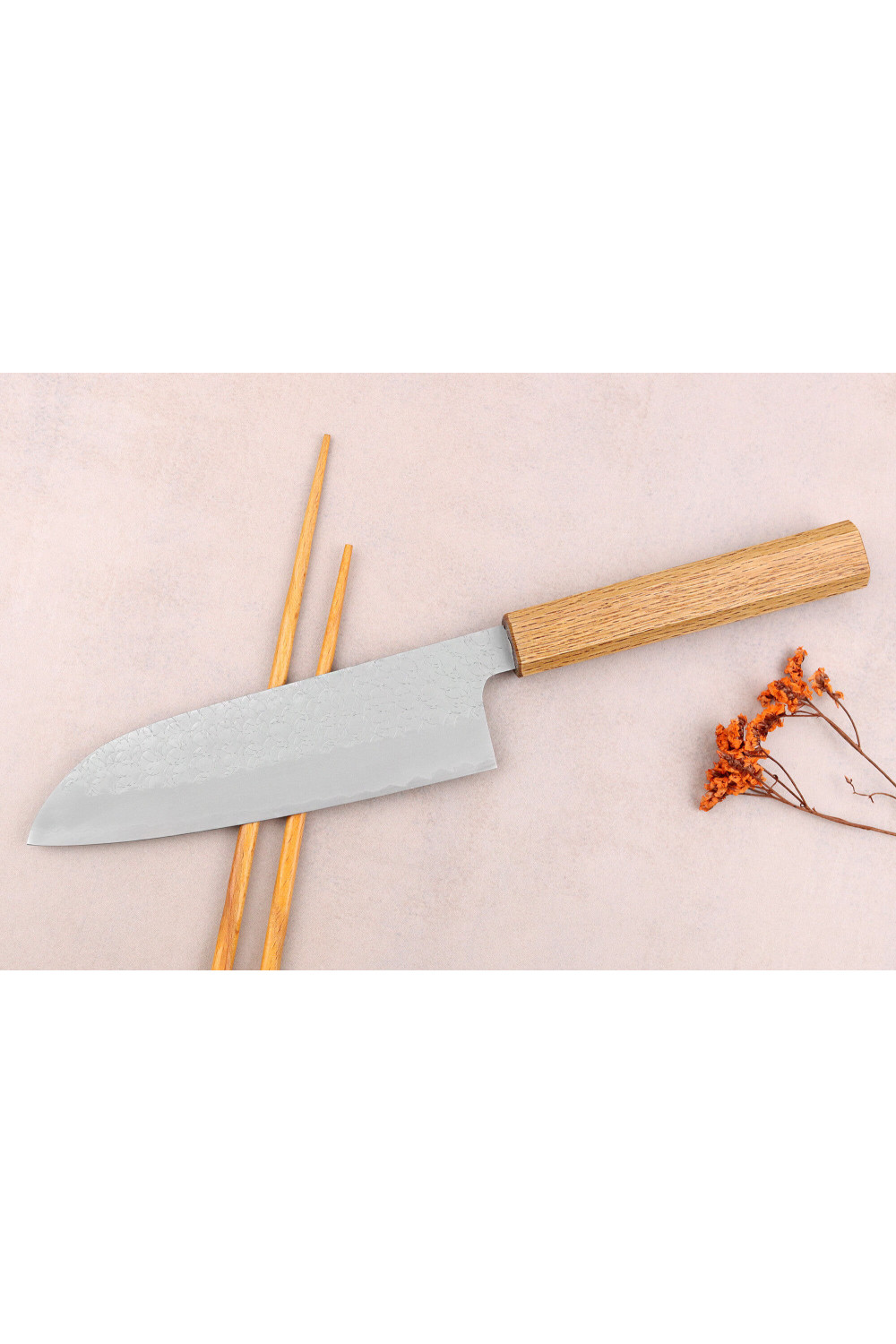
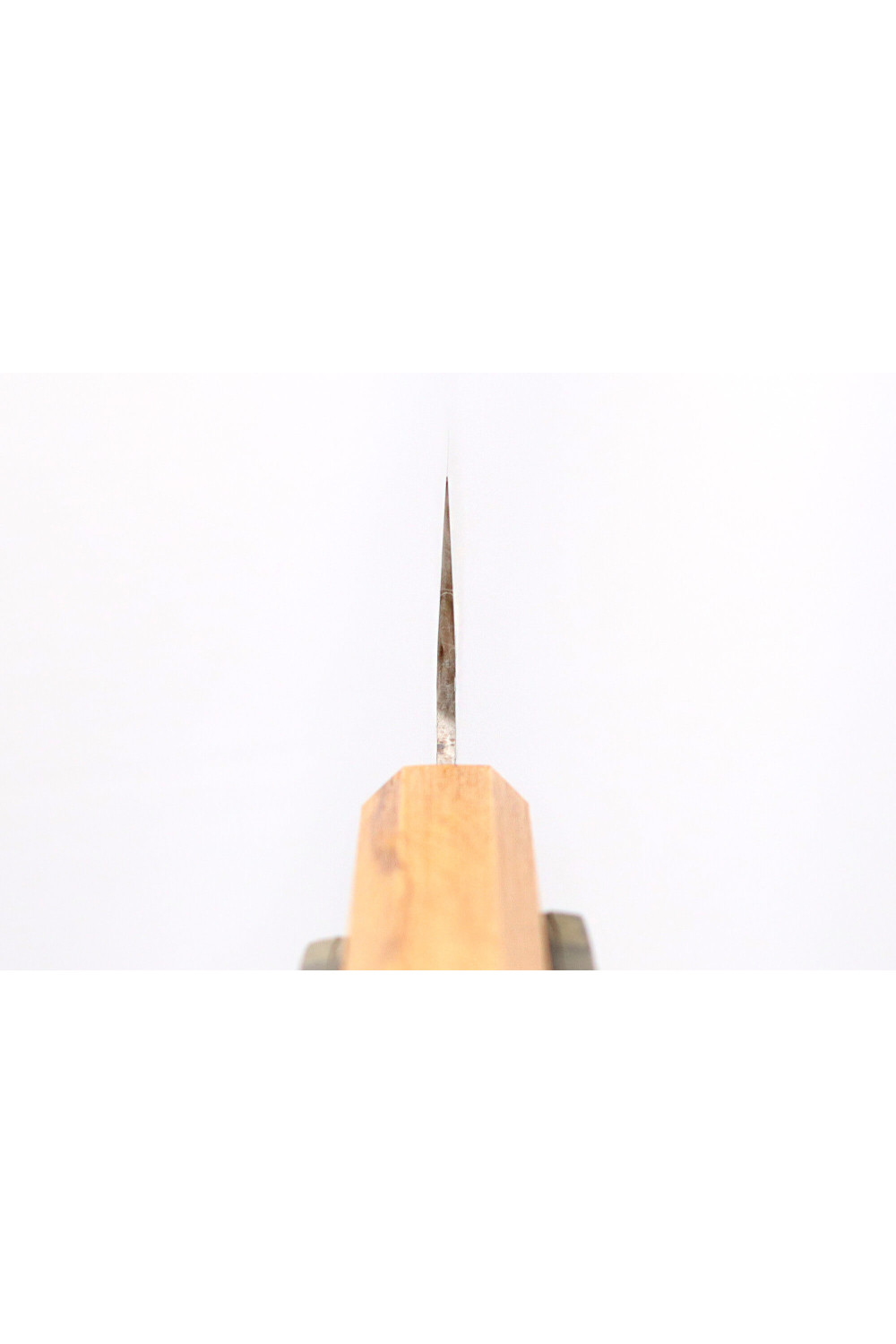
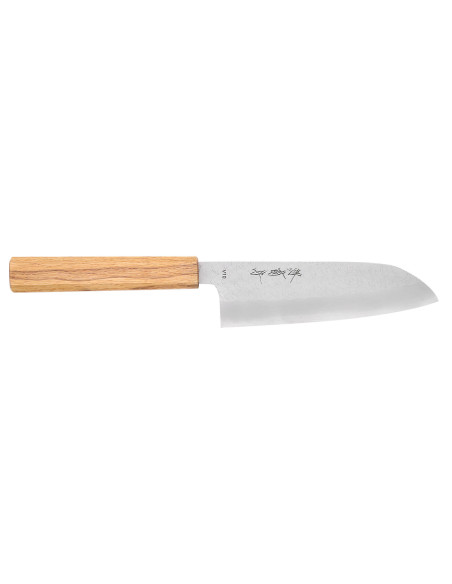
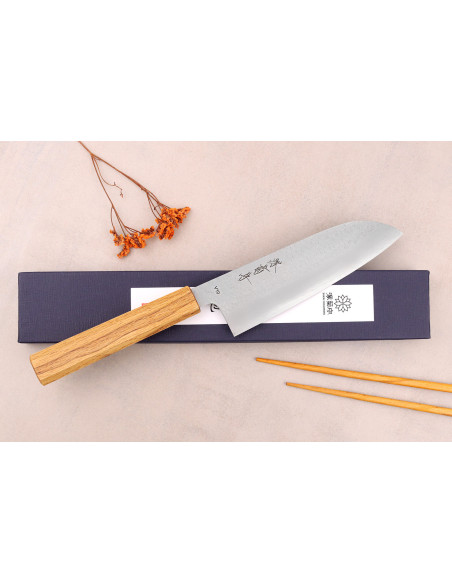
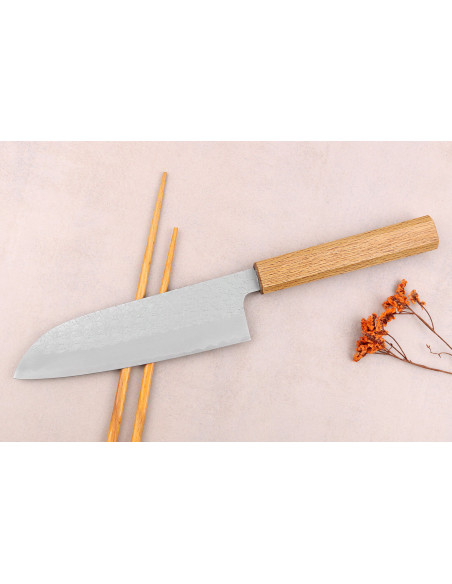
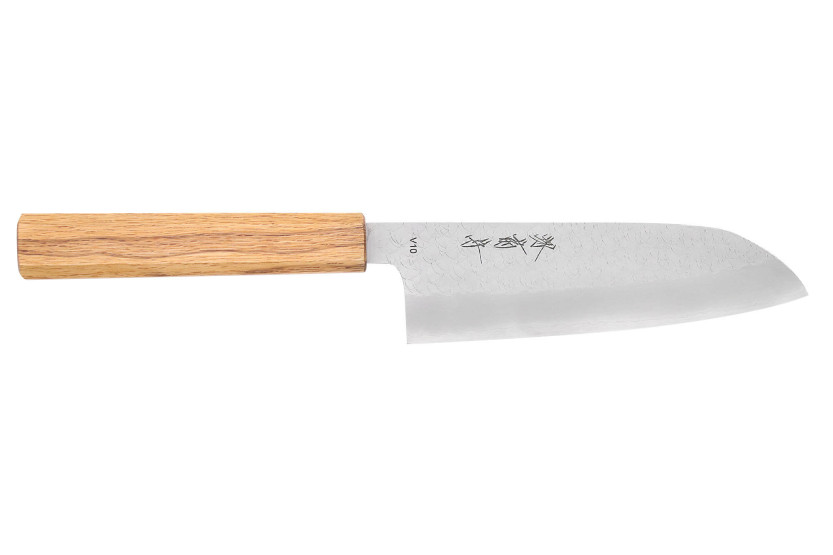
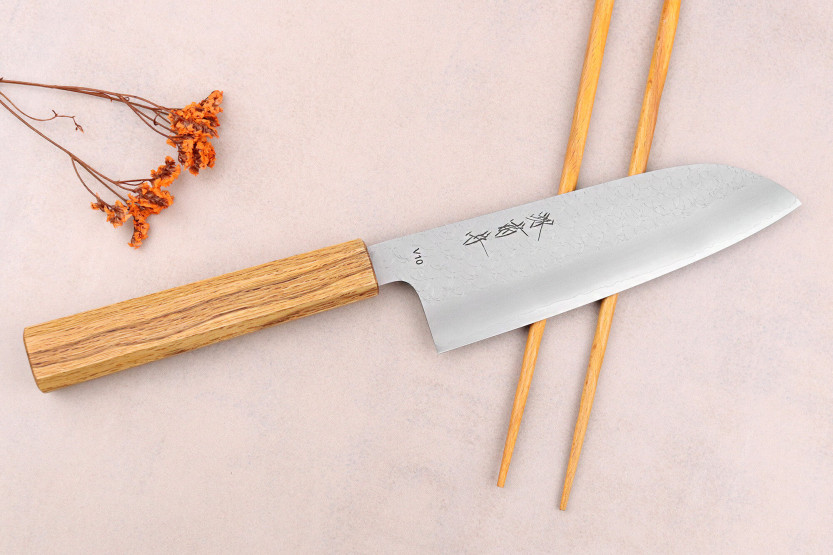
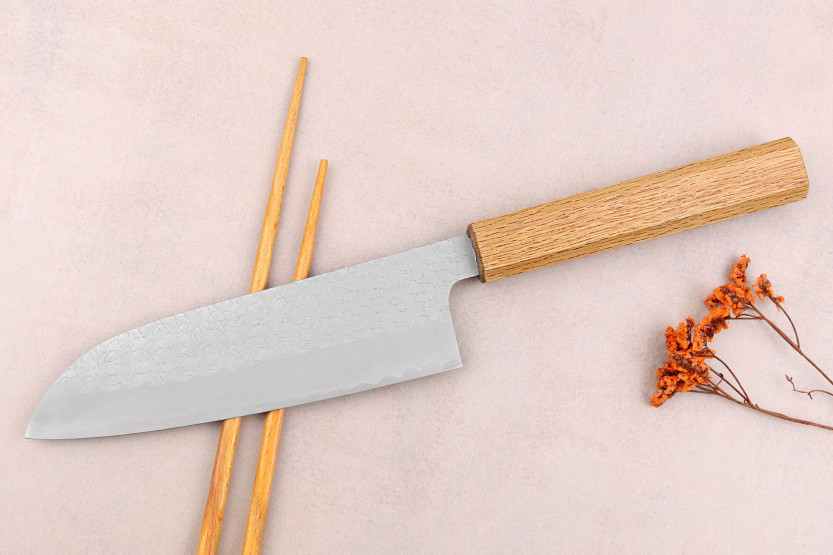
The 16.5 cm blade of the Sakai Kikumori TS10 santoku knife is forged using the San Mai technique, which consists of wrapping a central core of hard steel with two layers of softer steel. This traditional Japanese method maintains a fine, high-performance cutting edge while giving the blade flexibility, thus reducing the risk of breakage or chipping.
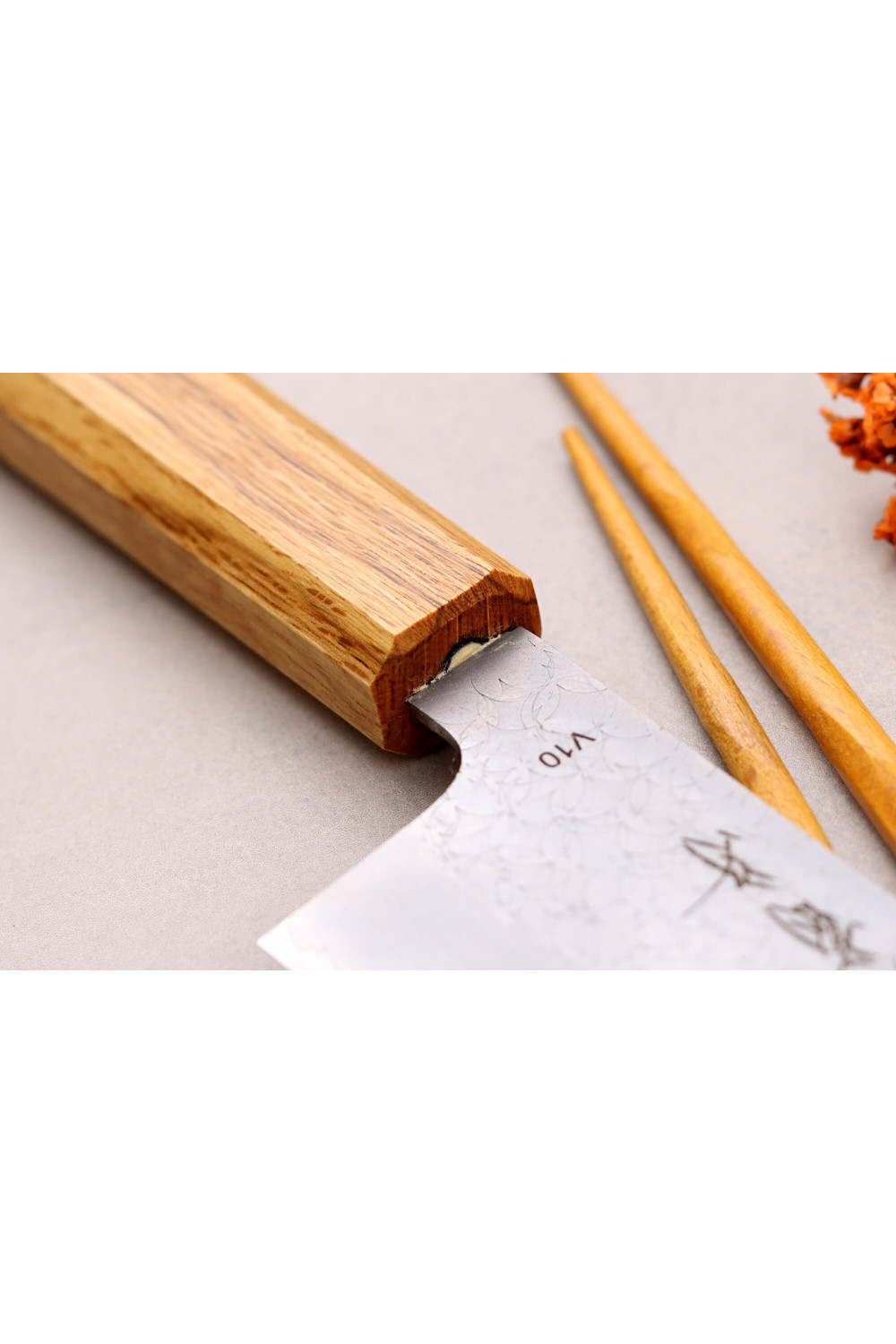
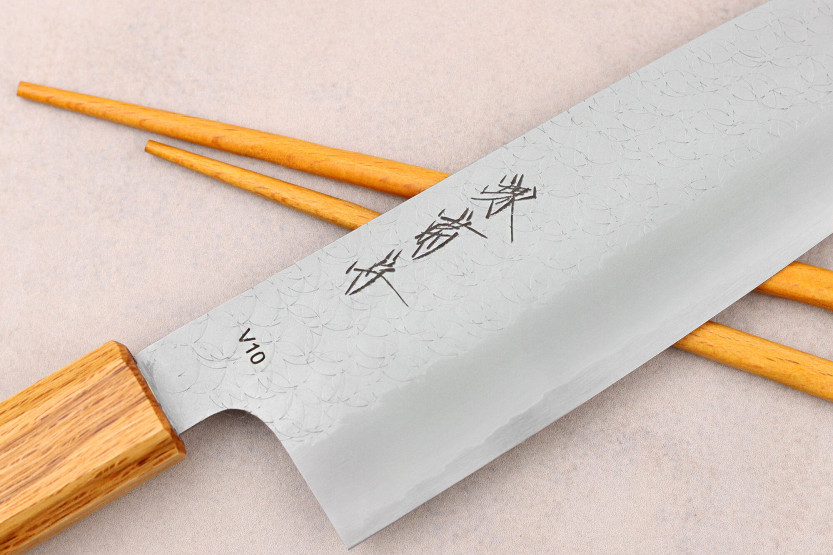
The central core is made of VG10 steel, a stainless alloy particularly prized in high-end Japanese cutlery. This steel contains around 1% carbon, as well as vanadium and cobalt, elements that give it excellent cutting capacity, good strength and a hardness of around 60HRC Rockwell. The result is a durable, easy-to-maintain cutting edge that meets the demands of intensive daily use.
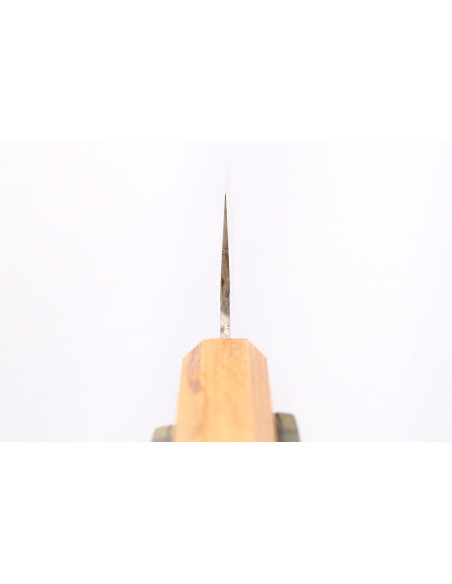
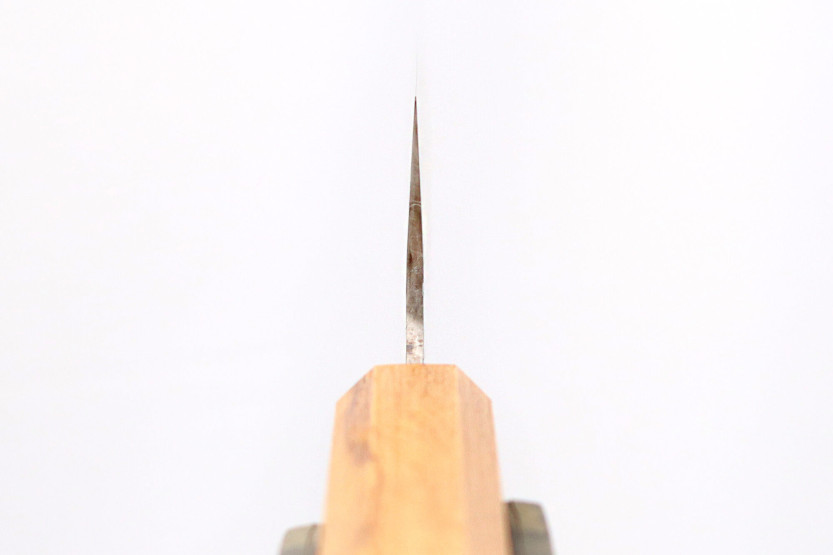
The blade's symmetrical cutting edge is suitable for both right- and left-handed users, ensuring clean penetration of food and ease of sharpening.
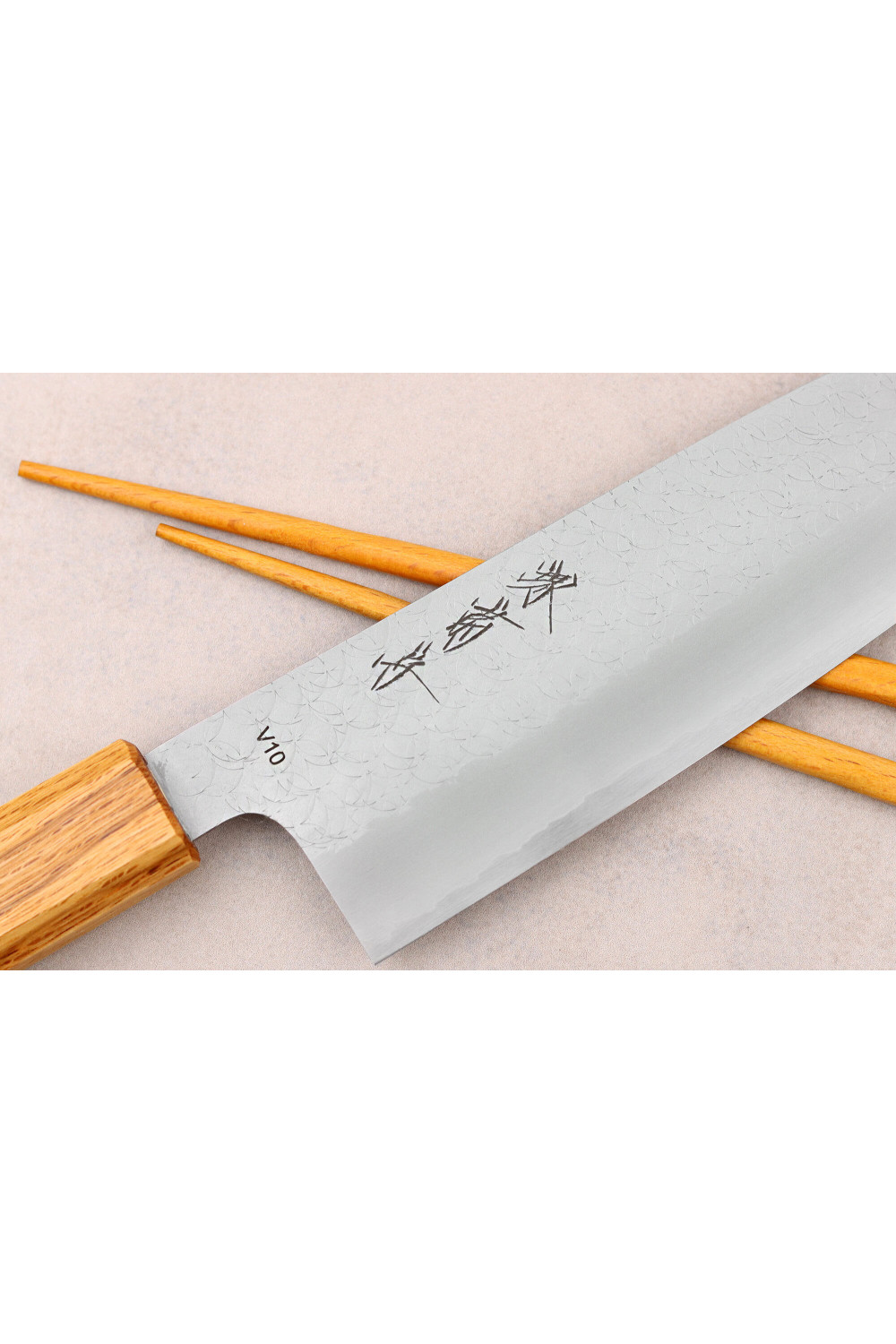
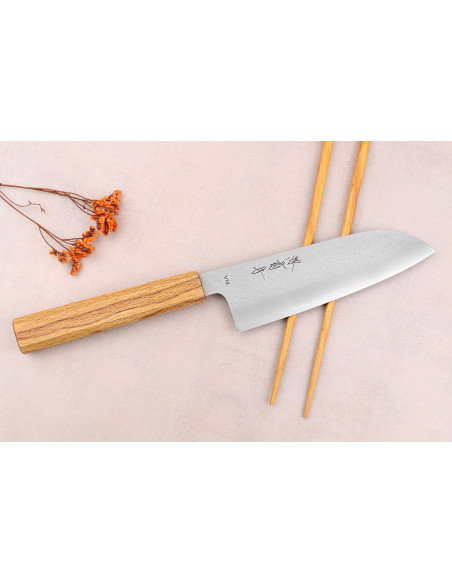
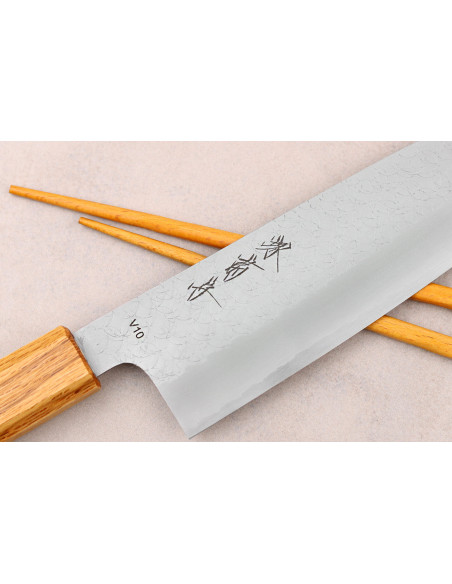
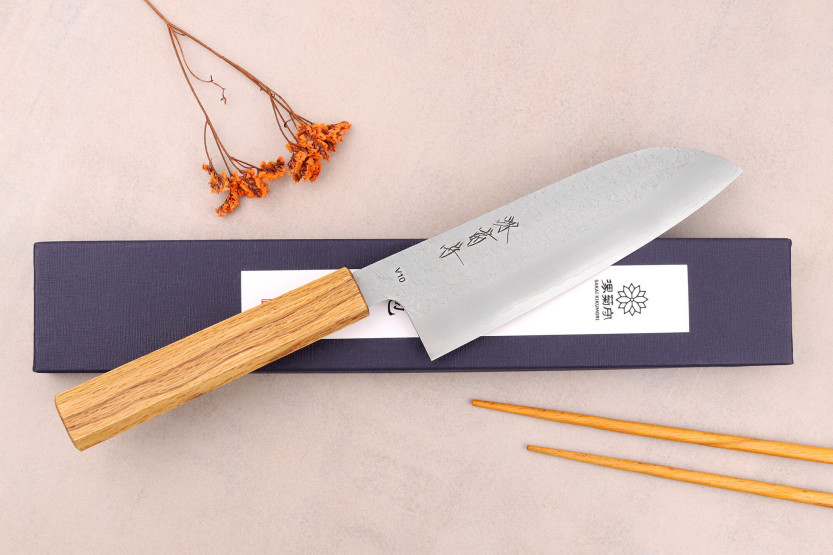
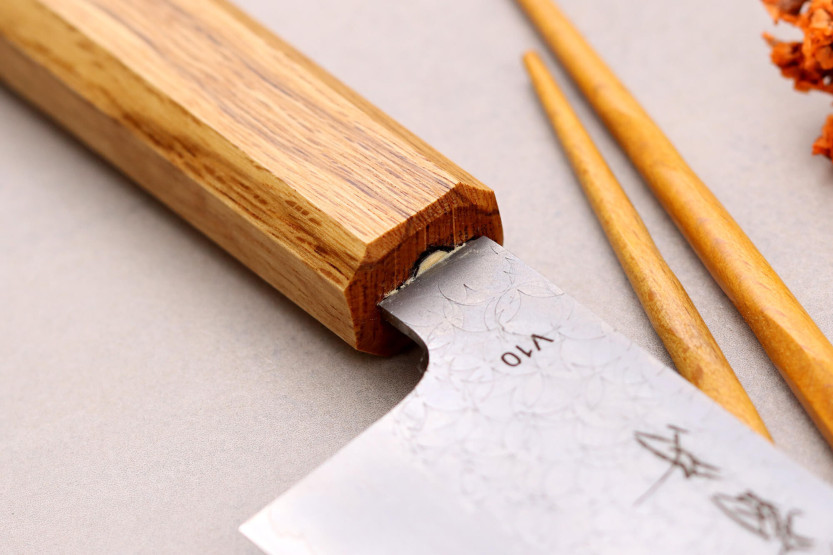
Another visual and functional feature is the hand-hammered finish. In addition to giving each blade a unique texture, these hammerings create air pockets that limit the adherence of food to the surface, making cutting more fluid, especially for products with a high water content such as vegetables or fruit. Every cutting movement becomes more natural, faster, with fewer interruptions.
This sharp cutting edge combined with a well-balanced blade makes this santoku a precision tool suitable for a wide range of cuts: slicing, mincing, chiseling... you name it!
A traditional yet functional lacquered oak handle
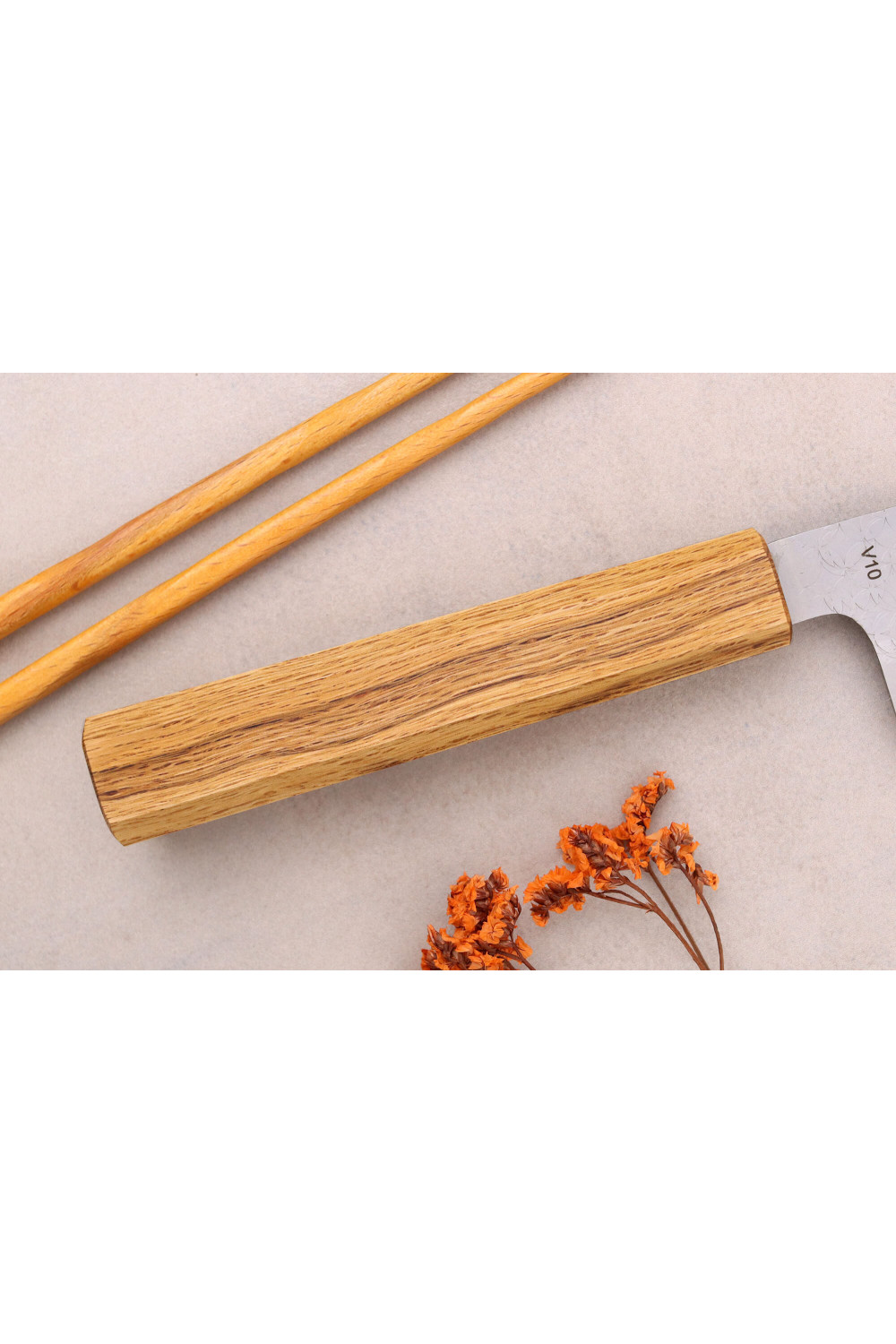
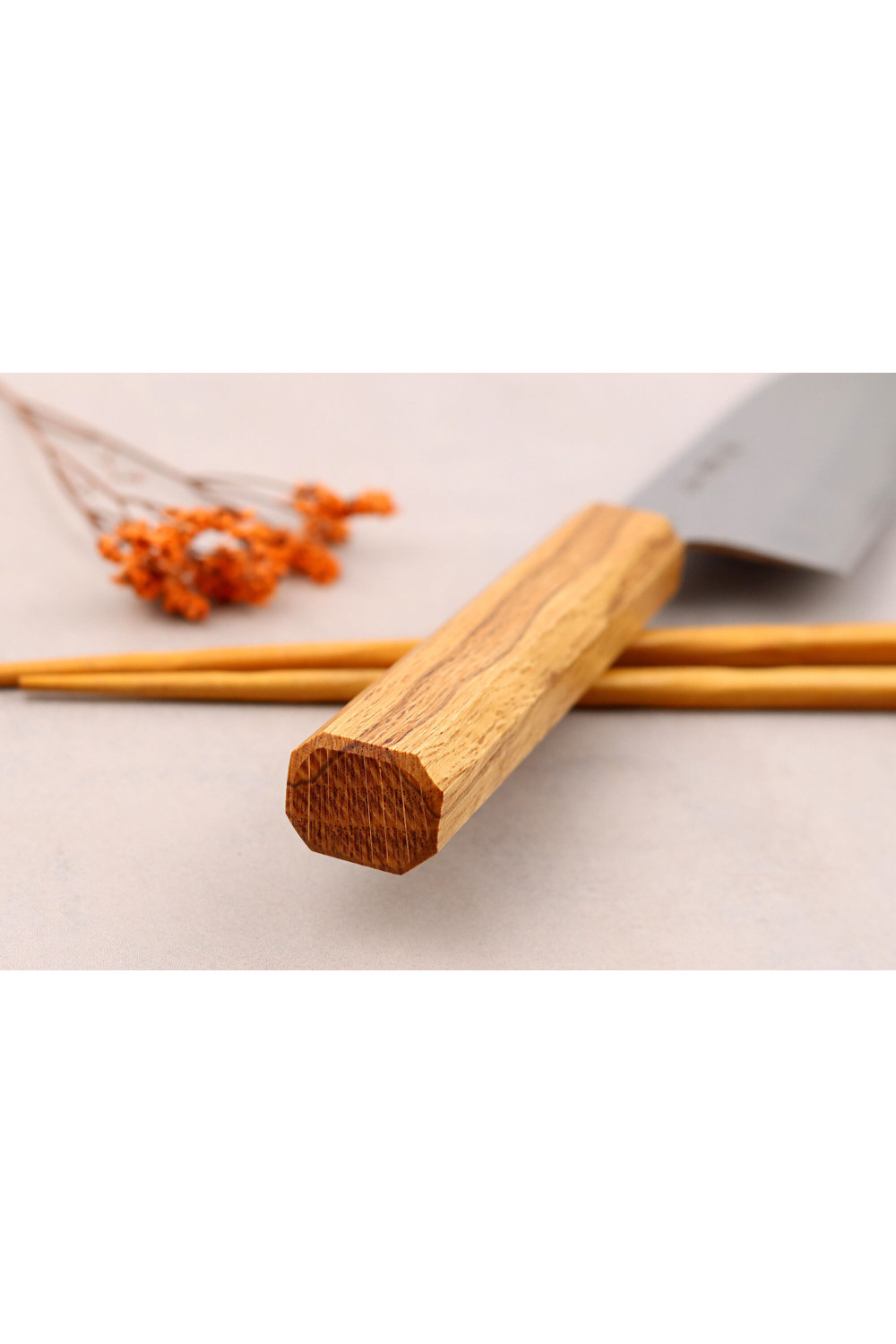
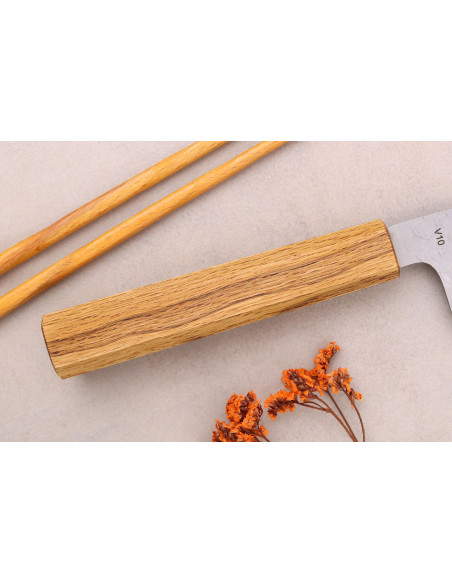
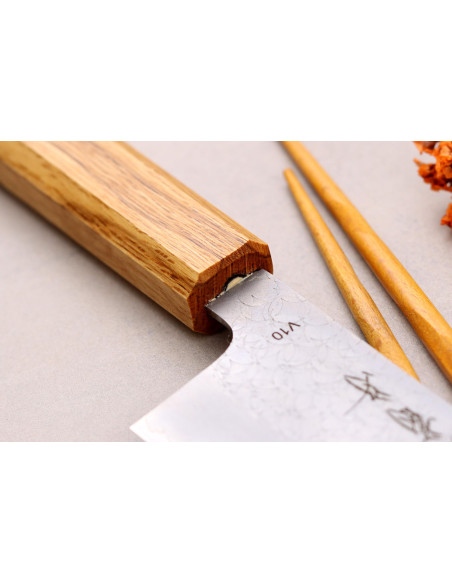
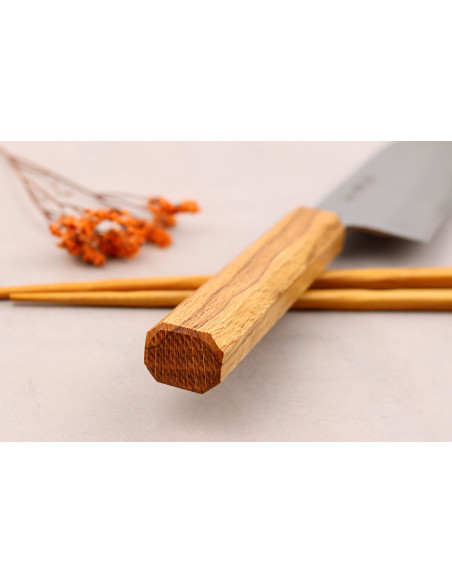
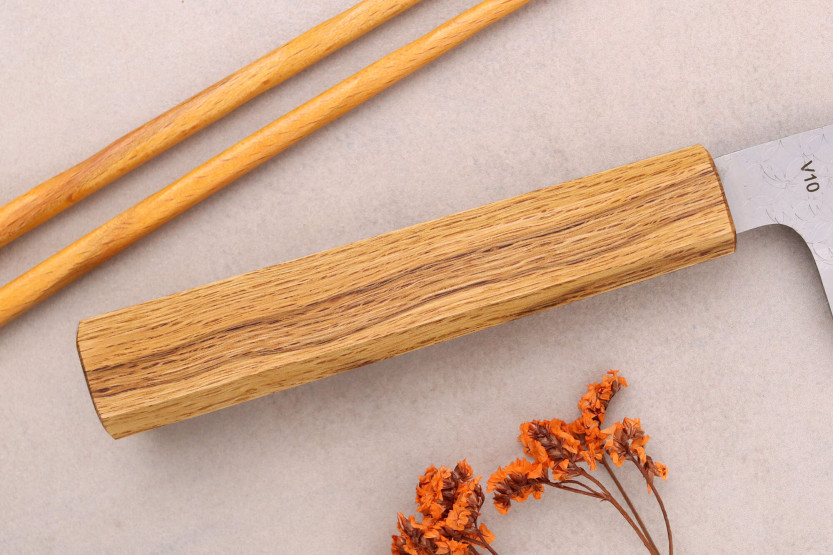
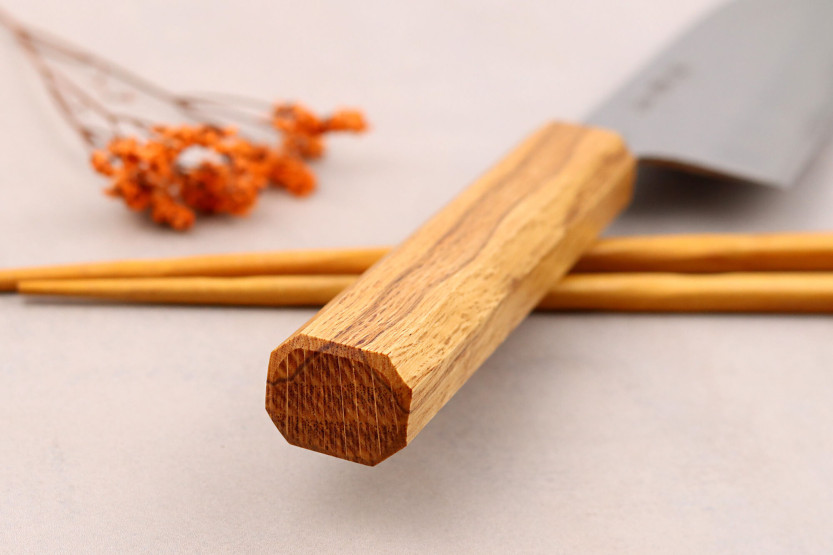
The handle of your Japanese kitchen knife is made from oak, a dense, naturally resistant wood chosen for its durability and resistance to humidity. The wood is protected by a layer of natural lacquer, which provides a barrier against water and stains, while enhancing its discreet grain. This varnish allows easy maintenance without the need for regular oiling.
Its octagonal shape, typical of traditional Japanese cutlery handles, offers an intuitive, ergonomic and stable grip. It facilitates finger positioning for optimal blade control, even during technical gestures or prolonged cutting sessions. This type of handle is also ambidextrous, suitable for both right- and left-handed users.
Well-balanced, pleasant to the touch and hard-wearing, this handle perfectly complements the blade of your Japanese kitchen knife: a sober, functional and resolutely artisanal ensemble.
Summary of your handcrafted Japanese knife's features
- 16.5 cm blade: ideal length for versatile use in the kitchen
- VG10 steel: sharp cutting edge and high resistance to wear
- 60 HRC
hardness- : excellent edge retention for rigorous use
- Three-layer San Maï structure: balance between hardness and tolerance
- Hammered finish: handcrafted aesthetics and non-stick effect
- Octagonal lacquered oak handle: stable, comfortable grip
- Handcrafted in Sakai, Japan: guarantee of know-how and durability
Wash your Japanese knife only by hand with a soft sponge. Avoid aggressive cleaning or dishwashing, to preserve the finish and the blade. Dry immediately after washing and store in a dry place. Be careful not to leave it to soak in the sink.
Traditional craftsmanship by Sakai Kikumori
The Sakai Kikumori brand, founded in Sakai (near Osaka) by KawamuraHamono in 1926, perpetuates traditional Japanese cutlery techniques.
Each blade is meticulously crafted: forging, finishing and handle assembly are carried out with meticulous care. The TS10 model is a fine example: VG10 stainless steel with hammered finish, San Maï structure, octagonal oak handle. Each model features slight variations that underline its authenticity.
When you use this Japanese santoku knife, you benefit from the heritage of more than 90 years of craftsmanship and a place emblematic of Japanese master blacksmiths!
Discover even more handcrafted Japanese knives on Knifeleader.eu!




 By buying this product you can collect up to