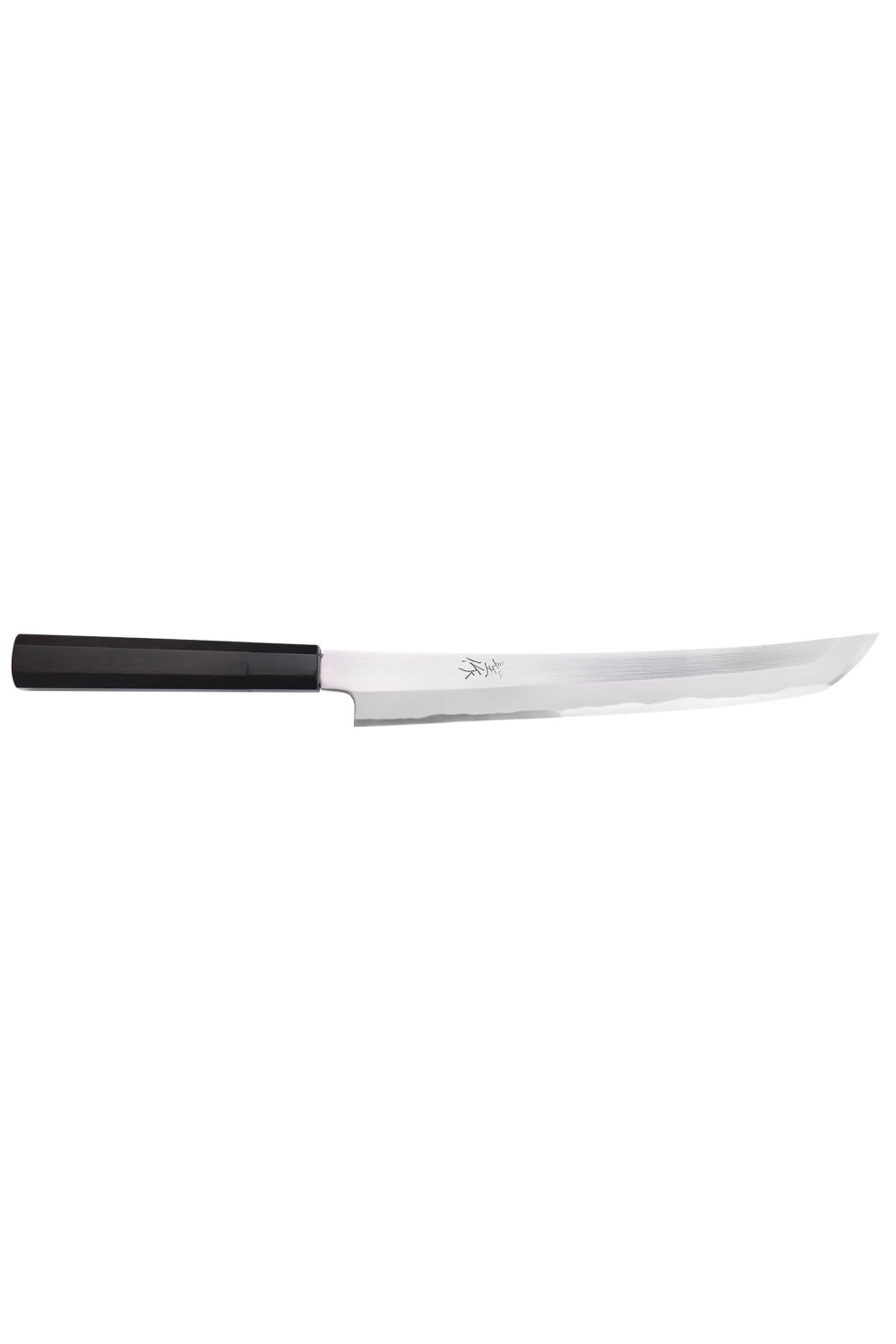
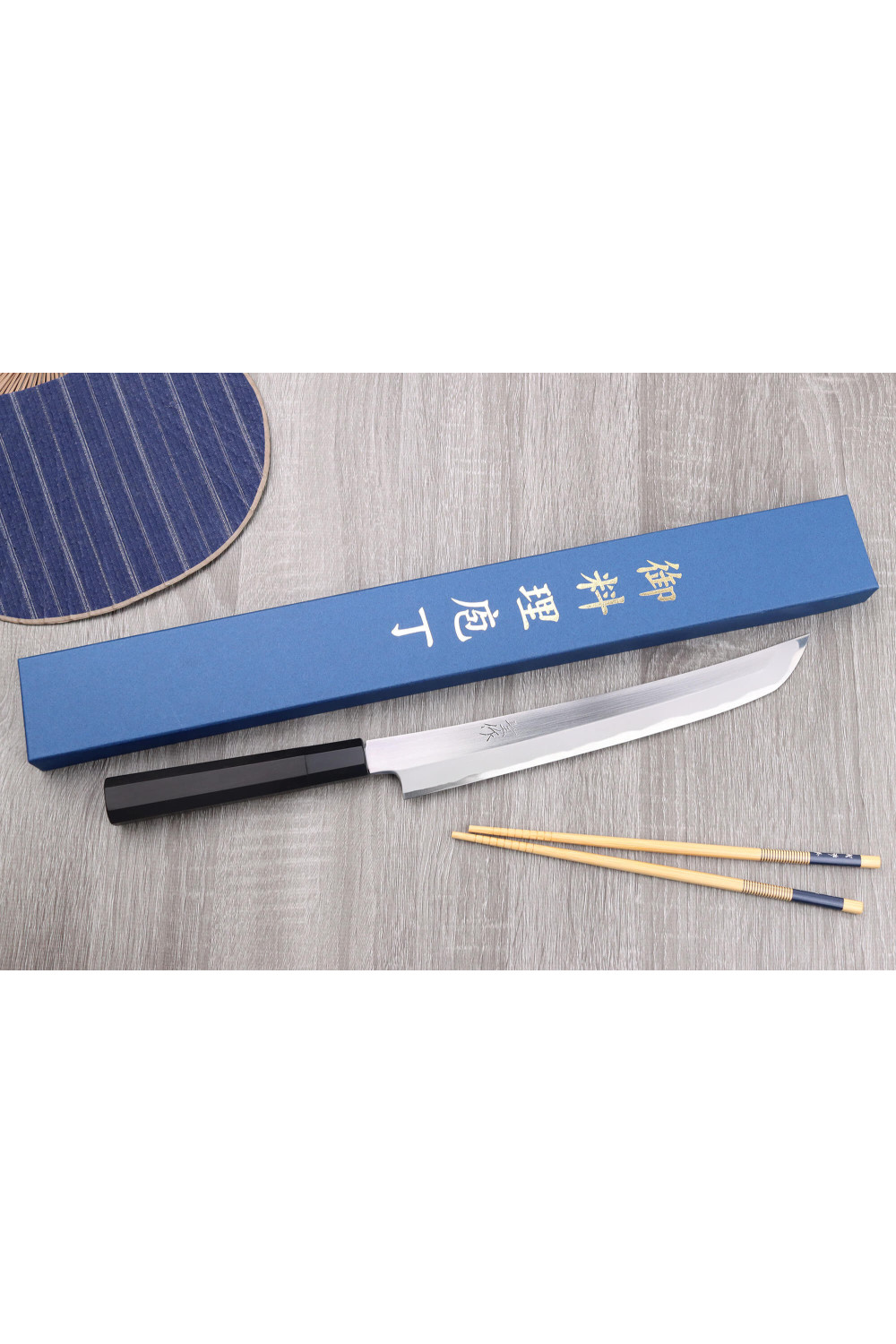
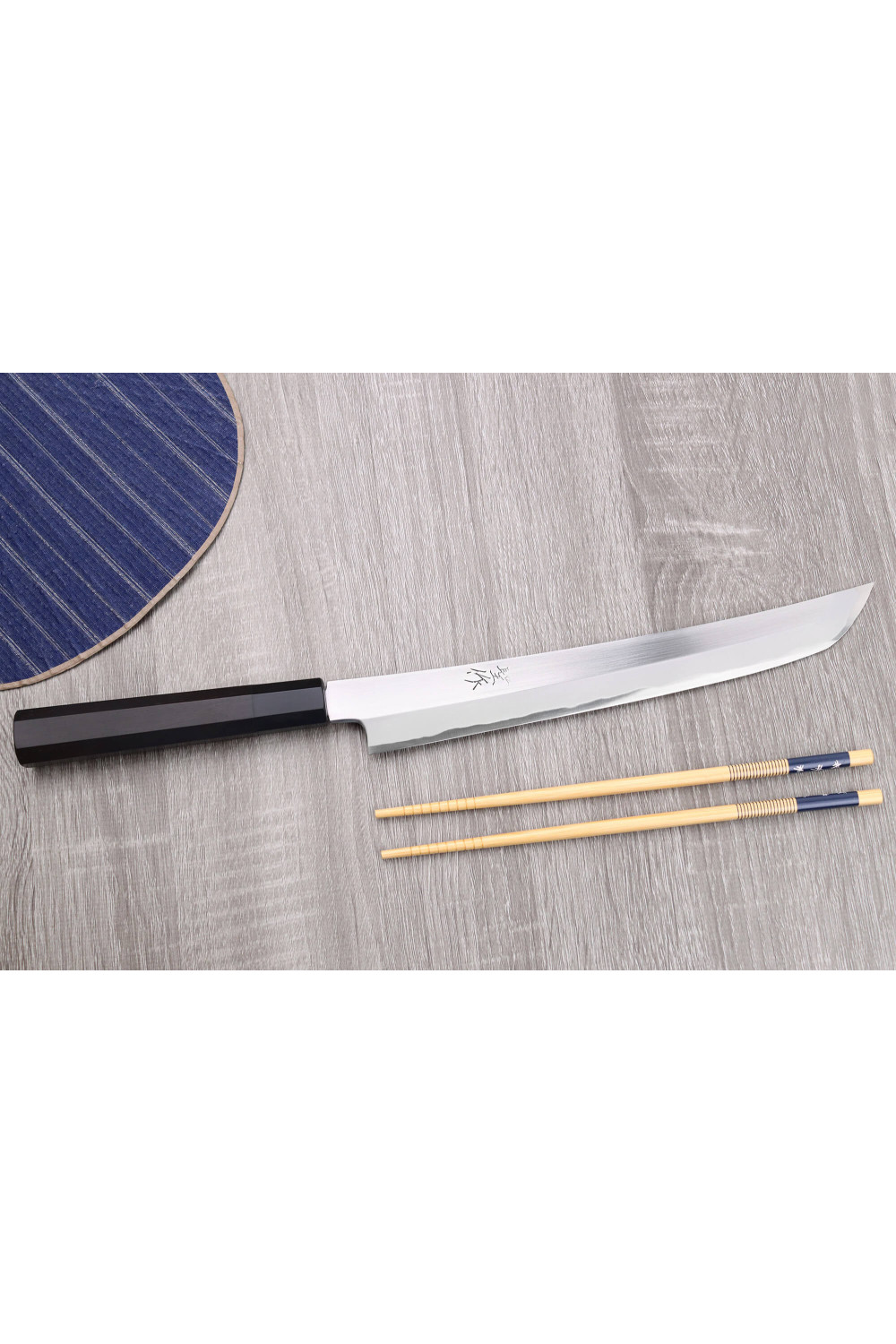
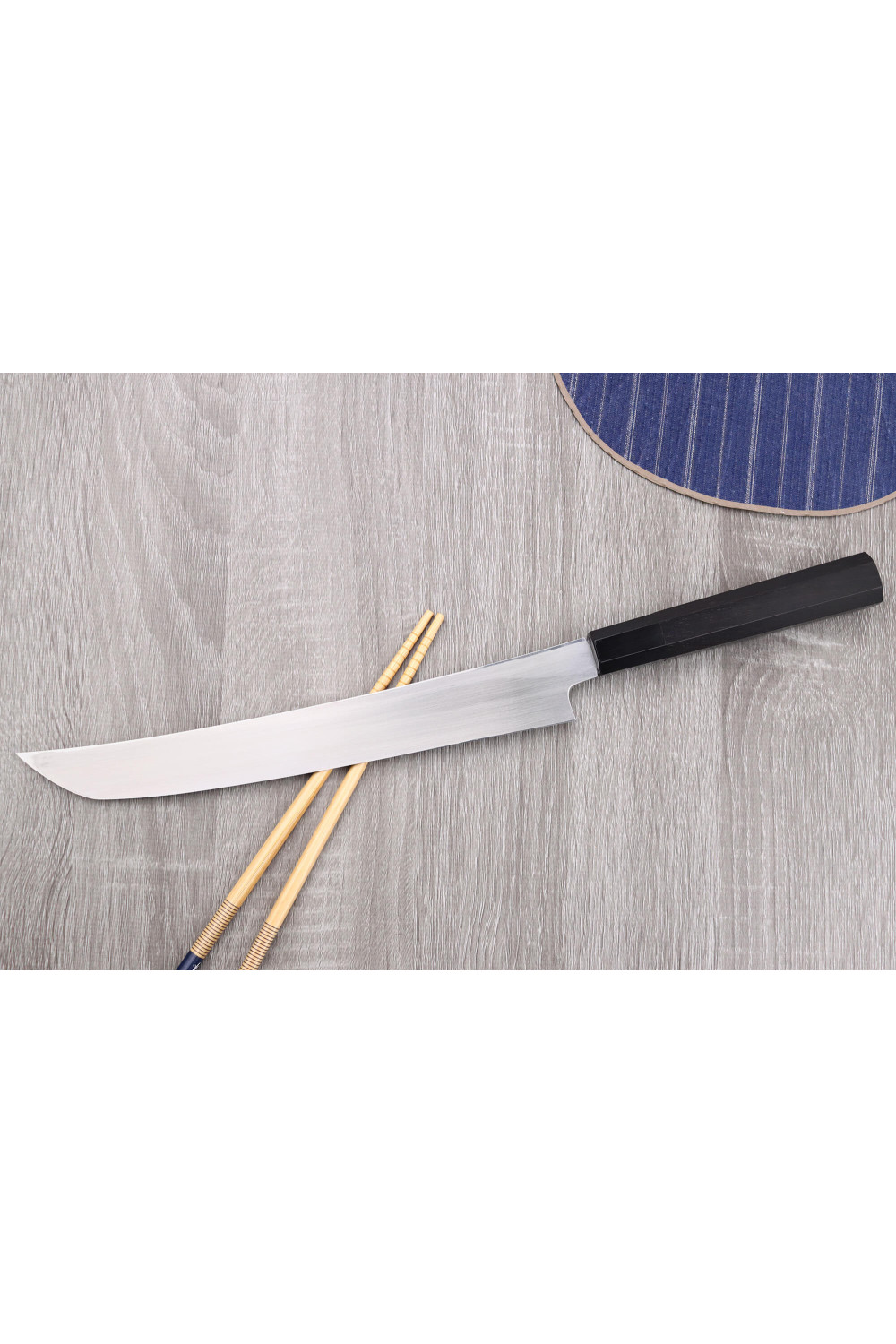
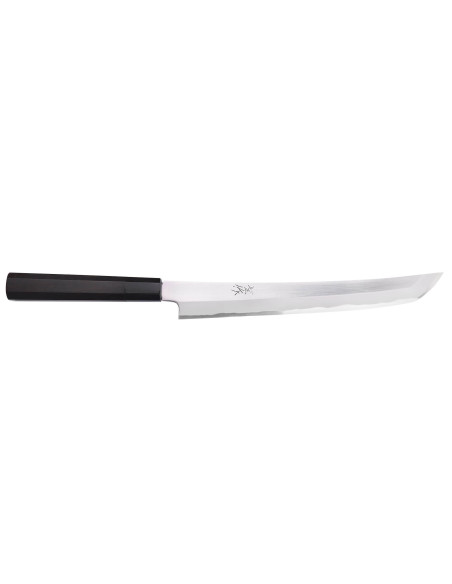
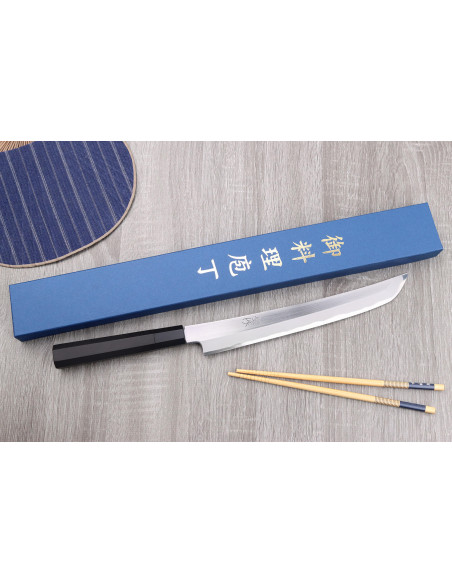
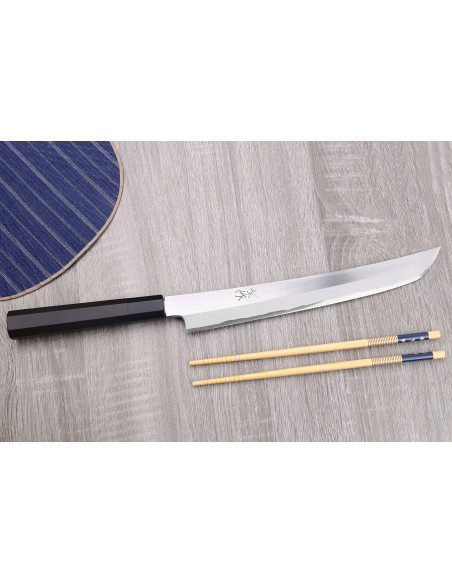
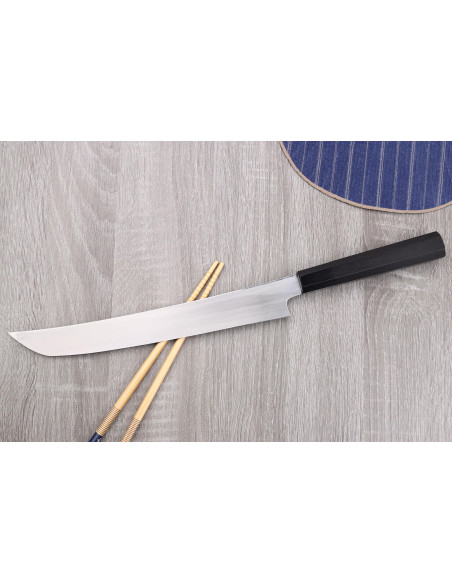
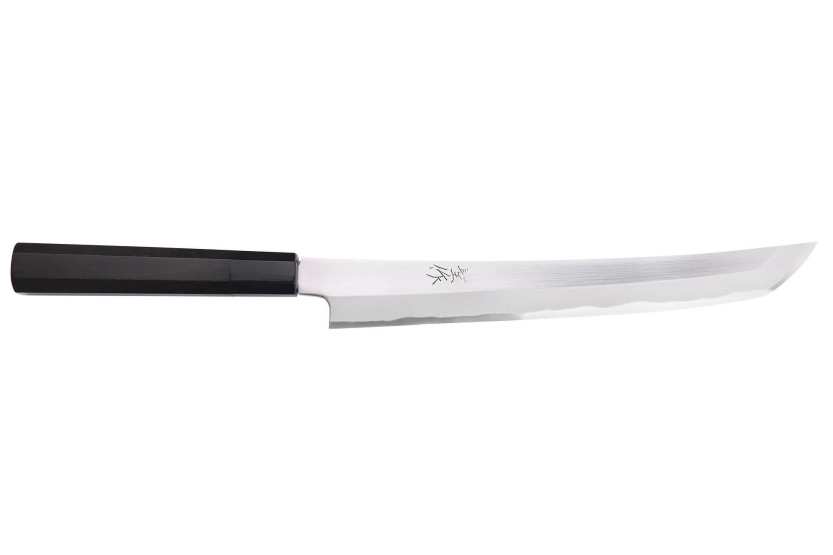
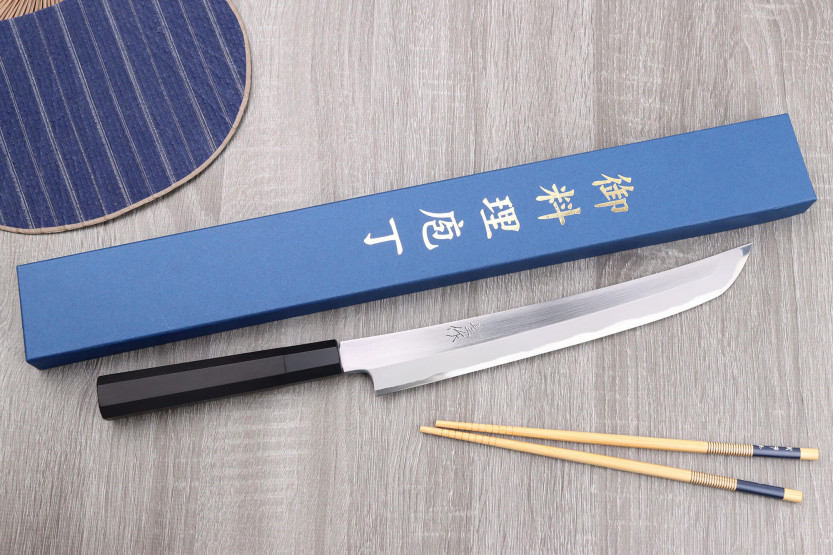
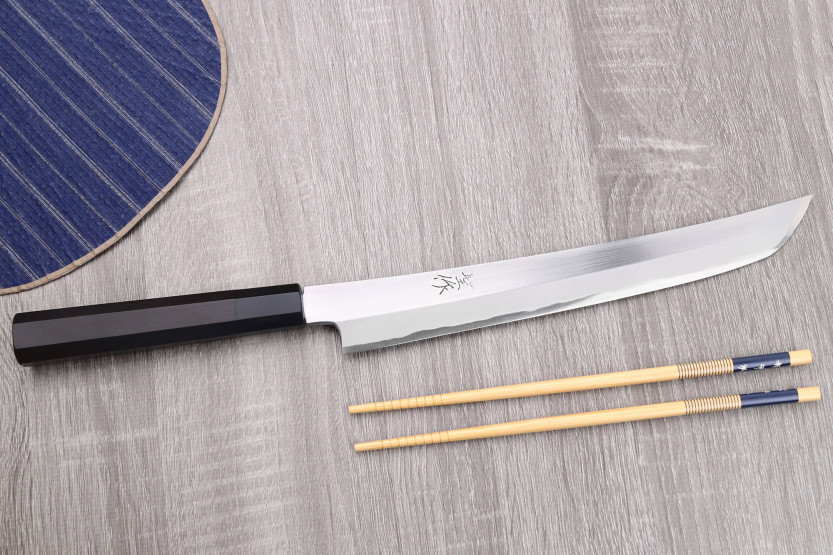
This sakimaru knife was forged by Masashi Yamamoto, a talented Japanese master blacksmith renowned for his exceptional creations. Born into a family of blacksmiths, he learned his art alongside his older brother. It was in 2013 that he decided to set up his own workshop, when he felt ready to forge his own ranges of Japanese kitchen knives.
Masashi Yamamoto stands out for his ability to design unique Japanese knives, where refined aesthetics meet high performance. His blades, renowned for their high hardness, are the result of advanced techniques and heat treatments that testify to his expertise. Although he is still young, he is actively involved in preserving his art, and has already trained two apprentices.
His relaxed, personal style makes him unique in the cutlery world. Easily recognized by his iconic attitude: forging in flip-flops, cigarette in hand, he embodies both modernity and authenticity in his approach to craftsmanship.
An exceptional Japanese knife in shirogami
This Masashi Yamamoto sakimaru knife features a blade crafted using the traditional Japanese San Mai technique. This method involves assembling three layers of steel: a central core of rigid steel, surrounded by two layers of softer steel. These outer layers envelop the core, offering effective protection while providing a degree of flexibility. Although the blade is not flexible in the strict sense of the term, this structure gives it greater resistance to impact while maintaining excellent cutting performance.
For the core, Masashi Yamamoto opted forShirogami #2 steel, also known as White Paper Steel #2 (WS2). This high-end material, produced by Japan's prestigious Hitachi steelworks, is particularly prized for the manufacture of top-quality Japanese knives.
This alloy contains around 1.1% carbon, a key element that considerably improves the steel's hardness, since increased hardness guarantees a long-lasting cutting edge. With a hardness of 61HRC on the Rockwell scale, the blade of this sakimaru offers remarkable precision and sharpness for a long-lasting edge.
Shirogami steel also features a particularly homogeneous micro-structure. Its evenly distributed micro-carbides reinforce the blade's resistance to micro-cracking and wear. Thanks to its "pure" composition, this steel is often considered one of the closest to tamahagane, the traditional steel used by ancient Japanese blacksmiths to fashion exceptional katanas.
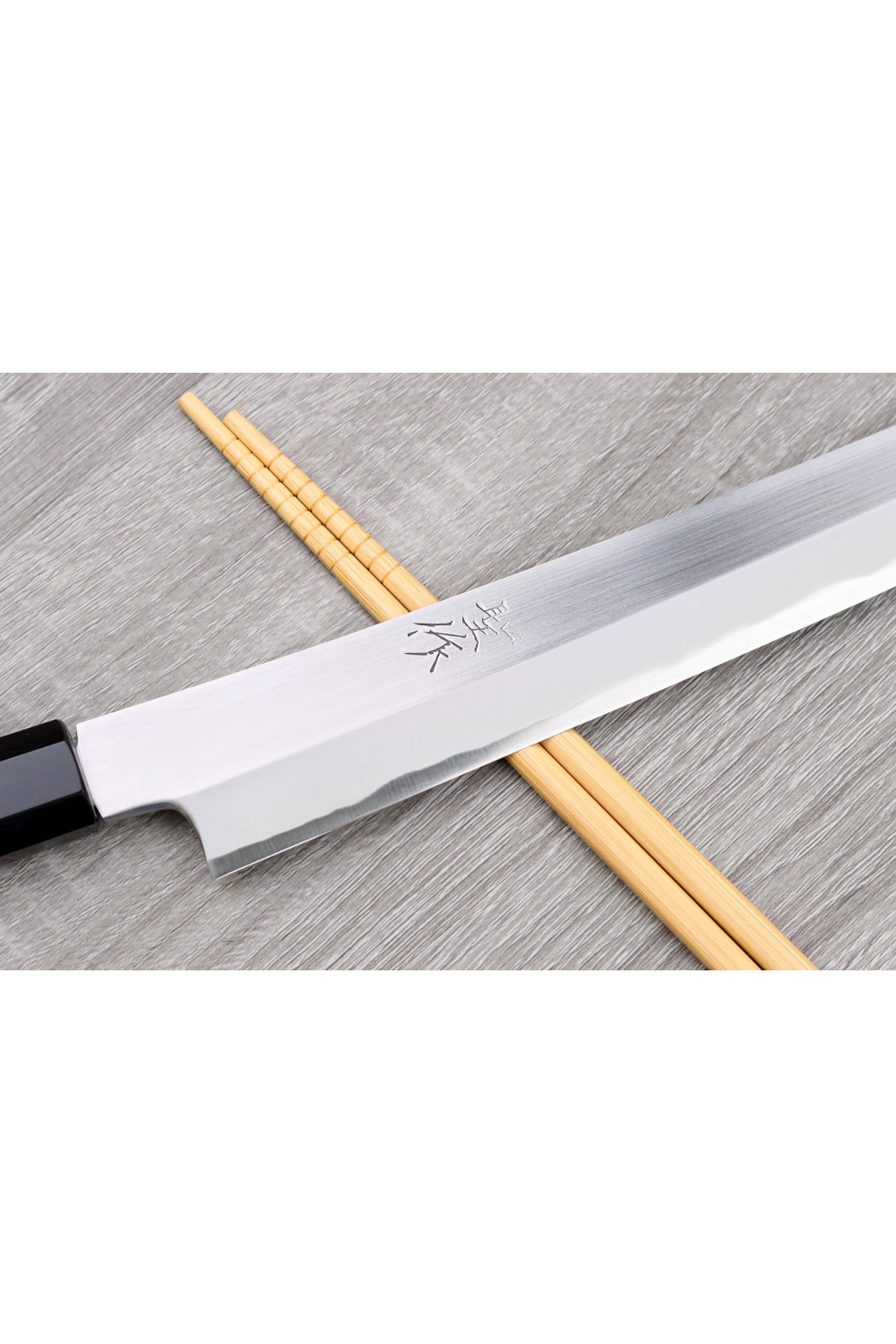
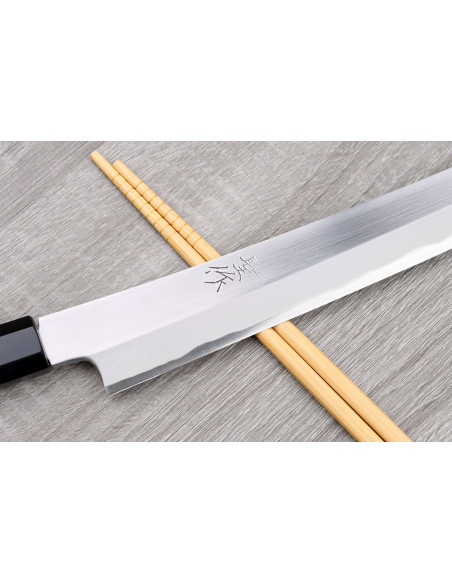
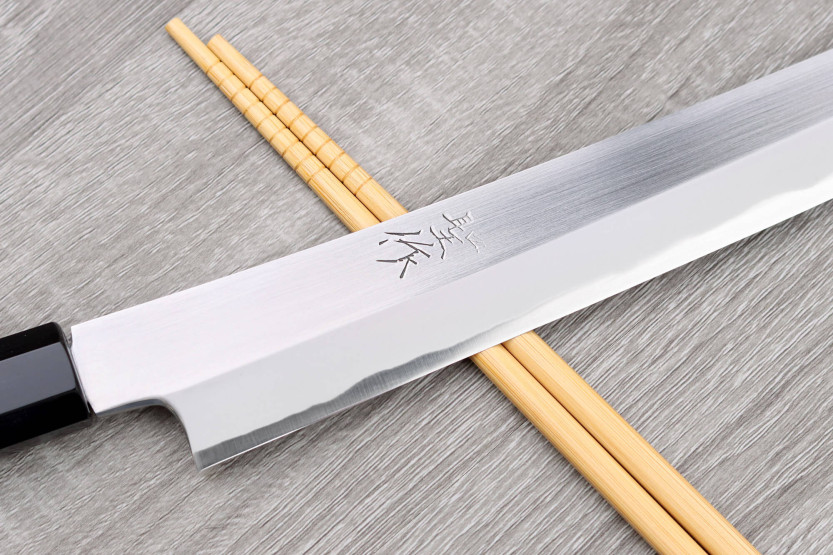
To complete the San Maï structure, two softer layers of iron envelop the rigid steel core. These outer layers provide balance by attenuating the rigidity of the core while effectively protecting it from micro-shocks. This superimposition of steels is visible along the cutting edge, where a delicate, unique wave emerges, a testimony to the craftsmanship of our artisans.
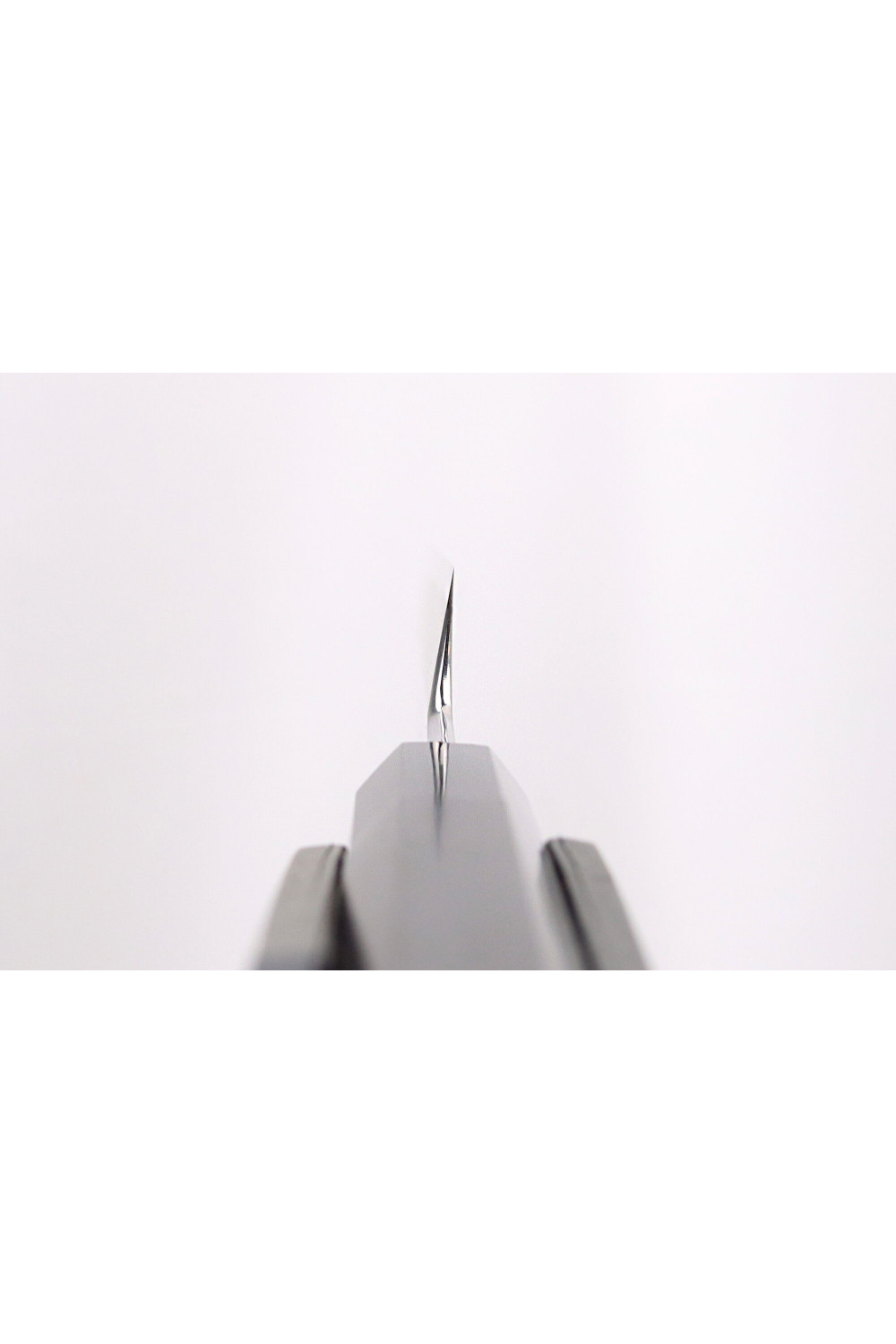
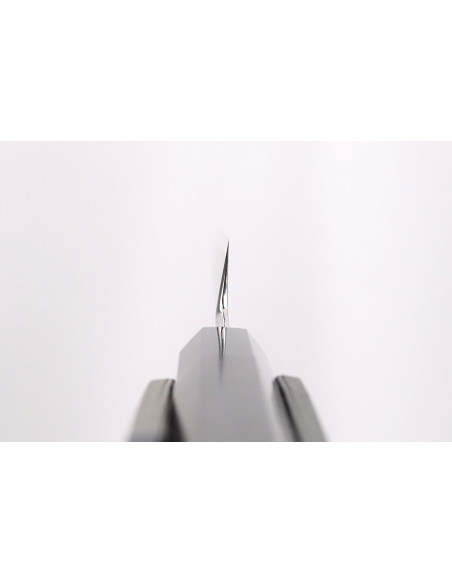
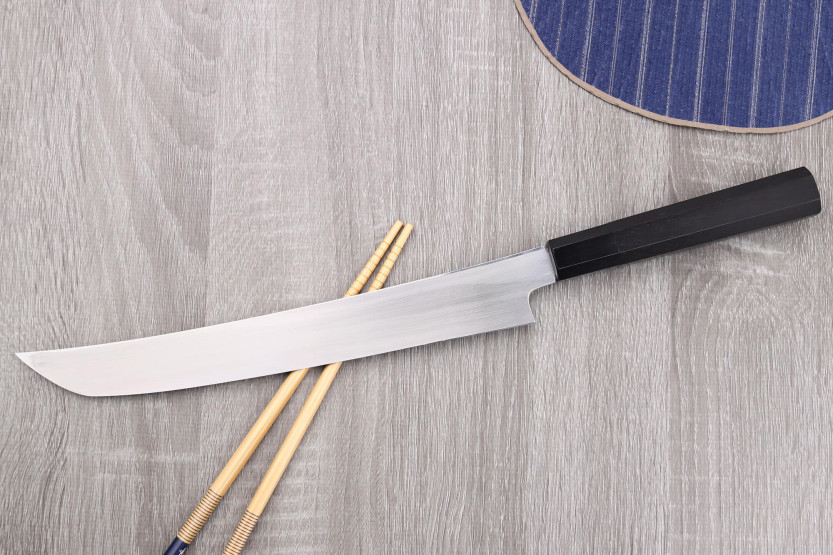
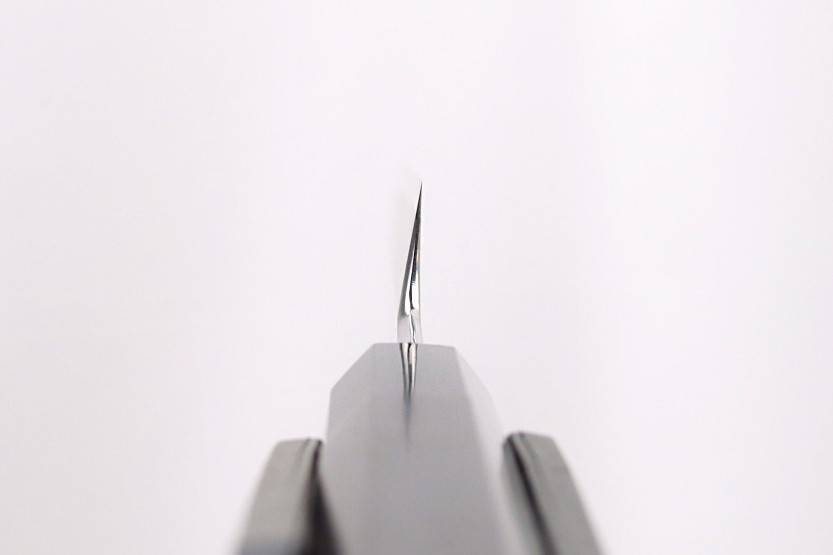
The blade is sharpened on one side, creating a bevelled edge. This asymmetrical cutting edge facilitates the separation of foodstuffs when cutting, offering greater precision and smoother movements. What's more, the back of the blade is designed with a slight hollow line, allowing better air circulation and reducing food sticking to its surface.
Aesthetically, the blade features a refined polish for an elegant look. Finally, hand-engraved kanji enhance this exceptional knife, reinforcing its artisanal character and authenticity.
A refined ebony handle for this sakimaru knife
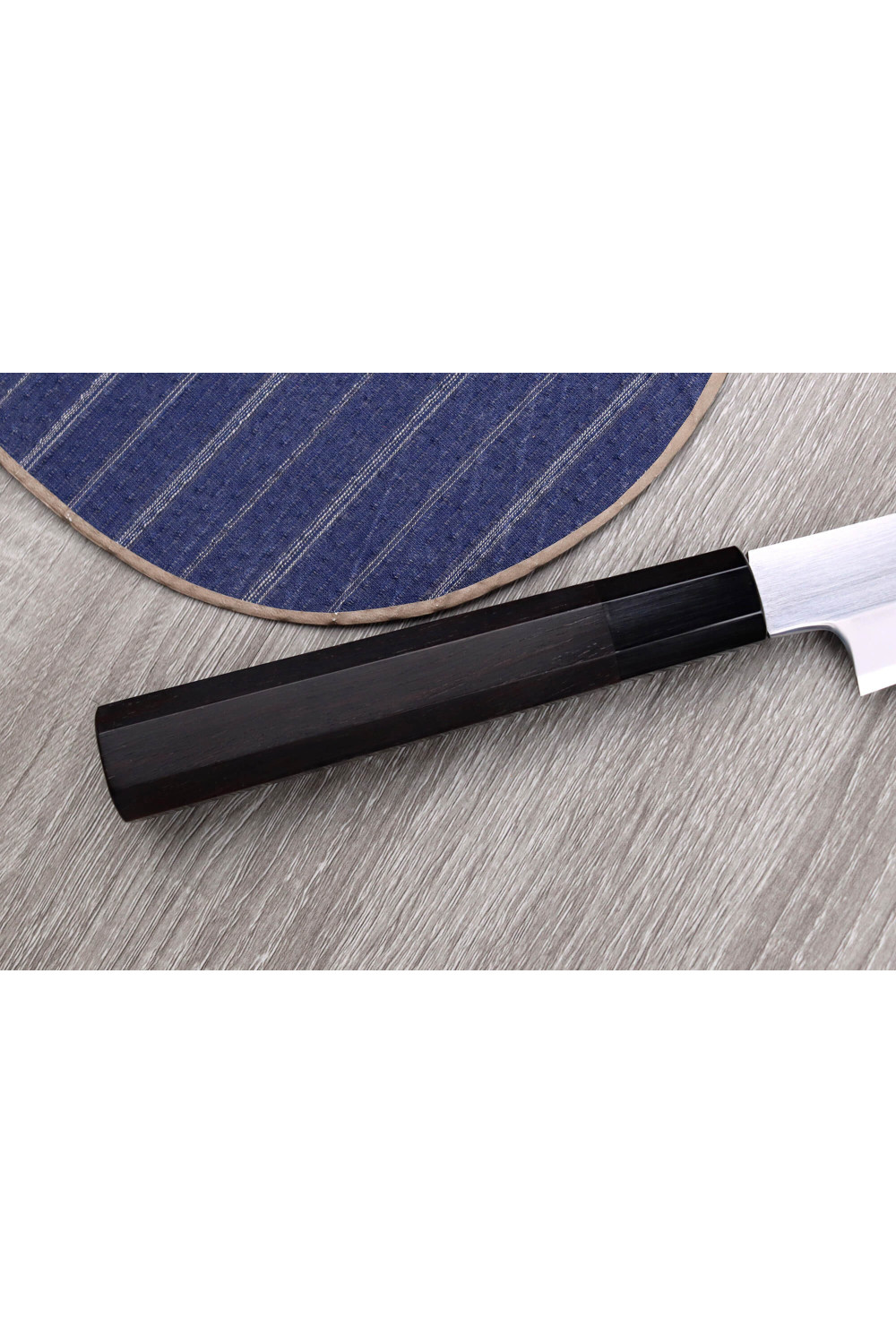
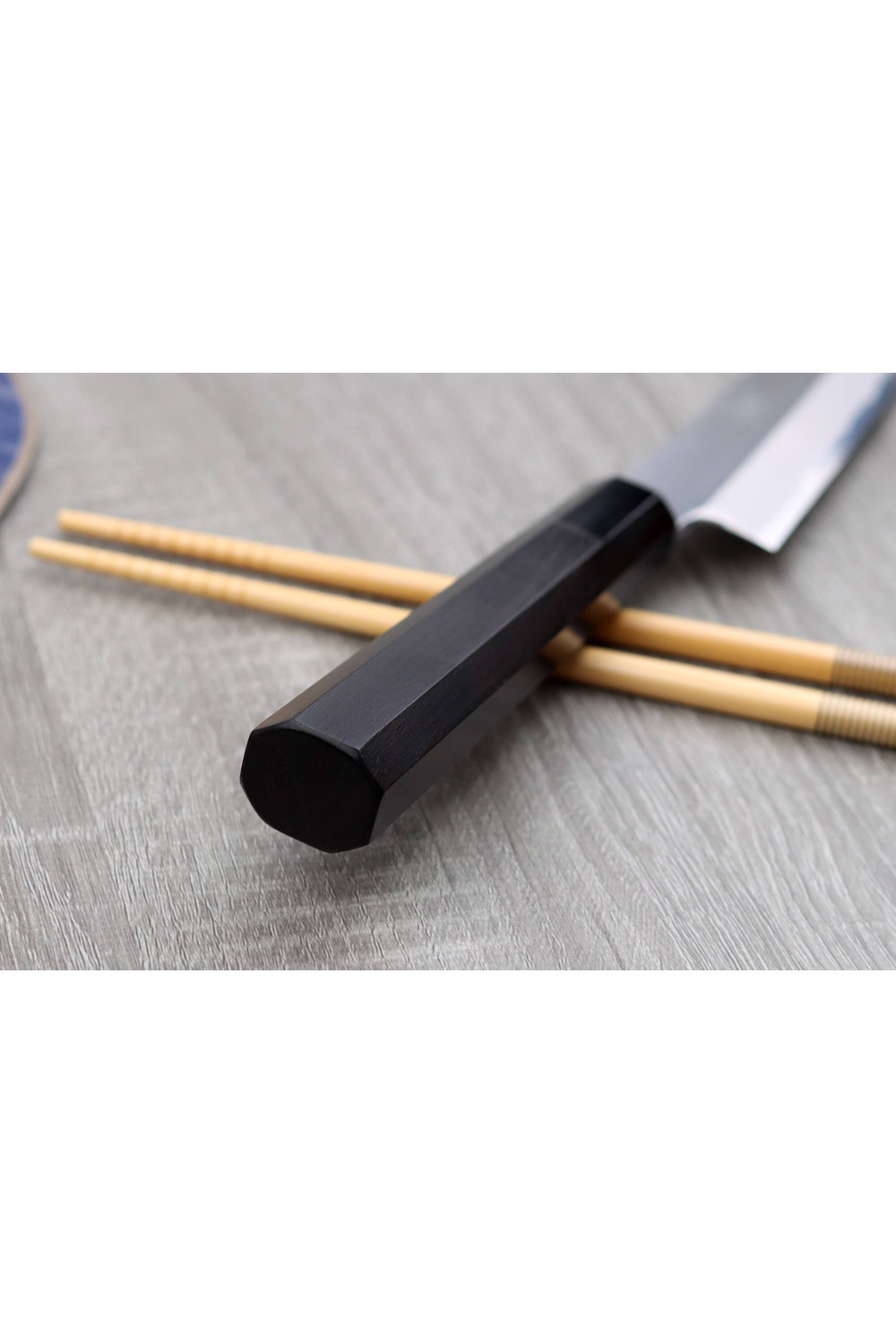
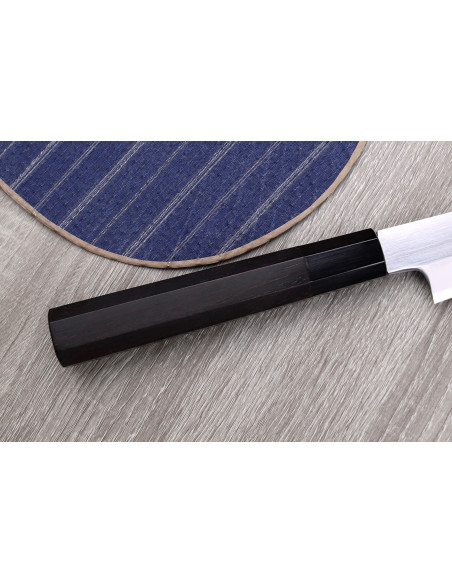
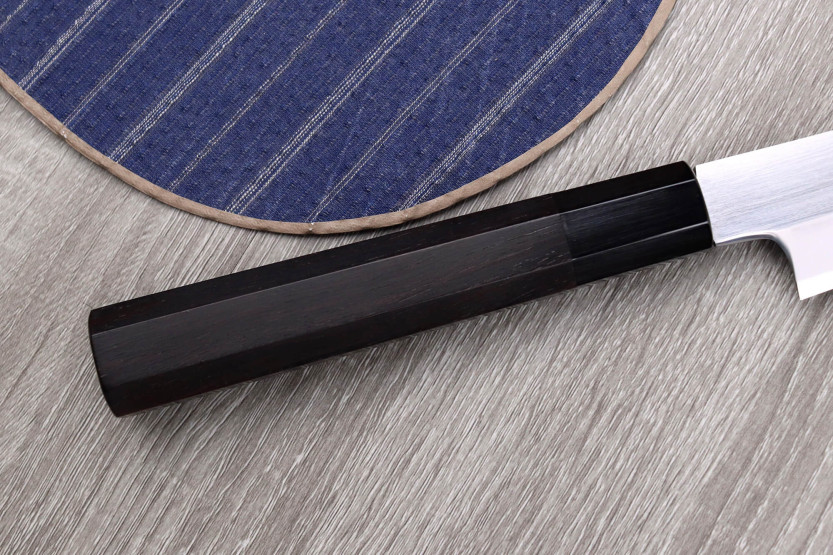
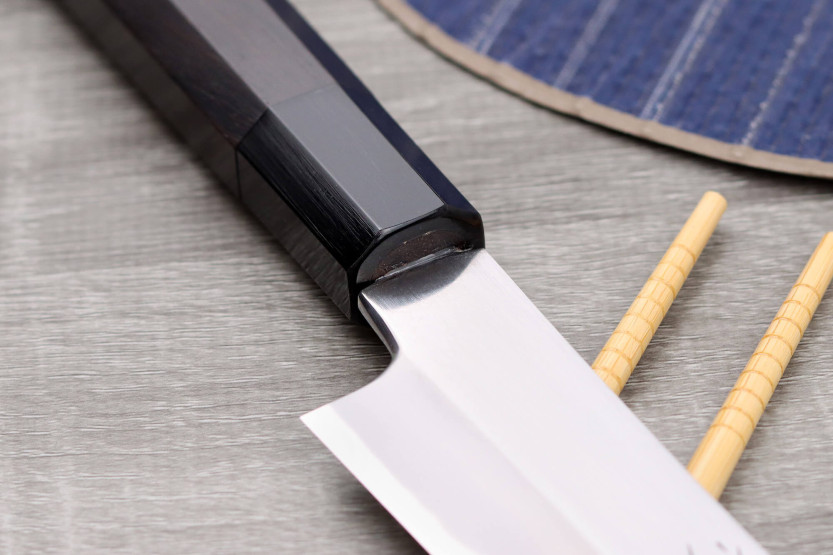
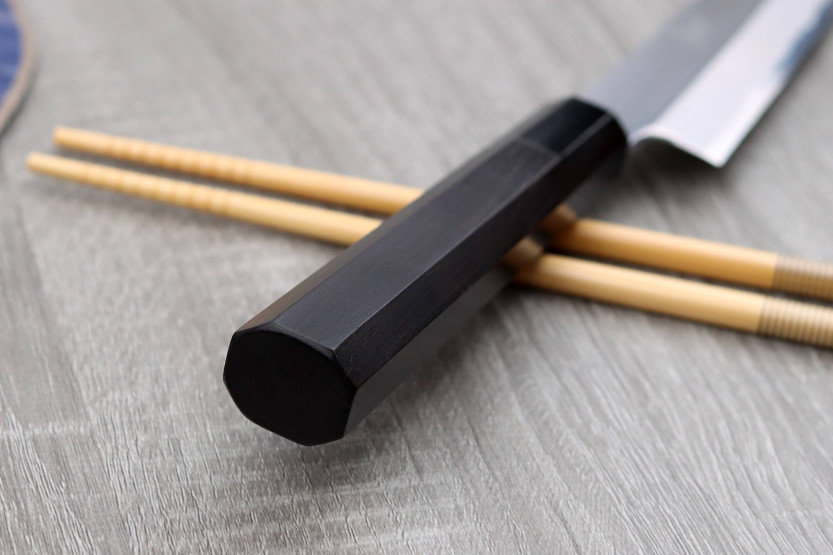
The handle of your Japanese kitchen knife is crafted from ebony wood, a precious tropical species renowned for its deep, almost black hue and high density. This superior material offers remarkable strength and natural resistance to cracking, guaranteeing long durability.
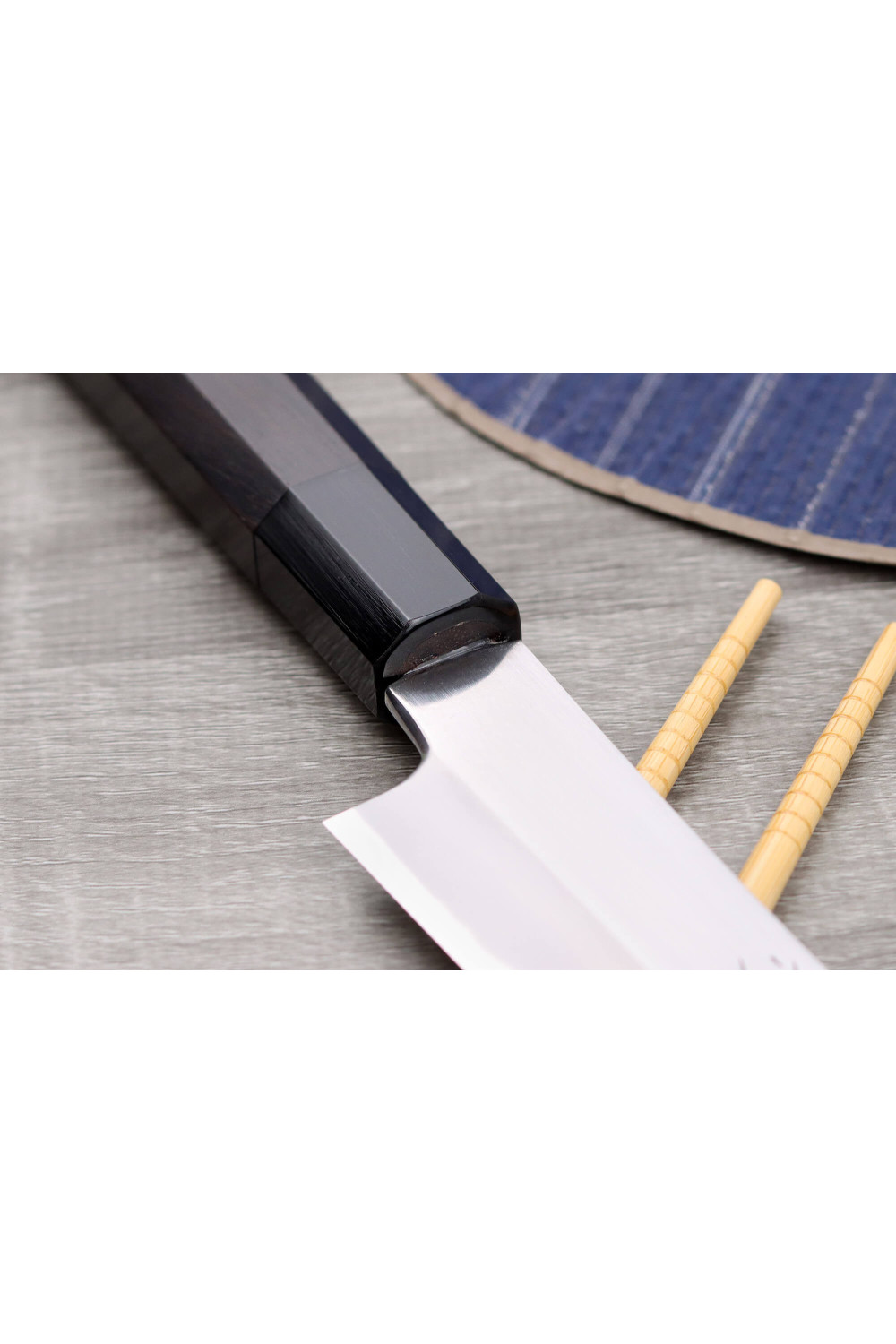
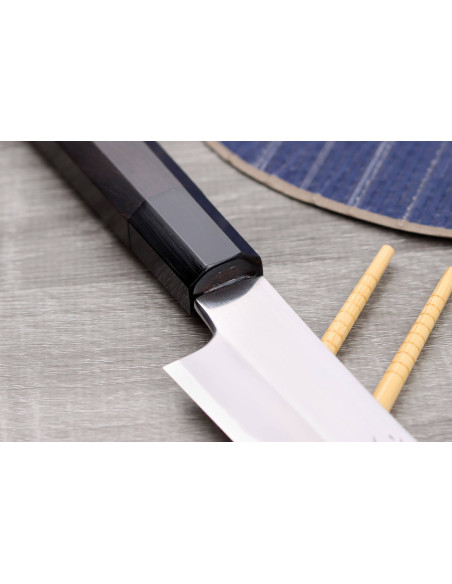
To enhance its design, a black buffalo horn bolster has been added. Each piece, made from this natural material, features unique variations, making each Masashi Yamamoto knife truly authentic and one-of-a-kind!
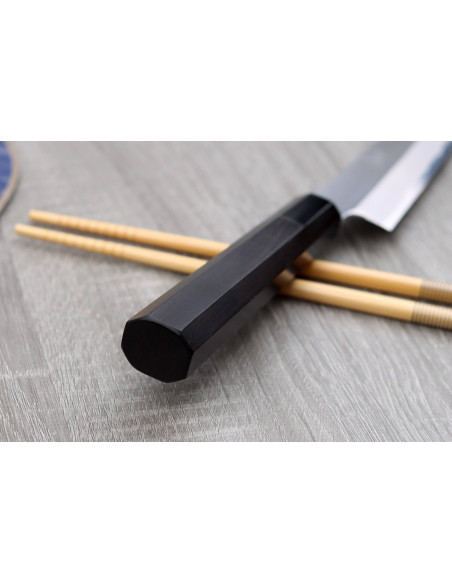
The octagonal-shaped handle offers a comfortable, ergonomic grip. Its design adapts to all hands, guaranteeing optimal maneuverability, even during prolonged use in the kitchen.
Finally, wood paste has been applied to the junction between blade and handle. This detail ensures an impeccable finish by filling the interstices, guaranteeing optimum watertightness and preventing any infiltration of water or food residues.
Caring for your carbon Japanese knife
To preserve the quality of your handcrafted Japanese knife, it is essential to clean it exclusively by hand using a soft sponge and a non-aggressive detergent, while avoiding exposing the handle to water. After washing, dry immediately with a dry cloth to remove all traces of moisture and store in a dry place. Do not use the dishwasher, or leave your knife to soak in water.
With the passage of time, it is normal for the color of your blade to vary slightly. This natural phenomenon is due to the reaction of carbon to the acidity of food and ambient humidity. Rest assured, this in no way alters the performance or quality of your sakimaru takohiki knife!
Discover damask knives on Knifeleader.eu!




 By buying this product you can collect up to