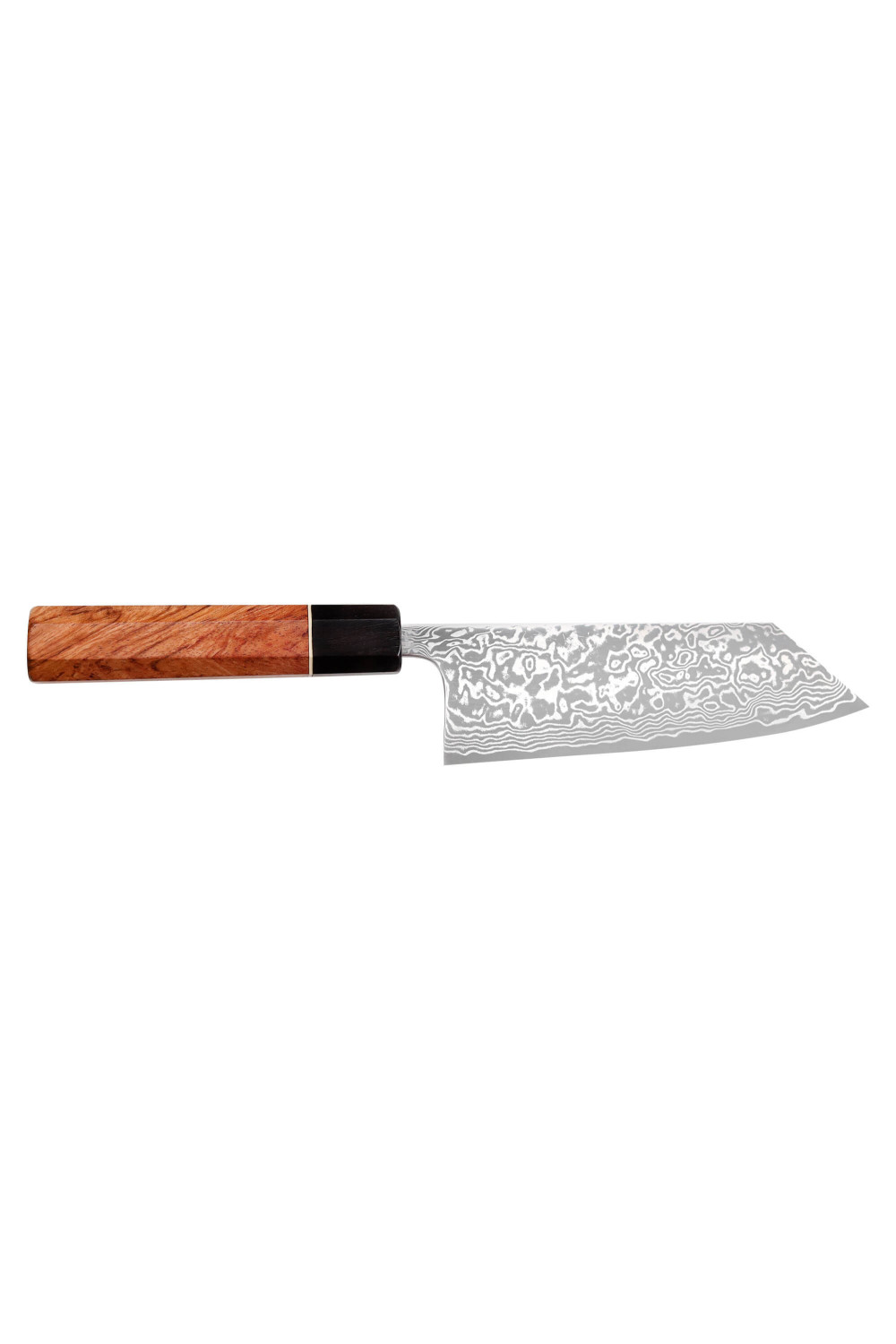
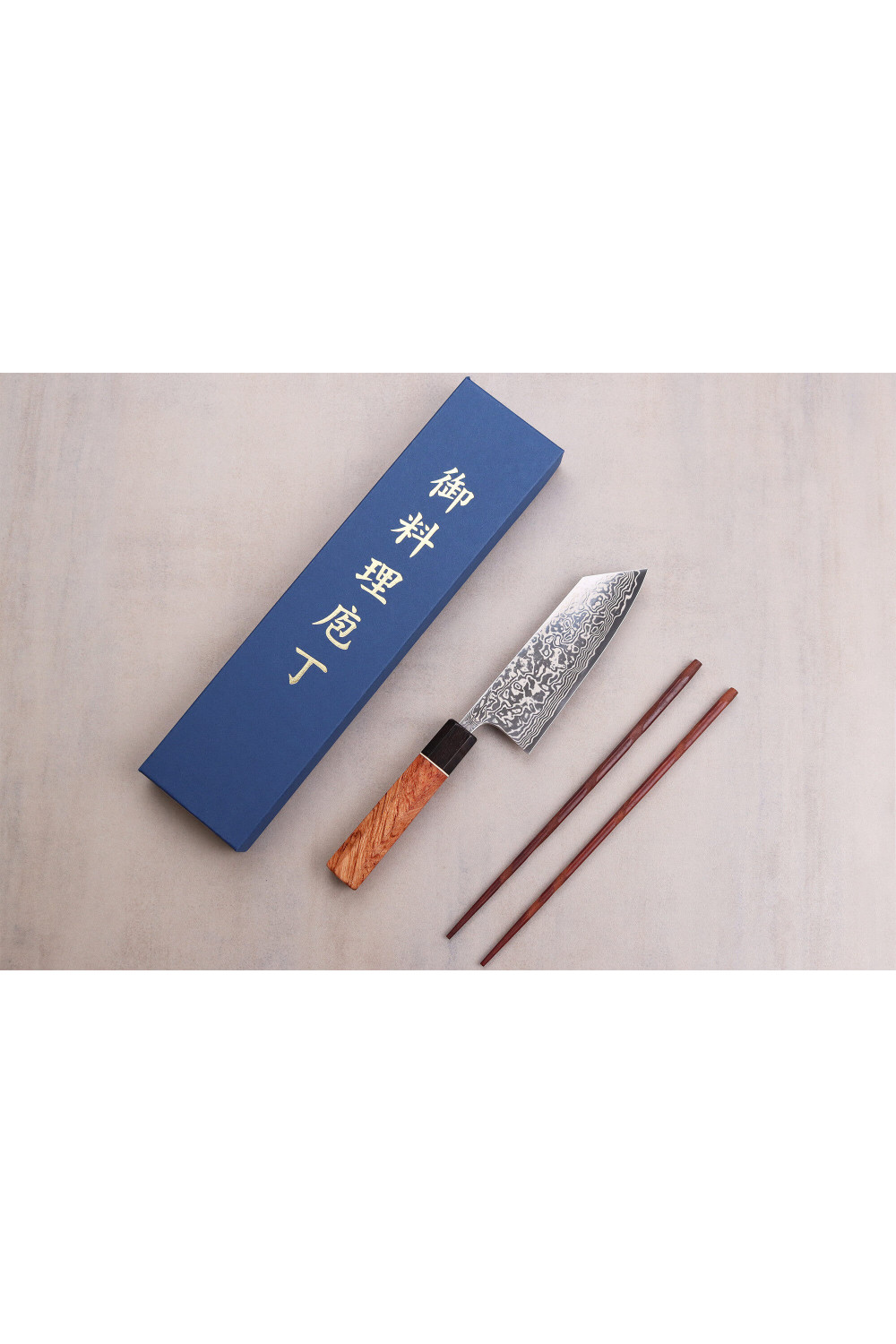
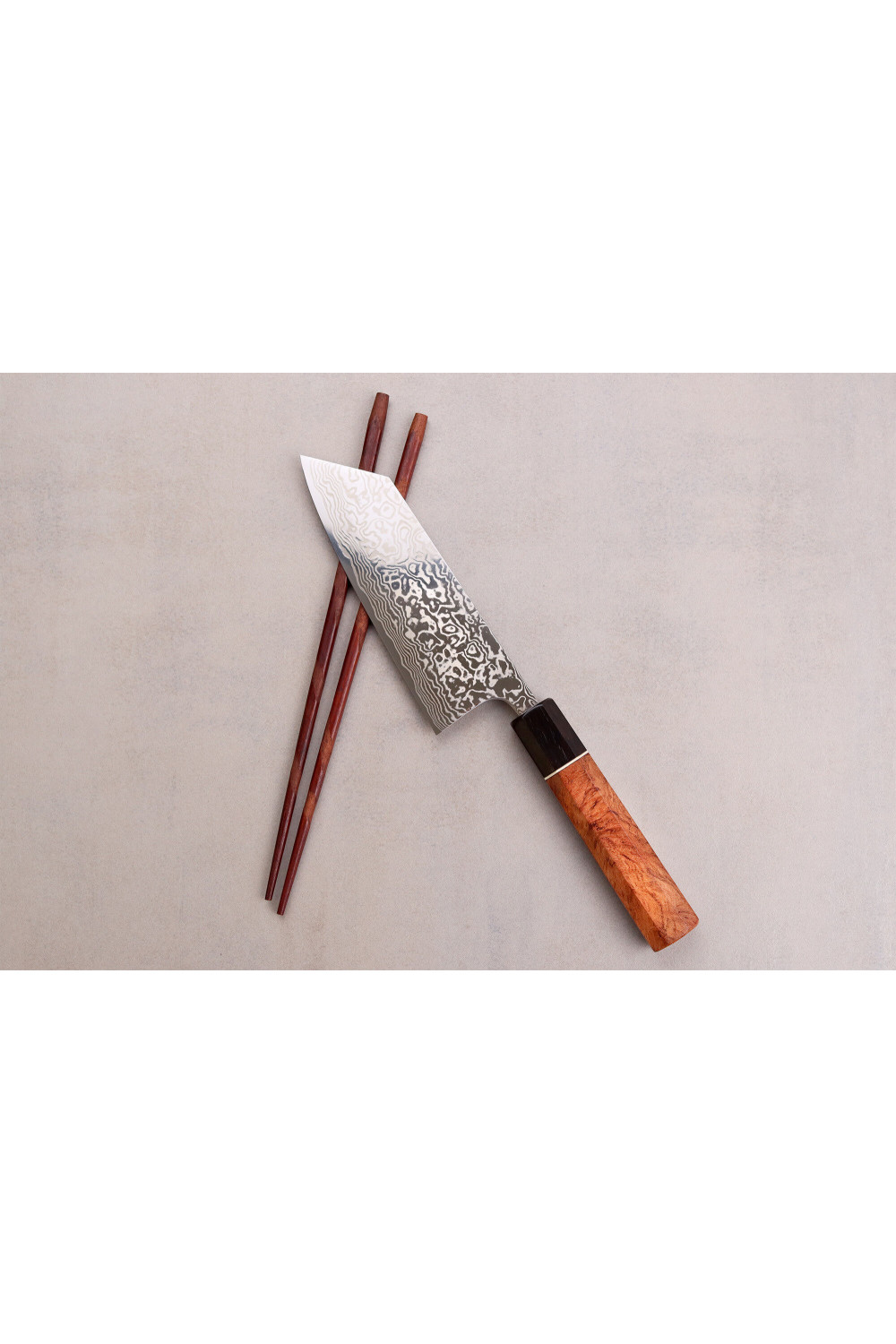
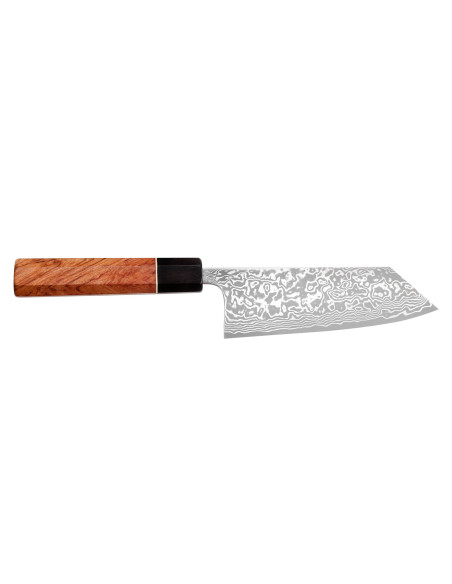
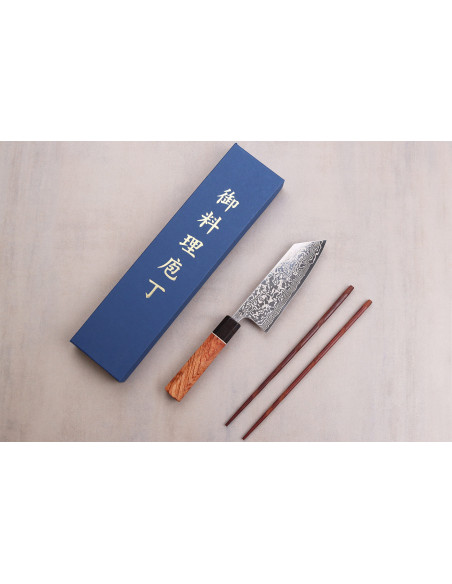
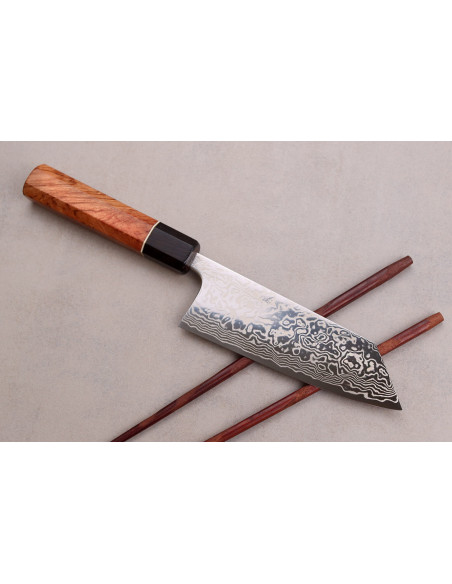
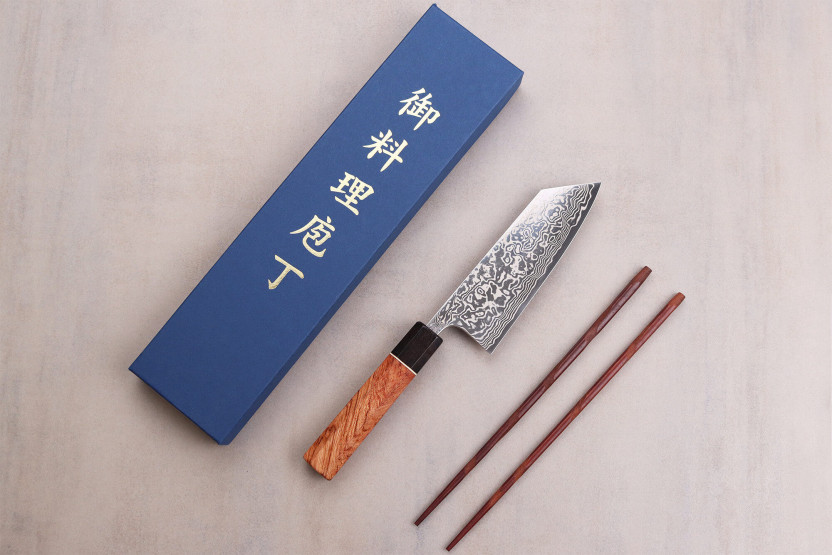
The ko-bunka knife in quality damascus
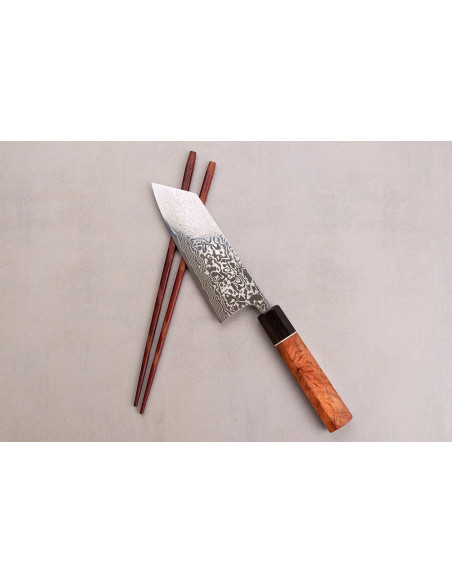
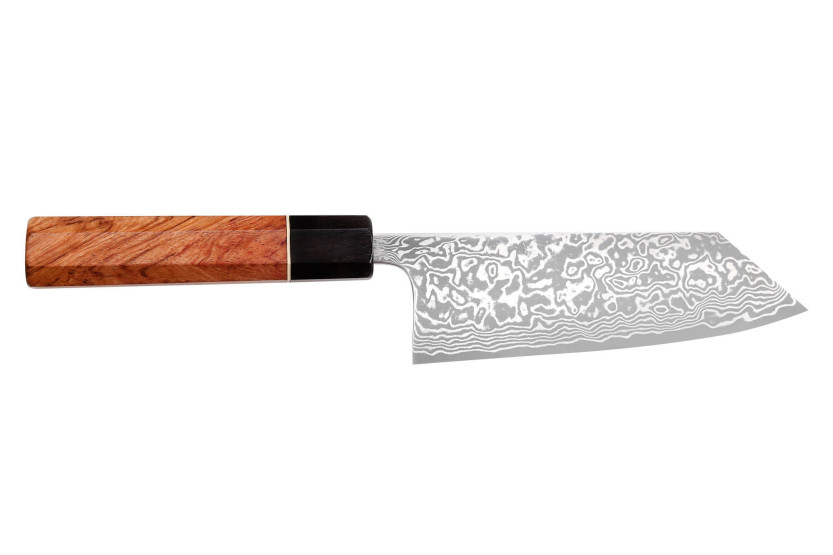
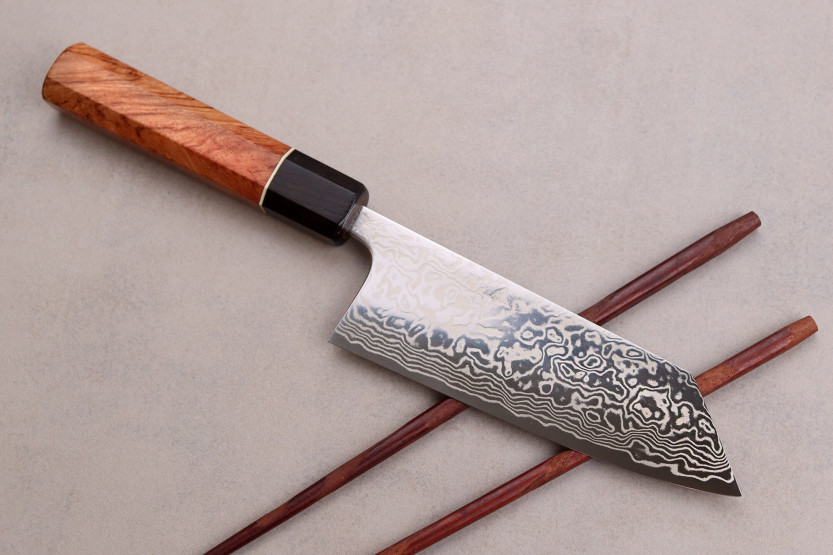
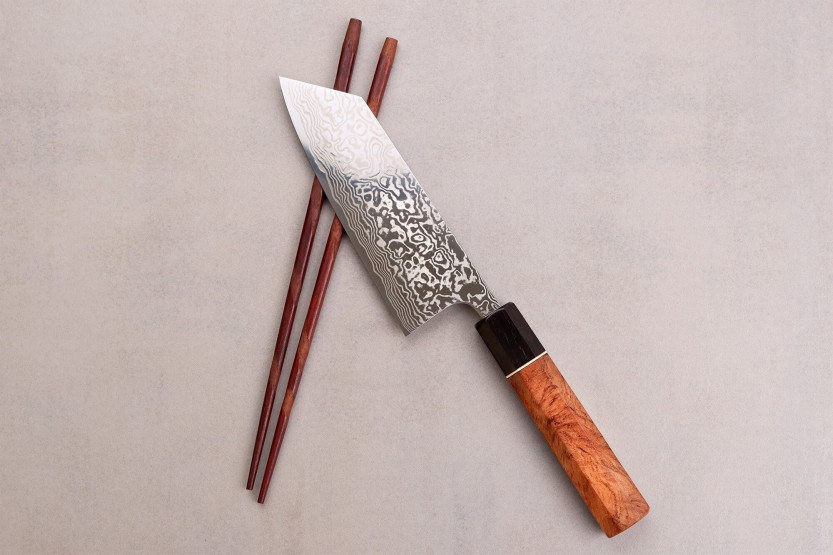
This Japanese knife features a damascus blade, a process used to design the blade. It consists of making a hard steel core and then covering it with several layers of softer steel to give it better balance. These outer layers make the knife softer and less brittle, while protecting the core.
This kitchen knife features a core of Japanese SLD steel. The famous steelmaker Hitachi invented this steel and gave it many advantages! It is enriched with 1.6% carbon: an essential element for increasing the hardness of an alloy, given that high hardness results in a longer-lasting cutting edge. With this high carbon content, this blade achieves up to 63HRC on the Rockwell scale, which proves that the blade has a rigid core that will last for a long time.
SLD steel also contains 13% chromium, the element that provides the best protection against oxidation. However, this alloy should always be considered as all-carbon, as it is still oxidizable!
In terms of its micro-structure, SLD steel also has its qualities: the micro-carbides of which it is composed are evenly distributed, resulting in a balanced structure. This makes it more resistant to wear and the risk of micro-cracking.
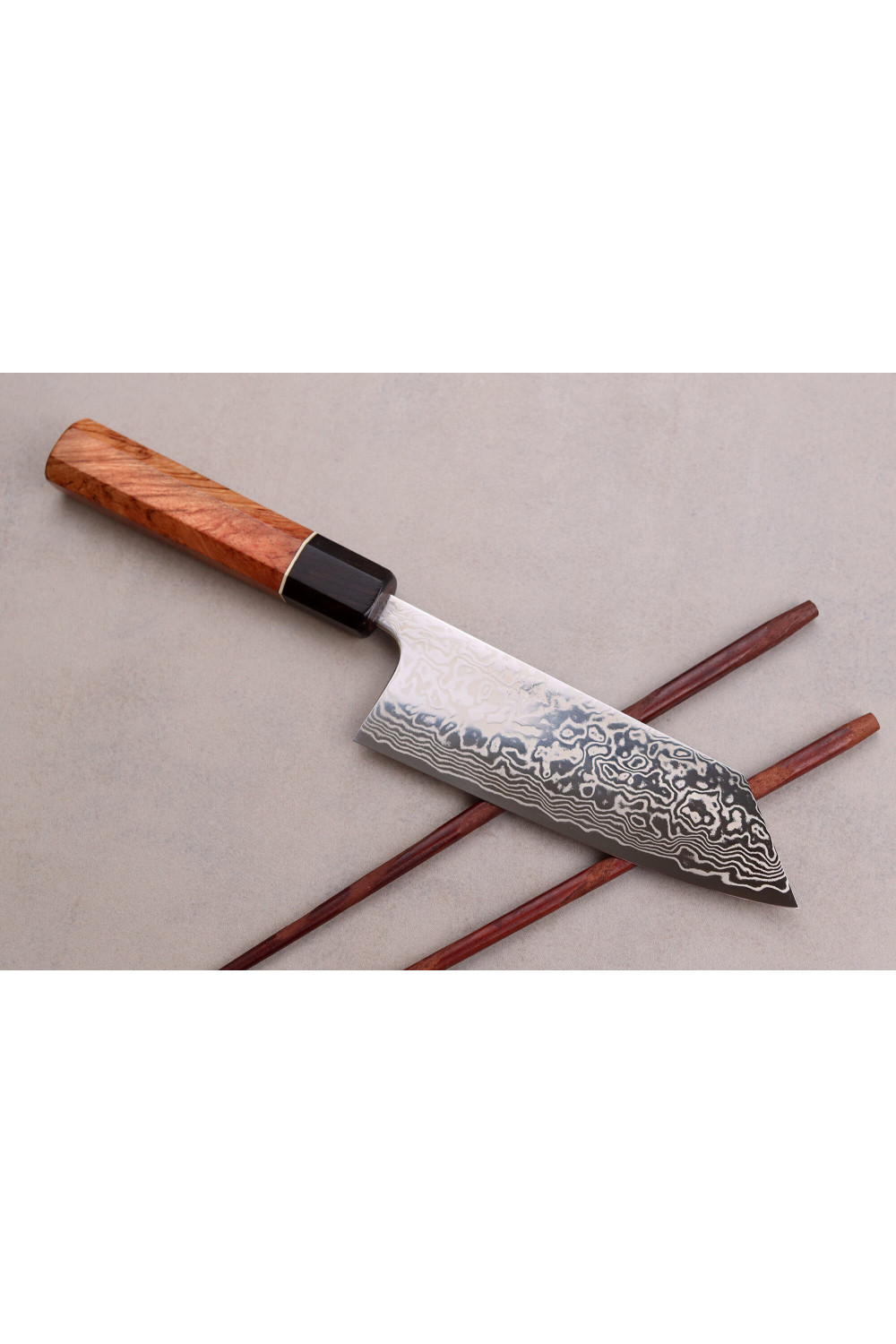
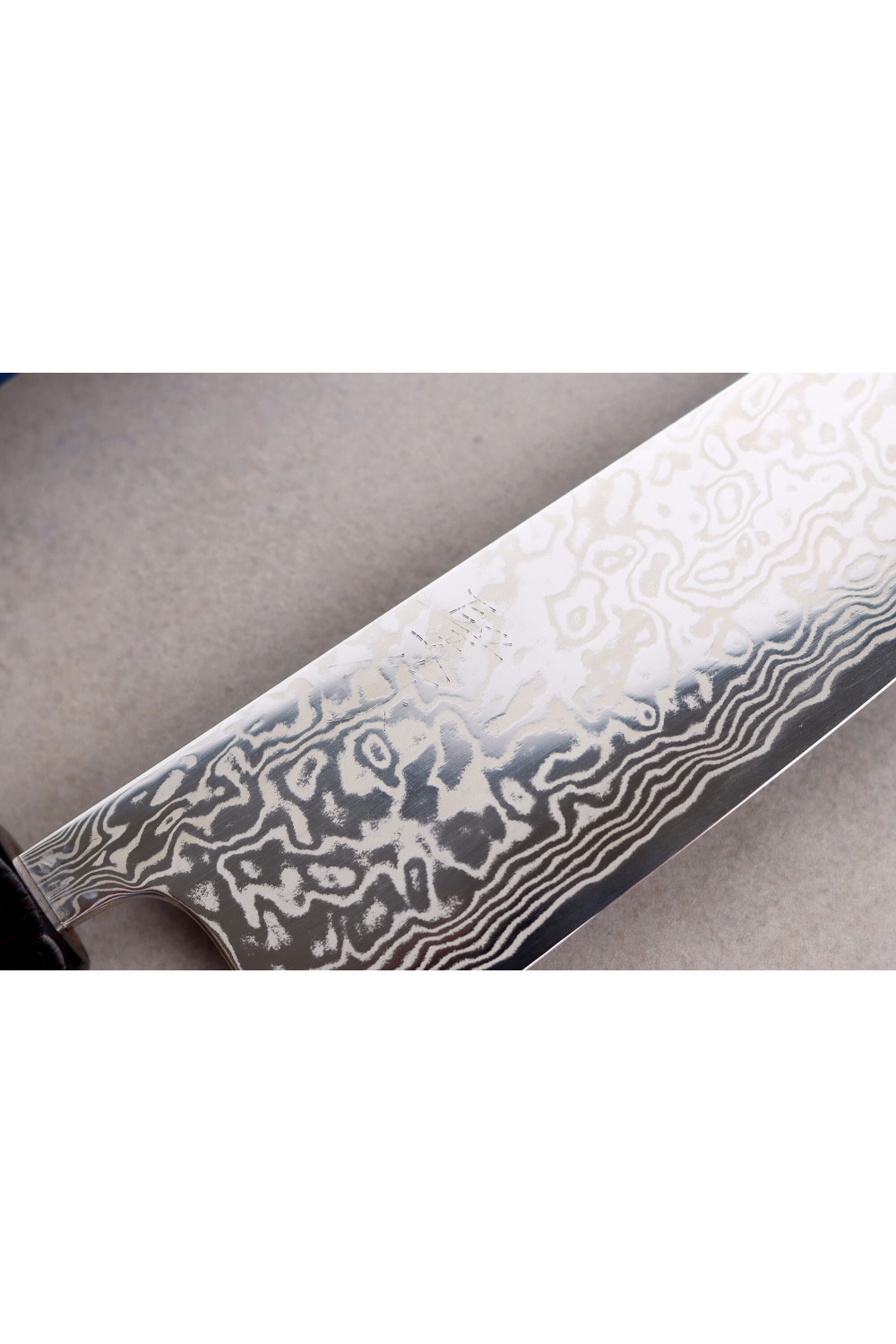
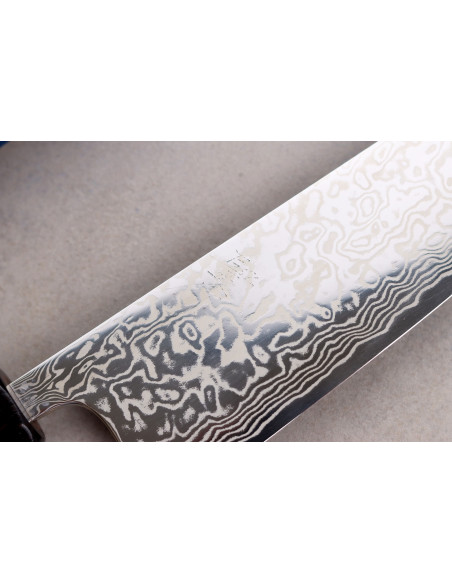
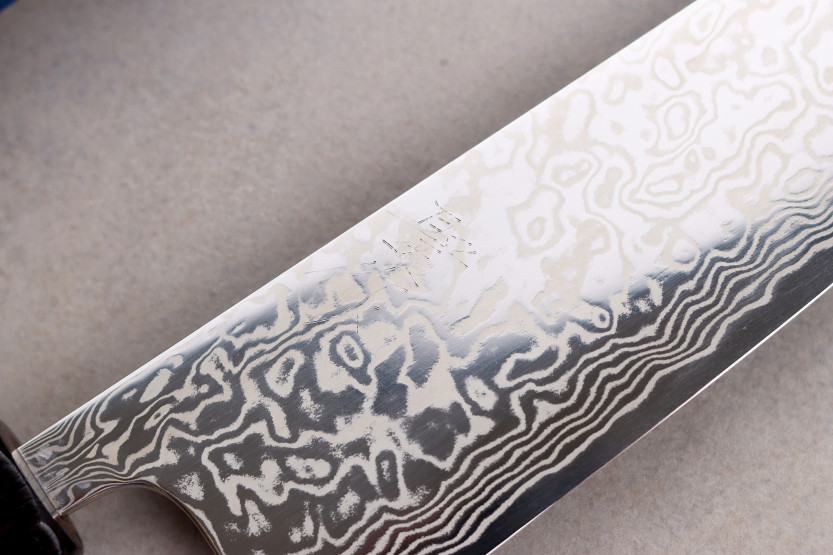
Continuing with the damascus design, the hard SLD steel core is surrounded by several layers of softer steel to protect it and balance out its hardness. The overlaying alloy is enriched with nickel, creating a color difference between the layers and random patterns on the blade surface.
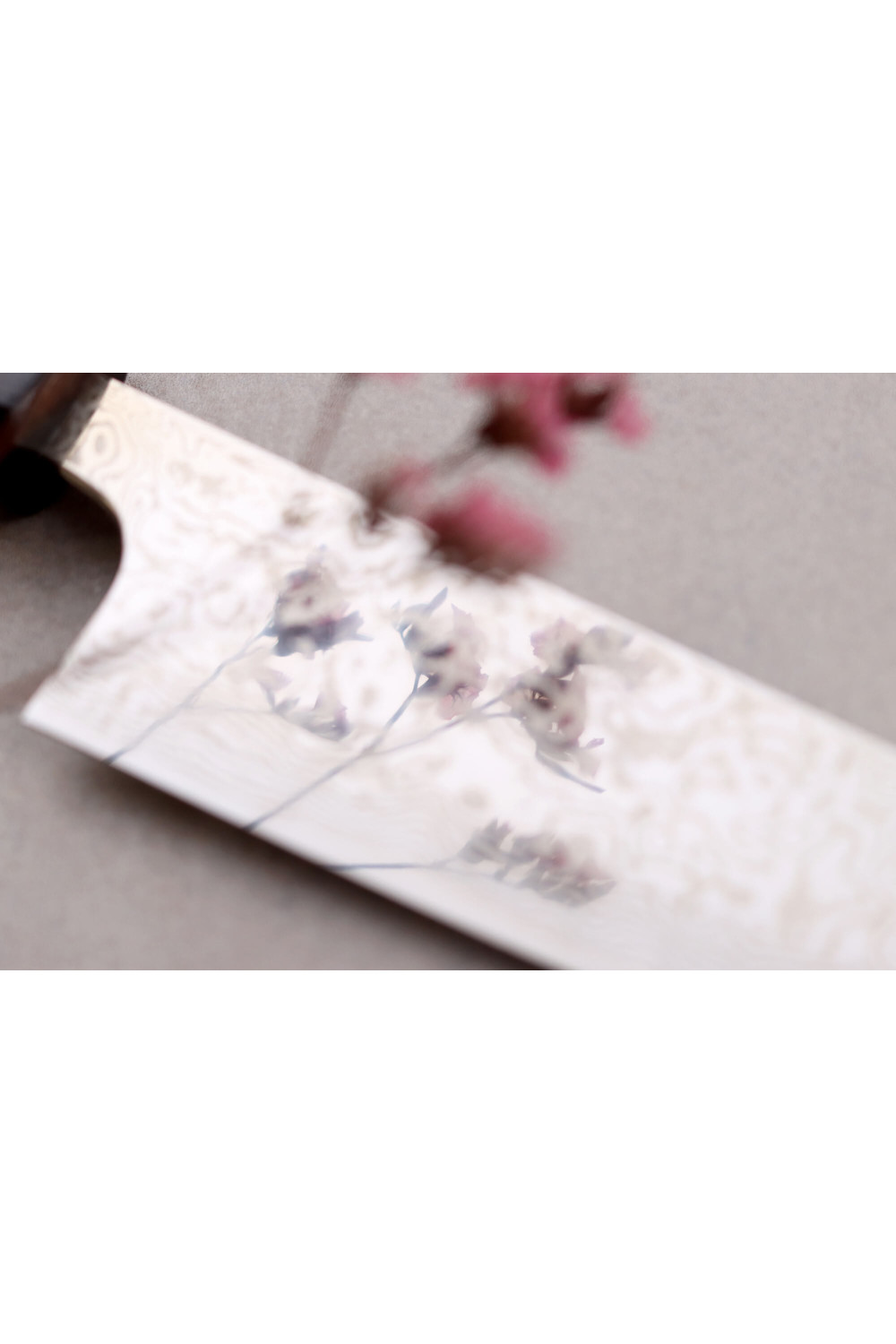
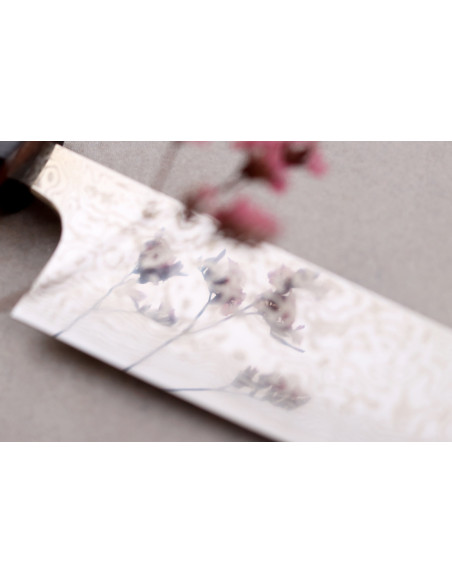
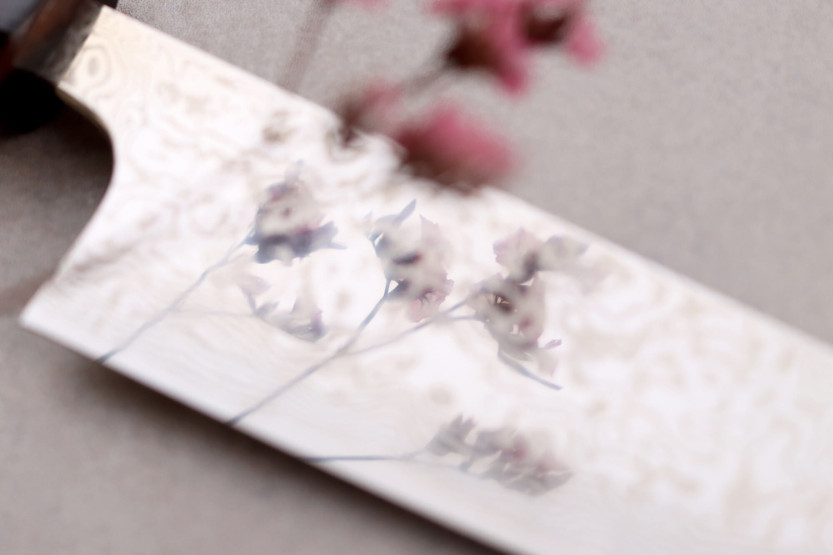
The blade has a polished mirror-effect finish that adds a touch of elegance. Hand-engraved kanji by Masashi Yamamoto can also be seen.
Note that Masashi Yamamoto knives have a thinner tip than the average knife. In fact, the thickness of the blade narrows as you reach its tip, making it more flexible and therefore easier to cut, with a more pleasant and natural feel in use. This is further proof of the expertise of this outstanding blacksmith. However, be careful not to press too hard, as flexibility has its limits!
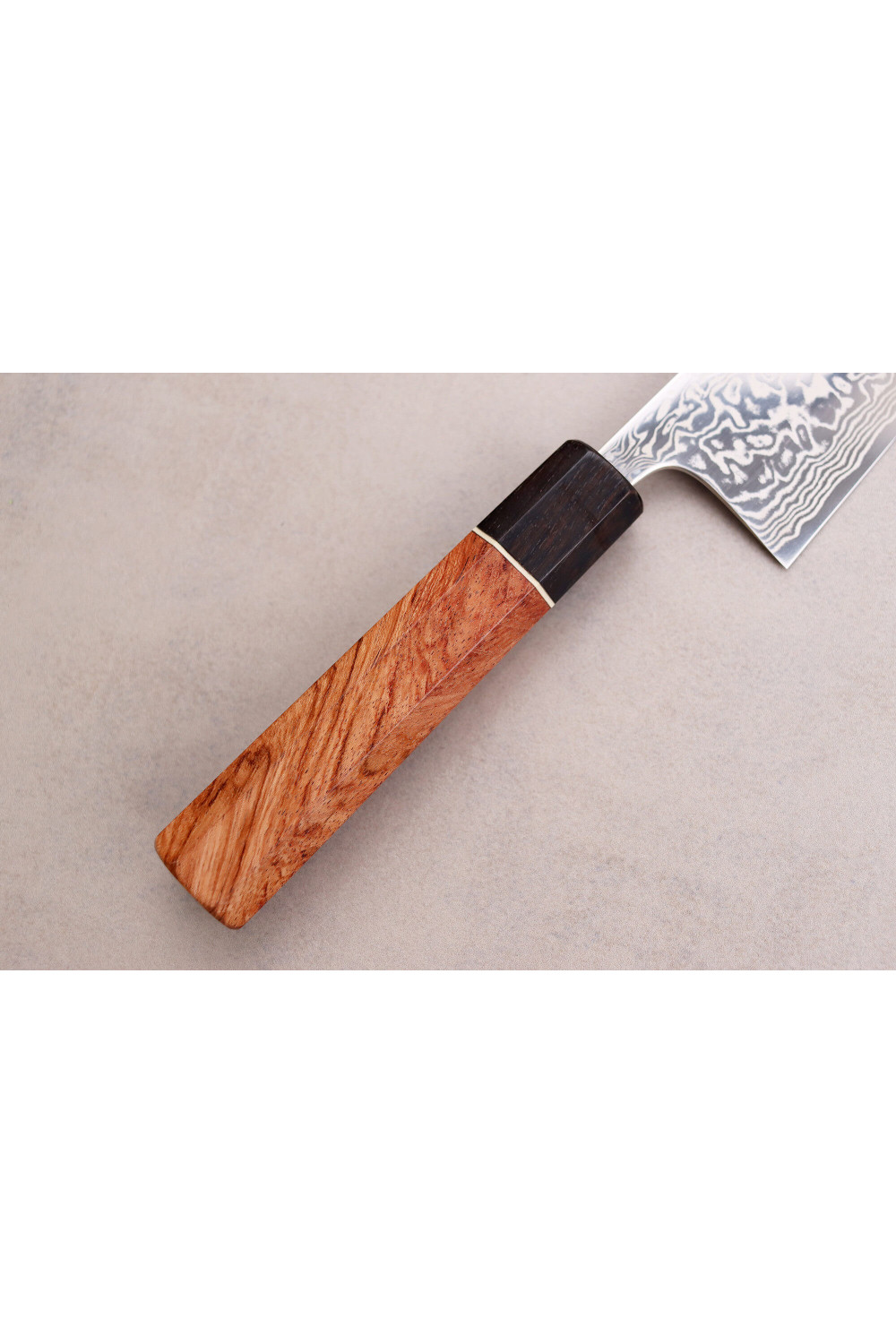
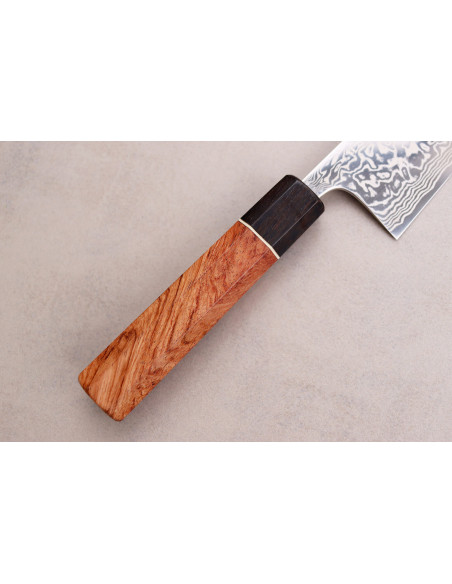
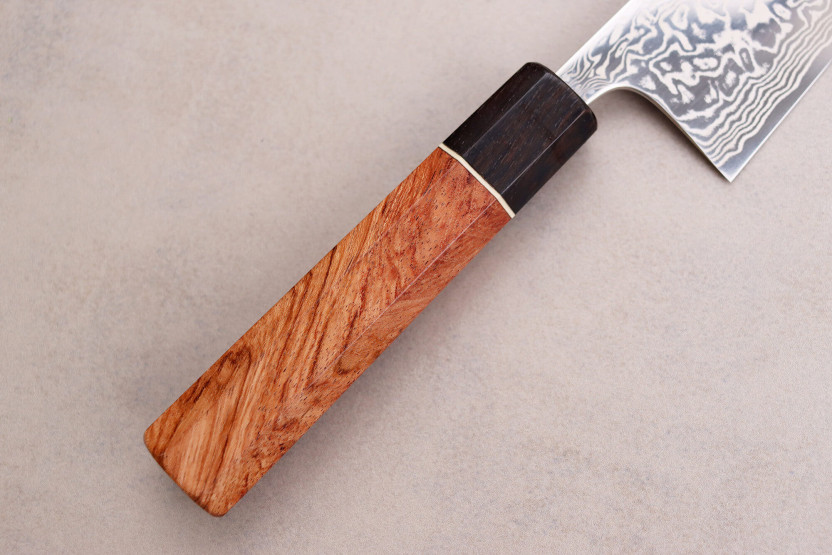
The blacksmith used quince wood to make the handle, a dense species that resists humidity and handles temperature changes very well. Its octagonal shape gives you an optimal grip for perfectly controlled handling. It is suitable for both right- and left-handed cooks, to suit the widest range of users.
The handle is accompanied by a darkebony bolster that blends perfectly with the quince wood. These two parts are separated by a white micarta ring that adds a touch of refinement.
To fill the small gaps where the blade fits into the handle, wood paste has been added. This makes them watertight, preventing small foodstuffs and moisture from becoming embedded when cutting.
The ko-bunka knife is typically Japanese! It's a multi-purpose knife, and with its small size, the blade is very easy to handle. It's a small version of the bunka ("ko" means "small") and its use is similar to that of a santoku. Be careful not to use it on too hard foods such as squash, cheese wheels or bones.
The story of Japanese craftsman Masashi Yamamoto
This knife was forged by Masashi Yamamoto, an exceptional young craftsman! He learned his craft from his family, including training with his older brother until 2013. It was then that he decided to turn his passion into a profession and open his own workshop.
The knives he makes are one-of-a-kind pieces and are renowned for their high blade hardness: a process appreciated by Japanese chefs. He achieves this hardness through special technical and heat treatments. With his distinctive style and young age, he's already passing on his skills to two apprentices! Anecdotally, it's not unusual to see him forging his knives in flip-flops with a cigarette in his mouth.
Maintenance of a ko-bunka Japanese knife
This Japanese knife should be considered oxidizable, and should not be put in the dishwasher or left to soak in the sink.
For best care, it must be hand-washed with a sponge and mild detergent. Once washed, dry and store in a dry place.
Over time, the blade may change color: this is normal! This is a natural carbon reaction caused by the acidity of the food you're cutting and the humidity in the air.
To accompany it, discover our top-of-the-range cutting boards on KnifeLeader.eu!




 By buying this product you can collect up to