Japanese blacksmith Kisuke Manaka is a fifth-generation member of the Manaka Hamono cutlery company, founded in Kasukabe in the 1870s. This town is located in Japan's Saitama prefecture, and it was here that the craftsman learned all the different aspects of forging techniques.
Kisuke's interest in forging began when he married into the Manaka family. His father-in-law (representing the fourth generation) had not mastered the art of forging: he was a dealer in knives that were not entirely handmade, relying on the reputation of the Manaka forge. Kisuke therefore taught himself with the books and tools left by his third-generation step-grandfather.
To complete his training, Kisuke Manaka has surrounded himself with the great names of Japanese cutlery, such as Hinoura Tsukasa, who has been awarded numerous titles, including Master Traditional Craftsman.
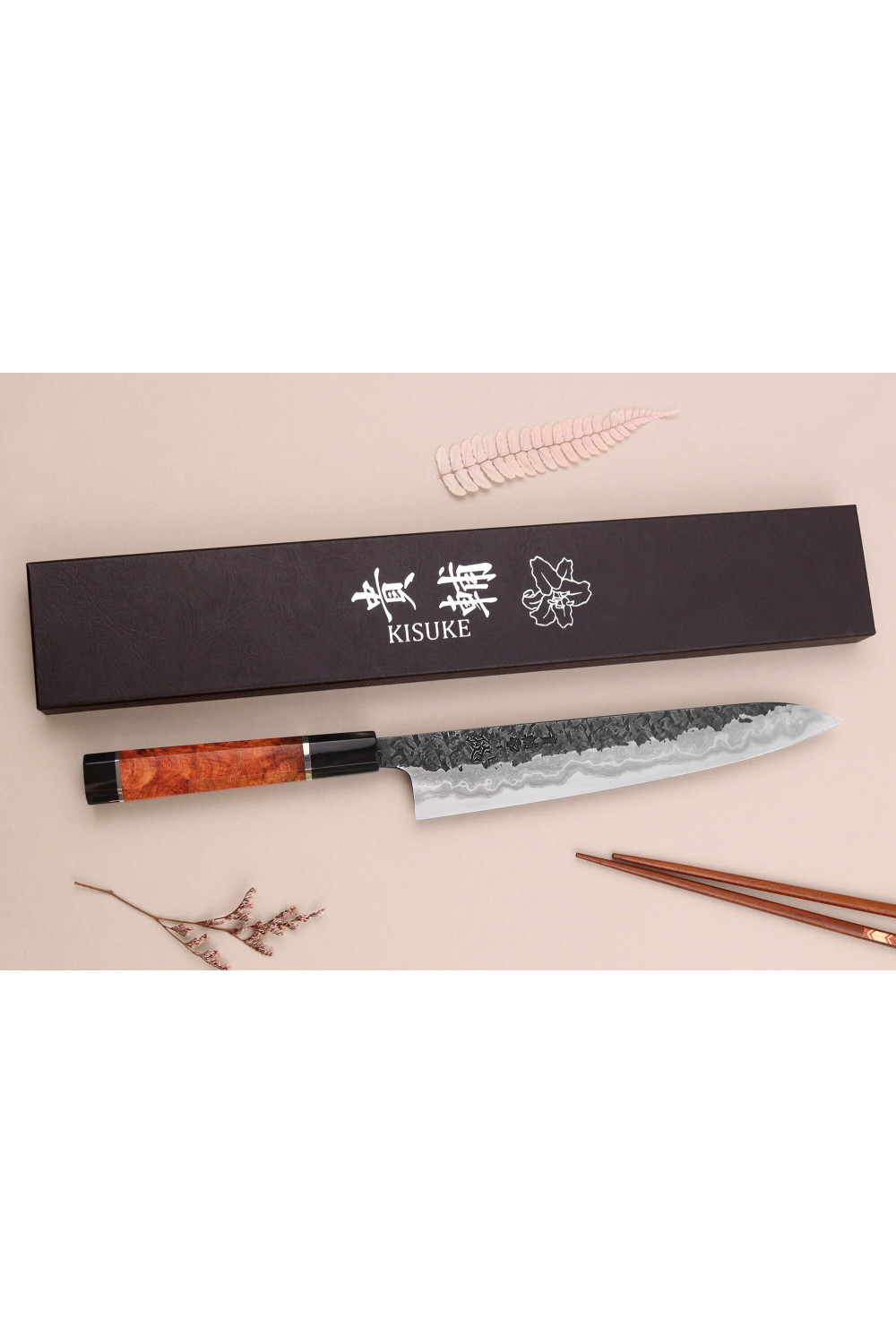
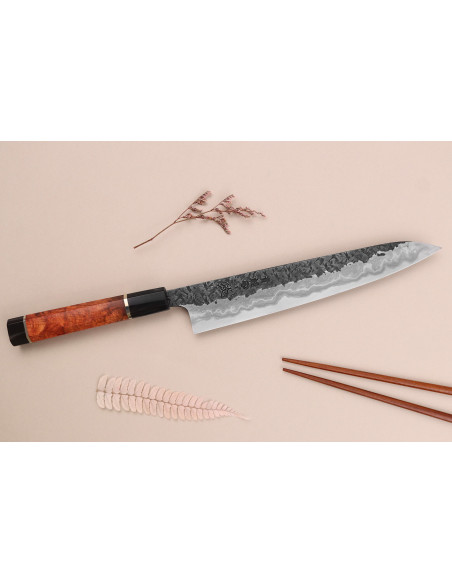
Today, blacksmith Kisuke Manaka masters all forging stages, as well as complex techniques such as warikomi on stainless steel. His most prestigious range, renowned for its top-quality workmanship, is the Enn series: to this day, it is no longer produced, which adds even more uniqueness to this sujihiki knife!

A damask knife with a top-of-the-range blade
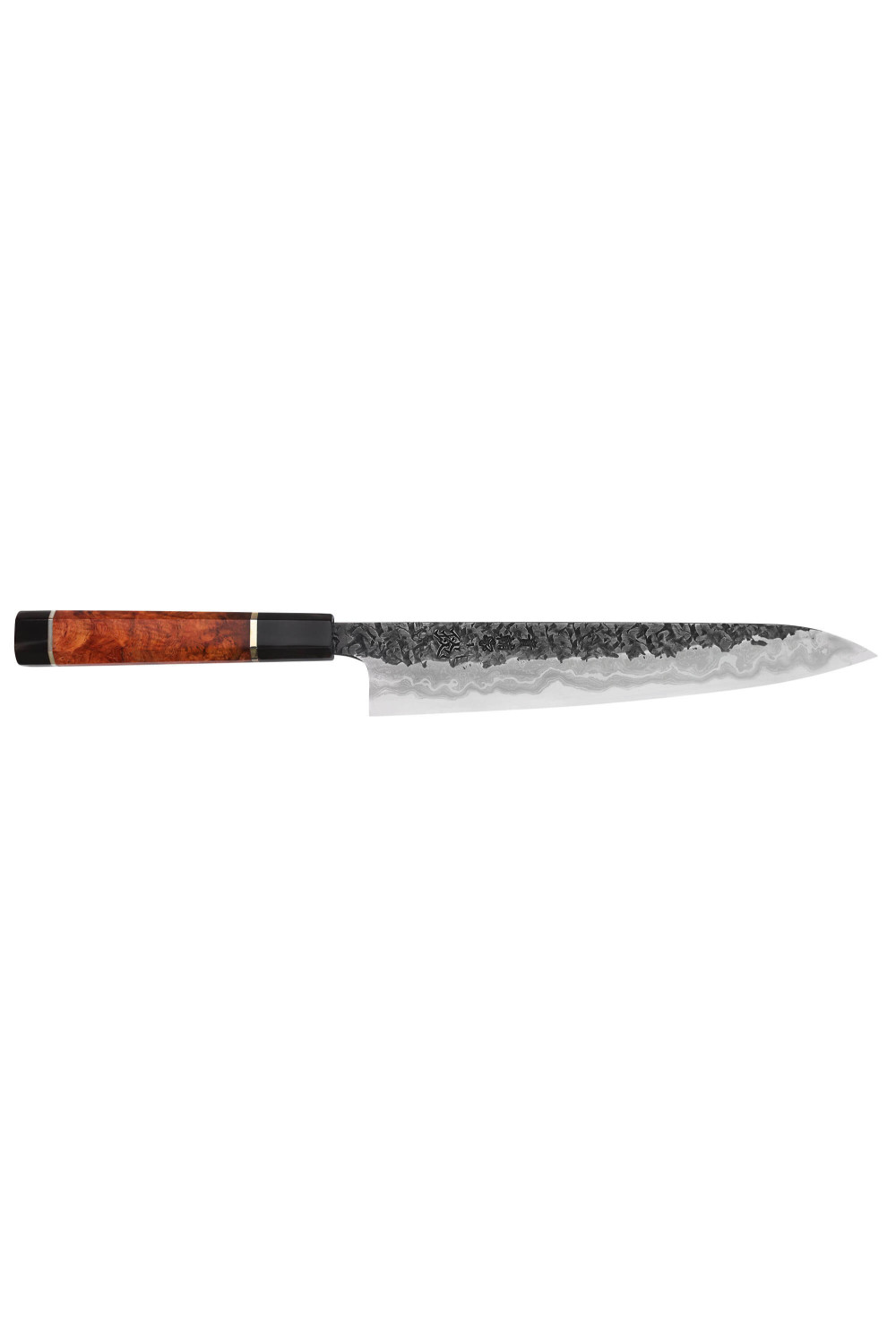
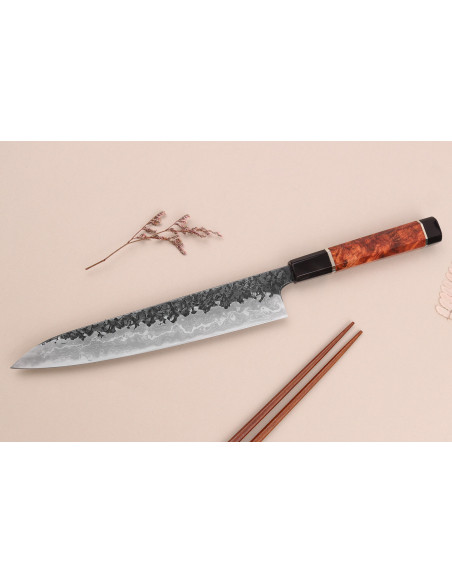
This handcrafted Japanese knife features a damascened blade, a method that consists of forging a rigid steel core which is then covered with several layers of softer steel. This technique balances the hardness of your blade and prevents it from becoming brittle with use, while protecting its core.
The damascus on this blade is entirely handmade by craftsman Kisuke Manaka, who masters damascus lamination to perfection. To forge his damascus, he uses the Warikomi process, which requires great precision: a flexible steel is heated to high temperature, then split to insert a rigid steel bar with a special powder, the materials are then welded together. This is a time-consuming process, and Manaka san uses only traditional techniques to forge its handcrafted knives!
The core of this blade is made from Japanese Aogami #1 steel (also known as Blue Paper Steel #1), produced by the internationally renowned steelmaker Hitachi. The name of this alloy literally means "blue paper", and refers to the way in which it is conditioned at the time of manufacture.
Aogami #1 steel has a high carbon content of around 1.3%. This key element increases a steel's hardness, since the higher the hardness, the greater the cutting efficiency. On the Rockwell scale, its hardness is 63HRC: you benefit from a high-performance cutting edge and excellent edge retention!
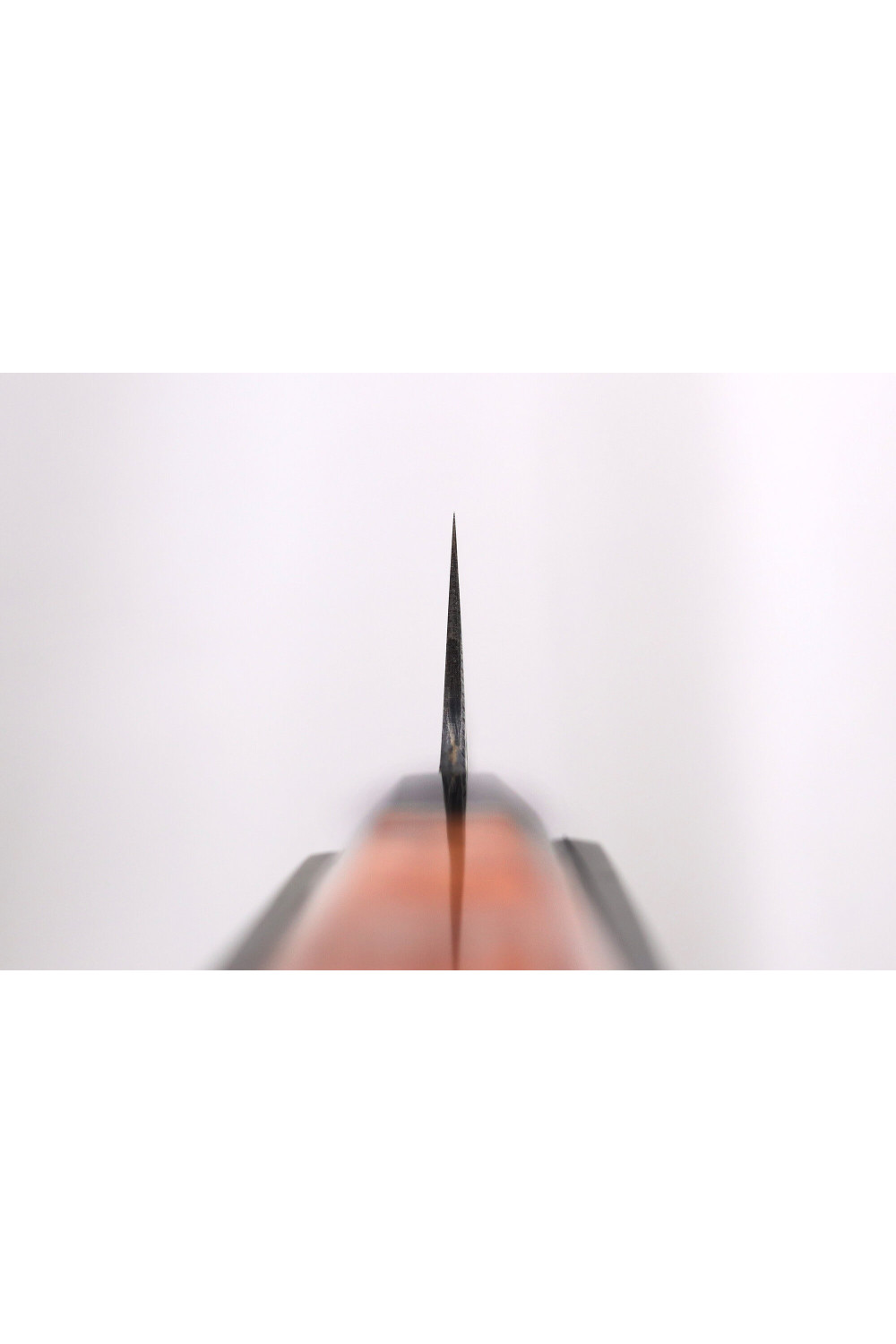
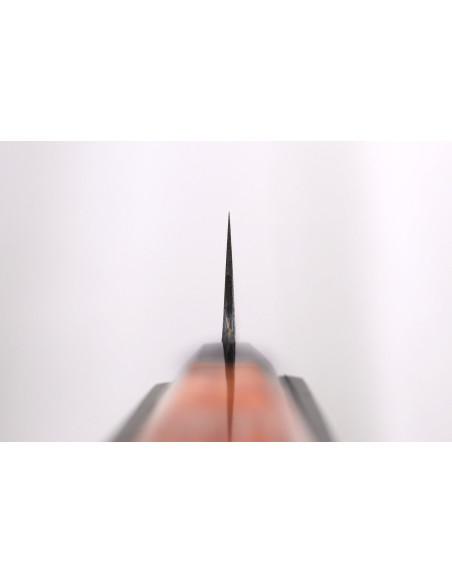
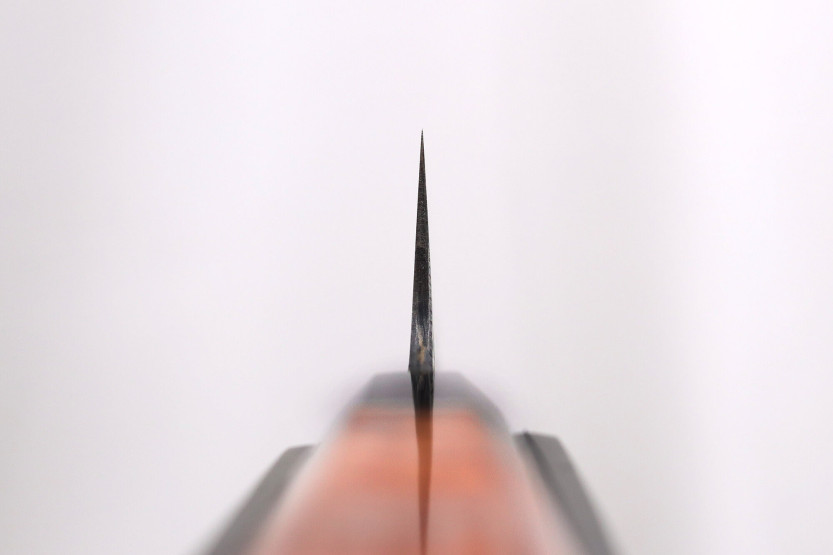
What's more, the cutting edge of this blade has also been handcrafted by the blacksmith! He used different grit sharpening stones for greater precision. The blade is flat, giving it a razor-sharp edge for better food penetration. In general, a flat grind presents a neat appearance that is relatively easy to resharpen and is very sturdy!
To complete the damascus finish, the core is coated with several layers of iron and Aogami #2, softer steels that balance out its hardness. These layers also guarantee better protection against micro-shocks. All the materials used are oxidizable, and your handcrafted Japanese knife must be carefully maintained to avoid any risk of corrosion.
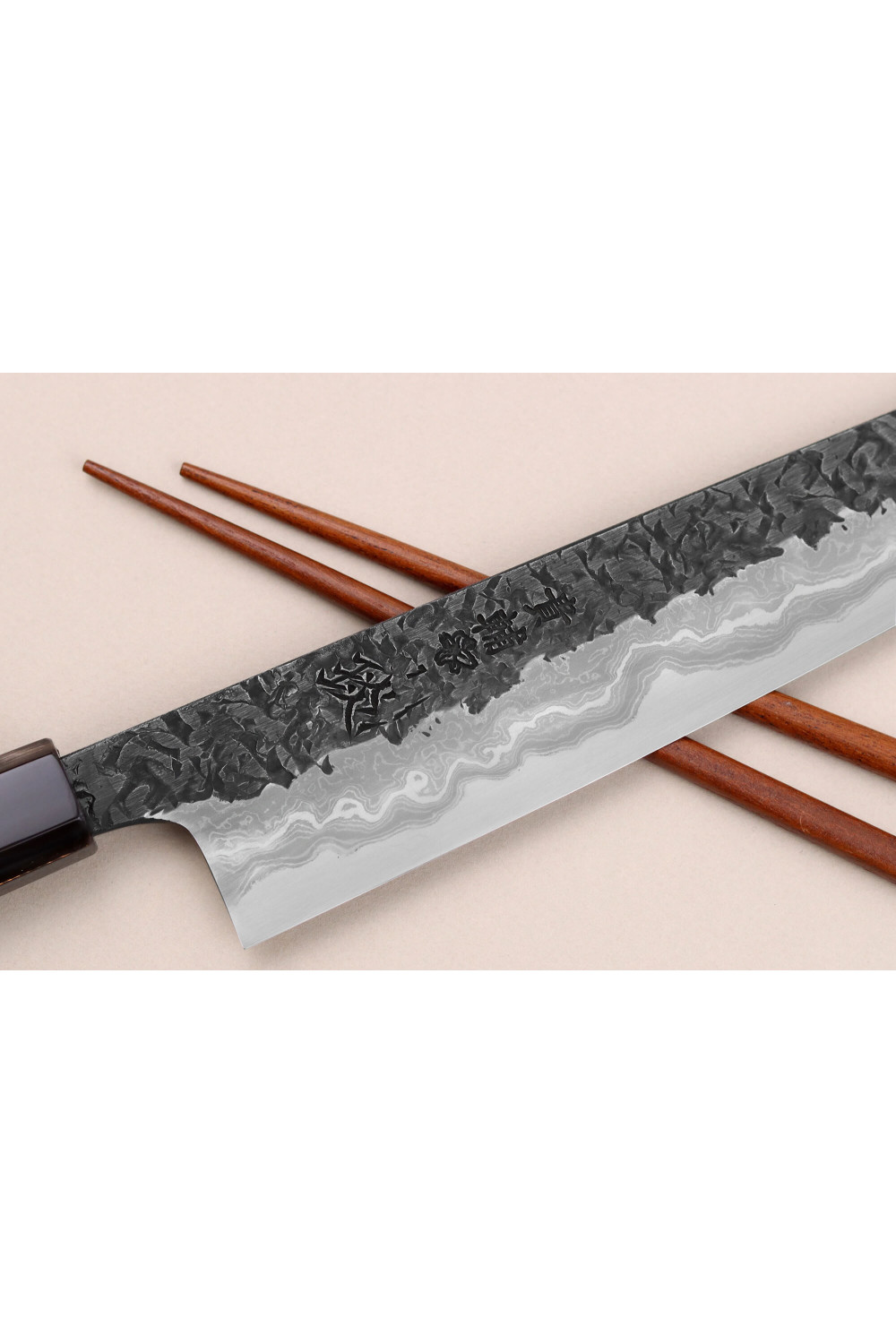
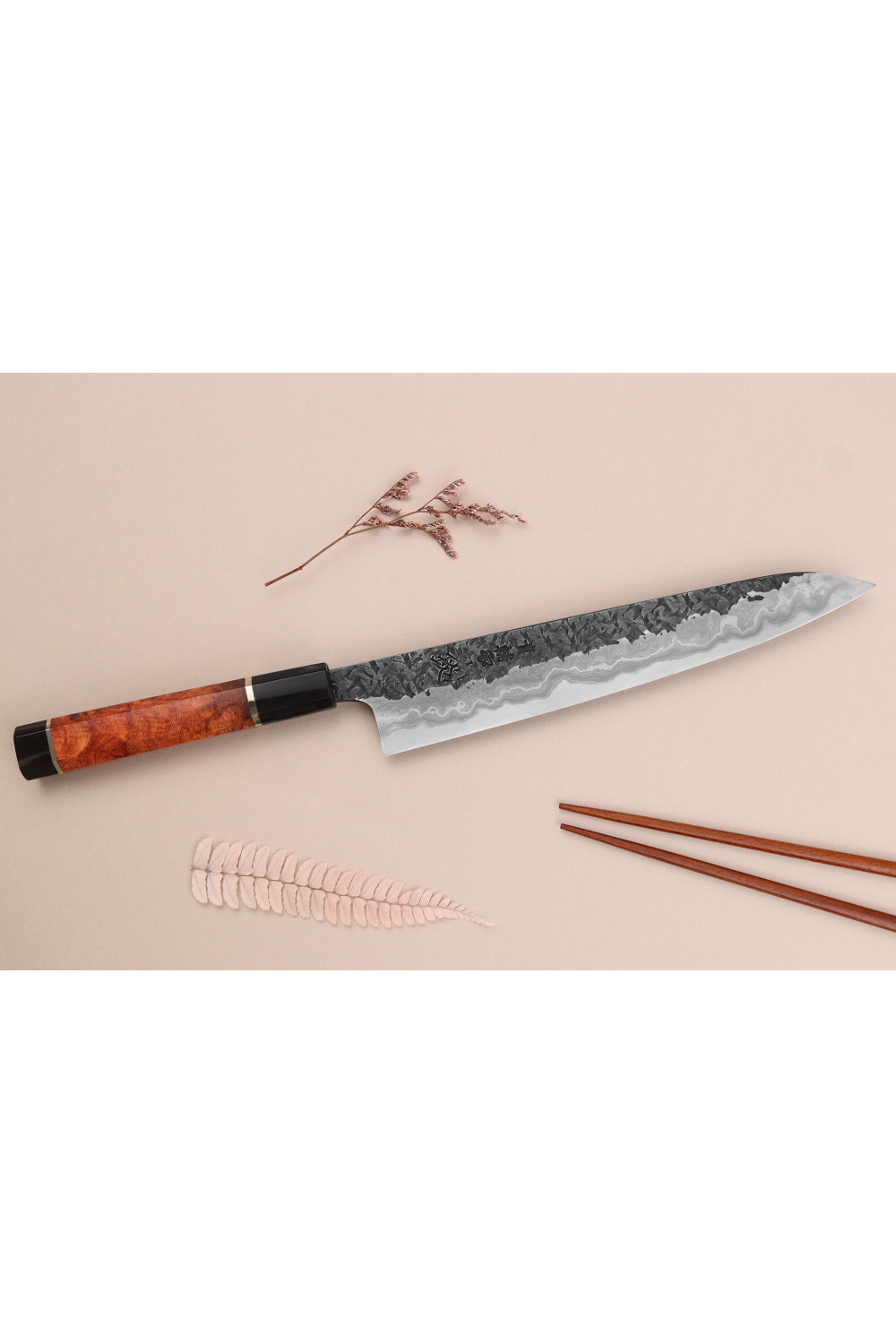
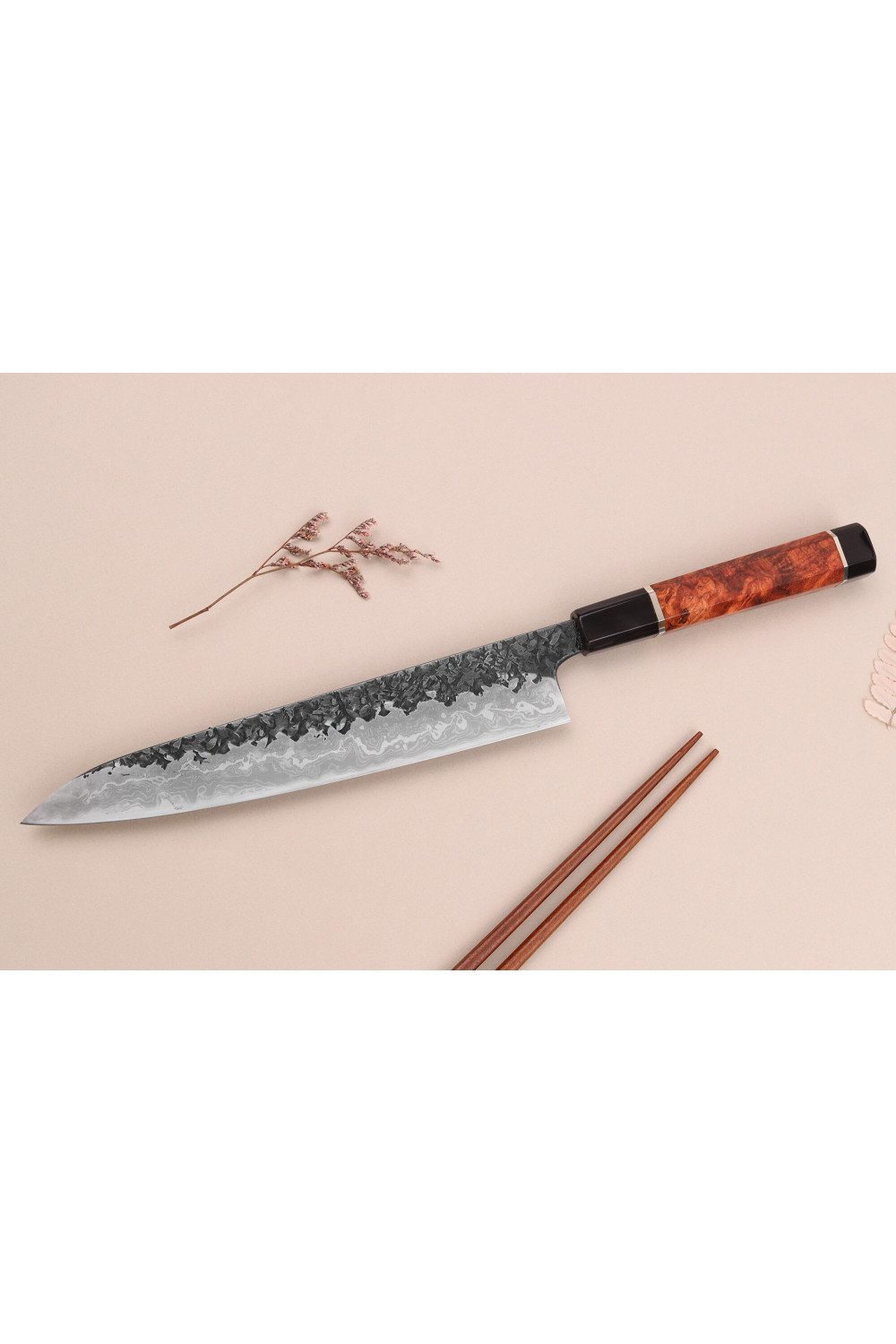
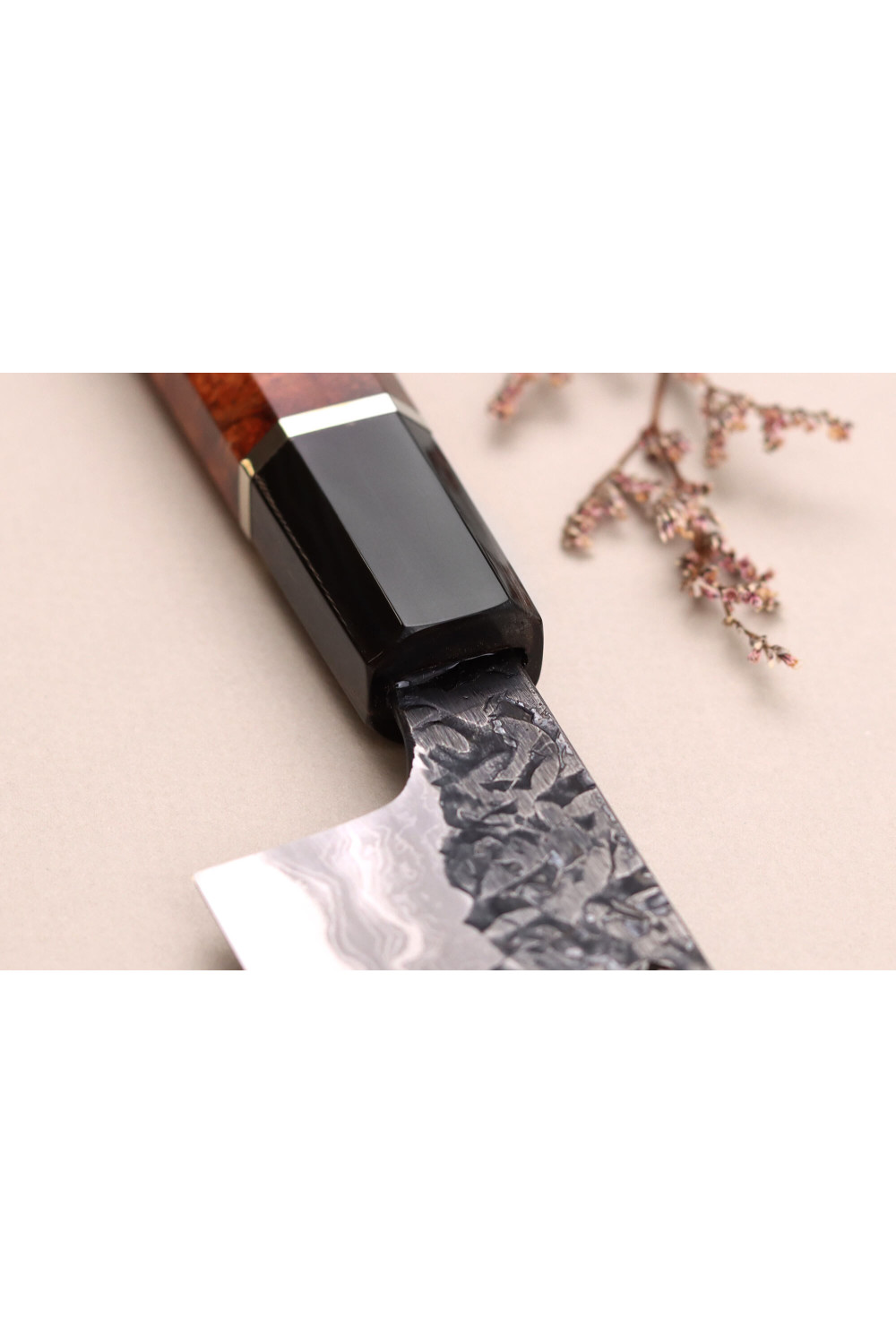
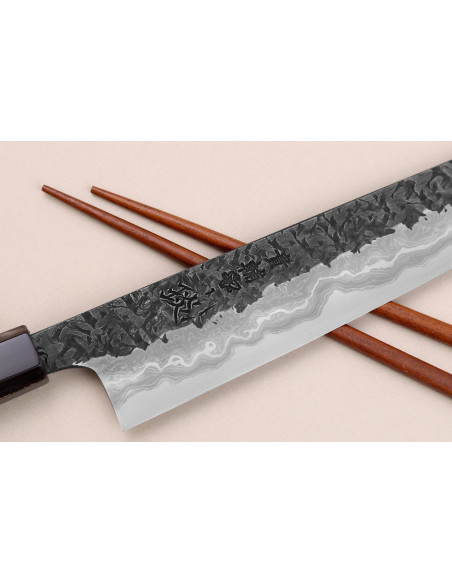
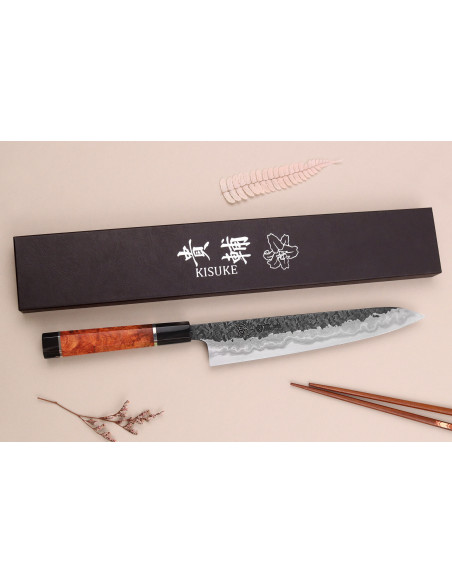
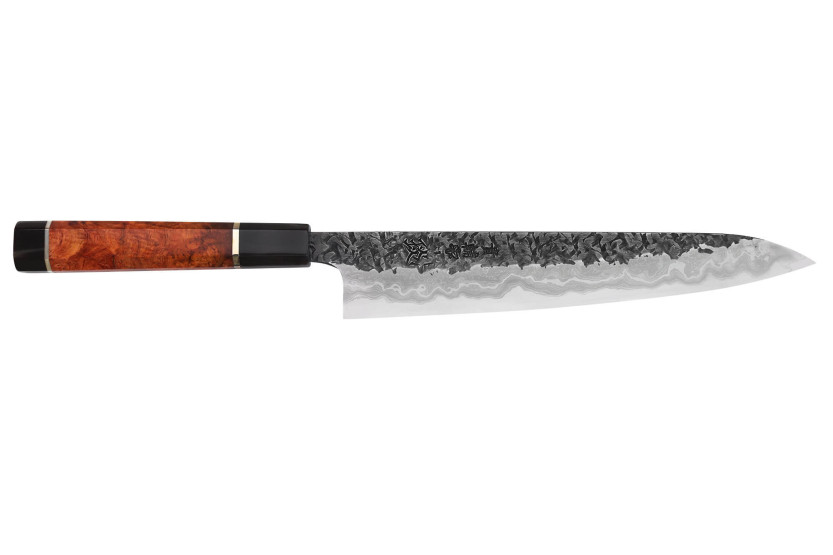
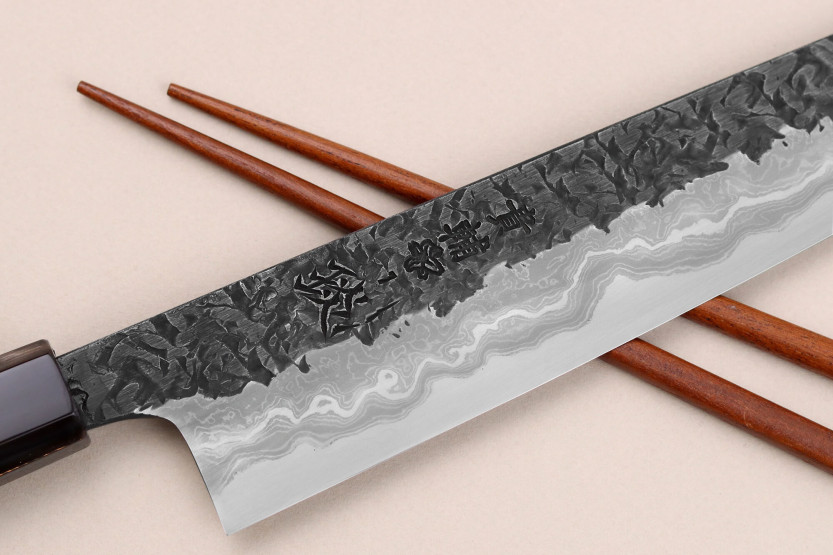
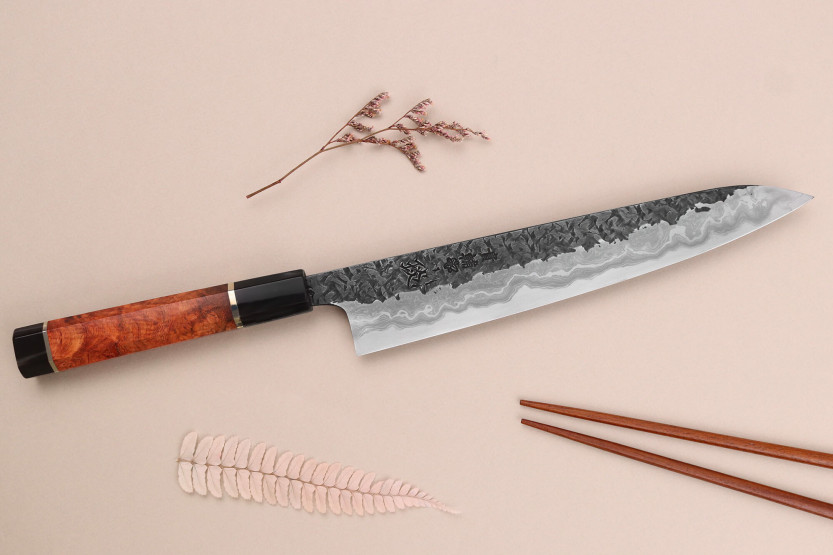
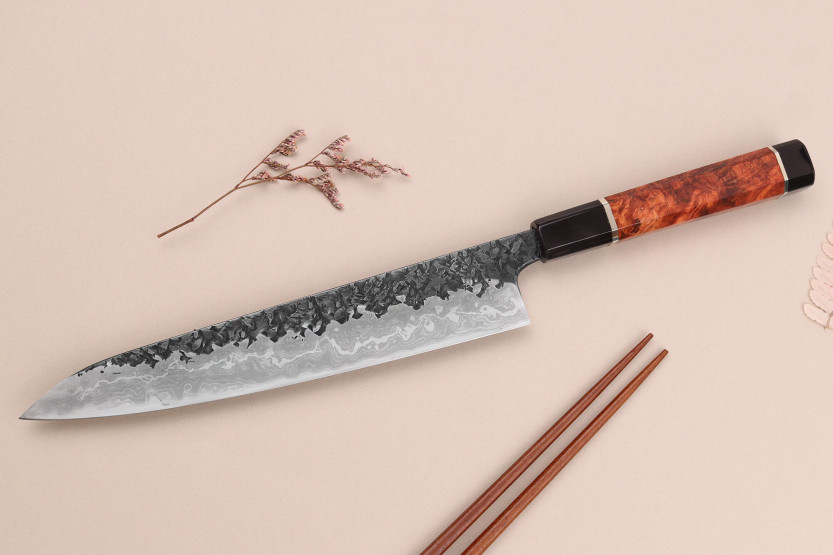
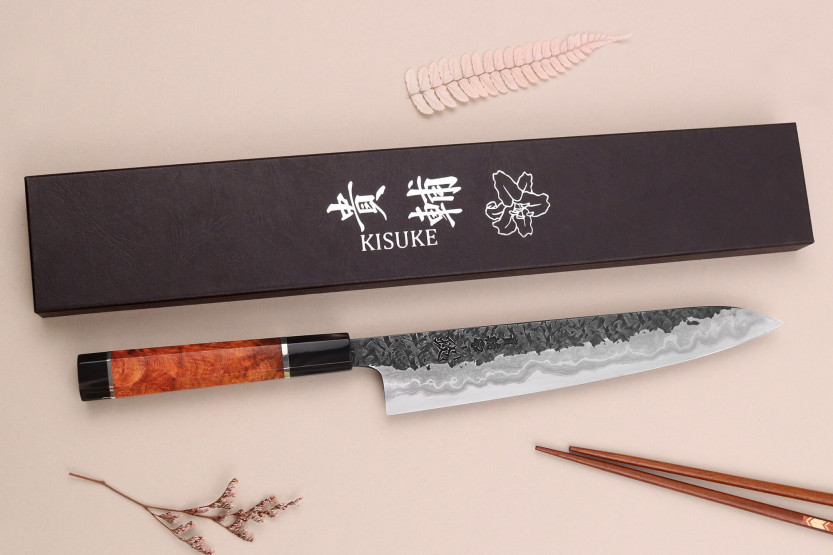
As well as being practical, damascus is also a real visual advantage! The superimposition of different steels can be seen all over the lower part of the blade. They form fine waves with random patterns that are unique to each Kisuke Manaka knife!
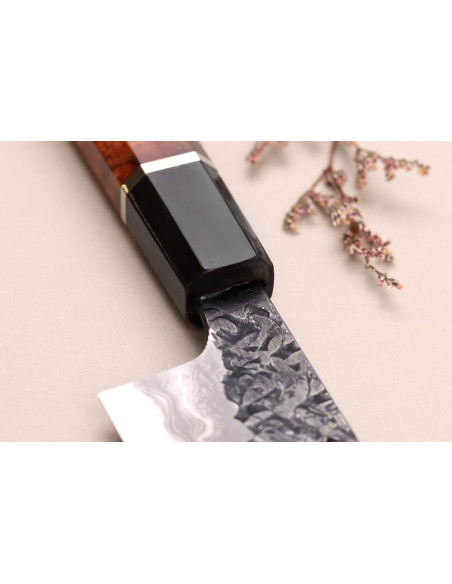
The surface of this blade has a rough forged finish that gives a dark appearance to your Japanese kitchen knife. This traditional finish gives character to your Japanese knife, as the blade has not been polished. In addition, this blade has been hammered with various patterns to add authenticity. Also, kanjis have been hand-engraved by the Manaka craftsman.
An elegant handle for this damascus steel knife
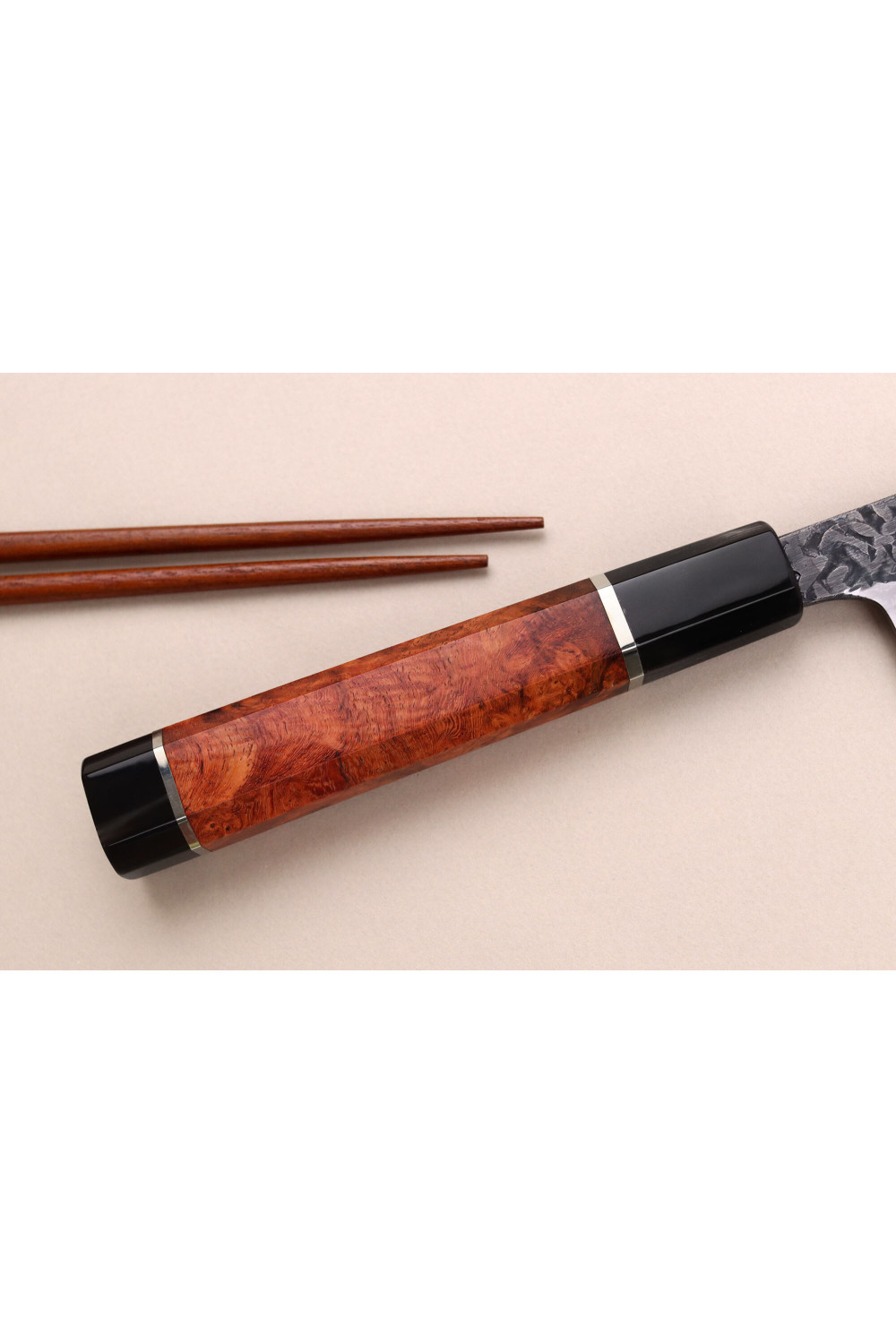
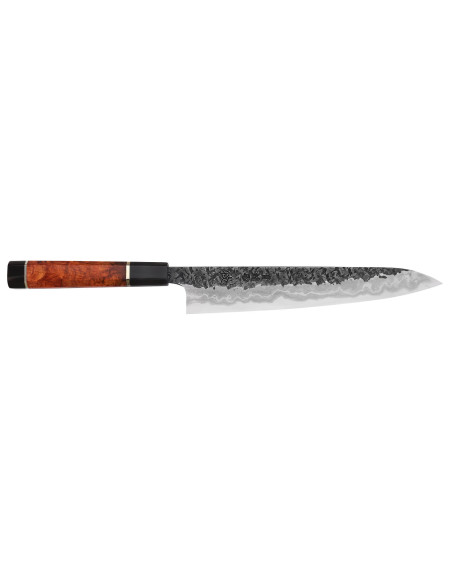
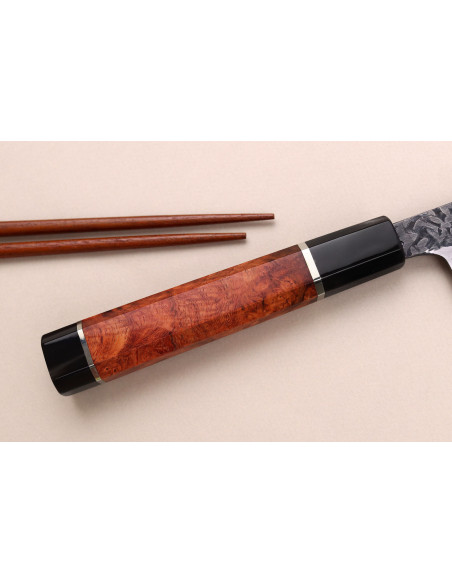
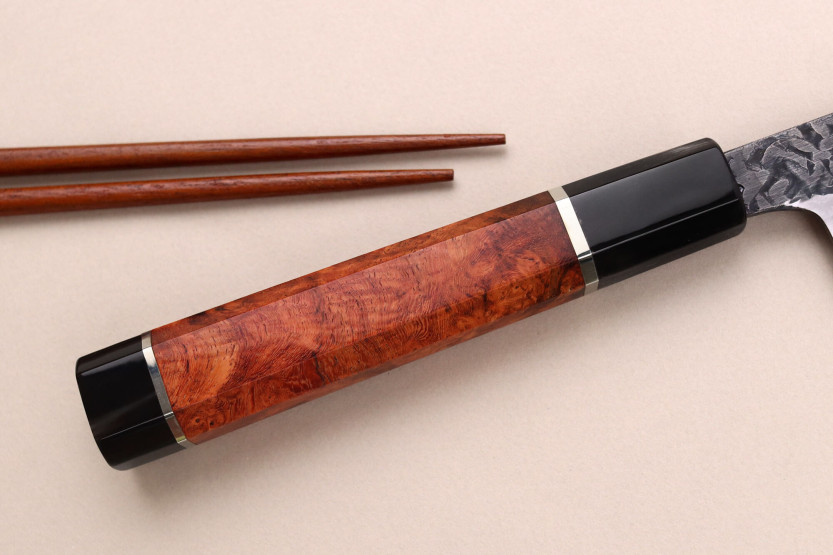
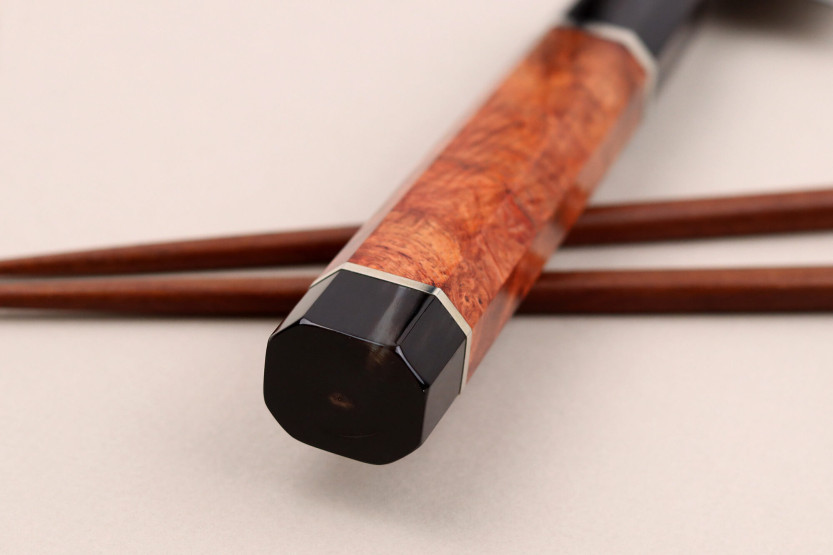
Your Japanese sujihiki knife features a handle made from quince wood, a durable species with resistance to temperature variations. It's a wood appreciated for its warm nuances and warm visual appeal, as well as for its elegant grain. As wood is a living material, each handle is unique!
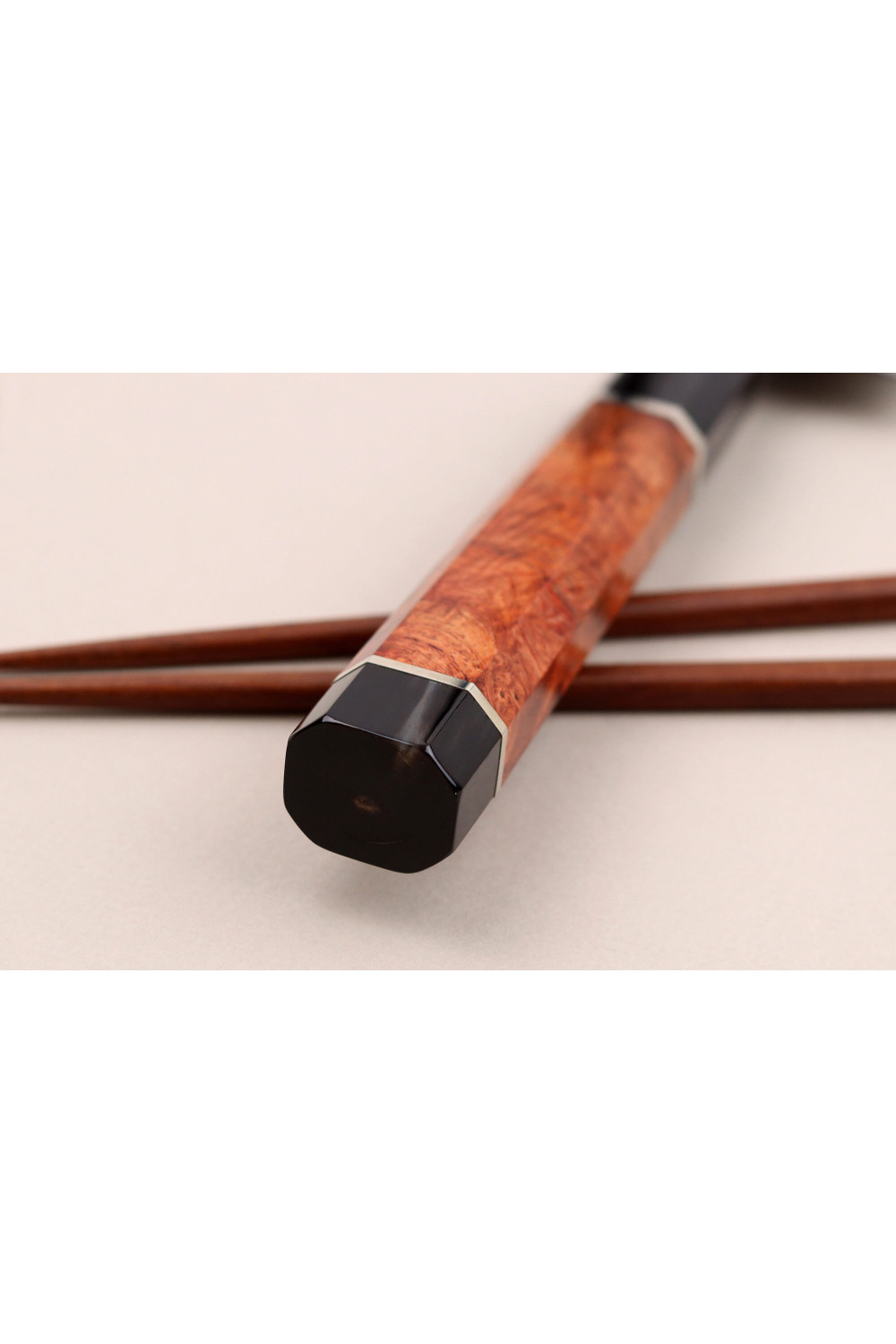
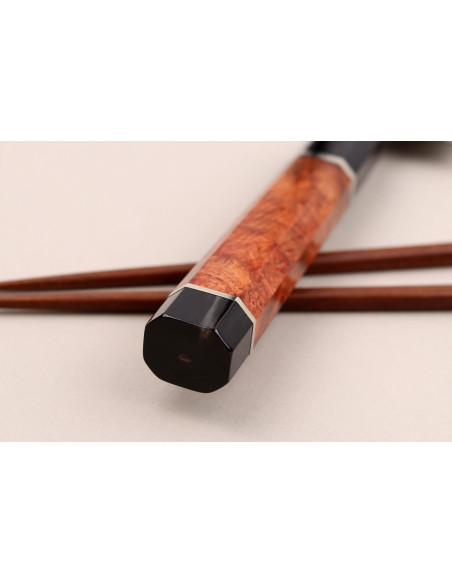
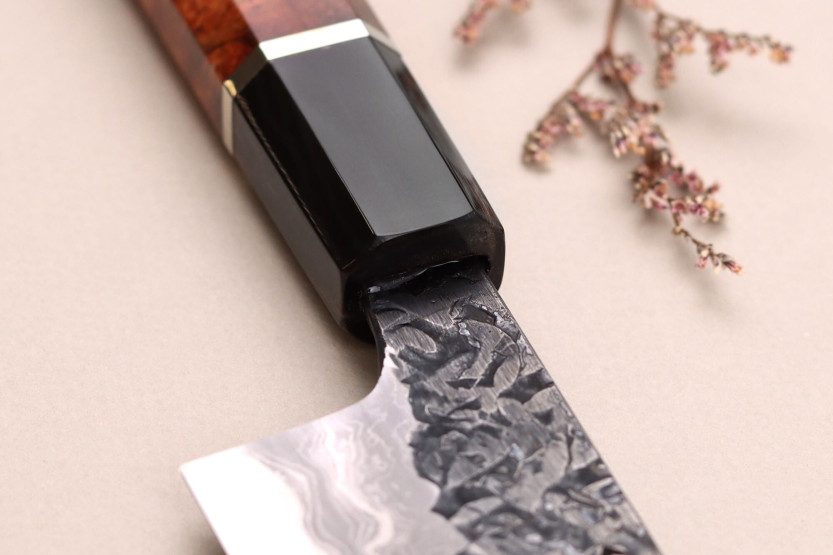
To bridge the gap between blade and handle, a black buffalo horn bolster has been added. This solid material adds a touch of character to your damascus knife. The base is also in buffalo horn, and the handle is embellished with 2 silver rings for added elegance.
With its octagonal shape, this handle can be adapted to the hands of all cooks: right-handed or left-handed! Its ergonomic grip makes it easy to handle, especially during long cooking sessions.
Finally, wood putty is added where the blade joins the handle to fill any small gaps. This makes it watertight and prevents water or small foodstuffs from seeping in.
Caring for a carbon-enriched Japanese craft knife
To clean your carbon knife, wash it by hand only with a sponge and a mild detergent, avoiding wetting the handle. Once cleaned, dry immediately with a clean cloth to remove all traces of moisture and store in a dry place. Do not use the dishwasher or leave it to soak in the sink.
Over time, the color of your blade may change slightly: this is normal! This is a natural reaction of the carbon caused by the acidity of the food you're cutting and the ambient humidity. This in no way affects the cutting performance of your damascus steel knife!
Between cuts, we recommend wiping your blade with a paper towel. For maximum protection, you can oil it from time to time with mineral oil.
Discover all Kisuke Manaka knives on Knifeleader.eu!




 By buying this product you can collect up to