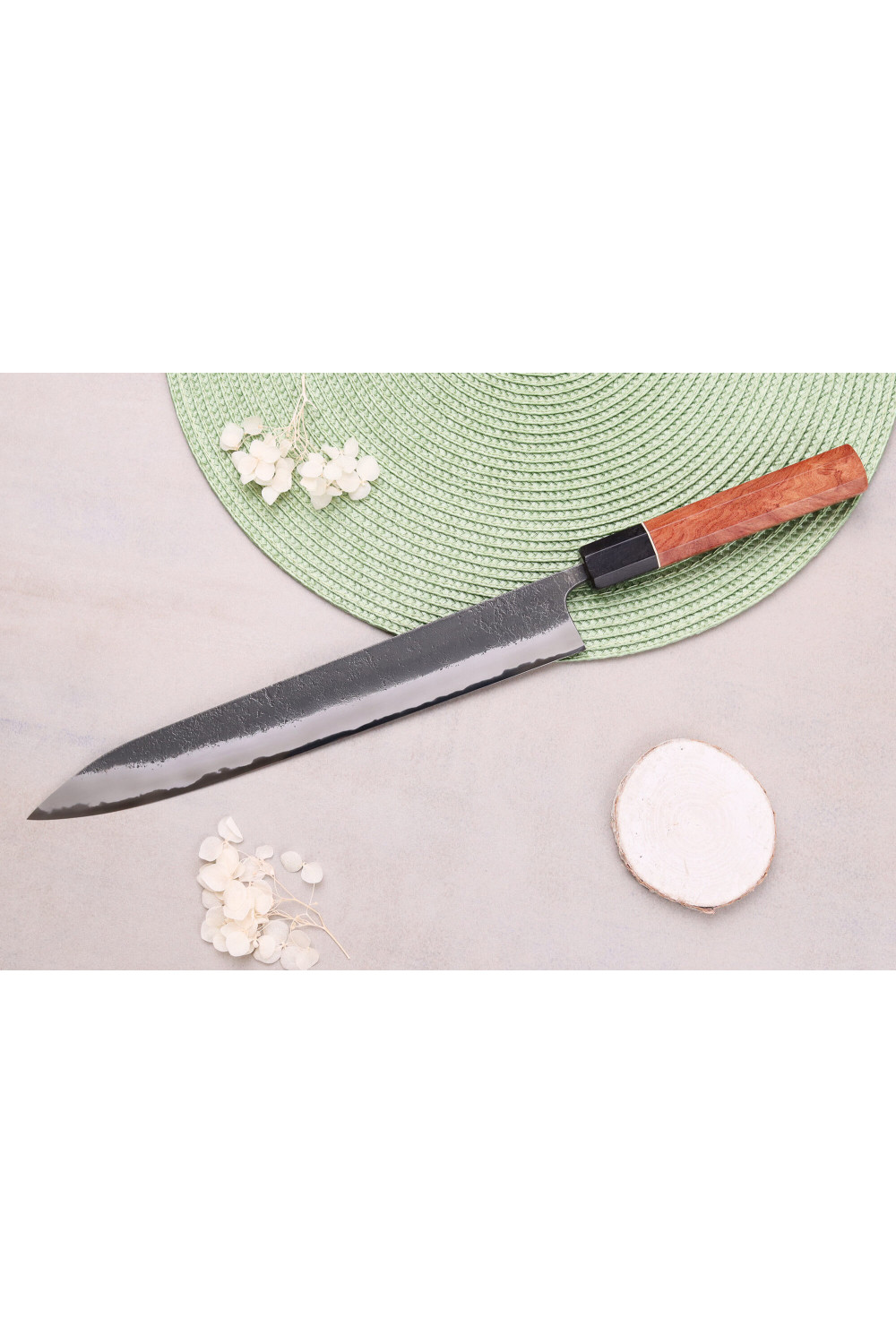
A high-quality Japanese knife
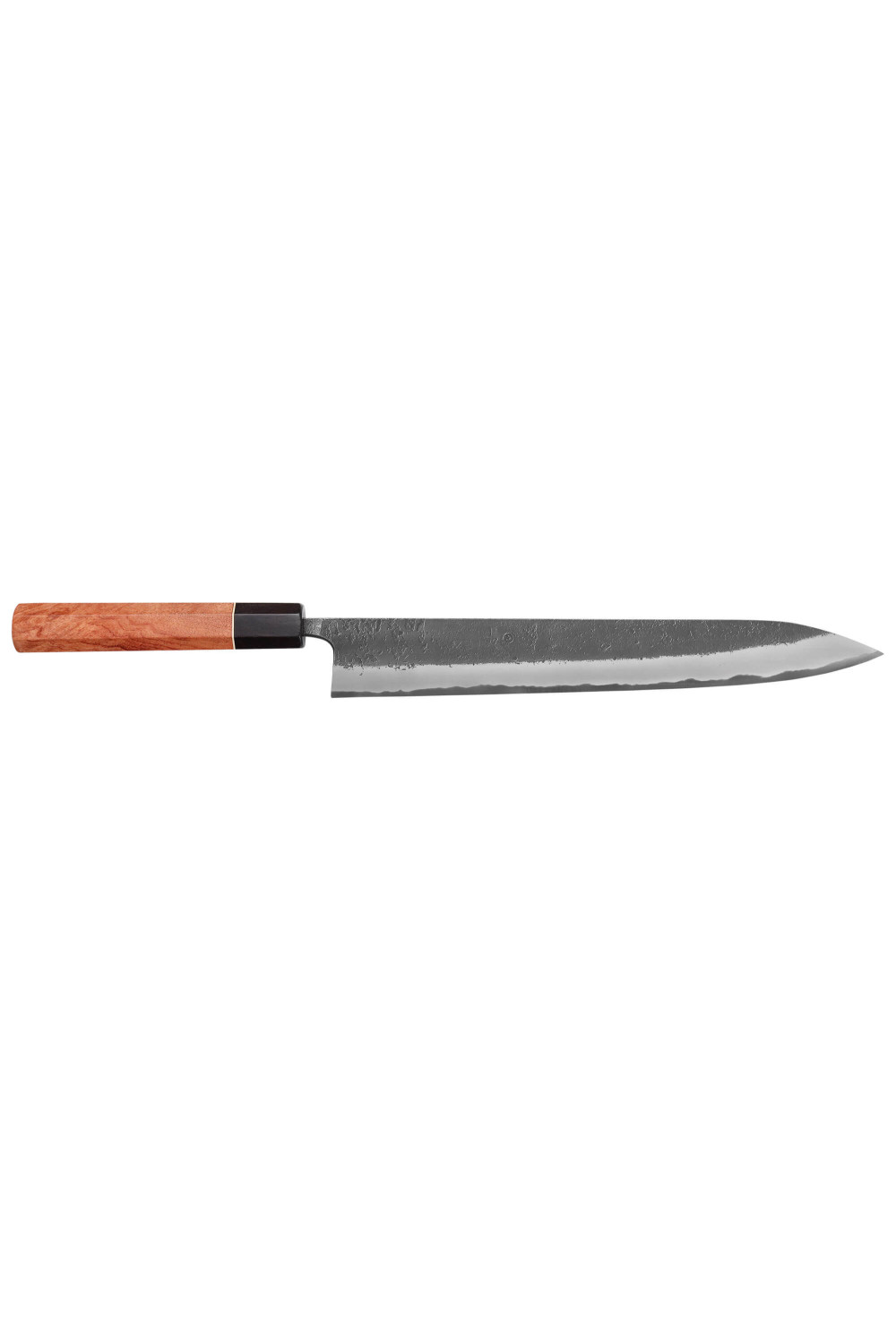
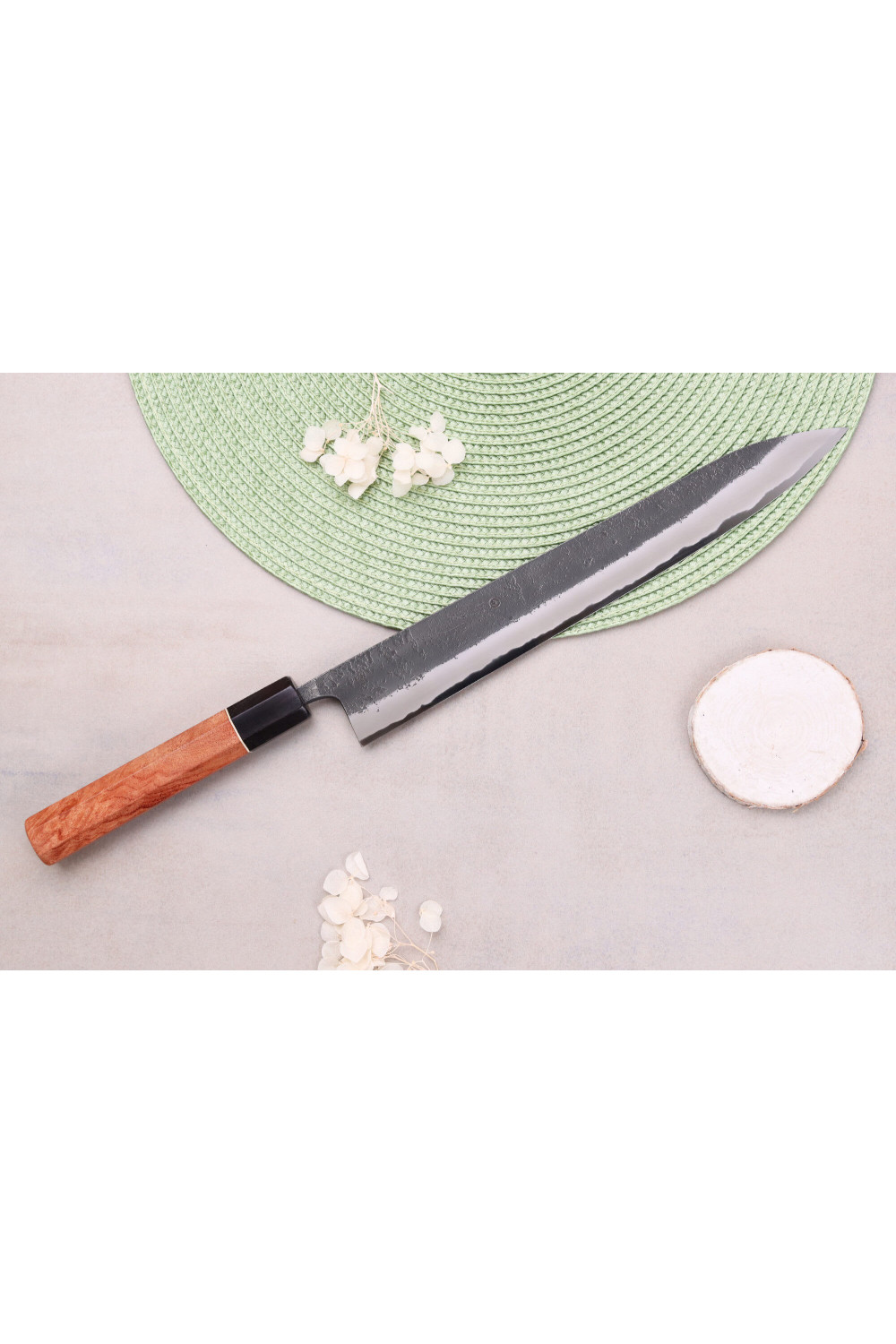
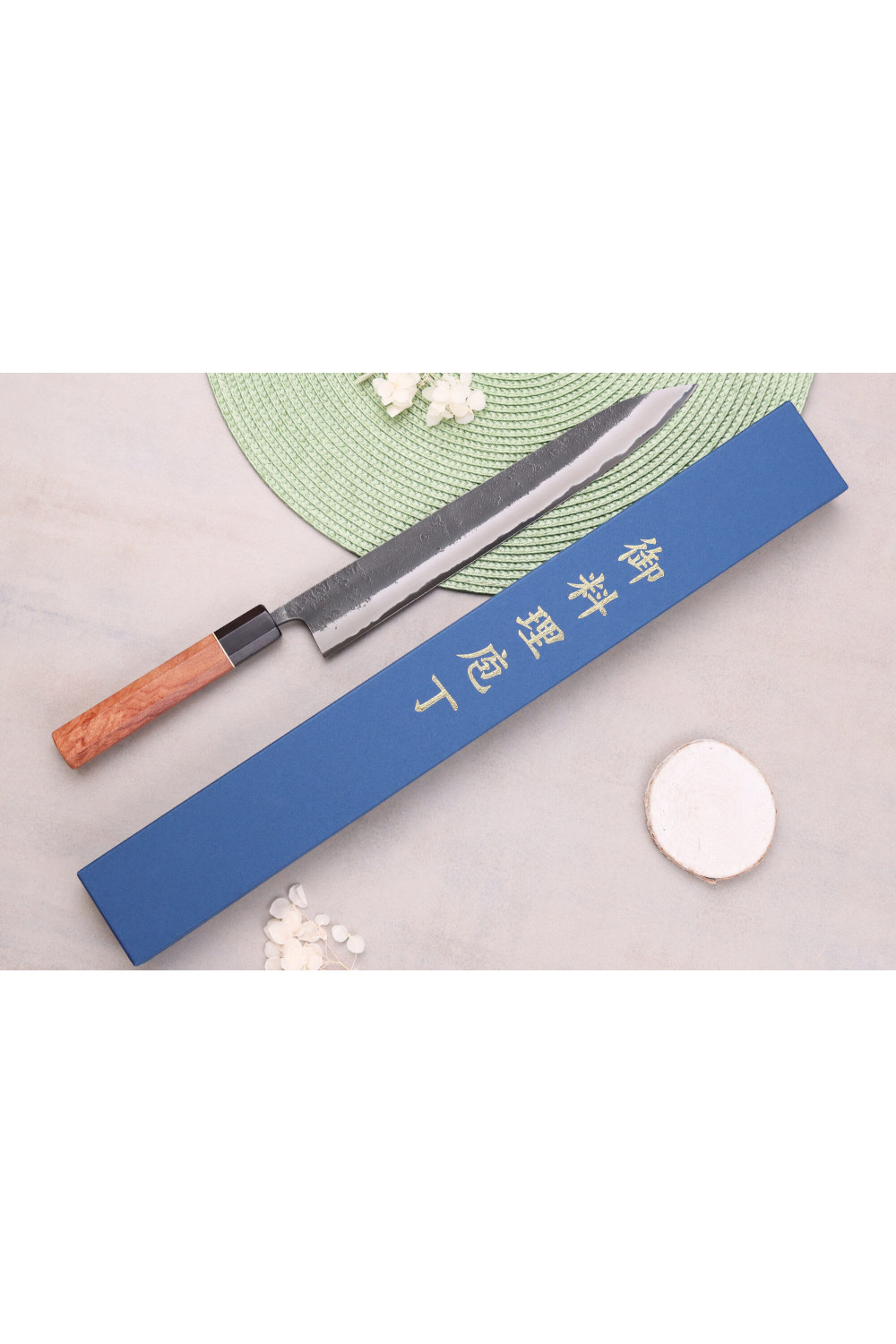
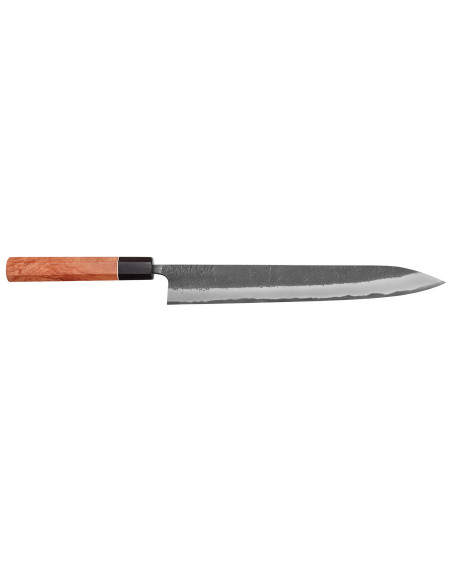
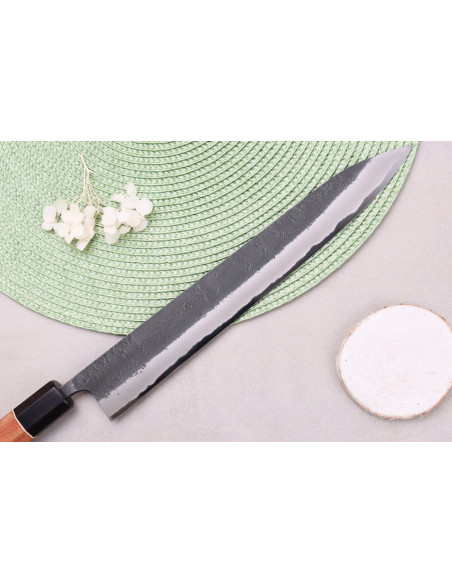
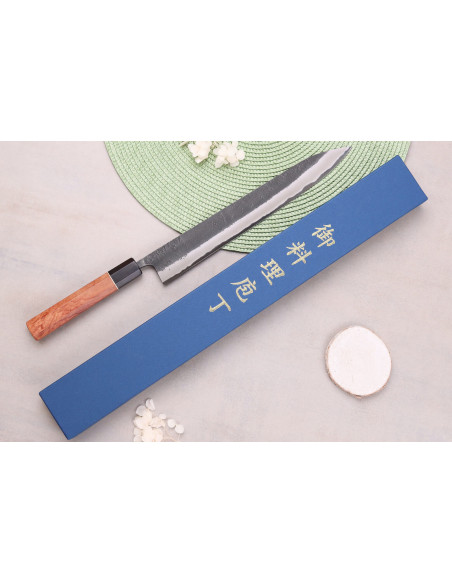
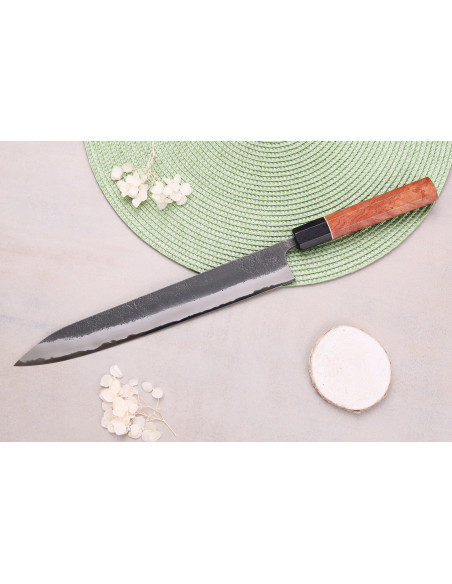
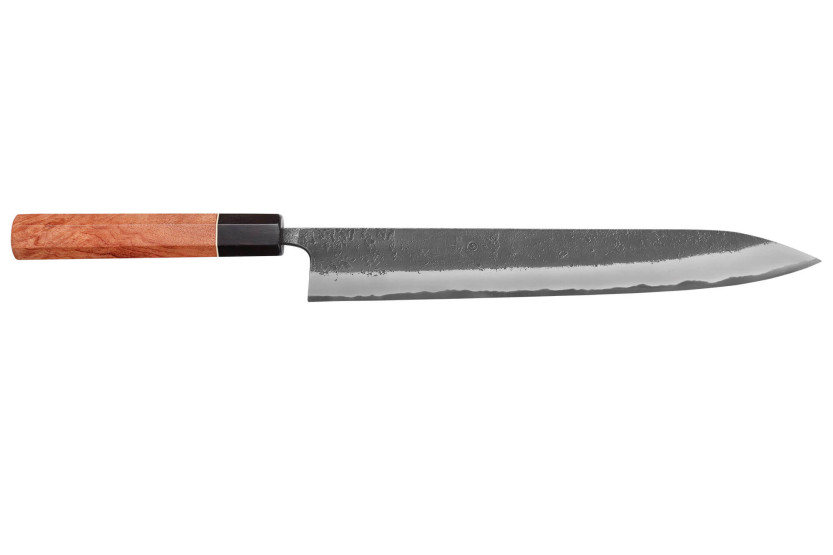
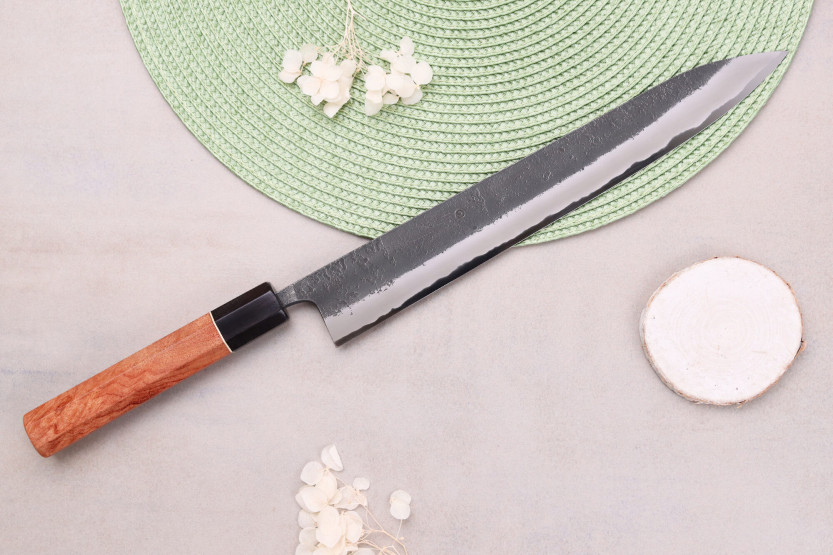
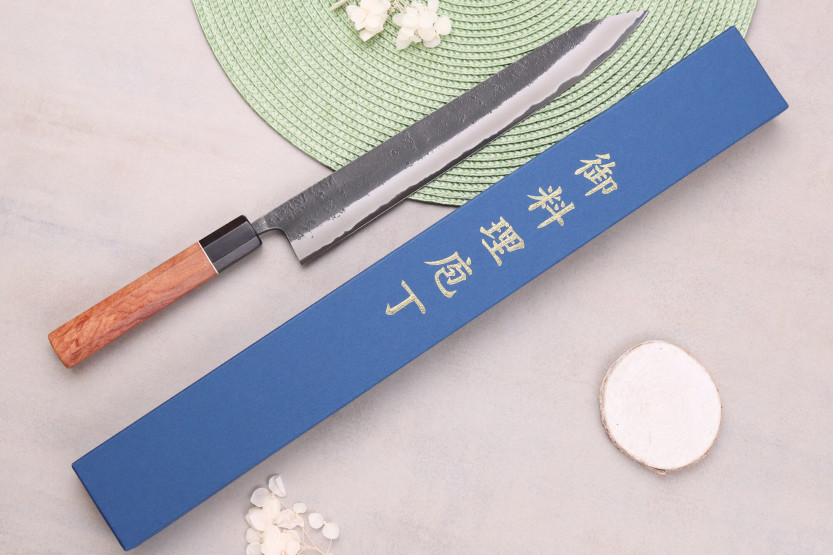
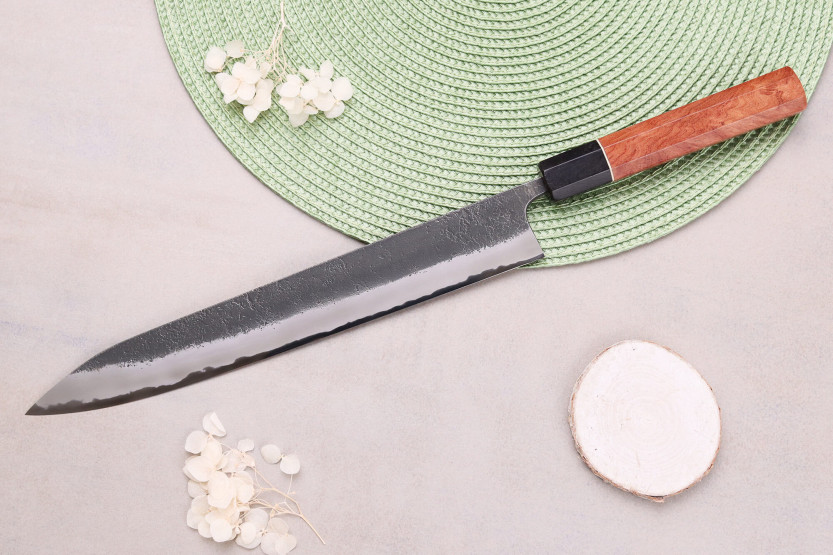
This 27cm Masashi Yamamoto sujihiki knife features a San Mai blade structure. These words mean "3 layers" in Japanese, and show just how the blade is constructed. It contains a core of rigid steel, which is then covered by a layer of slightly softer steel that sandwiches it. This typically Japanese construction protects the core while providing optimum balance.
Masashi Yamamoto choseJapanese Aogami #1 steel for the blade's core. Also known as BS1 or Blue Paper Steel #1, this top-of-the-range alloy is produced by the renowned steelmaker Hitachi.
This steel contains a high carbon content of almost 1.3%. Carbon is the fundamental element for increasing the hardness of an alloy, given that the harder a steel is, the sharper its cutting edge and the longer it lasts. Here, the blade achieves 63 HRC, demonstrating the efficiency of its cutting edge and its excellent edge retention.
Alloy is expensive and not necessarily easy to work with, as few blacksmiths have mastered it. If mishandled, losses would be significant and costly. But Masashi Yamamoto is one of those blacksmiths who know how to shape it!
The rigid steel core is then surrounded by a layer of soft iron, an alloy enriched with iron ore. Folded on either side of the core, it forms the 3 layers of San Maï. The soft iron steel protects the core while balancing its high rigidity. As the blade of your knife contains a lot of iron and carbon, it is oxidizable and therefore requires very careful maintenance (see below).
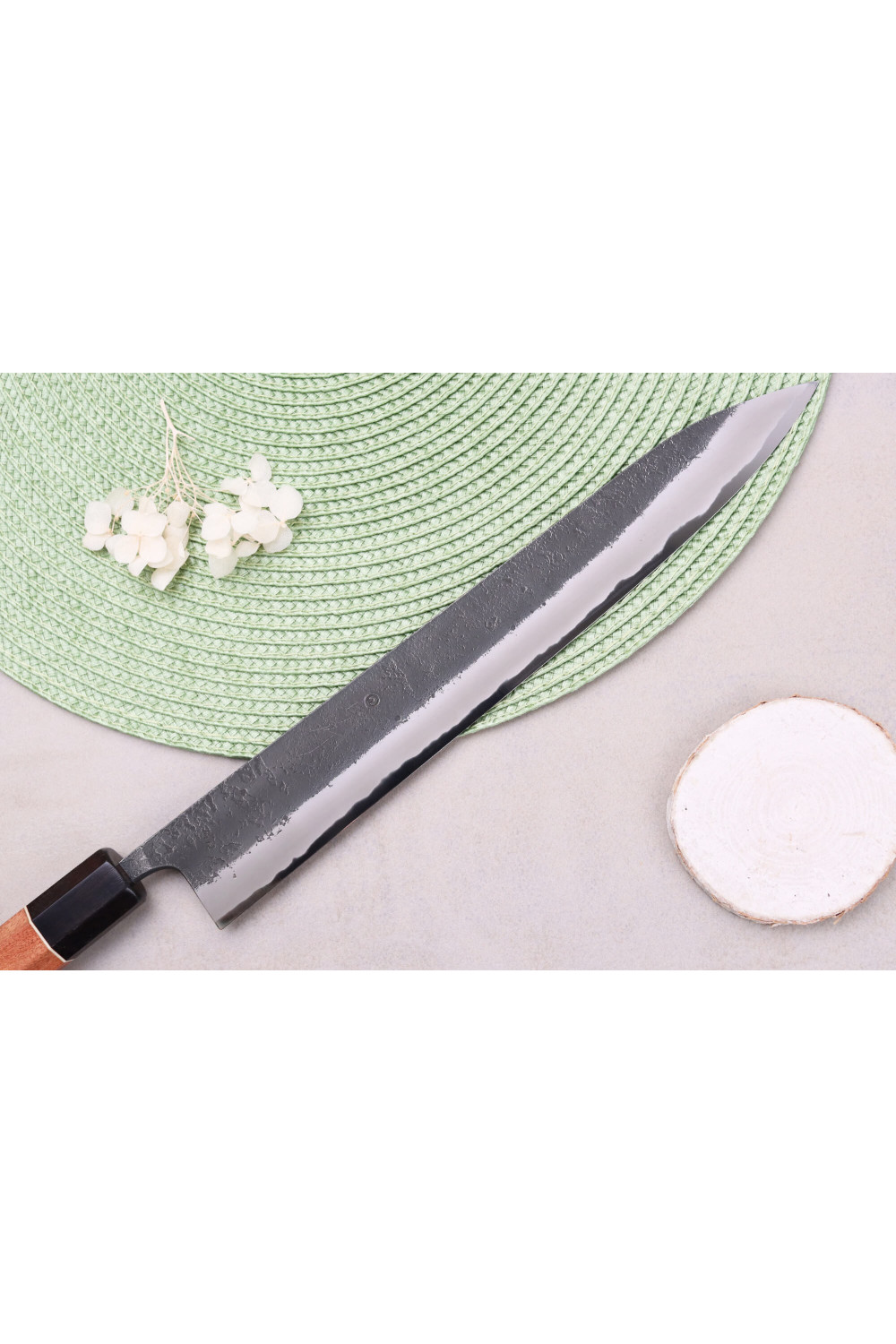
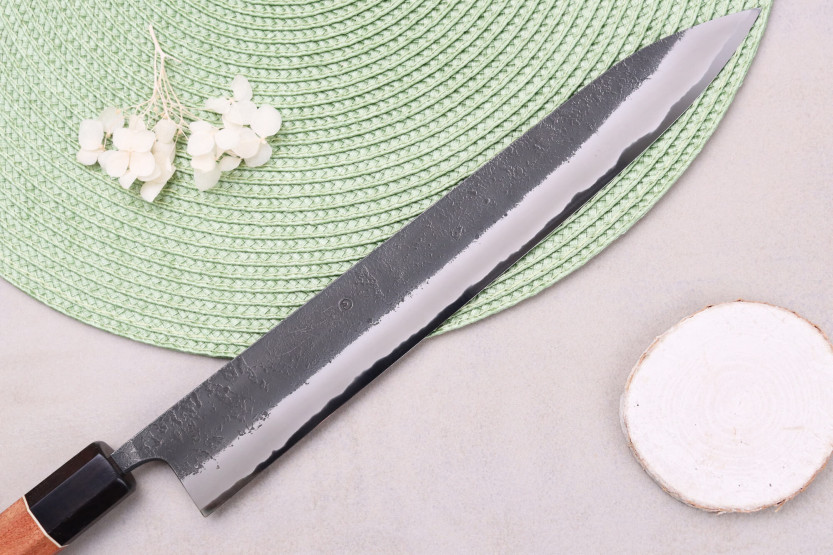
Note that Masashi Yamamoto knives have a finer point than the average knife. In fact, the thickness of the blade narrows as you reach its tip, making it more flexible and therefore easier to cut, with a more pleasant, natural feel in use. This is further proof of this outstanding blacksmith's expertise. However, be careful not to press too hard, as flexibility has its limits!
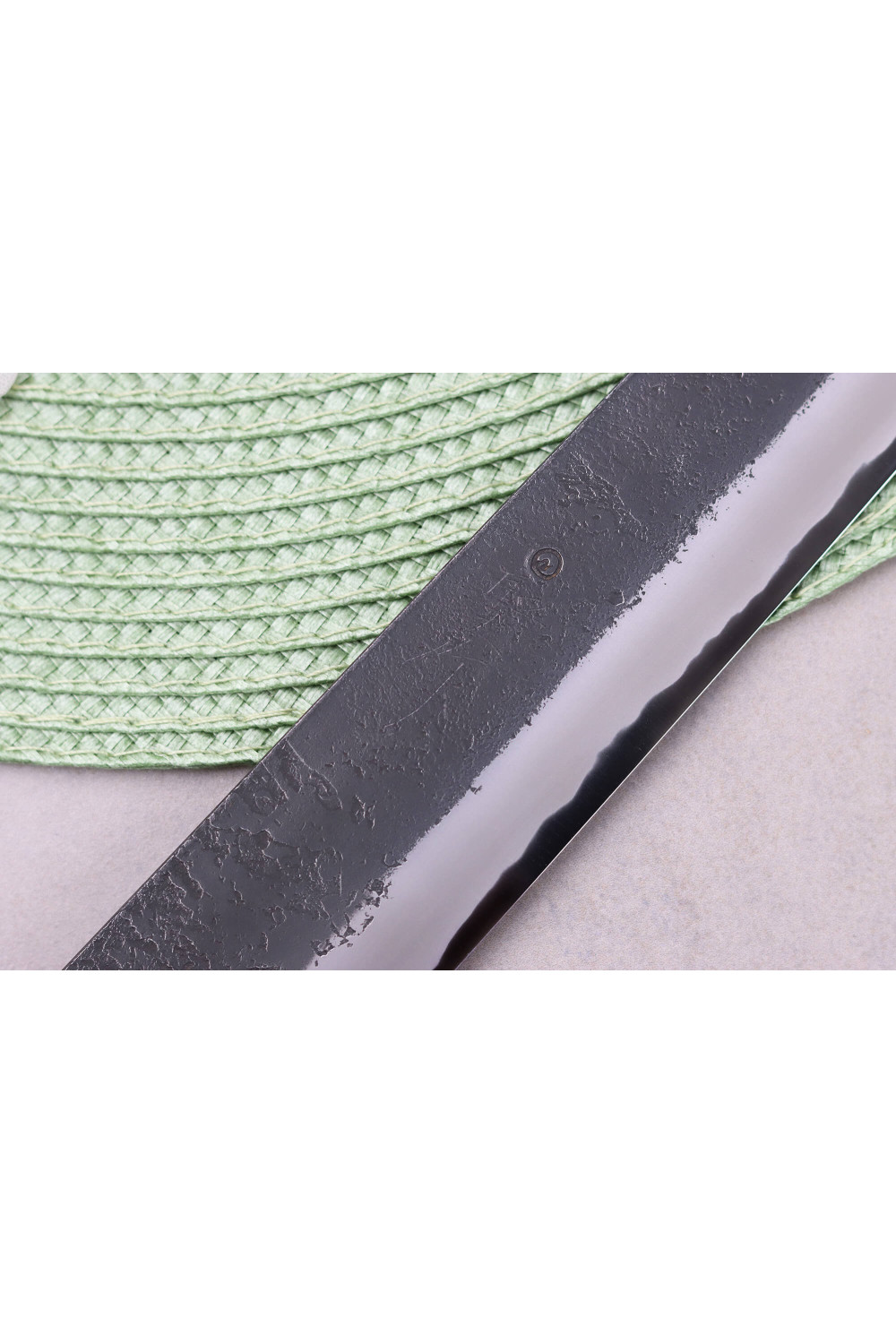
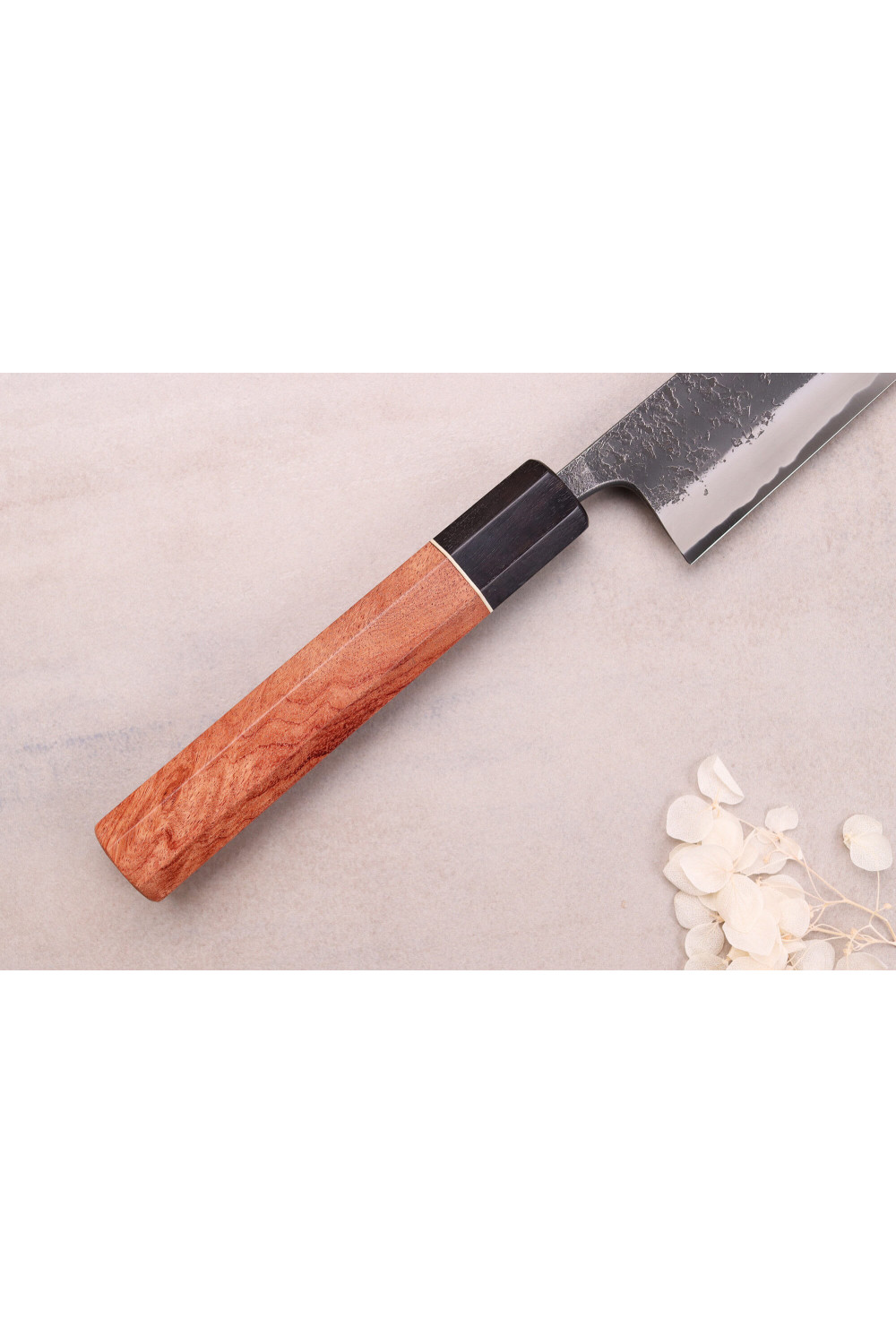
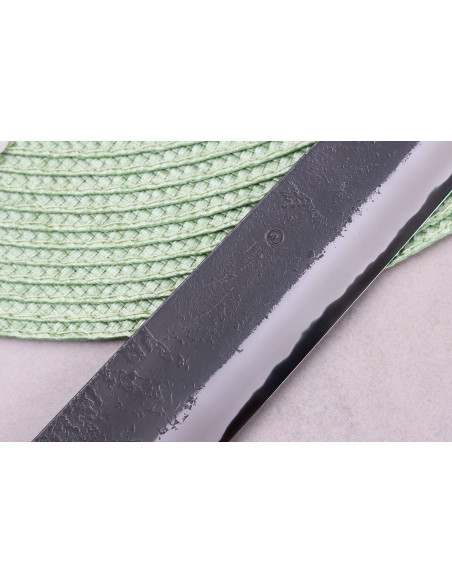
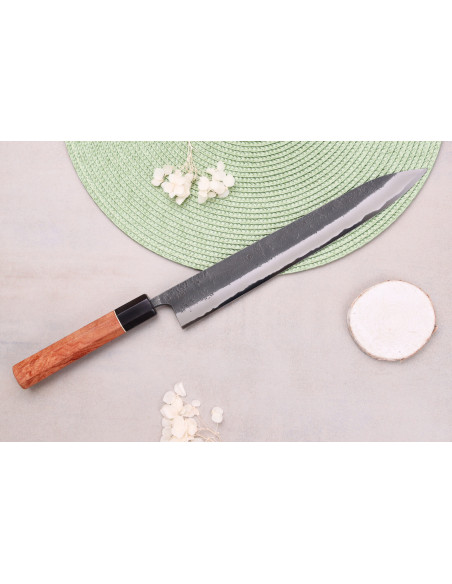
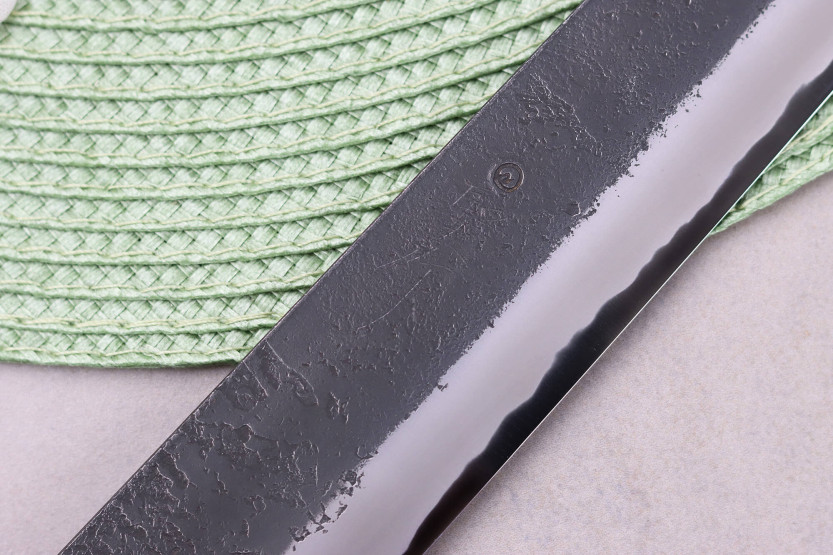
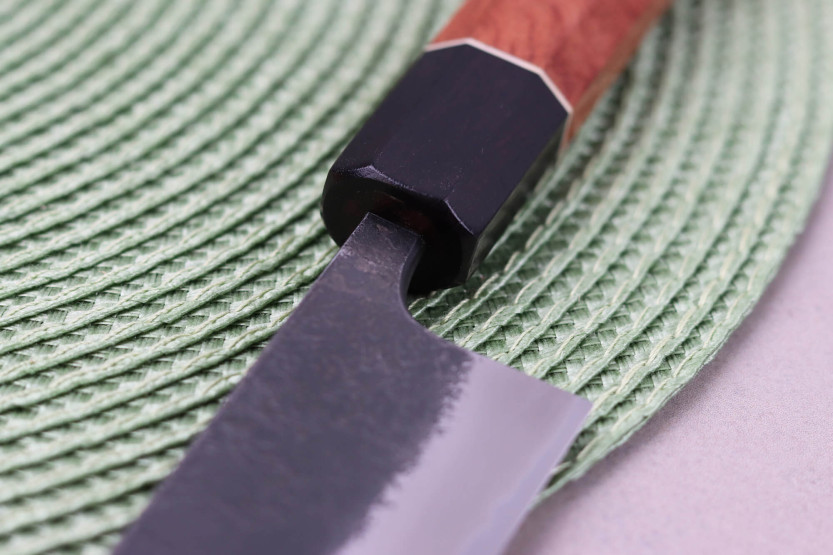
A superb traditional Black Nashiji finish completes the knife blade and refers to the name of the range from which it derives. This finish gives the blade an authentic rustic look, reminiscent of a rough hammered forge. You can also see fine kanji engraved near the blacksmith's punch.
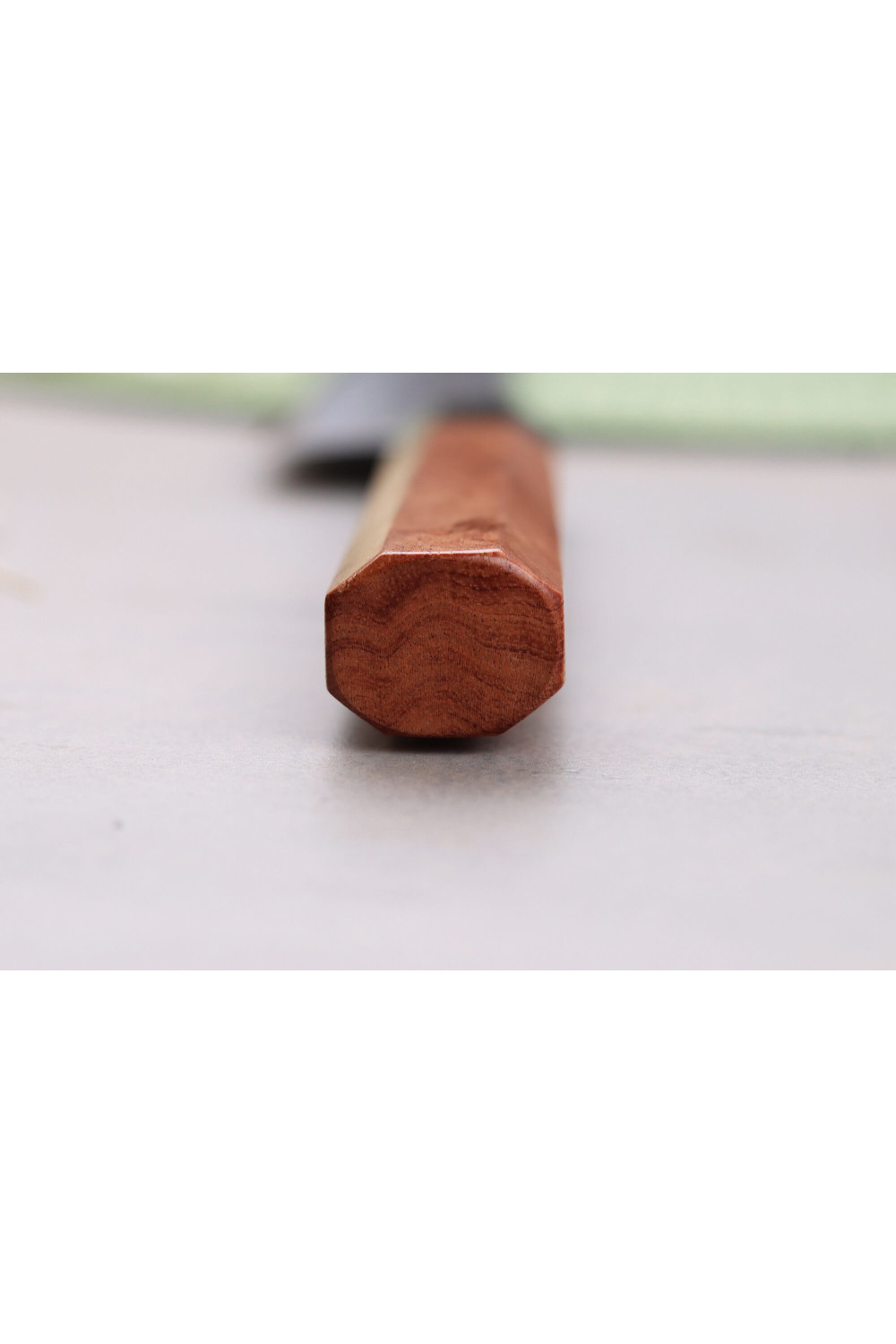
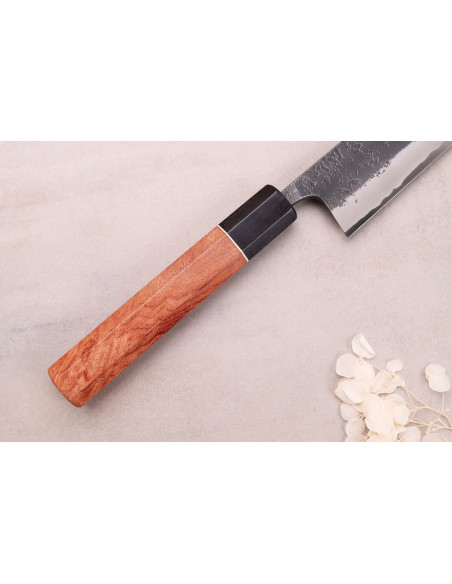
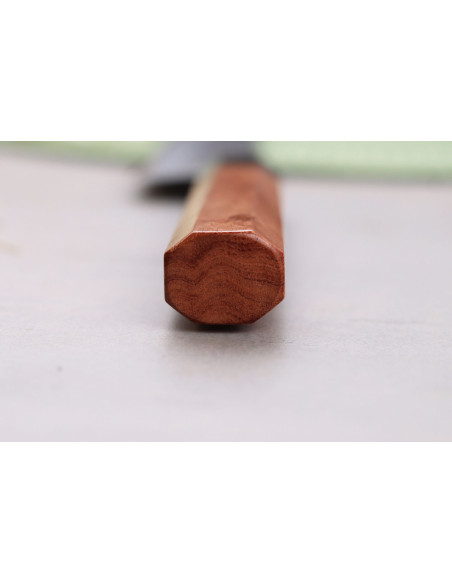
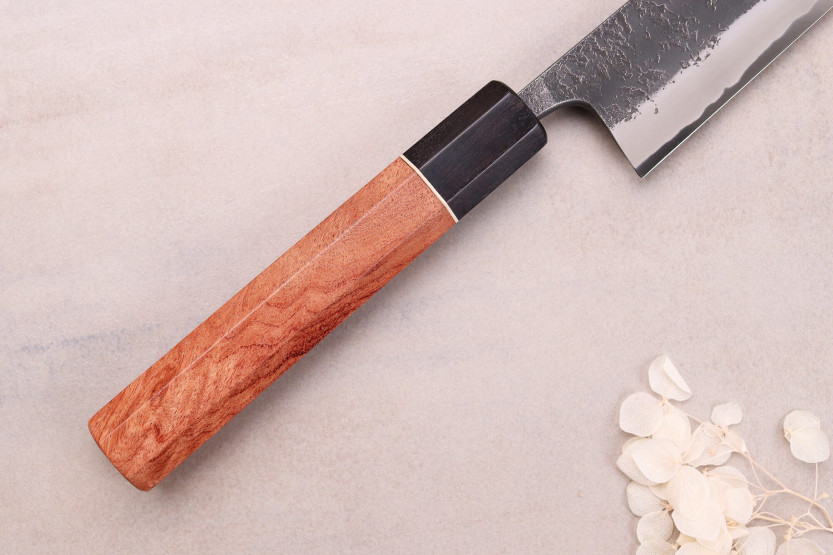
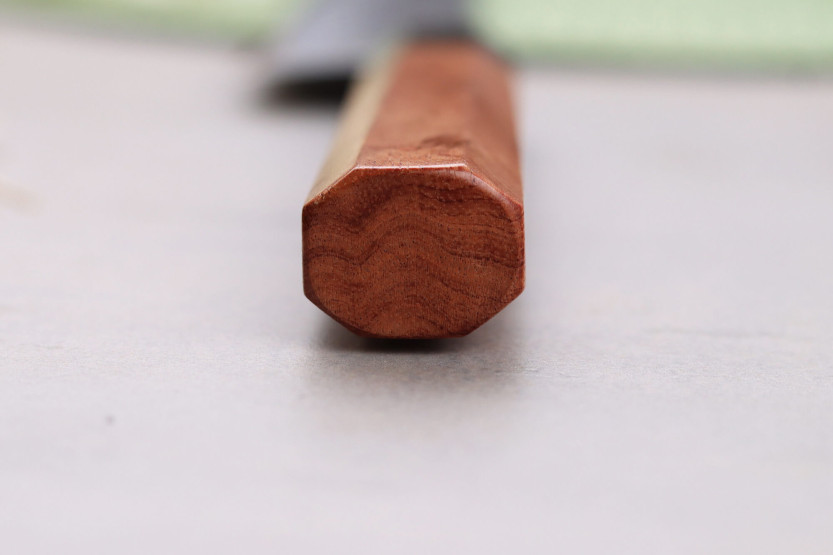
The handle is made of quince wood. This is a light-colored wood with excellent durability: it resists both temperature variations and humidity.
The wood is cut in an octagonal shape to suit all cooks. It's a shape that hugs the palm of your hand for perfect handling and control.
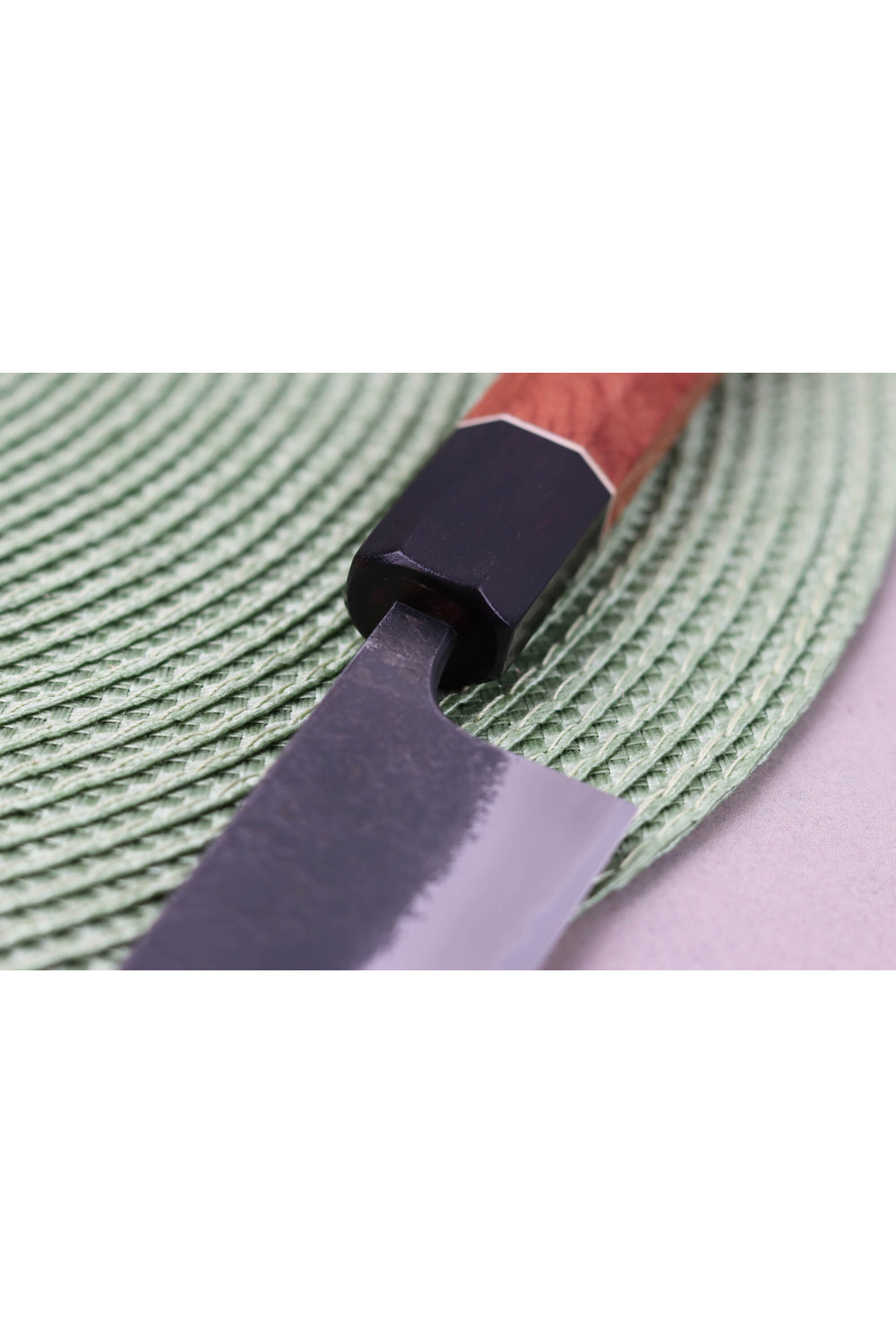
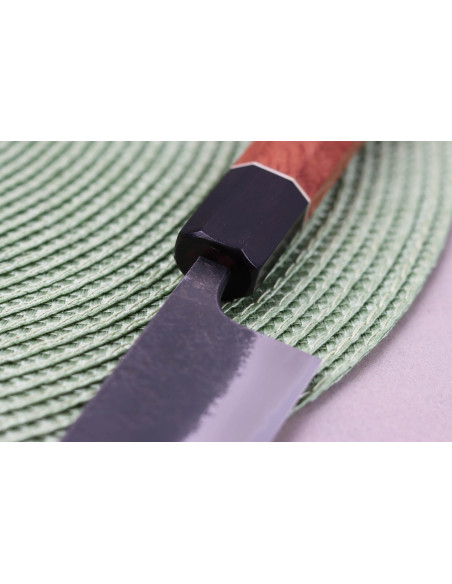
The handle is complemented by a bolster in ebony, a precious wood with a very dark brown, almost black, color. The two woods are separated by a thin white micarta ring.
Caring for this carbon-iron knife
As mentioned above, this Japanese slicing knife is highly enriched with carbon and iron, and is therefore oxidizable. To wash it, you must absolutely avoid soaking it in the sink or putting it in the dishwasher.
Wash your knife by hand with a non-abrasive sponge and mild detergent, under lukewarm water. Be careful not to get the wooden handle too wet. As soon as the knife has been washed, wipe it dry to remove any moisture with the utmost care. Then store it in a dry place.
Over time, you may notice a slight change in the color of the blade. This is perfectly normal! This is a natural reaction of the steel to the acidity of certain foods or the humidity in the air.
We recommend applying a littlemineral oil to the blade from time to time. This will nourish and preserve it.
Find out more about the great blacksmith Masashi Yamamoto
This 27cm sujihiki is a knife forged by Masashi Yamamoto, a Japanese blacksmith who designs exceptional knives. Masashi san is a young, modern blacksmith who learned the trade from his older brother. In 2013, he felt ready and set up his own workshop.
He designs and manufactures knives that are magnificent one-offs. His knives are much appreciated by enthusiasts for the hardness of their blades: Masashi achieves this hardness through special technical and heat treatments. Although a young blacksmith, Masashi already teaches his art to two apprentices! He's also used to forging in flip-flops, often with a cigarette in his mouth: he's got a unique style all his own that makes him emblematic!
Find all sujihiki knives on KnifeLeader.eu!




 By buying this product you can collect up to