Masashi Yamamoto san: a blacksmith with a strong character
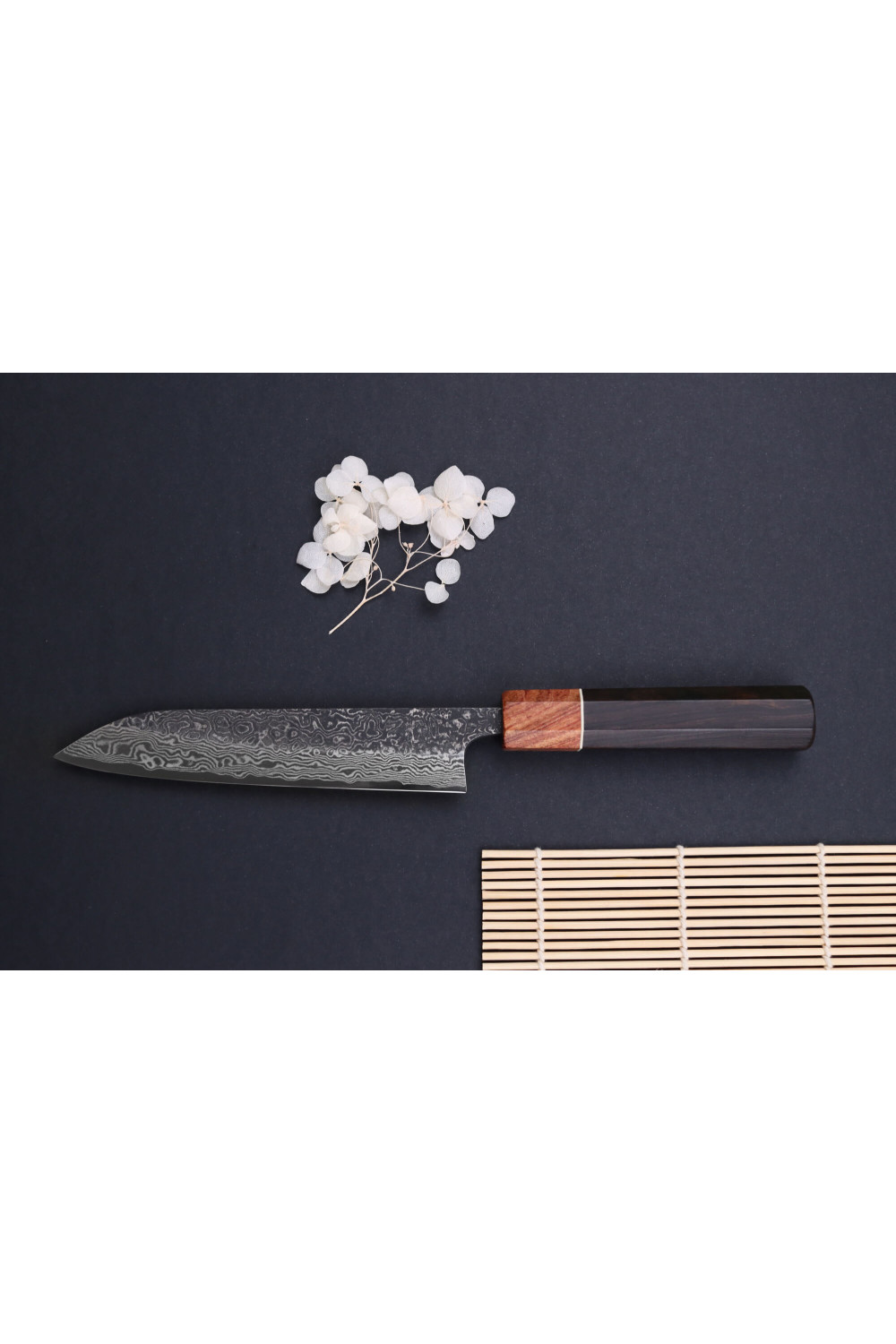
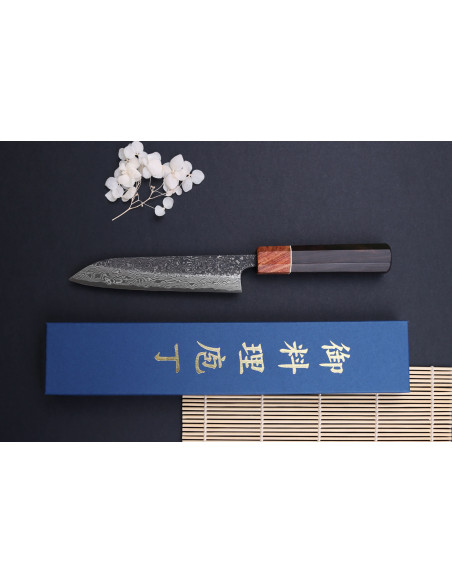
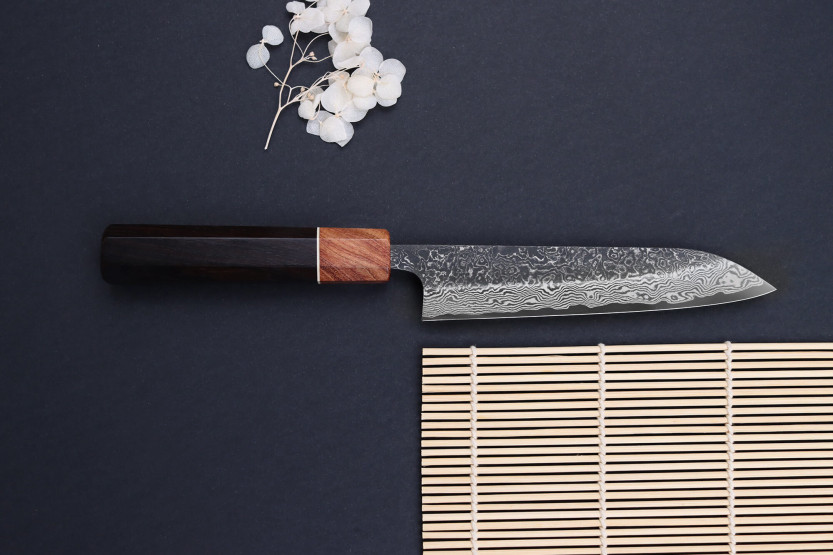
This JapaneseUniversal knife was forged by Masashi Yamamoto, an exceptional modern-day blacksmith. He learned his craft in the family from his older brother. When he was ready, he set up his own workshop in 2013.
The knives he designs and forges are magnificent one-offs. Using special heat treatments and techniques, Masashi develops knives that are appreciated for the hardness of their blades. He may be a young blacksmith, but that doesn't stop him from already teaching his skills to two apprentices! His very own style makes him unique and emblematic: he works in flip-flops, often with a cigarette in his mouth.
A Japanese knife made from top-of-the-range materials
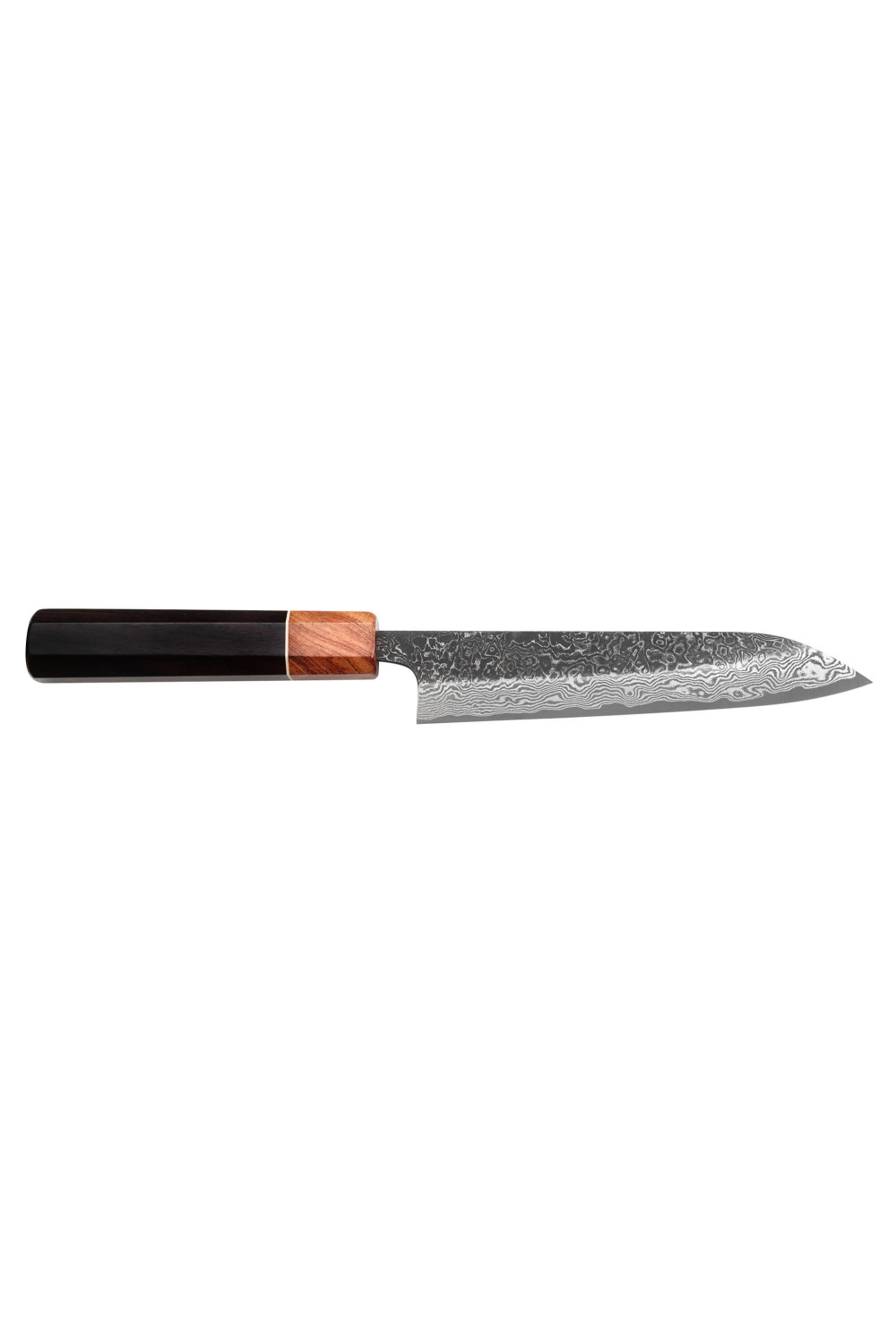
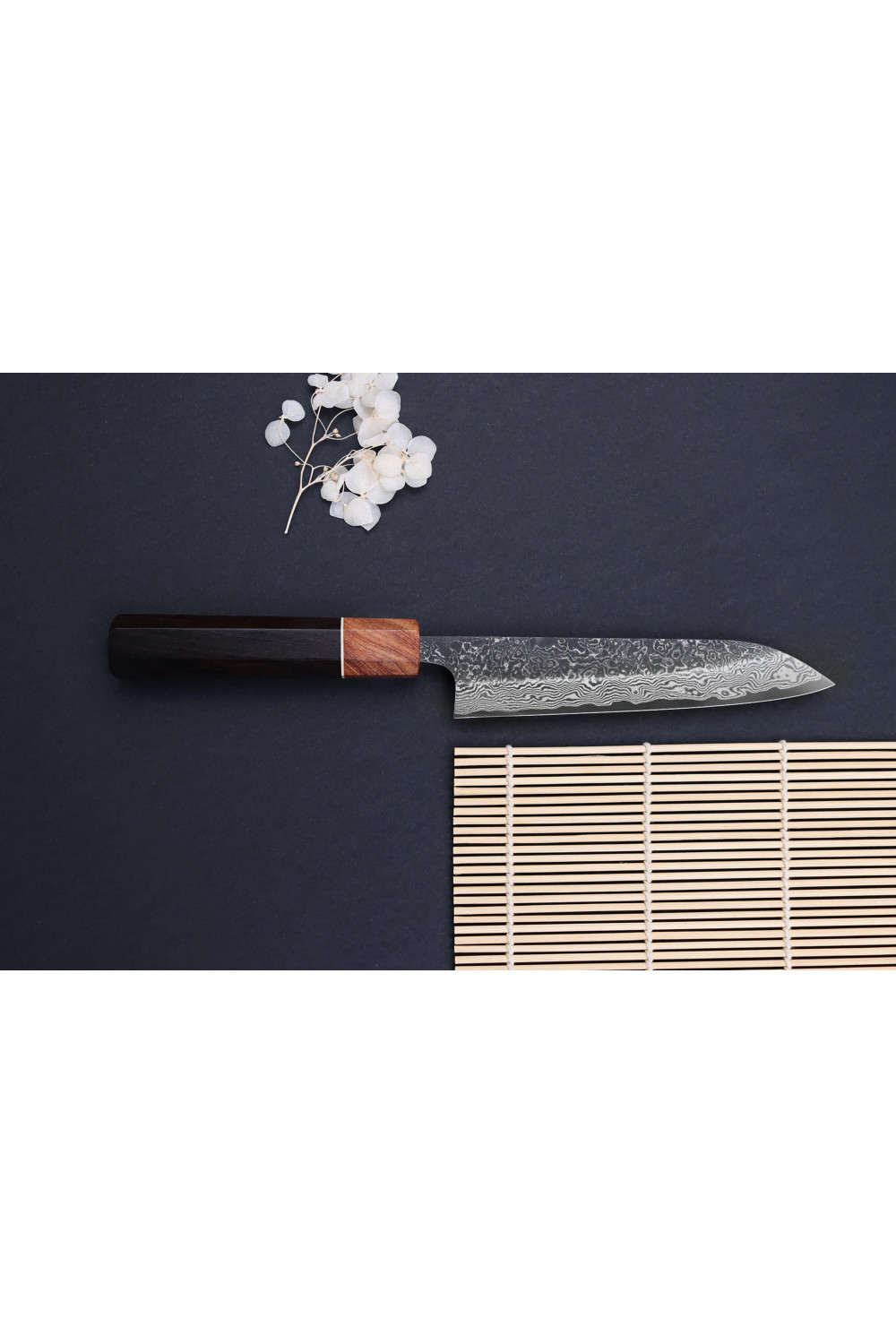
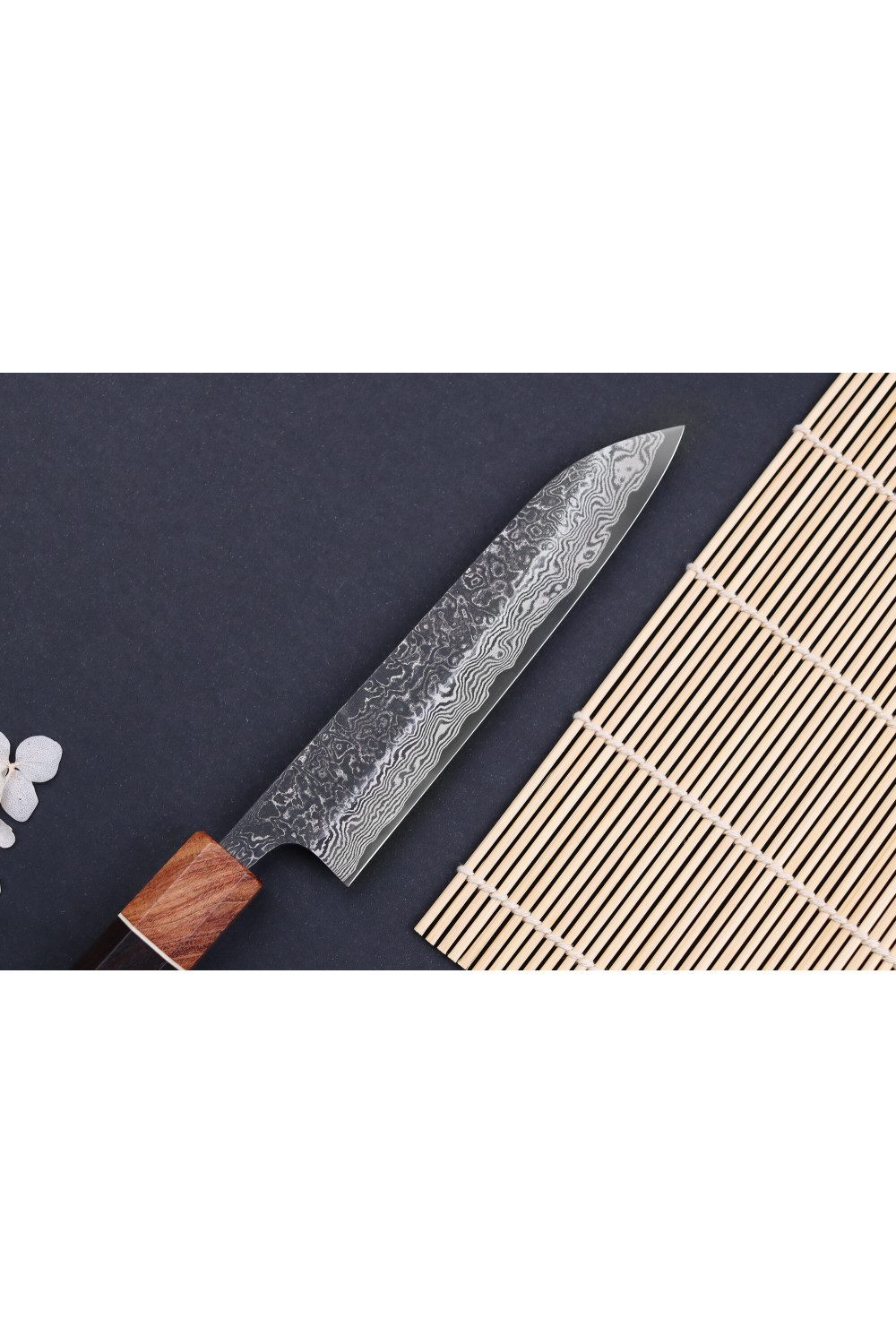
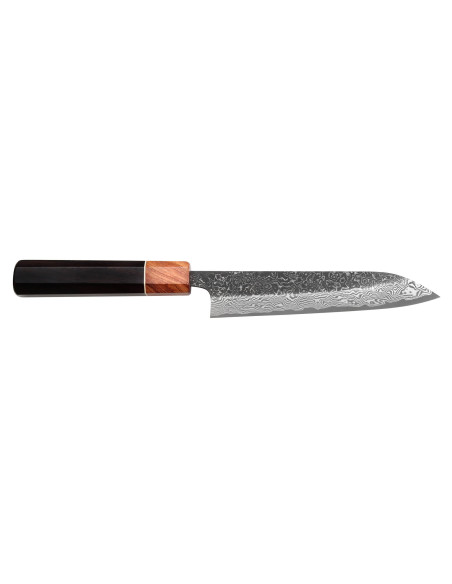
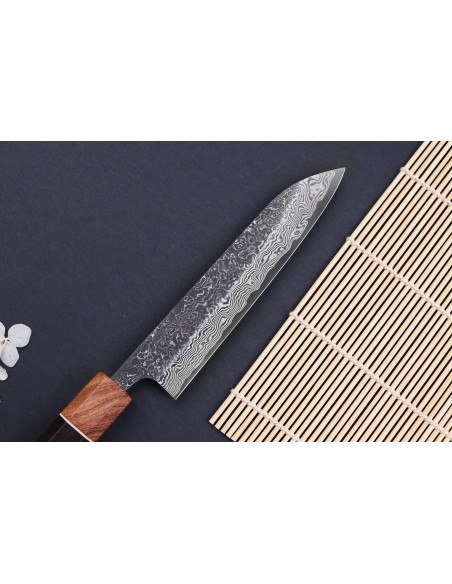
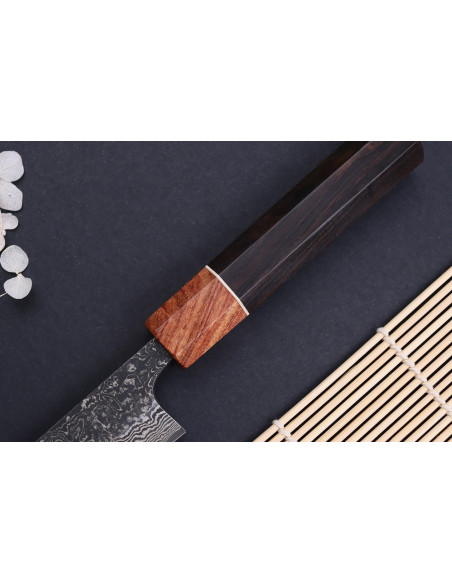
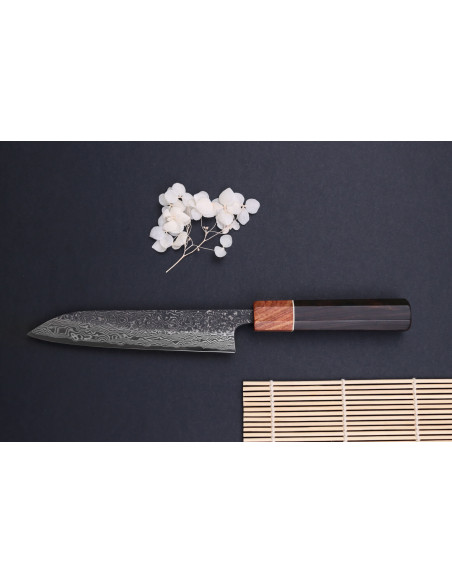
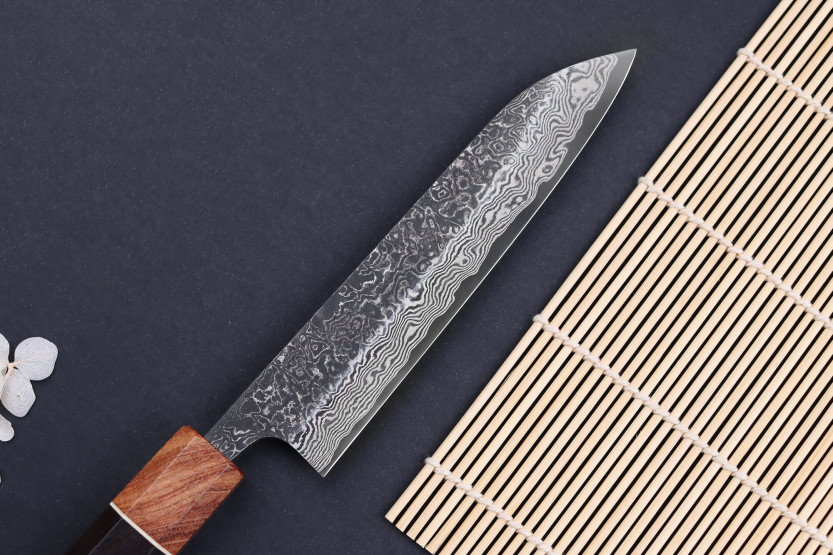
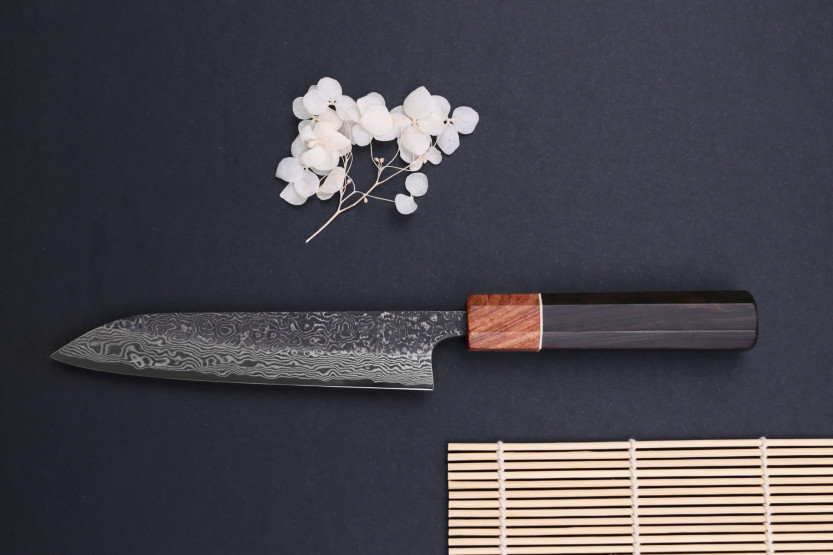
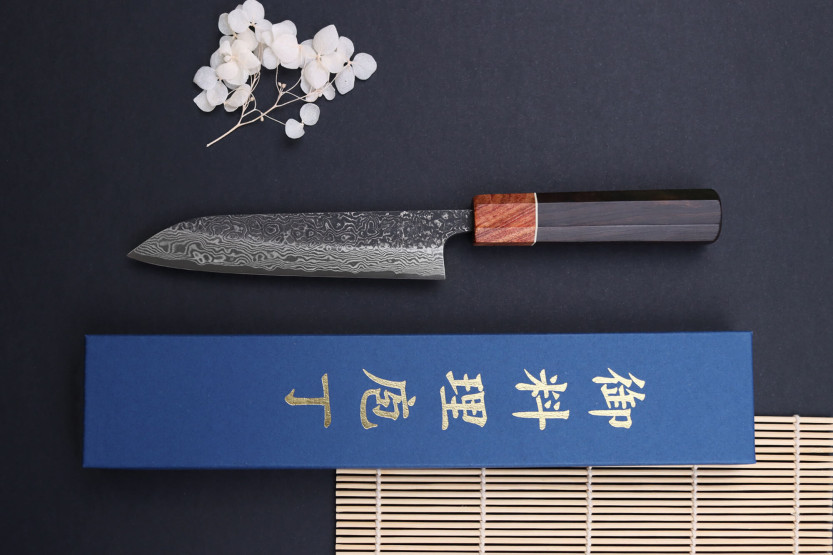
This Masashi Japanese knife features a super damask blade. Its development involves a complex process. To begin with, Masashi selects the best-performing steel for the blade's core. This core is then surrounded by several alternating layers of steel. Finally, the steel used to make up the upper layers is softer than that used for the core, providing balance.
The Masashi knife featured here has a core made from SLD steel, a Japanese alloy manufactured by the world-renowned steelmaker Hitachi.
The alloy has a carbon content of around 1.6%, which characterizes it as a hard steel. It will therefore retain its sharpness for a long time, which is a real advantage for cutting. The blade achieves a hardness of 63 HRC on the Rockwell scale.
In addition, the alloy contains almost 13% chromium, an element that fights corrosion. However, despite this high content, your knife cannot be considered totally stainless. Rather, it is a hybrid alloy and, because of its high carbon content, it is preferable to apply the same maintenance to your knife as you would to a carbon knife.
Another interesting fact is the structure of the alloy. It is very well balanced, with a homogeneous distribution of micro-carbons on the surface. This increases its resistance to micro-cracking and wear during use.
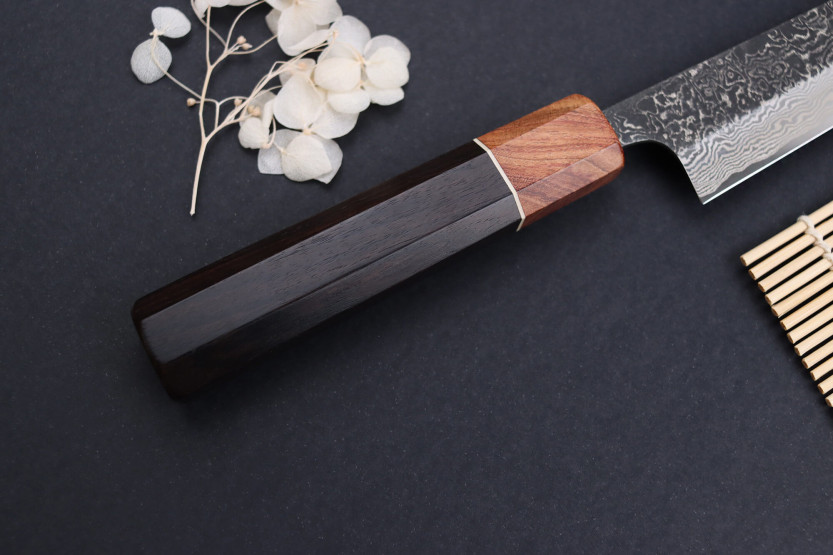
Surrounding the SLD is a softer steel. It is layered to protect and balance the SLD's high rigidity. The surface steel is enriched with nickel: this is what creates the color difference between the alternating damascus layers.
Note that Masashi Yamamoto knives have a finer tip than the average knife. In fact, the thickness of the blade narrows as you reach the tip, making it more flexible and therefore easier to cut, with a more pleasant, natural feel in use. This is further proof of the expertise of this outstanding blacksmith. However, be careful not to press too hard, as flexibility has its limits!
The upper part of the blade is darker than the rest, giving the knife even more character. The word "kuro" in the knife's name is not insignificant, as it means "black" in Japanese.
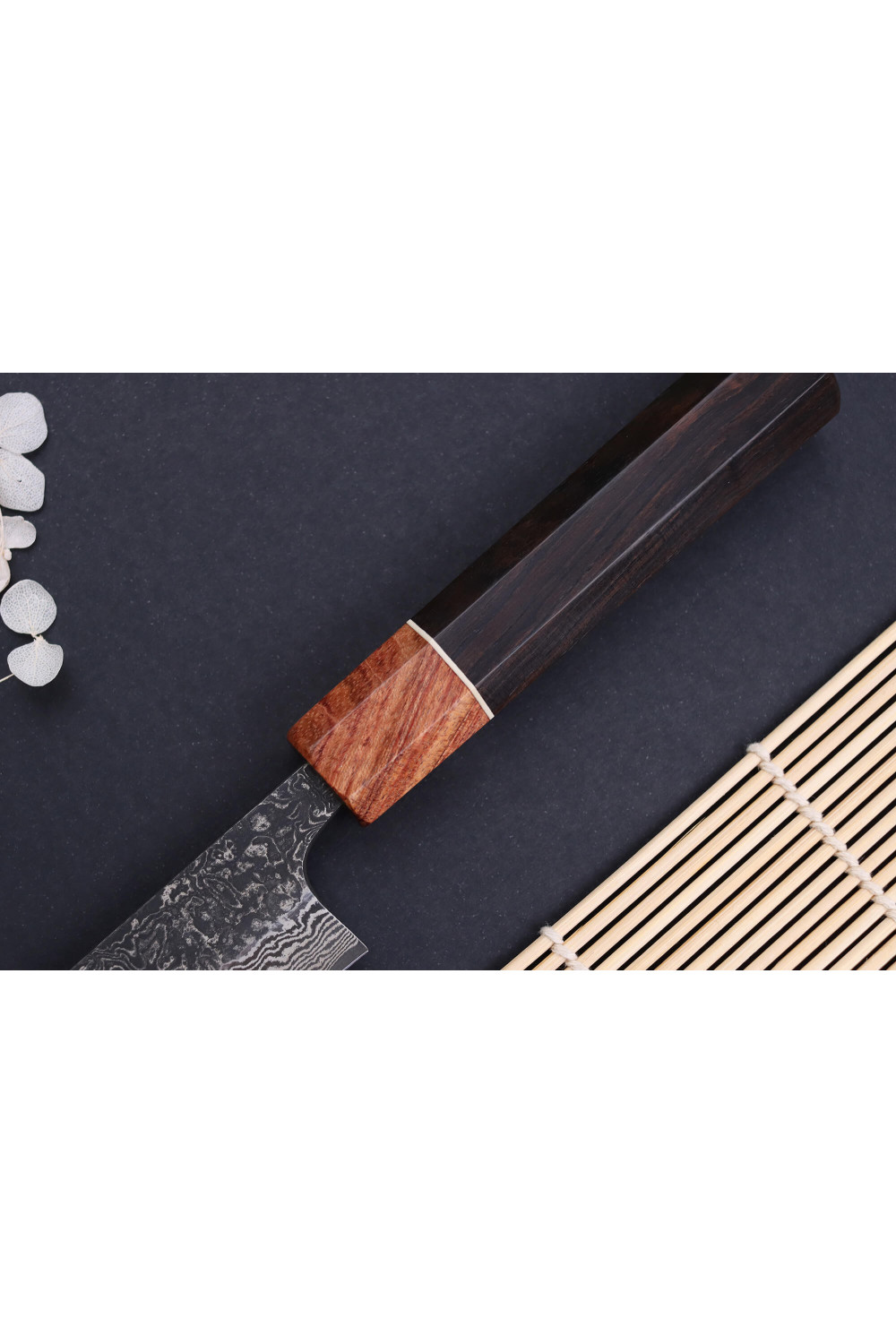
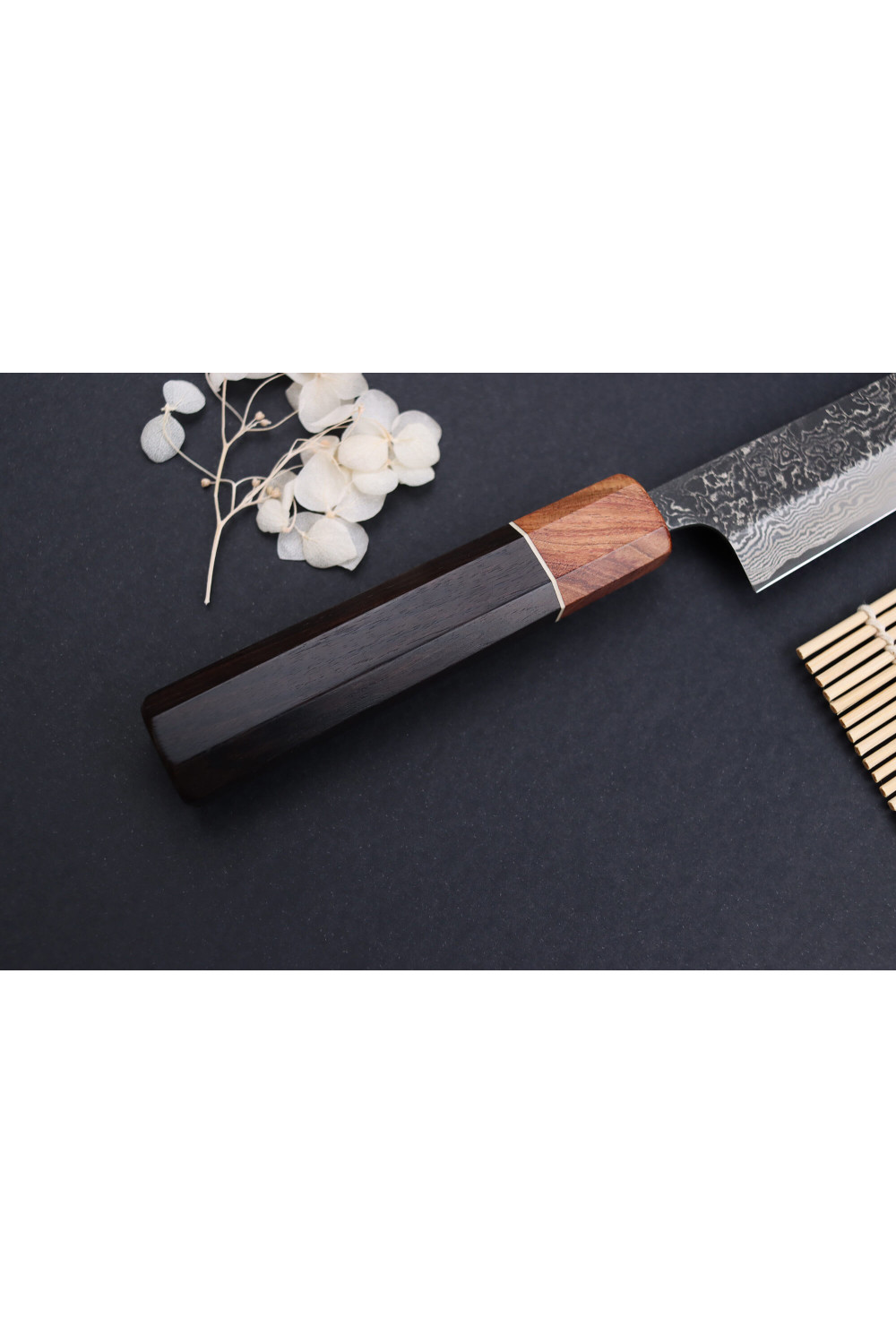
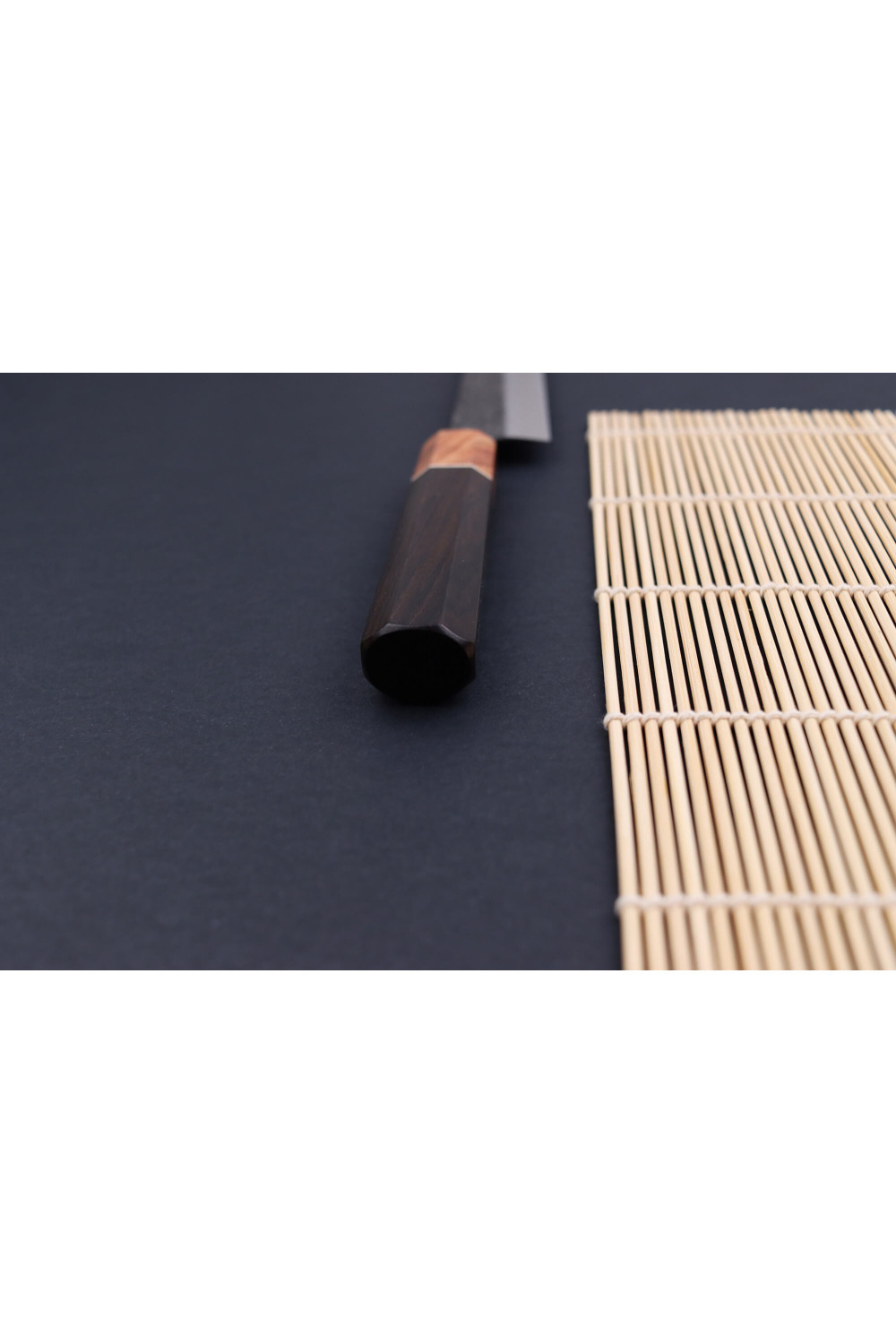
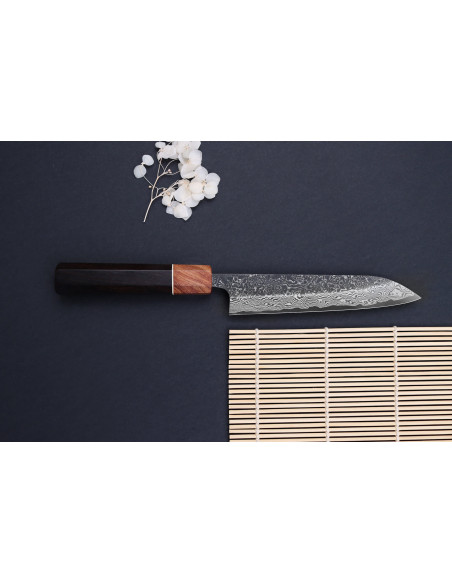
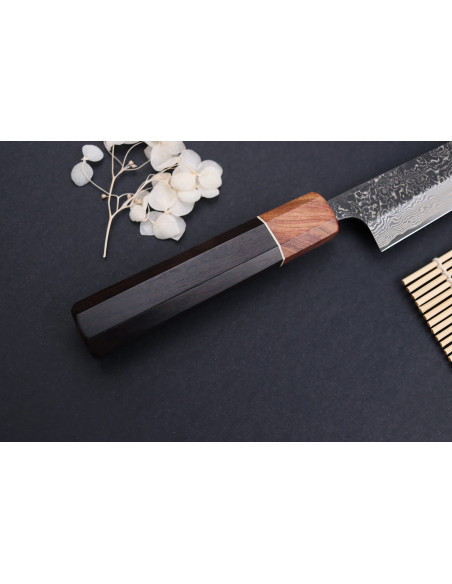
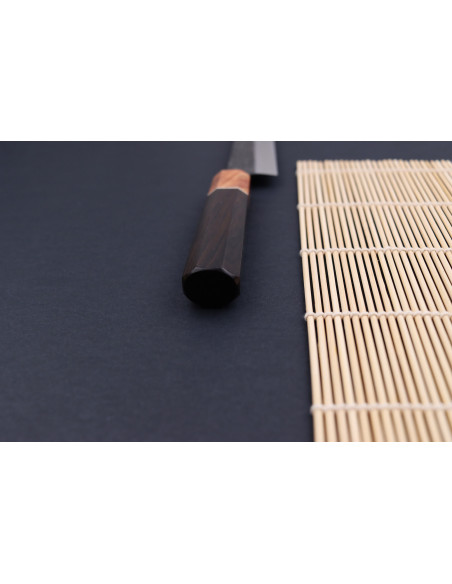
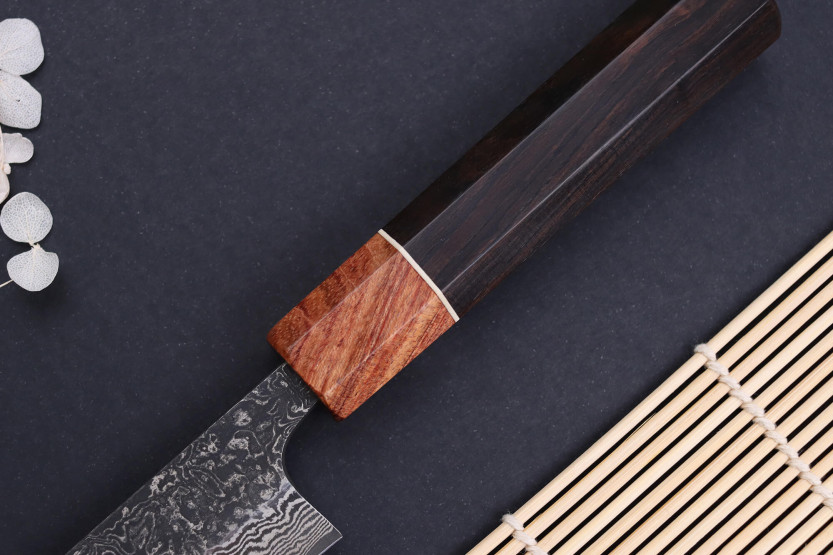
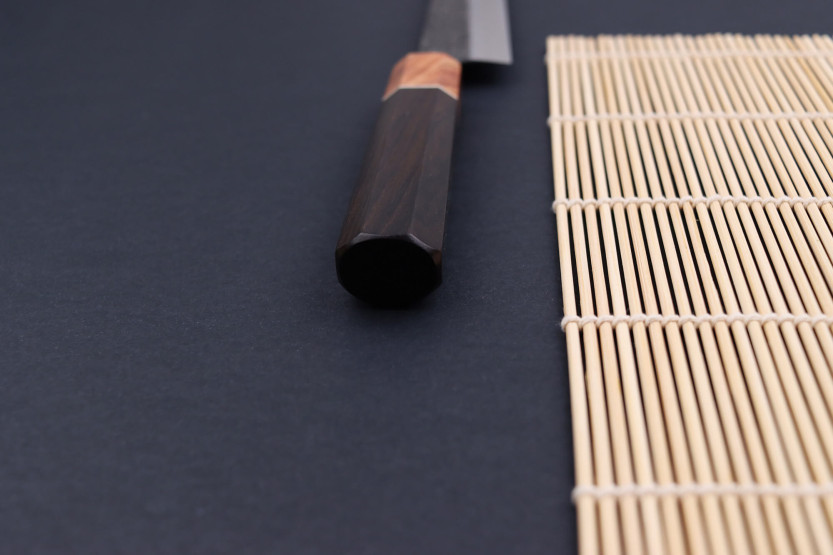
The handle is made ofebony wood and features beautiful deep shades. Ebony is a dense wood that is better protected from cracking. This wood is ideally suited to regular, even daily use. Its durability is a real asset in the kitchen. Octagonal in shape, the handle is suitable for both left- and right-handed cooks.
Ebony is complemented by a bolster in quince. This is a resistant species that reacts very well to temperature variations. With its lighter shade, quince contrasts perfectly with ebony's darker appearance. To bridge the gap between the two woods, a white micarta ring has been added for an elegant touch.
Finally, the space between the different materials is filled with wood paste. This prevents water and small food residues from seeping inside during cutting.
Taking good care of your Japanese craft knife
As this knife is made from top-quality materials, soaking it in the sink or putting it through the dishwasher are actions to be totally avoided.
Once you've finished using it, wash it by hand and dry it immediately. Also, avoid getting the handle wet as much as possible, as wood does not appreciate contact with water. Store the handle in a dry place, ensuring that no moisture remains on it. As mentioned above, this knife is considered oxidizable due to its high carbon content.
Note also that the blade may change color over time: this is completely normal! This is simply a natural reaction to moisture in the air and acidity in food.
Find all knives forged by Masashi Yamamoto on KnifeLeader.eu!





 By buying this product you can collect up to