Discover the work of blacksmith Shogo Yamatsuka
This Japanese knife was forged by Shogo Yamatsuka, a blacksmith from the town of Sakai. His father, who is also a blacksmith, taught him the trade, in particular how to work with Ginsan steel. Shogo Yamatsuka san is the only blacksmith in the town of Sakai to hot-forge Ginsan steel, as it is difficult to handle.
A true expert in this steel, Shogo always enjoys taking on the challenges presented by new steels. The Japanese Ministry of Economy, Trade and Industry has awarded him the title of Traditional Master Craftsman: this title rewards craftsmen who have worked long and hard to pass on their know-how and improve their superior skills in traditional Japanese industry and crafts. This is true recognition for Shogo Yamatsuka, who has worked for 30 years to master the skill of steel forging, known as Hizukuri.
The Universal knife has been sharpened by Mitsuo Yamatsuka, a renowned Master Traditional Craftsman specializing in sharpening. The work of these two great knifemakers ensures a blade with a formidable cutting edge.
A typically Japanese San Maï blade
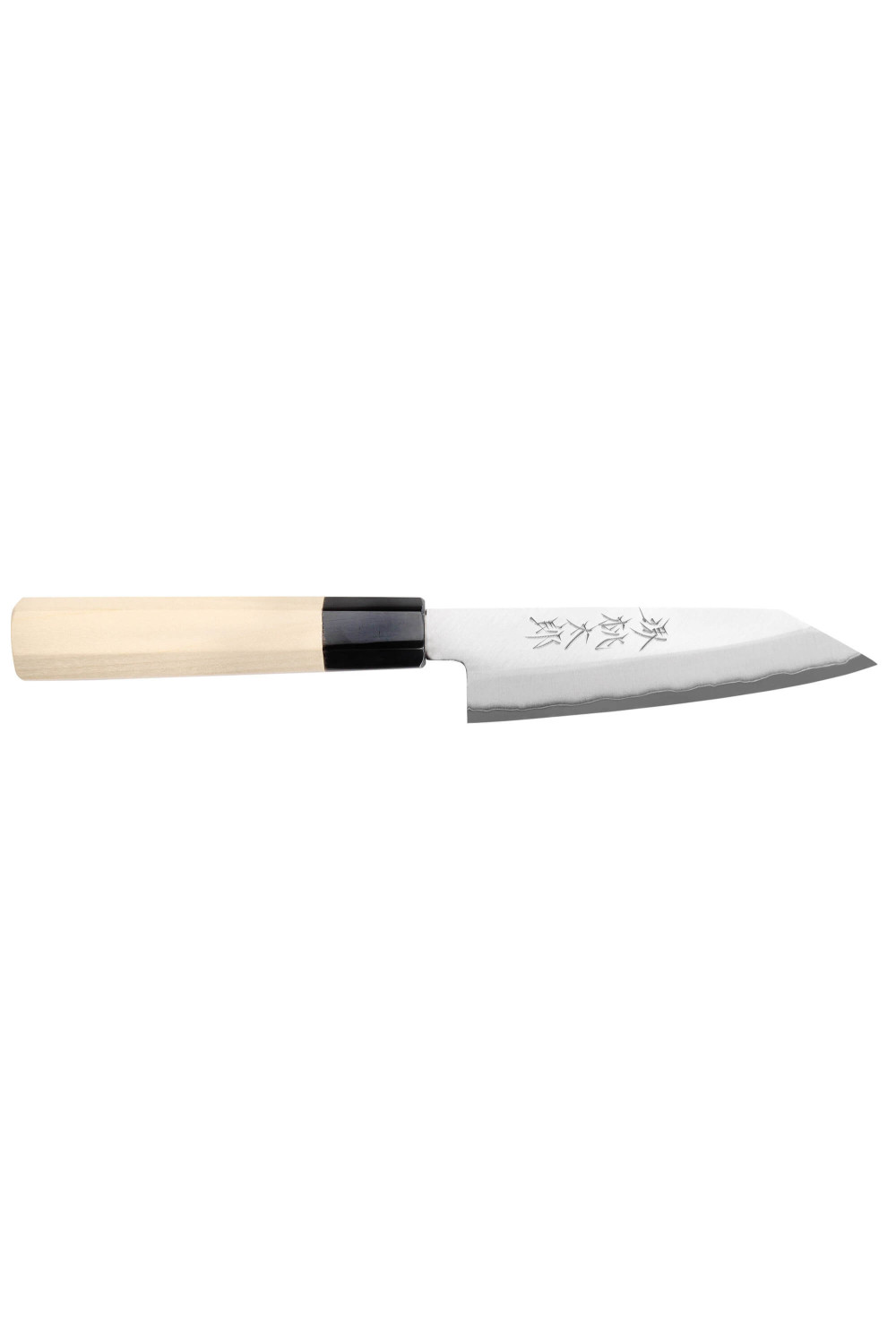
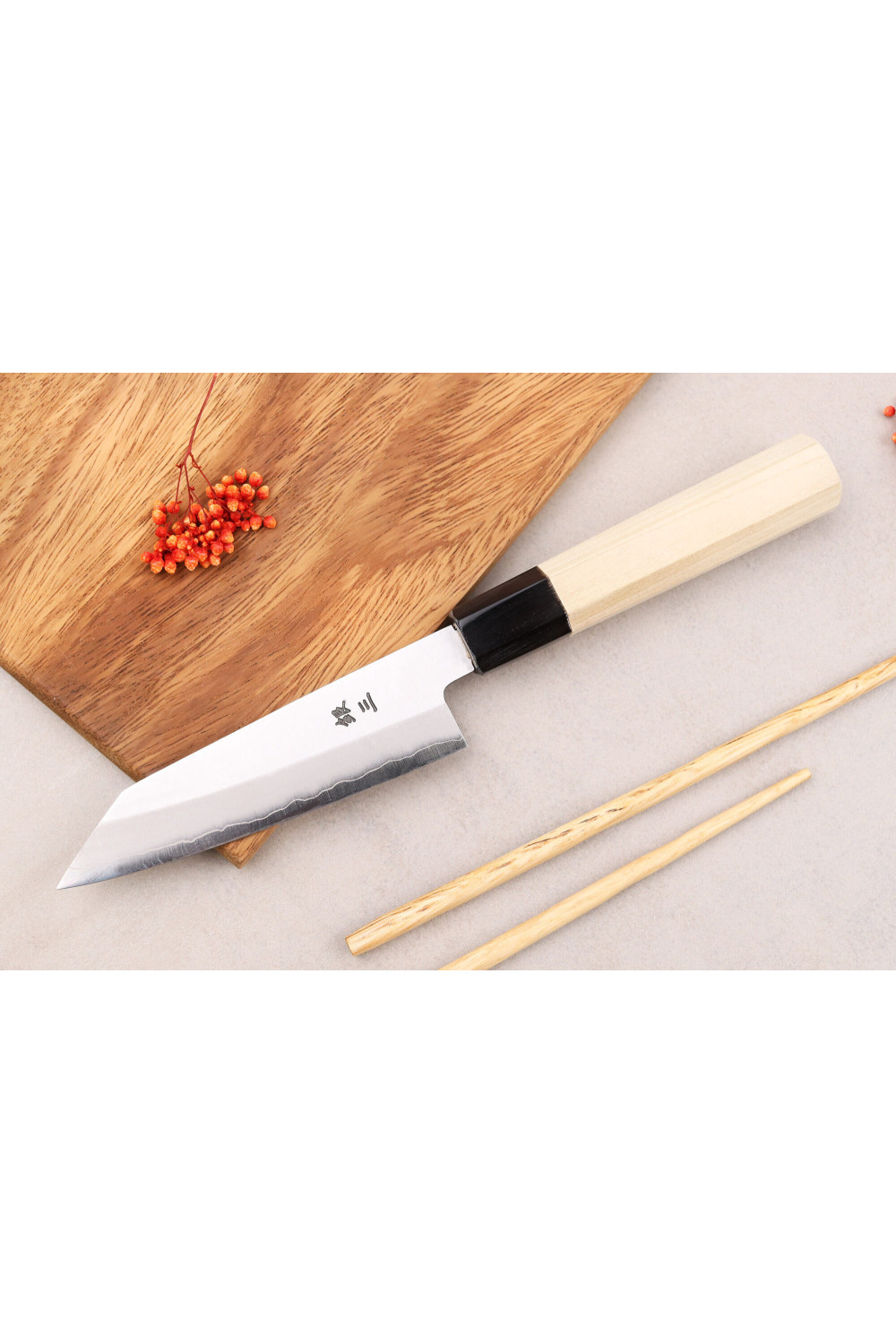
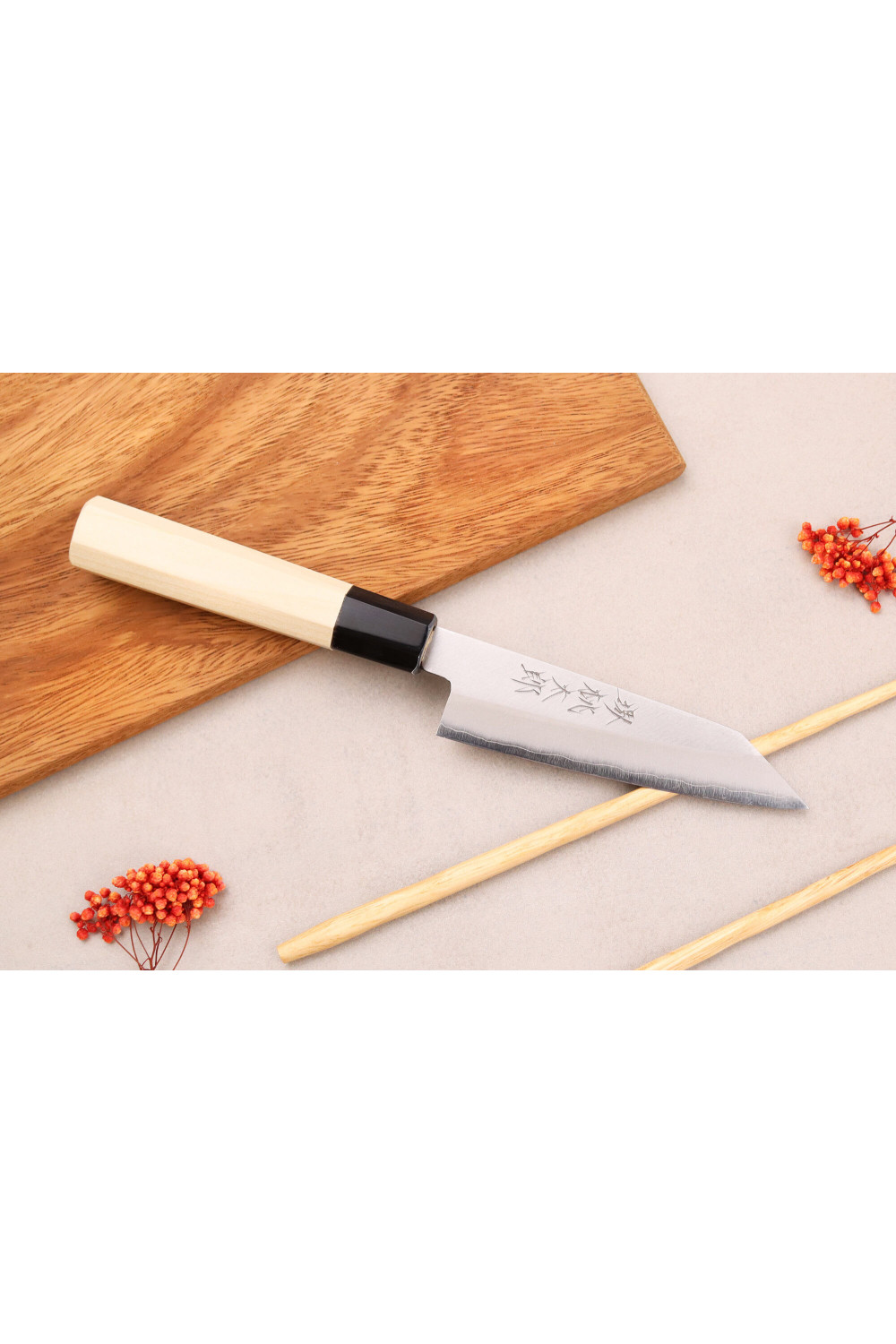
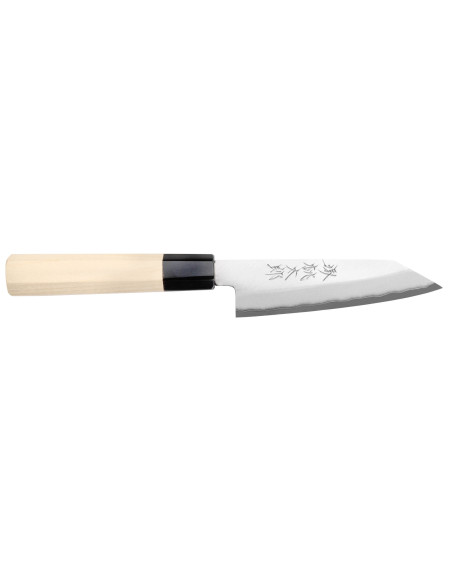
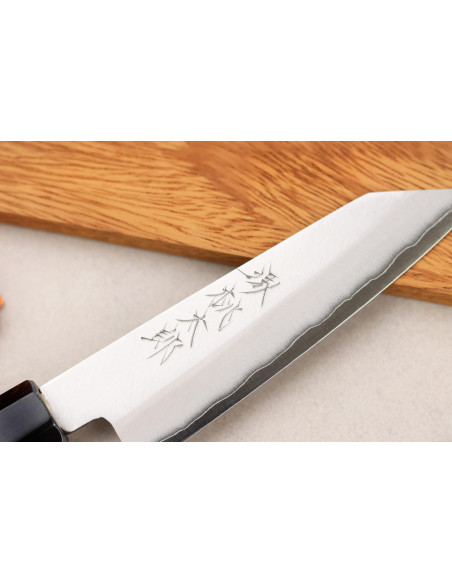
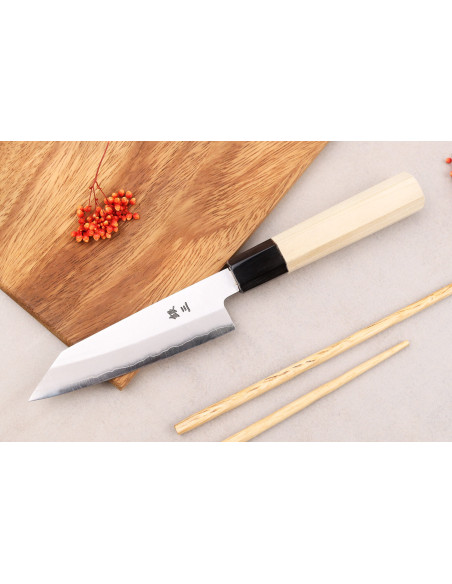
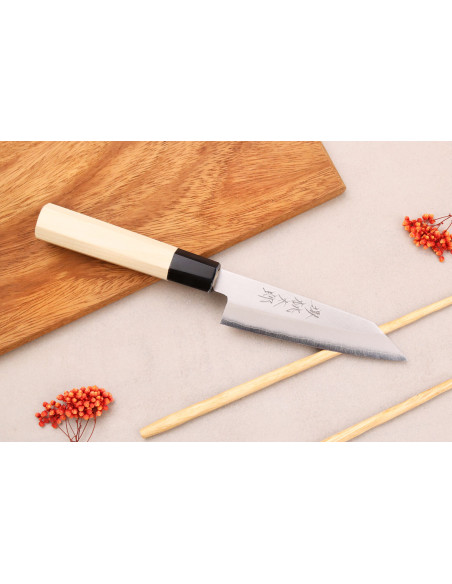
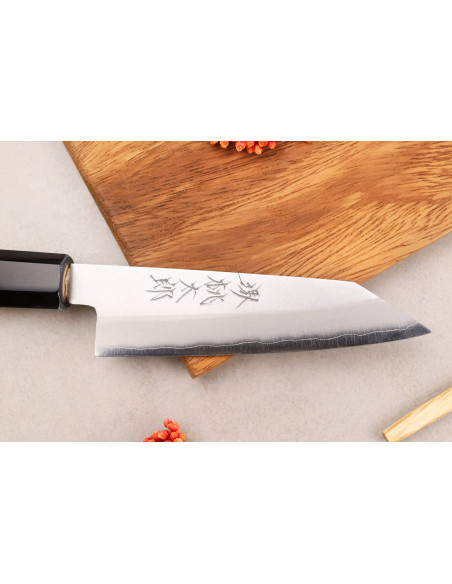
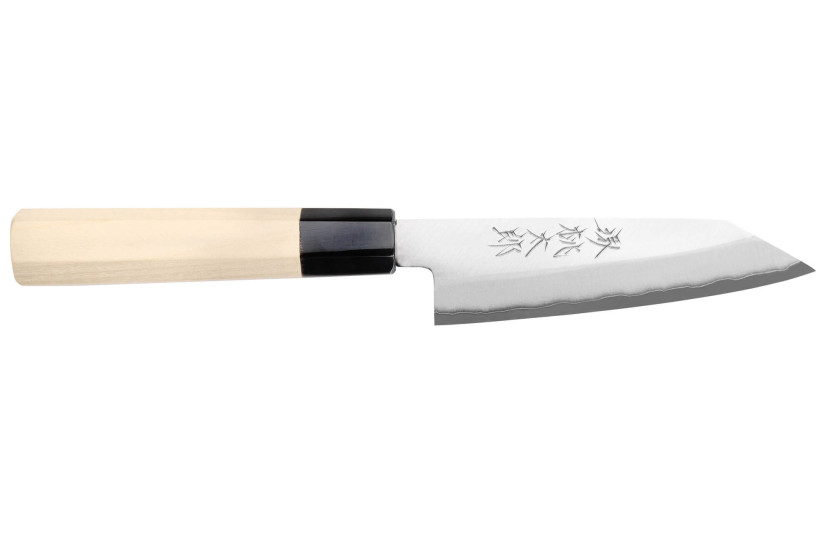
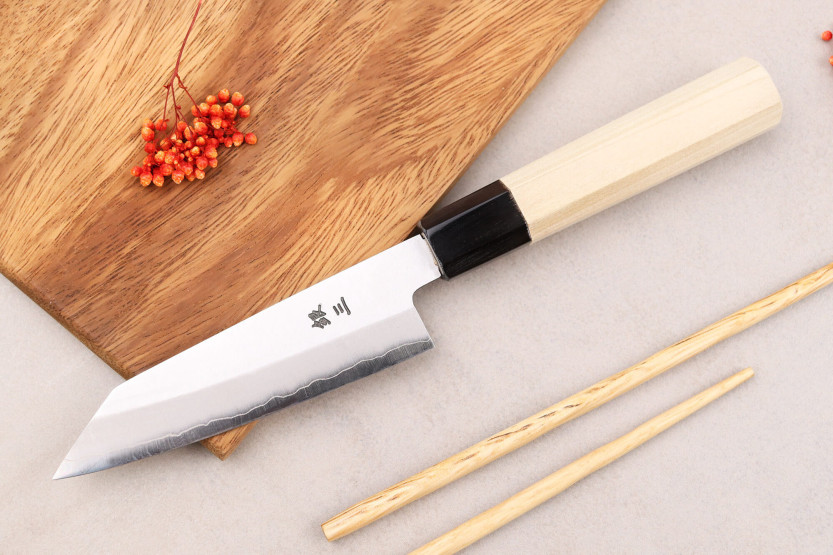
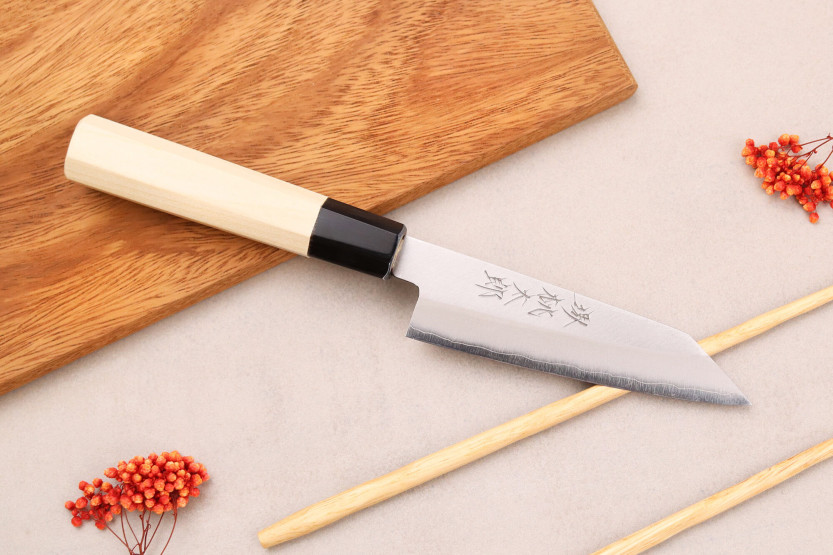
Your MomotaroUniversal knife features a 12cm blade with a kiritsuke tip, and a structure known as San Maï. This term means "3 layers" in Japanese and is a good indicator of the blade's construction. The blade consists of a core of rigid steel, which is then covered by a layer of softer steel sandwiching it. This protects the core while balancing out its hardness.
The core of the blade here is made of Ginsan steel (also known as G3 or Silver 3). This Japanese alloy contains almost 0.95% carbon, giving it a harder, stiffer edge that holds its sharpness better over time. With its high chromium content, Ginsan steel is also highly resistant to corrosion.
The knife achieves a hardness of 59/60 HRC on the Rockwell scale, guaranteeing easy blade maintenance. When the need arises, stone sharpening is easy.
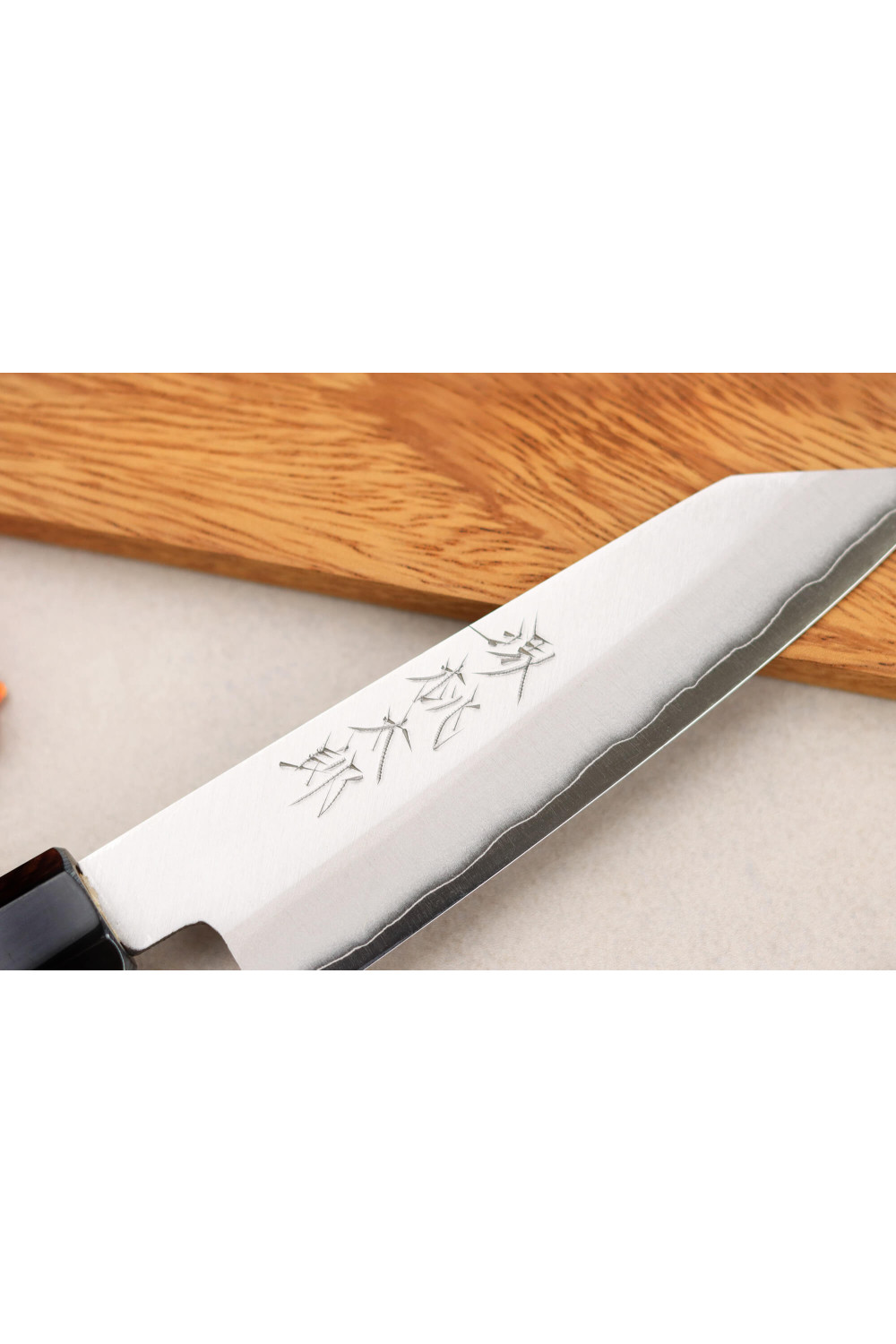
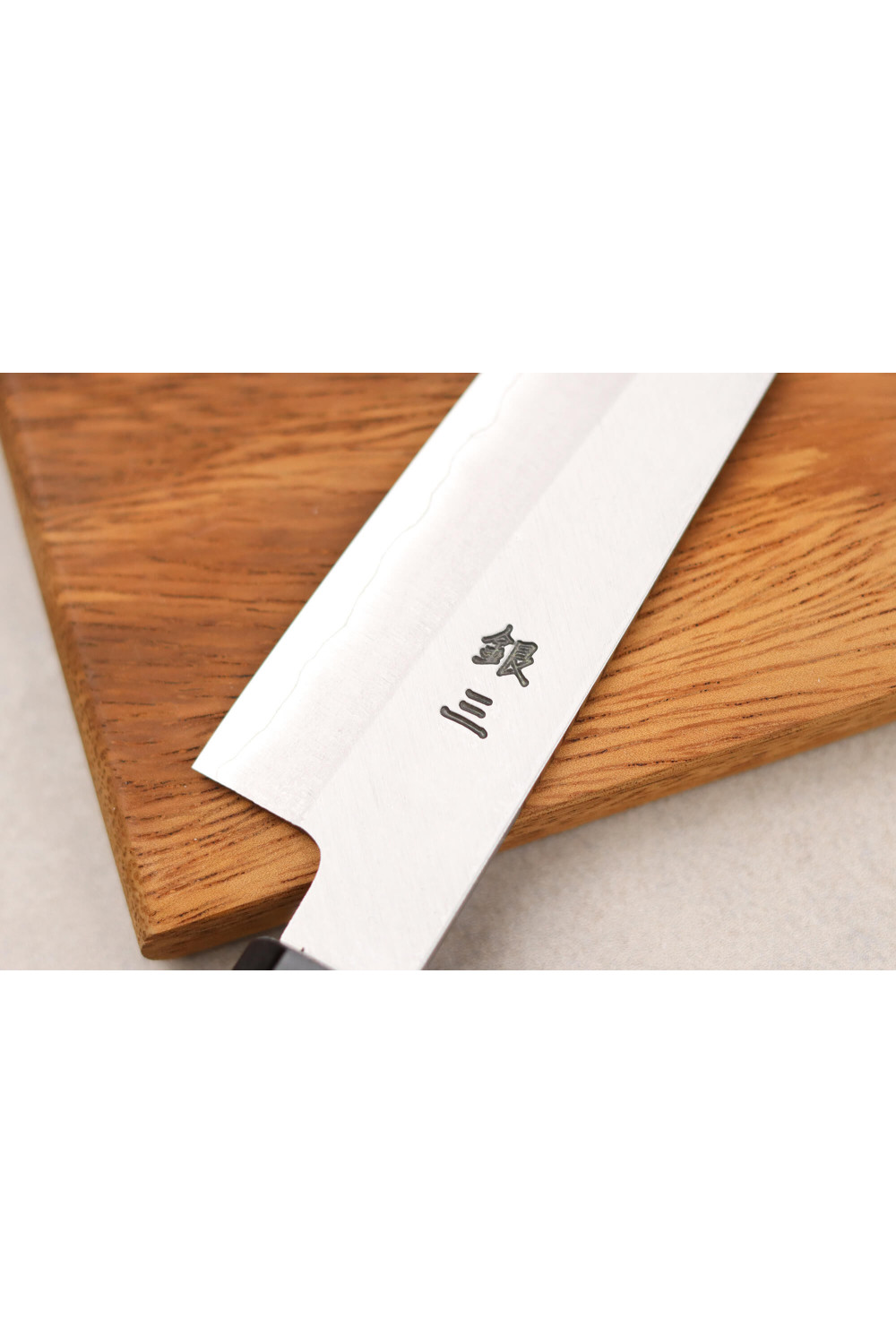
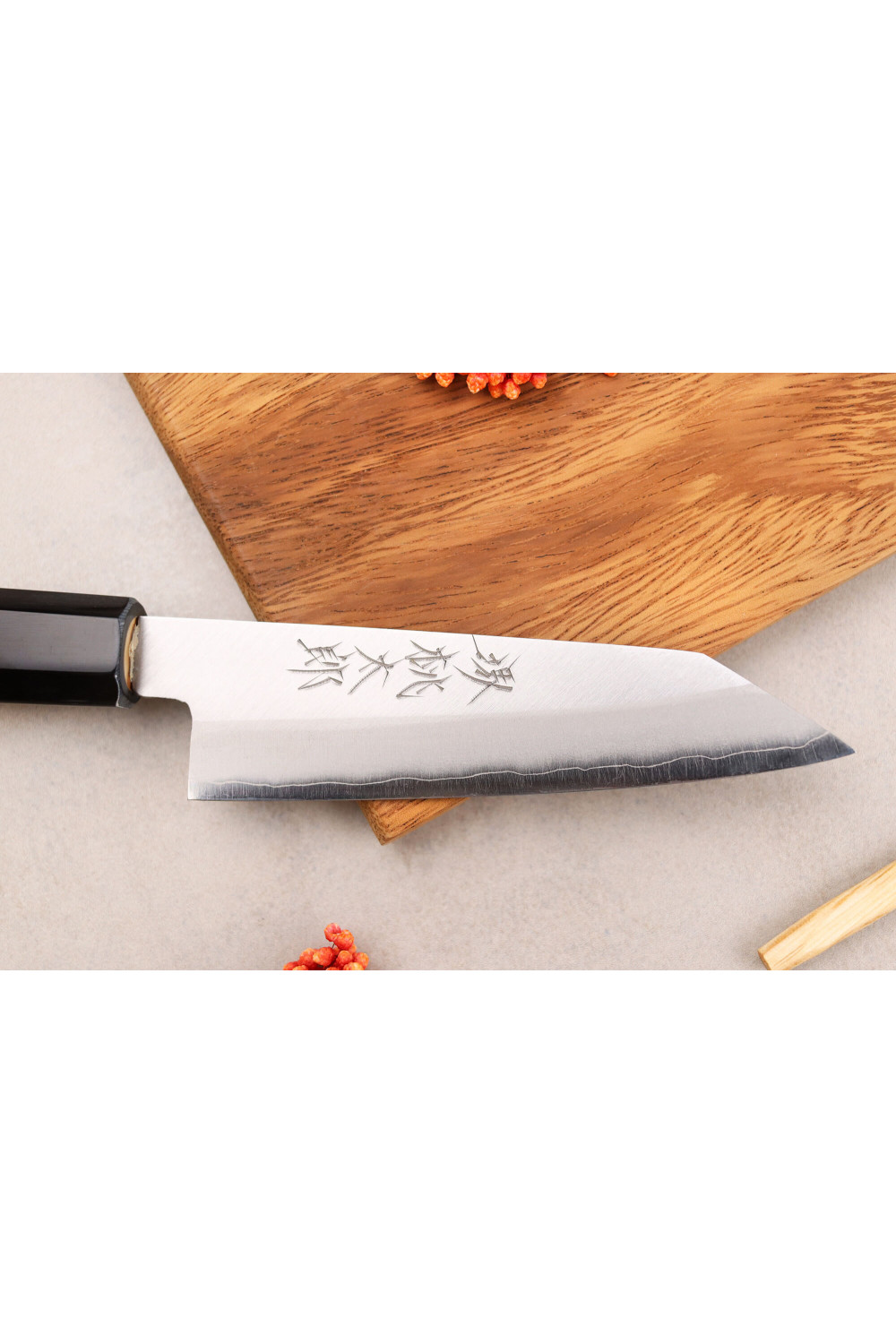
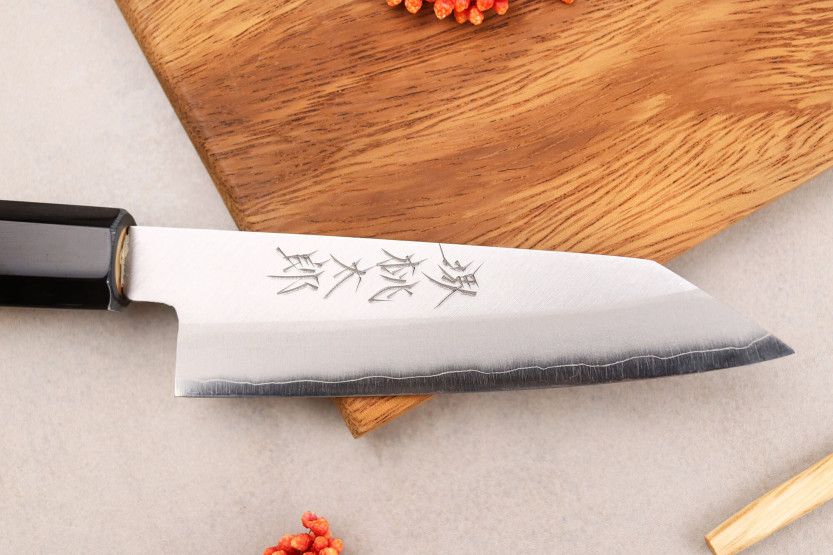
Next, a layer of softer steel covers the Ginsan core, folded over on both sides: that's 3 layers of steel. This outer layer protects and softens the Ginsan, making it less brittle in use. You can see the alternating layers of steel near the cutting wire.
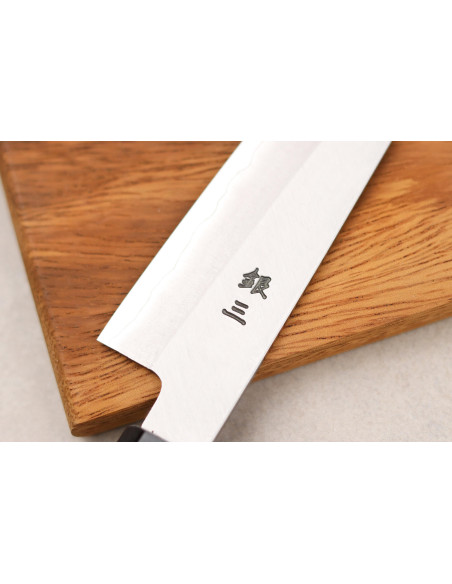
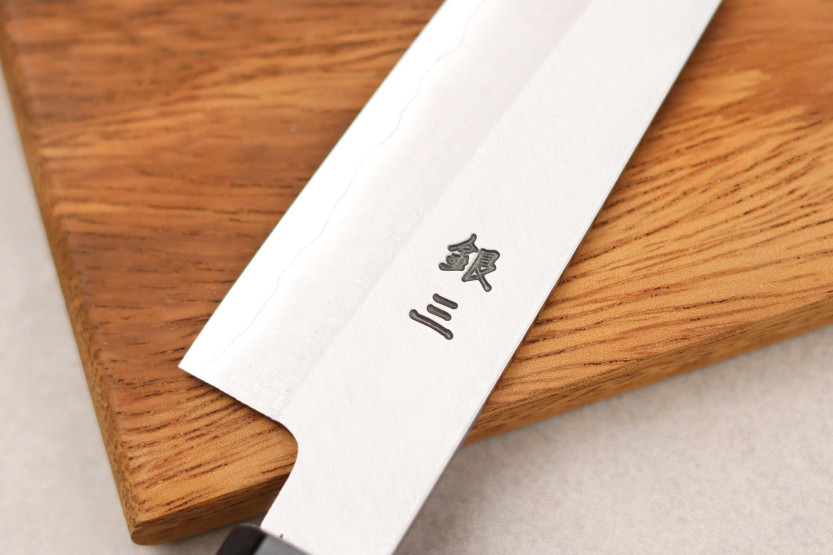
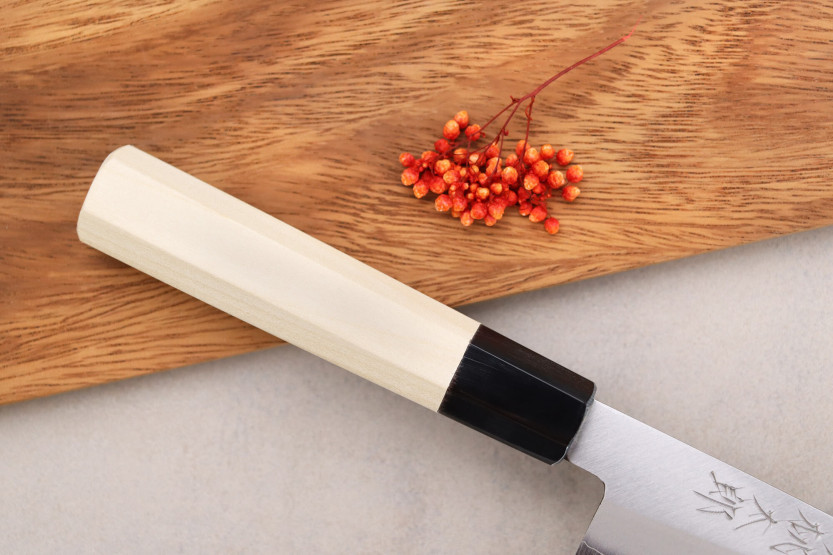
Finally, the blade features delicate kanji engraving on both sides and has been polished. Elegance and authenticity are the hallmarks of this blade.
Octagonal magnolia handle
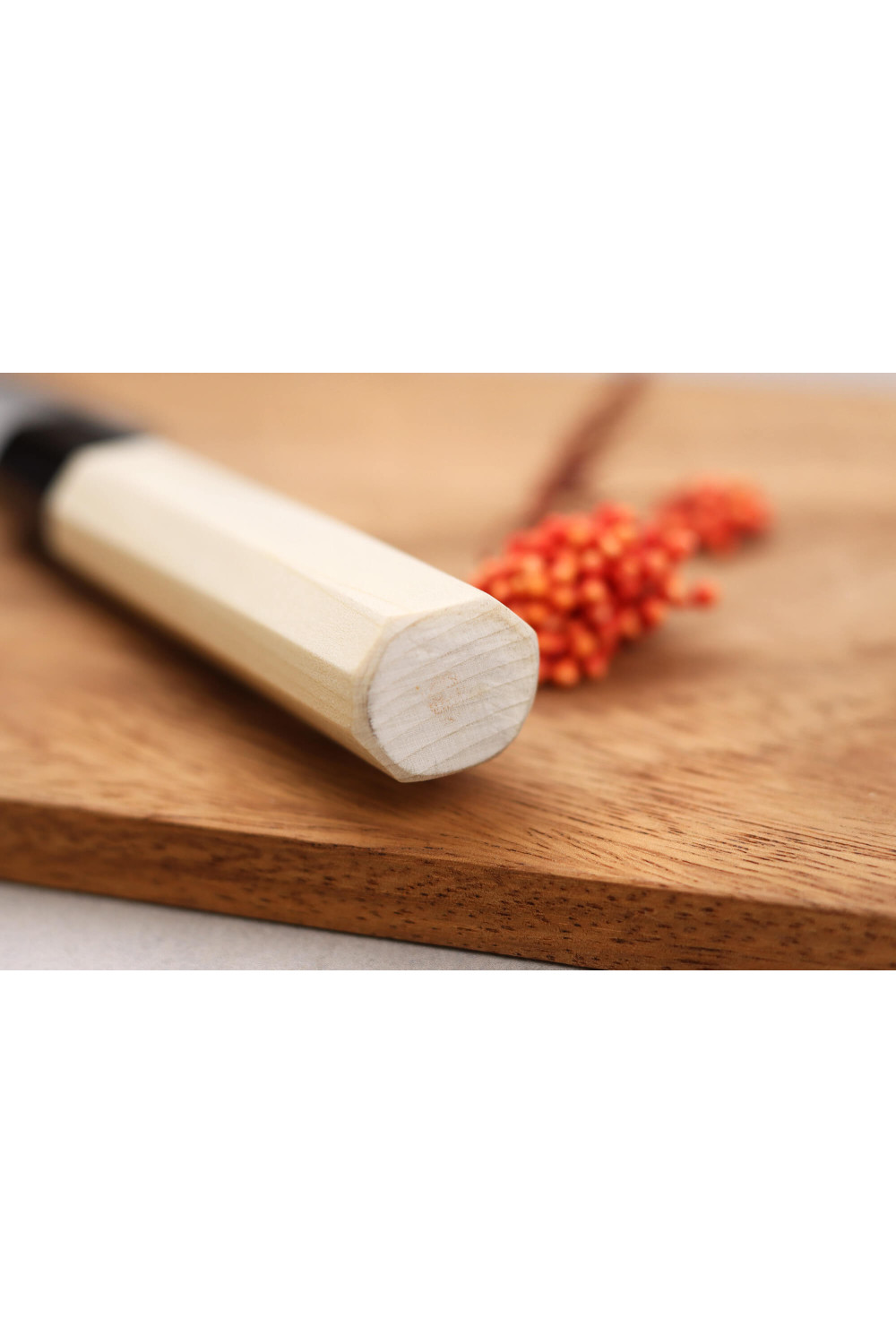
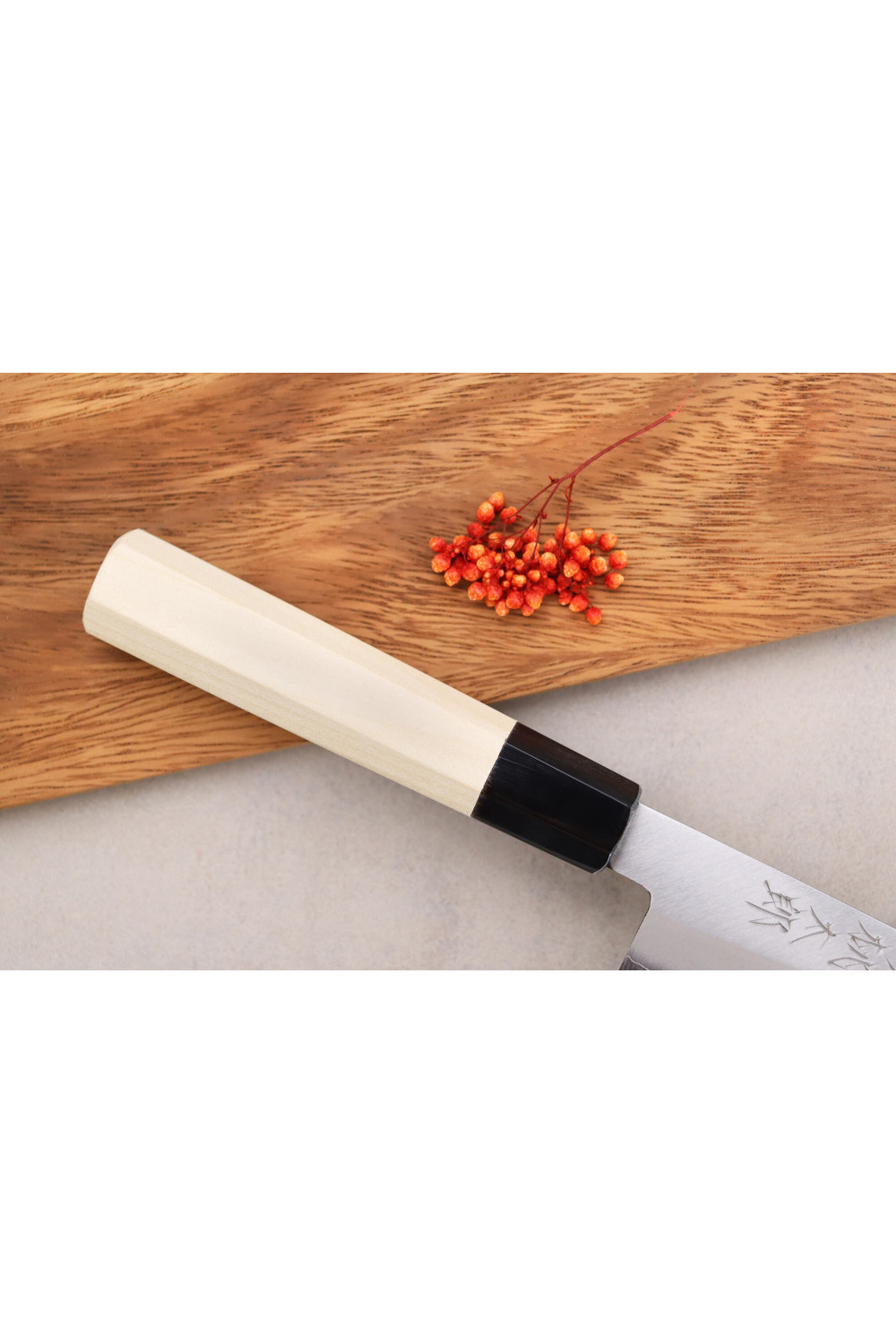
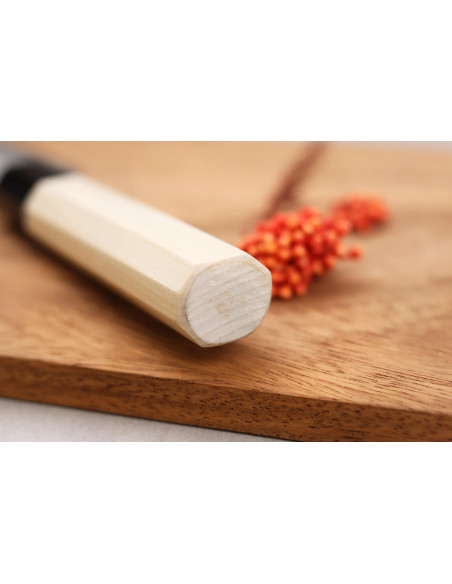
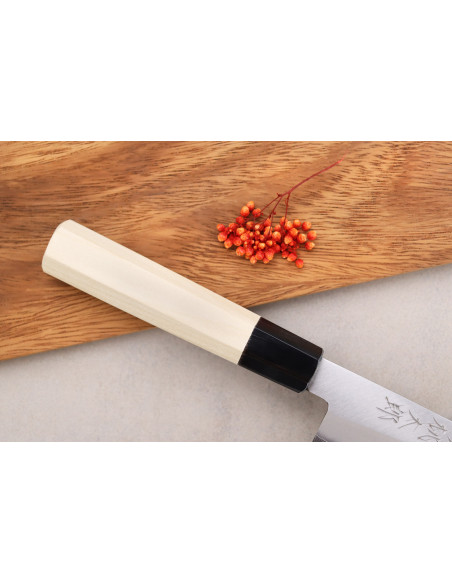
This handcraftedJapanese knife features an octagonal handle. This shape has the advantage of being suitable for all cooks, whether right- or left-handed. By hugging your palm, the handle offers great comfort in use and is suitable for prolonged cutting sessions.
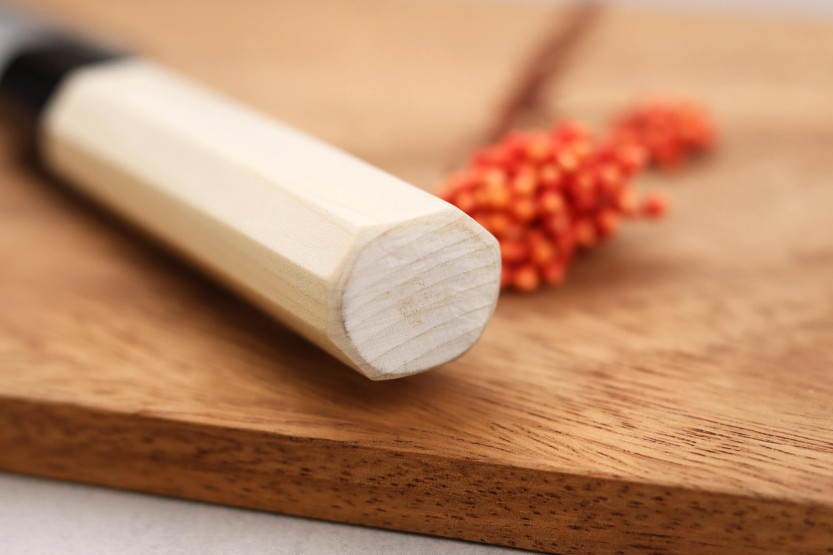
The handle is made from magnolia wood, a high-end species recognizable by its light, creamy hue. Traditionally, magnolia is used to make scabbards for Japanese swords, as it is light, very soft and resists moisture well.
A black buffalo hornBolster completes the handle and links it to the knife blade. It completes the knife's balance.
Finally, wood pulp has been injected into the small spaces where the blade fits into the handle. Your knife has an excellent watertight seal, as cleaning water and cut food cannot penetrate inside.
How do I care for my Japanese knife kitchen knife?
As your knife is made from top-of-the-range materials, it's important to wash it exclusively by hand, taking care not to get the handle wet. Use a soft sponge and a suitable soap under lukewarm water.
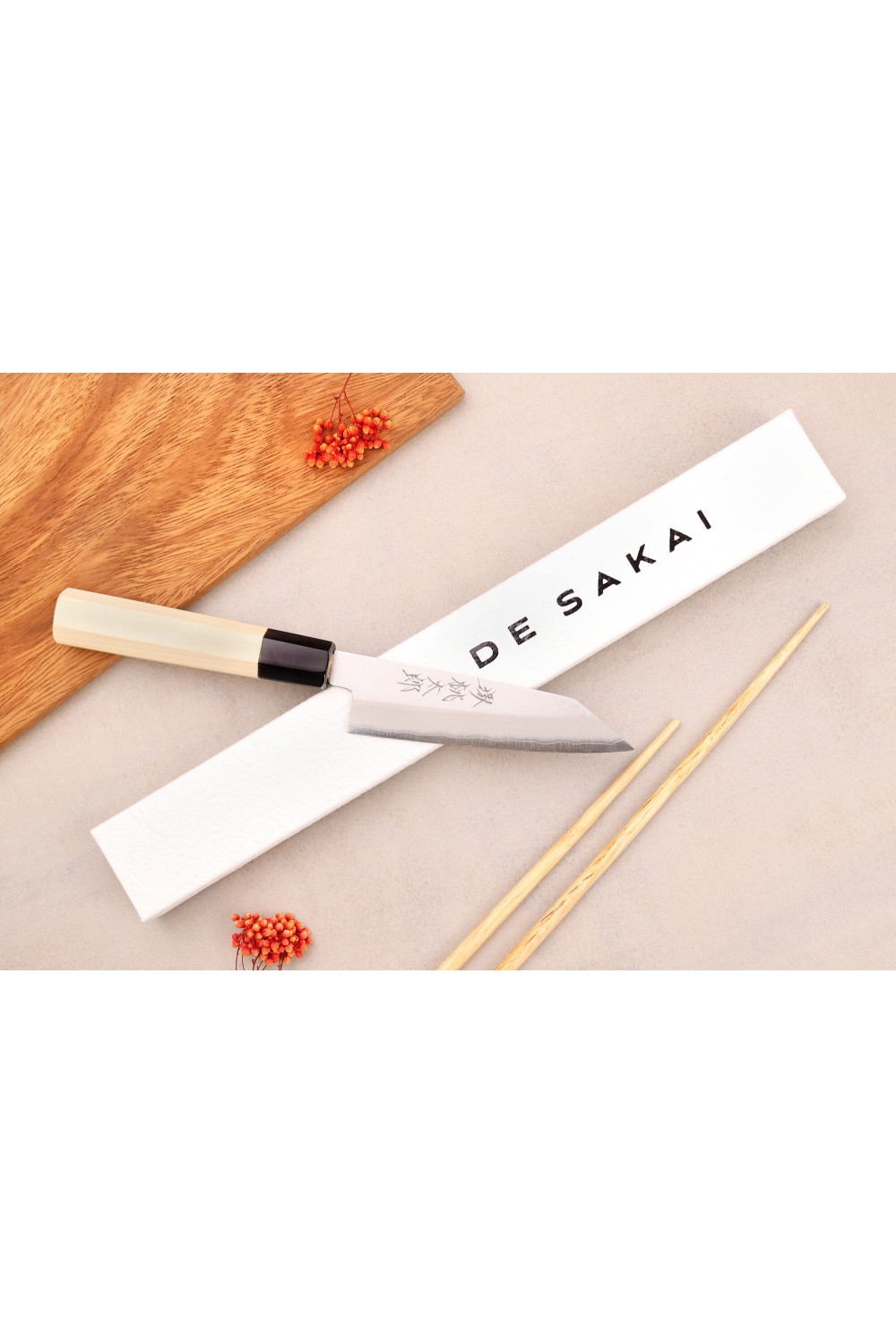
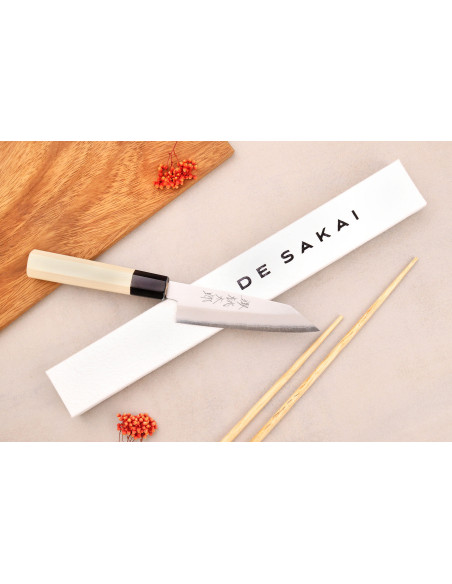
Once the knife has been washed, wipe it dry to keep it moisture-free. Finally, store the knife in a dry place, such as its box, to preserve its original appearance for a long time to come.
Find Momotaro knives on KnifeLeader.eu!






 By buying this product you can collect up to