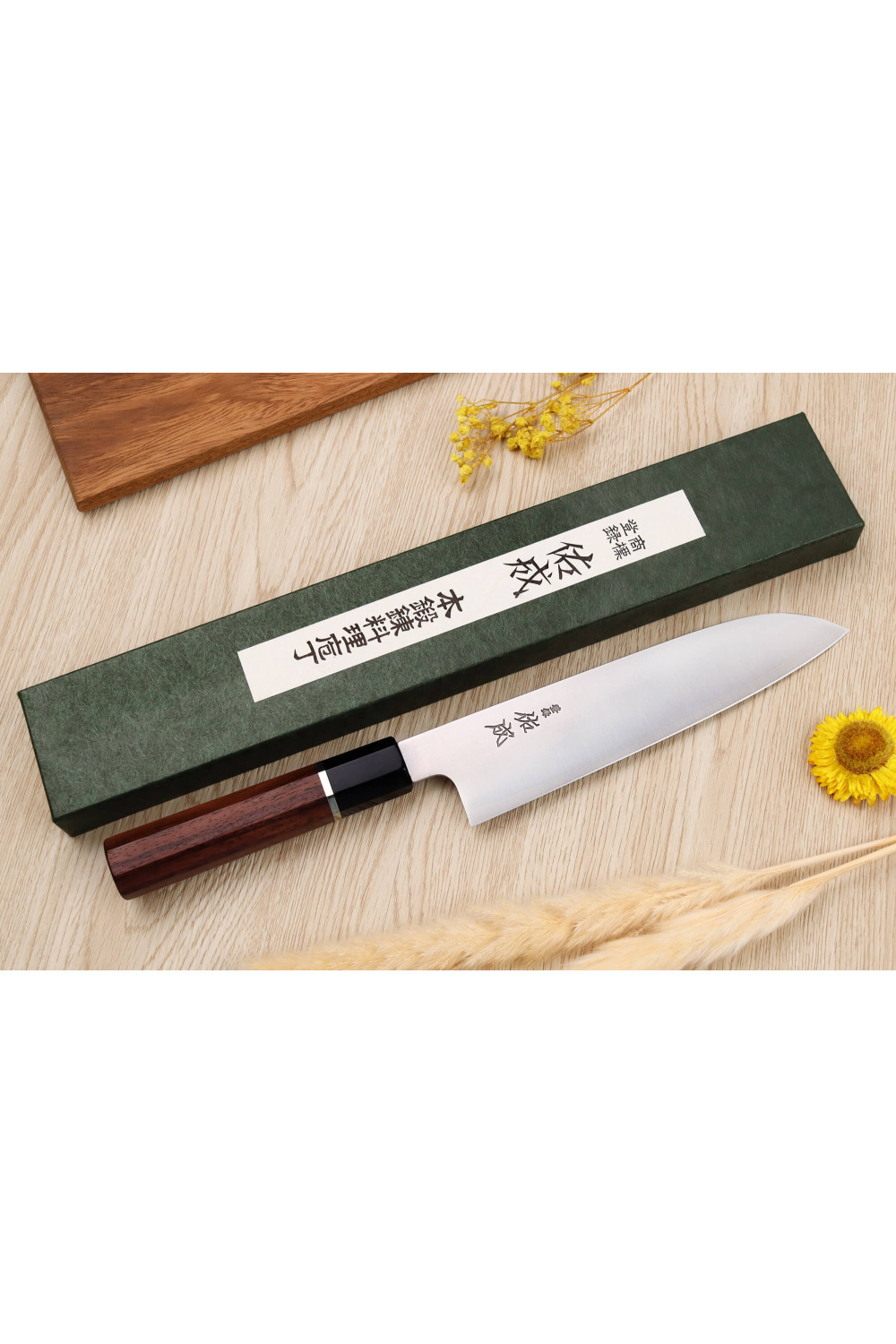
Sukenari is a Japanese company founded in 1933, renowned for its production of high-quality knives. It brings together a team of master blacksmiths who are experts in cutlery, capable of producing Honyaki knives, renowned for their excellence and requiring great forging expertise. In this way, Sukenari perpetuates the heritage of the blacksmiths of yesteryear who made the famous samurai swords. Today, Sukenari positions itself as a manufacturer of handcrafted kitchen knives that blend traditional and modern designs.
A high-performance blade for Japanese knives
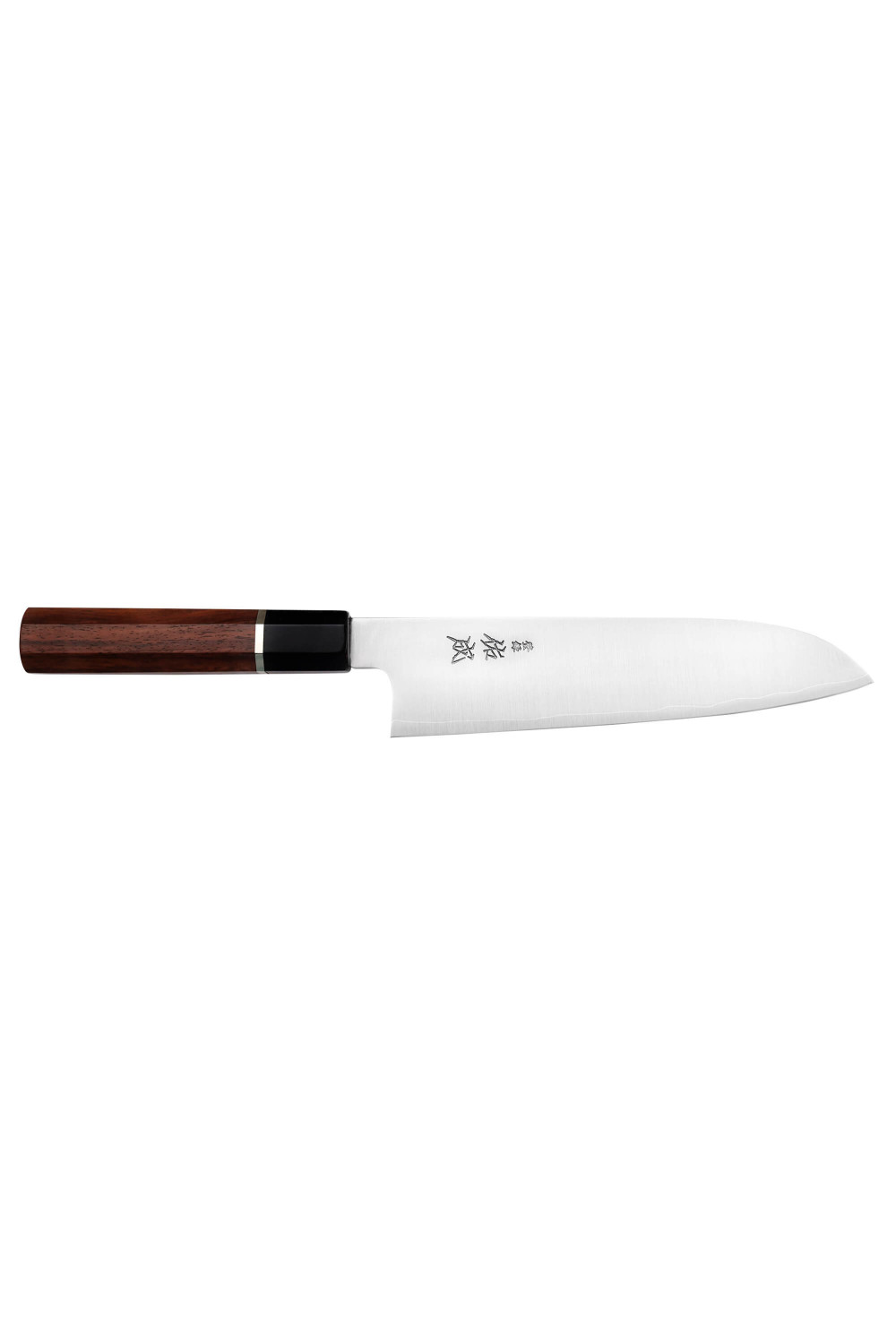
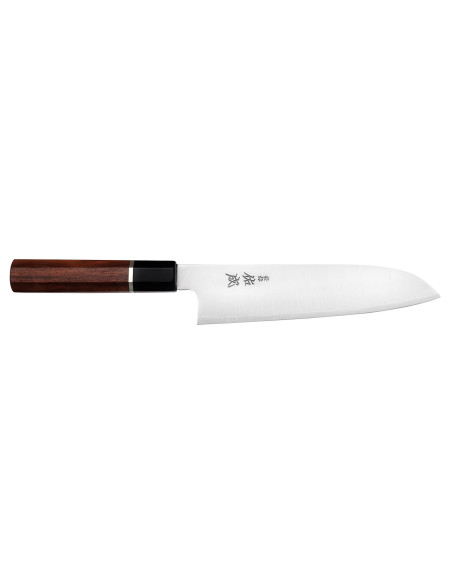
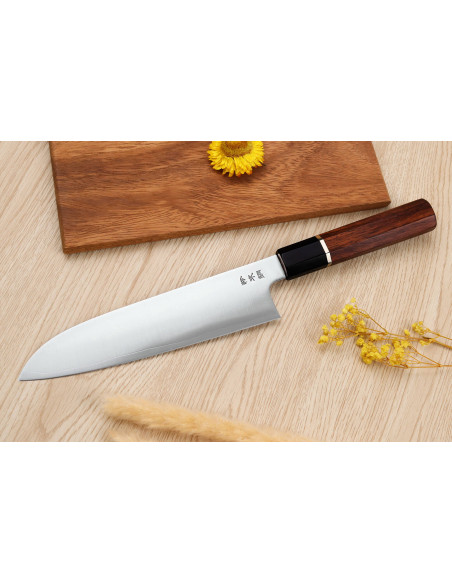
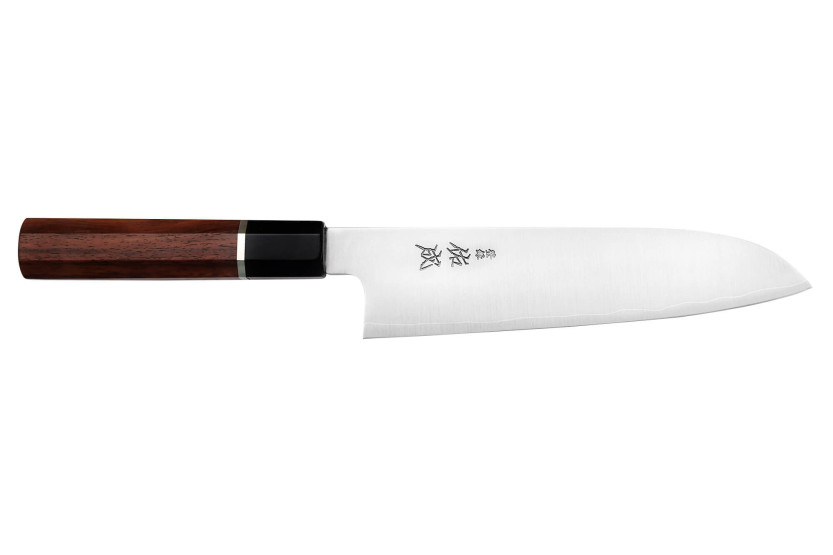
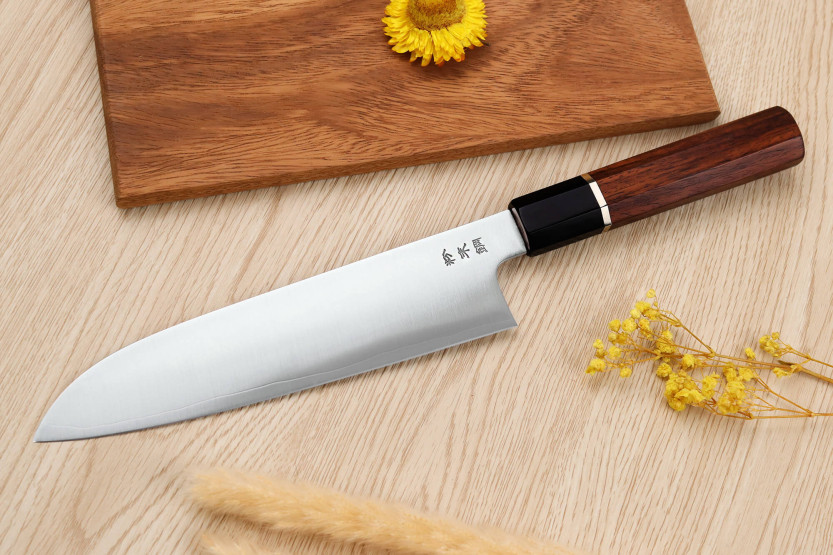
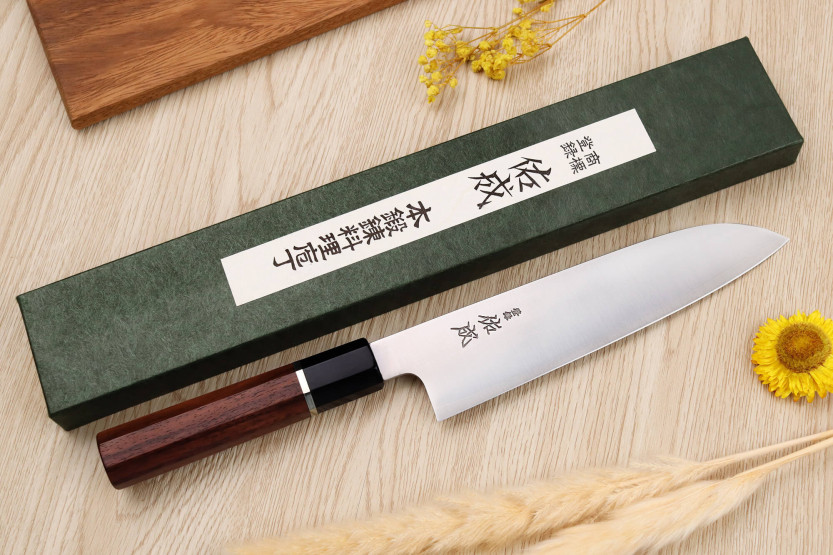
This santoku knife features a 19.5cm blade built with a typically Japanese San Maï (meaning "3 layers") structure. This technique consists of forging a rigid steel core, which is then covered with a softer layer of steel that folds in on itself. This gives your blade greater flexibility while protecting the core.
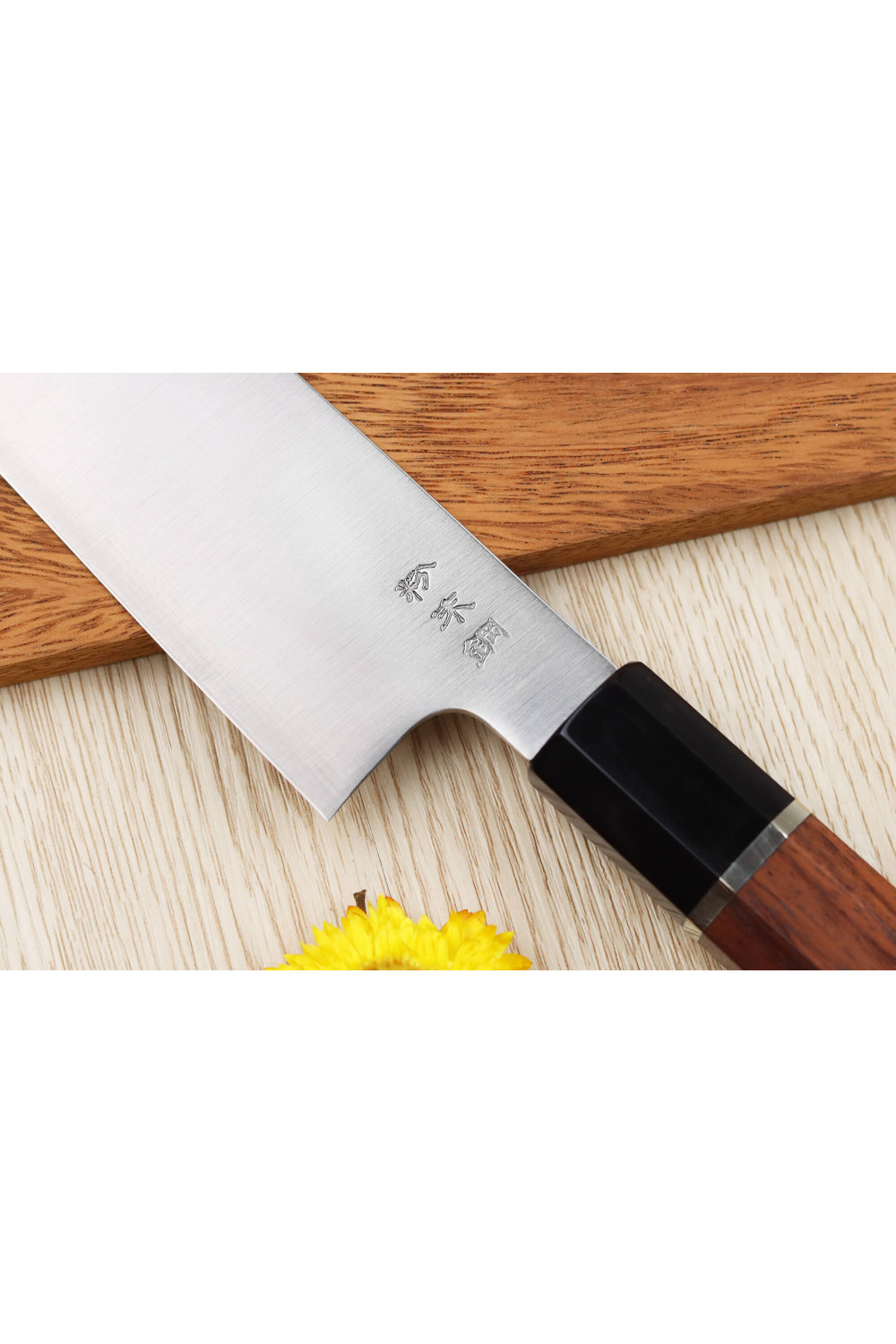
Japanese SG2 powdered steel, produced by the renowned Takefu Special Steel, has been chosen for this blade. The alloy has a high carbon content of 1.3%, giving your blade a high hardness of 63HRC on the Rockwell scale. As a result, your Sukenari knife has excellent edge retention, allowing you to space out your sharpening sessions.
Also, SG2 alloy is composed of 15% chromium, which improves its resistance to oxidation. However, due to its high carbon content, this Japanese kitchen knife requires careful maintenance to avoid corrosion.
The micro-structure of SG2 steel is another advantage! Its micro-carbides are evenly distributed, making your blade more resistant to wear and micro-cracks.
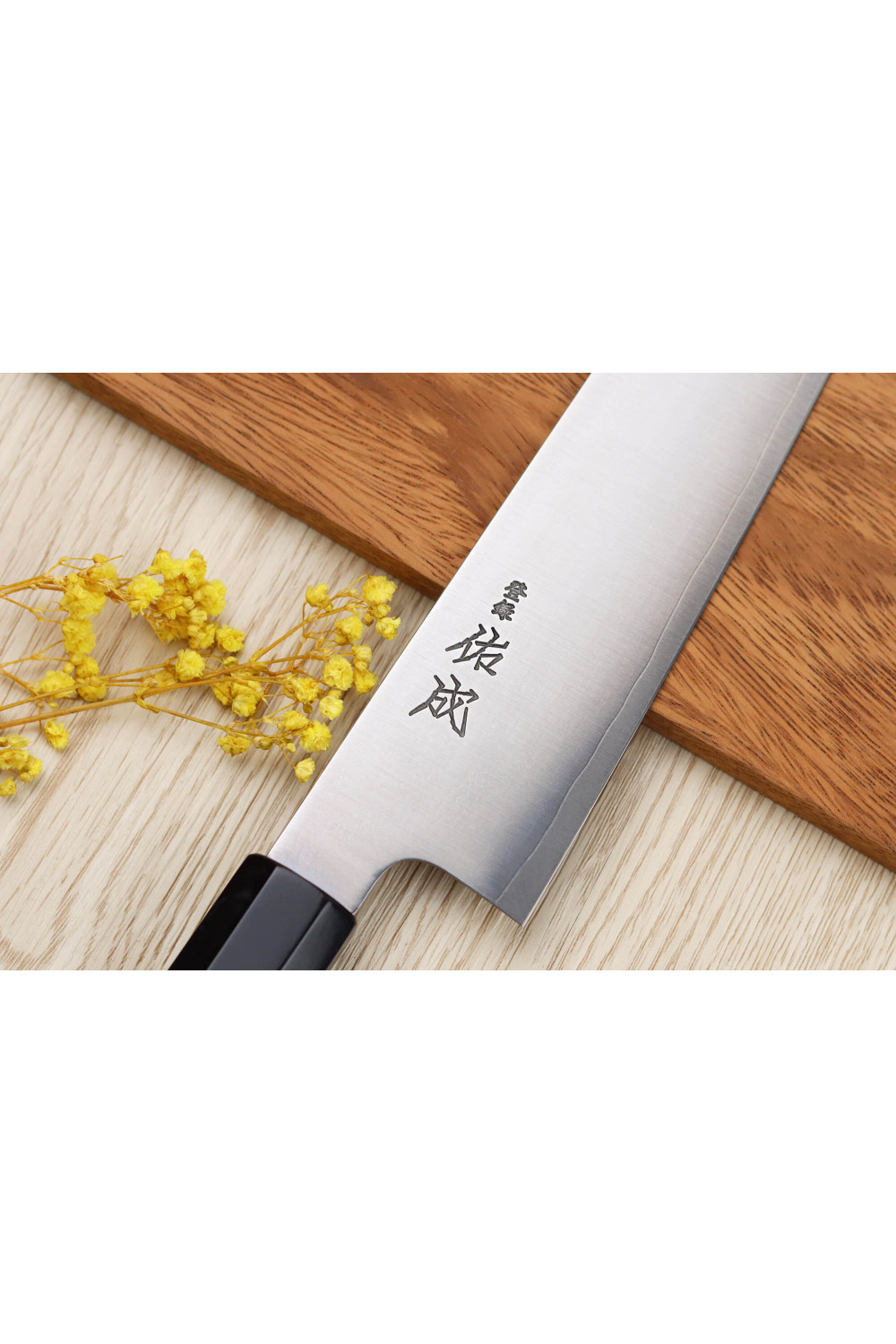
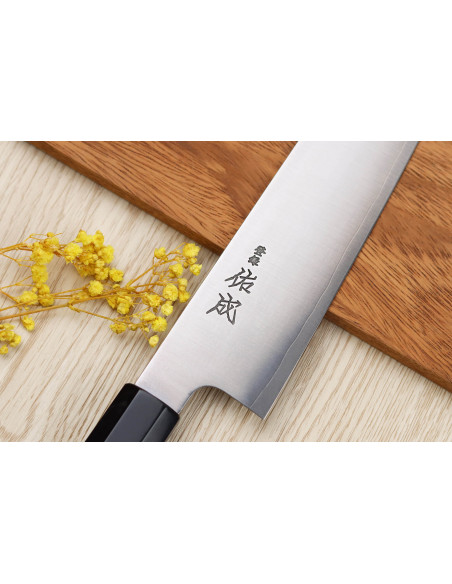
To complete the San Maï structure, the SG2 core is wrapped in a layer of softer steel which is folded over itself to form the remaining 2 layers. This outer layer makes the core more flexible and less brittle in use. You can observe the superimposition of the different steel layers along the cutting edge: it forms a fine wave with random patterns.
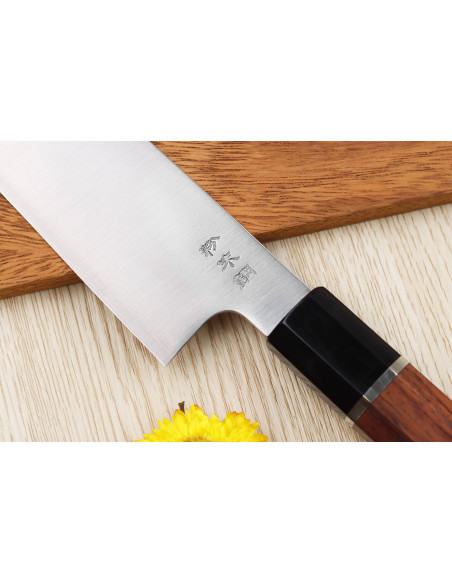
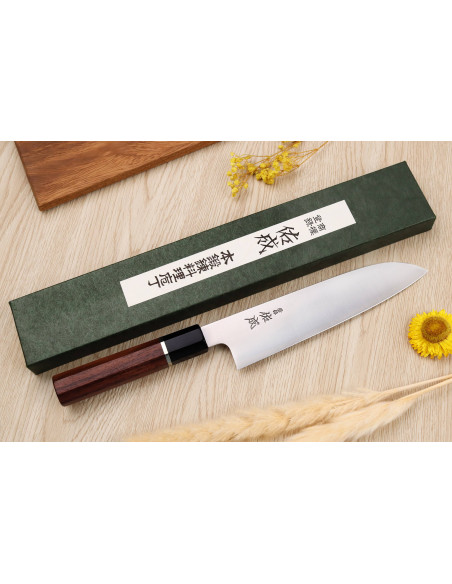
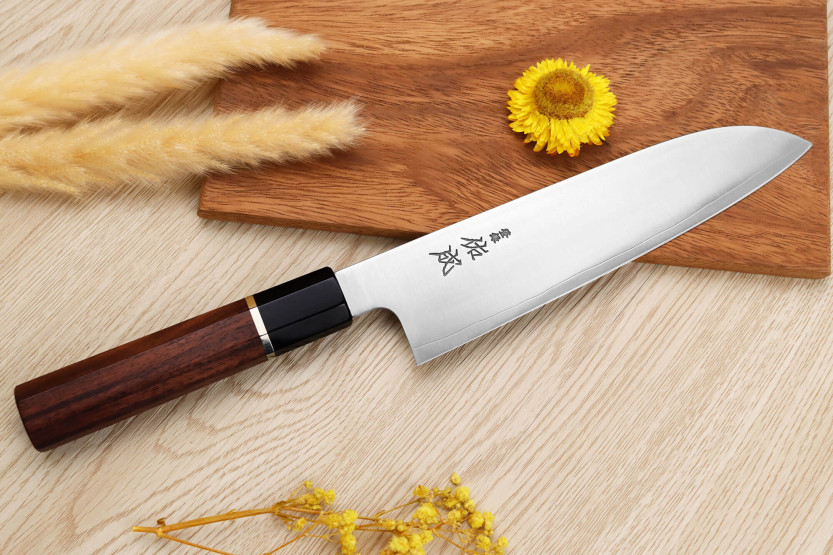
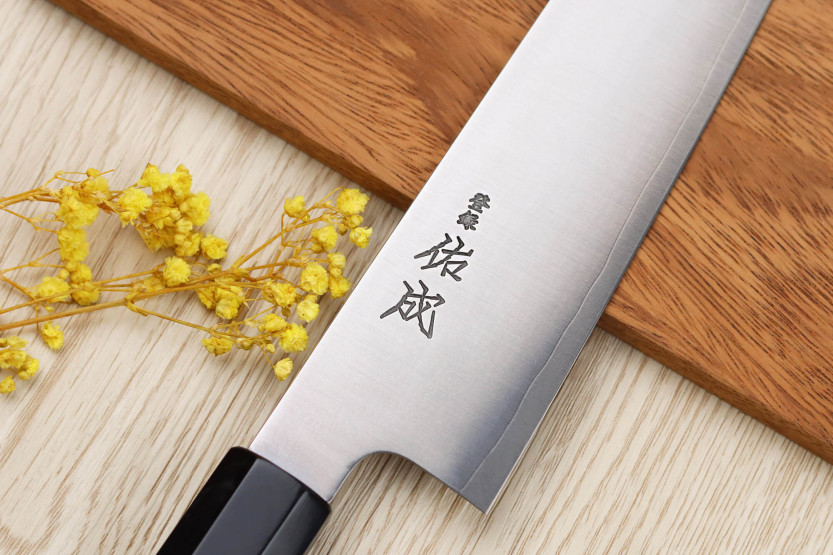
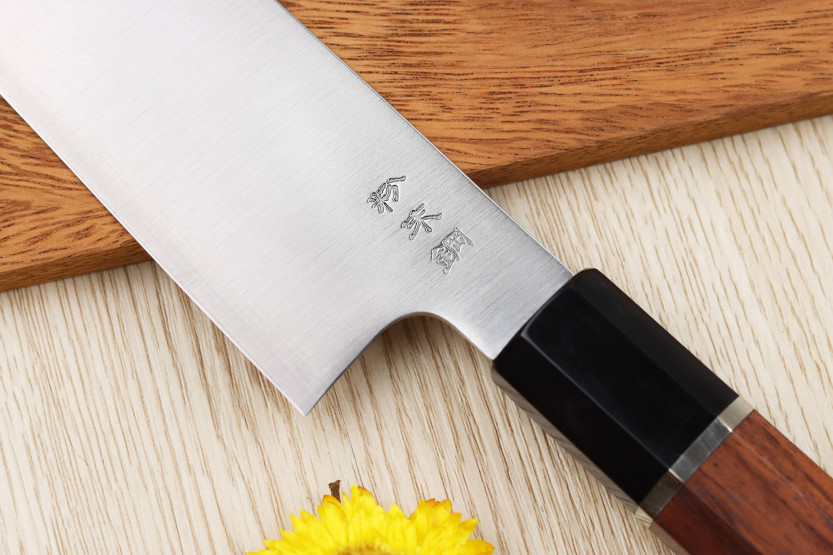
Finally, the surface of the blade has been polished and hand-engraved with kanji to give your handcrafted Japanese knife even more character.
The high-quality Sukenari santoku knife
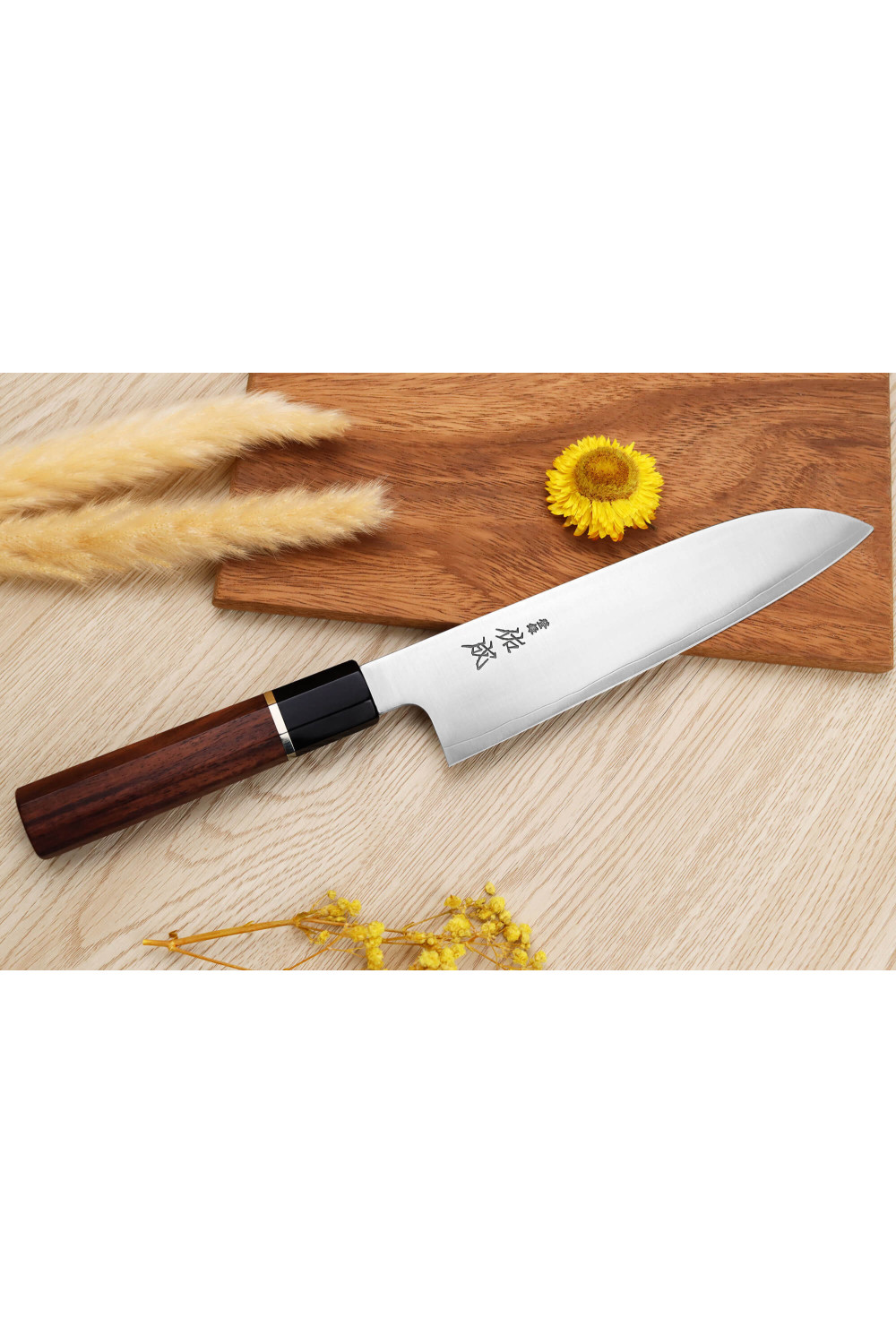
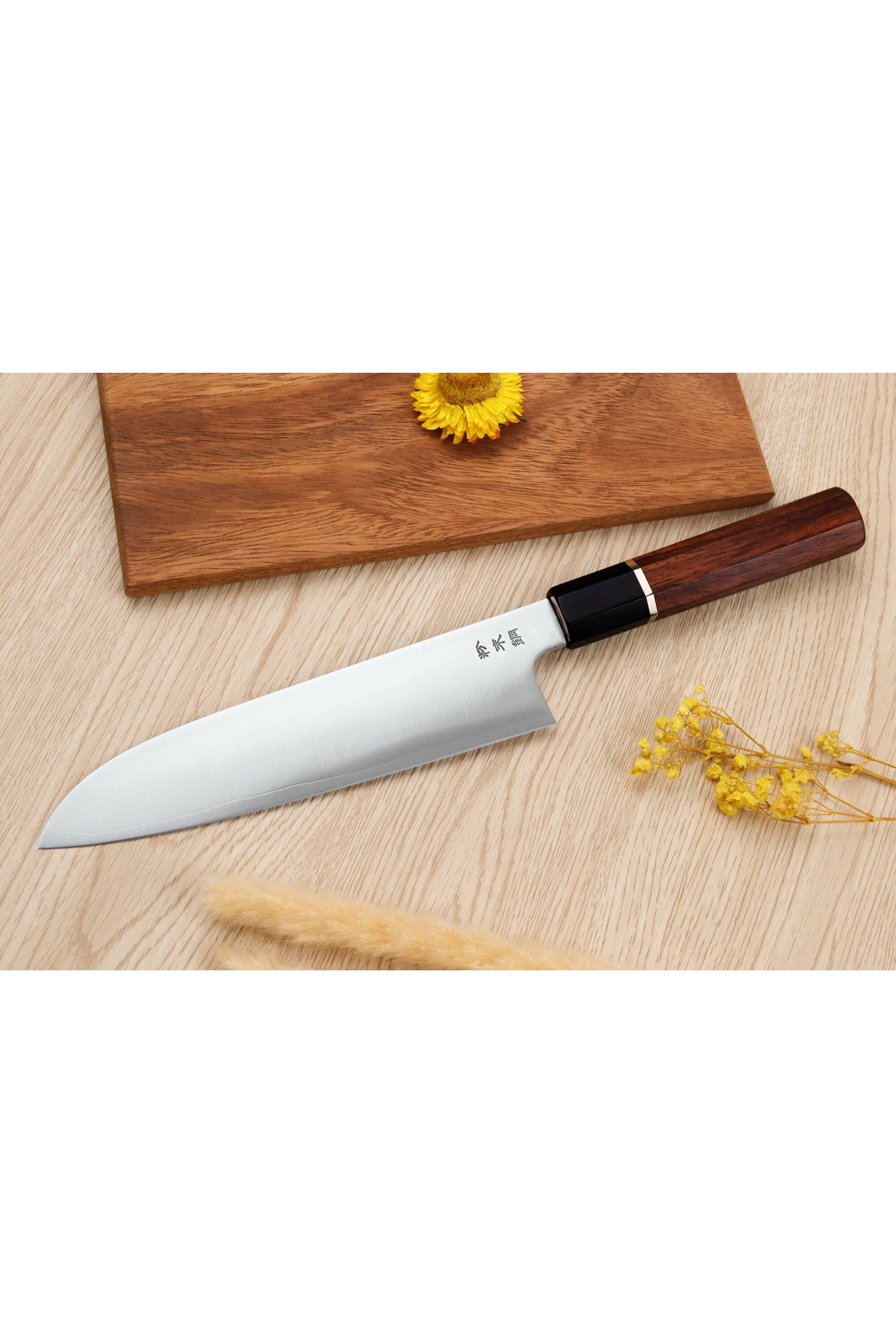
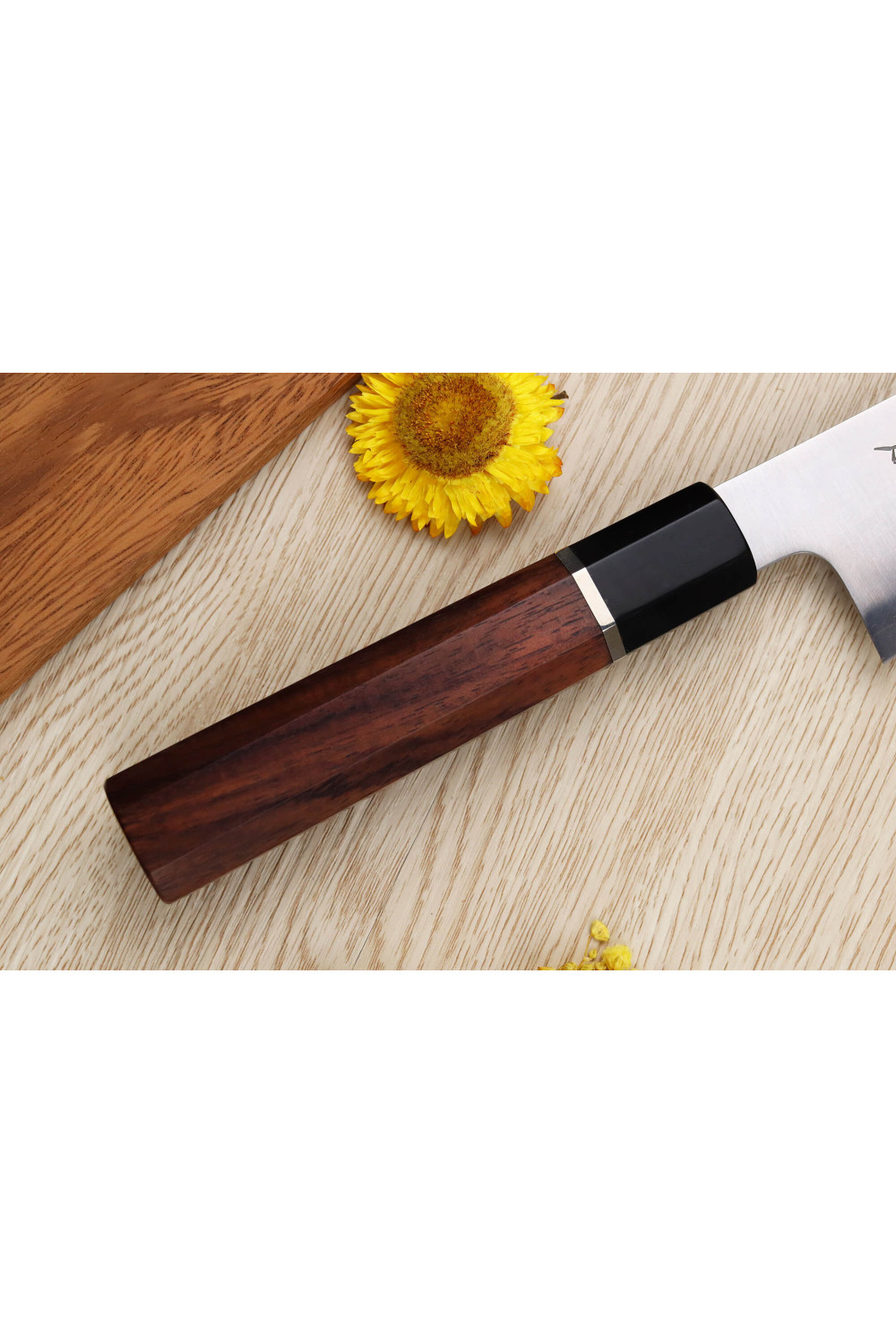
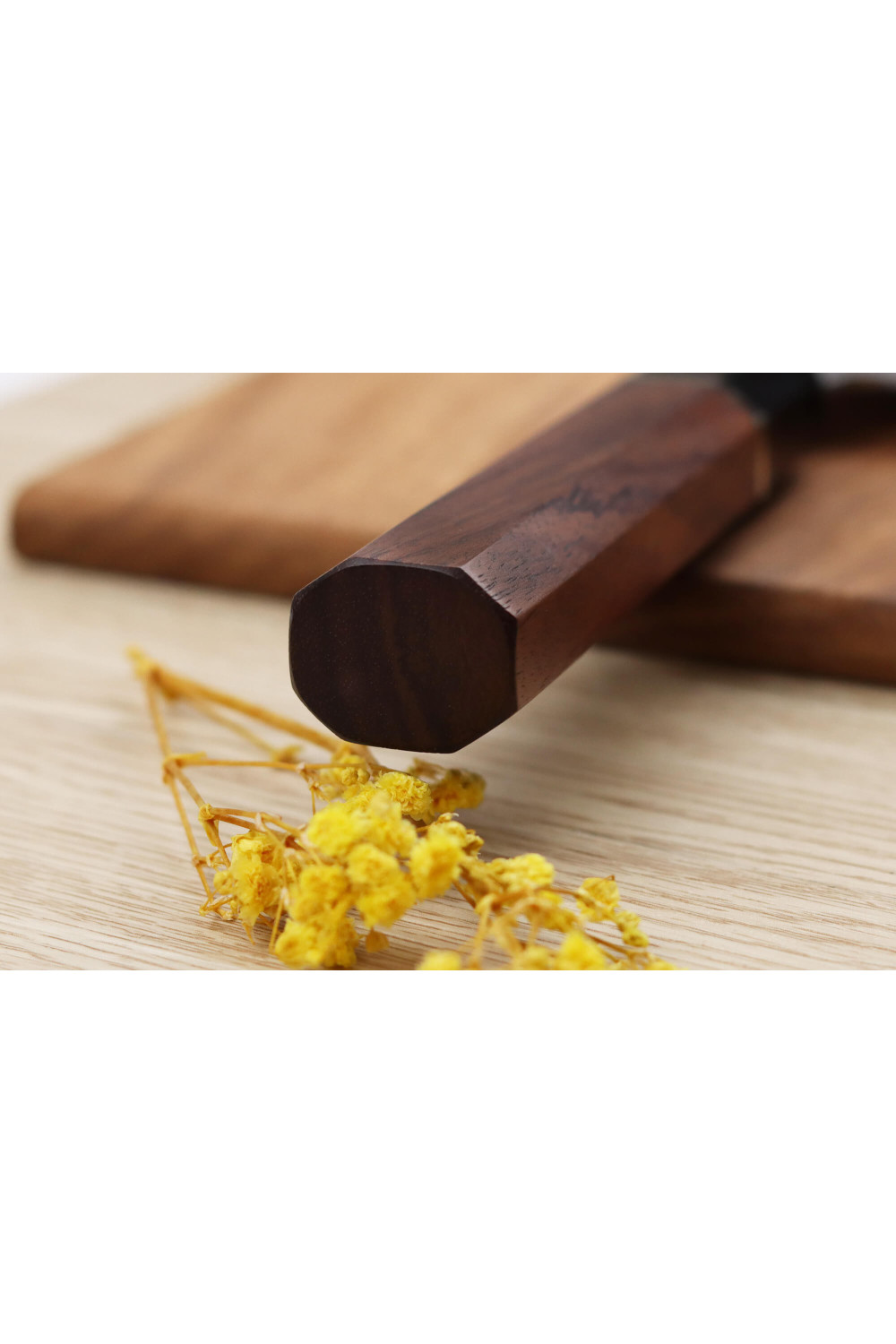
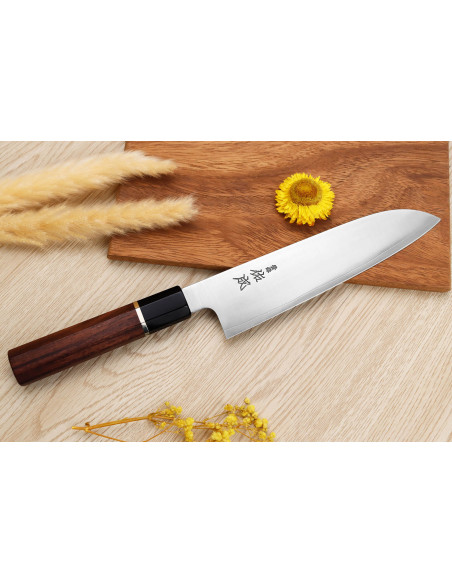
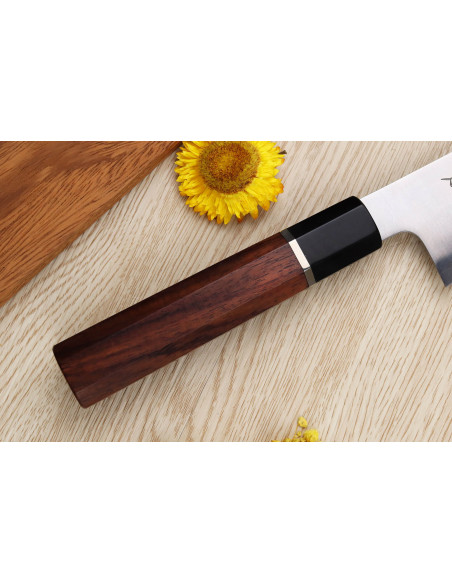
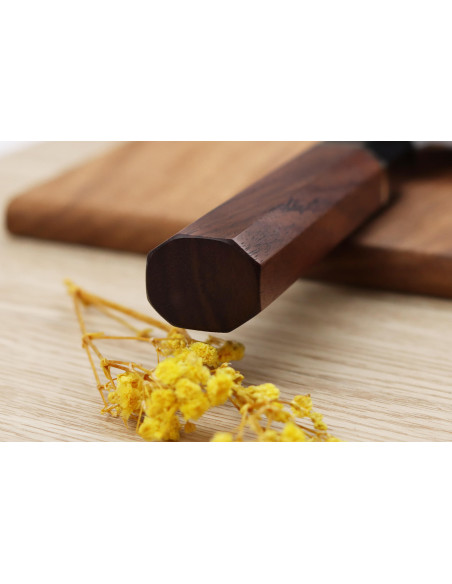
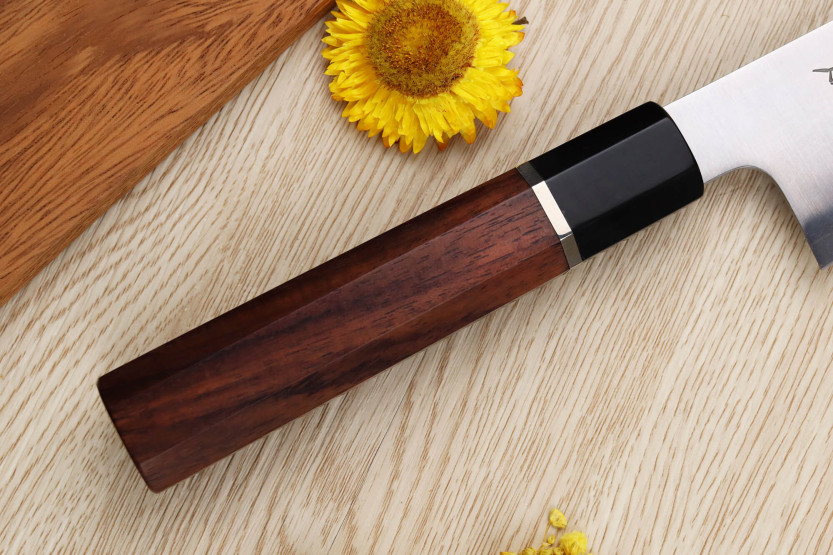
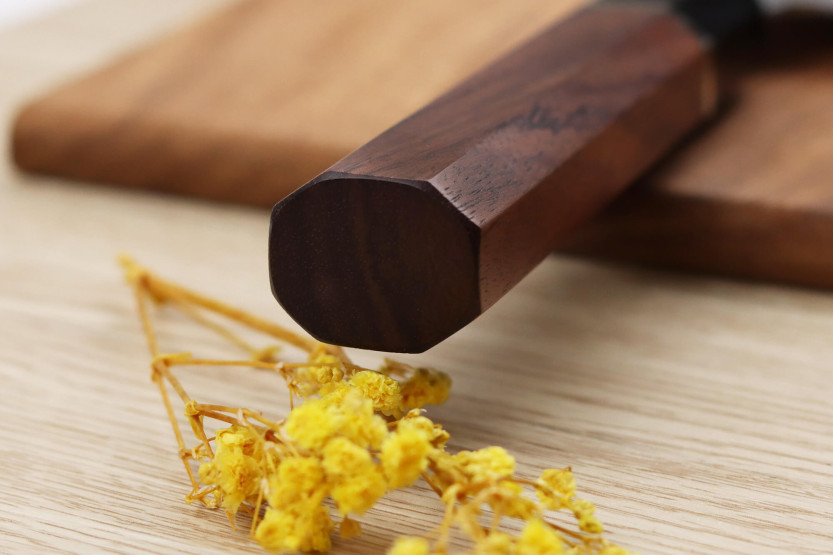
Your santoku knife features a handle made from rosewood, a high-quality species that is robust and resistant to moisture. As wood is a living material, its grain and brown nuances are unique! This adds a touch of tradition to your handcrafted knife.
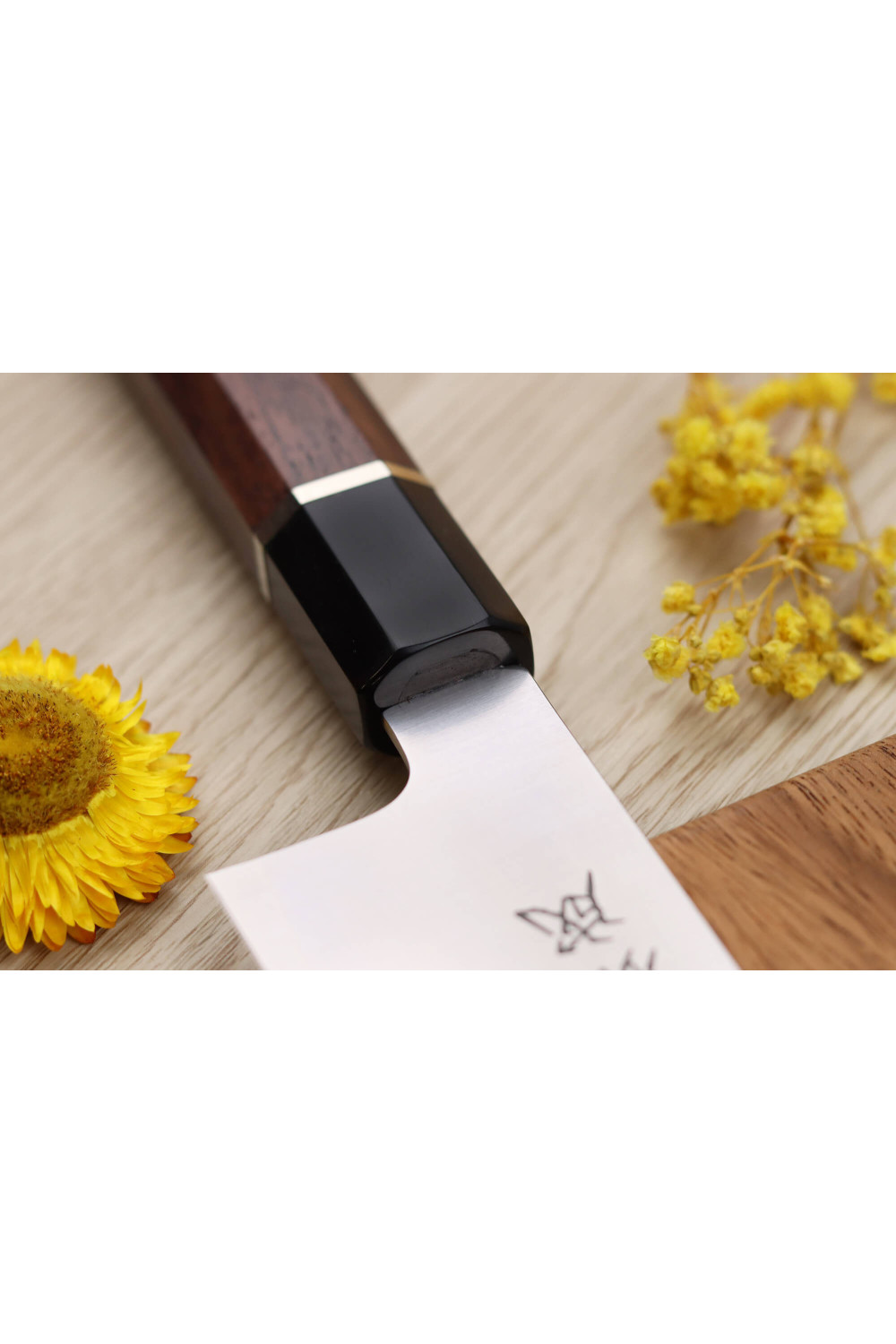
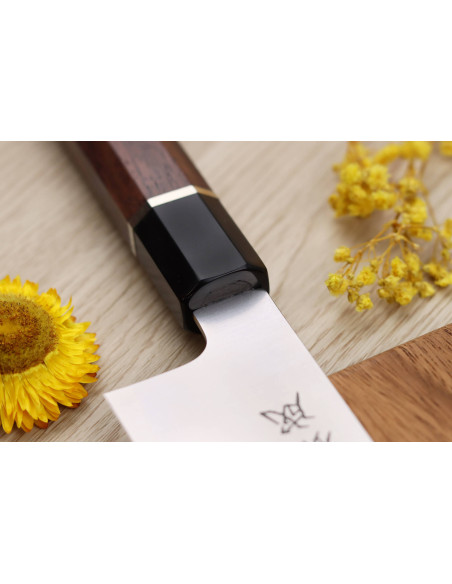
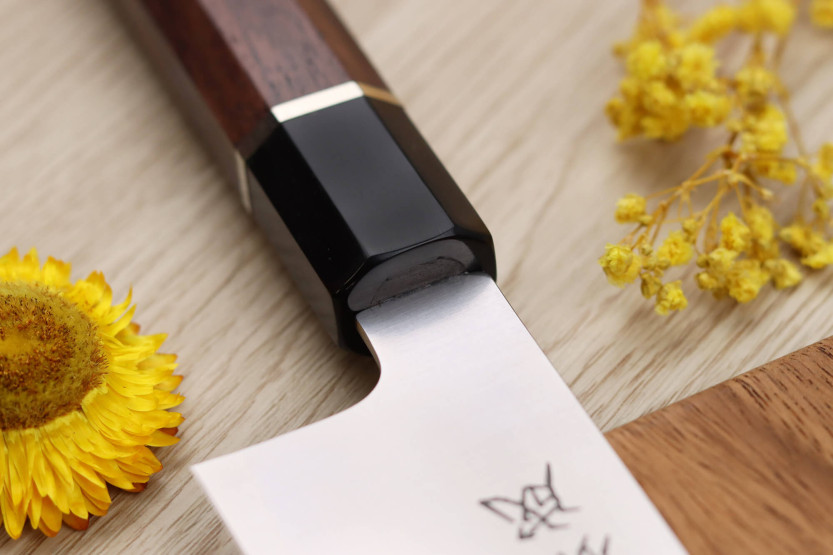
The handle is accompanied by a solid black buffalo horn bolster to add character to your Japanese knife. It is set with a silver ring that links the bolster to the handle and adds a touch of elegance.
The handle is octagonal in shape to suit all cooks, right- or left-handed. It gives you a comfortable, ergonomic grip, especially for long-duration use.
Finally, wood putty has been added where the blade joins the handle to fill any small gaps. This prevents water infiltration and ensures optimum watertightness.
Caring for a carbon-enriched knife
To care for your carbon-enriched knife, you should only clean it by hand with a non-abrasive sponge and a mild detergent, avoiding wetting the handle. After washing, wipe dry immediately to remove any traces of moisture and store in a dry place. Do not use the dishwasher or leave it to soak in the sink.
With its high carbon content, your blade may change color slightly: this is normal! This is a natural phenomenon caused by the acidity of the food you're cutting and the humidity in the air.
Find a wide range of Japanese knives on KnifeLeader.eu!




 By buying this product you can collect up to