Founded in Japan in 1933, Sukenari is a company renowned for its production of high-quality knives. It brings together master blacksmiths specializing in cutlery and capable of creating Honyaki knives, which are renowned for their excellence and require great forging expertise. Sukenari thus perpetuates the ancestral know-how of the blacksmiths who made the famous samurai katanas. Today, Sukenari is a manufacturer of handcrafted kitchen knives combining traditional and modern designs.
A top-of-the-range San Maï blade, typically Japanese
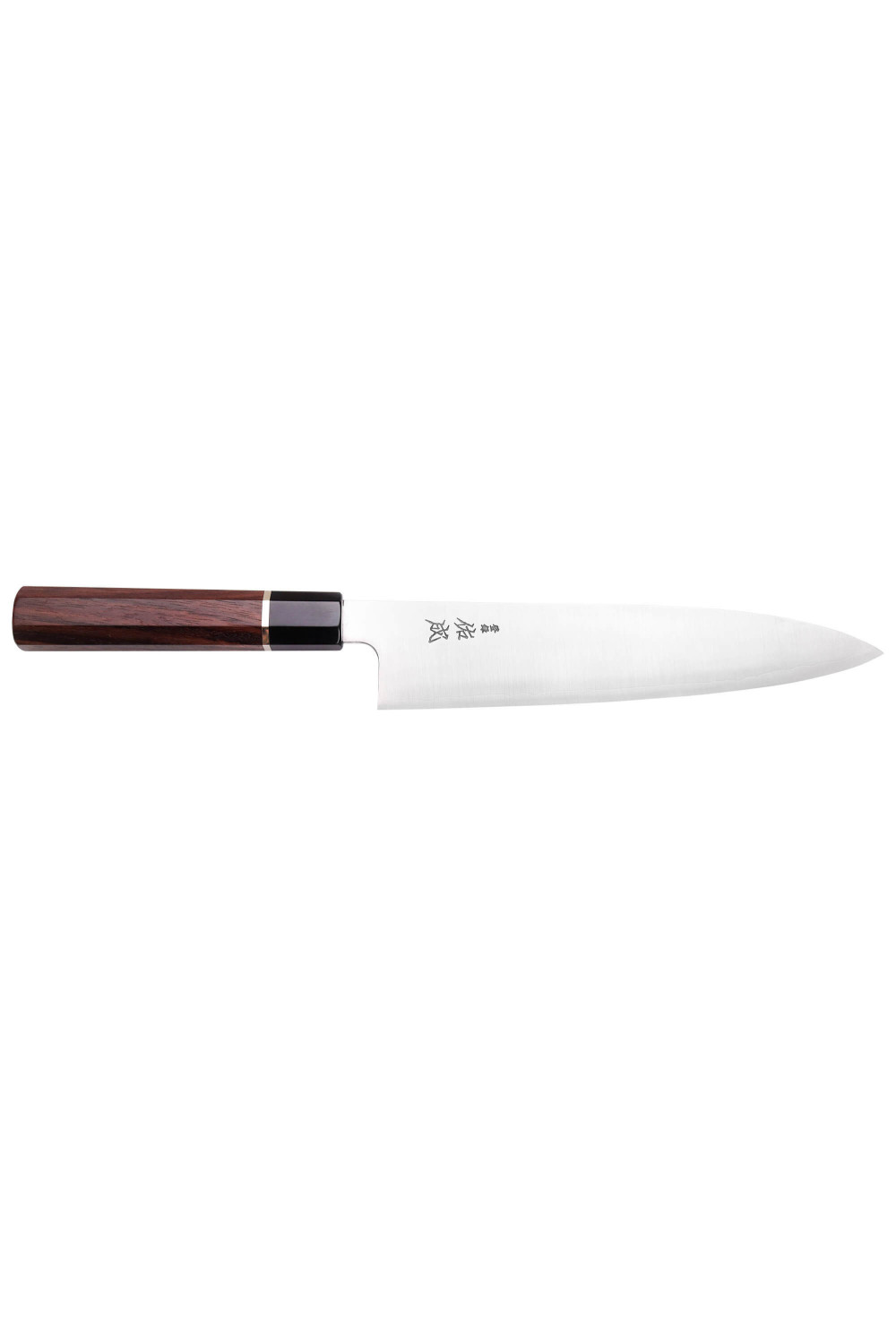
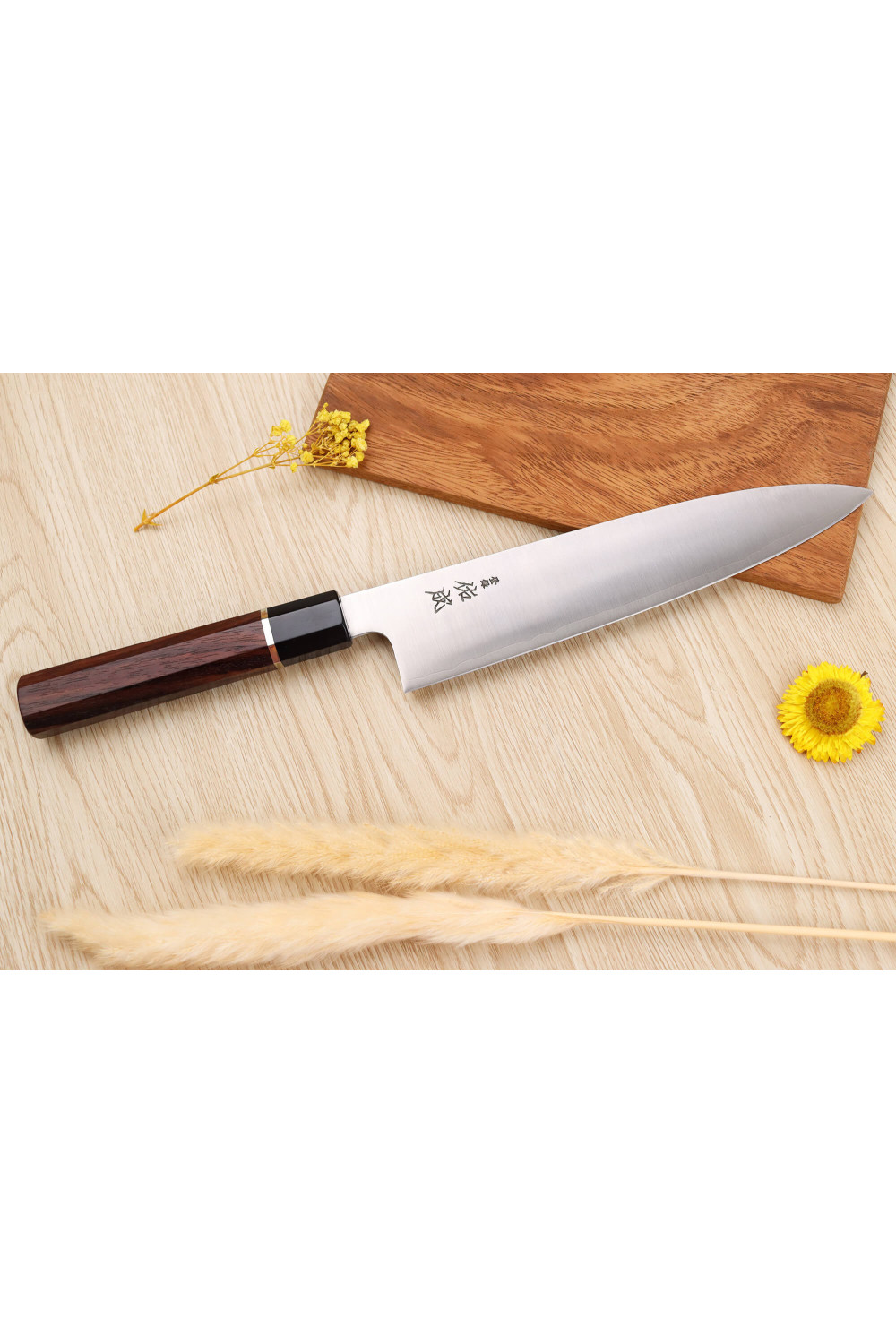
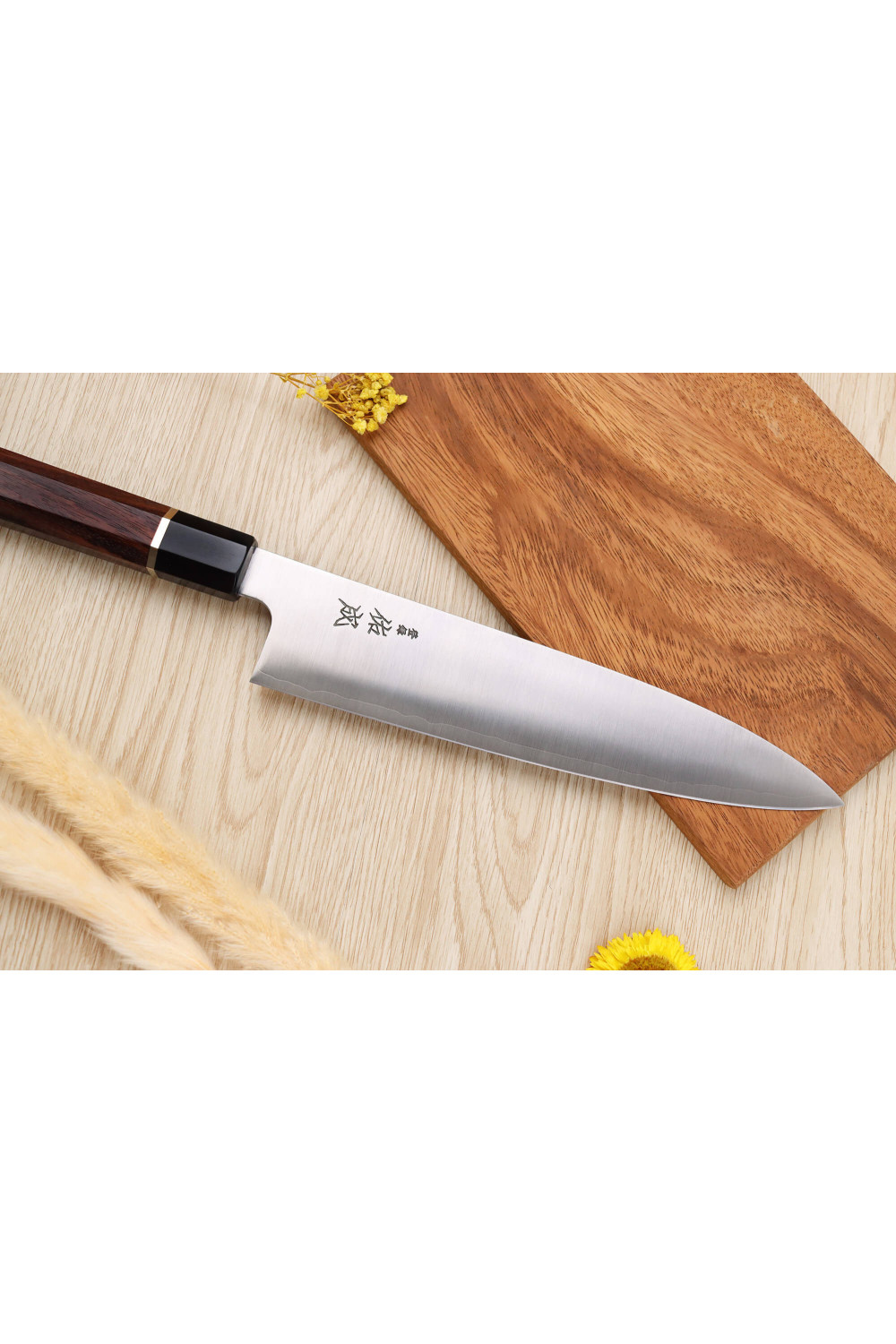
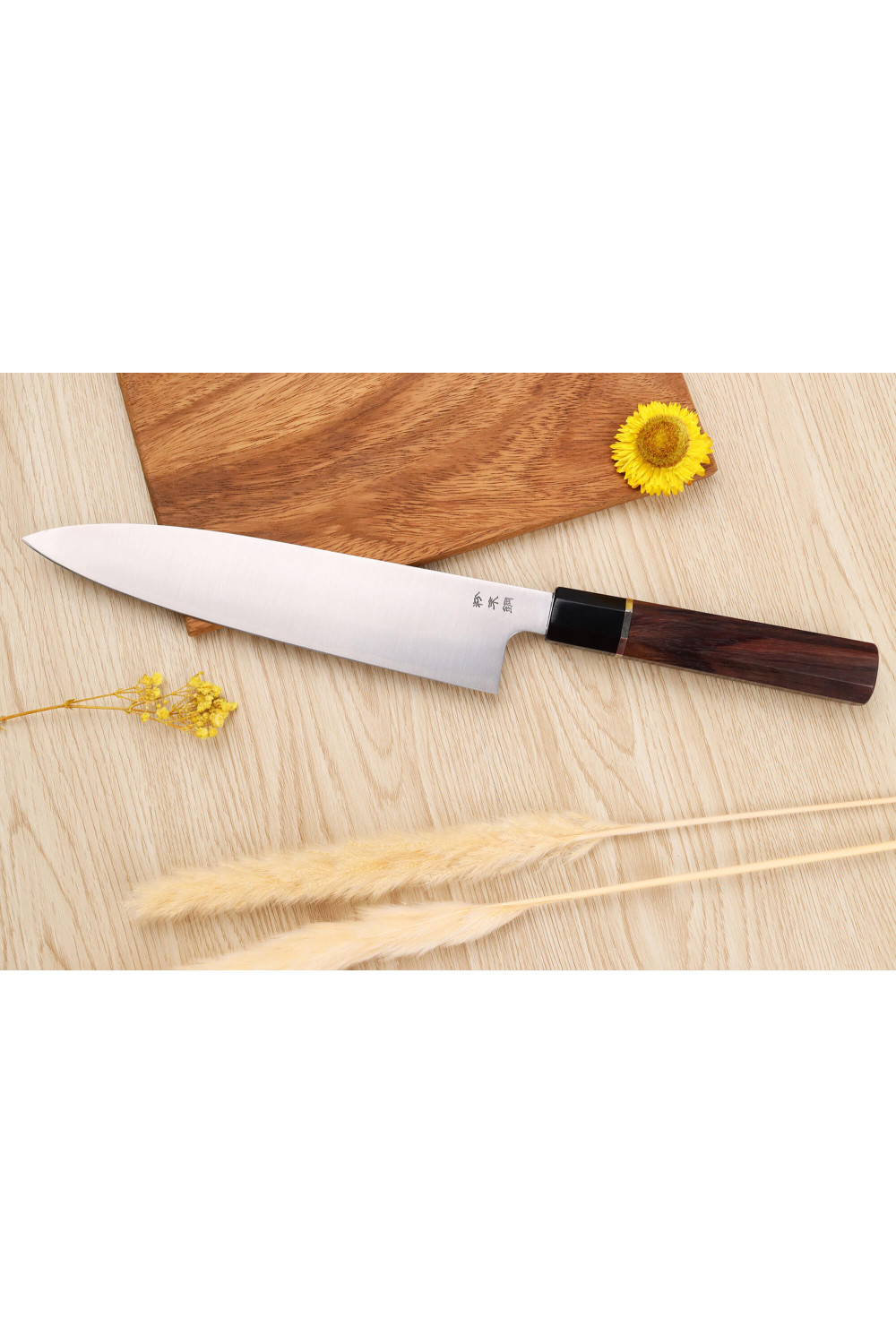
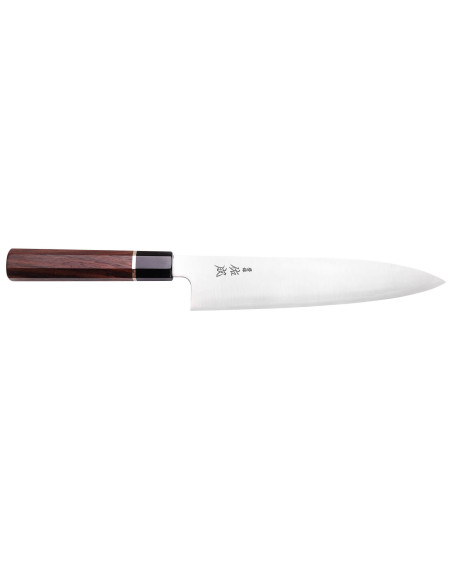
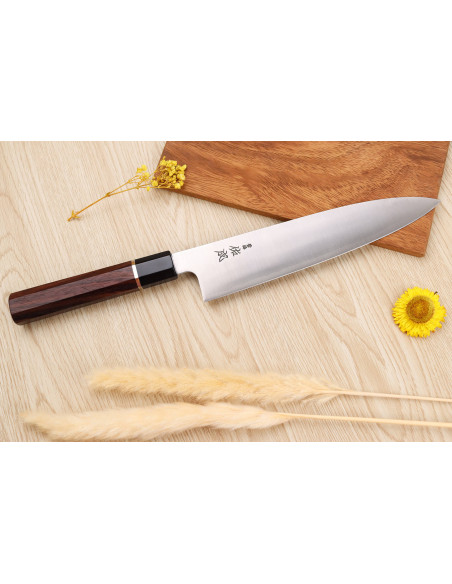
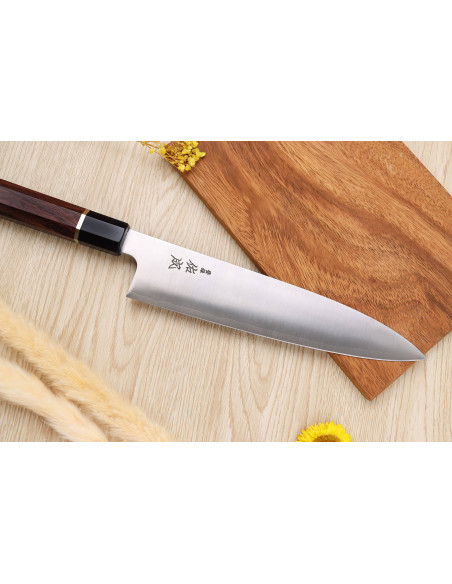
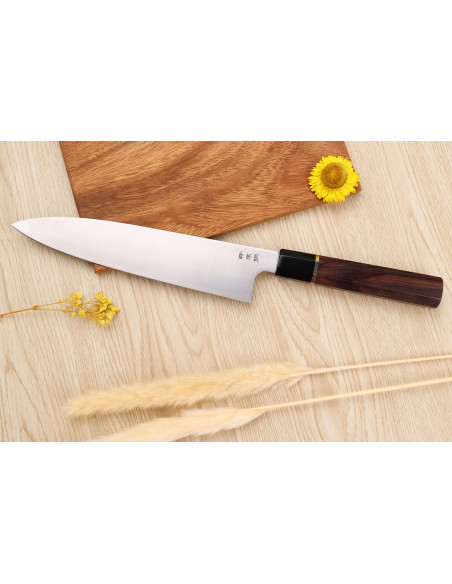
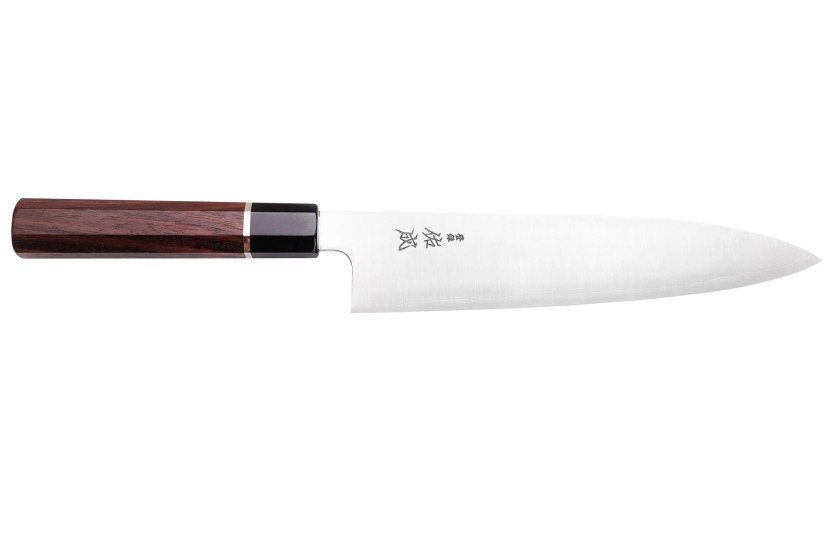
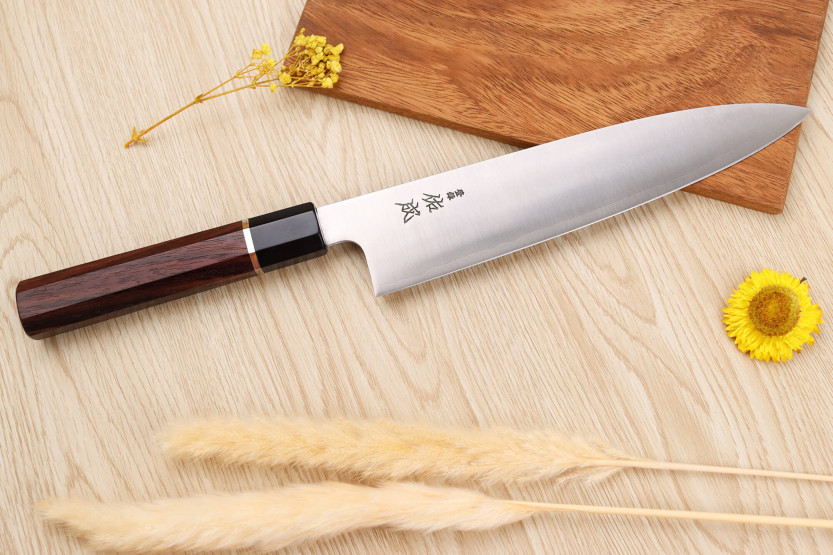
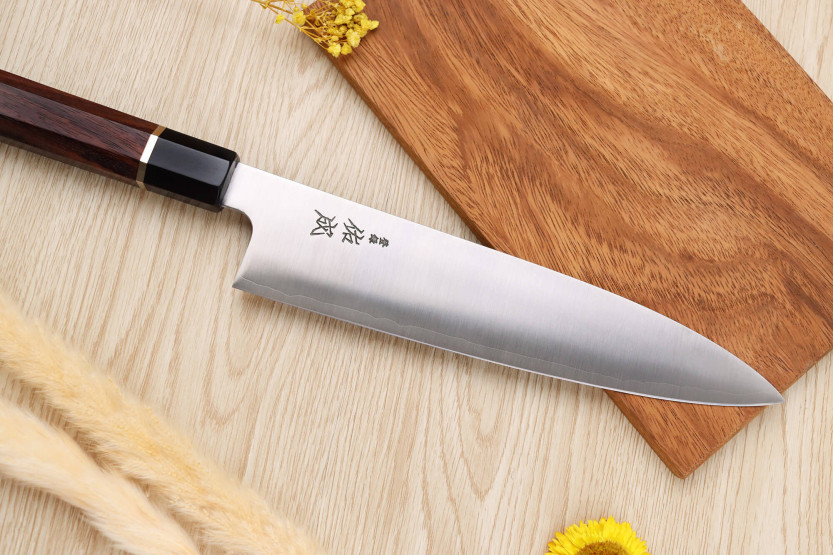
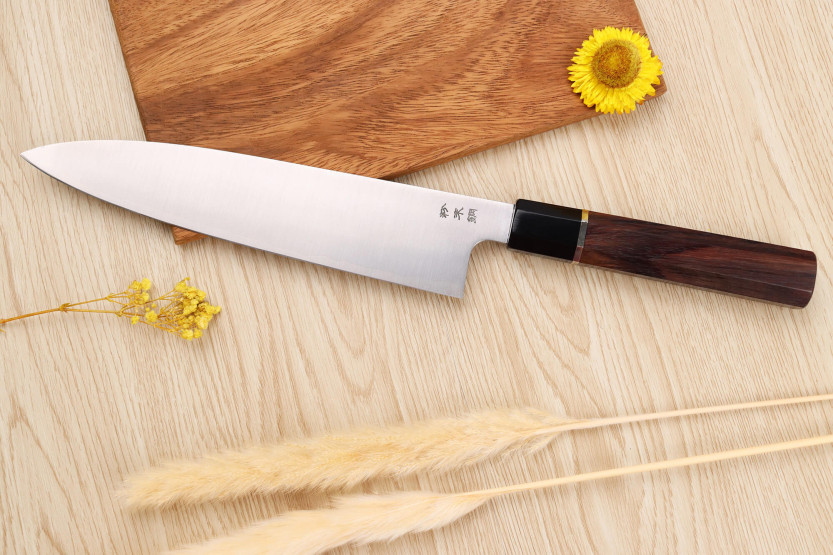
This gyuto knife features a 24cm blade with a Japanese San Maï structure. The term "San Maï" in Japanese translates as "3 layers", and this technique involves creating a solid steel core, which is then enveloped by a softer layer of steel, forming a sandwich. This method protects the core and ensures its balance.
The core of this blade is made from Japanese SG2 powder steel, produced by the renowned company Takefu Special Steel. This alloy has a high carbon content (approx. 1.3%), making it extremely hard and durable. With a hardness of 63 HRC on the Rockwell scale, this Sukenari knife has an effective, long-lasting cutting edge, which it retains even with spaced-out sharpening sessions.
Also, SG2 steel contains nearly 15% chromium, which enhances its resistance to oxidation. However, due to its high carbon content, the blade of this knife requires very careful maintenance on your part to avoid corrosion.
SG2 steel has the advantage of a very homogeneous micro-carbon structure. As a result, the blade of your knife is more resistant to micro-cracking and wear.
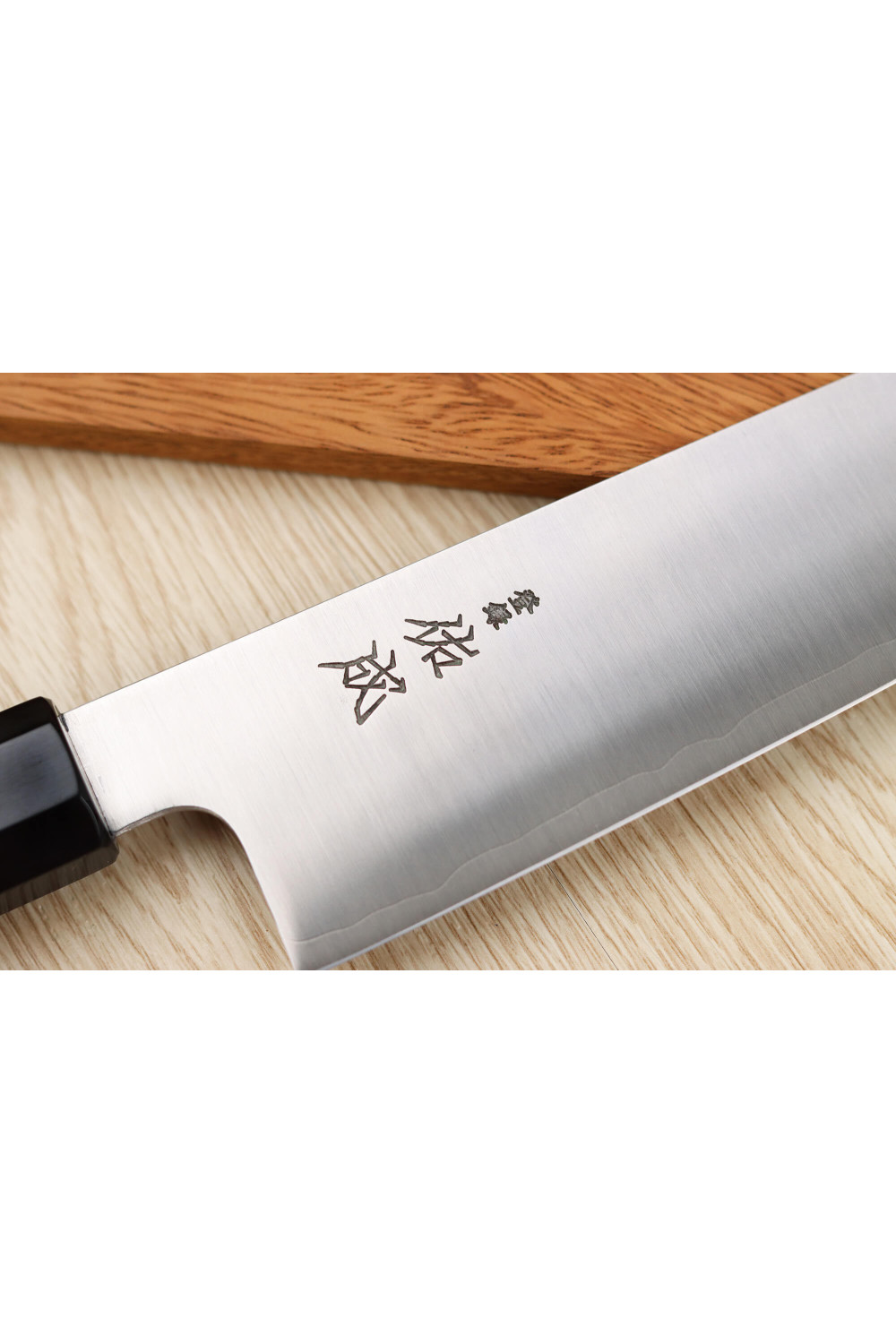
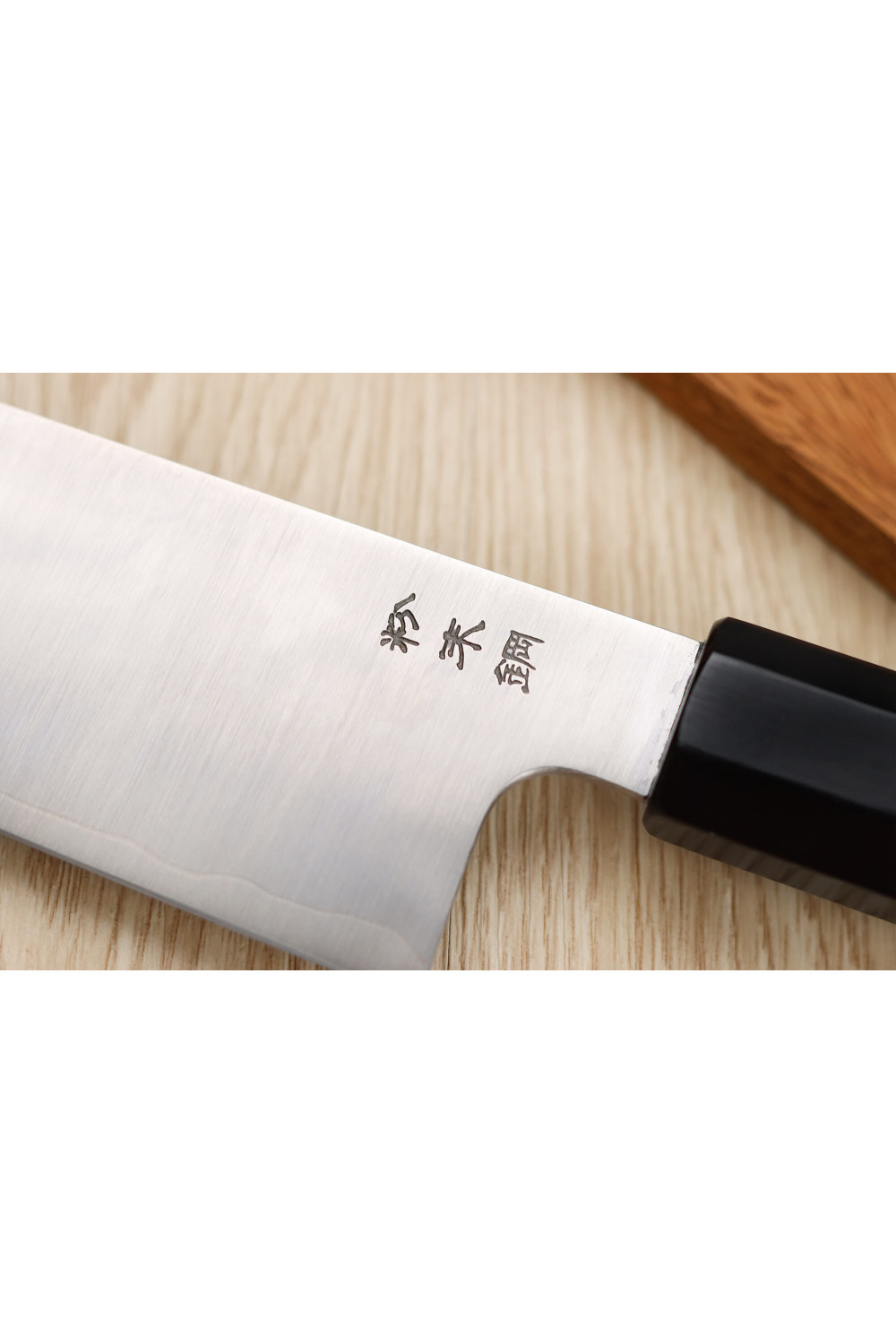
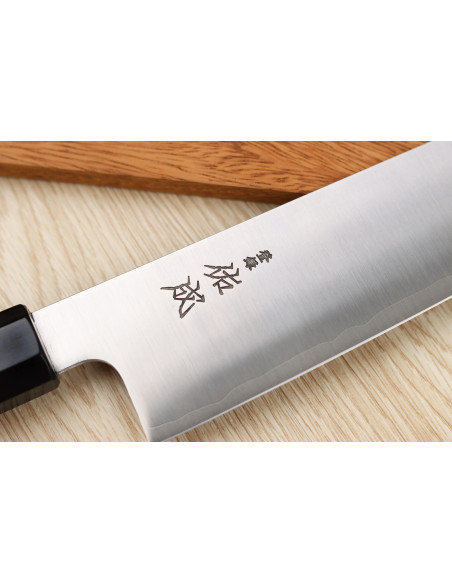
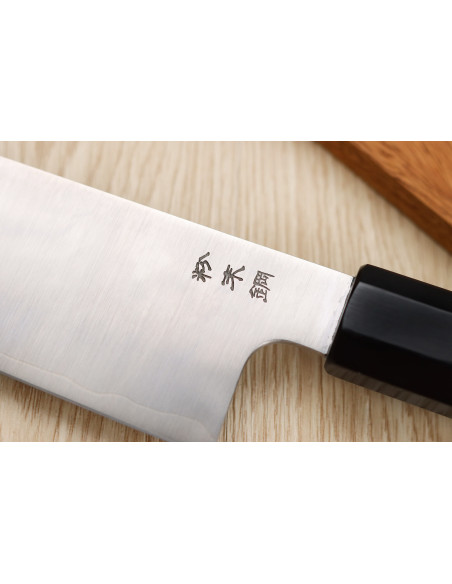
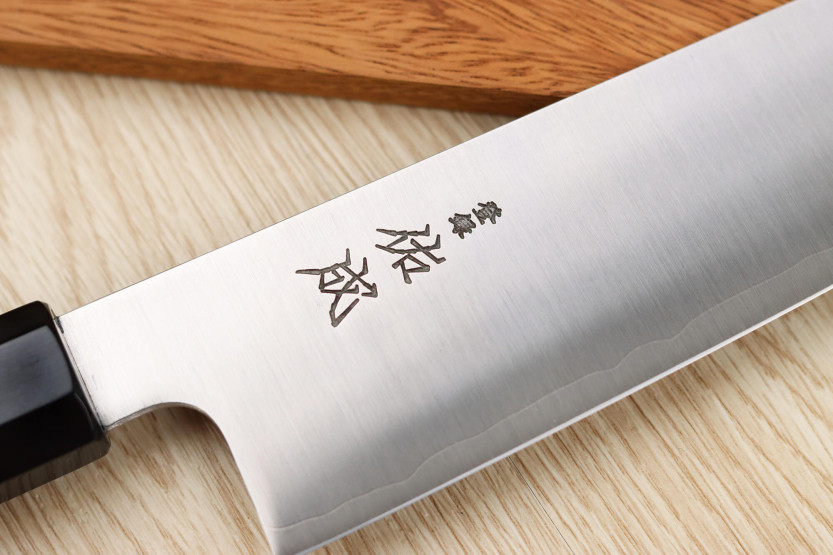
This SG2 steel core is then covered witha layer of softer steel, folded on each side: the 3 layers of San Maï are present. This outer layer provides the core with a little flexibility, making it less fragile in use, while at the same time protecting it. The various superimposed layers of steel are visible on the underside of the blade. Near the cutting edge, you can see a random, undulating wave.
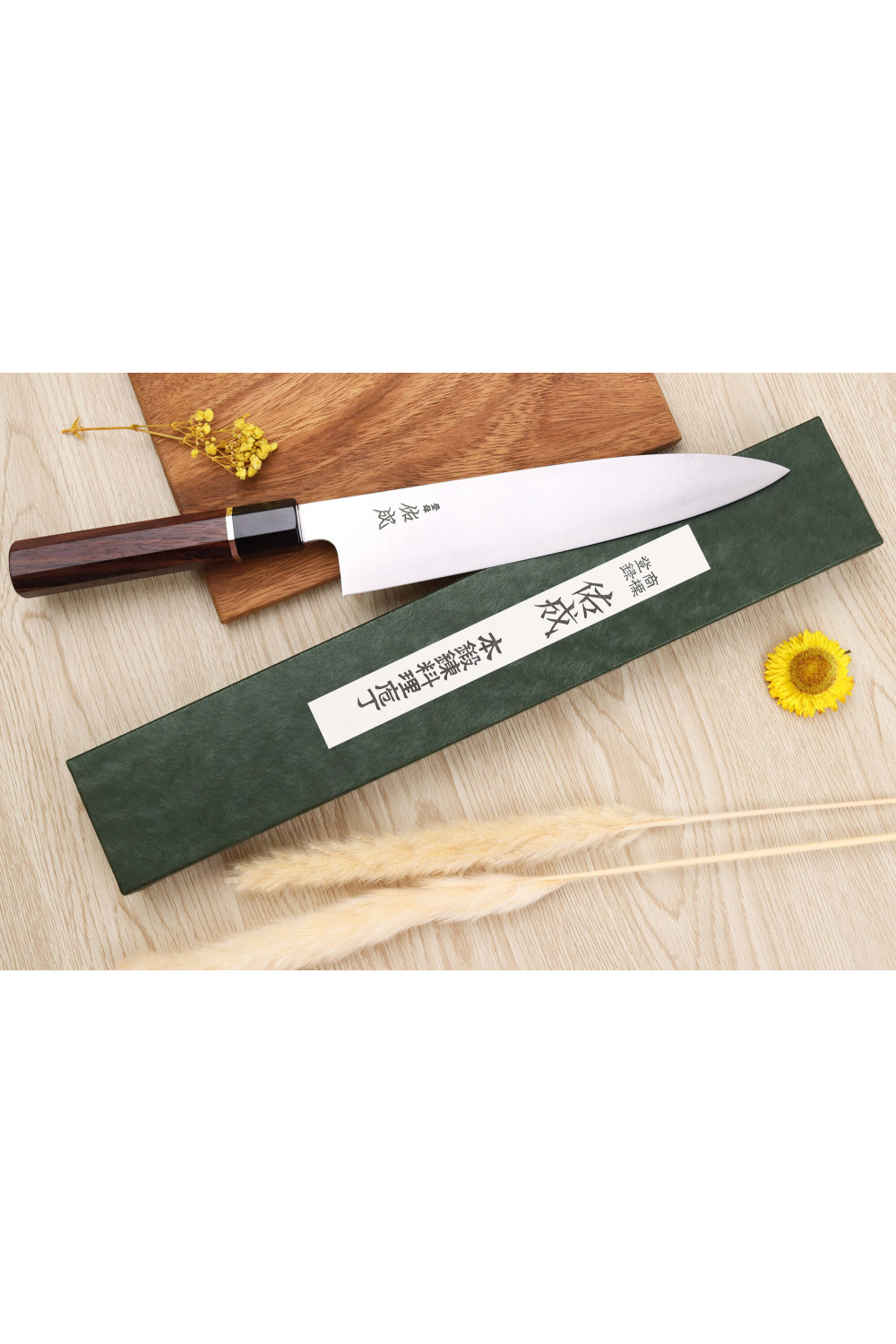
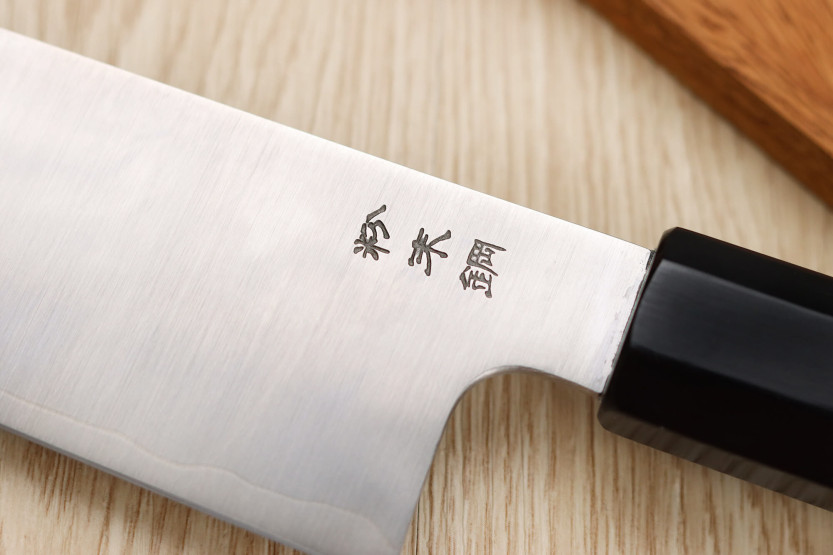
Finally, the blade has an attractive polished finish. It has also been engraved with authentic Japanese kanji, making it a blade with lots of character.
Rosewood for the knife handle
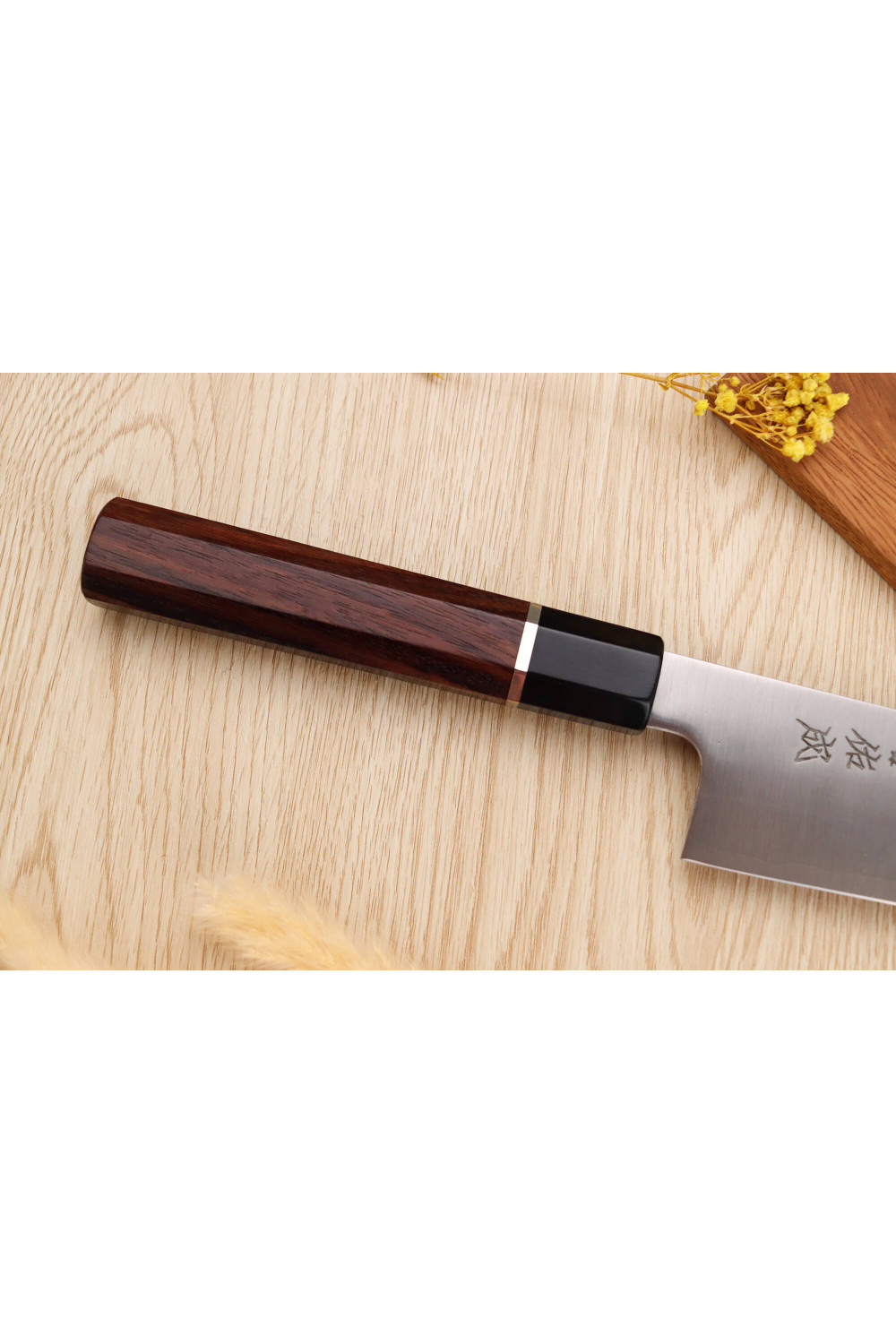
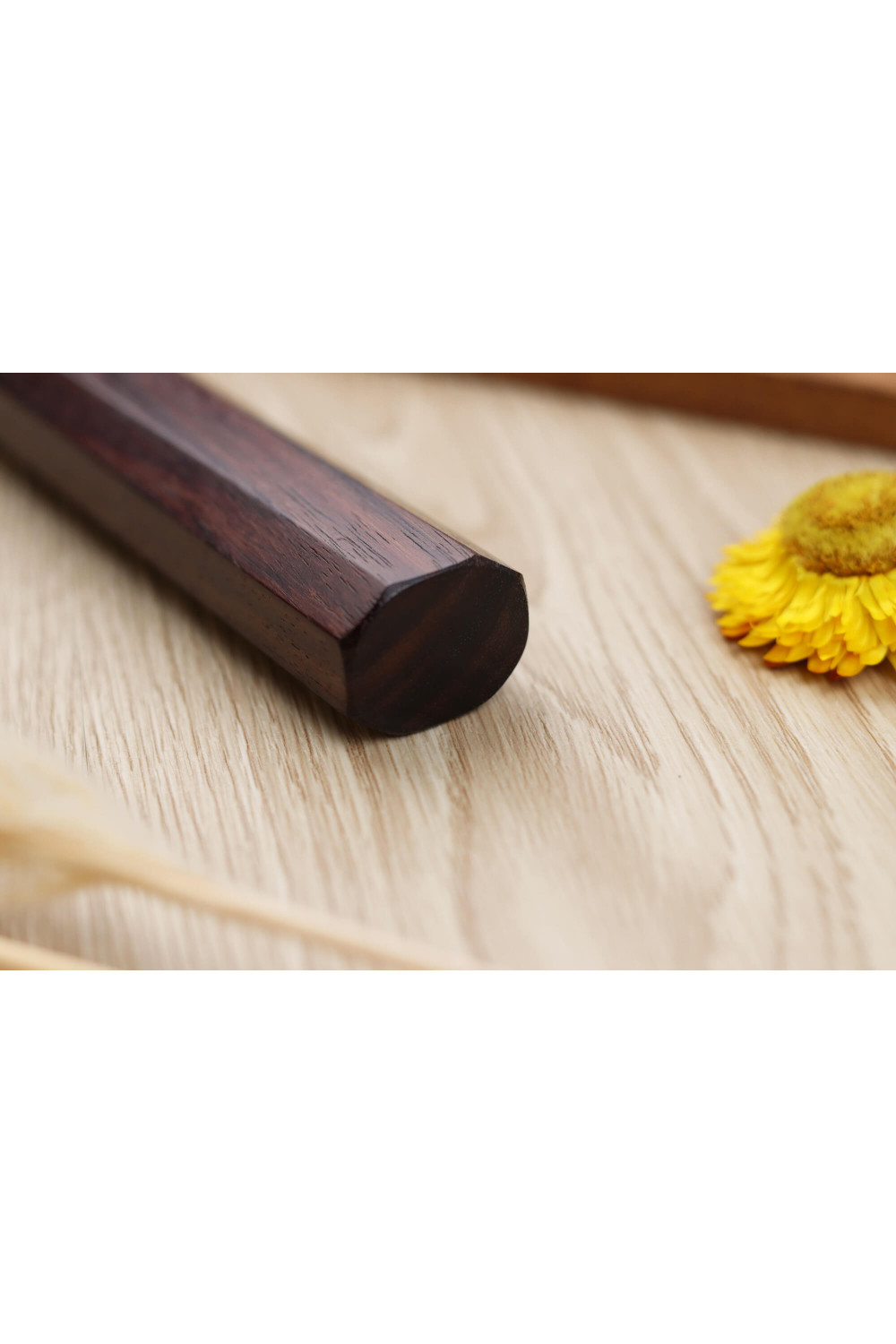
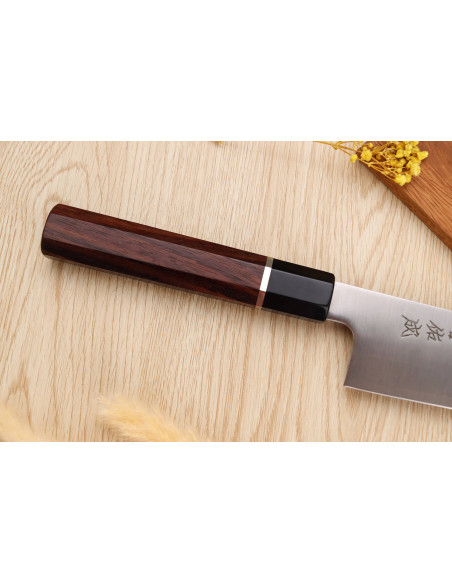
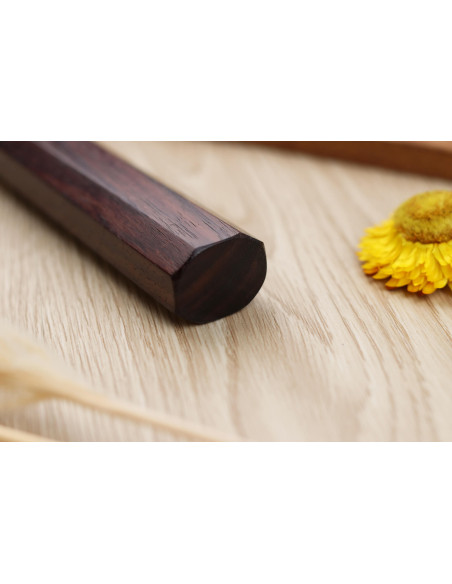
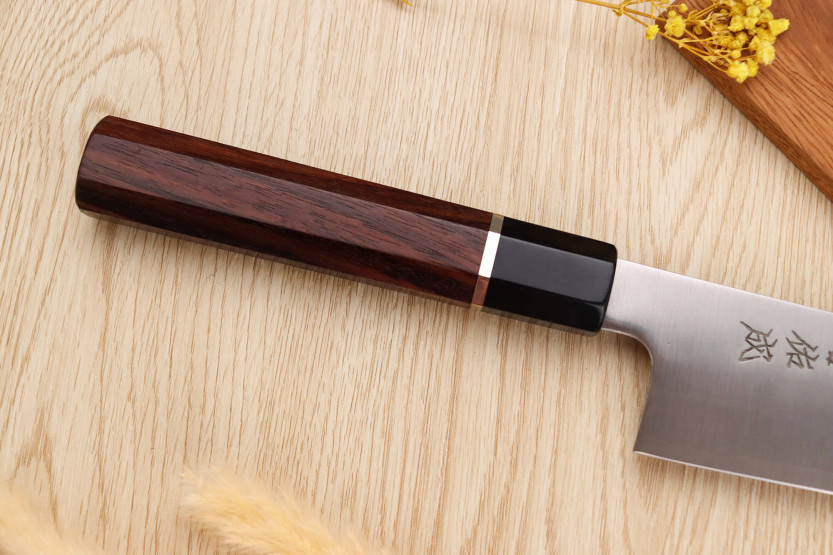
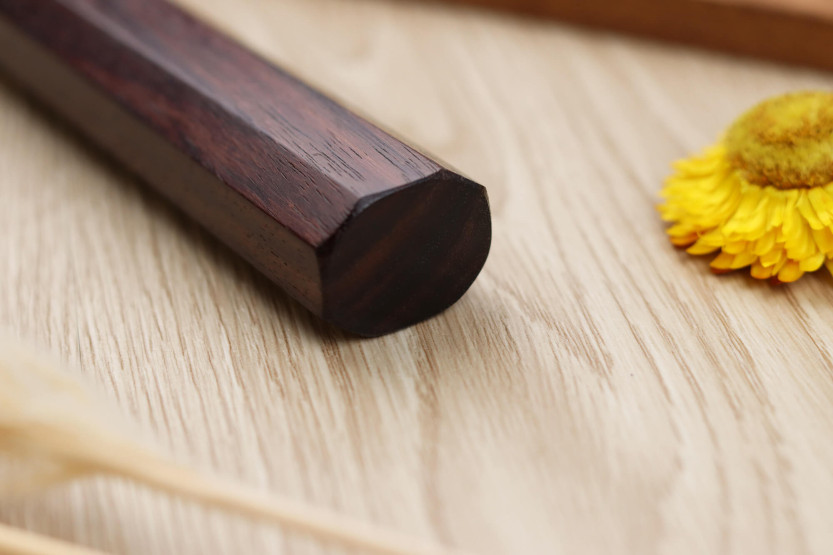
Your Japanese chef's knife is distinguished by its rosewood handle. It's strong, shock-resistant and moisture-resistant. Each knife is unique with its brown nuances and dark veining, bringing a touch of authenticity to your Japanese knife.
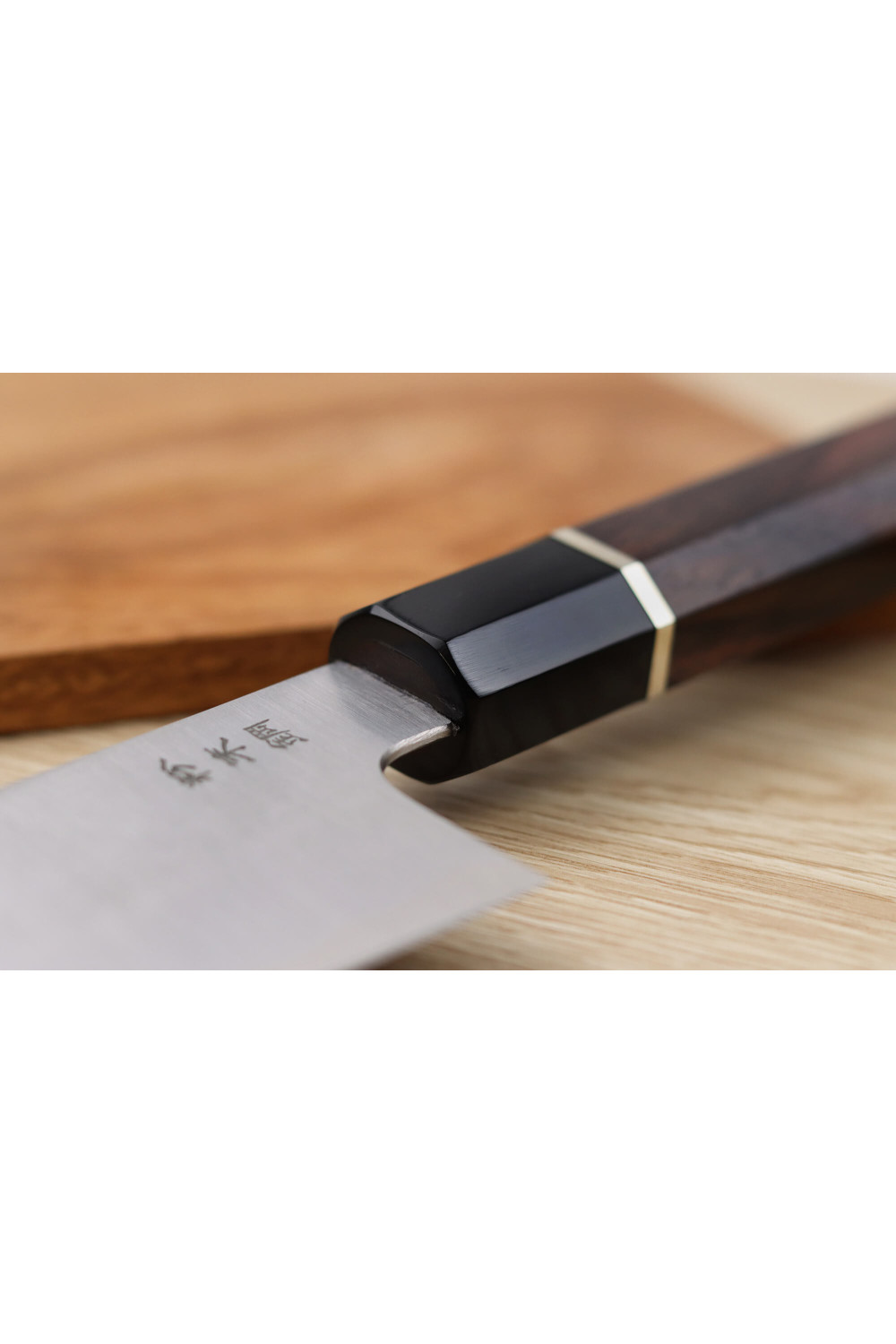
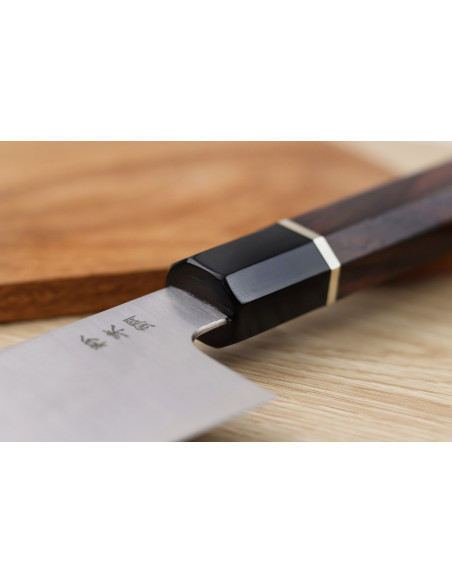
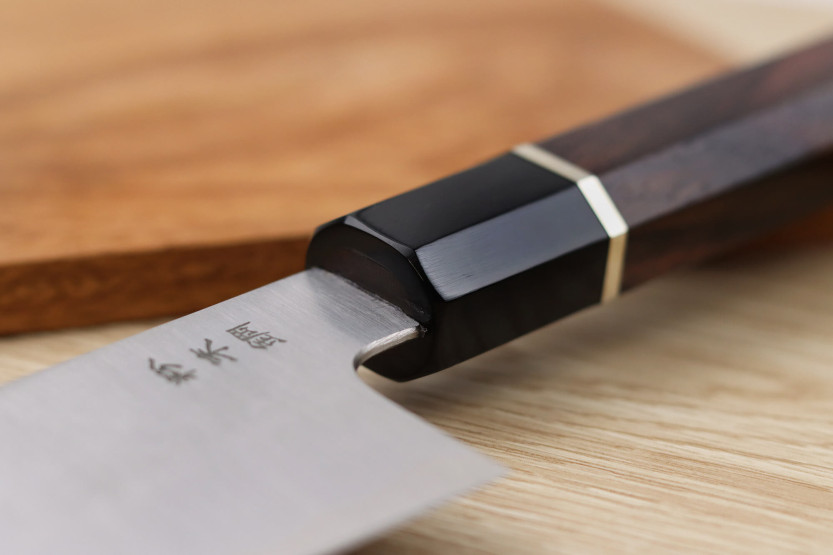
To complete the visual appeal of the handle, it features a bolster designed in durable black buffalo horn, adding even more character to your Japanese knife. A silver ring is inlaid between the bolster and the handle for an extra touch of elegance.
The octagonal-shaped handle is designed to suit all cooks, right- or left-handed. It guarantees an ergonomic grip and optimum maneuverability, even for prolonged cutting operations.
Finally, wood filler has been added to the junction between the blade and the handle, filling any small gaps. This prevents the ingress of water and the insertion of food, for impeccable hygiene and watertightness.
Caring for my handcrafted Japanese knife
It's essential to take the utmost care of your knife, as it's made from top-of-the-range materials. Never put it in the dishwasher or leave it to soak in the sink. This knife must be washed by hand.
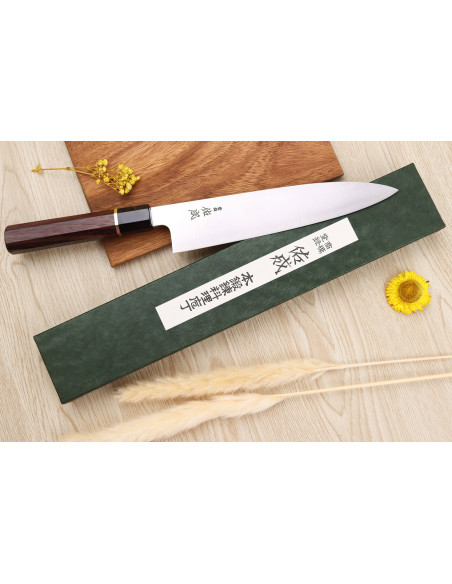
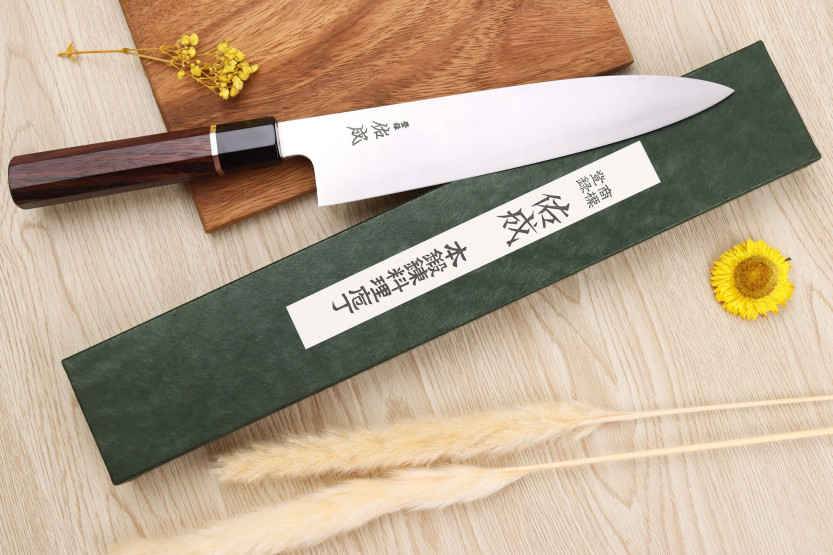
To do this, use a mild detergent and a non-abrasive sponge with lukewarm water to wash the knife, avoiding wetting the handle. After washing, wipe your knife thoroughly to remove any traces of moisture. You can then store it in a dry place, such as its case.
Due to its high carbon content, the blade may change color slightly over time, which is normal. To preserve it, we recommend applying a littleblade oil from time to time.
Discover all Sukenari knives at KnifeLeader!




 By buying this product you can collect up to