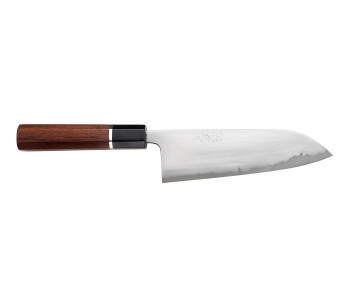
Discover the work of Toshihiro Wakui
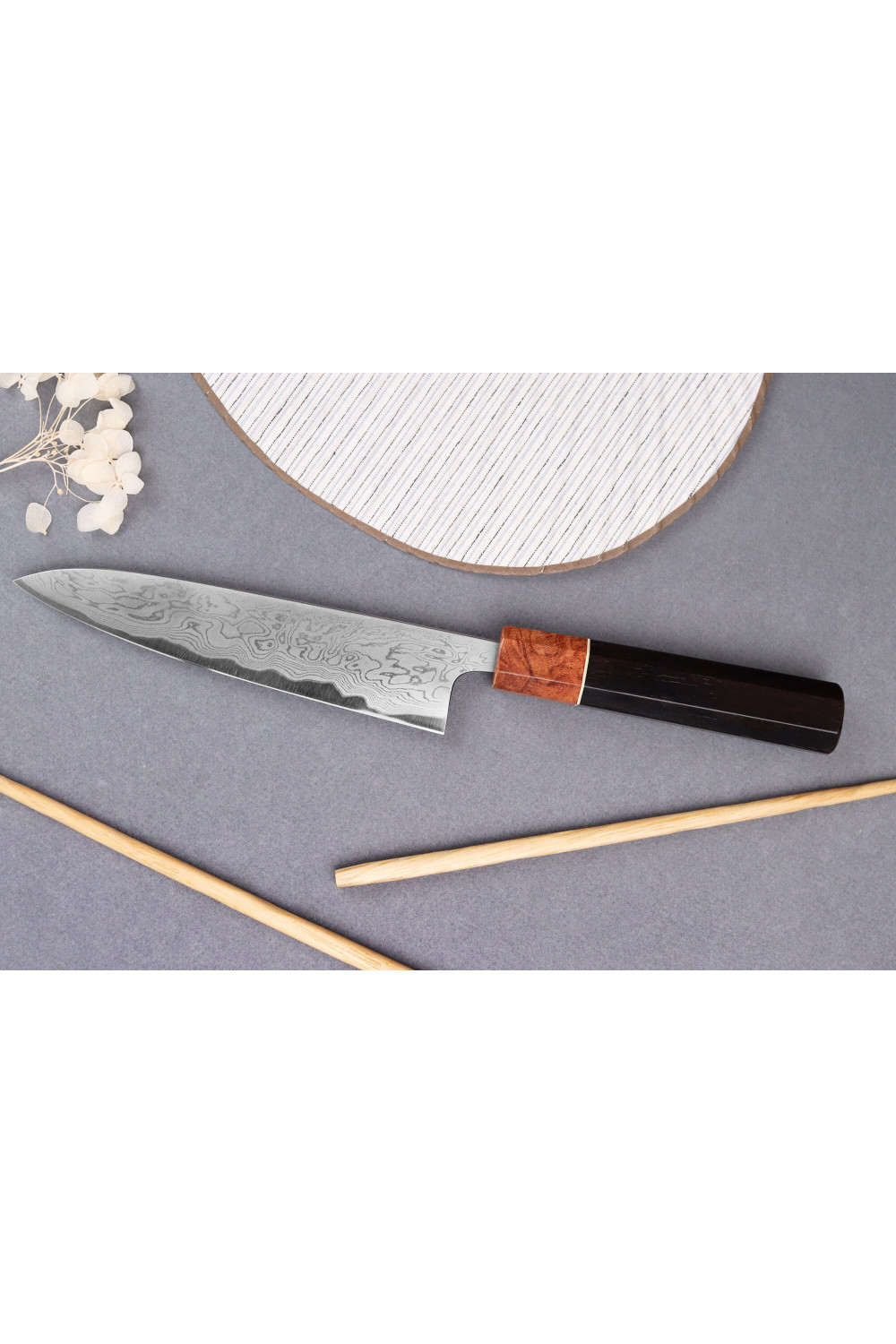
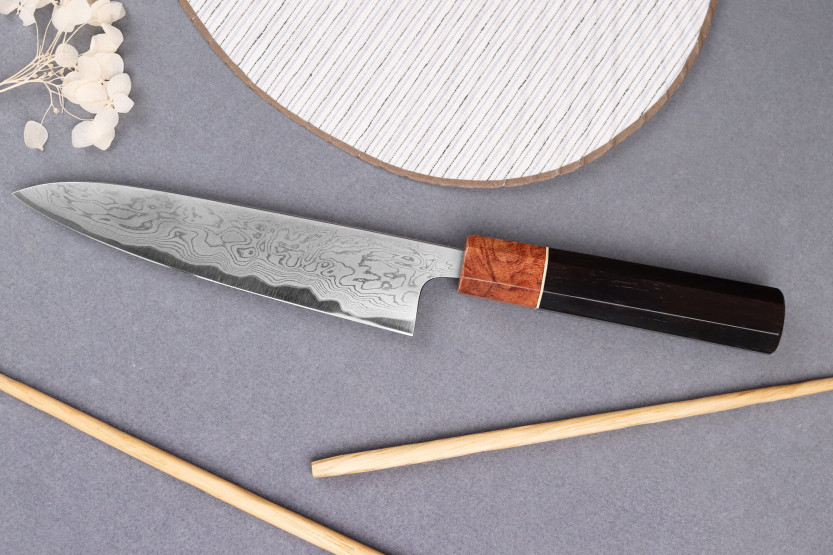
This Japanese knife was forged by Toshihirio Wakui, a Japanese blacksmith who has the particularity of making exceptional blades. Toshihiro san is the third generation of his family to work with metal, having learned the trade some twenty years ago.
When he took over the family business, he found himself faced with a declining demand for crowbars and other metal bars, a field in which his family had specialized. After a discussion with Kazuomi Yamamoto, Yoshikane Hamono's head master blacksmith, he decided to reconvert to the art of knife forging. Kazuomi san himself offered to train him, and Toshihiro Wakui accepted. He apprenticed with Kazuomi san for 4 years and, with his hard work, began forging his own knives.
Toshihiro san works in his workshop in Sanjo, Japan, where he offers top-quality blades. For example, he himself hot-plates the damascus on his blades, giving each knife he forges a unique look. Toshihiro Wakui is a blacksmith whose workshop has an atypical layout: despite a kiln and hammer that are quite far apart and a very cluttered space, he makes top-of-the-range blades!
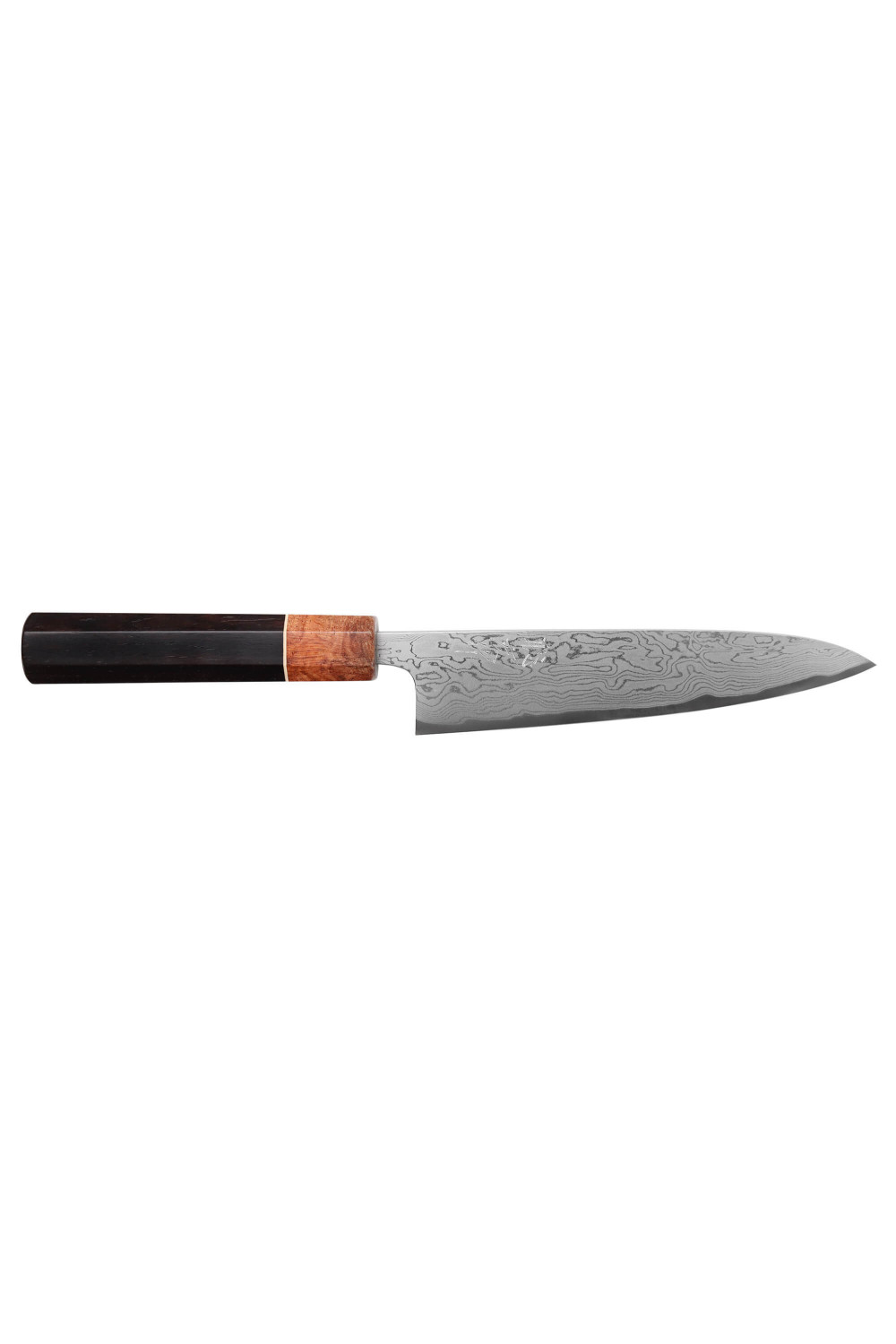
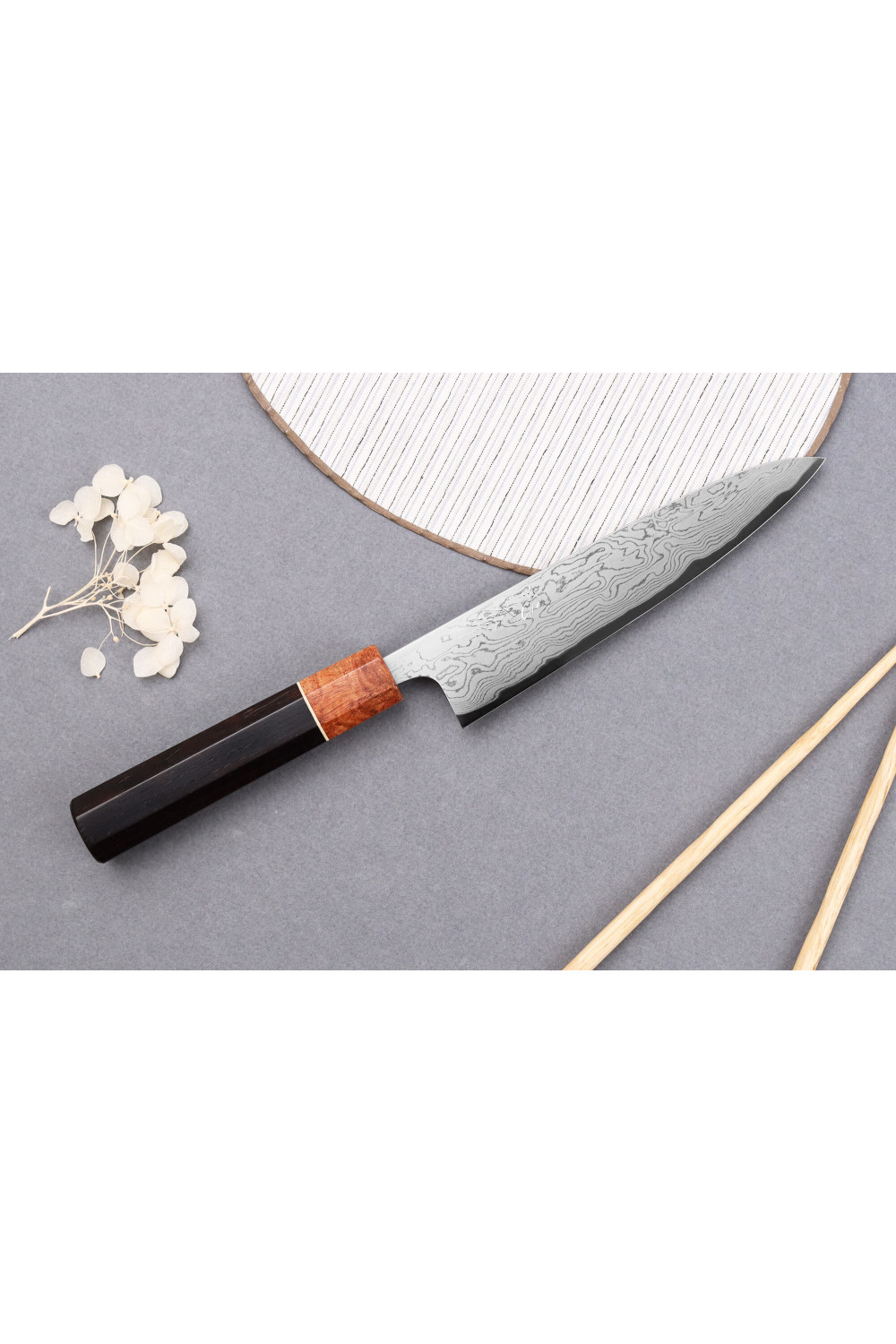
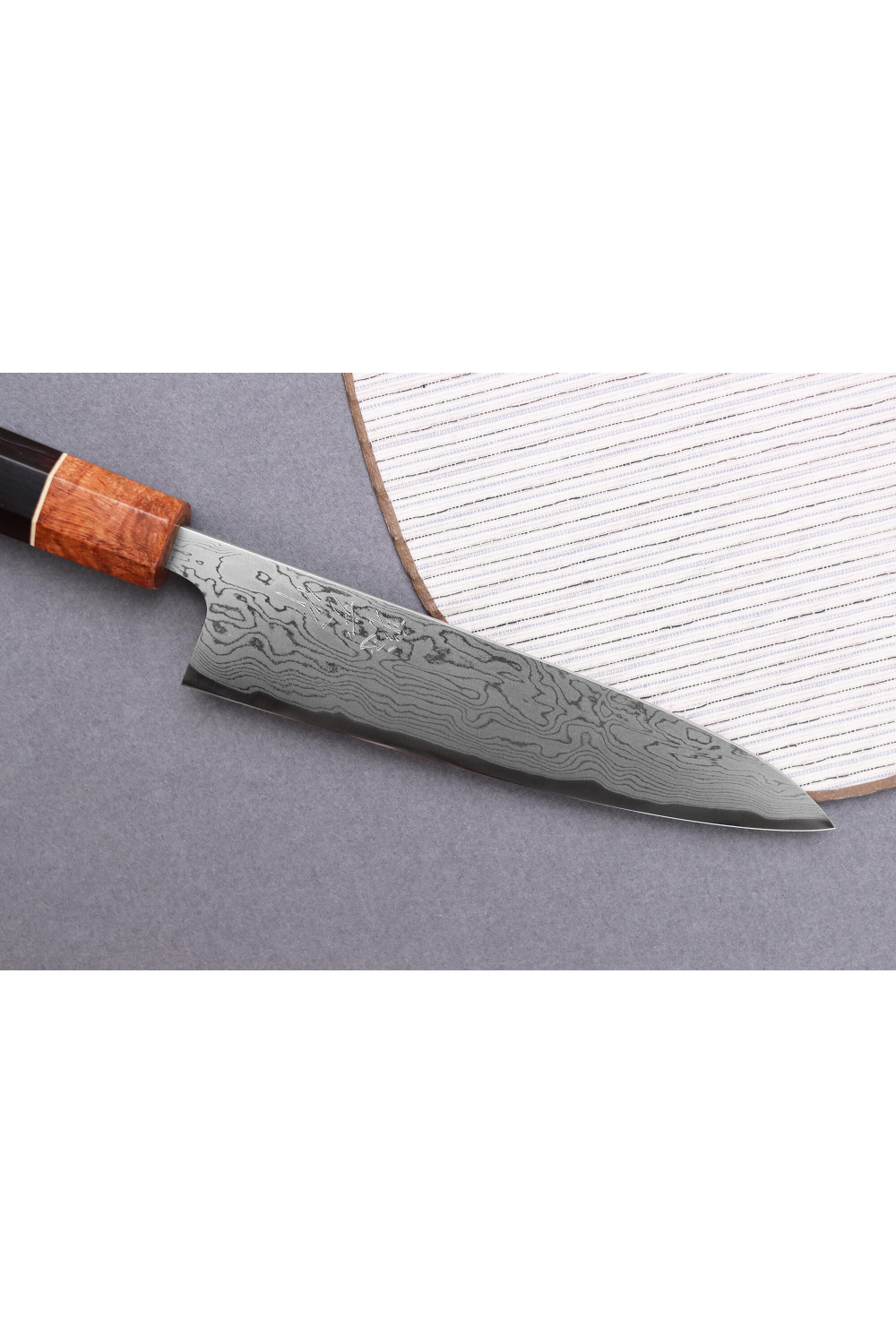
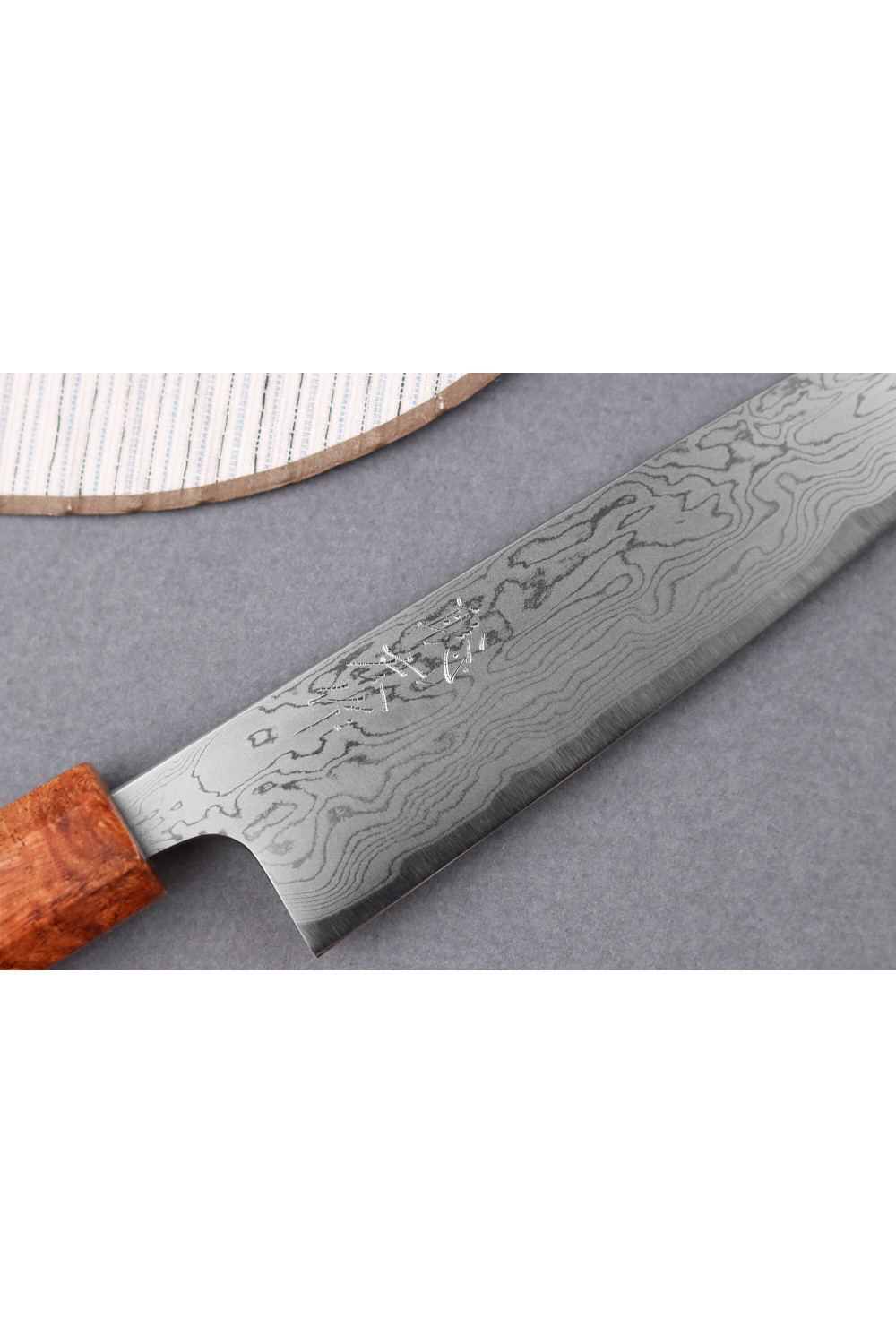
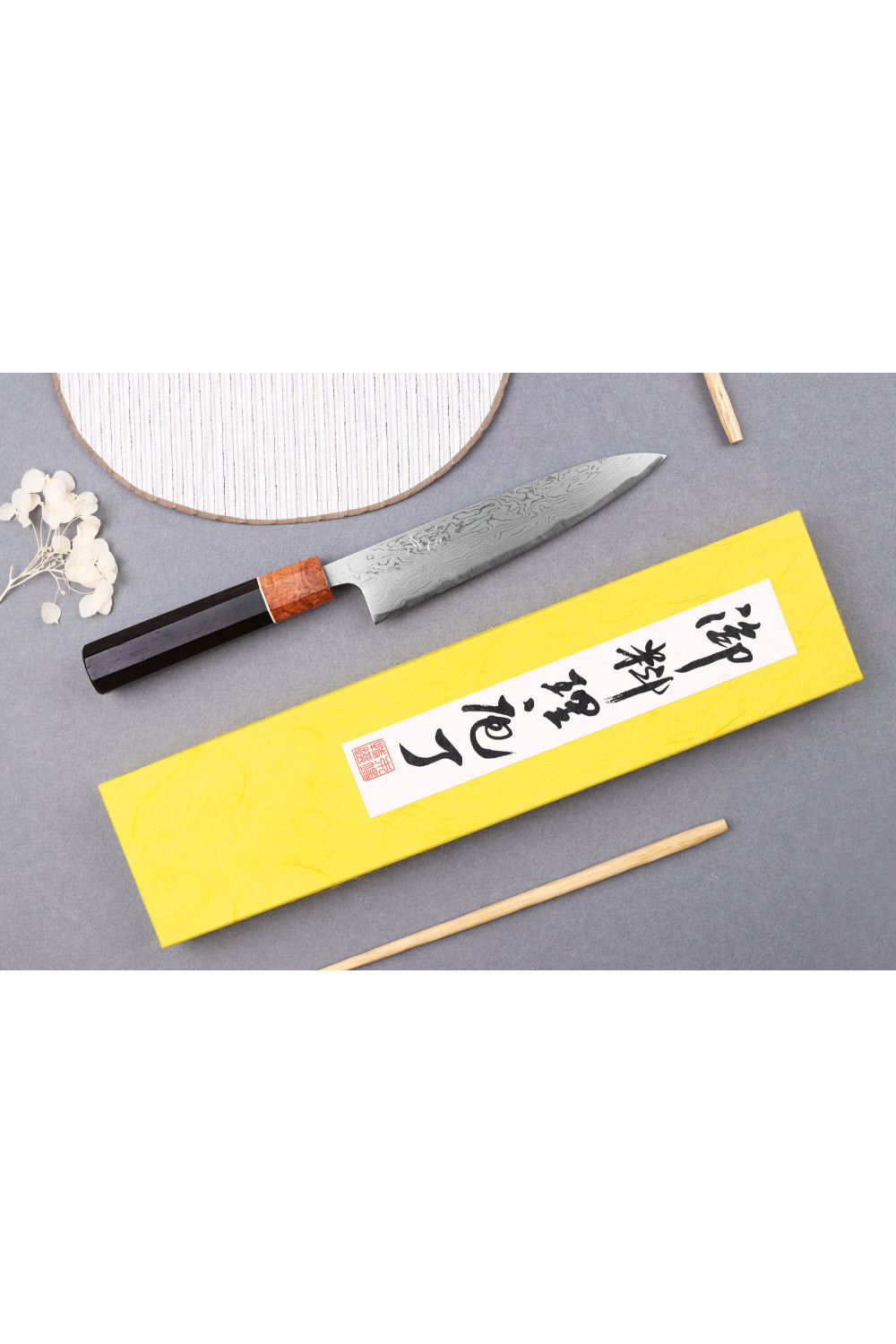
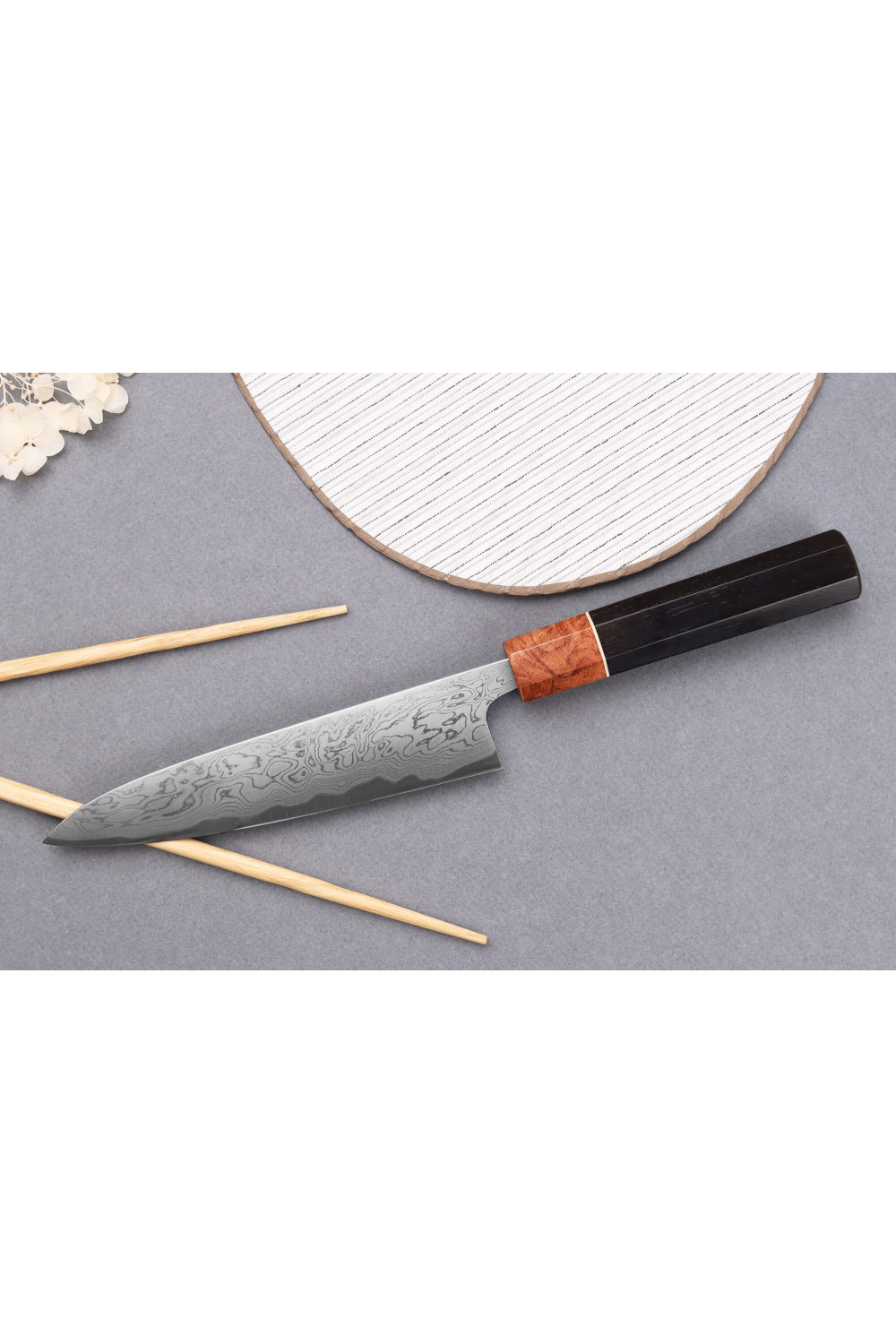
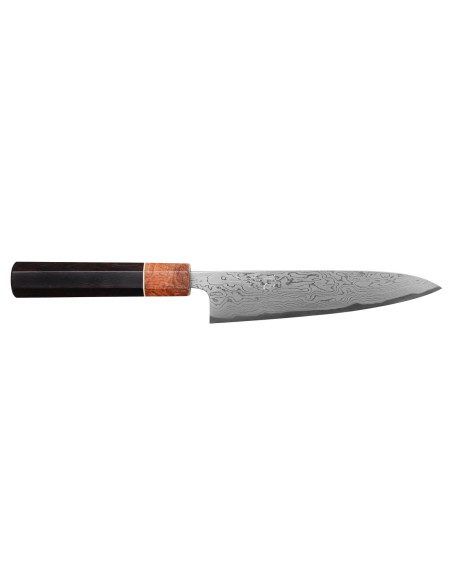
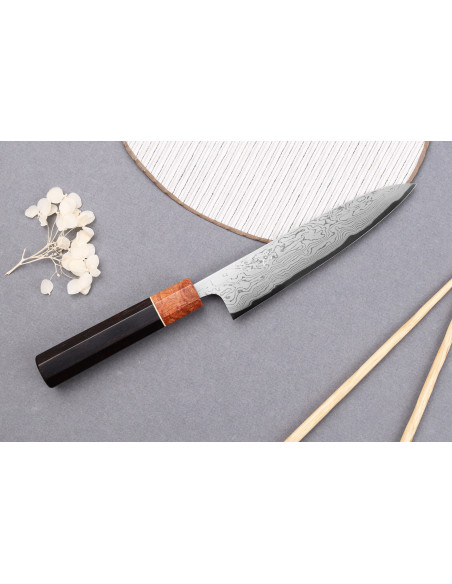
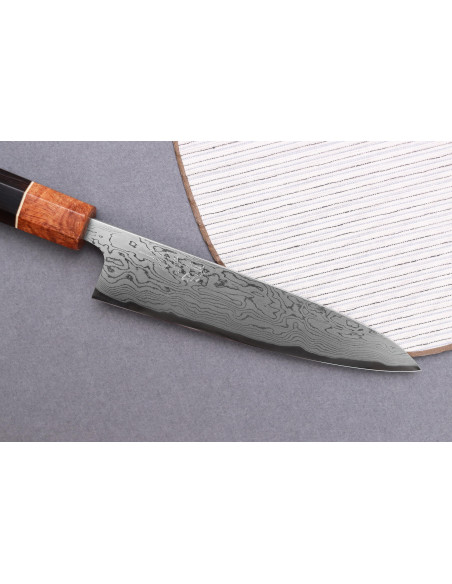
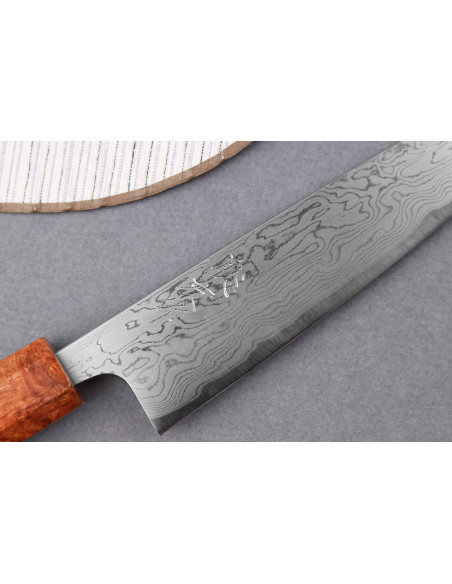
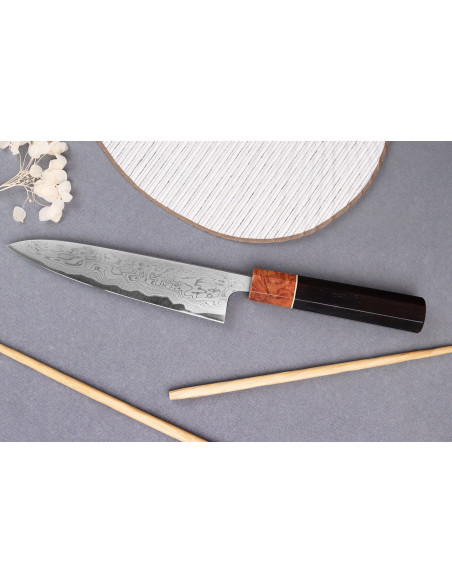
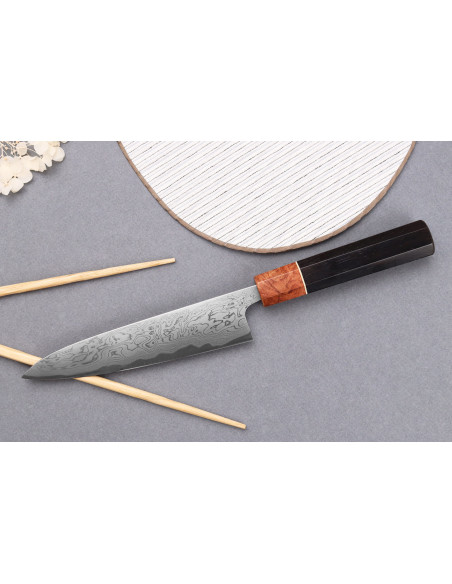
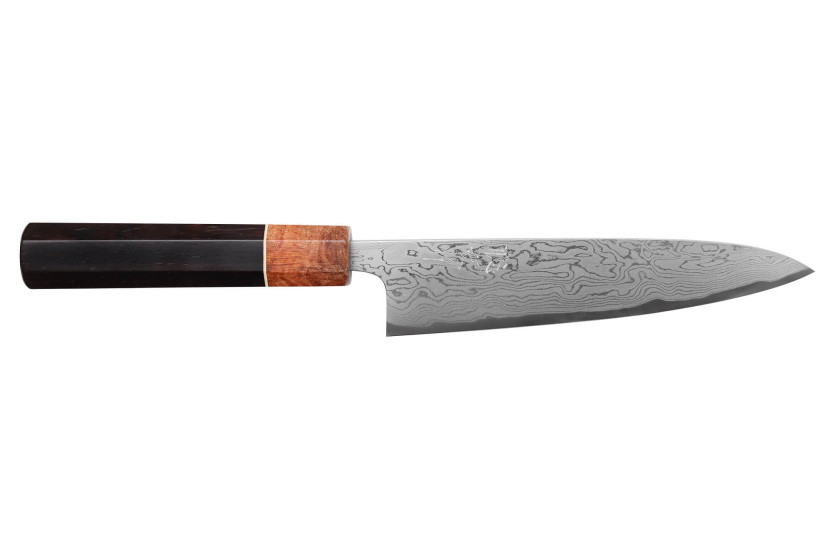
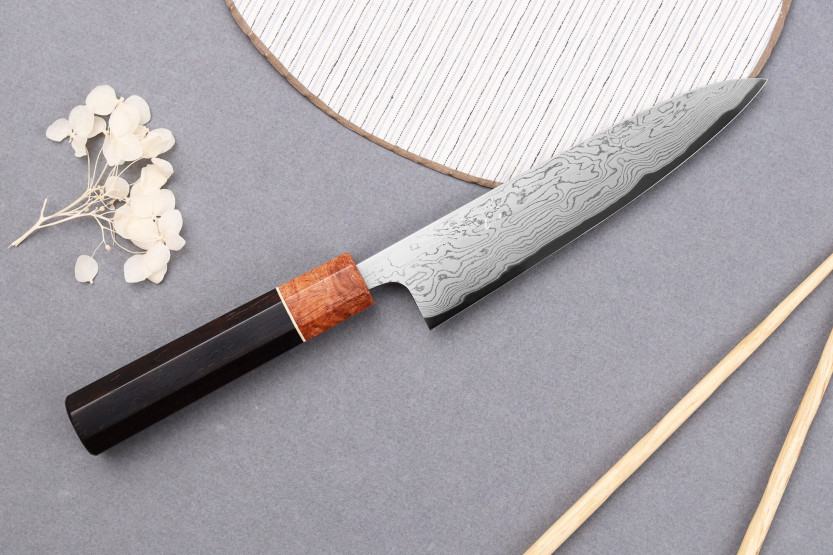
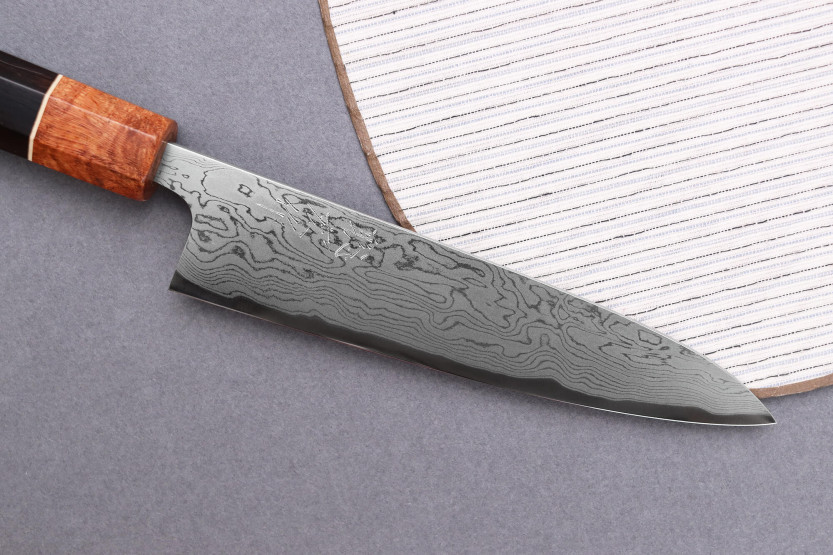
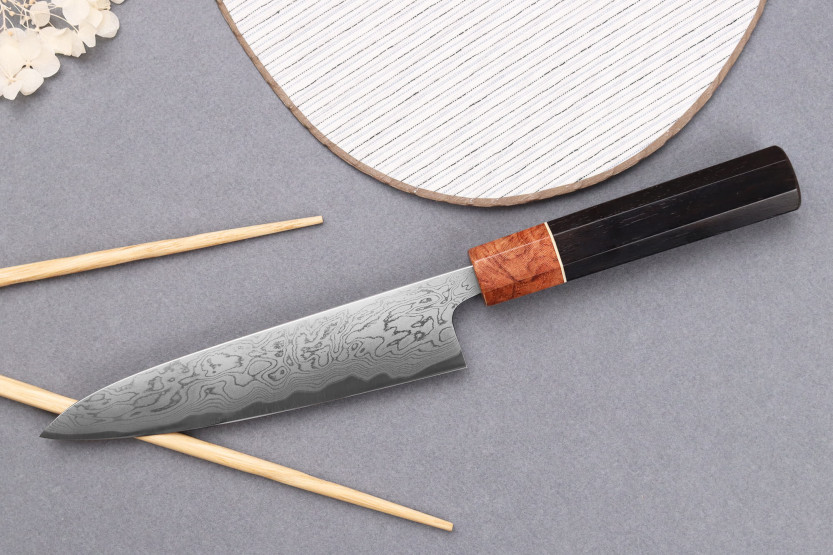
Your Toshihiro Wakui Japanese utility knife is equipped with a top-of-the-range damascus blade. This means that the blade has a rigid steel core which is covered by several layers of softer steel to protect it. A damascened blade is a real asset in the kitchen, as it has a rigid cutting edge that retains its performance for a long time, while having a balanced cutting surface thanks to the different layers of steel applied on top. The top layers add "flexibility" to the core, making it less brittle. What's more, a damascened blade has an unprecedentedly superb visual effect, as the different layers form waves that undulate over the entire cutting surface.
For this knife, Toshihiro san chose Aogami #2 steel for the blade core. Also known as Blue Steel 2, this steel is manufactured by the internationally renowned Hitachi steelworks. It's an alloy with a high carbon content (nearly 1.1%), the essential element for increasing a blade's hardness.
Here, the blade reaches 62 HRC on the Rockwell scale, while the average Western knife oscillates between 55 and 58 HRC. It has a pronounced cutting edge that lasts a long time, as the steel deforms much less quickly when cutting. The blade of this knife is highly efficient.
This high-end steel is then coated with several layers of softer, less rigid steel, which serve to protect it and give it flexibility (not in the pure sense of the word, but in the sense that it balances the strong rigidity of the core). This gives your knife a high-performance, technical blade that won't need regular sharpening.
What's more, despite its high rigidity, the blade remains easy to sharpen when the need arises. To do this, use a Sharpening stone to keep your blade sharp.
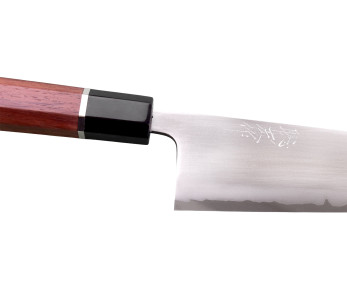
Finally, the blade features superb kanji engraving by the craftsman. This is a truly authentic Japanese knife blade.
A top-of-the-range handle for all cooks
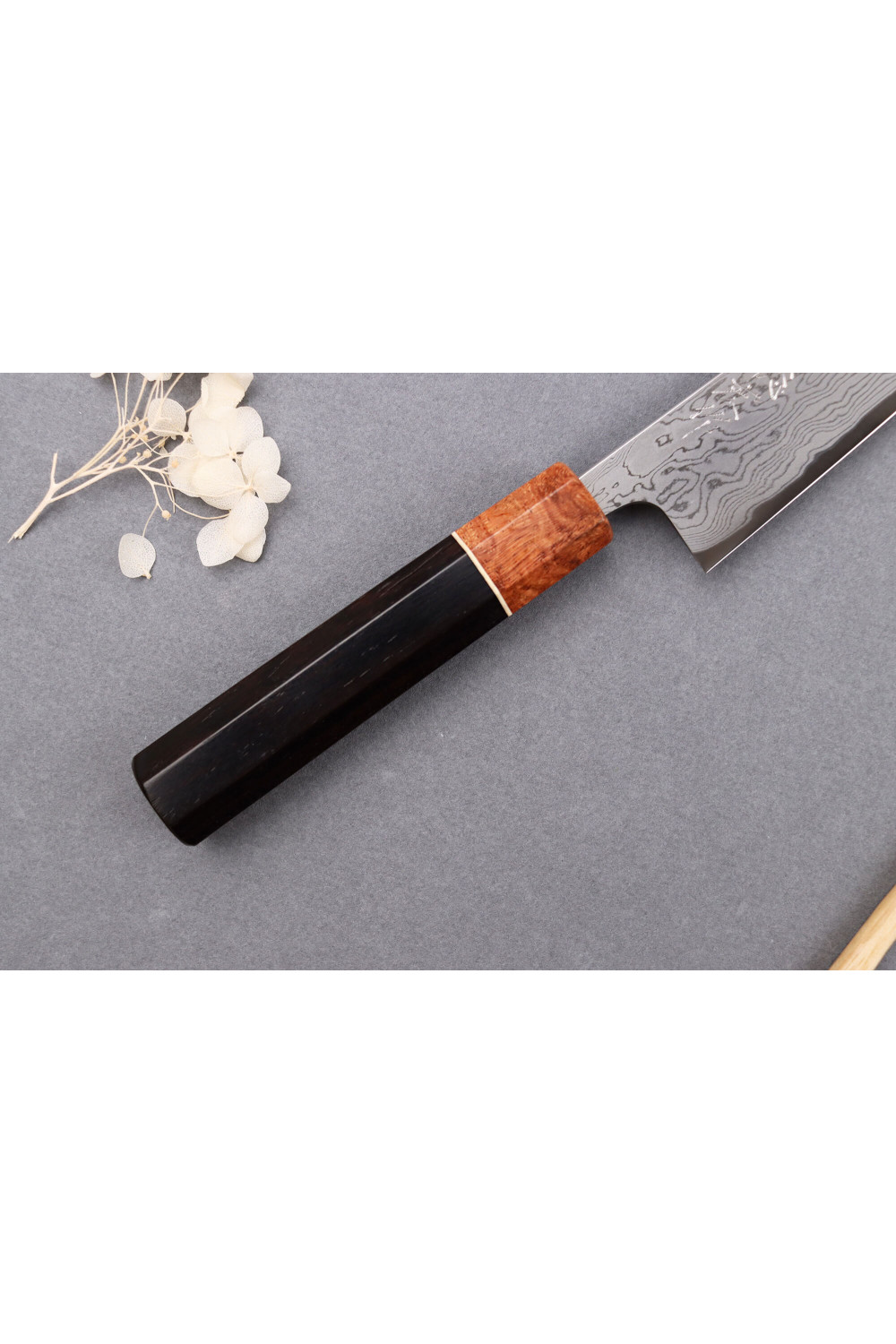
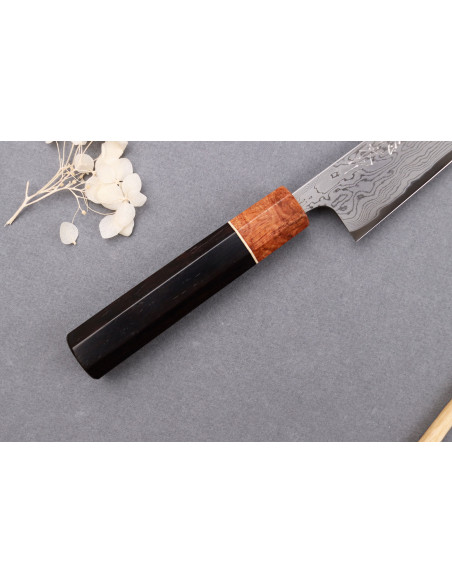
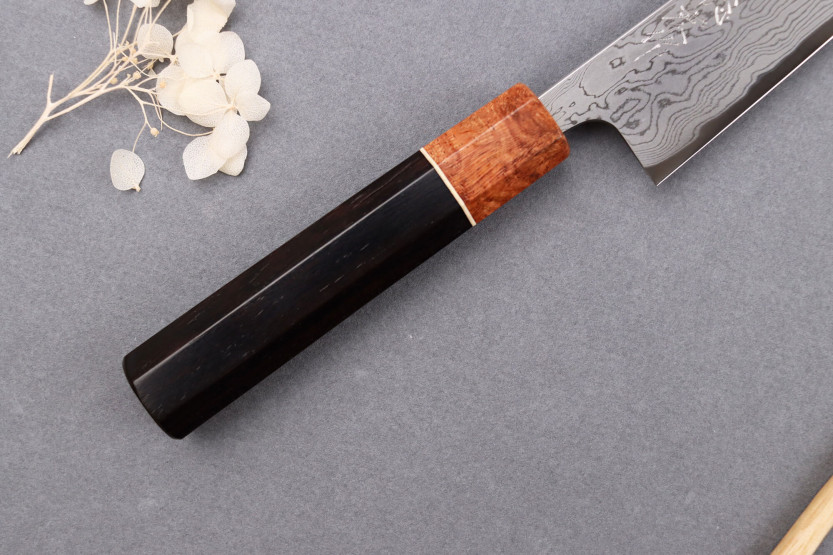
The handle of this top-of-the-range Japanese knife is made of ebony by Toshihiro Wakui. This beautiful, precious species is characterized by a very dark brown hue, approaching black. Ebony has a high density that protects it from cracking. Thanks to its durability, this wood is perfectly suited to regular, even daily use in the kitchen.
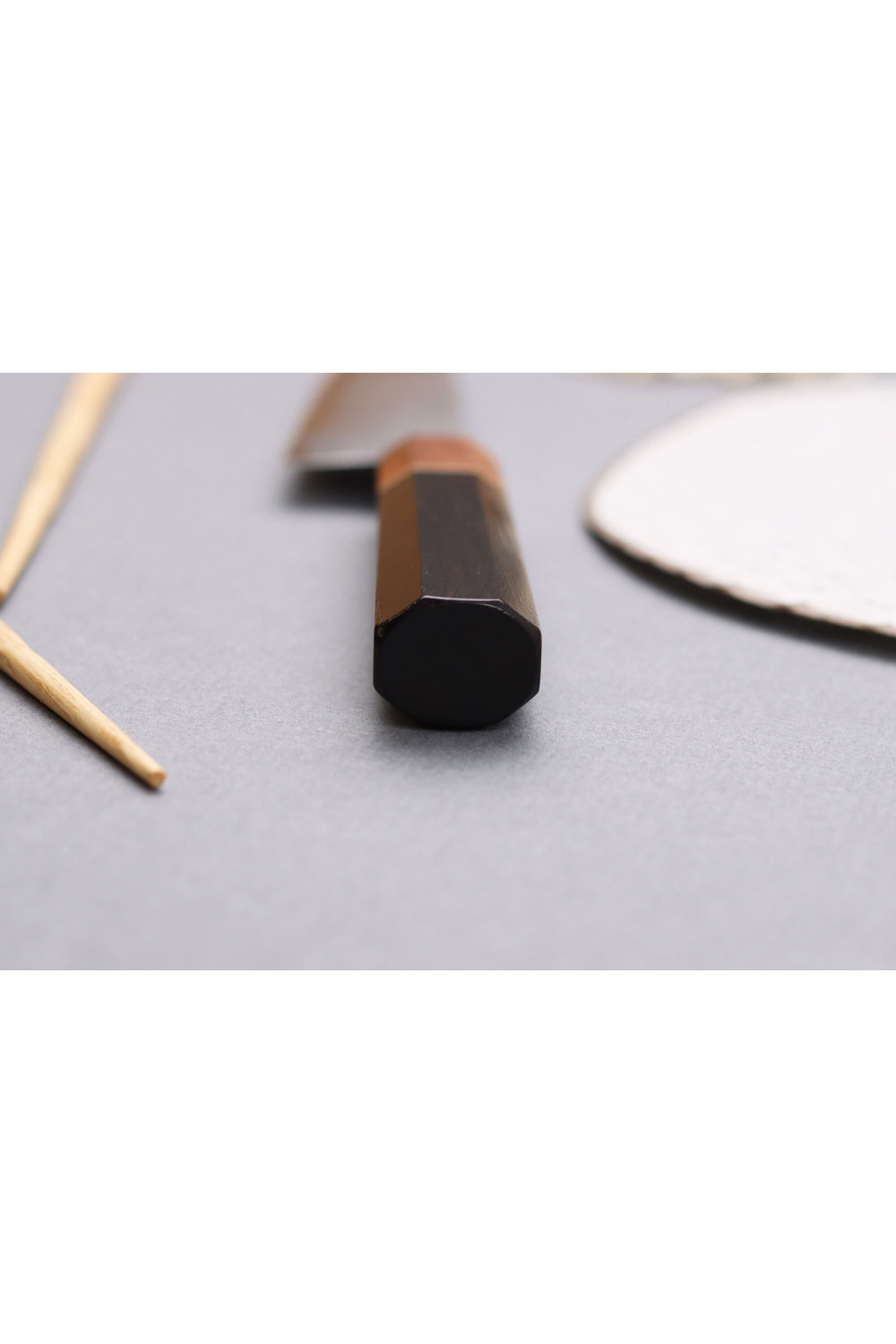
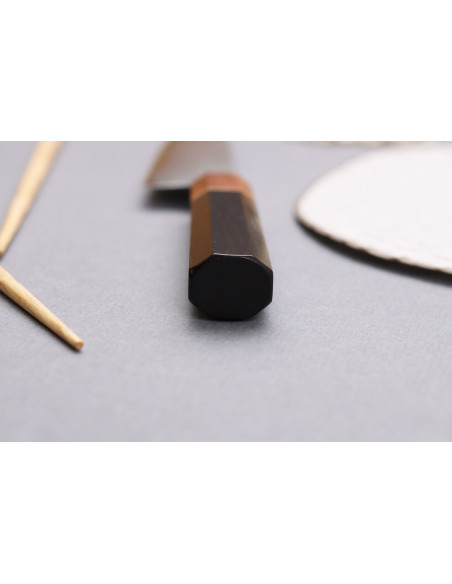
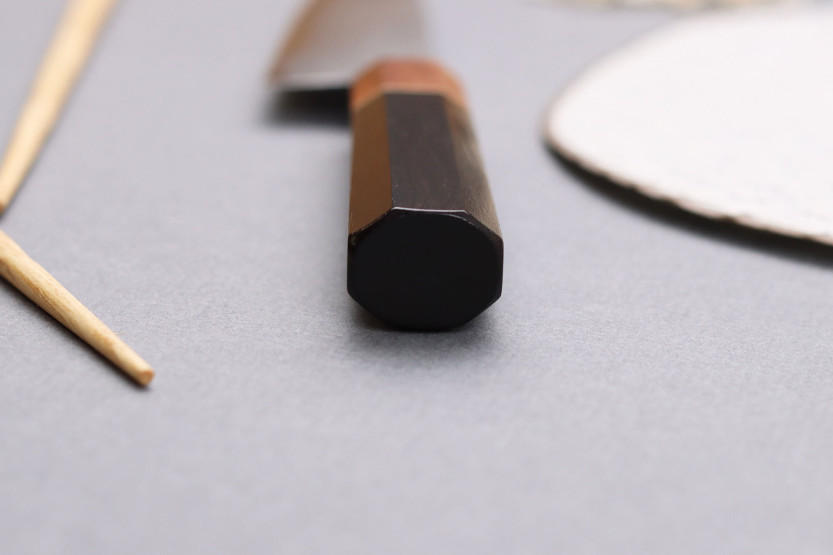
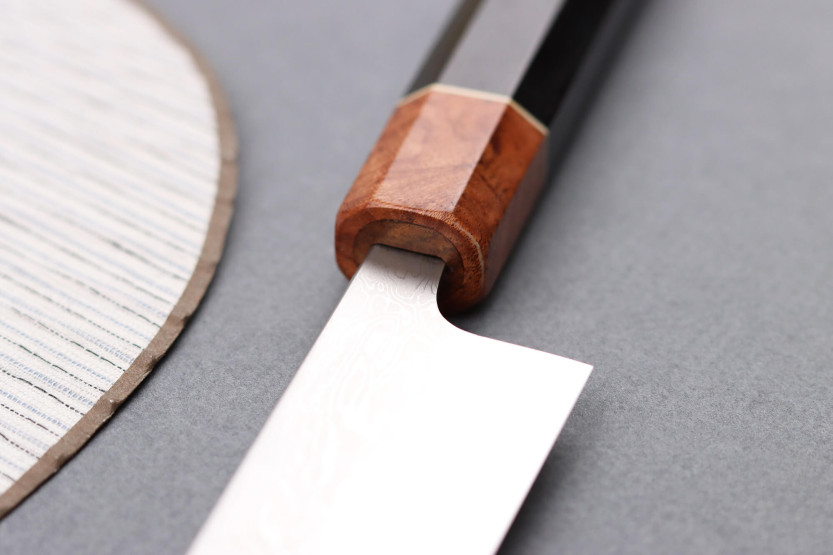
The wood is carved in an octagonal shape that gives you a perfect grip by hugging your palm. This makes the handle easy to handle and ideal to control when cutting. What's more, this handle shape is suitable for both right- and left-handed cooks.
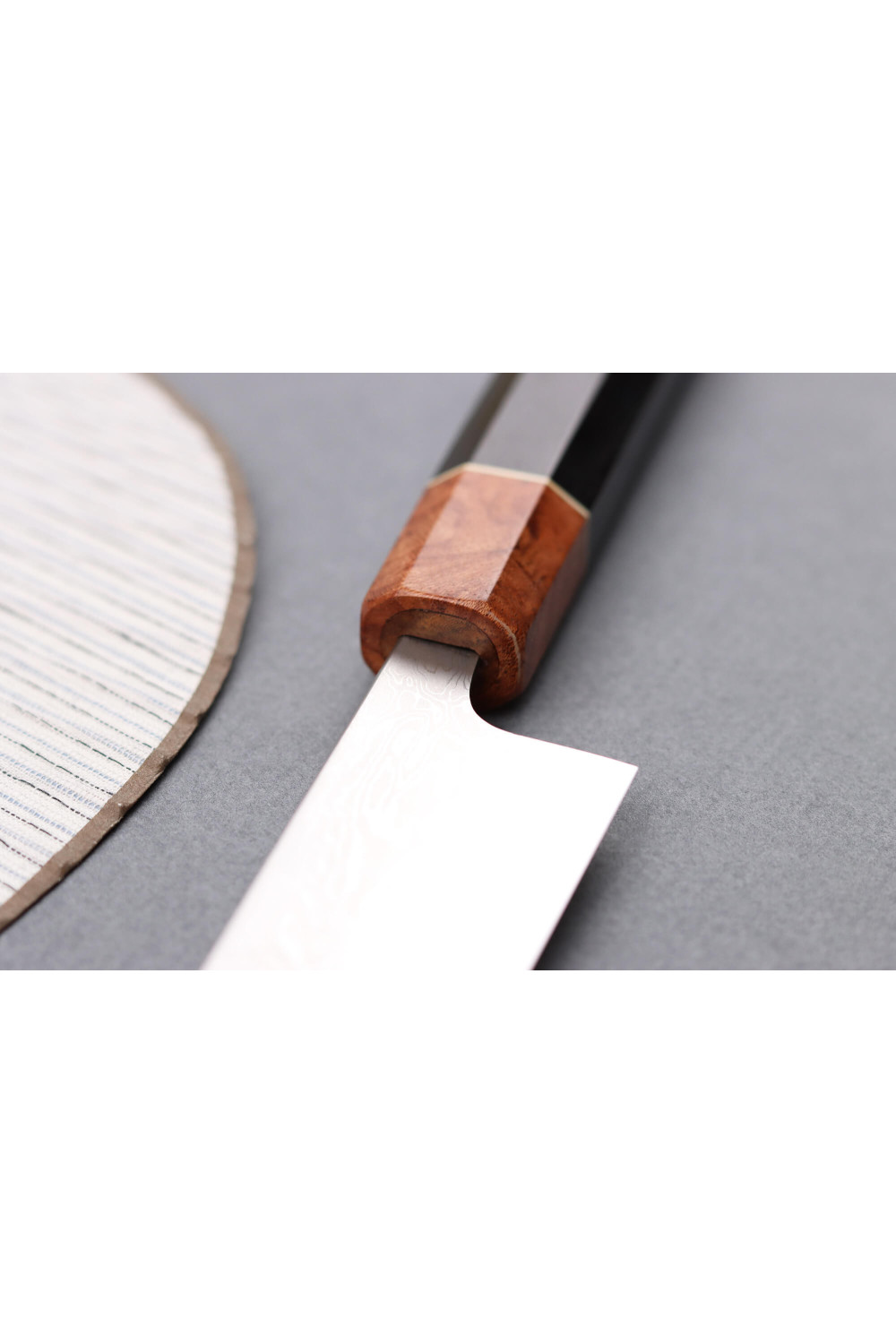
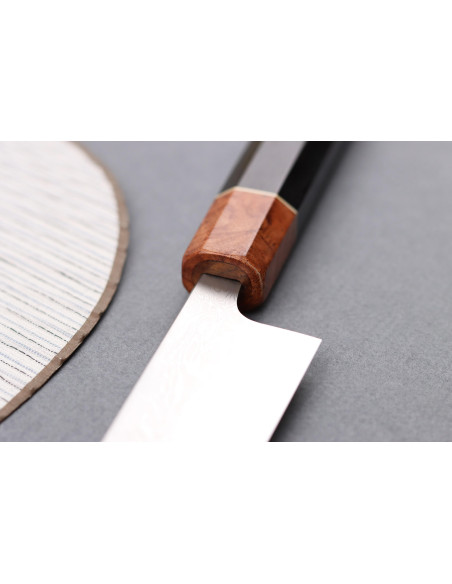
The handle is complemented by a bolster in light-colored quince, which provides an attractive contrast to the dark ebony. The two woods are separated by a thin ring of white micarta.
Finally, wood paste fills the gaps between the knife's different materials. This makes the whole unit perfectly watertight, preventing cleaning water and small pieces of food from entering.
Care and maintenance
This knife is made from top-quality materials, so it's important to take the utmost care of it. To begin with, be careful not to cut too hard foods (frozen foods, bones...) which could damage the blade.
As far as cleaning is concerned, the knife is not dishwasher-safe, nor is it designed to soak in your sink. It should be washed by hand with a non-abrasive sponge and mild soap, taking care not to get the handle too wet (wood is not very fond of water). Dry the knife immediately after thorough washing, then store it in a dry place.
Note that over time, the blade may change color slightly. This is perfectly normal! Its carbon enrichment makes it naturally reactive to the acidity of certain foods, humidity in the air... If you wish, you can apply a littleoil to the blade from time to time with a soft cloth to protect it.
Toshihiro Wakui knives are waiting for you on KnifeLeader.eu!






 By buying this product you can collect up to