Mutsumi Hinoura is a Japanese artisan blacksmith who works alongside his father, the renowned Tsukasa Hinoura, in their family workshop located in Sanjo, a town emblematic for the production of quality knives. Representing the fourth generation of blacksmiths, Mutsumi began his apprenticeship in 2001 under the guidance of his father. For almost 20 years, he has been perfecting his skills, combining ancient traditions with modern performance requirements!
Founded by Shintaro Hinoura in the early 20ᵉ century, the family workshop has passed on its unique techniques from generation to generation. Recognized the world over, the Hinoura family is respected for its artisanal methods and remarkable heat treatment, guaranteeing hand-forged knives of outstanding quality and incomparable precision.
Knives from the family-owned Ajikataya brand are distinguished by their sleek design and meticulous craftsmanship. Hot-forged by Mutsumi, these blades feature a thick base that tapers towards the tip, combining finesse, aesthetics and great functionality.

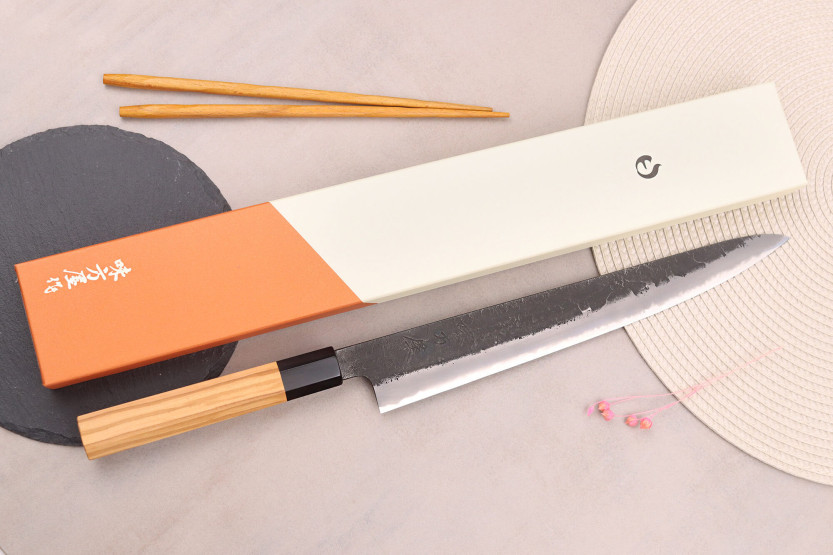
The sujihiki Japanese knife with an authentic blade
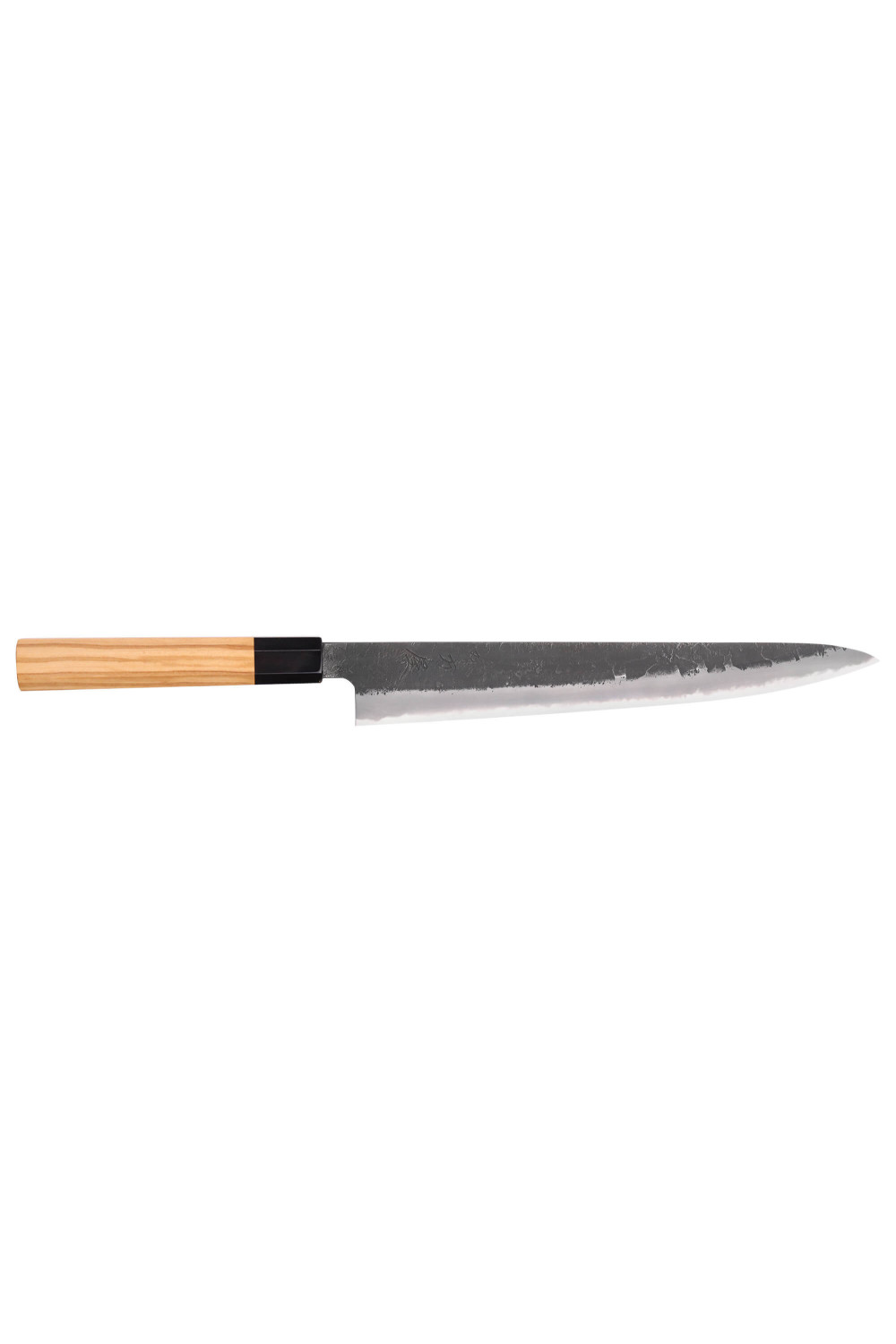
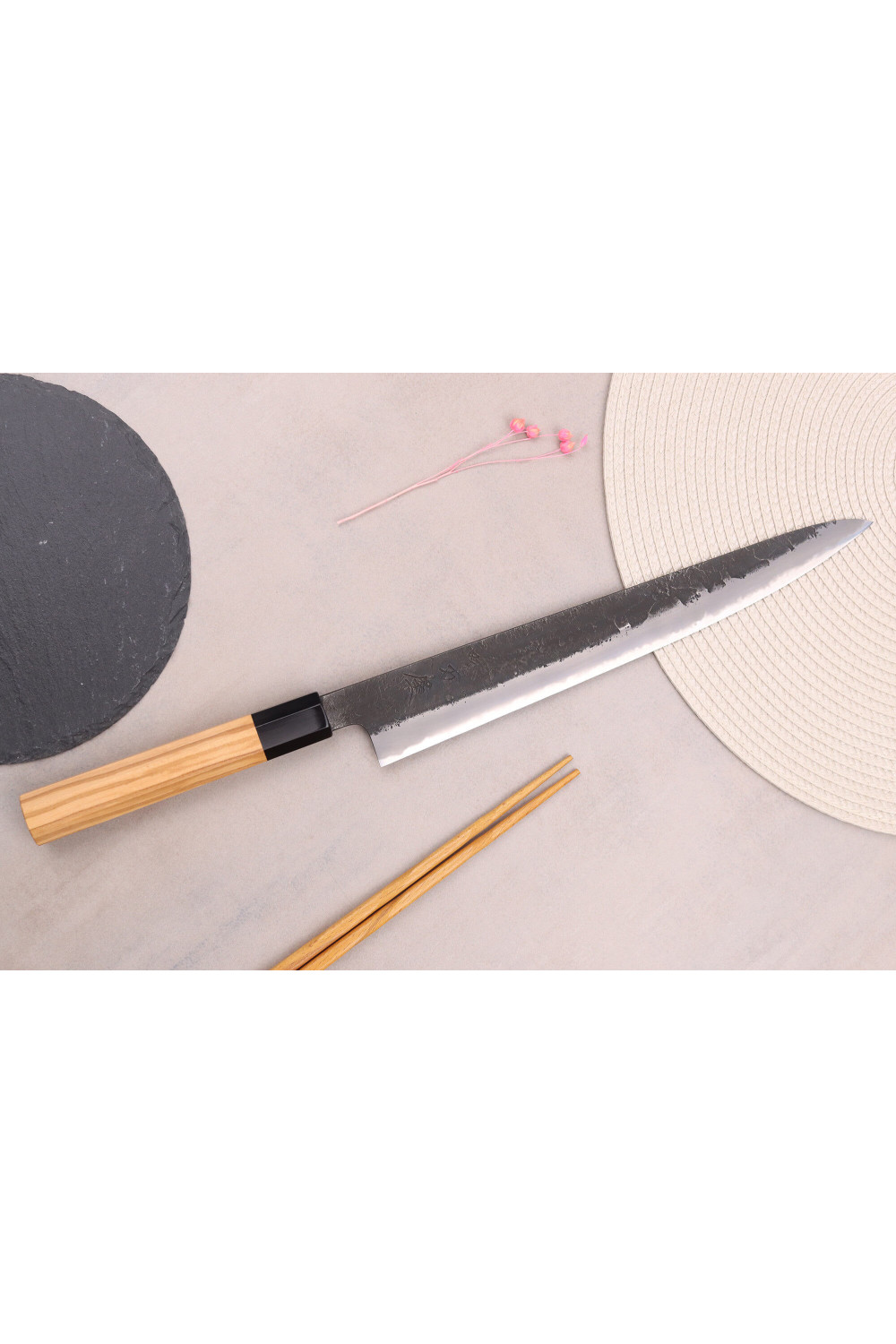
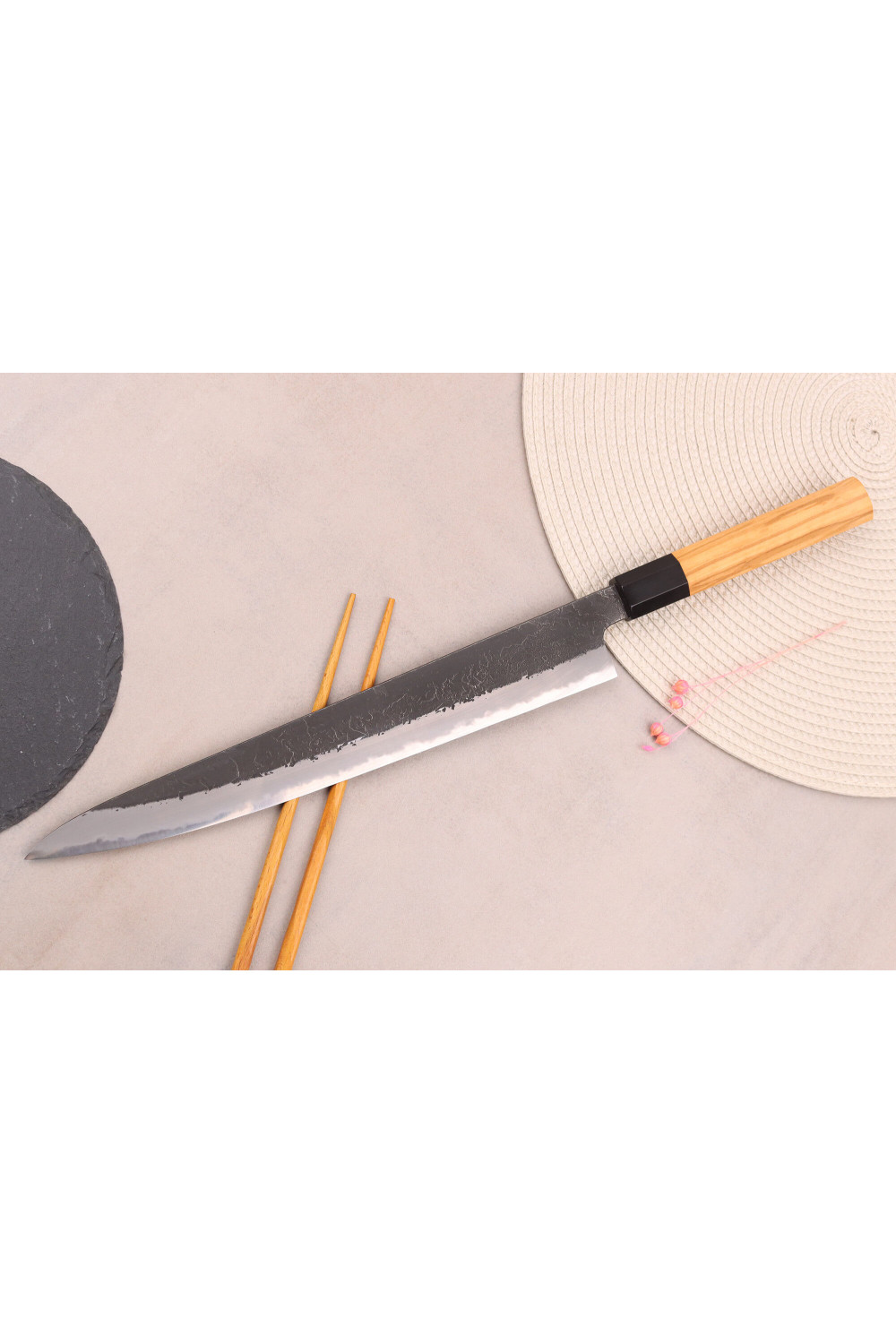
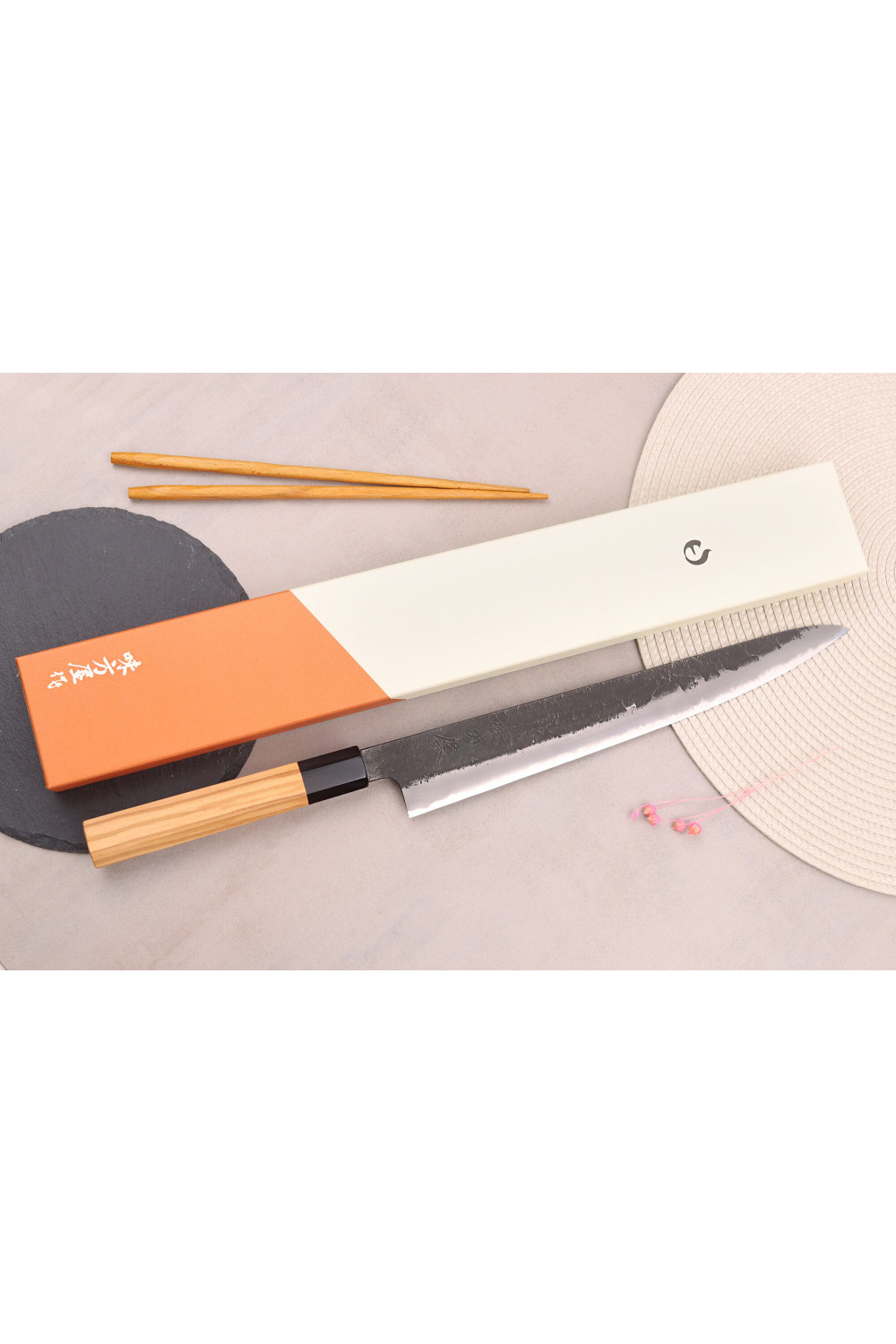
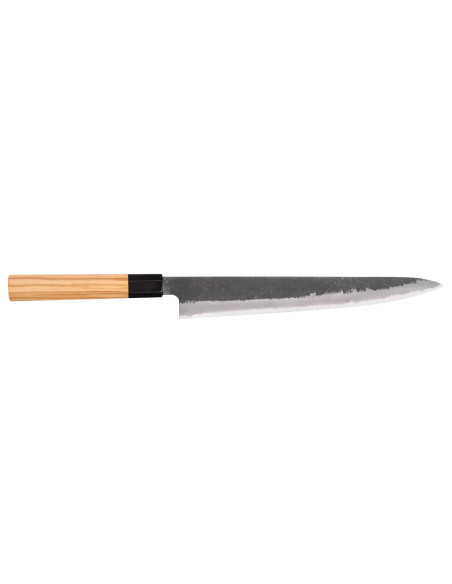
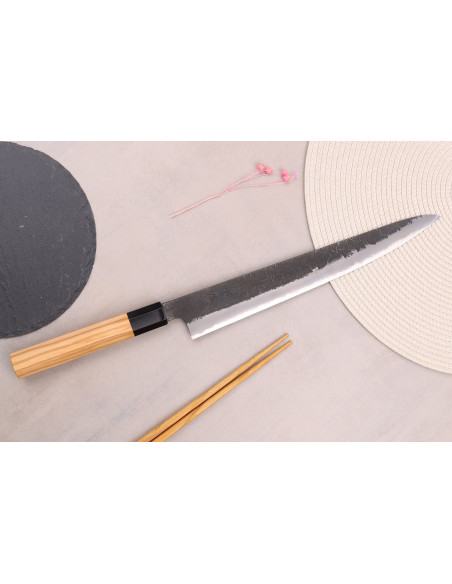
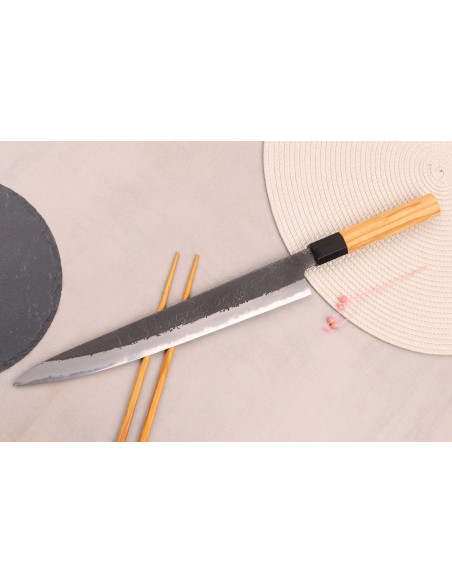
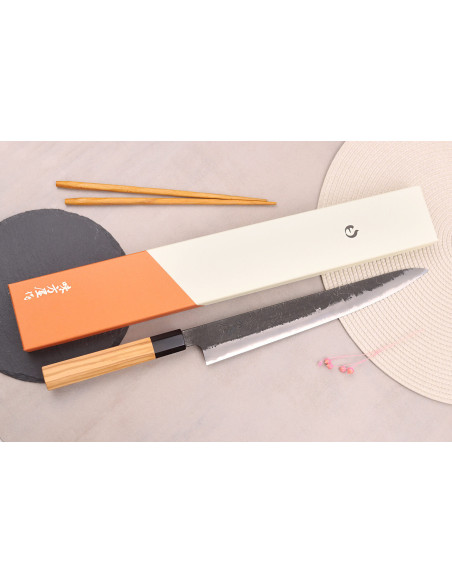
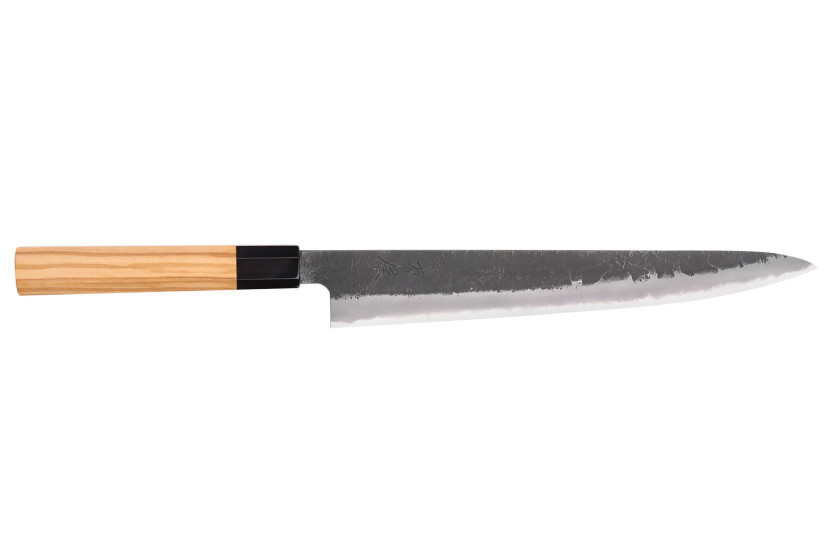
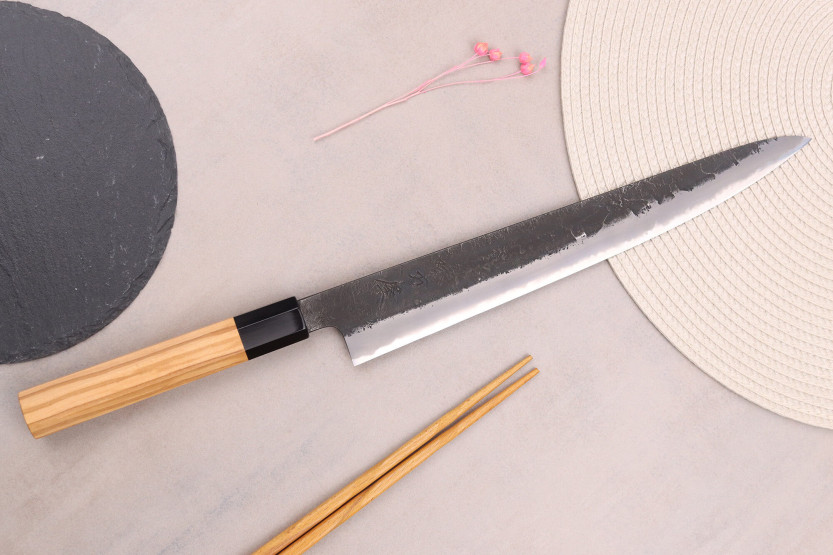
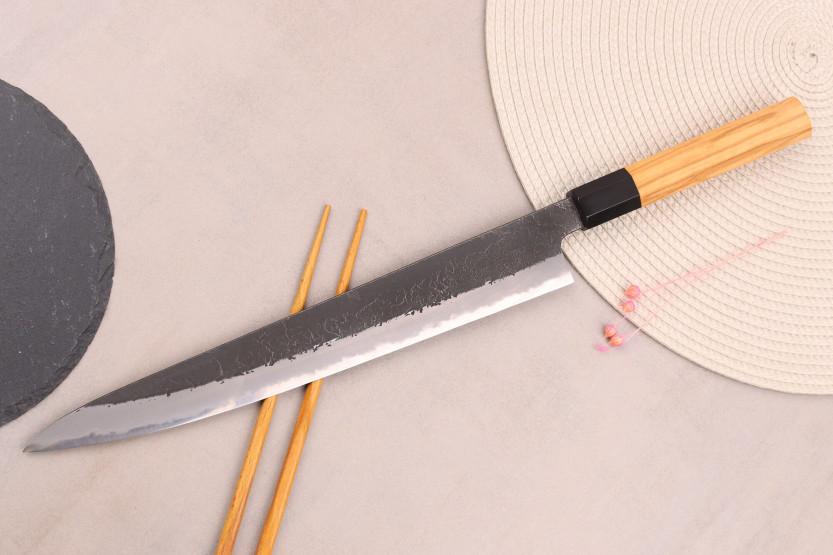
This top-of-the-range Japanese sujihiki knife features a 27cm blade designed using the San Maï technique, which means "3 layers". The blade features a hard steel core, enveloped on each side by a layer of slightly softer steel, offering extra protection and optimal balance!
The core of this Japanese knife is forged from Shirogami #2 (or White Paper Steel #2), a high-quality Japanese steel produced by the prestigious steelmaker Hitachi. The name, meaning "white paper", refers to the specific packaging used in its manufacture.
This alloy features a high carbon content of around 1.3%, giving your blade increased hardness, durability and efficiency. With this composition, the blade achieves a hardness of 62HRC on the Rockwell scale, ensuring outstanding cutting performance and long-lasting edge retention.
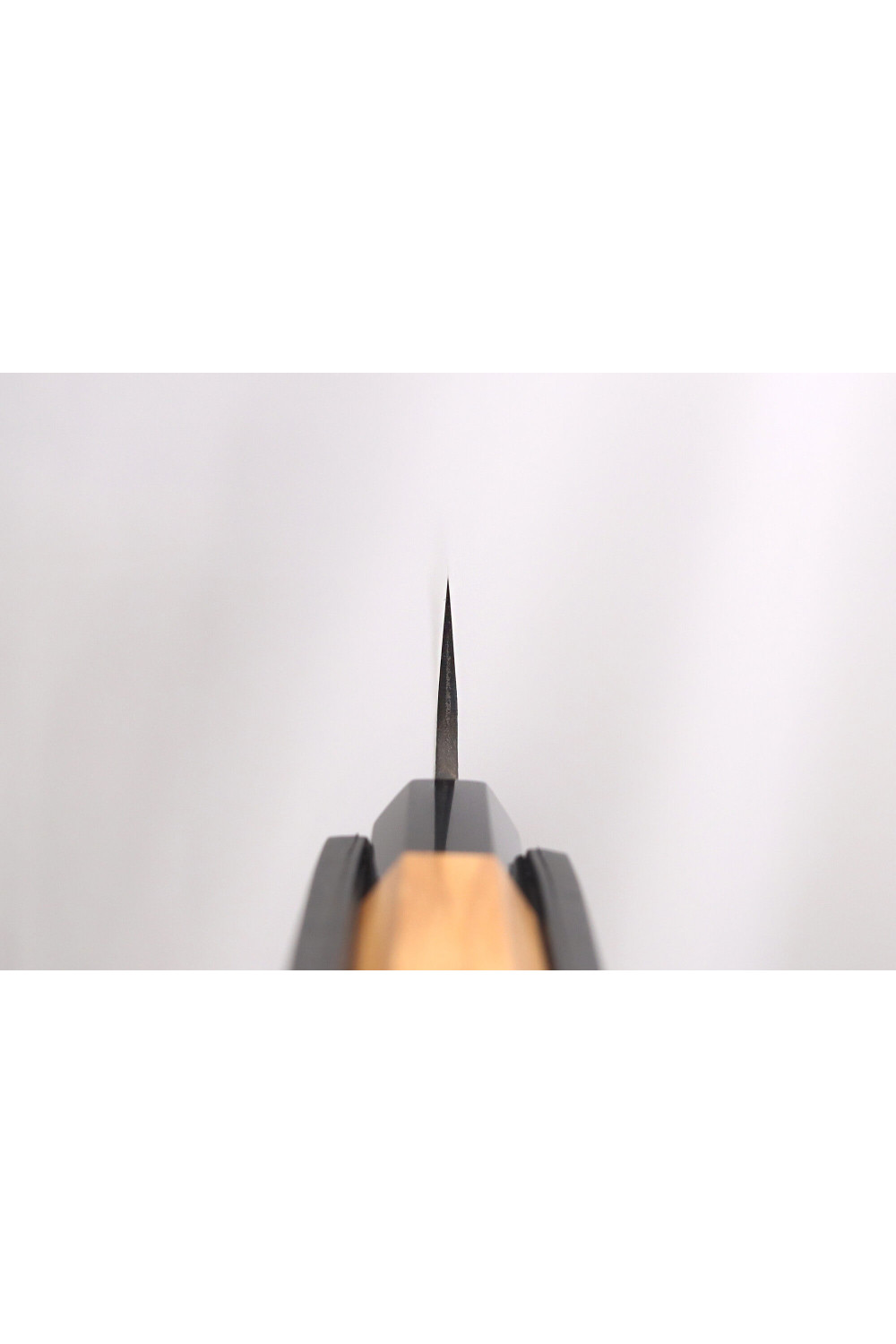
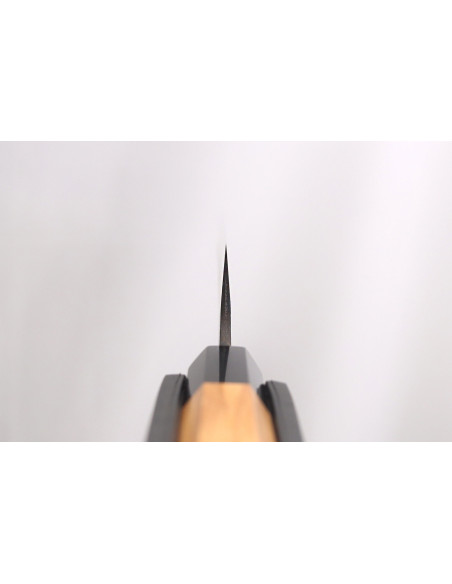
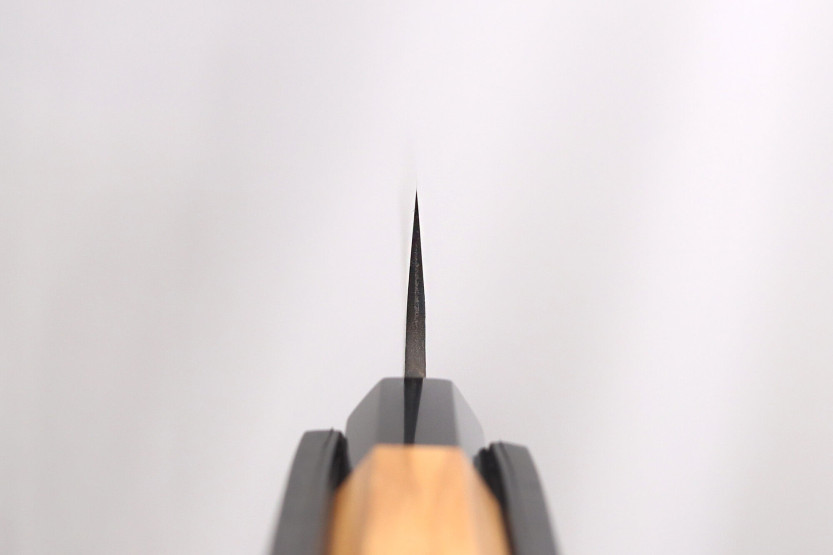
Your Japanese knife features a fine, flat grind, offering strength and ease of sharpening that is easy to reproduce, while retaining an elegant aesthetic.
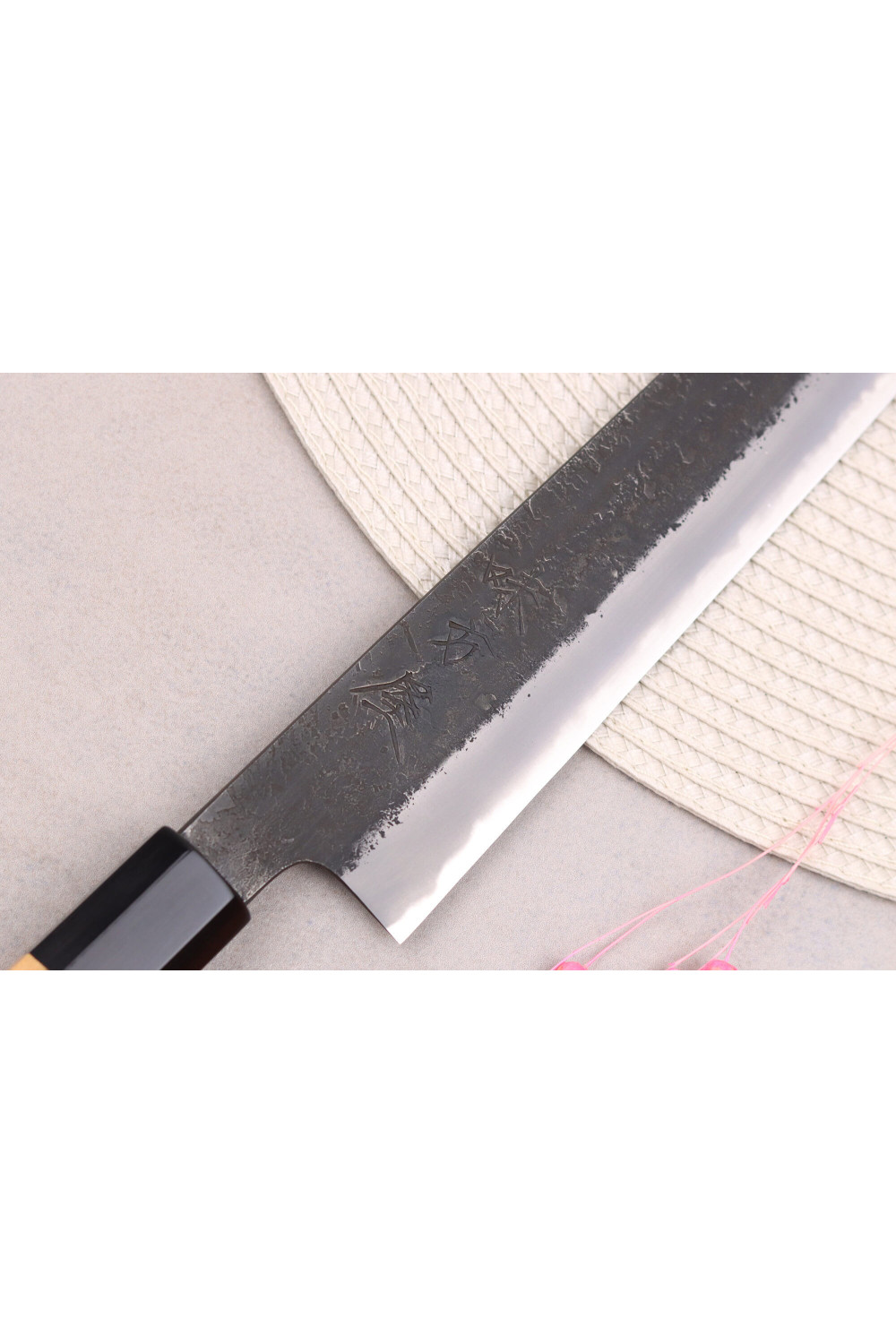
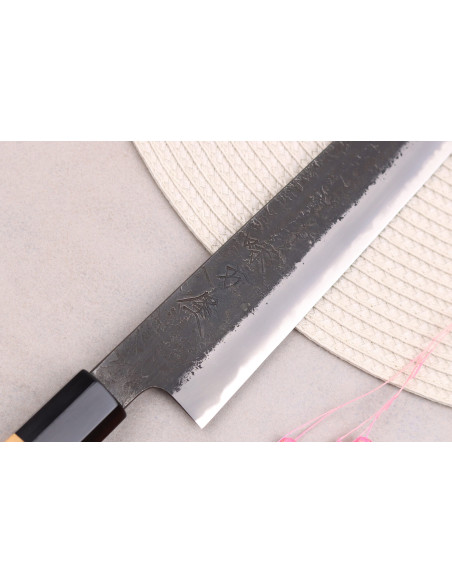
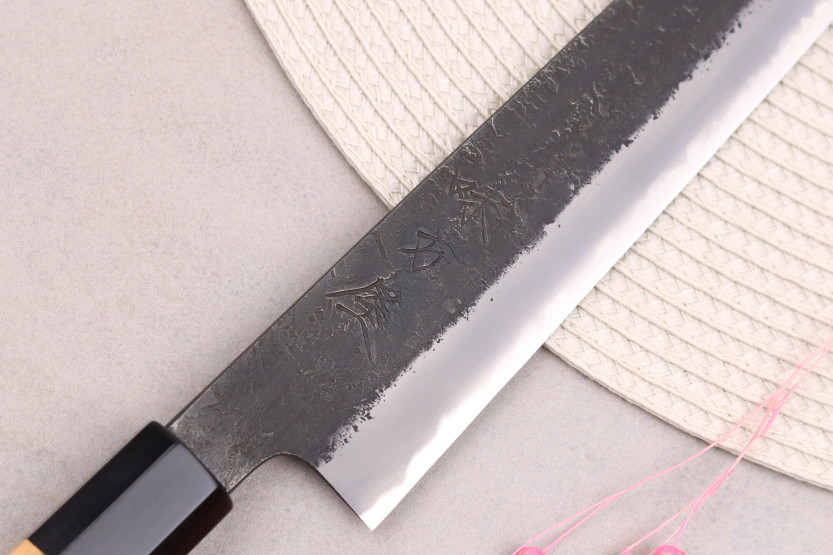
The hard steel core is surrounded on each side by a layer of softer iron, forming the San Maï structure by folding the layers. This design provides flexibility and protection to the core, making the blade less sensitive to impact and the risk of breakage when cutting. The superposition of steels creates a characteristic wavy line along the cutting edge!
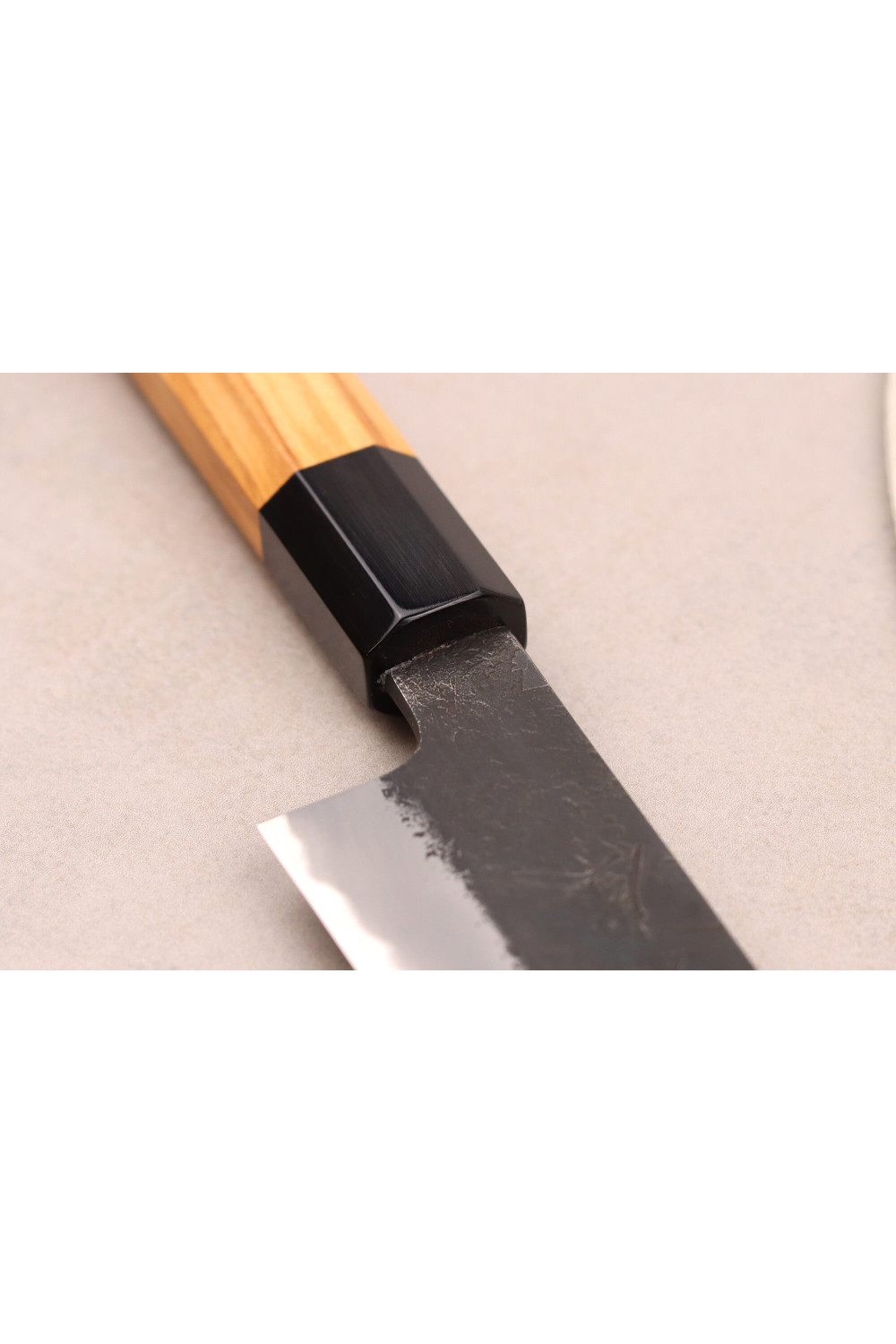
The blade also boasts a magnificent Black Nashiji finish, giving it a raw, authentic appearance with its natural black color, evoking the look of an unpolished forge finish. Delicate kanjis engraved on the blade complete this unique aesthetic and add a touch of authenticity to your handcrafted Japanese knife.
A Japanese kitchen knife with an elegant handle
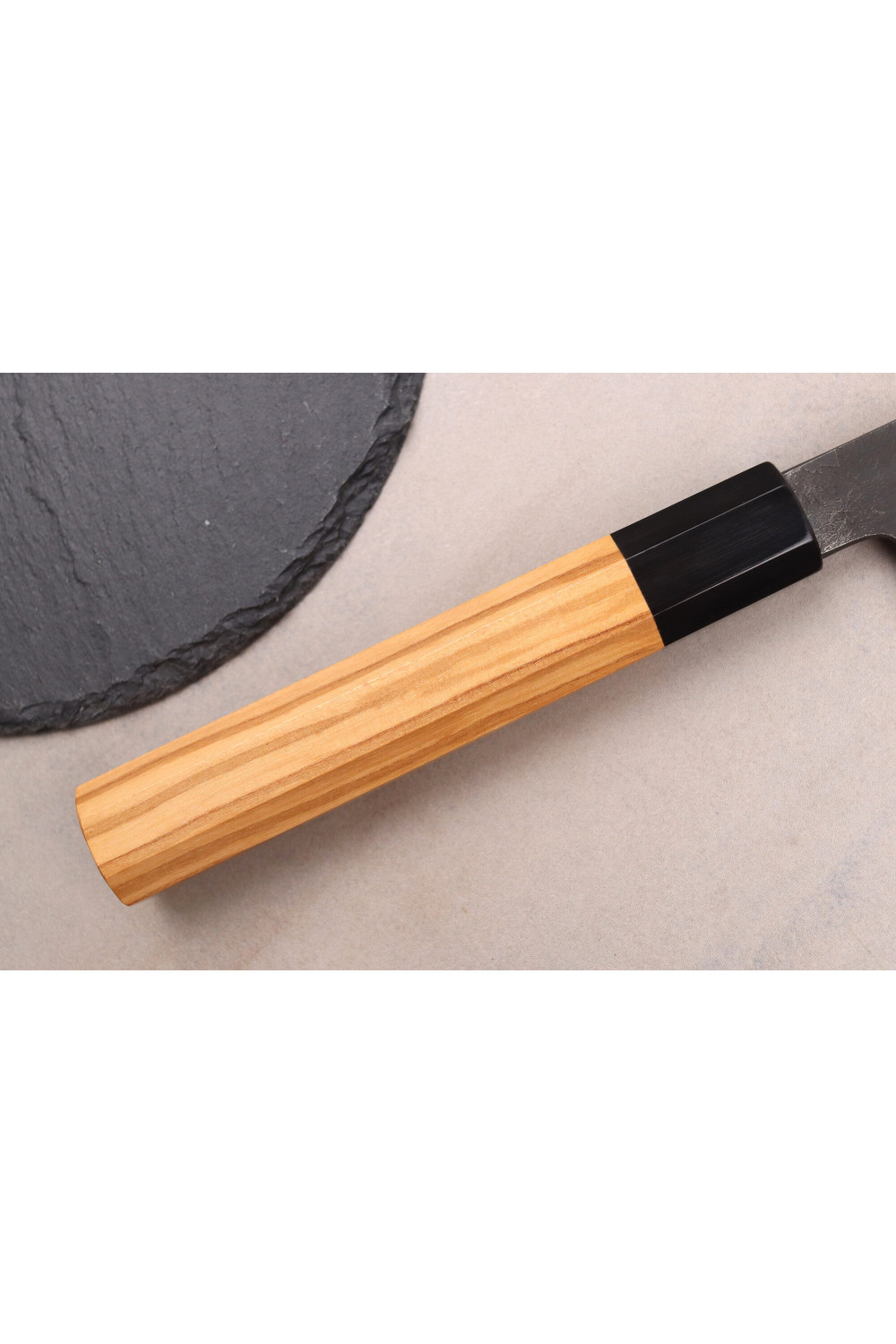
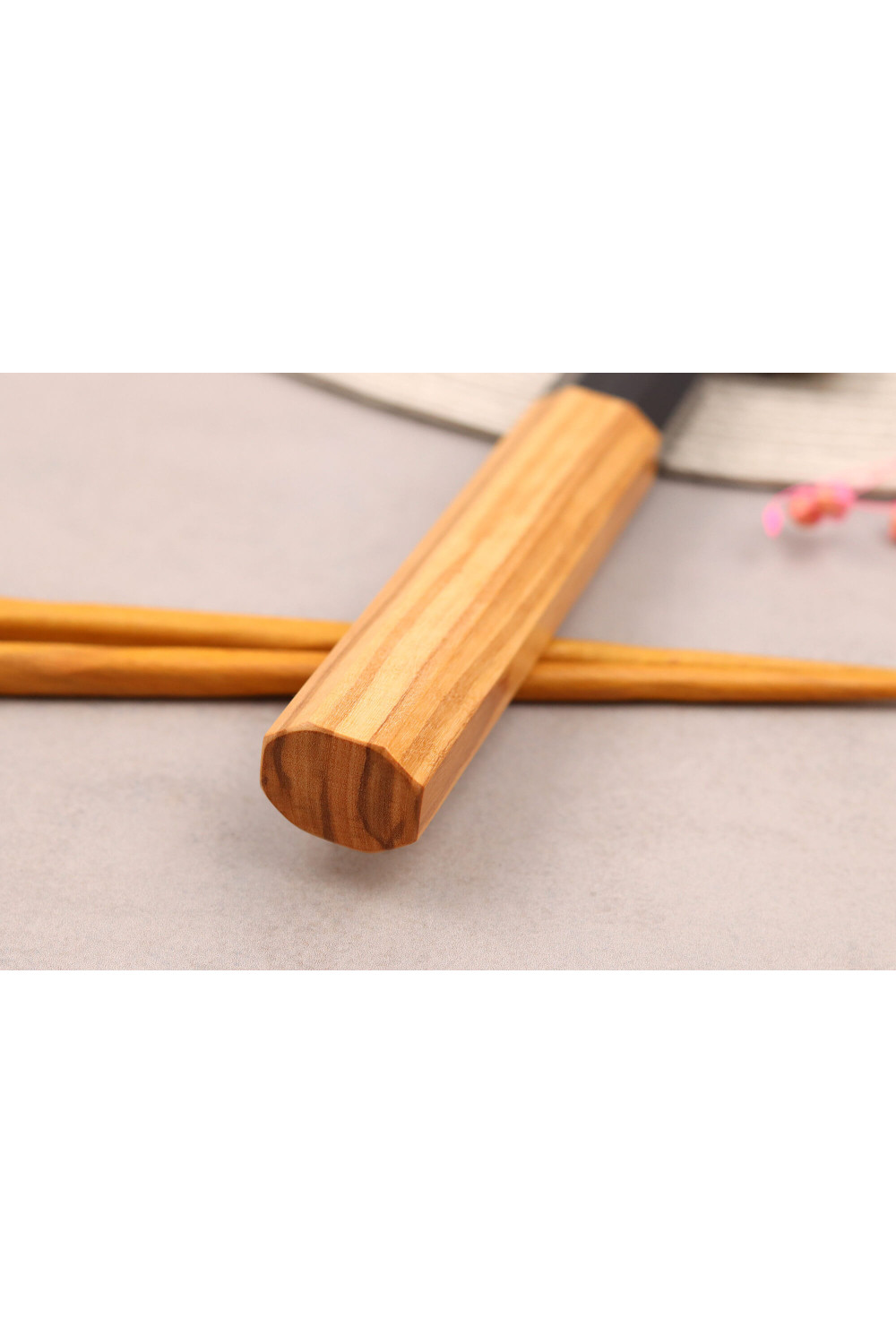
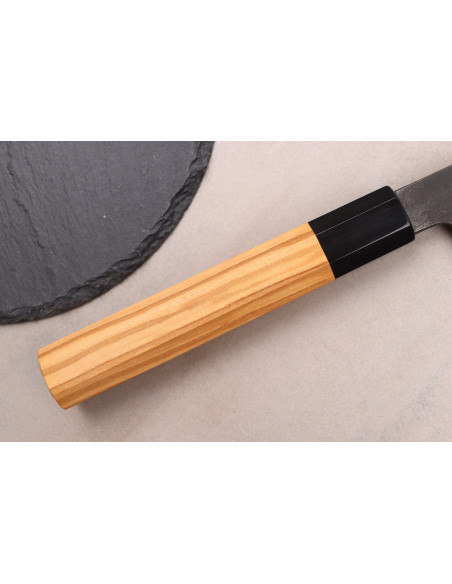
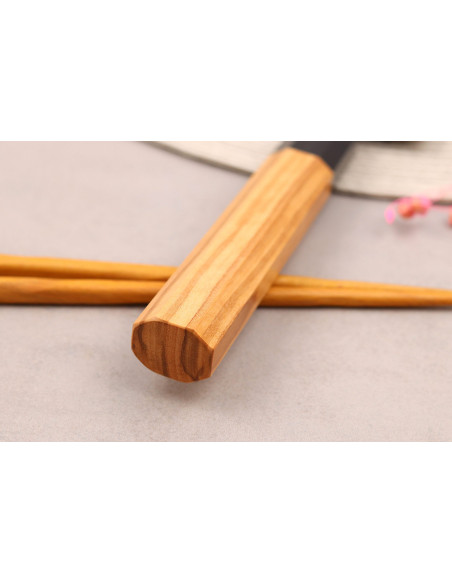
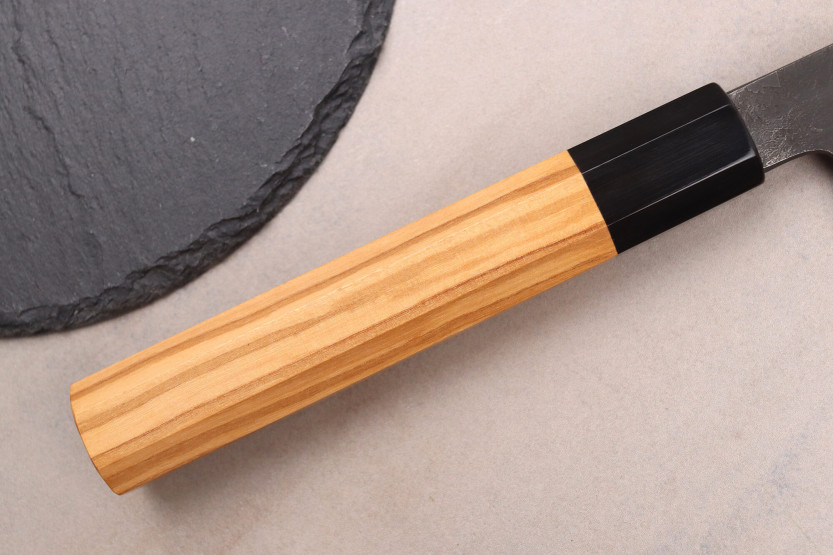
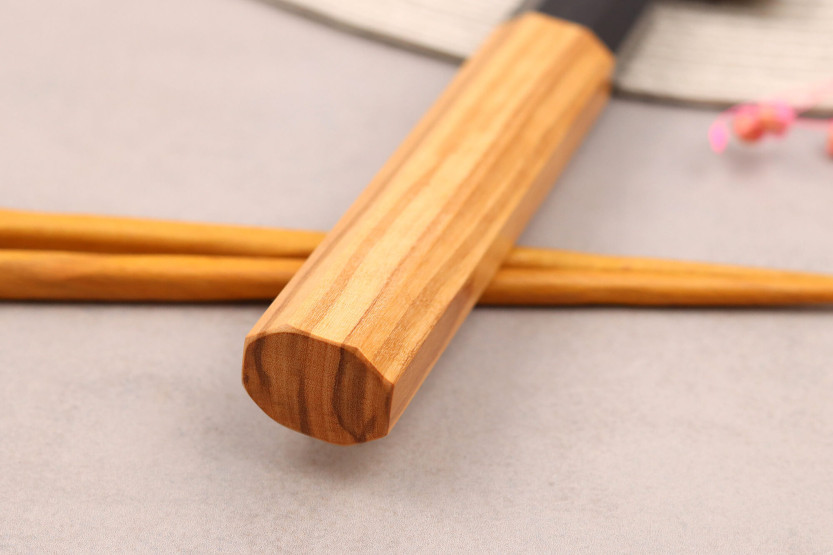
This handcrafted Japanese knife features an octagonal handle, perfectly suited to all cooks, whether left- or right-handed! Its ergonomic shape naturally hugs the palm, ensuring a comfortable grip, even during prolonged cutting.
The handle is made from olive wood, a species renowned for its remarkable durability. Dense and naturally anti-bacterial, this wood effectively resists humidity and retains its shape despite condensation. Its golden color, enhanced by a unique, contrasting grain, gives it an elegant, distinctive look.
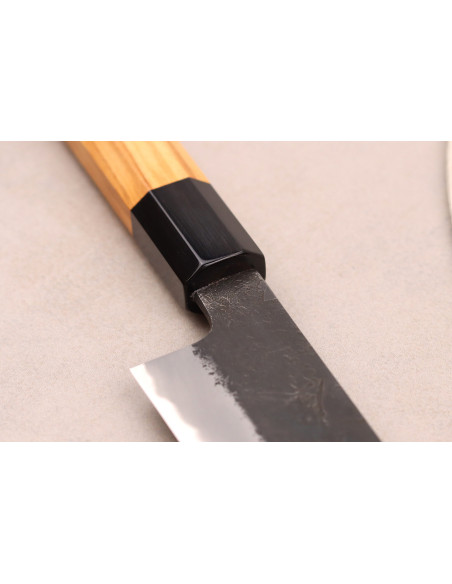
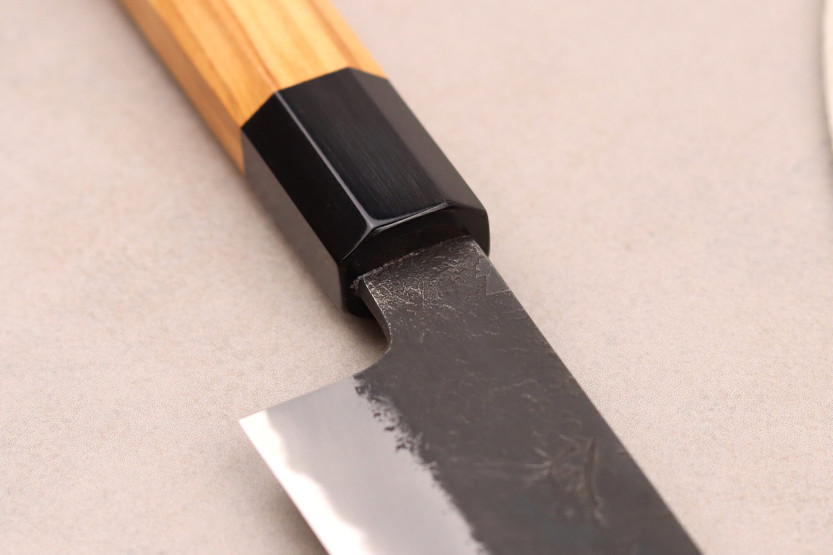
A black buffalo horn bolster harmoniously links the handle to the blade. This natural material offers subtle variations in appearance, making each Ajikataya knife unique!
Finally, wood paste has been applied to the junction between blade and handle to fill any gaps, guaranteeing a perfect seal.
Caring for a handcrafted Japanese knife
To preserve the quality of your carbon knife, it is essential to wash it by hand only, using a mild detergent and a non-abrasive sponge, taking care to keep the handle dry. After washing, dry it carefully with a clean cloth to remove all traces of moisture, then store it in a dry place. Do not soak in water or put in the dishwasher.
Over time, the blade may take on a slightly different hue, due to the natural reaction of carbon to the acidity of certain foods or to humidity in the air.
To prolong its durability, keep a paper towel handy to wipe the blade between uses. Applying a thin layer of mineral oil to the blade also offers additional protection.
Discover a wide range of Japanese knives on Knifeleader.eu!




 By buying this product you can collect up to