
Your cart
There are no more items in your cart
Boning knife: how to use it properly?
Boning knife features 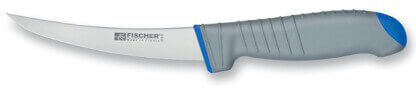
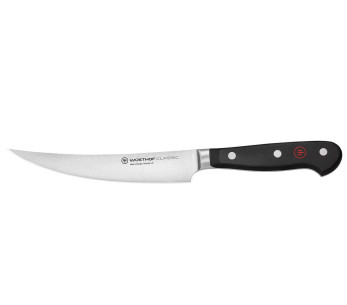
The boning knife is the most widely used knife in the butcher's trade. While it is much appreciated by professional butchers, it is also very useful to amateur cooks for the preparation of their meat dishes. The blade is medium-sized, pointed and slightly curved, depending on the model. The blade is generally between 12 and 18 cm long, making it easy to handle, even for novices.
However, the boning knife 's name is misleading, as it is not intended for cutting bones per se, at least not sturdy ones. Indeed, even though this knife has a strong blade, it does not stand up well to twisting and forceful use. To cut large bones, butchers use saws and knives with thicker blades.
A boning knife, on the other hand, is perfect for working around the bones of poultry or game. The flexibility of its blade allows you to scrape as close to the bone as possible to recover the maximum amount of flesh, thus minimizing waste. What's more, thanks to its sharp cutting edge, you can remove skin, fat or tendons from your meat with ease.

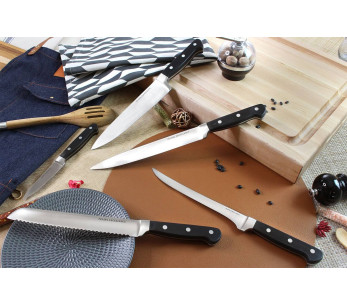


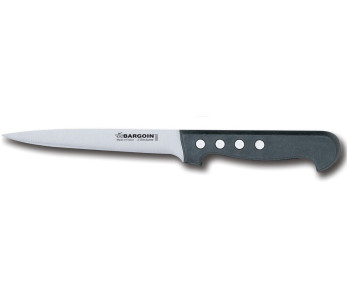

Classic 4 rivets knives
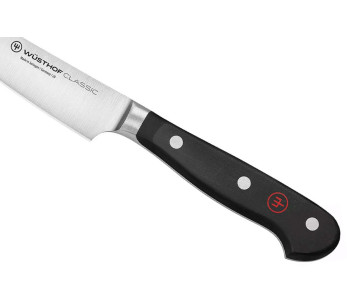
Boning knife with used blade 17cm Classic 4 rivets Bargoin
Awaiting Manufacturing
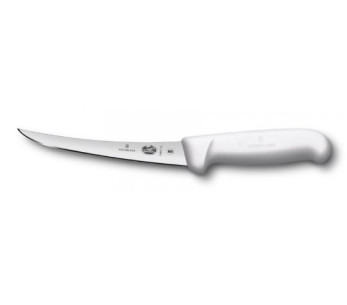


How to use the boning knife 
The boning knife is the preferred utensil of butchers, as it is ideal for :
Scrape meat off the bone, reducing waste.
Cutting very small bones.
Butcher poultry and game.
Slice meat effortlessly.
Remove excess fat and sinew from meats.
Like all knives, boning knives need to be sharpened to maintain their cutting edge. To achieve this, you cansharpen it regularly with a whetstone or a sharpening gun. In addition, always use a cutting board to preserve the blade's edge for longer.


