
Your cart
There are no more items in your cart
How to choose the right wok?
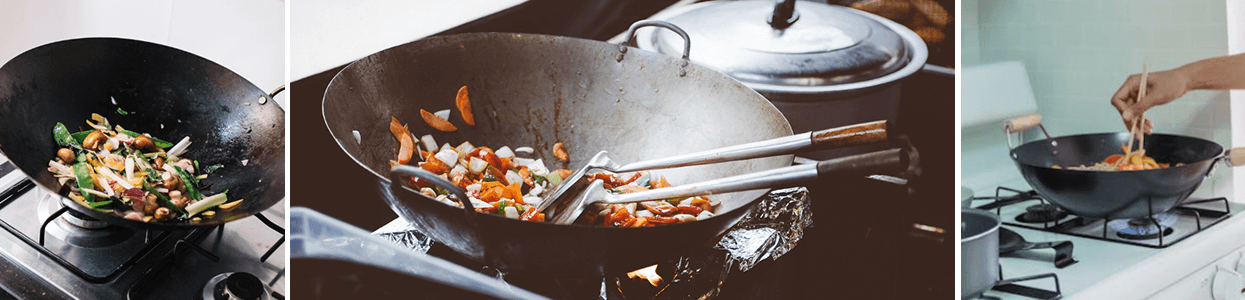
Of Asian origin, the wok is indispensable for ideal, fast cooking! A staple of Chinese, Thai and Japanese cuisine, it can be adapted to all types of cooking. With its semi-spherical shape, the wok allows you to cook several foods at the same time without fat, thanks to its depth. You can use it for stir-frying, frying, steaming, simmering or high-temperature grilling. What's more, it can cook surprisingly fast. That's why, if you're not very patient, it will become your best friend!
Do you like chicken woks and vegetable woks? Whether you're an amateur cook or a seasoned chef, this utensil will enable you to experiment with all kinds of recipes and take you on an unprecedented gustatory journey.
There are many different woks to choose from. Whether in terms of size, shape or material, you'll find something to suit every taste! So how do you choose? We'll help you choose.
Your choice will be influenced by several main criteria:
- Type of hob
- Size
- Material
Type of hob
First of all, some woks are better suited to different stoves:
- For induction hobs: opt for an induction wok, such as a cast-iron wok.
- For vitroceramic or electric hobs: a flat-bottomed wok is ideal.
- For gas hobs: opt for a round-bottomed wok.
It's important to choose the right wok for the right stove, to ensure an efficient product and optimal cooking results. Once you've chosen the right wok for your stove, it's time to choose the right size!
Wok size
Woks come in all sizes, from two to ten people. You need to think about how you're going to use it, and how much room you'll have to store it, because it takes up more space than a frying pan! That's why some brands offer woks with removable handles for easy storage. So, should you cook for your better half or for a regiment?
Wok material
Now comes one of the biggest dilemmas: the material. Whether cast iron, carbon steel, non-stick or stainless steel, all these materials have their own qualities, and it can be very easy to get lost in them. That's why we're going to present you with their particularities to help you in your choice:
- Cast iron
A cast-iron wok retains heat and cooks evenly, but can be heavy (better than a gym workout!) and requires special care to prevent rusting. To avoid the latter, there's an alternative: enamelled cast-iron. This offers the same cooking quality as traditional cast iron. Enamelled cast iron is when a special substance is applied to the surface of the cast iron, preventing it from rusting. It's a perfect compromise between the cast iron found in traditional Asian kitchens and enamelled cast iron, which is easy to use and clean.
- In iron or carbon steel
The carbon steel wok heats up quickly. It's ideal for rapid stir-frying, but also requires special care to prevent rusting, known as "seasoning". Seasoning, or " culotteing", involves rubbing a thin layer of vegetable oil on the inside surface of the wok, then heating it over medium heat for 20 minutes. This creates a natural non-stick protective layer. In addition, before storing it in the cupboard, it's best to heat it up so that the moisture disappears completely and the wok doesn't rust.
- Non-stick
Non-stick cookware is something we all have at home. It makes cooking easier, requires less oil for cooking and poses no cleaning problems. However, it is considered less durable in the long term and is not suitable for high-temperature cooking.
- Stainless steel (the lazy man's choice)
Stainless steel is the most modern wok material. It's tough, durable and easy to maintain (dishwasher-safe, oven-safe). It is therefore easier to use on a daily basis. However, it may heat unevenly and require more oil to prevent food from sticking.


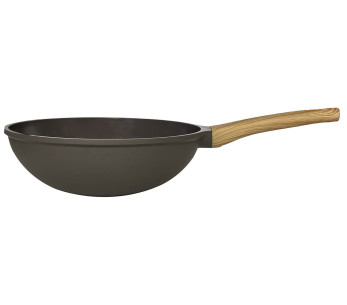


Tips for caring for your wok
- If you're buying a carbon steel or cast-iron wok, you'll need to think about tumbling the product first, as explained above.
- Avoid washing your wok in the dishwasher - there's no substitute for washing it by hand! Use warm water, a soft sponge and mild soap if necessary.
- Do not scrape the surface with abrasive sponges or harsh chemicals.
- After washing, dry the wok immediately to remove moisture, especially if it is made of cast iron or iron.
- Use wooden or silicone spatulas to avoid scratching the inside of the wok.
- Avoid overheating your wok without food inside, as this could damage the coating.
- Store your wok in a dry, well-ventilated place to prevent the formation of mould or rust.
- Some woks may need to be re-bottled if you notice that the surface is no longer non-stick enough. You can repeat this action as often as necessary.
Thanks to all these tips, you're now a pro! You'll be able to extend the life of your Japanese wok and use it in the best possible conditions.
To conclude:
In short, the choice of the ideal wok depends on your personal preferences and needs: stainless steel for ease of use, iron for rapid cooking, copper if your budget allows... Whether small or large, cast iron or stainless steel, for a small or large budget, you'll find the wok that will make your taste buds travel. When you add a wok to your kitchen, you're embracing an age-old tradition while creating new, contemporary culinary adventures.


